



A 130 m² flat with a living room whose decor is listed, in a small Directoire-style building
overlooking a garden, close to the Jardin du Luxembourg
overlooking a garden, close to the Jardin du Luxembourg
Paris,
PARIS
paris
75005
FR
Location
A former religious stronghold of the capital, the district takes its name from the Val-de-Grâce abbey, located on Place Alphonse-Laveran. A rare example of Baroque architecture in Paris, the church was built by François Mansart on the orders of Queen Anne of Austria, as a sign of gratitude to the Virgin Mary after the birth of the future king Louis XIV. The property is a short distance away, built over the remains of Louise de La Vallière's oratory at the Carmel de l'Incarnation in the rue Saint-Jacques, where, disappointed by her royal courtship, she took refuge under the name of Louise de la Miséricorde and lived there for 37 years. Close to the Luxembourg Gardens, the area is home to a number of renowned universities and research institutes, as well as a network of renowned food and drink outlets. Bus routes 21, 24, 27, 38, 82, 83 and 91, as well as Port-Royal RER station, are approximately 300 m away.
Description
The flat occupies the right wing of a small listed town house, hidden from the street by a modern building designed by Jean Dubuisson, winner of the Grand Prix de Rome in 1945. A caretaker is on duty at all times. A first glass entrance, secured by a code followed by an intercom, provides access to a vast hall in grey marble, which is under video surveillance.
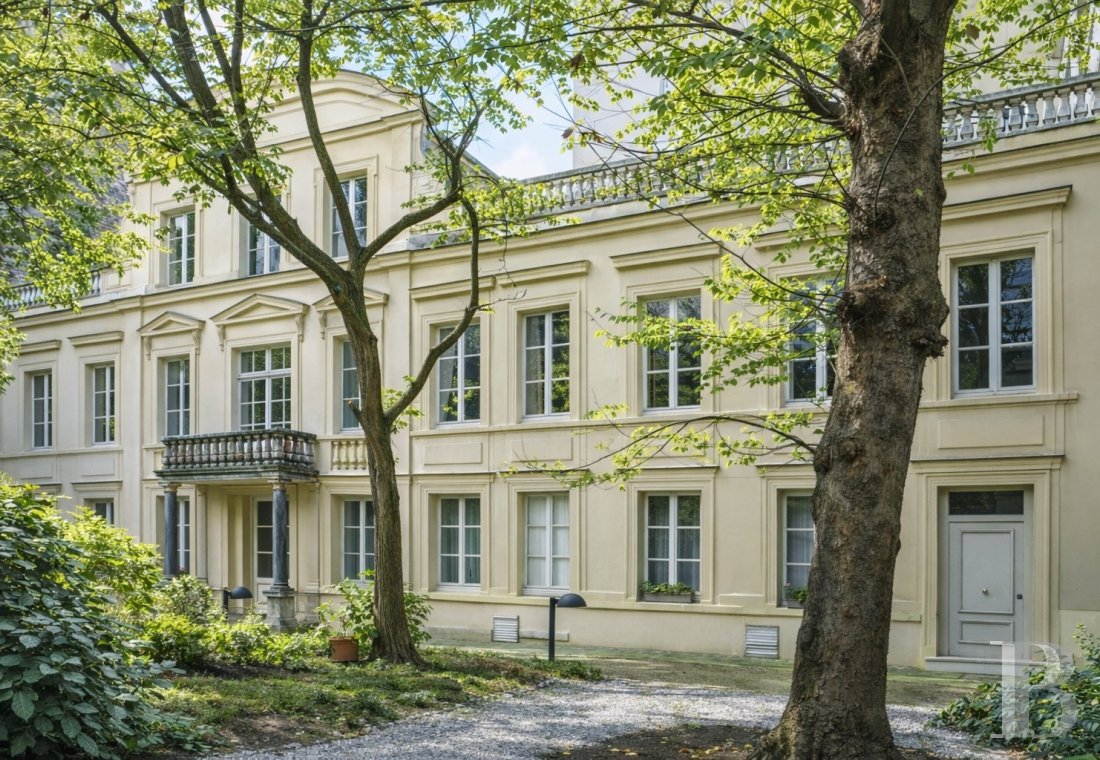
Through large glass walls, a shady garden can be seen, with white gravel paths, planted with acacias and sycamores and punctuated by small circular beds of rhododendrons, ivy and hydrangeas. At the end of the 19th century, the site housed painters' studios. The most famous painters to work there were Alfons Mucha and Jean Dupas.
Built in 1796, the Hôtel Scelles is a remarkable example of late 18th-century architecture. Designed for the sculptor and marble-maker François Scelles, the building occupies part of the estate of the Carmélites convent, sold as national property during the Revolution.
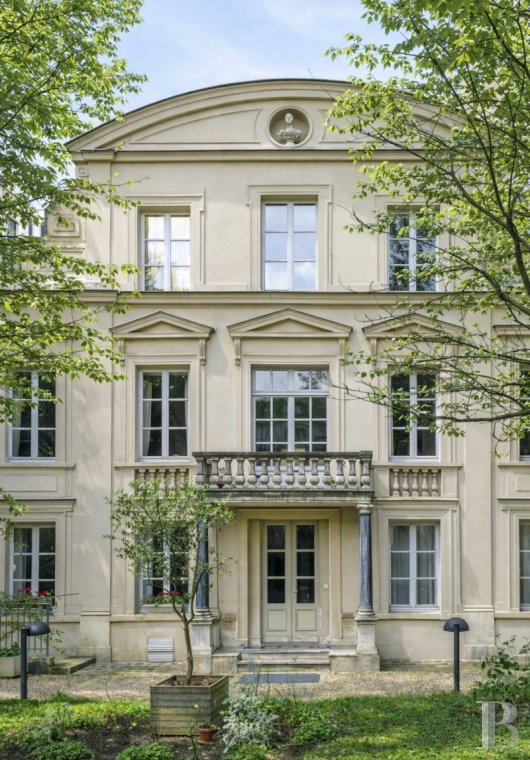
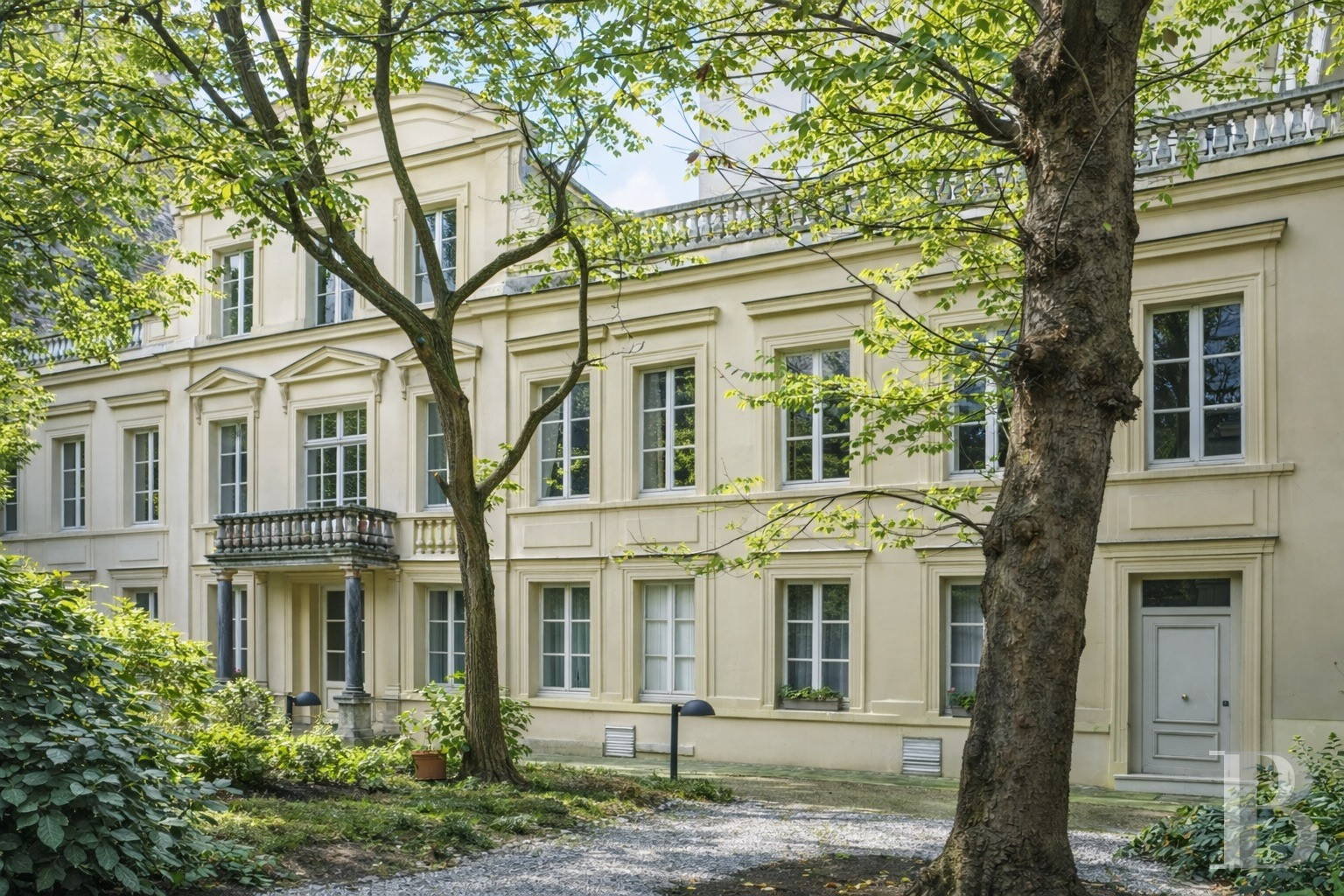
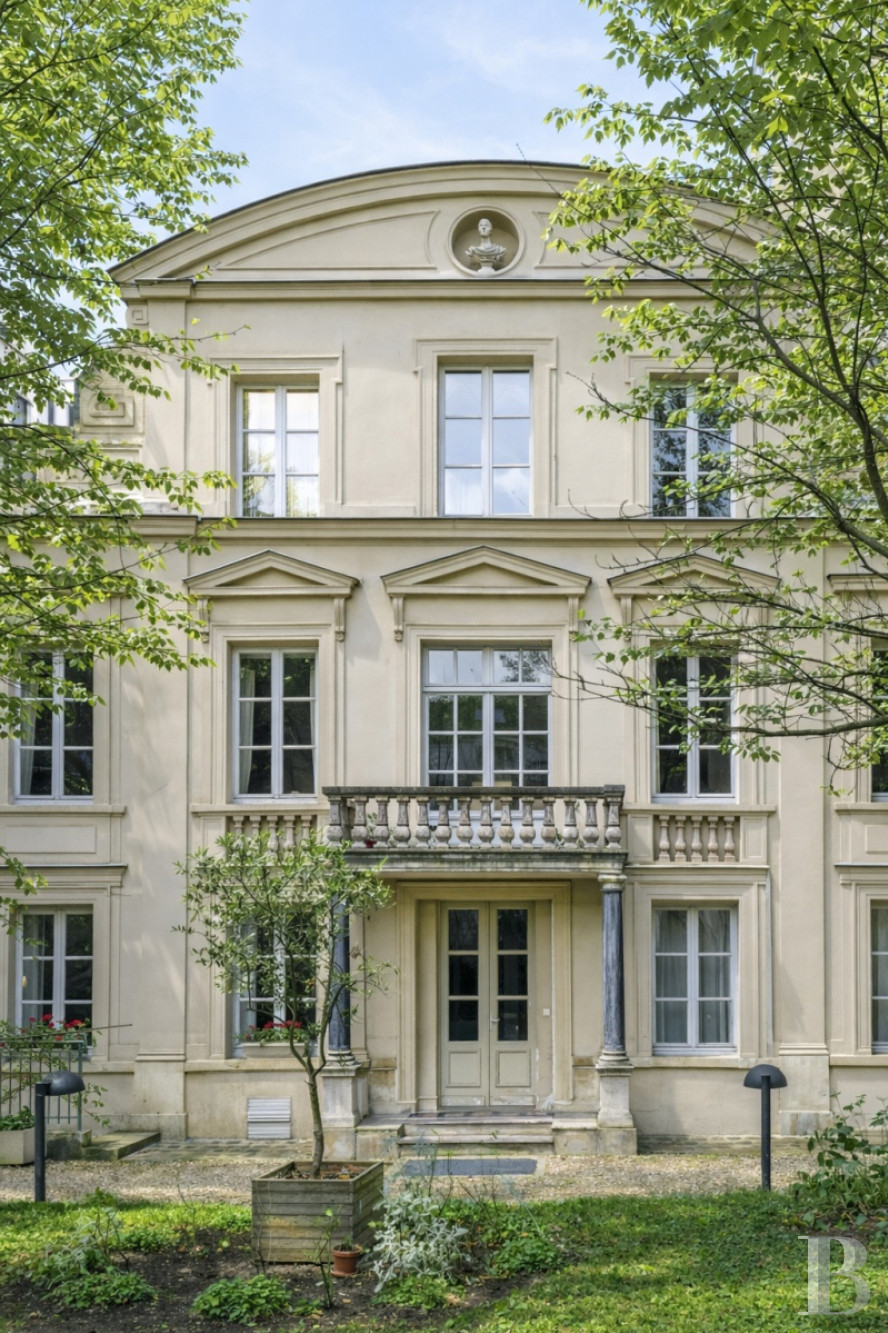
The building's strictly ordered facade is one storey higher than the ground floor and is opened up by five windows on either side of a central main building. The latter, set between two slender marble pilasters at a very slight projection, is enhanced by three triangular pediments on the main floor. Dating back to the 17th century, the stone baluster cornice, together with the flat roof, reflect the French-style roofing of the 18th century. The second floor of the central section dominates the façade, with three arched windows topped by a sculpted clasp. Two stone brackets support the ensemble, which is topped by a curved pediment pierced by an oculus housing the bust of François Scelles.
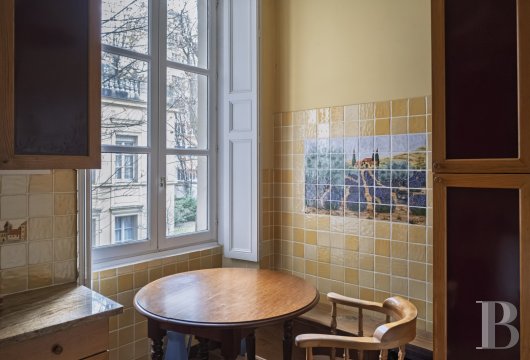
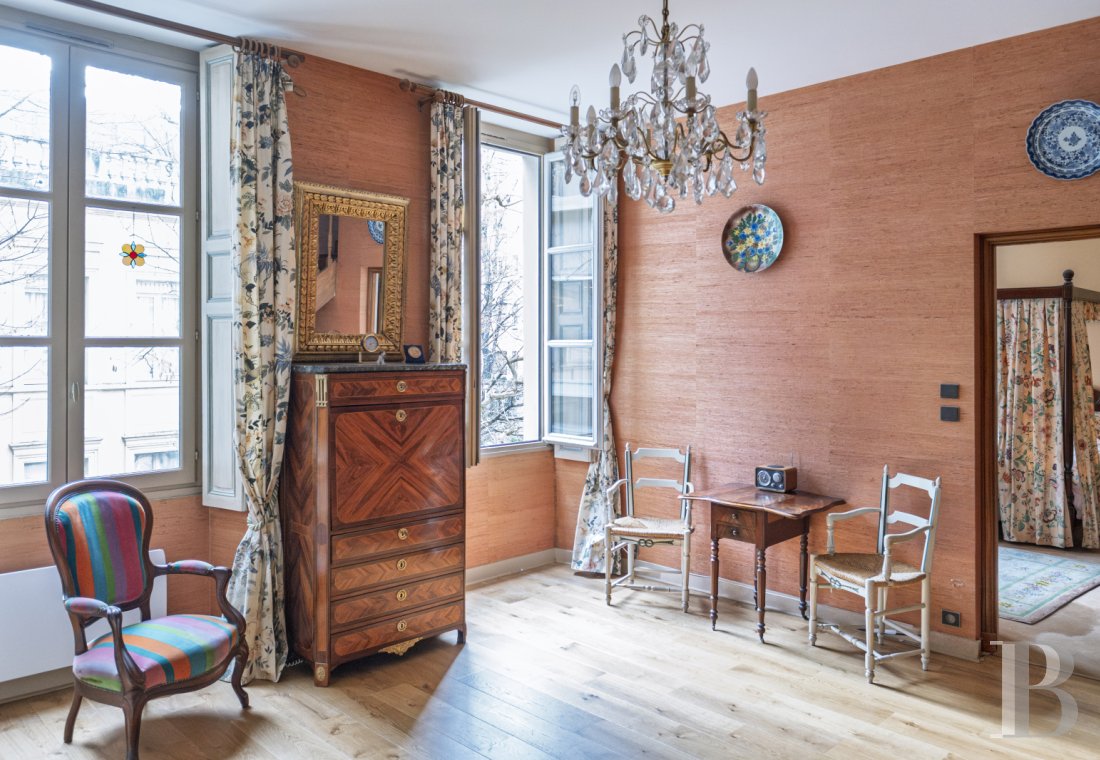
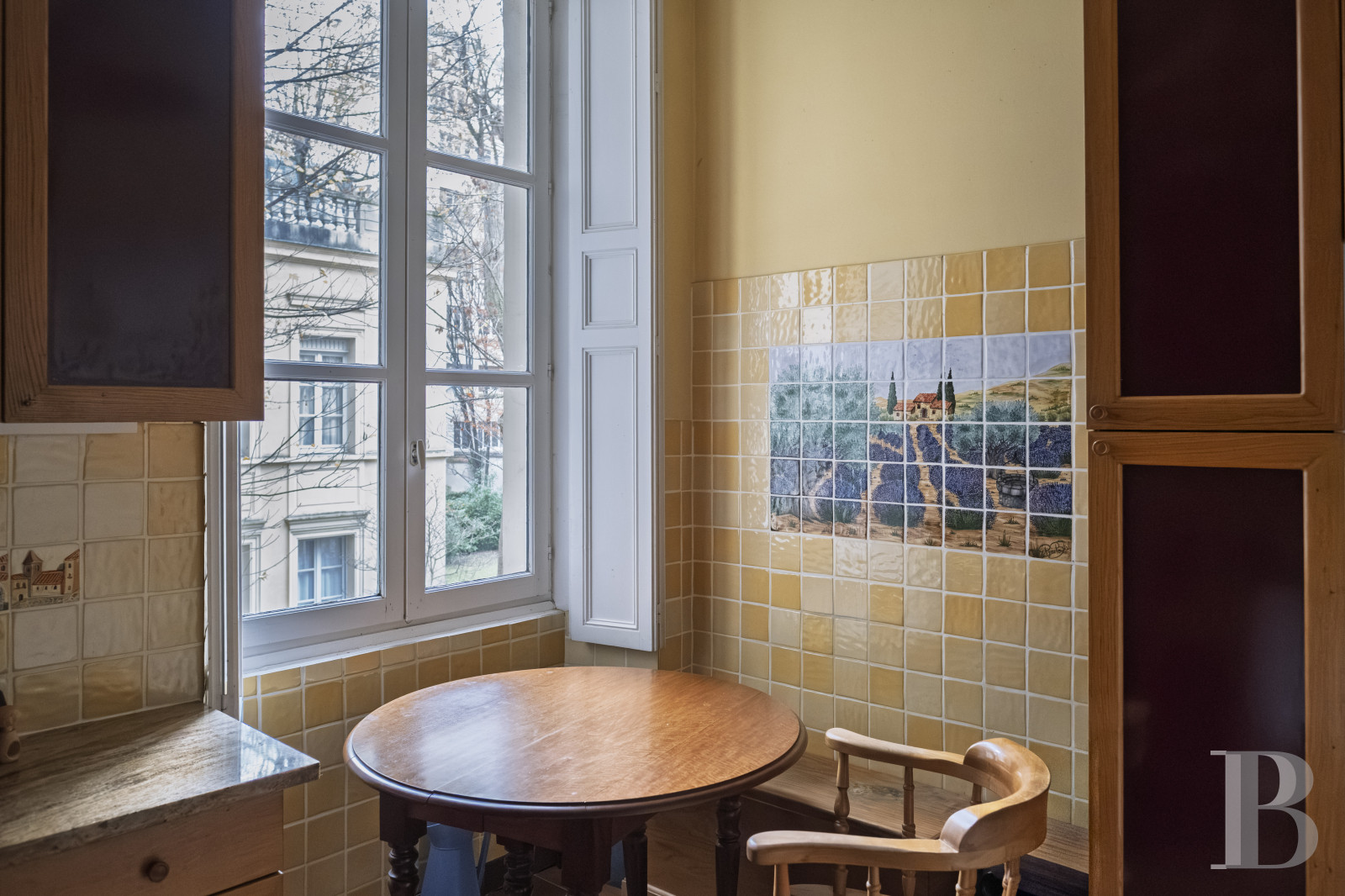
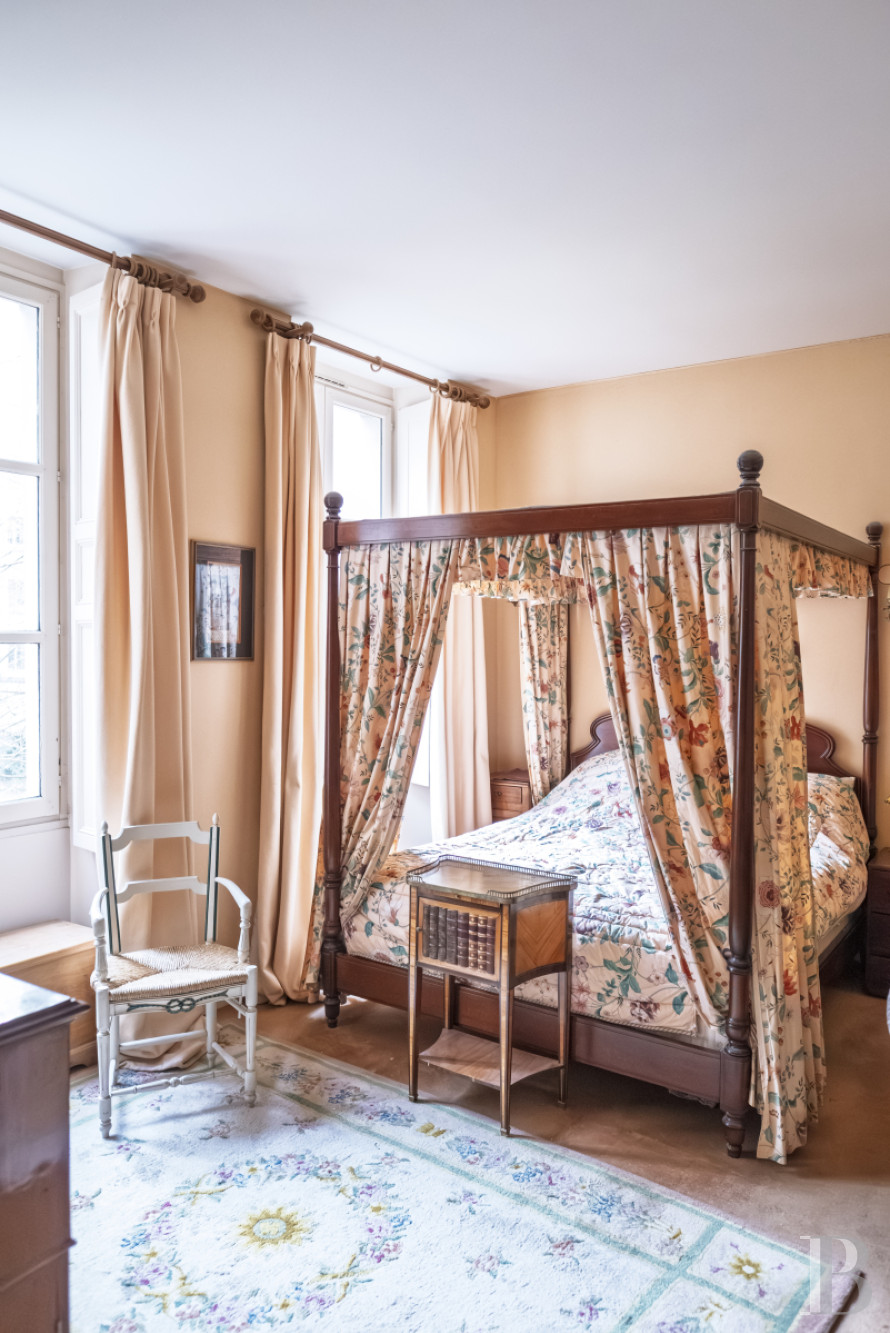
A private entrance, at the right-hand corner of the façade, leads to two dwellings. The door reveals a hallway with a cloakroom and a staircase leading to the first floor. With six high windows lined with wooden shutters facing south-west and opening on to the garden, it comprises a kitchen, a dining room of almost 18 m², and a bedroom of around 15 m² with a bathroom and dressing room.
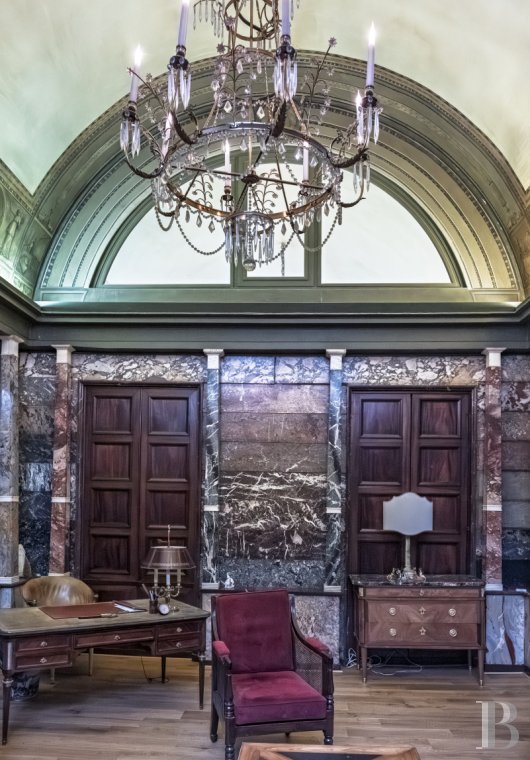
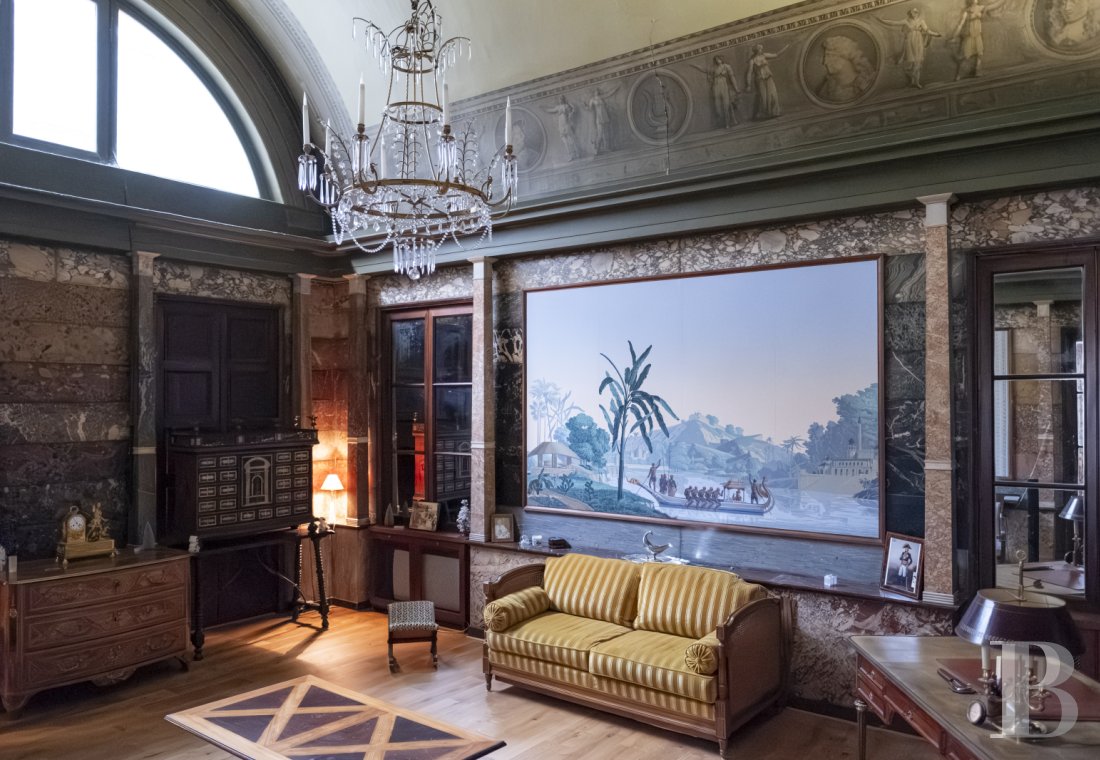
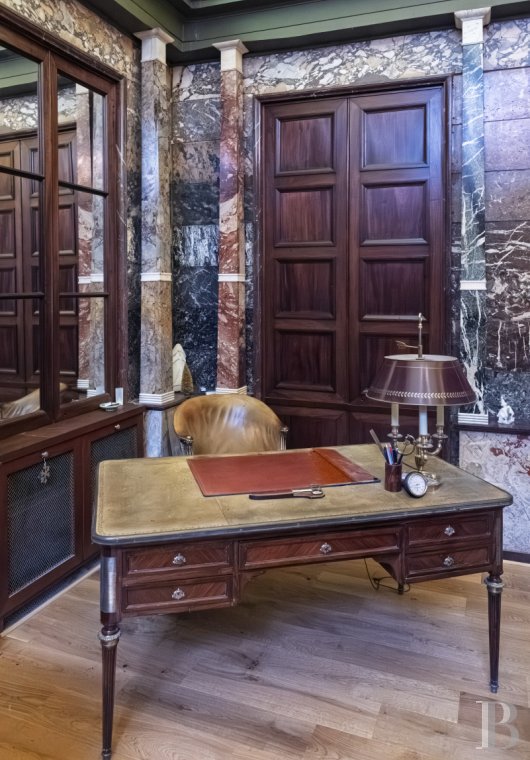
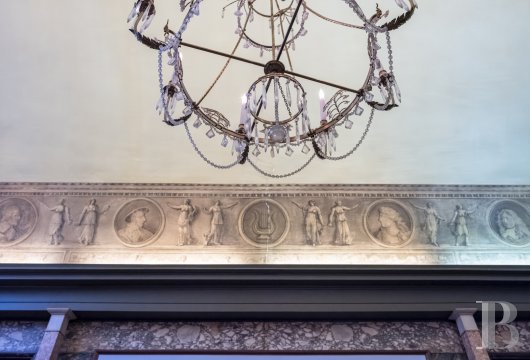
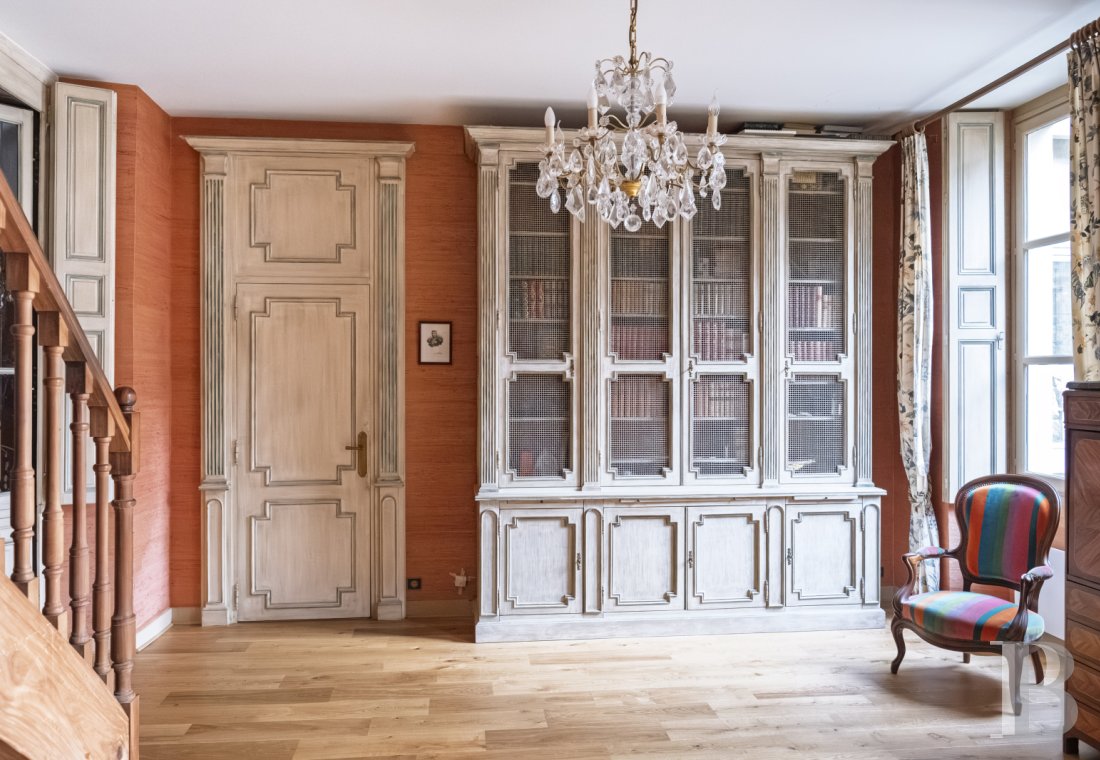
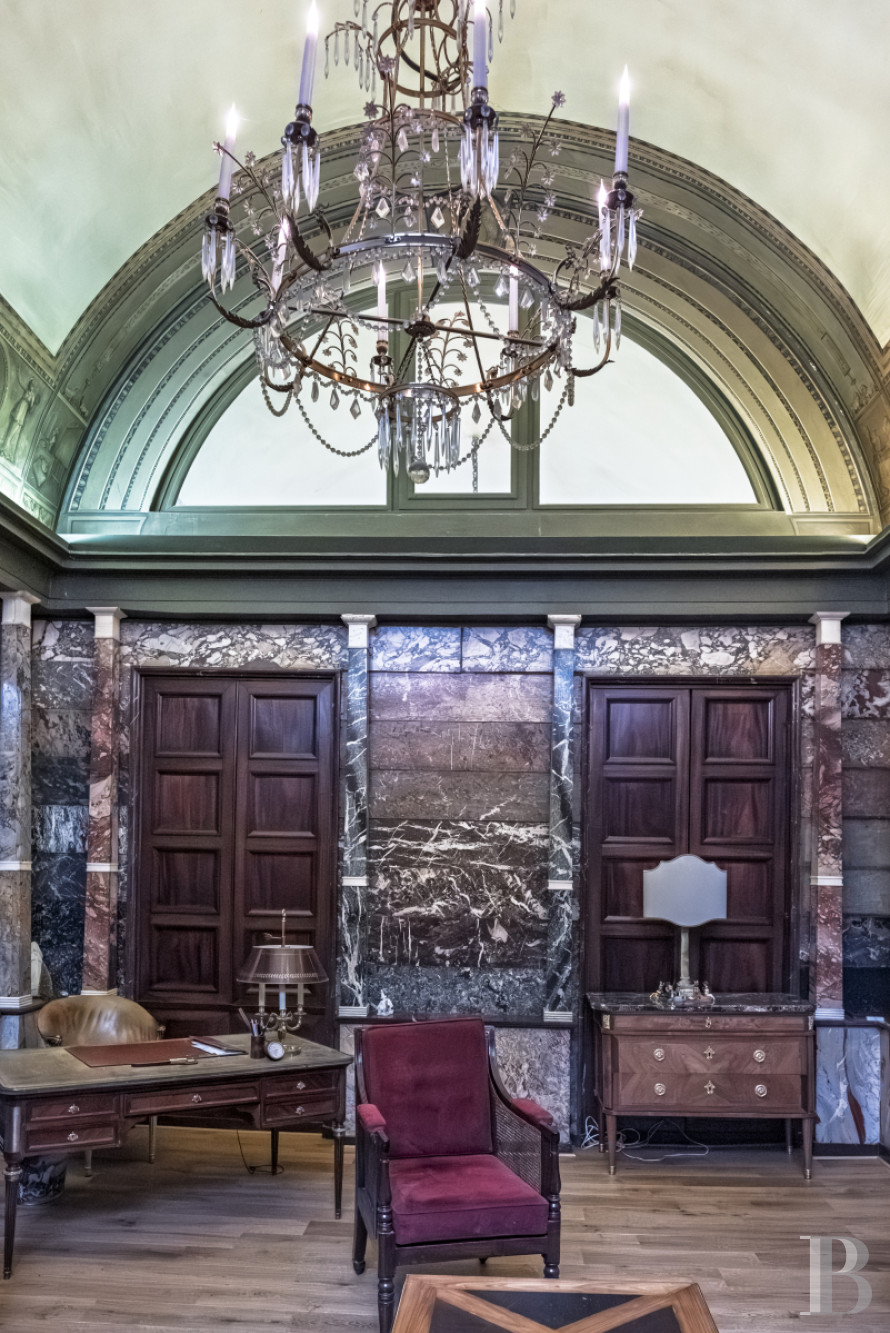
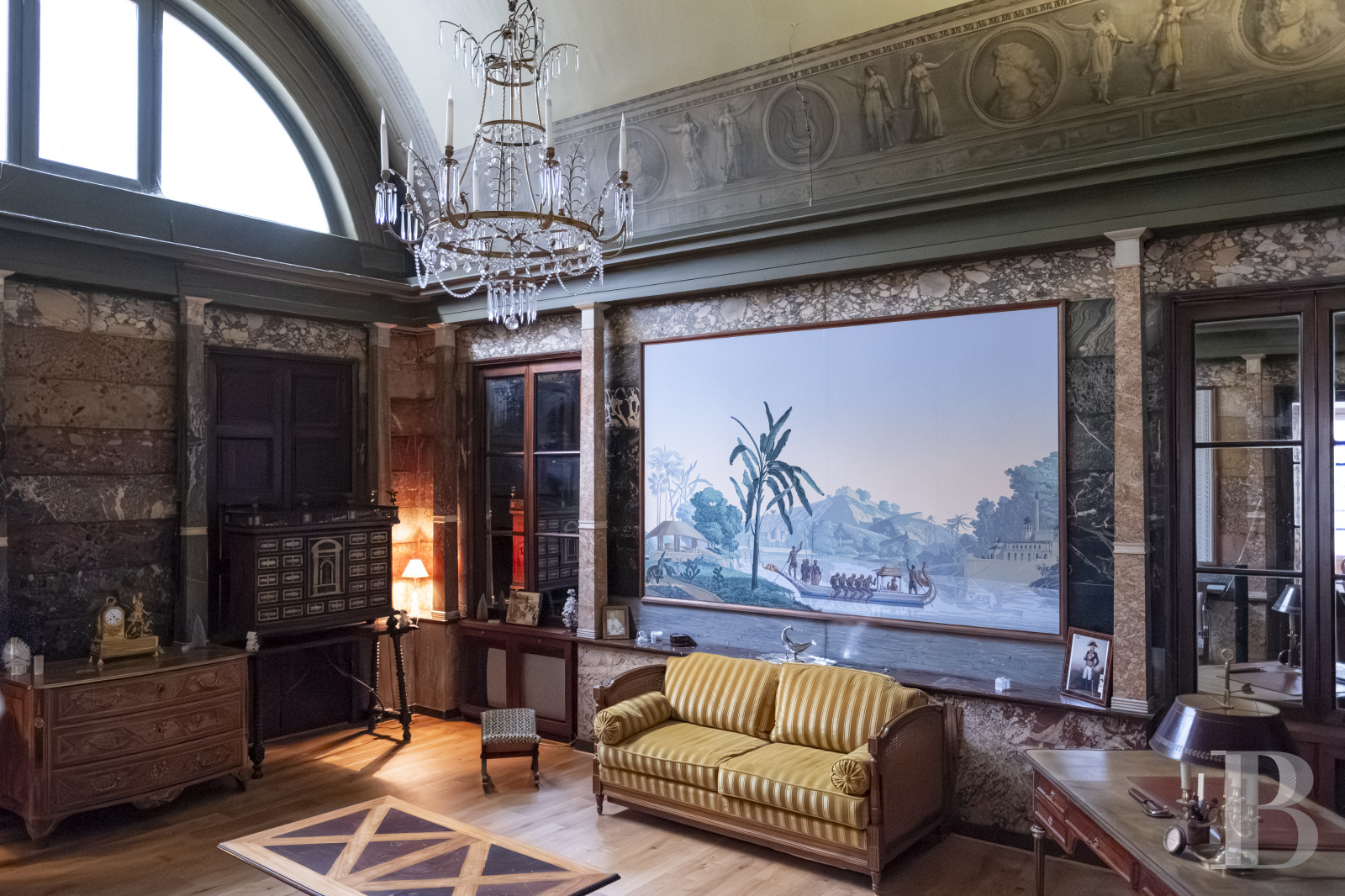
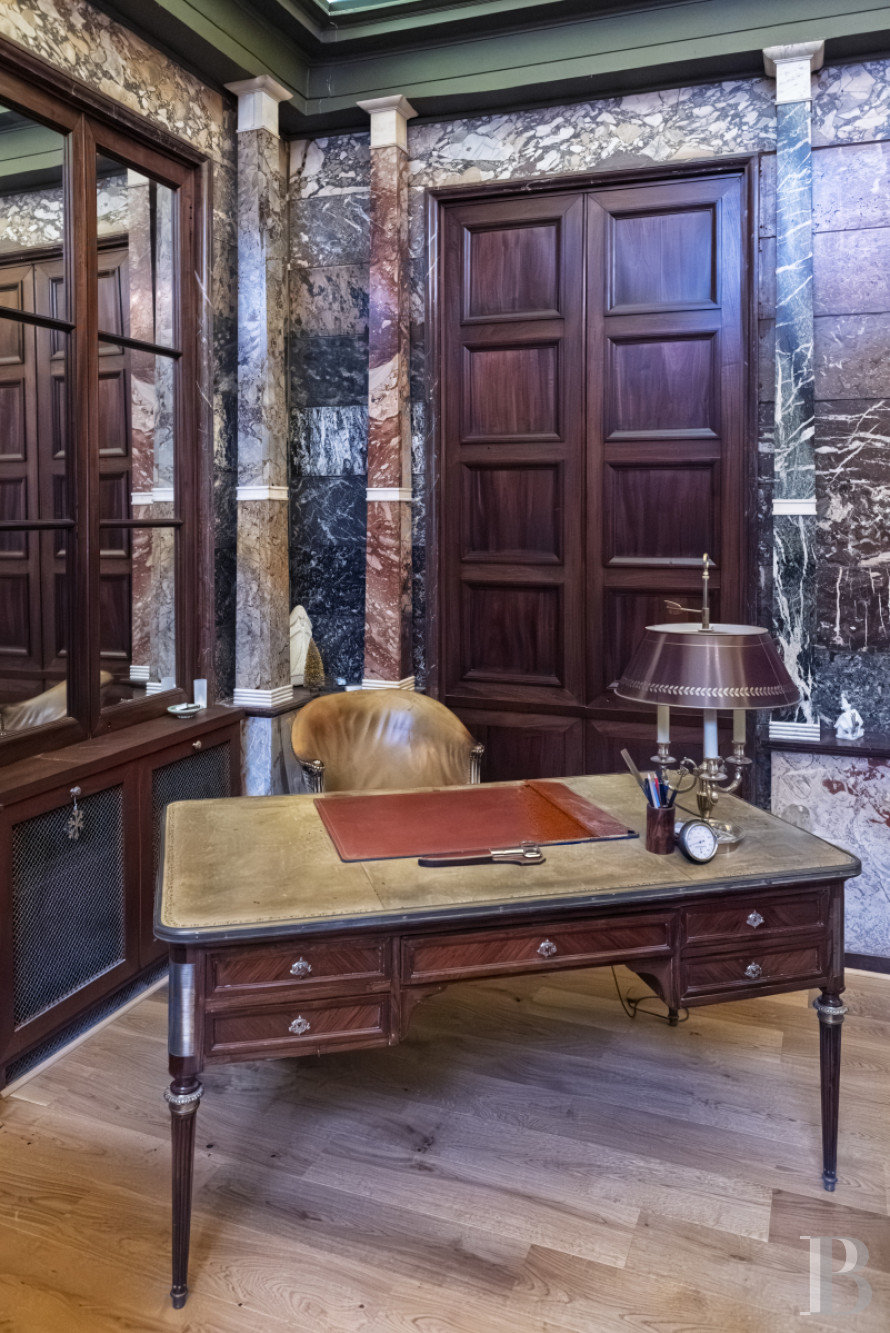
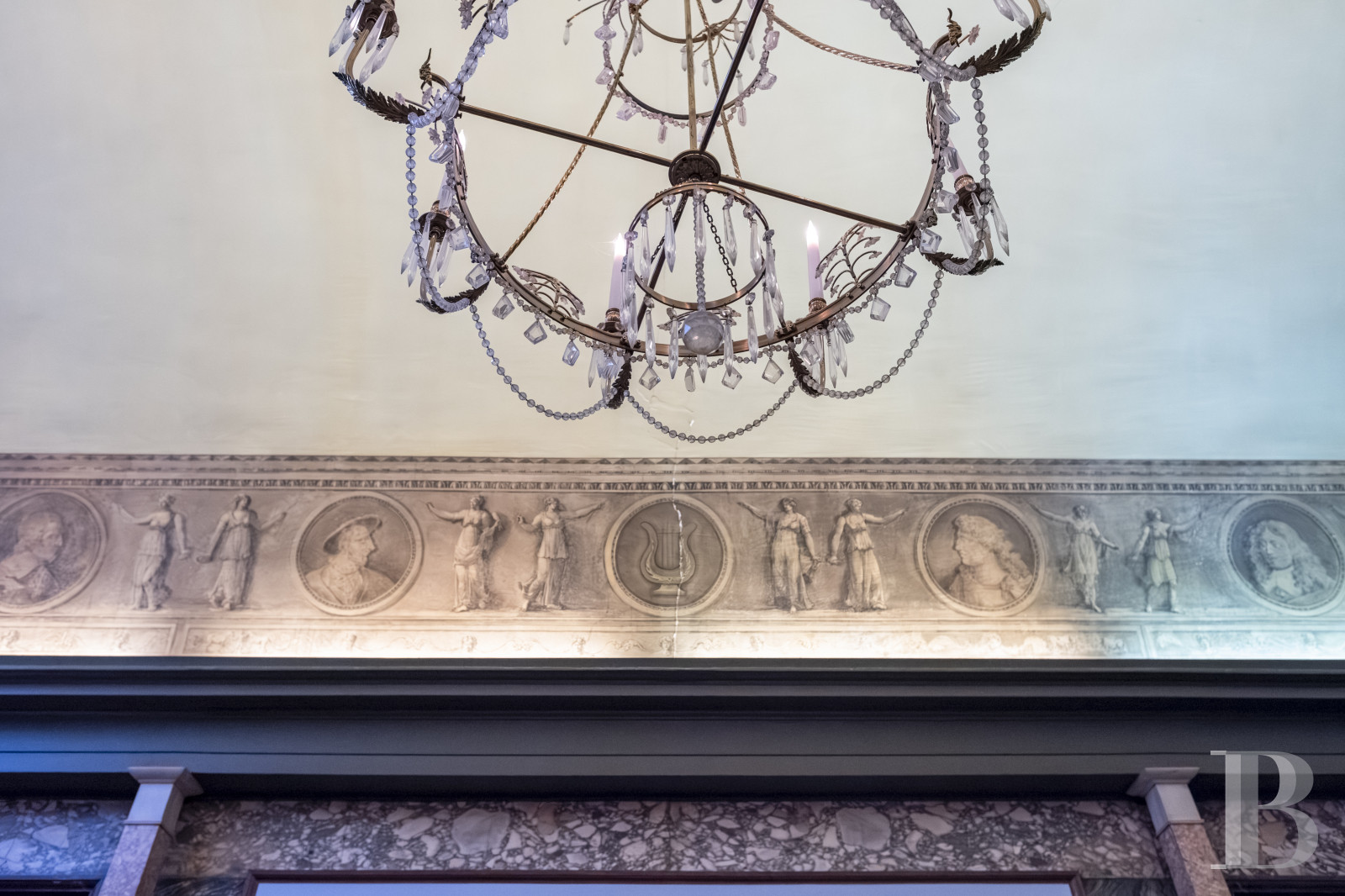
Adjoining the dining room, which is listed as a historic monument, there is a reception room measuring some 38 m² with a vaulted ceiling and a large arched fanlight to the west. The interior decoration of the grand salon, built on the site of Louise de La Vallière's former oratory, is remarkable due to the quality, diversity and rarity of the marble covering the walls in shades of puce, Languedoc red and Pyrenean green. Purple breccia pilasters crowned with capitals support a moulded cornice framing a wide border painted in Pompeian-style grisaille, featuring women dressed in antique style, on either side of busts of famous men depicted in trompe-l'œil medallions. There are solid mahogany double doors throughout.
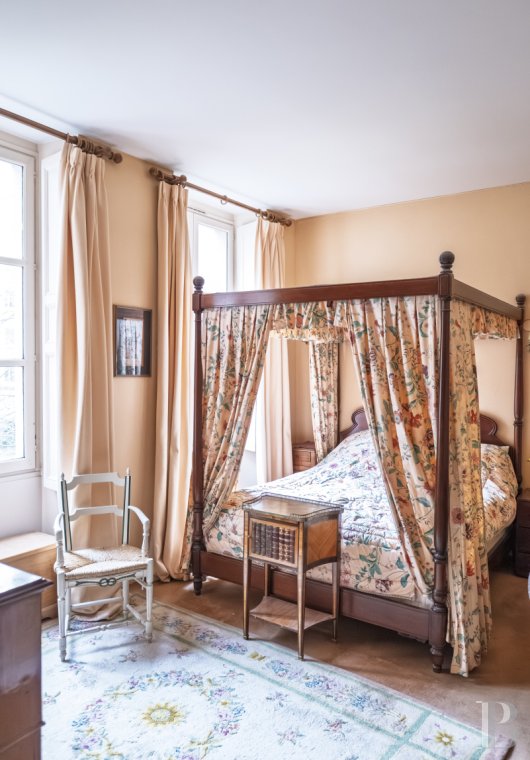
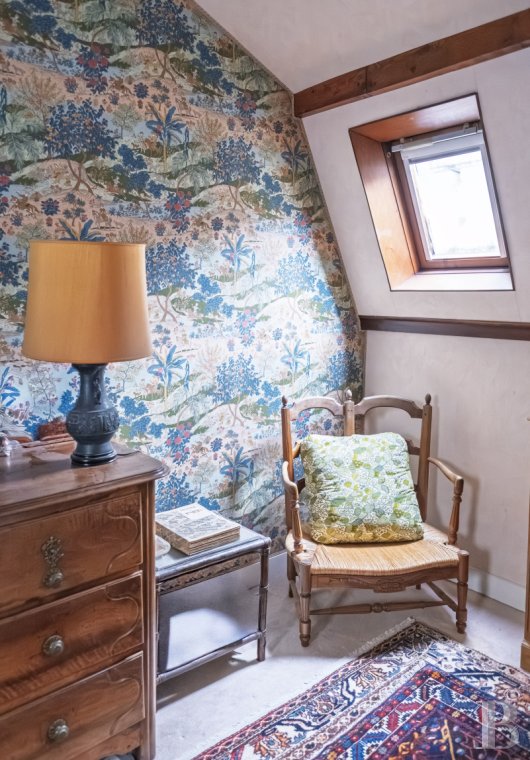
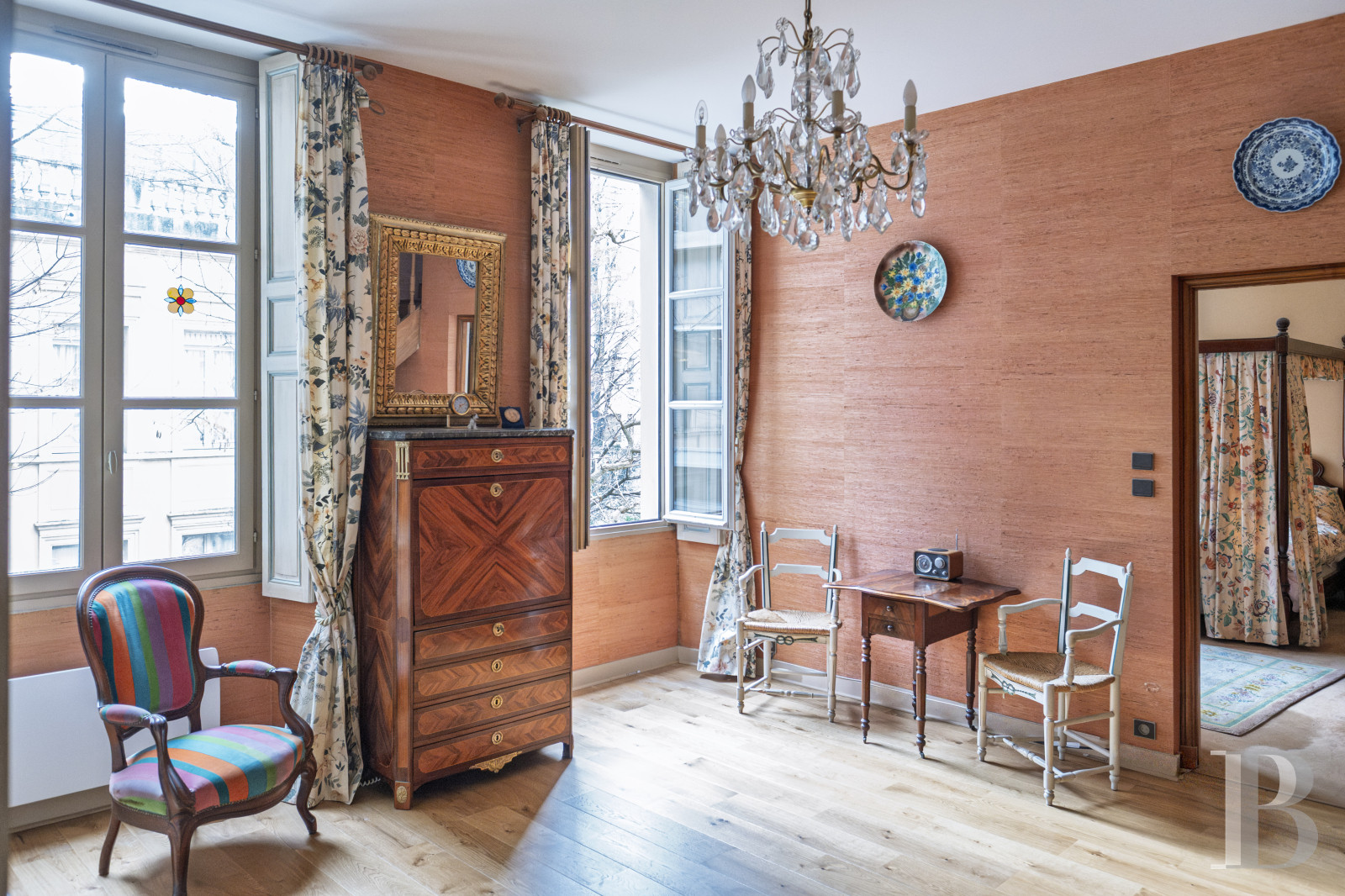
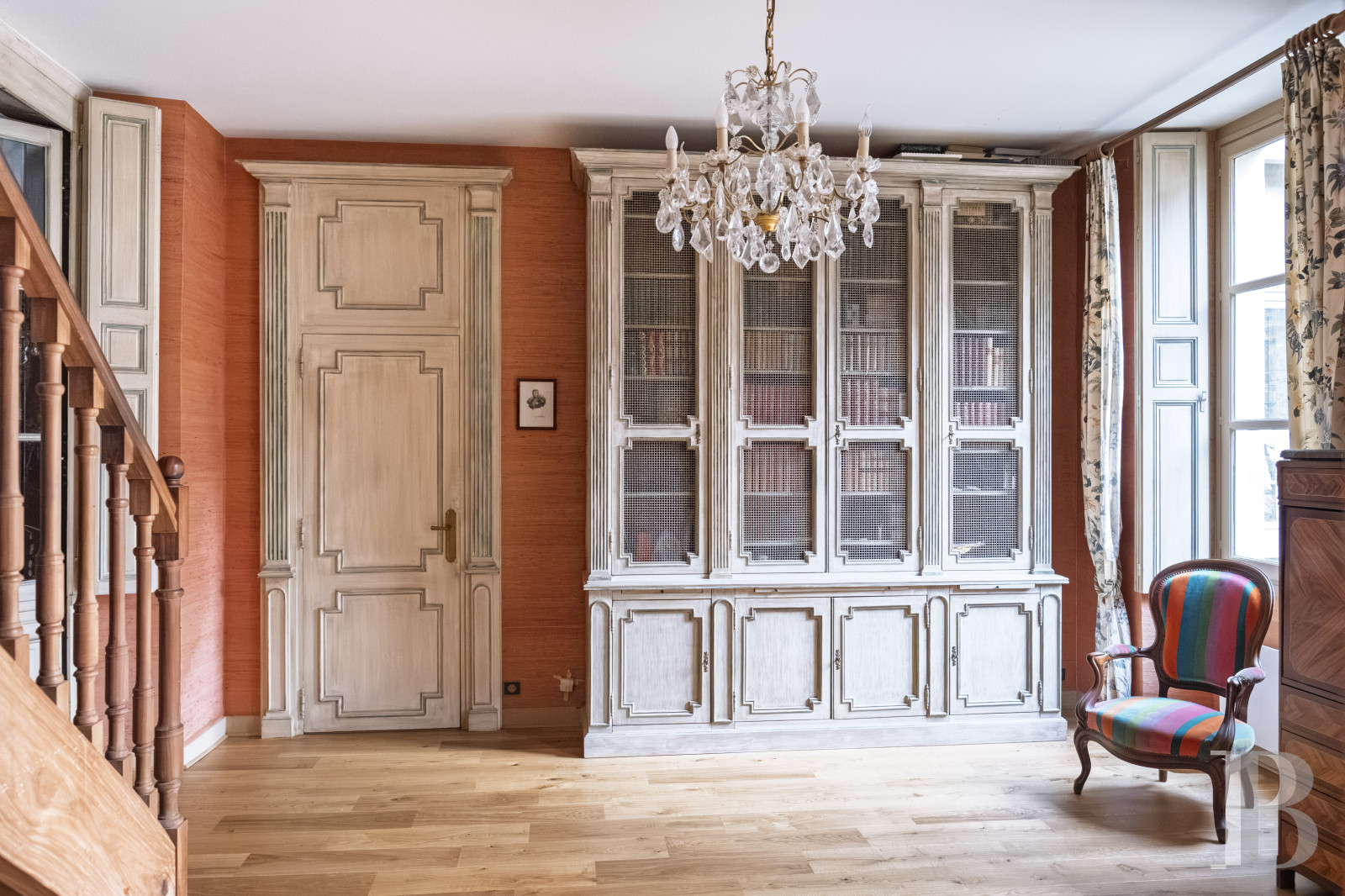
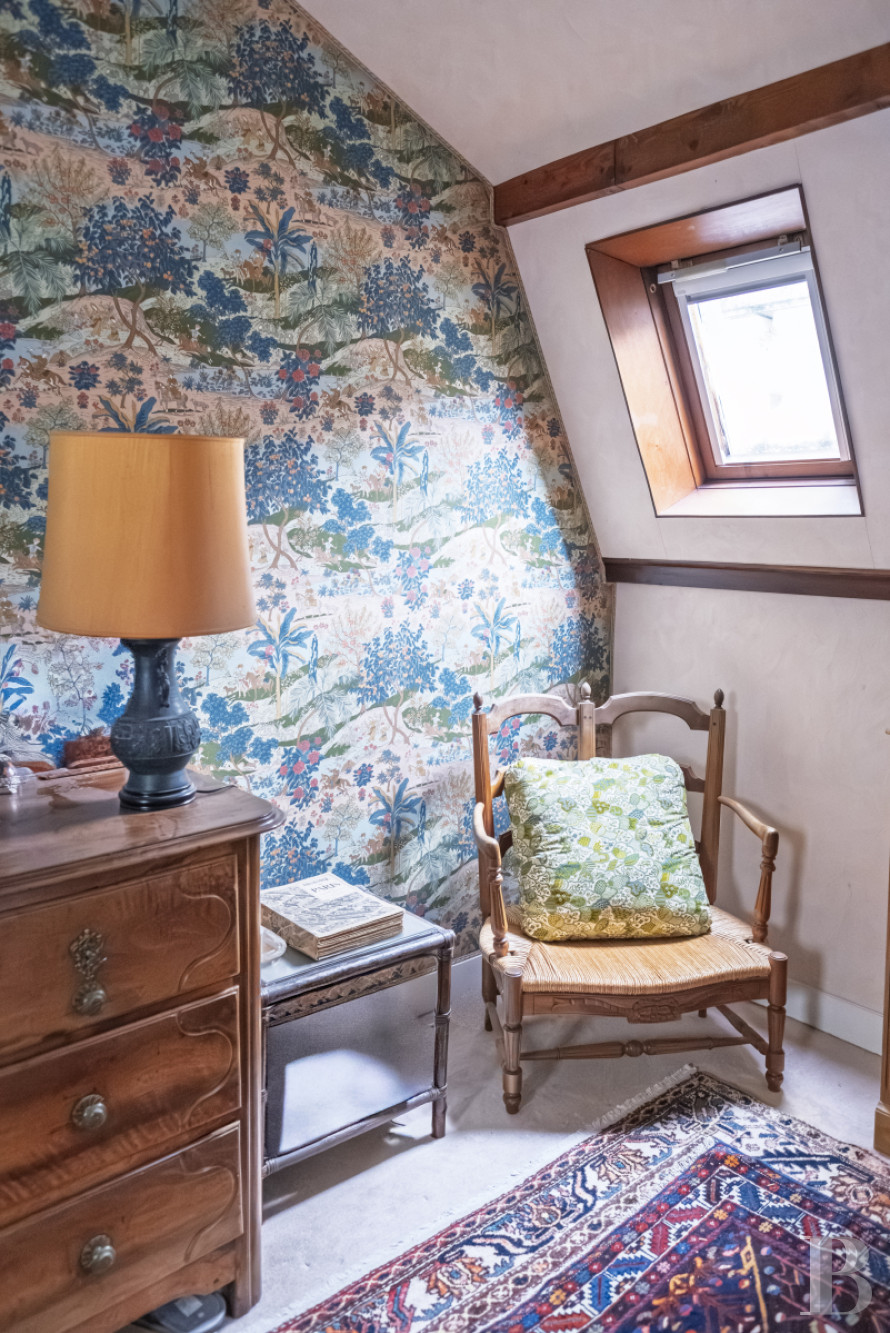
A wooden staircase in the dining room leads to a second attic level. Two bedrooms of around 10 and 16 m² with exposed beams, a bathroom and a separate toilet occupy the first floor.
There is also an underground parking space and a cellar, both accessible by lift.
Through large glass walls, a shady garden can be seen, with white gravel paths, planted with acacias and sycamores and punctuated by small circular beds of rhododendrons, ivy and hydrangeas. At the end of the 19th century, the site housed painters' studios. The most famous painters to work there were Alfons Mucha and Jean Dupas.
Built in 1796, the Hôtel Scelles is a remarkable example of late 18th-century architecture. Designed for the sculptor and marble-maker François Scelles, the building occupies part of the estate of the Carmélites convent, sold as national property during the Revolution.
The building's strictly ordered facade is one storey higher than the ground floor and is opened up by five windows on either side of a central main building. The latter, set between two slender marble pilasters at a very slight projection, is enhanced by three triangular pediments on the main floor. Dating back to the 17th century, the stone baluster cornice, together with the flat roof, reflect the French-style roofing of the 18th century. The second floor of the central section dominates the façade, with three arched windows topped by a sculpted clasp. Two stone brackets support the ensemble, which is topped by a curved pediment pierced by an oculus housing the bust of François Scelles.
A private entrance, at the right-hand corner of the façade, leads to two dwellings. The door reveals a hallway with a cloakroom and a staircase leading to the first floor. With six high windows lined with wooden shutters facing south-west and opening on to the garden, it comprises a kitchen, a dining room of almost 18 m², and a bedroom of around 15 m² with a bathroom and dressing room.
Adjoining the dining room, which is listed as a historic monument, there is a reception room measuring some 38 m² with a vaulted ceiling and a large arched fanlight to the west. The interior decoration of the grand salon, built on the site of Louise de La Vallière's former oratory, is remarkable due to the quality, diversity and rarity of the marble covering the walls in shades of puce, Languedoc red and Pyrenean green. Purple breccia pilasters crowned with capitals support a moulded cornice framing a wide border painted in Pompeian-style grisaille, featuring women dressed in antique style, on either side of busts of famous men depicted in trompe-l'œil medallions. There are solid mahogany double doors throughout.
A wooden staircase in the dining room leads to a second attic level. Two bedrooms of around 10 and 16 m² with exposed beams, a bathroom and a separate toilet occupy the first floor.
There is also an underground parking space and a cellar, both accessible by lift.
Our opinion
A property whose decorative assets are not apparent from the street, or even from the building entrance. Redesigned and rewritten over and over, it was first a place of spiritual contemplation, then a neoclassical manifesto of success during the French Revolution, Louise Gagneur's literary and political salon at the end of the 19th century, and then the home of the Diamant-Berger family, who took care to preserve it. It will appeal to historians, aesthetes and nature lovers alike. A few renovations would be enough to make the flat a sought-after Parisian location, where, away from the hustle and bustle of the city, an important fragment of French history remains. Finally, the silence of the building, surrounded by the soft foliage of the garden, completes the secluded atmosphere. Day-to-day life here will be as expected: heady, whimsical and full of life - so very Parisian.
2 200 000 €
Fees at the Vendor’s expense
Reference 160785
| Floor area under Carrez law | 127.45 m² |
| Total floor area | 140.5 m² |
| Number of rooms | 5 |
| Number of bedrooms | 3 |
| Cellar |
| Commonhold fees | 2046 € |
French Energy Performance Diagnosis
Information on the risks to which this property is exposed is available on the website: www.georisques.gouv.fr
Share


NB: The above information is not only the result of our visit to the property; it is also based on information provided by the current owner. It is by no means comprehensive or strictly accurate especially where surface areas and construction dates are concerned. We cannot, therefore, be held liable for any misrepresentation.