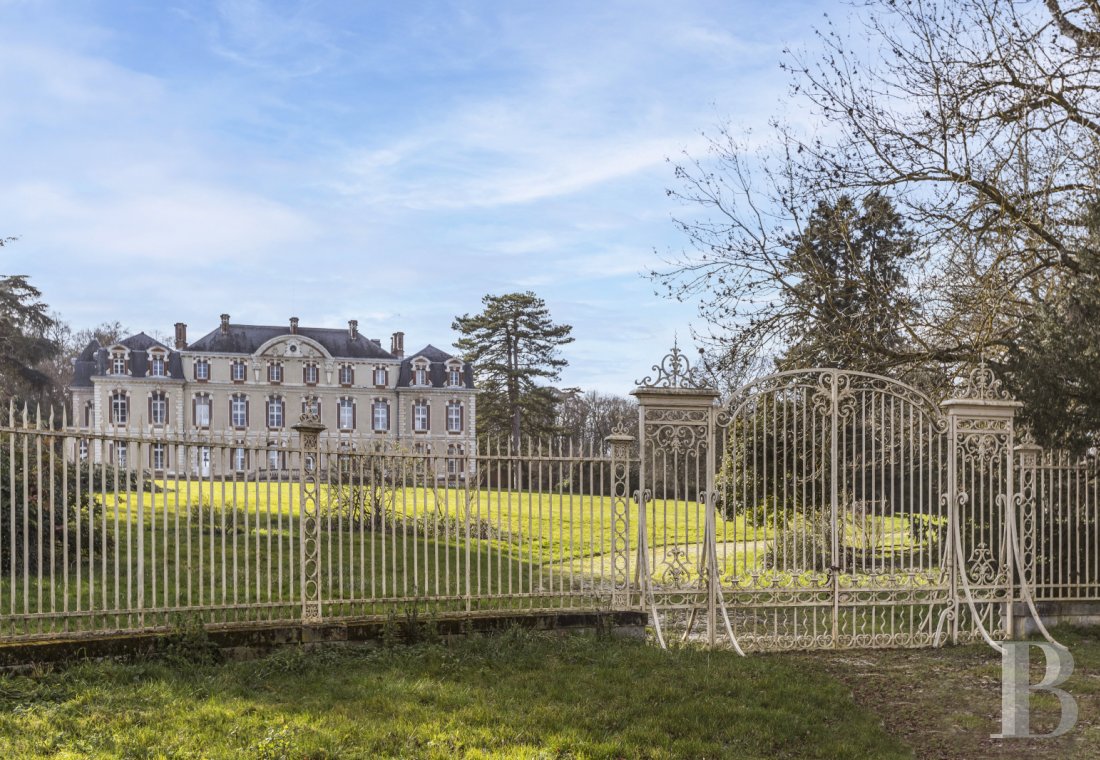




An impressive 18th-century chateau, with outbuildings,
in a landscaped garden, near Fontainebleau
in a landscaped garden, near Fontainebleau
Fontainebleau,
SEINE-ET-MARNE
ile-de-france
77300
FR

Location
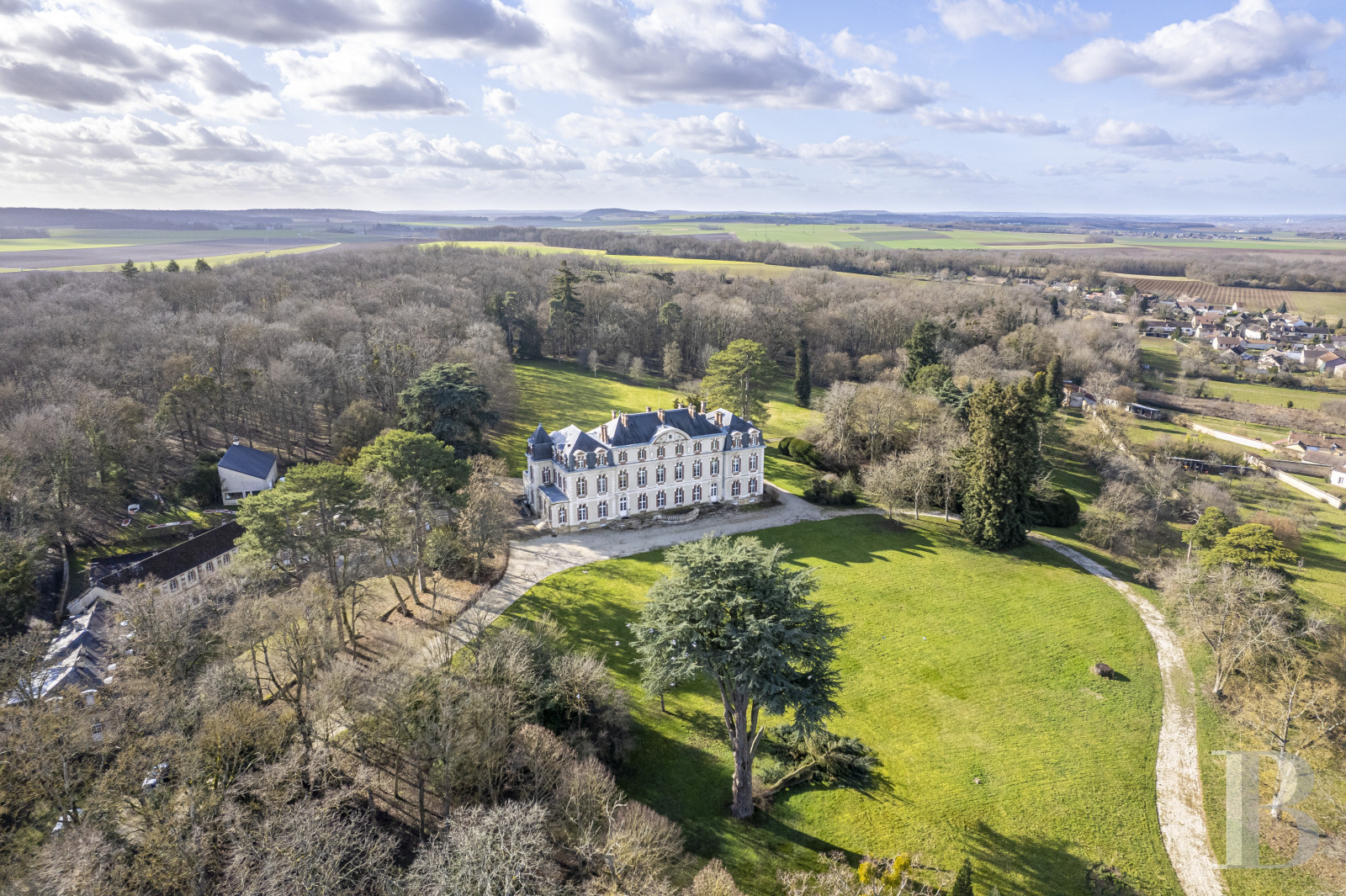
This property is located in the outskirts of a village, on the edge of the Île-de-France region, at the gateway to Burgundy, on the border between the Seine-et-Marne and Yonne areas. Despite being situated in the heart of the Gâtinais sector’s rural landscape, the French capital can be easily reached, either by the A5 motorway in 1 hour 30 minutes, or in 1 hour by train, from a station in the neighbouring municipality, 5 kilometres away. Sens and Fontainebleau are only around 30 minutes away, as well as some other smaller towns.
Description
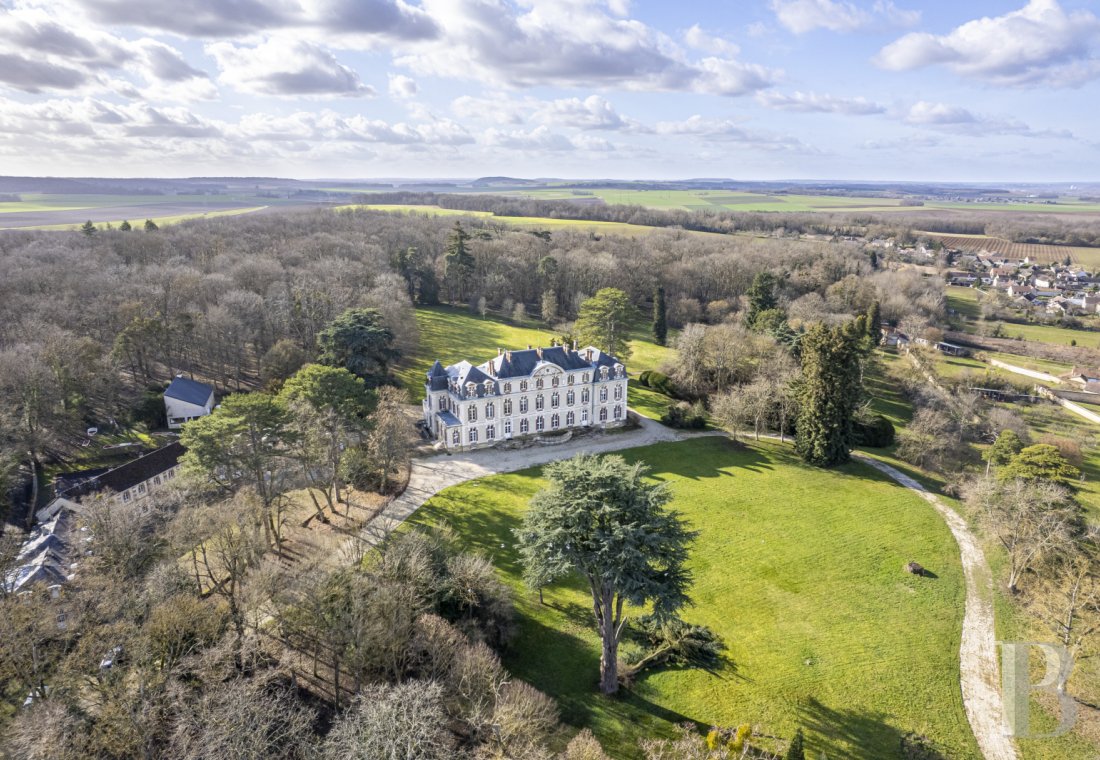
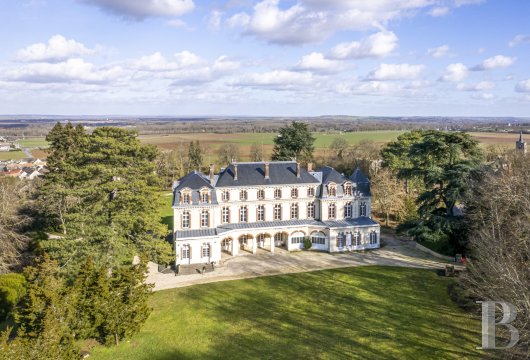
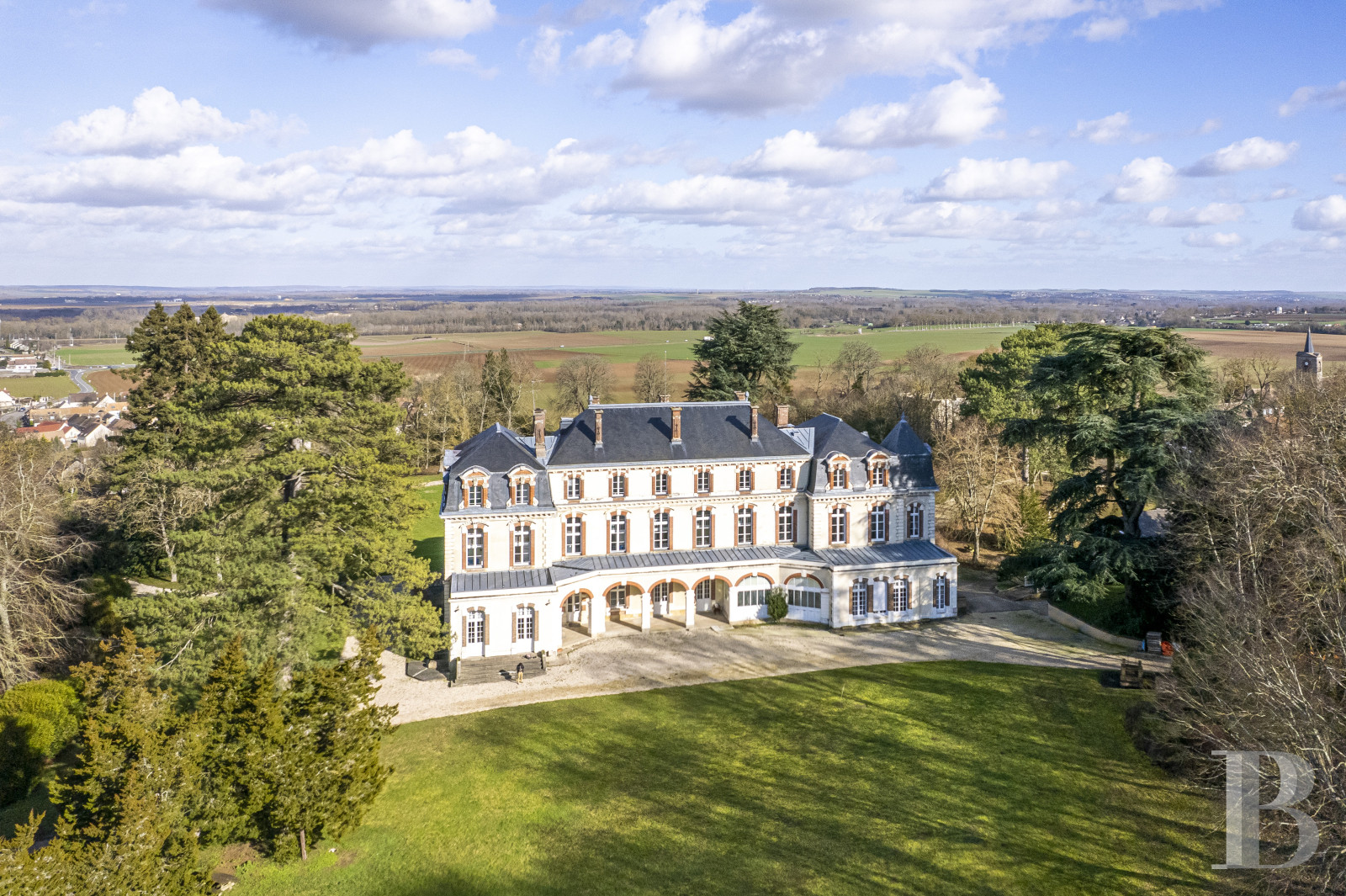
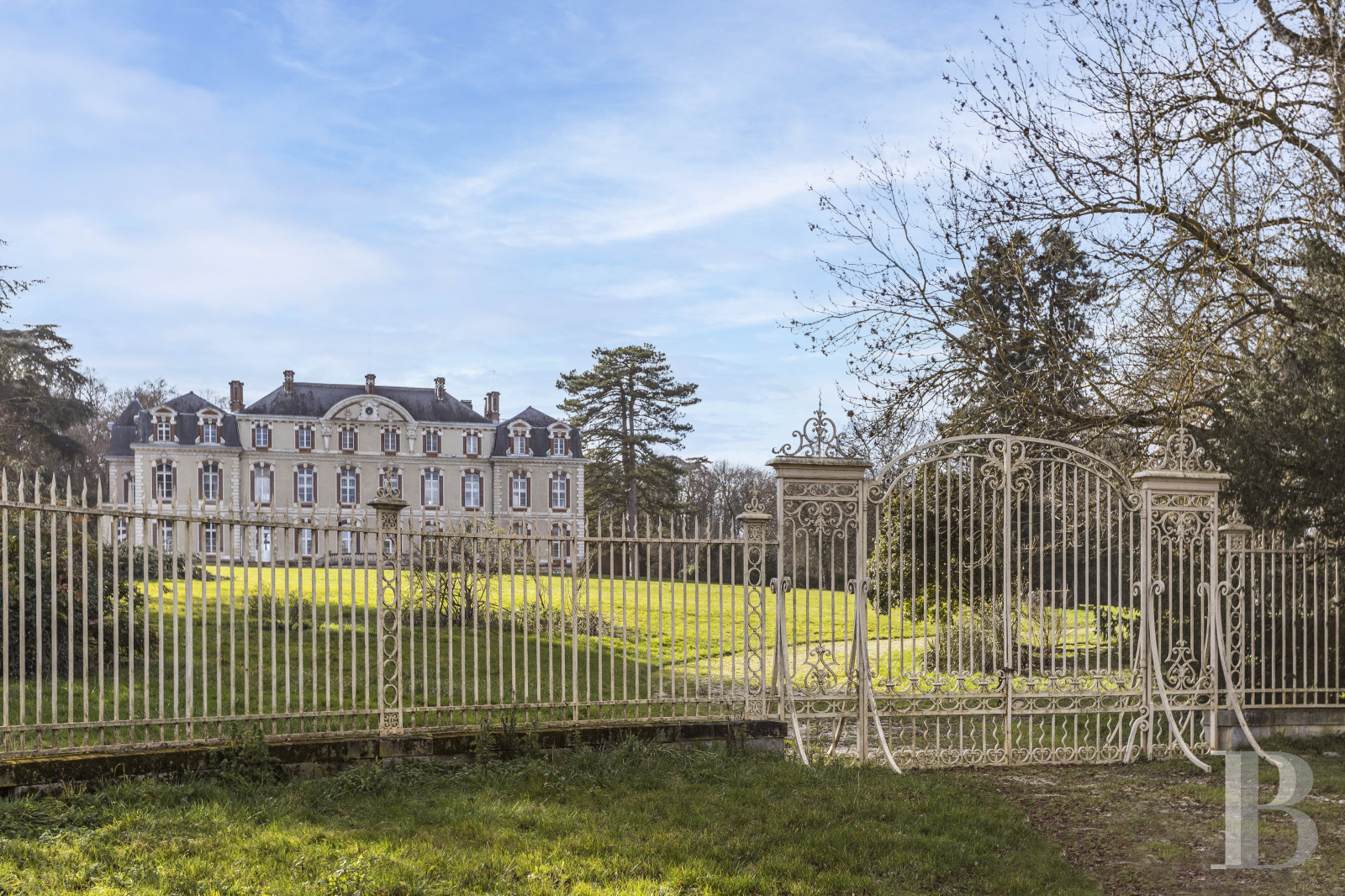
The mansion boasts a view of the Gâtinais sector’s wooded countryside from its dominant position. In front of the mansion, the garden is made up of lawned areas and enjoys uninterrupted views of the countryside below. To the rear, the grounds are wooded. The rectangular main building stands in the centre, opposite a wrought-iron entrance gate that opens into the approximately 10-hectare grounds. Part of the land can be built upon. Further away to the east, there are outbuildings set in a V-shape around a flat courtyard. The outbuildings have their own entrance from the village and are followed by several buildings housing technical facilities. Gravelled driveways make it easy to park as well as get around the property.
The mansion
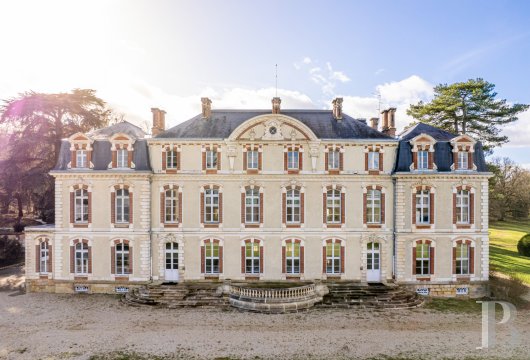
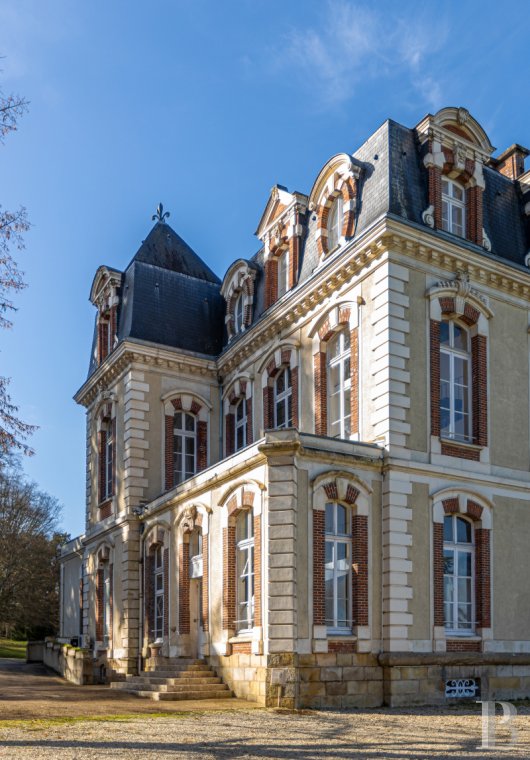
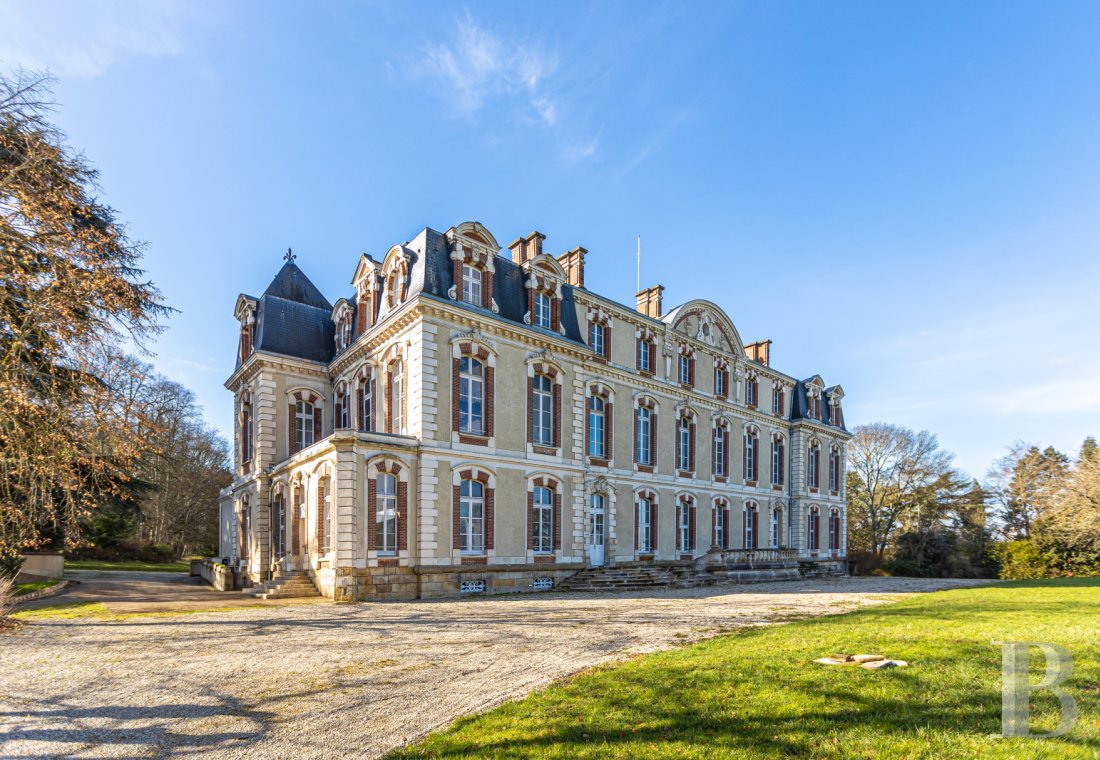
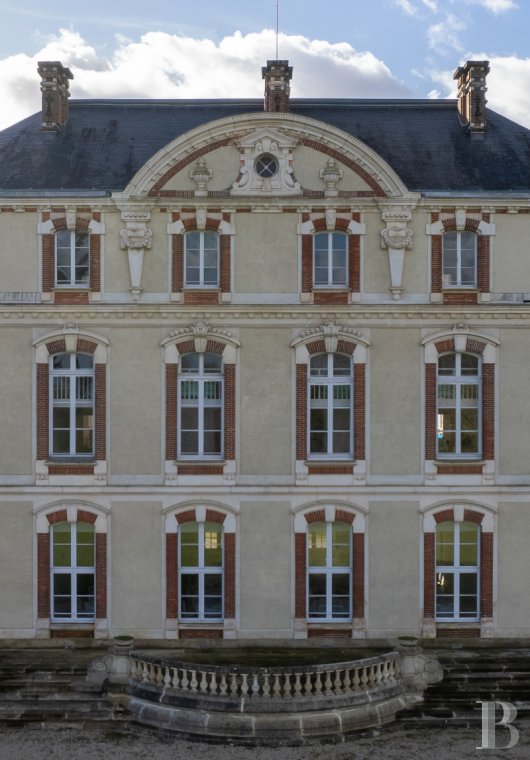
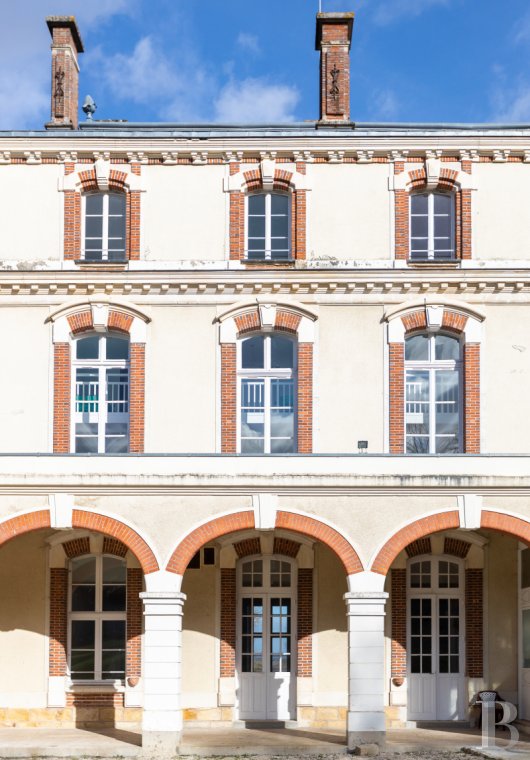
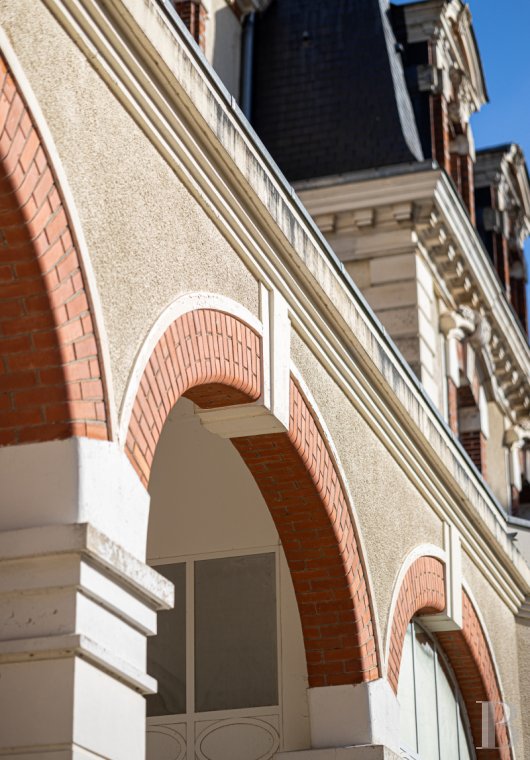
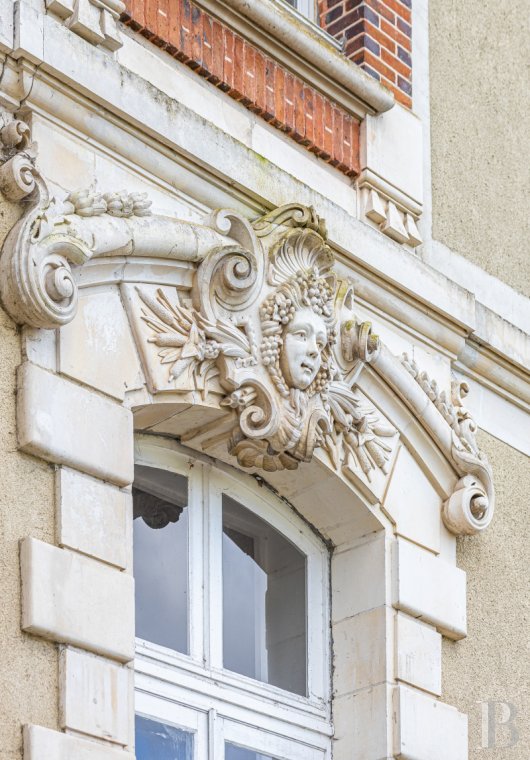
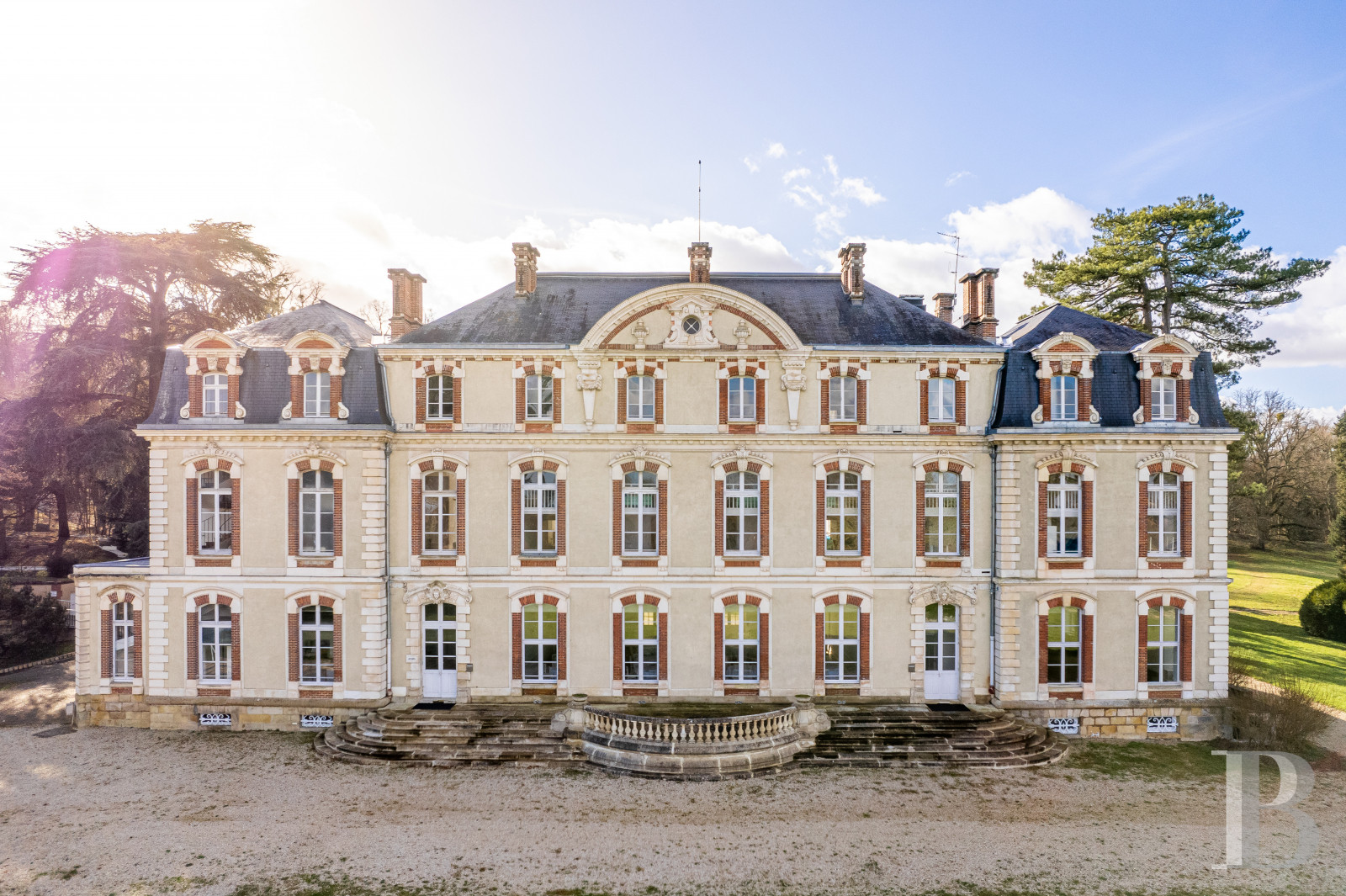
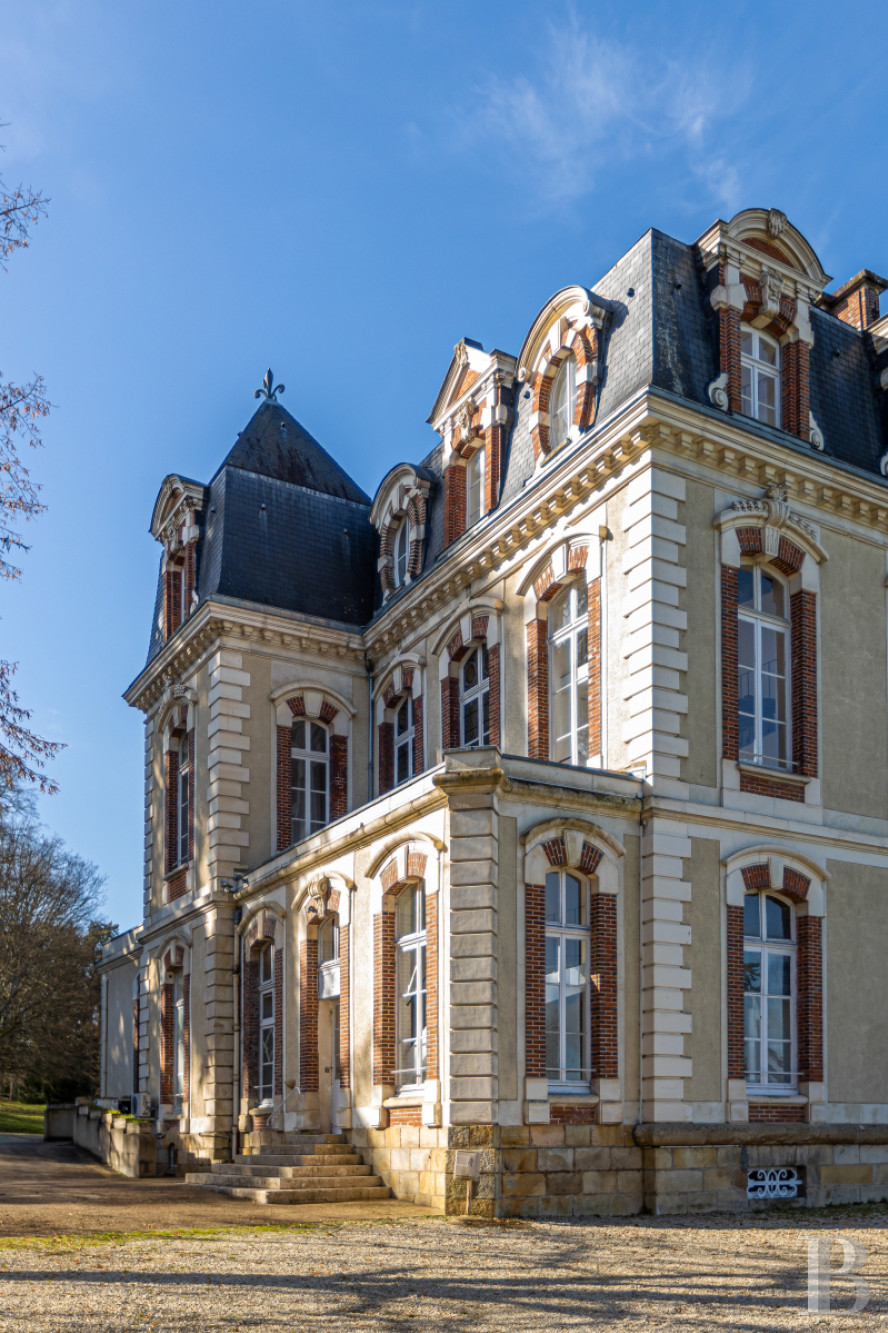
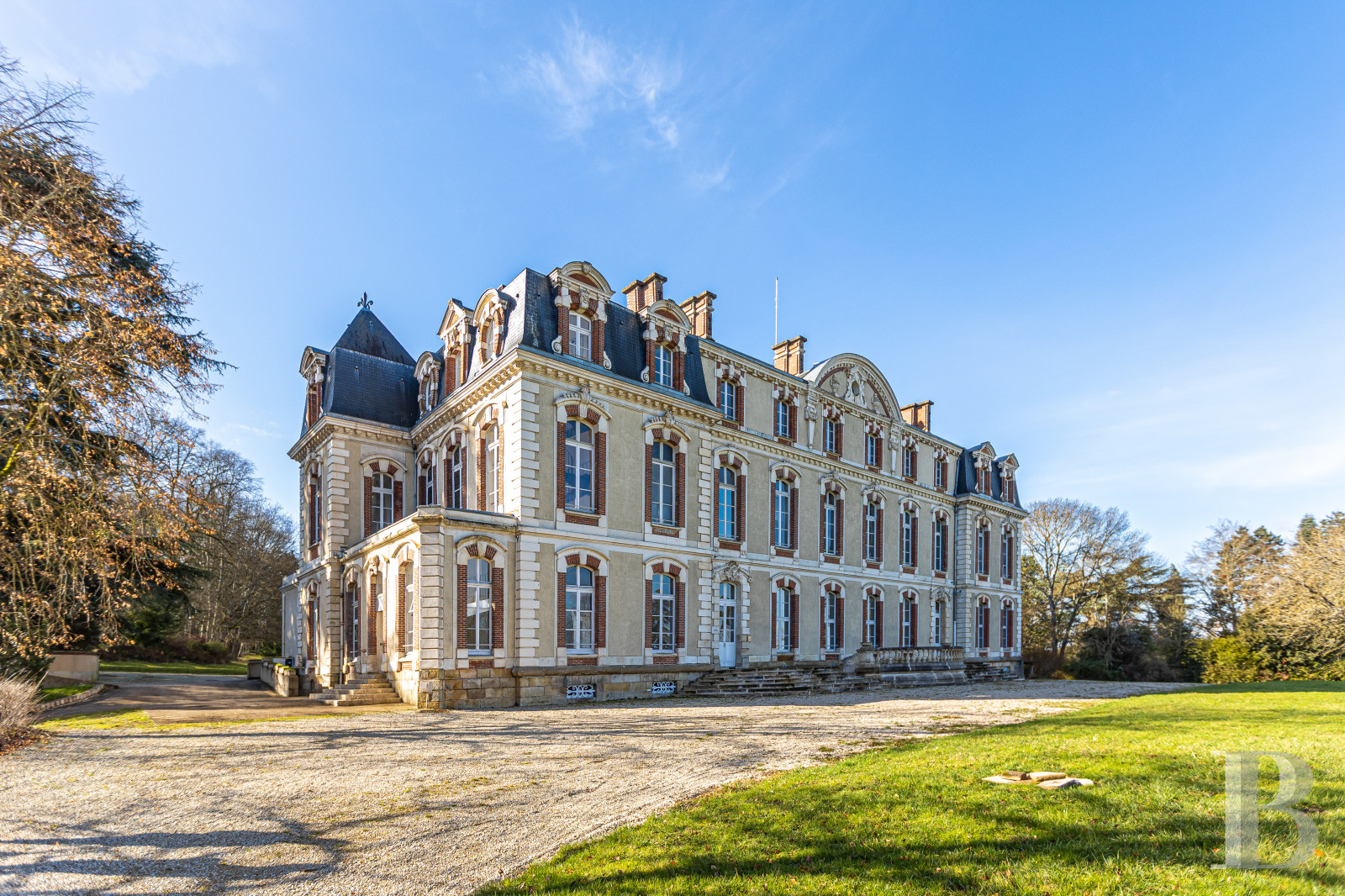
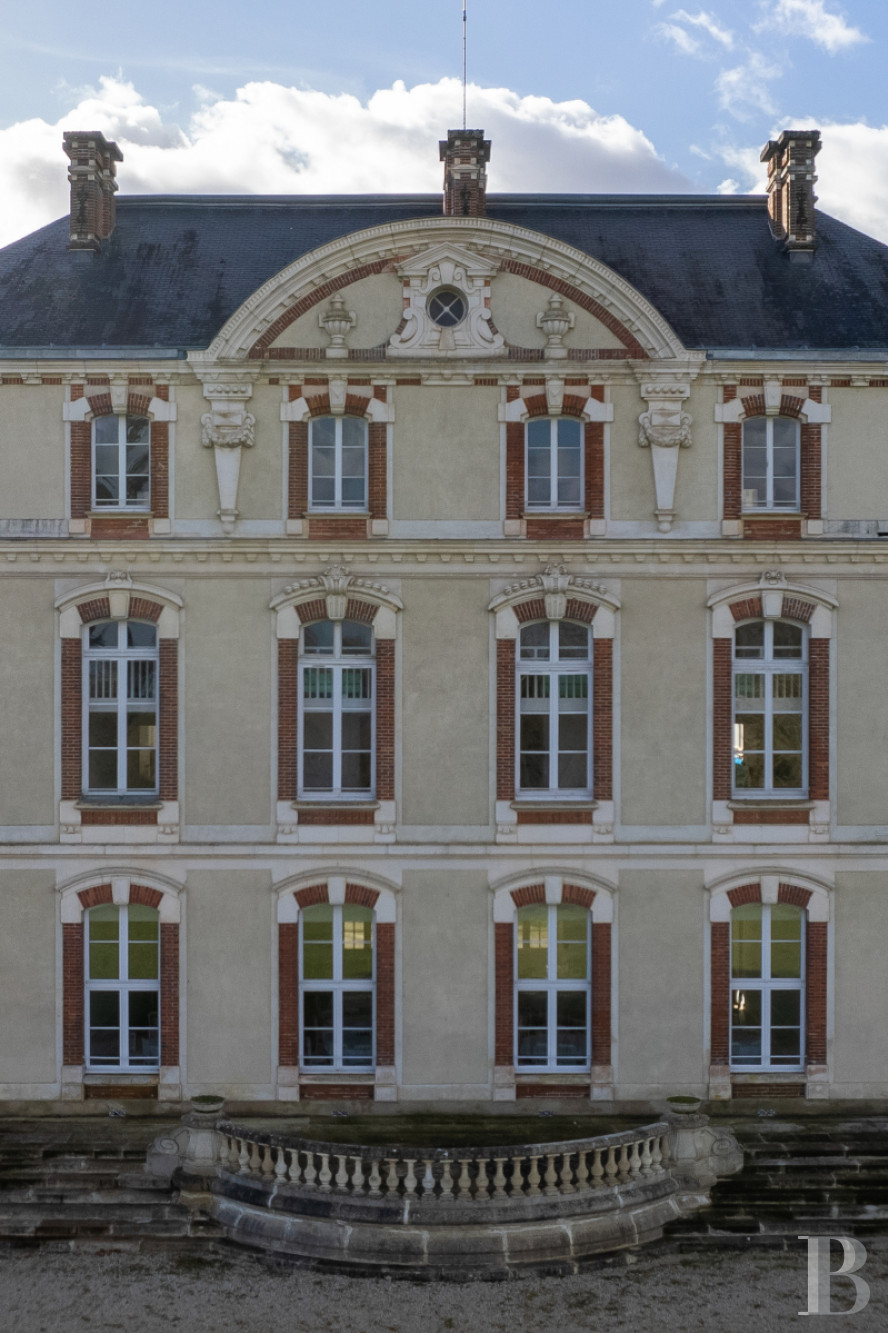
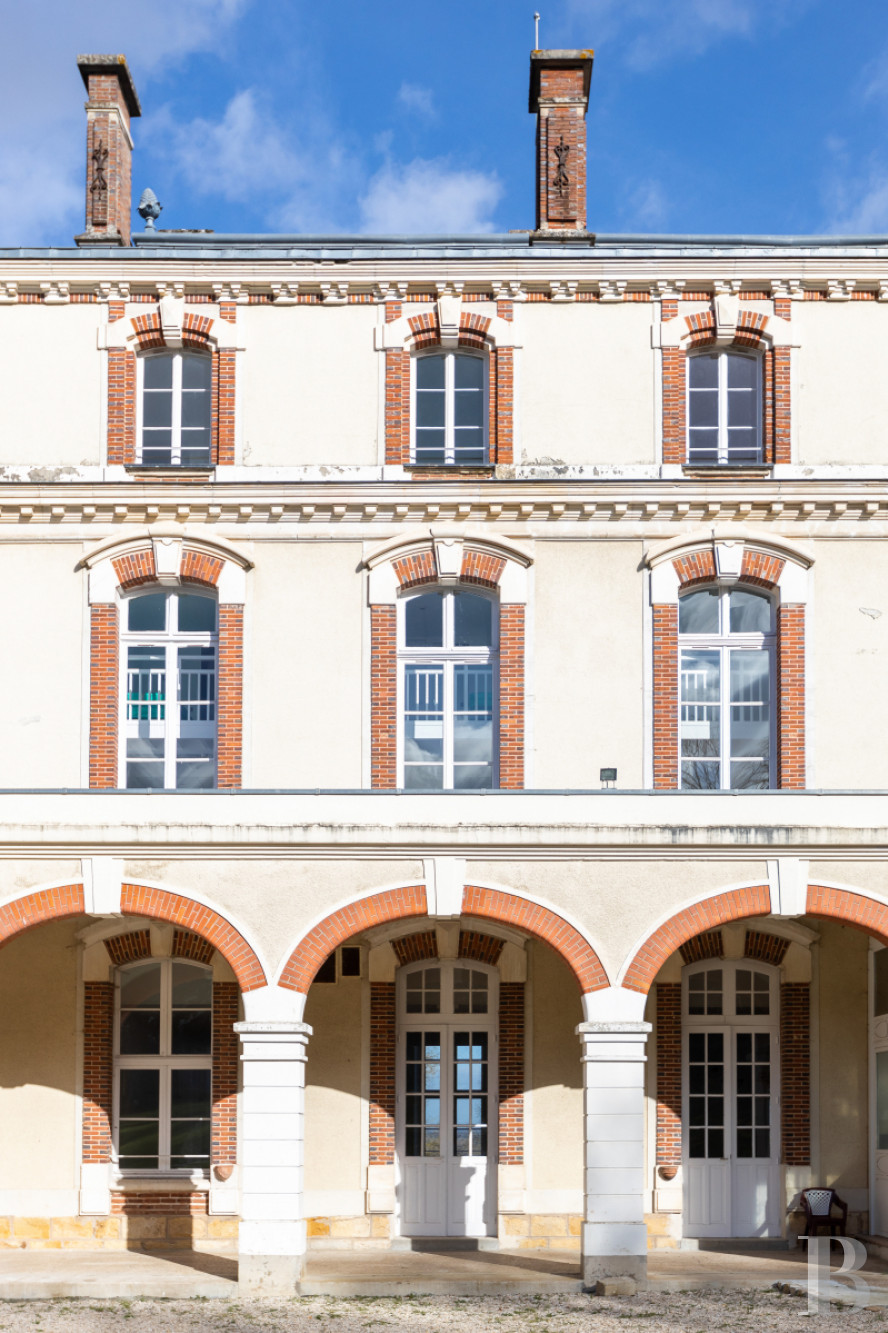
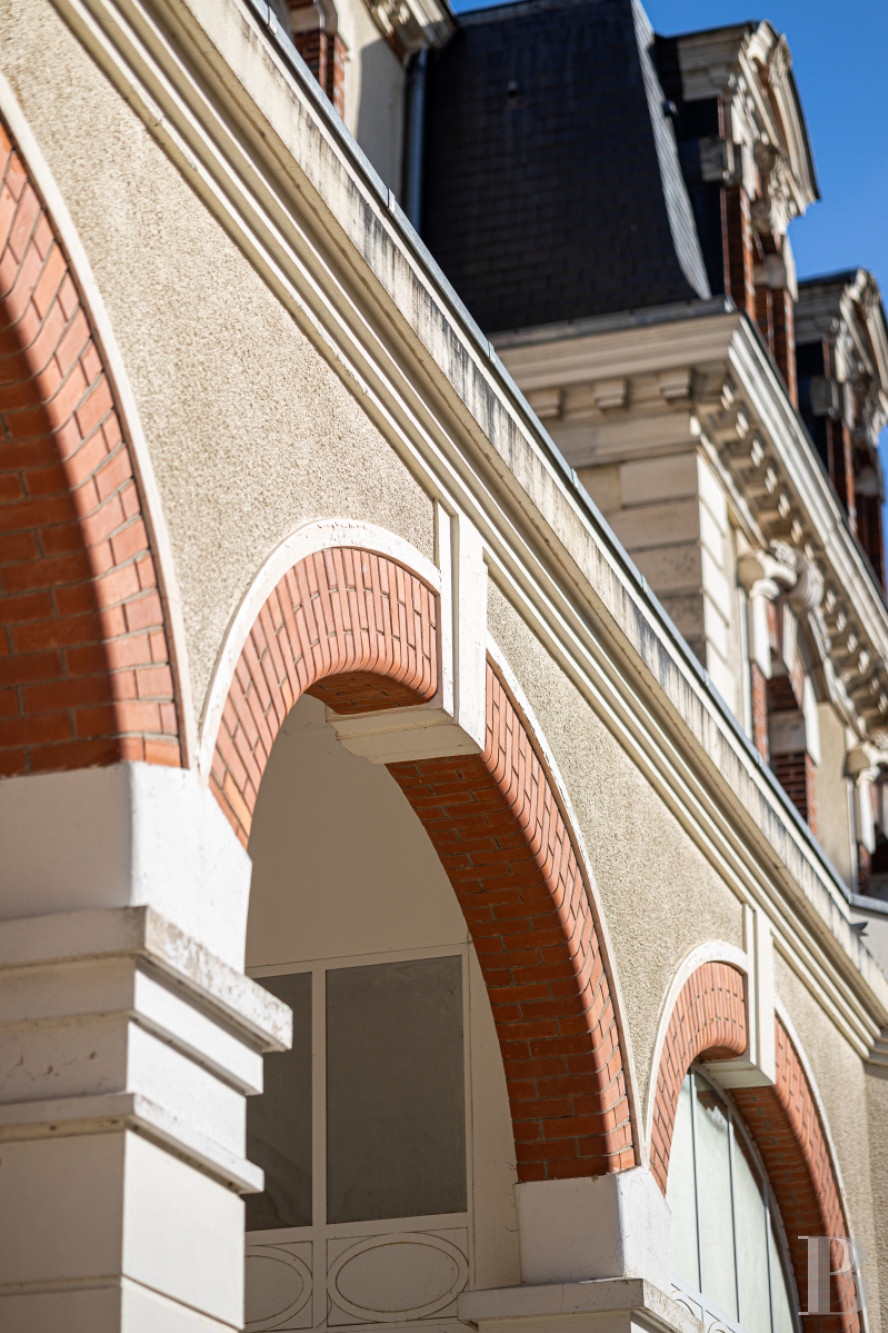
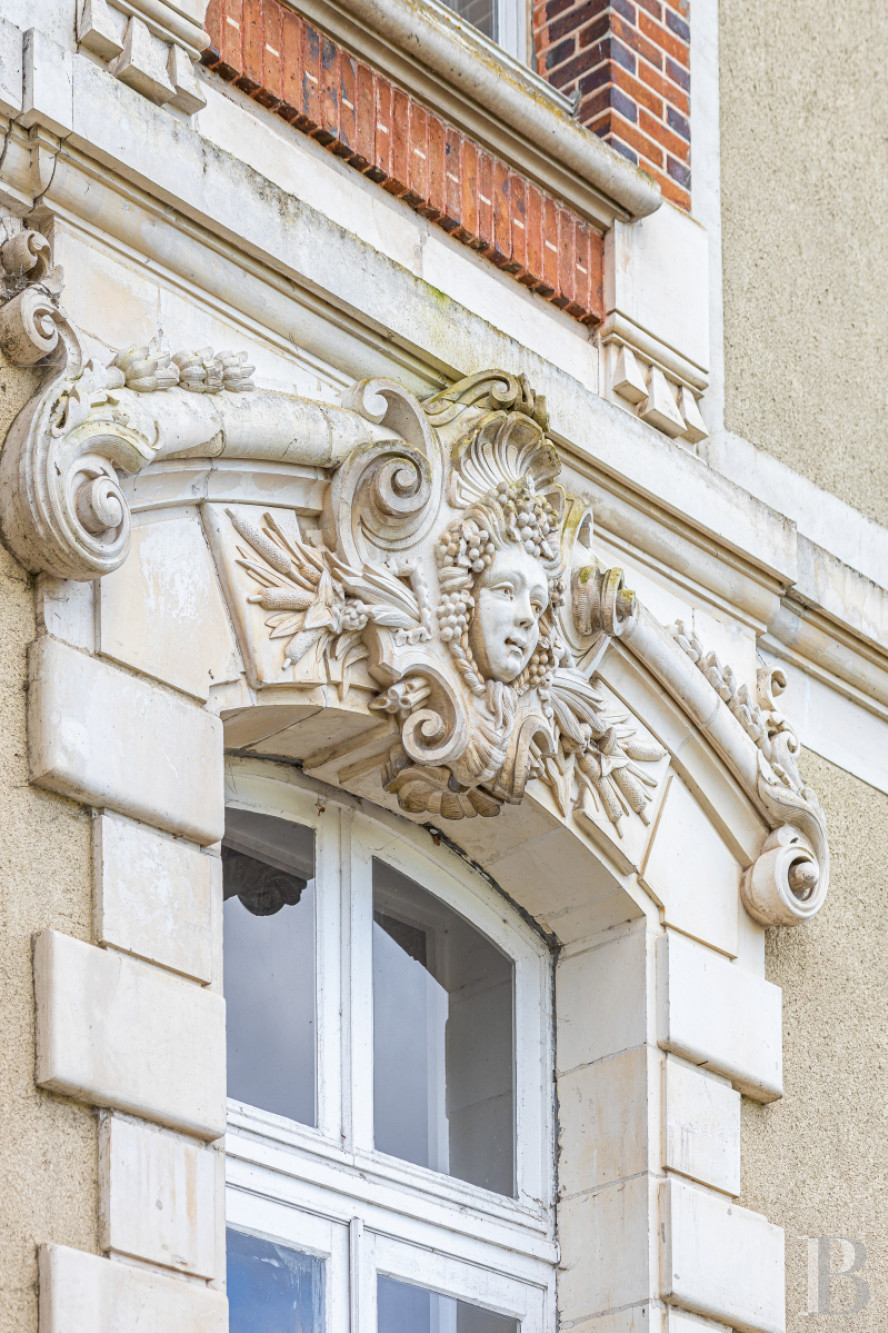
It was built in the 18th century, on the site of a feudal castle, and belonged to the Paris family until the 19th century, when it underwent alteration work. Thereafter, in 1934, it was passed on to the Oblats de Marie Immaculée congregation, who turned it into an imposing seminary. The rectangular main section, beneath a slate hipped roof and flanked by two slightly protruding pavilions with Mansard roofs, has six vertical rows of windows. The two central ones are topped by a semi-circular pediment punctuated by a central bullseye window. The stoop at the top of a flight of steps leading to the raised ground floor boasts a balustrade made up of rounded, stone balusters. On each side, the French windows are topped by mascarons surrounded by plant-like elements. The rendered stone facade is punctuated by many casement windows with brick surrounds, providing a nice contrast of colours, while the quoins are made of stone. At the rear, the ground floor boasts a covered gallery with semi-circular arched arcades.
The mansion possesses approximately 1,800 m² of living space spread over three levels and a basement.
The ground floor
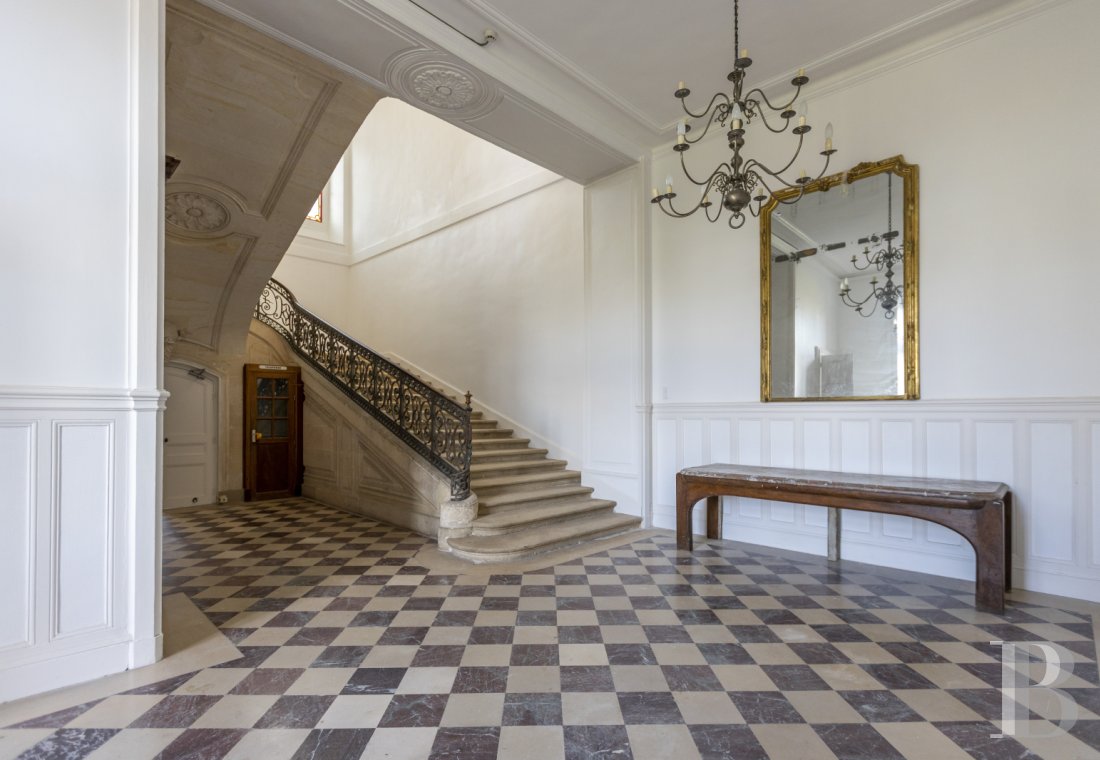
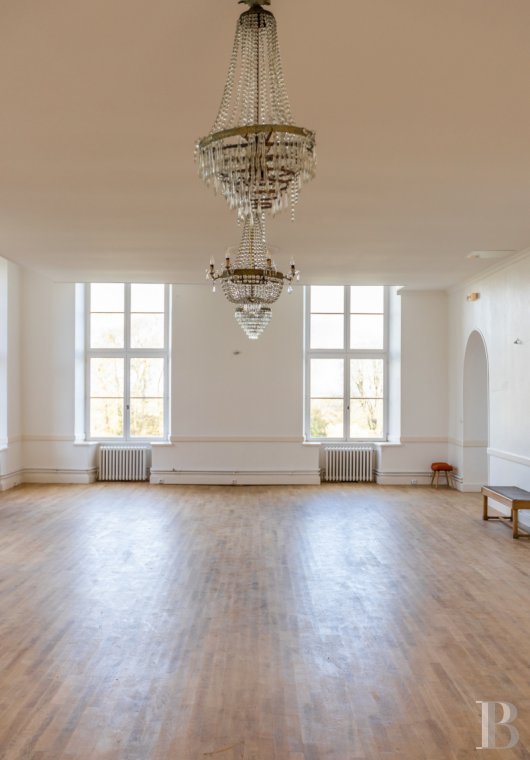
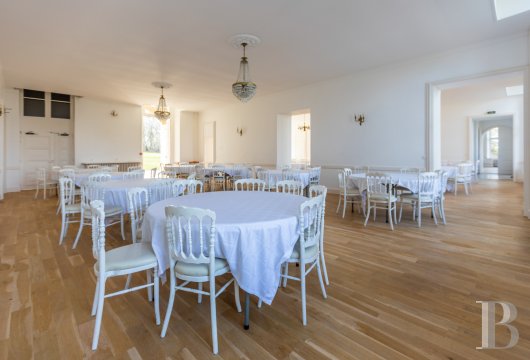
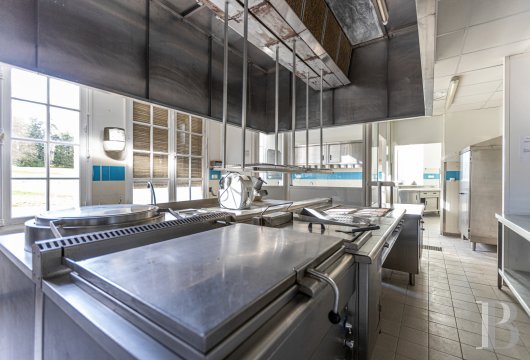
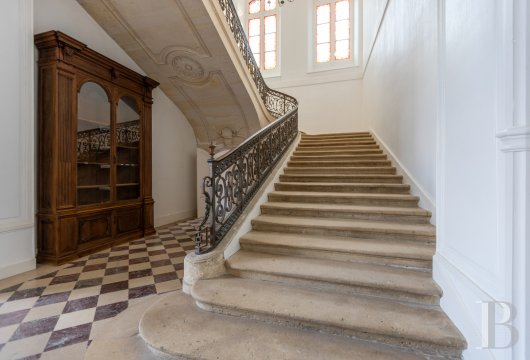
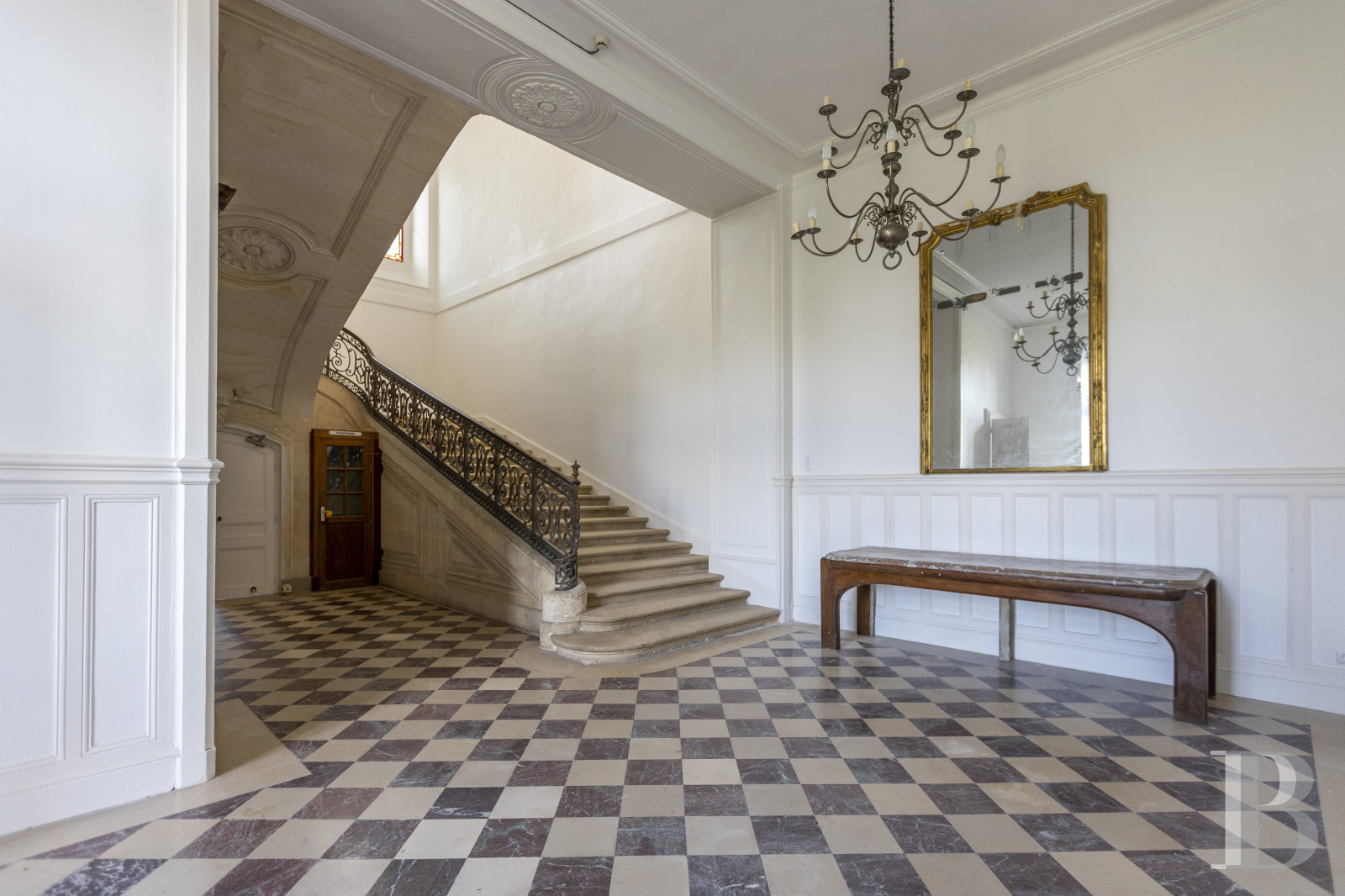
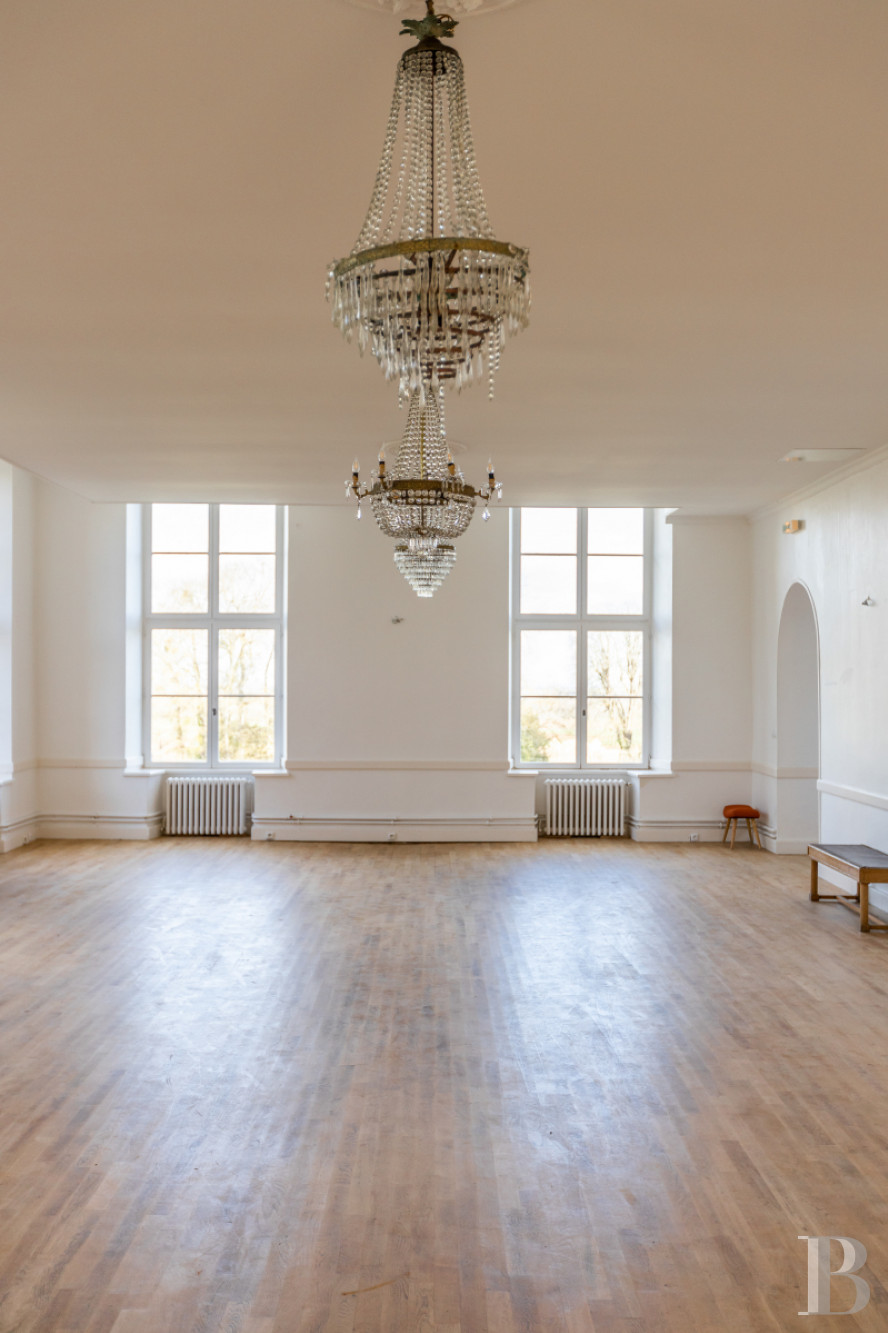
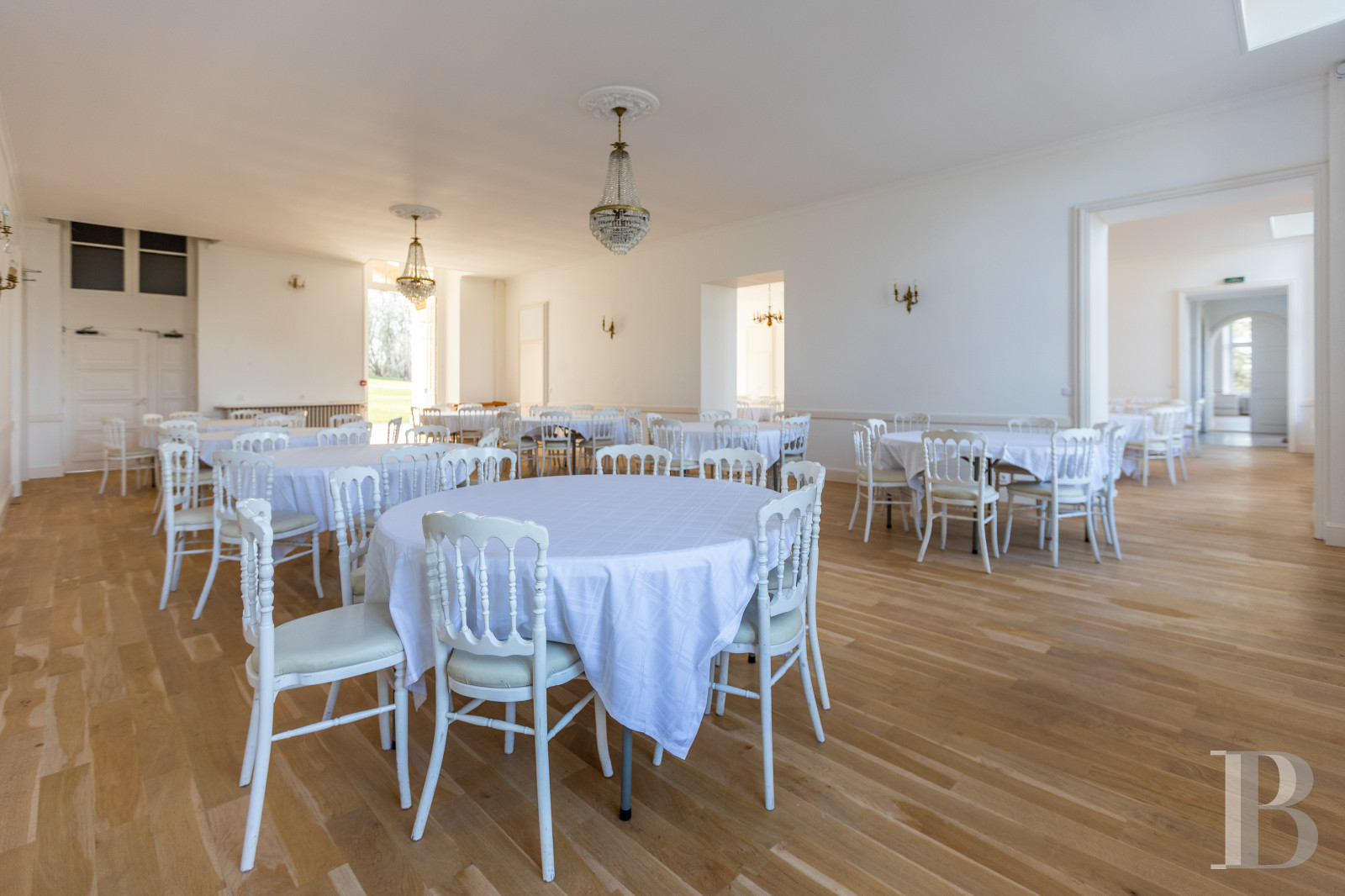
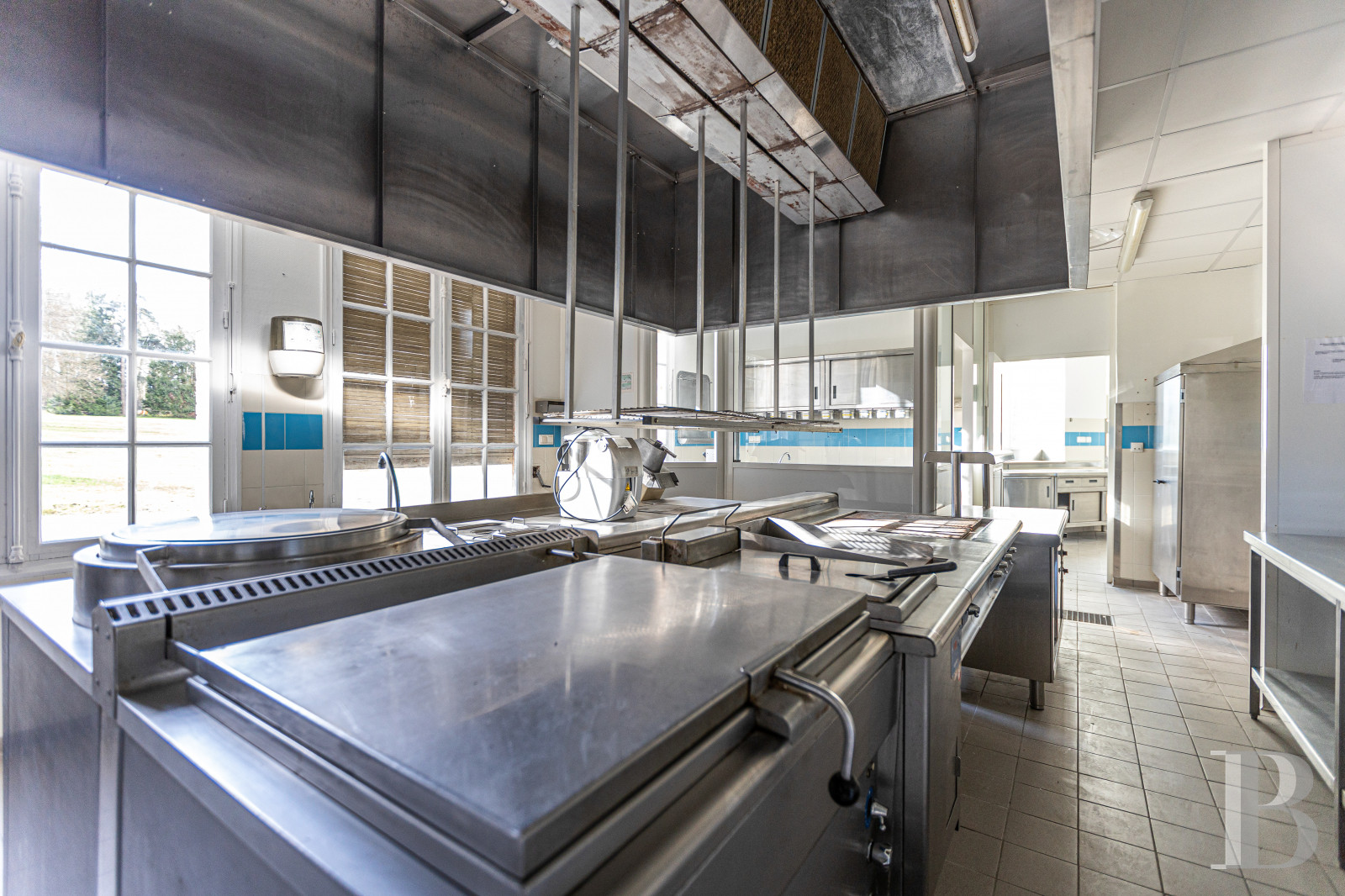
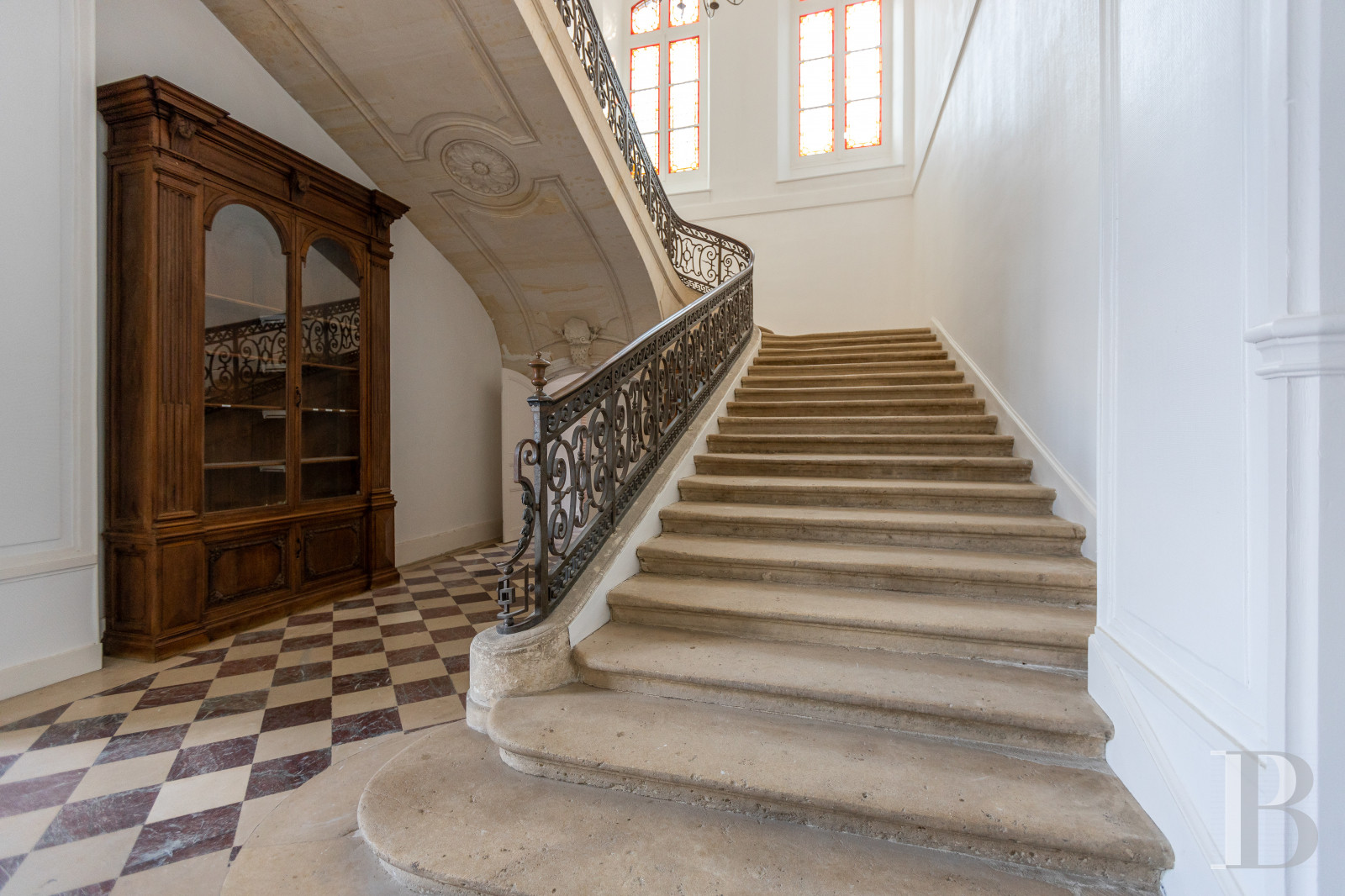
There are many entrances: at the front, to the rear and on the eastern side. In the main hall that pays witness to a rich past, a majestic stone, double-quarter turn, main staircase with two landings, adorned with a wrought-iron balustrade and illuminated by a chandelier as well as stained-glass windows, climbs to the first floor. The casing around the doormat is sculpted with 19th-century motifs, while the floor is paved in a black and white marble chessboard pattern. A double-leaf door opens into an immense, approximately 300-m² reception area, with English bond parquet flooring, that is bathed in light and made up of four rooms, one of which has a surface of around 110 m². To the rear, there is a fitted and fully equipped, professional-grade kitchen. Lavatories, an elevator and a service staircase complete this level.
The first floor
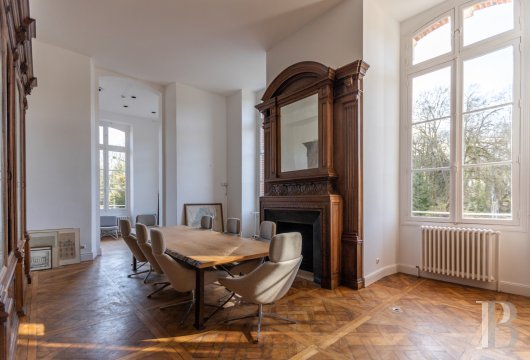
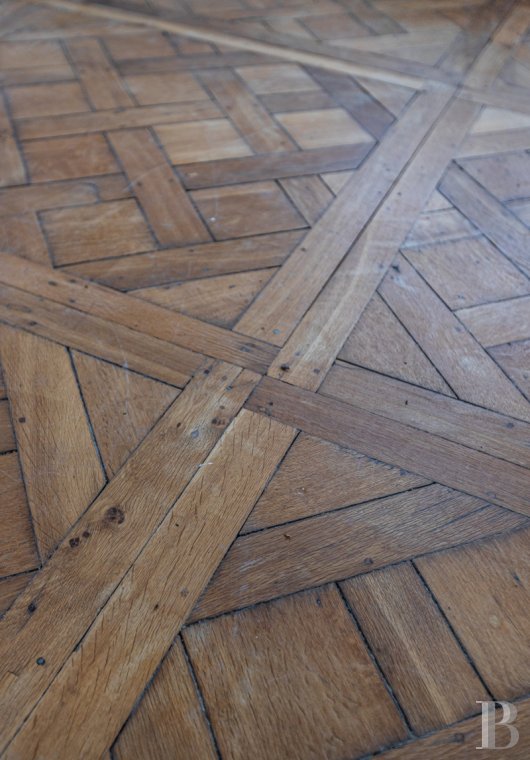
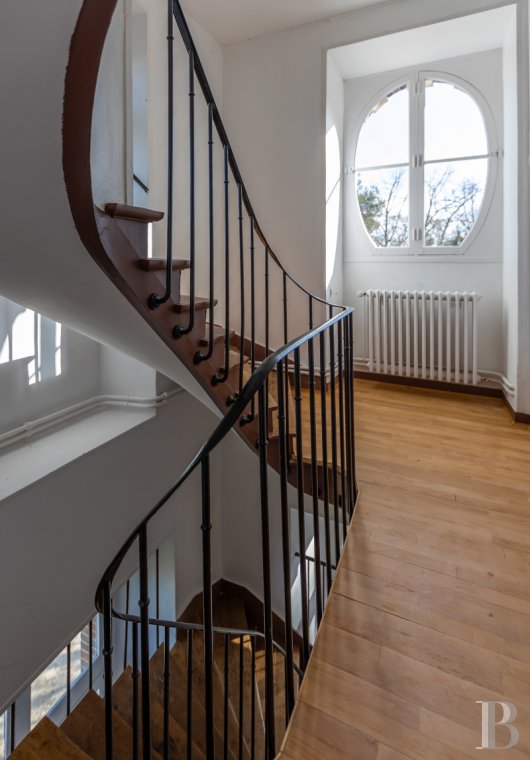
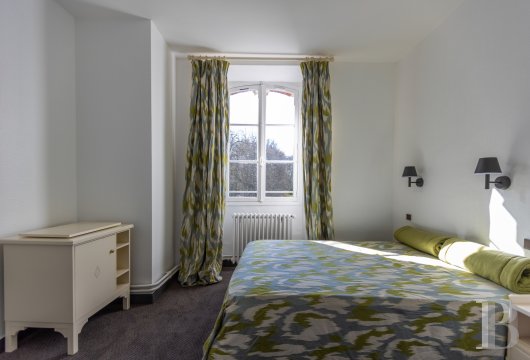
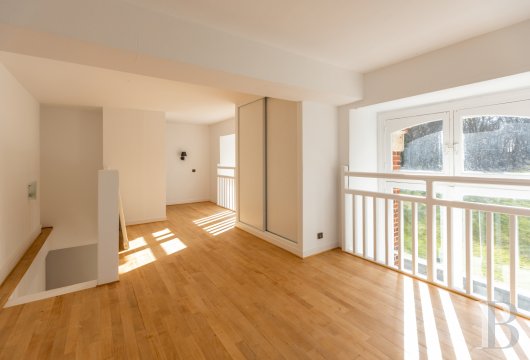
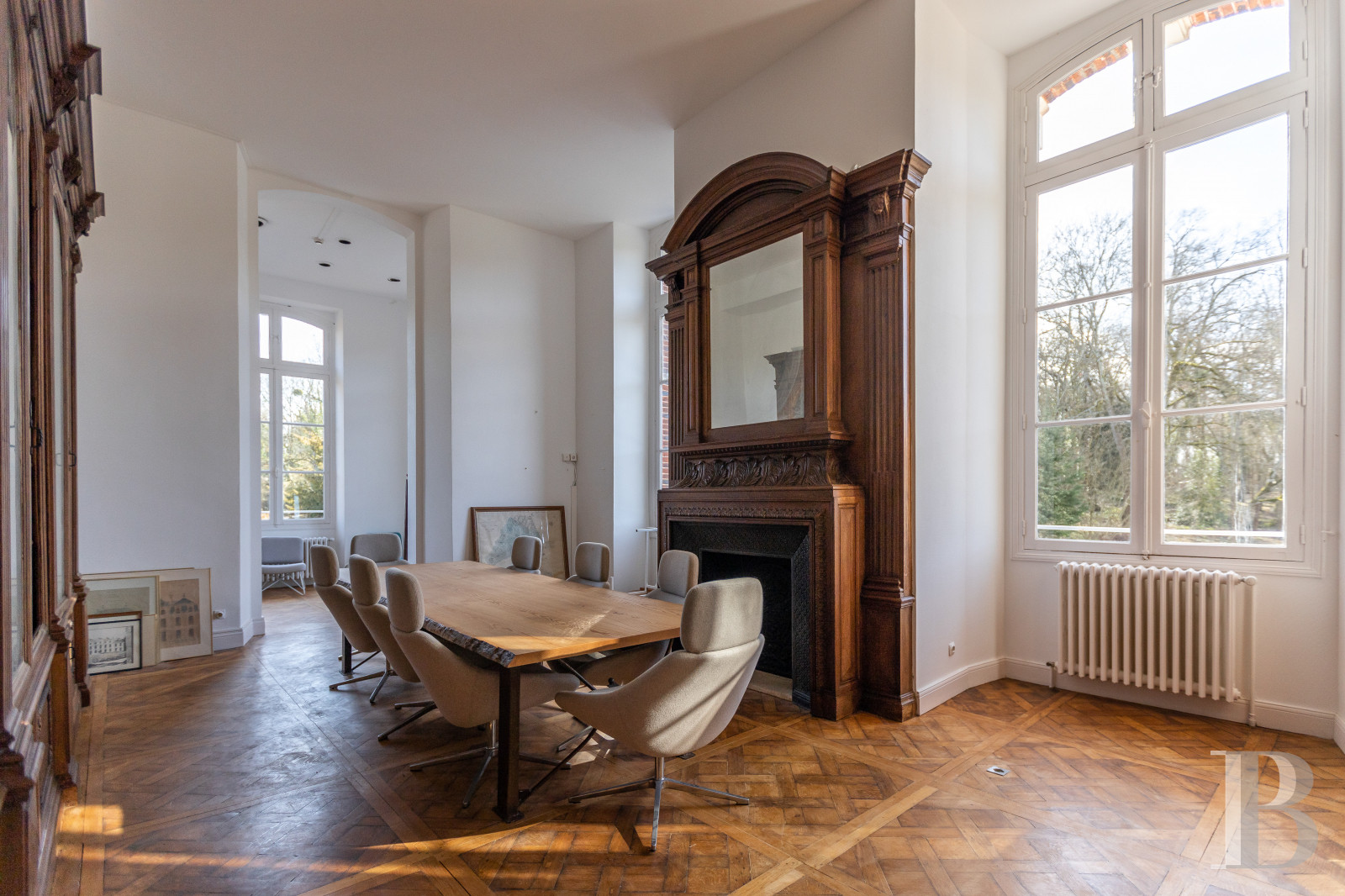
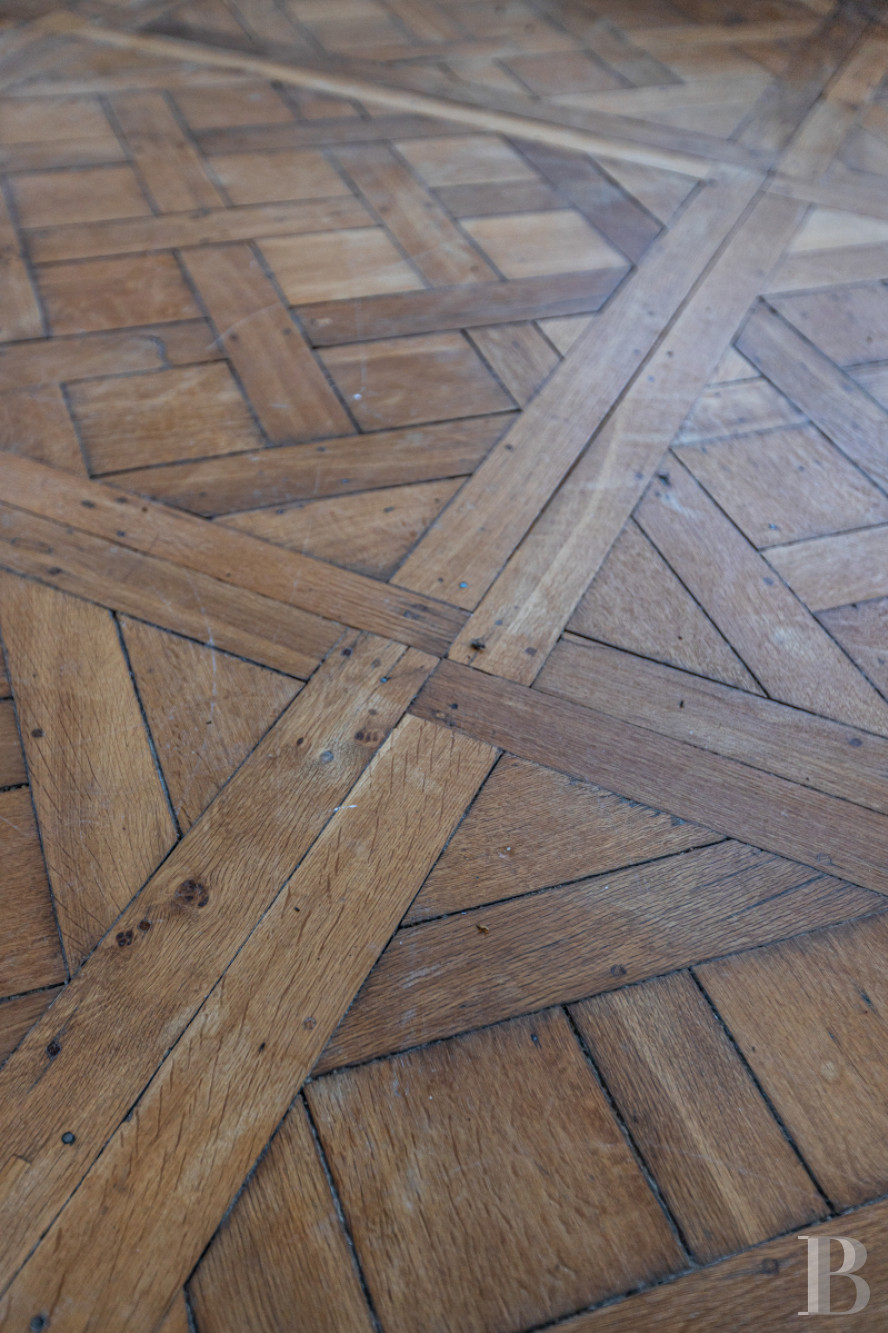
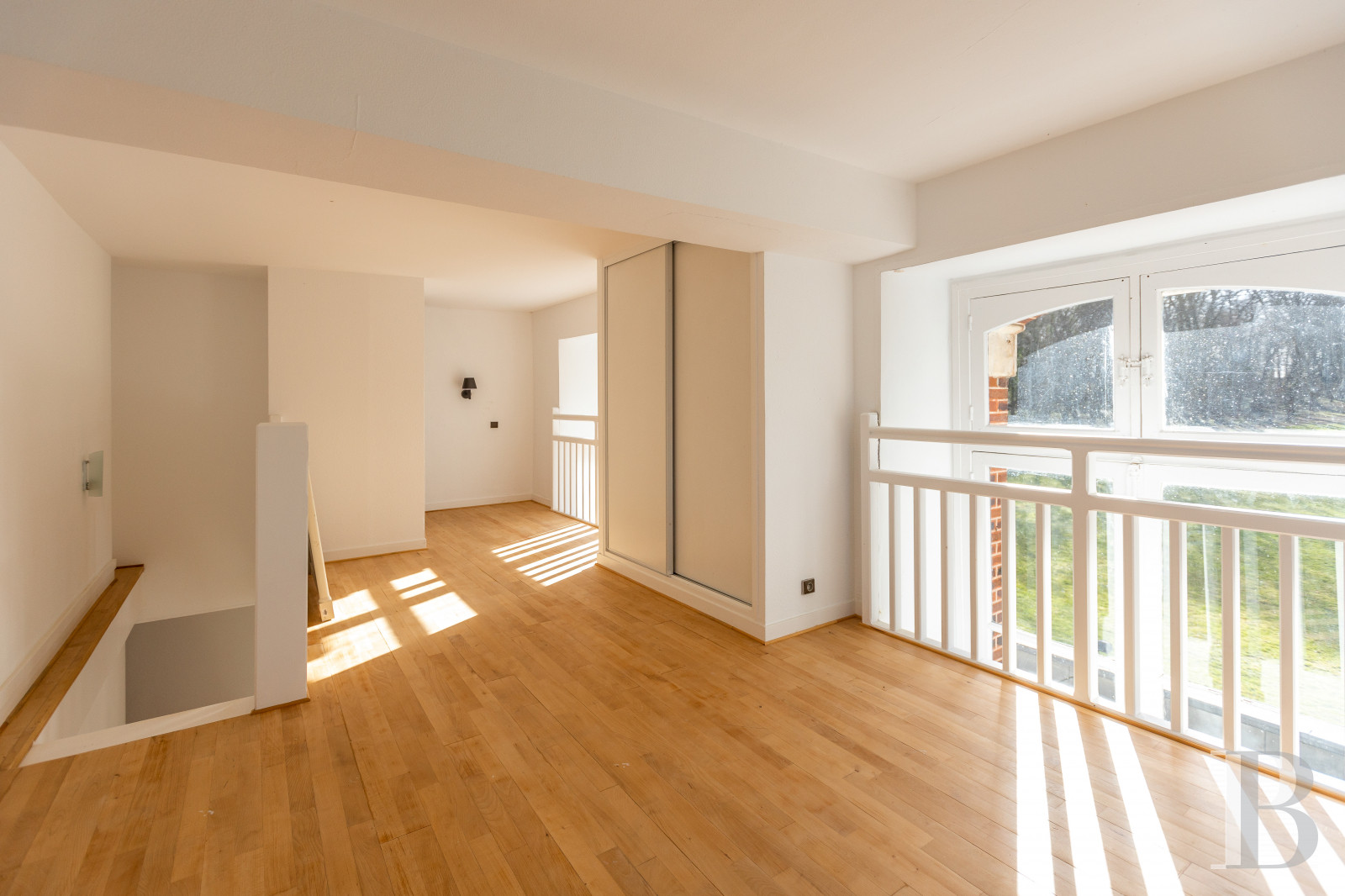
On this level, the landing leads, on one side, to a spacious office, with Versailles parquet flooring, bookshelves and a fireplace boasting a wooden mantelpiece and frame, topped by a trumeau mirror with sculpted oak framing. There is also a lavatory on this side. On the other side, a door opens into a long corridor with English bond parquet flooring, along which are aligned, opposite each other, eight suites, with carpeting, mezzanines with guard-rails and English bond parquet flooring, shower rooms and lavatories. The corridor leads to the western landing, where there is the elevator, an oakwood staircase, a technical installations room, a suite and access to four other spacious suites with mezzanines.
The second floor
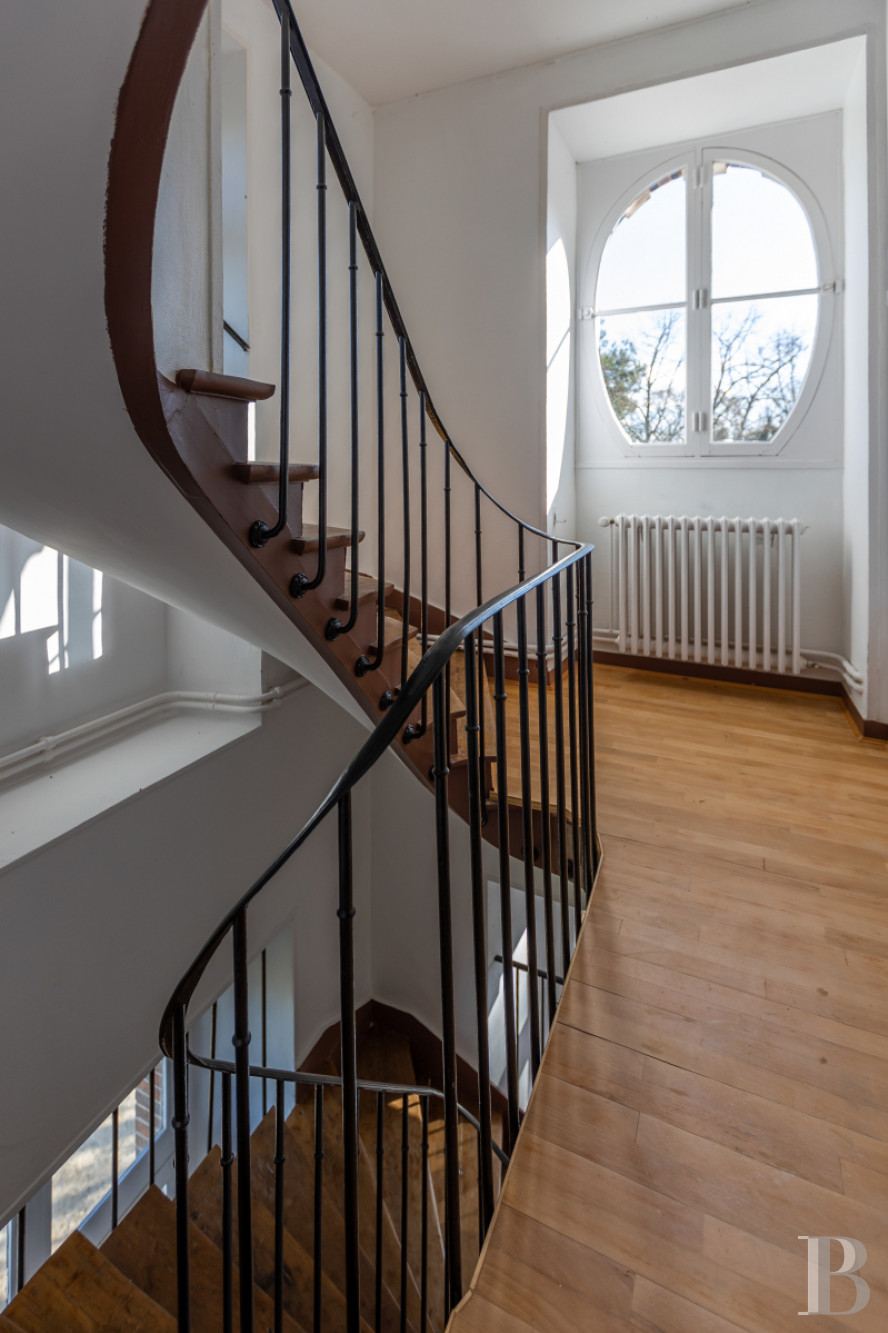
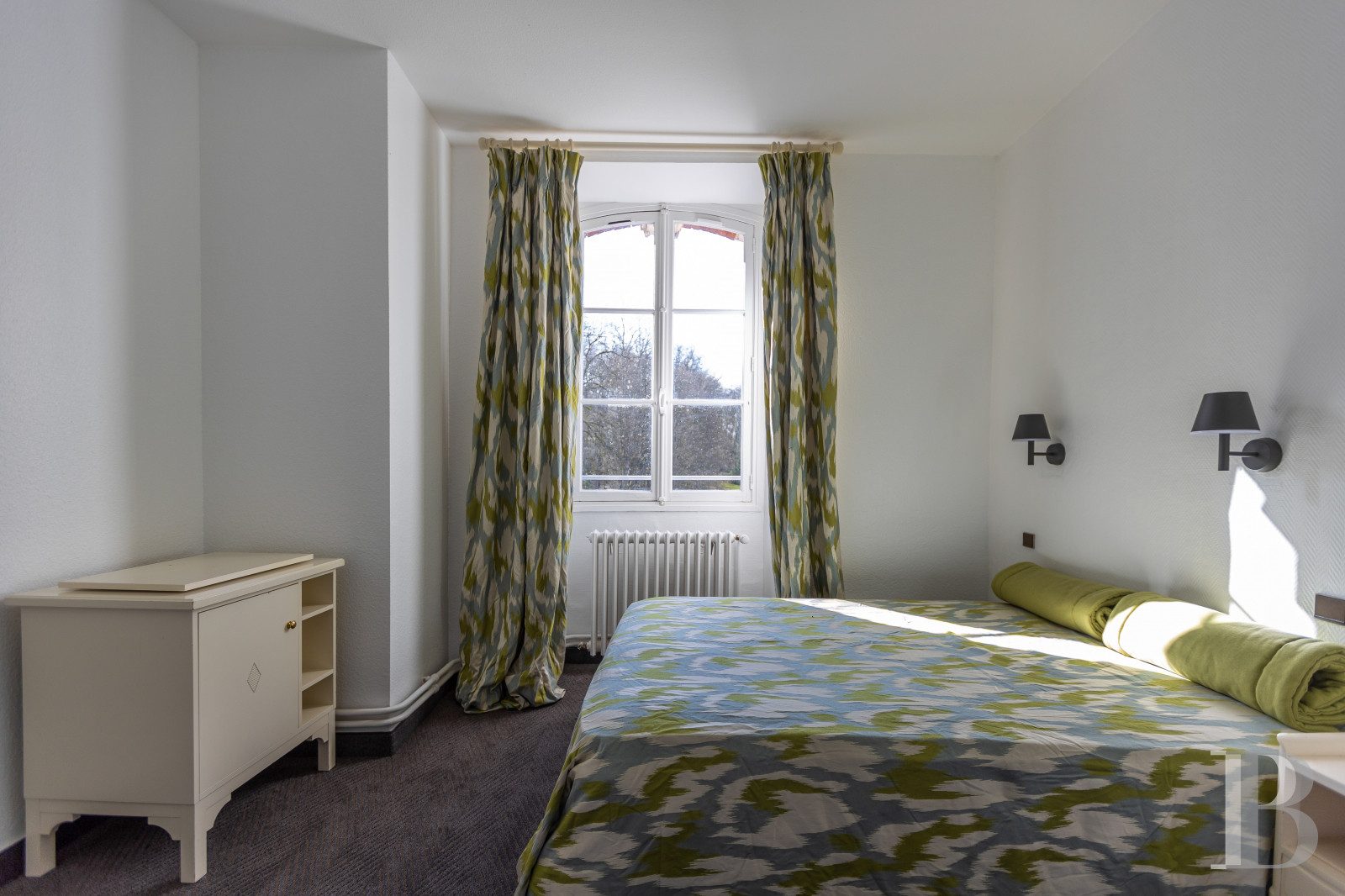
The oakwood staircase, service staircase and elevator all lead to this level, which boasts 18 bedrooms, with carpeted floors, shower rooms and lavatories.
The outbuildings
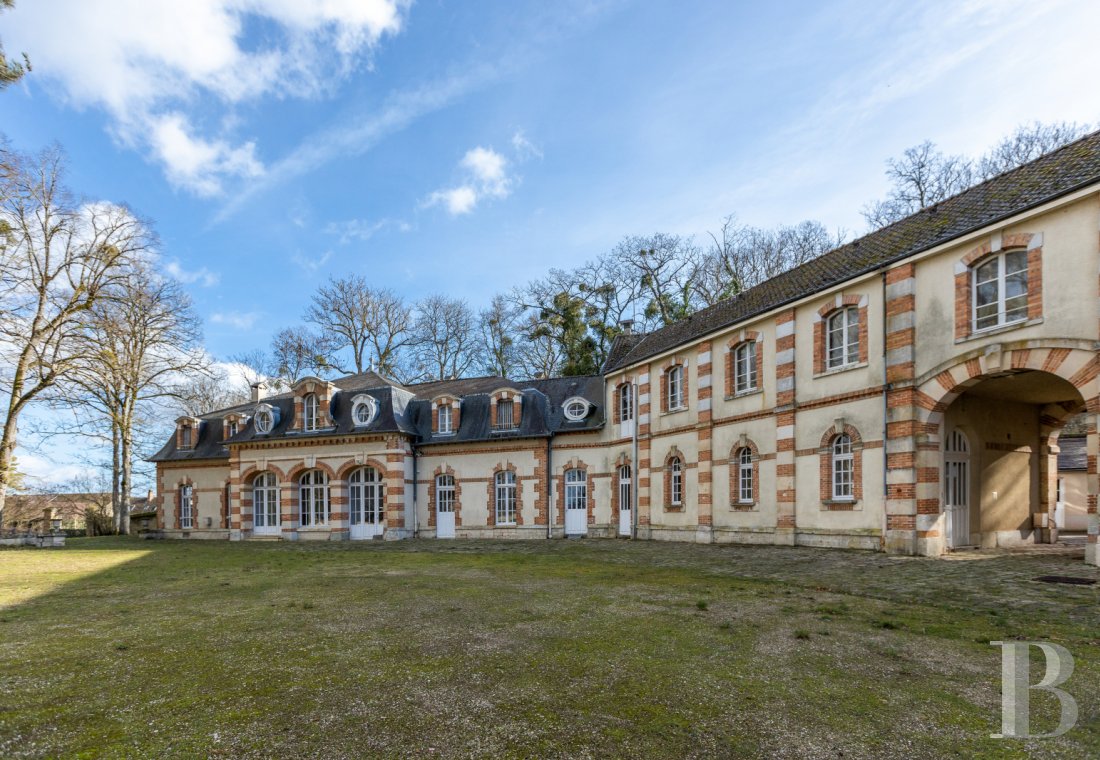
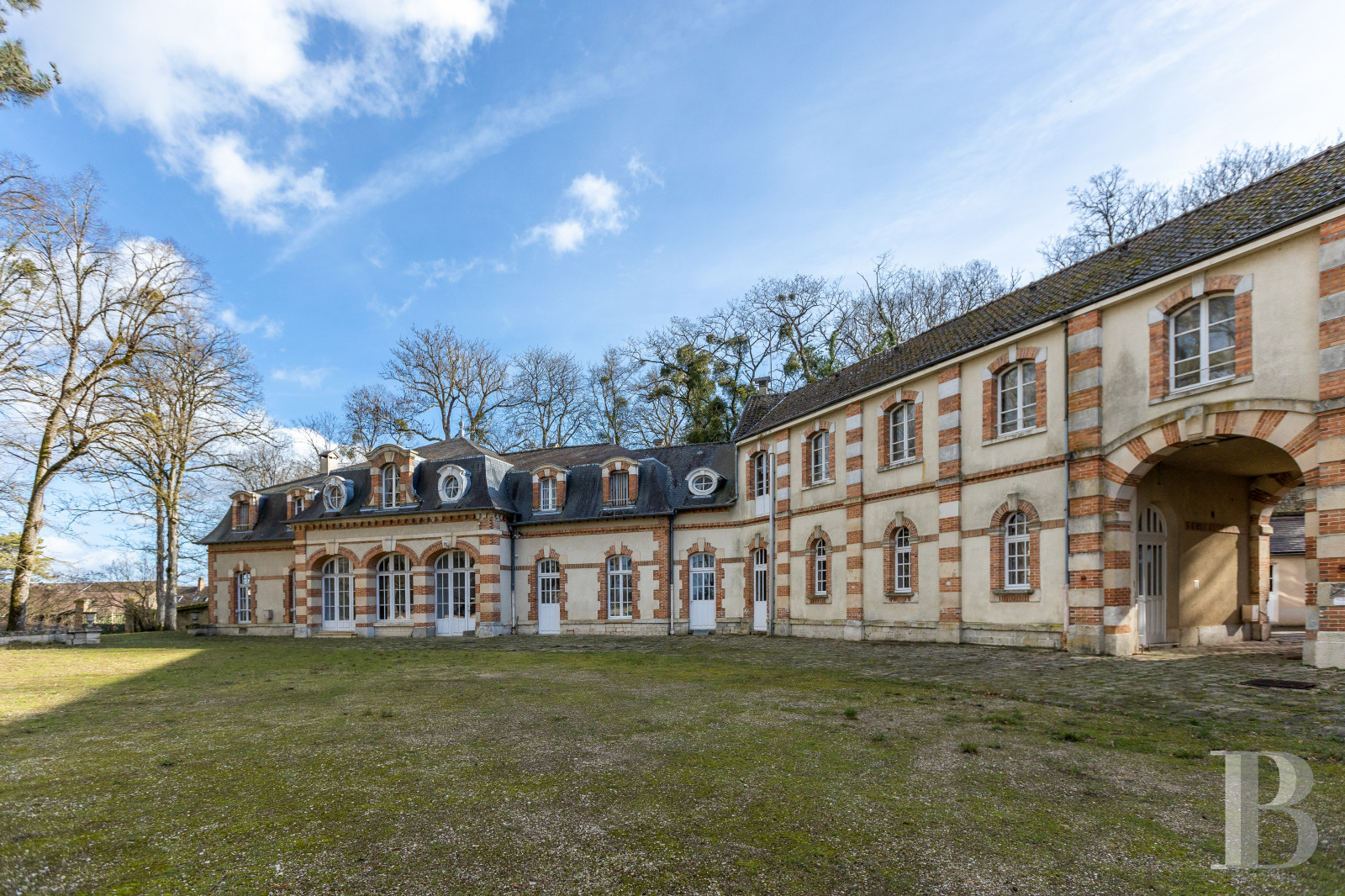
The long V-shaped building is made of rendered stone and brick, with the quoins also made of brick, and is similar in appearance to the mansion. The rectangular central section is framed by two wings with Mansard roofs punctuated by dormers with rounded roofs and bullseye windows. In the centre, there is a carriage gate that leads to a building, in the rear courtyard, housing, amongst other things, the fuel-oil tank. The building boasts approximately 1,000 m² of living space spread over two storeys and a basement.
A little further away, there are two other buildings: the boiler facility and a storage building, housing the waste bins.
The ground floor
This level boasts two reception rooms, a cinema room, a fitness room, a sauna, a lounge with a fireplace, a linen room, a utility room, various storage rooms, an office and a lavatory.
The first floor
This level is made up of four apartments. The first includes three bedrooms, a shower room, a bathroom, a kitchen and a lavatory. Another apartment contains two bedrooms, a shower room and a lavatory. There is also a third 25-m² apartment and finally an approximately 51-m² one. The central section houses 10 bedrooms with shower rooms and lavatories. An approximately 29-m² room and a lavatory complete this level.
The grounds
They are made up of woods and meadows and spread over approximately 10 hectares. They were designed in the 19th century by the eminent Second Empire landscape architect Jean-Pierre Barillet-Deschamps, who was the gardener in chief of the promenades and plantations department for the City of Paris. He was responsible for the development of the Bois de Vincennes and Bois de Boulogne woods, plus the Butte-Chaumont and Monceau parks. The grounds were planted with trees that, at the time, were rare and came from the four corners of the globe: sequoias, ginkgos, cedars, sophoras, eastern American black walnut, Douglas firs and pines alongside hundred-year-old oaks.
Today, a surface of around 8,600 m² can be built on, as part of a project linked to the mansion.
Opposite the edifice, a former Louis XIII pavilion, with its archetypal octagonal shape, is topped by a slate Manard roof, resembling an 18th-century folly. To return it to its splendour of yesteryear, work will be necessary.
Our opinion
With its endless number of bedrooms, suites, apartments and reception rooms, not to mention its 10-hectare grounds, this 18th and 19th century mansion, plus its outbuildings, alongside which flows the part of the River Yonne running through the Gâtinais sector, seems an ideal place for continuing the tradition of theological seminary launched by the Oblats de Marie Immaculée congregation. However, the property could also lend itself to many other uses: a retirement home, a private boarding school (the nearest senior high school is 30 minutes away in Fontainebleau), a hotel or a business seminar venue, amongst others. Its closeness to the French capital and location on the edge of the Île-de-France region, at the gateway to Burgundy, could play a key role in its future purpose.
The 8,600 m² plot of land that can be built upon in the grounds below the mansion provides the possibility of erecting one or more edifices for a project linked to the mansion.
2 600 000 €
Fees at the Vendor’s expense
Reference 731603
| Main building floor area | 1844 m² |
| Outbuildings floor area | 1398 m² |
| Land registry surface area | 12 ha 48 a 26 ca |
| Elevator | |
| Total floor area | 3242 m² |
French Energy Performance Diagnosis
Information on the risks to which this property is exposed is available on the website: www.georisques.gouv.fr
Share


NB: The above information is not only the result of our visit to the property; it is also based on information provided by the current owner. It is by no means comprehensive or strictly accurate especially where surface areas and construction dates are concerned. We cannot, therefore, be held liable for any misrepresentation.