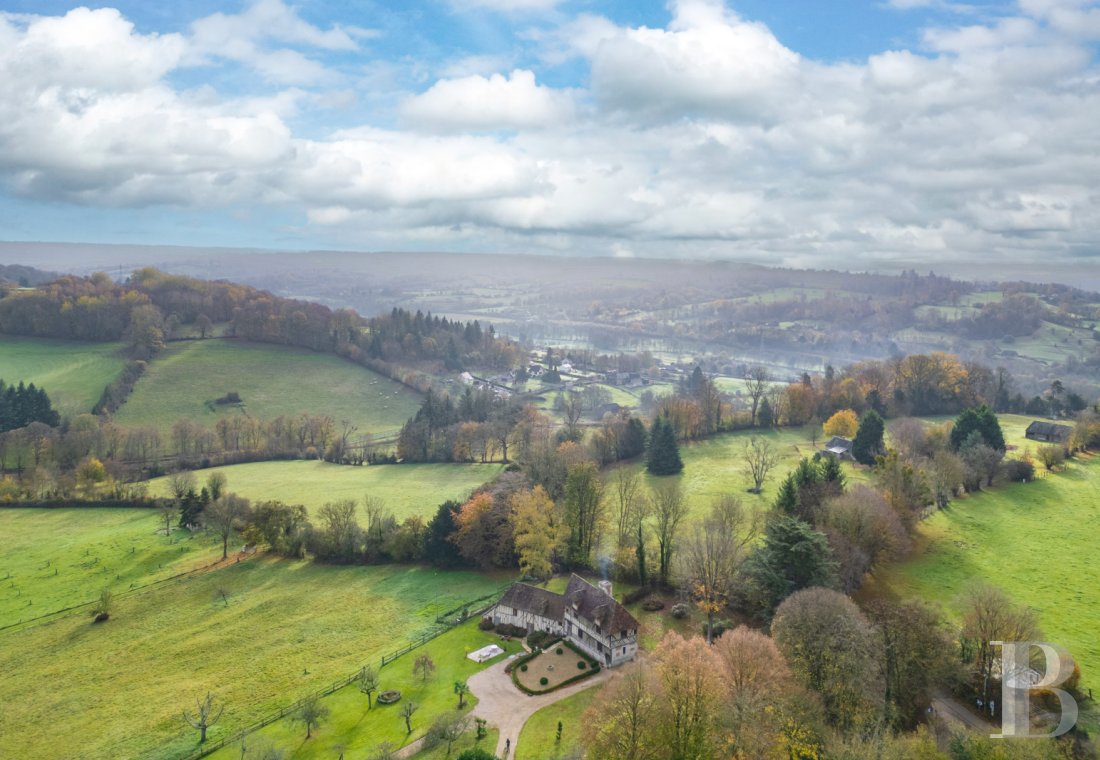




An episcopal manor from the 15th and 16th centuries, tucked away
in France’s Calvados department in Normandy, near the Côte Fleurie coastline
in France’s Calvados department in Normandy, near the Côte Fleurie coastline
Glos,
CALVADOS
lower-normandy
14100
FR

Location
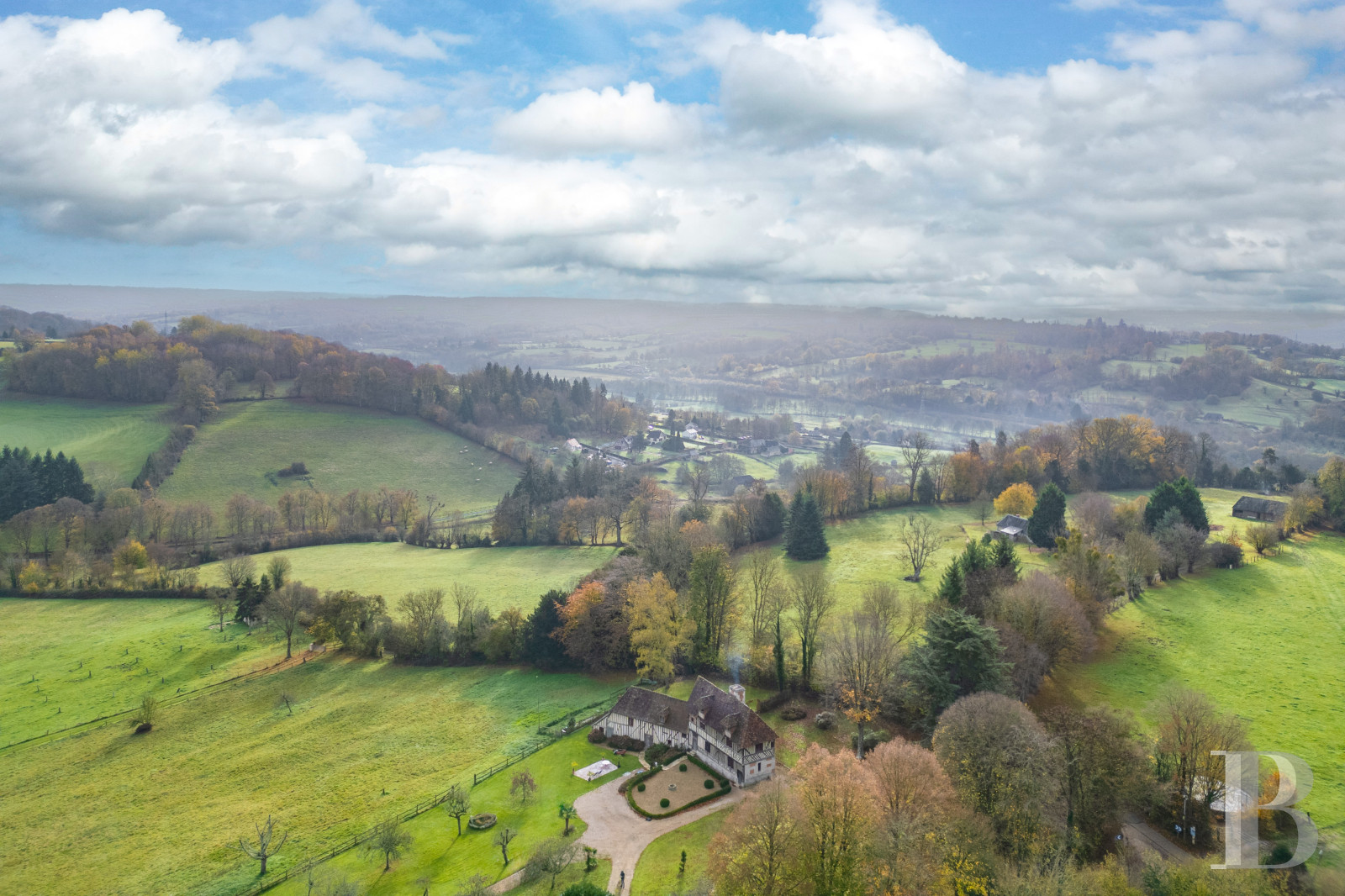
The property lies in the town of Glos, in France’s Calvados department in Normandy, next to the town of Lisieux and 40 minutes from the town of Deauville. Around it, the valleys and meadows of Normandy’s Pays d'Auge province form a remarkable natural backdrop. And historical Norman manors, including the Manoir de Colandon, the Manoir de Bray and the Manoir de la Brairie, form true gems of built heritage. There are shops and amenities in Lisieux, which is only 10 minutes away. The A13 motorway takes you to the city of Caen, from where you can reach Paris in 1 hour and 45 minutes by rail.
Description
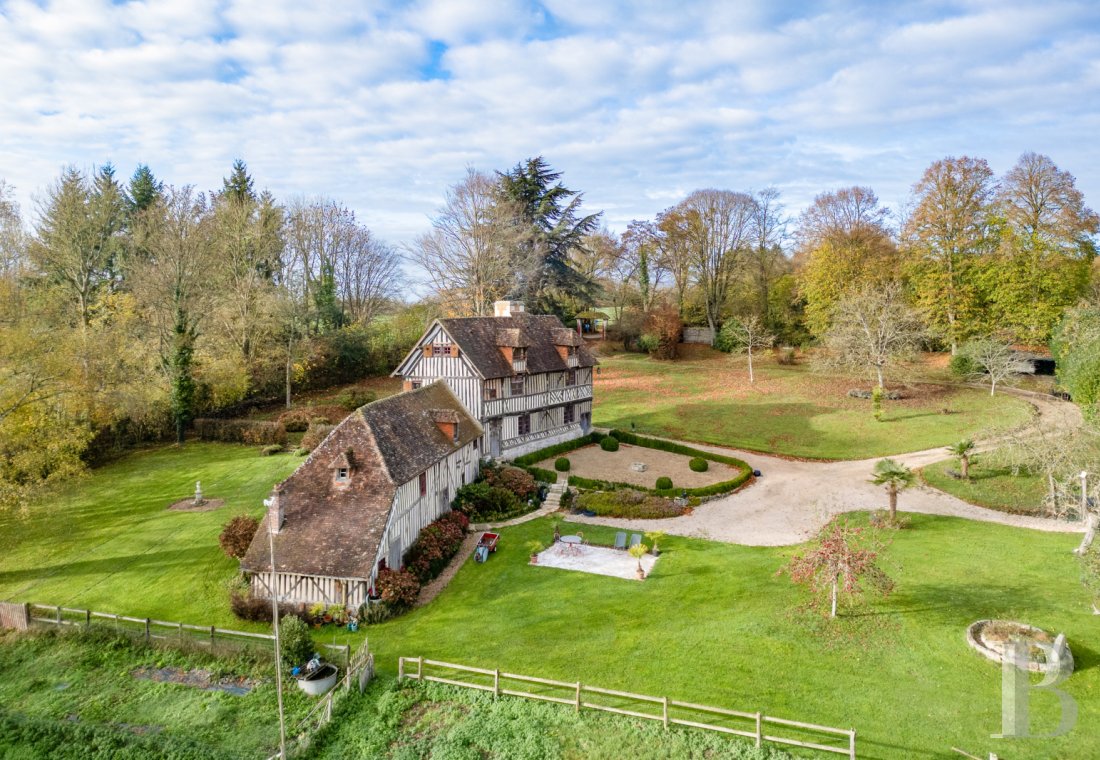
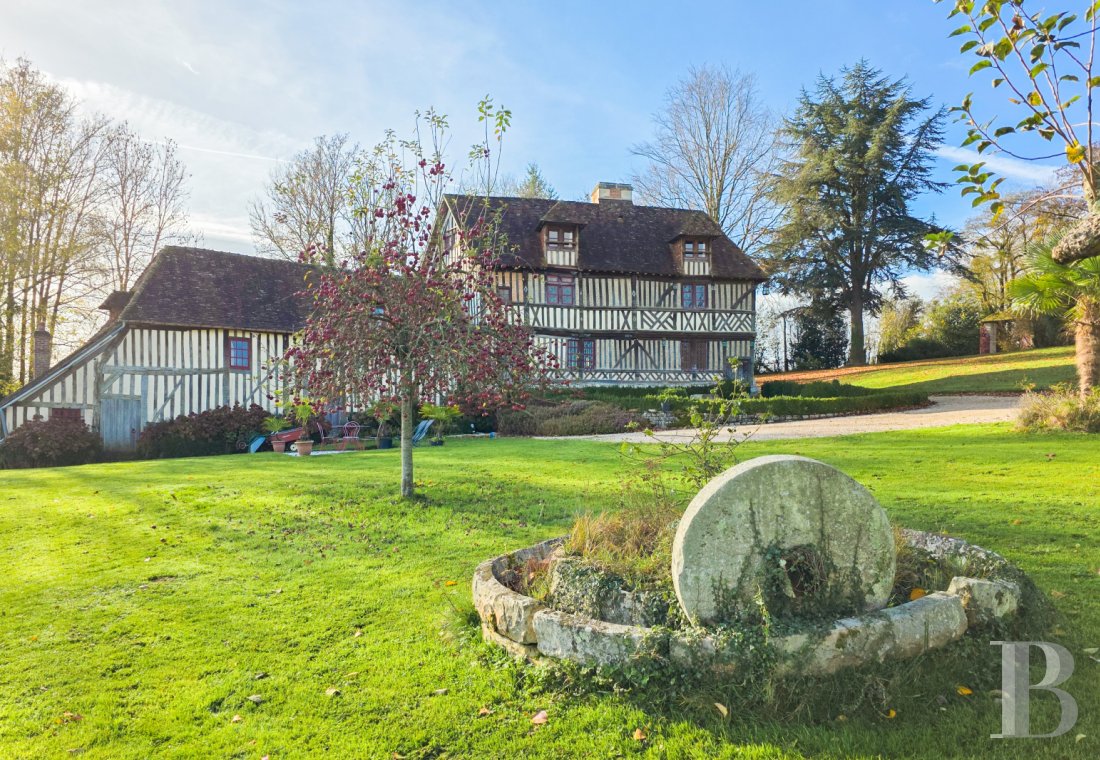
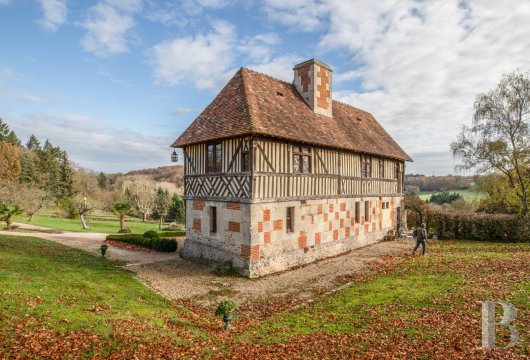
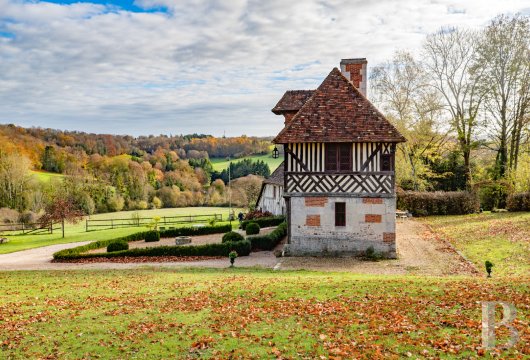
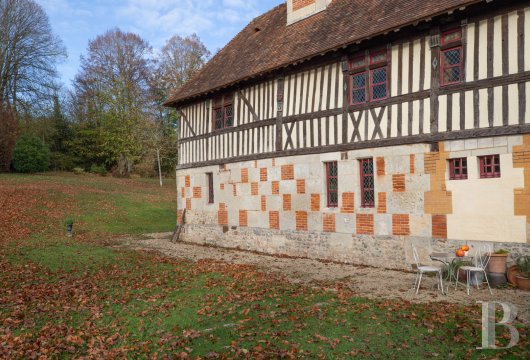
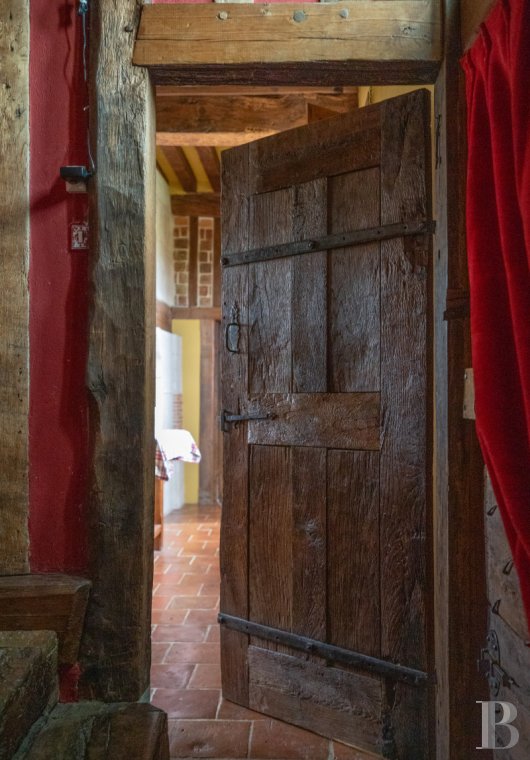
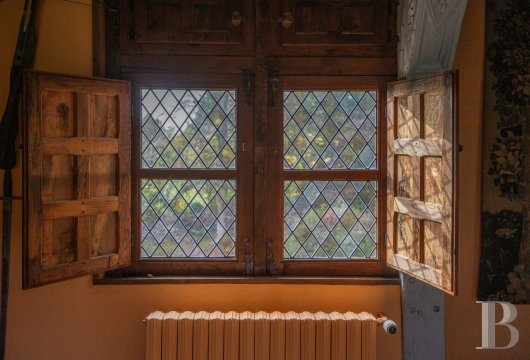
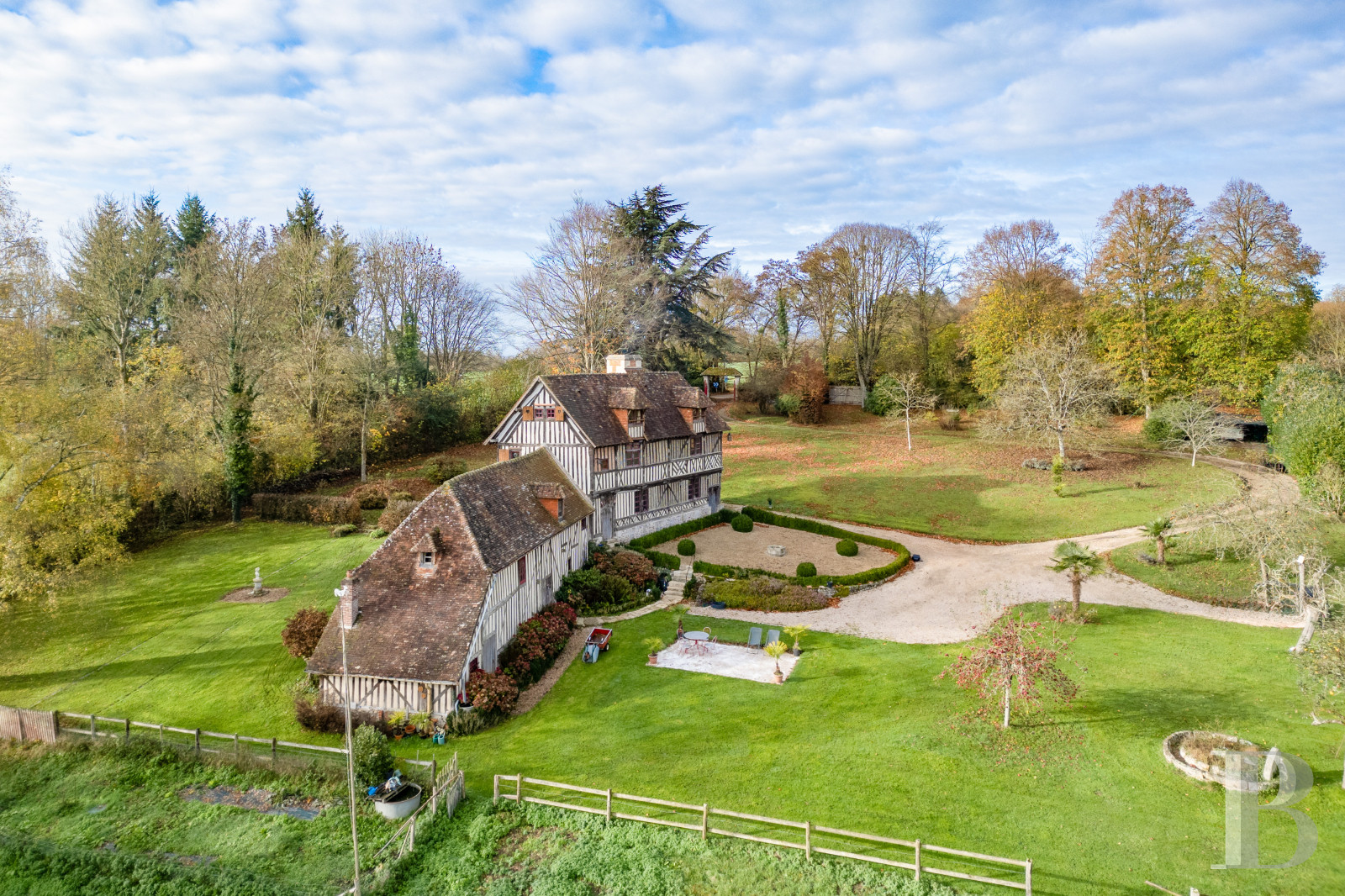
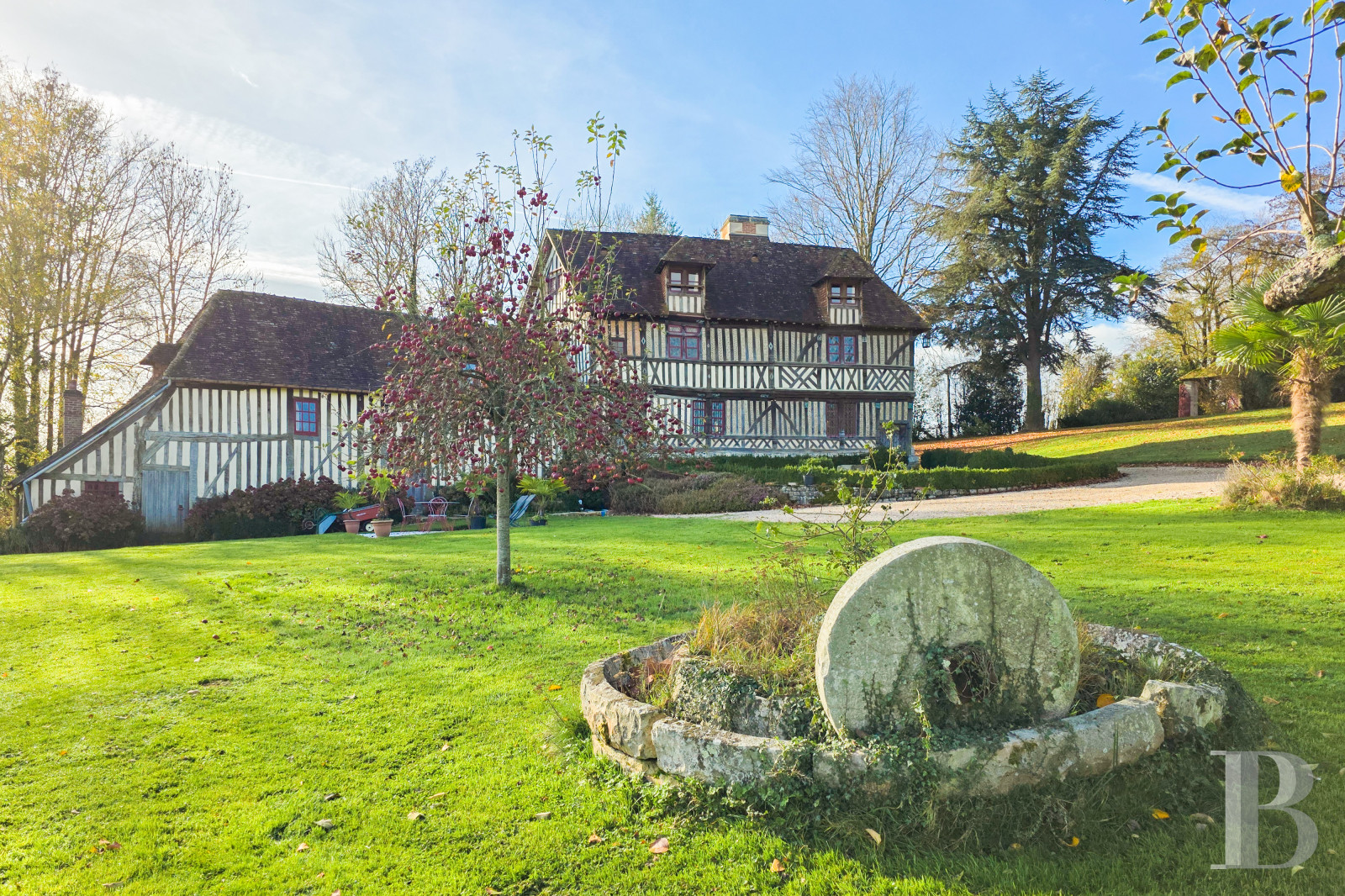
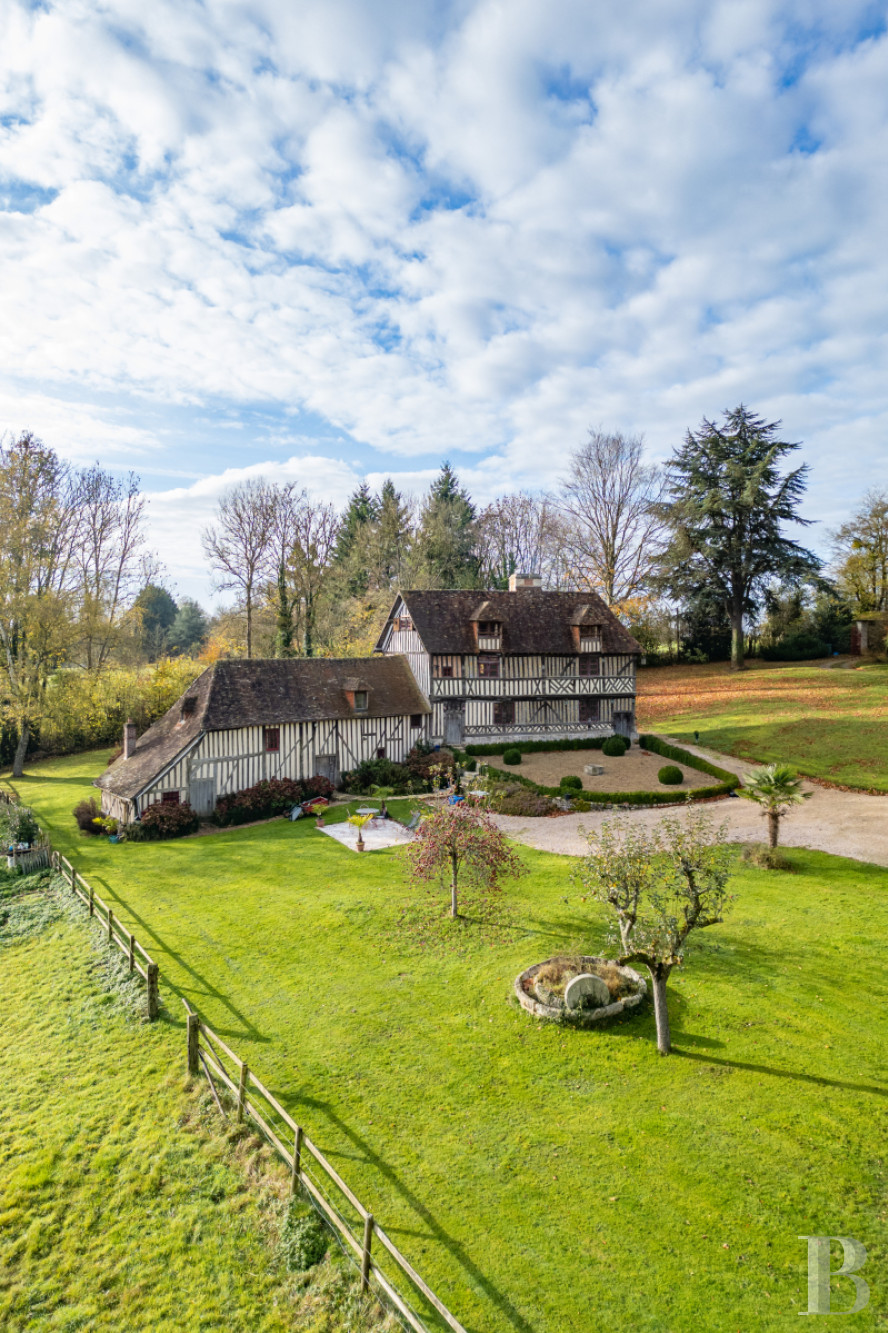
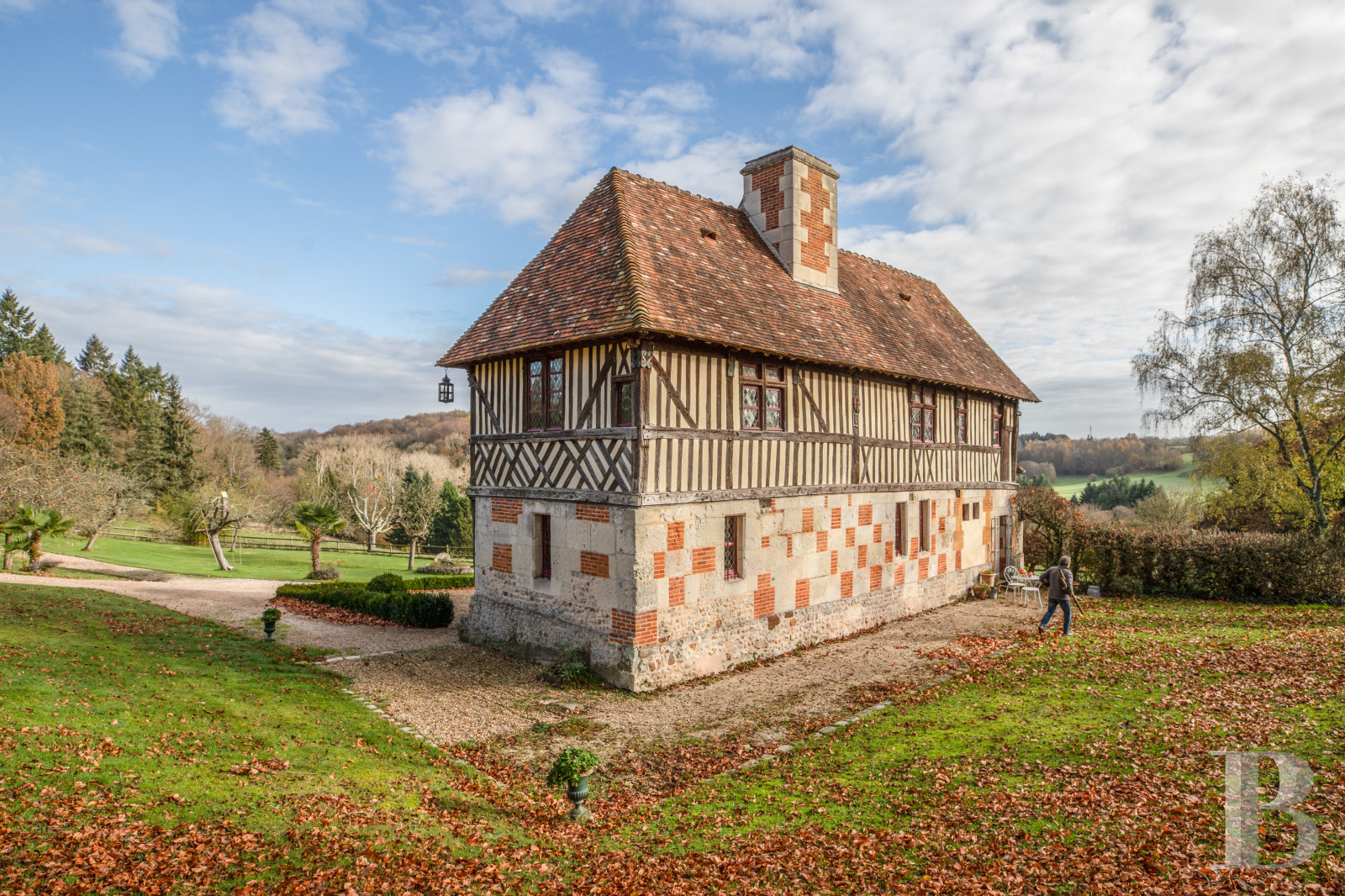
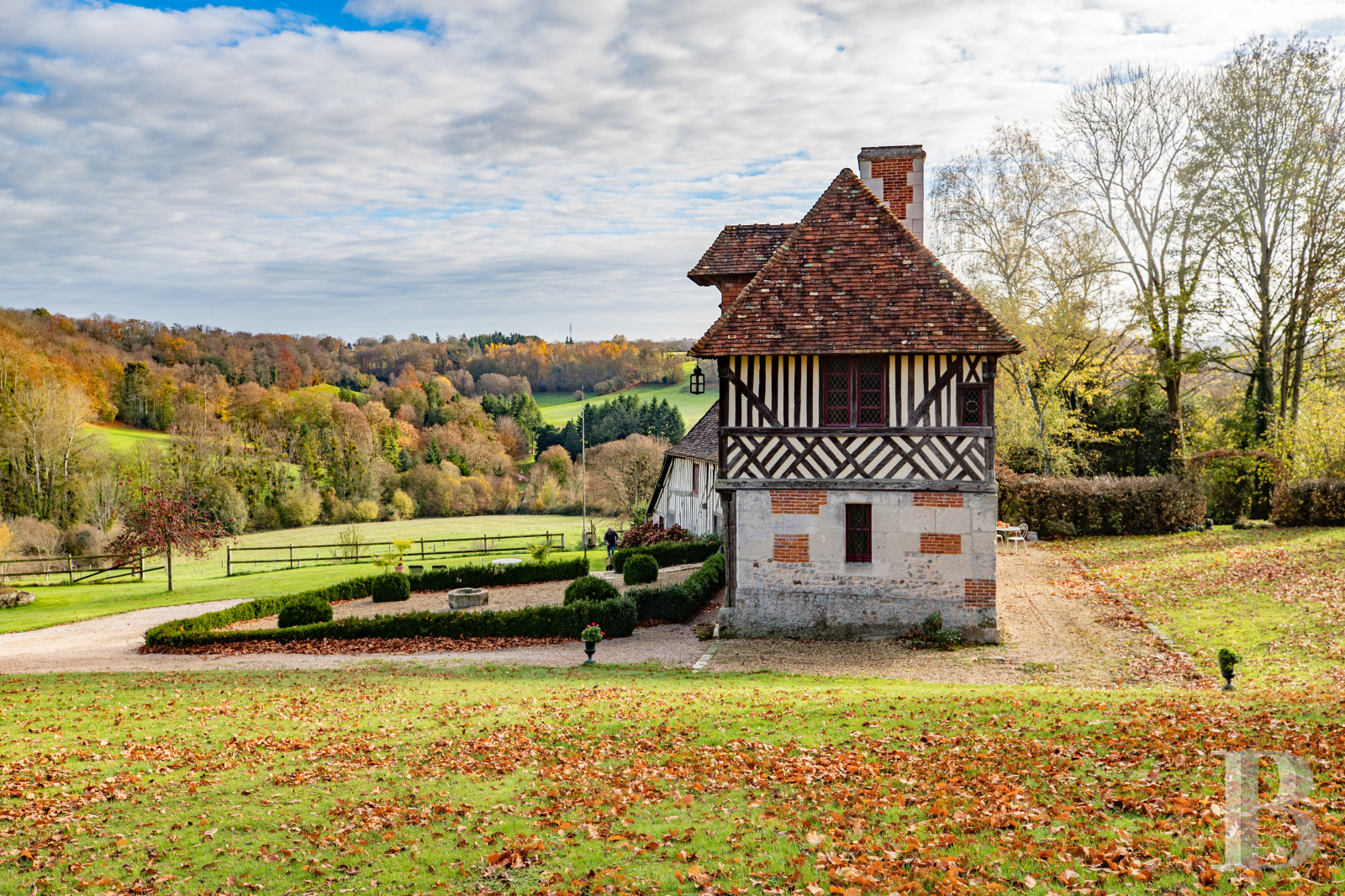
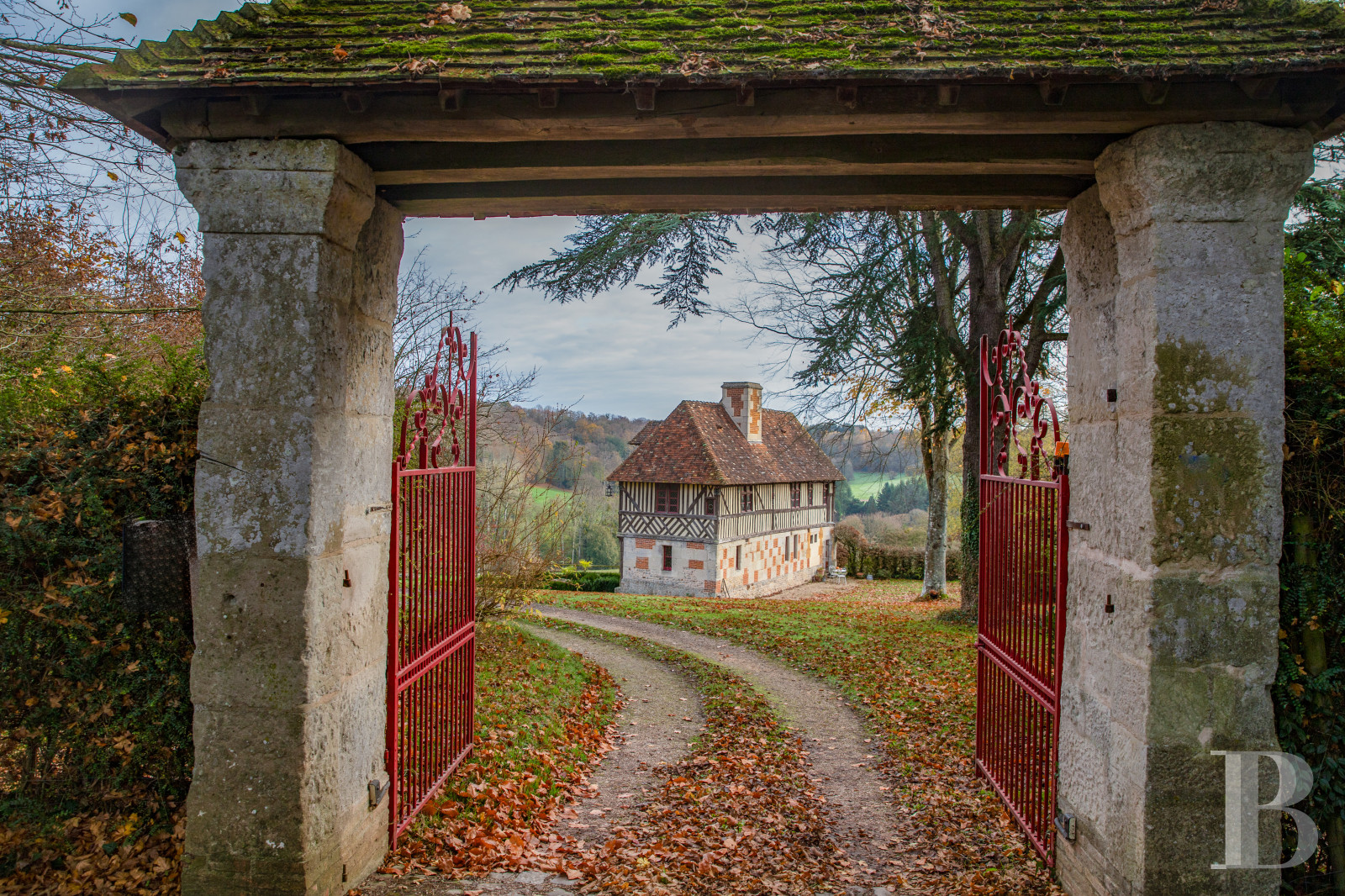
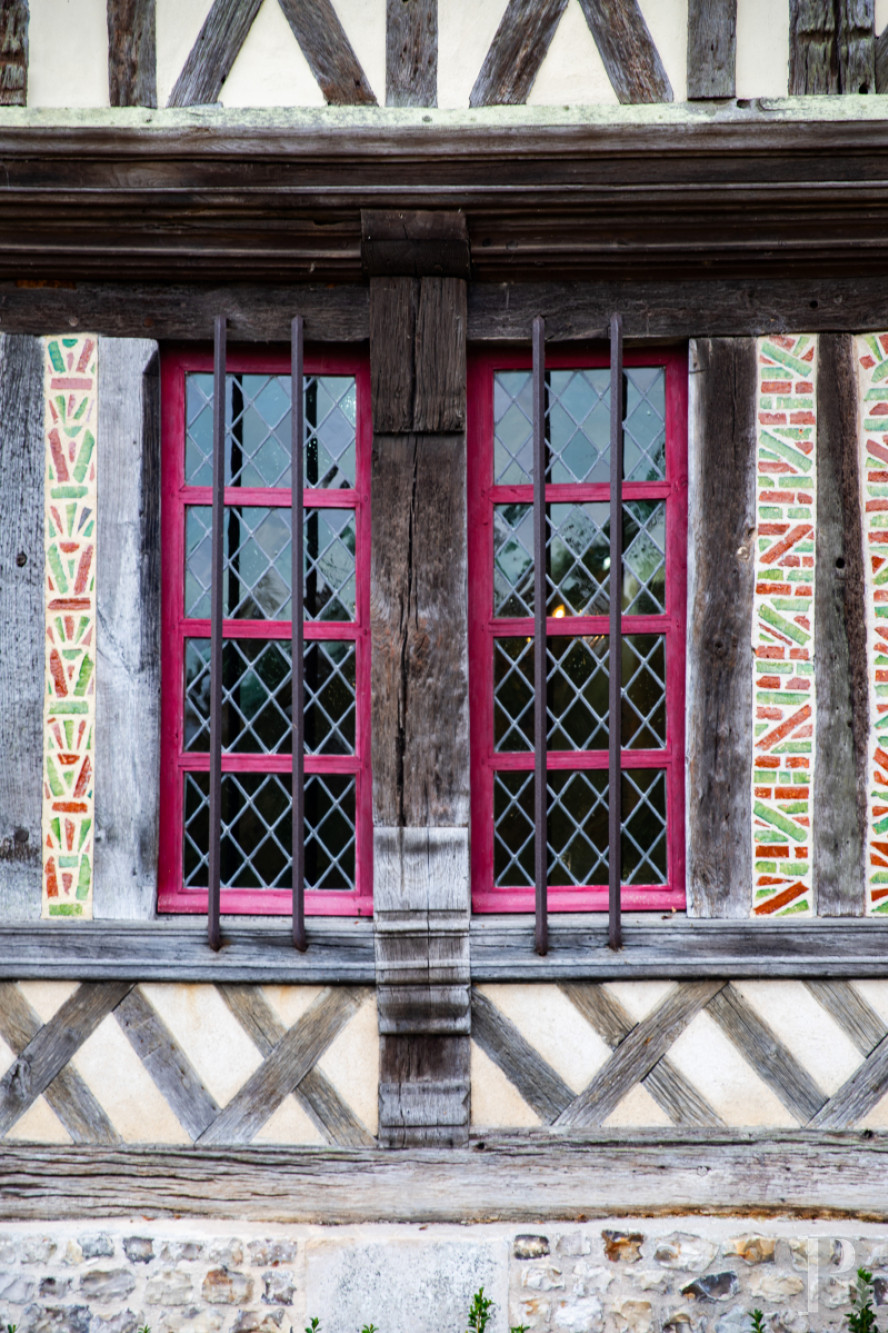
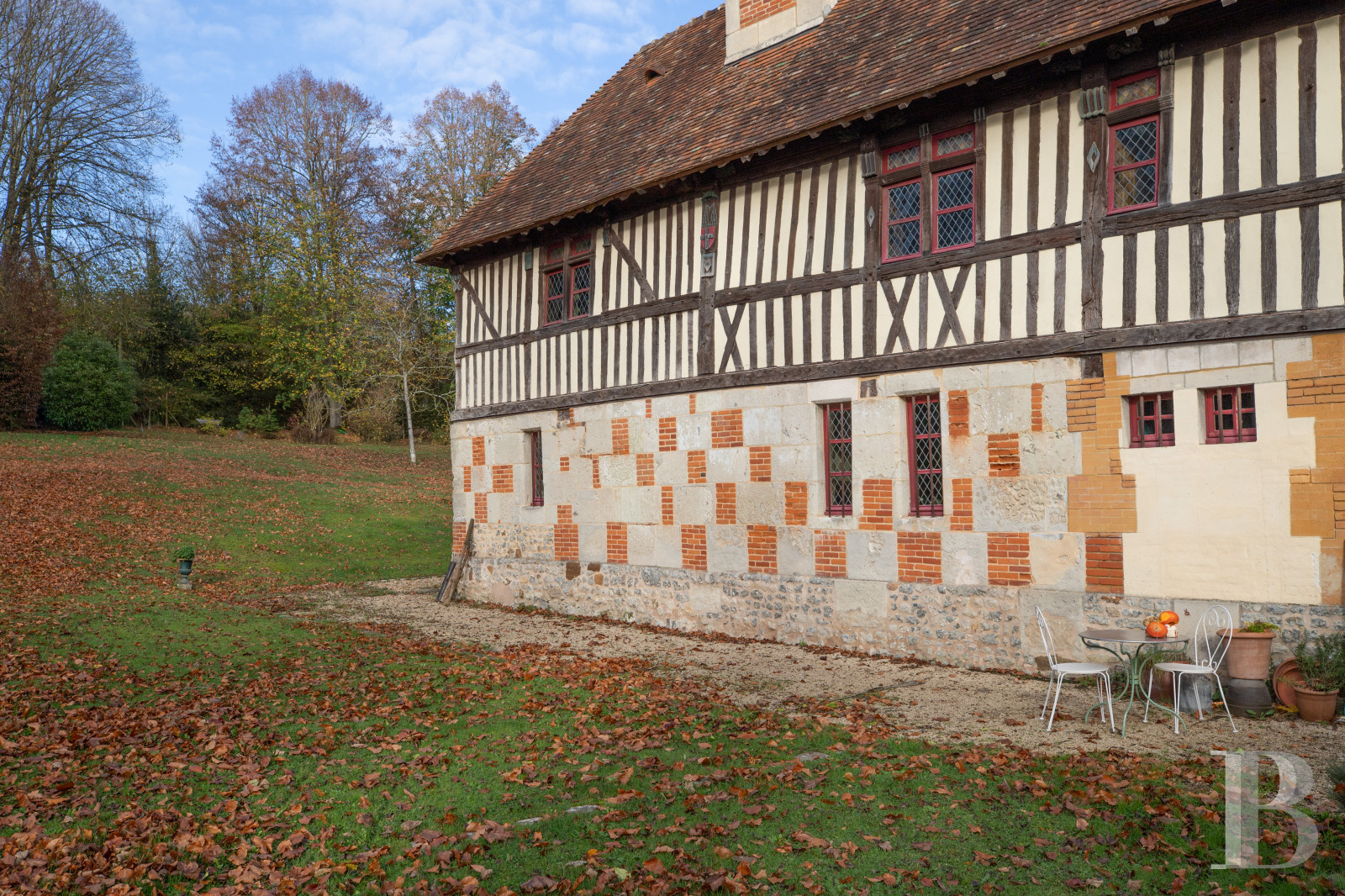
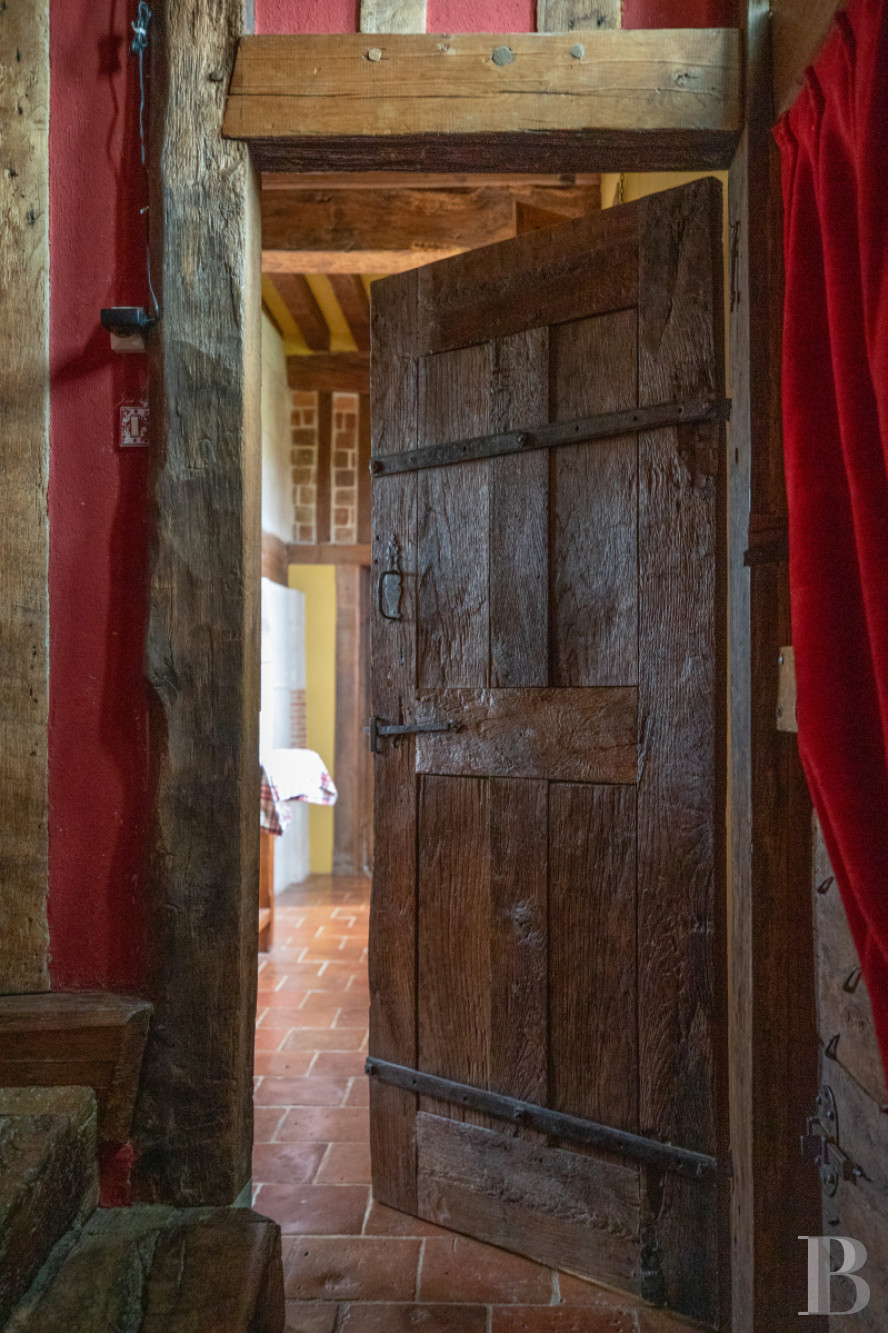
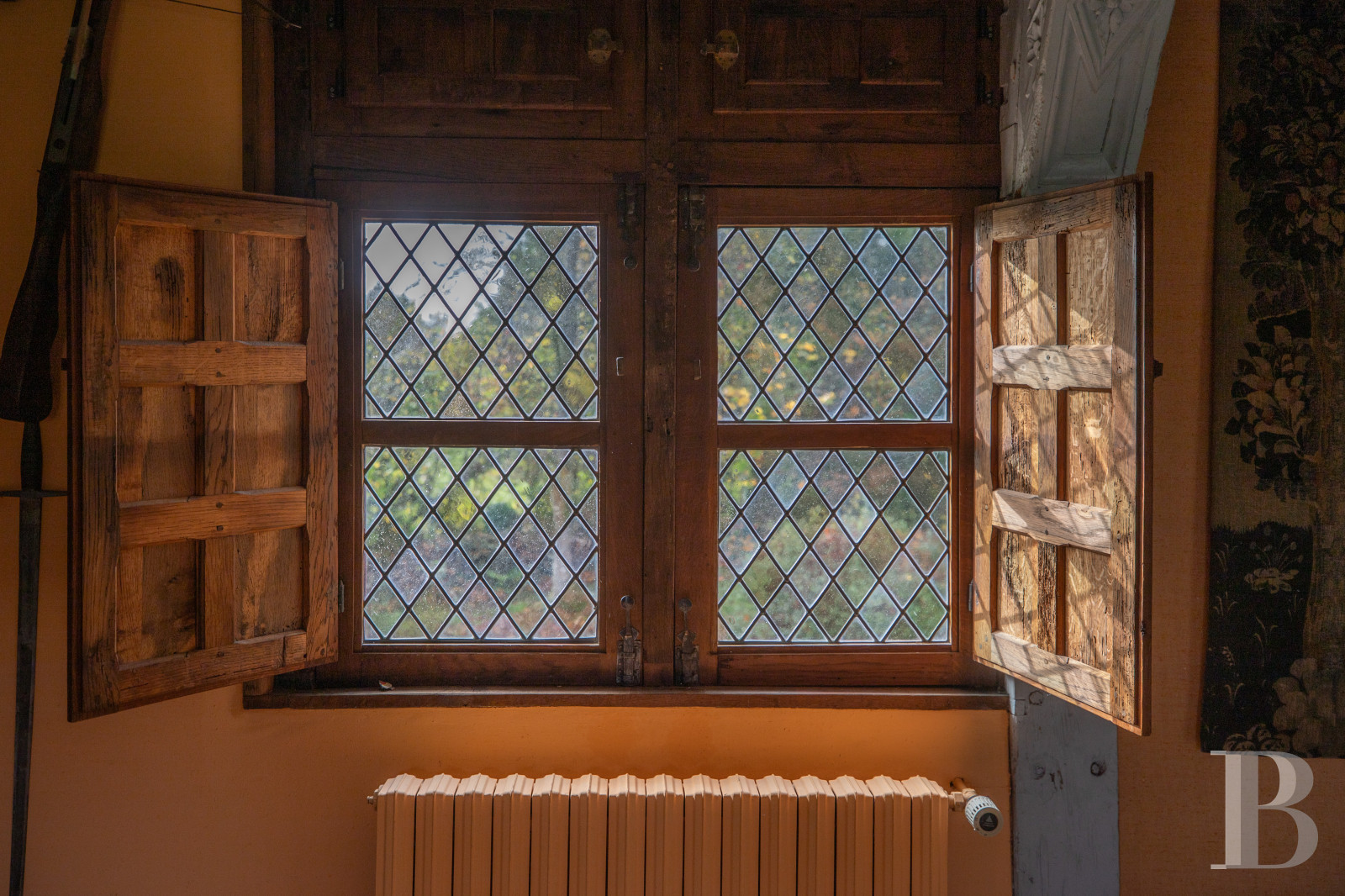
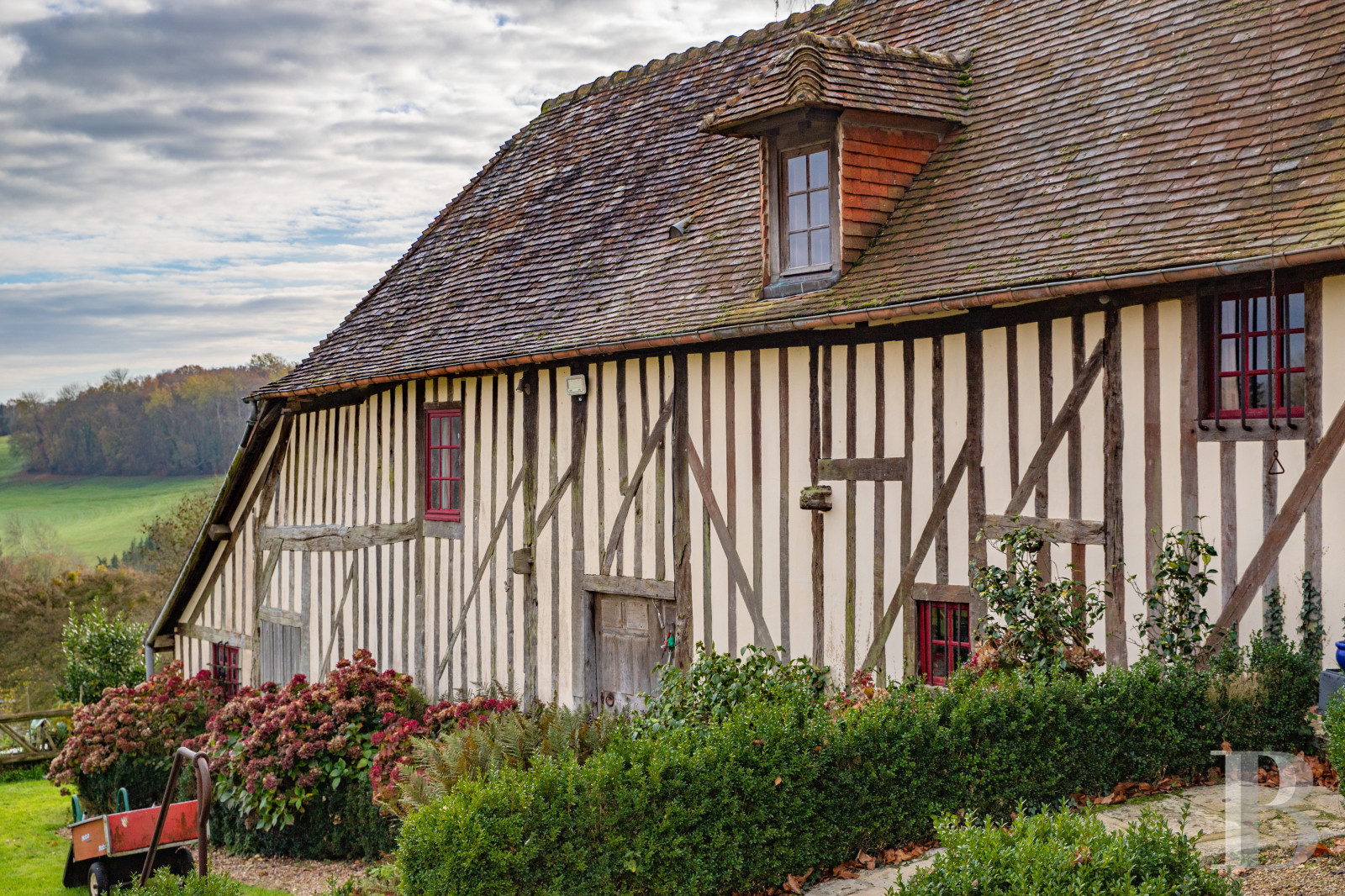
From a covered carriage entrance at the top of the grounds, an open driveway snakes down to the manor. The edifice is listed as a historical monument. From its commanding position, it looks down at a valley of meadows lined with hedges and woods. The house and its adjoining outbuilding follow the slope of the land. The edifice dates back to the 16th century. It includes a huge main section with timber framing and a stone base course. It has a garden-level floor, a first floor and a second floor in the roof space. Its gable end and rear elevation have a garden level of brick and stone laid in a checked pattern. The facade, which faces the garden and the valley, is remarkable, with timber beams sculpted with Gothic motifs, ogee arches, pinnacles, corbels and coats of arms. The corbelled beam above the garden-level floor is embellished with beast heads. The decor also includes studded doors. The windows are fitted with indoor shutters, as well as old-style small-paned glazing and stained glass with round embellishments. Arrangements of red and green glazed bricks add decorative touches to the timber framing. The steep-sloped roof has flat tiles and two large dormers that bring out the verticality of the facade’s bays. A monumental chimney stack made of brick and stone crowns the building. The outbuilding, lower in height, adjoins the main section. It follows the slope of the land to create a dovetailing of floors inside. This part is similar to the main section in style, but the materials used are less embellished. Nevertheless, the studded doors and small-paned windows give a lot of character to this secondary space. The garden is demarcated with an equestrian fence. The grounds slope gently down to the valley, with a clear view of the surrounding meadows and woods.
The house
On each floor, the rooms are dual-aspect spaces that connect to each other. Many windows bring in an abundance of natural light.
The garden-level floor
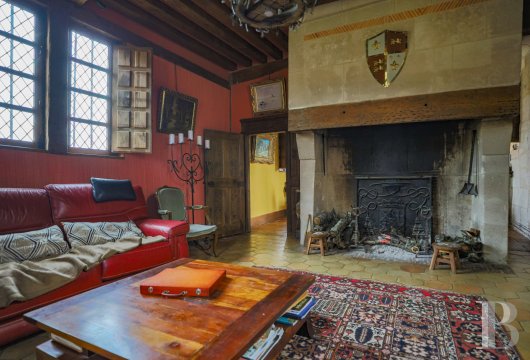
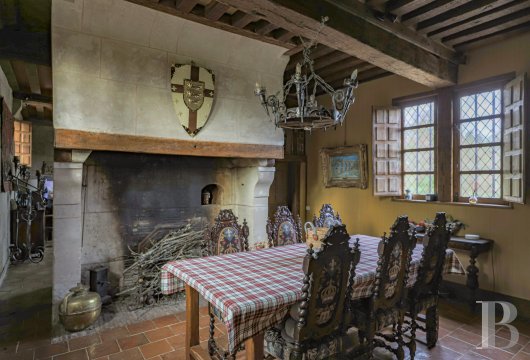
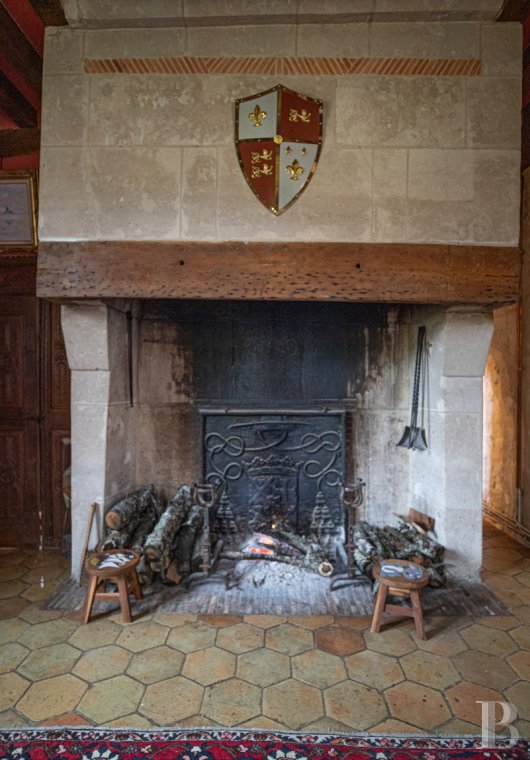
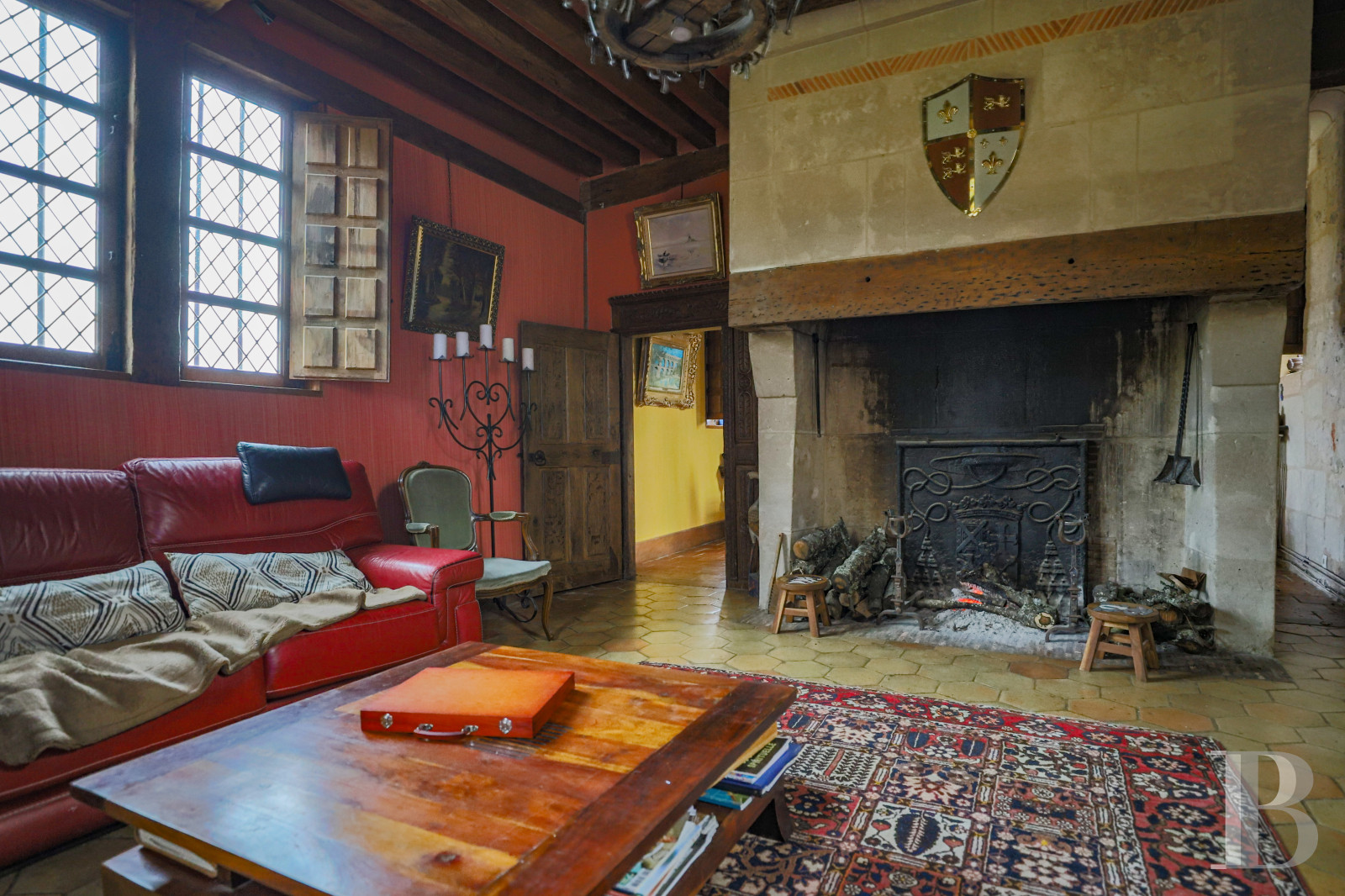
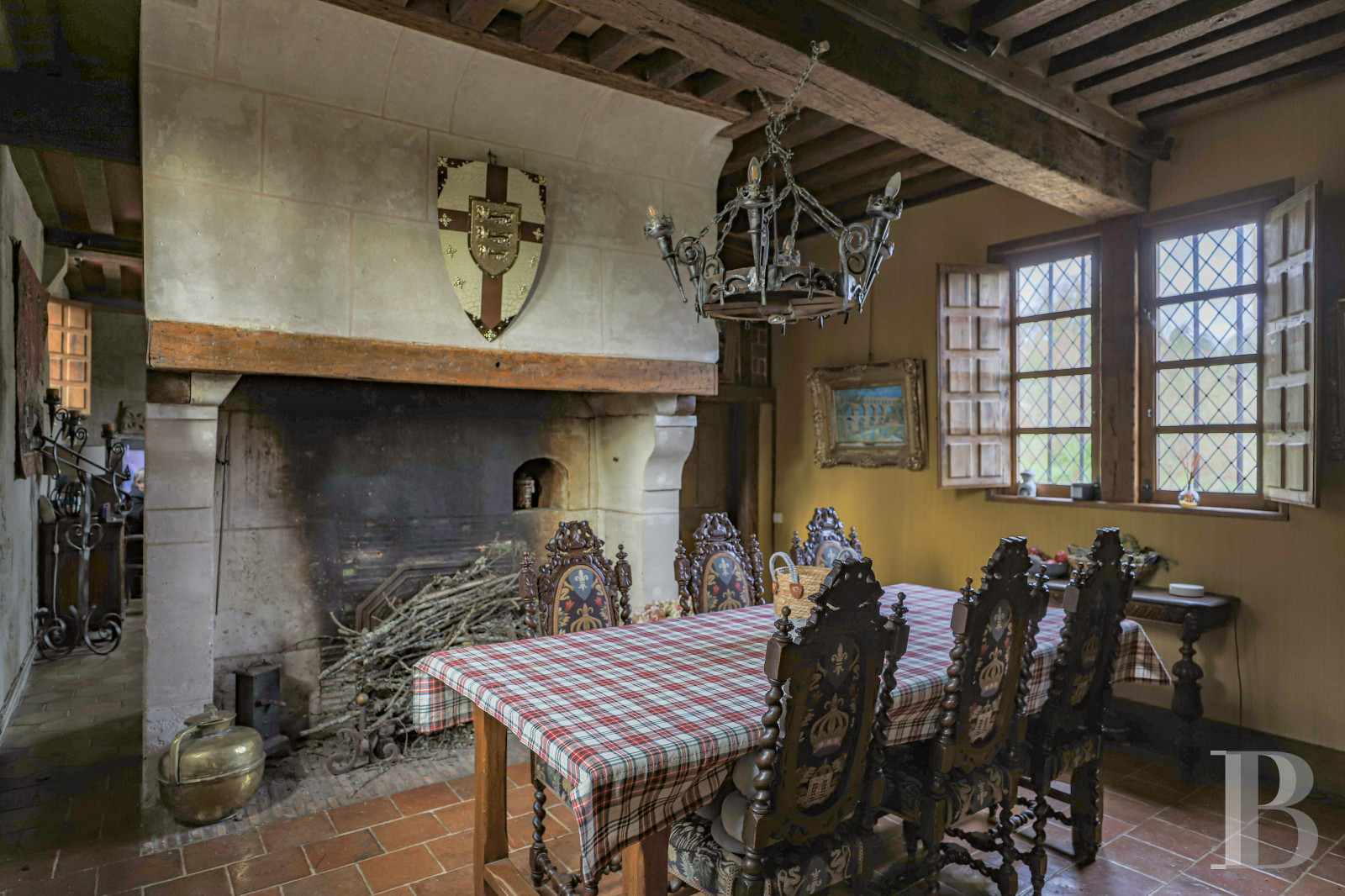
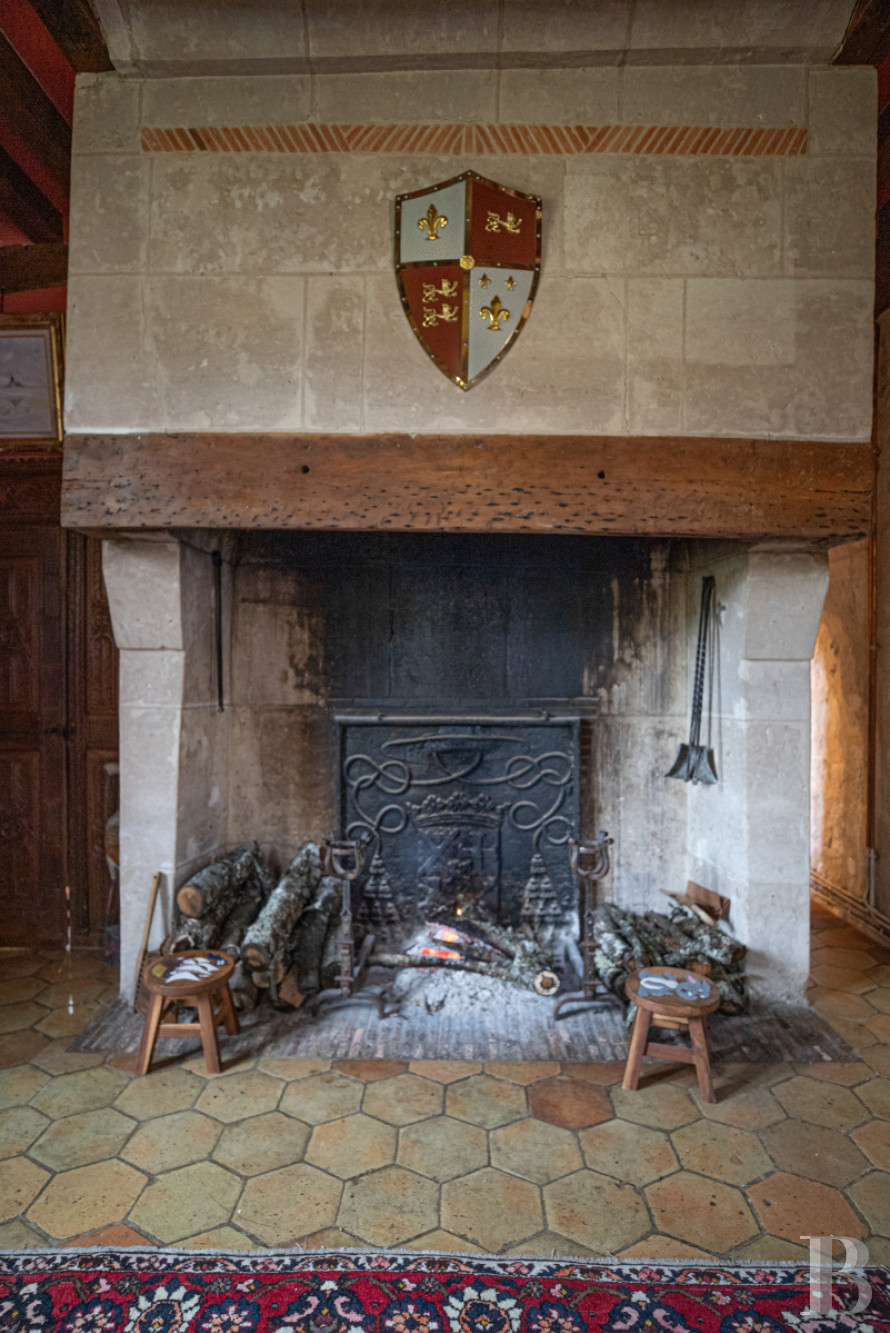
The small entrance door in the facade leads into a dining room with a large fireplace of white limestone that has plain corbelling and a timber lintel. The room has a terracotta-tiled floor and half-timbered walls. The windows have indoor shutters and stained glass. Exposed beams run across the ceiling. Next, there is a lounge that is similar in style, with a fireplace that looks like the one in the dining room. The fireplace in the lounge has a decorative strip of brickwork on its hood. On the other side of the entrance area, a hallway leads to a small mezzanine, which takes you to a bedroom with a sloping attic ceiling and a shower room. Next, there is a long kitchen, which is rather uneven in form. This kitchen looks out at the back of the manor. Opposite the entrance door, a small spiral staircase leads upstairs in a stairwell with half-timbered walls. Warm tones brighten up the timber beams.
The first floor
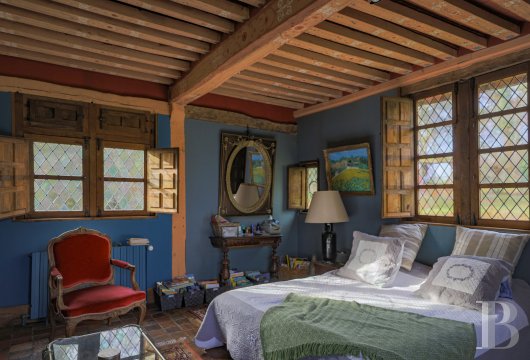
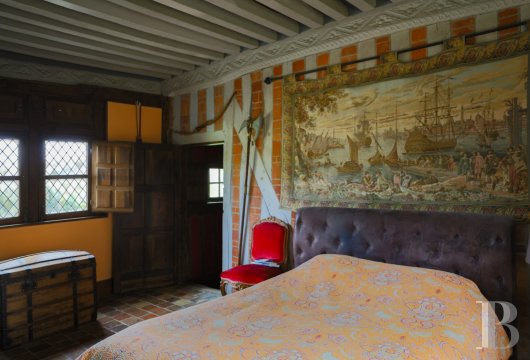
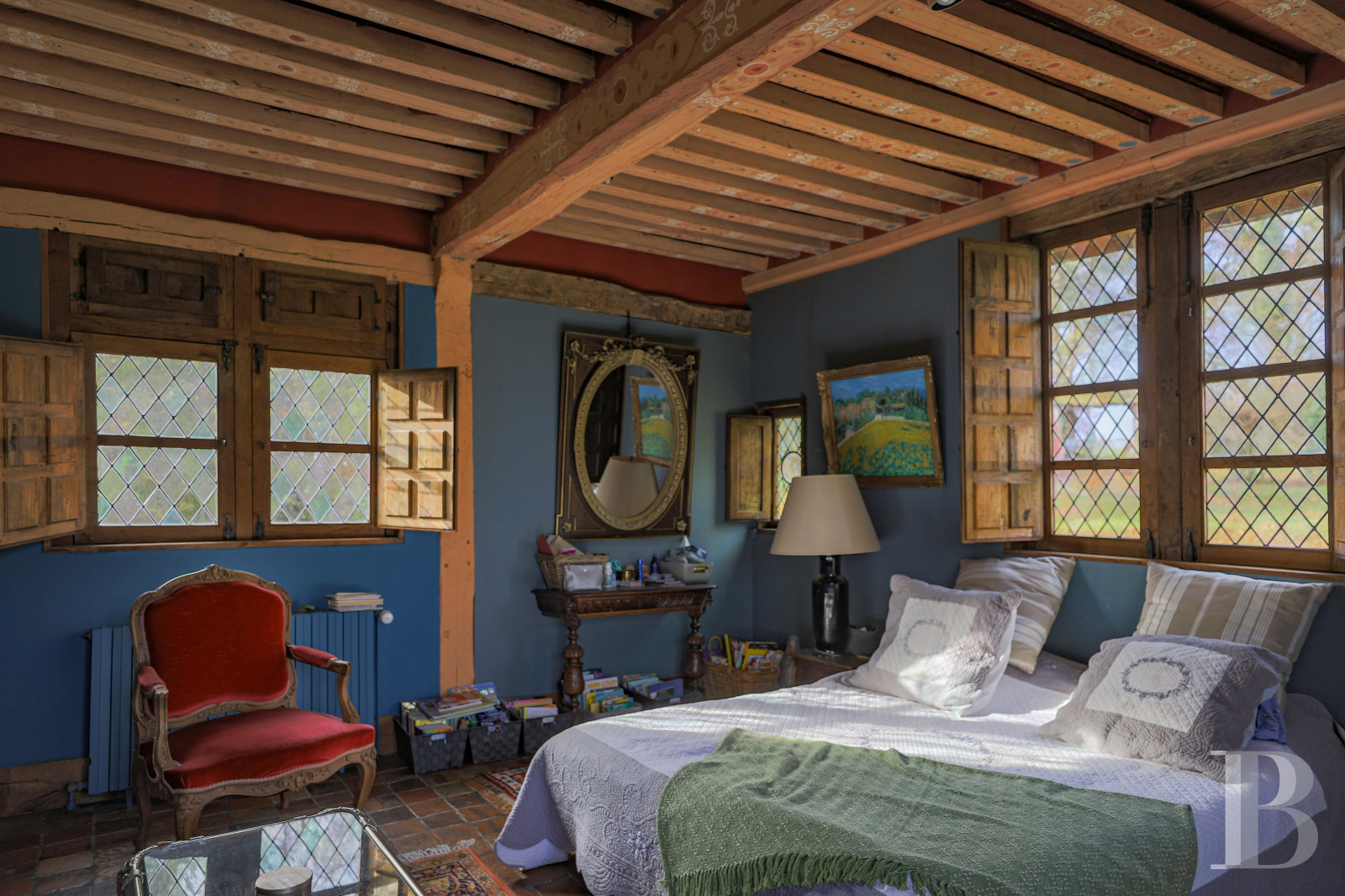
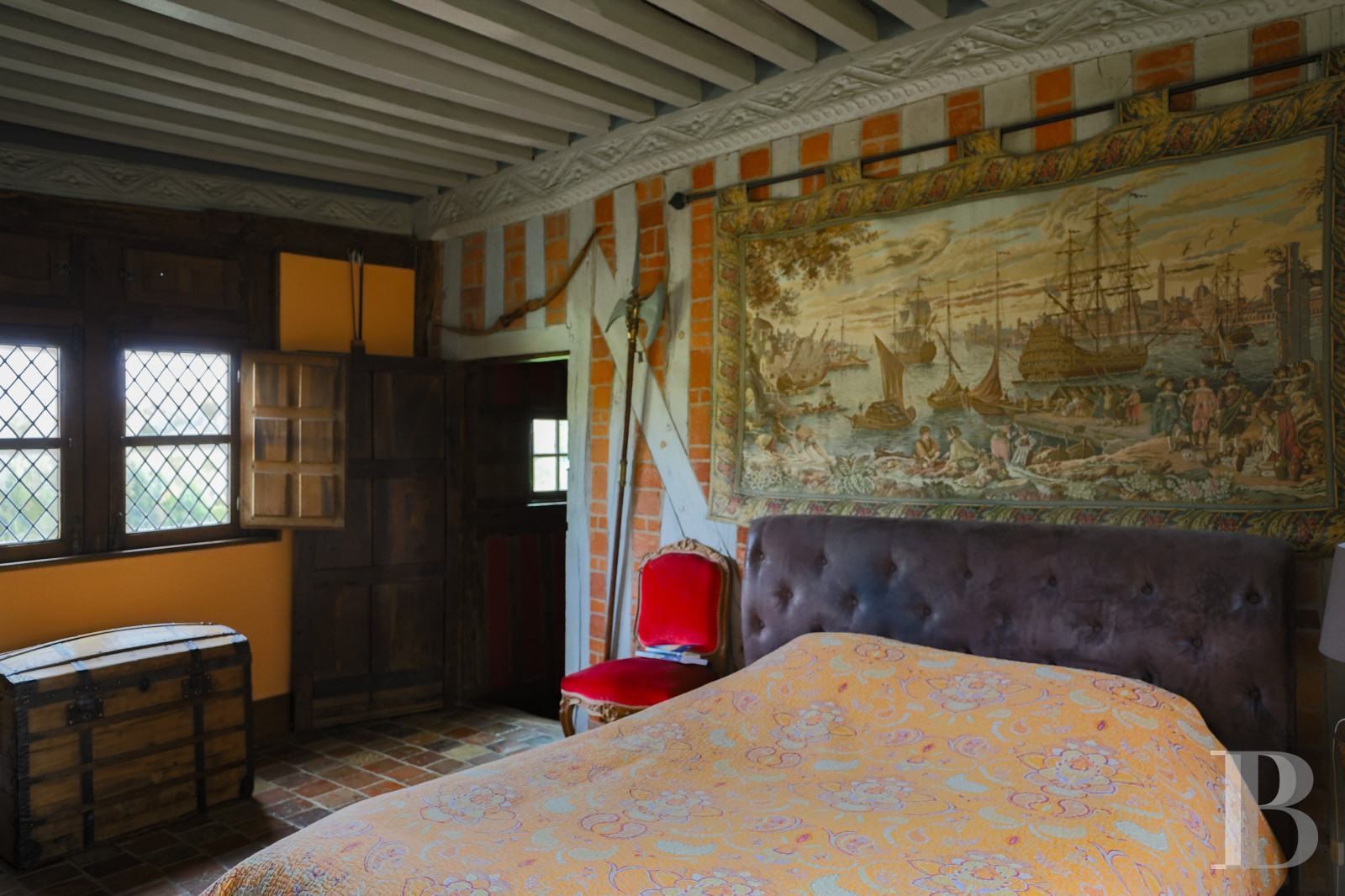
The landing connects to a bathroom with wooden panelling, stained-glass windows with round embellishments and a terracotta-tiled floor embellished with glazed motifs. This room lies beside two connecting bedrooms with corbelled fireplaces made of sculpted limestone. The walls are half-timbered. In the first bedroom, the beams are sculpted with classical geometric motifs, friezes, diamonds, flowers and coffers. In the second bedroom, the beams are painted with decorative motifs. The windows on both sides offer views of the landscape.
The second floor
The staircase leads up to the roof space where there is a landing filled with natural light from two windows. This space has cupboards with sculpted doors and bookshelves. Next, there is an office filled with natural light from a first dormer. Here there is a box-bed. Then there is a bathroom. And lastly, beyond the chimney flues, there is a spacious bedroom, also filled with natural light from a dormer. These top spaces showcase the roof beams.
The outbuilding
The annexes are grouped together in an outbuilding that adjoins the main house. Following the slope of the land, the rooms dovetail with each other over different levels. Some rooms can be reached from the main house, such as a bedroom at an intermediate level. Two storerooms, separated by a few steps, and a workshop can be reached from the garden-facing elevation. A storeroom leads up to the first floor. Up here, there are two rooms with sloping attic ceilings. They have been converted into bedrooms. The first one, a mezzanine, has a shower room. The second one, beside it, lies in the hipped end of the roof. From another storeroom, a door leads to a little cellar at a lower level. A boiler room lies at the end of the outbuilding. You reach it from the back.
The grounds
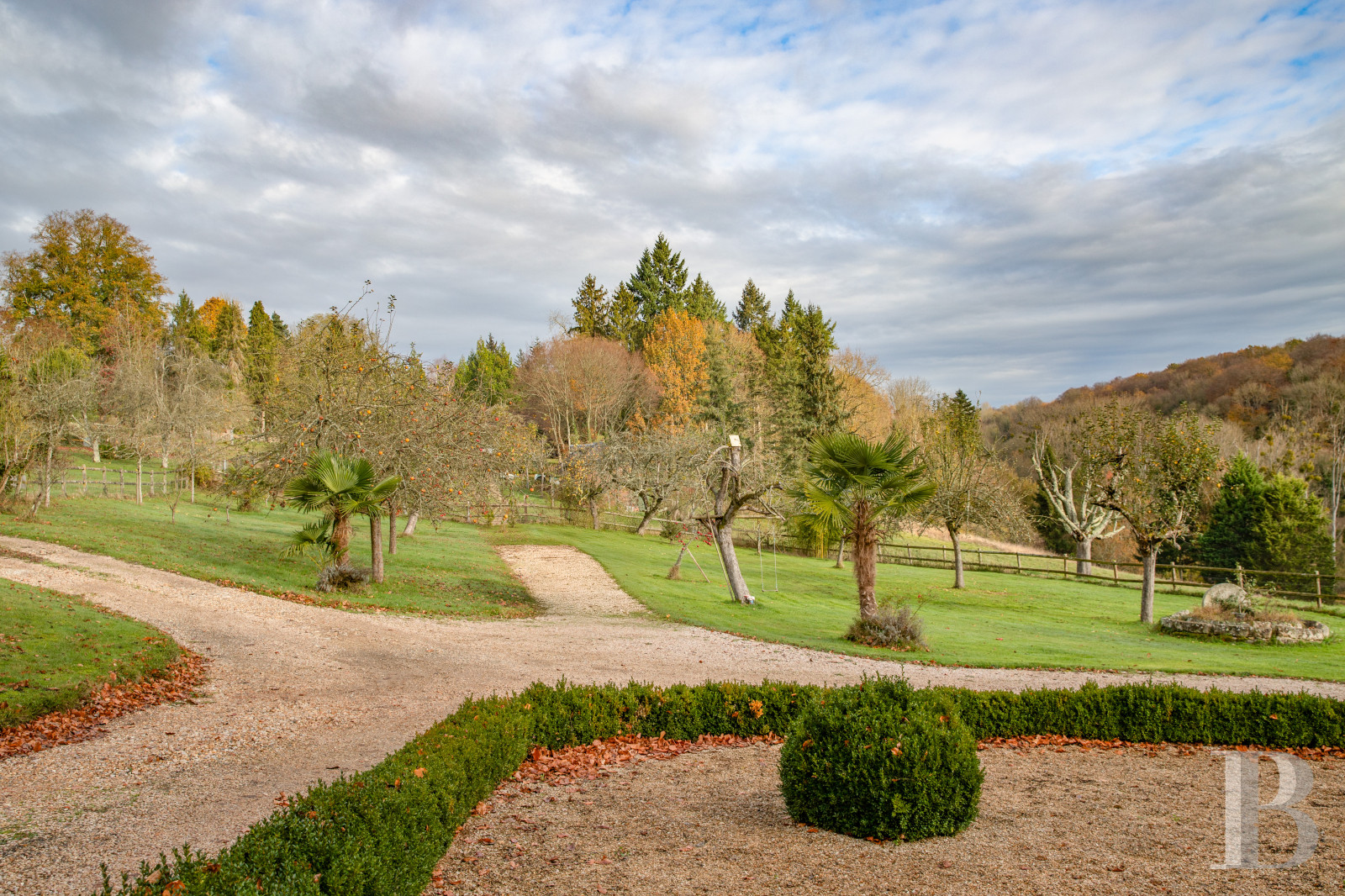
The garden is a vast expanse that slopes gently northwards, offering a clear, commanding view over the landscape of woods and meadows. From the covered carriage entrance at the top of the grounds, lawns extend down and around the manor. Winding gravel drives make it easy to get around. Thes drives showcase the buildings. In front of the house’s facade, there is a formal geometric garden. The space is extended with a little apple orchard. In front of the outbuilding, there are shrubs beside a terrace that looks out at the surroundings. At the bottom of the garden there is an old apple press with its millstone. An equestrian fence encloses the garden. Beyond, meadows take up the rest of the grounds.
Our opinion
This authentic manor, listed as a historical monument, is truly emblematic of Normandy. A patient, masterful renovation of the edifice has revealed the full wealth of its architecture. Indeed, today, it is a family home with a warm, welcoming character. Its comfortable interior is filled with natural light from large windows and is embellished with remarkable decor. The property is easy to reach and lies close to major routes. Yet it is nestled in the middle of unspoilt countryside and is surrounded by meadows and woods. This haven, close to the charming town of Lisieux, would delight a family looking for open space. It would also delight any heritage lover keen to preserve a historical home.
1 090 000 €
Fees at the Vendor’s expense
Reference 807692
| Main building floor area | 300 m² |
| Land registry surface area | 2 ha 54 a 11 ca |
| Including parkland | 2 ha 24 a 11 ca |
French Energy Performance Diagnosis
Information on the risks to which this property is exposed is available on the website: www.georisques.gouv.fr
Share


- Calvados -
- Glos -
- Lower Normandy -
- Normandy
NB: The above information is not only the result of our visit to the property; it is also based on information provided by the current owner. It is by no means comprehensive or strictly accurate especially where surface areas and construction dates are concerned. We cannot, therefore, be held liable for any misrepresentation.