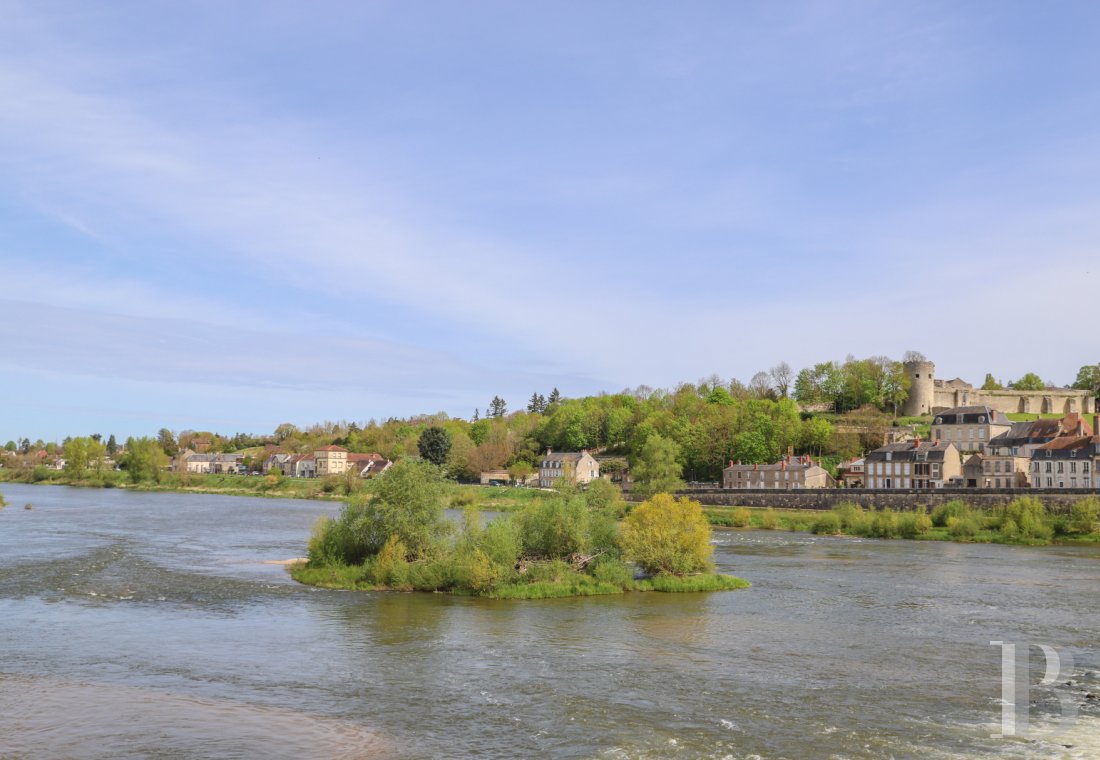




An 18th-century city dwelling, on the banks of the
royal Loire River, two hours from Paris, within the greater Burgundy region
royal Loire River, two hours from Paris, within the greater Burgundy region
La Charité-sur-Loire,
NIEVRE
burgundy
58400
FR

Location
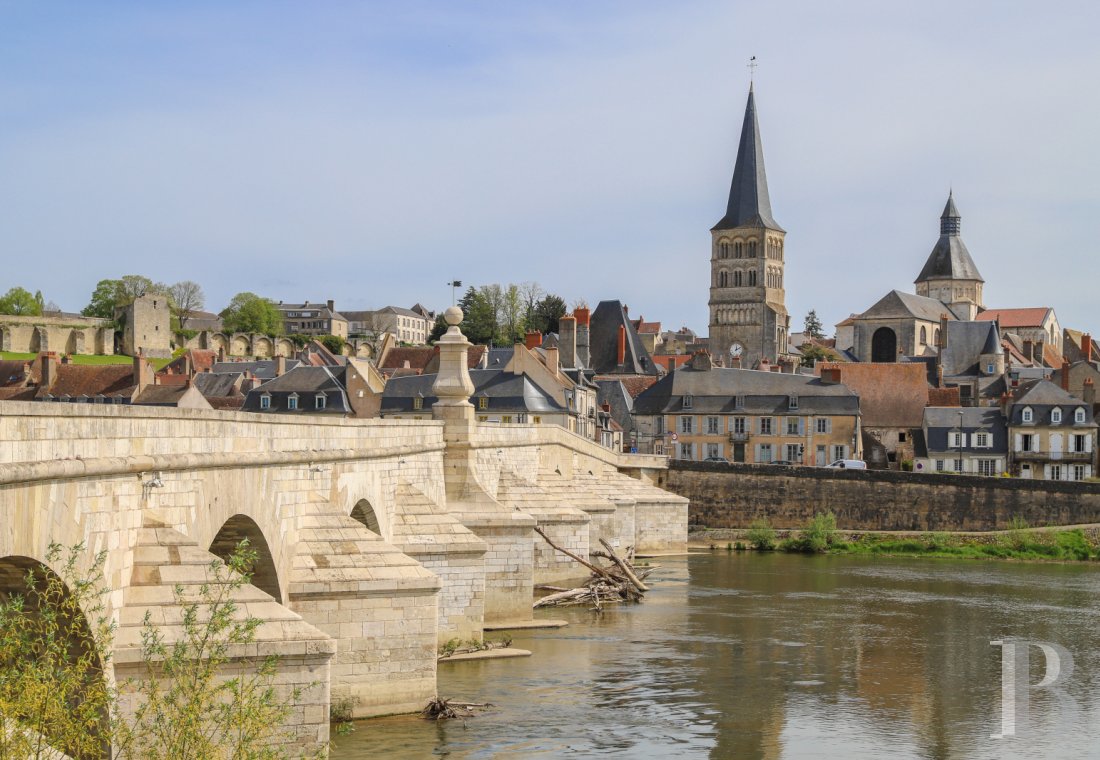
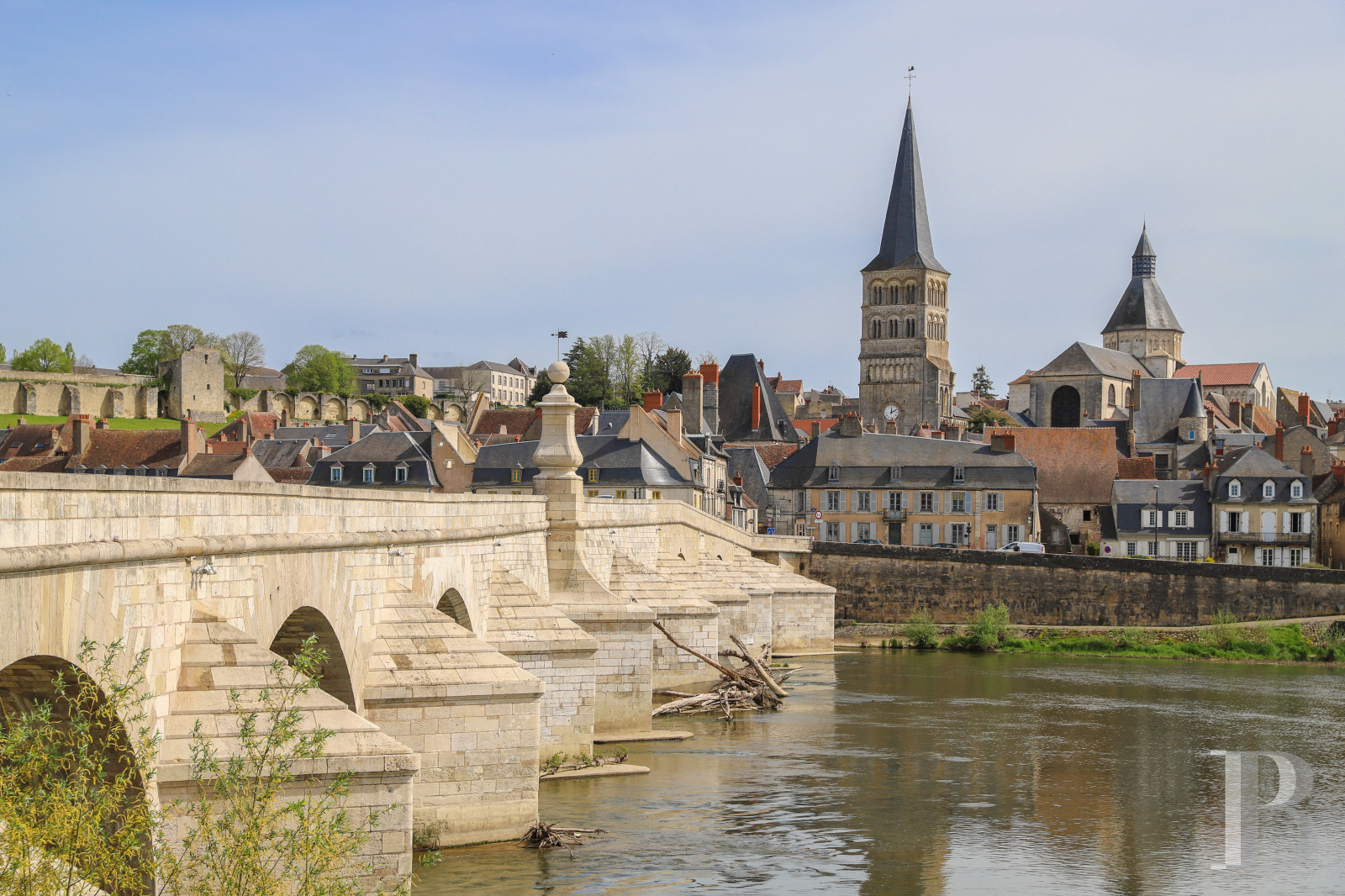
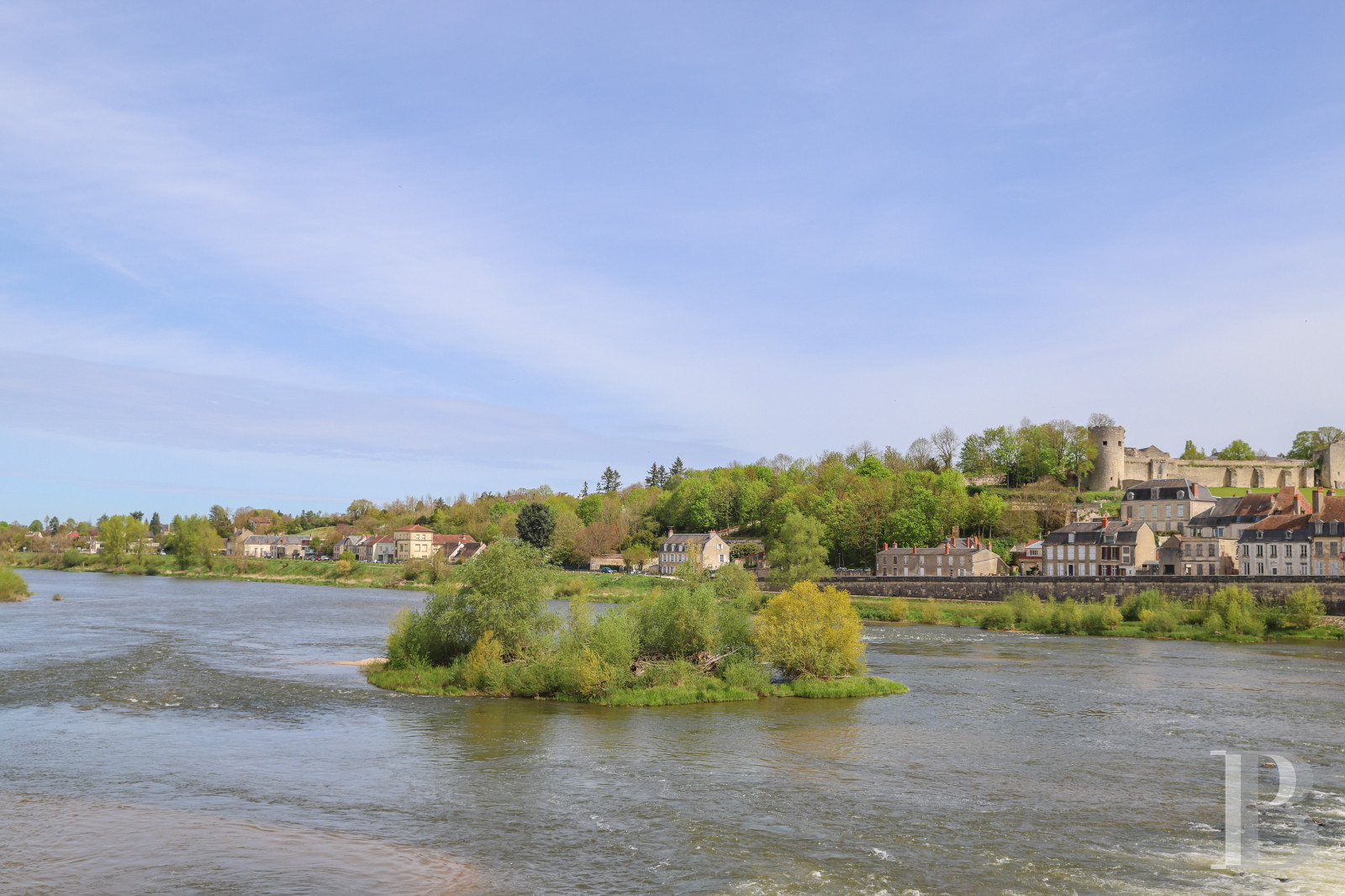
The dwelling is located on the western side of Burgundy and the Nièvre department, within a medieval city, perched on the banks of the Loire, while essential shops for daily life are accessible on foot via a 16th-century bridge. In addition, Nevers can be reached in 30 minutes by car, whereas the town’s SNCF train station provides rail service to the Paris-Bercy station in two hours.
Recognised as a “City of Art and History”, it includes, in particular, a church known for its radiating chapel and double tympanum façade, which was the second largest in France, after the one in Cluny, during the Middle Ages. As for the Benedictine priory, listed as a National Historical Monument in 1840, it was, more recently, named a Unesco World Heritage Site, as were the region’s many routes along the Way of St. James.
Last, but not least, 12th-century defensive ramparts, built around the city, are visible from the property.
Description
Near the dwelling, large expanses of lawn, planted with tall trees and scattered with benches, face the river and city’s ramparts, while the lane that leads to the property is currently closed to vehicles, which guarantees a quiet environment, a rare commodity within an urban setting.
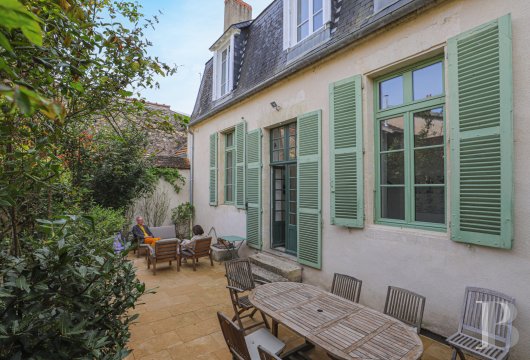
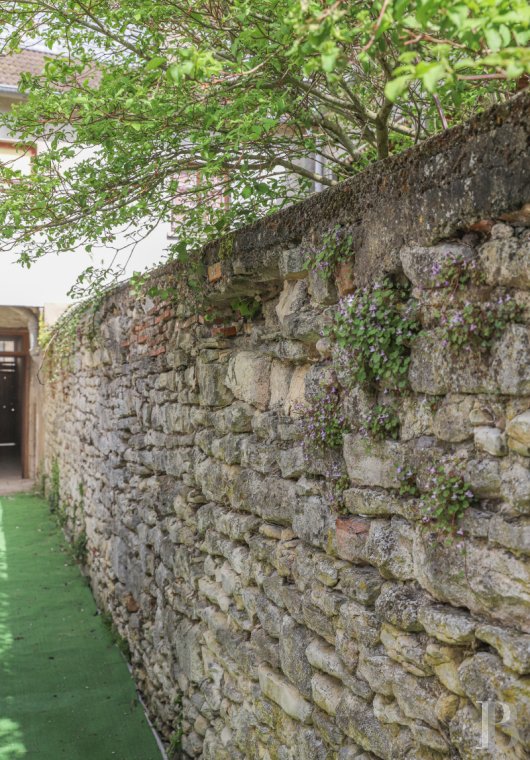
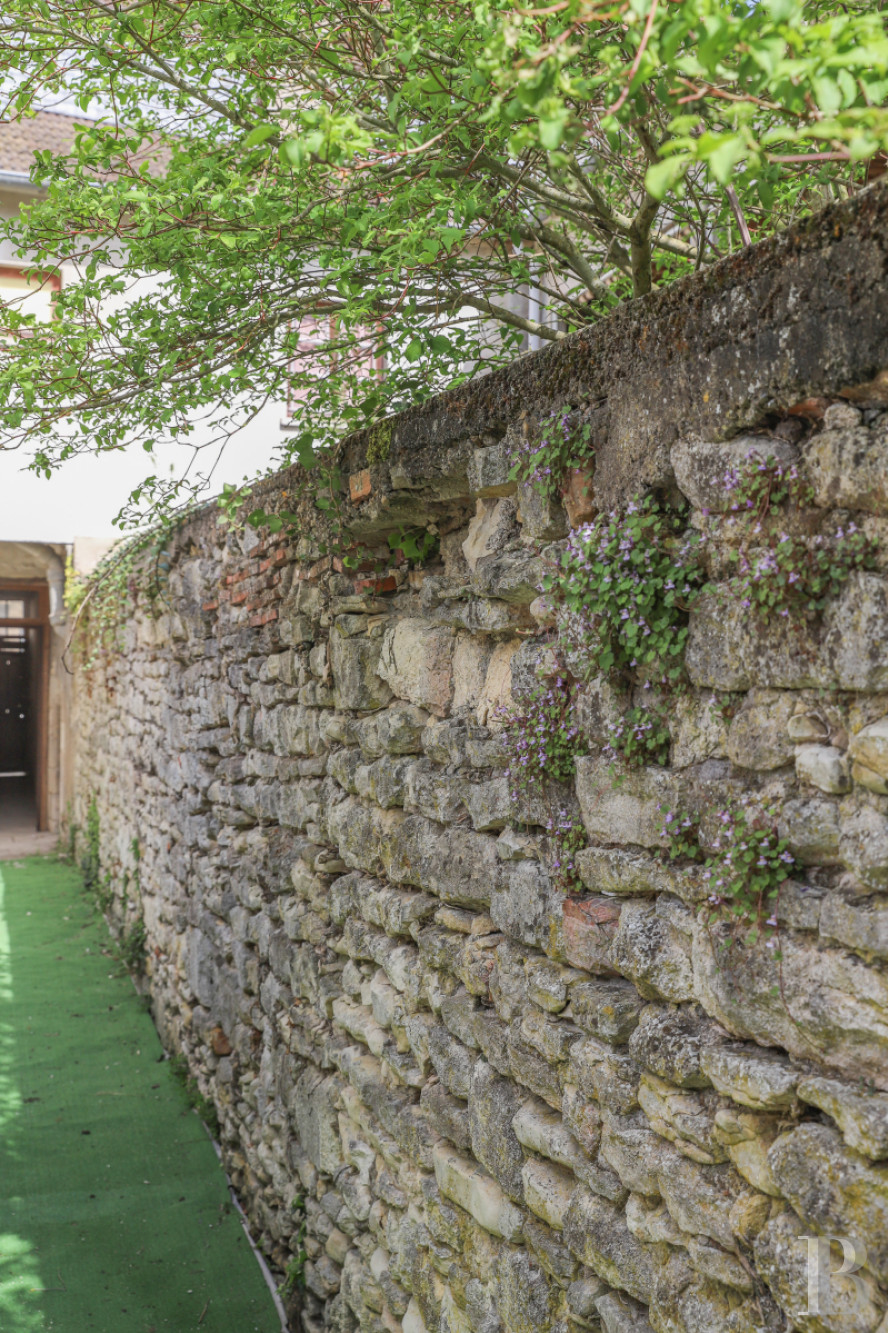
Accessible via a wooden gate, painted white, which opens on to a courtyard with many varieties of flowering plants, the property features a large Burgundy stone patio behind the dwelling and to the south, bordered by verdant vegetation. From here, a rubble stone wall runs alongside a drive and leads to an old, ornately carved wooden door giving on to the street that provides access to the bridge spanning the Loire.
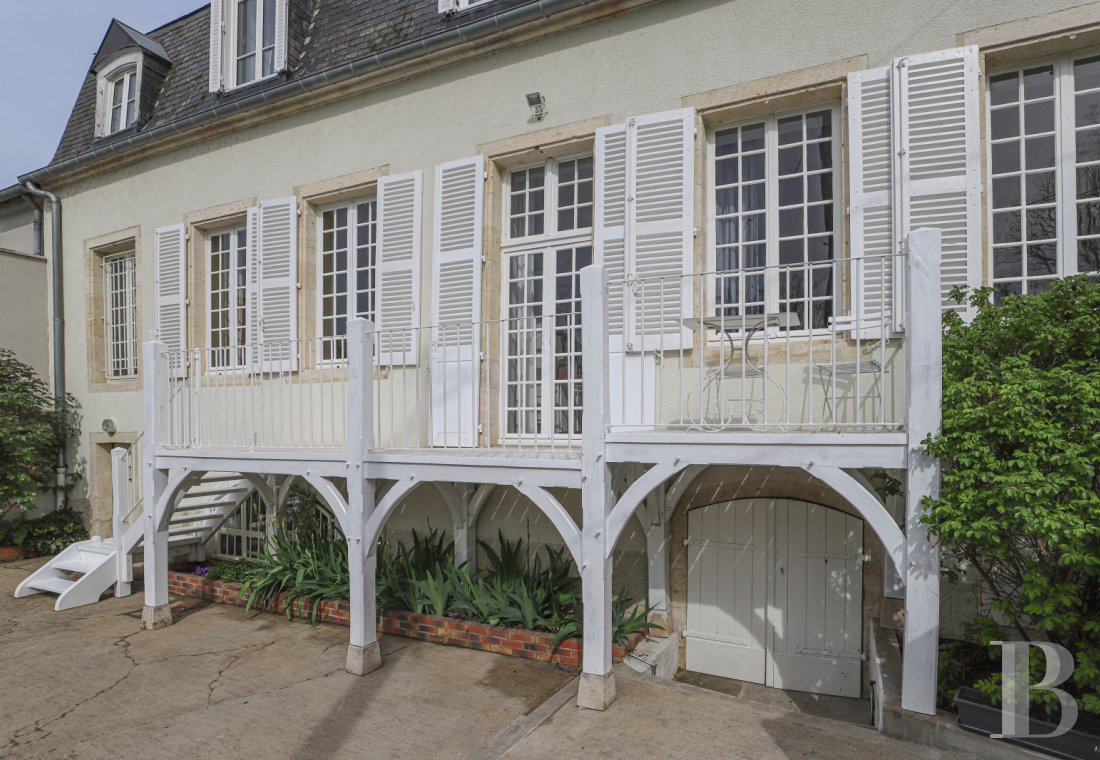
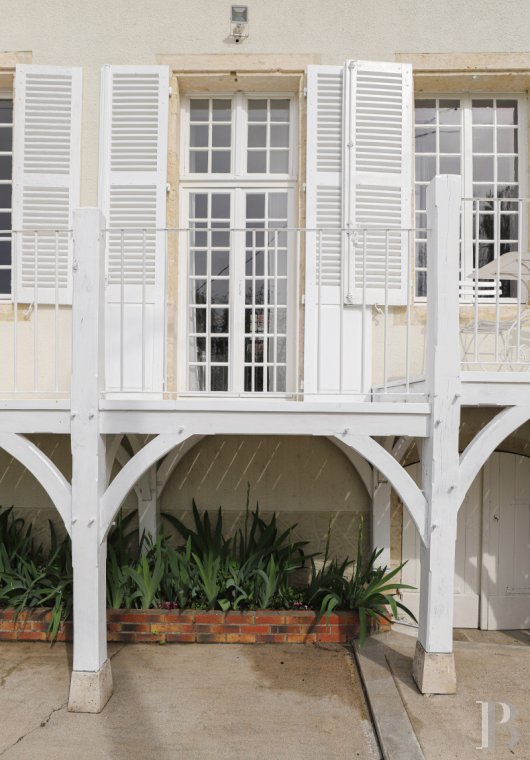
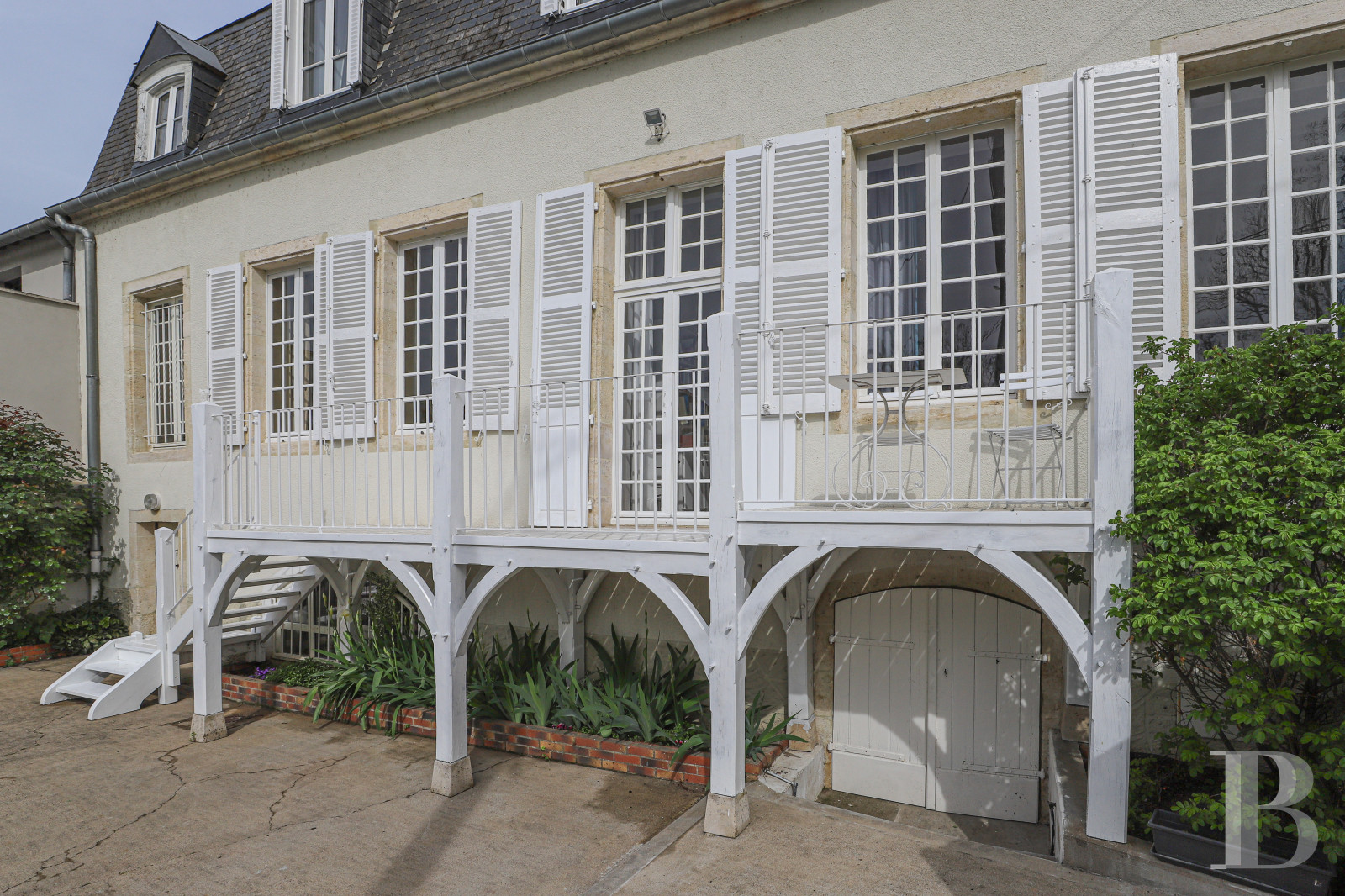
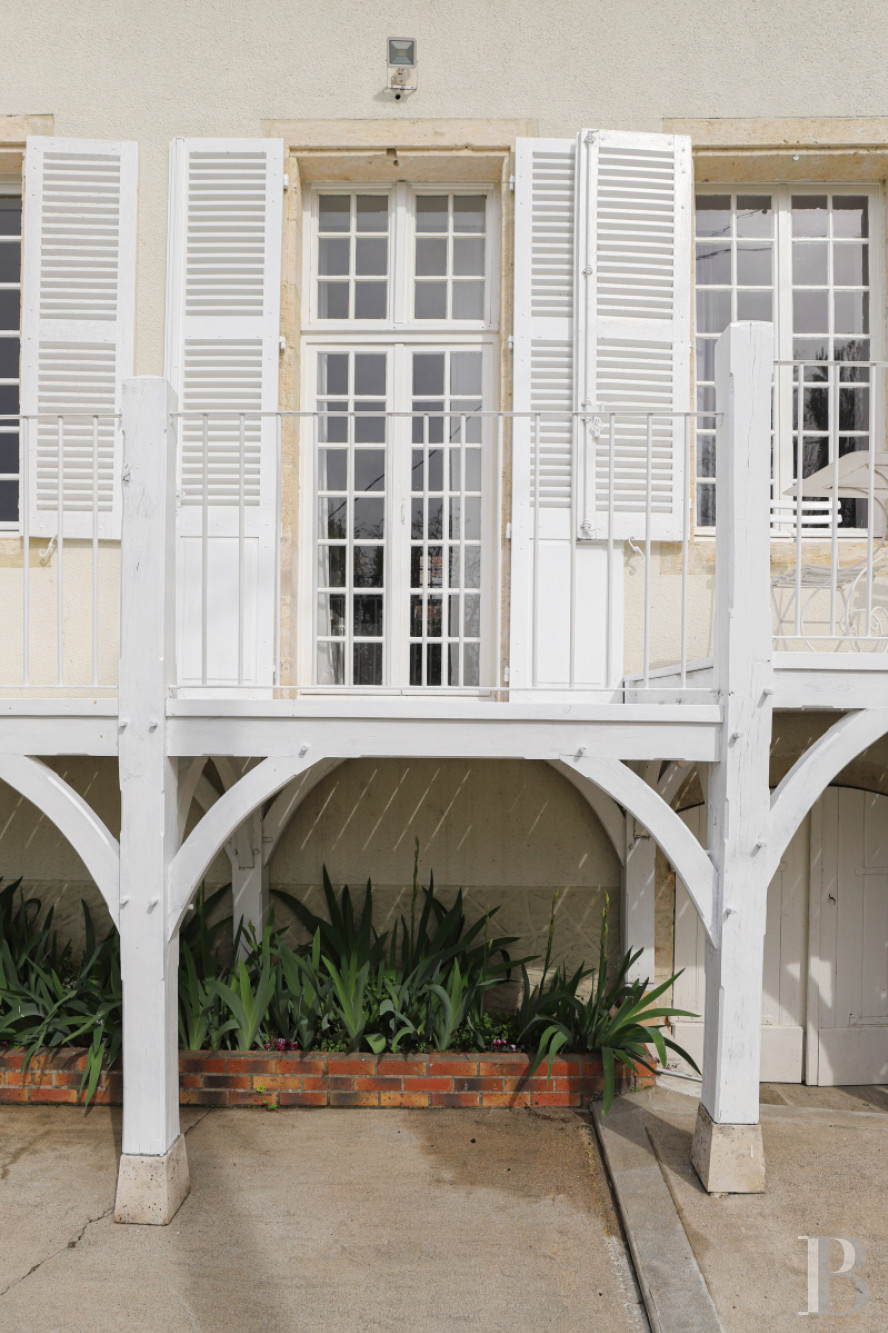
Built in 1729 and with three storeys – a garden level and two upper floors – the manor house has had several occupants over its history, including the former spouse of Gaston Defferre, who loved admiring the Loire from her bedroom, whereas in front of the dwelling, a small, finely crafted wooden patio, which provides glimpses of several flowering shrubs below, gives on to the courtyard via a staircase and skirts the first floor, which enjoys unobstructed views of the river.
As for the main façade, it is cadenced by several windows, primarily fitted with small glass panes, while the glass double door main entrance, accessible from the courtyard via the wooden staircase, is topped with a fanlight. Crowned with a three-sided Mansard roof, the lower and steeper of its two sloping sections is punctuated by dormers with pediments typical of the 18th century, whereas the dwelling’s louvred shutters, painted white, and its window/door surrounds, in ashlar limestone, are highlighted by the roof’s rectangular natural slate shingles, which were recently replaced.
Accessible via a wooden gate, painted white, which opens on to a courtyard with many varieties of flowering plants, the property features a large Burgundy stone patio behind the dwelling and to the south, bordered by verdant vegetation. From here, a rubble stone wall runs alongside a drive and leads to an old, ornately carved wooden door giving on to the street that provides access to the bridge spanning the Loire.
Built in 1729 and with three storeys – a garden level and two upper floors – the manor house has had several occupants over its history, including the former spouse of Gaston Defferre, who loved admiring the Loire from her bedroom, whereas in front of the dwelling, a small, finely crafted wooden patio, which provides glimpses of several flowering shrubs below, gives on to the courtyard via a staircase and skirts the first floor, which enjoys unobstructed views of the river.
As for the main façade, it is cadenced by several windows, primarily fitted with small glass panes, while the glass double door main entrance, accessible from the courtyard via the wooden staircase, is topped with a fanlight. Crowned with a three-sided Mansard roof, the lower and steeper of its two sloping sections is punctuated by dormers with pediments typical of the 18th century, whereas the dwelling’s louvred shutters, painted white, and its window/door surrounds, in ashlar limestone, are highlighted by the roof’s rectangular natural slate shingles, which were recently replaced.
The Manor House
The ground floor
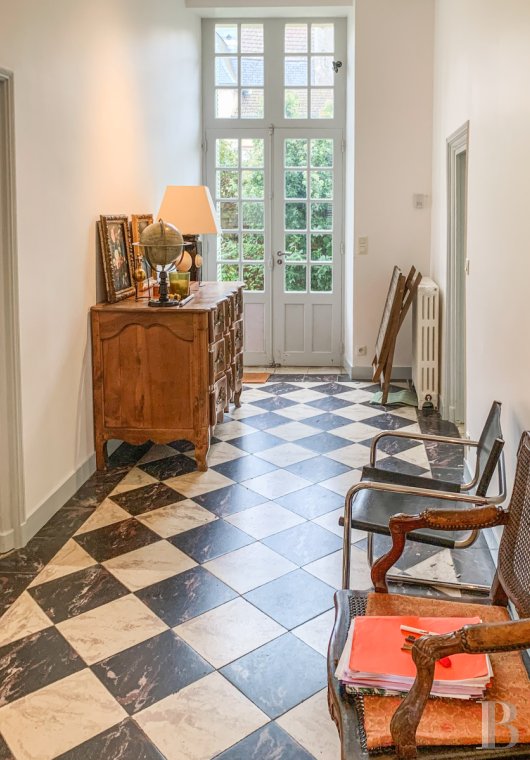
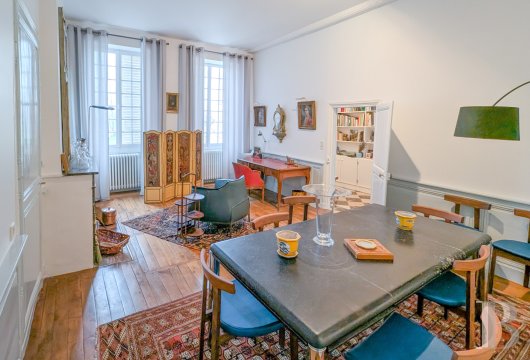
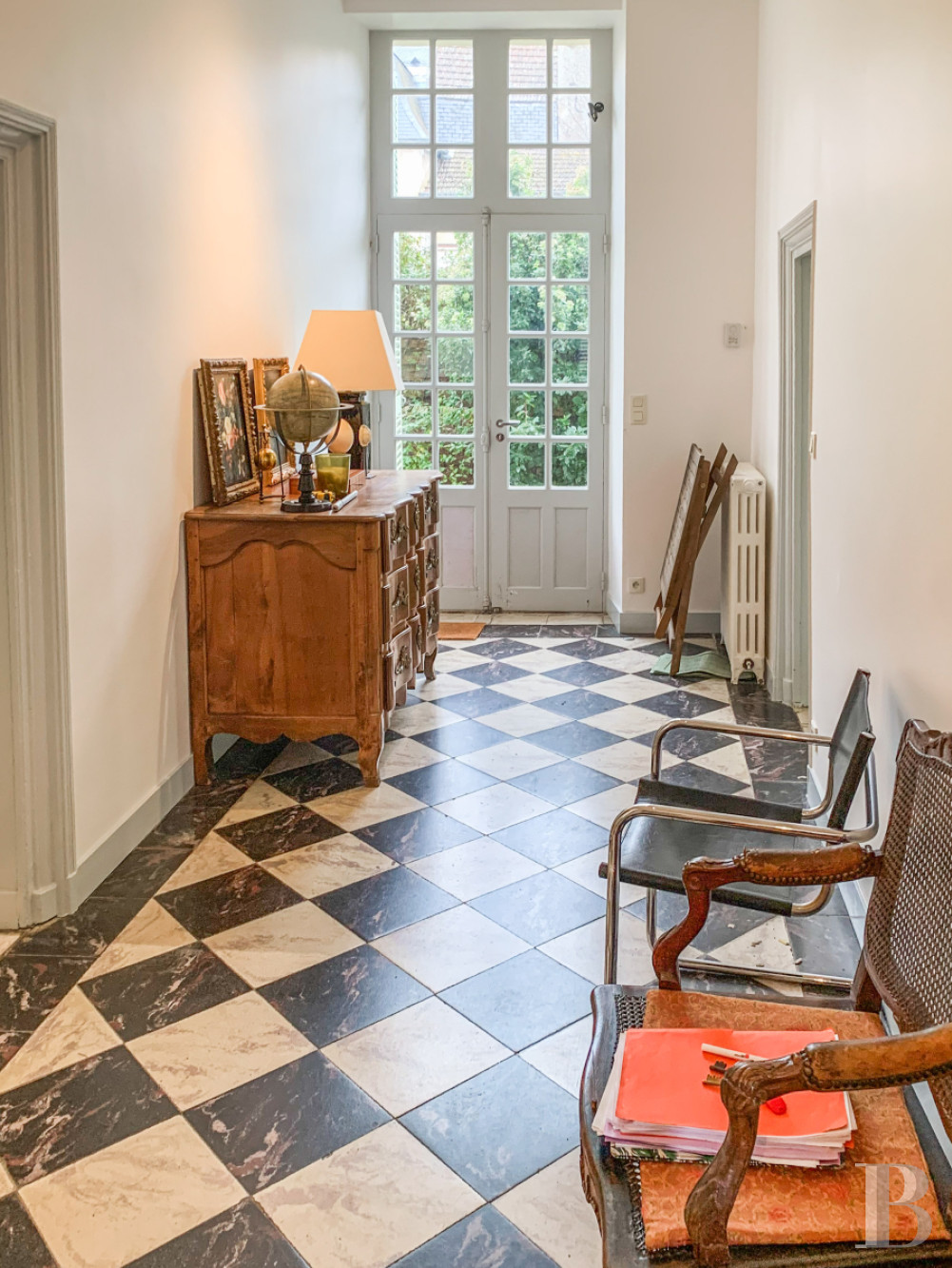
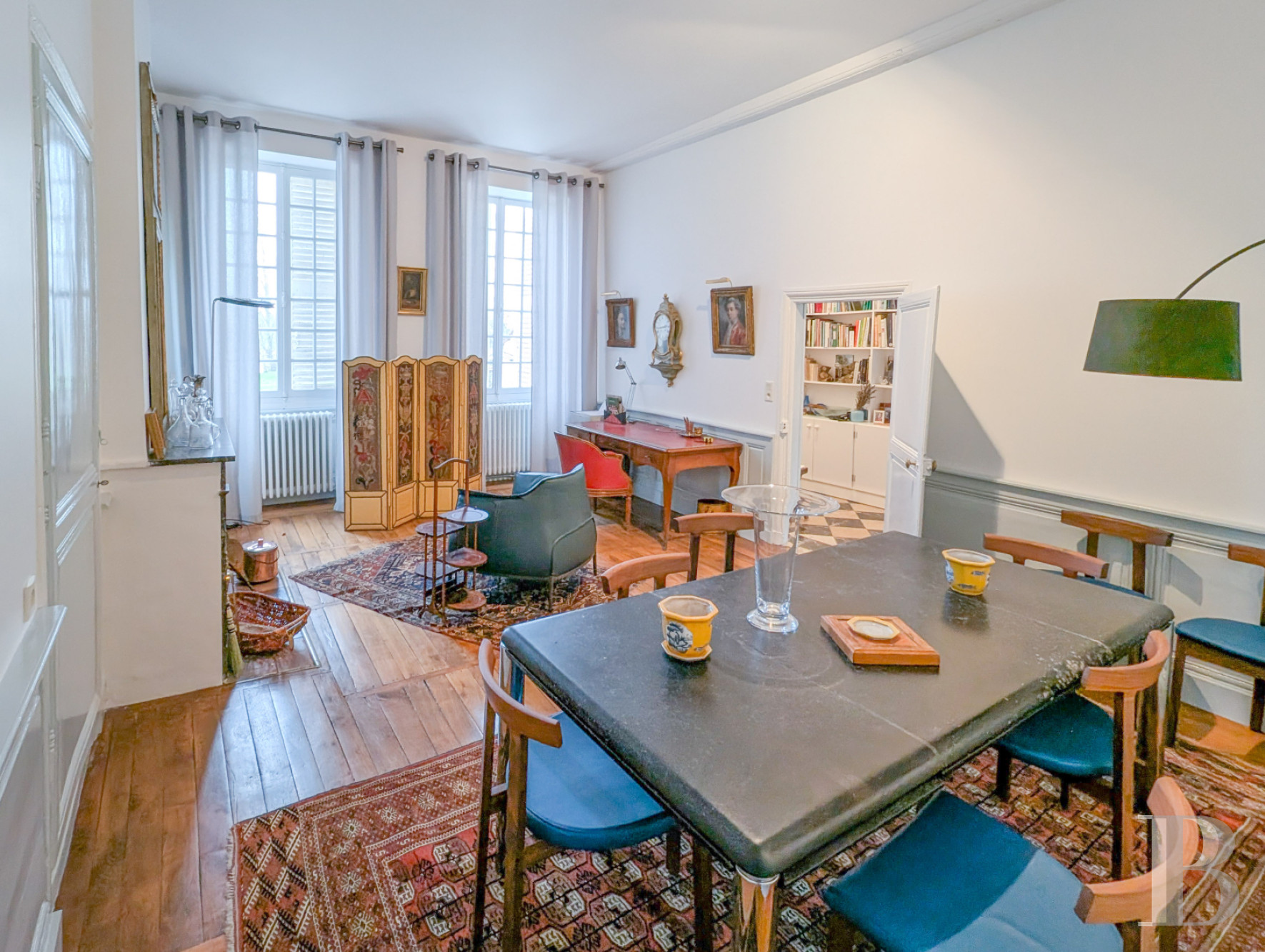
The dwelling’s front door opens on to an immense dual-aspect entrance hall, with a black and white checquered tile floor, as well as a second entrance, directly opposite, which opens on to the rear patio, located behind the dwelling. The space, bathed in light by two sets of glass double doors on either side, provides access to a fitted kitchen, with a geometric-patterned ceramic tile floor, while a small inconspicuous door opens directly on to the dining room, featuring a grey marble fireplace and a gilded trumeau mirror.
As for the honey-coloured, straight-plank parquet floor, it showcases the room’s moulded doorframes and large-panelled wainscoting, which runs along the length of the wall and is topped with a cymatium, whereas three windows, including a smaller one off to the side, makes it possible to enjoy views of the city and its ramparts in their entirety.
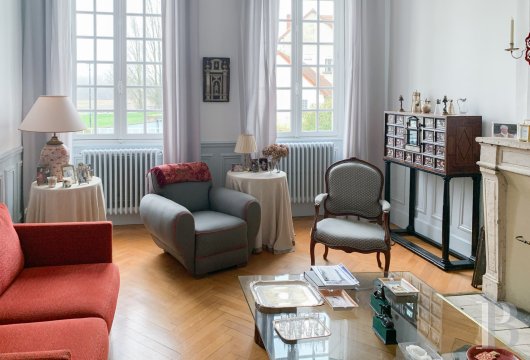
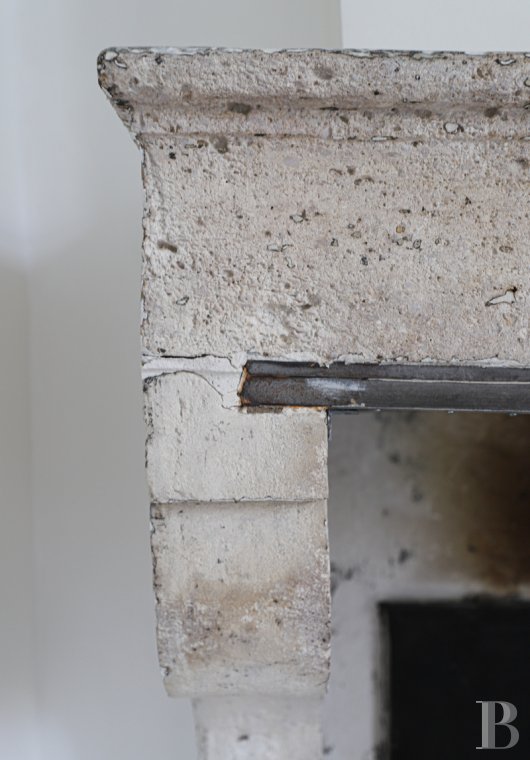
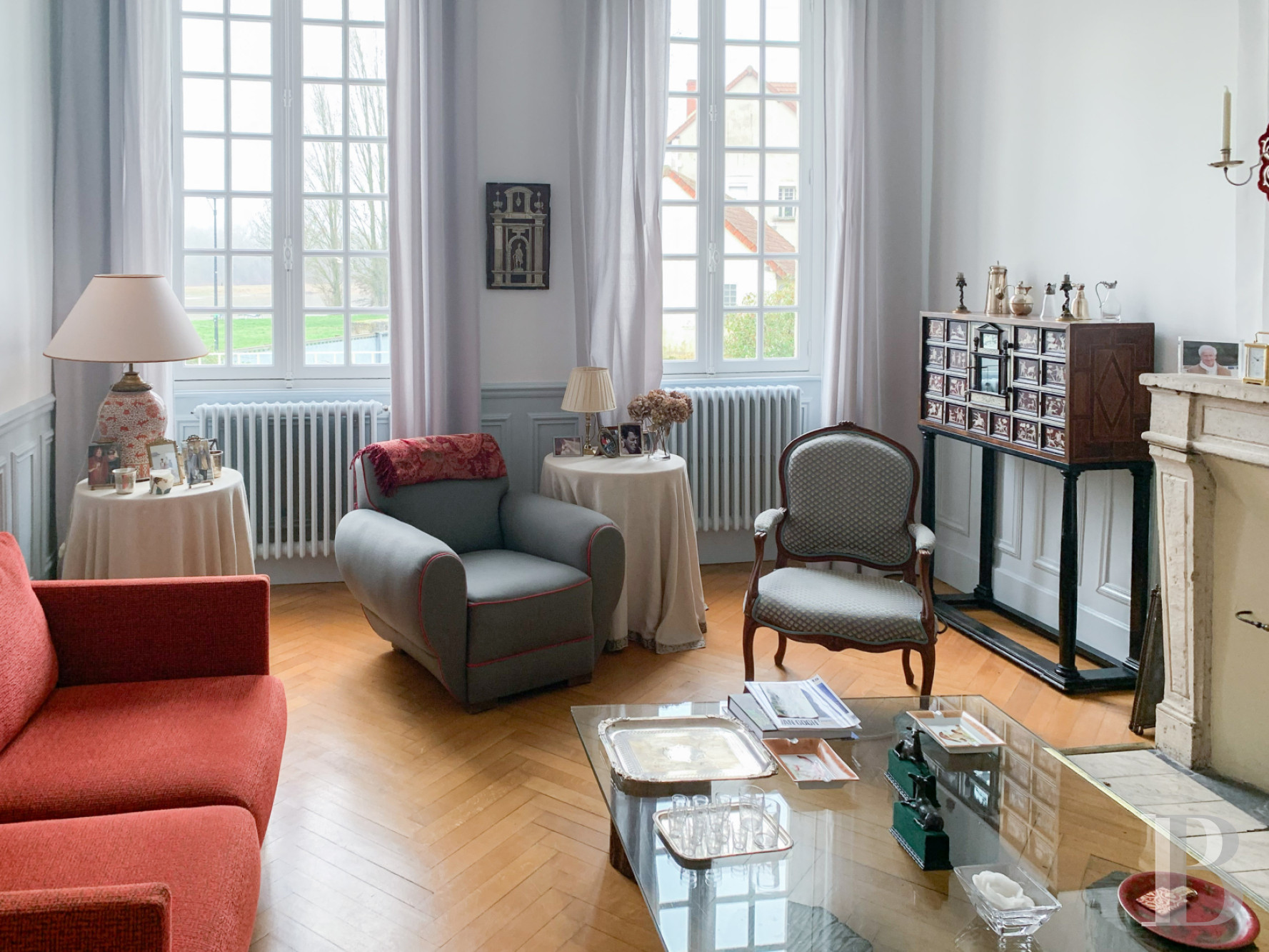
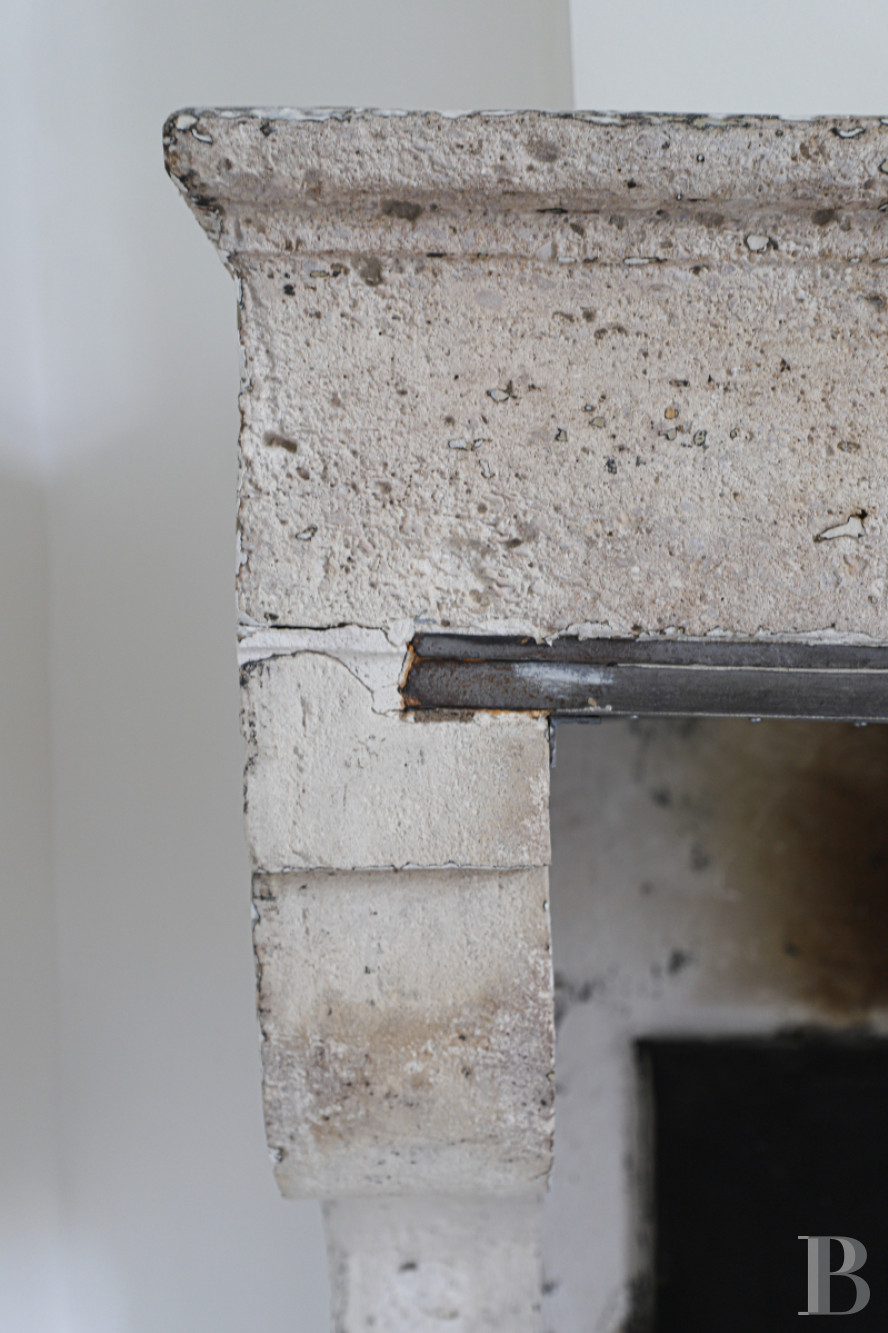
Directly opposite, a living room, featuring a sculpted stone fireplace, topped with a trumeau, herringbone parquet and wainscoting, exudes an elegant atmosphere, while a wide corridor provides access to an initial bedroom, boasting visible ceiling beams and a fireplace with an impressive stone mantel, sculpted frame surrounding the hearth and a stone fireback, which stands next to a fully-tiled shower room as well as a wardrobe.
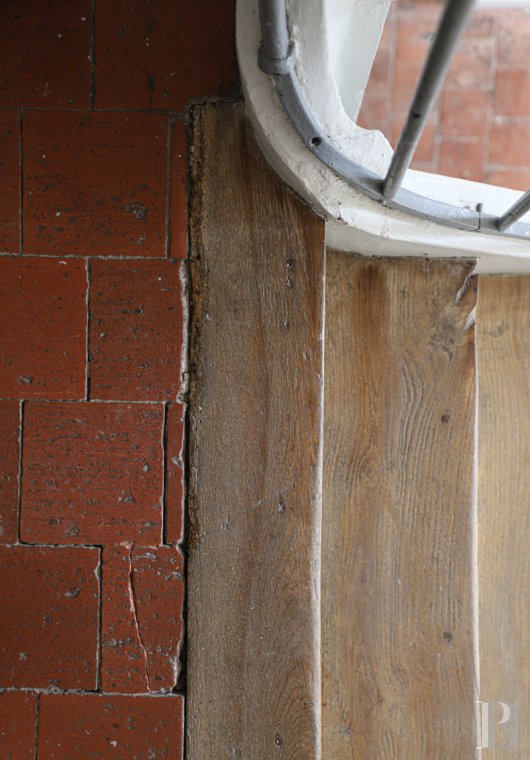
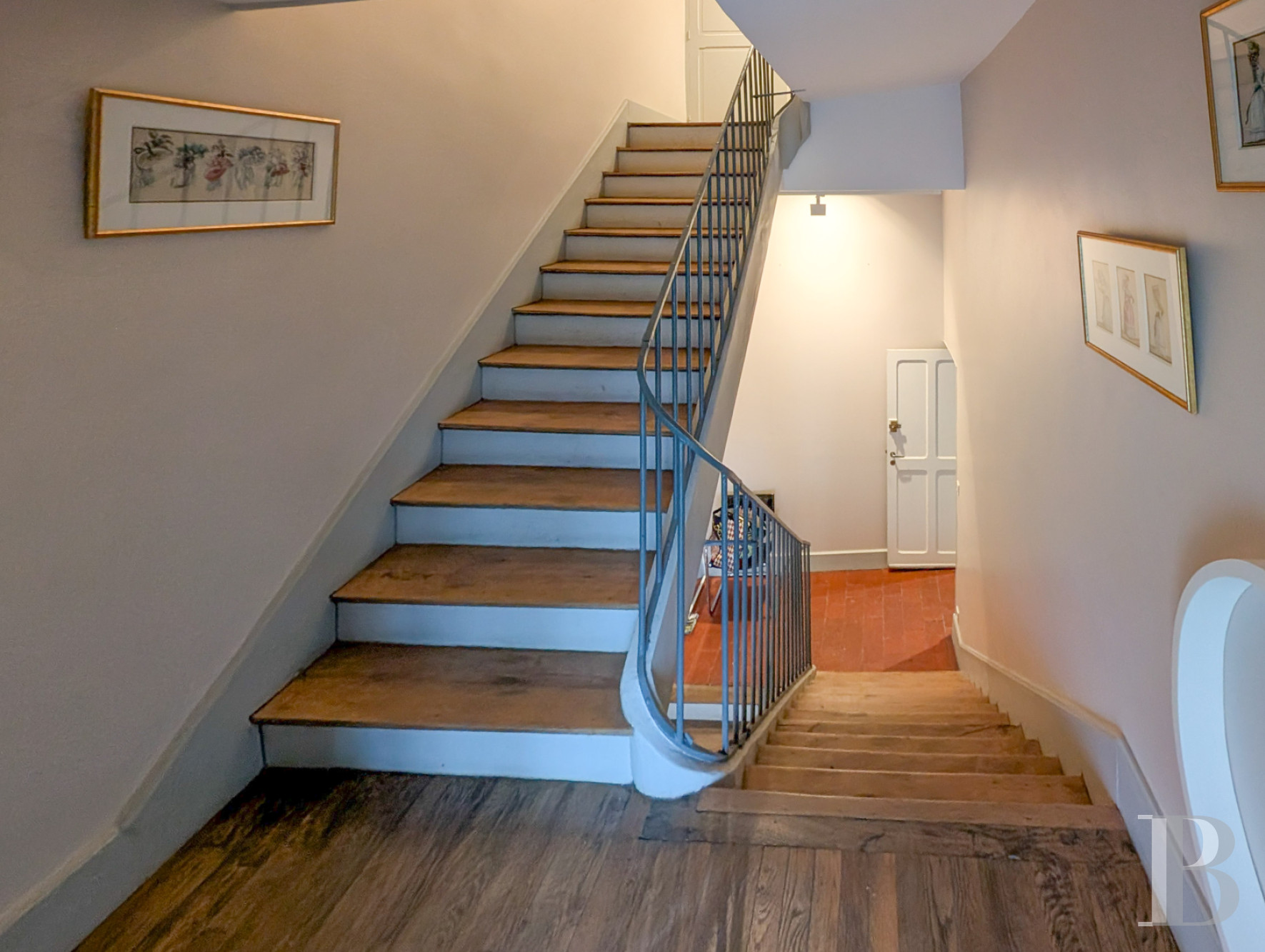
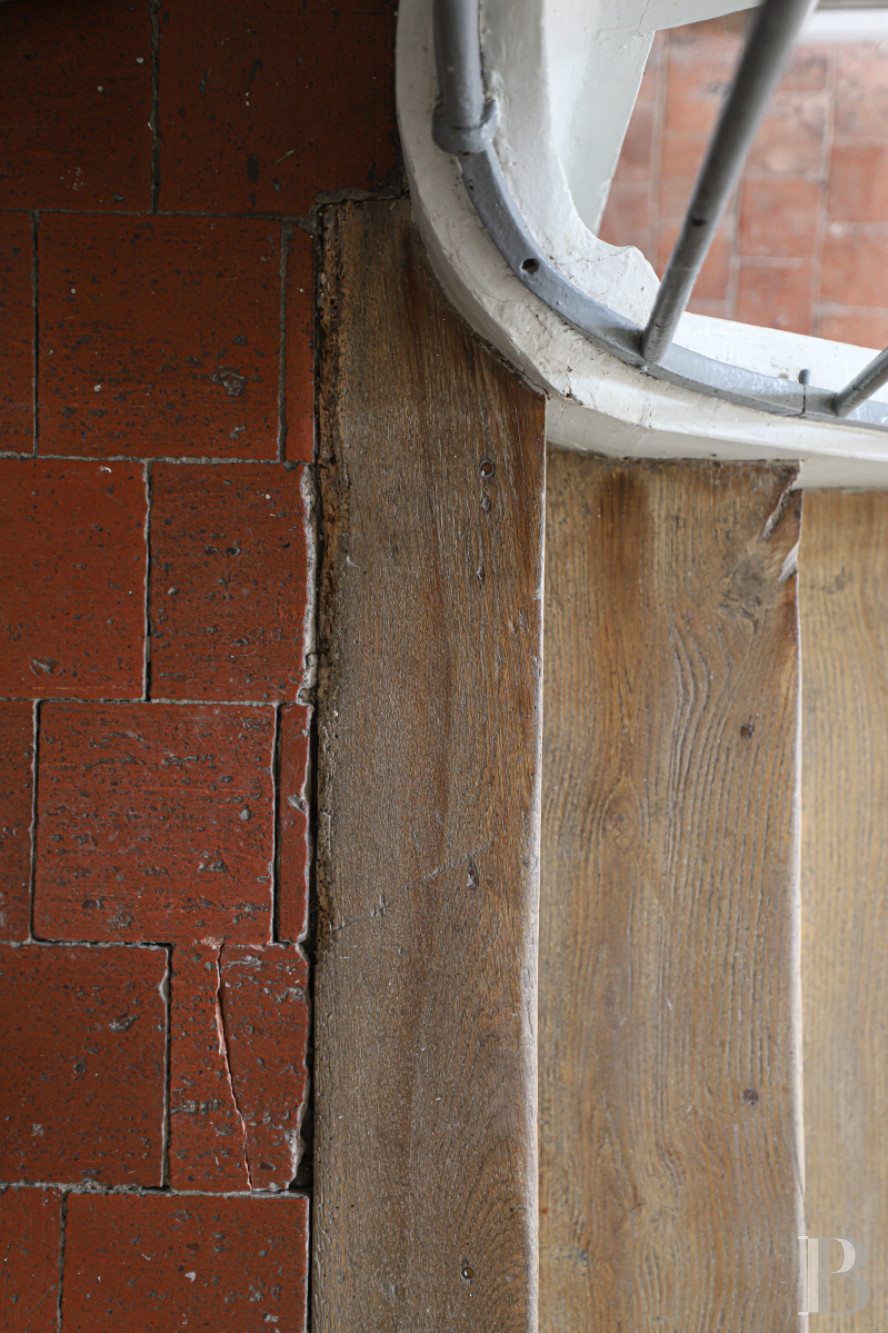
In addition, a landing, extending on from the hallway and with original terracotta floor tiles, precedes the staircase ascending to the upper floor.
The upstairs
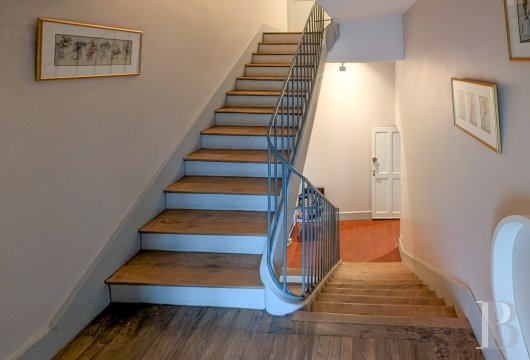
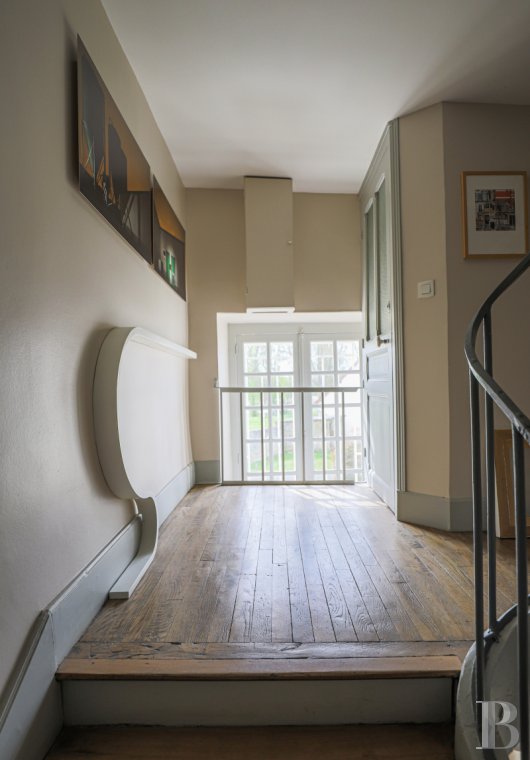
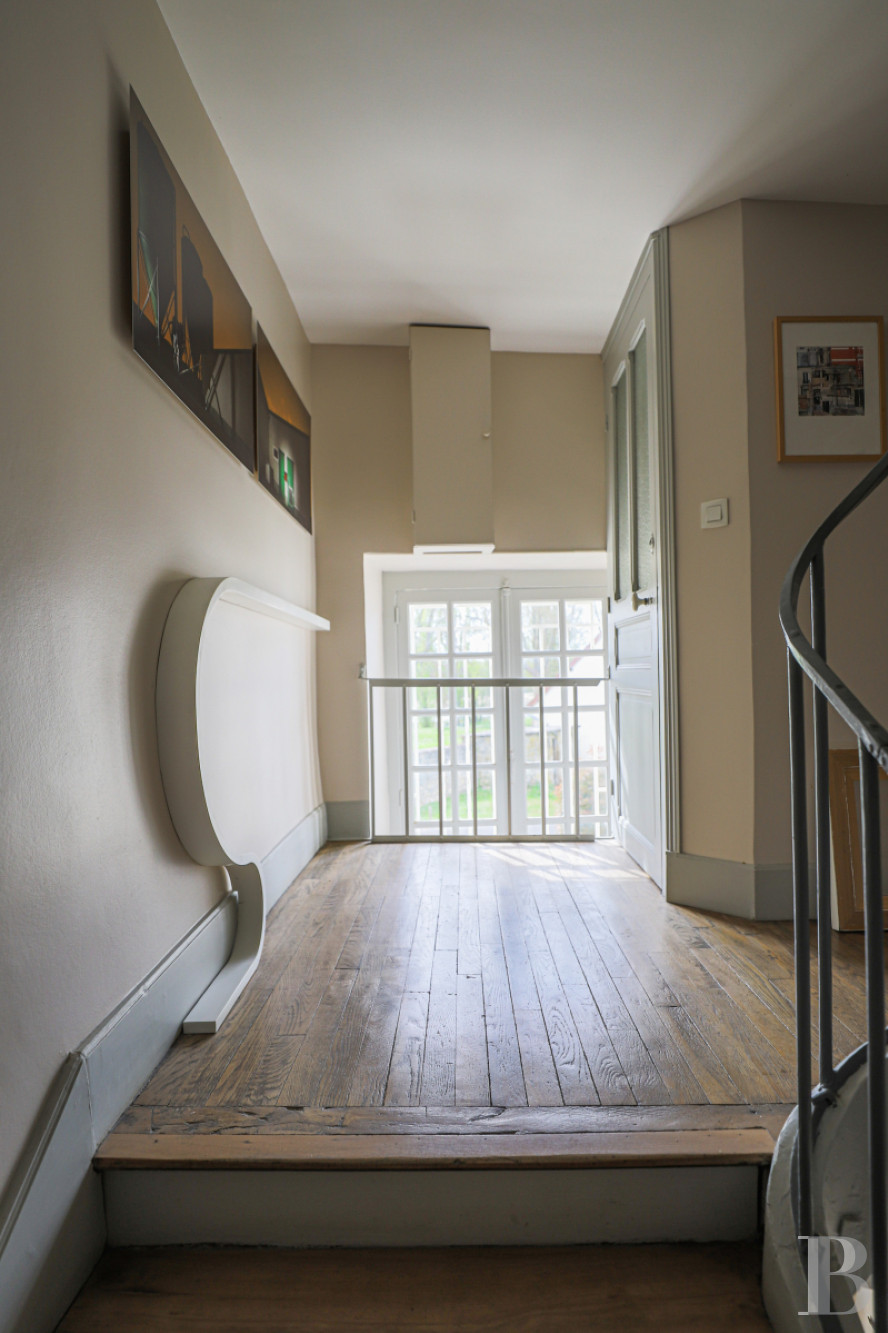
The oak staircase, with a wrought-iron bannister, provides access to an initial landing, bathed in light by a window and featuring a lavatory, followed by a second one, which leads to a corridor communicating with several bedrooms. With mostly straight-plank parquet floors throughout this level, the first bedroom, with built-in cupboards, comes with its own bathroom with original oxblood-colour ceramic floor tiles and a large cast-iron bathtub, while the second bedroom, with immense proportions, is decorated with a marble fireplace and located near a shower room with a lavatory as well as a wardrobe.
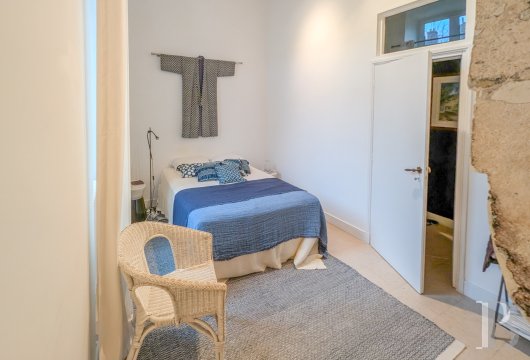
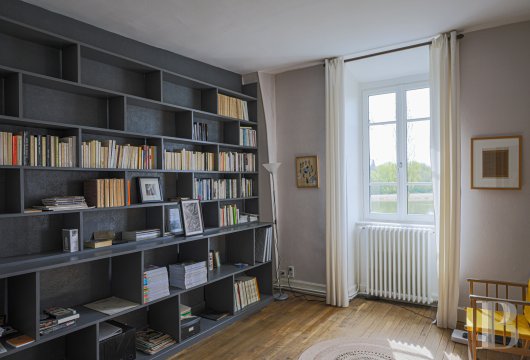
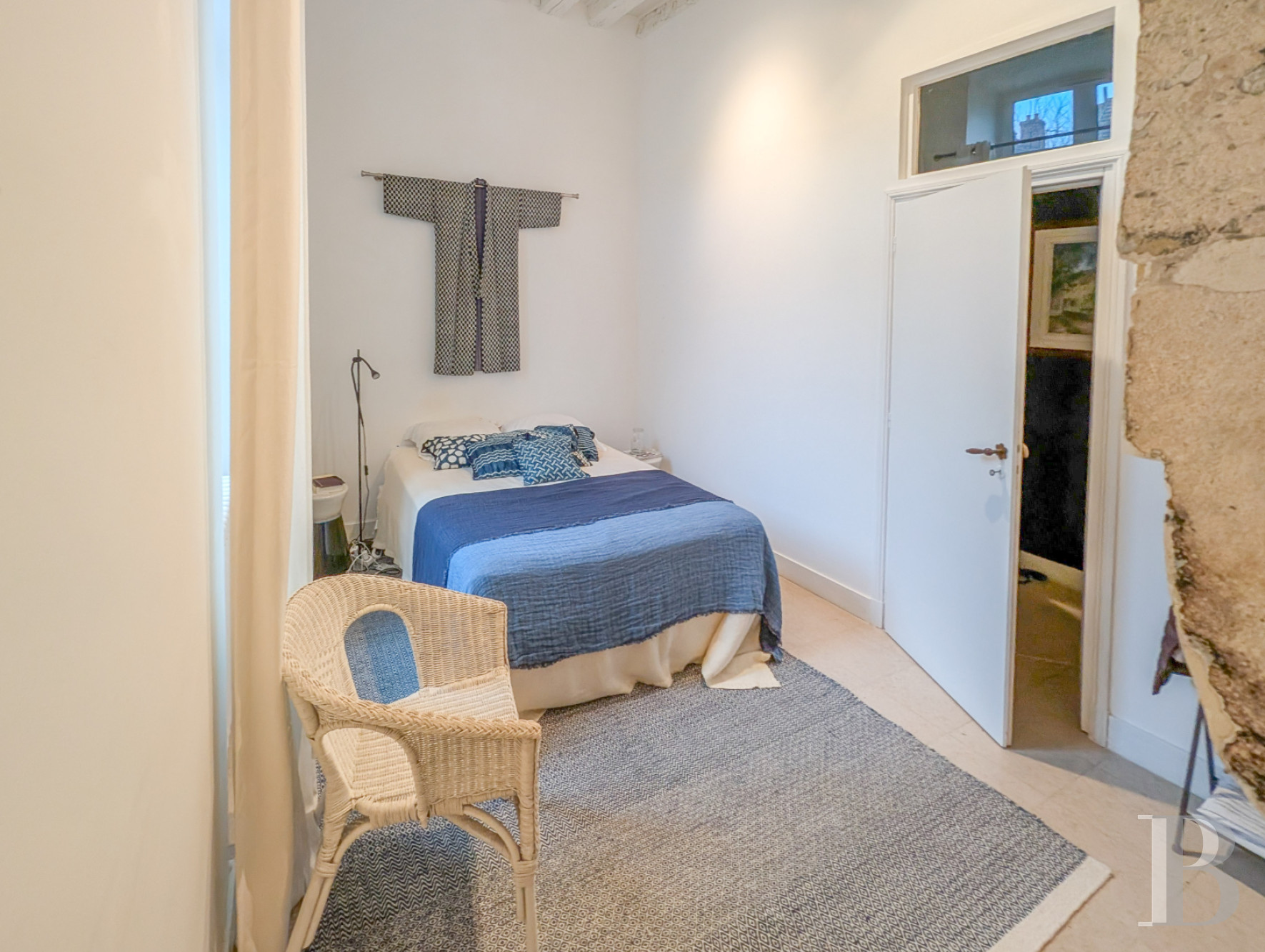
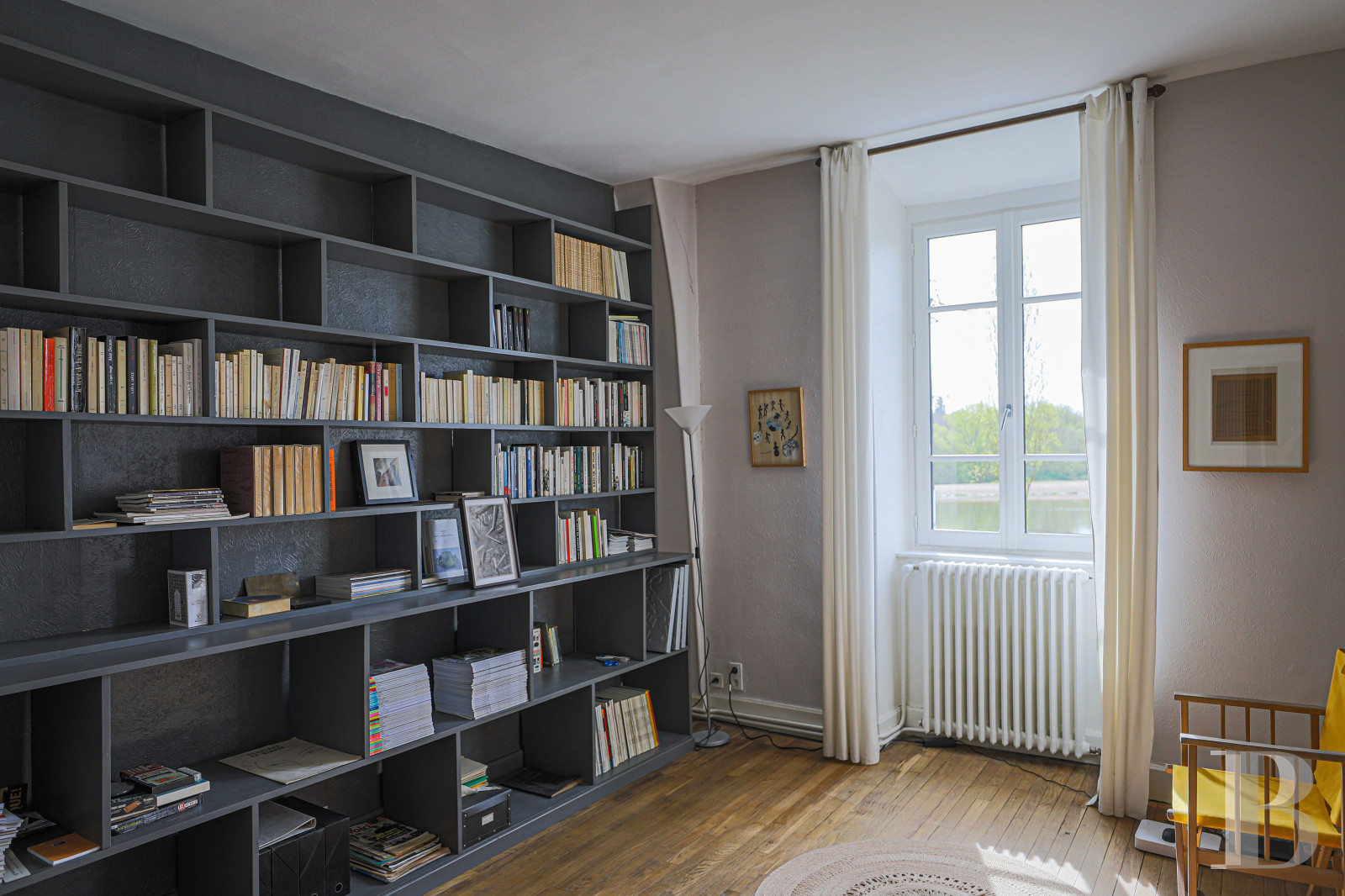
In addition, this bedroom communicates with another room, which is used as a library, whereas, at one end of the hallway, the current occupant has created a tastefully decorated and well-equipped flat, rented out on an occasional basis. Here, a small foyer provides access to a bedroom with parquet floors and a fully tiled shower room, while a room with a marble fireplace was transformed into a kitchen with a dining area, which gives on to a small, sunny sitting room.
The garden-level floor
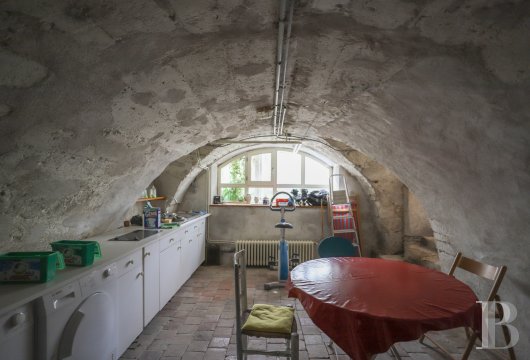
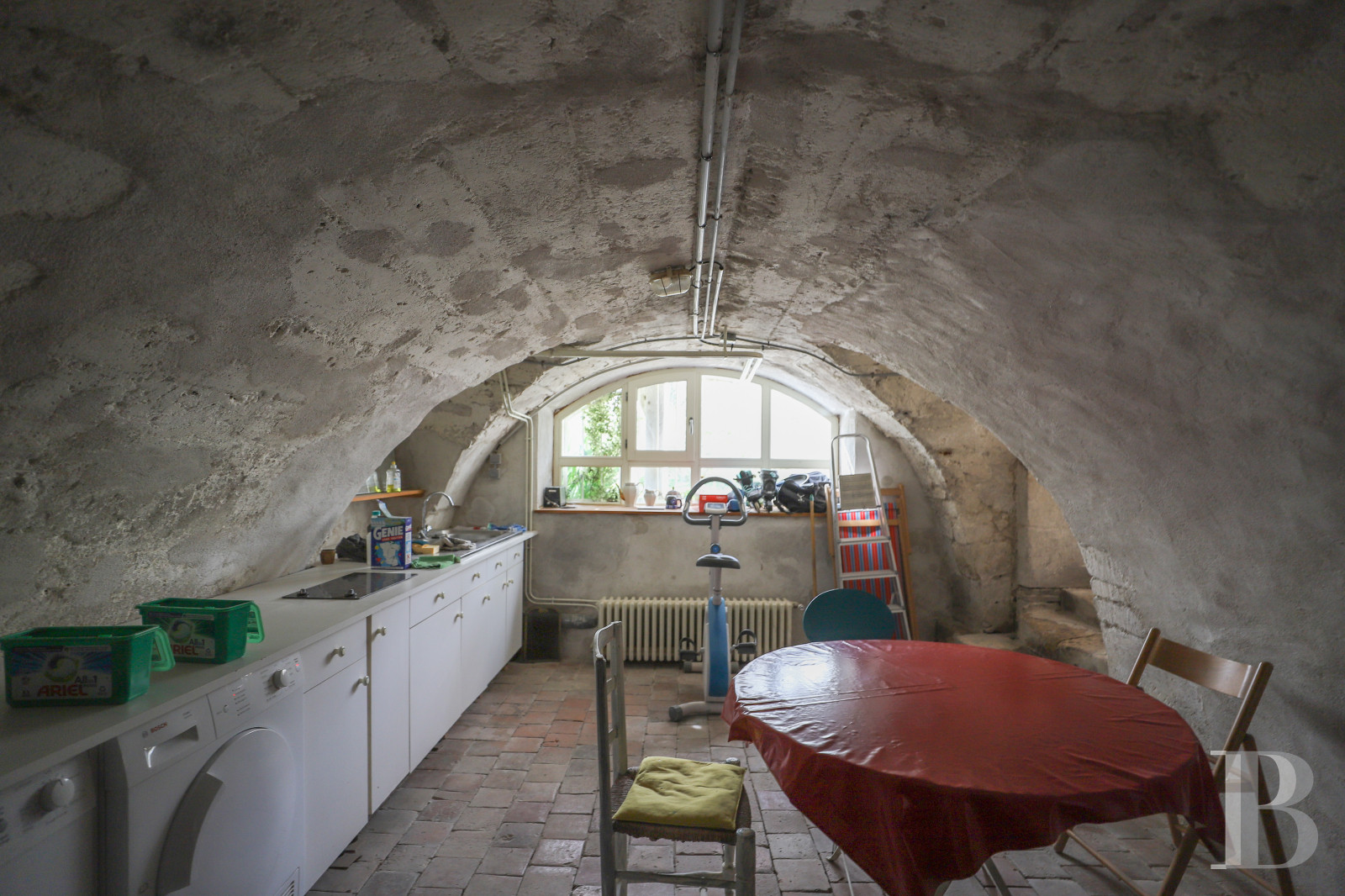
A wooden pedestrian door opens on to a landing with Burgundy flagstones, while, directly opposite and above a wine cellar with a beaten earth floor, a staircase ascends to the ground floor. On one side, another door, topped with a rounded arch and framed by ashlar stone, communicates with a vaulted room that is currently used as a utility room while, extending on from here, a woodshed is illuminated by small windows.
The Back Garden
Enclosed by stone walls, a concrete courtyard, now used as a patio, precedes the dwelling and skirts the main façade, facing north. Extending over approximately 300 m² and surrounded by flowerbeds, it is planted with shrubs and other flowering plants, including rosebushes and irises.
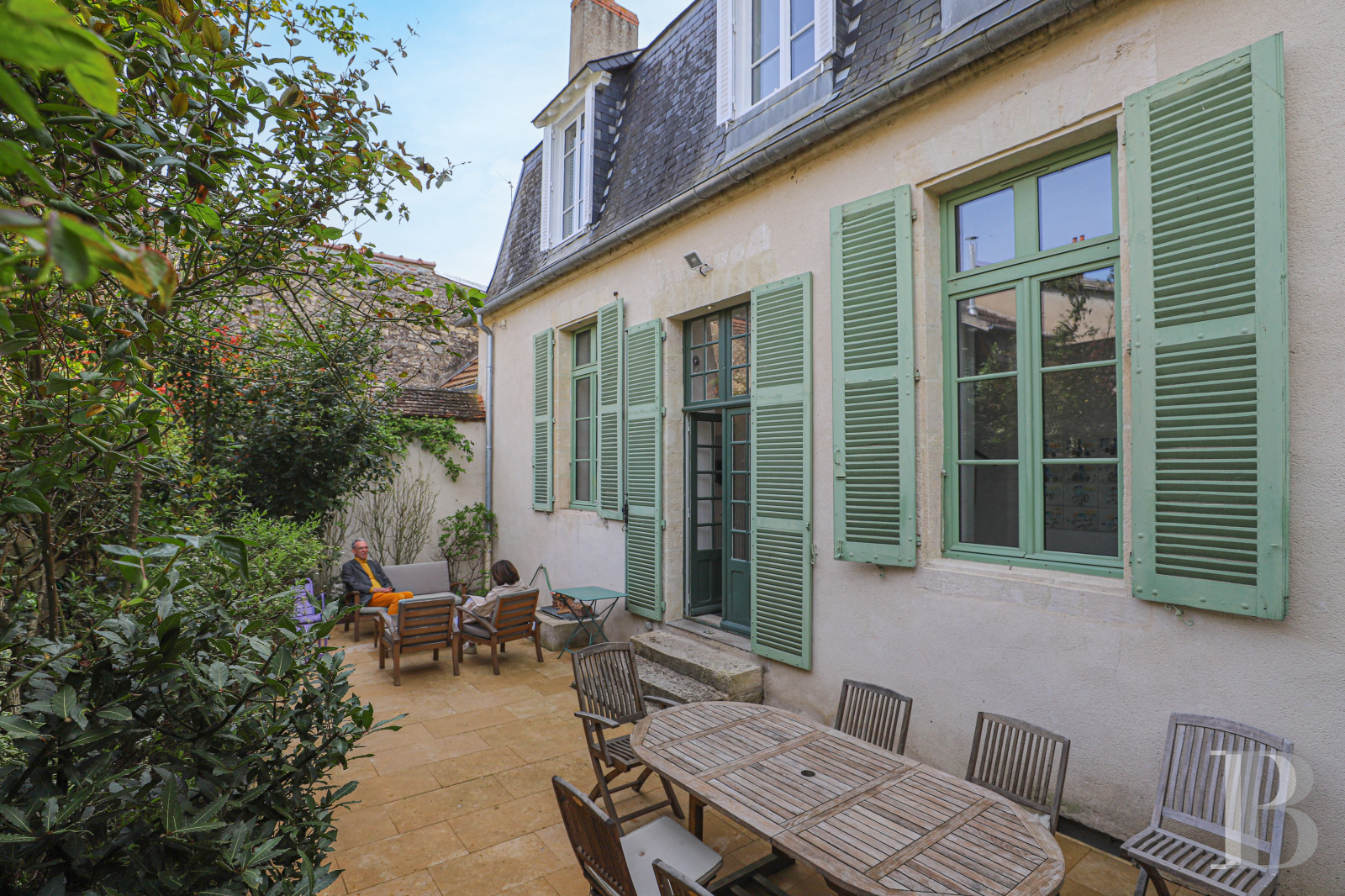
In addition, behind the dwelling and skirting its rear exterior, a flagstone patio of approximately 100 m², facing south and enclosed by walls, makes it possible to enjoy the fresh air and al-fresco meals, especially during the summer months, whereas roses, peonies and daisies thrive in abundance along its outskirts. It should be noted that it will be possible to expand the garden at some point in the future.
Our opinion
This manor house, which boasts elegant and eye-catching architecture, as well as a pleasant and sunny living environment, with unobstructed views of the medieval city thanks to its position overlooking the large “river of soggy sand”, so poetically described by Jules Renard, provides endless enjoyment all year long thanks to the spectacle of the surrounding scenery unfolding before its very doorstep: nature’s colourful hues changing according to the seasons and time of day, under the watchful gaze of the neighbouring stone edifices, topped with slate roofs.
Whether one admires the view from the patio during the summer or the spacious dwelling’s many rooms during the winter, all will be delighted by France’s longest river, which now boasts a restored natural heritage, including families of beavers who have returned and joyfully animate the enchanting landscape, carved over the centuries by the majestic Loire River.
Reference 925523
| Main building floor area | 250 m² |
| Land registry surface area | 340 m² |
French Energy Performance Diagnosis
Information on the risks to which this property is exposed is available on the website: www.georisques.gouv.fr
Share


NB: The above information is not only the result of our visit to the property; it is also based on information provided by the current owner. It is by no means comprehensive or strictly accurate especially where surface areas and construction dates are concerned. We cannot, therefore, be held liable for any misrepresentation.