



An authentic upper-middle-class house with a former presbytery and
an old stable, nestled in the heart of a village in France’s Loiret department
an old stable, nestled in the heart of a village in France’s Loiret department
Courtenay,
LOIRET
center-val-de-loire
45320
FR

Location
The village has 1,200 inhabitants and is tucked away in France’s beautiful Loiret department. The grouping of local municipalities brings together 20,400 inhabitants. The rural area, made up of countless clearings and sandstone, lies upon a plateau between the valleys of the River Cléry and the River Ouanne. Hamlets dot the landscape and hiking trails lead to Montargis forest. The village offers several shops and a school. There are local markets and artisans too. You can get to Paris, 135 kilometres away, via the A6 motorway, which is eight kilometres from the village. And via the A19 motorway, also nearby, you can get to Montargis and Amilly, 18 kilometres away, to Courtenay, Château-Renard and Douchy-Montcorbon, eight kilometres away, and to the city of Sens, 37 kilometres away. From Montargis train station, you can reach Bercy train station in central Paris in one hour via the TER regional rail network and Gare de Lyon train station, also in central Paris, in 1 hour and 45 minutes via the Transilien regional rail network.
Description
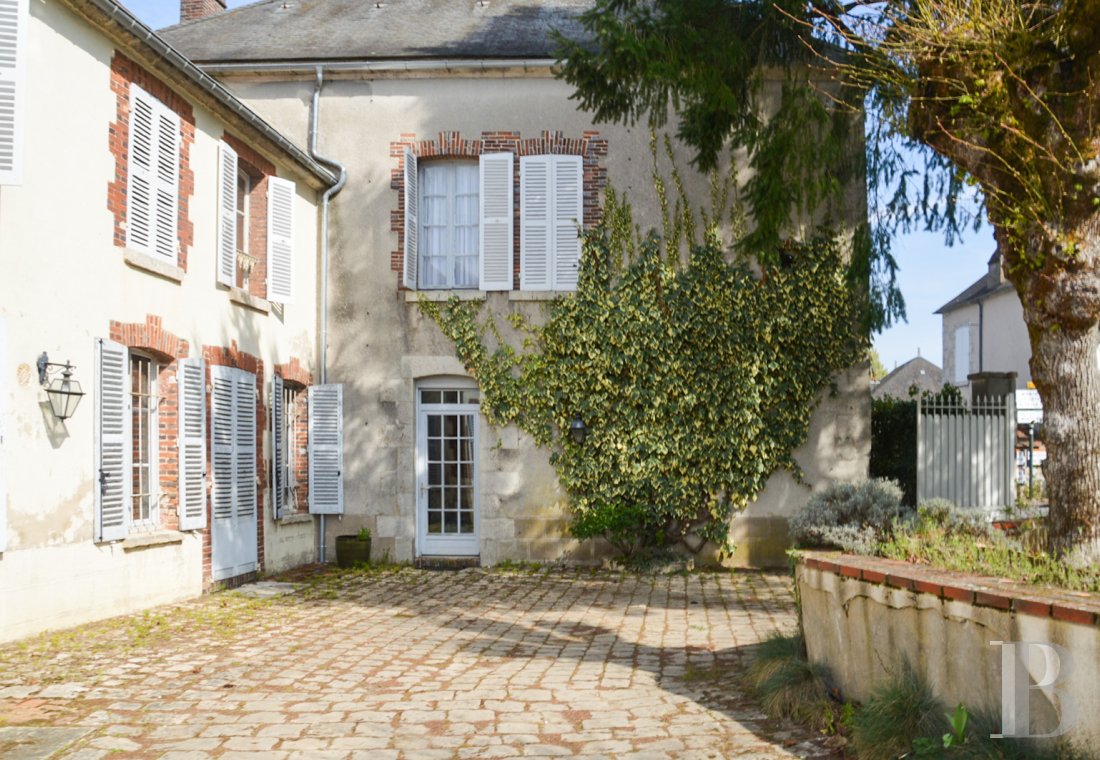
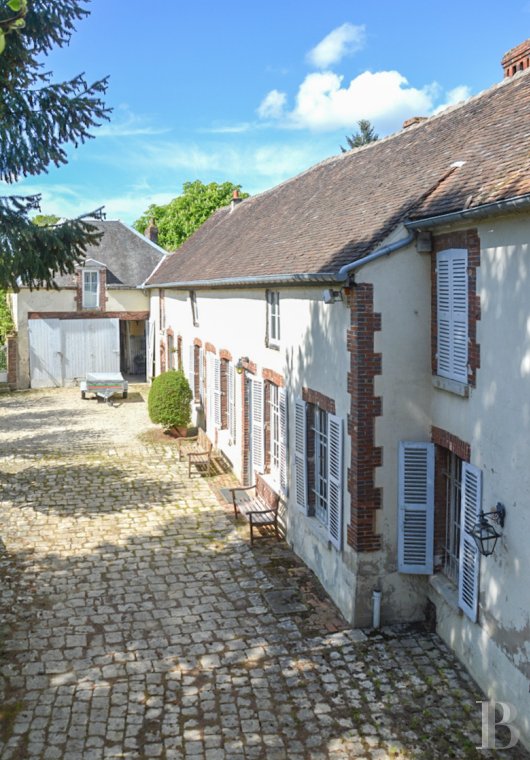
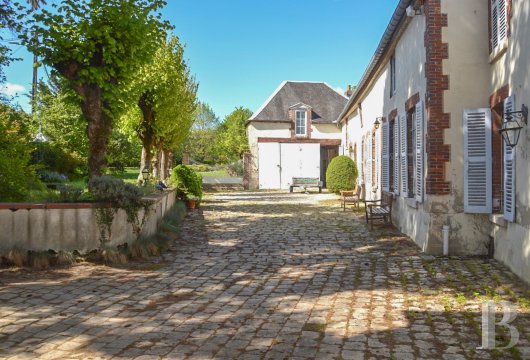
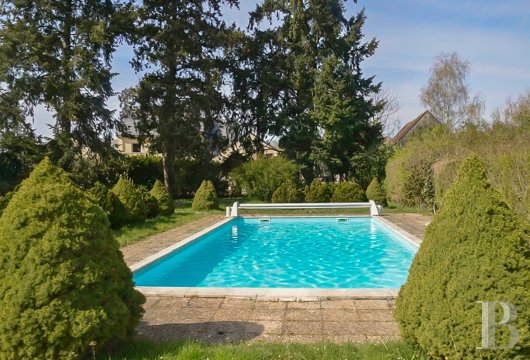
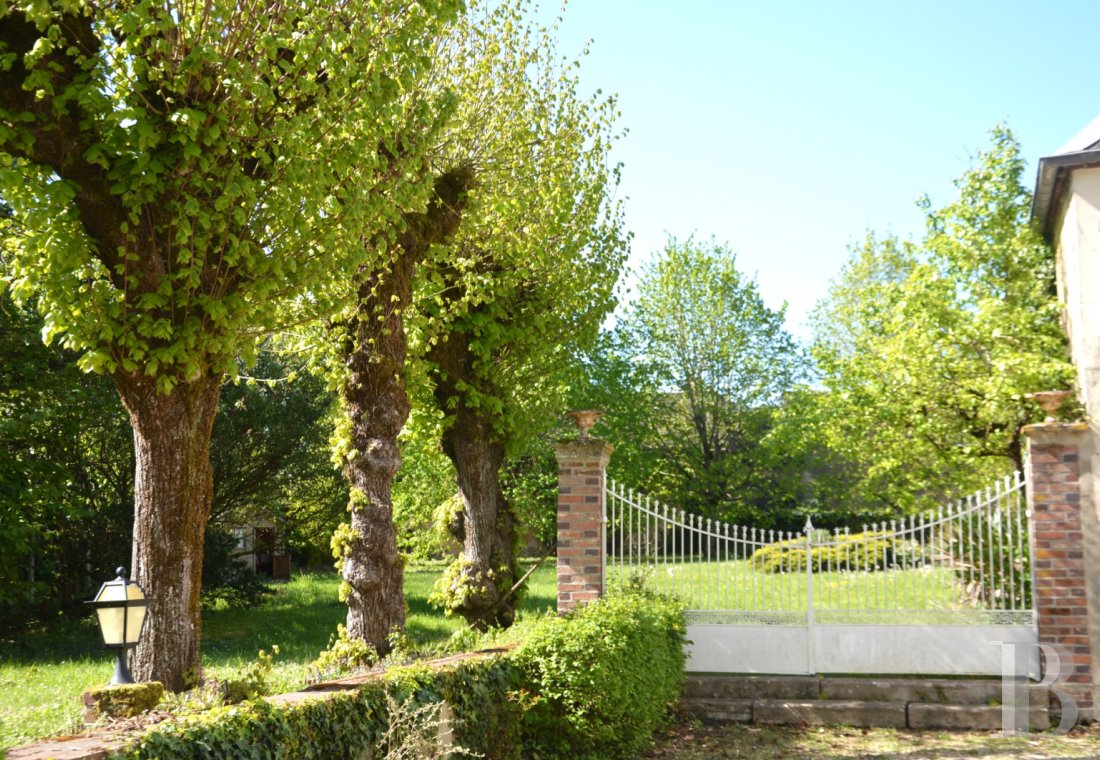
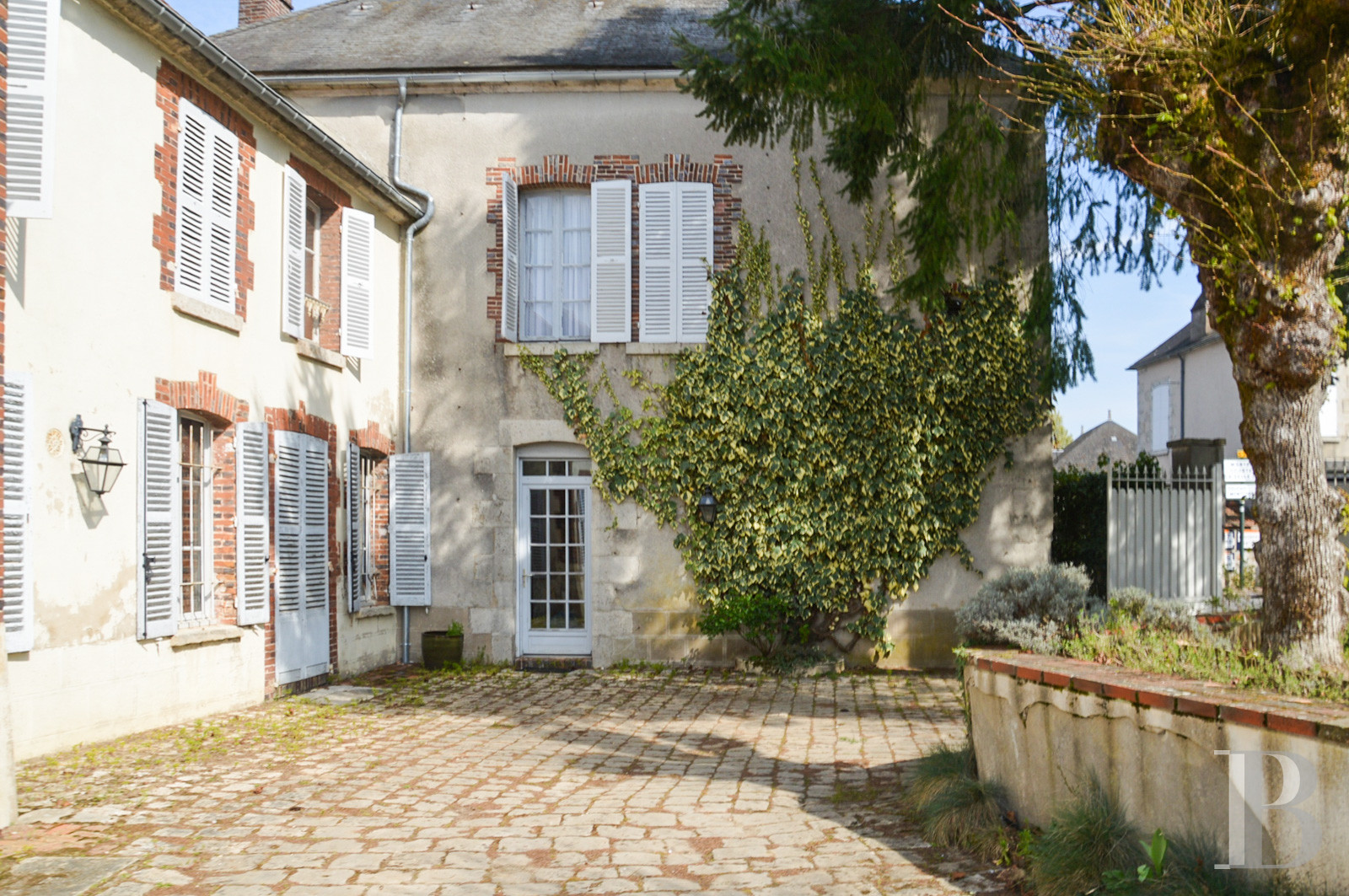
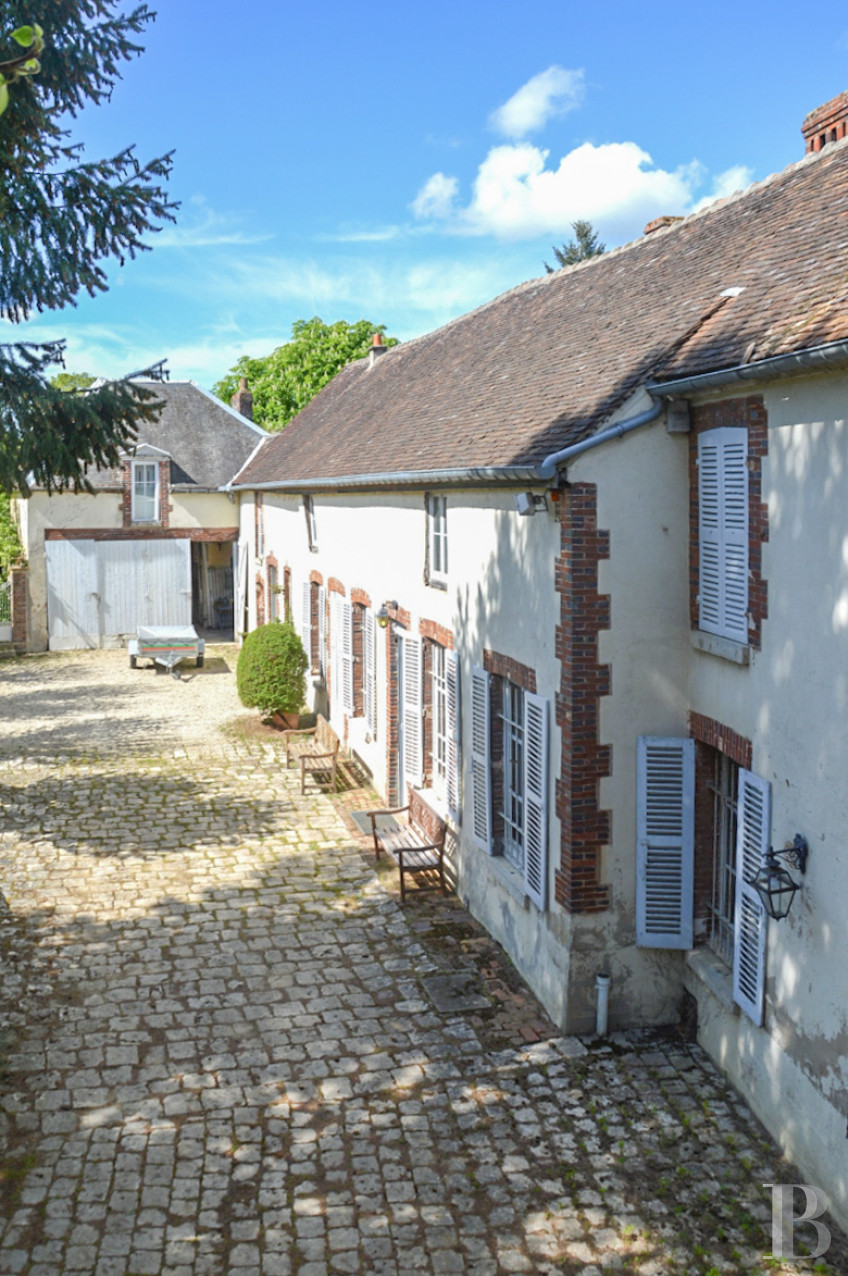
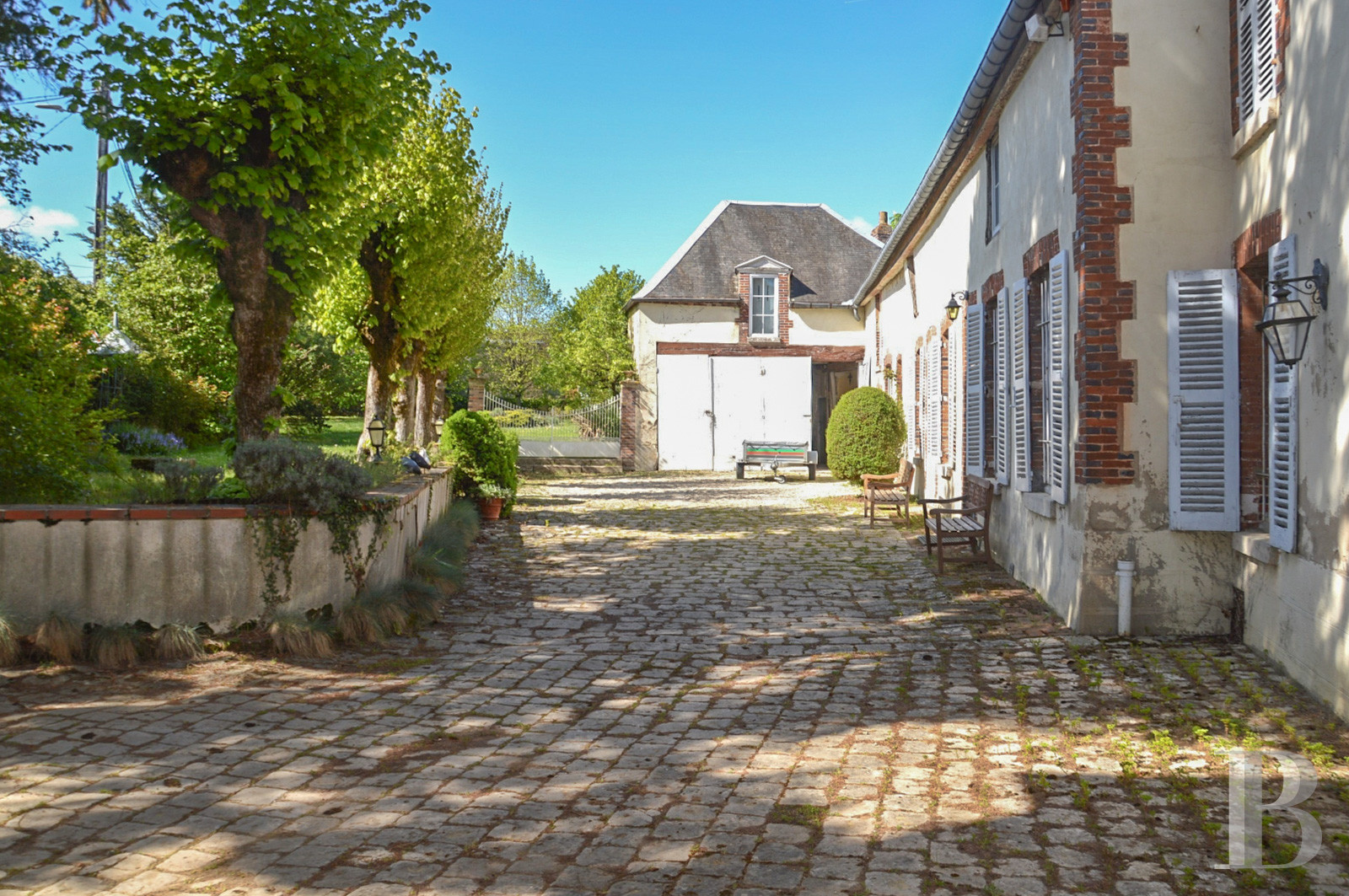
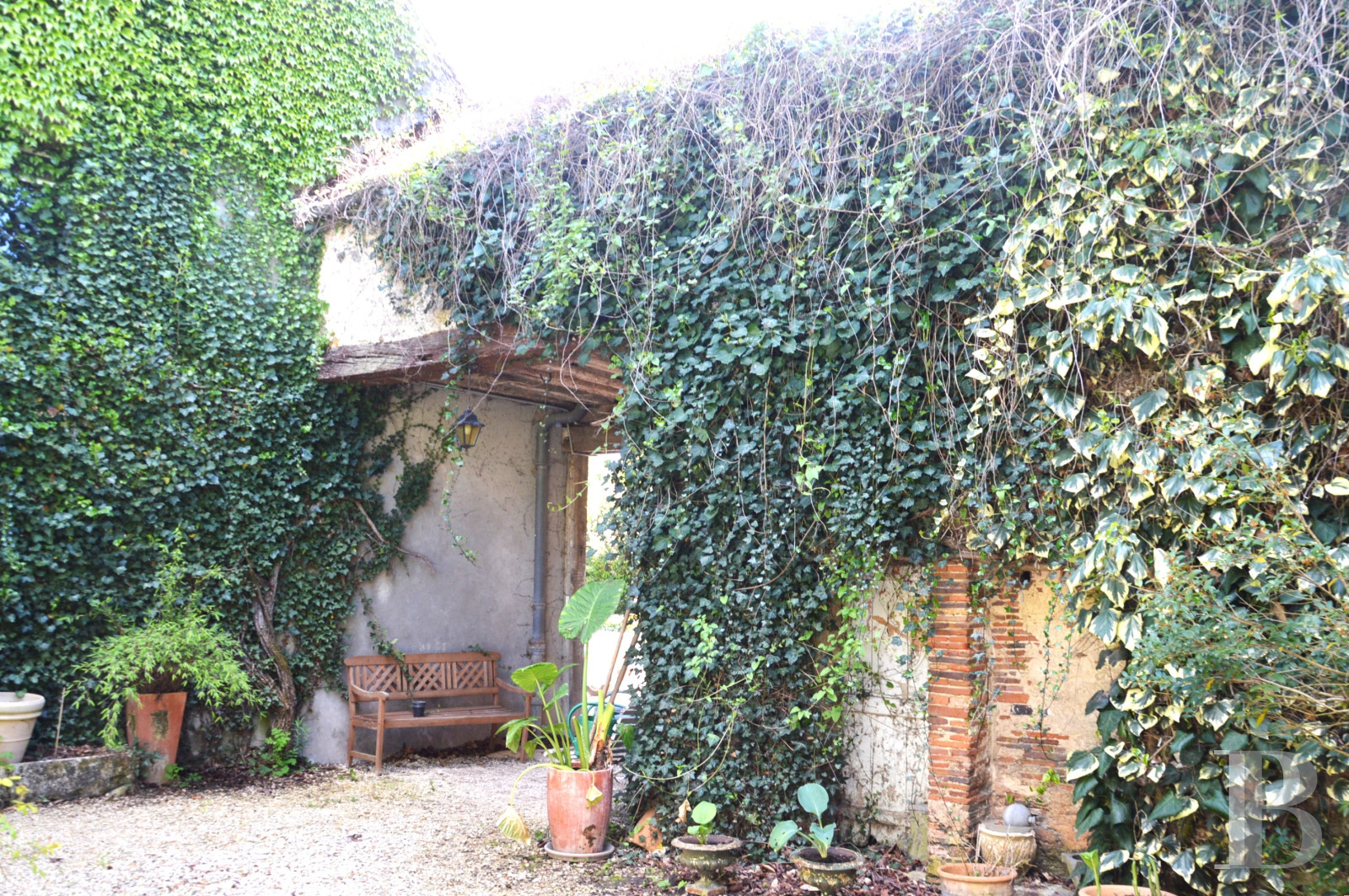
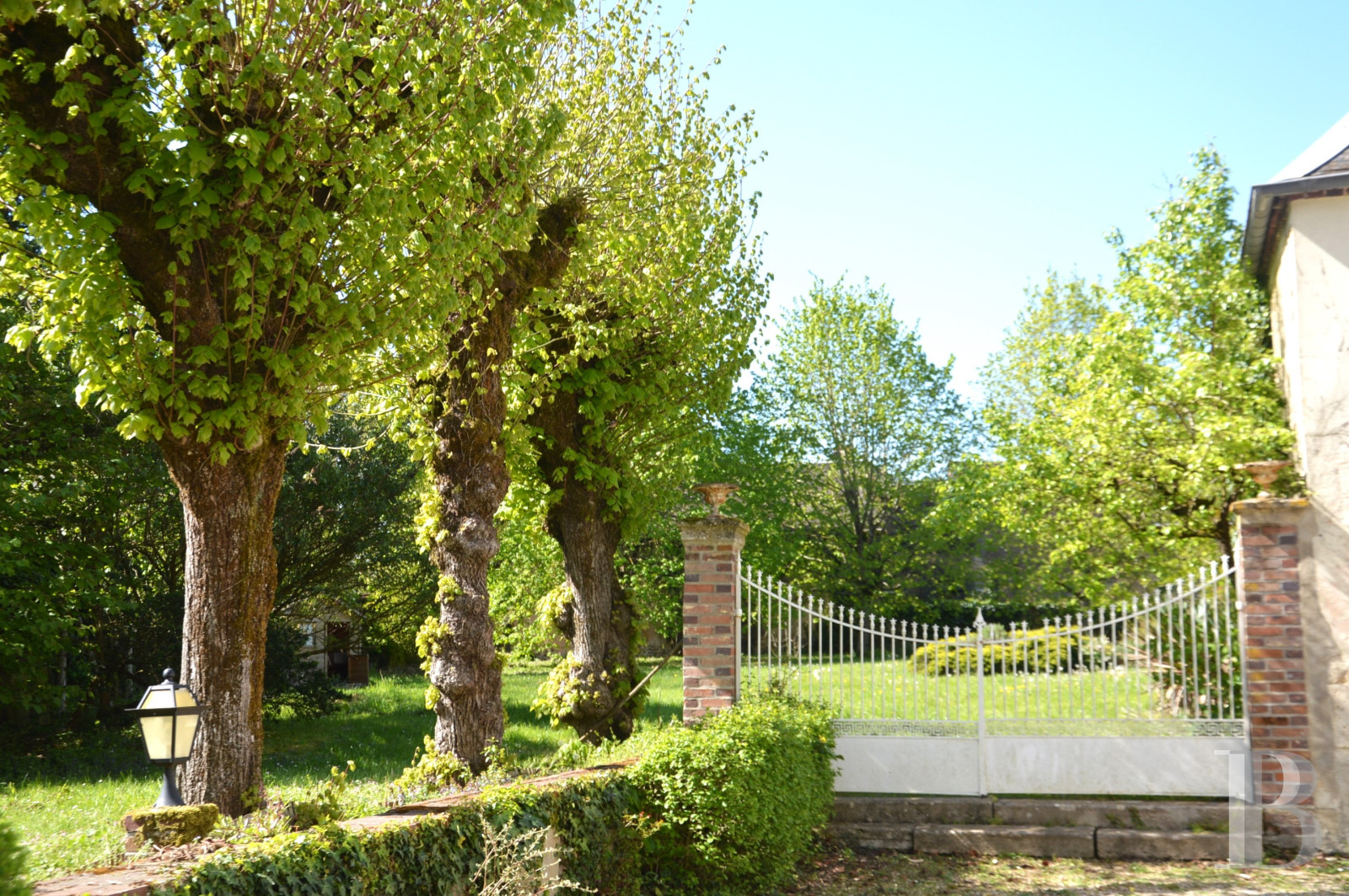
The plot covers 5,320m². The house stands on the village square, opposite a 12th-century church. A wrought-iron gate leads into a paved courtyard, which brings together all the property's main sections. The upper-middle-class house connects inside to a former presbytery. There is also a stable, converted into a dwelling. The home offers a total floor area of around 320m², excluding the loft space. The section protruding at a right angle also houses a technical installations room, a workshop and a door leading up to the loft. A two-level barn with a 117m² floor area houses a garage. This barn also has an open-sided part that leads out to a small inner courtyard and to a walled, tree-dotted garden with a swimming pool. Lastly, there is another outbuilding with a 37m² floor area. It houses a workshop, a summer kitchen and a lavatory.
The upper-middle-class house
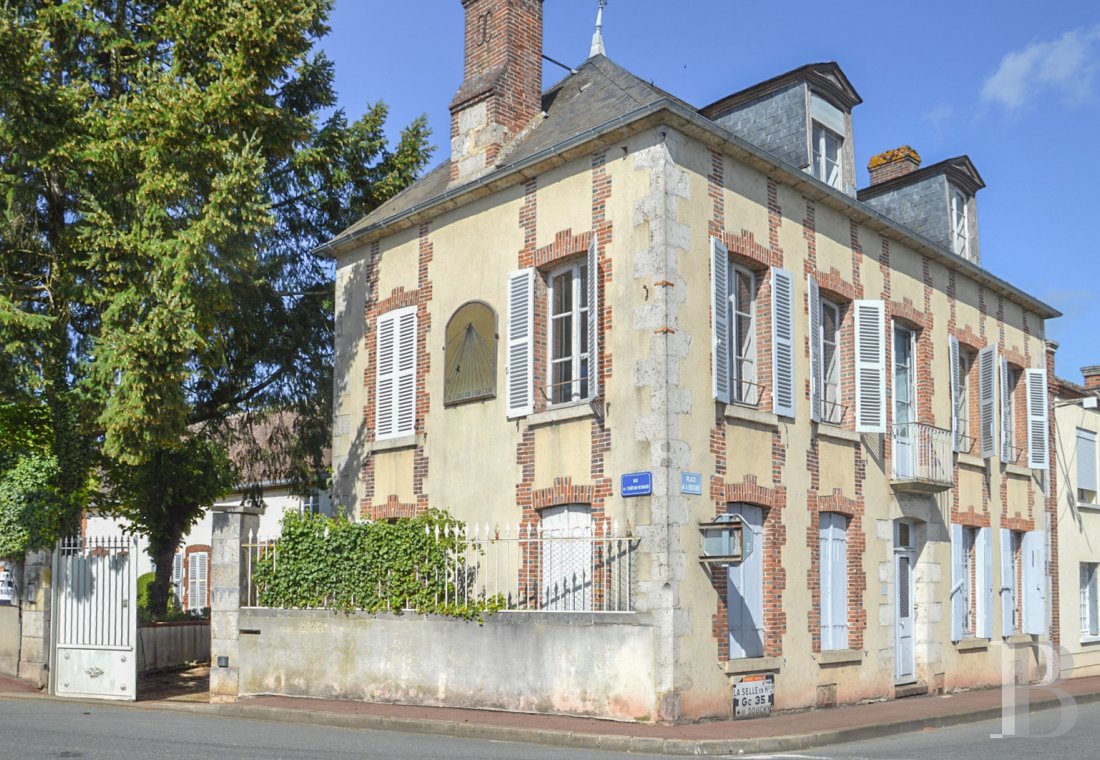
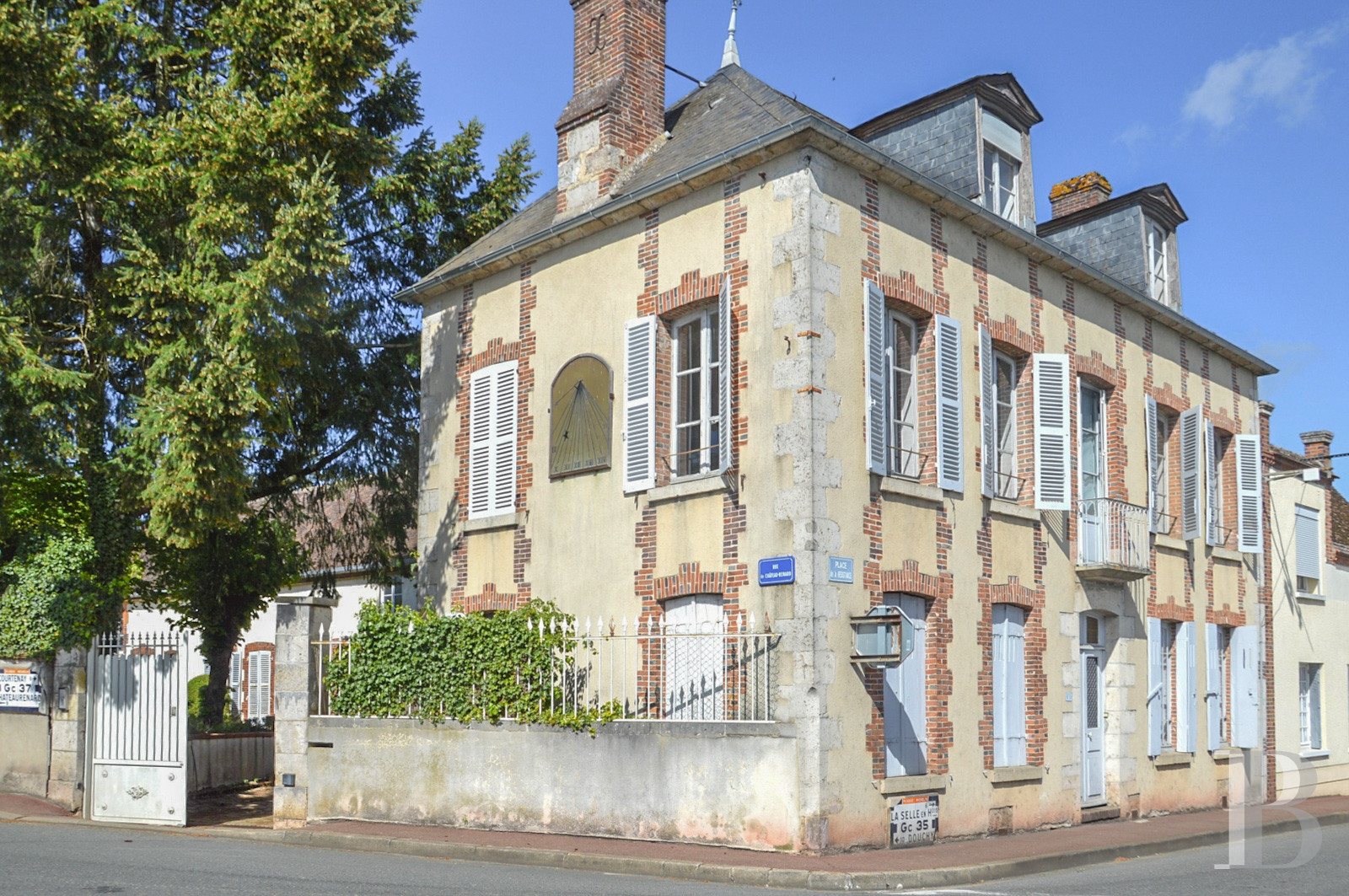
The house was built in 1871 upon a vaulted cellar. It has a ground floor, a first floor and a second floor in the roof space. It offers a 190m² floor area. The edifice is rectangular in shape and crowned with a hipped slate roof with two dormers and brick chimney stacks. The elevations are coated with rendering and punctuated with many evenly arranged windows set in brickwork surrounds. The quoins and the surrounds of the main doors – one leading to the street, the other to the courtyard – are made of exposed stone. The gable wall, on the street corner, has four windows and a sundial. The windows are fitted with wooden louvred shutters.
The ground floor
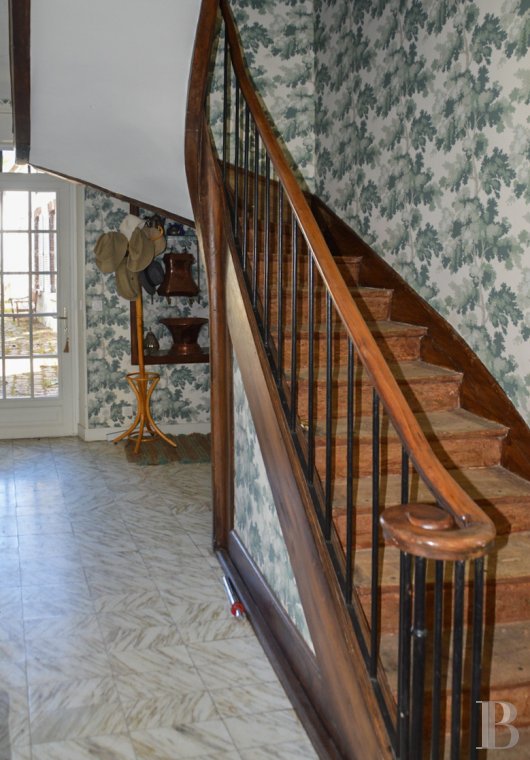
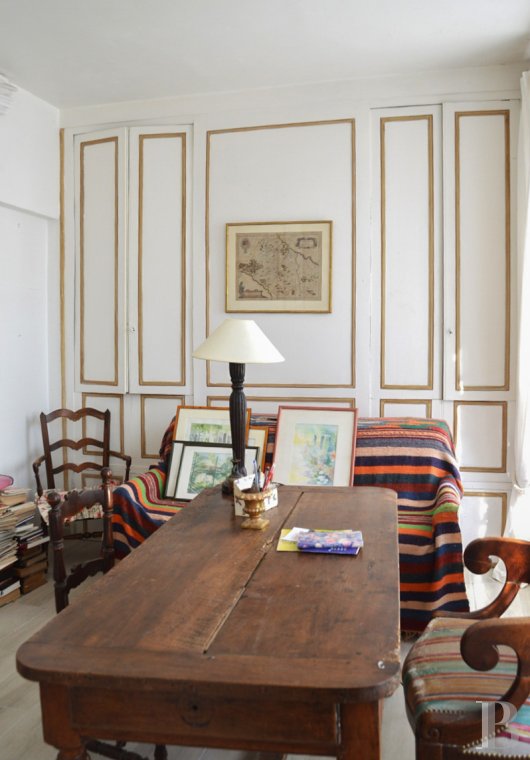
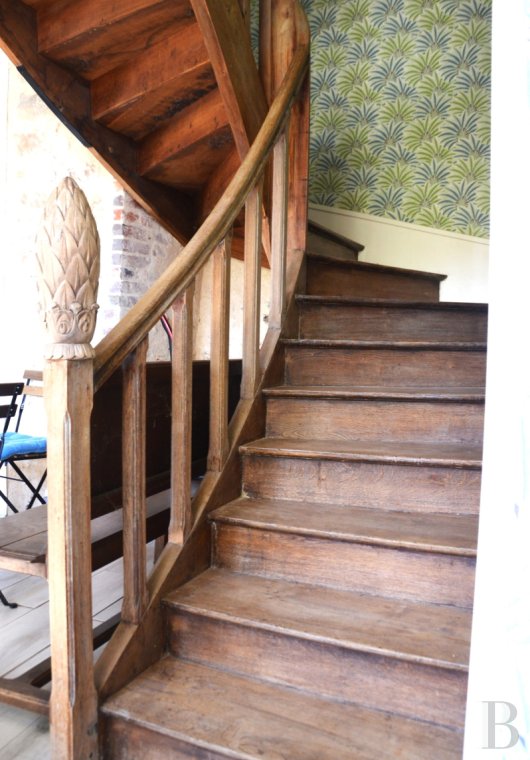
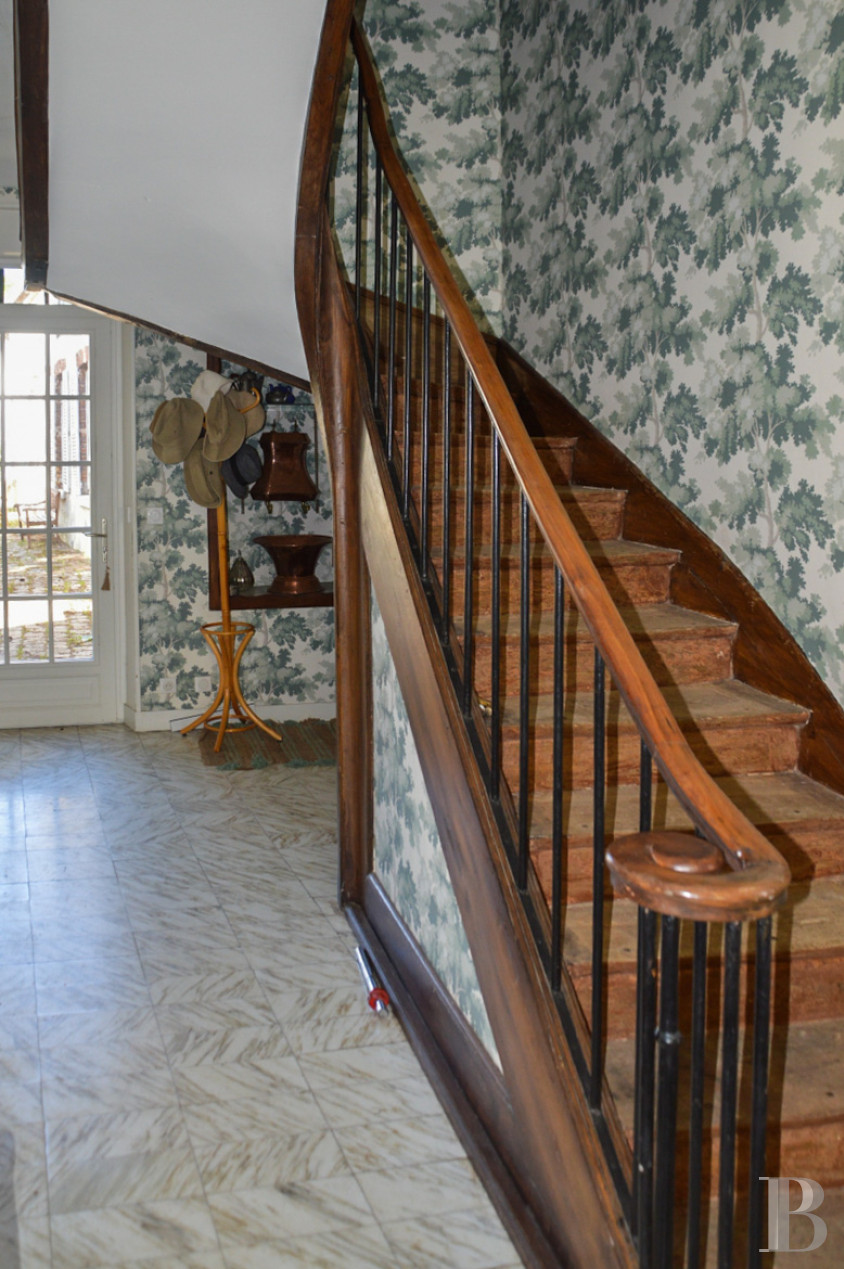
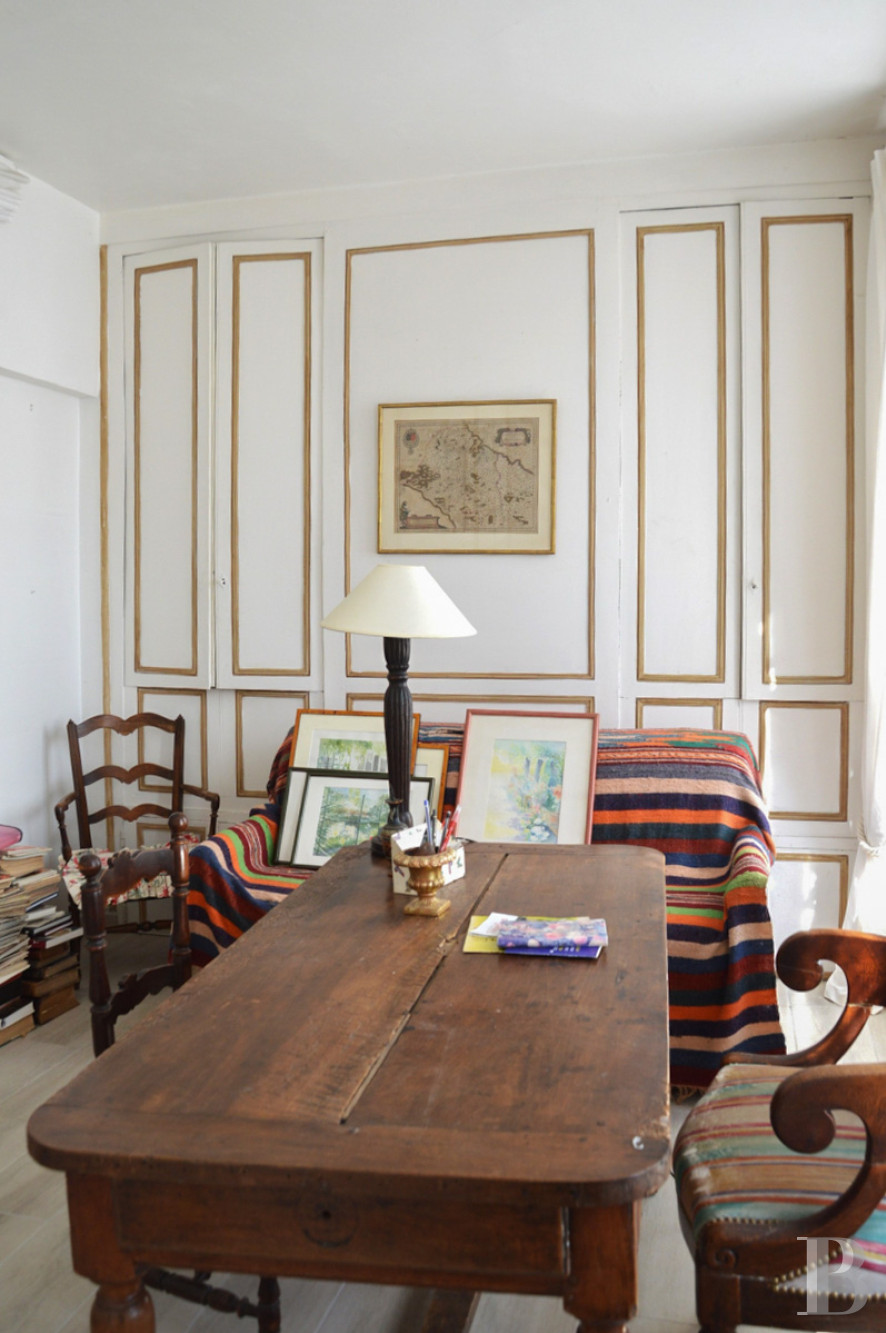
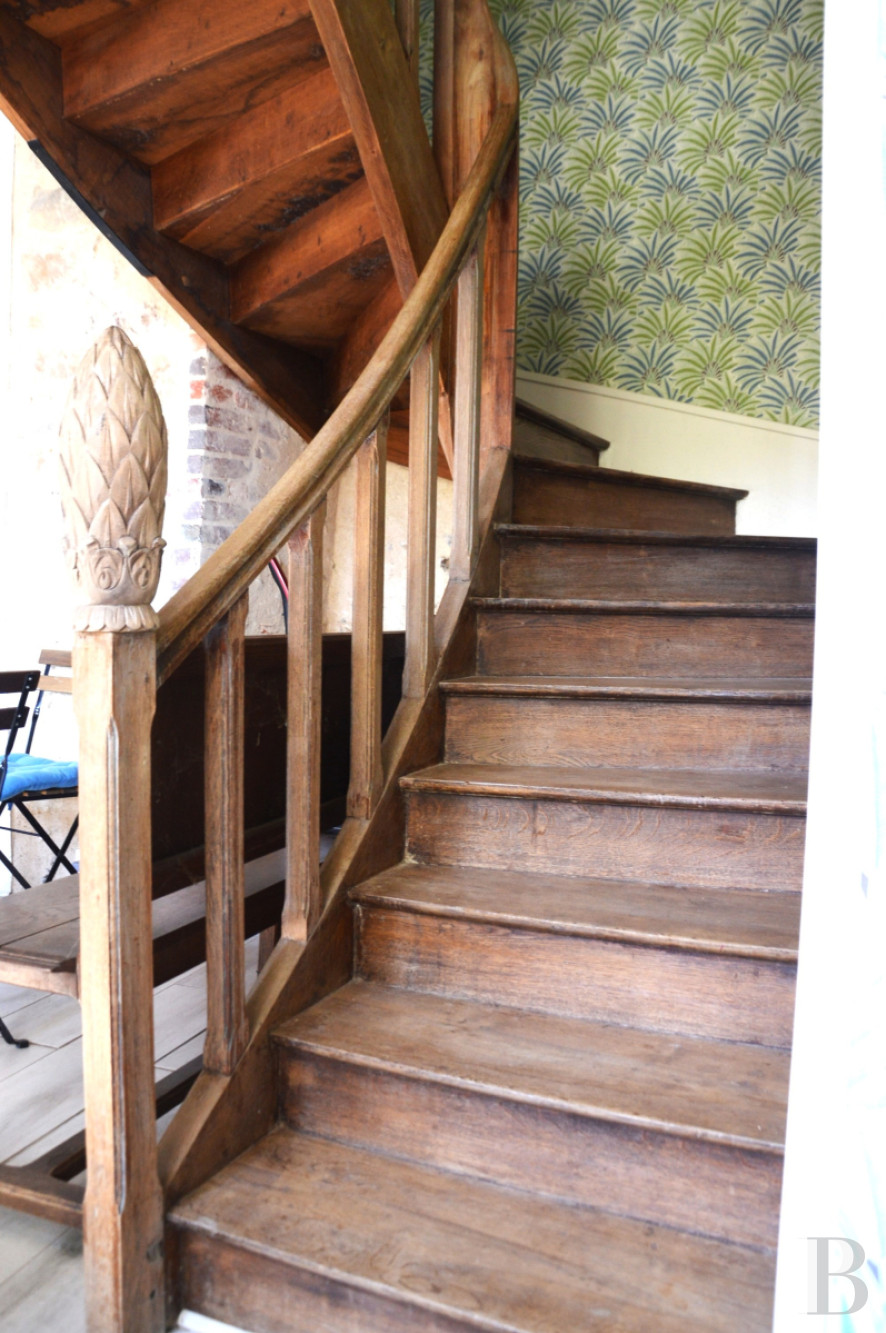
From the entrance hall, an oak spiral staircase with a wrought-iron balustrade and wooden handrail leads upstairs. It goes all the way up to the loft. The walls are adorned with “Raphaël” wallpaper from the company Sandberg. There are two glazed doors, one on either side of the hallway: one on the street side and one on the courtyard side. From the hall, you can reach a reading room and an office with tall cupboards and a glazed door leading to the former presbytery. The walls are painted in a pale tone and the floors are tiled. All the windows are single-glazed and set in wooden frames with catches.
The upstairs
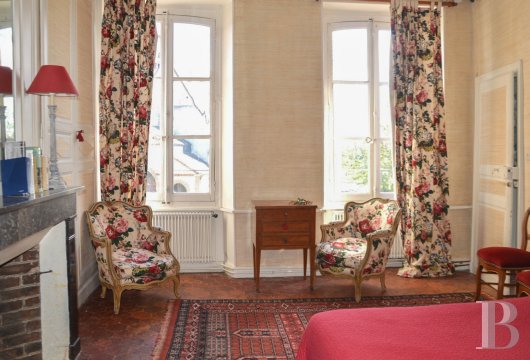
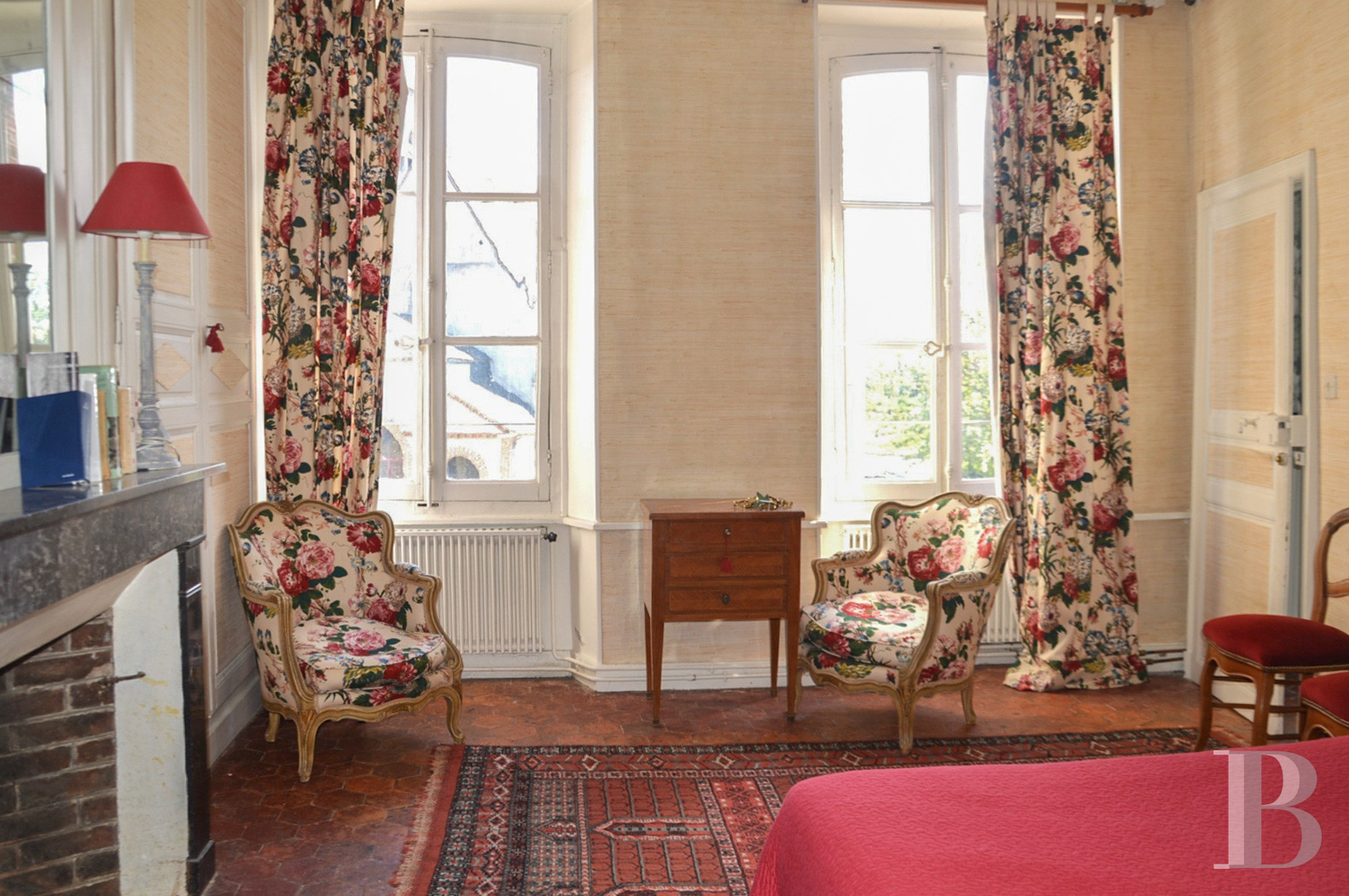
A landing connects to three large bedrooms, a storeroom and a shower room with a lavatory. One of the rooms has a marble fireplace and offers a view of the courtyard and the village church. From the landing, a second oak staircase leads down to the kitchen. The floors are terracotta-tiled and the walls adorned with wallpaper. All the windows are single-glazed and set in wooden frames with catches. They are also fitted with louvred shutters.
The attic
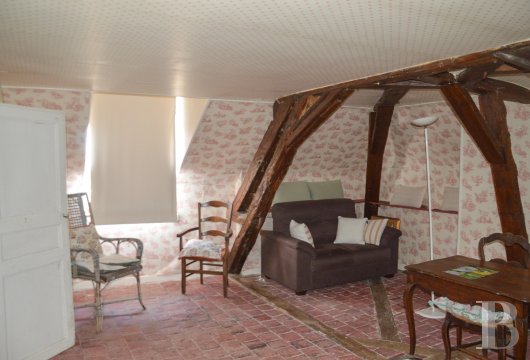
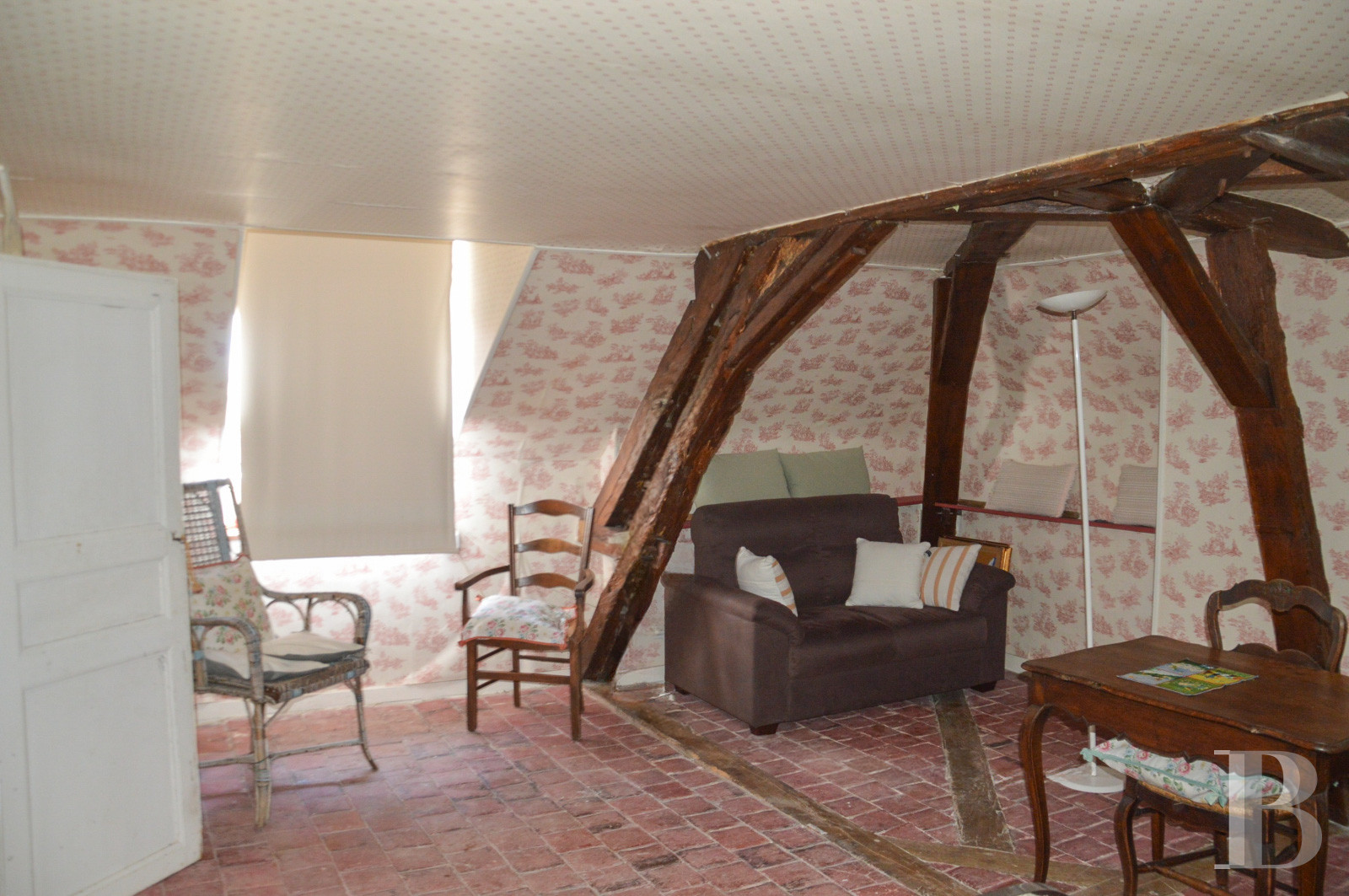
In the roof space, there are two bedrooms filled with natural light from dormers. There is also a storeroom and a shower room with a lavatory up here. Exposed beams run across the ceilings and the floors are terracotta-tiled.
The former presbytery
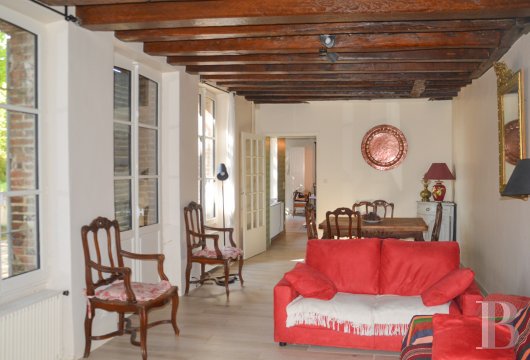
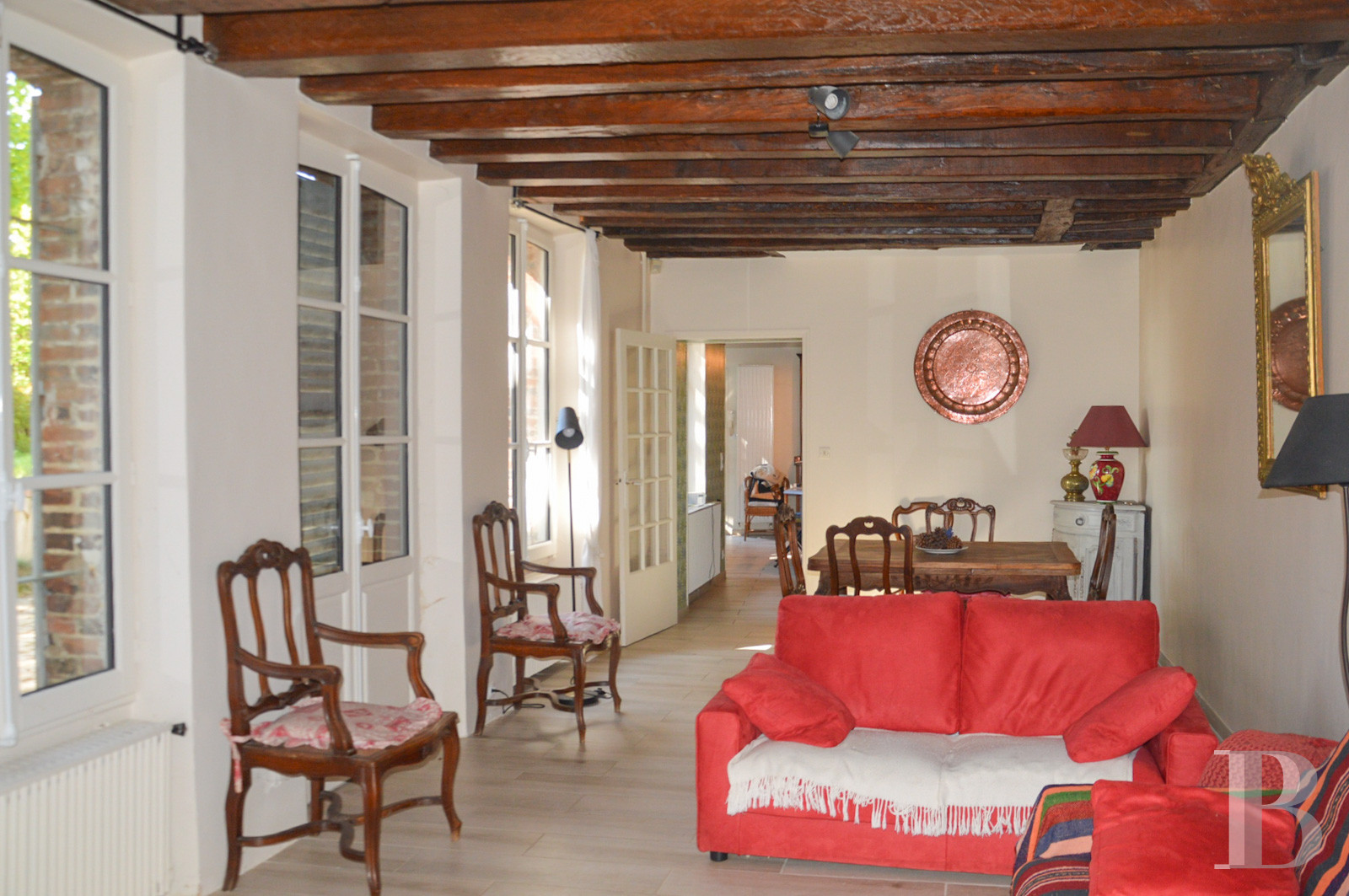
The former presbytery and its stable were built in 1791, yet they probably date back further. All the windows face the courtyard. The facade is coated with beige rendering and the wooden-framed windows are set in brick surrounds. The gabled roof is covered with old tiles. The presbytery offers a 130m² floor area. It has a ground floor and a first floor. The rooms connect to each other. On one side, there is an entrance hallway with a door leading down to a vaulted wine cellar beneath the fitted kitchen, which has an open-hearth fireplace and an oak staircase that leads up to the first floor. There is also a lounge, extended with an office in the main house. On the other side of the presbytery, there is a boot room with a lavatory and a washbasin and a dining room with a fireplace that has a mantelpiece of dressed stone. A shower room, a utility room and a bedroom with a bathroom, a lavatory and a walk-in wardrobe complete this floor. In all the rooms, there are exposed ceiling beams and the walls are painted white and have tiles. Upstairs, there is a 105m² loft space with exposed roof beams. The windows are fitted with wooden louvred shutters.
The barn and workshop
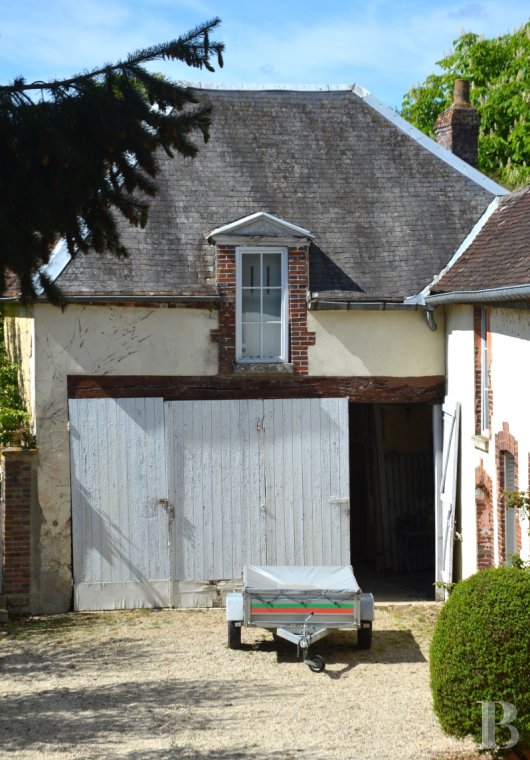
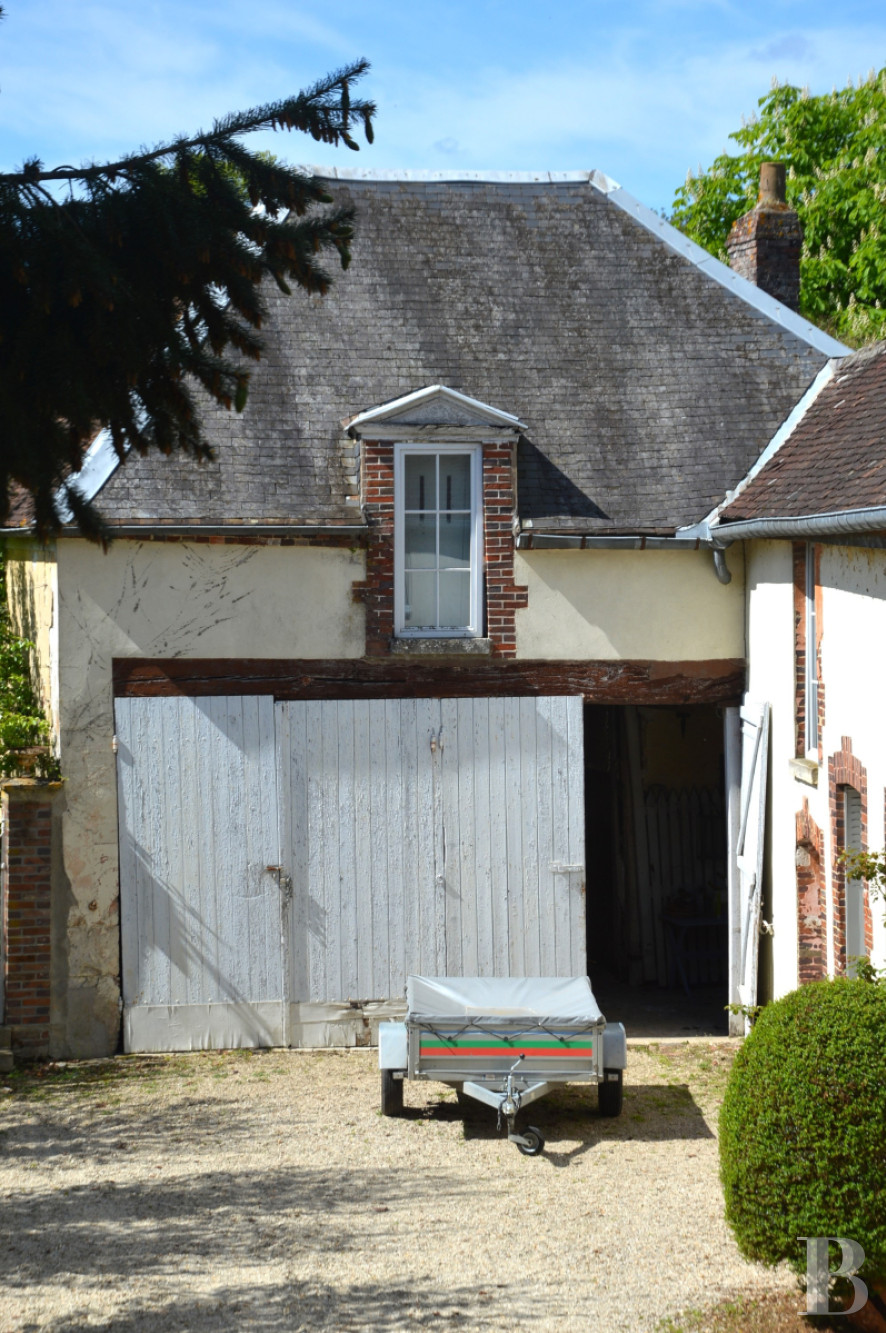
The building that once housed the stable offers a 117m² floor area, spread over two levels. It is crowned with a hipped slate roof with a gabled dormer. Behind a large wooden double door, there is a garage, a former coachman’s bedroom and an open space where wood can be stored. This level totals 57m² in floor area. The first floor offers a 60m² floor area. It is linked to the old presbytery’s loft space, which offers a 105m² floor area. Lastly, there is a little 37m² outbuilding between the barn and the inner courtyard. It houses a workshop, a summer kitchen and a lavatory.
The grounds
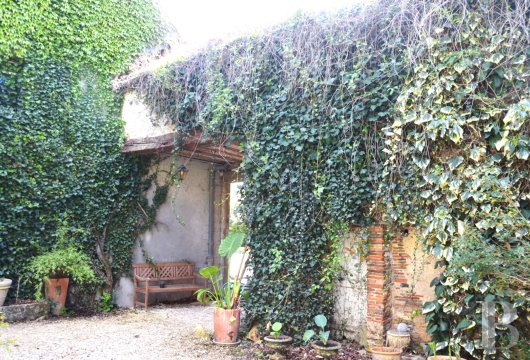
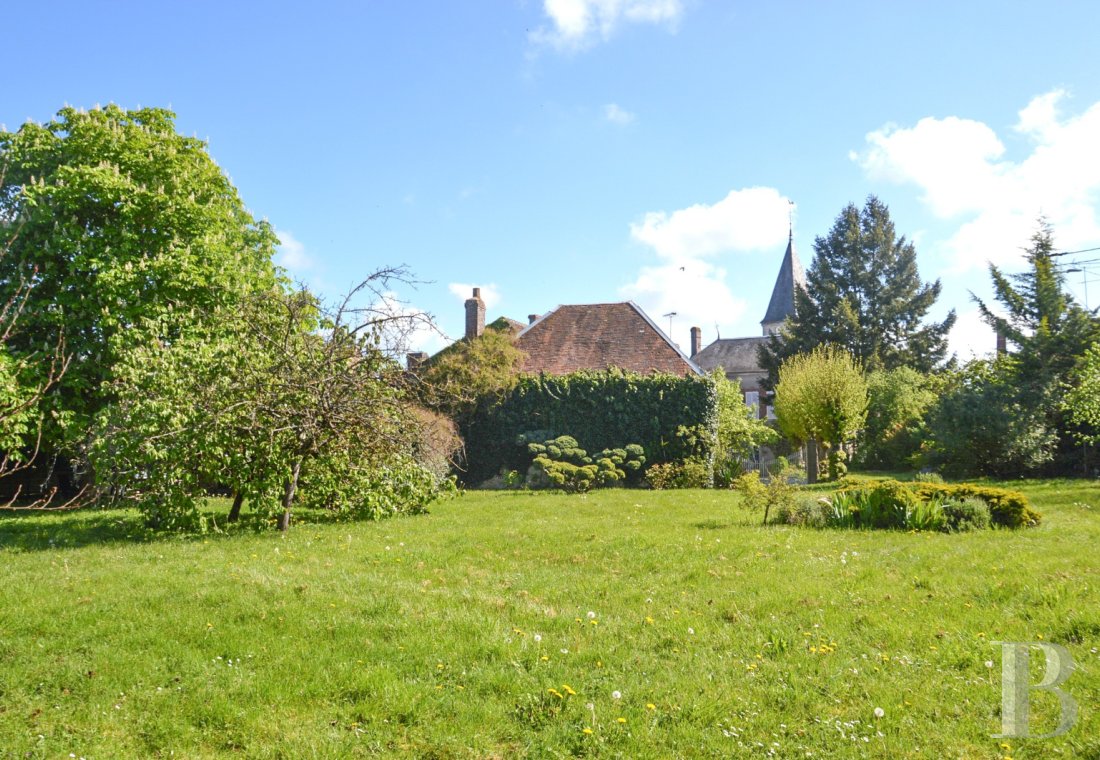
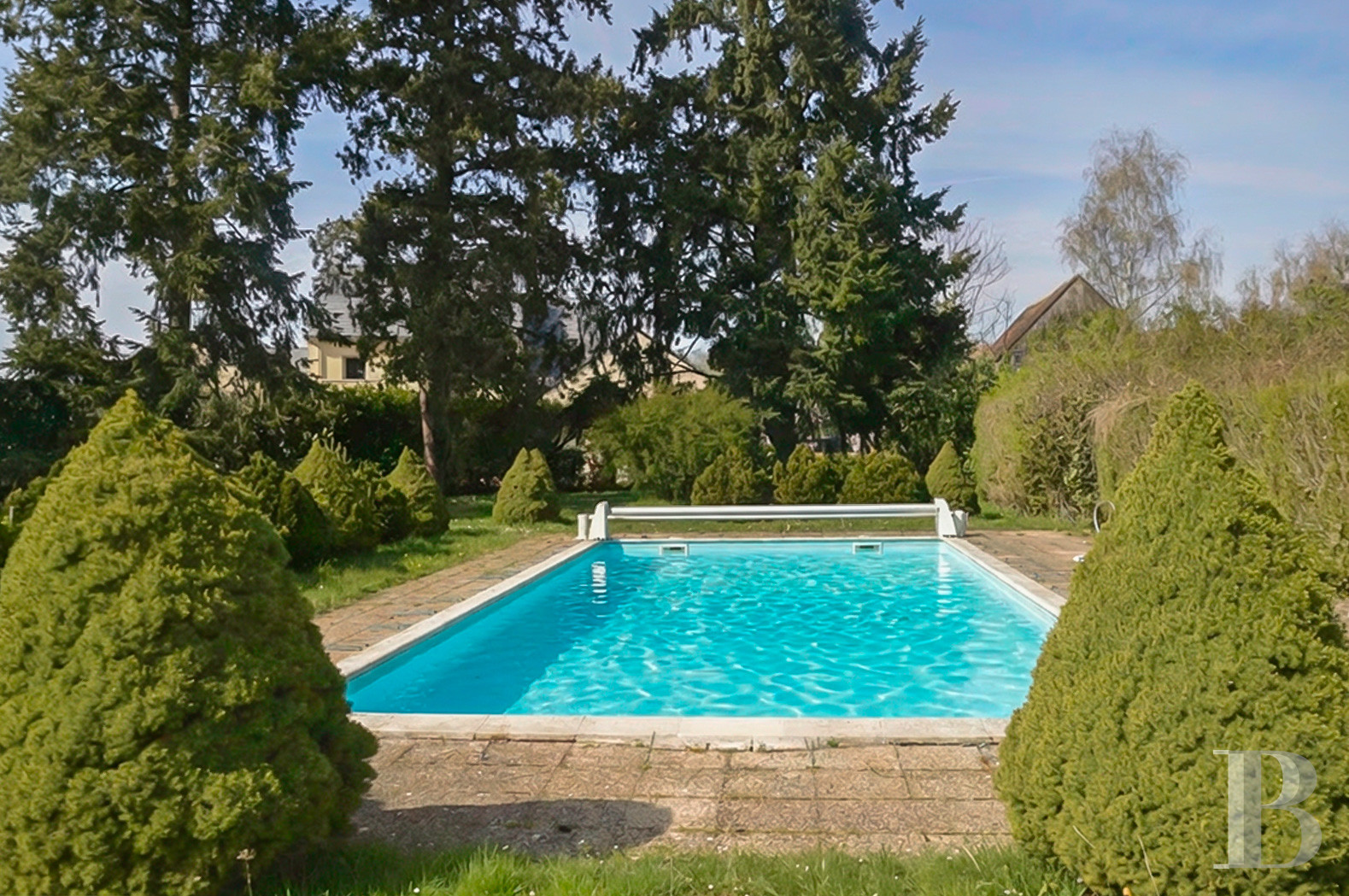
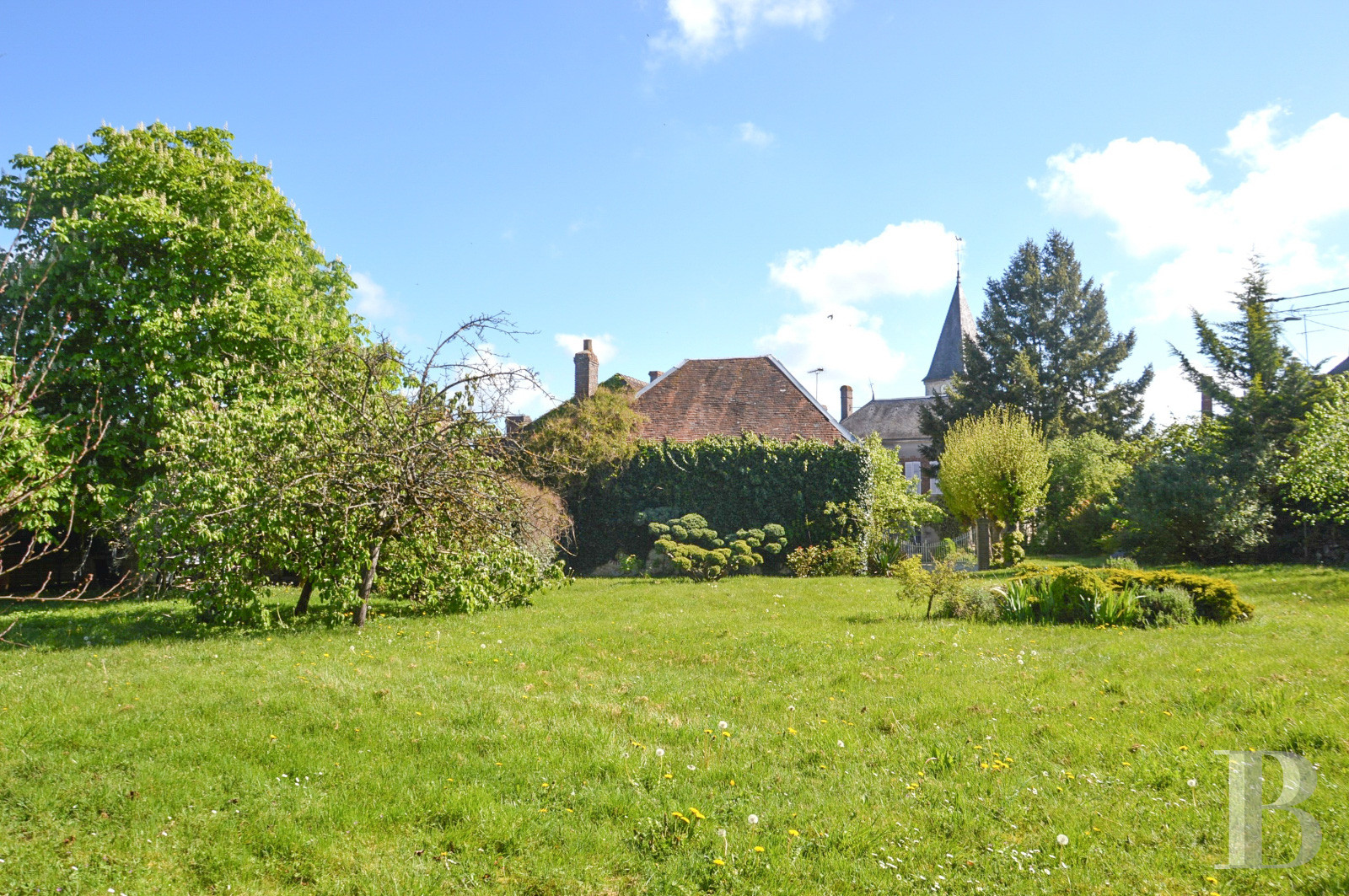
The grounds begin in front of the paved courtyard and extend along one side of the plot, facing southwards. A lawn covers the grounds. There is a wide variety of shrubs, which form a patchwork of white and blue. There are hays of linden trees, horse chestnuts, oaks, catalpas, yews, pruned topiary box shrubs, maritime pines, flowering shrubs and evergreens. A swimming pool is also hidden in the lush backdrop. The bottom of the garden, which has remained in a wild state, could be built upon. It could also serve as a kitchen garden.
Our opinion
Over the course of history, famous people have lived in this village, including the painter Anne-Louis Girodet and the writer and musketeer Gatien Courtilz de Sandras, who published “Memoirs of Monsieur D'Artagnan” in 1709. The elegant home has been decorated tastefully with a fine blend of styles from the 17th, 18th and 19th centuries, as well as the 1970s. Historical features have been preserved and the natural backdrop creates a harmonious balance between the interior and the exterior. With shops and a school in the village, the property is ideally located. Indeed, it could be your main home or a delightful holiday home. And there is huge potential for development too. Renovation work and insulation would increase its level of comfort.
385 000 €
Fees at the Vendor’s expense
Reference 167741
| Main building floor area | 320 m² |
| Outbuildings floor area | 154 m² |
| Land registry surface area | 5320 m² |
| Total floor area | 288 m² |
French Energy Performance Diagnosis
Information on the risks to which this property is exposed is available on the website: www.georisques.gouv.fr
Share


NB: The above information is not only the result of our visit to the property; it is also based on information provided by the current owner. It is by no means comprehensive or strictly accurate especially where surface areas and construction dates are concerned. We cannot, therefore, be held liable for any misrepresentation.