



Less than 10 km from Fontainebleau and 1h from Paris, 16th-century royal chateau,
with outbuildings, greenhouses, grounds and 60 hectares of woodland
with outbuildings, greenhouses, grounds and 60 hectares of woodland
Fontainebleau,
SEINE-ET-MARNE
ile-de-france
77300
FR

Location
The property stands in an old manorial village of well-preserved architectural heritage, less than 10 km from Fontainebleau and its railway station. Its south-facing elevations overlook the River Seine, where shifting reflections renew the view from hour to hour. Light is generous, and the setting between river and forest of Champagne lends itself to walking, cycling, kayaking and sailing. A station 2 km away runs to Paris-Gare de Lyon in around an hour; the Porte d'Orléans is 65 km by road, also about an hour.
Description
The chateau's story begins in the mid-16th century, when François I came upon the site during a hunt. He ordered the building raised and the vineyard planted. Local tradition holds that the king lodged his mistress in the village across the river and signalled his presence by lighting a great fire high on the estate. Henri IV and Gabrielle d'Estrées spent five years here at the close of the 16th century. From the 17th to the late 19th century, the chateau passed through the hands of princesses and counts, with an industrial interlude in the 18th century when a brickworks was built, probably to supply the estate stables. Modernisation and the railway reshaped the estate towards 1900, and winegrowing gave way to use as a public reception venue (ERP category 5).
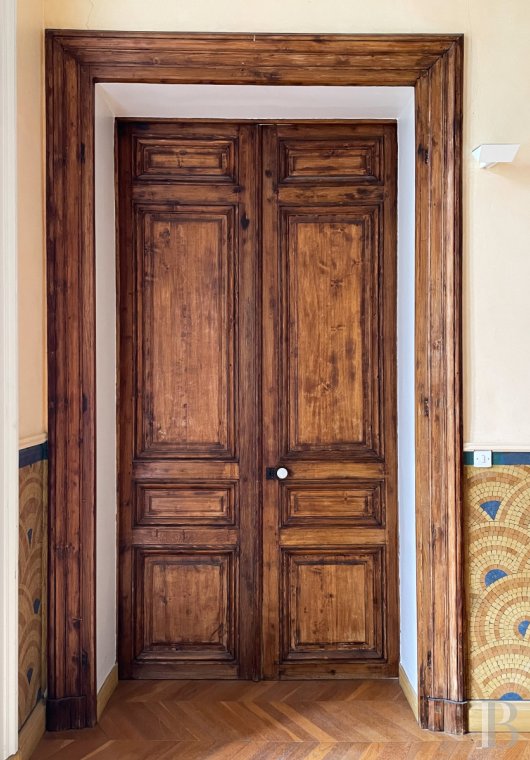
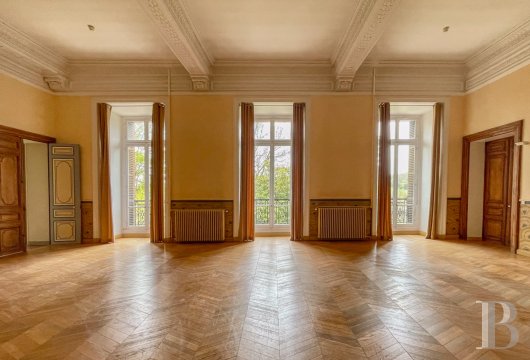
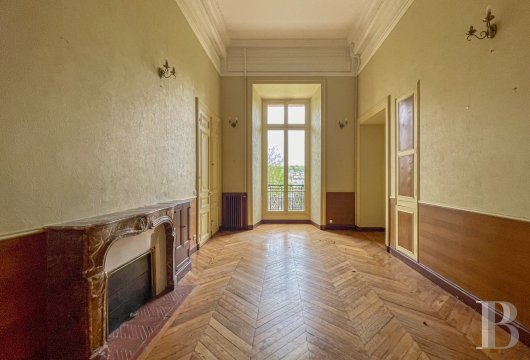
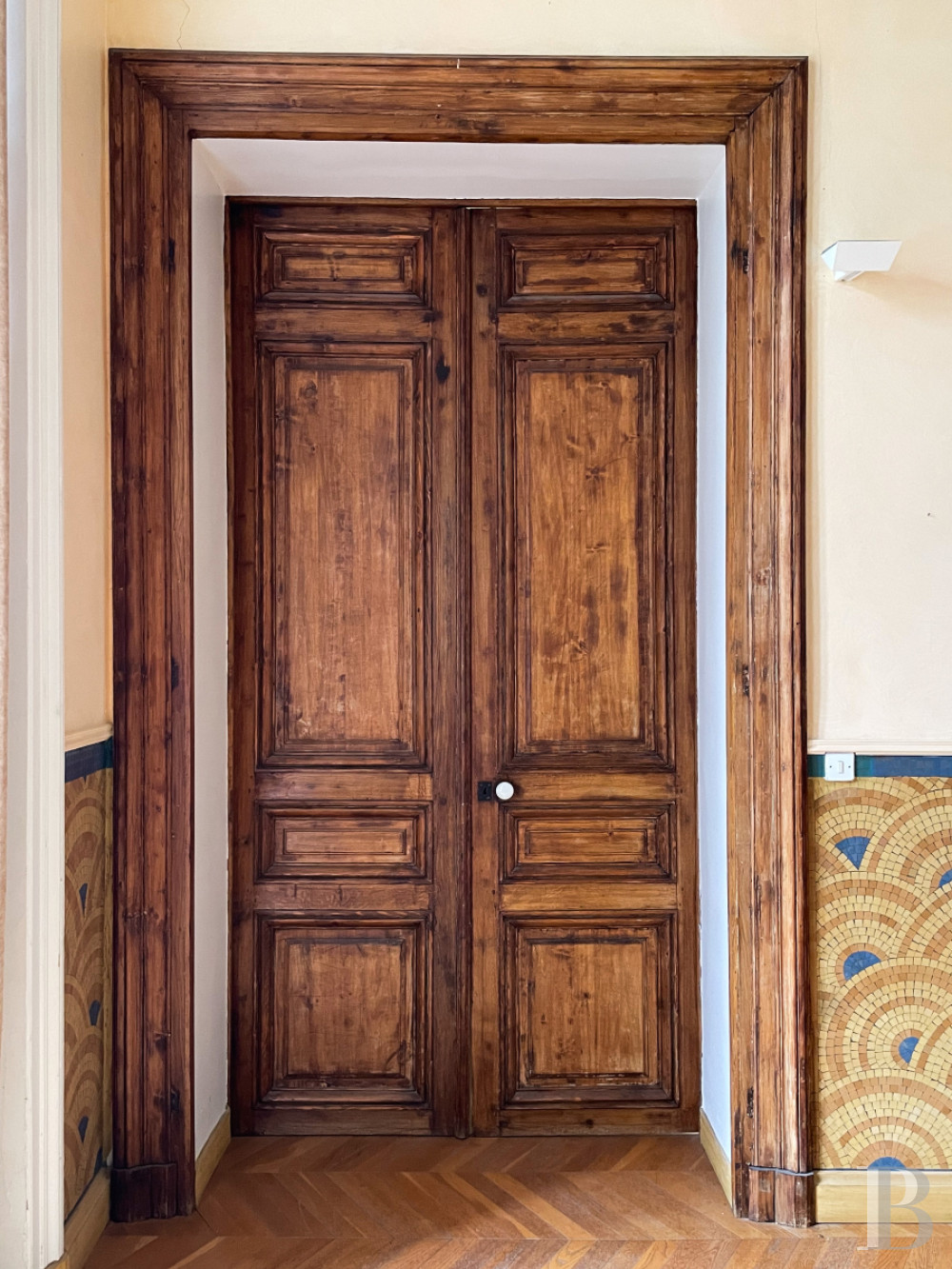
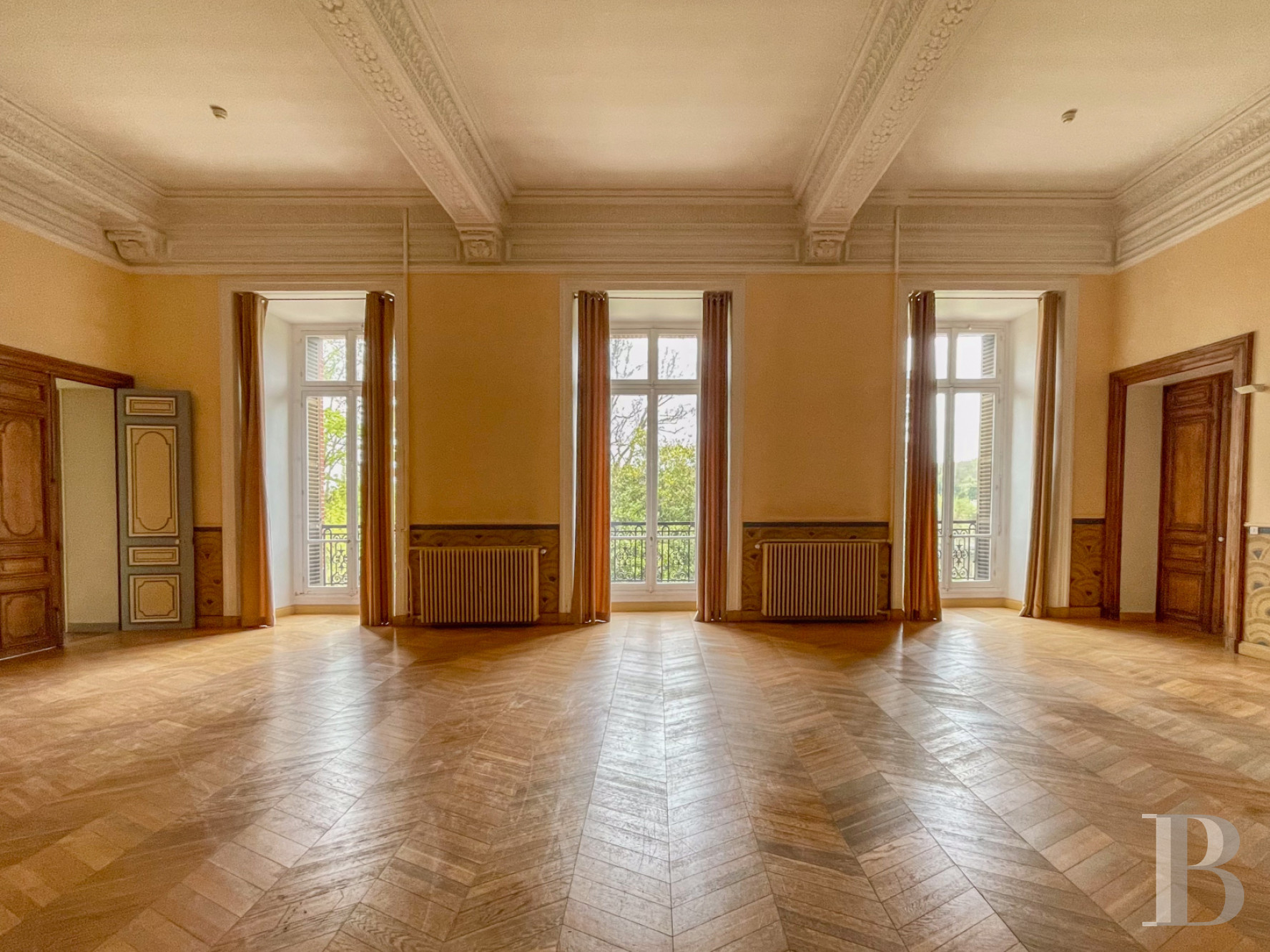
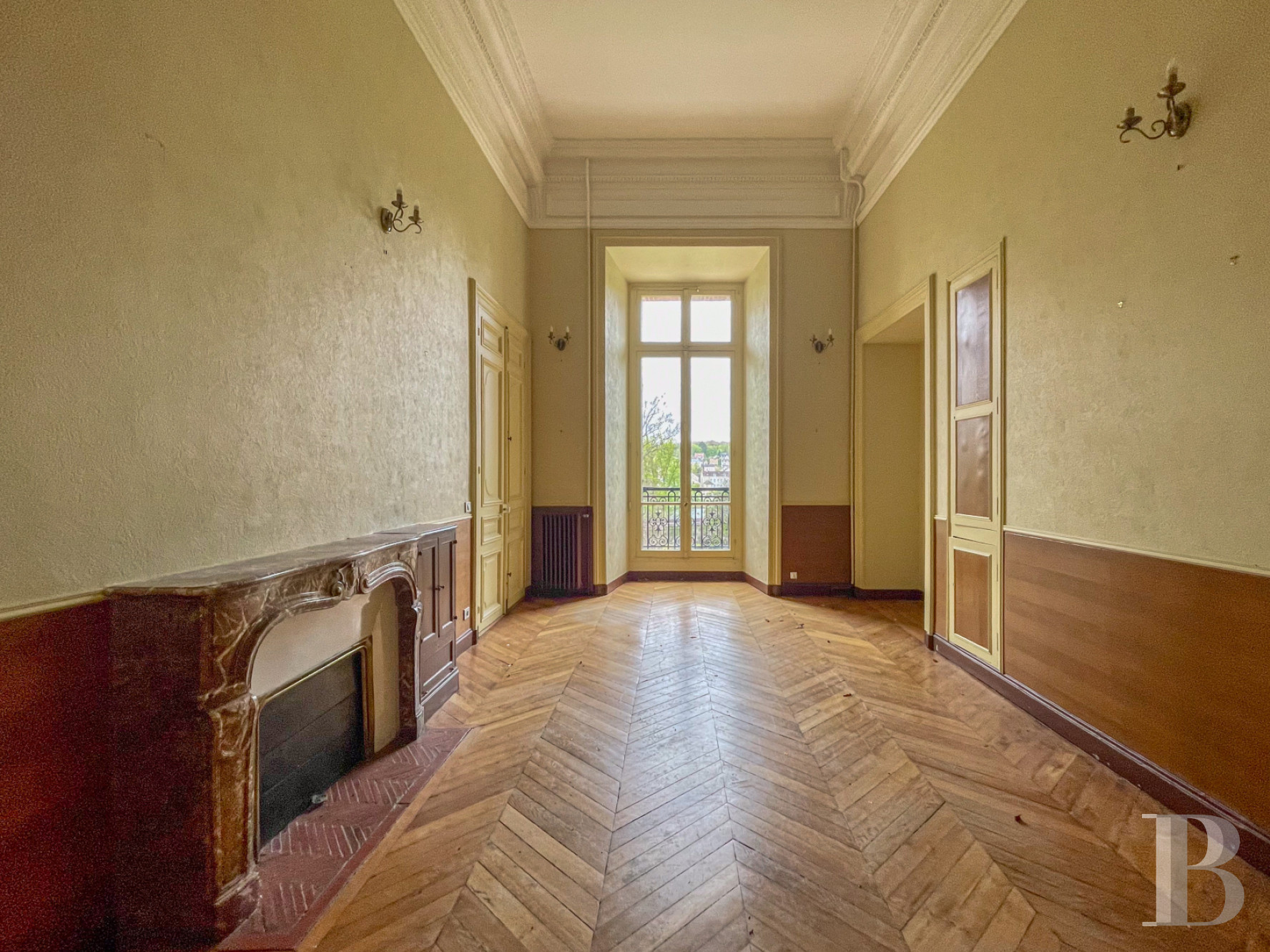
The main chateau offers nearly 2,300 m² of floor area, of which some 1,800 m² are habitable, laid out over three levels, a mezzanine and attics with a 900 m² footprint. It holds 19 bedrooms, a self-contained apartment, a professional kitchen with vehicle access, several linen rooms and reception rooms. More than half of the second level survives in its original state despite later alterations. On the east side, ceilings close to 5 m, restored oak parquet, marble fireplaces, cornices and original woodwork still conjure the balls and feasts once held here.Five further outbuildings await restoration and add nearly 1,700 m² of habitable space: stables of around 700 m², a director's house of close to 250 m², a recent annexe adjoining the chateau of over 100 m², and a caretaker's house of some 70 m².
The main chateau offers nearly 2,300 m² of floor area, of which some 1,800 m² are habitable, laid out over three levels, a mezzanine and attics with a 900 m² footprint. It holds 19 bedrooms, a self-contained apartment, a professional kitchen with vehicle access, several linen rooms and reception rooms. More than half of the second level survives in its original state despite later alterations. On the east side, ceilings close to 5 m, restored oak parquet, marble fireplaces, cornices and original woodwork still conjure the balls and feasts once held here.Five further outbuildings await restoration and add nearly 1,700 m² of habitable space: stables of around 700 m², a director's house of close to 250 m², a recent annexe adjoining the chateau of over 100 m², and a caretaker's house of some 70 m².
The chateau
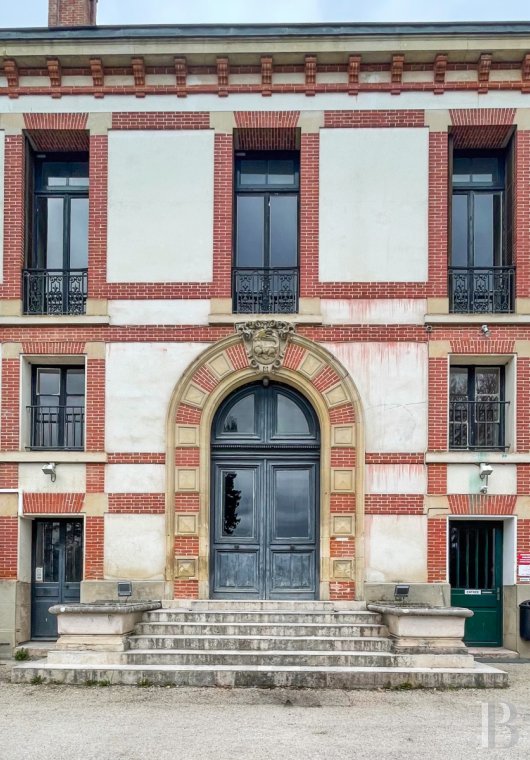
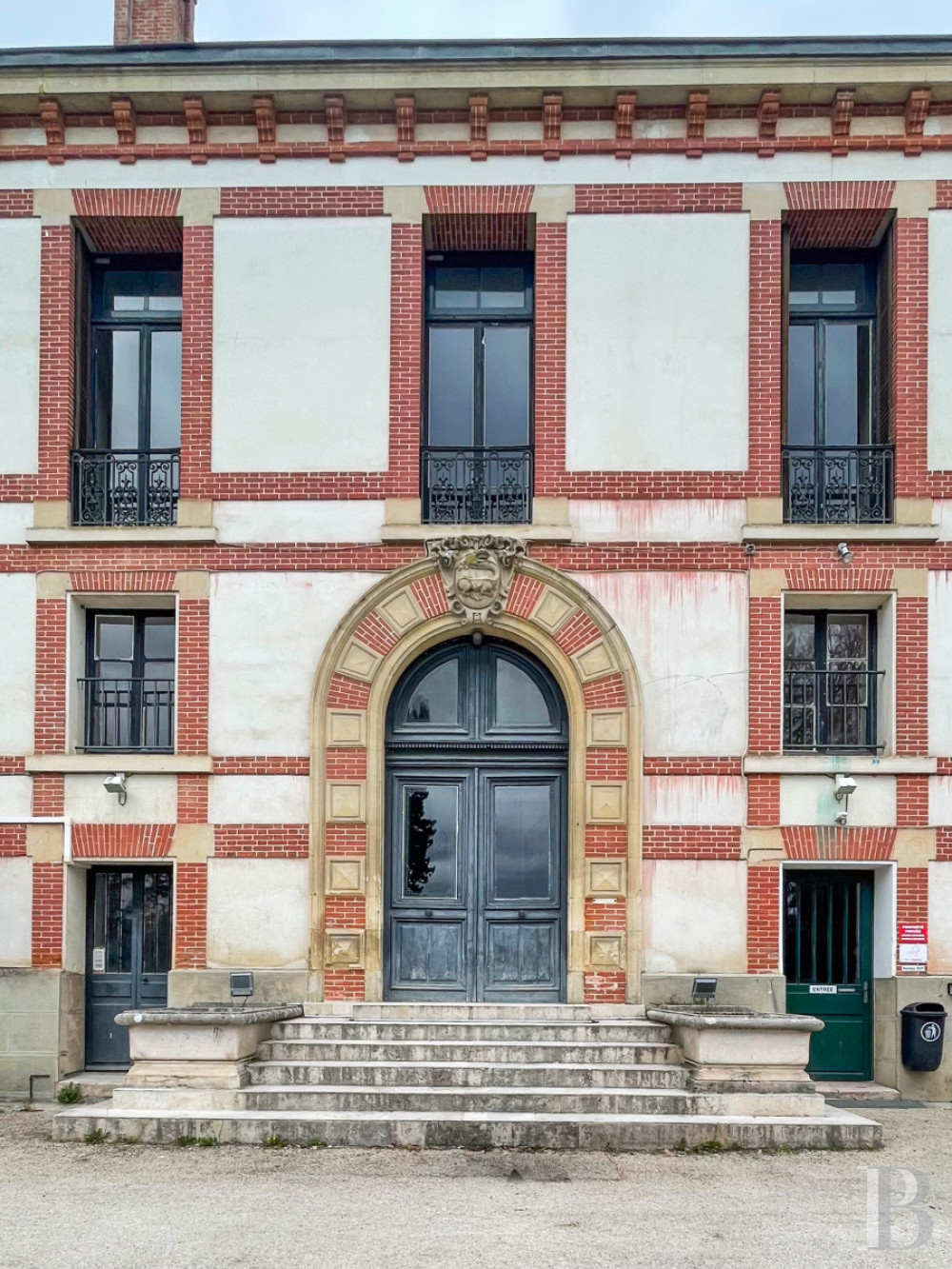
The building stands in the tradition of rural outbuildings attached to royal estates. Long in plan, its symmetrical facade runs across regular bays and rises through four levels, combining pale render with exposed brickwork that picks out quoins, window surrounds and stringcourses. Chimney stacks punctuate the slate roof. At the centre, a round-arched double door framed in dressed stone sits beneath a carved salamander, approached by a double-flight stone perron that gives the entrance its ceremonial weight.
The lower level
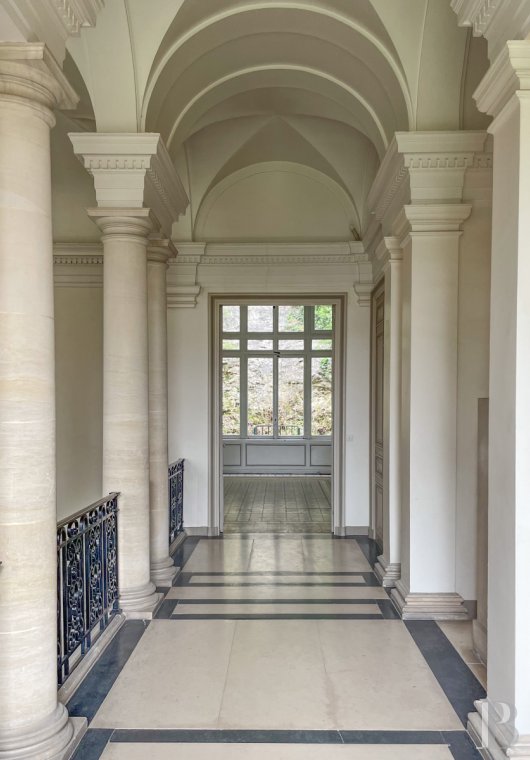
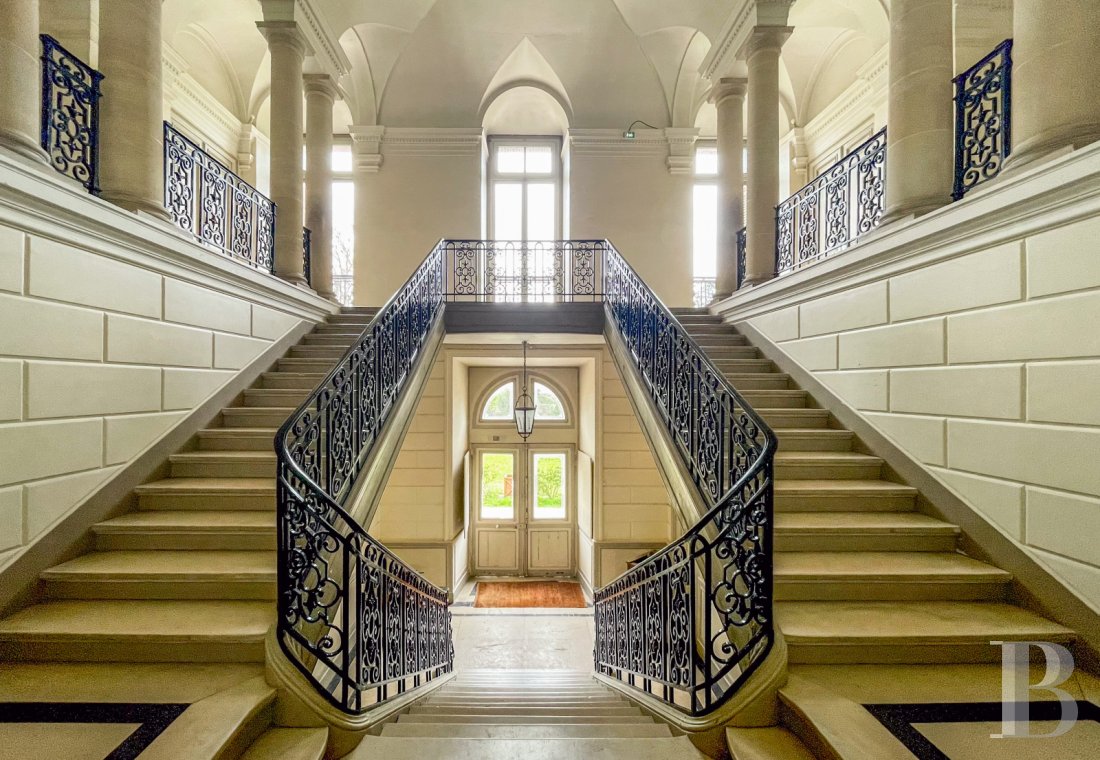
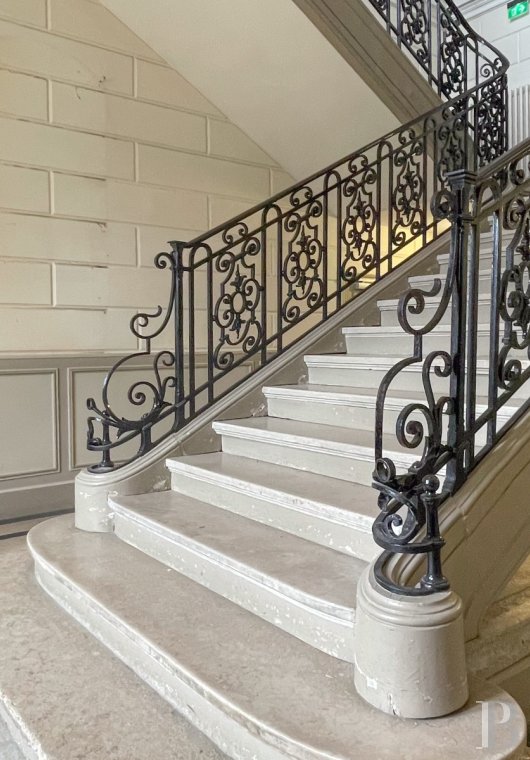
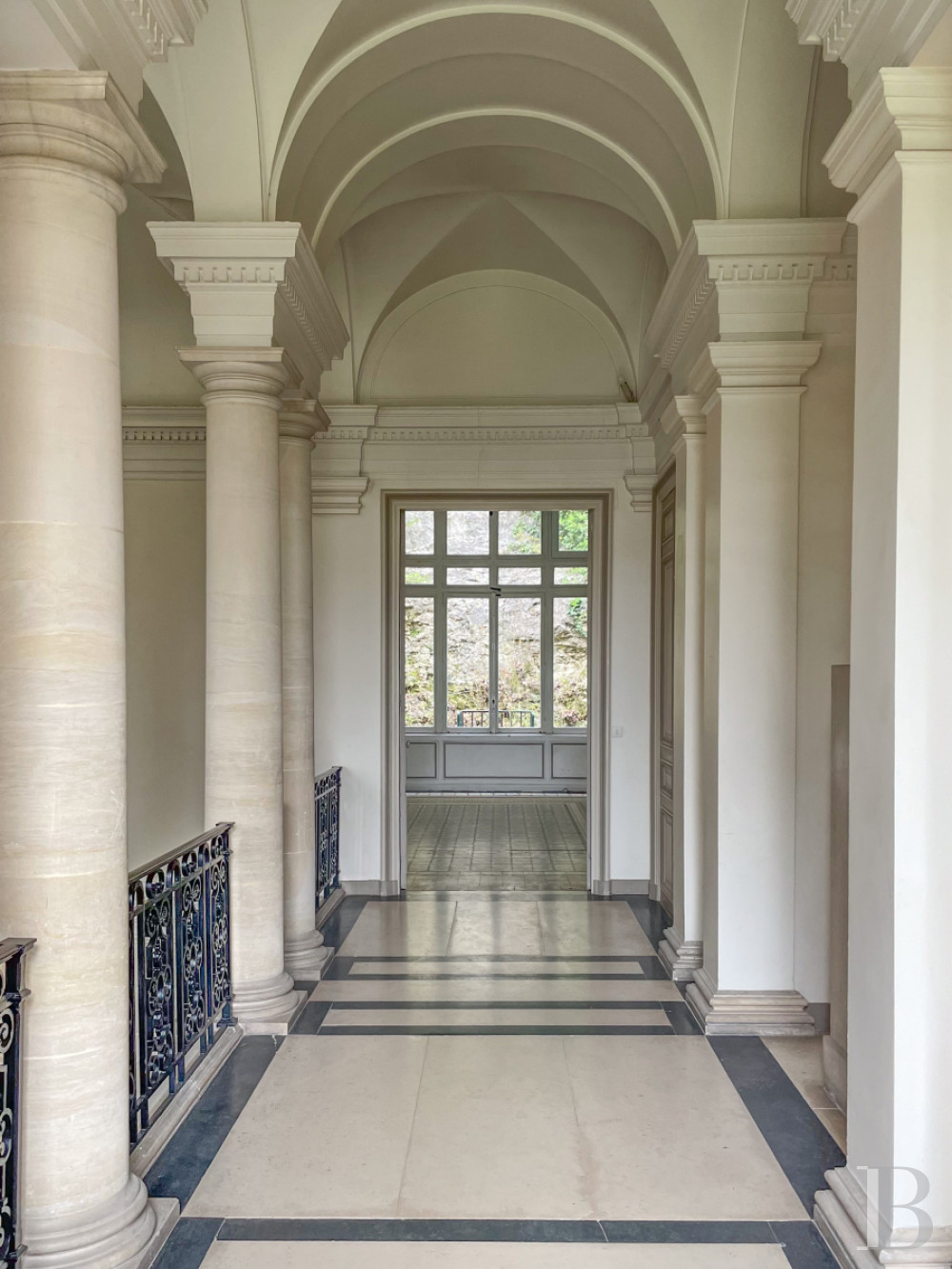
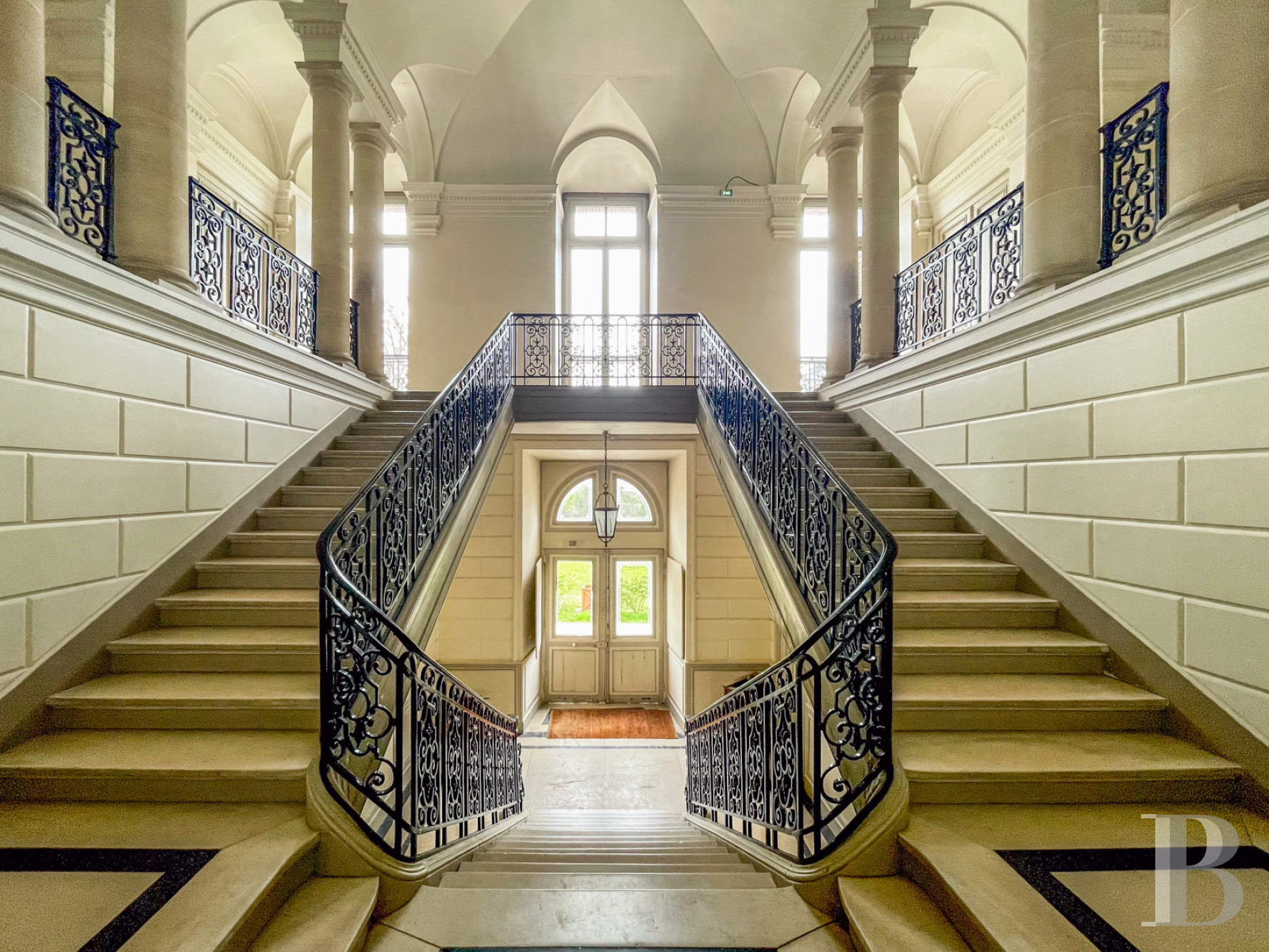
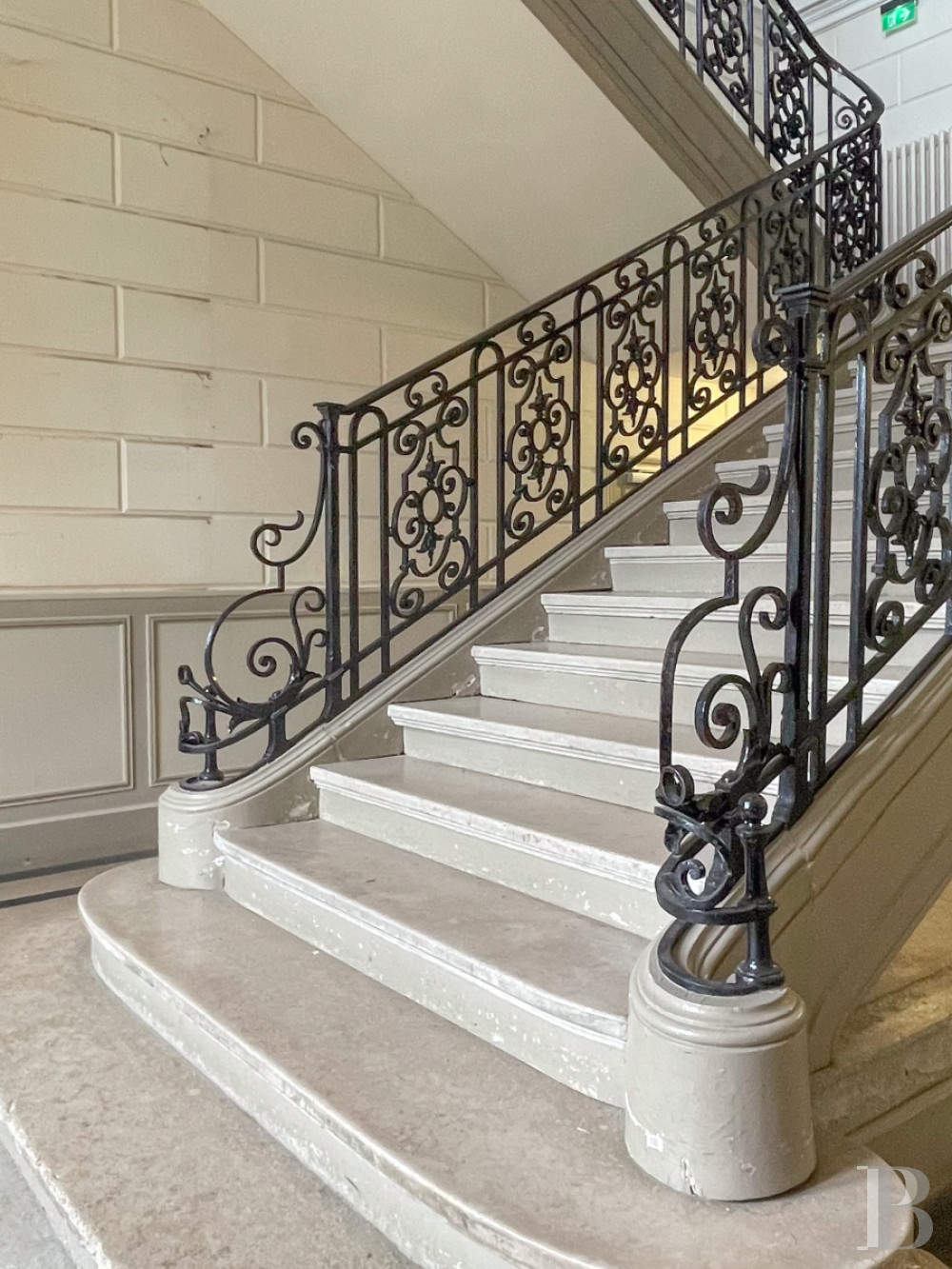
The entrance hall makes a monumental impression, organised around an imperial staircase in stone edged with finely wrought ironwork. Columns supporting round arches and vaults articulate the open space, while walls finished in faux ashlar reinforce the architectural order. Light pours through tall windows, underlining the volumes and lines of sight. Beyond lies a perimeter gallery leading to the service areas — linen room, cellars, storage and boiler room — also reachable from garden level.
The first floor
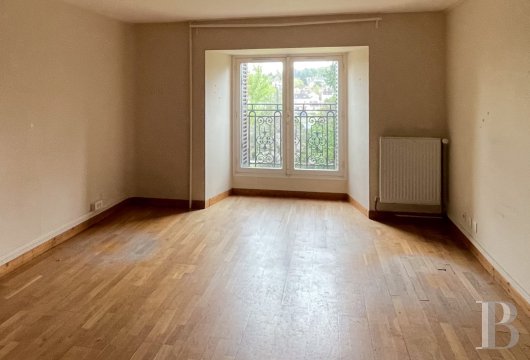
Apartments and bedrooms occupy this level, divided between a front range opening to the park and the Seine, and a rear portion set against the rock face and given over to bathrooms, stores and service rooms.
The second floor
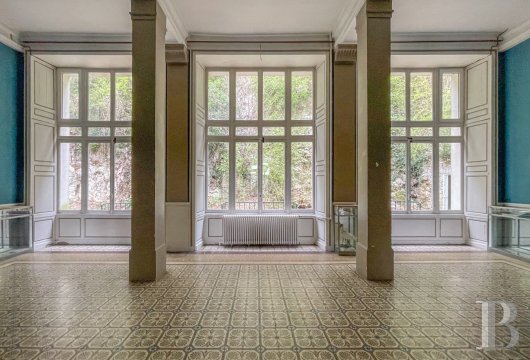
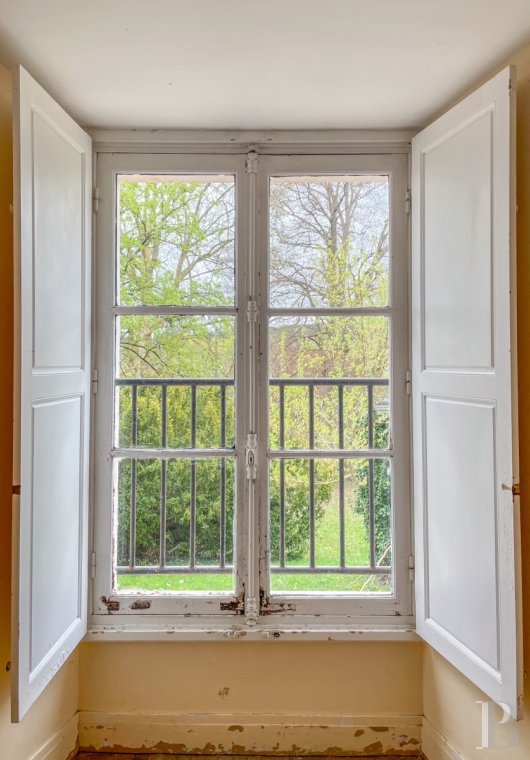
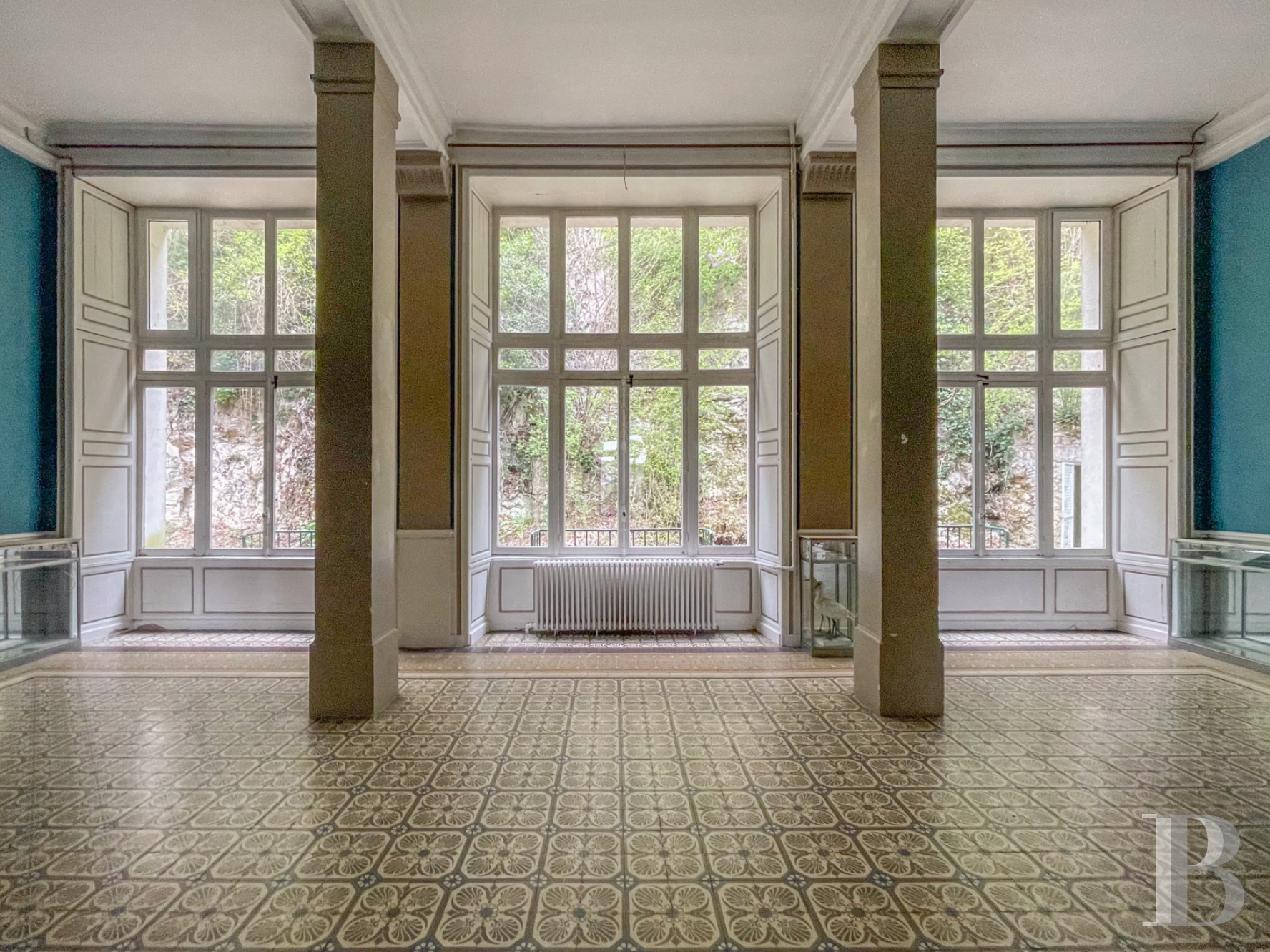
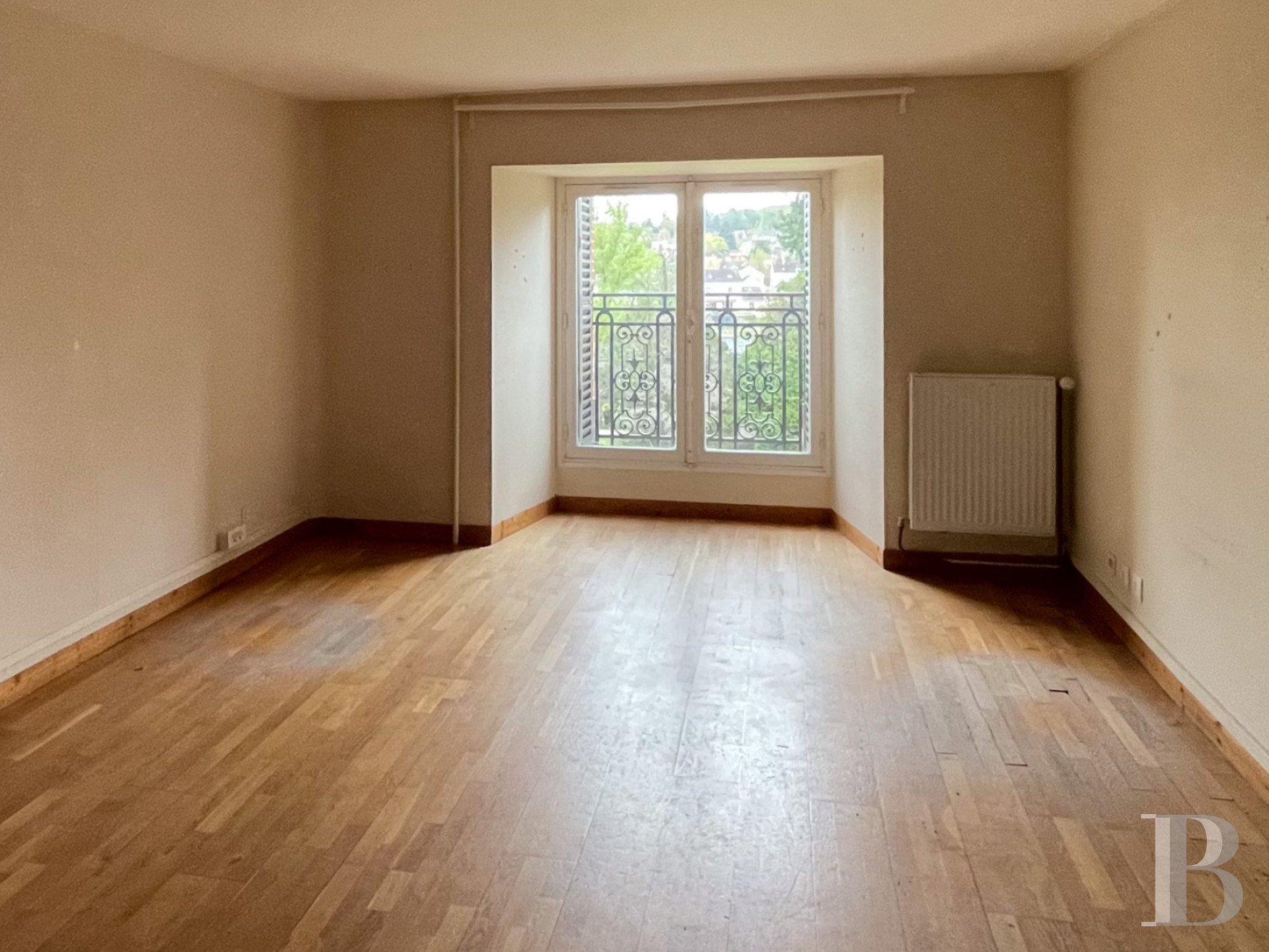
East of the grand staircase, a sequence of reception rooms unfolds in regular, light-filled composition. Three bays structure the perspectives. Tall small-paned windows open wide to the outside, drawing in abundant light. Dado panelling lines the walls, and the floors alternate between antique encaustic tiles in repeating patterns and solid oak parquet. Ceilings rise to around 5 m.
The intermediate level
Set in the west wing and reached from the second floor, this half-level was created by dividing the original 5 m height in two, each new level standing at 2.2 m. Together they provide a shared dining room and five self-contained studios, each with shower room, lavatory and kitchenette.
The attic
Under a well-preserved exposed roof structure, the attics are insulated at floor level and house the ventilation systems.
Les écuries
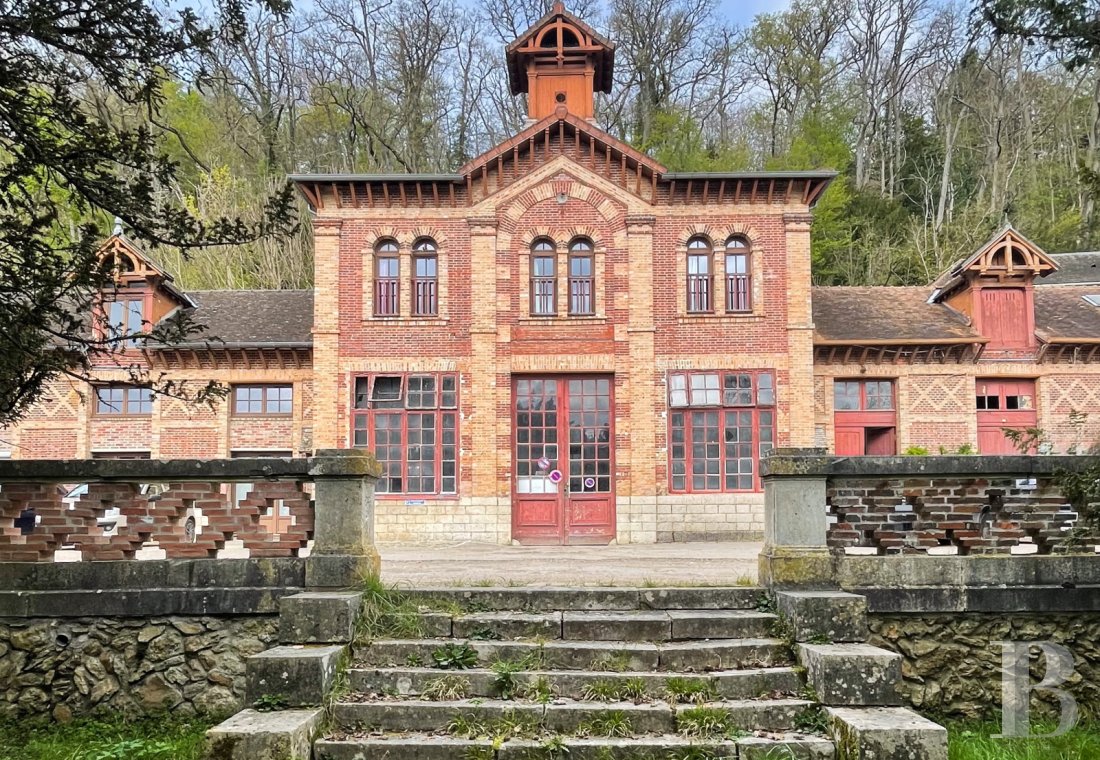
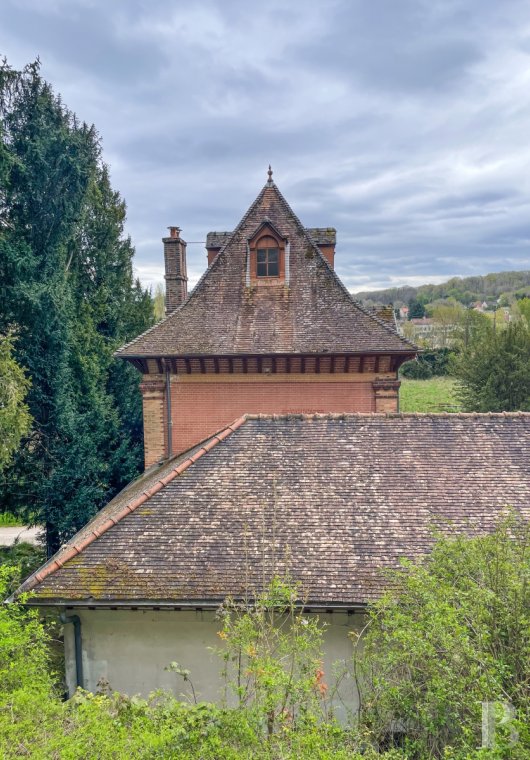
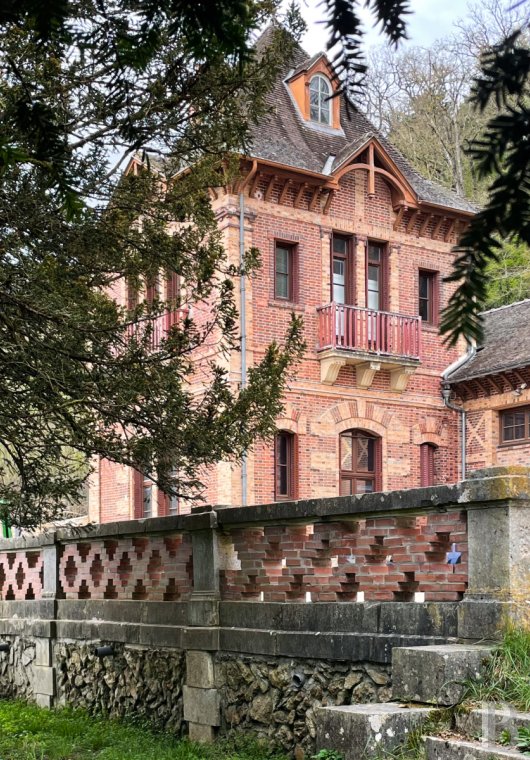
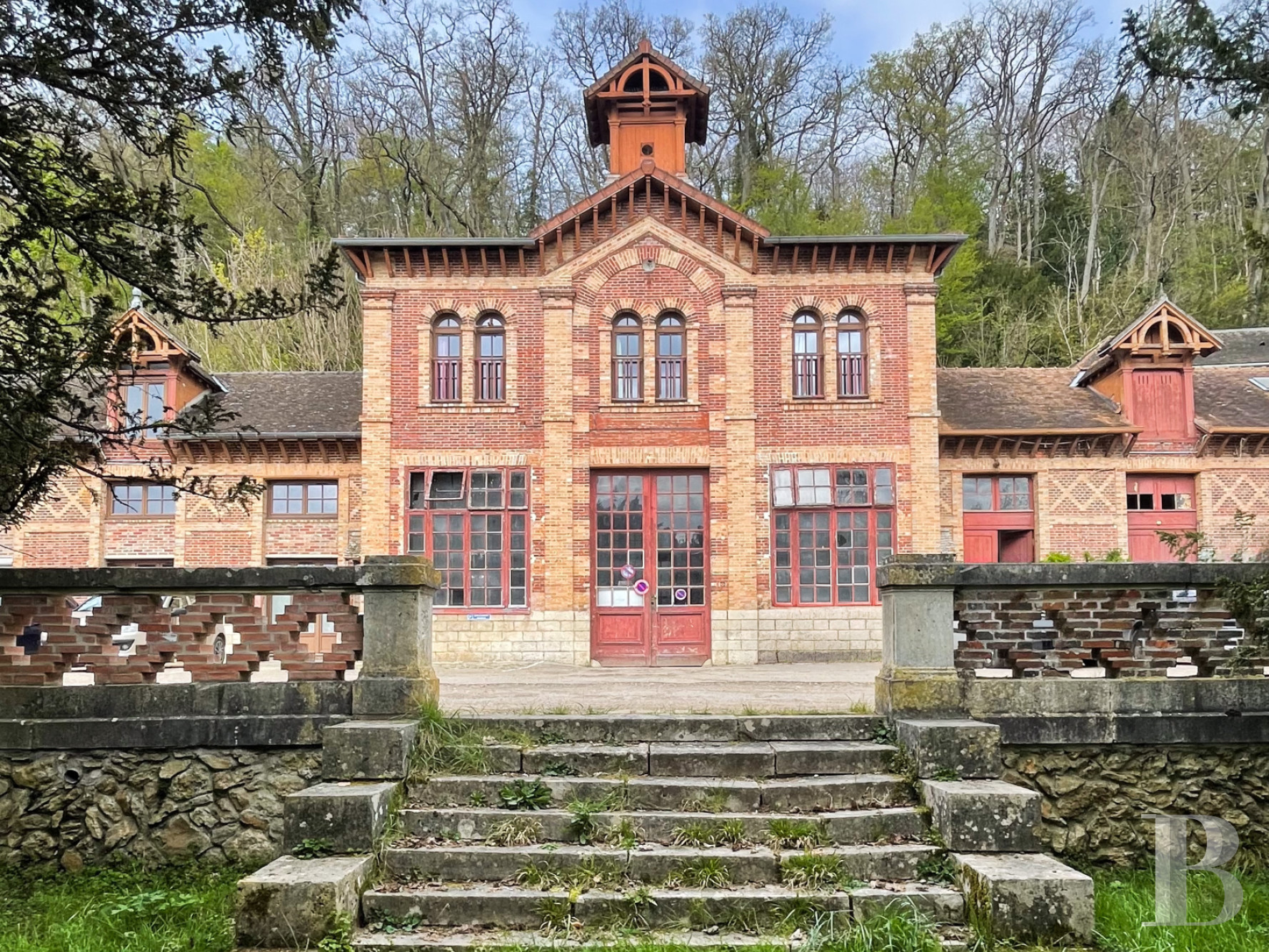
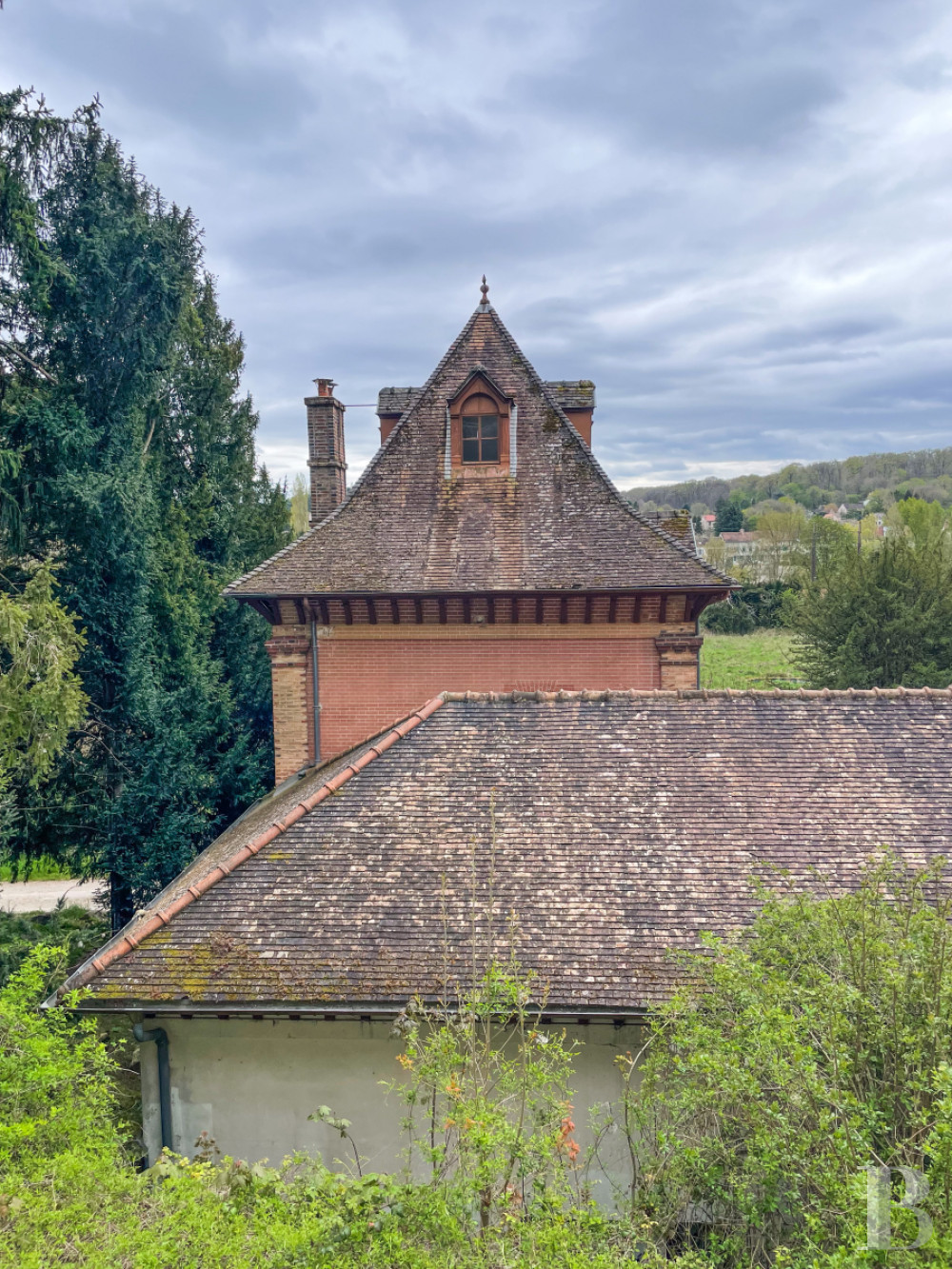
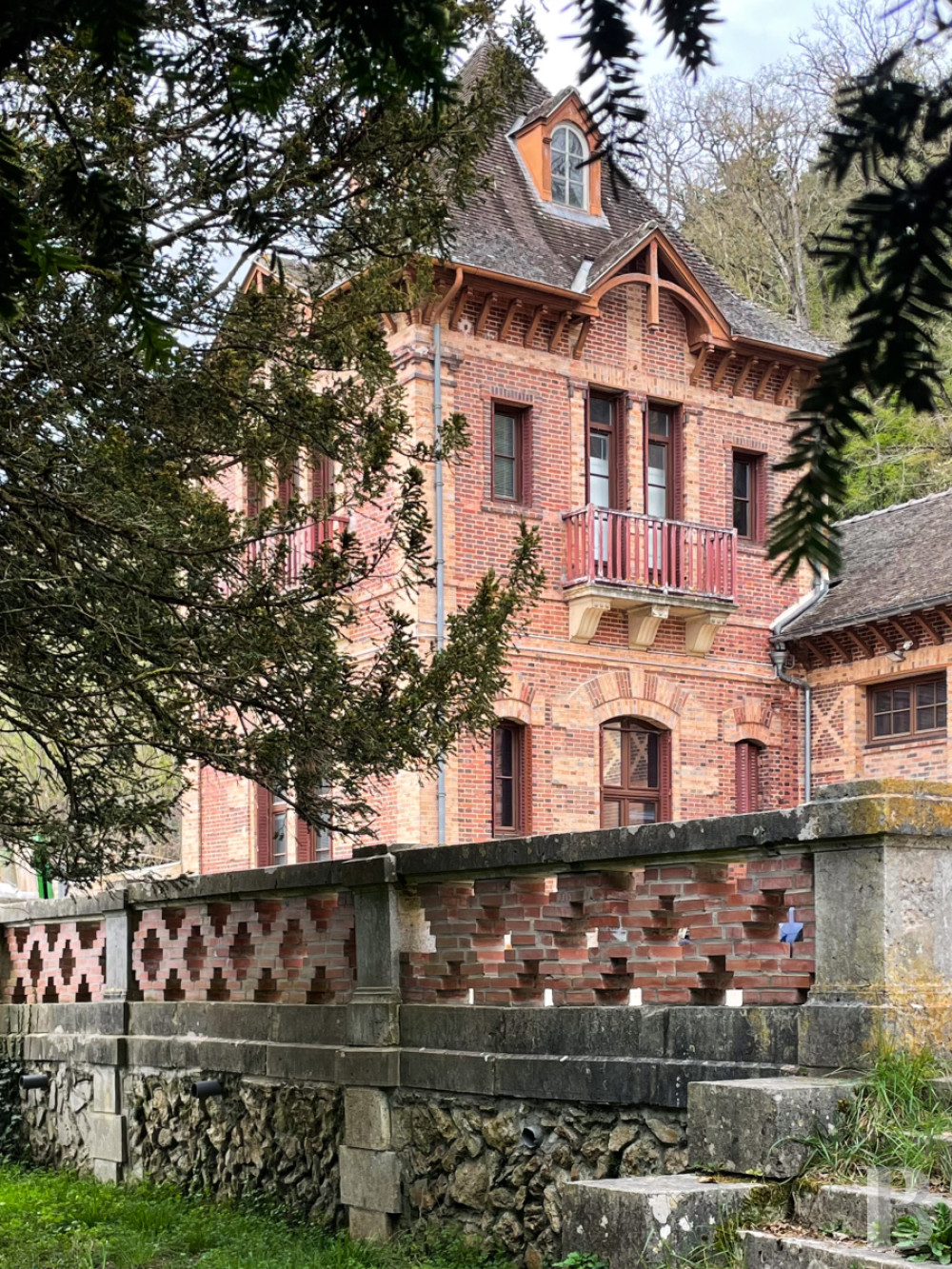
Set near the woodland, the stables stand out for their polychrome brickwork, characteristic of the late 19th century. The symmetrical facade plays red brick against pale, and the slightly projecting central bay is crowned by a gable and an openwork bellcote. Wide glazed openings at ground level give way to narrower ones above, reflecting the functional division between horses and storage. A stone staircase with low retaining wall leads up to the building.
The director's house
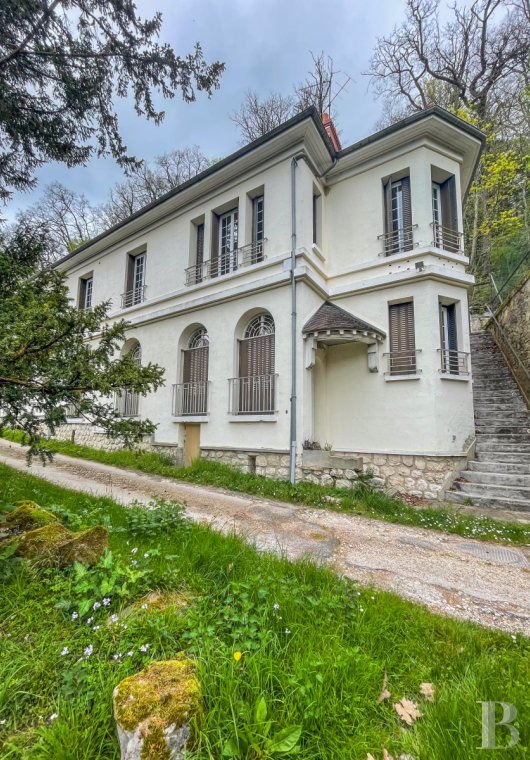
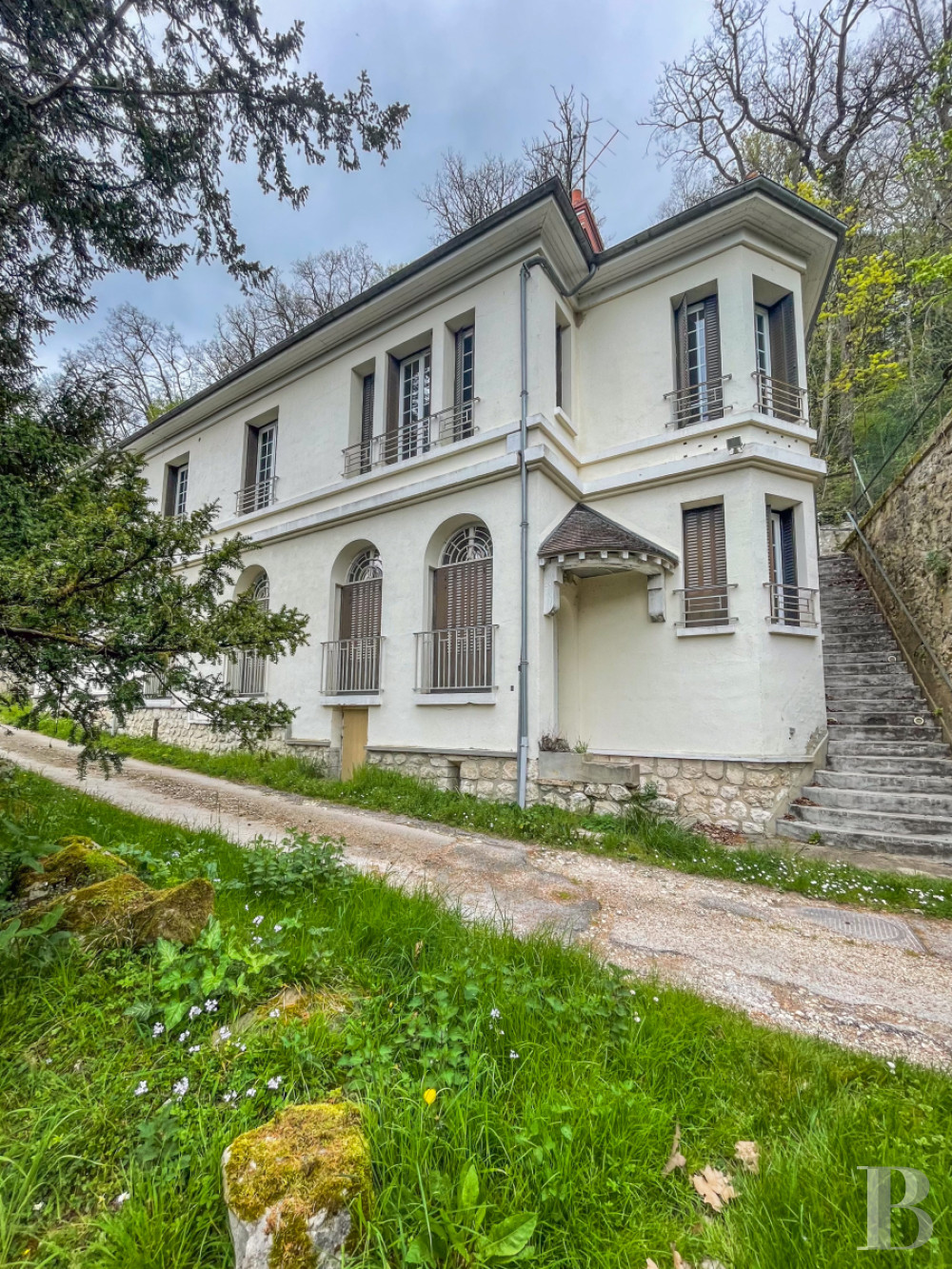
Slightly raised above the grounds and reached by a side staircase, the house sits against the rocky ground in a wooded setting. Its restrained, ordered architecture is typical of the early 20th century. Two storeys rise above a stone plinth, with a rendered facade throughout. Round-arched openings on the ground floor, protected by metal guardrails, answer the rectangular windows above, which are underlined by simple ironwork. A discreet cornice marks the division between levels and runs below the roof's shallow overhang. The entrance sits under a small canopy.
The forester's house
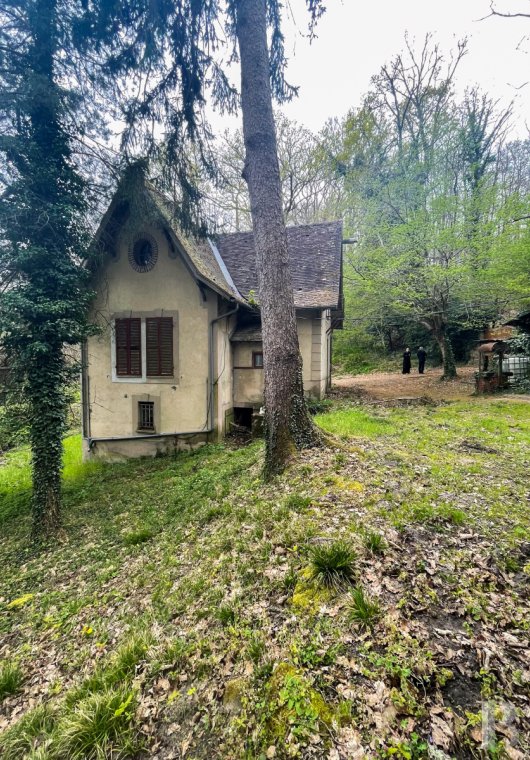
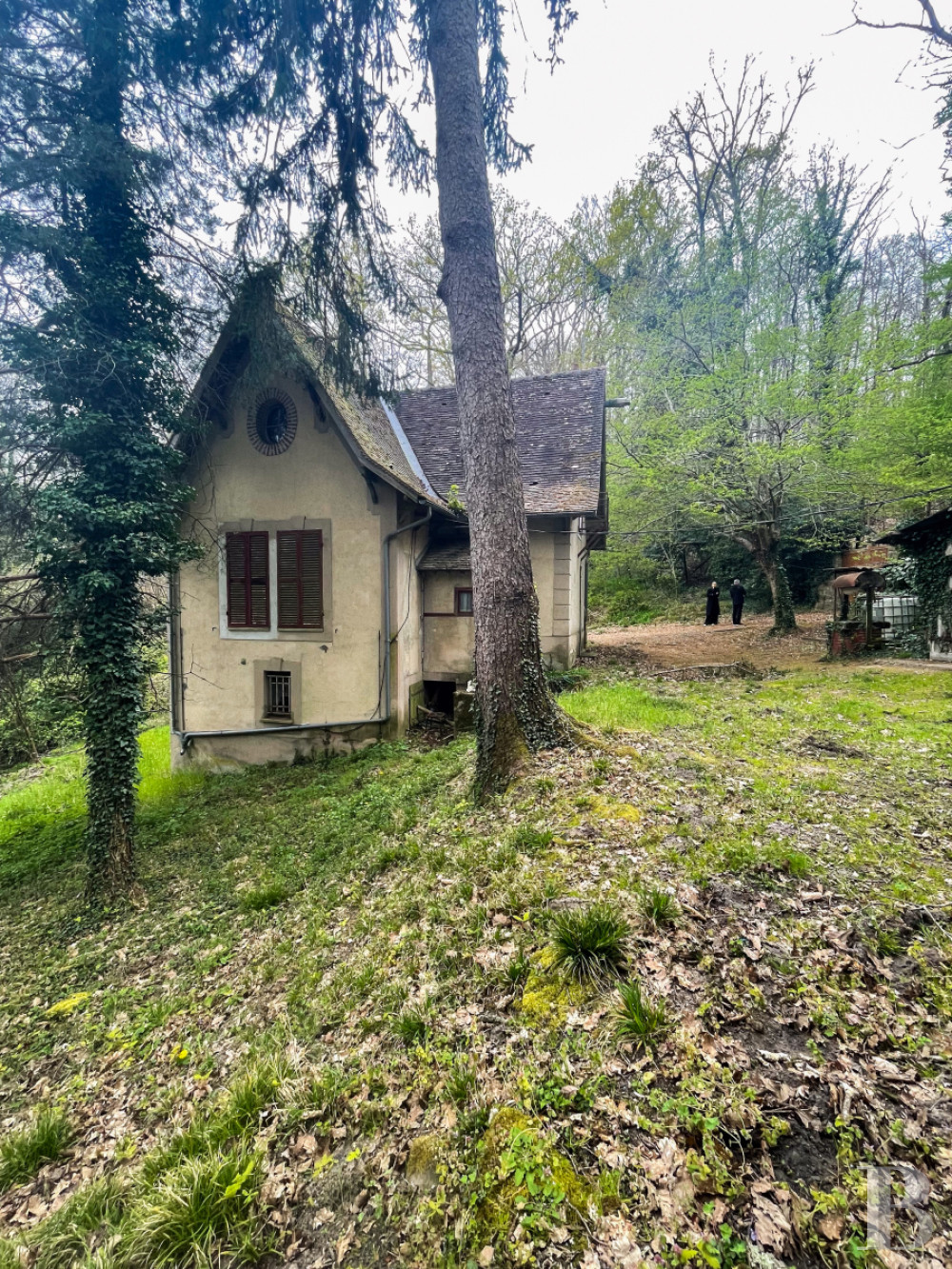
Its plain architecture is that of the service buildings set at the edges of an estate. Compact in plan, it rises through one level under a roof of two pitched sides clad in tile. The rendered facades hold windows of varying size and have kept their wooden shutters and gable oculus. Standing on a slight slope in wooded surroundings, the building now awaits restoration.
The brickworks
At the edge of the undergrowth, the brickworks reveals a robust exposed timber frame of posts, beams and bracing. The roof, built on rafters and lintels, leaves the building's internal organisation on view. The walls, partly closed by timber cladding and glazed panels, speak of a functional construction shaped by the demands of production and storage.
The grounds
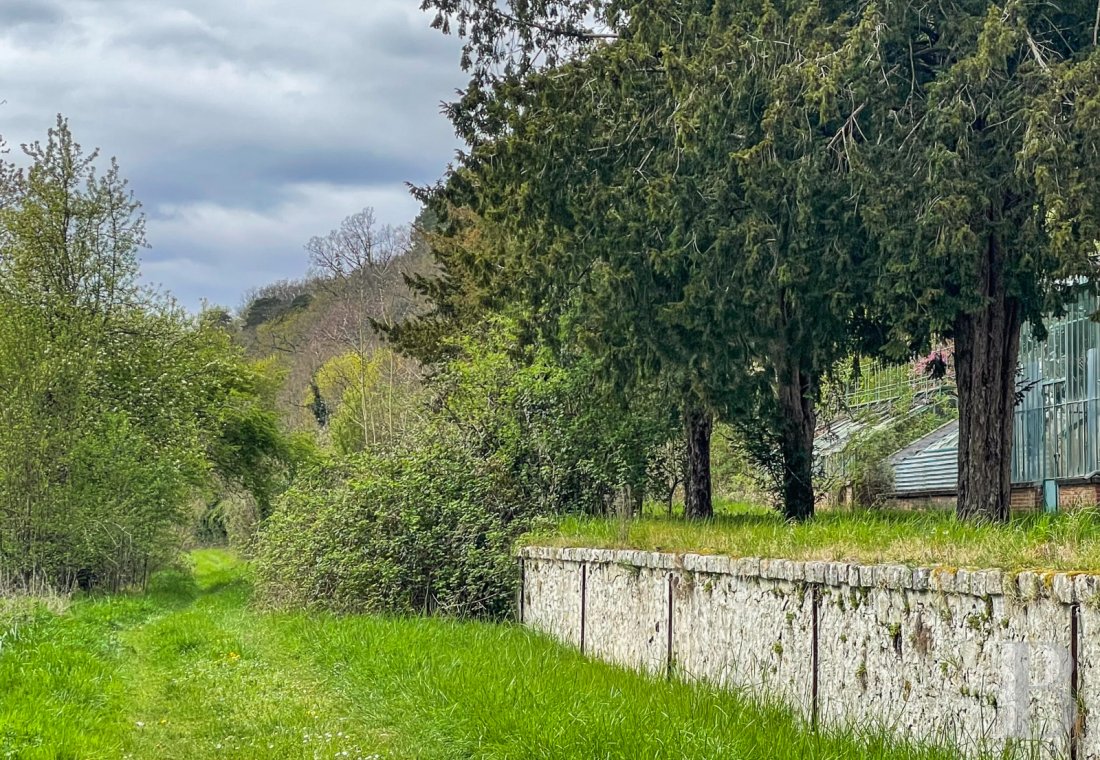
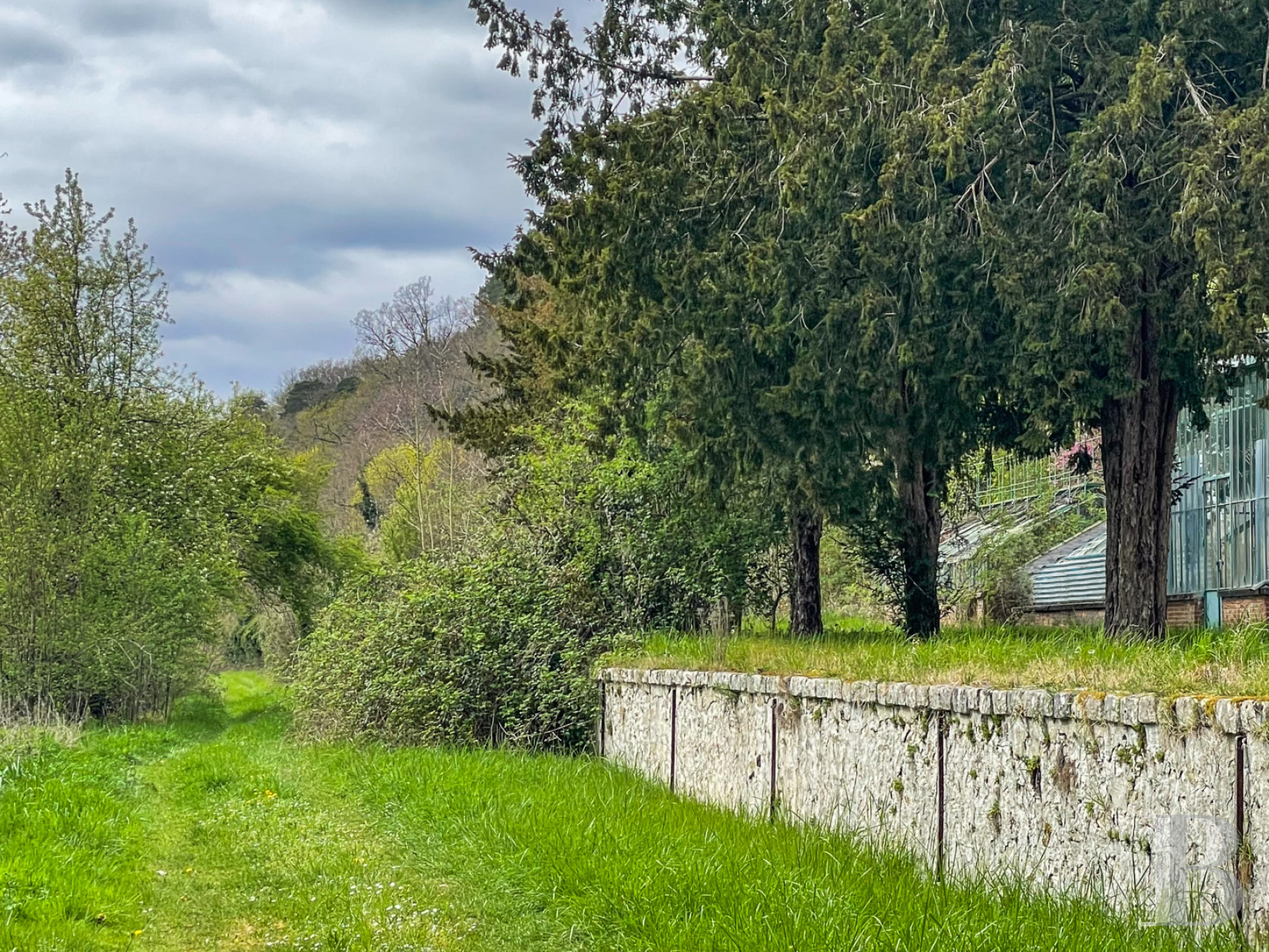
The estate extends to approximately 10 ha, comprising a tennis court, several chais, meadows and close to 50 ha of woodland on the hillsides behind the chateau. All plots are zoned as natural area.
The garden
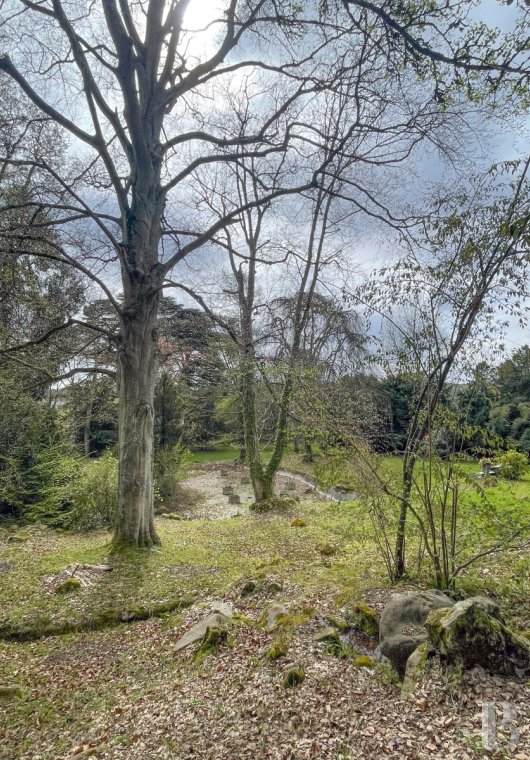
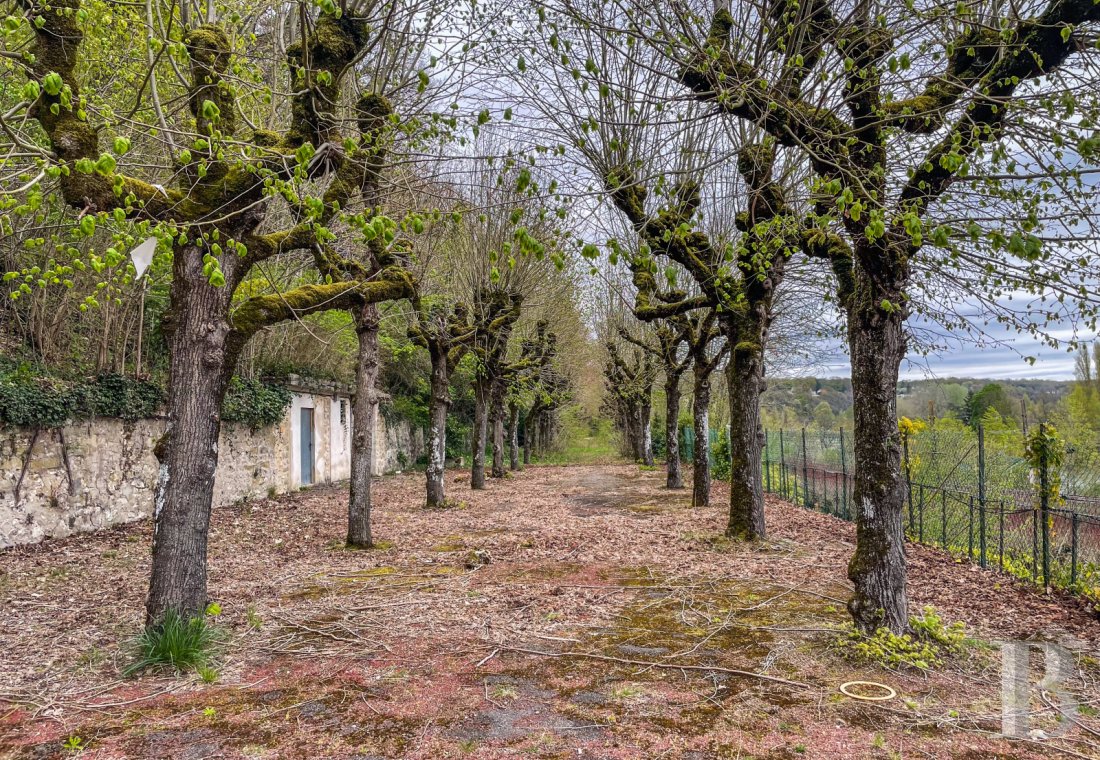
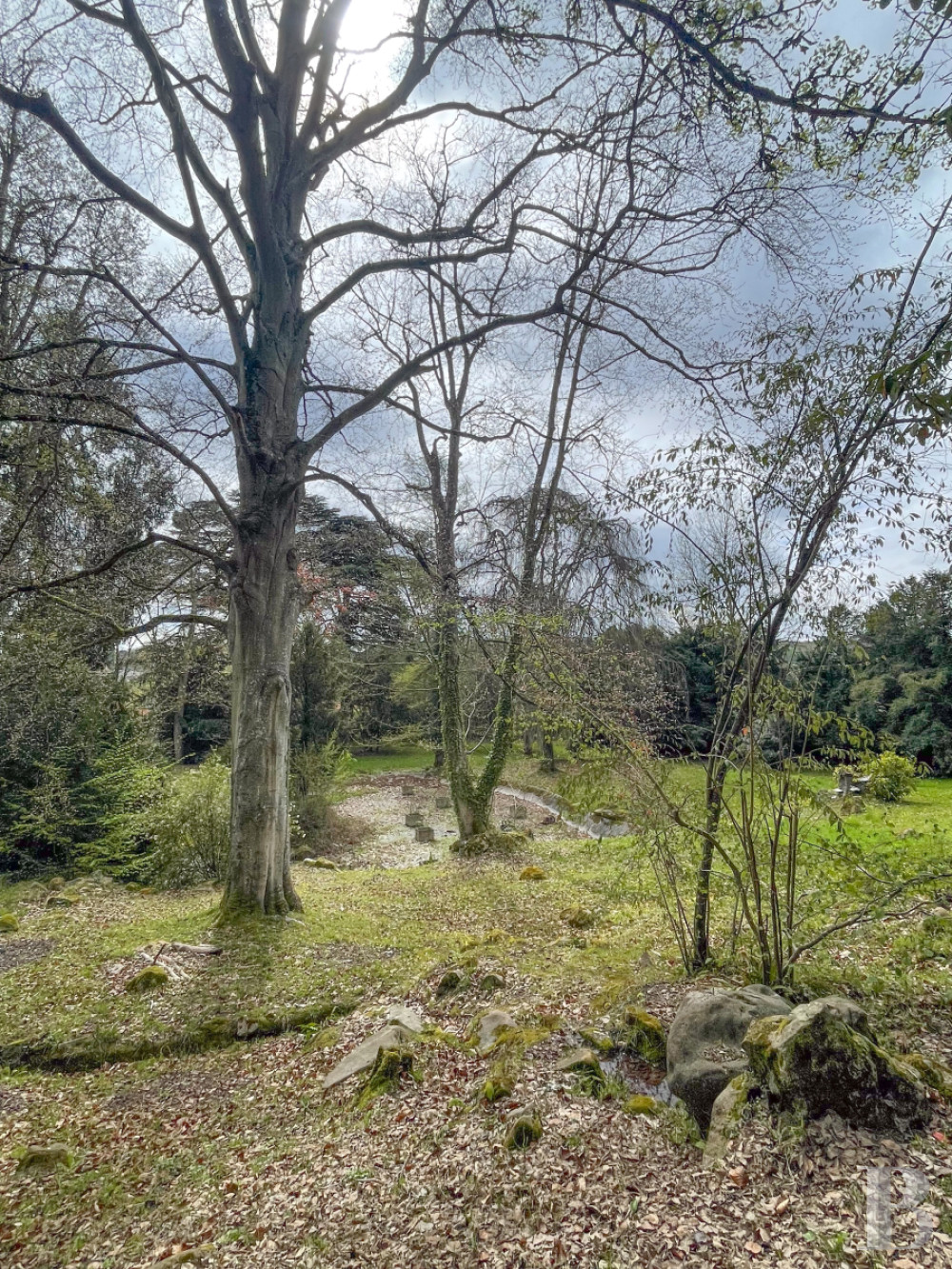
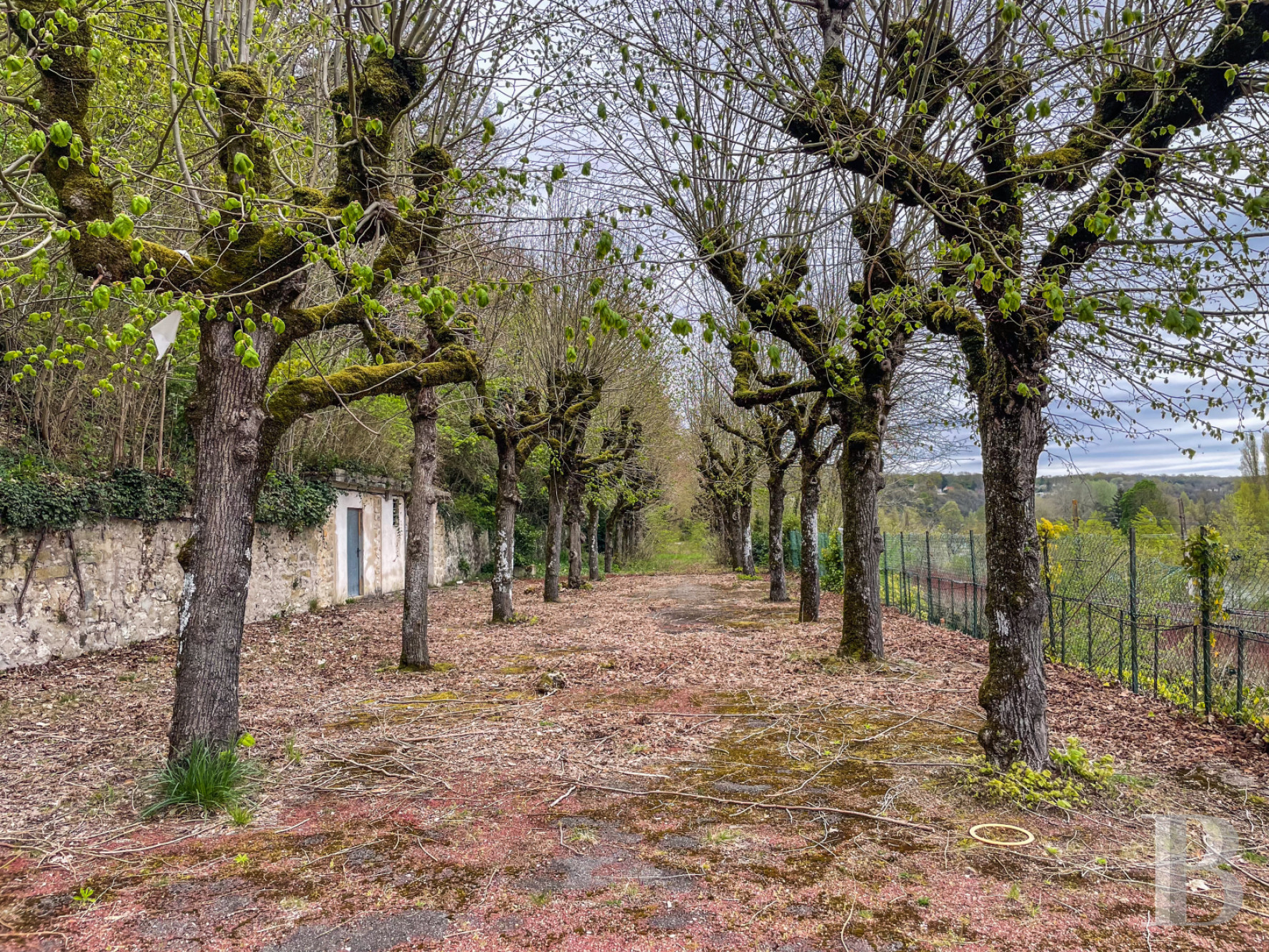
Century-old trees stand throughout the grounds, among them a remarkable ginkgo biloba, a weeping willow, and cherry and plum trees. Avenues of lime structure the sightlines. A pond, no longer fed, lies on lower ground. Three springs once supplied the estate with non-potable water.
The meadows
Set at the front of the property, the meadows are currently on agricultural lease by horse owners.
The woods
Covering the slopes behind the property above the Seine, they are maintained under a management plan and reached from the chateau by a private forest road.
The wine storehouse
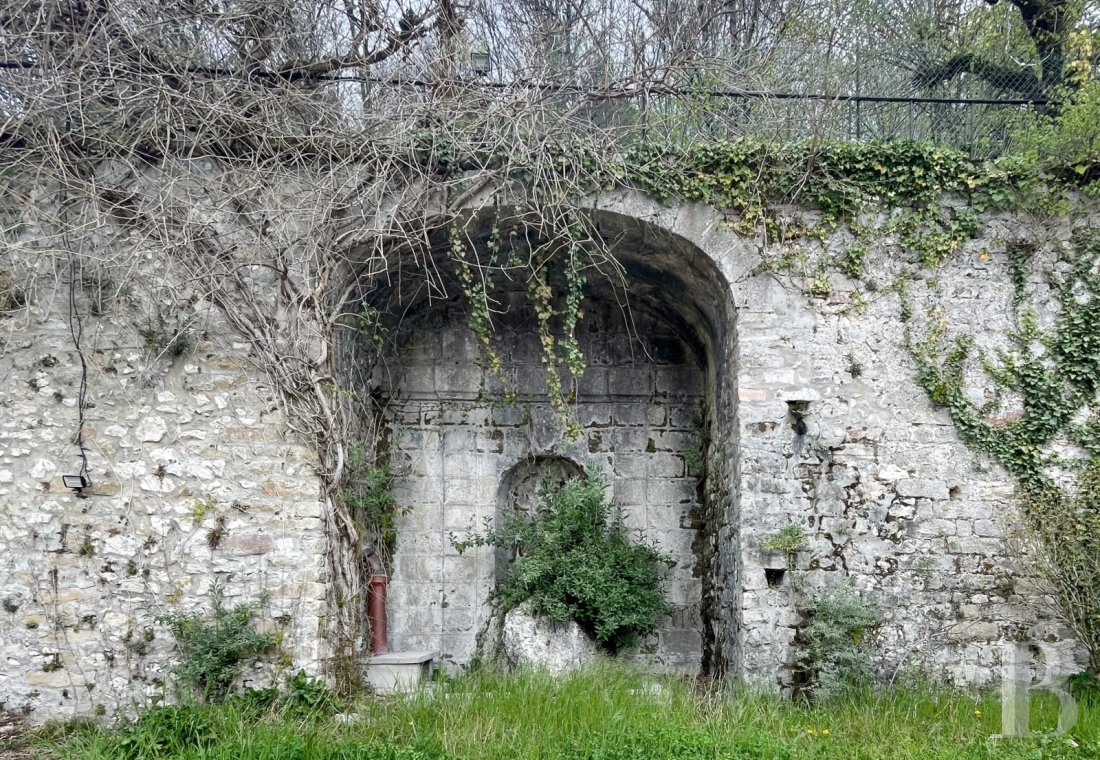
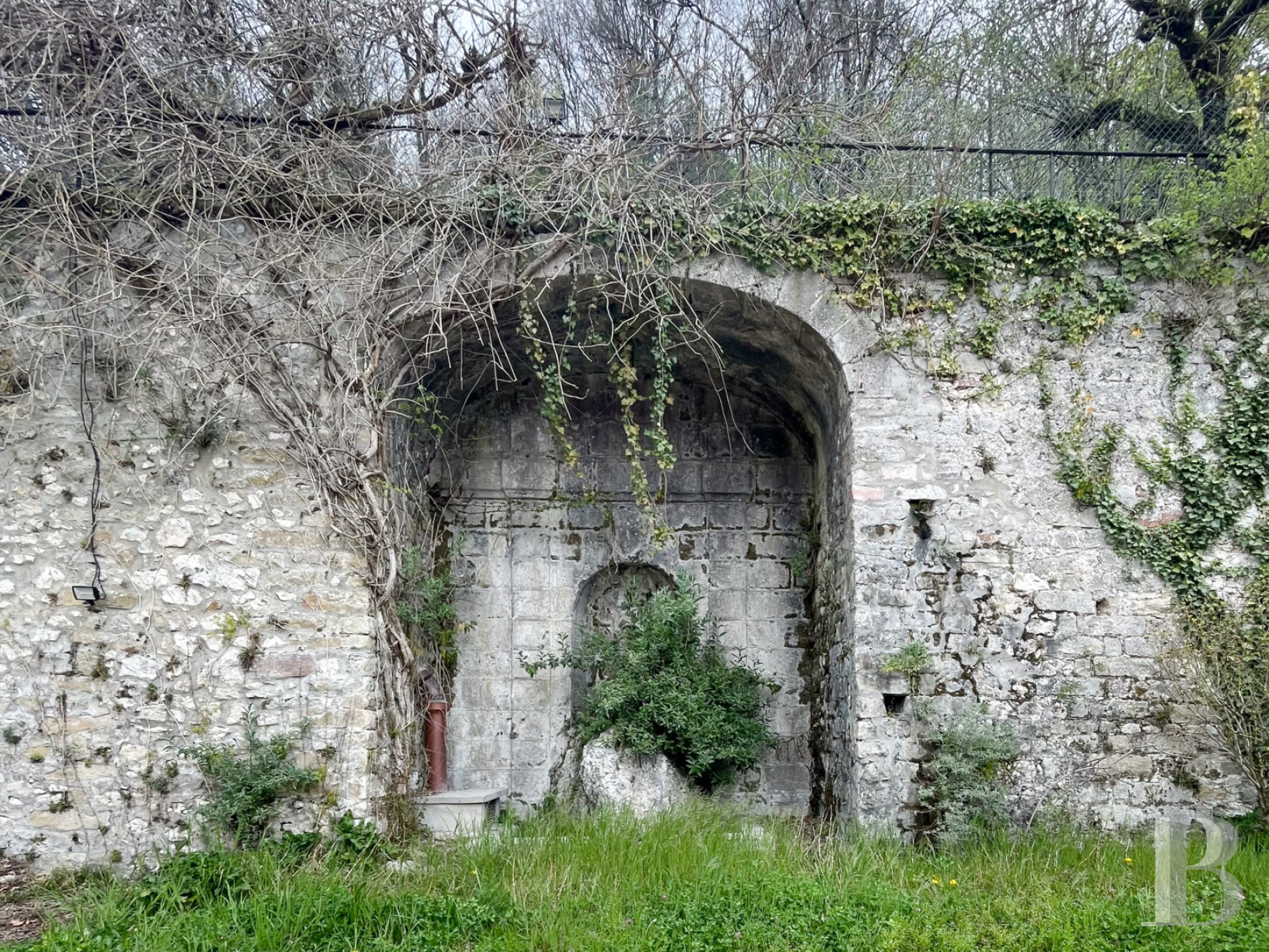
Cut into the cliff, the cellars form vast vaulted chambers. Above them, a terrace lined with an avenue of limes overlooks the grounds and commands an open view of the Seine and the surrounding slopes.
Les serres
Covering some 400 m², the greenhouses were built in the 1920s for the horticultural activity then developed on the estate.
Our opinion
Along the banks of the Seine, time seems suspended here. From its royal beginnings to more recent uses, the chateau has changed its face without ever losing its soul. The rooms, the outbuildings, the cellars and the woods tell a story of successive transformations and adaptations. The estate could immediately become a reception venue, a corporate seat or a meeting place — somewhere to work, to host, to pass on. Between water, light and memory, everything is in place to carry the story forward rather than fix it in time, drawing on six centuries of legacy.
3 200 000 €
Fees at the Vendor’s expense
Reference 224313
| Main building floor area | 2300 m² |
| Outbuildings floor area | 2600 m² |
| Land registry surface area | 60 ha |
| Elevator | |
| Total floor area | 4000 m² |
Information on the risks to which this property is exposed is available on the website: www.georisques.gouv.fr
Share


NB: The above information is not only the result of our visit to the property; it is also based on information provided by the current owner. It is by no means comprehensive or strictly accurate especially where surface areas and construction dates are concerned. We cannot, therefore, be held liable for any misrepresentation.