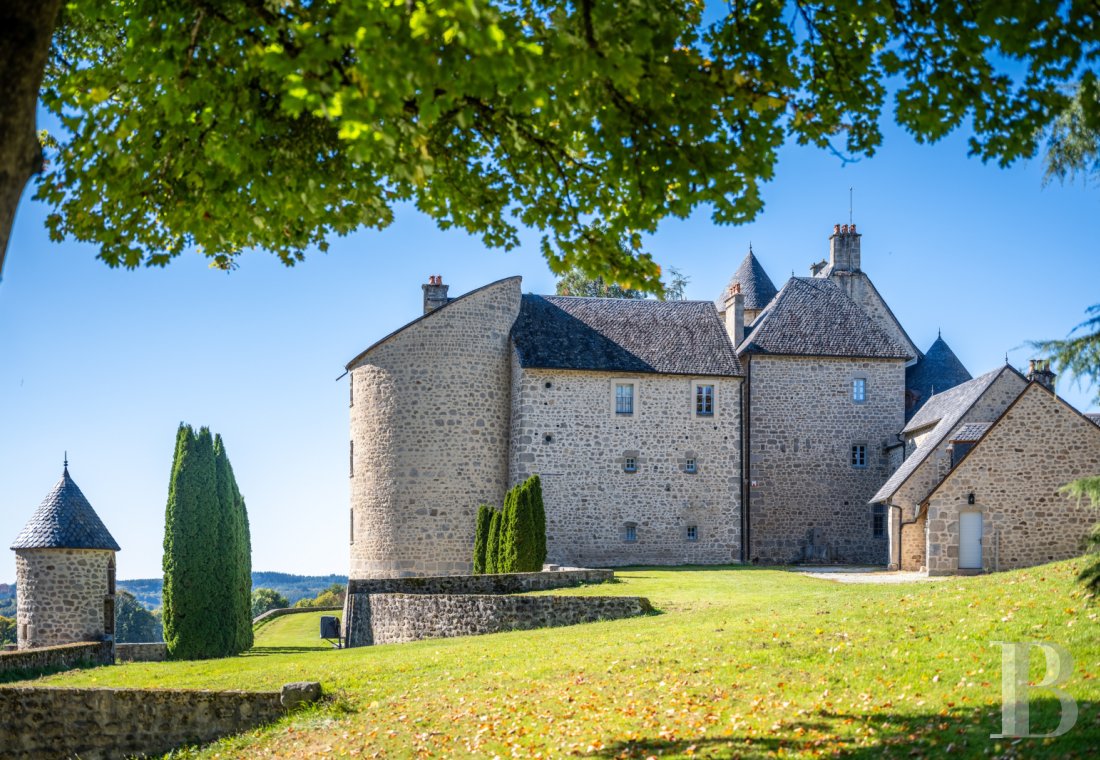




A restored 15th century château, with outbuildings and ponds, set in 73 hectares,
including more than 21 hectares of woods and fields in Haute-Corrèze
including more than 21 hectares of woods and fields in Haute-Corrèze
Ussel,
CORREZE
limousin
19200
FR



Location
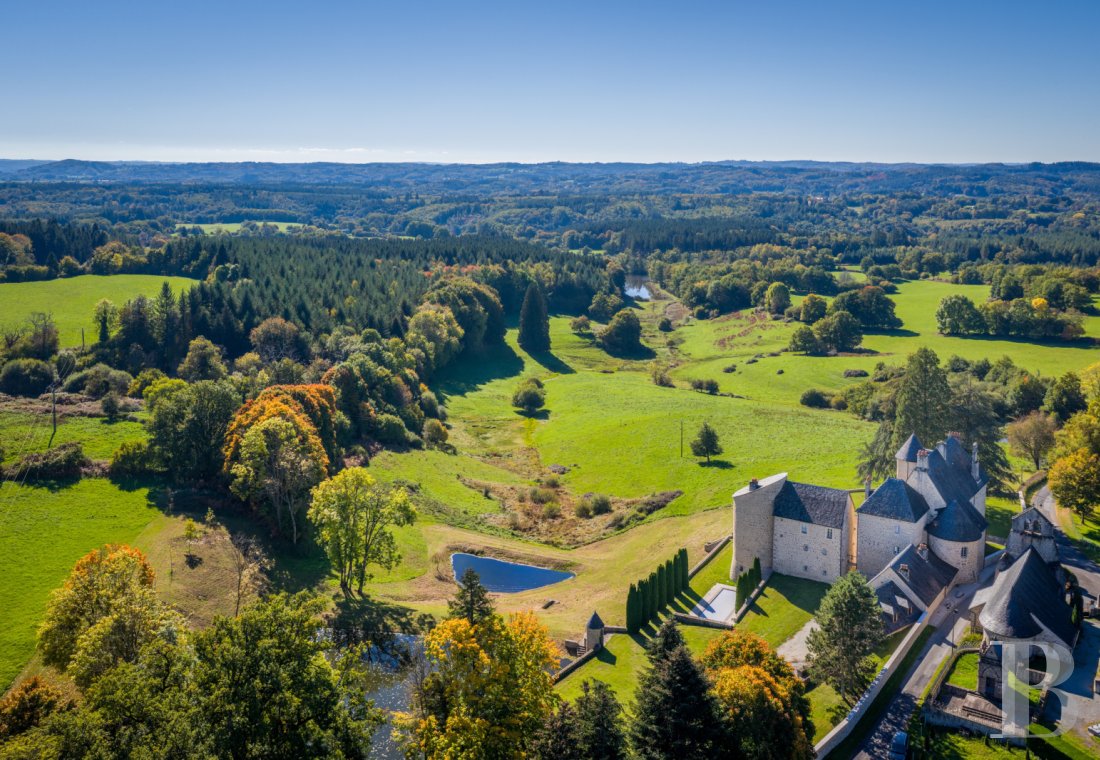
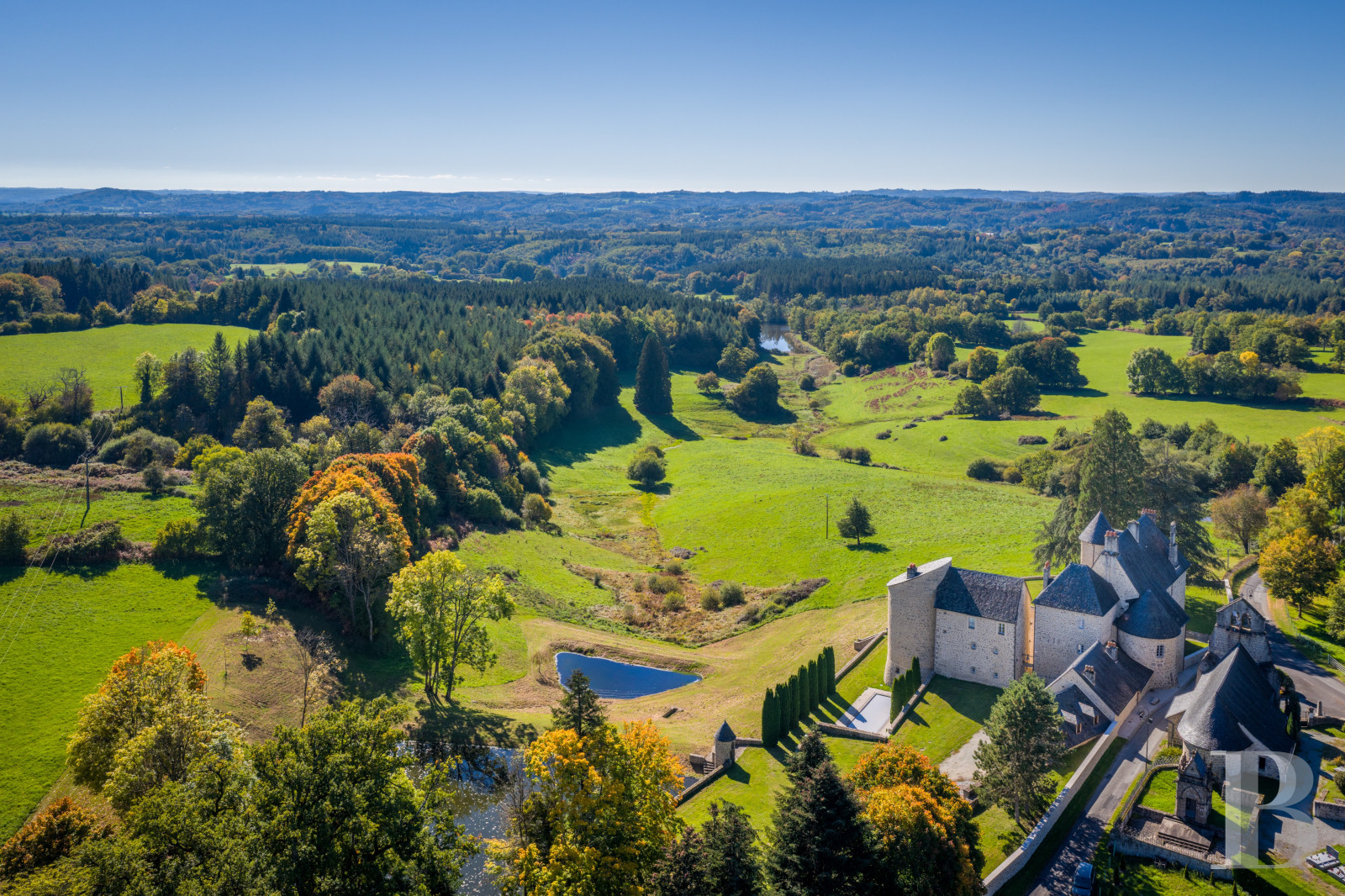
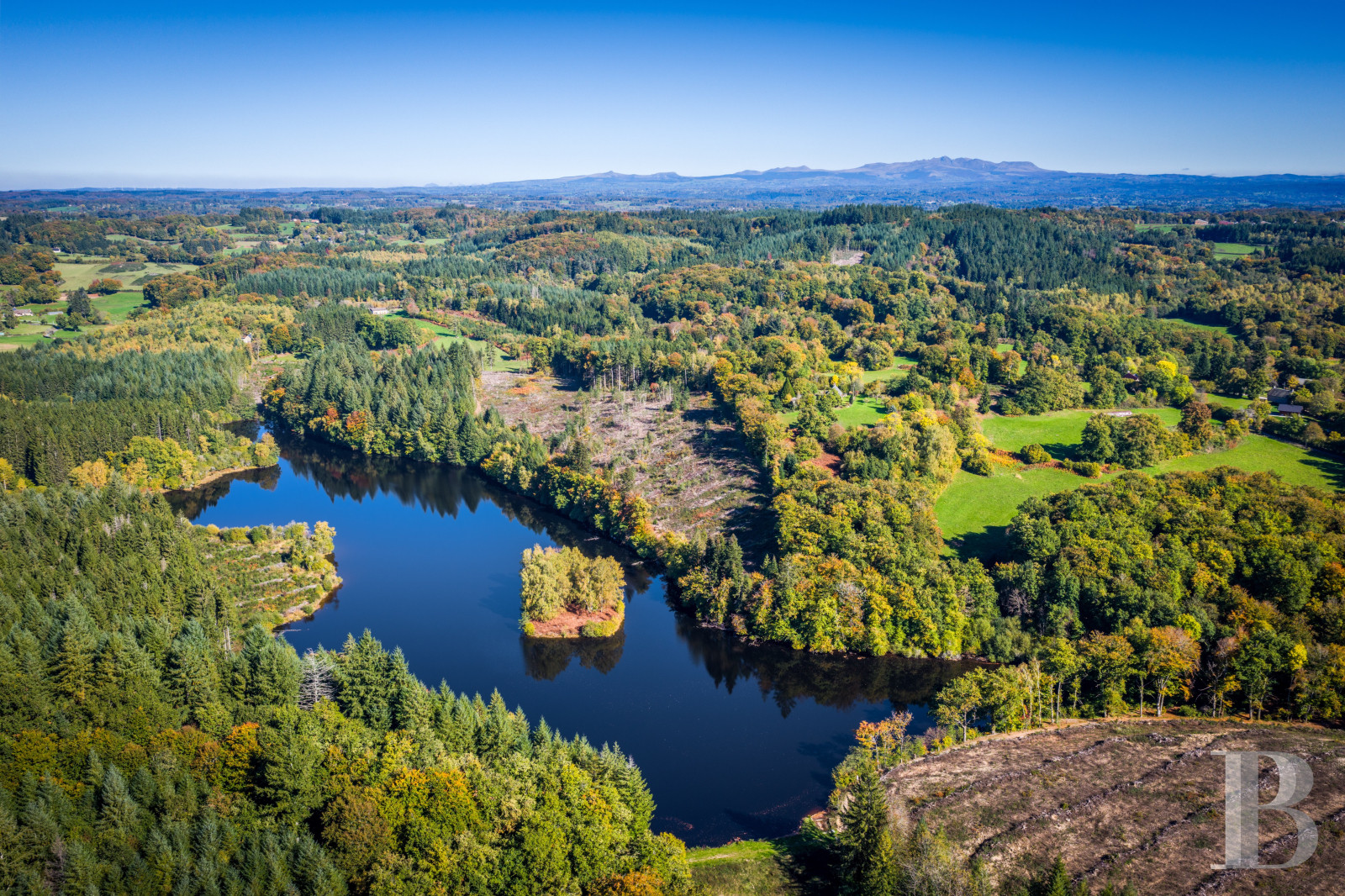
The château stands on the edge of a village in Haute-Corrèze in the Nouvelle Aquitaine department and dominates its grounds - gardens, grasslands, woods and ponds - set in a landscape of plains, hills and valleys as far as the eye can see. To the north, the buildings are bordered by a municipal road linked to a secondary road, but which are not heard from the property thanks to the thick vegetation. These roads provide rapid access to Ussel and Bort-les-Orgues, which are around ten kilometres away, with their bus and train stations. The A89 motorway, which is around 15 km away, links Bordeaux to Lyon and has exits at Tulle, Brive-la-Gaillarde and Clermont-Ferrand, as well as their airports. Neuvic is 20 km away, while La Bourboule, Le Mont-Dore and the Puy de Sancy can be reached in less than 1 hour. Services, shops, schools and health establishments are grouped together in Ussel and Bort-les-Orgues, with local shops in the surrounding villages. Ussel-Thalamy aerodrome is around 15 kilometres away.
Description
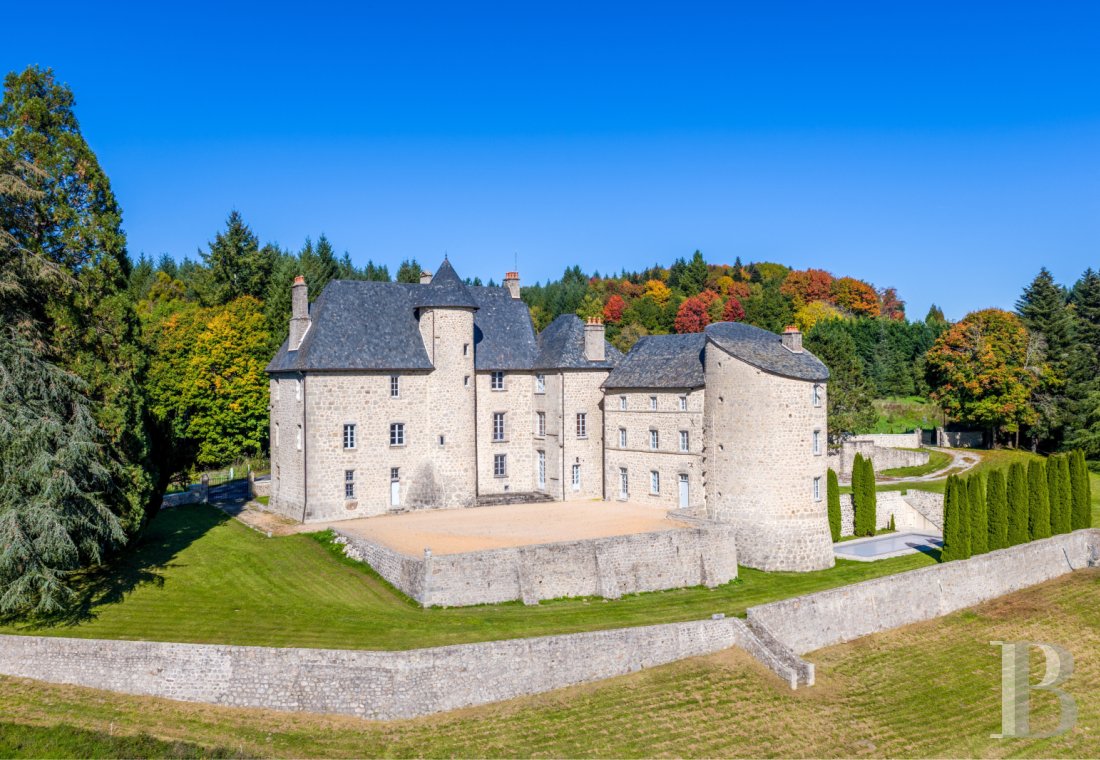
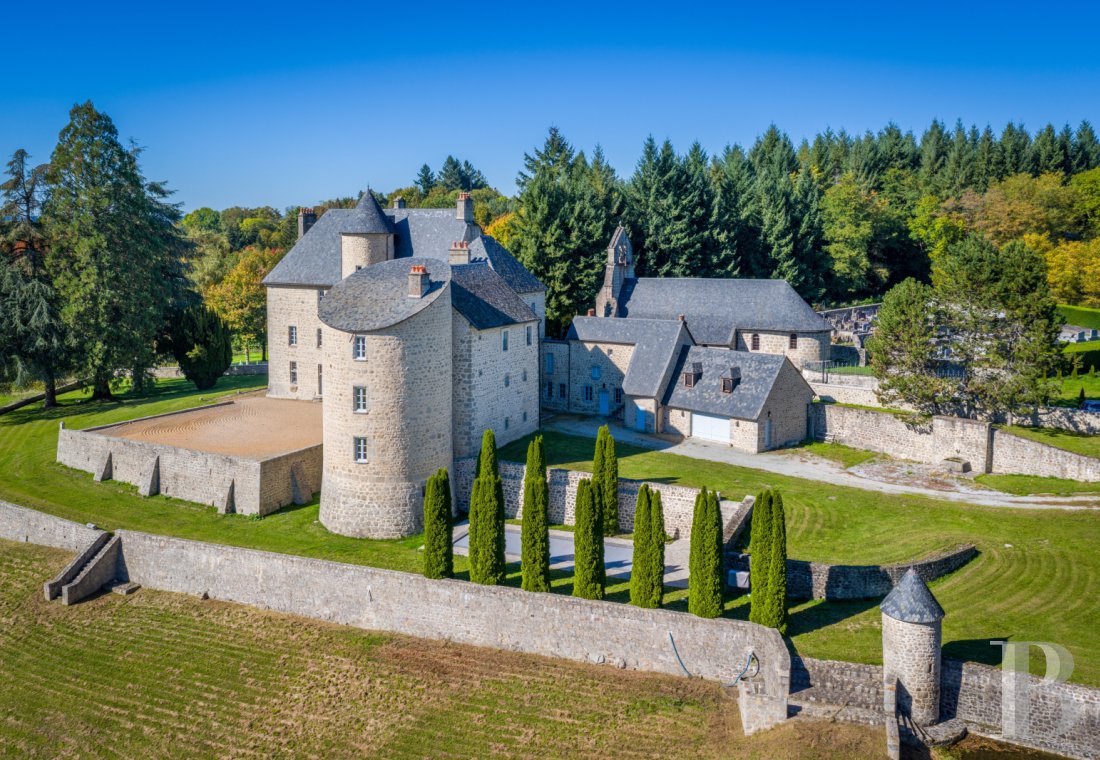
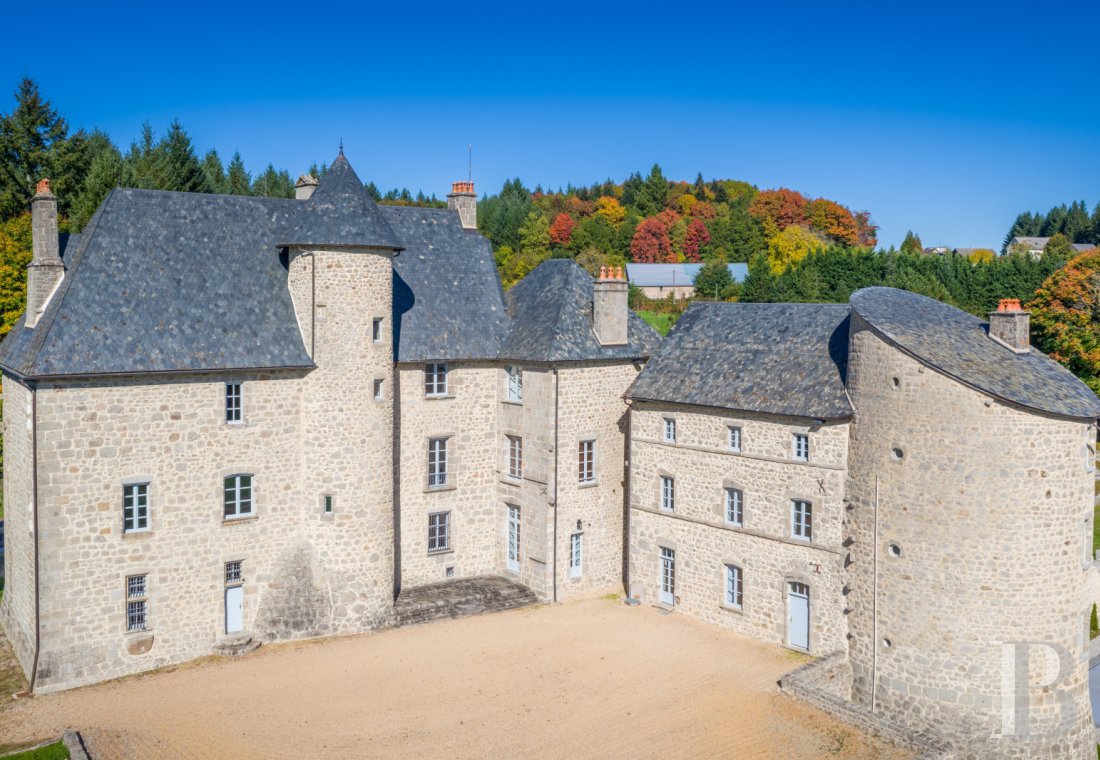
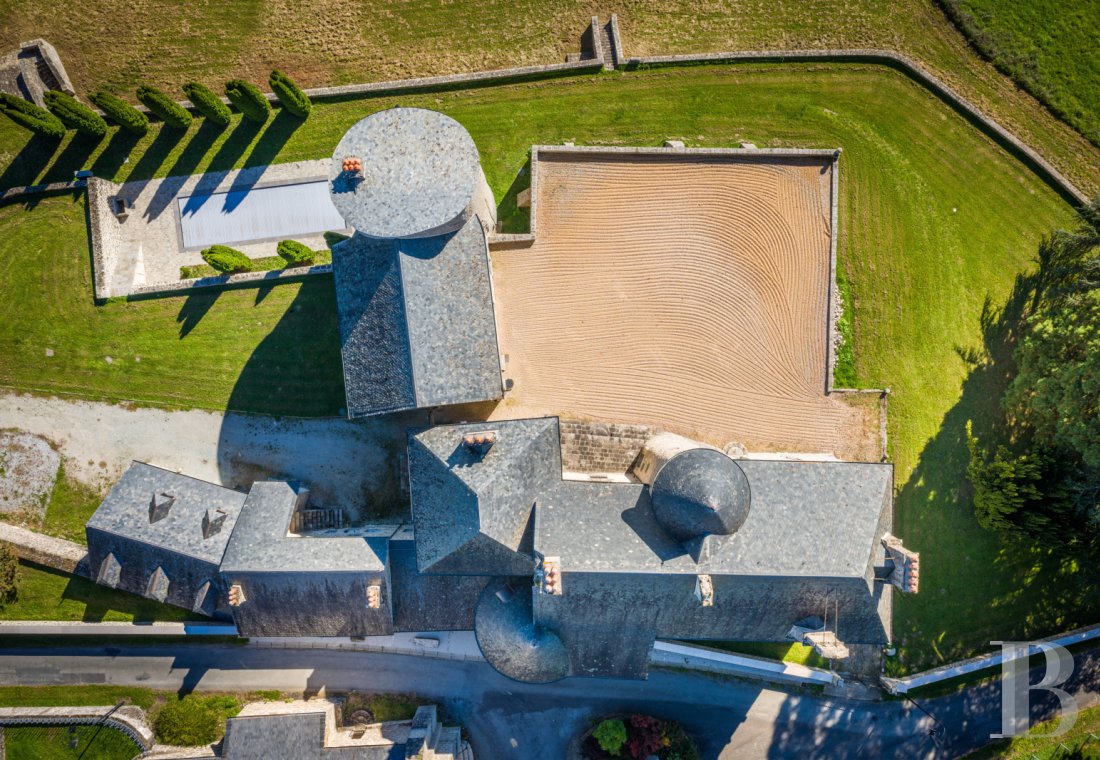
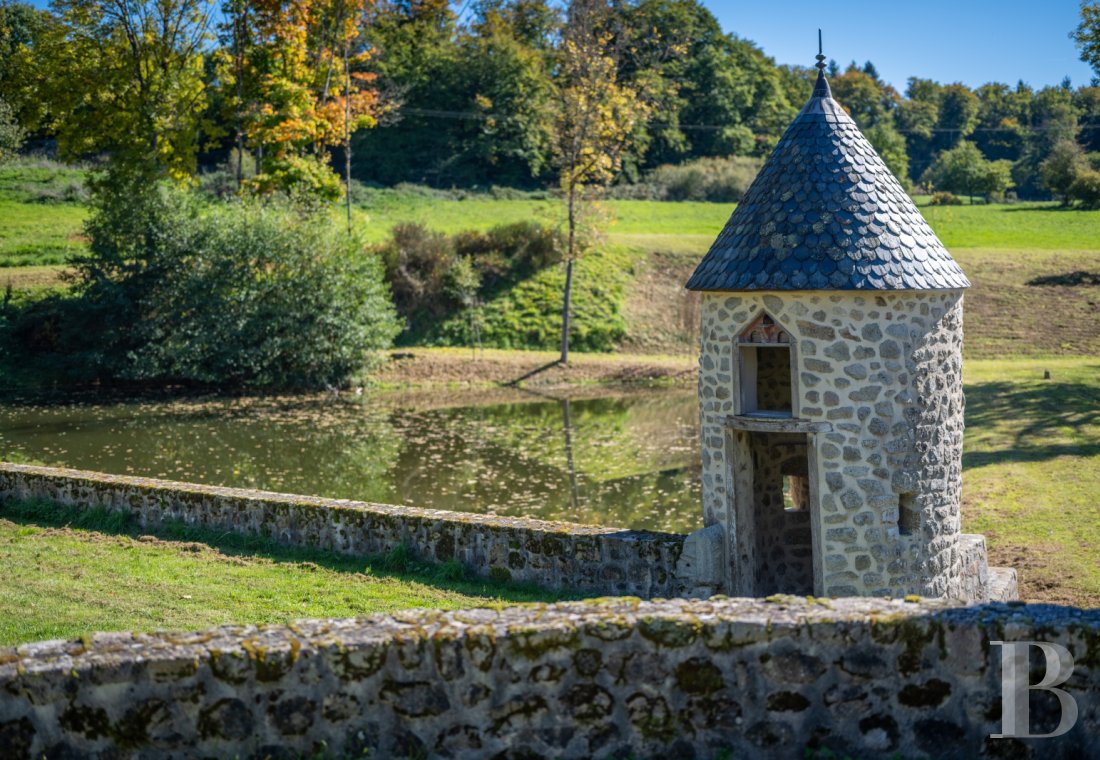
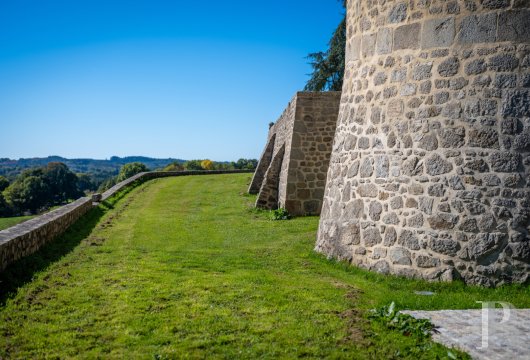
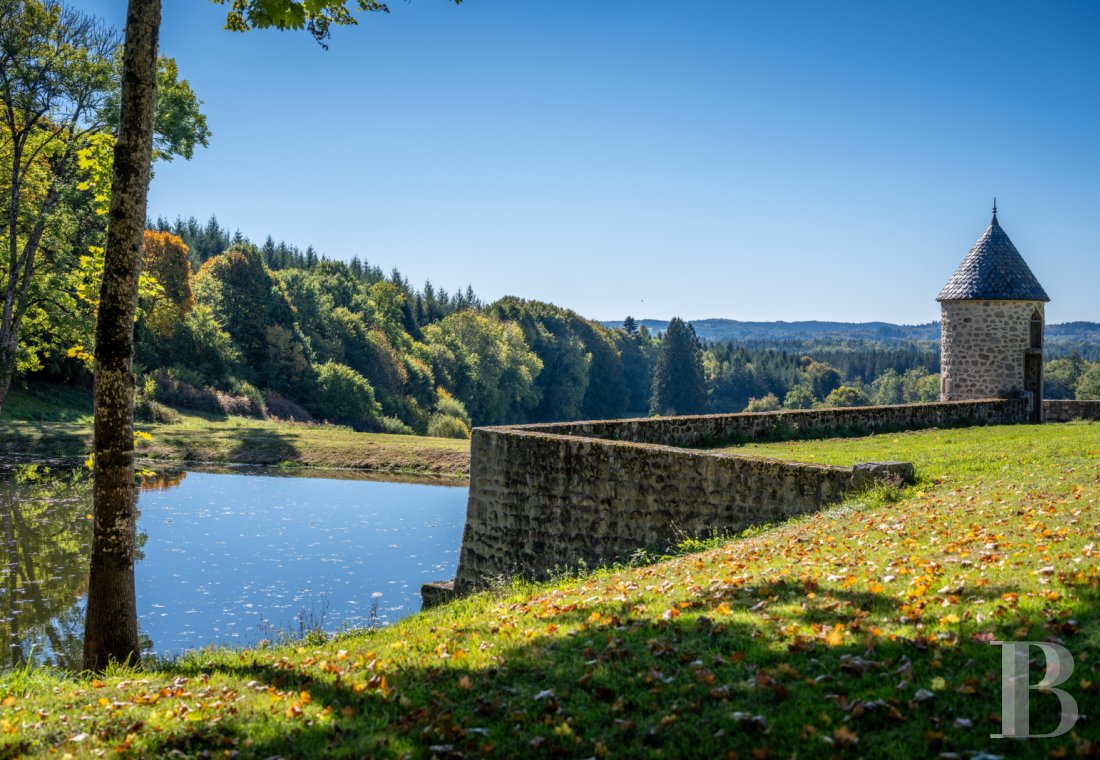
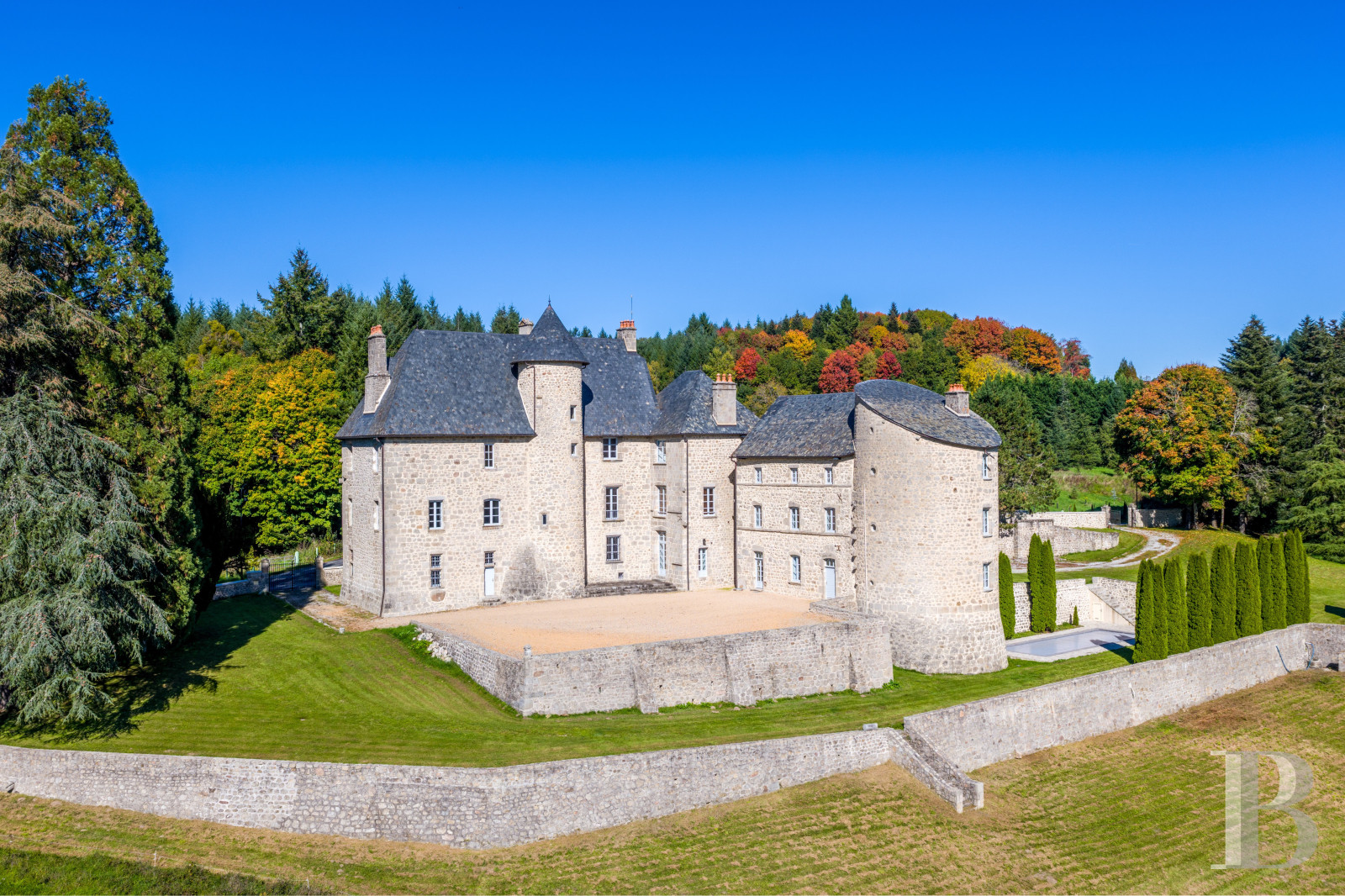
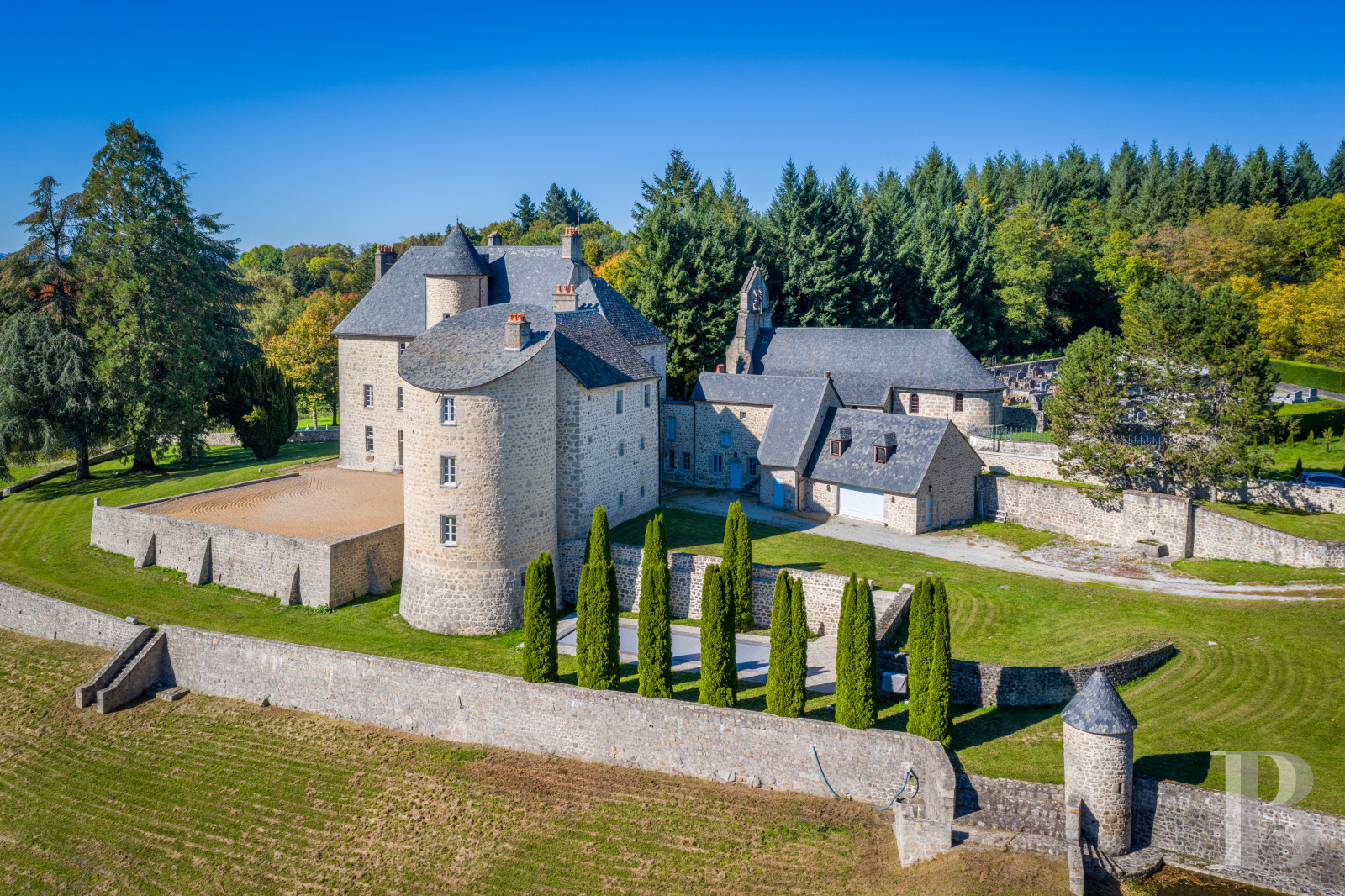
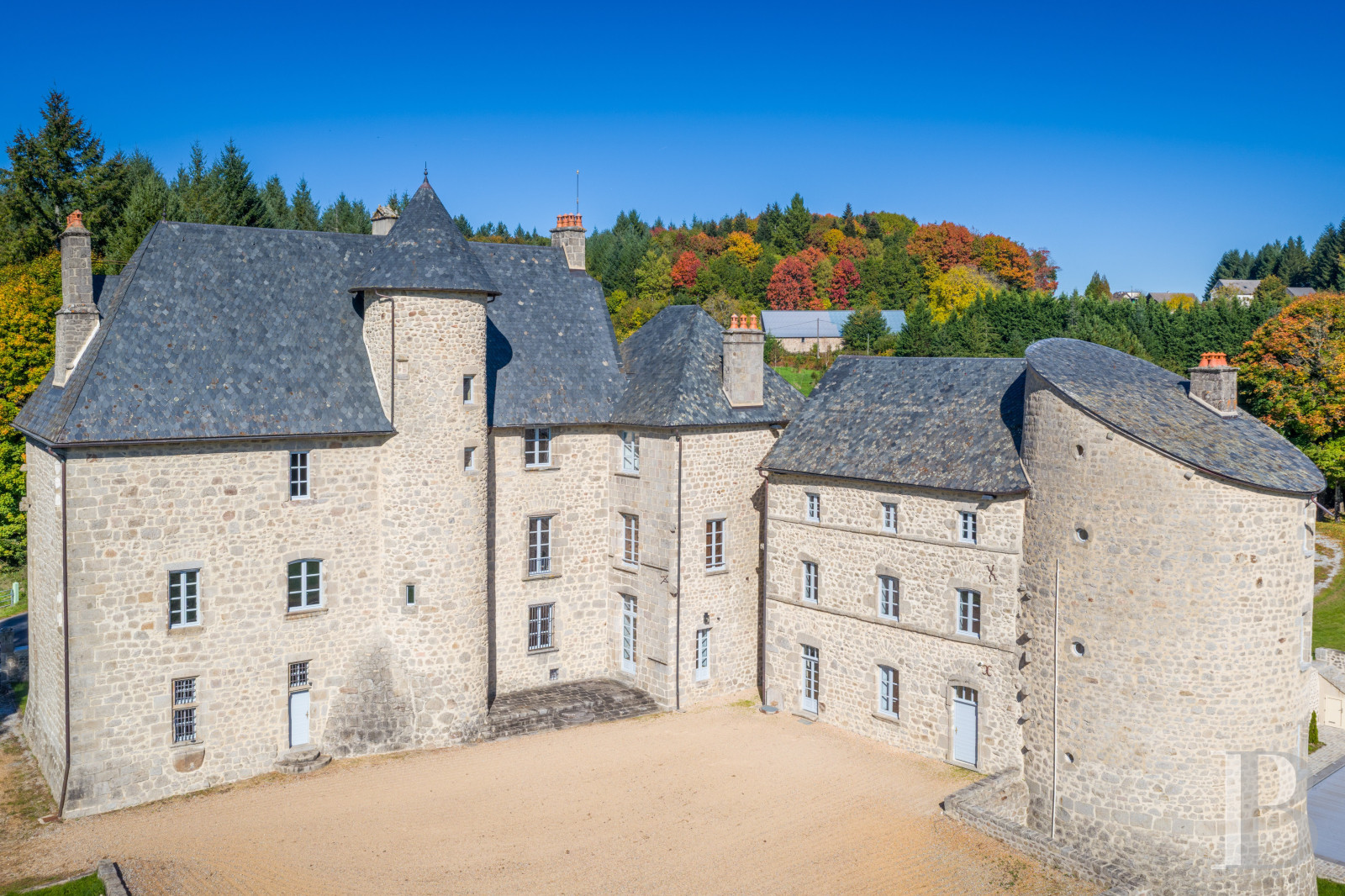
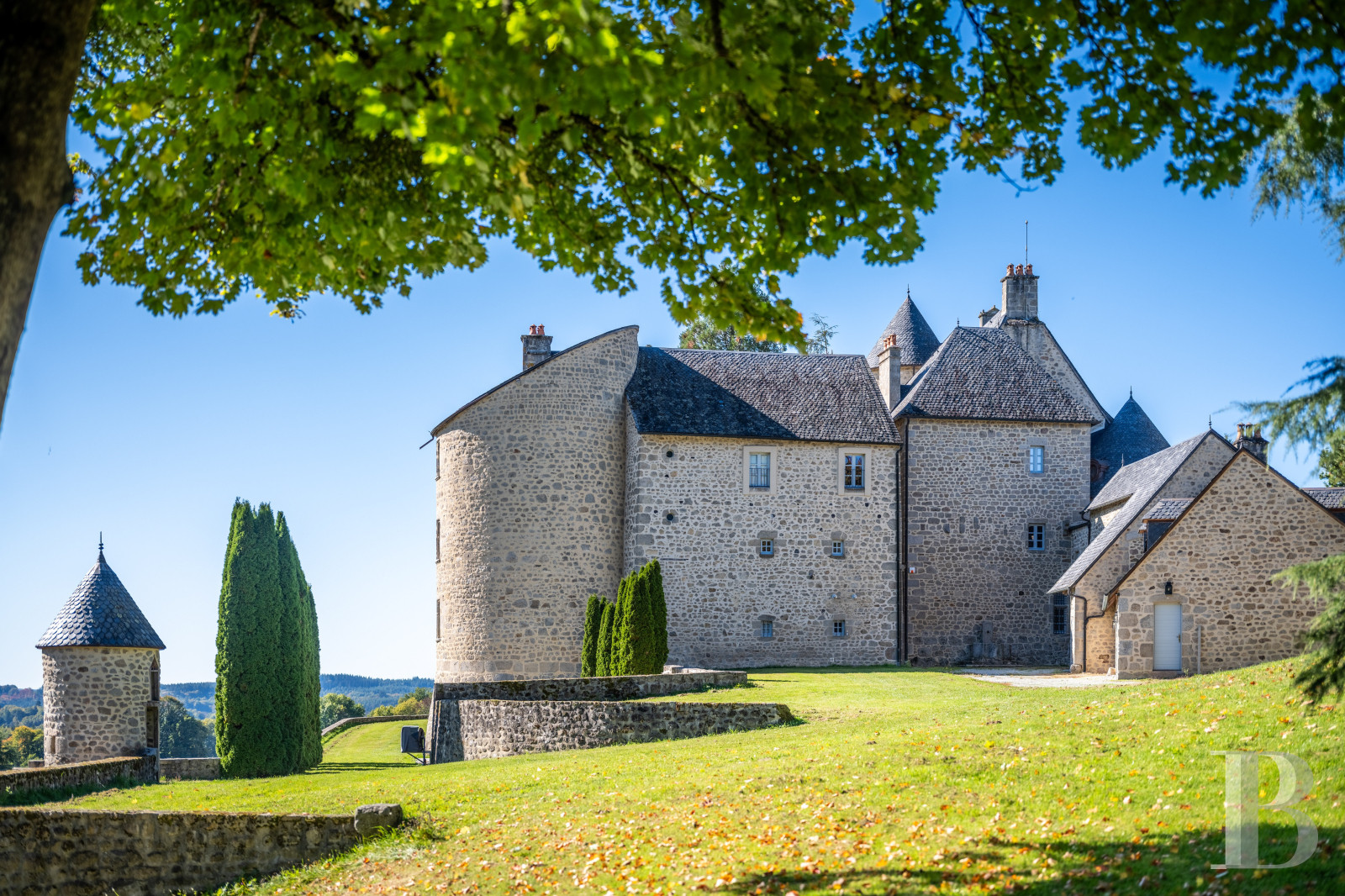
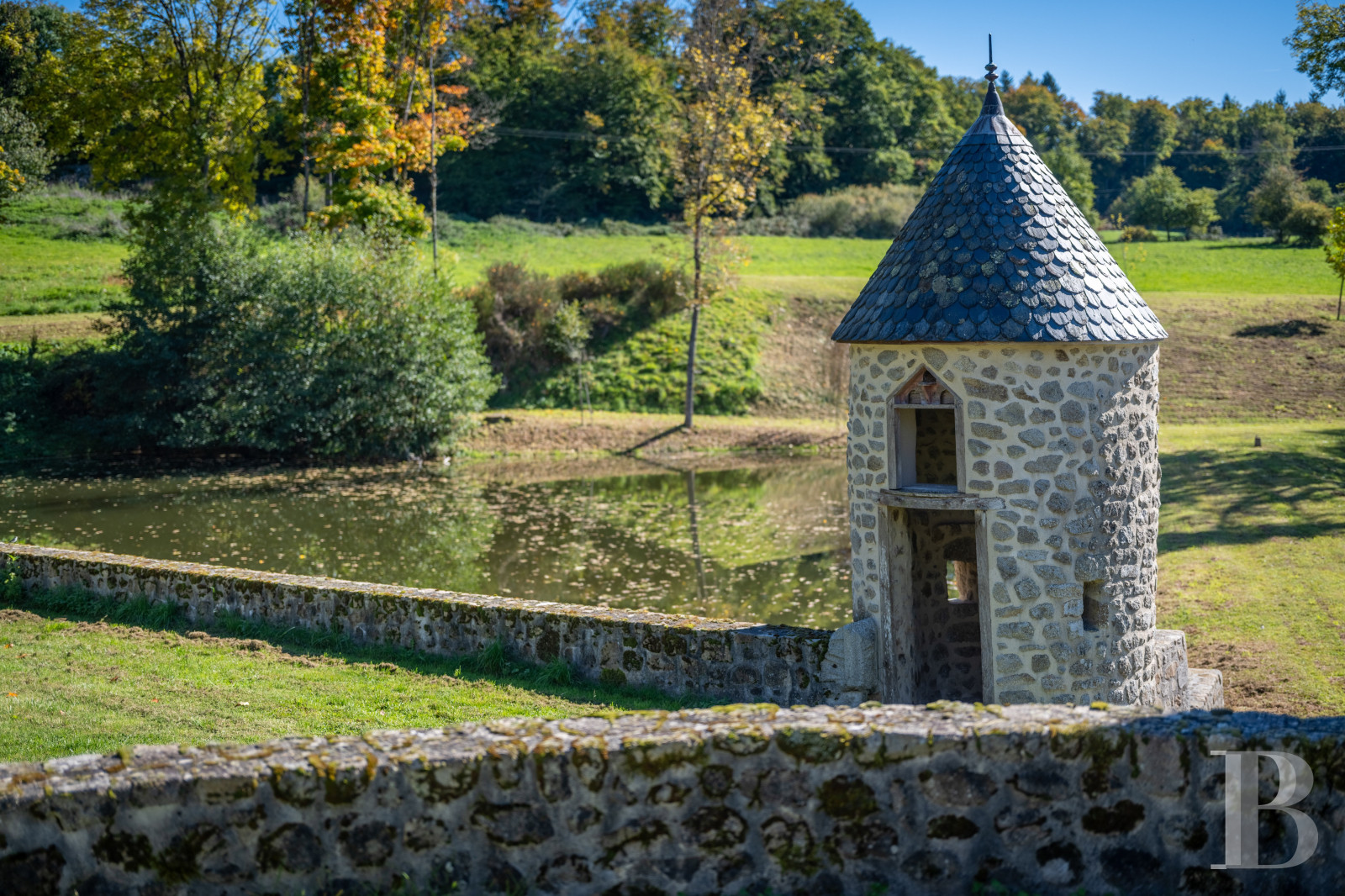
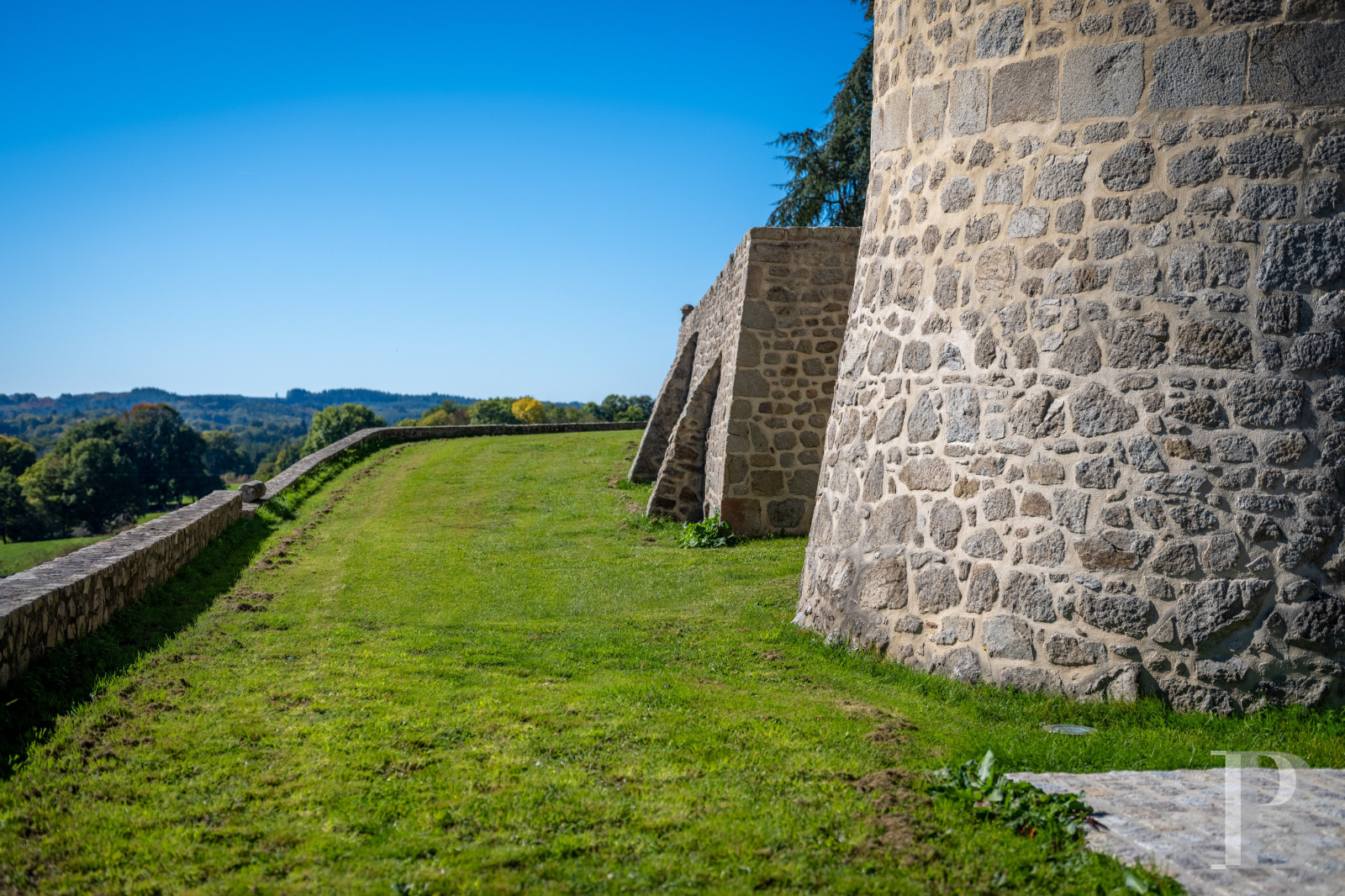
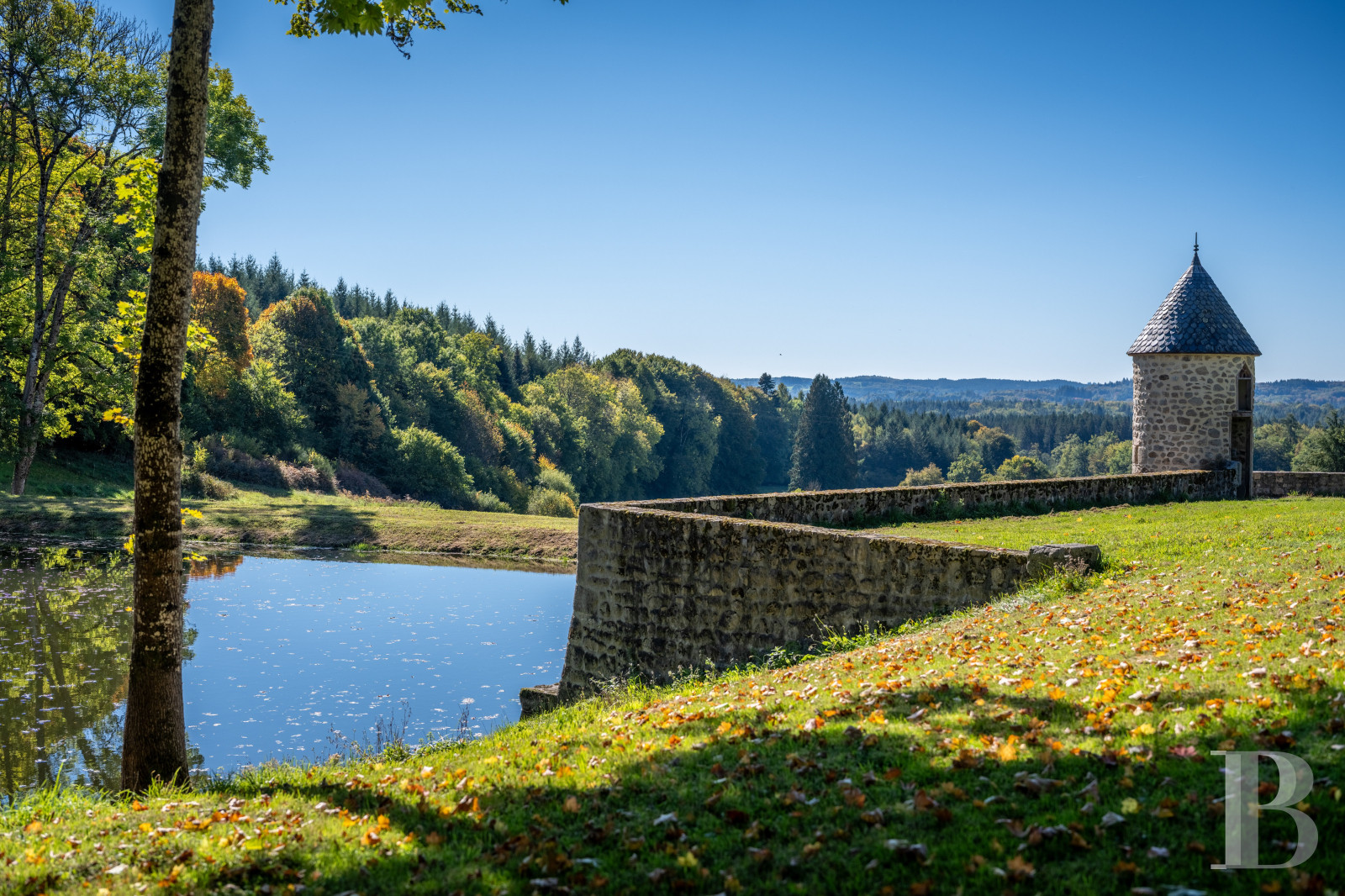
The château, the oldest parts of which date back to the 15th century, was built on the probable site of a 9th century feudal motte. Its layout essentially follows the line of the medieval enclosure, attested to as early as the 13th century, which still structures the layout of the site today. The north façade faces the village church and the estate's neo-Gothic chapel, built in 1898. It forms part of the surrounding wall, which extends to the east and west and which defines the immediate access to the property. Two gates provide access to the estate. To the north-east, the first leads to the gardens, parking spaces, ancillary buildings, a swimming pool and a passageway to a main courtyard. The second gate opens onto a driveway that runs along the west side of the château as far as the main courtyard. The stone façades and Travassac slate roofs have been completely restored. The gravelled main courtyard is bordered by the two wings of the building, also known as the "small" and "large" parts, which are three storeys high and set at right angles to each other. The courtyard is enclosed to the south by a fortified wall overlooking an area of dry moats. The two buildings are separated by a lane linking the courtyard to the rear of the château, its outbuildings, gardens and swimming pool. The smaller section runs north-south around a rectangular building flanked by a tower. The large east-west section comprises a number of buildings and towers, including a spiral staircase tower and a square tower marking the corner of the square. To the south, an inner perimeter wall marks the transition to the grounds of the estate and helps to set the scene for the château, which is set out as a belvedere. It is punctuated by stone staircases and, near the swimming pool, a circular watchtower with a pepperpot roof.
The château
A blend of ashlar and rubble stone, with regular bonding and neat joints, enhanced by night-time lighting. The two main buildings, separated by a lane topped by an ornate bell, are arranged around the terrace. The façades, punctuated by regular-shaped windows, bear witness to the gradual evolution of the buildings. Travassac slate roofs feature rounded or clean-edged valley gutters, connecting the buildings at roof level. The windows are protected by double glazing and internal shutters.
The "small" part of the château
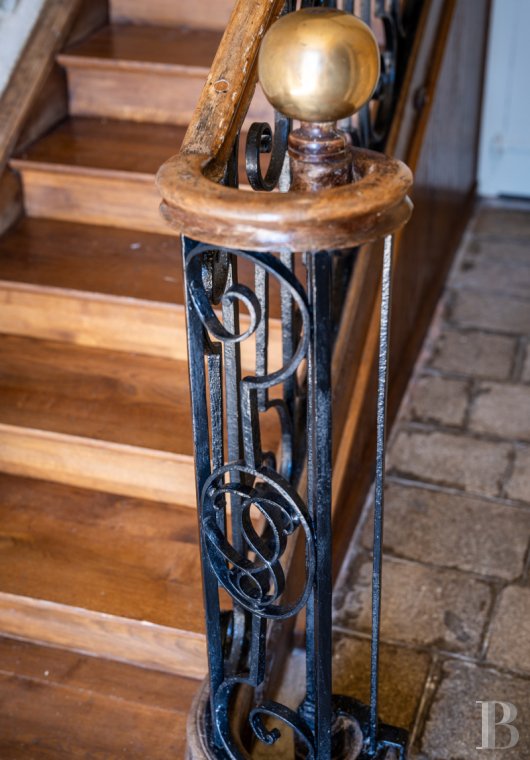
To the east of the main courtyard, the main building spans 248 m² of living space (approx. 390 m² of floor space), is three stories high and has oil-fired central heating. It comprises a rectangular building with a gable roof to the north and a residential tower with a hipped roof to the south. From the entrance hall, a straight, unostentatious staircase leads up to the different levels. The restored solid wood steps and risers, set against the exposed stone walls, are protected by a weathered wooden handrail and a wrought iron balustrade. The start of the ramp is marked by a turned wooden post with a metal knob. The landings have parquet flooring, with the exception of the ground floor, which has stone paving.
The ground floor
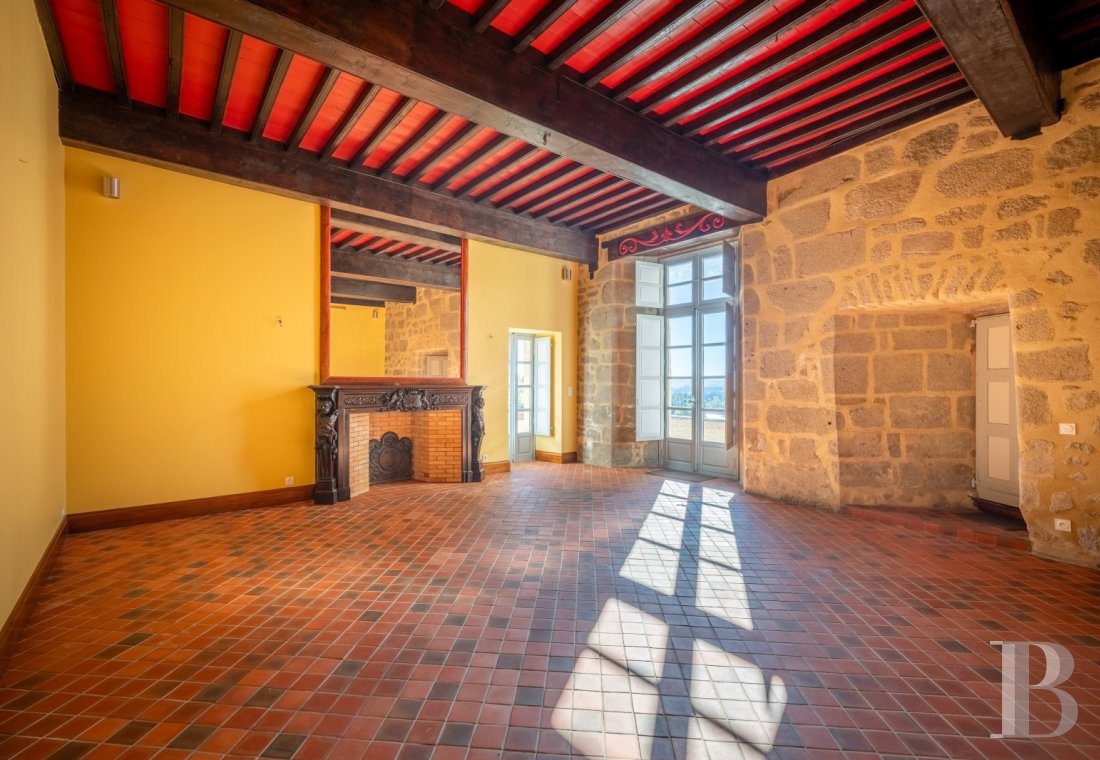
Rather than using the main entrance door, day-to-day access is to the north-west through a small-paned casement door, topped by a three-panel glazed fanlight, which leads directly into the kitchen. Along the north stone wall there is a large built-in cupboard and a lean-to island with a wide marble top and large drawers. A marble worktop with a sink, housing for electrical appliances and solid oak cupboards and drawers runs the full length of the south wall. To the east, a door leads to a boiler room with a working boiler. The south door of the kitchen opens onto a dining room with the same flamboyant tiles, decorative fireplace and windows overlooking the courtyard of honour. A lounge accessed from a hallway occupies the ground floor of the tower. The herringbone parquet flooring, exposed stone walls and stone fireplace are enhanced by a window that floods them with light. There is a toilet with a washbasins and storage areas next to it.
The first floor
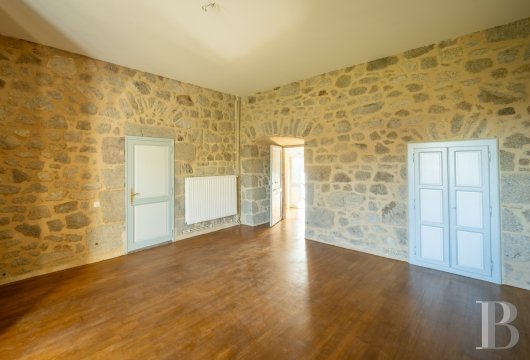
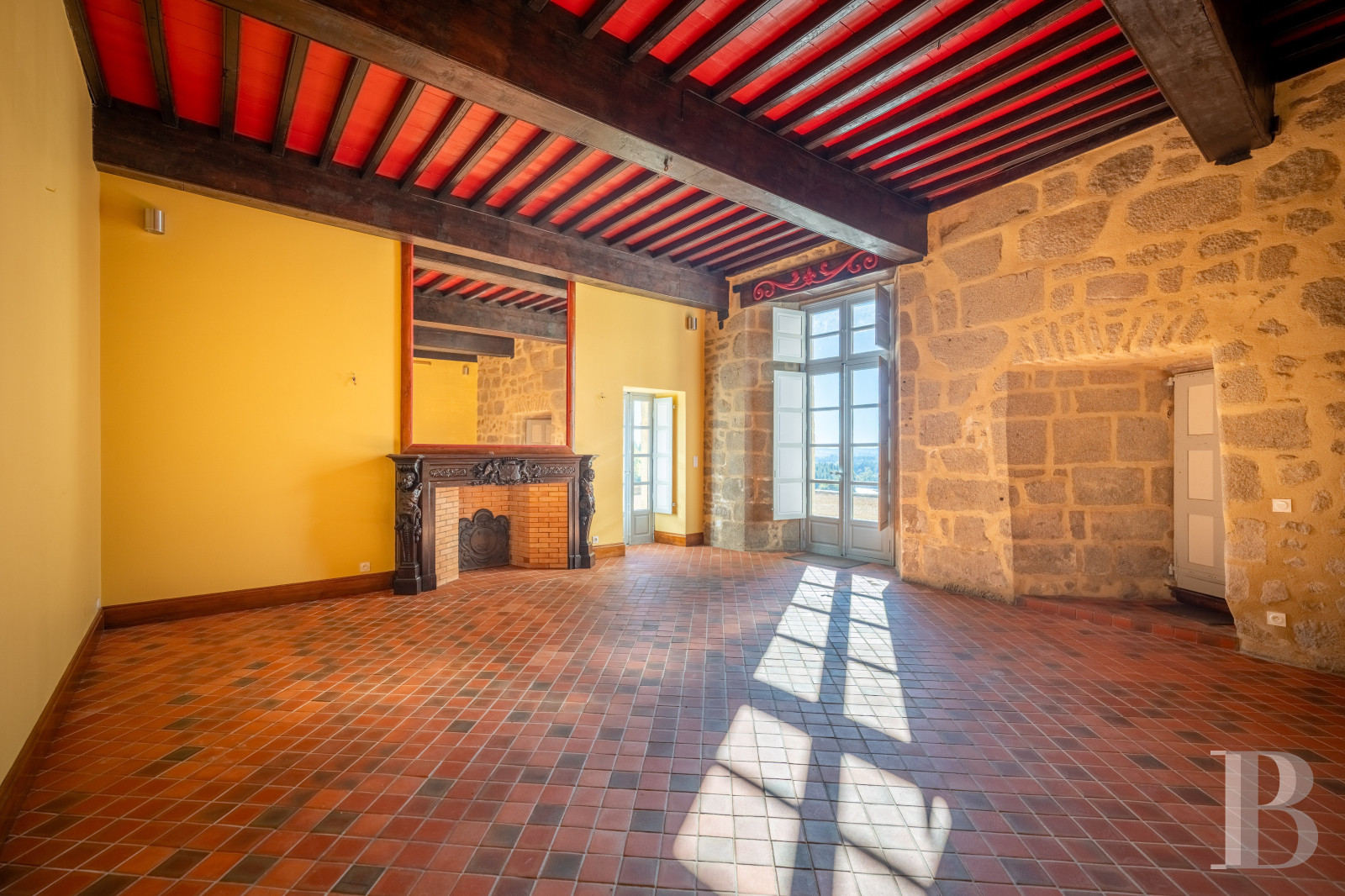
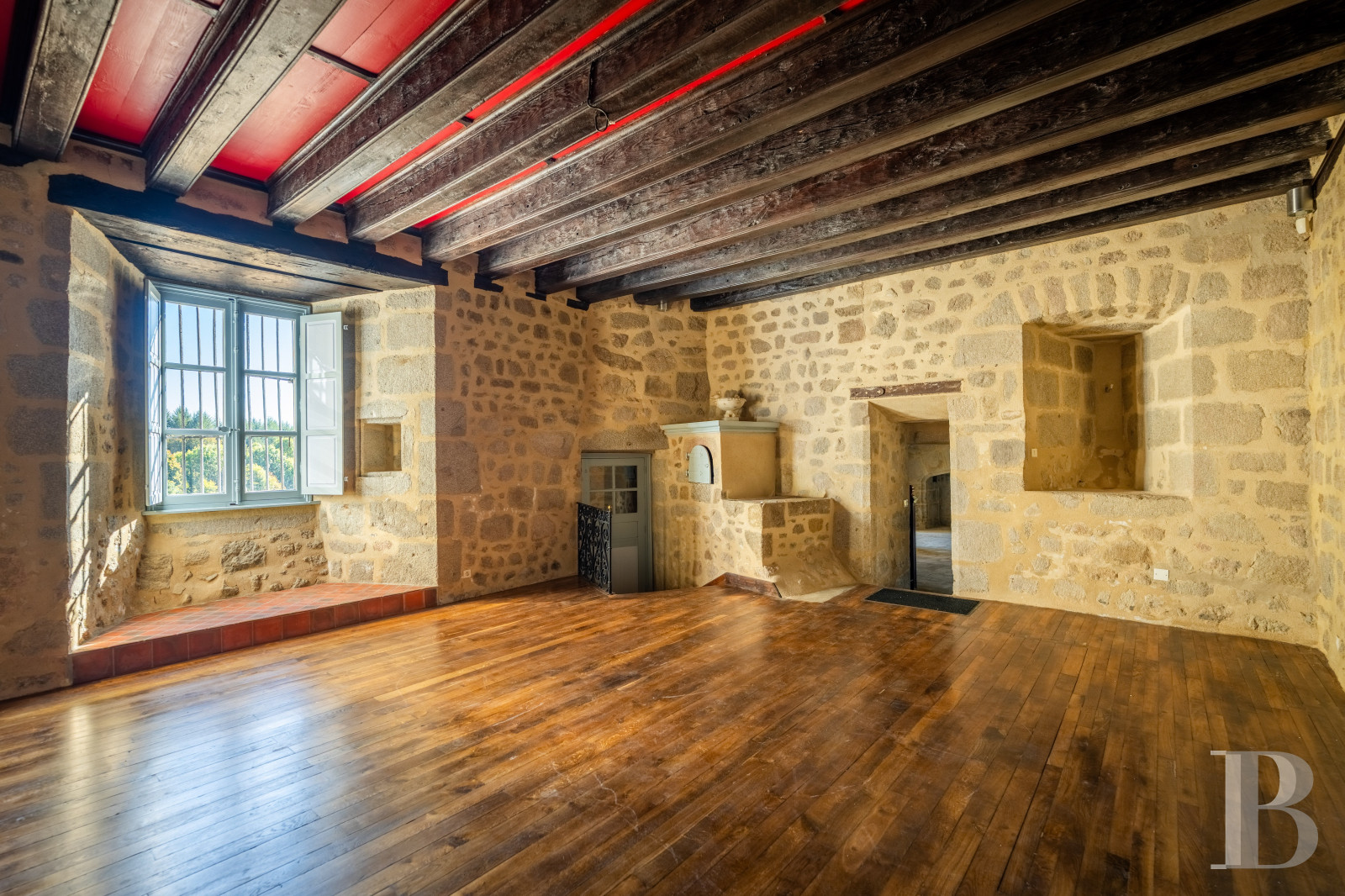
To the south of the landing, a residential tower has a bedroom with laddered parquet flooring and stone walls, with the exception of the east wall, which is insulated and clad in painted plasterboard. A masonry niche in the south-east wall of the tower incorporates what may have been a stirrup arch. To the south, a deeply splayed window highlights the thickness of the masonry and lets in bright light. To the west of the bedroom, a door opens onto a small shower room with a washbasin and toilet. To the north-west of the landing, a door opens into an anteroom with a decorative fireplace and built-in cupboards. This room leads north to the second bedroom on the first floor, which occupies the entire width of the building on an east-west axis. To the south-east of the bedroom there is a shower room with a toilet.
The second floor
It has four bedrooms and three shower rooms with showers, washbasins and toilets. There is ladder-type parquet flooring throughout. One shower room adjoins a bedroom in the residential tower, with the same proportions as the one on the lower level, and the other adjoins the bedroom to the north-east, accessible from the hallway to the north of the landing. The other two bedrooms on the north-west side of the landing share a shower room with a shower, washbasin and toilet, also accessible from the east. The bedroom walls are covered with painted plasterboard. The north-west bedroom features a decorative fireplace.
The attic
This is accessed by a retractable staircase integrated into an inspection hatch located in the ceiling of the second floor landing, which is opened and closed manually using a pole. On a natural OSB floor, they are divided into two volumes corresponding to the rectangular body to the north and the residential tower to the south. The condition and quality of the framework, and the care taken in restoring each building to its original state, are clearly visible: the quality of the materials, the beams, the motor unit and ventilation ducts, the electrical equipment with lighting and sockets, all suggest a wide range of possible uses.
The "large" part of the château
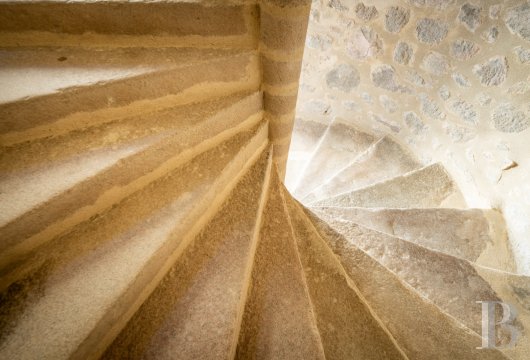
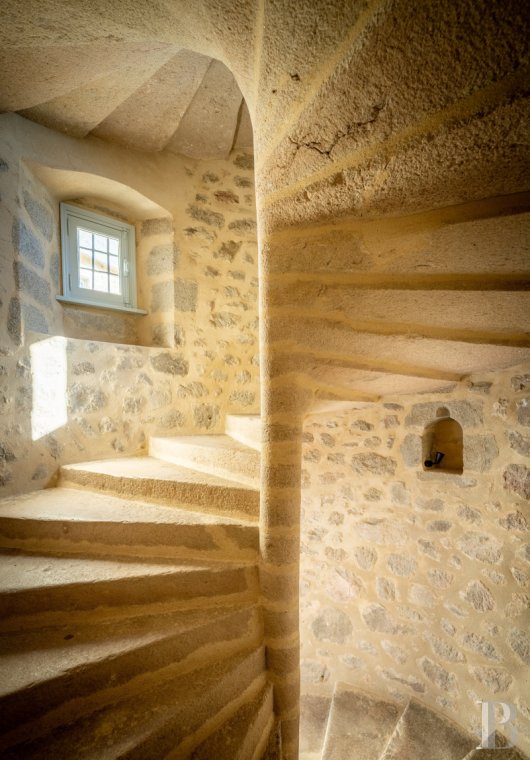
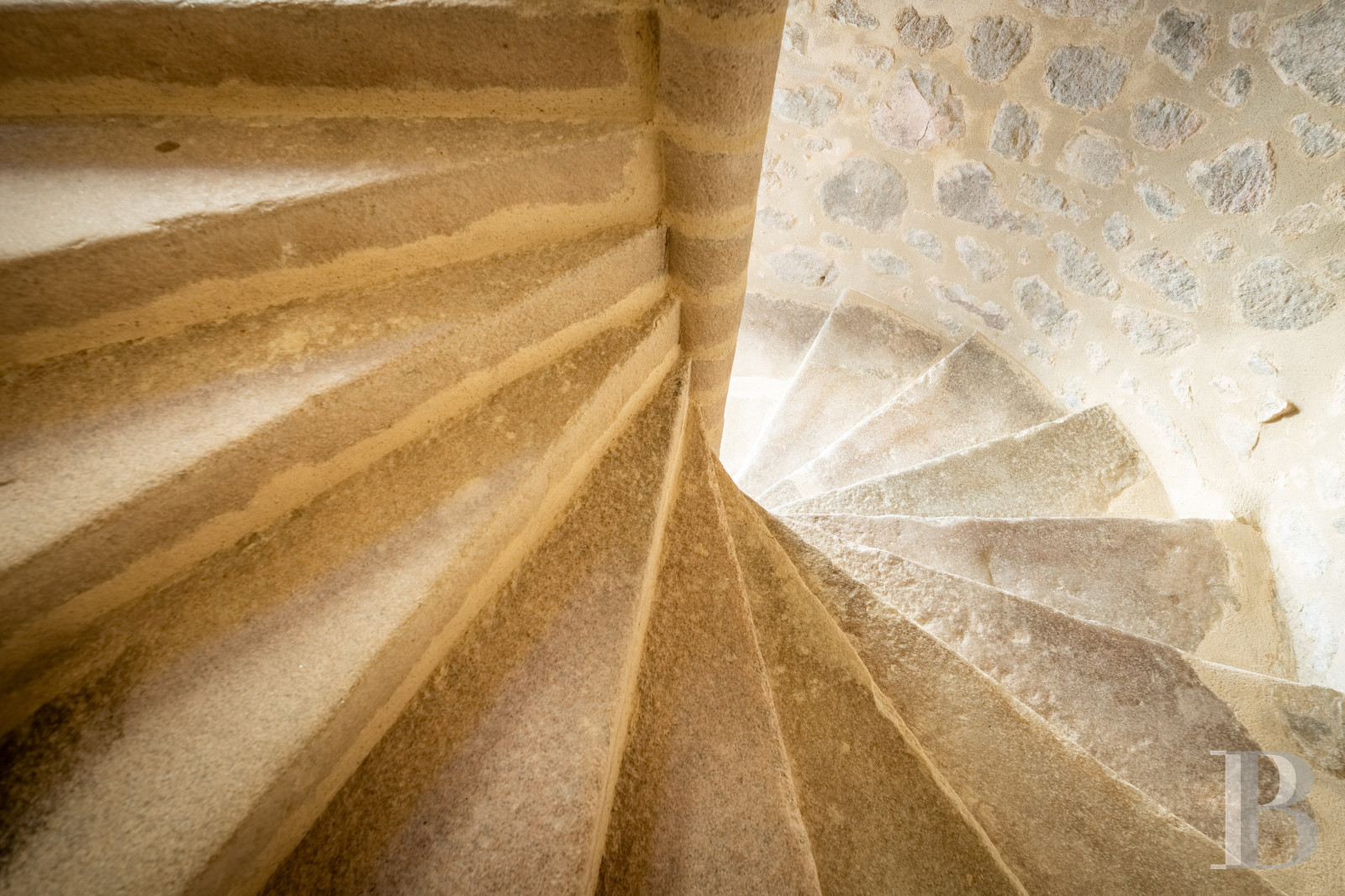
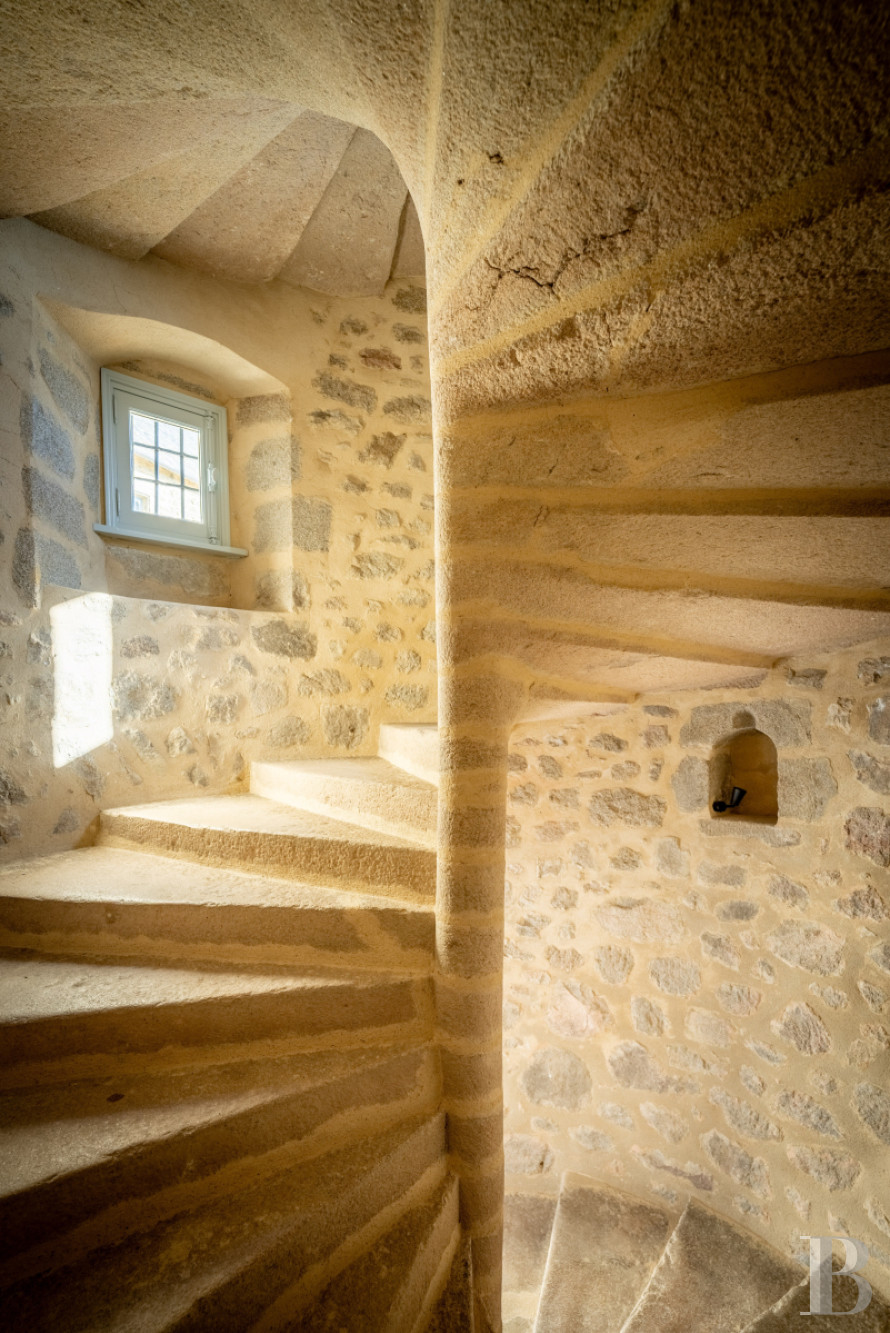
To the north of the main courtyard, it provides 671 m² of living space (more than 1,100 m² on the ground) and is three storeys high. It comprises four interconnected buildings. To the west, the rectangular main building features a round tower on its south façade, housing a stone spiral staircase that provides vertical access to all levels, including the cellar. To the east, a square tower forms the corner of the two main buildings. To the north, a two-storey round tower on the ground floor unites the west and east parts of the complex, with a pantry that also serves as a link between a dining room to the west, a kitchen and a former kitchen converted into an additional dining room to the east.
The ground floor
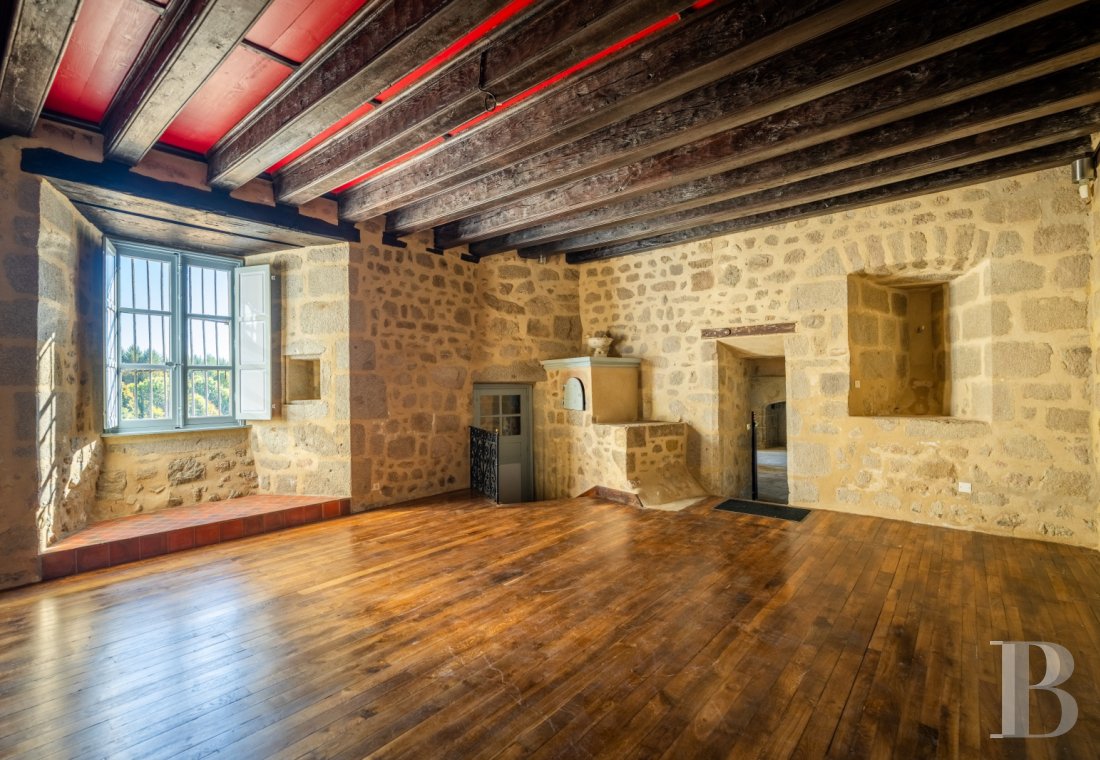
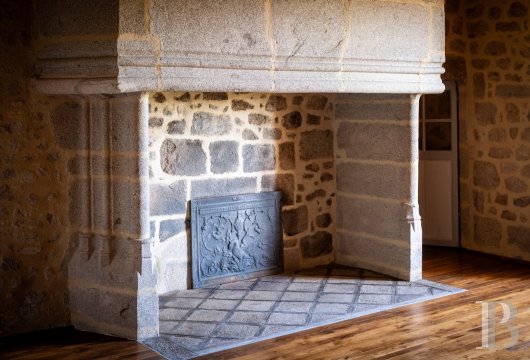
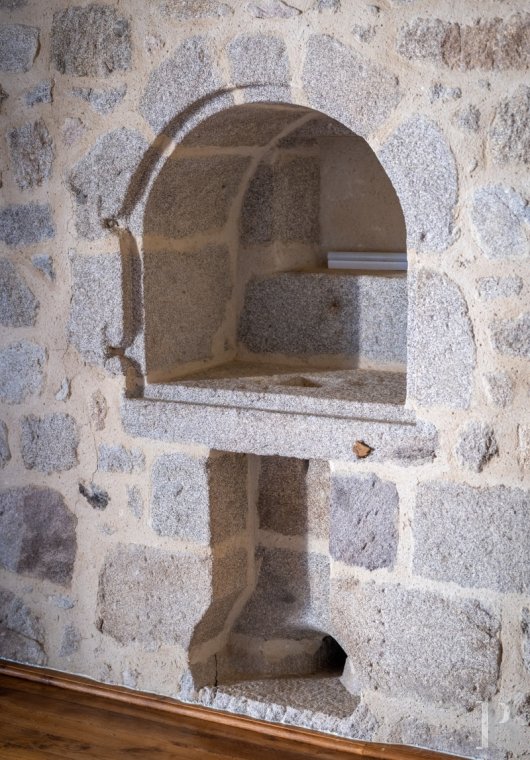
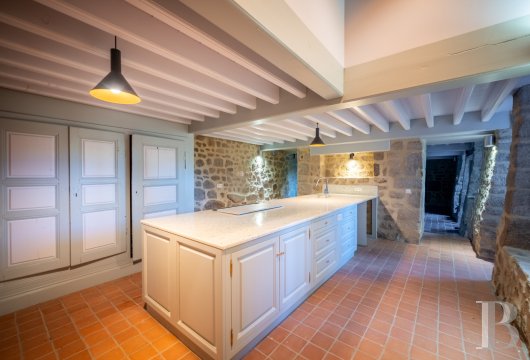
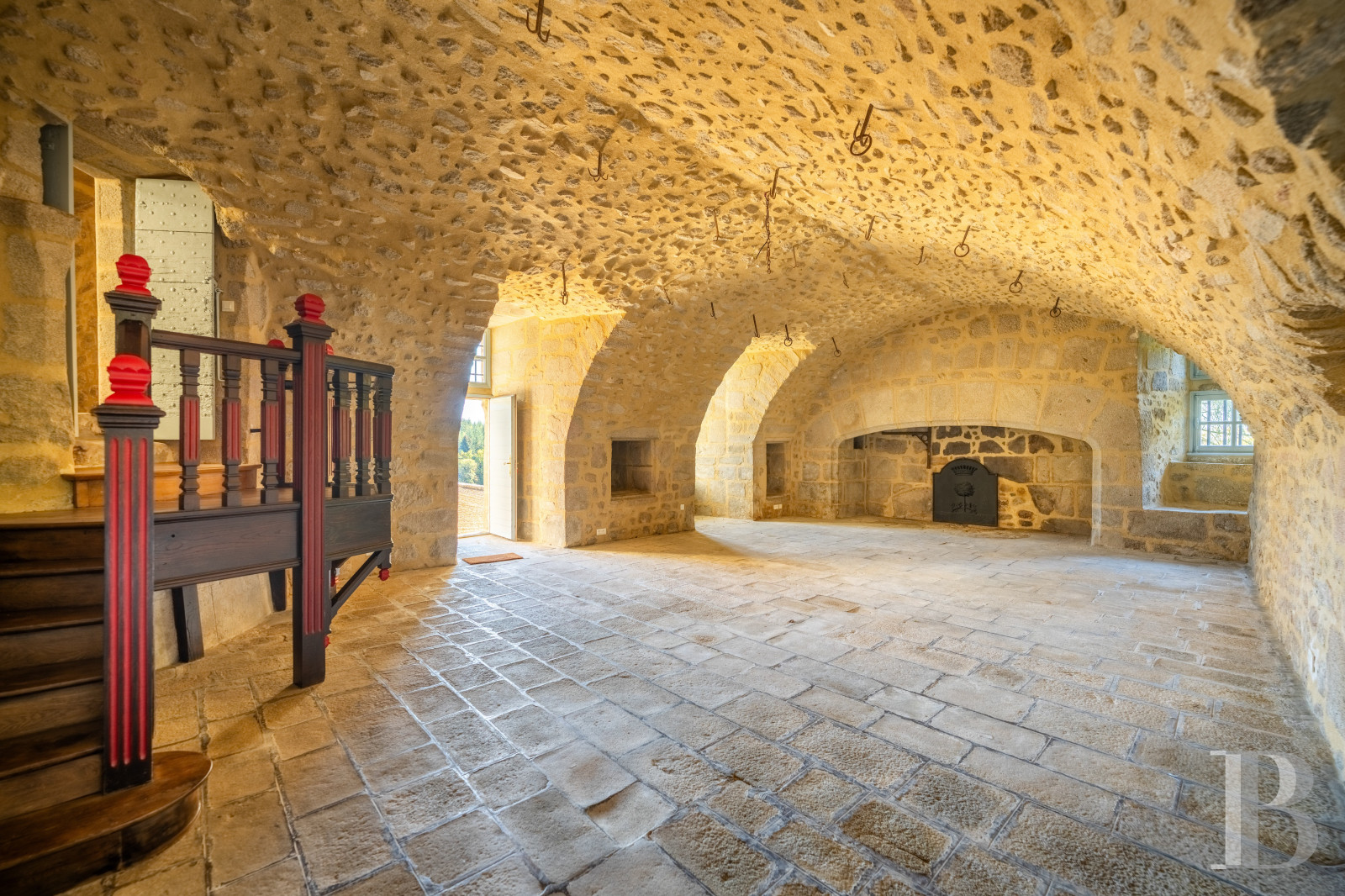
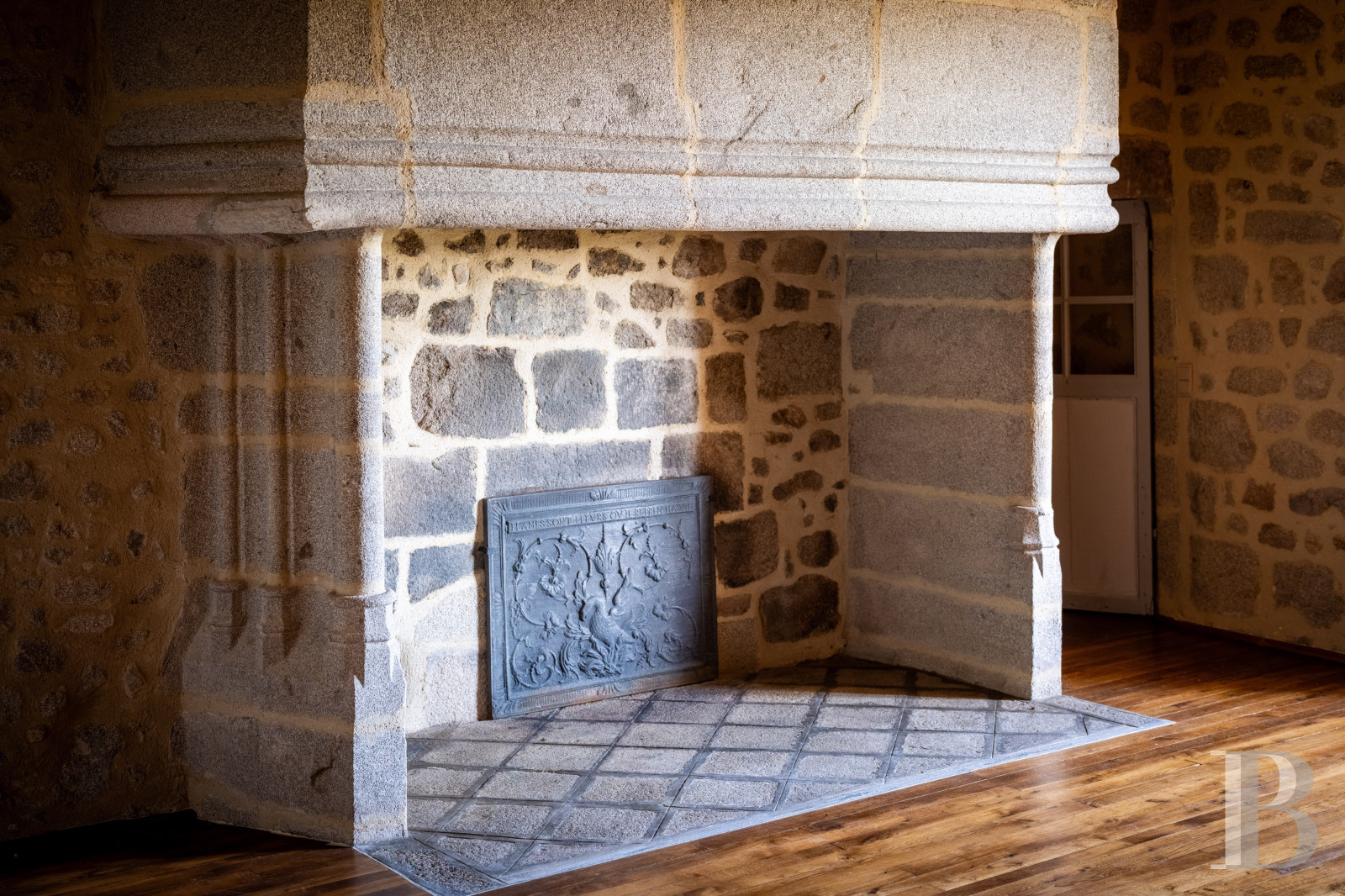
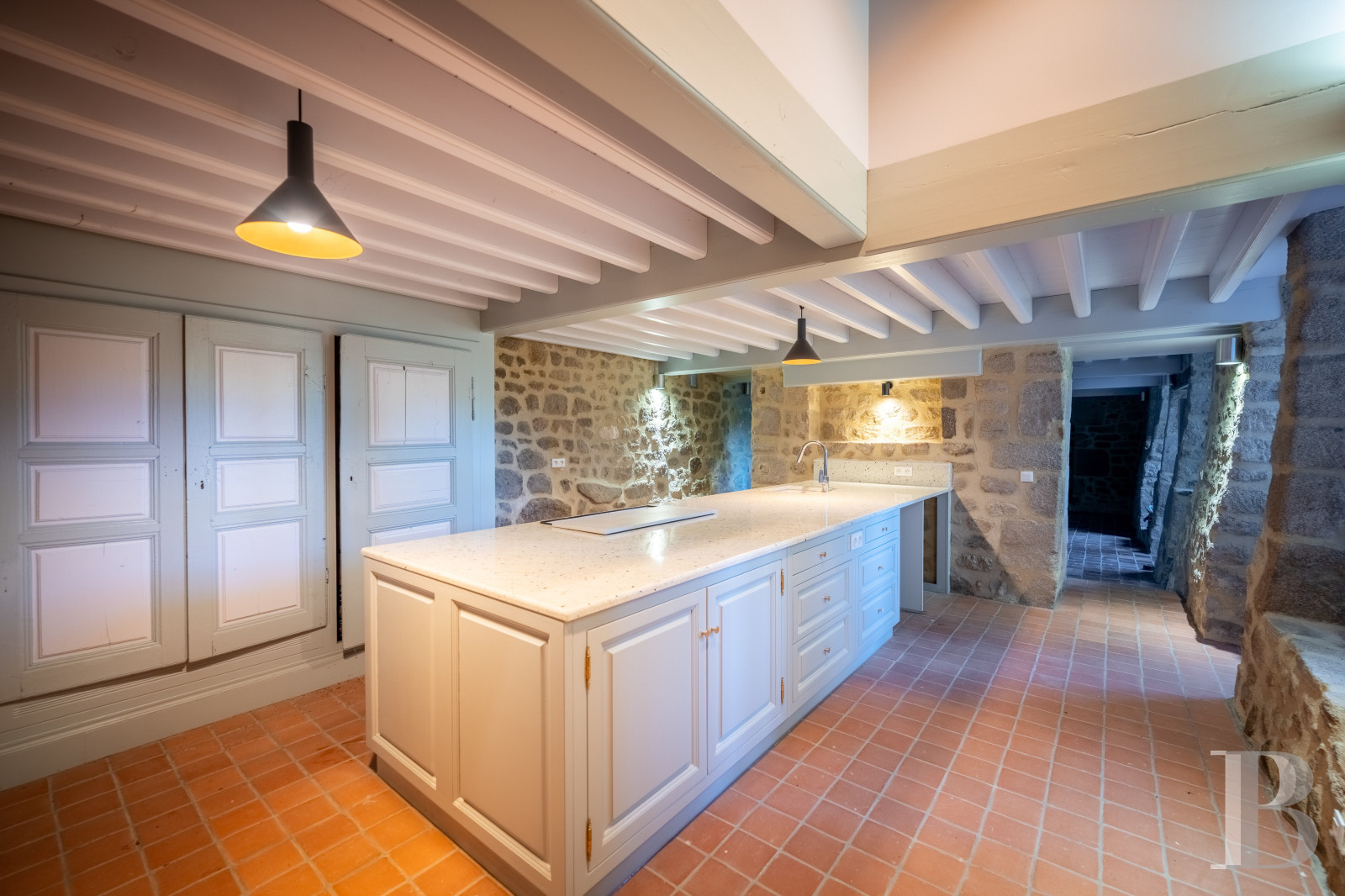
There are five separate entrances, offering a wide range of possible uses. To the east, the new kitchen is organised around a long central island that doubles as a work surface and preparation table, complemented by deep drawers, a display unit and large cupboards for the electrical panels. Nearby, the vaulted pantry is equipped with numerous power sockets. Floors, walls and ceilings vary according to the use of the rooms: sandstone, waxed parquet or stone tiles, pointed exposed stone walls with niches and old cupboards, restored exposed beams. The rooms are decorated with large fireplaces. An old fish tank has been preserved in a guard room.
The first floor
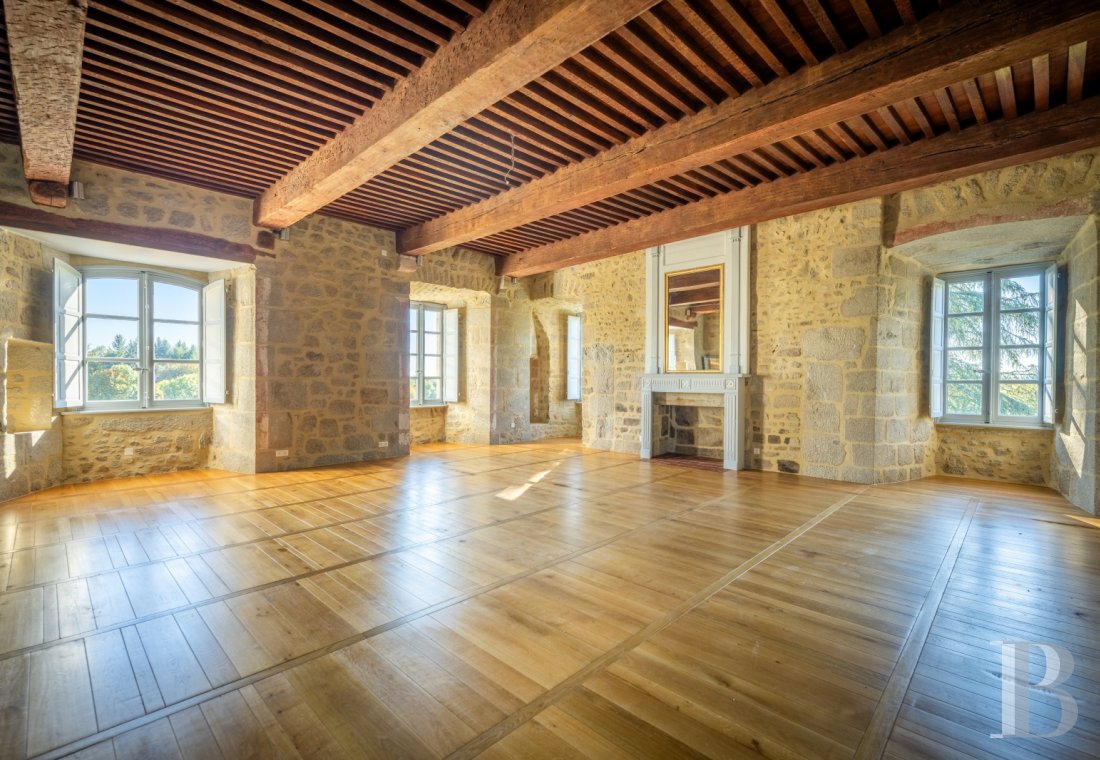
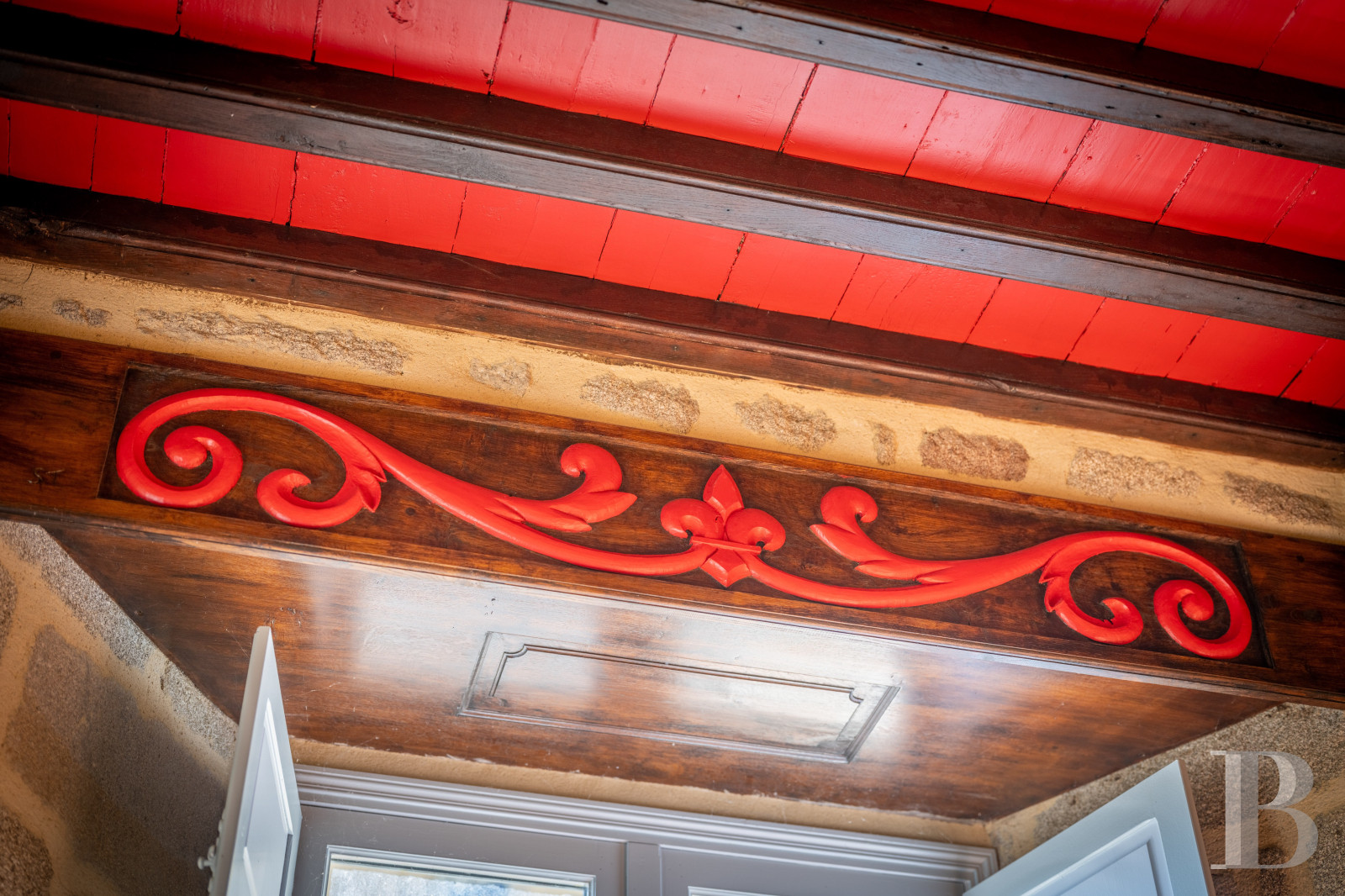
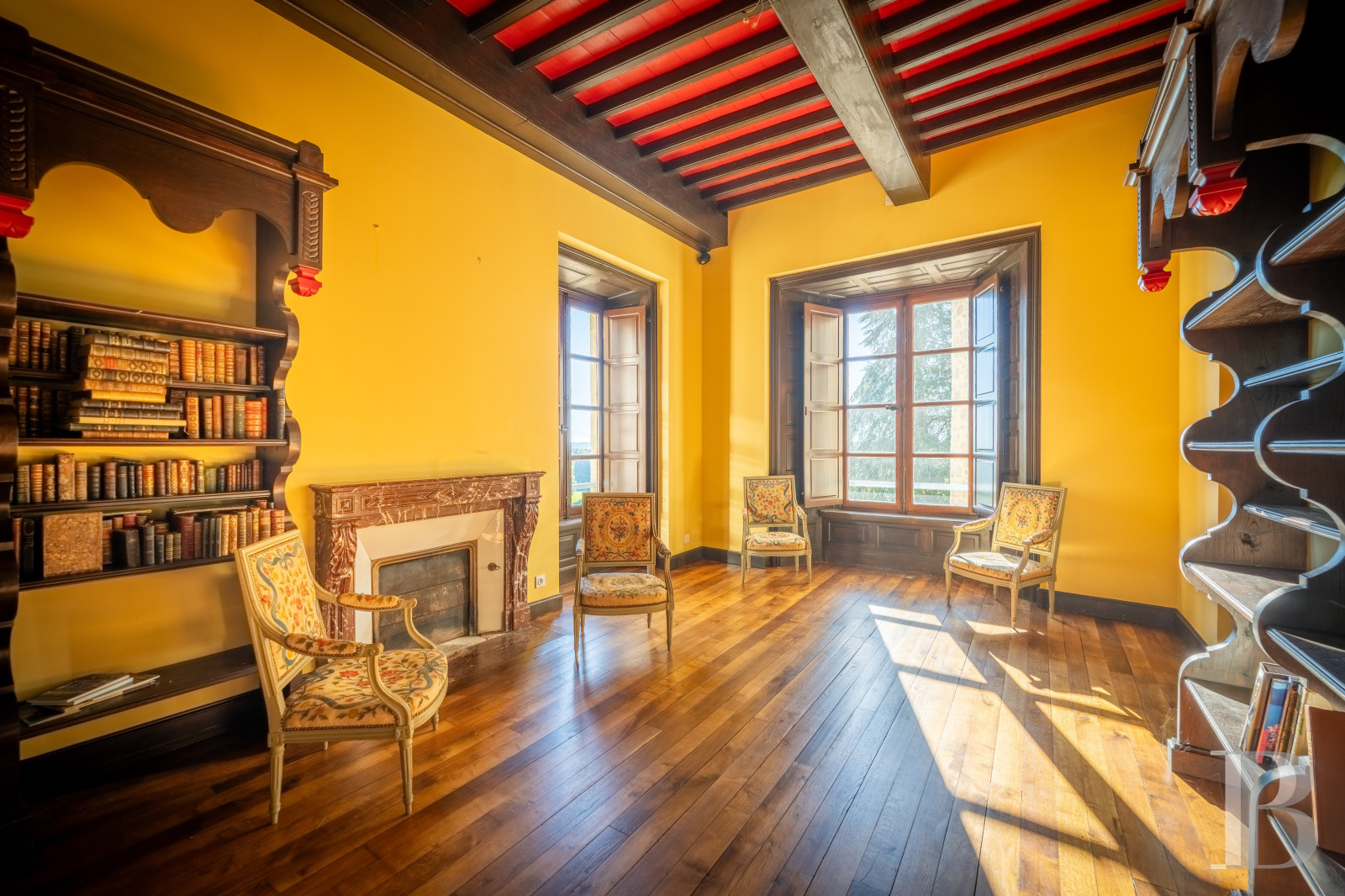
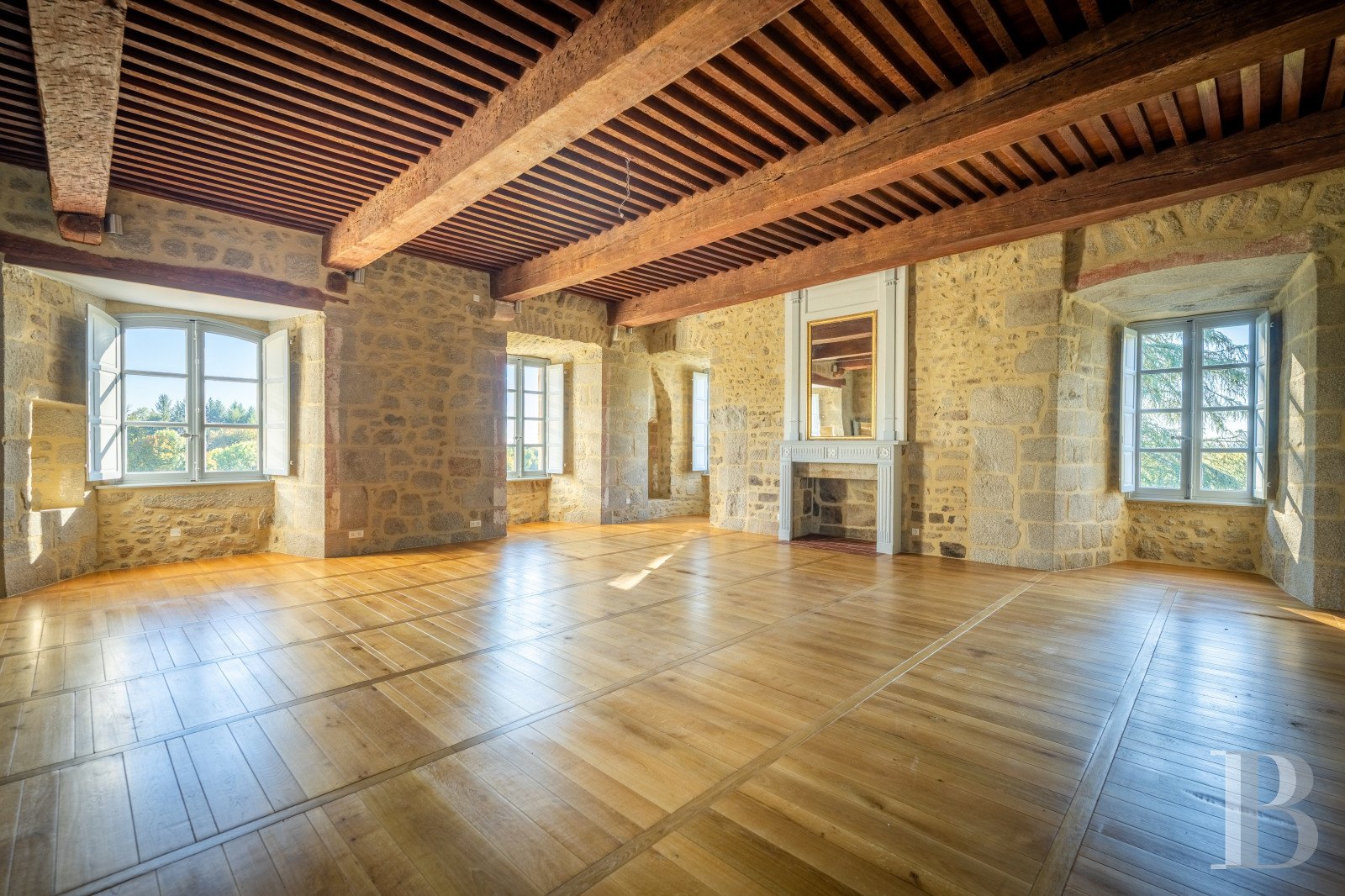
From the guard room, the dining room or the ogival door on the outside of the tower, the spiral staircase leads west to a bedroom of seigneurial proportions. Beneath a French-style ceiling supported by wide cross-beams and solid laddered parquet flooring, the stone walls are finely pointed. Light floods in through five double glazed windows opening to the south, west and north. The bedroom has a cupboard, wardrobe and shower room with a shower, washbasin and toilet. A decorative fireplace, clad in pastel grey wood panelling chiselled in white and topped with a flat-columned overmantel, reinforces its unique character. Further up, a double glass door opens onto a billiard room with a fireplace. Here, a south-east corridor leads to an archive room and a library, with solid parquet flooring, a marble fireplace and picture windows. To the north-east, a bedroom in the north tower, with a flat, beamed ceiling, also features a fireplace and storage space. To the north-west, a door opens onto the top level of the small spiral staircase at the back, which leads to a shower room awaiting conversion.
The second floor
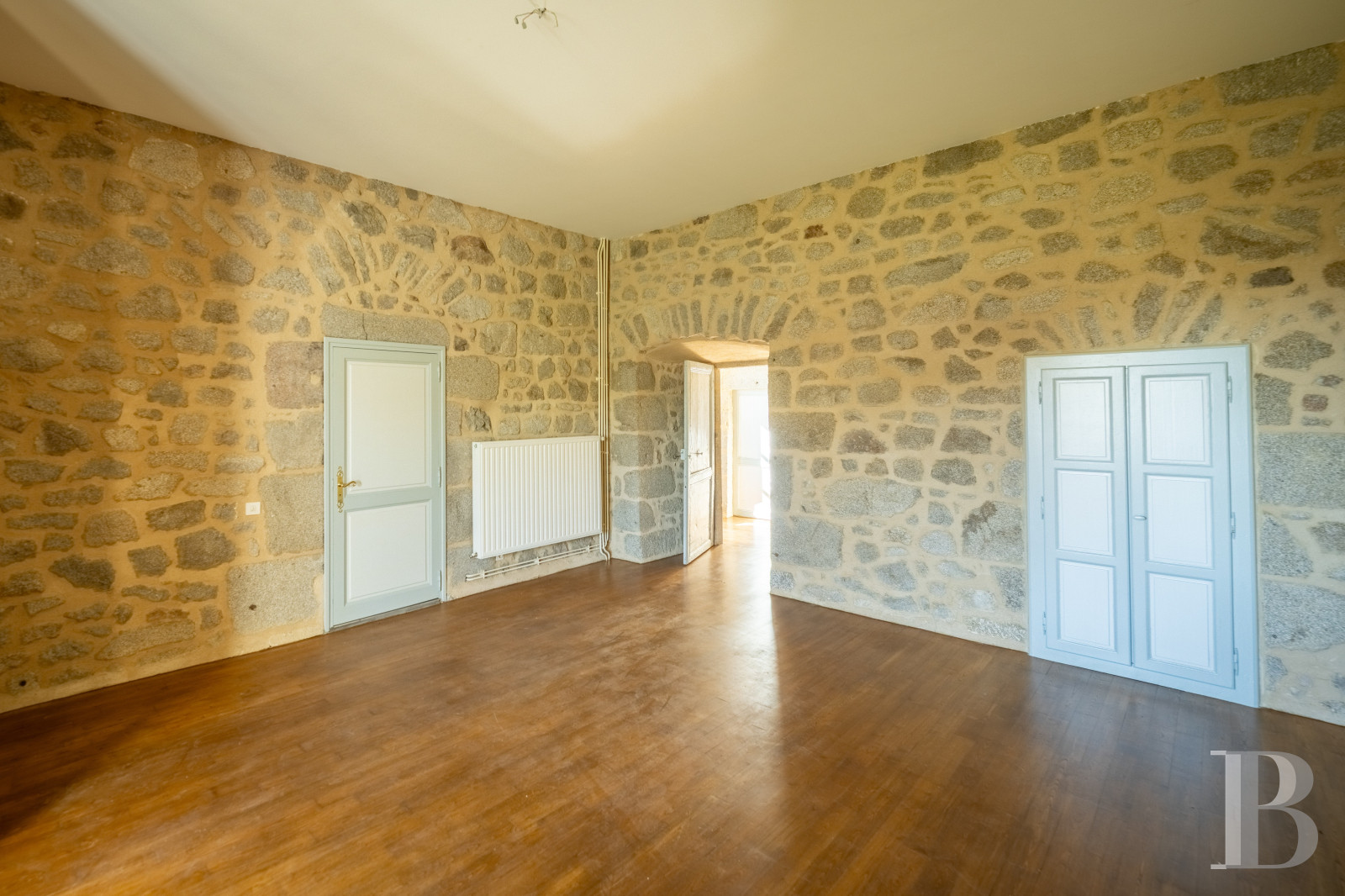
This is organised in the same way as the first floor, with a second bedroom to the west that is of the same proportions and has a similar layout to its twin. Nearby, a lounge could become a play, music or games room. To the north-east, a door opens onto the top floor of the north tower, which was intended to become a projection room, with a dormer window with a copper bull's eye. To the south-east of the living room, a door leads to a hallway leading to a shower room with a washbasin and a toilet. To the east, another door opens onto a room that could become a bedroom or study. To the south, a final bedroom can be accessed via two doors: one from the hallway, the other from the study. Both the study and the bedroom are painted in the same pastel grey and white. A decorative fireplace is set against its south wall and a double-leaf window looks out over the south-west of the property.
The attic
The spiral staircase at the start of the second floor leads to a first door that serves as an airlock before providing access to the two attics situated to the west and east above the large rectangular section of the château. On the other hand, the attic space above the square tower at the corner of the two main buildings is accessible from the trapdoor in the ceiling of the study on the second floor. These attics have been restored and finished to the same high standard as those in the smaller part of the château, with engine blocks, ventilation ducts, beams and electrical equipment. These are just some of the facilities that can be used for a variety of purposes.
The basement
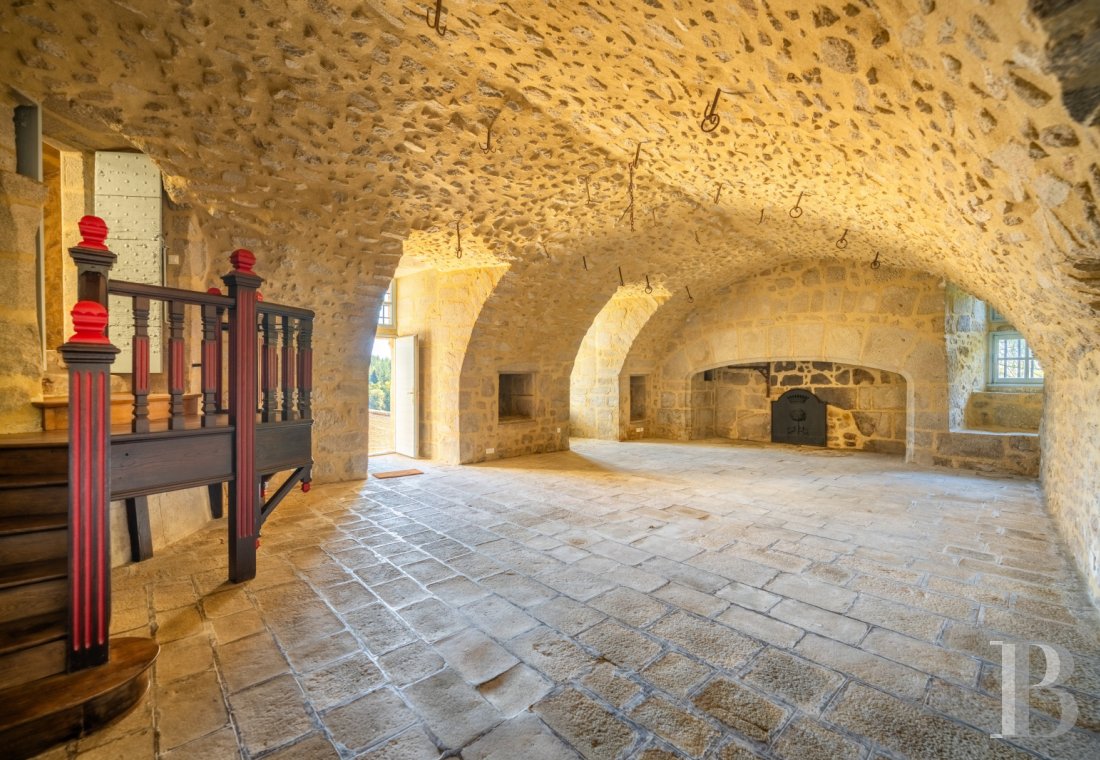
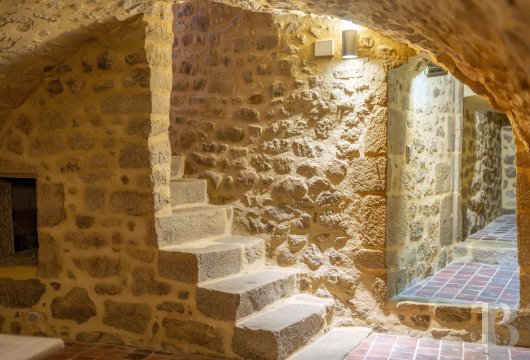
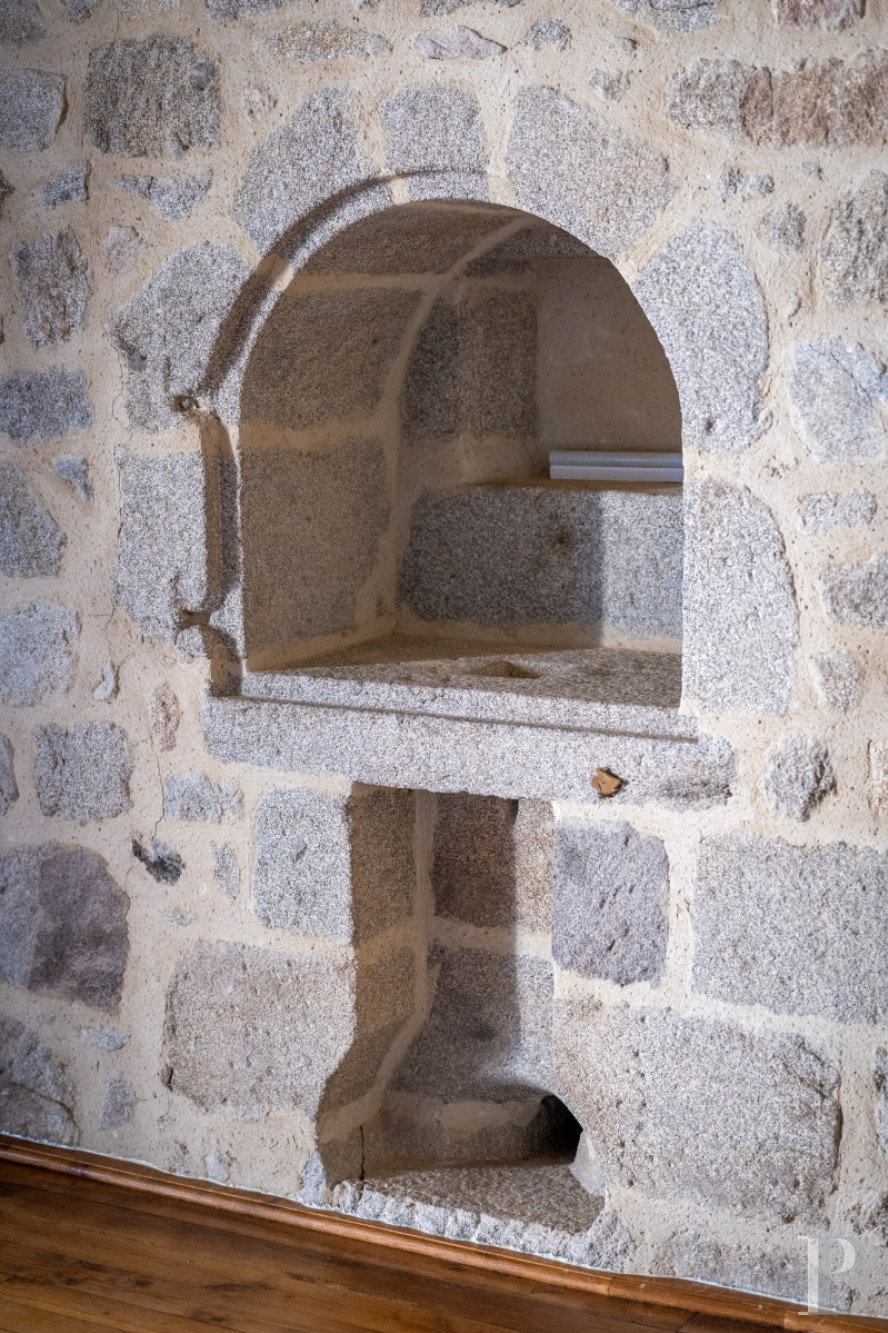
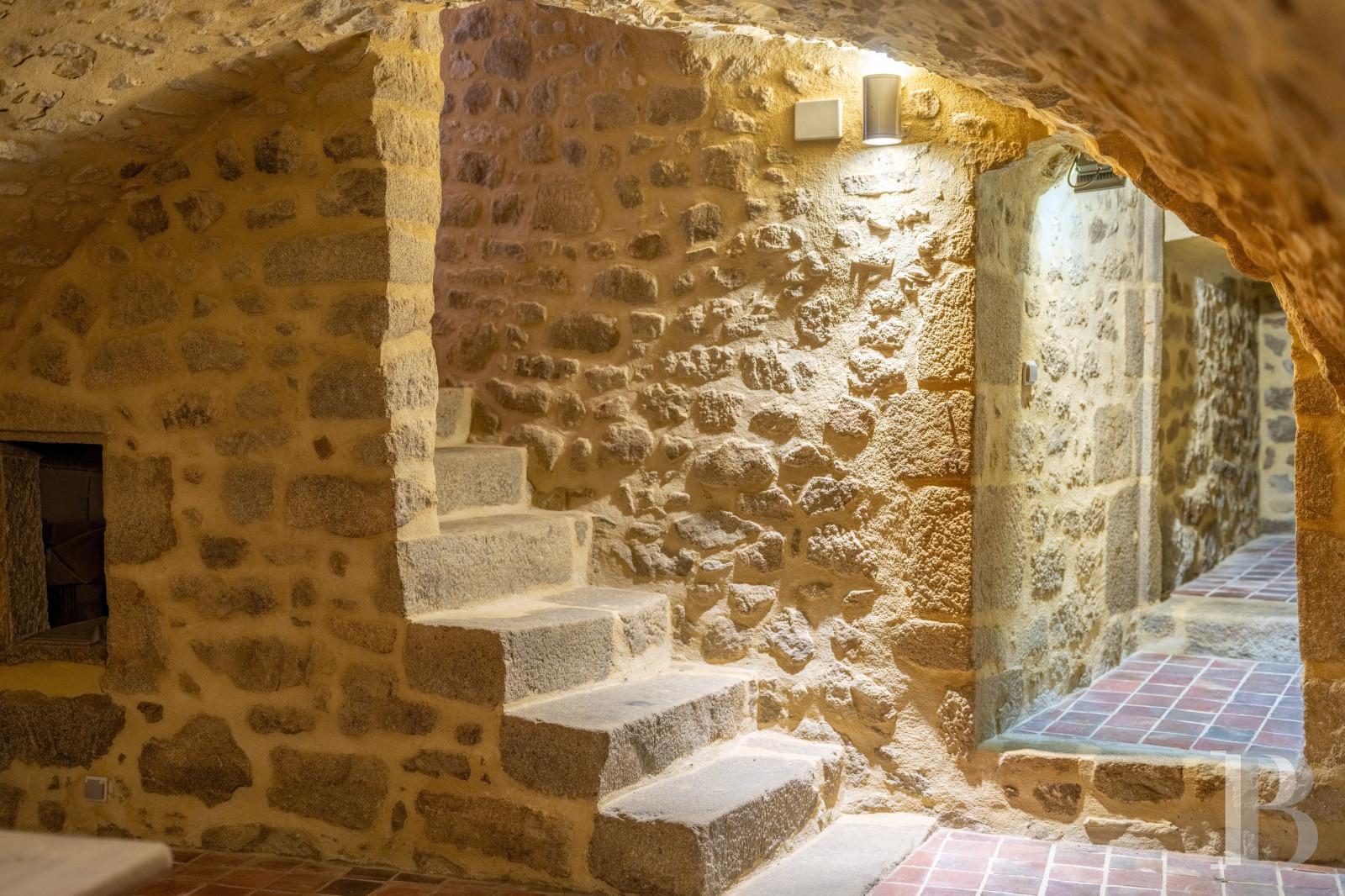
Accessed via a wide wooden door at the bottom of the spiral stairway, inside the tower in the centre of the south-facing façade, the cellar spans a surface area of approx. 37 m². The floor is paved with sandstone. The side walls and vaulted ceiling are made of jointed stone, which have been particularly carefully restored. Ventilation is provided by opening window wells, operated by a crank handle, for effective ventilation and humidity control. To the north-west, a recess at the bottom of the staircase suggests that it was a former storage area. The walls also feature a number of niches and ancient architectural remains. Discreet lighting highlights the volumes.
The flat
Accessed by a south-facing stone staircase running parallel to the building and extended by a porch, the flat is located on the first floor of the former kitchen in the main part of the château. A landing door serves as the entrance and opens onto a large room with a ceiling height of around 2 metres. To the west there is a shower room with a shower, washbasin and toilet. It leads to a storage area that also contains two of the three hot water tanks in the main section. A winding staircase hidden behind a door to the east leads to an attic.
The wood store
This room on the garden level is used to store the firewood for all of the chateau's fireplaces. It has a fixed window, interior lighting and a power socket. Covering an area of around 3.85 m², it is located to the north-east of the buildings, on one side of the garage.
The garage
Located just off the north-east entrance to the property, this two-storey building has a surface area of 68 m² on each floor. On the main façade, a large four-leaf wooden door opens manually to let vehicles through or, where appropriate, garden maintenance equipment. On the east side of the building, a second, small wooden door provides easy pedestrian access. On the first floor, the slate roof over the garage attic has two dormer windows to the south and three to the north, designed to let in natural light once the joinery has been installed.
The swimming pool
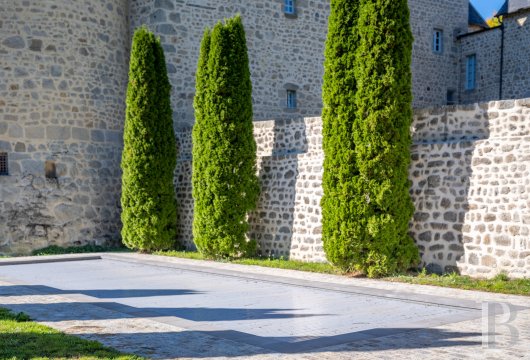
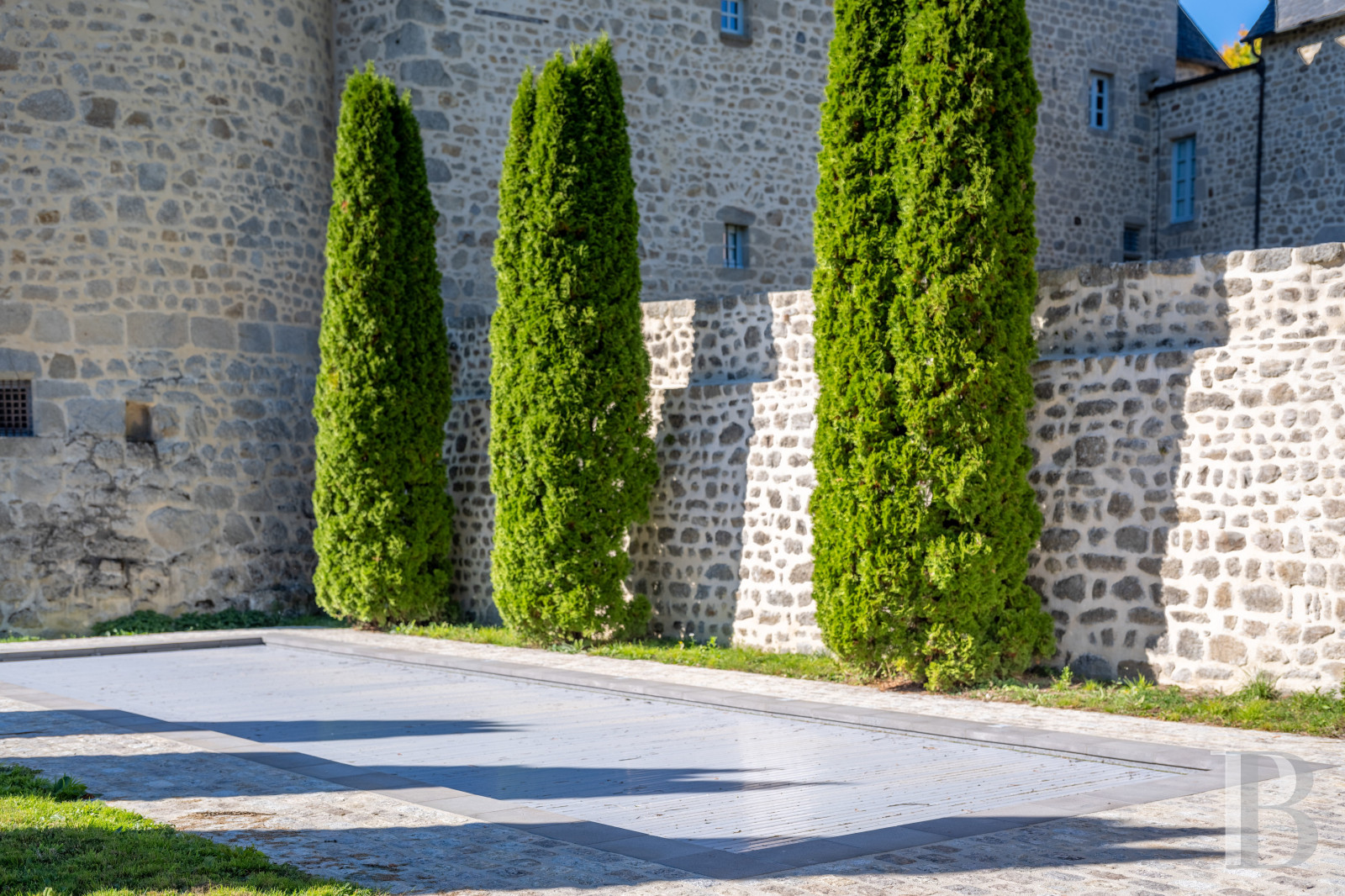
Surrounded by cypress trees in a Mediterranean, even Tuscan, atmosphere, it opens onto a Bouzantes stone beach. The pool, with a surface area of over 50 m² (13 x 4 m) and a depth of 1.50 m, is lined with a stone-look reinforced membrane. There is a staircase full of water, beneath which is a remote-controlled security curtain. The pool is heated by a heat pump and equipped with fixed or variable lighting with light effects. The technical room, with its water supply and filtration systems, is built into the stonework staircase leading down to the north-east lawn. Its south-facing aspect adds to the beauty of the grounds, with a remarkable, almost 180-degree panorama.
The garden room
Located on the garden level at the foot of the residential tower, this circular room has a surface area of around 24 m². Its stone walls, tiled floor and vaulted ceiling show how much care was taken in restoring it. It has a solid wooden door to the west and a window to the east. It is used as a storage area for garden furniture, as well as for nearby pool equipment. The history of the chateau tells of the existence of underground passageways, one of which was once accessible from inside the foot of the tower. One of the access points, long since walled off, could be located in the extension of the recess visible inside the room, to the north-east of the entrance.
The farm and its barn
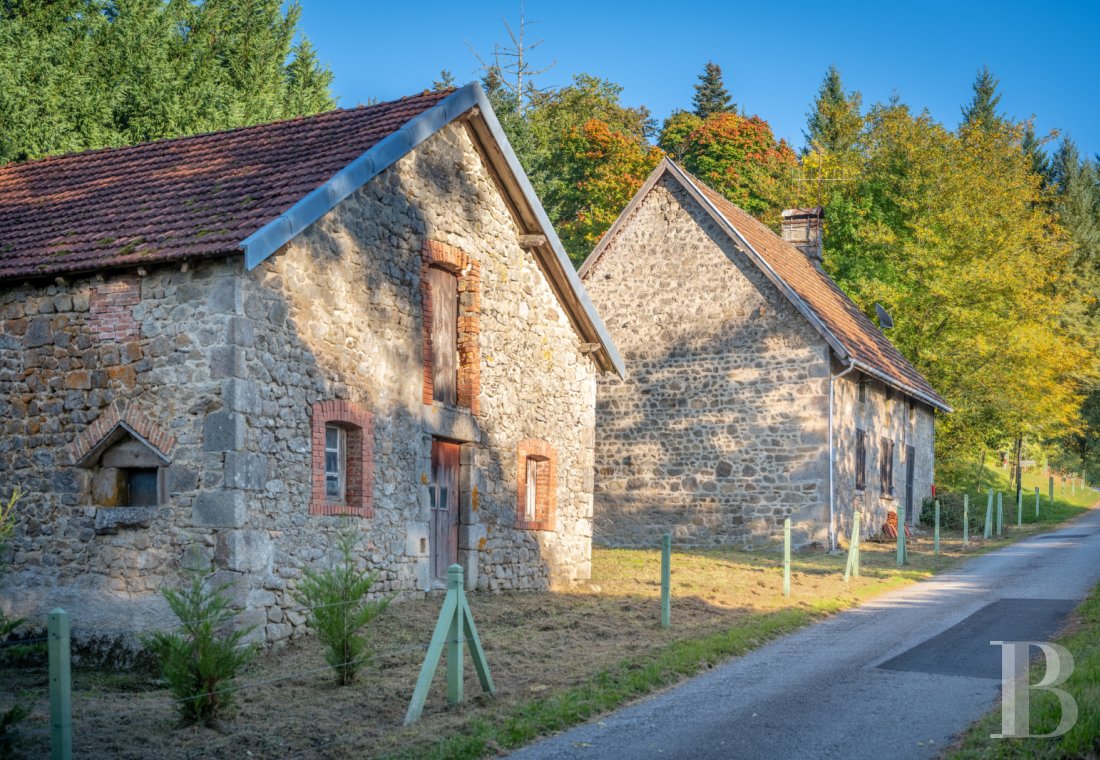
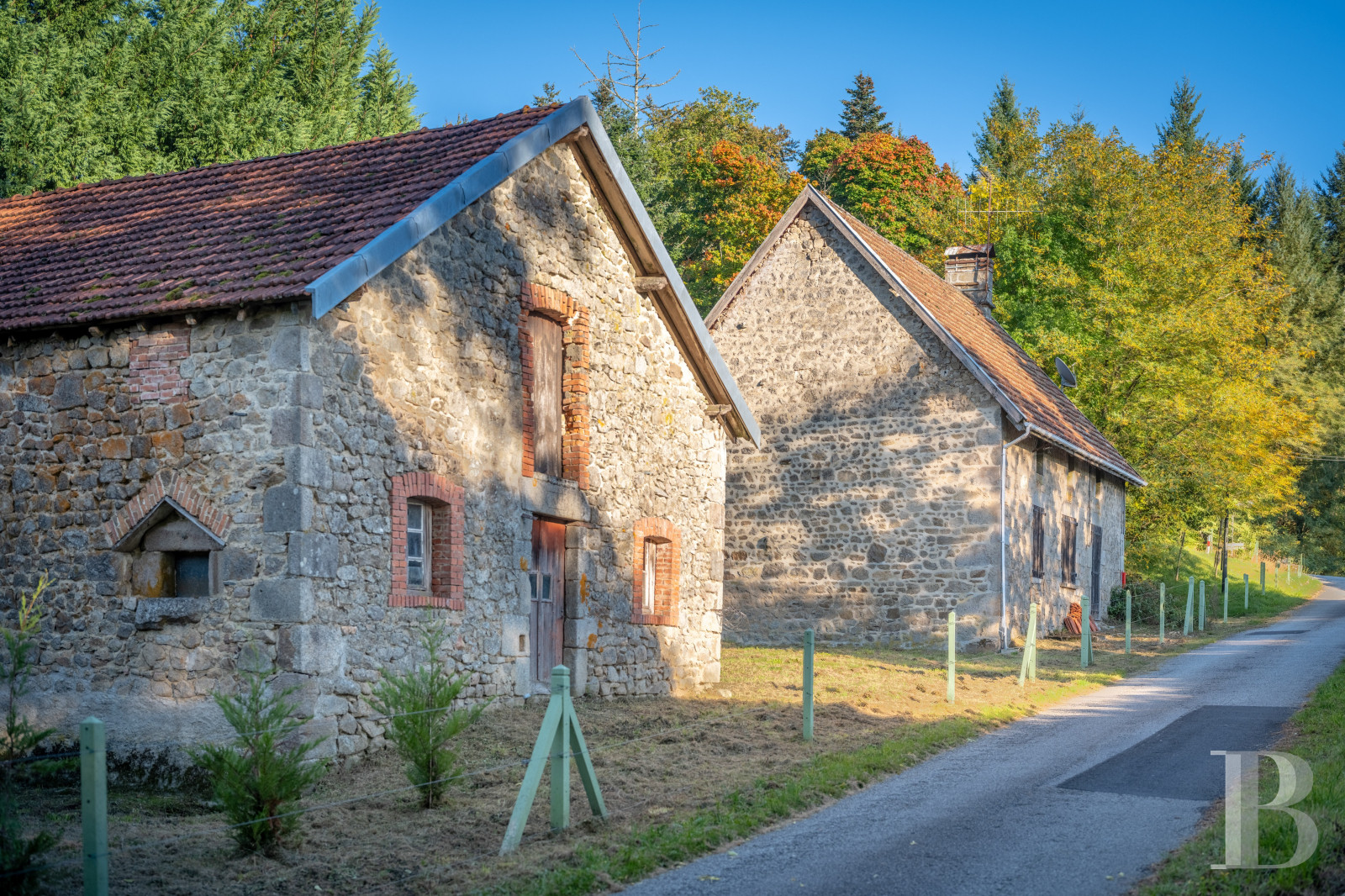
The property is situated to the north-east of the estate, a few hundred metres from the château and beyond its arboretum where young plants grow, upstream from the local road and close to the main road. A two-storey farmhouse with a floor surface area of around 70 m². On the ground floor, it comprises a single room where an inglenook fireplace has been preserved. It needs to be completely restored, but there is clear potential for reinterpretation. Next to this there is a barn covering an area of around 80 m². With its clay floor, it is also in need of restoration and offers great potential for conversion.
The ponds
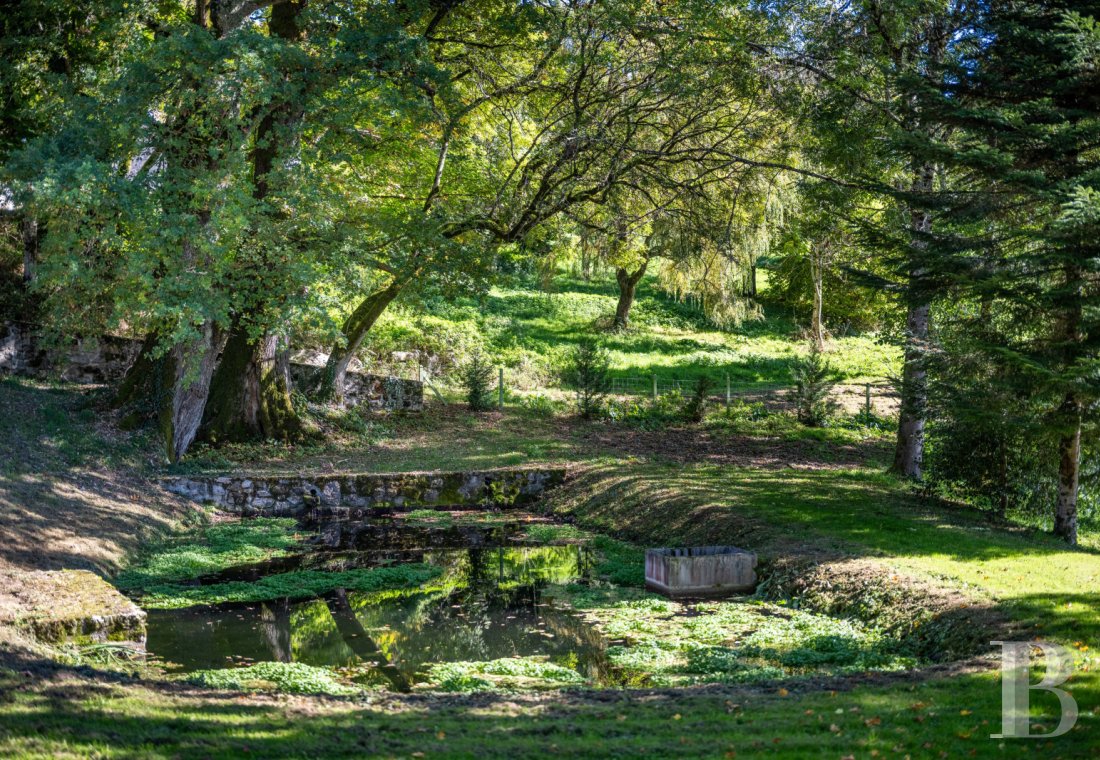
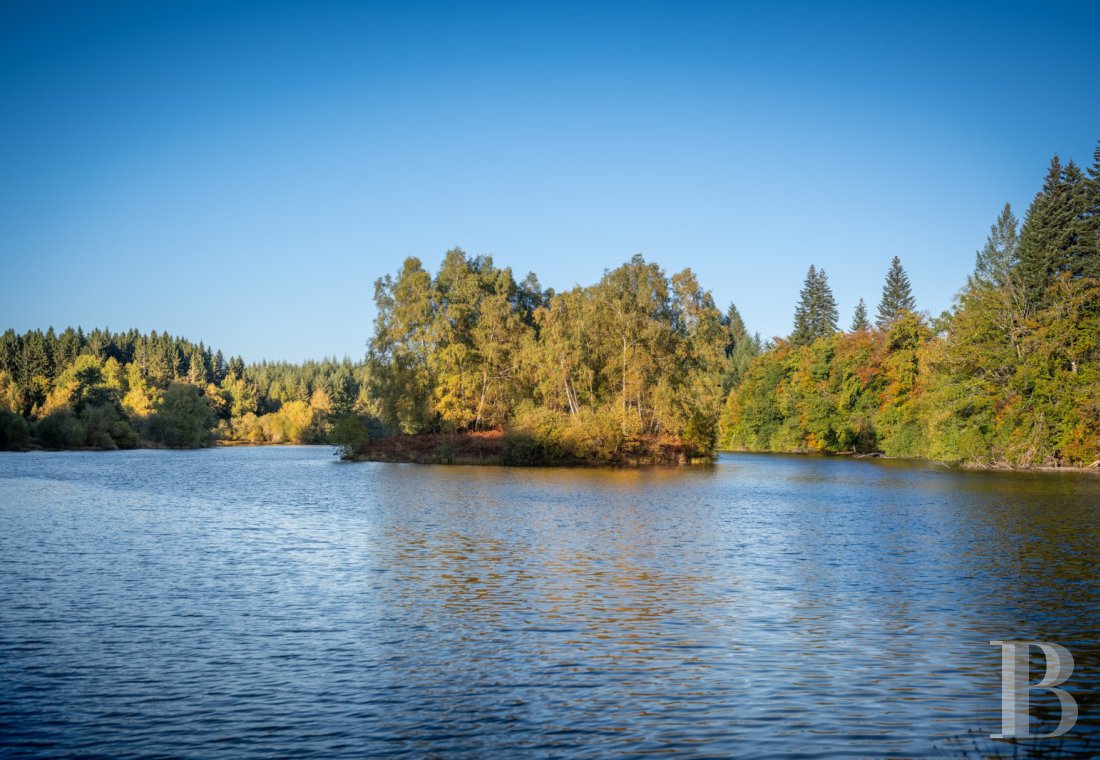
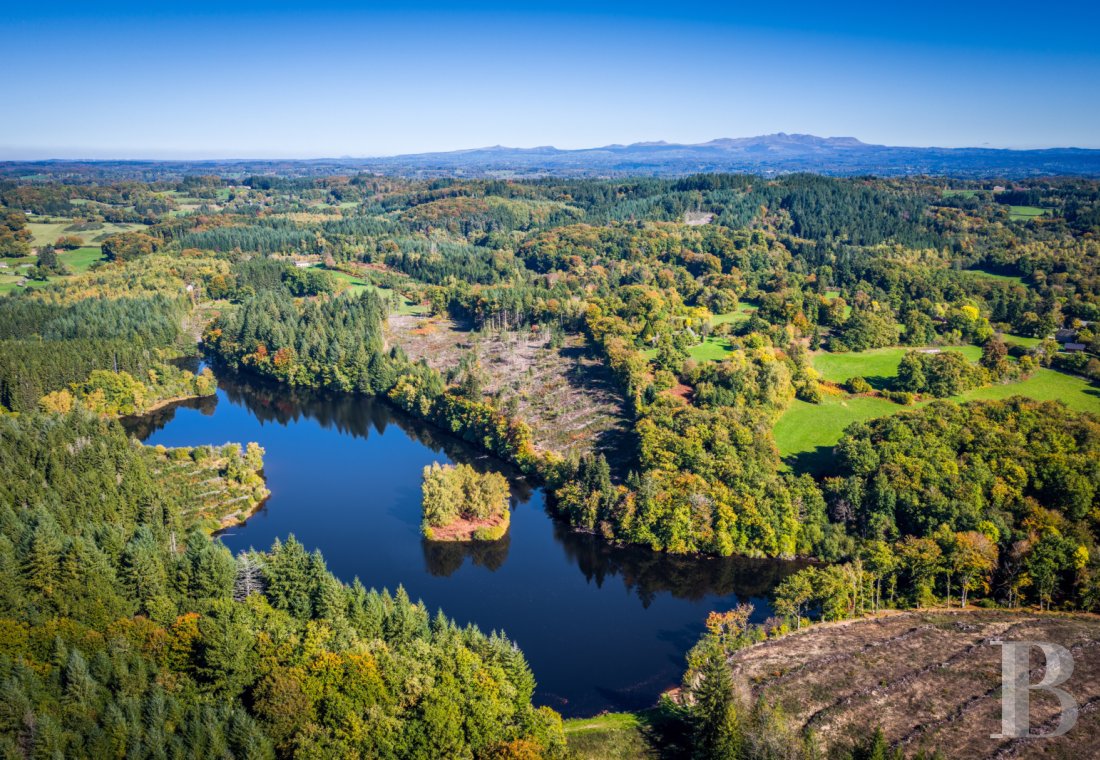
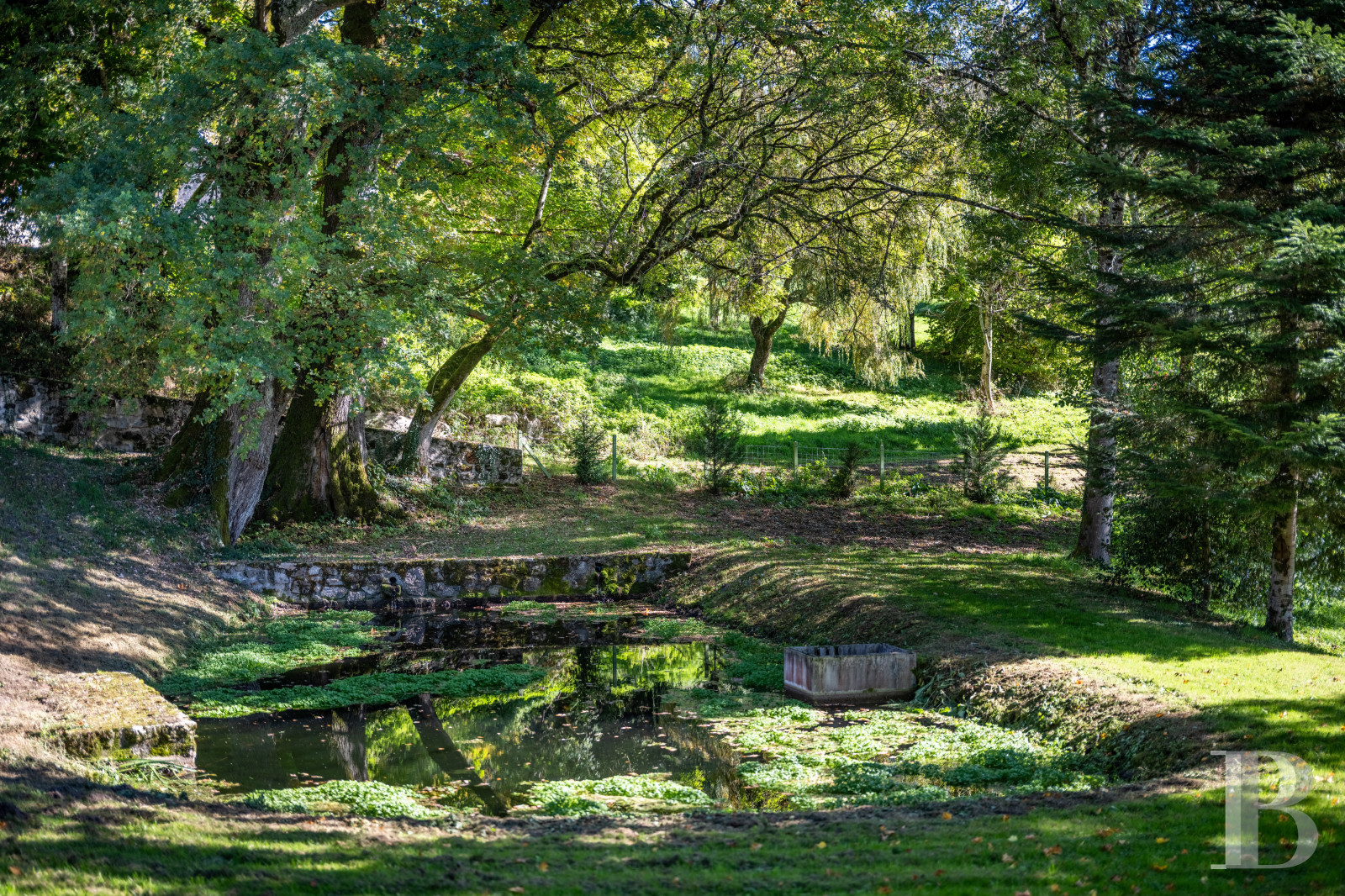
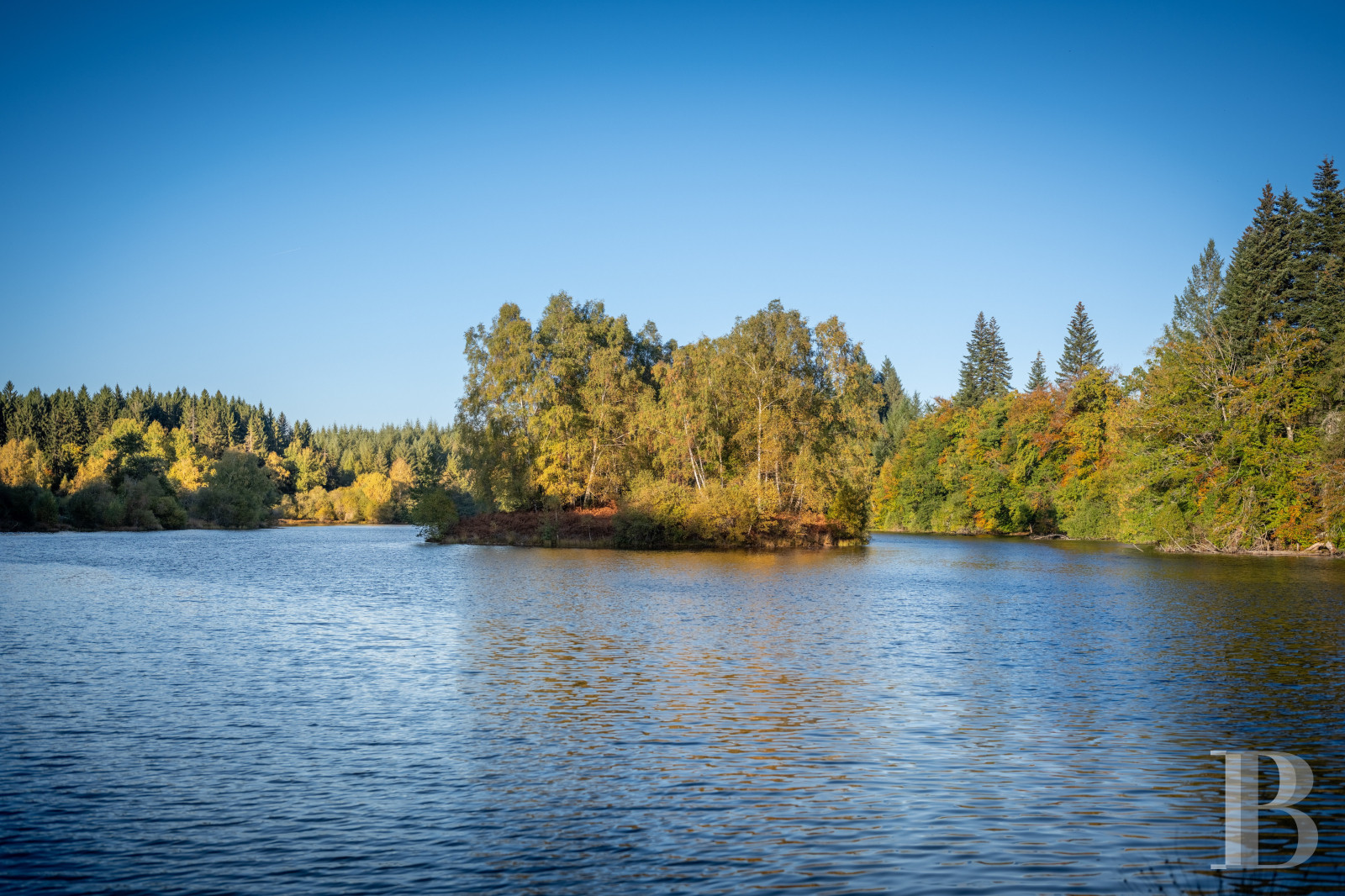
The four pounds are one of the château's major attractions. Three of them are visible from the buildings, while a fourth, located around 1 km away, with an island in the middle, is recognisable because of the colour of its waters. Each of these water bodies is recognised as being in order and has the status of a water body with legal title. Their origins go back a long way: they are the result of the impoundments of a dam dating from before 1790, as shown on the Cassini map, and were intended for fish farming. These stretches of water play a full part in the landscape and environmental features of the estate.
Our opinion
Set in the heart of a vast territory, this château stands in a beautiful landscape. The building has been restored with the utmost care and expertise, while respecting its original architecture, and is set in its characteristic peaceful, yet simple surroundings. The spaces have been designed to meet the demands of modern comfort: the rooms have been designed to be fluid, and there are a wide range of possible layouts. The alternation between reception rooms and everyday spaces, combined with areas dedicated to rest, culture, leisure or contemplation, creates a coherent whole, where there is something for everyone. Nothing here is overbearing or flashy. The natural charm of the place lies in its simple elegance.
Reference 796206
| Main building floor area | 1500 m² |
| Outbuildings floor area | 230 m² |
| Land registry surface area | 73 ha 46 ca |
French Energy Performance Diagnosis
Information on the risks to which this property is exposed is available on the website: www.georisques.gouv.fr
Share


- Corrèze -
- Limousin -
- New Aquitaine -
- Ussel
NB: The above information is not only the result of our visit to the property; it is also based on information provided by the current owner. It is by no means comprehensive or strictly accurate especially where surface areas and construction dates are concerned. We cannot, therefore, be held liable for any misrepresentation.