



A 13th-century chateau and cultural landmark with conference rooms
and rental accommodations, one hour from Paris, in the Oise department
and rental accommodations, one hour from Paris, in the Oise department
Chantilly,
OISE
picardy
60500
FR

Location
Sixty kilometres to the north of Paris, nestled within the Oise River valley, the Creil basin, a region that has been marked by a long industrial history, has preserved a vibrant economic fabric, while the chateau, perched on a wooded promontory overlooking the town, is sheltered from the urban tumult, and enjoys enchanting views of the plain and the Oise River’s meanders.
A former fortress, it recalls this site’s defensive role, chosen for its strategic position between the valley and the Beauvaisis plateaus, whereas immense forests as well as the nearby cities of Chantilly and Senlis endow the region with a completely different facet, namely one that encourages residents and visitors alike to unplug from the demands of daily life and discover its breath-taking natural and architectural heritage.
In addition, the chateau enjoys optimal accessibility: the Creil train station, a few minutes away, provides access to the Paris-Gare-du-Nord train station in less than 30 minutes and, by vehicle, Paris and the Roissy-Charles-de-Gaulle airport can be reached in one hour and 40 minutes, respectively.
Description
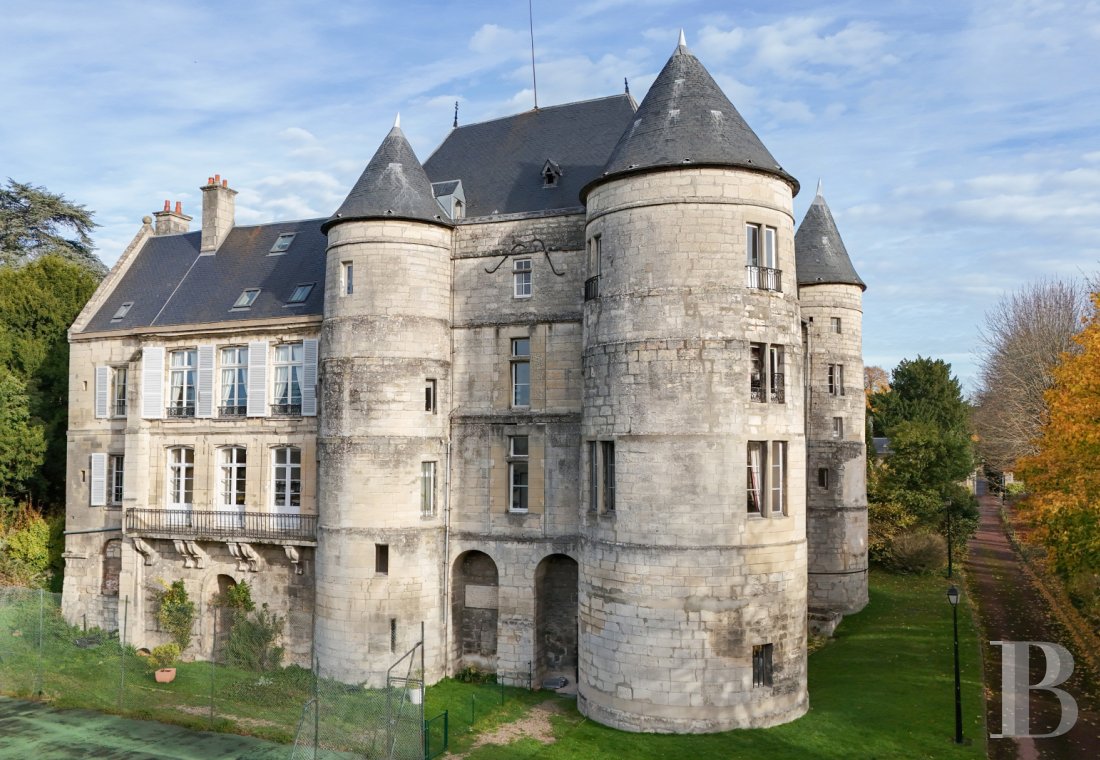
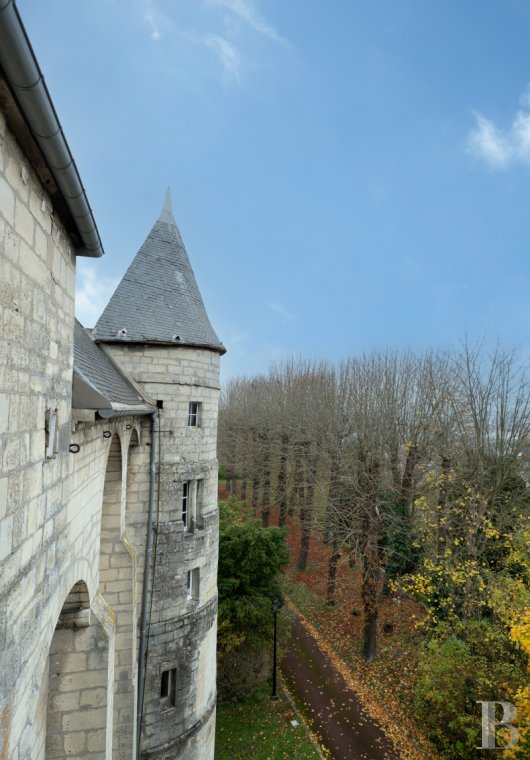
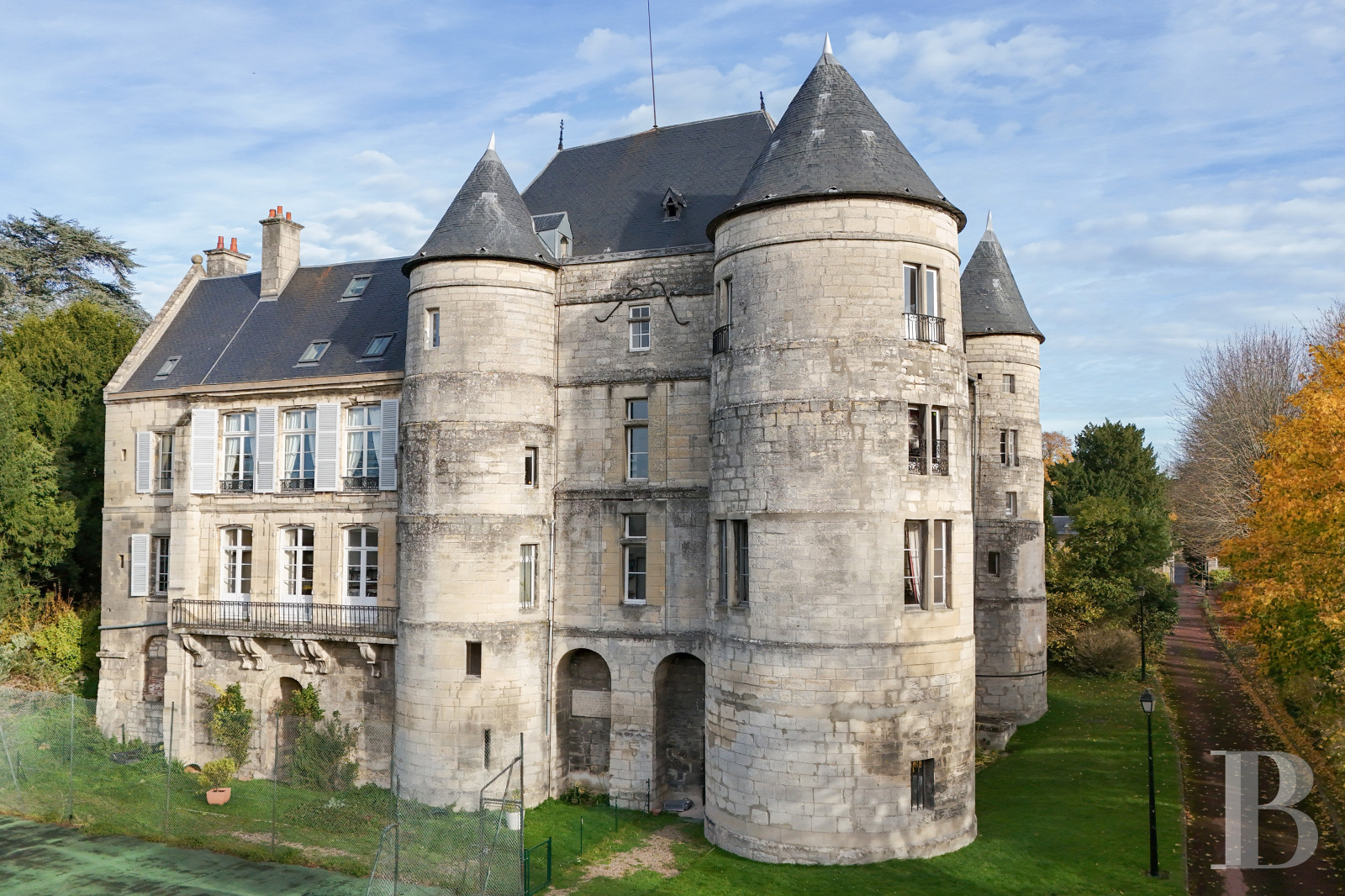
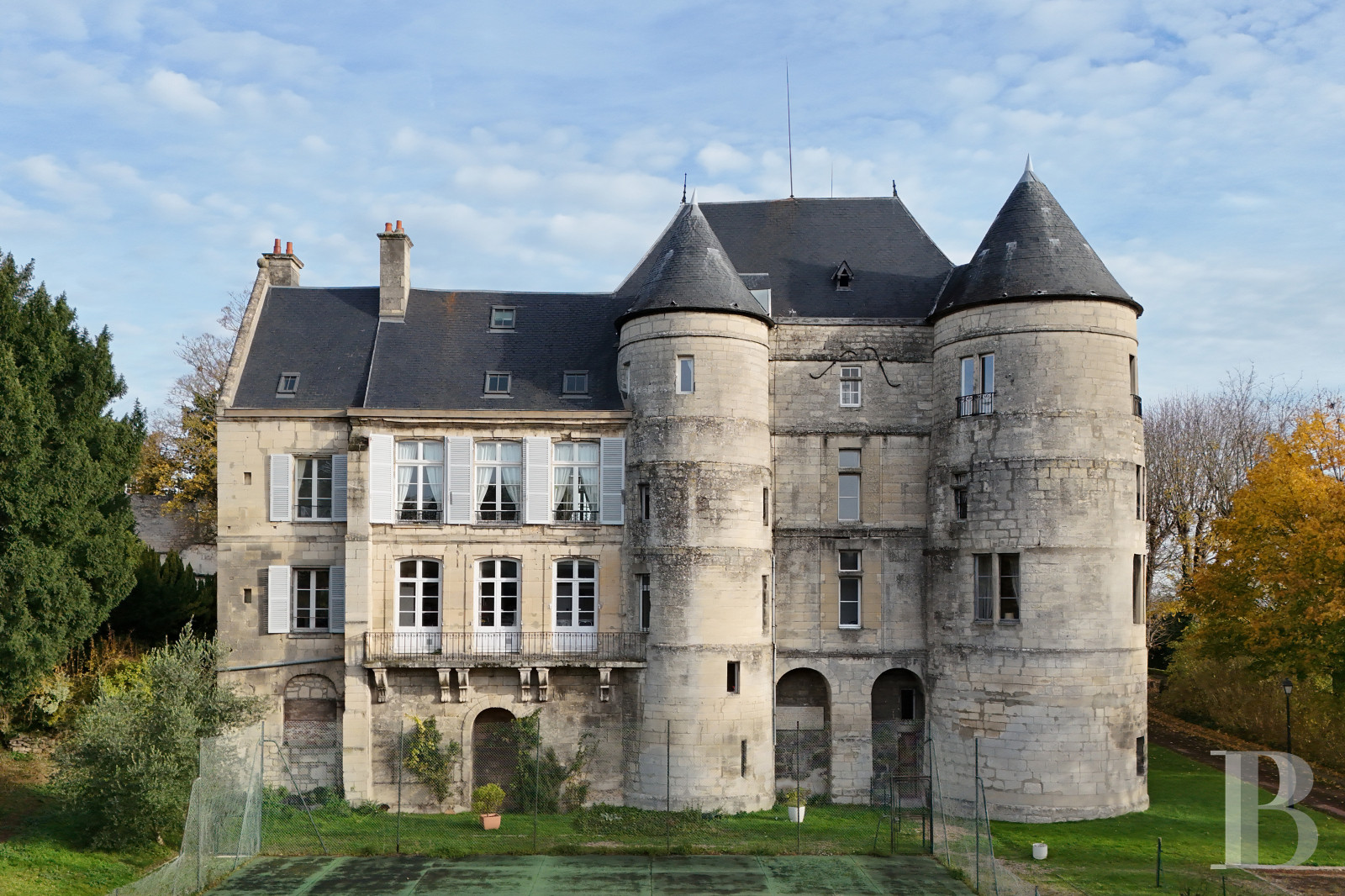
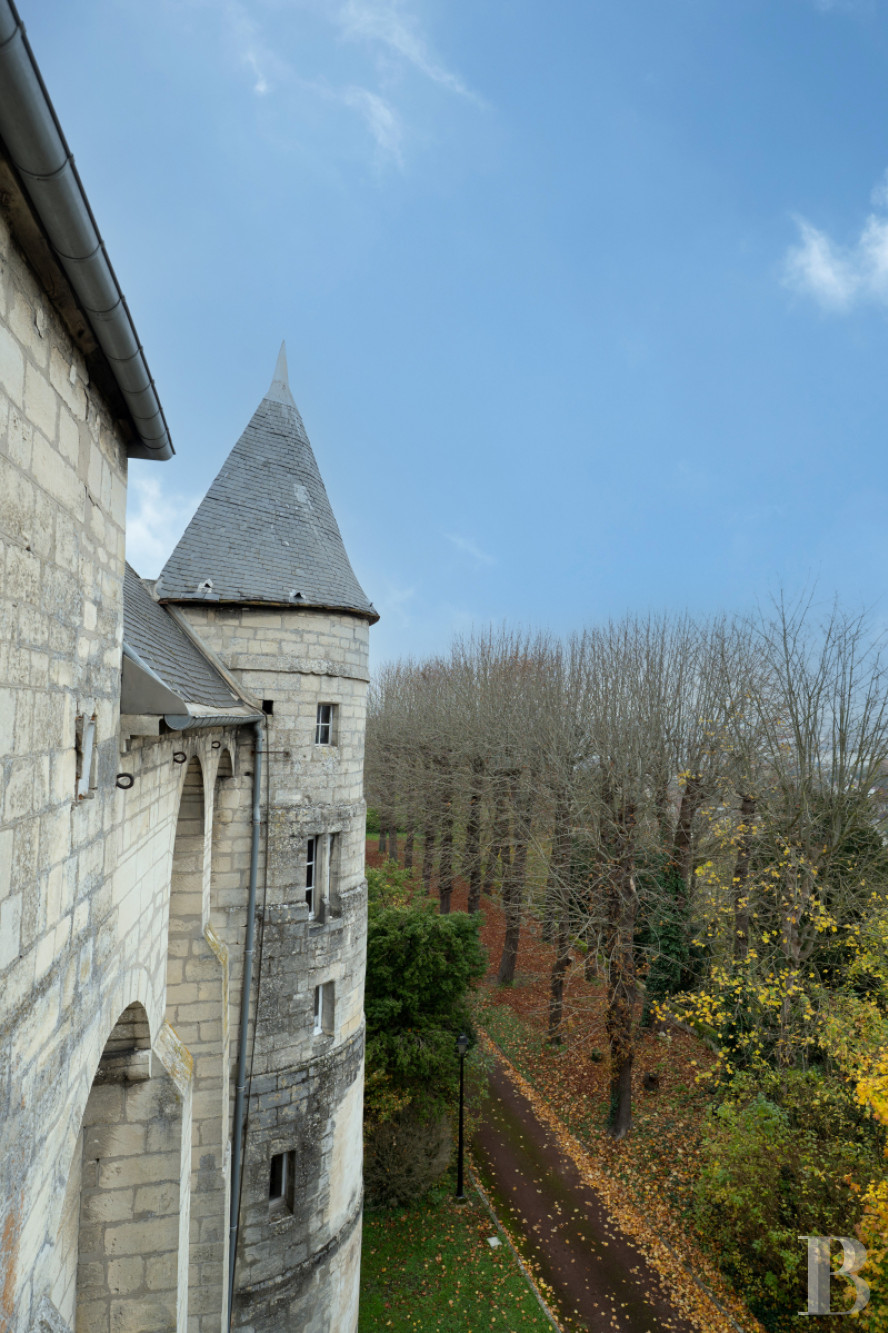
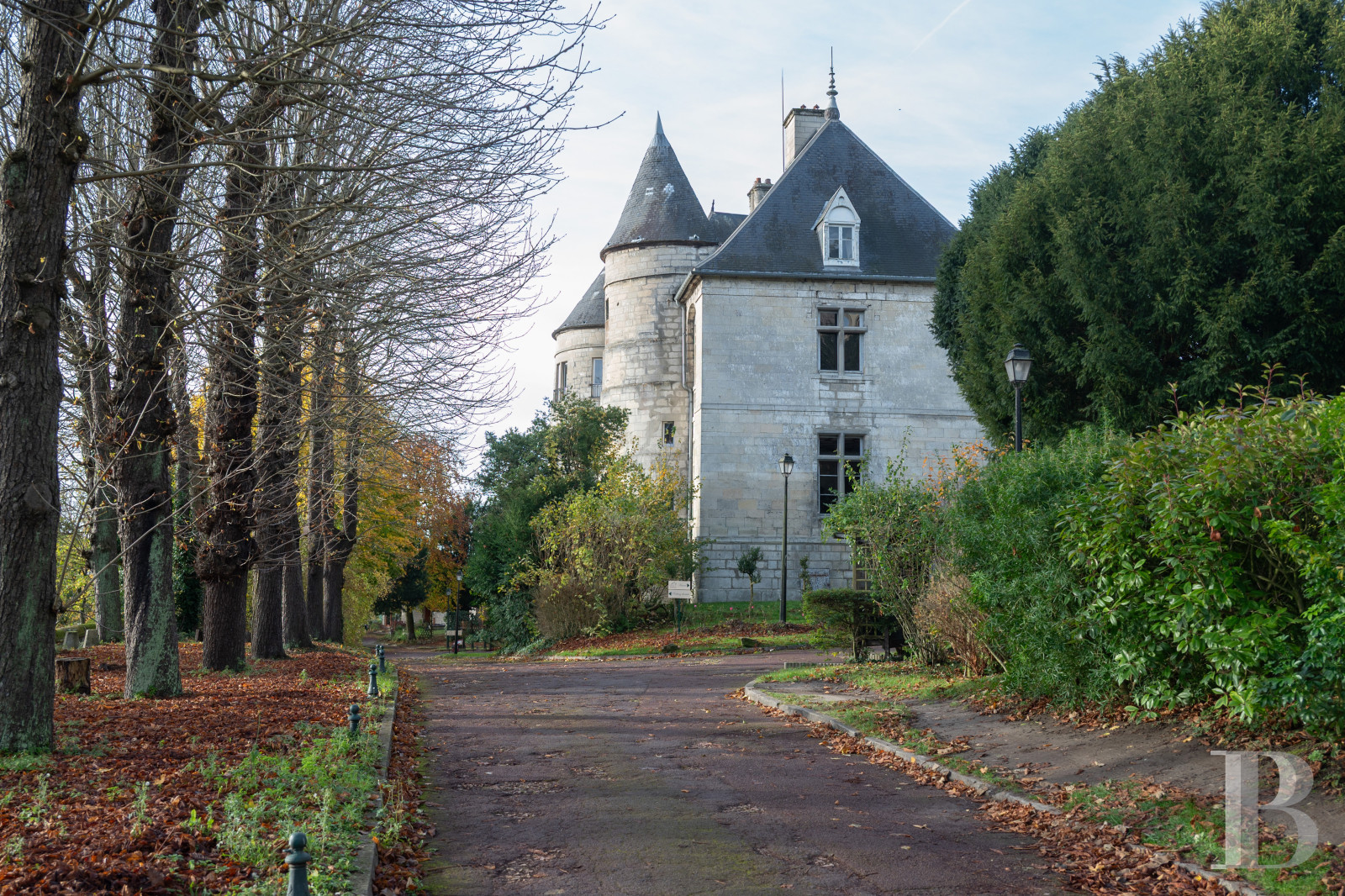
The chateau, built in the 13th century by the Count of Clermont, stands out thanks to its location overlooking the Oise River valley. Built out of Saint-Maximin ashlar stone, extracted from local quarries, it was originally a medieval fortress, and has preserved its right-angle layout and three irregular-shaped round towers, which bear witness to its initial defensive role, while over the centuries, the chateau has undergone a number of adjustments, specifically under the aegis of the de Madaillan de Lesparre family, who carried out significant renovations between the 15th and 17th centuries.
In addition, King Henri IV, a friend of Jean de Madaillan, stayed here on several occasions, as did Cardinal Odet de Coligny, whereas years later, as the dwelling of the Baron de Condé in the second half of the 19th century, the chateau was once again transformed, while still preserving much of its original character.
As for the edifice, it features approximately 1,000 m² of inhabitable floor area spread out over five floors: a basement, a ground floor, two upper levels and an attic. With three drawing rooms on the ground floor, including one that is located in the former armoury, the upper floors are, today, divided into four separate flats, as well as workspaces, which combine residential life with the chateau’s professional activities.
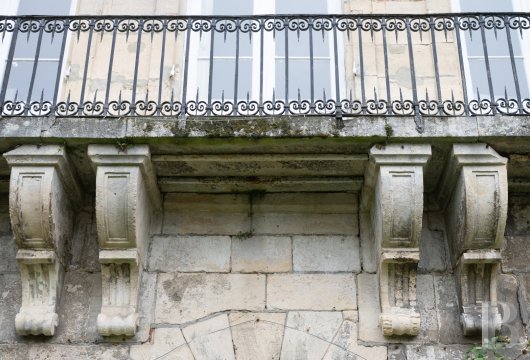
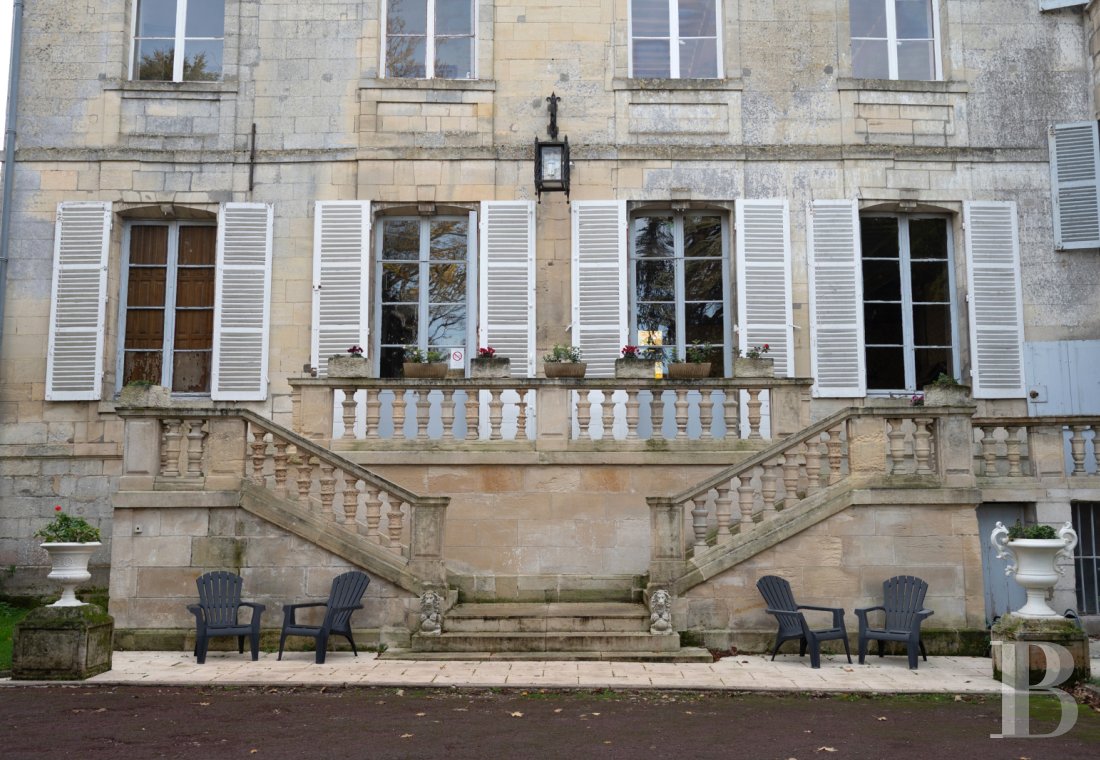
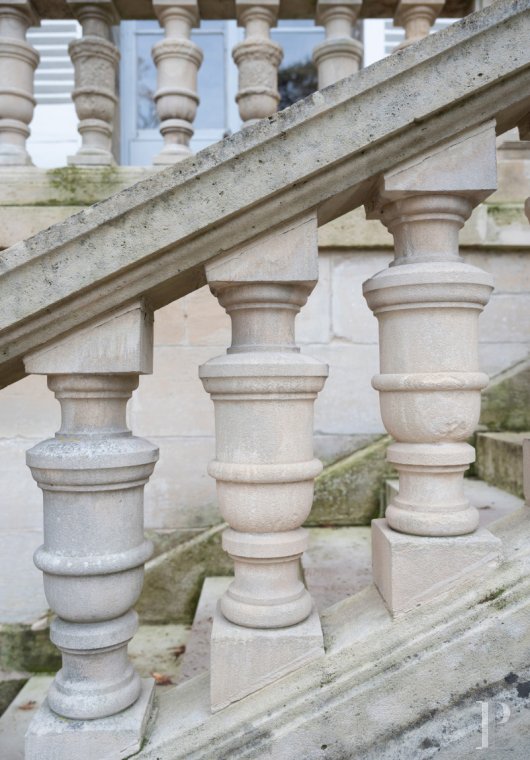
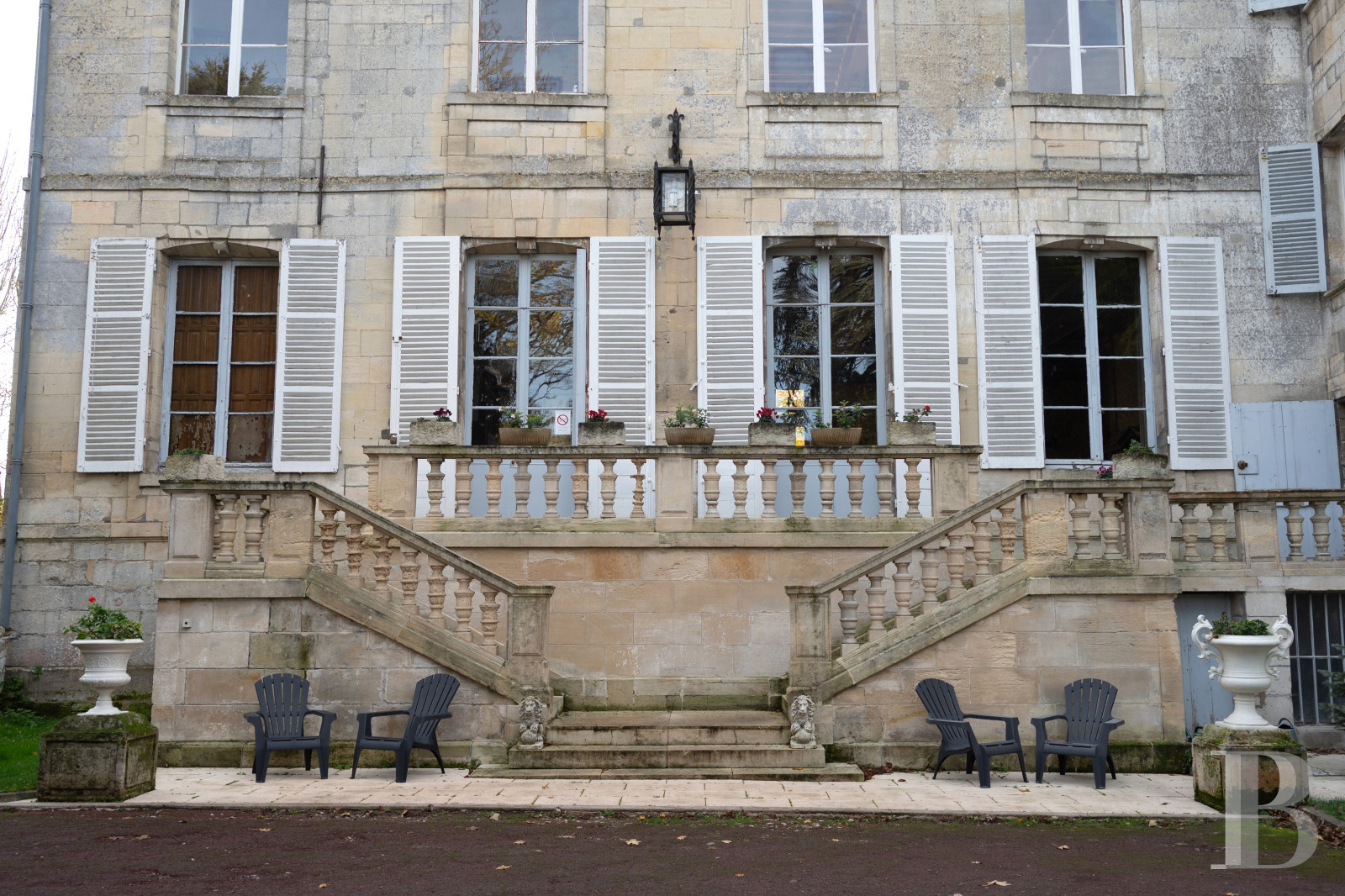
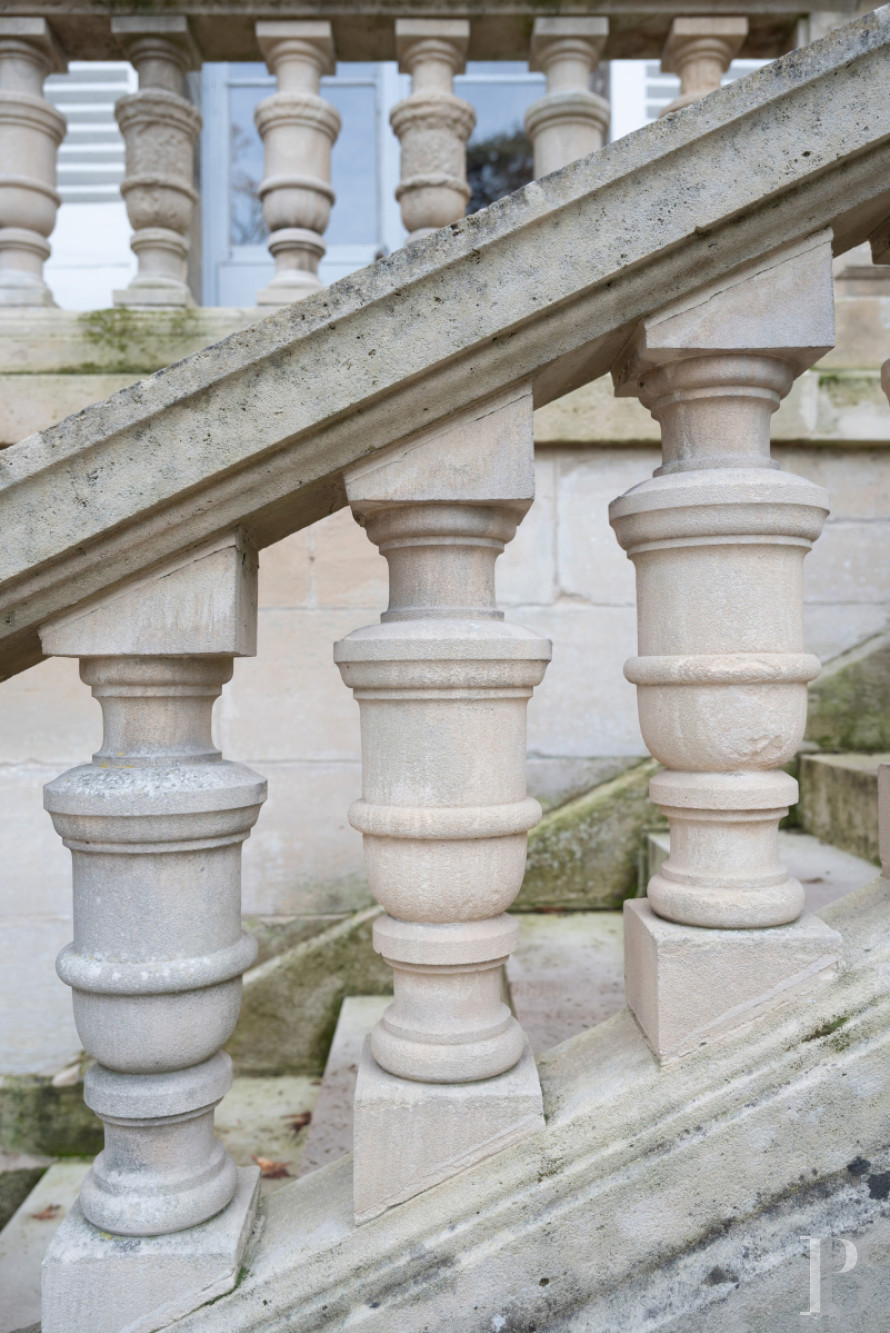
Featuring an imperial double stone staircase, which provides access to an upper patio safeguarded with stone balustrades, as well as regularly placed windows, a steep slate roof and an austere appearance, the chateau is a testament to its many transformations, which succeeded in combining medieval asceticism with a classical composition, whereas the grounds, with approximately two hectares, share a portion of its land with a commonhold property, dotted with several villas, which blend in seamlessly with the rest of the estate.
In addition, King Henri IV, a friend of Jean de Madaillan, stayed here on several occasions, as did Cardinal Odet de Coligny, whereas years later, as the dwelling of the Baron de Condé in the second half of the 19th century, the chateau was once again transformed, while still preserving much of its original character.
As for the edifice, it features approximately 1,000 m² of inhabitable floor area spread out over five floors: a basement, a ground floor, two upper levels and an attic. With three drawing rooms on the ground floor, including one that is located in the former armoury, the upper floors are, today, divided into four separate flats, as well as workspaces, which combine residential life with the chateau’s professional activities.
Featuring an imperial double stone staircase, which provides access to an upper patio safeguarded with stone balustrades, as well as regularly placed windows, a steep slate roof and an austere appearance, the chateau is a testament to its many transformations, which succeeded in combining medieval asceticism with a classical composition, whereas the grounds, with approximately two hectares, share a portion of its land with a commonhold property, dotted with several villas, which blend in seamlessly with the rest of the estate.
The Chateau
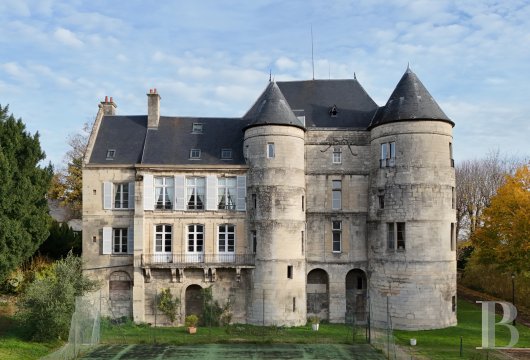
The chateau, impressive and stunning, features both medieval and classical exteriors, which, together, create a visually pleasing composition overlooking its wooded grounds.
The ground floor
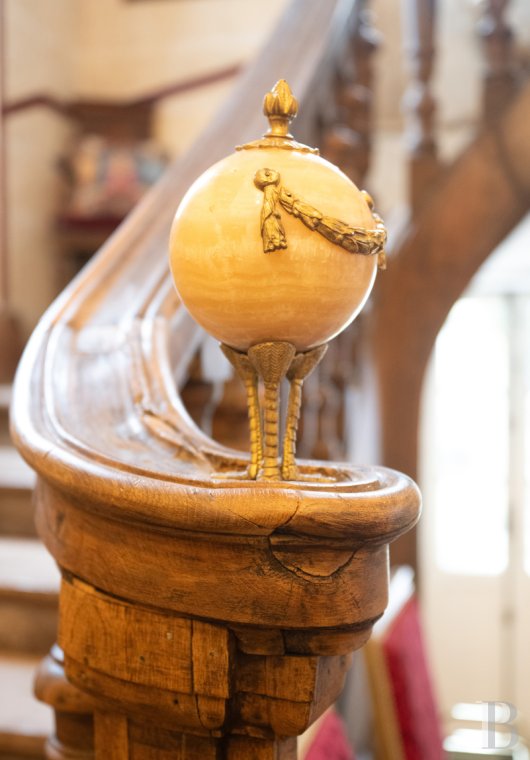
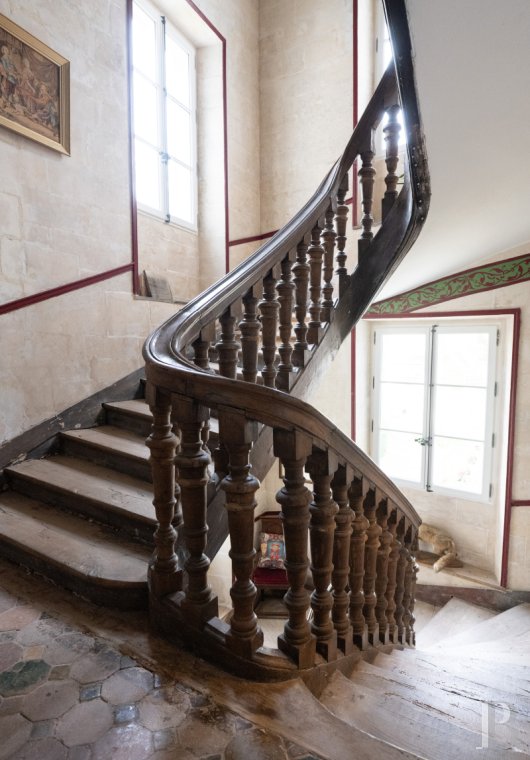
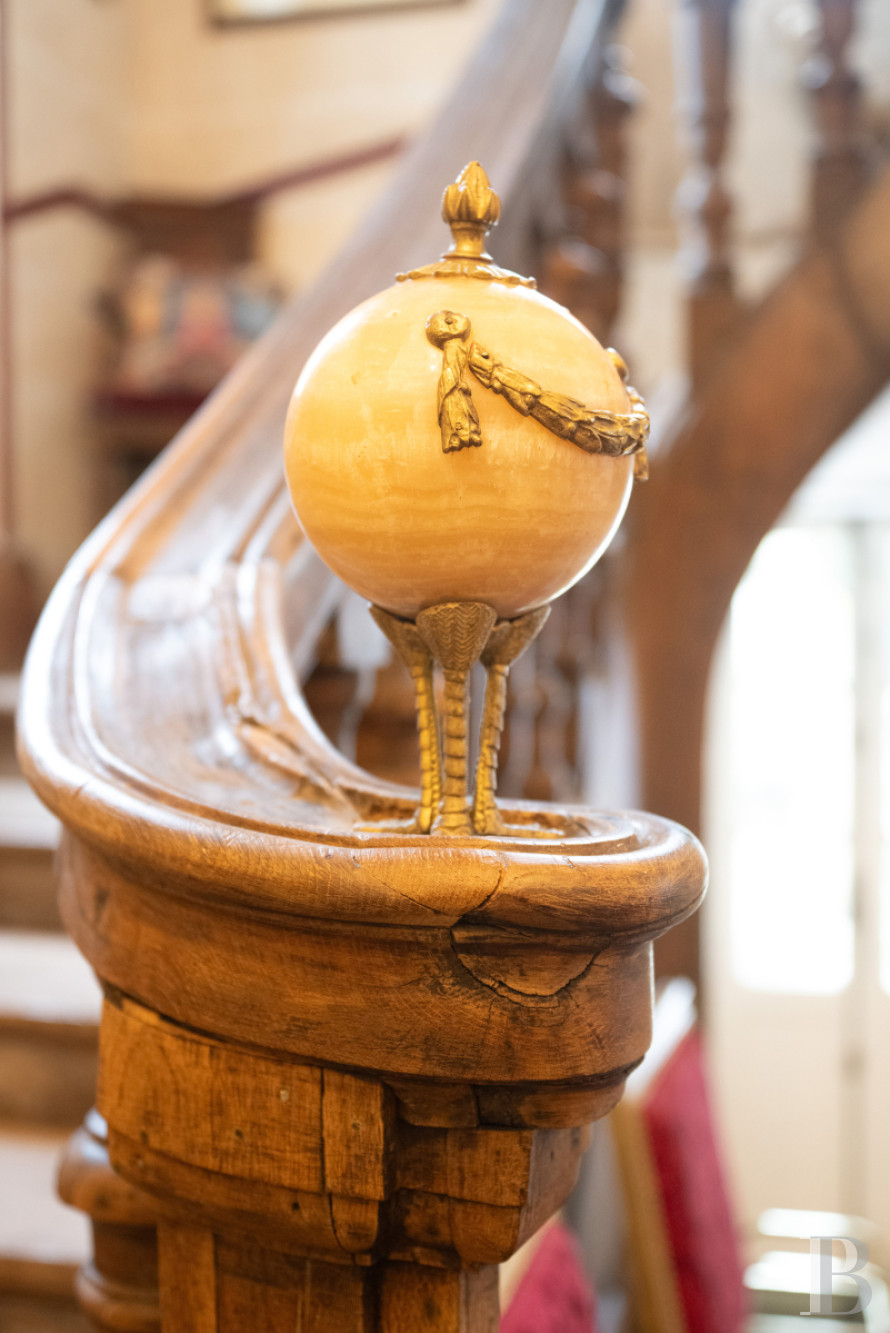
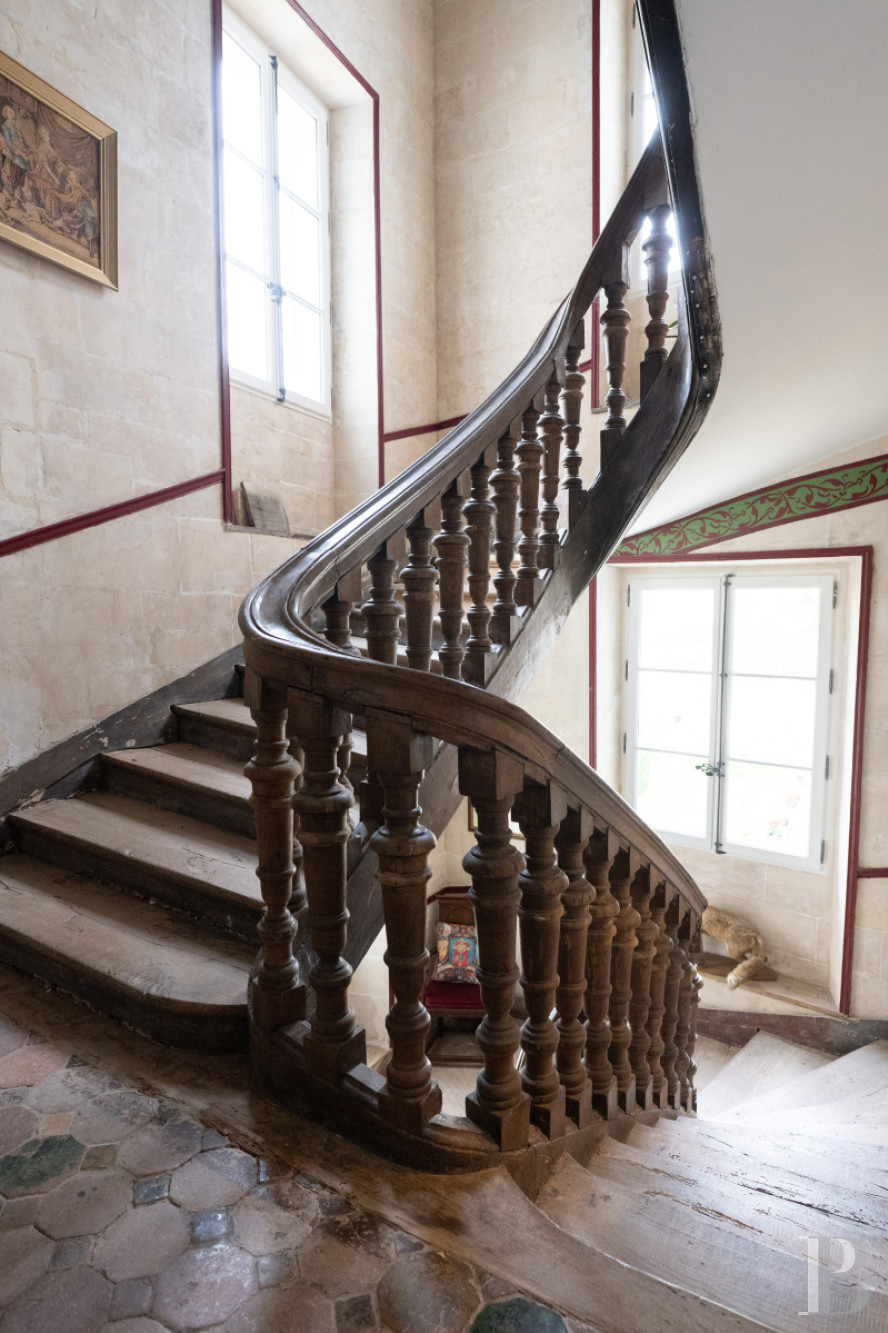
An initial entrance, accessible from the patio, opens on to an entrance hall that provides access to the ground floor’s main rooms. On the right, a 17th-century solid wood staircase, with deep steps and a bannister safeguarded by carved thick spindles, ascends to the upper floors, while the stairwell, illuminated by tall windows, is highlighted by pointed stone walls and a painted frieze under its cornice.
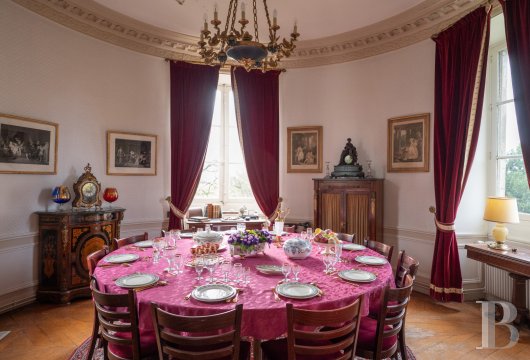
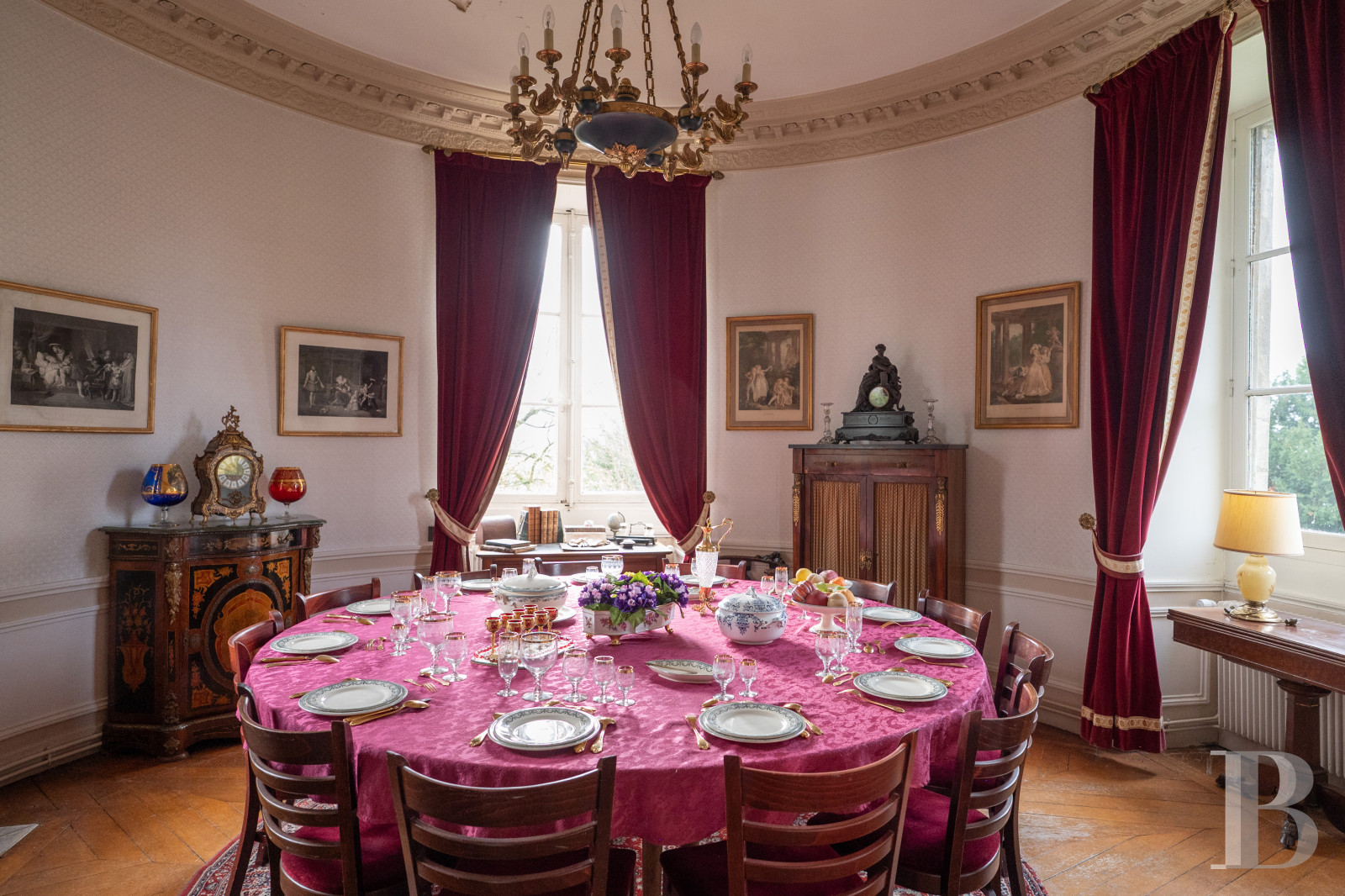
In addition, a side corridor leads from the entrance hall to a professional kitchen and two offices, whereas, directly opposite the entrance, a lavatory is located in one of the rounded towers. To the left of the entrance hall, double doors open on to the former lords’ drawing room, which has now been transformed into a conference room, while extending on from here, a circular room in one of the towers was converted into a kind of museum exhibit where a large table has been set in order to recreate the appearance of a 19th-century dinner.
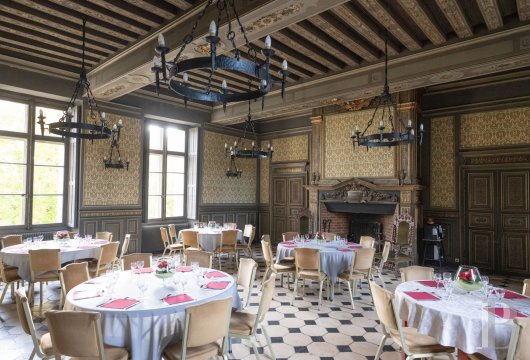
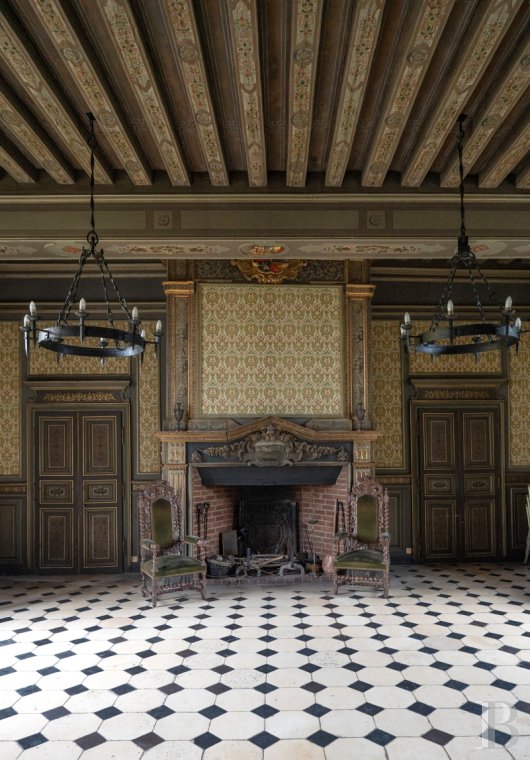
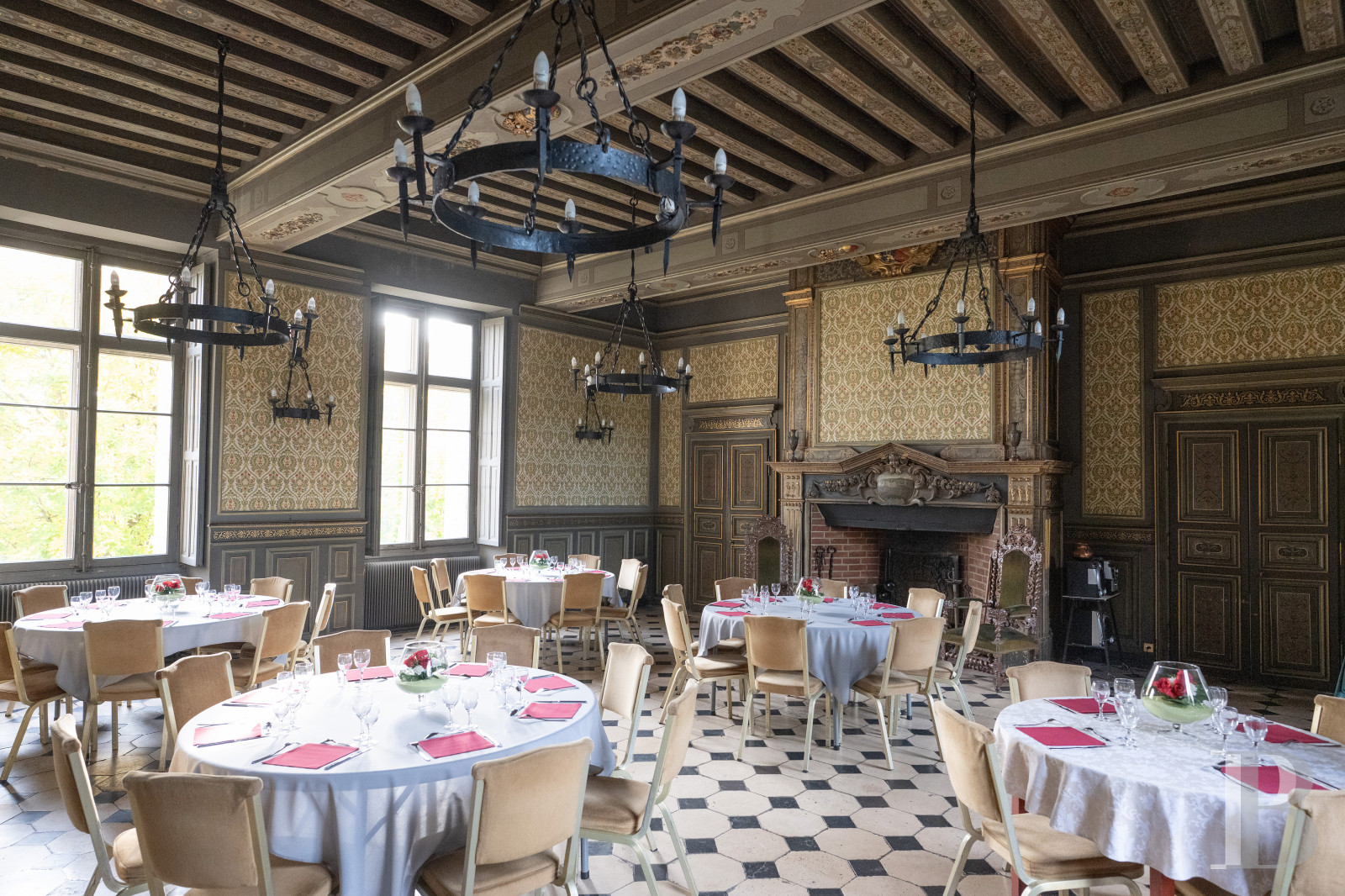
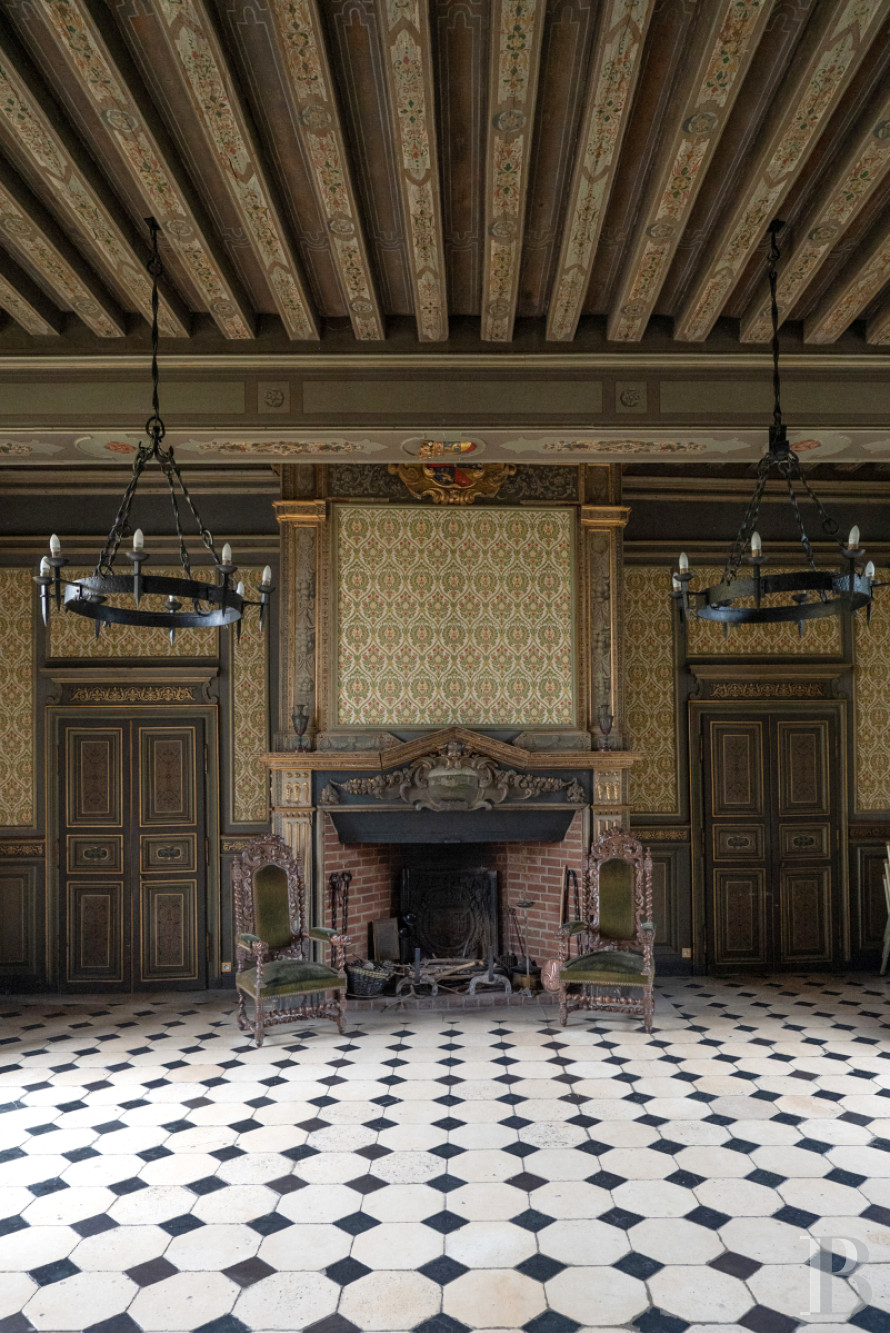
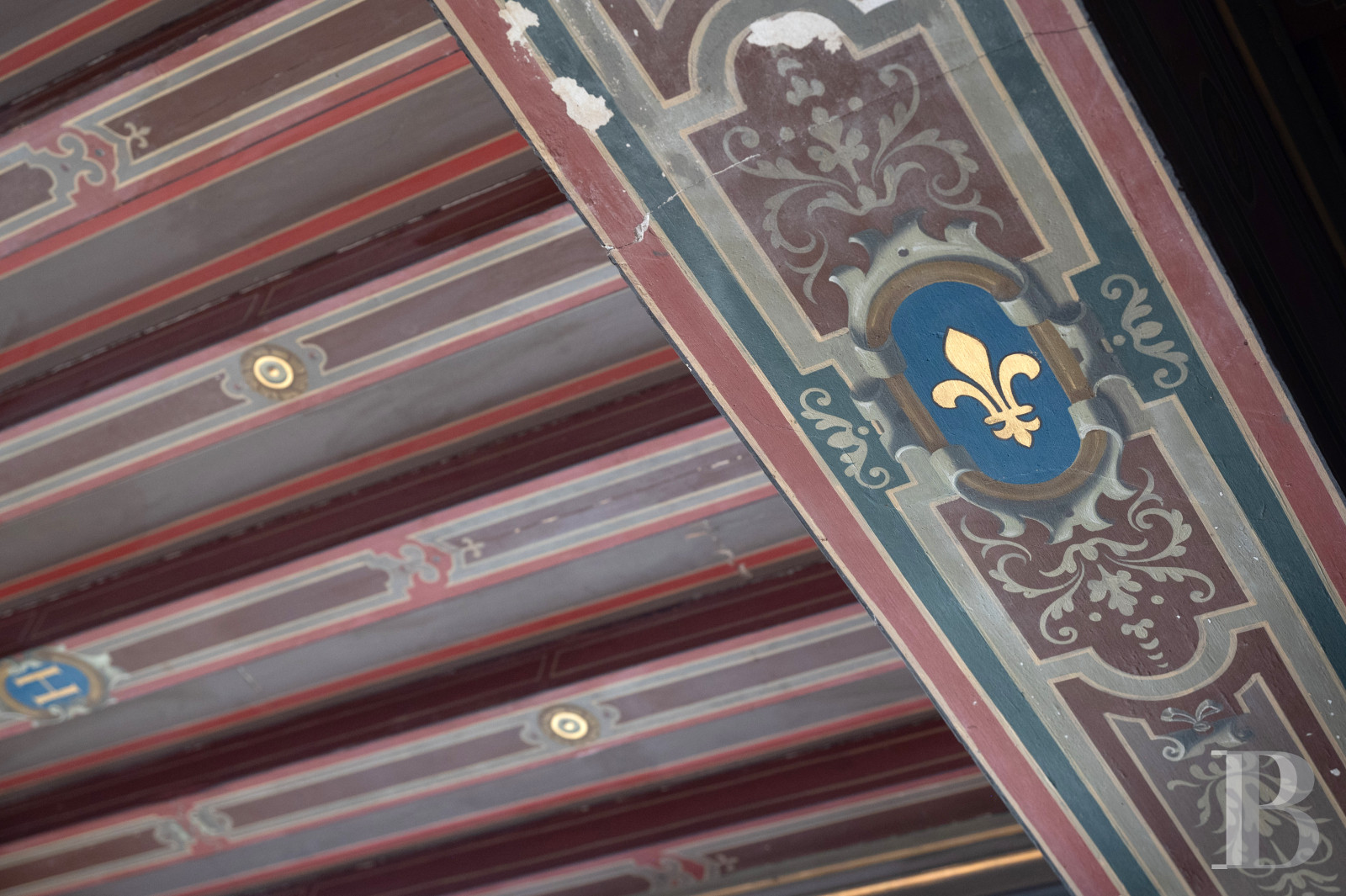
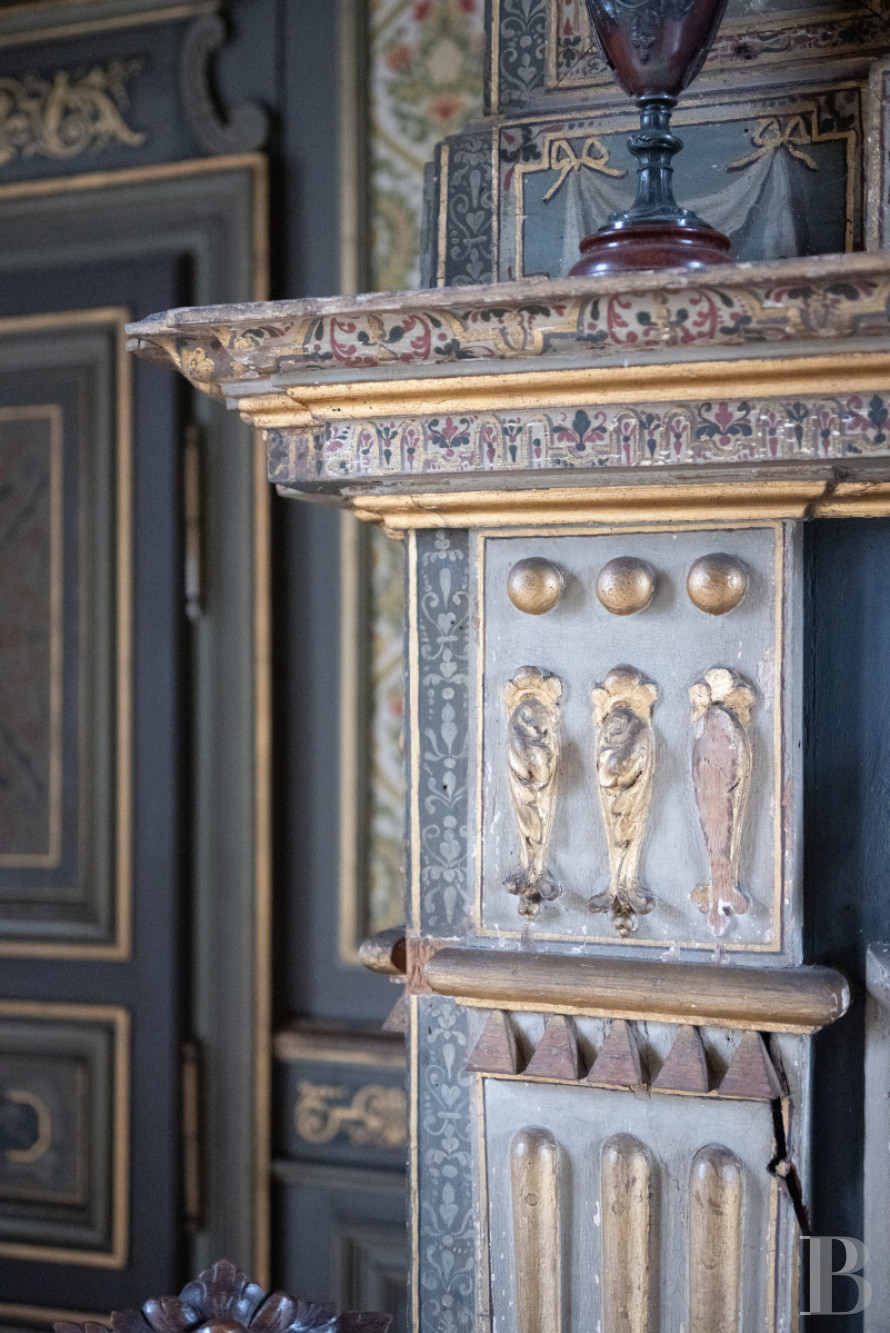
As for the neighbouring armoury, it is one of the chateau’s most characteristic spaces with its 17th-century sumptuous and symbolic décor: polychrome ceiling beams decorated with floral patterns as well as the de Madaillan de Lesparre family’s coats-of-arms depicted on the ceiling and the massive fireplace, whereas a cast-iron plaque in the middle of the fireplace displays the heraldic symbols of both the Kings of Navarre and France, a testament to this lineage’s allegiance to the two thrones. With cream and black cabochon stone floor tiles, which showcase this room’s overall elegance, currently used as a reception area for dinners, cocktails or conferences, large glass double doors open on to the patio and provide direct access to the grounds.
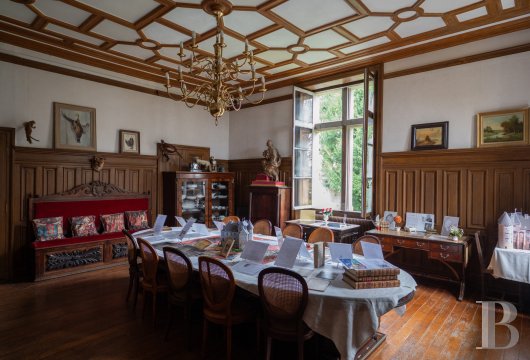
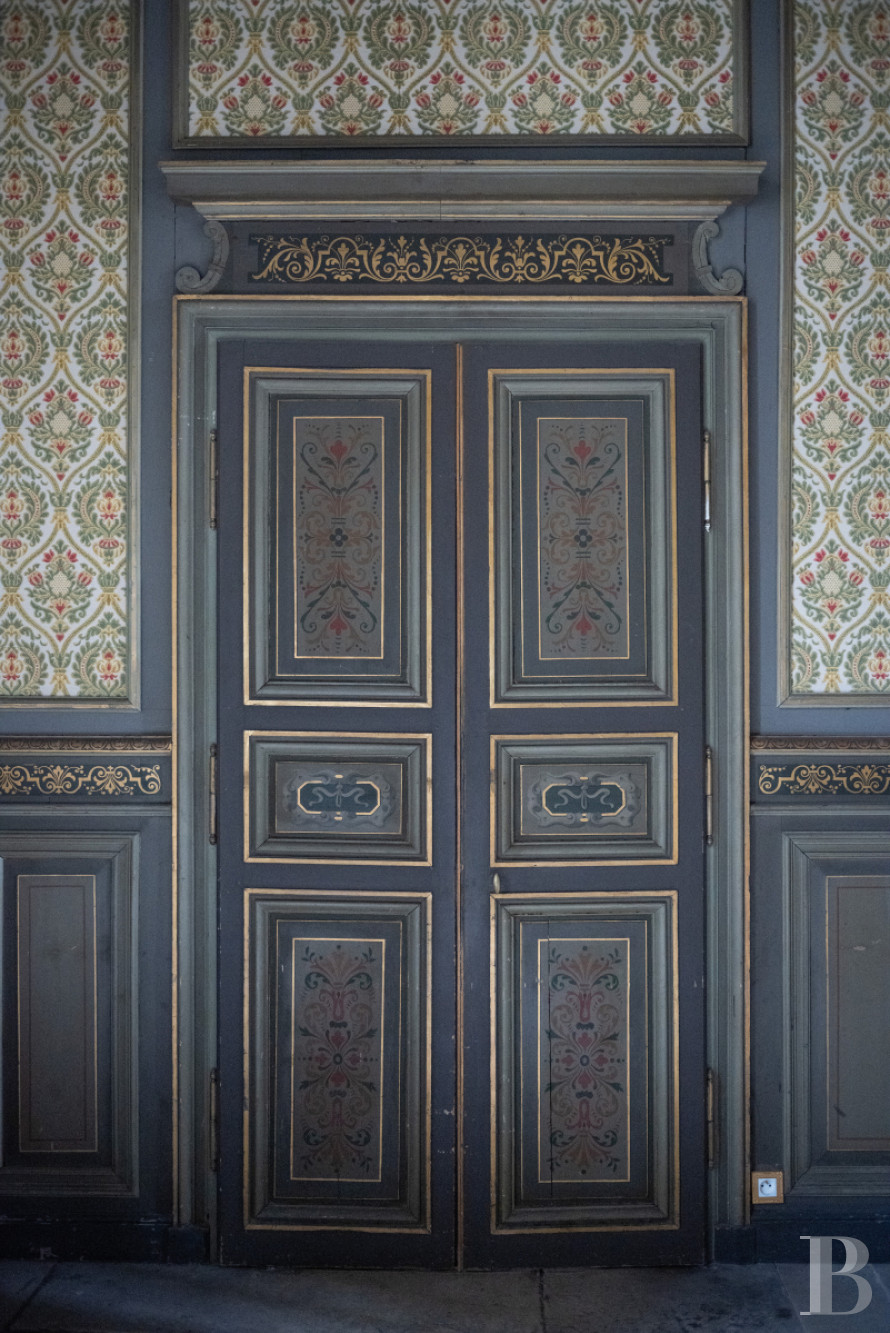
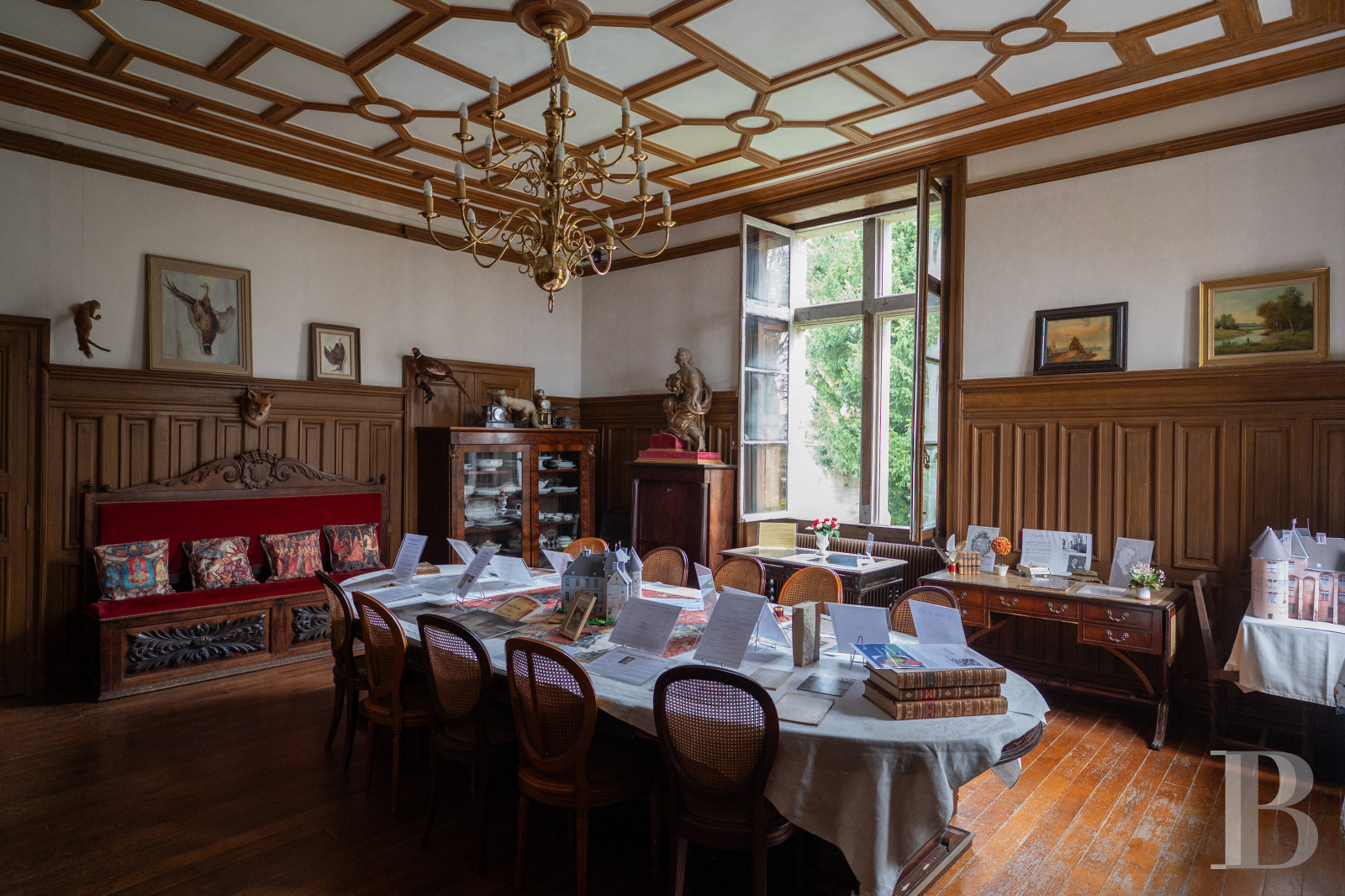
Following on from here, a final suite of doors opens on to the former dining room, with visible ceiling beams and oak wainscoting, which, today, has been turned into a room dedicated to the chateau’s history. Illuminated by two pairs of glass double doors, which also open on to the patio and provide a secondary entrance for visitors, this room faces the third tower, which contains the entrance to the basement level.
Creating a coherent ensemble, these three adjacent rooms – the drawing room, armoury and dining room – not only represent the elegance of interiors from the 17th to 19th centuries, but are also perfectly adapted to the chateau’s current commercial activity.
The first floor
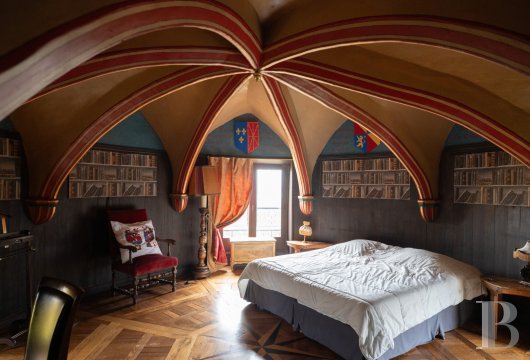
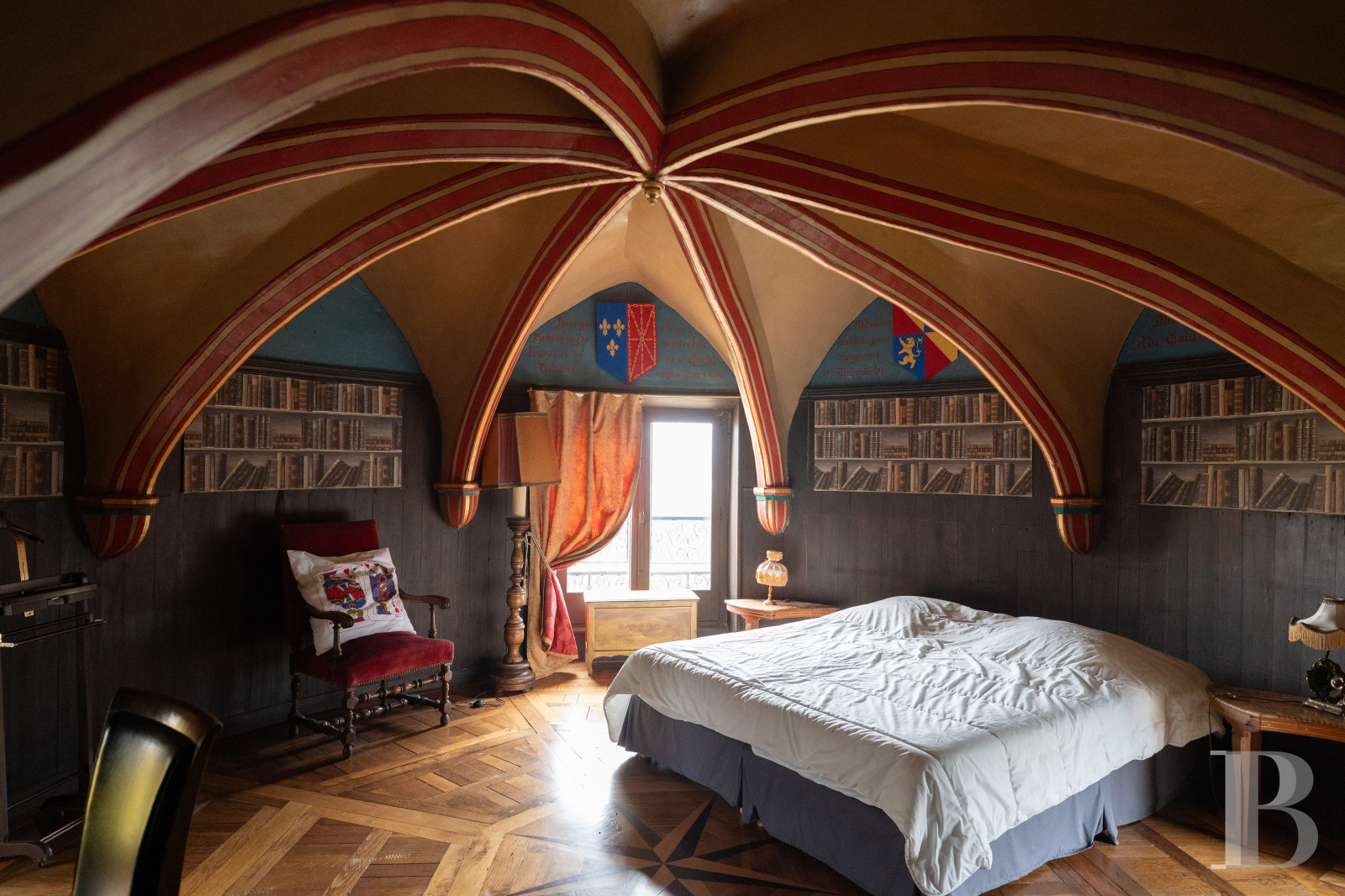
The chateau’s staircase ascends to a landing with original terracotta floor tiles, which provides access, on the left, to a hallway that communicates with an initial flat featuring a foyer, a bathroom, a living room with an open kitchen and a circular bedroom located in the former archives tower. The latter, vaulted and with wood panelling, still features handwritten writing on its walls, which identifies the dwelling’s lordly lineages and was restored during the chateau’s recent renovations, while its painted vaults and solid oak parquet floors with a star-shaped pattern create an ambiance that is both intimate and spectacular for this one-of-a-kind room.
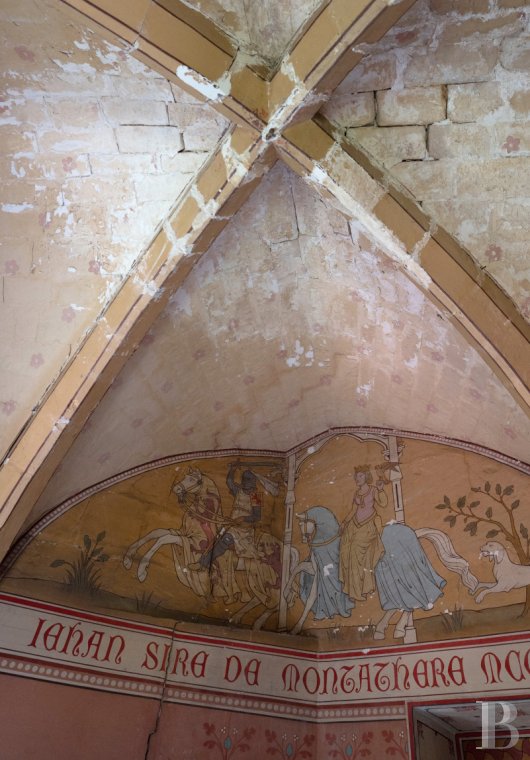
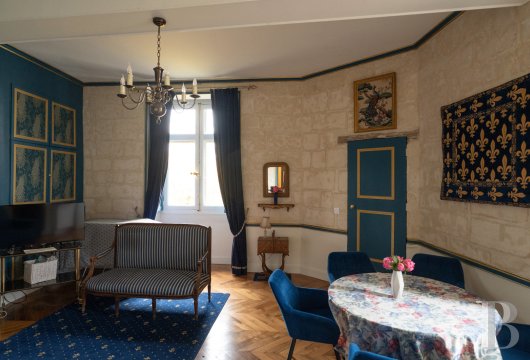
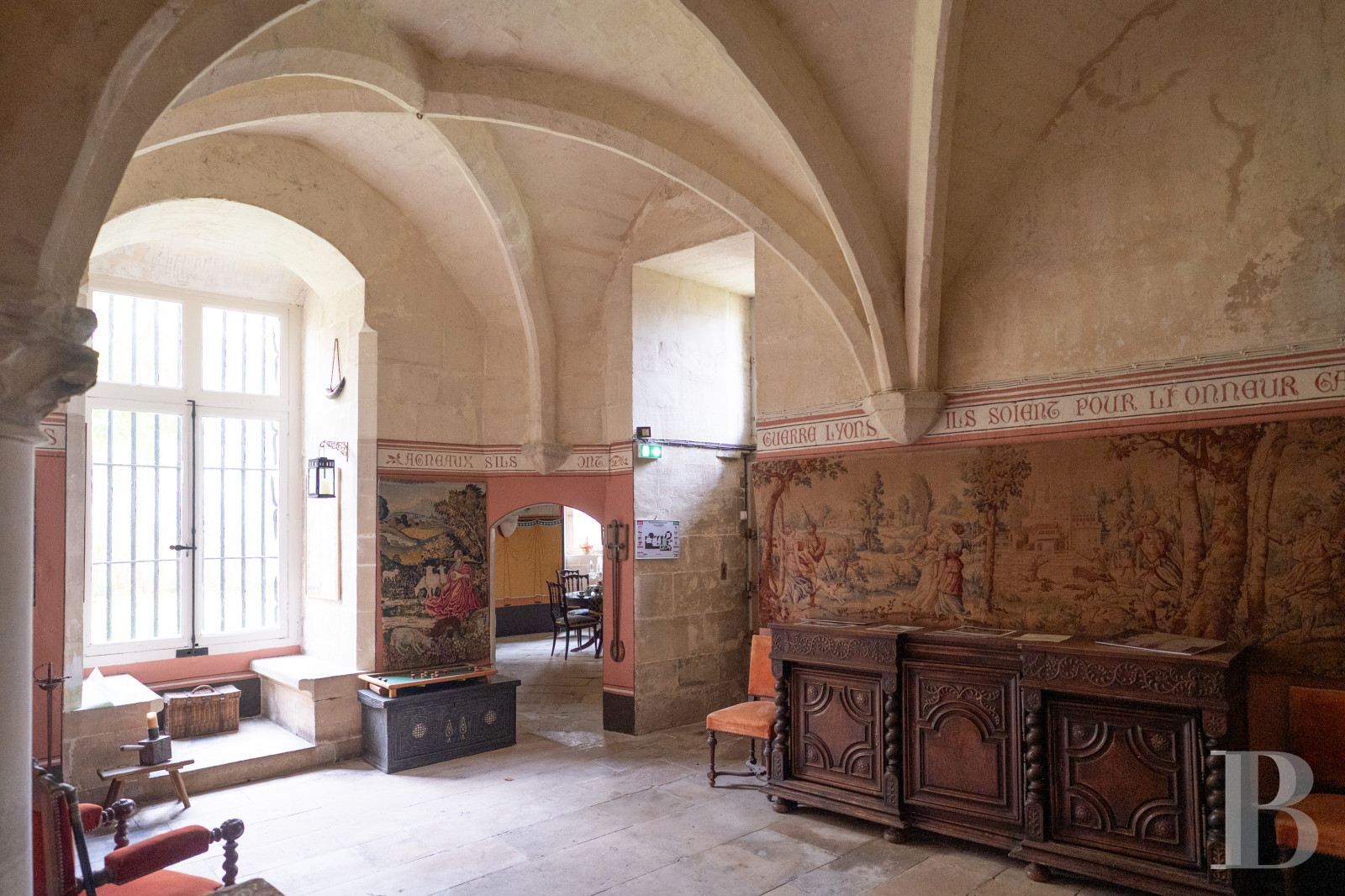
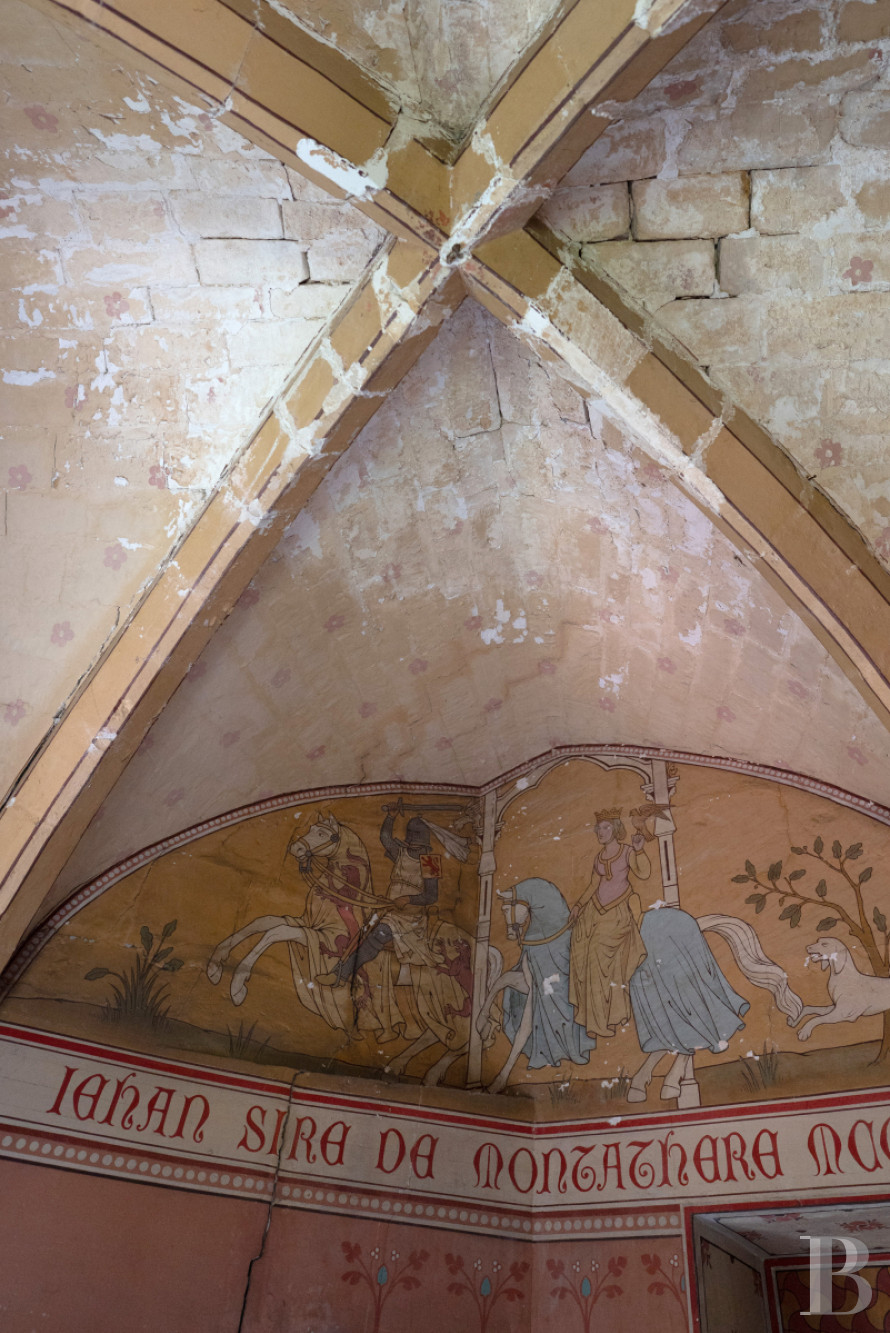
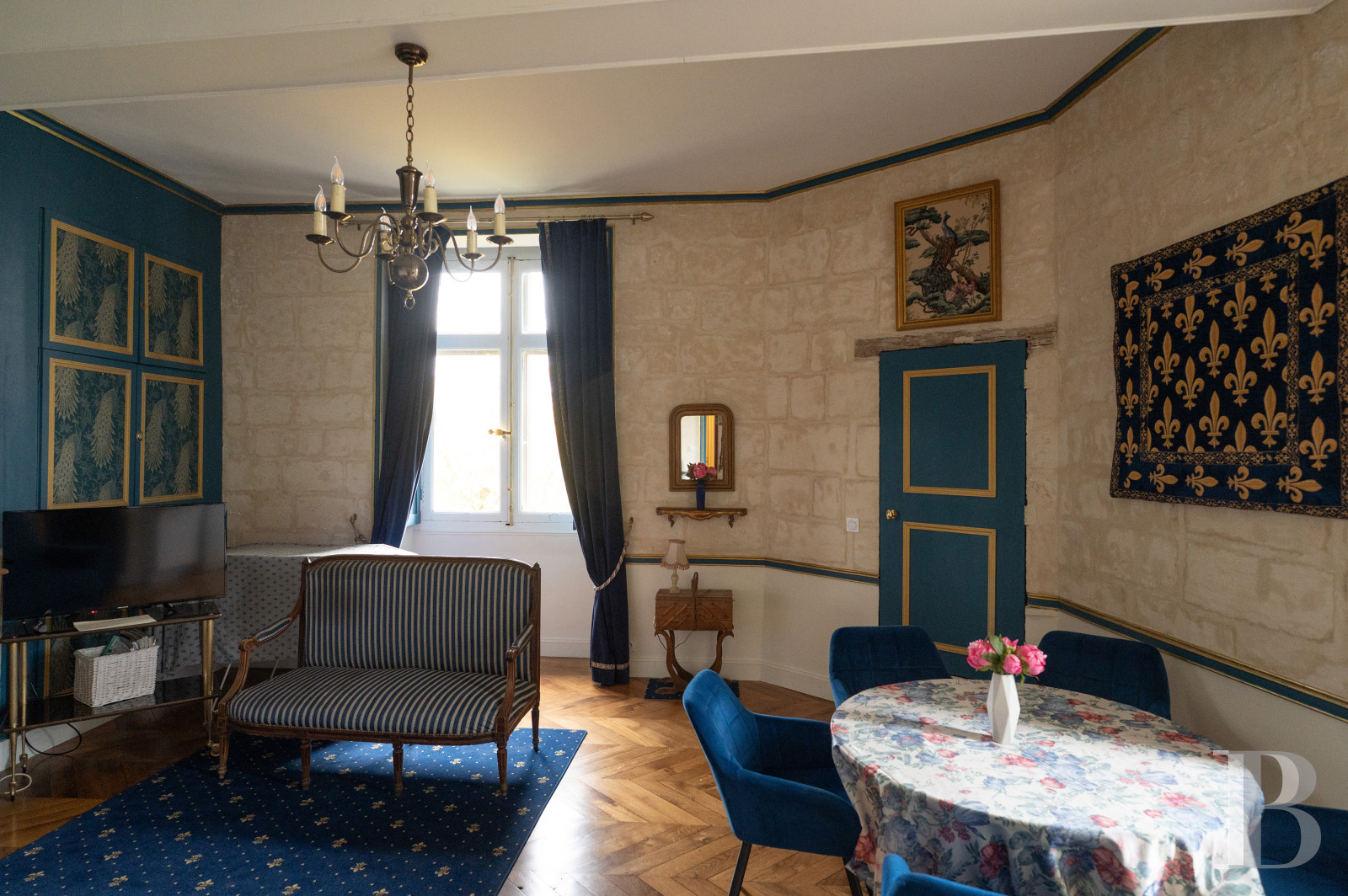
As for the second tower, it is accessible from the landing and includes a vaulted room, to be renovated, with wall frescoes in ochre and red tones as well as gothic inscriptions that recount the various sagas of the lords of Montataire, whereas, the corridor extends all the way to the immense seminar room, recently renovated and currently used for conferences, training events and meetings, whose ashlar stone walls, visible ceiling beams, herringbone parquet floors and large windows overlooking the grounds, provide this room with both an understated and refined atmosphere.
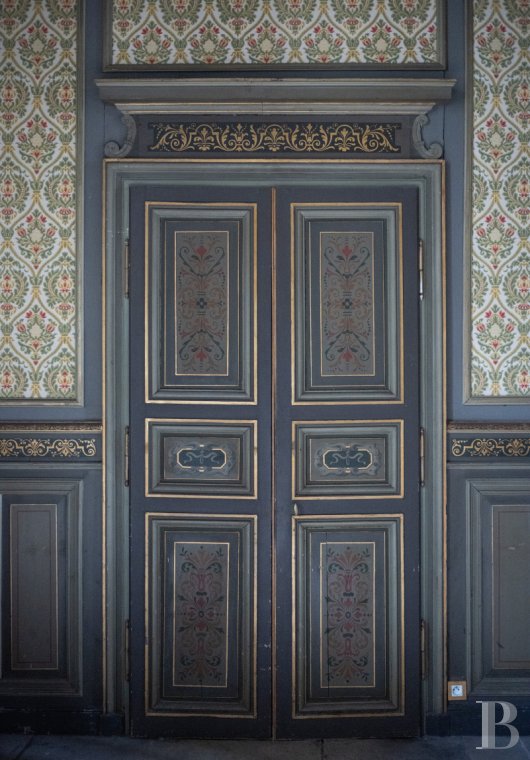
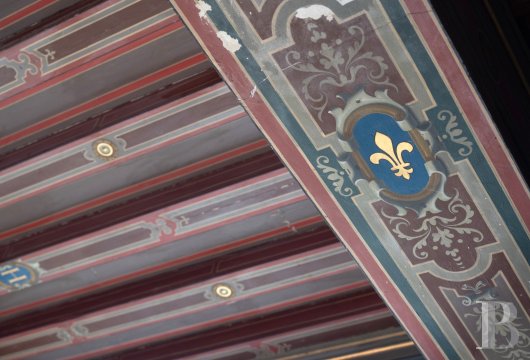
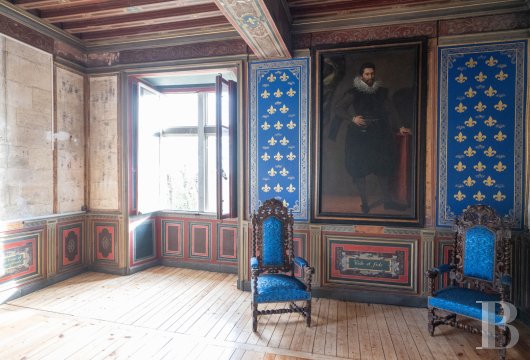
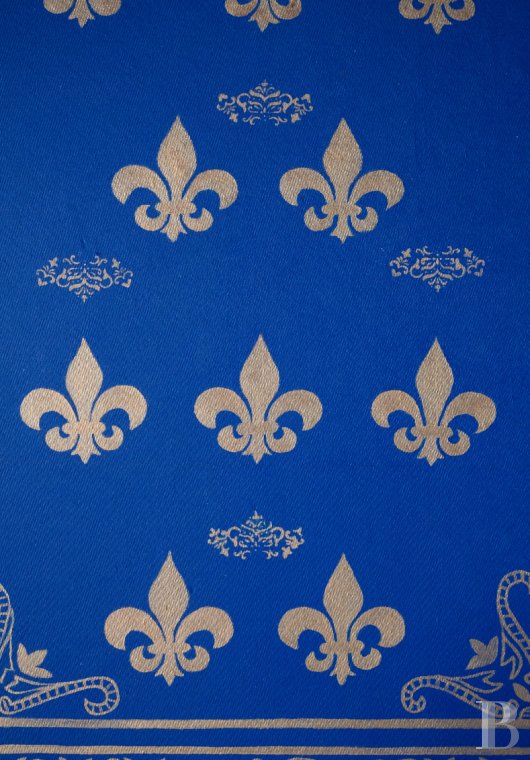
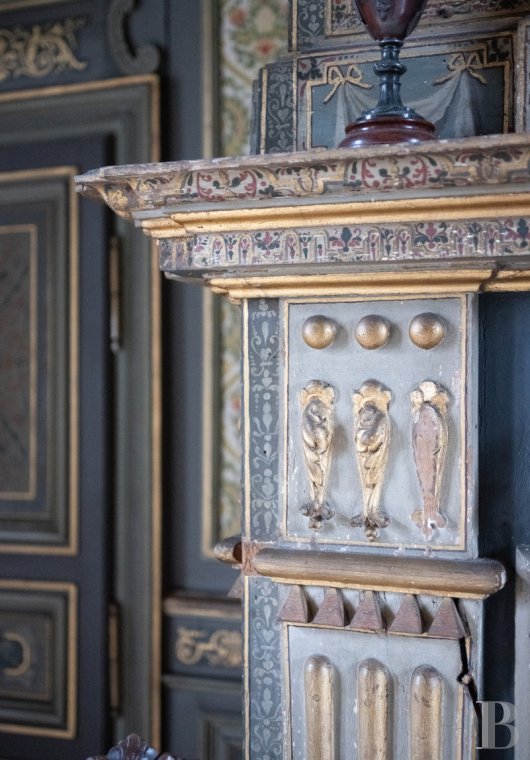
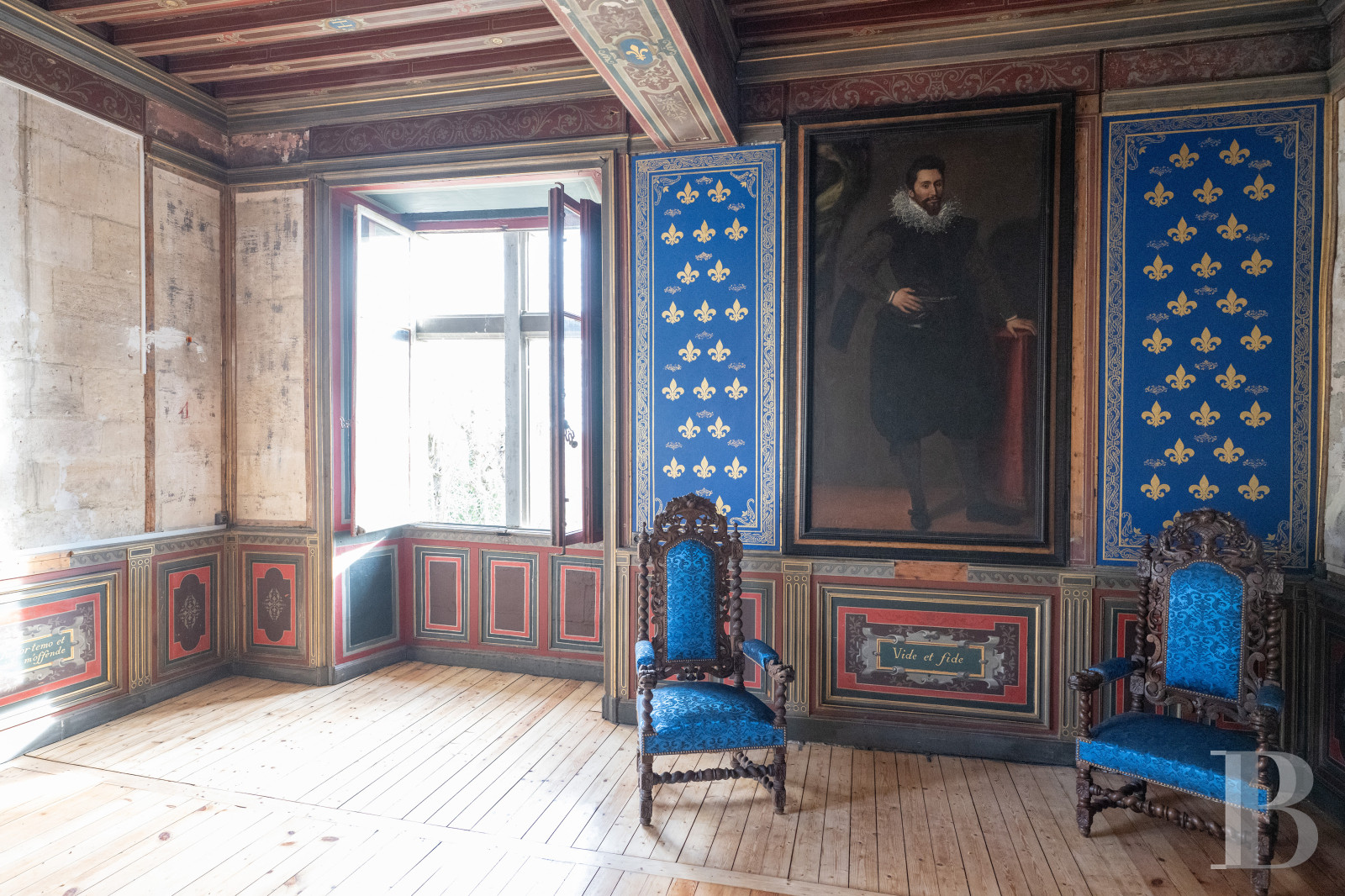
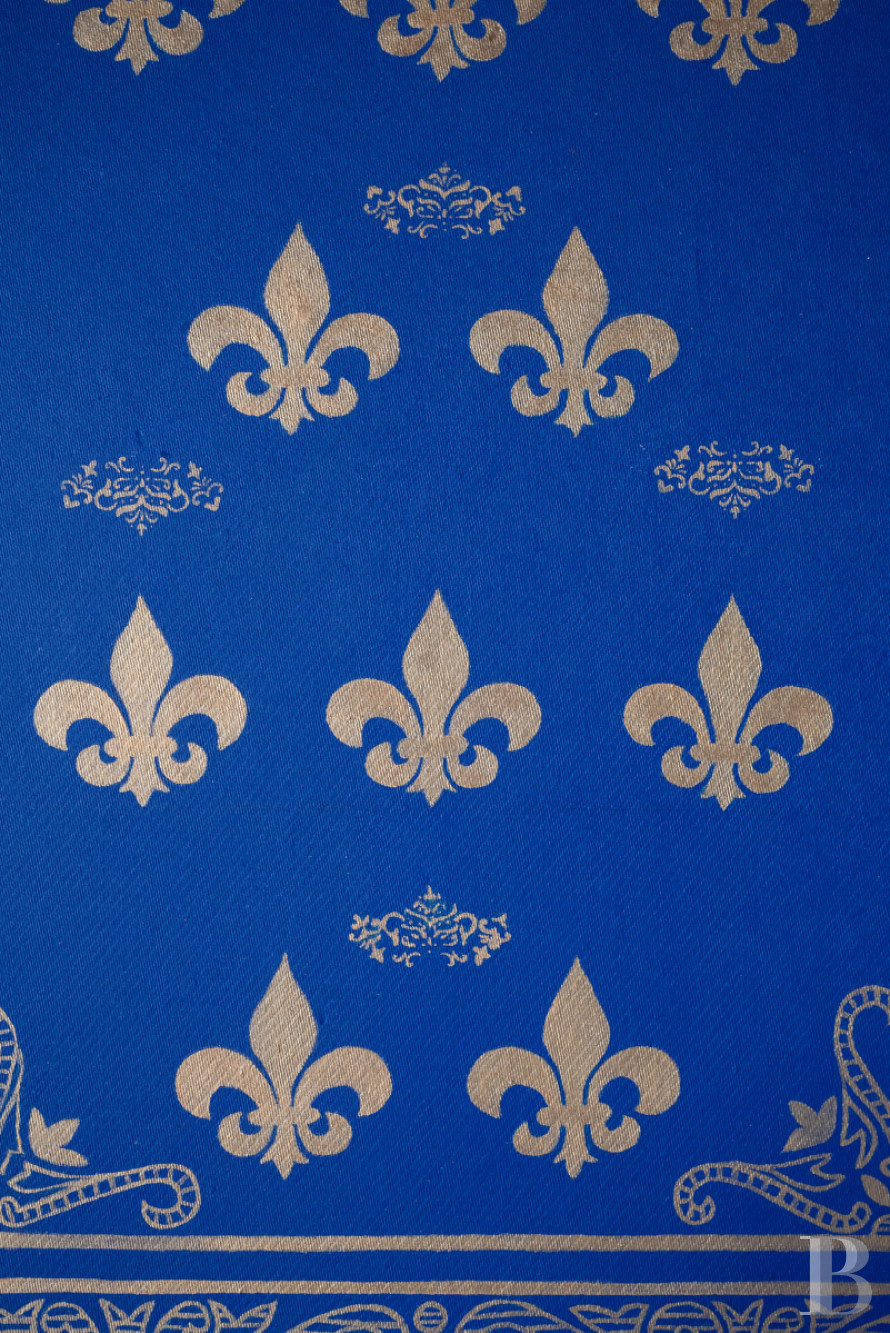
Further on, the “Henri IV” bedroom, in the process of being restored, recalls, thanks to its polychrome décor, the prosperous age of the 17th century, while its ceiling beams painted with royal monograms, panels decorated with fleur-de-lis and the large portrait of the King of Navarre come together to create a room fit for a king, which, in addition, was once one of the most prestigious in the chateau with its wooden décor and frescoes, now restored, which reveal the past ornamental breadth of these lavish rooms.
Back on the landing, double doors open on to a second flat located in the chateau’s right wing. Less architecturally distinctive in appearance, it includes a large living area with an open kitchen, a bedroom and an immense bathroom.
The second floor
A landing communicates, on the right, with a flat featuring an immense living room with visible ceiling beams, a fitted kitchen, a separate bedroom and a shower room, while its ashlar stone walls and visible wooden rafters bear witness to the architectural precision of this period and its windows, bathing the space in natural light, highlight its ample proportions.
To the left, a hallway first leads to a flat with varnished terracotta floor tiles, which includes the bedroom that was once occupied by Bishop Jean-Baptiste Massillon. As for its front door, it opens on to an immense living area with several windows and a fitted open kitchen, while a narrow corridor provides access to two sunny circular bedrooms, as well as a bathroom.
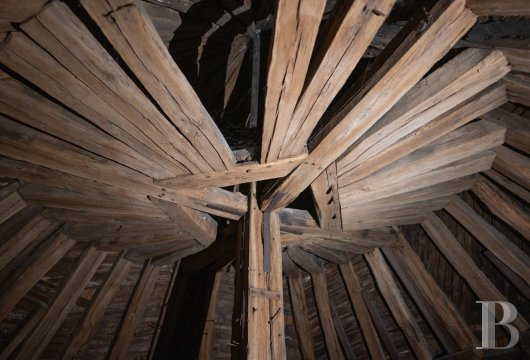
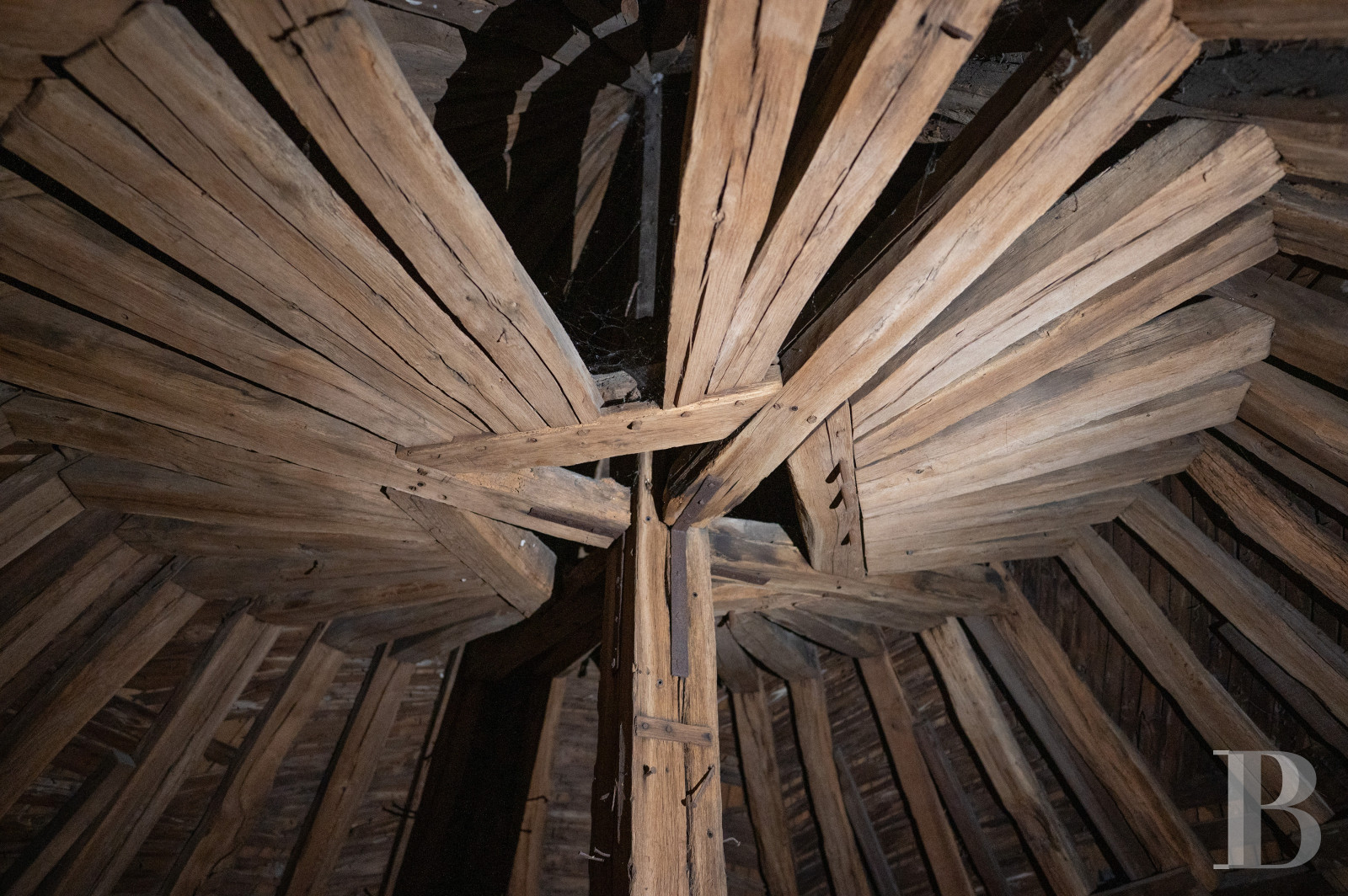
Above, via a small staircase, an attic space, currently used for storage, is topped with impressive solid oak rafters, followed by the chateau’s slate roof.
The attic
Extending over the entire chateau, this level features original solid oak wood rafters as well as significant floor-to-ceiling heights, which presage a number of different uses, while its pointed stone walls and wooden rafters not only highlight its original structure, but also confirm the grandeur of its period framework.
The basement
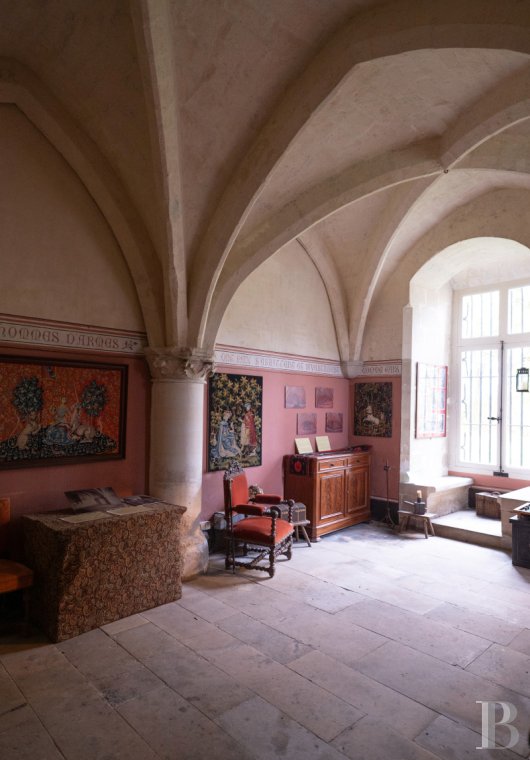
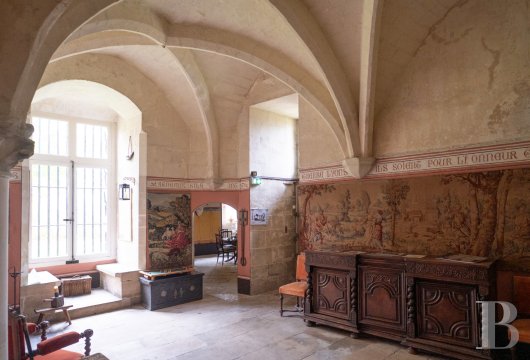
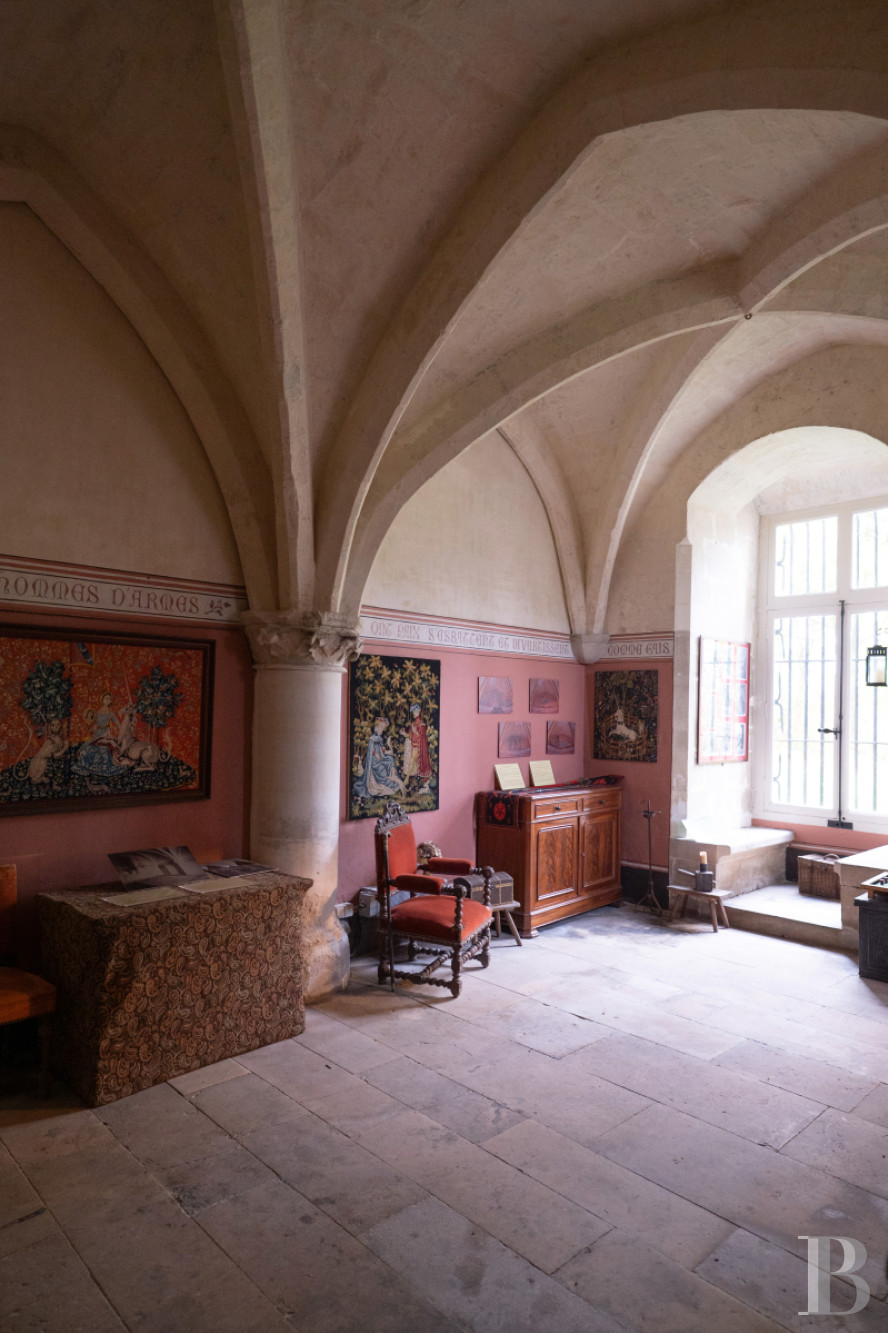
The chateau’s basement, completely vaulted, features a one-of-a-kind ambiance. In the process of being renovated, it boasts ancient frescoes, which have been restored to match the originals, while the vaults’ stone ribbing underlines the solidity of the construction and recalls the medieval processes used in the chateau’s older sections.
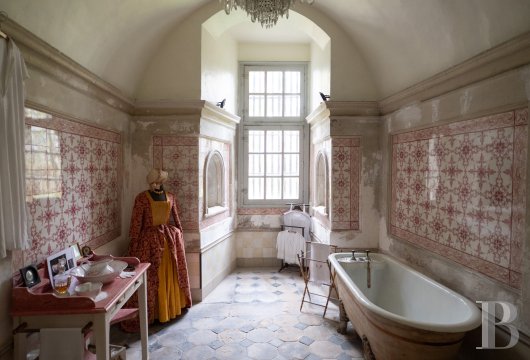
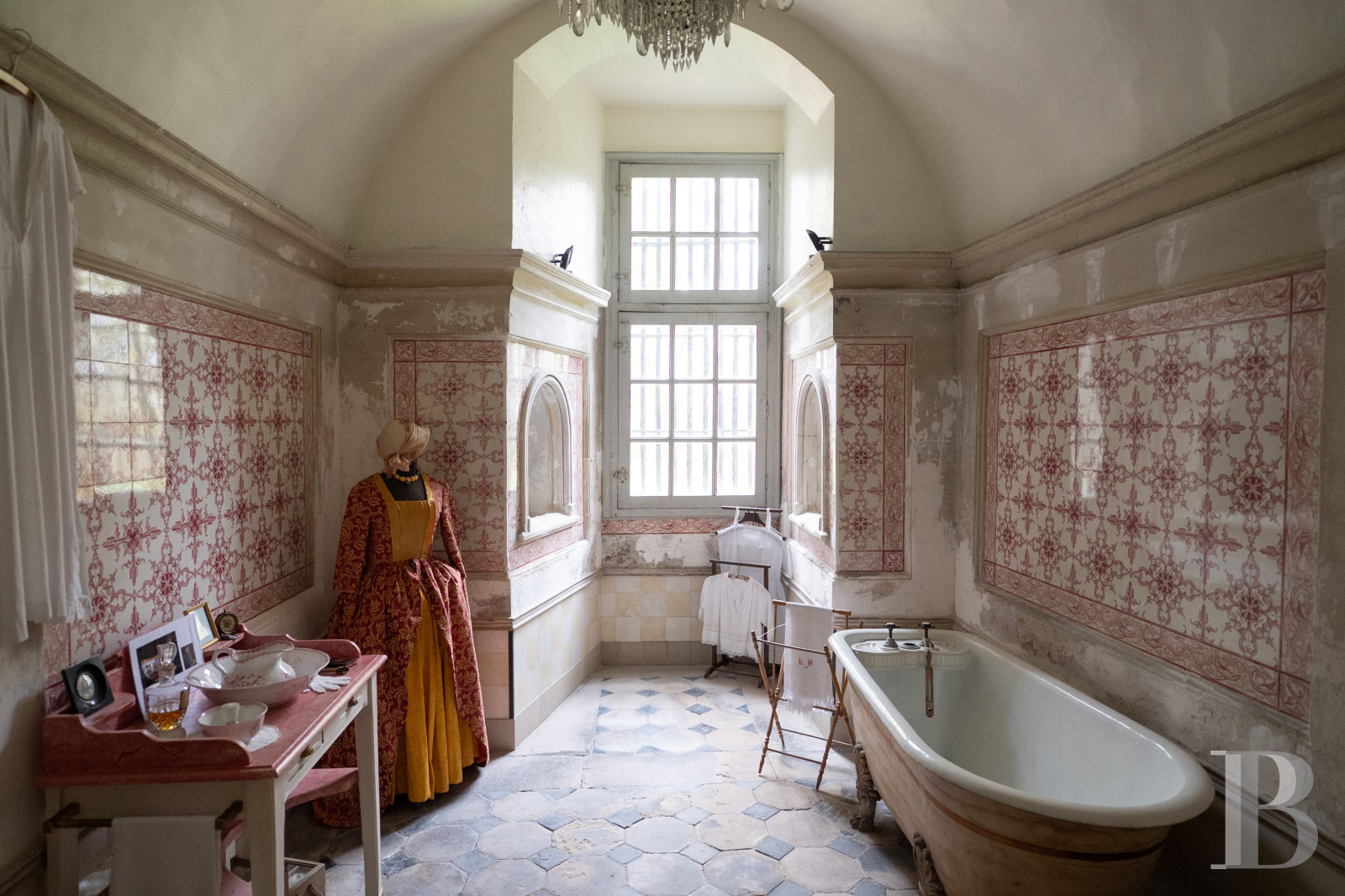
Accessible from the outside via a door located between the two towers, this level includes several separate areas meant to titillate visitors’ curiosity: an ancient bathroom with red-patterned earthenware tiles and an original heating system, a dining room decorated with frescoes that imitate Empire-style wall hangings, as well as a former kitchen.
Lastly, another room is used for the chateau’s machinery and includes the boiler room, located in the hearth of the chateau’s former fireplace.
The Grounds
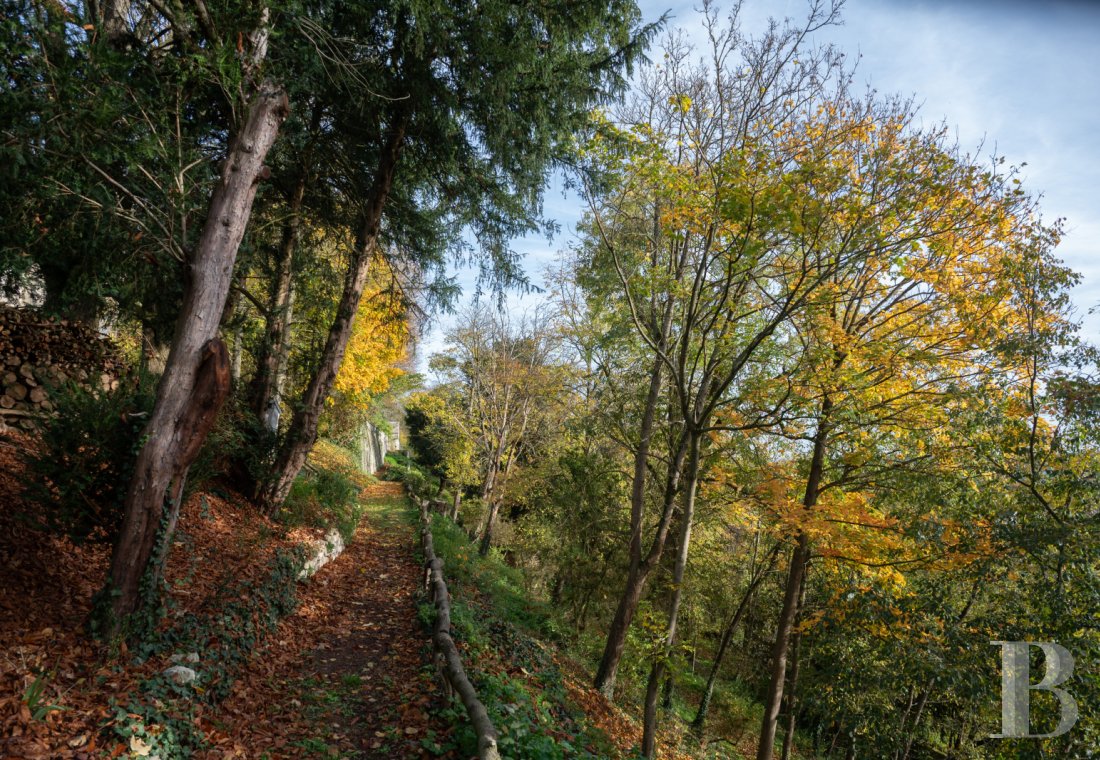
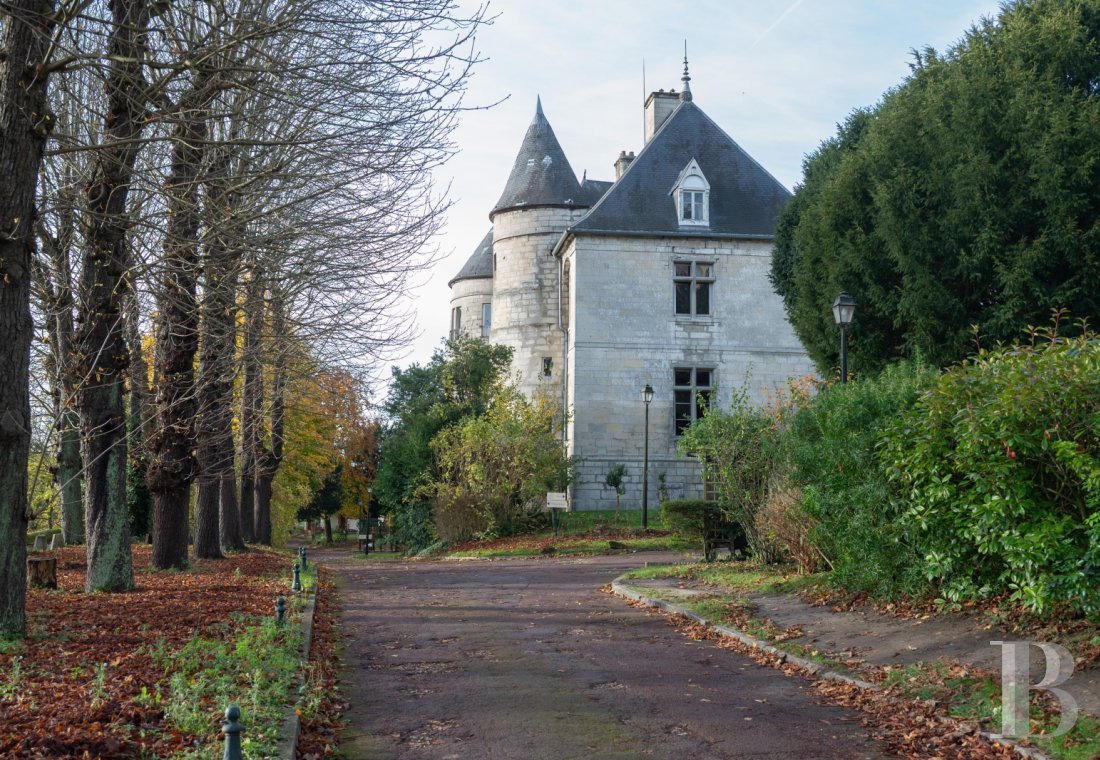
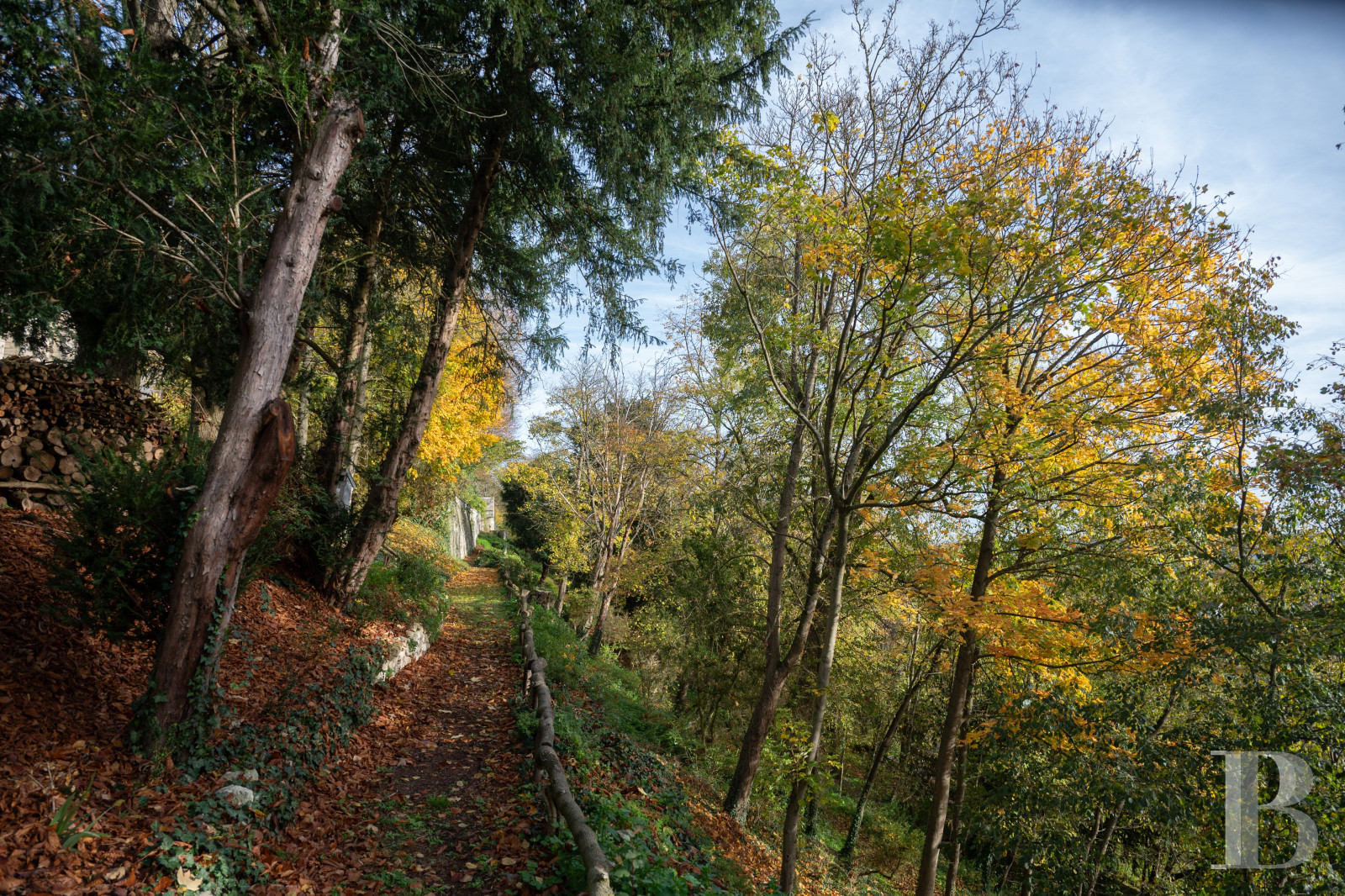
Surrounding the chateau and, today, divided into several properties, which blend together seamlessly, the grounds overlook the valley and enjoy a panoramic view of the city’s rooftops and the neighbouring countryside, while its lanes, bordered by centenary trees, lead to a variety of areas redesigned into grassy patios, parking places, a tennis court and flowerbeds, which all contribute to this site’s overall eye-catching composition.
As for the main courtyard, facing south, it is located right in front of the chateau’s entrance, flanked on either side by its two main towers, and highlights the dwelling’s orderly façade as well as its elegant double staircase leading to the upper patio, whereas, despite the modern constructions that have been added over time, the grounds have preserved their wooded setting, residential charm and, above all, the chateau’s alluring architectural presence.
Our opinion
Perched on a hill and resembling a fortress that has undergone a series of transformations over the centuries, this chateau has preserved a powerful and inspiring aura, while, already used for seminars, cultural events and tea parties, it boasts a historical and one-of-a-kind setting, ideal for public events.
With its solid architecture, ample proportions and impressive materials, this chateau has become an emblematic place, capable of combining history with contemporary activities, whereas the valley, below, which includes a number of business parks, represents an undeniable potential for the chateau’s economic development.
Whether it continues its cultural pursuit or its activities centred around professional events and training programs, the chateau contains all the qualities necessary in order to make this historical site profitable for its future owners as well as thrive within the surrounding economic ecosystem.
Reference 972862
| Floor area under Carrez law | 900 m² |
| Reception area | 260 m² |
| Total floor area | 1000 m² |
| Number of rooms | +20 |
| Number of bedrooms | 7 |
| Possible number of bedrooms | 12 |
| Commonhold fees | 3560 € |
French Energy Performance Diagnosis
Information on the risks to which this property is exposed is available on the website: www.georisques.gouv.fr
Share


- Chantilly -
- Hauts-de-France -
- Oise -
- Picardy
NB: The above information is not only the result of our visit to the property; it is also based on information provided by the current owner. It is by no means comprehensive or strictly accurate especially where surface areas and construction dates are concerned. We cannot, therefore, be held liable for any misrepresentation.