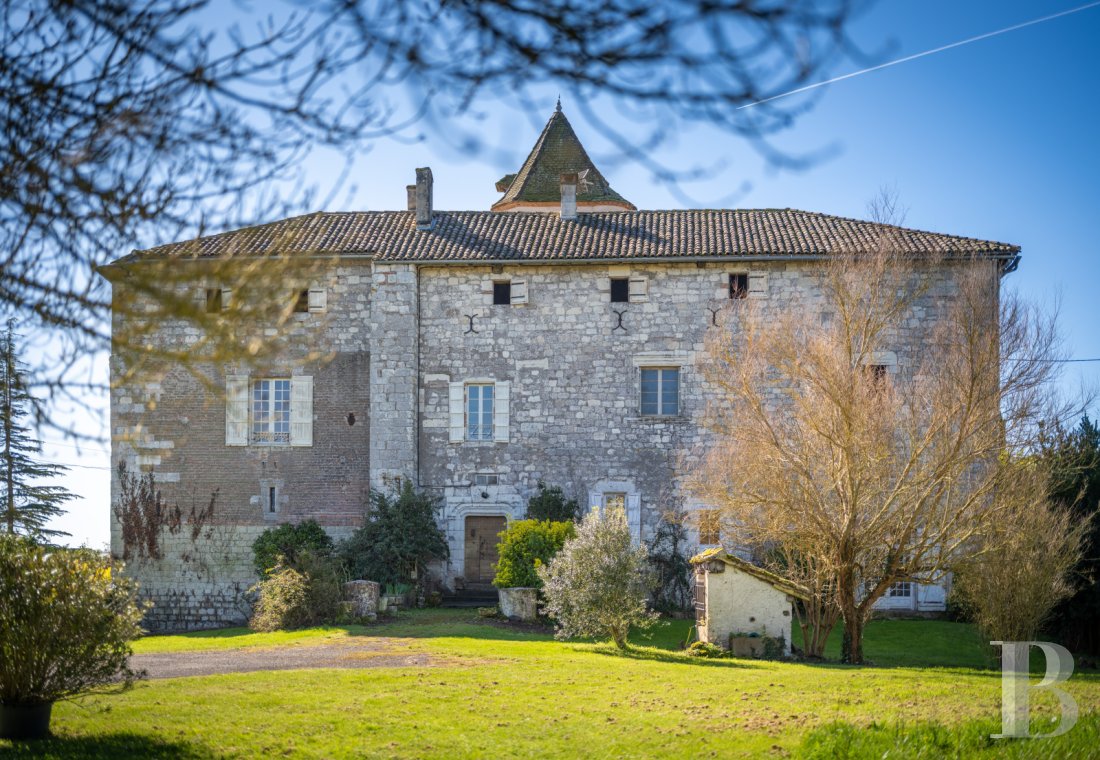




A castle of medieval origin to be restored, in a dominant position, with a terrace,
gardens, outbuildings and land in the southern Quercy Blanc sector
gardens, outbuildings and land in the southern Quercy Blanc sector
Valence,
TARN-ET-GARONNE
midi-pyrenees
82400
FR

Location
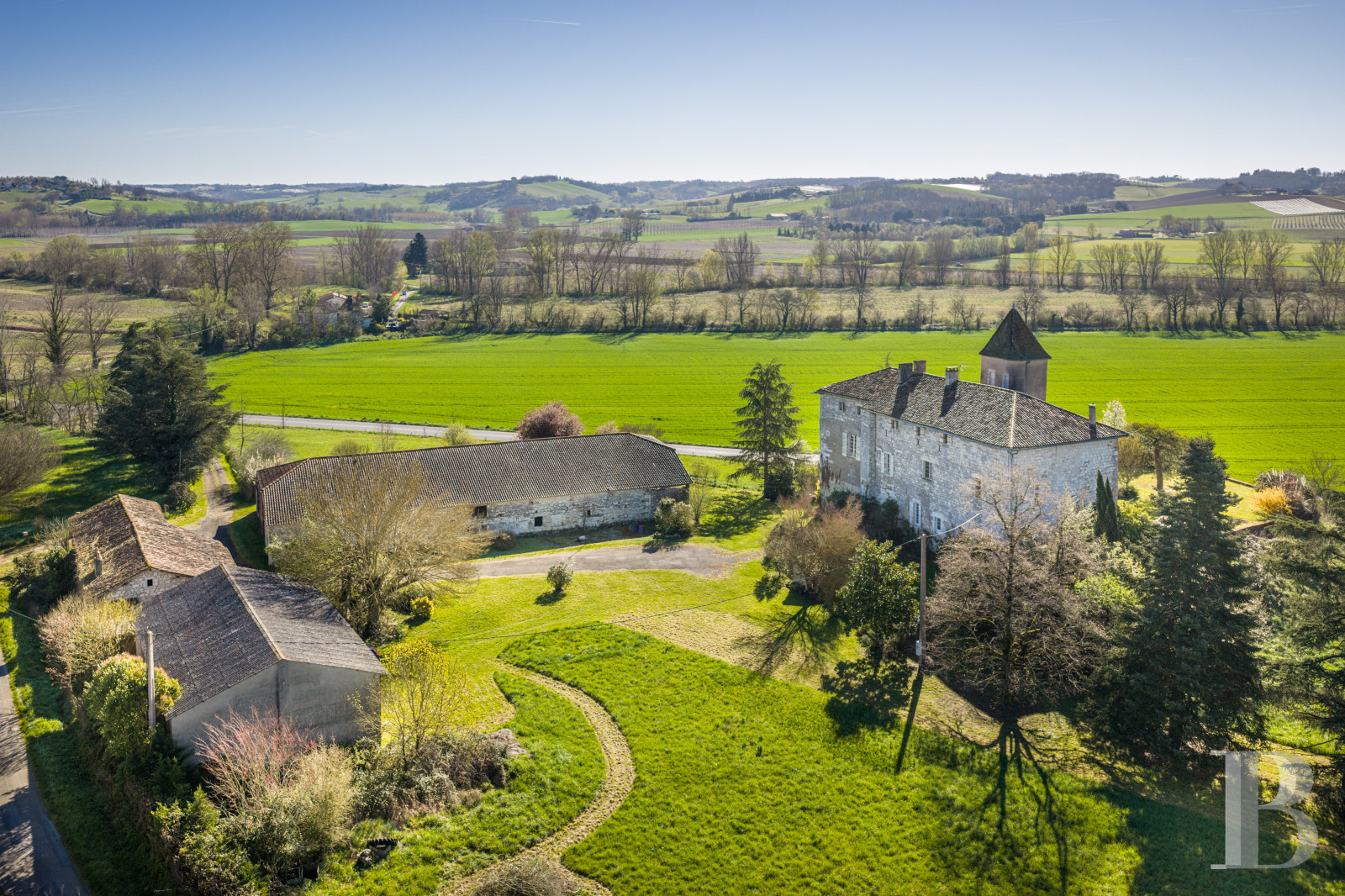
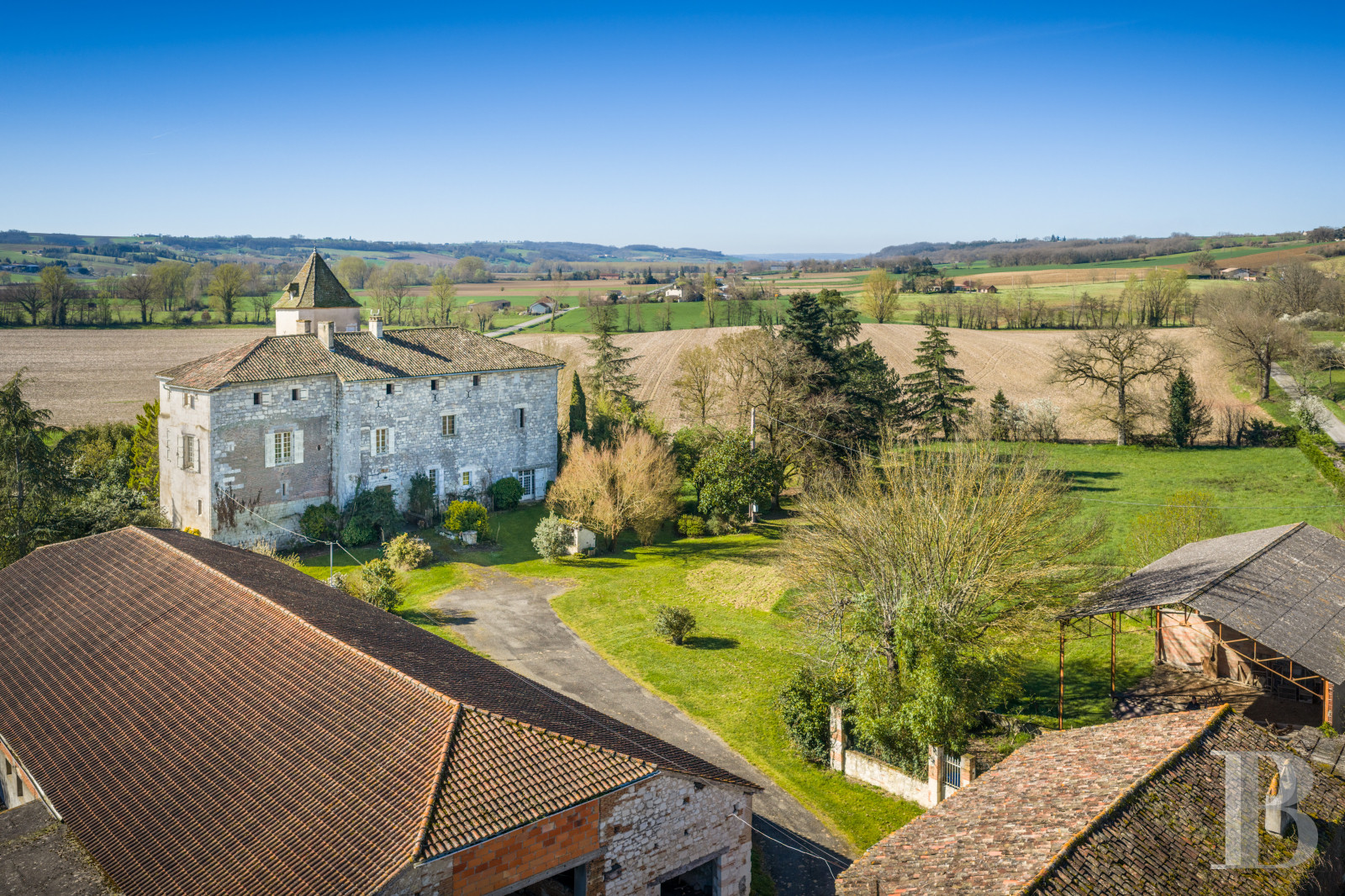
This former castle stands in a peaceful valley combining old woods, orchards and small arable plots, bordered by quickset hedges, on the edges of the Tarn-et-Garonne and Lot-et-Garonne areas, as well as the Occitanie and Nouvelle Aquitaine regions. It was built alongside the ‘Auvernoise’ ancient Celtic way and is close to a preserved village that is part of the Natura 2000 network and a natural zone of interest in ecological, wildlife and plant-life terms. Several shops and services provide for essential everyday needs. It is located 40 minutes from Agen and 45 minutes from Montauban, from whose stations high-speed TGV trains can be taken to Toulouse, Bordeaux or Paris. It is also a little more than 1 hour from Toulouse-Blagnac international airport.
Description
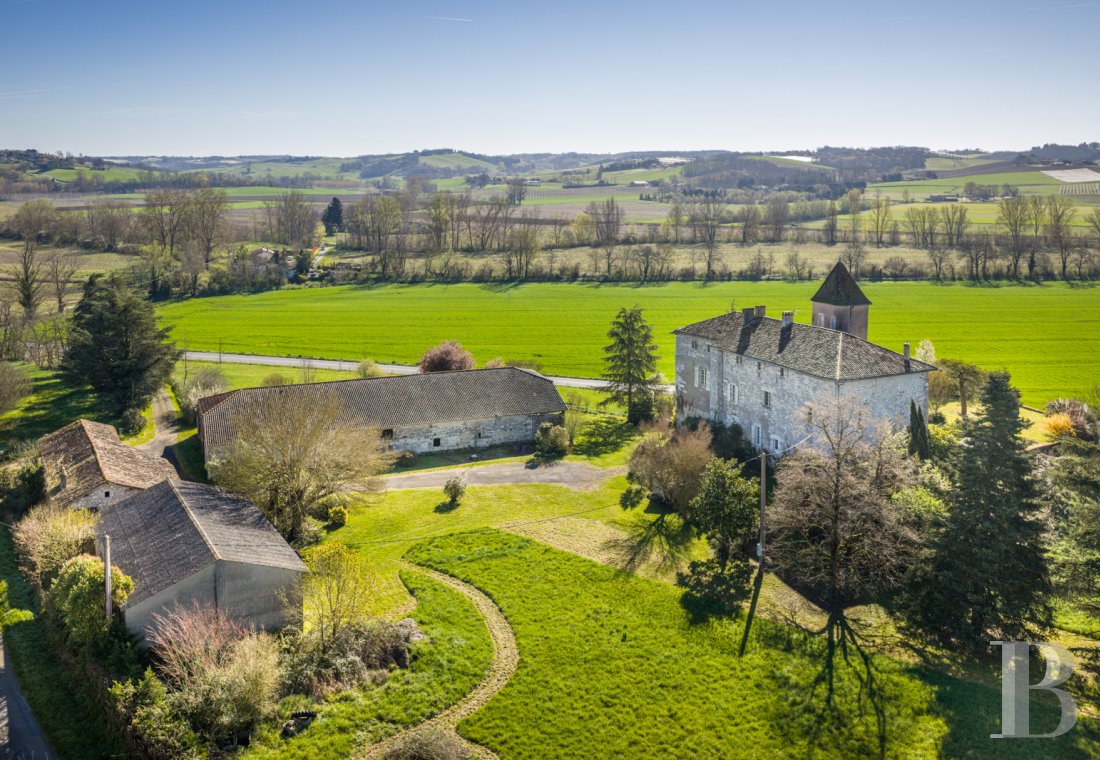
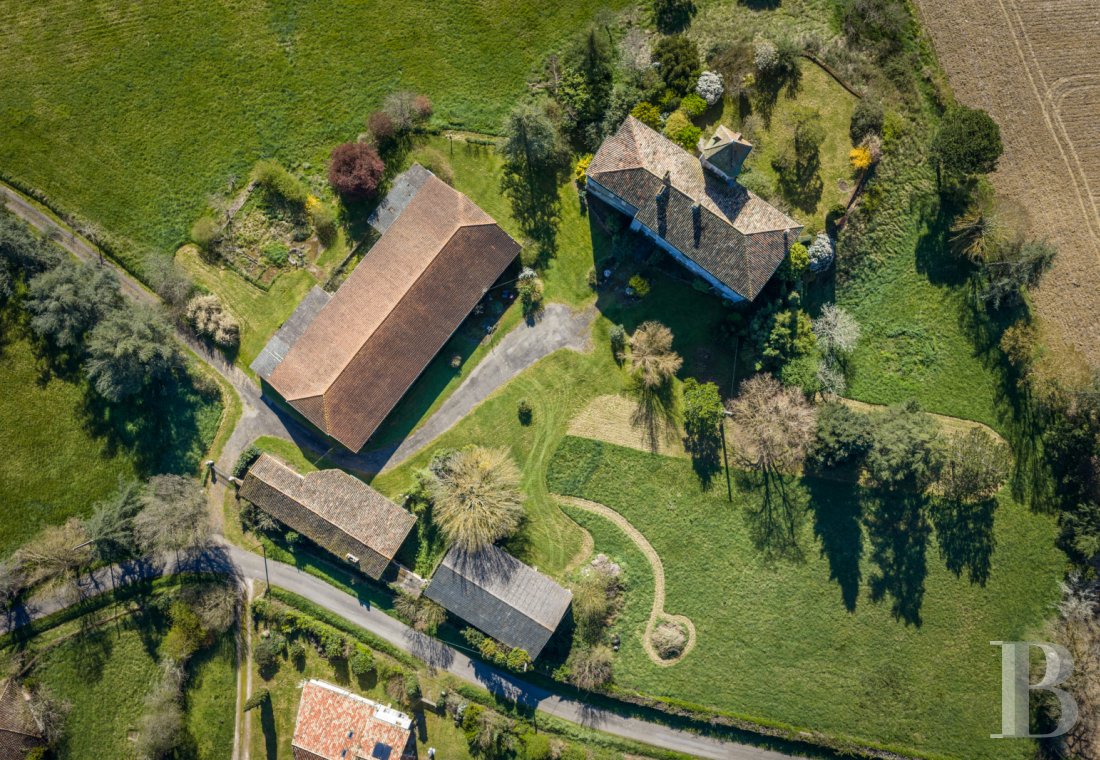
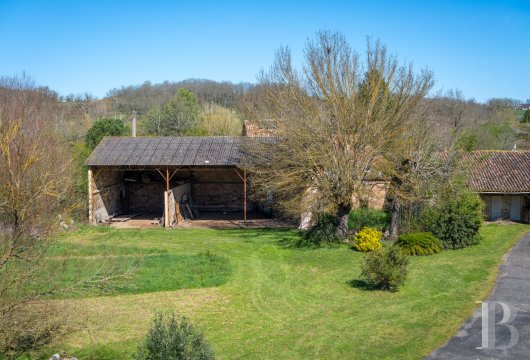
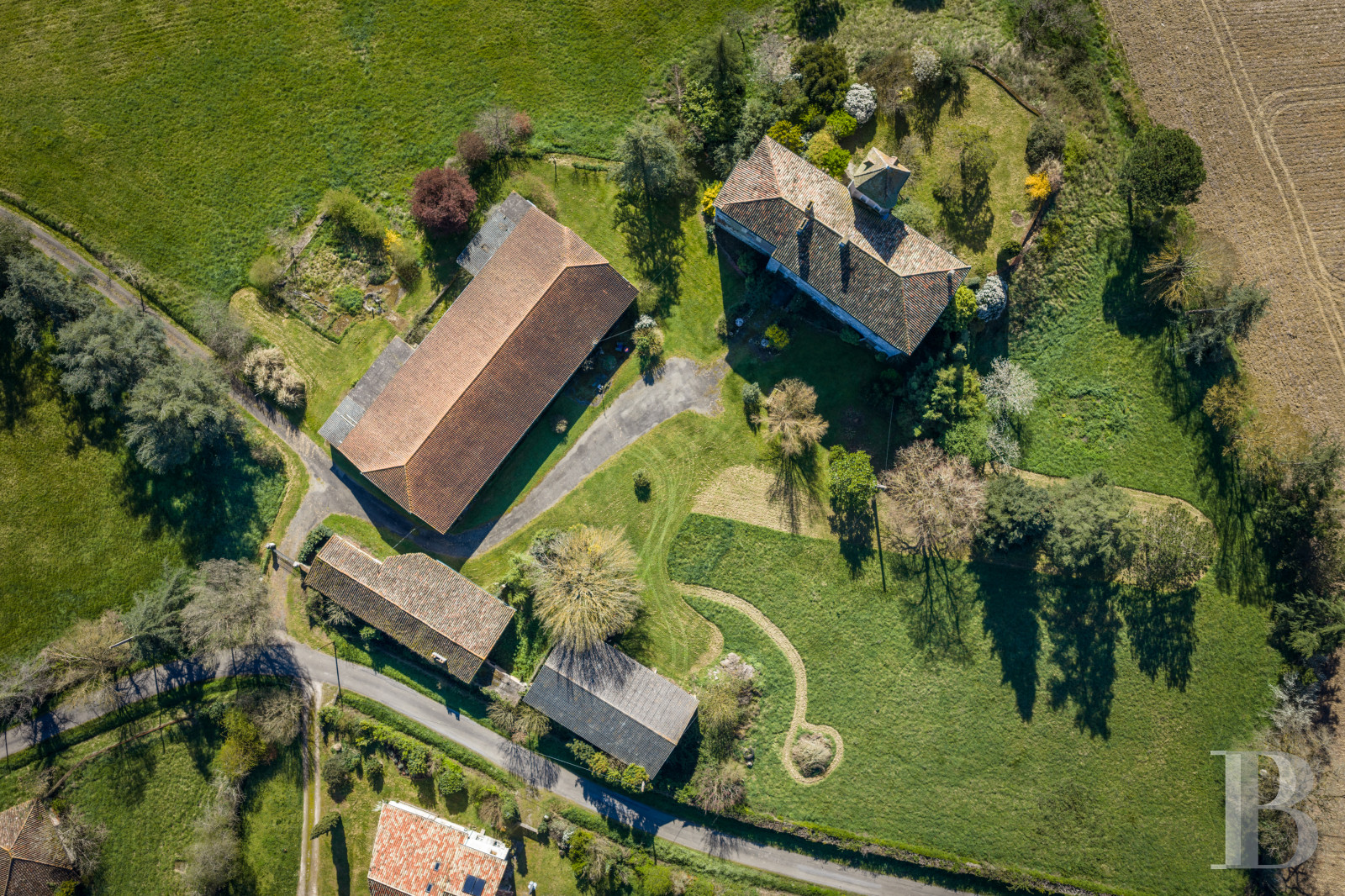
A wide gate with slender railings framed by two square, white stone columns mark the entrance to the estate. A lane lined on one side by cedars leads up through the castle’s grounds, winding between the first outbuildings: to the left, a barn and to the right a multi-purpose livestock building.
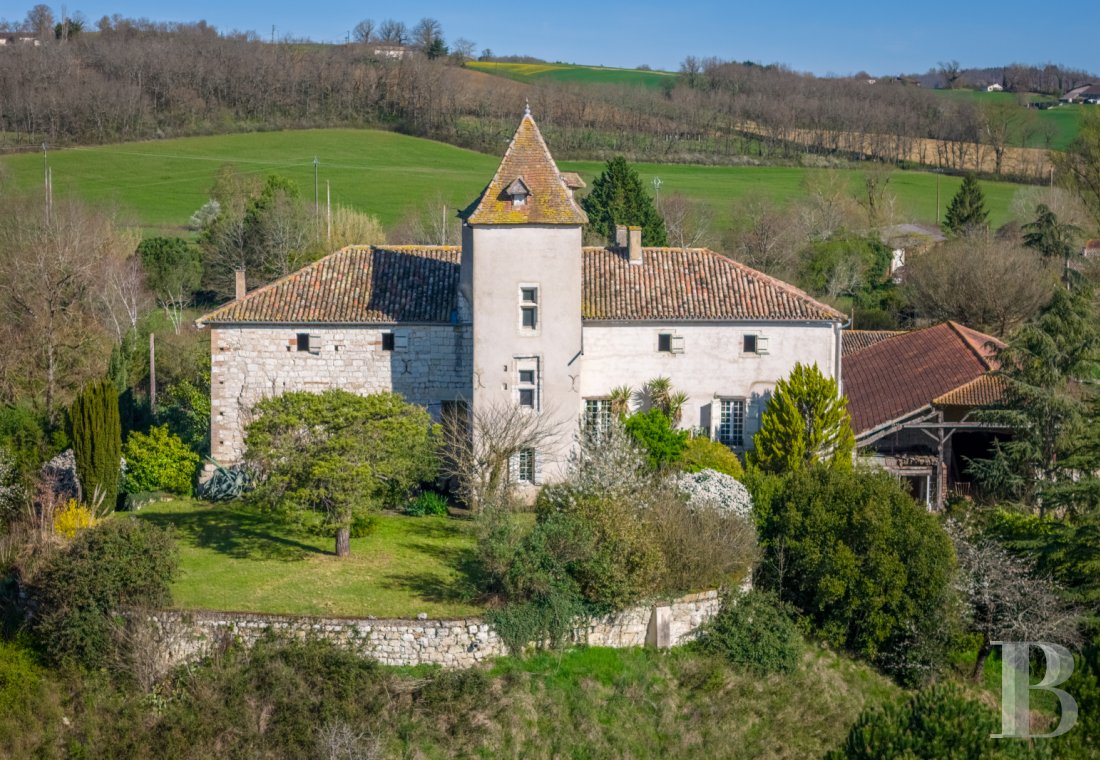
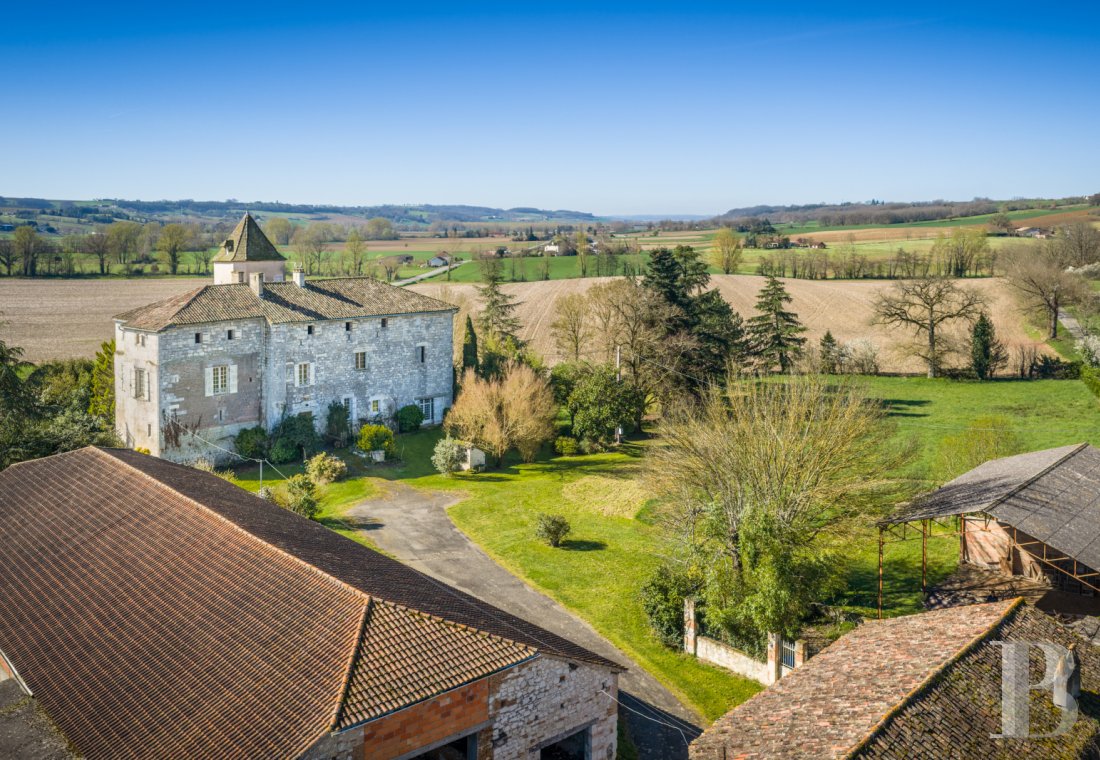
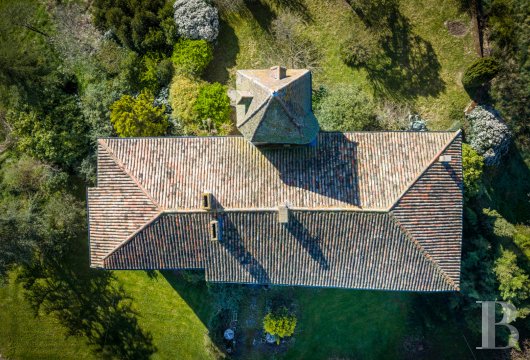
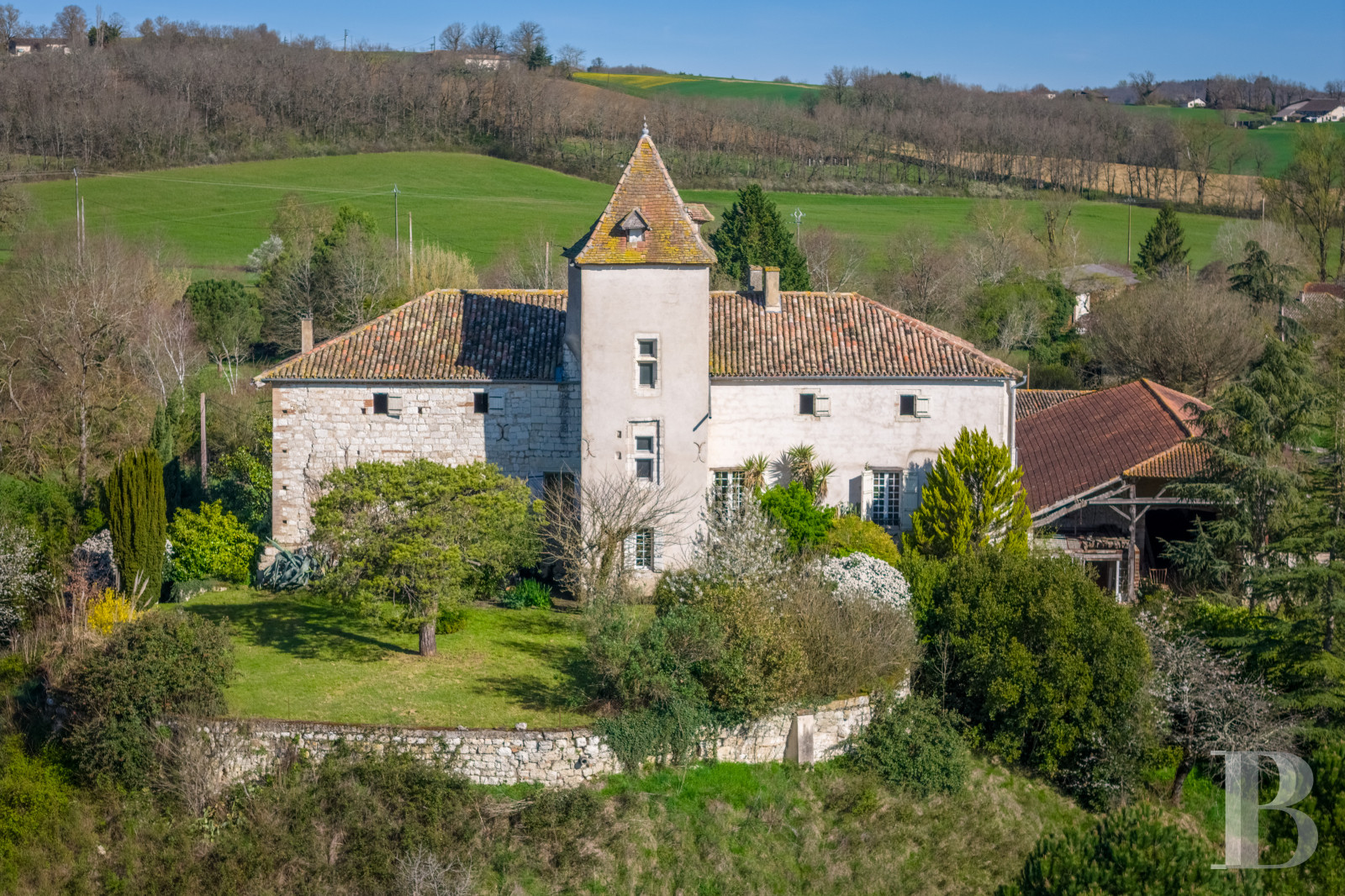
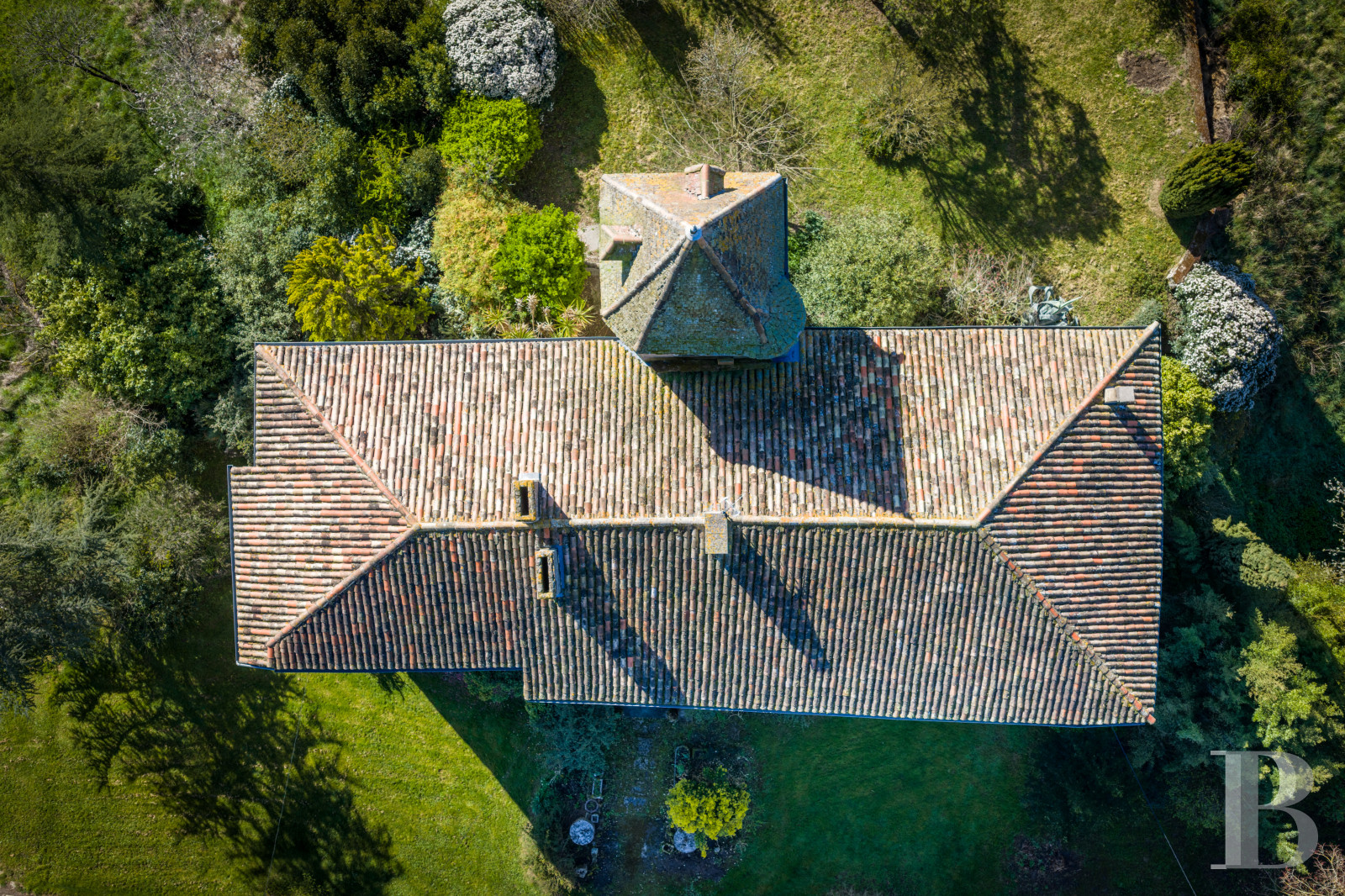
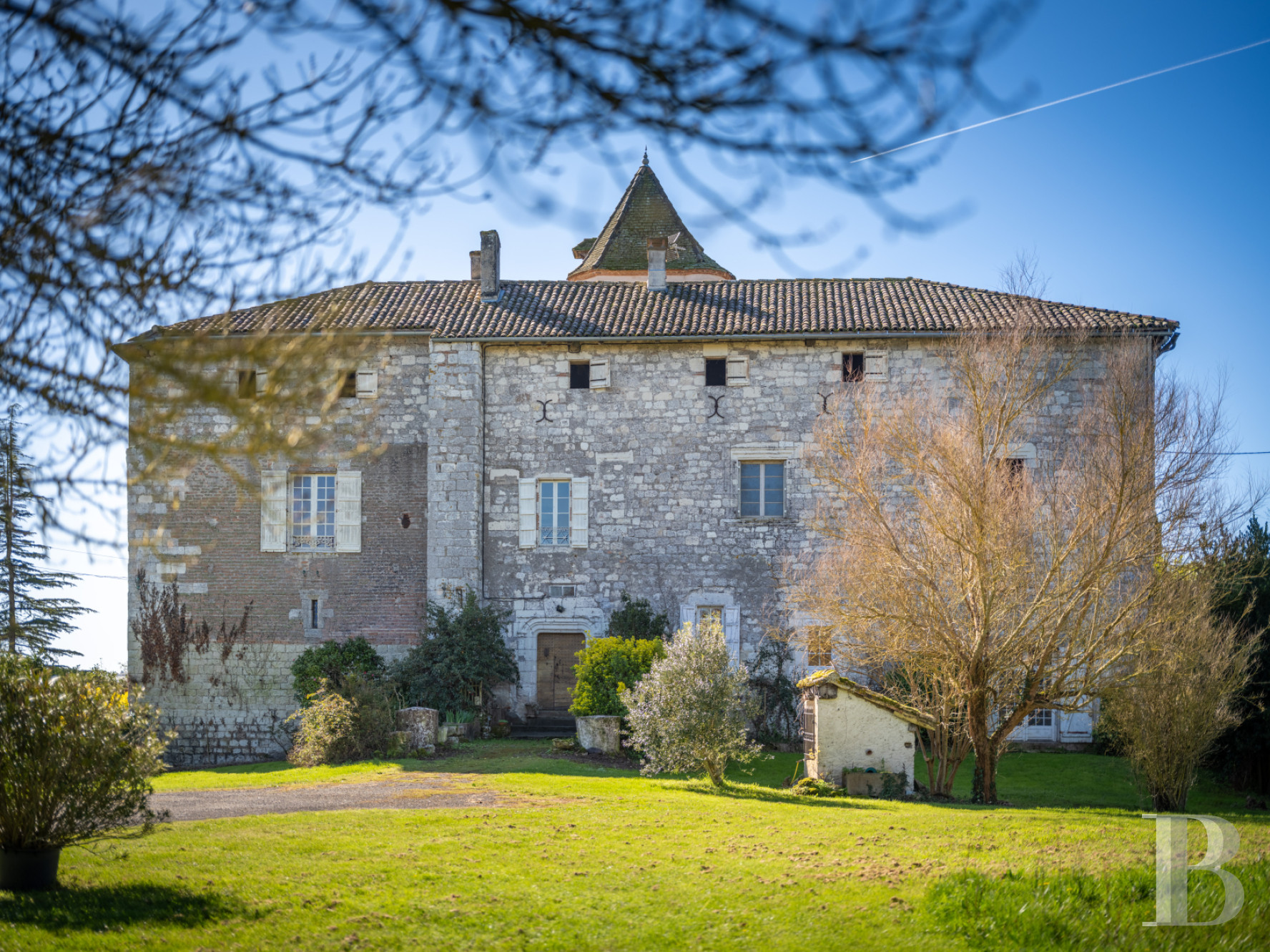
Once past them, the three-storey, north-south oriented, former fortress appears, built on a rock at the top of a hillside. It is adorned with a staircase tower containing a spiral staircase and is topped by a dovecote. Its facades, steeped in its history whose traces date back to the 11th century, are mainly made of stone interspersed with bricks and are regularly punctuated by primarily rectangular windows beneath a hipped roof made of barrel tiles. It is surrounded by partially enclosed gardens and, to the south, by a lawned and tree-lined terrace.
Lastly, behind the second outbuilding, an agricultural storage building completes the property’s edifices.
Once past them, the three-storey, north-south oriented, former fortress appears, built on a rock at the top of a hillside. It is adorned with a staircase tower containing a spiral staircase and is topped by a dovecote. Its facades, steeped in its history whose traces date back to the 11th century, are mainly made of stone interspersed with bricks and are regularly punctuated by primarily rectangular windows beneath a hipped roof made of barrel tiles. It is surrounded by partially enclosed gardens and, to the south, by a lawned and tree-lined terrace.
Lastly, behind the second outbuilding, an agricultural storage building completes the property’s edifices.
The castle
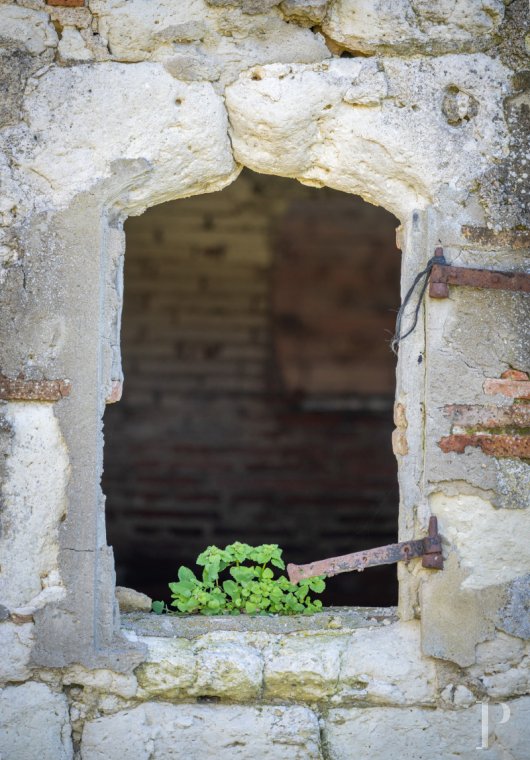
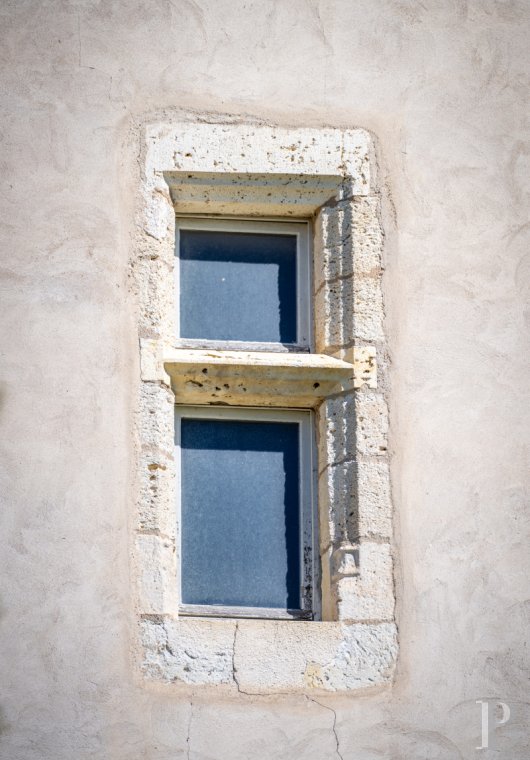
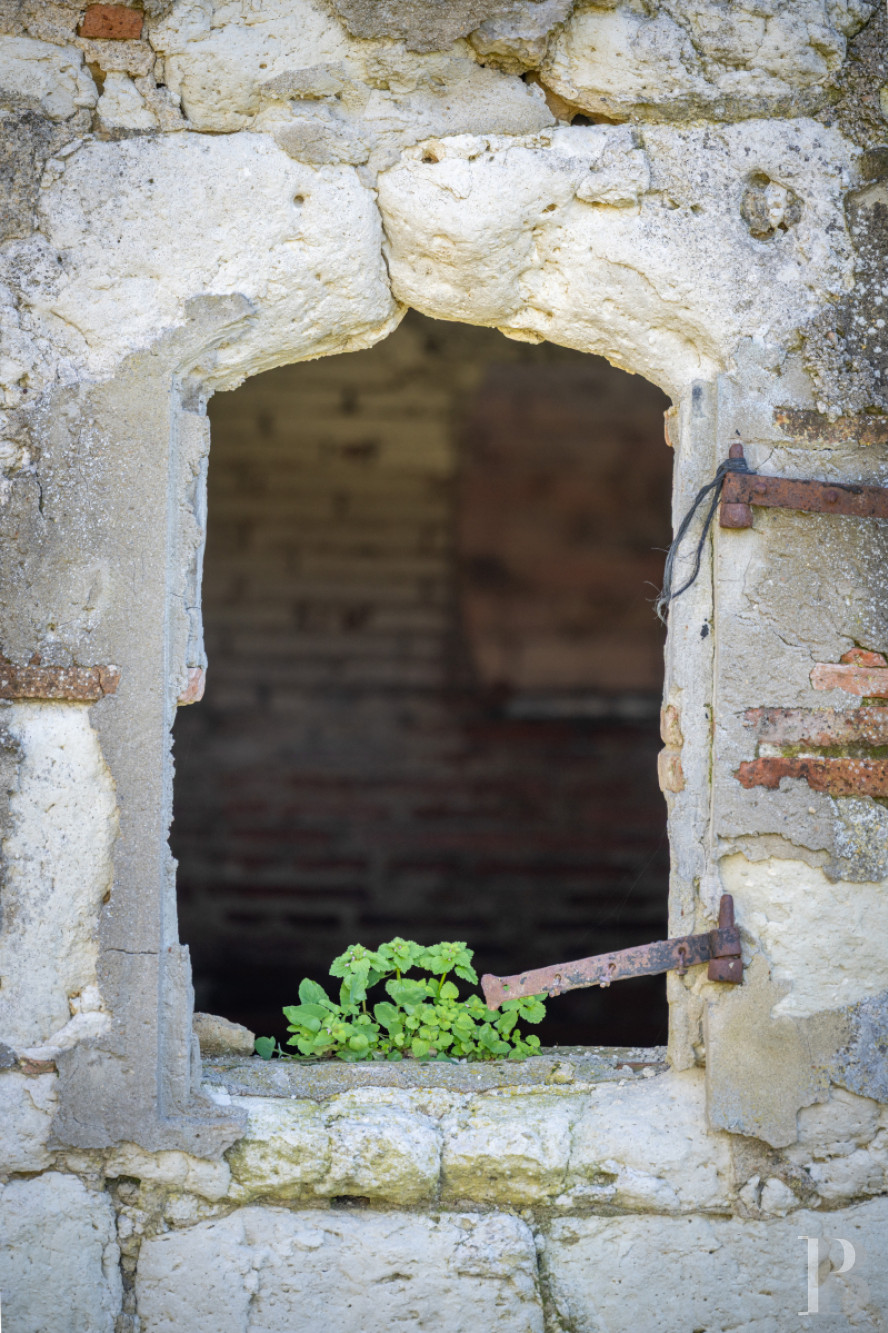
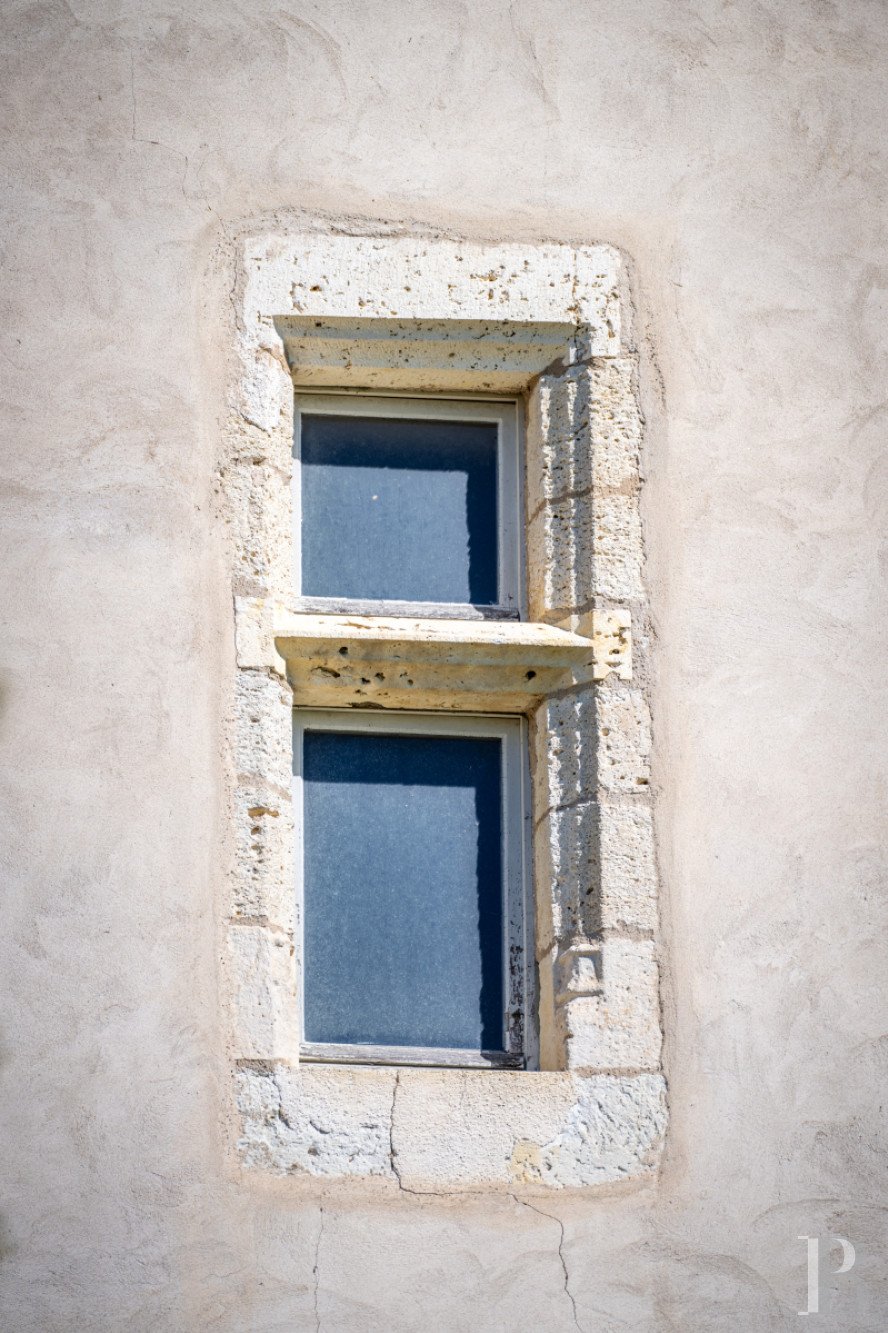
The castle has a hipped roof topped by three chimney stacks and boasts facades combining ashlar, rubble stone and bricks. Traces such as a walled-up window or an accolade-shaped lintel point to past alterations. The ground floor is punctuated by arrow windows and straight openings, the first floor has single mullion windows and variously sized rectangular openings, while the top floor boasts small windows that allow light to filter into the loft. The staircase tower and dovecote are topped by a hipped roof made of barrel tiles.
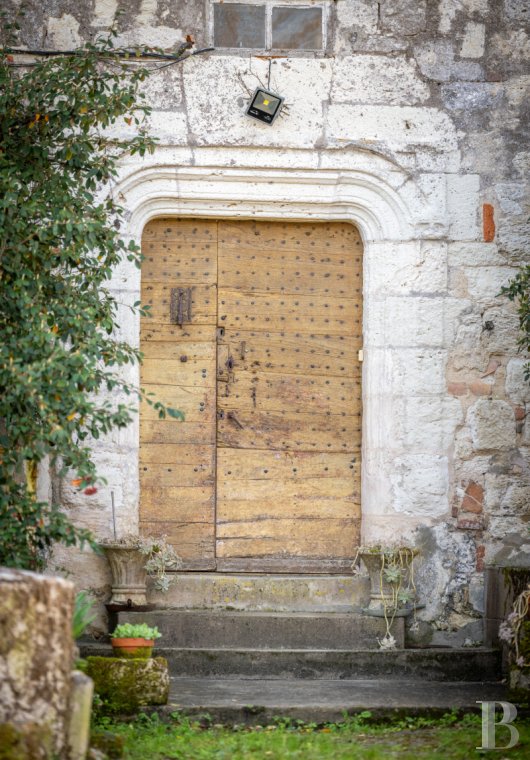
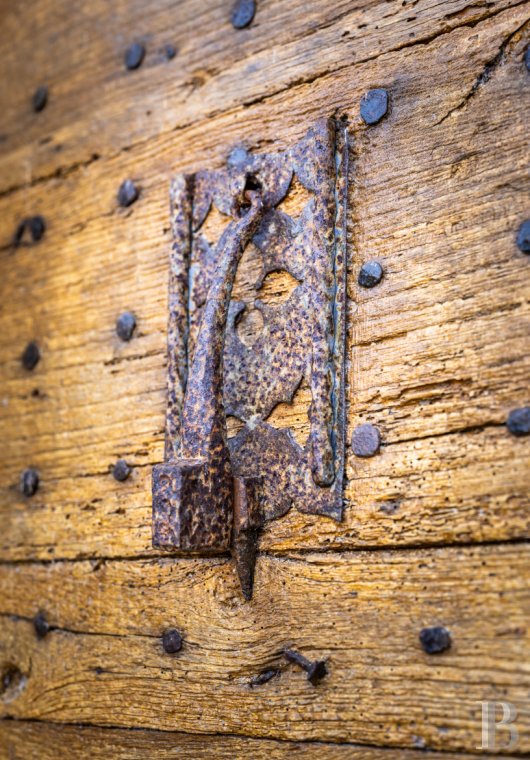
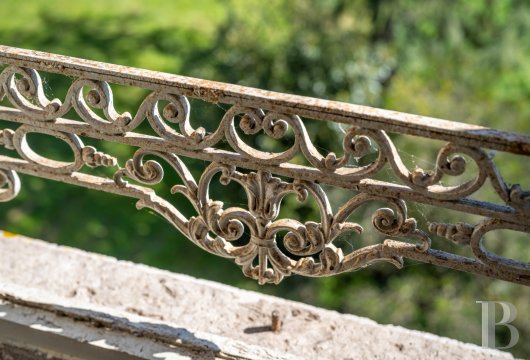
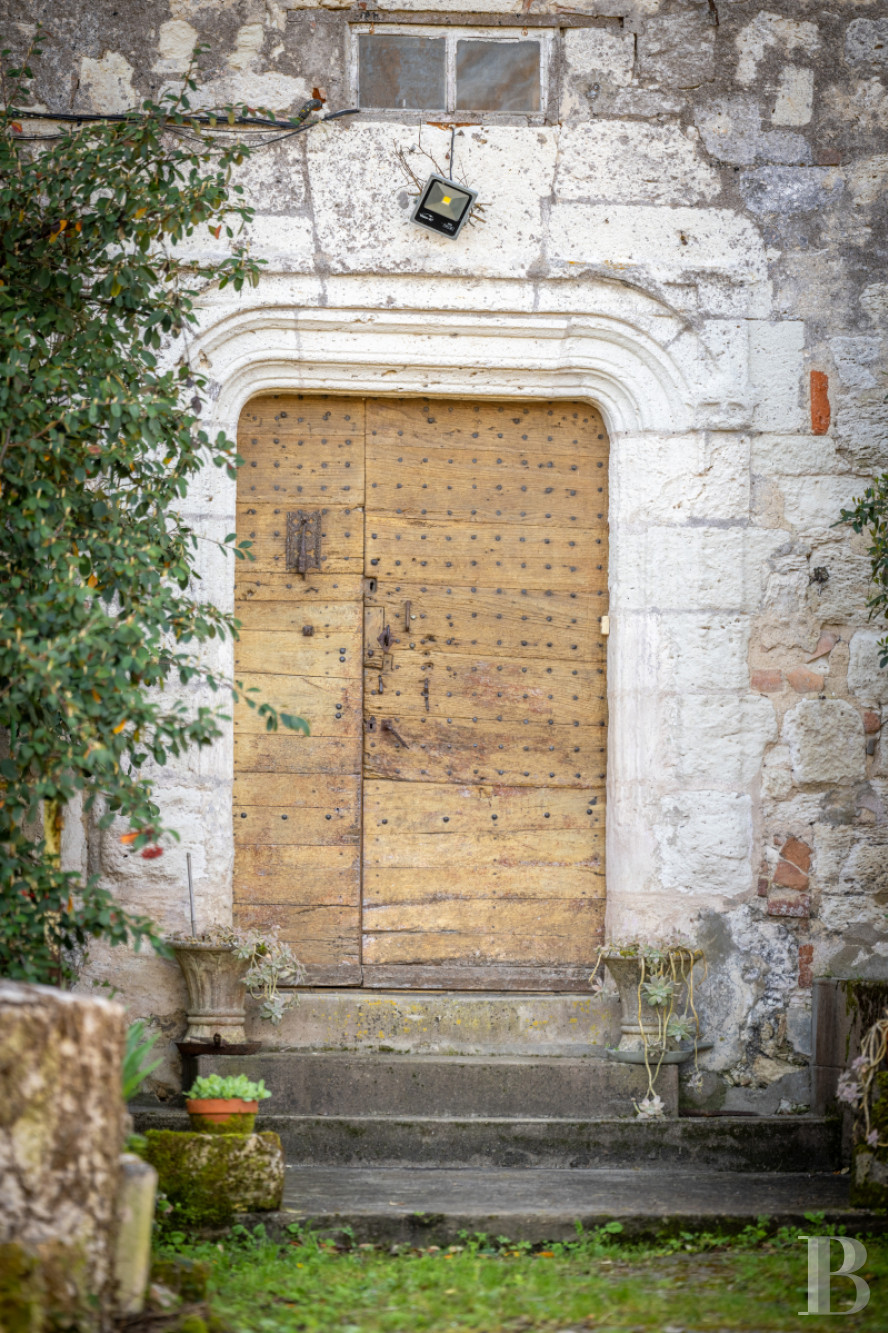
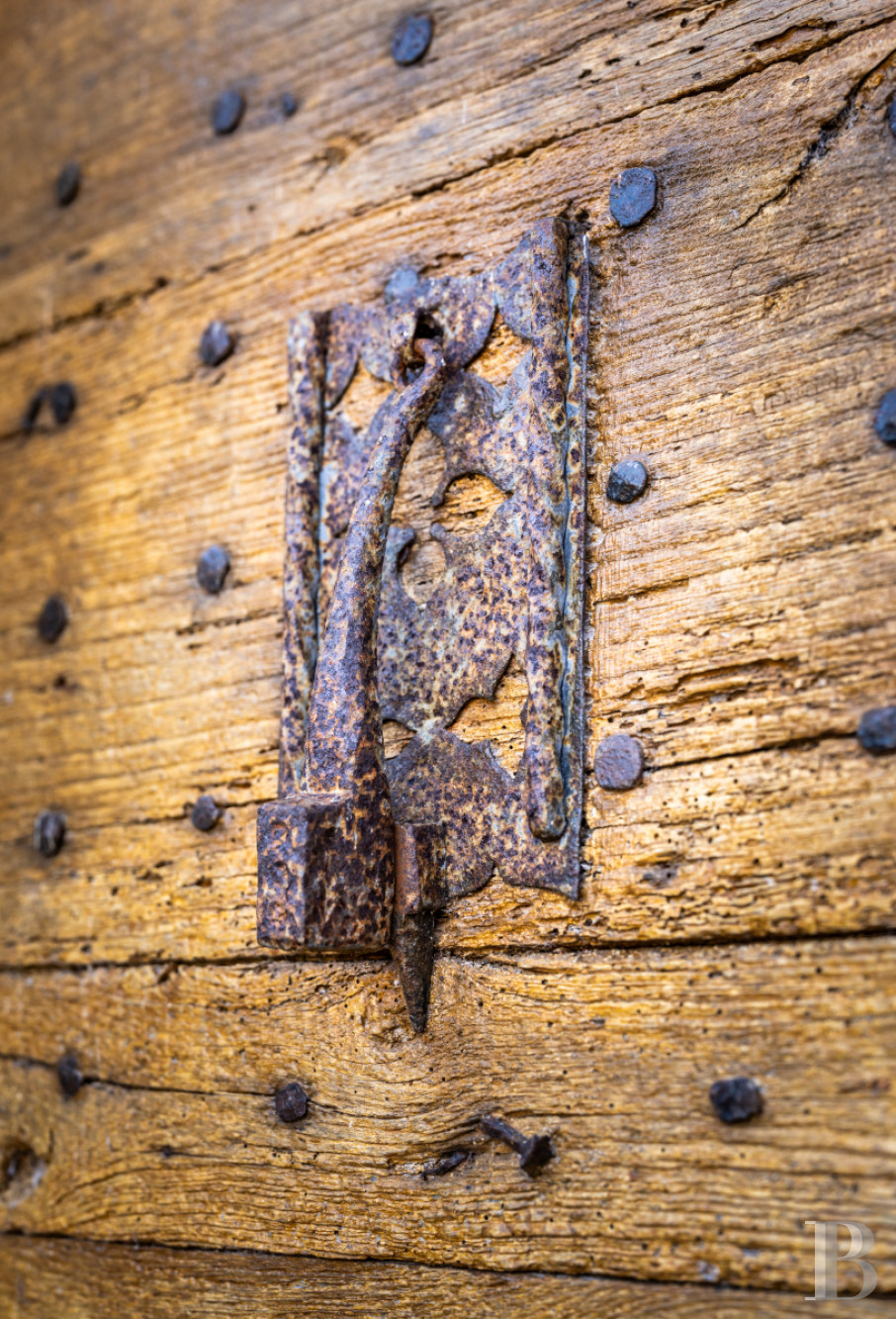
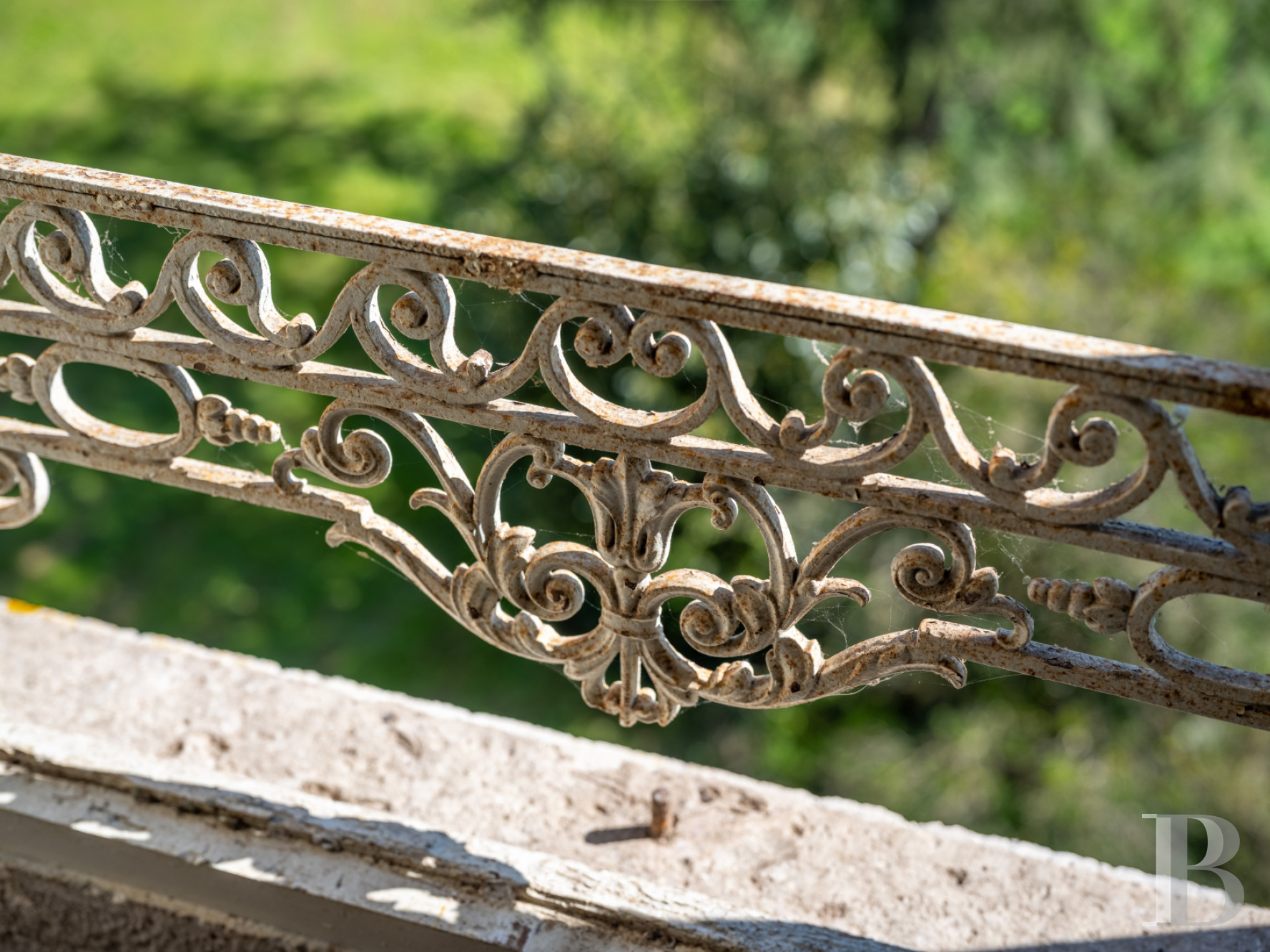
A stoop lined by low walls topped with railings leads to the main entrance. Two steps climb to a massive, light-coloured wooden door with wrought-iron studs, framed by an ashlar surround, underlined by several concentric mouldings.
The ground floor
The entrance door opens into a hall with walls made of rubble stone and pink brick.
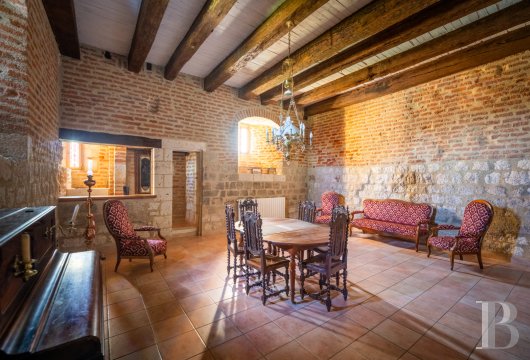
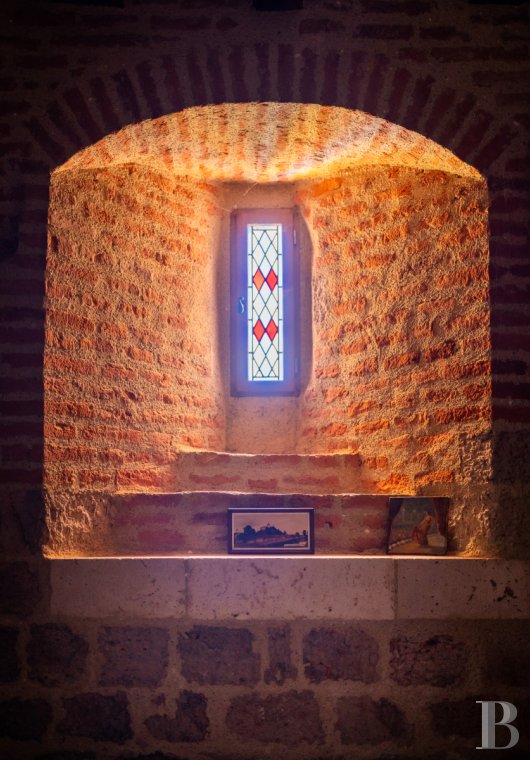
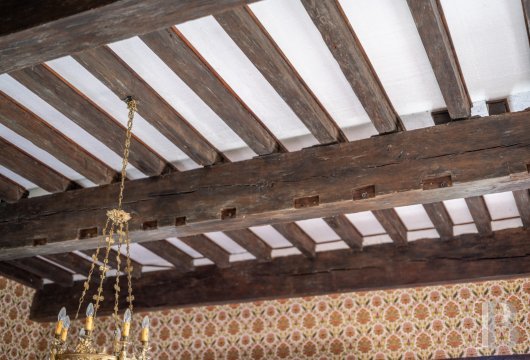
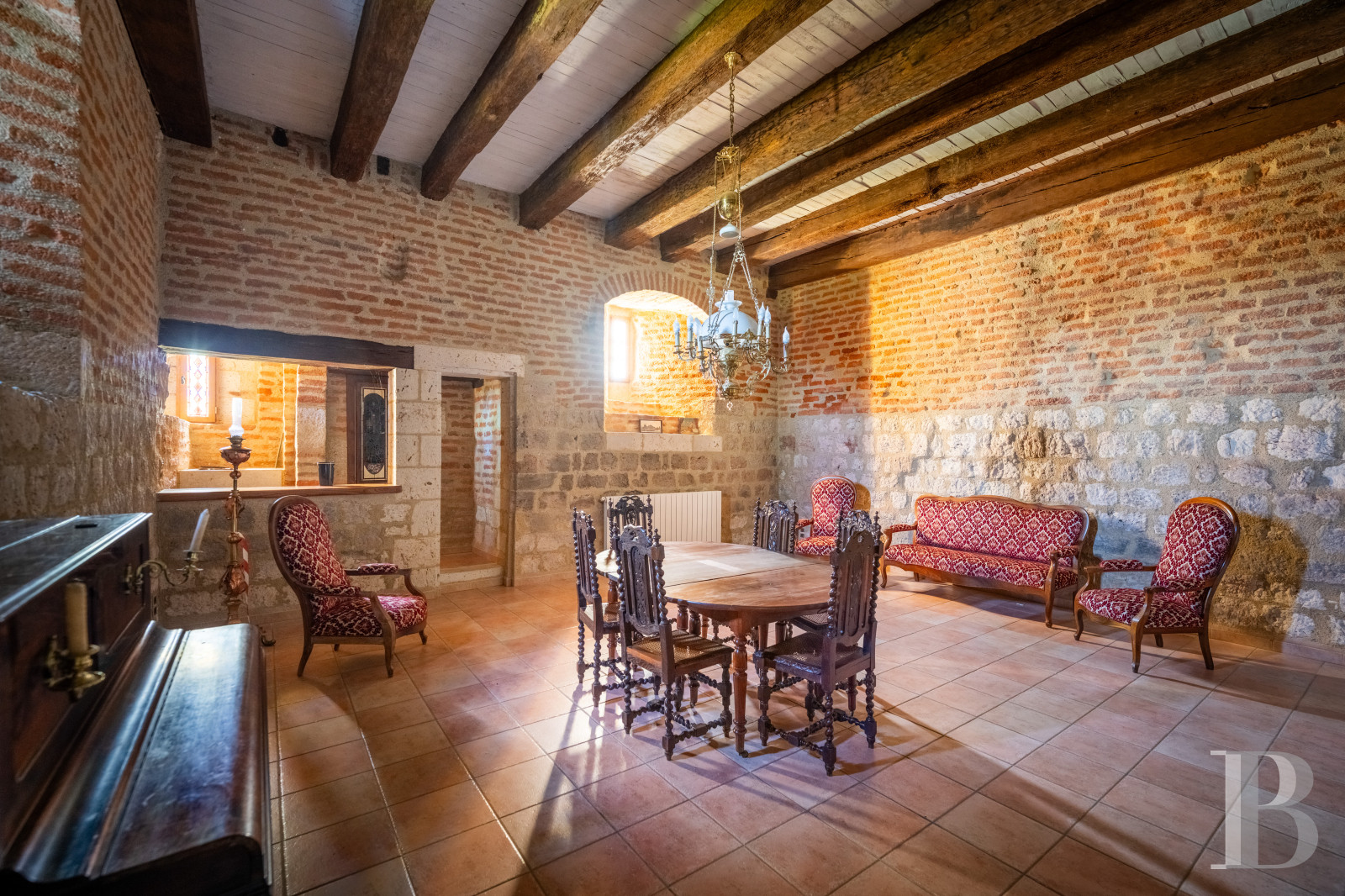
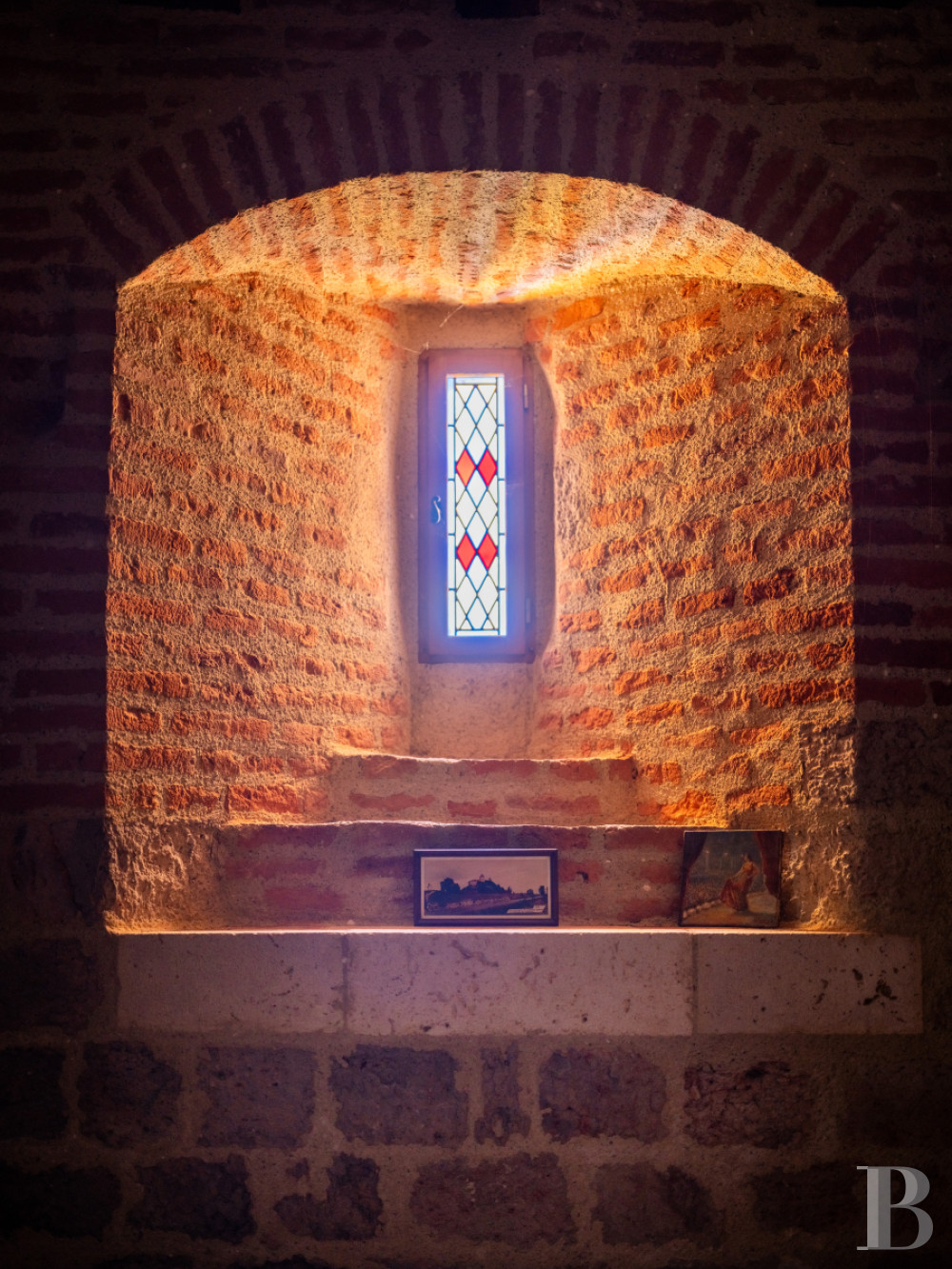
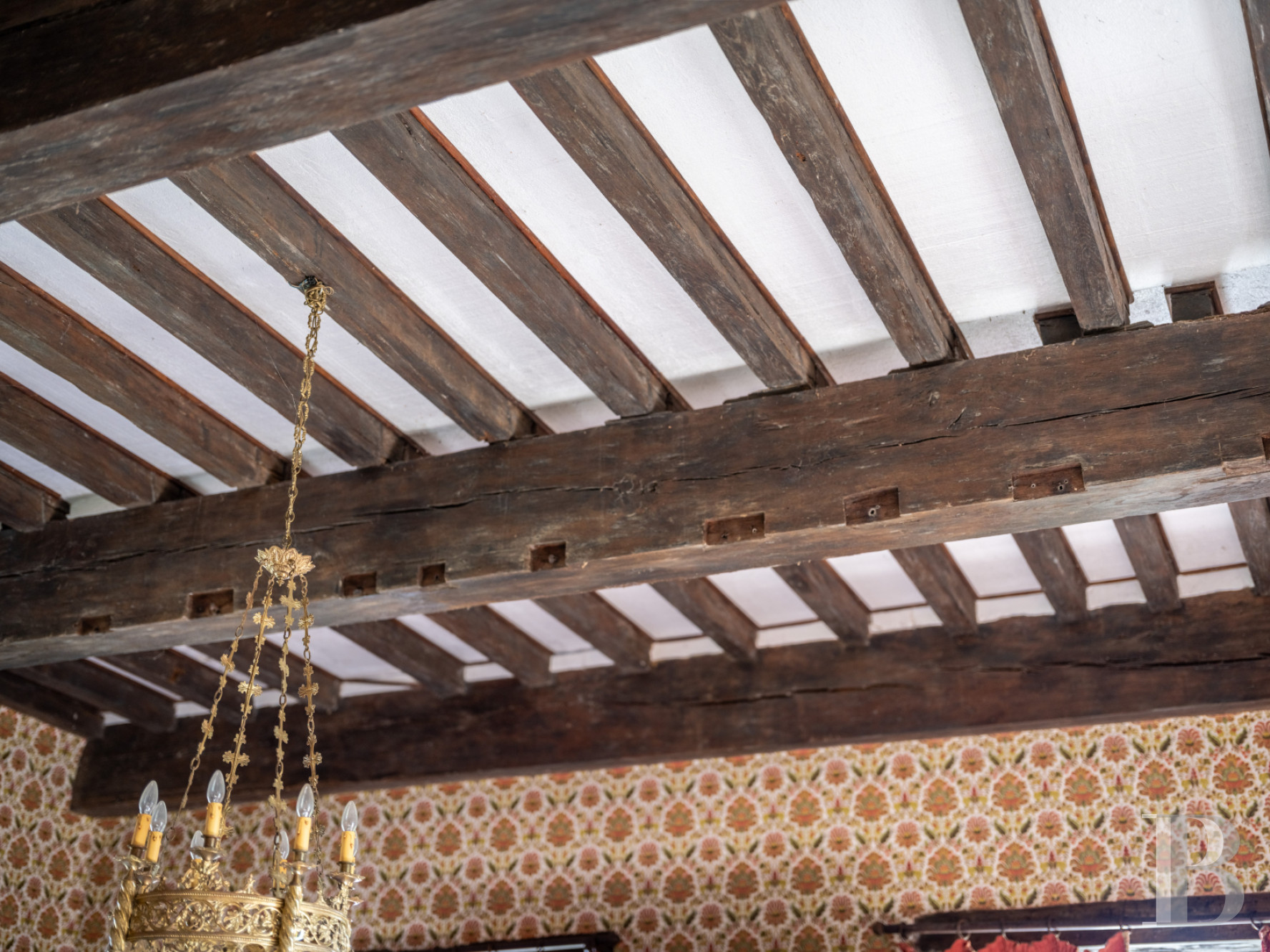
To the left, an ashlar pointed arched opening and a dark oakwood door lead to an approximately 47-m² lounge. In a corner, on a raised platform, a bar is bathed in light through two arrow windows fitted with stained glass. Its pink brick walls are built on a base of rubble stone. In one of the walls there is a slightly arched brick alcove. The ceiling of the hall and lounge is made up of white painted joists supported by massive dark coloured oak beams.
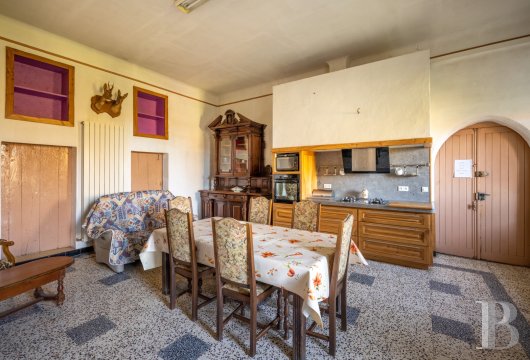
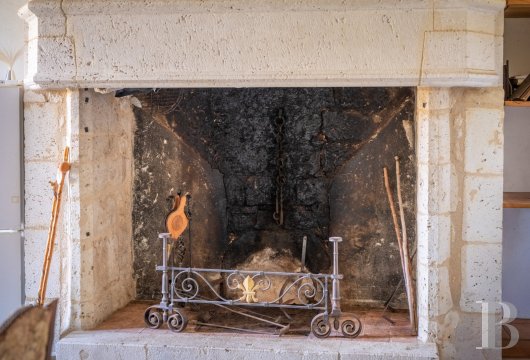
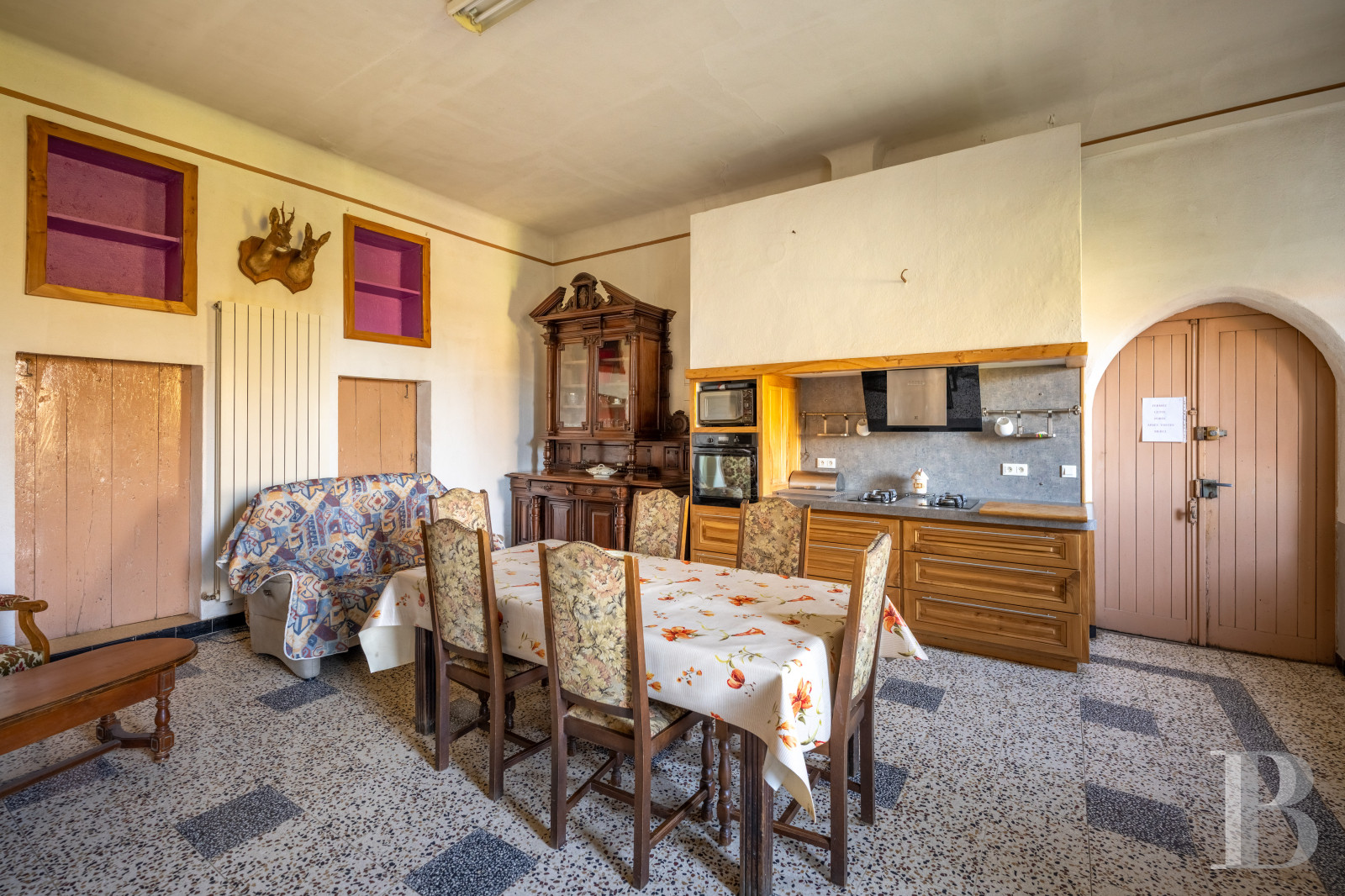
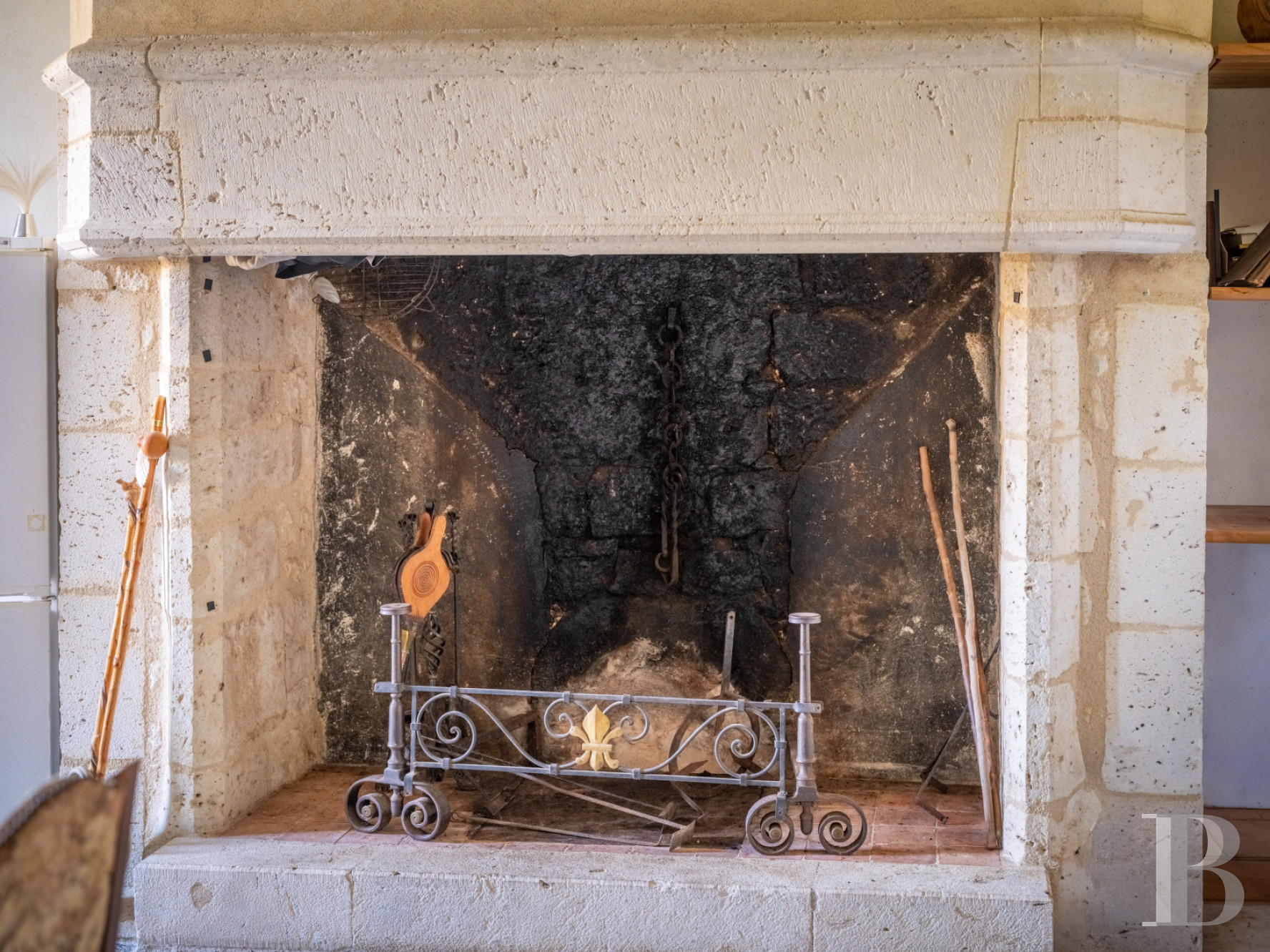
To the right, the hall leads into an approximately 37-m² kitchen. The left-hand wall is occupied by a large white stone fireplace and an alcove with wooden shelves. Two straight-sided openings topped by rectangular niches lead to a room to the rear that is currently used as a bedroom. Behind an arch, a double-leaf door leads to an approximately 56-m² boiler room with an exposed roof frame, in which there is an additional kitchen, a shower room and a lavatory. Two large steps descend towards small-paned triple French windows, topped with fanlights, leading out into the garden.
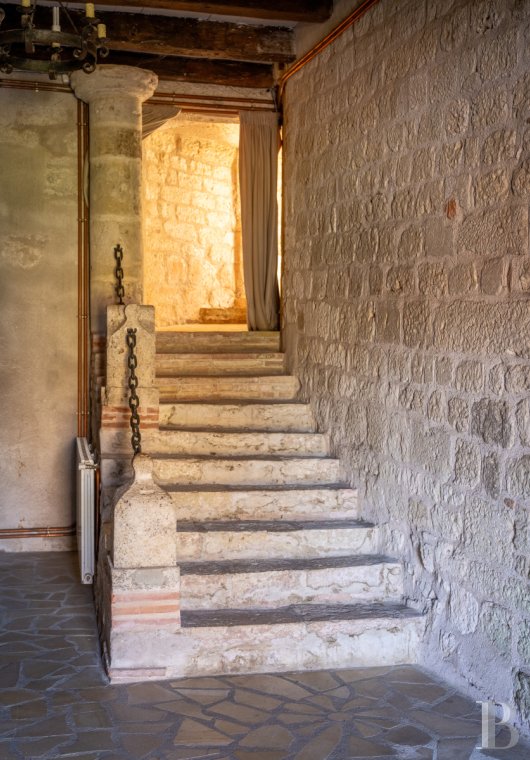
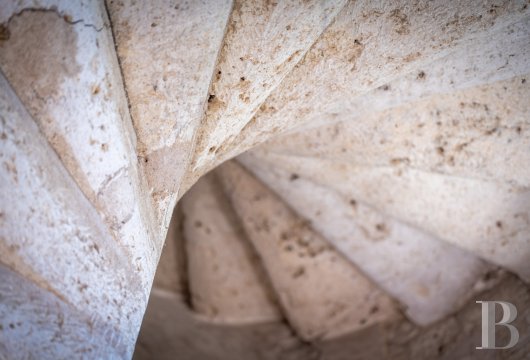
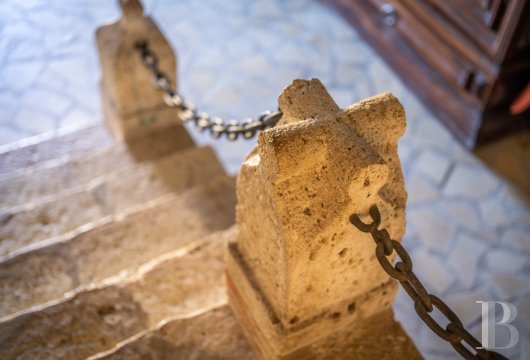
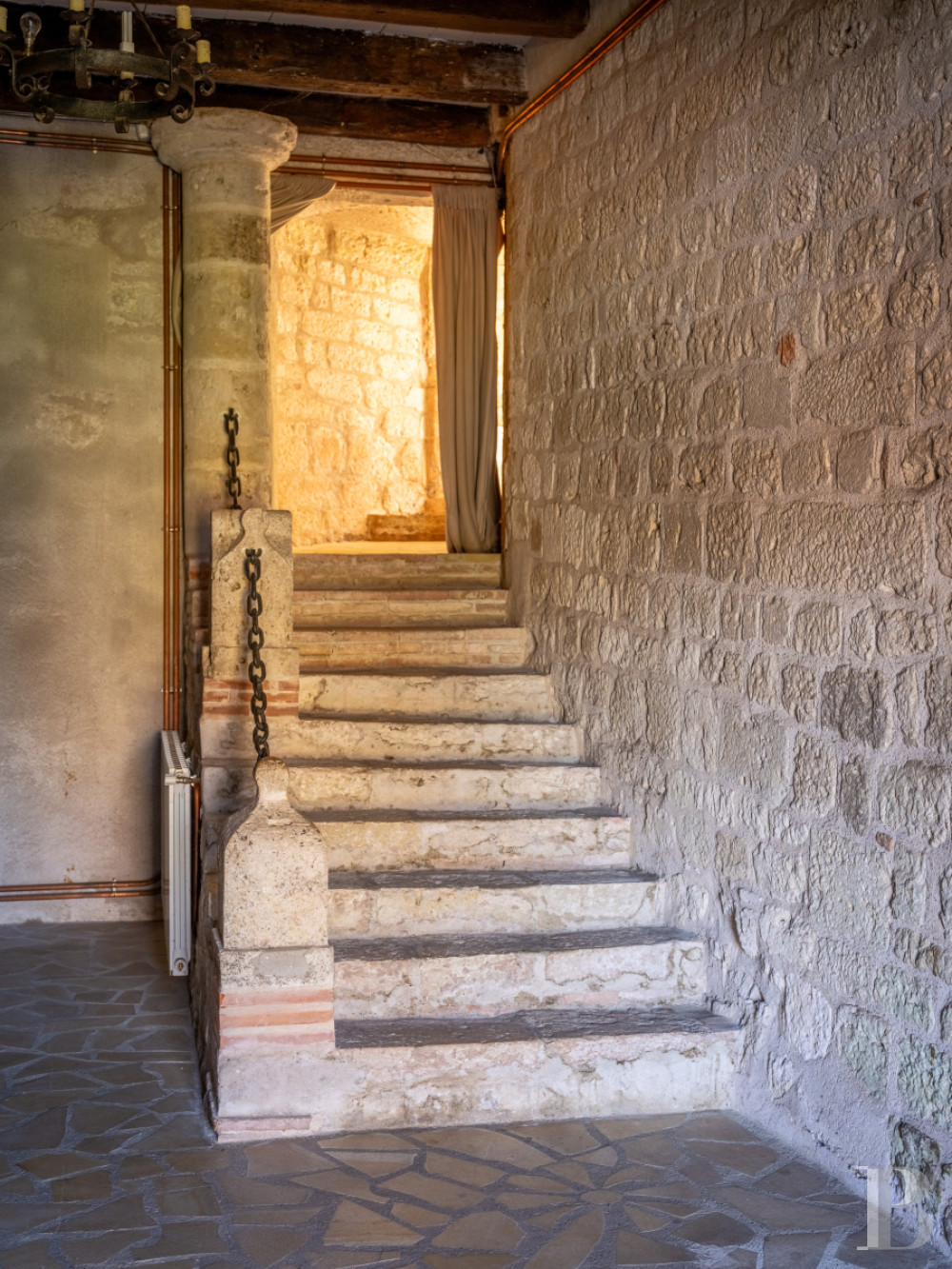
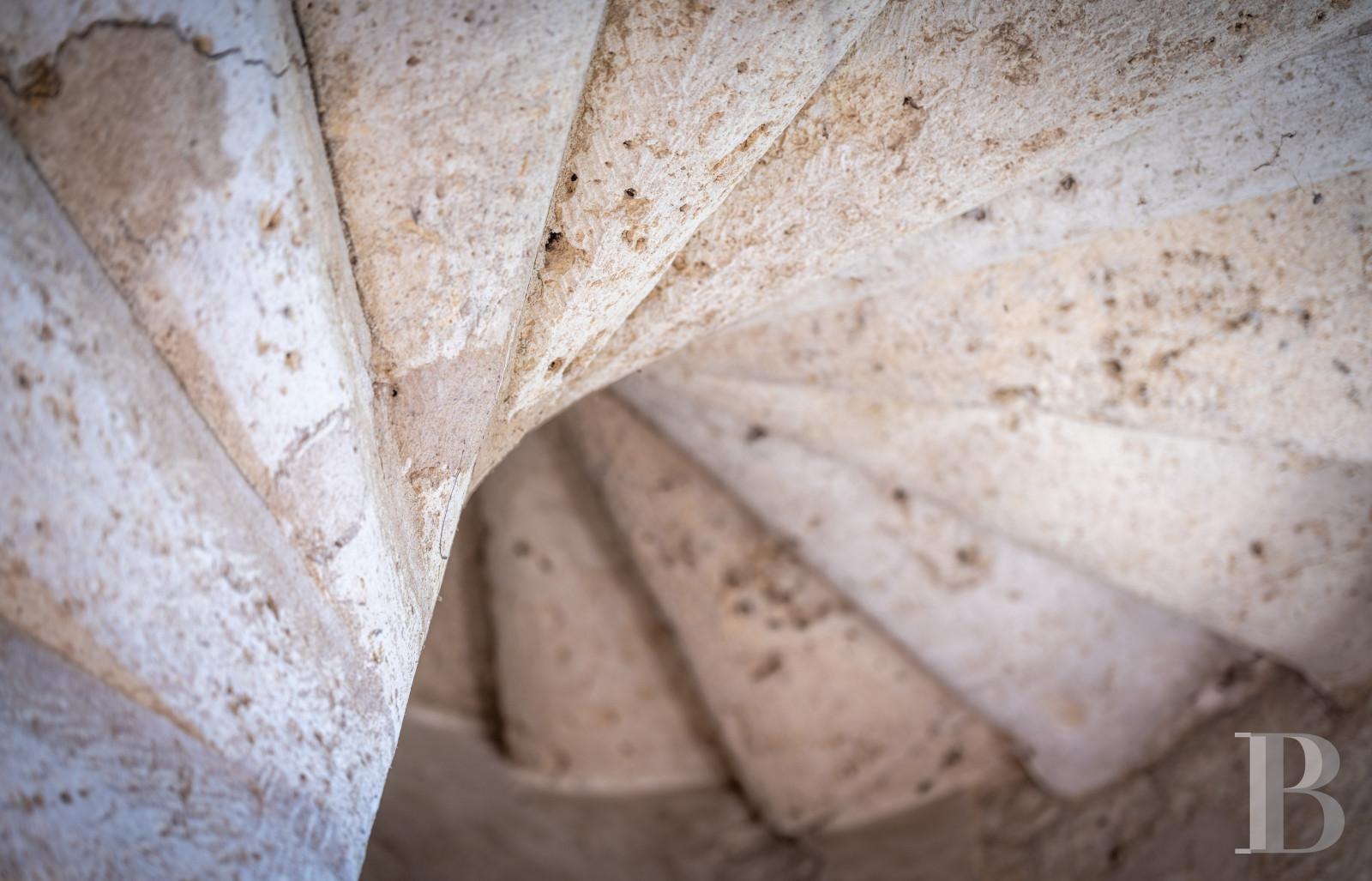
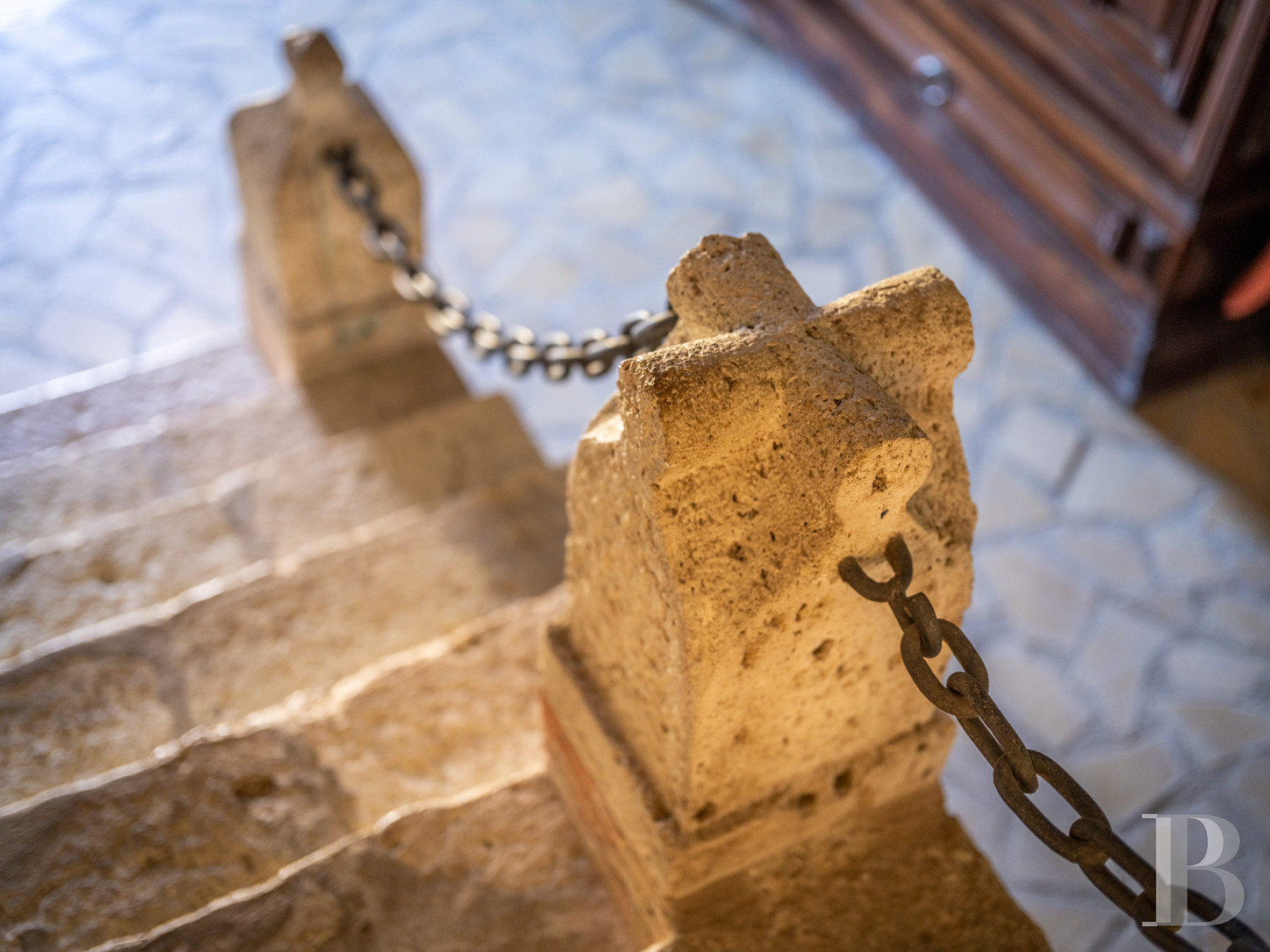
Lastly, opposite the entrance door to the castle, a massive white Quercy stone staircase leads to the staircase tower. A column with a round base and two massive blocks of ashlar linked by a heavy black chain form the guard-rail. A Templar cross is carved on the summit of the central stone. It was discovered in the garden and could suggest that this castle was once a base of the Knights Templar.
The first floor
A double-leaf window allows light to stream in over an almost 3.5-metre diameter spiral staircase that leads to an intermediate level opening out onto the southern terrace. The rest of the staircase leading to the different levels is also bathed in light thanks to many windows in its rubble stone walls. A first door with a slightly arched, pink brick lintel marks the entrance to this level, which boasts floor space of more than 200 m².
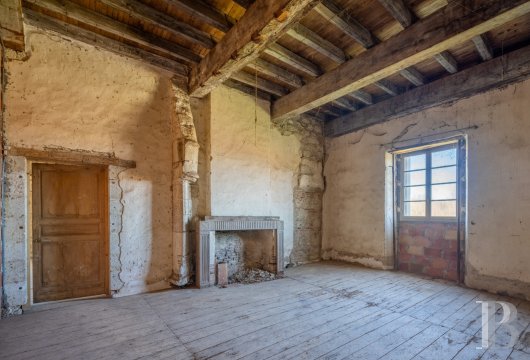
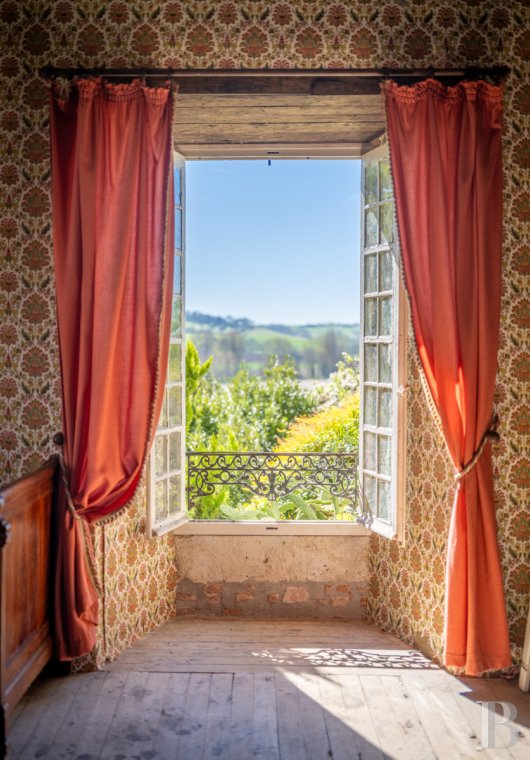
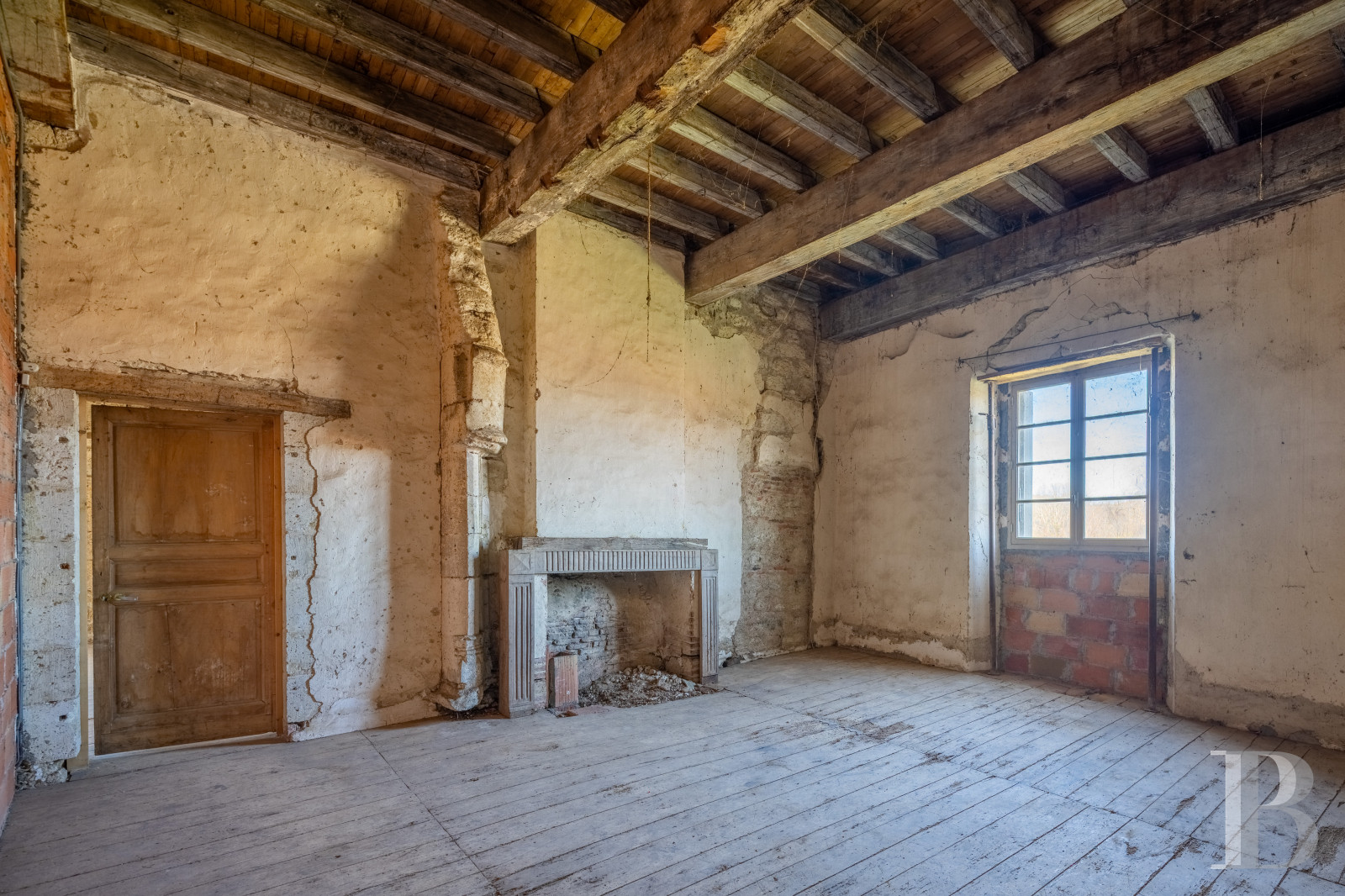
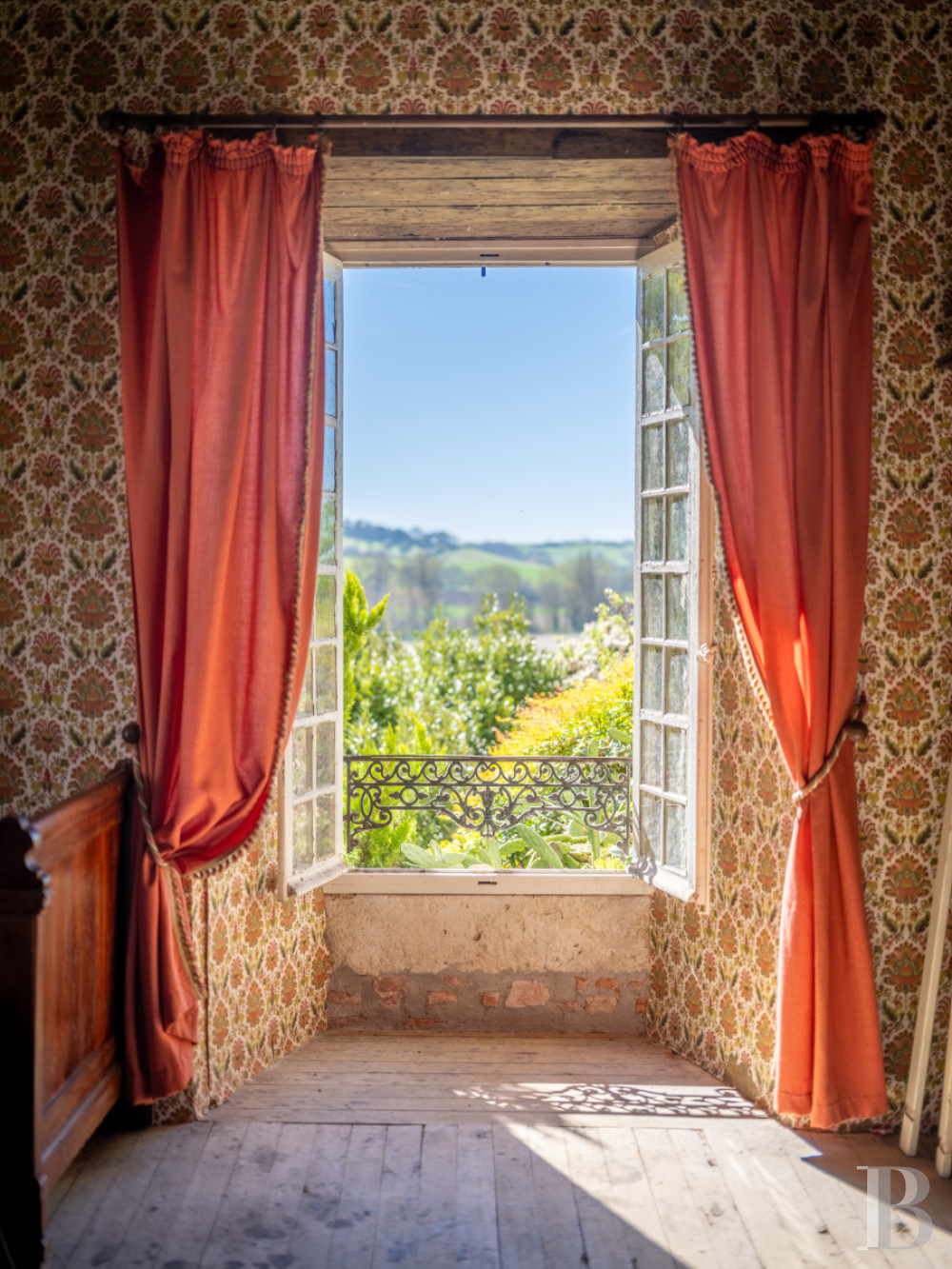
It was transformed into living space in the early 19th century. A landing leads to a corridor, off which there is a bedroom with a dark grey and white marble fireplace. There is also an approximately 44-m² living room with a dark grey and light pink marble fireplace. It is generously bathed in light through three double-leaf, small-paned windows and boasts unbeatable views of part of the property. The corridor then leads to a first bedroom, followed by another room connected to a second one, in both of which there are remains of wooden and white stone fireplaces. The rubble stone walls, floorboards and high, beamed ceilings, both of which are made of oak, give a glimpse of its splendour in bygone days.
The top floor
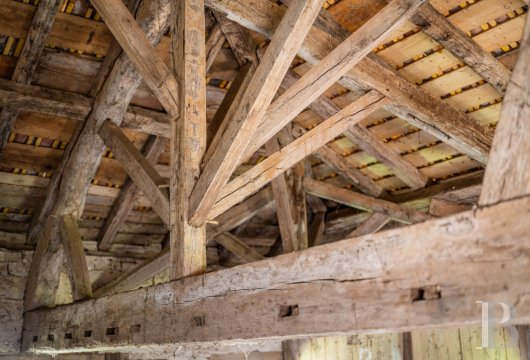
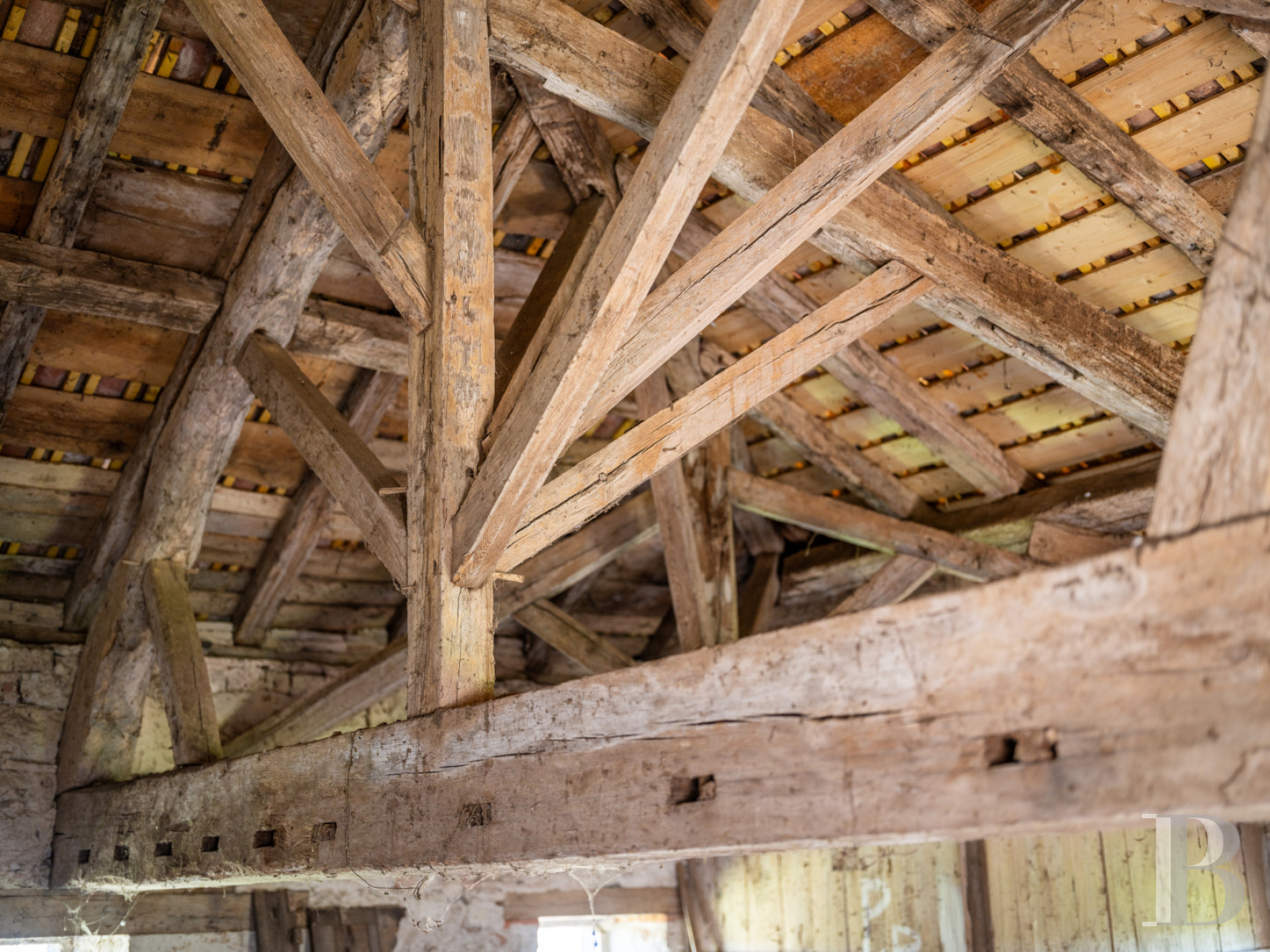
The attic level is divided into three spaces and boasts a total surface of more than 235 m². Part of the level, into which light filters through twelve small windows, could be converted. The exposed roof frame’s ridge purlin is 5 metres above the floorboards.
Le pigeonnier
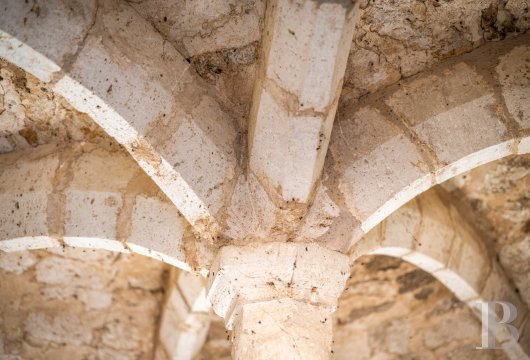
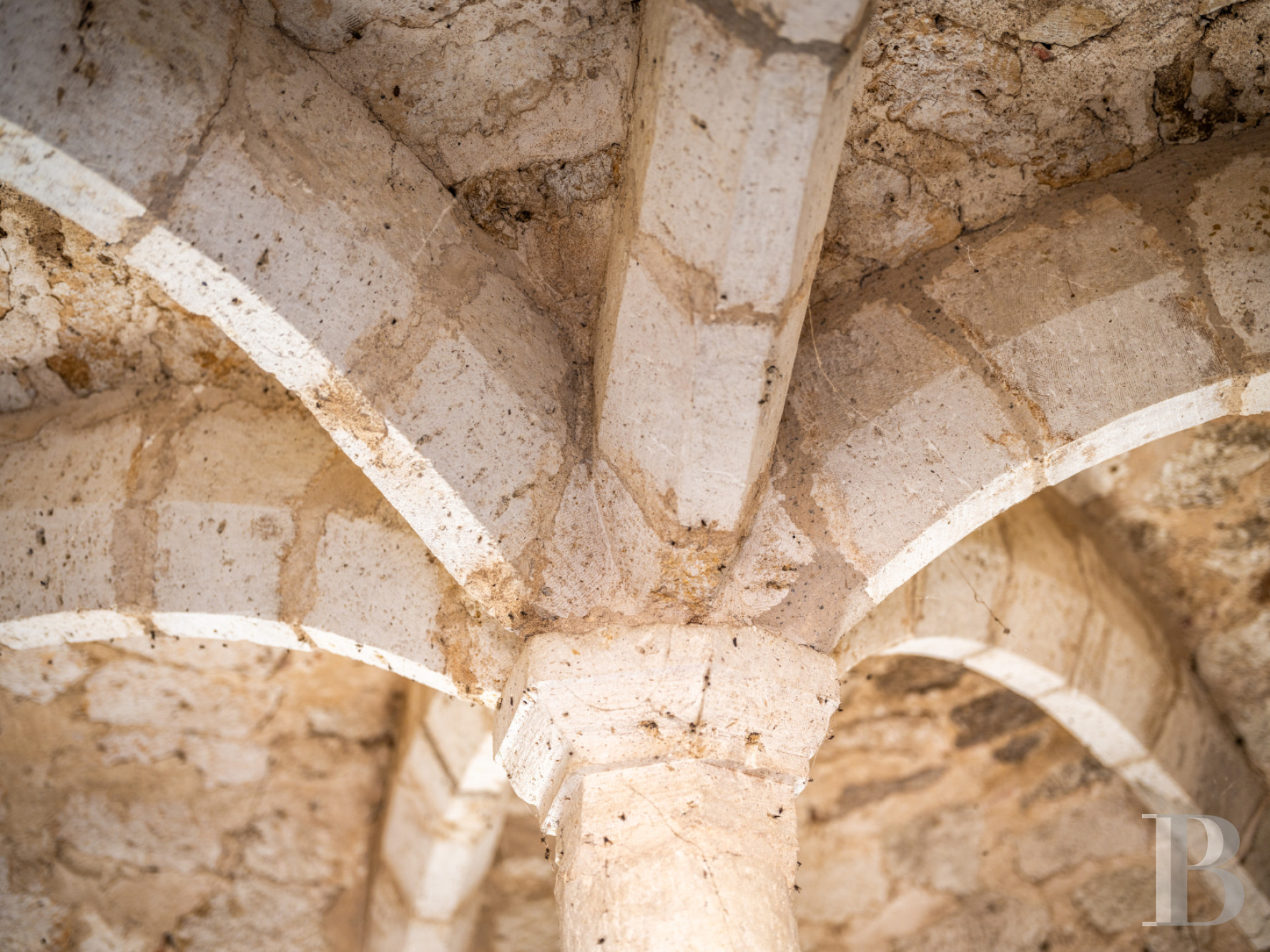
At the top of the tower, beneath a radiating vault, a door leads outside, where a plank fixed to the wall (which needs replacing) leads to the door of an approximately 10 m² dovecote. Several stone steps climb to a wooden platform protected by the oakwood frame of the hipped roof, into which light pours through a dormer.
The barn
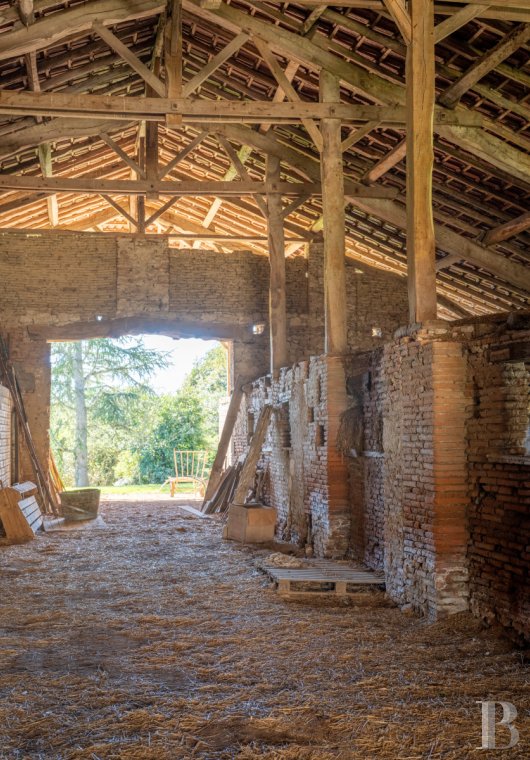
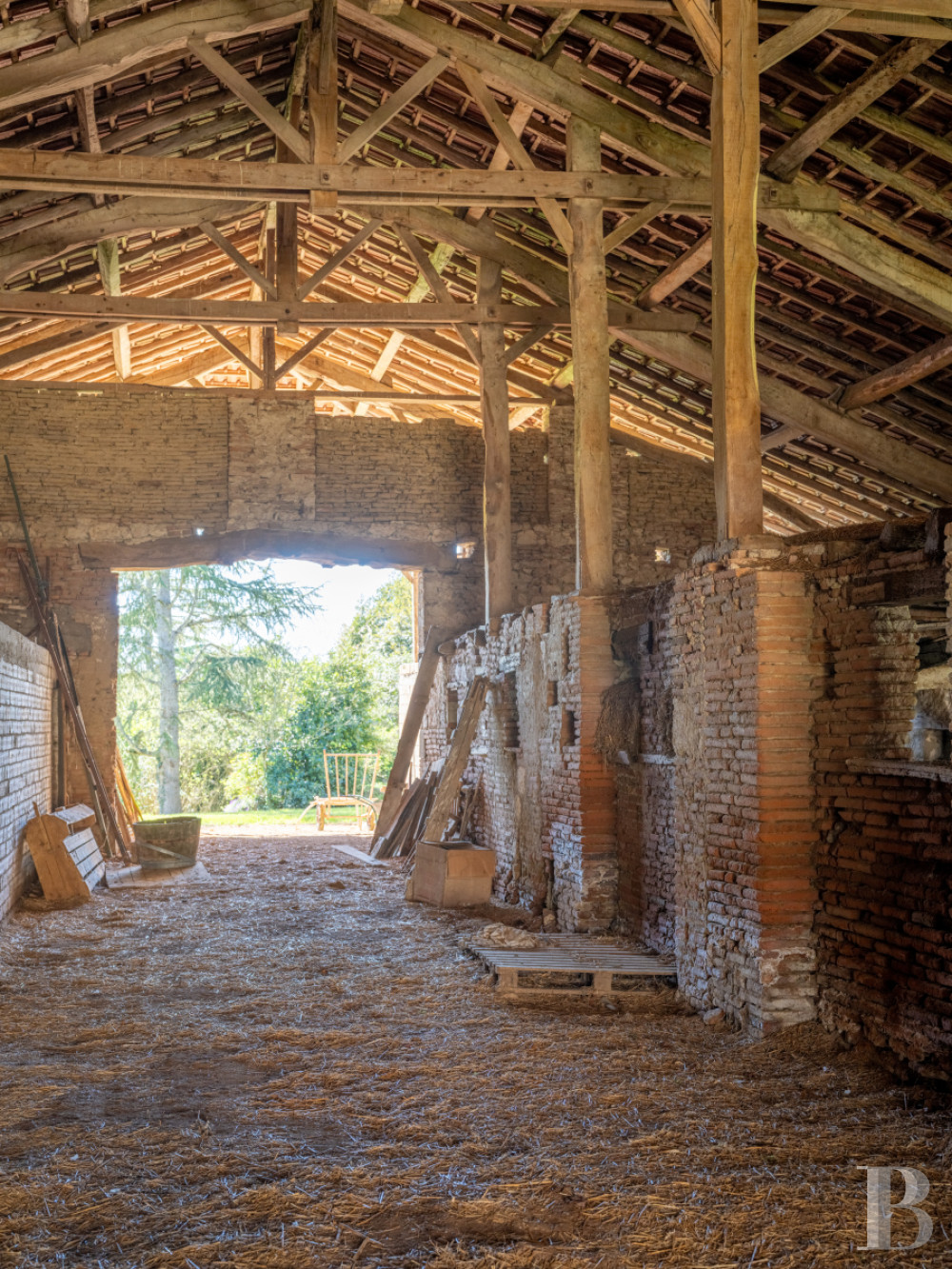
This stone building with a floor surface of around 400 m² is topped by a gabled roof made of barrel tiles. A large awning protects its southern entrance. On its left there is a greenhouse with small paned windows and on its right there is a storeroom. A large opening in a tall wall leads into a central aisle separating a cowshed from a sheep shed. The first floor of these buildings was previously used as a hay loft. To the east, there are several former pigsties and a small courtyard surrounded by low walls. Lastly, to the north, there is a closed garage.
The outbuilding
An awning also protects the entrance to a second outbuilding, which includes a kitchen, three livestock enclosures and a storeroom, all of which require renovating. A chicken coop entirely enclosed by wire mesh stands adjacent to the kitchen wall. This single-storey construction has a surface of 105 m².
The agricultural storage building
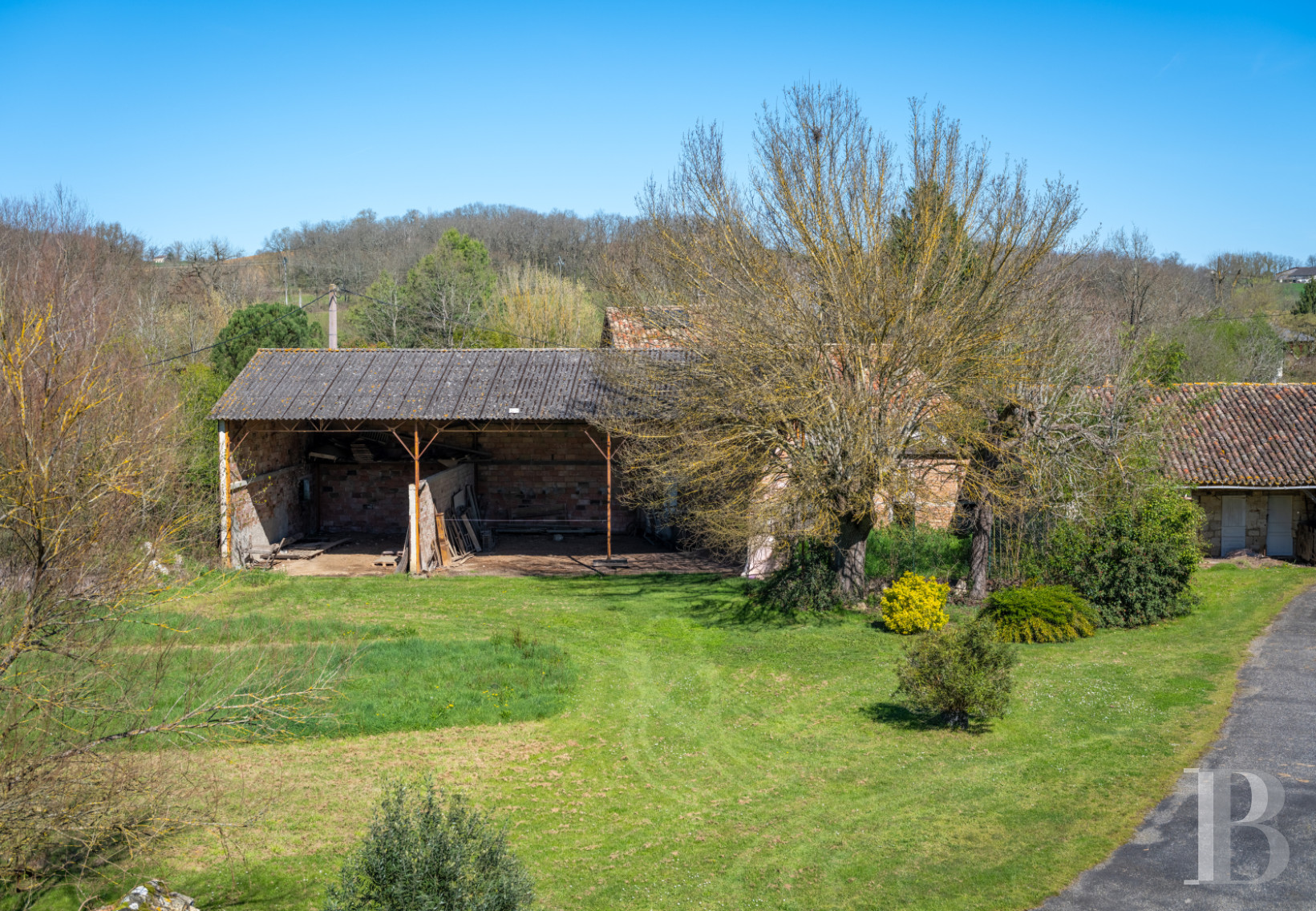
This approximately 150-m² edifice with a rammed earth floor is open on two sides and supported by a metal frame as well as two walls made up of hollow clay tiles.
The garden, terrace and land
A lawned area partially enclosed by a hedge of cherry laurel spreads out on either side of the drive and around the castle. Several poplar, fir, cedar and common elderberry trees provide welcoming shade during the summer, while evergreen Euonymus, bay, olive, peach and sweet cherry trees are dotted over the rest of the plot. Rose bushes, camelias, hydrangeas, Japanese aucubas, cotoneasters and rosemary brighten up the northern facade.
The southwest facing lawned terrace is protected by a fence and boasts views over the valley. A unique assortment of peach, pear, palm, albizzia, pine, fir, forsythia, oleander, agave, cactus, irises and pampa grass adorns this area.
To the right of the drive leading to the castle, a meadow slopes gently away, bordered by cedars, pines and poplars.
Our opinion
Once restored, this several hundred-year-old castle with unbeatable views of the surrounding rural landscape promises a pleasant country life for occupants who value space and authenticity. It exudes the many centuries it has witnessed, through the sober diversity of the materials and the forms they have bestowed on the house’s many rooms, as well as via the depth of the vast expanses of gently rolling lush landscapes. It boasts manageable volumes and the interior is bathed in light. Its layout is suited to modern life, plus its Quercy stone walls, oakwood roof frames as well flooring are ideal for welcoming a variety of projects, assisted by the advantages of the various outbuildings, whether as a main residence, holiday home or to accommodate a small-scale farming activity.
Reference 114665
| Main building floor area | 397 m² |
| Outbuildings floor area | 655 m² |
| Land registry surface area | 2 ha 61 a 34 ca |
| Including parkland | 1 ha 80 a |
French Energy Performance Diagnosis
Information on the risks to which this property is exposed is available on the website: www.georisques.gouv.fr
Share


NB: The above information is not only the result of our visit to the property; it is also based on information provided by the current owner. It is by no means comprehensive or strictly accurate especially where surface areas and construction dates are concerned. We cannot, therefore, be held liable for any misrepresentation.