



A chateau from the Middle Ages & Renaissance, on 15-ha grounds,
overlooking the Goul River valley, on the border of the Cantal & Aveyron departments
overlooking the Goul River valley, on the border of the Cantal & Aveyron departments
Vic-sur-Cère,
CANTAL
auvergne
15800
FR

Location
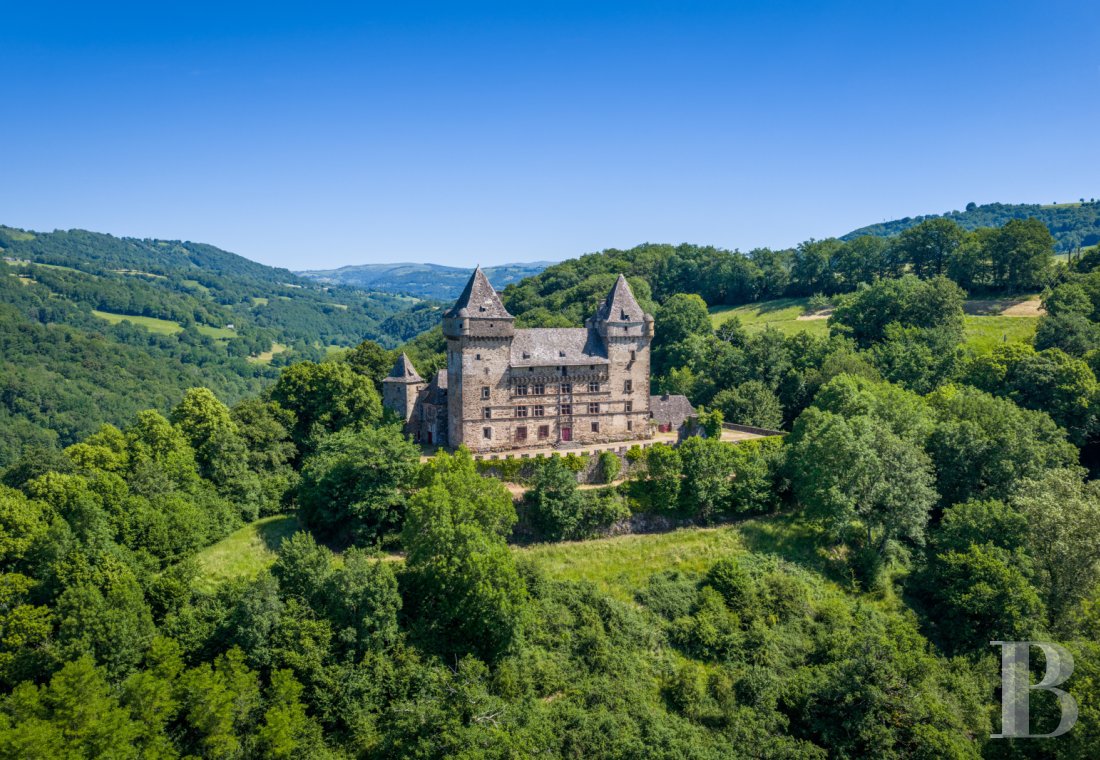
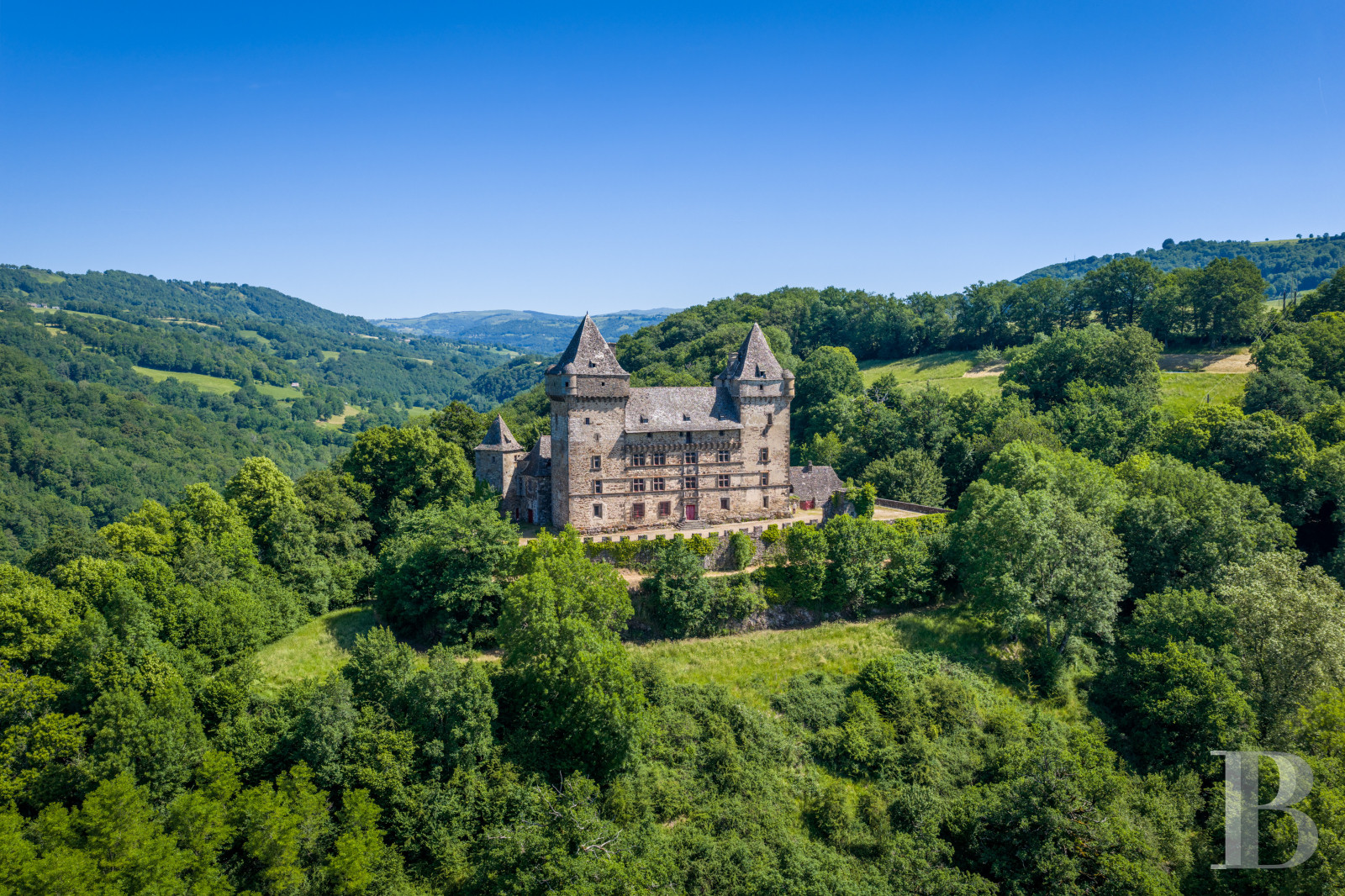
In the south of the Cantal department and on the border of the Aveyron, the property is located approximately thirty kilometres from Aurillac and seven kilometres from Mur-de-Barrez, the largest town within immediate proximity. Accessible from a B road by way of a local road, approximately 1.5-kilometres long, the surrounding area, without any other neighbours or roads, is blanketed in wooded hillsides with the Goul River valley below.
With the A75 motorway accessible in 1.5 hours, the closest SNCF train station is located in Aurillac and provides service to Toulouse, Clermont-Ferrand and Paris’s Austerlitz train station, in particular, whereas the airport in Cantal’s capital provides connections to Paris in one hour and 20 minutes as well as to Marseille, Lyon, Edinburgh and Figari.
Description
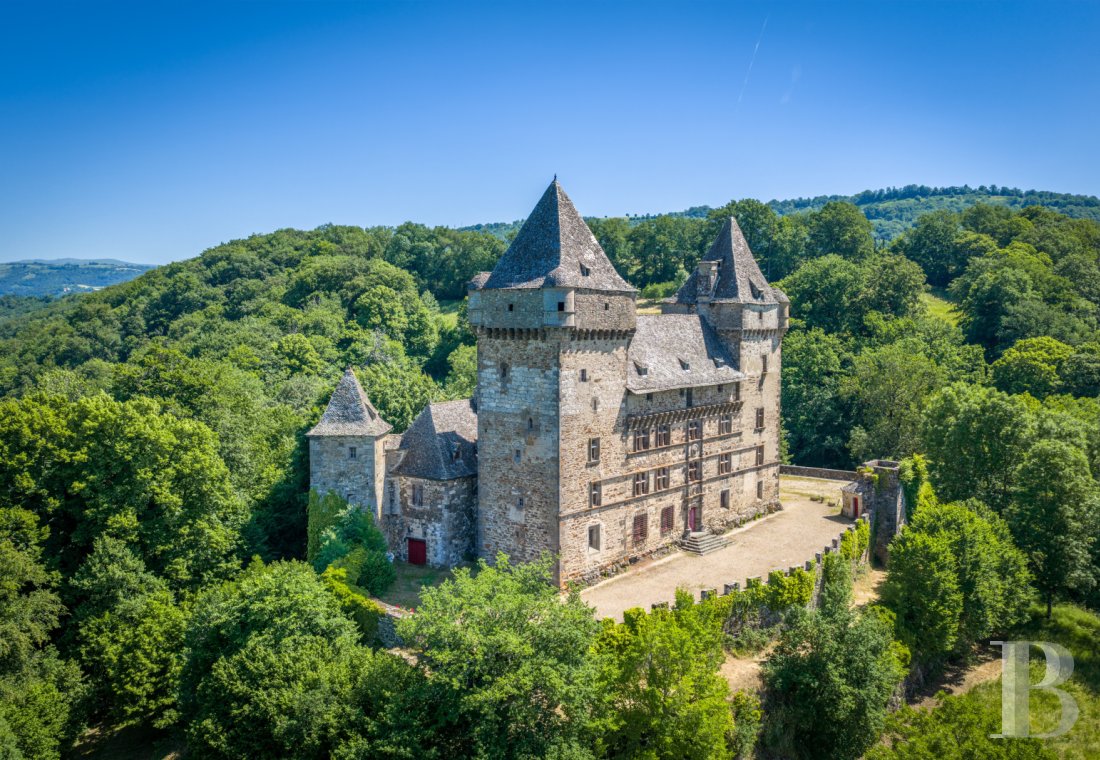
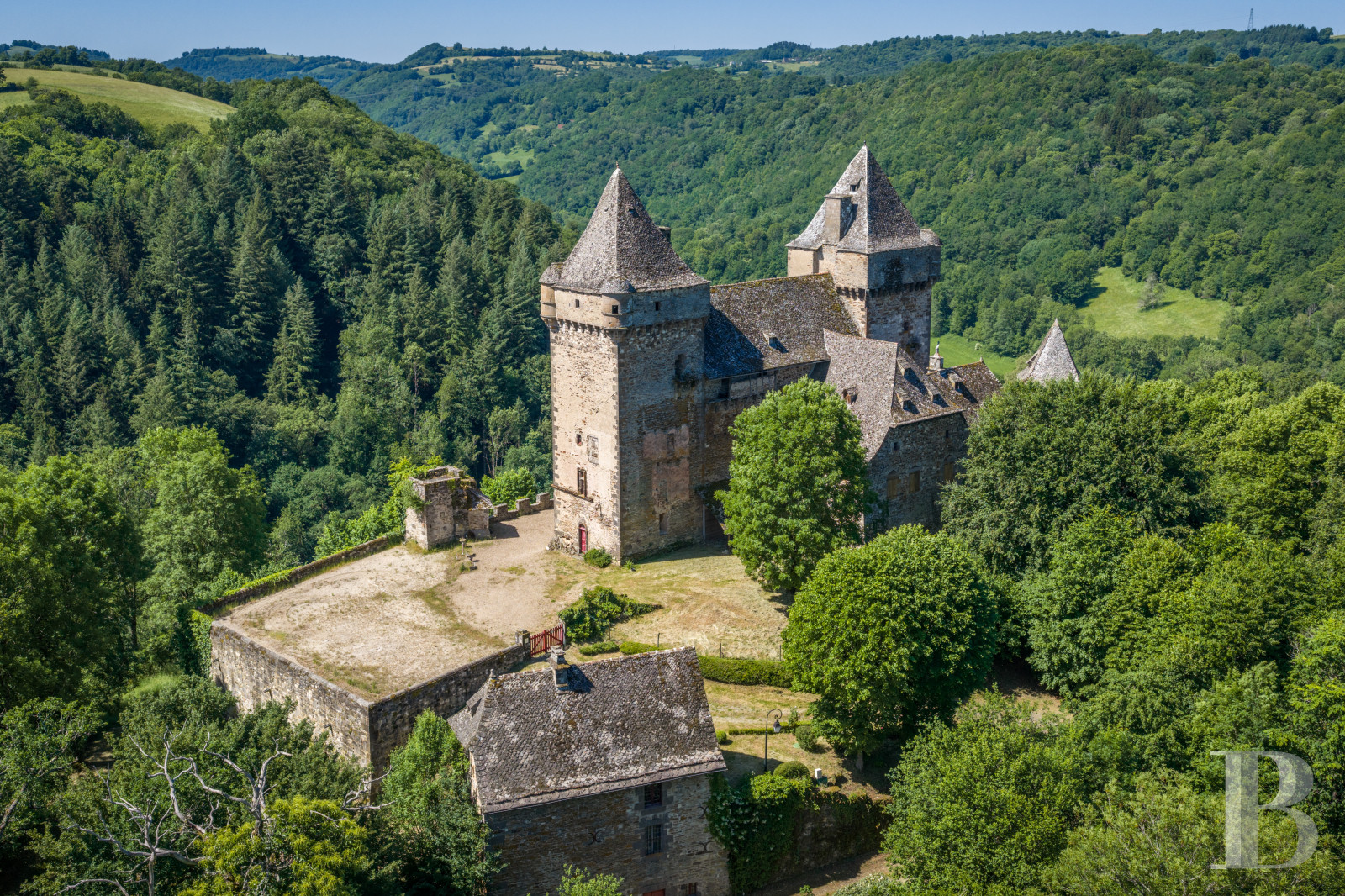
Erected in the middle of its grounds and nestled in a setting completely sheltered from all disturbances, the chateau, a national Historical Monument, stands above the valley, which marks the historic boundary between Upper Auvergne and the former Rouergue province. Accessible from its eastern side, where at one time there was undoubtedly a drawbridge, the chateau’s origins date back to the Middle Ages when the site was a simple keep surrounded by an enclosure with five to seven defensive towers.
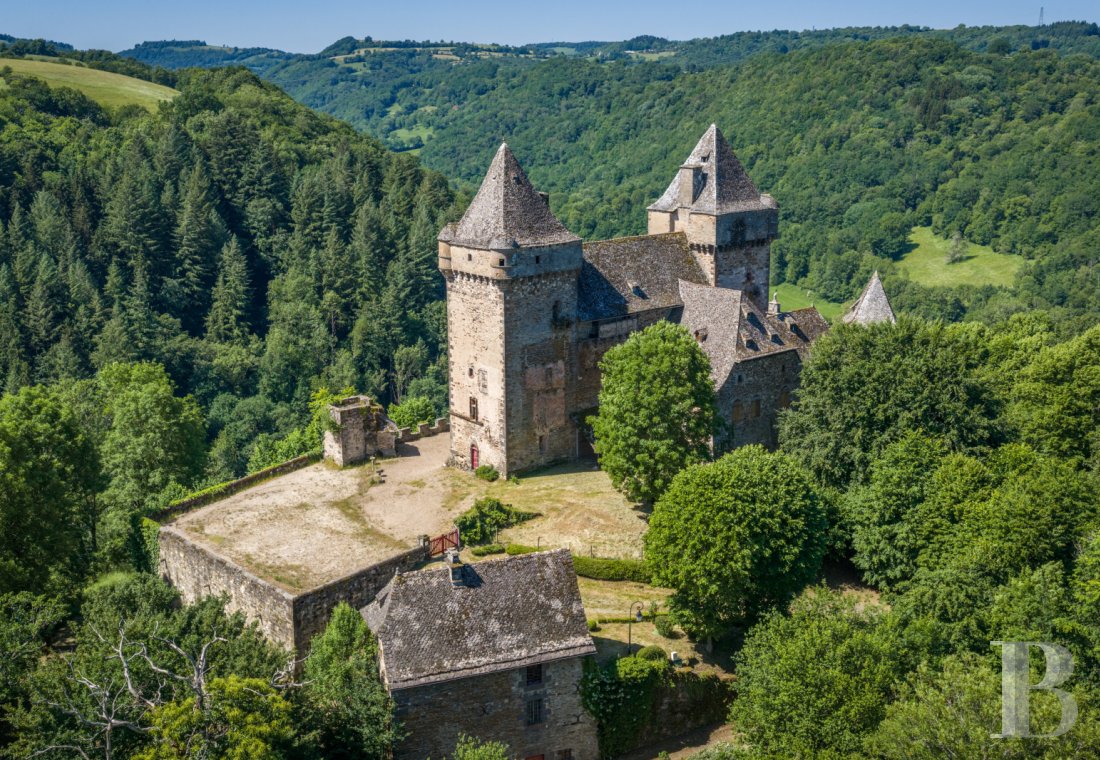
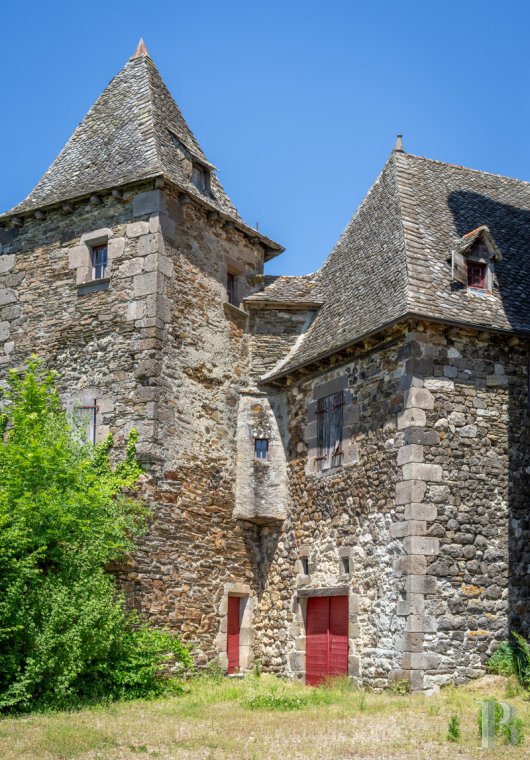
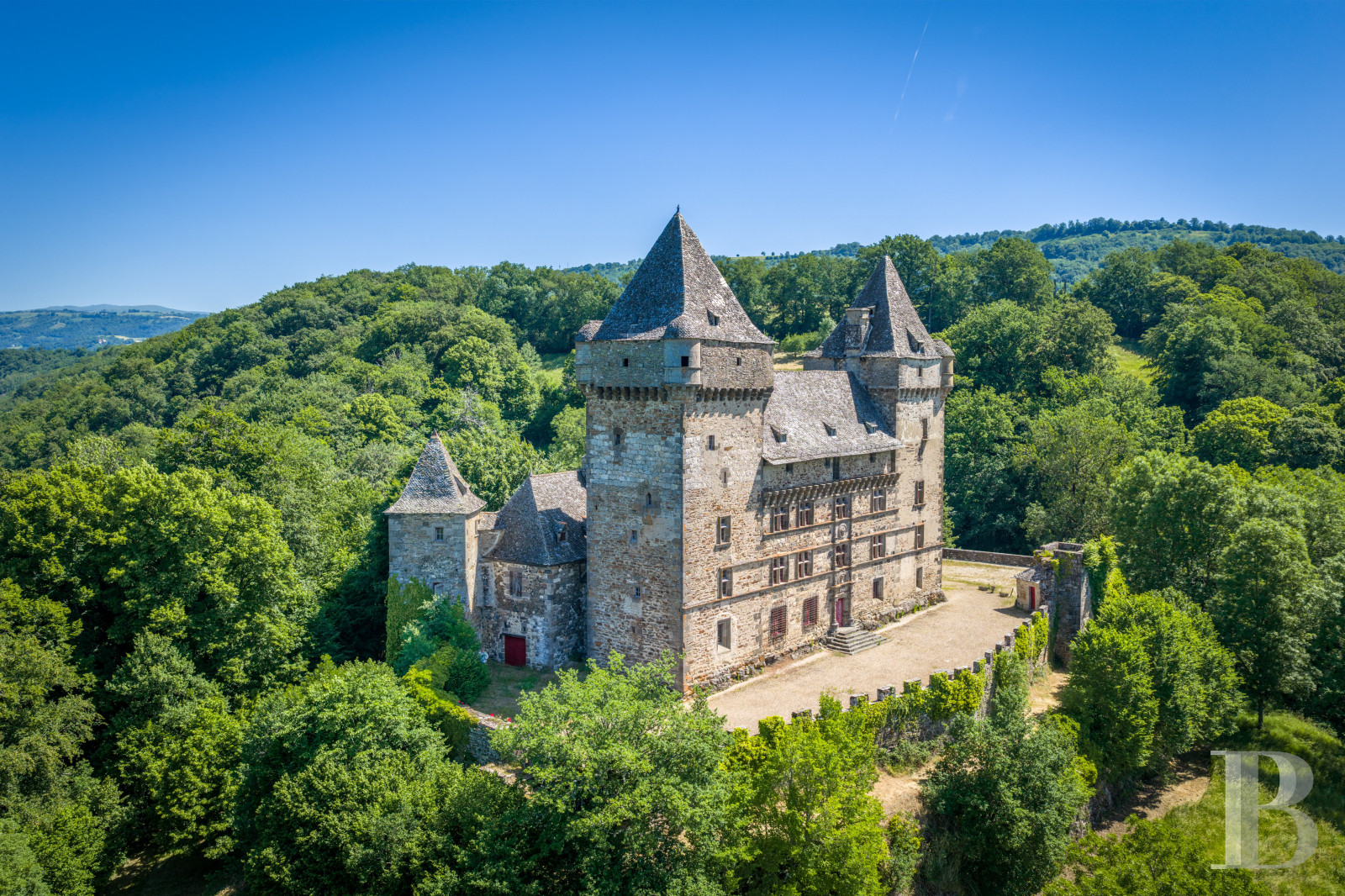
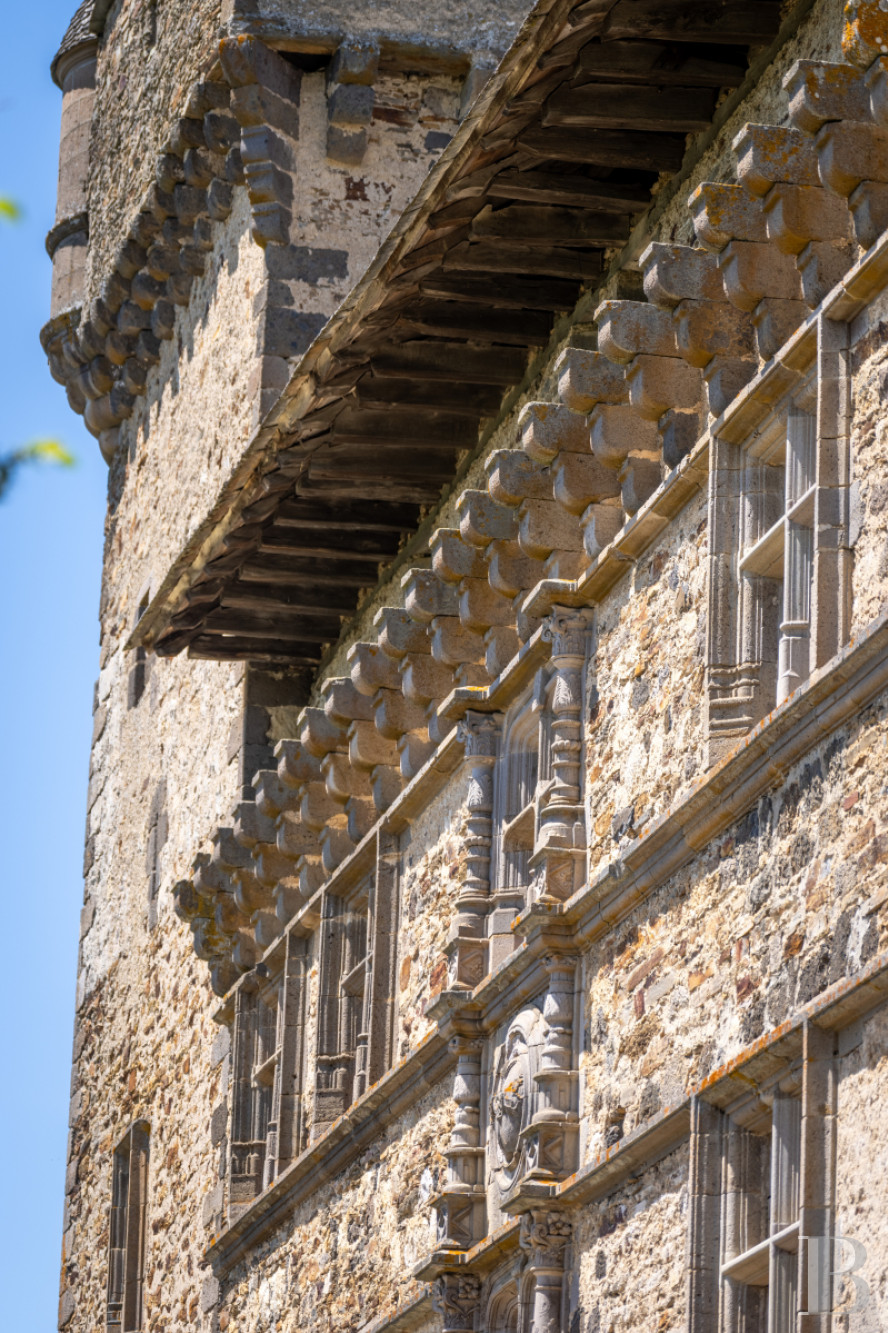
Today, the only thing that remains from this era is the first keep to the west, a second tower built in the 15th century to the east, as well as one of the defensive towers, now shortened and surrounded by patios and plenty of open spaces. As for the central dwelling, built in the Renaissance between the two square towers, its southern façade features many mullioned windows and breath-taking sculpted décor around its main entrance, while, to the north, an additional wing was added in the 18th century.
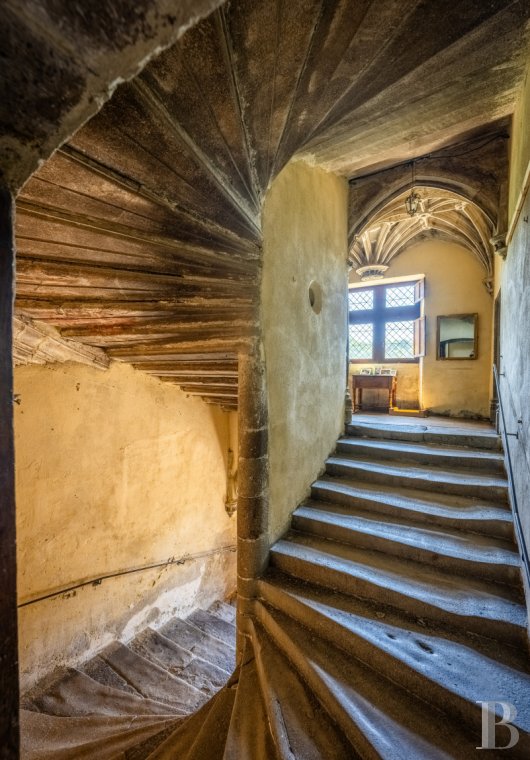
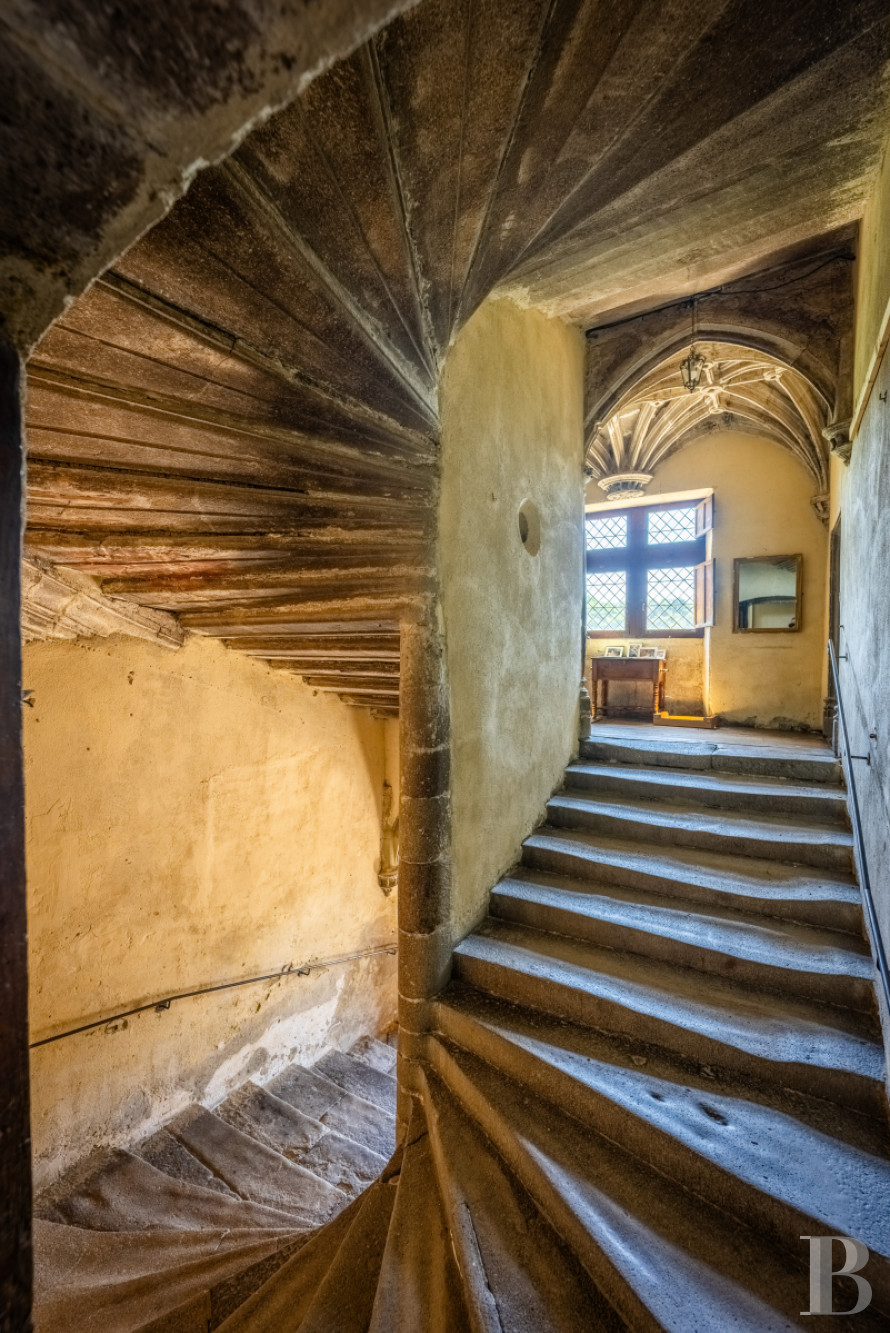
Inside, the layout of the rooms has not been modified and, besides an immense Italianate staircase, the ground floor contains a former lower hall, which is now used as a dining room, a small TV room, two kitchens – the original and a more recent one – as well as a door to the cellars and garage, whereas the first floor features a former lords’ hall, a small adjacent sitting room, two bedrooms and a shower room with lavatory.
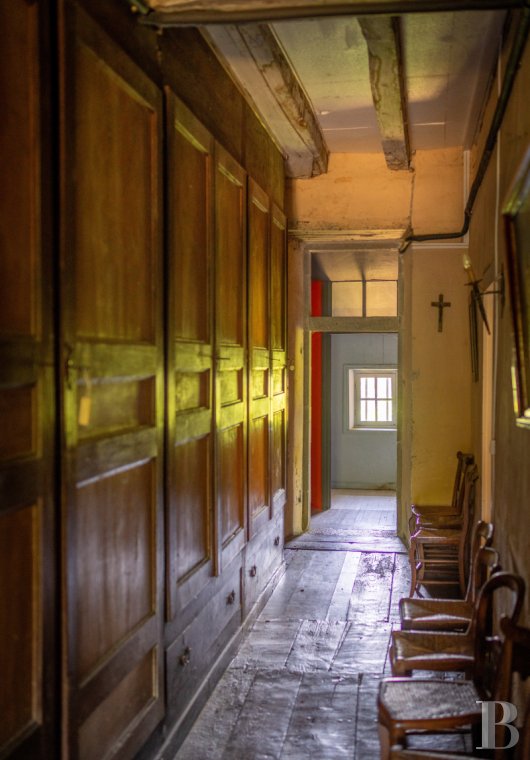
In addition, the door to the chateau’s 18th-century wing gives on to a series of three adjacent bedrooms with washbasins, a bathroom and a separate lavatory, while the second floor includes the immense “Queen’s bedroom”, a study, two more bedrooms and a shower room with lavatory. As for the doorway on the half landing, it opens on to a shower room and an attic in the 18th-century wing, whereas the third floor is made up of an exhibition hall, followed by a guest bedroom, former staff rooms and an interior dovecote.
Lastly, a small staircase leads to the attic with an immense room boasting breath-taking wooden rafters and two fireplaces, which precedes an oratory and the upper sections of the two towers, while a caretaker’s cottage and a swimming pool can also be found on the property.
Today, the only thing that remains from this era is the first keep to the west, a second tower built in the 15th century to the east, as well as one of the defensive towers, now shortened and surrounded by patios and plenty of open spaces. As for the central dwelling, built in the Renaissance between the two square towers, its southern façade features many mullioned windows and breath-taking sculpted décor around its main entrance, while, to the north, an additional wing was added in the 18th century.
Inside, the layout of the rooms has not been modified and, besides an immense Italianate staircase, the ground floor contains a former lower hall, which is now used as a dining room, a small TV room, two kitchens – the original and a more recent one – as well as a door to the cellars and garage, whereas the first floor features a former lords’ hall, a small adjacent sitting room, two bedrooms and a shower room with lavatory.
In addition, the door to the chateau’s 18th-century wing gives on to a series of three adjacent bedrooms with washbasins, a bathroom and a separate lavatory, while the second floor includes the immense “Queen’s bedroom”, a study, two more bedrooms and a shower room with lavatory. As for the doorway on the half landing, it opens on to a shower room and an attic in the 18th-century wing, whereas the third floor is made up of an exhibition hall, followed by a guest bedroom, former staff rooms and an interior dovecote.
Lastly, a small staircase leads to the attic with an immense room boasting breath-taking wooden rafters and two fireplaces, which precedes an oratory and the upper sections of the two towers, while a caretaker’s cottage and a swimming pool can also be found on the property.
The Chateau
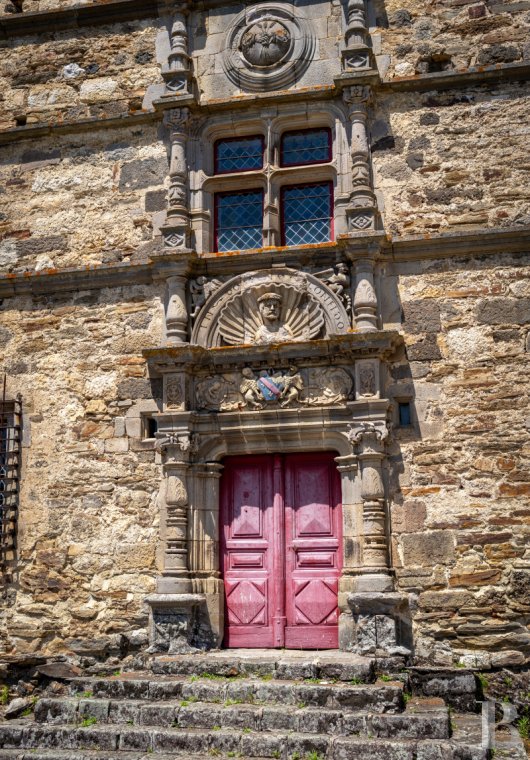
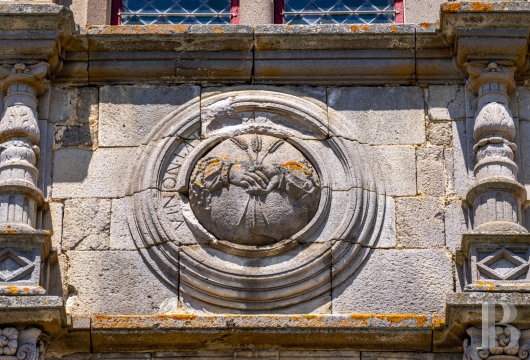
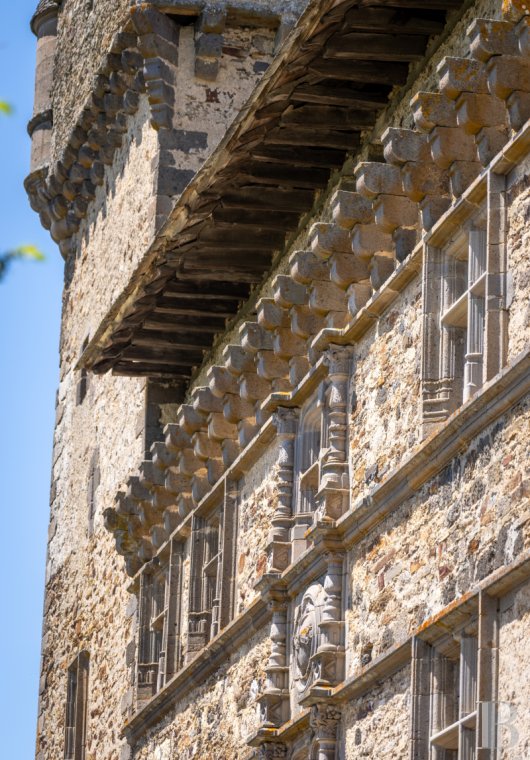
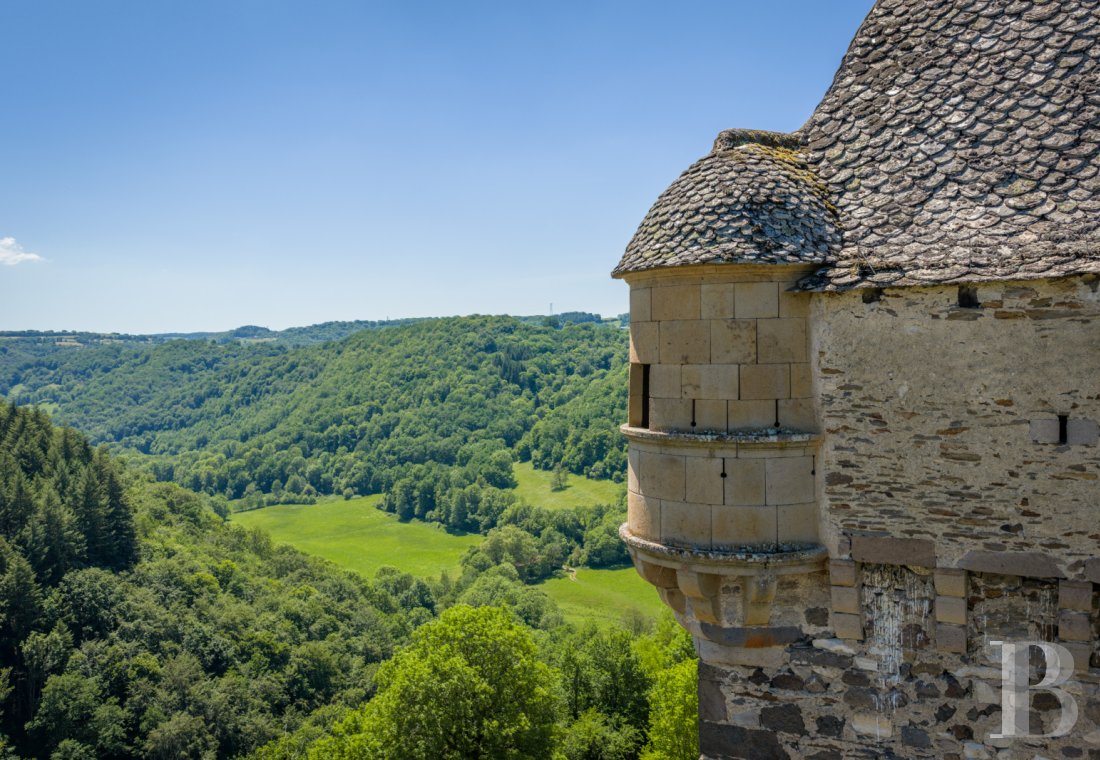
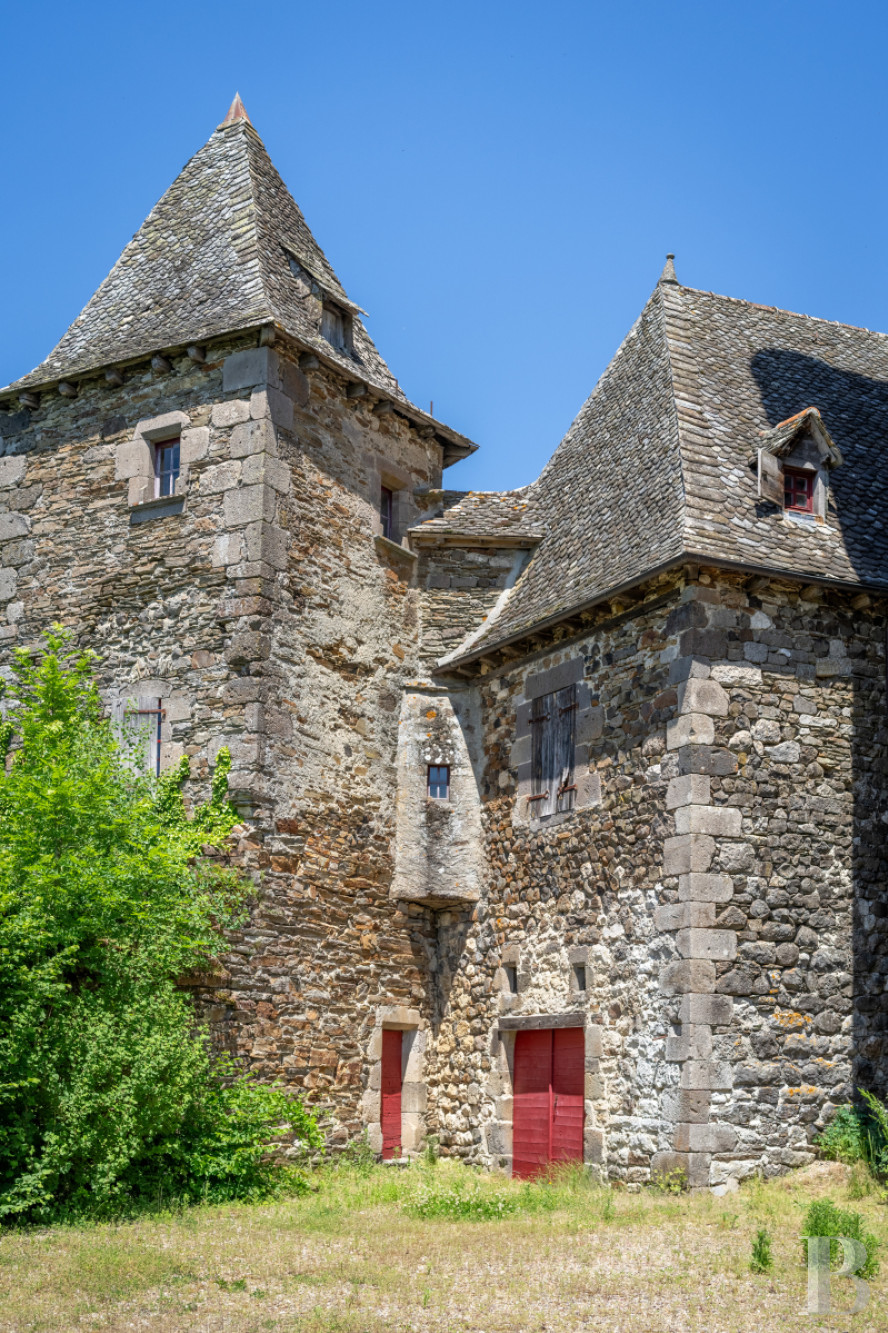
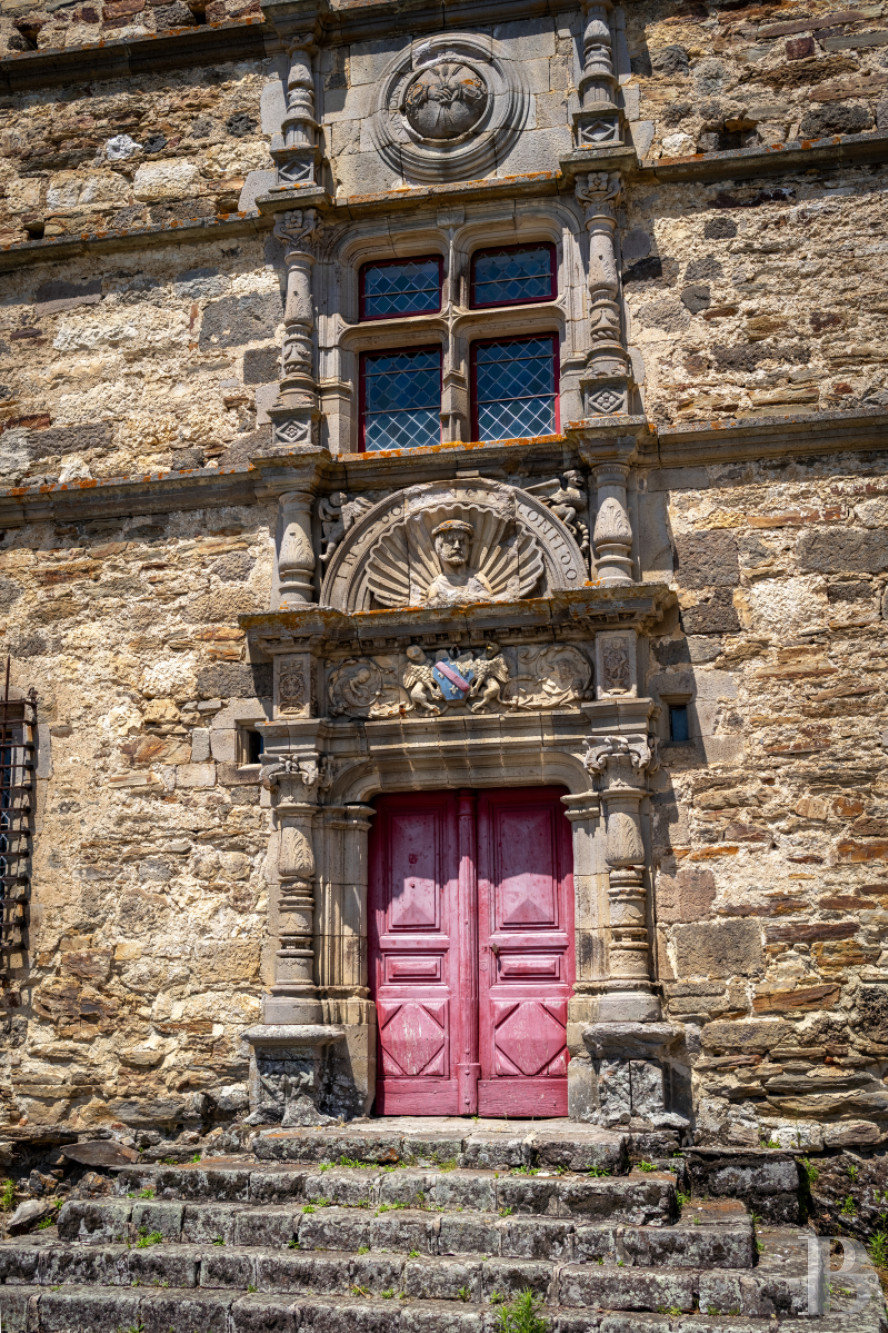
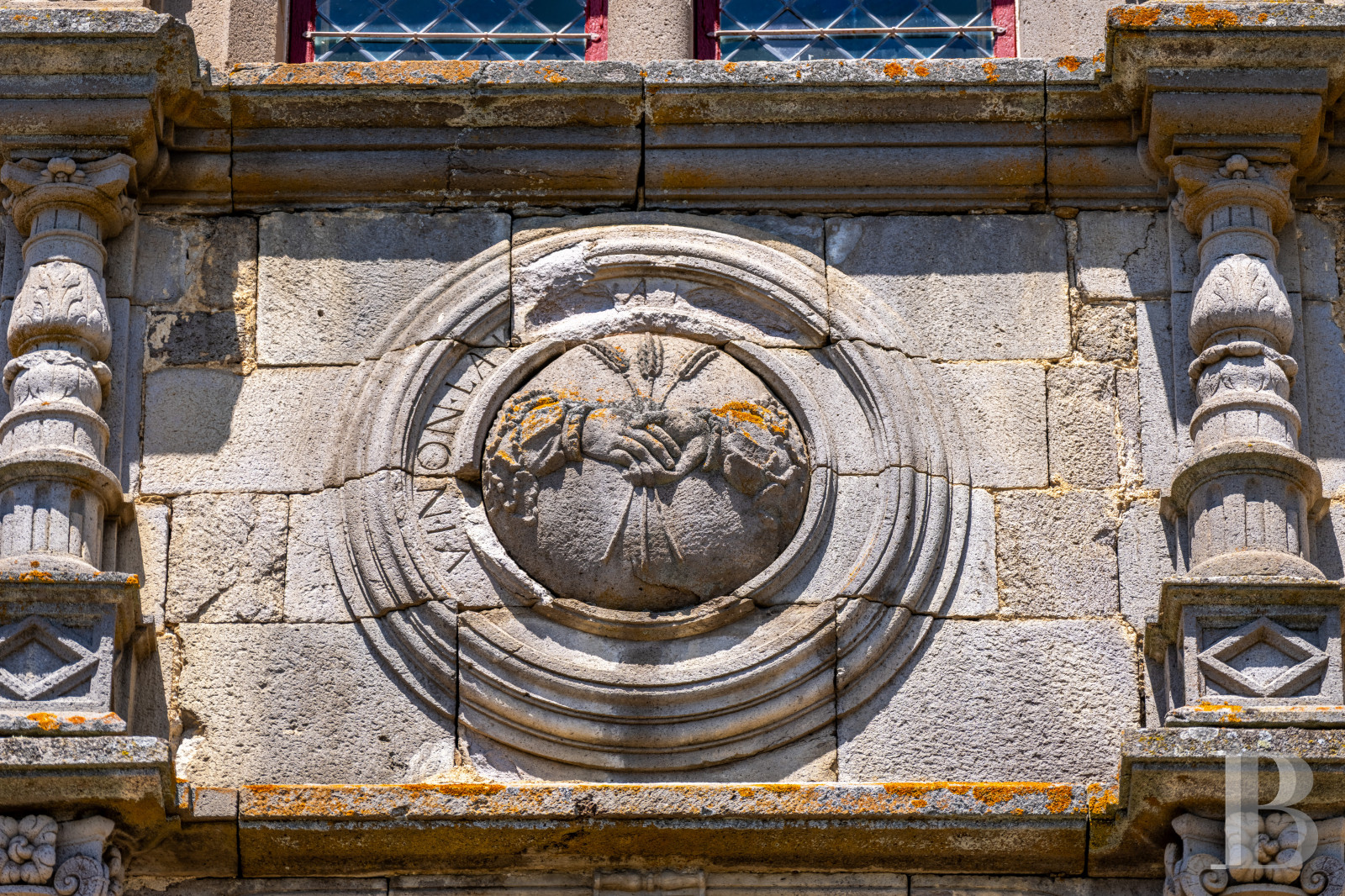
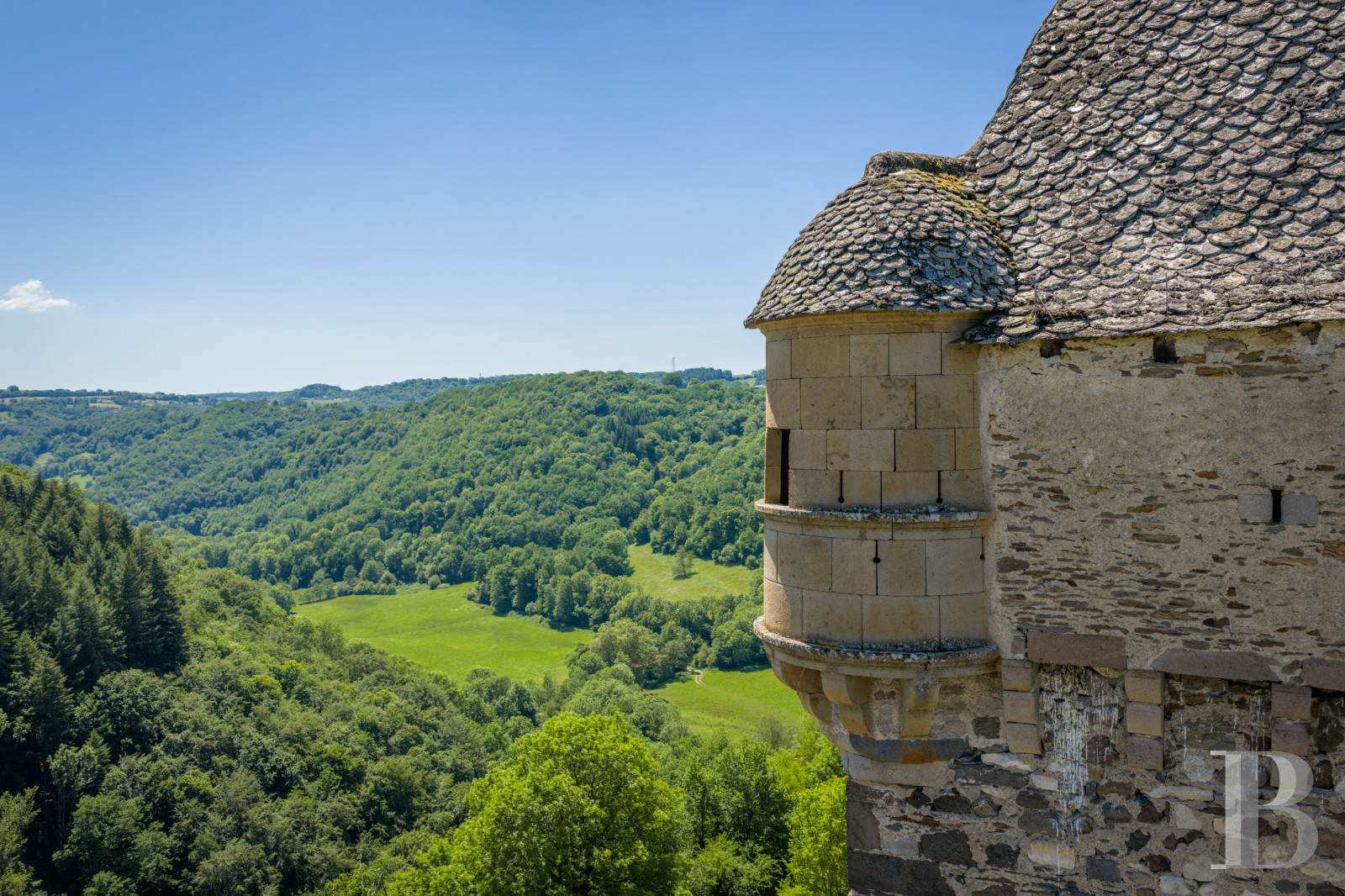
Two medieval square towers, whose upper sections are encircled by covered rampart walks with machicolations and bartizans on its outer ends, frame the chateau’s southern façade. Between these two keeps, the main dwelling, built during the Renaissance, was added in order to transform the former stronghold into a pleasure palace, while the sculpted décor, located above the main entrance and the work of Italian artists, was never finished, as demonstrated by the vestiges of a former rampart walk still visible in its upper section.
As for the bust of the chateau’s benefactor, Jean de Montamat, it is featured prominently in the middle of a scallop shell placed directly over the entrance, which symbolises the important pilgrimage route towards Santiago de Compostela.
The ground floor
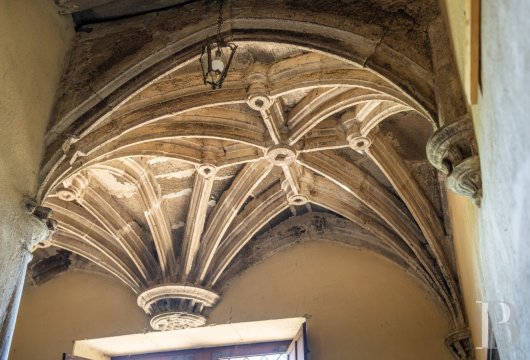
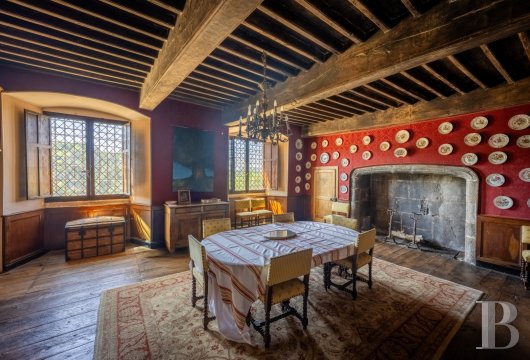
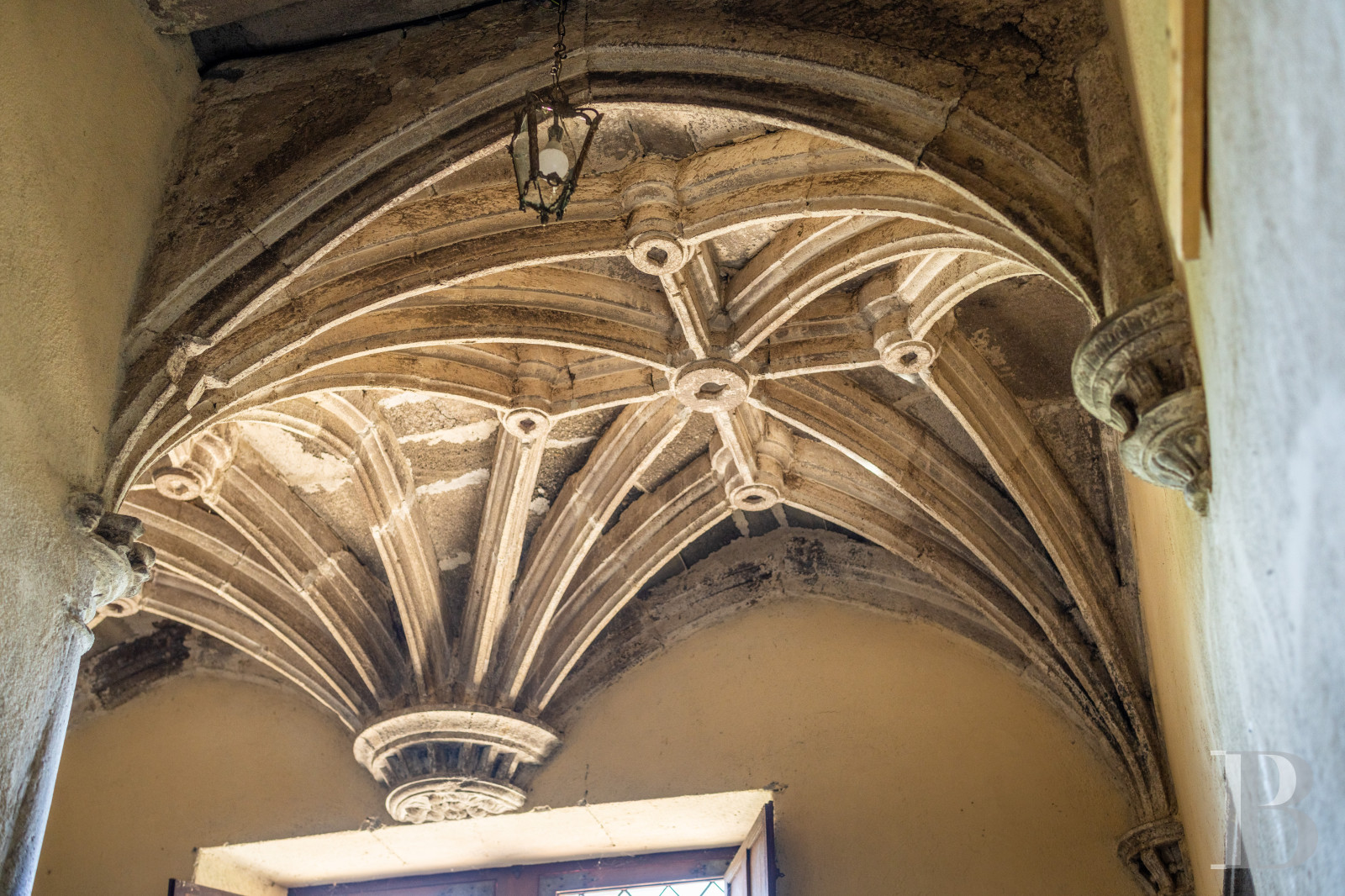
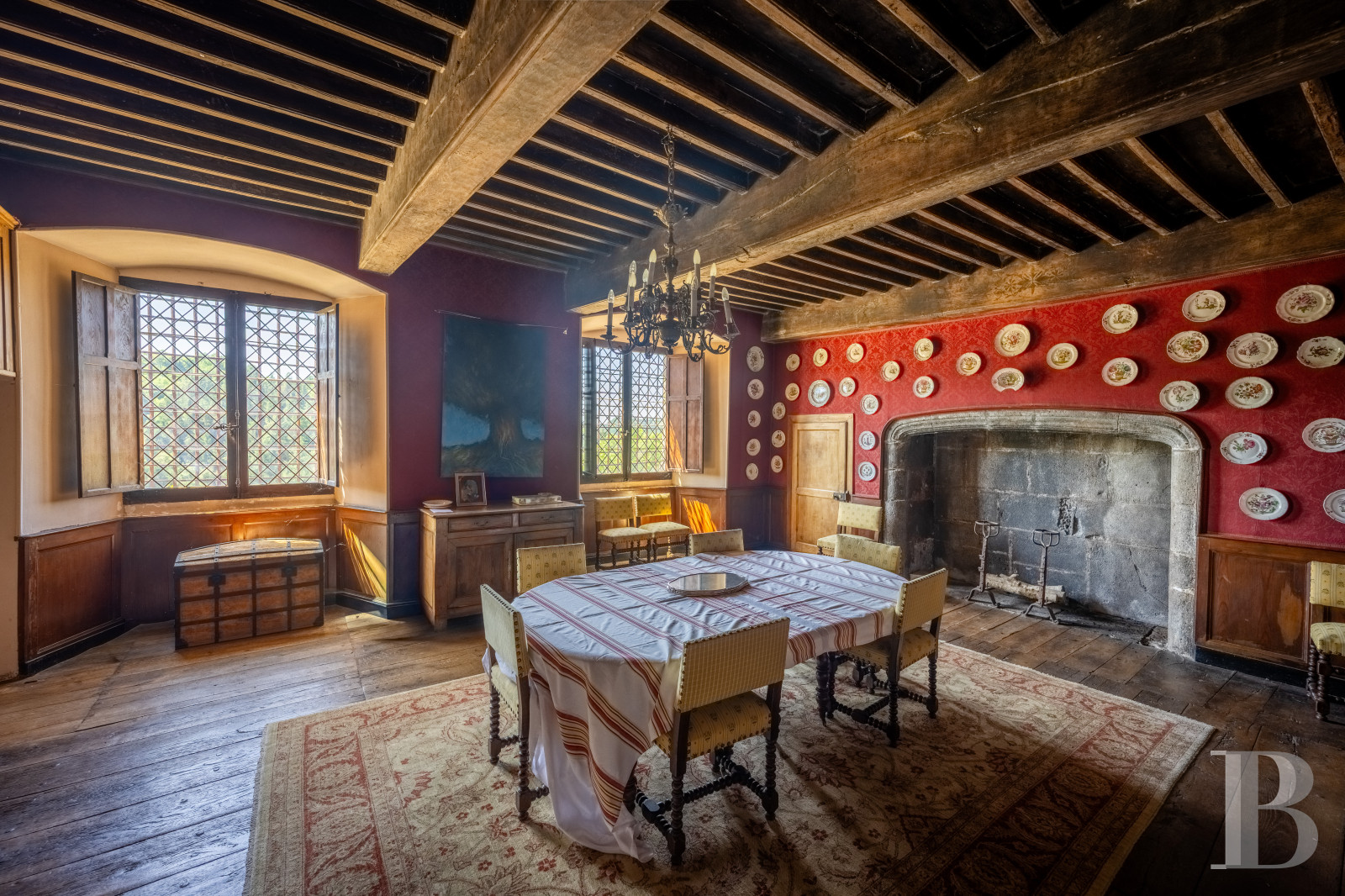
After ascending the five front steps, the wooden double-door entrance opens on to an entrance hall topped with a ribbed vaults and Gothic arches supported by a twisted column and sculpted corbels, while on one side, a dining room – which was originally the lower hall – is bathed in light thanks to two windows, which highlight the partially decorated, visible ceiling beams, a granite fireplace and original wide-plank oak parquet floors.
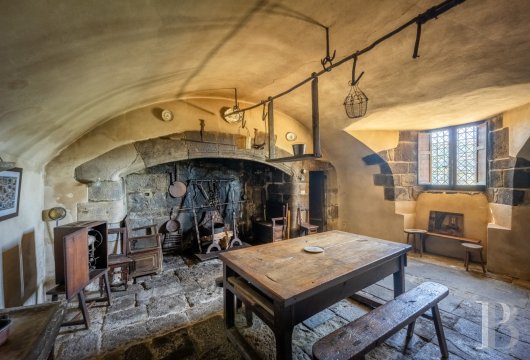
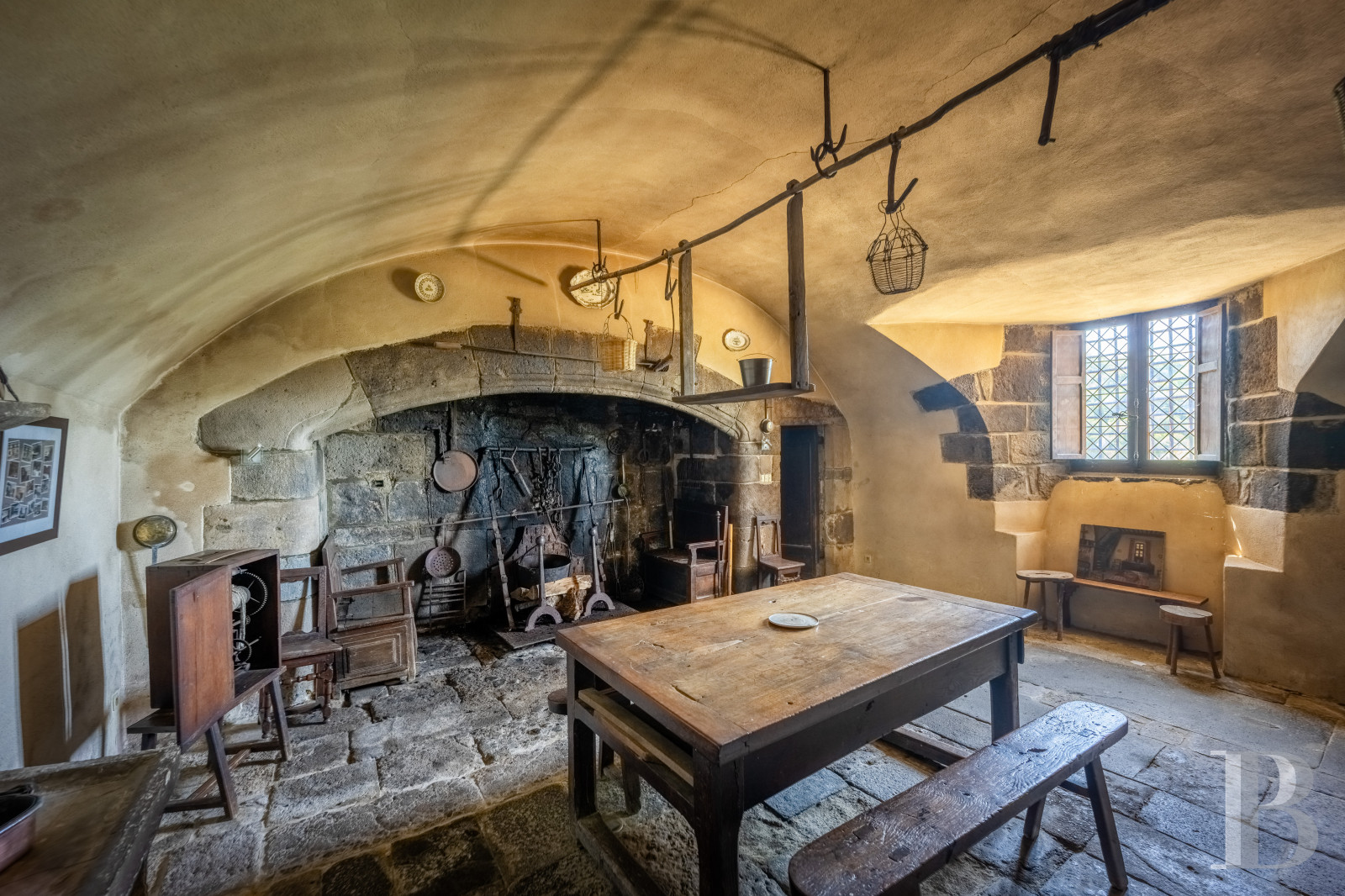
Past a doorway hollowed out of the thick wall, a small TV room with a fireplace is located at the bottom of the first keep, whereas, directly opposite the entrance, the original vaulted kitchen with its flagstone floor has preserved an immense “Cantou” fireplace, a flat stone sink and a counterweighted rotisserie. As for the modern kitchen, whose vaulted ceiling is decorated in the middle with coats of arms, it provides direct access to the outside, while, in the entrance hall, the door to the cellars and garage is located next to the base of the stone staircase, the latter of which only ascends to the second floor from where it is relayed by a wooden staircase, described as “temporary”, even though it was built in the 16th century.
As such, it thus confirms the unfinished project for this chateau, in all likelihood due to a lack of means, which consisted of adding another floor to the central building, whereas, thanks to its lierne and tierceron vaults, this floor is a testimony to both the architectural style of the Renaissance as well as more peaceful times, thanks to its left façade, which is incompatible with any kind of defensive rationale for armed combat.
The intermediate level
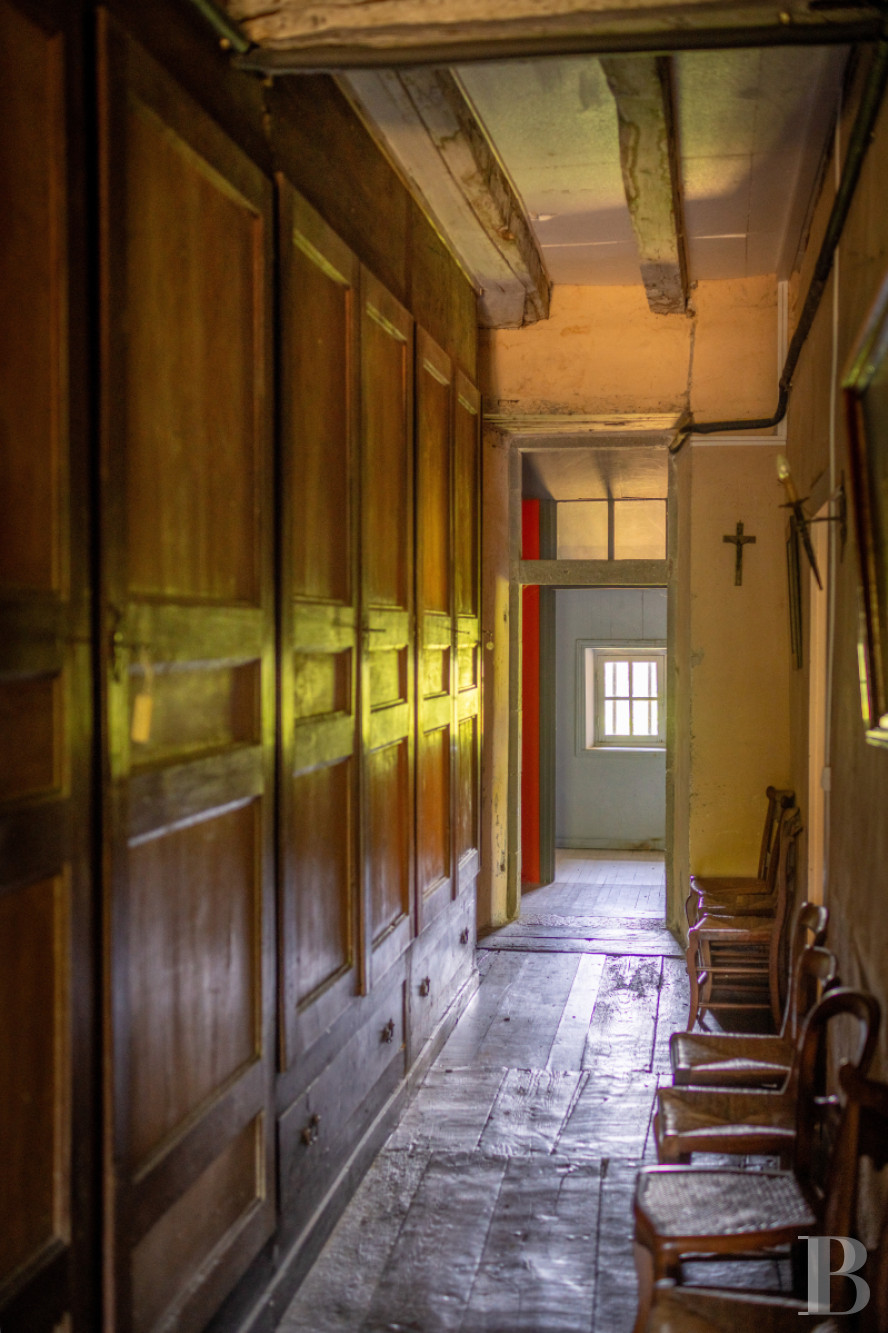
Between the ground floor and the first floor, one of the chateau’s former entrances opens on to the first floor of the wing built in the 18th century, while from here, a hallway with parquet floors and built-in cupboards provides access to two bedrooms, each with a fireplace, washbasin and one or two windows facing north. As for the third bedroom, looking to the north and west, it communicates with a bathroom located in a low square tower, whereas all the rooms on this floor share a separate lavatory.
The first floor
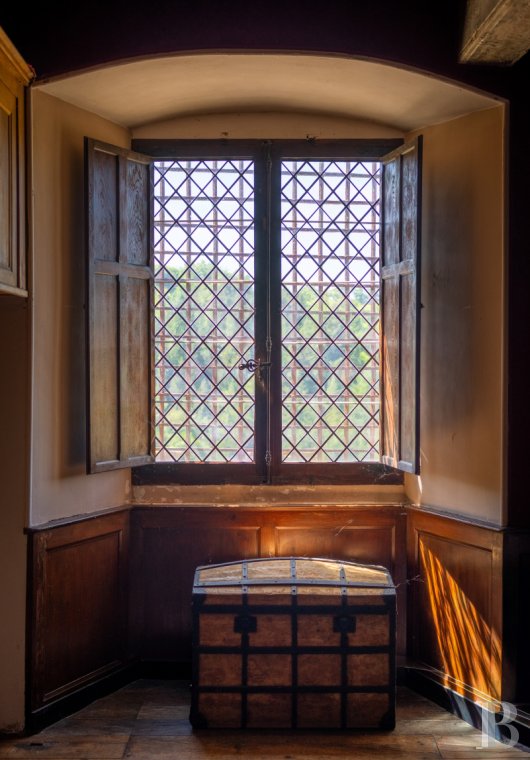
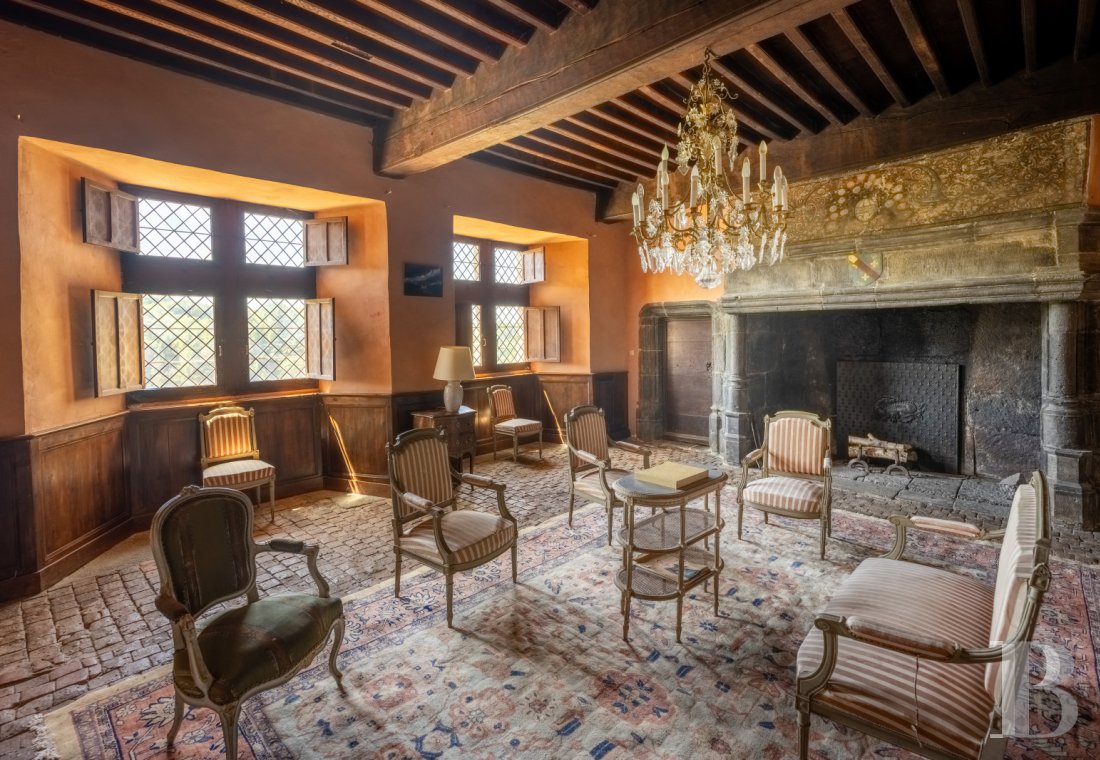
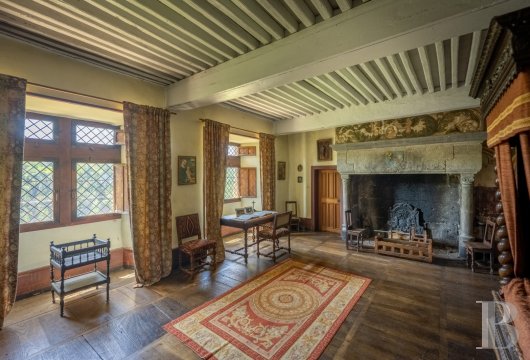
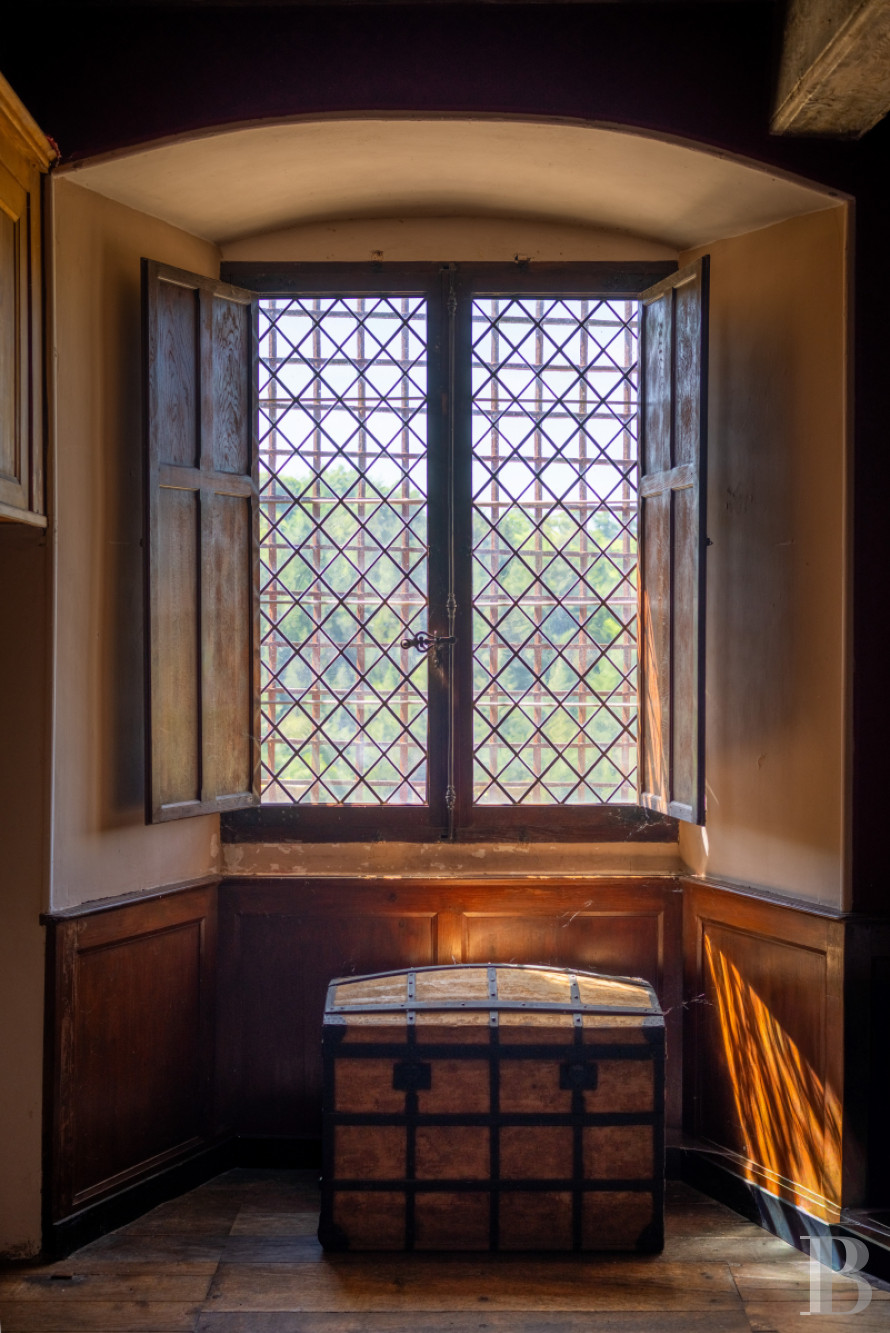
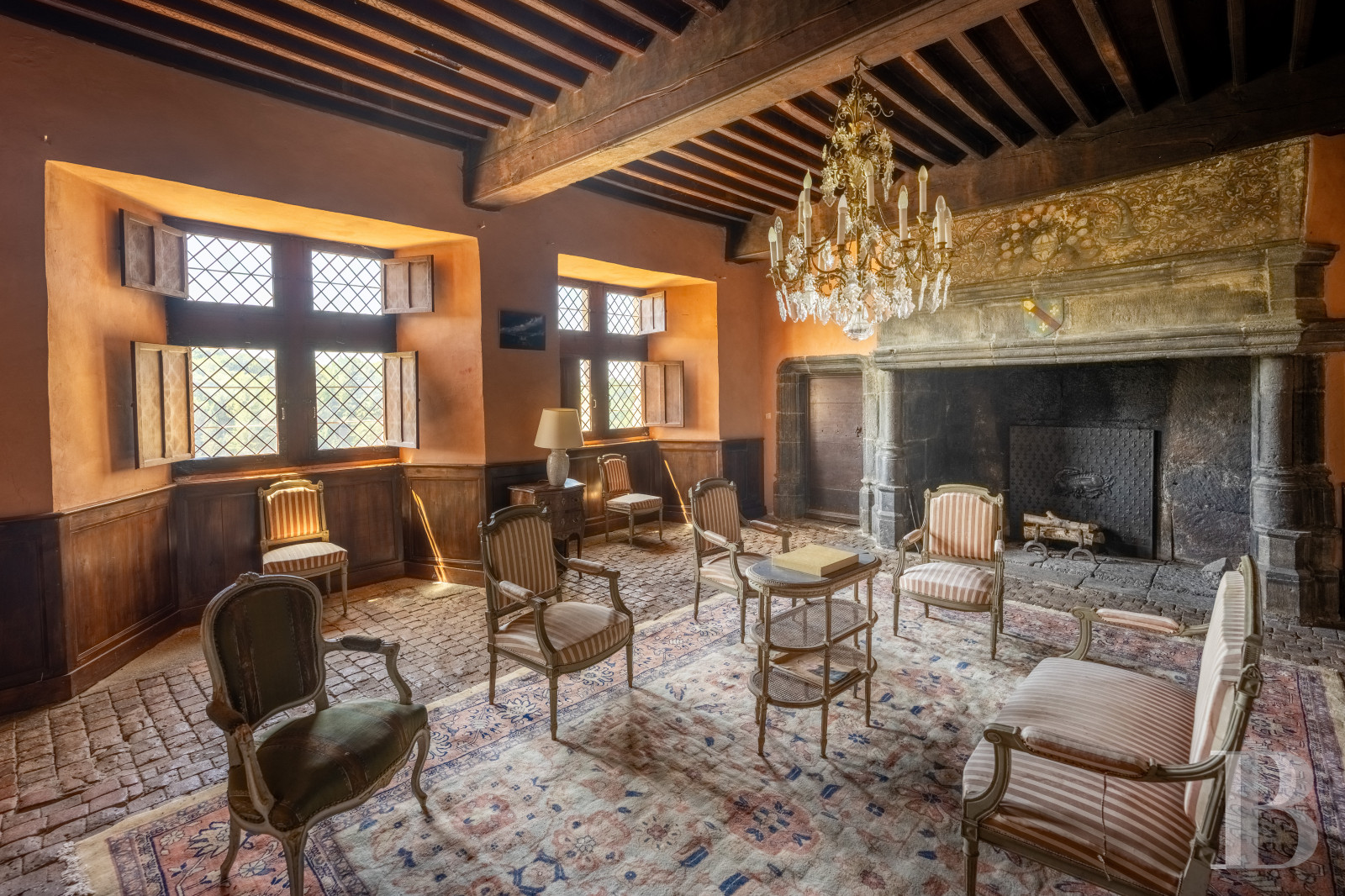
With the same layout as the ground floor, it includes two rooms on its western side: a former 17th-century lords’ hall, which is currently used as a large drawing room and boasts original terracotta floor tiles, a tall stone fireplace topped with a painted lintel, visible ceiling beams, mullioned windows and interior shutters.
In addition, a bedroom was created in what was once the seignorial room of the initial keep, whereas, on the eastern side, a small sitting room, featuring a tall stone fireplace, a mullioned window and oak parquet floors, precedes a bedroom, also with parquet floors and bathed in light by a single cross-window, as well as a shower room with lavatory.
The intermediate level
Between the first and second floors of the main building, a door, once providing outdoor access, is today accessible from the staircase and leads to a small room, the latter of which communicates with a shower room and an immense attic space, located in the 18th-century wing.
The second floor
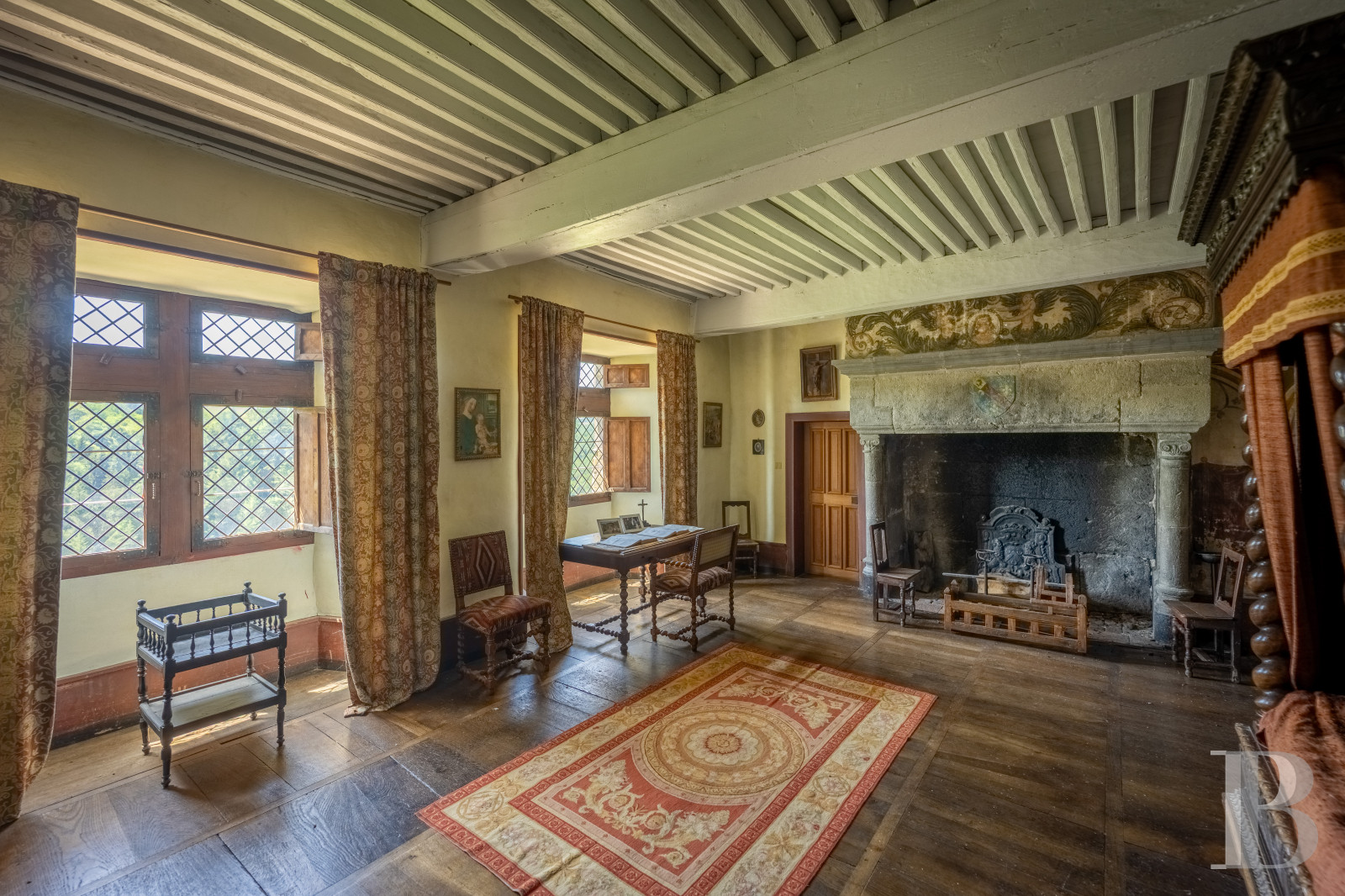
Among this floor’s four main rooms, the “Queen’s” bedroom owes its name to Queen Margot, the first wife of King Henri IV who stayed here several times after she fled from the court of Nérac in Gascony in order to join her mother, Catherine de Médicis, at her fortress in Carlat, only a few kilometres away. Featuring visible ceiling beams, a ladder-pattern parquet floor and a fireplace with painted décor, which boasts, at its centre, the portrait of the wife of one of the sons of the Chapt de Rastignac family, former owners of the premises, this bedroom is also adorned with frescoes painted about fifteen years ago for the purpose of a film shoot.
Extending on from here, a second bedroom includes a wooden fireplace and a cross-window facing south, while, on the other side of the landing, a study with a stone fireplace precedes another bedroom and a shower room with a lavatory.
The third floor
At the top of the Italianate staircase on the second floor, a flight of wooden steps from the 16th century leads to this level, the latter of which contains a large exhibition hall, followed by a small library. On the other side of the landing, a hallway leads to a staff bedroom, which opens on to the vestiges of the rampart walk facing north, as well as an interior dovecote, whose 300 pigeonholes and swivelling ladder are still visible today.
The fourth floor
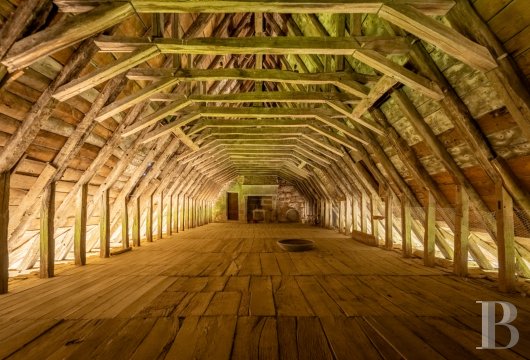
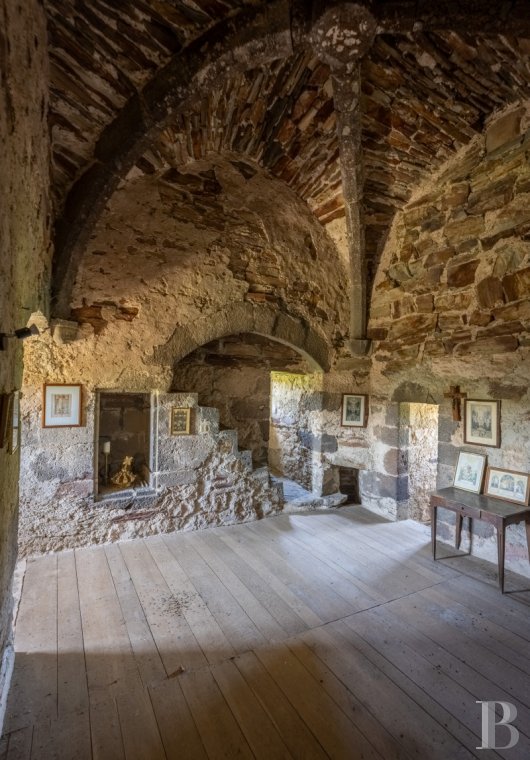
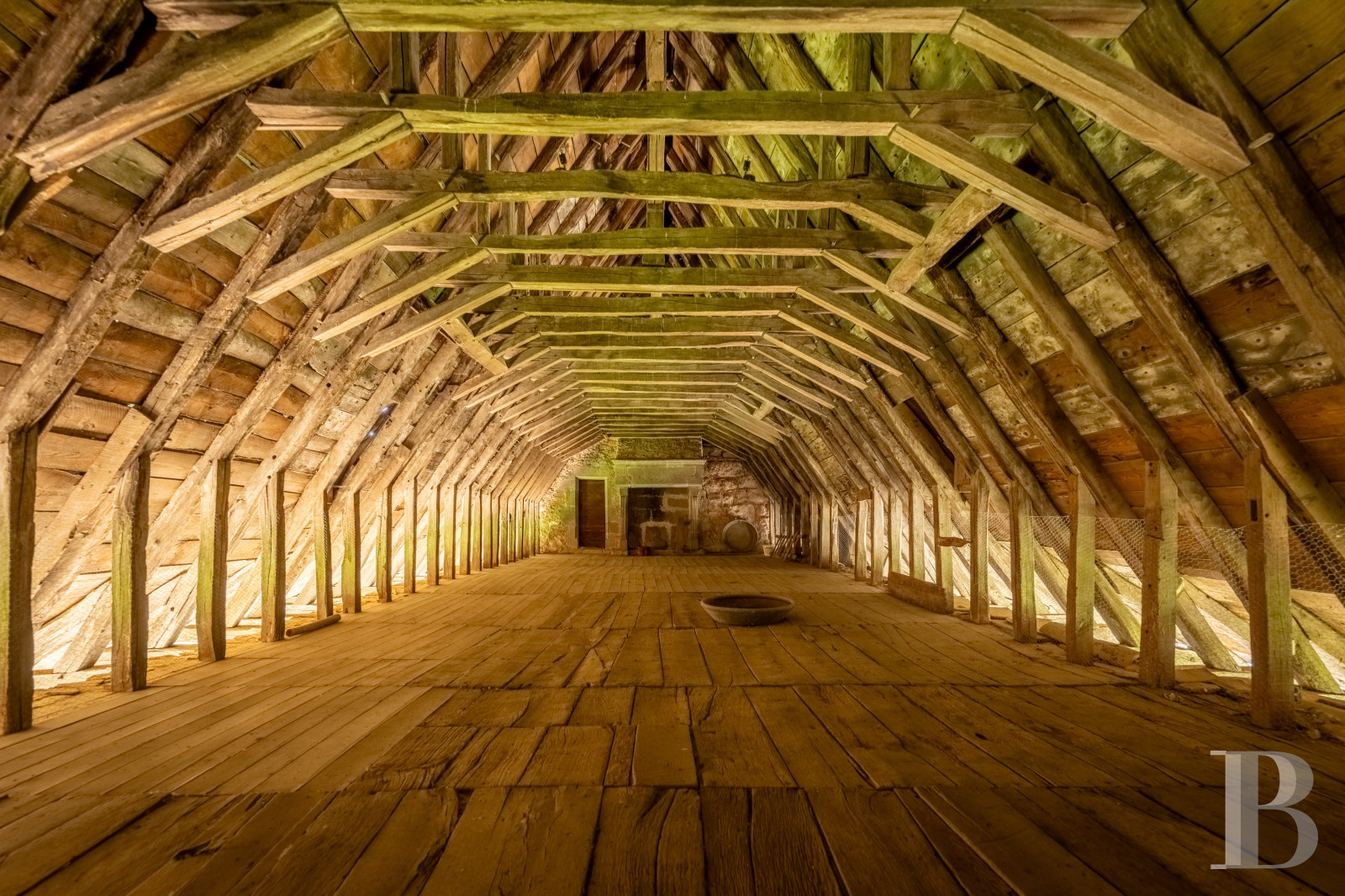
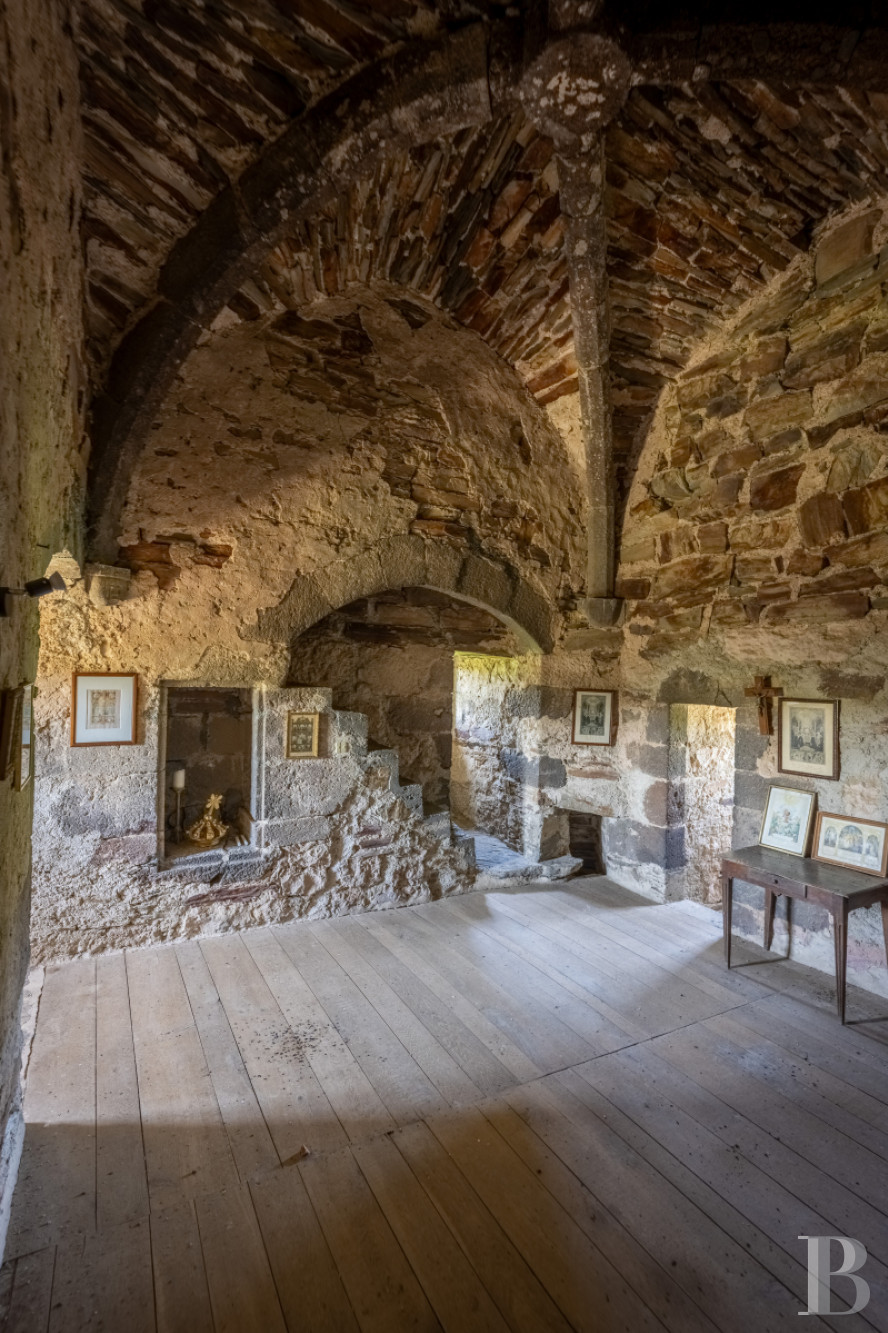
A small wooden staircase from the third floor gives on to an immense attic crowned with 16th-century chestnut rafters. With two fireplaces located on either end and plenty of timber in order to create three large windows, it is easy to discern that, at one time, another storey was to be added to the main building, while, to the west, a room, topped with a ribbed vaulted, has been transformed into an oratory.
In addition, a stone staircase was created within one of the chateau’s thick walls in order to access the upper portion of the original keep with its two bartizans, whereas, to the east, a door also provides access to the tower’s highest floor, the latter of which is safeguarded by two bartizans, with their machicolations and arrowslits still intact.
The Caretaker's Cottage
To the east of the chateau, this cottage, currently used to house visitors, is heated with a central gas system, while, built out of stone and topped with a lauze slate tile roof, it includes, on the ground floor, a living room and an open kitchen, as well as a bedroom, a shower room and a machine room. As for the upstairs level, accessible via a straight staircase, it is divided into an initial space, topped with visible wooden trusses and rafters, as well as a wood-panelled bedroom, whereas a partially underground basement, accessible via the exterior, contains a double bread oven.
The Grounds
Extending over approximately 15 hectares, they hug the property’s topography and blend in seamlessly with the primarily wooded countryside, while patios and lawns surround the chateau on all sides. Lastly, up in the heights of the estate, to the north of the chateau and accessible via a dirt path, a meadow is now the site of a swimming pool and its machine room.
Our opinion
A genuine history book written in stone, this chateau has traversed the centuries with remarkable aplomb, while the medieval dwelling, with its Renaissance embellishments and 18th-century extensions, whose décor and furnishings are still visible today, demonstrate how each era left its imprint on this building without ever erasing the previous one.
In addition, this continuity endows the property with remarkable authenticity, reinforced by the fact that it has remained within the same family since the middle of the 20th century, while above and beyond its obvious architectural interest, the estate exudes a surprisingly domestic and inhabitable quality. It should be noted that a few improvements in terms of comfort could be planned, but they will not take anything away from what is truly essential: the opportunity to become the custodian of one of the most unique privately-owned historical complexes in the Cantal region.
Reference 118476
| Main building floor area | 1000 m² |
| Outbuildings floor area | 70 m² |
| Land registry surface area | 15 ha 56 a 66 ca |
Information on the risks to which this property is exposed is available on the website: www.georisques.gouv.fr
Share


NB: The above information is not only the result of our visit to the property; it is also based on information provided by the current owner. It is by no means comprehensive or strictly accurate especially where surface areas and construction dates are concerned. We cannot, therefore, be held liable for any misrepresentation.