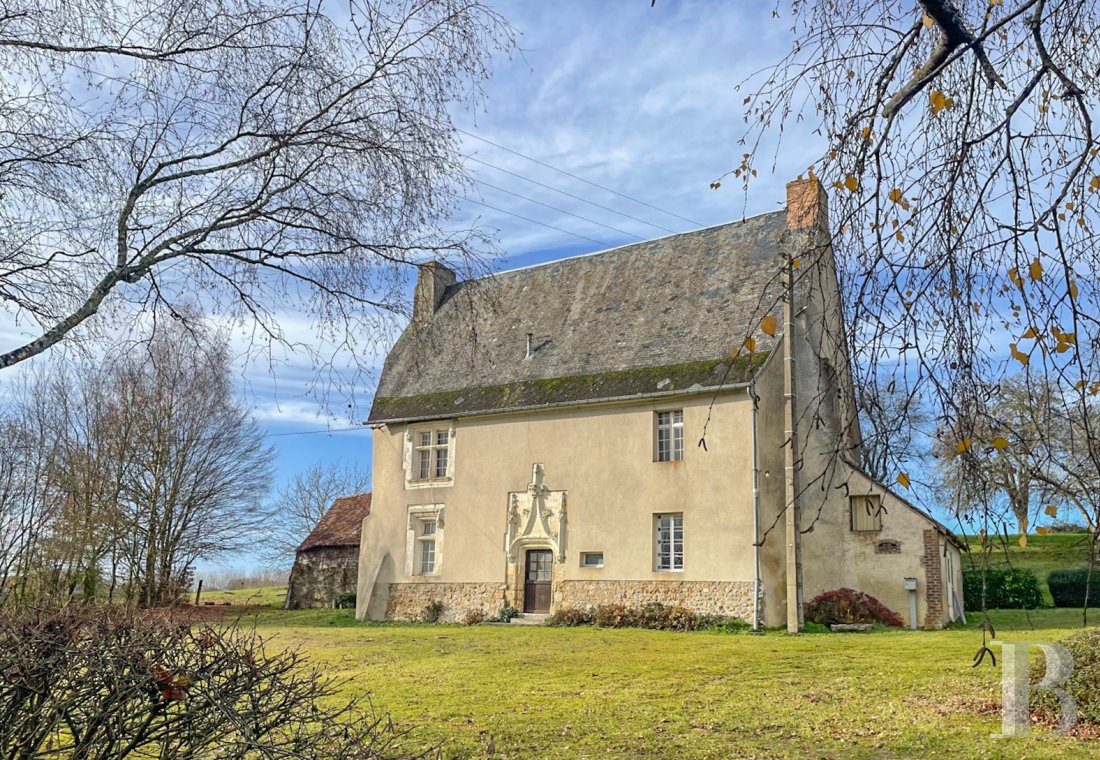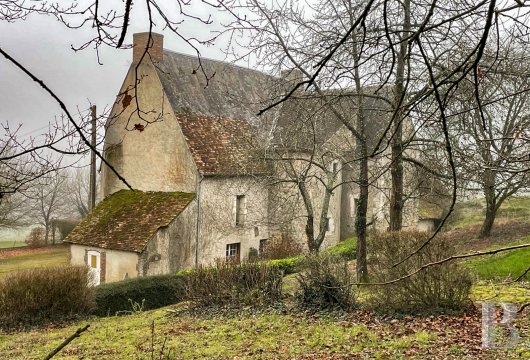




A 15th-century chateau to be restored, in 24 hectares of woods and meadows,
200 km west of Paris, close to the Loir Valley
200 km west of Paris, close to the Loir Valley
La Chartre-sur-le-Loir,
SARTHE
pays-de-loire
72340
FR

Location
This property is located in the Pays de la Loire region, to the southeast of the Sarthe area on the edge of the former Maine, Perche and Touraine provinces. This address, In the middle of nature in the Loir Valley, renowned for its wines, is only 60 kilometres north of the Loire Valley. The Bercé public forest, less than 10 kilometres away, stretches over more than 5,000 hectares and boasts 280 km of walking trails. Small towns or villages can be found within less than ten kilometres and possess services, shops and schools. Le Mans is 35 kilometres away, Tours is 70 kilometres away and Vendôme is 40 kilometres away. The A28 motorway is situated at a distance of less than 20 kilometres. Paris can be reached via high-speed TGV train from the stations in Le Mans and Vendôme in 55 and 45 minutes respectively. A direct train takes 1 hour 45 minutes to get to Charles-de-Gaulle airport.
Description
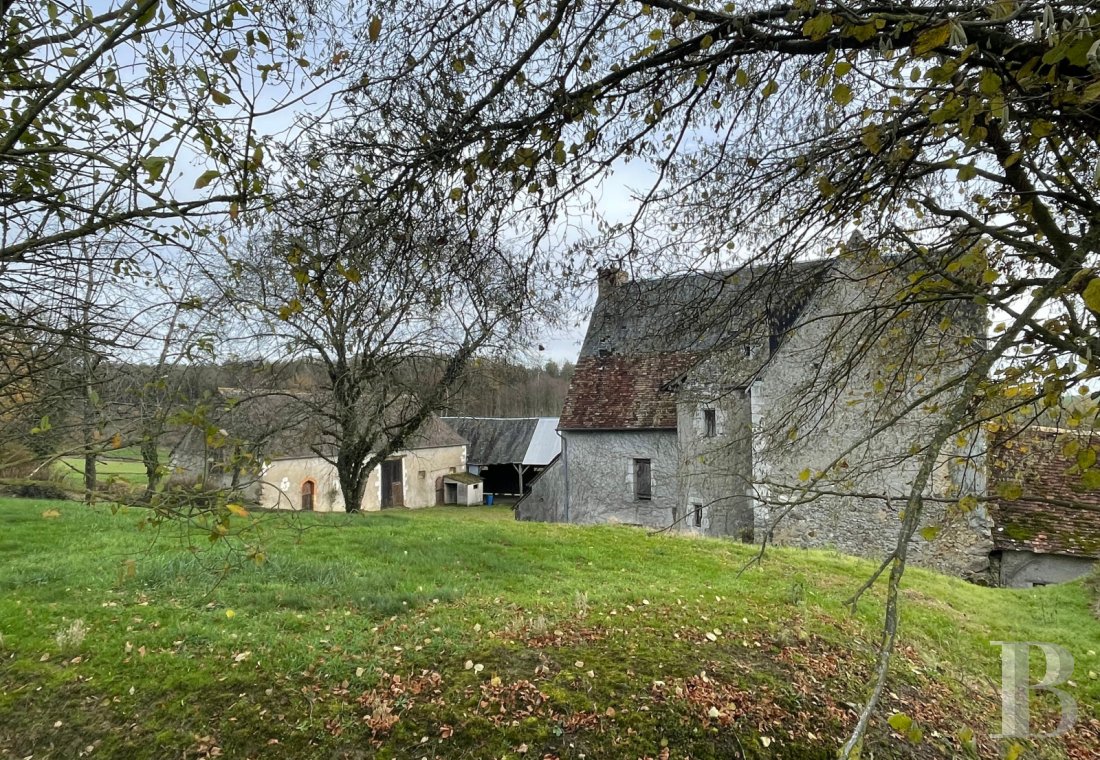
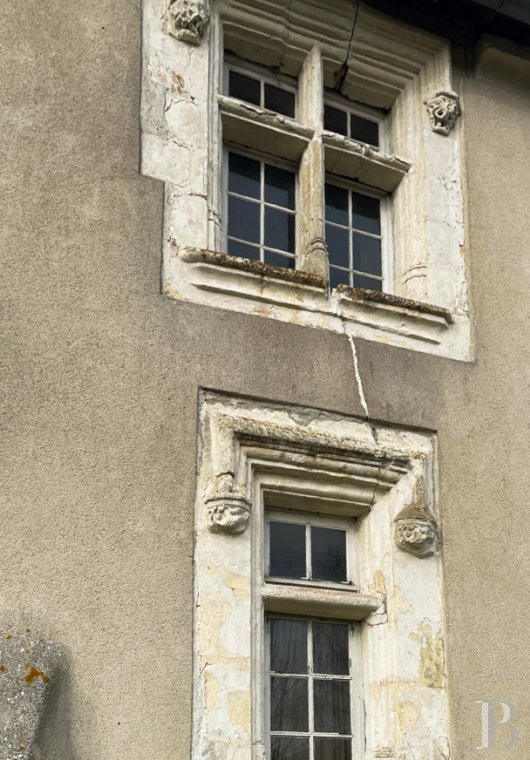
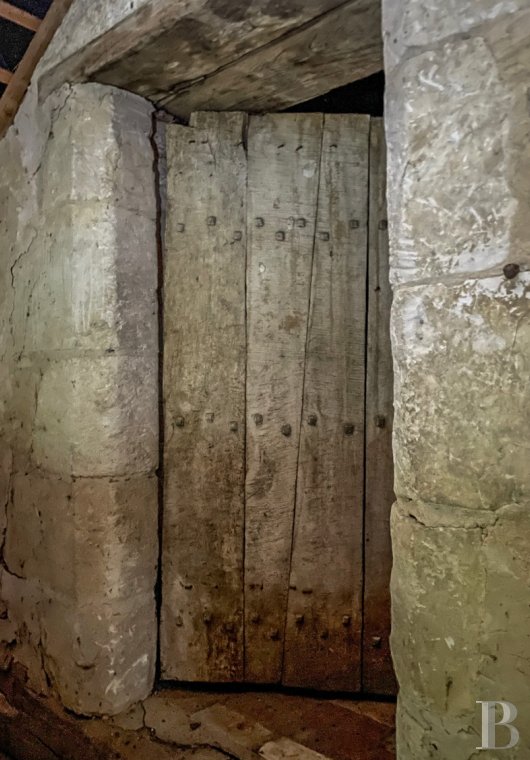
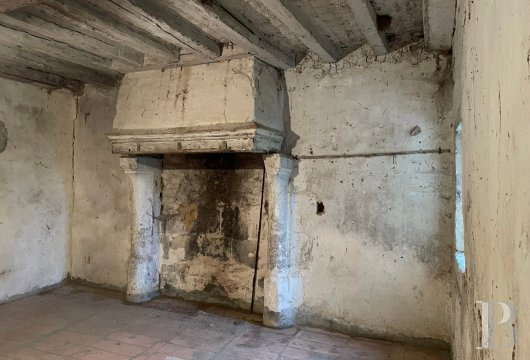
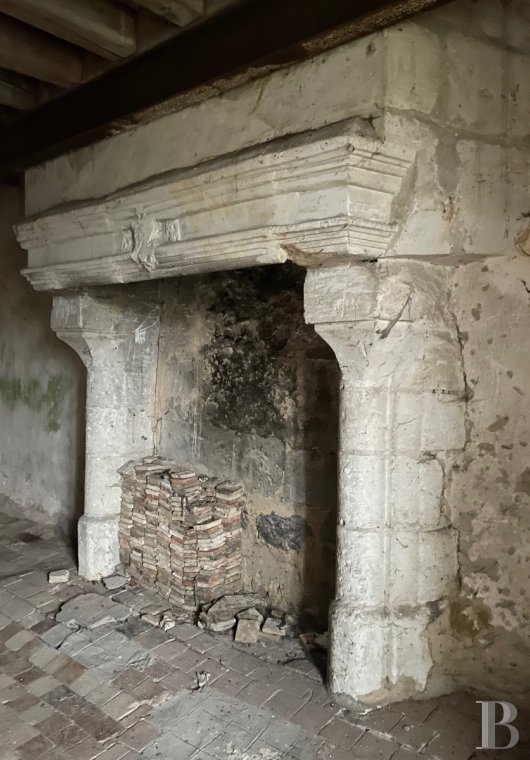
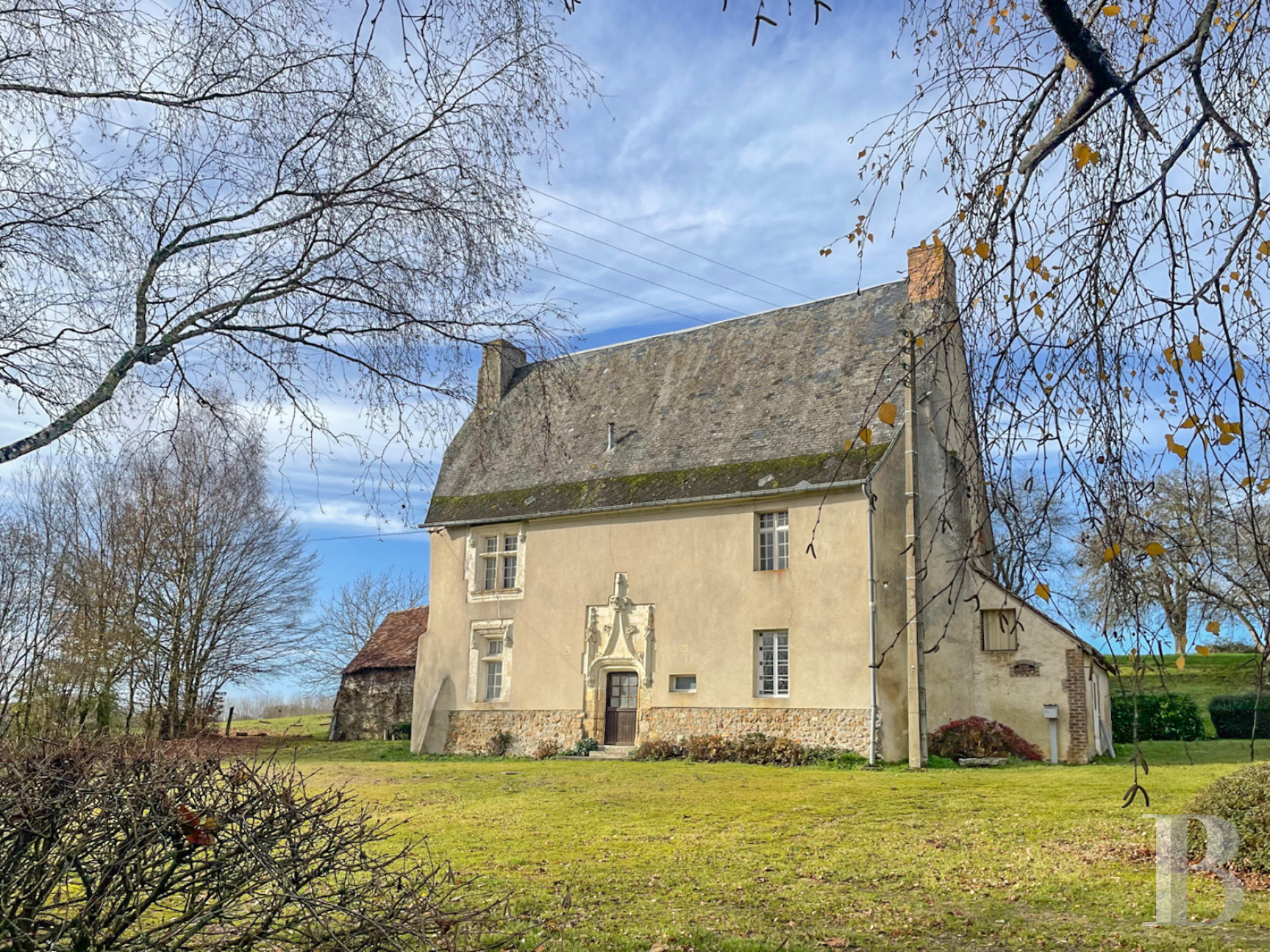
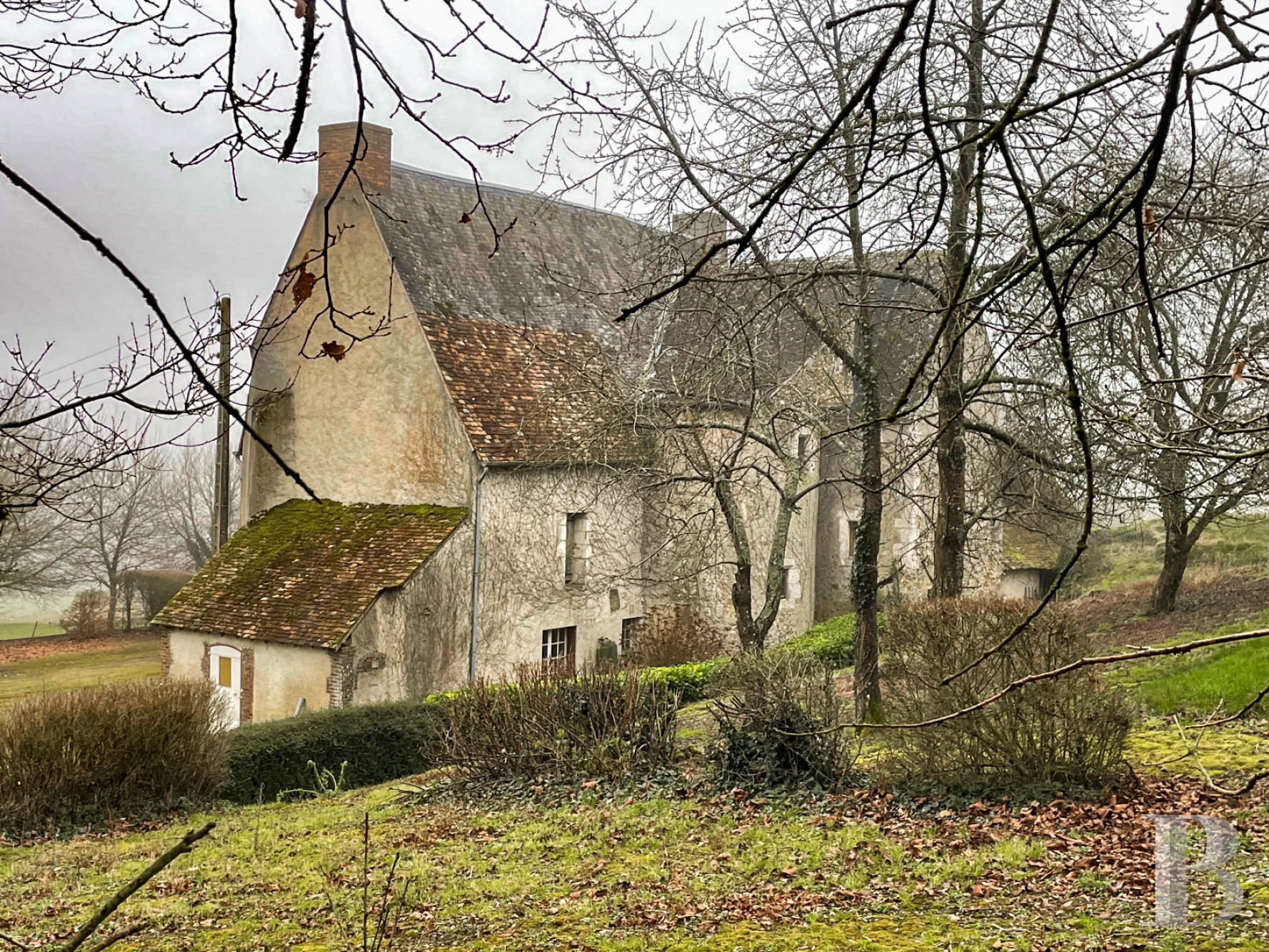
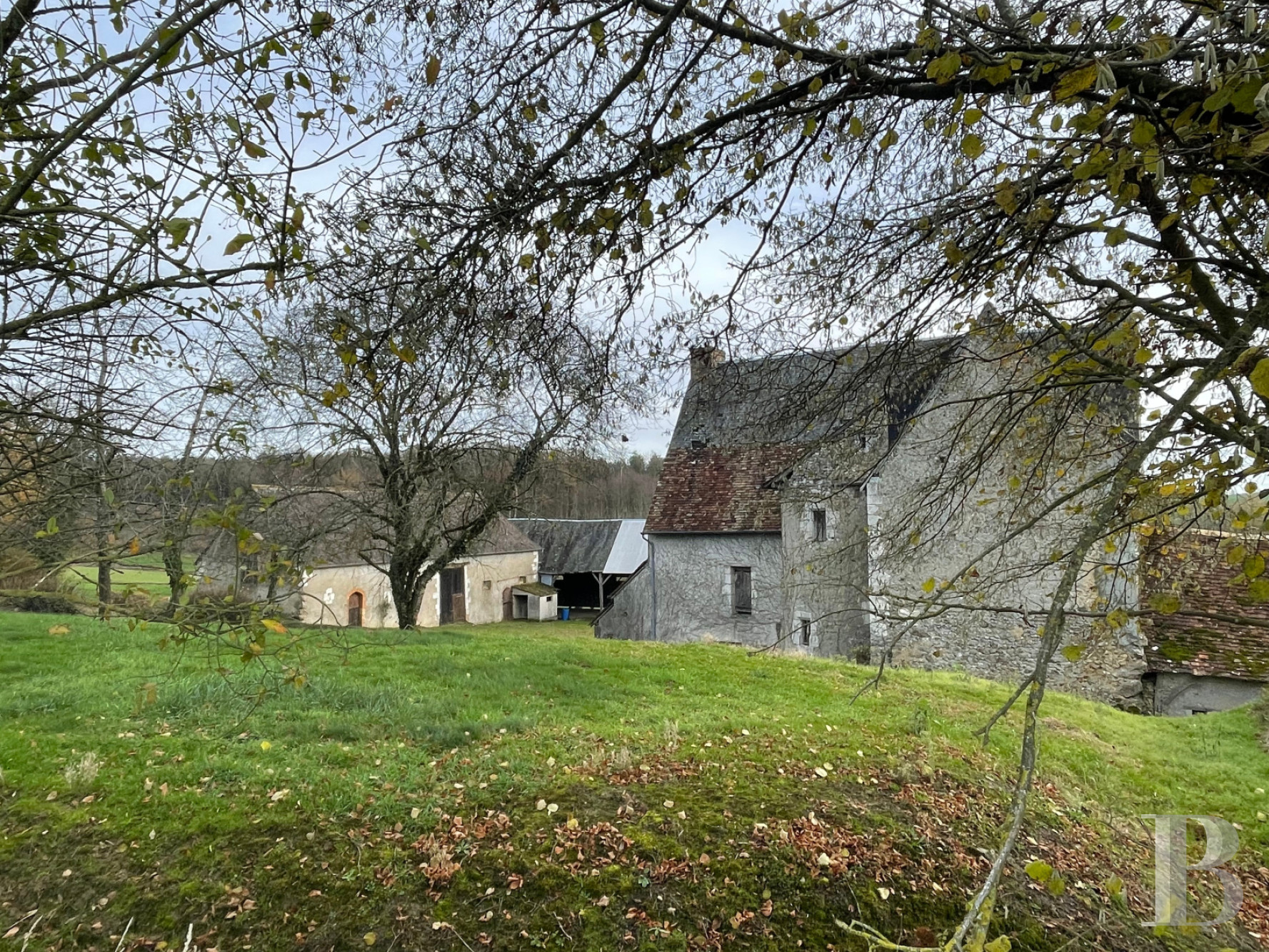
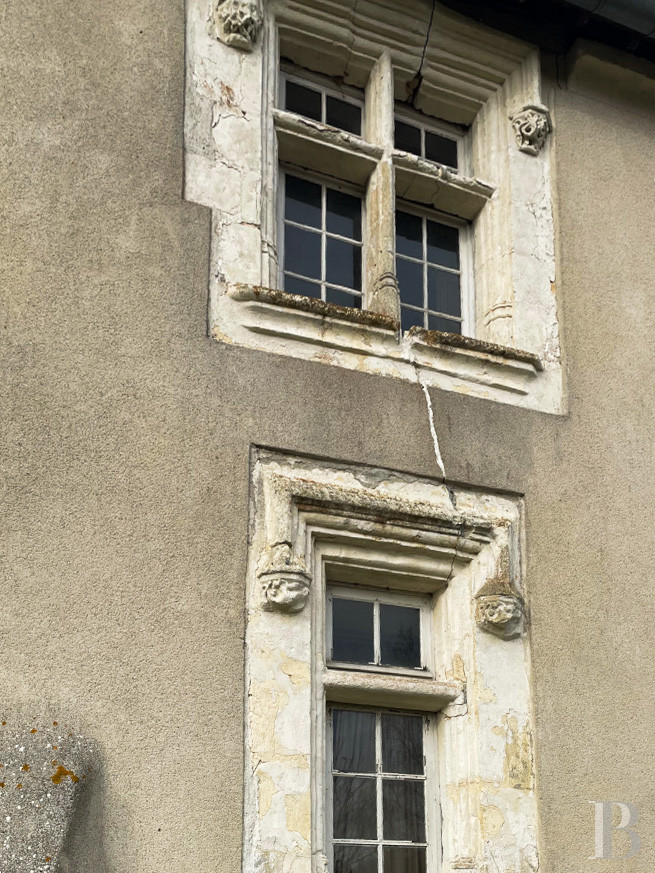
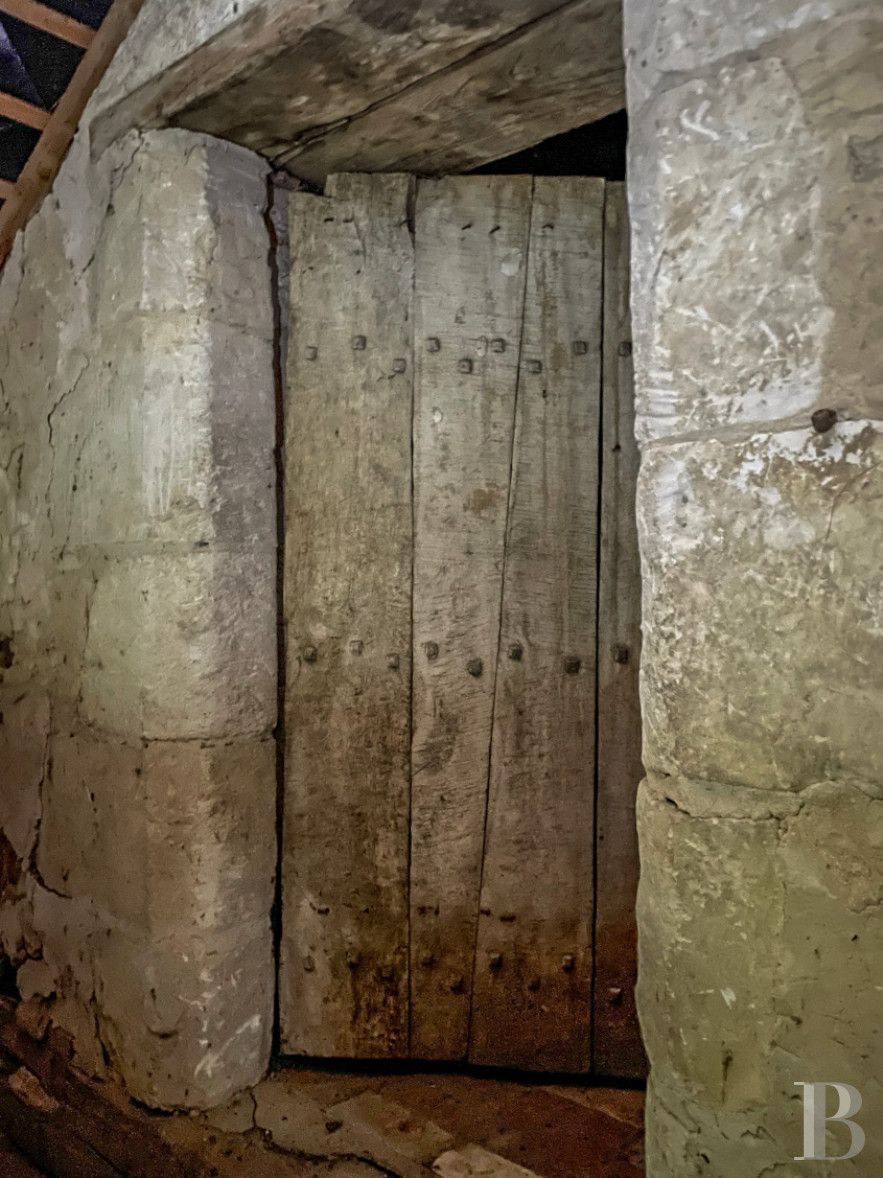
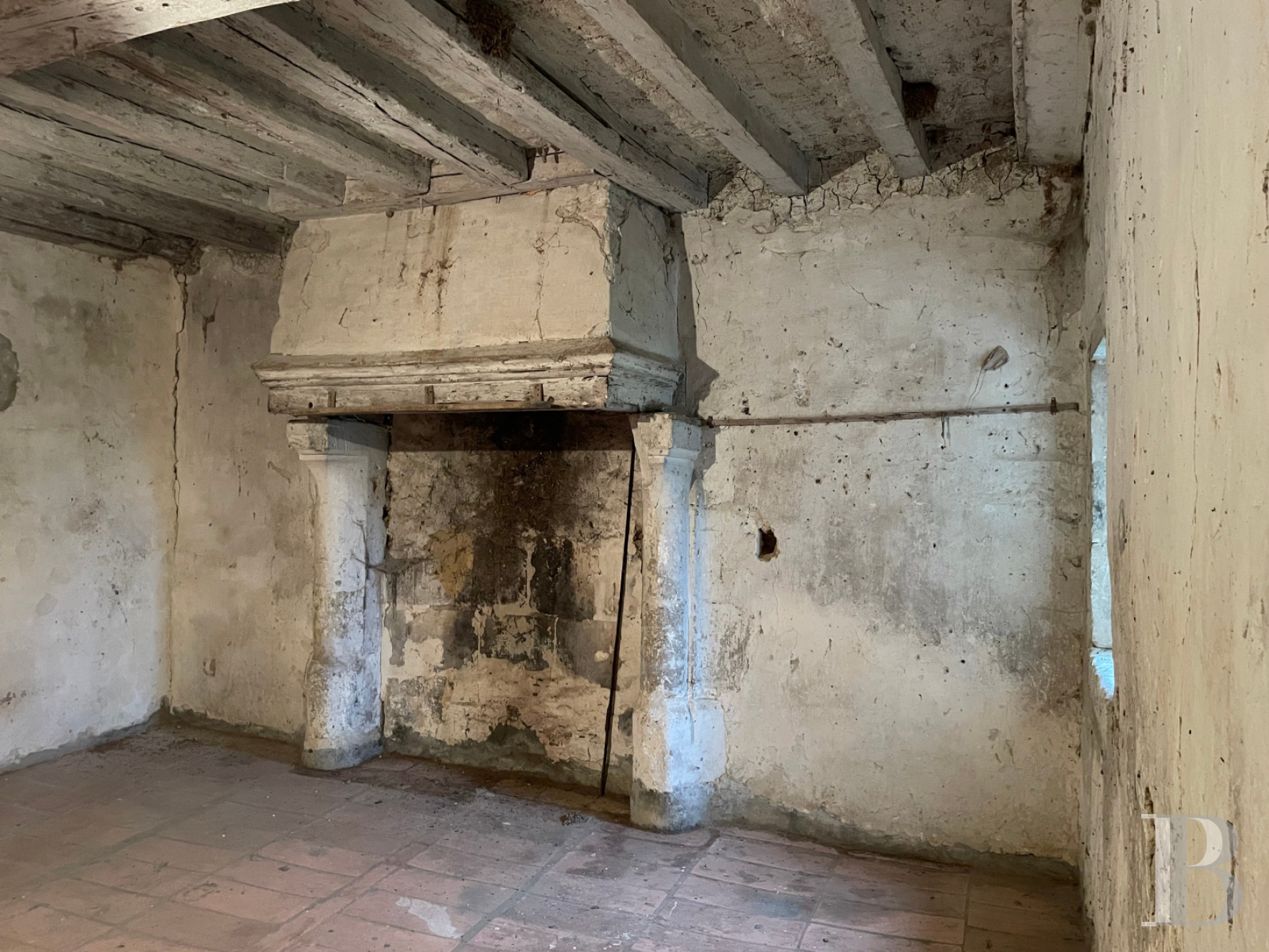
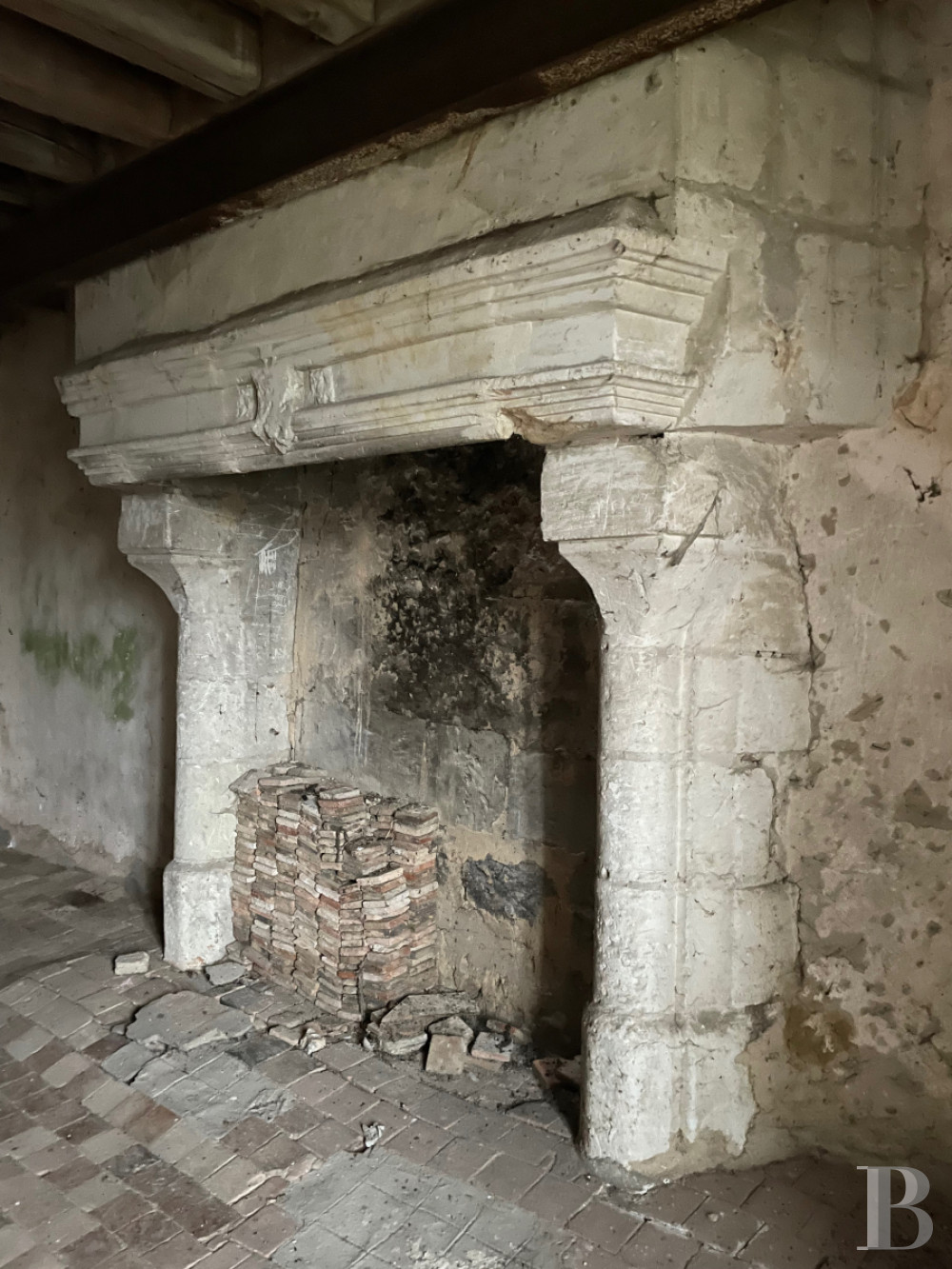
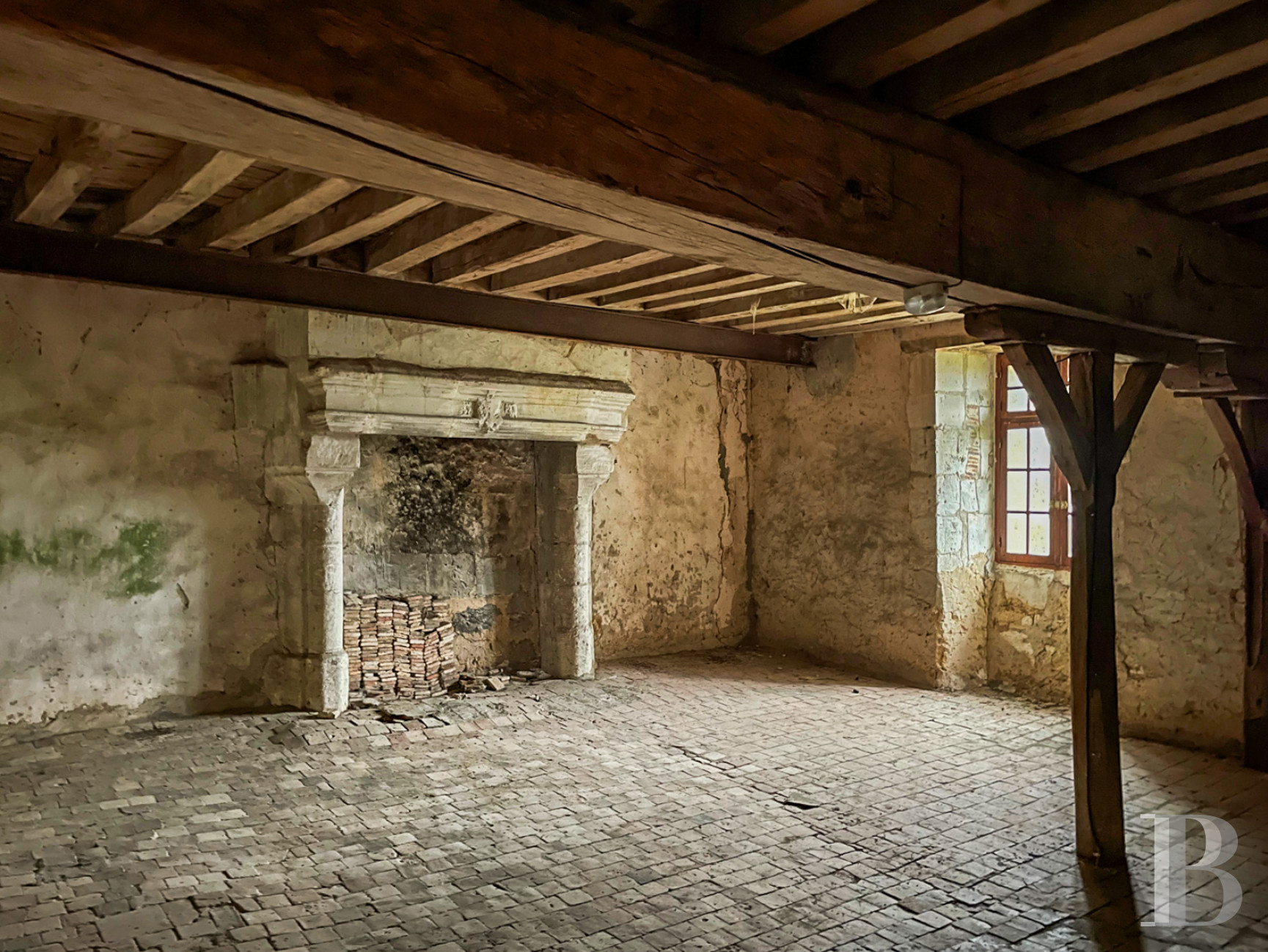
A more than 1-kilometre-long tarmacked country lane leads to the estate’s entrance, with no neighbours nearby. The chateau and its outbuildings are situated in the middle of the property’s land, in total peace and quiet in the midst of nature. At the end of the country lane, the property stands in front of an open courtyard around which the buildings are situated. The main residence, with its sand-coloured lime rendering, is L-shaped and made of tuffeau stone and rubble limestone, beneath a gabled roof made of slate tiles fastened down with nails. The window surrounds, quoins and cornices are also made of tuffeau stone. The rear elevation is punctuated with small windows fitted with linenfold style interior shutters. The floor surface to be restored is 320 m². The building boasts many period features: French-style beamed ceilings, terracotta tiled floors, tuffeau stone cornices and fireplaces, period doors with wrought-iron studs and interior shutters.
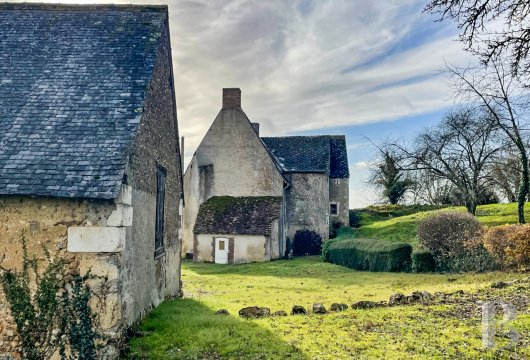
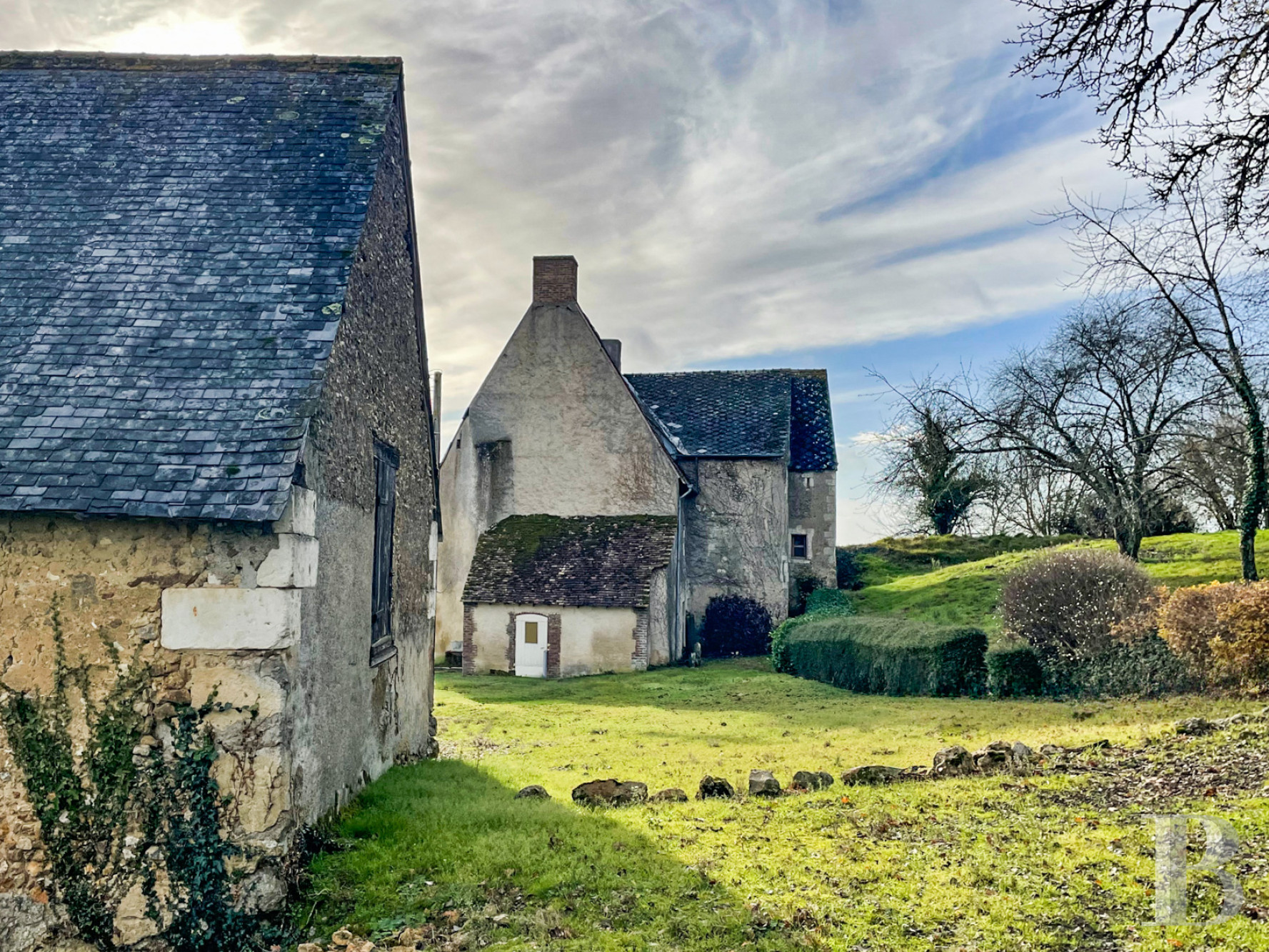
The outbuildings, with roofs made of local flat tiles, stand perpendicularly to the east of the main edifice. The property is emblematic of rural architecture in the Haut-Maine area.
In the 15th century, the stronghold belonged to Guillaume de Fontaine, who donated it to the Boyslanfray family, who were the lords of Baugé at the time. The estate was then under the jurisdiction of the lords of Lucé, with simple fealty and homage, plus rights of lower jurisdiction. In the middle of the 17th century, the manor became the property of two fanatical Huguenot brothers who, according to local legend, killed the parish priest during a service. Thereafter and up to the present day, the estate has been used as a farm.
The outbuildings, with roofs made of local flat tiles, stand perpendicularly to the east of the main edifice. The property is emblematic of rural architecture in the Haut-Maine area.
In the 15th century, the stronghold belonged to Guillaume de Fontaine, who donated it to the Boyslanfray family, who were the lords of Baugé at the time. The estate was then under the jurisdiction of the lords of Lucé, with simple fealty and homage, plus rights of lower jurisdiction. In the middle of the 17th century, the manor became the property of two fanatical Huguenot brothers who, according to local legend, killed the parish priest during a service. Thereafter and up to the present day, the estate has been used as a farm.
The chateau
The ground floor
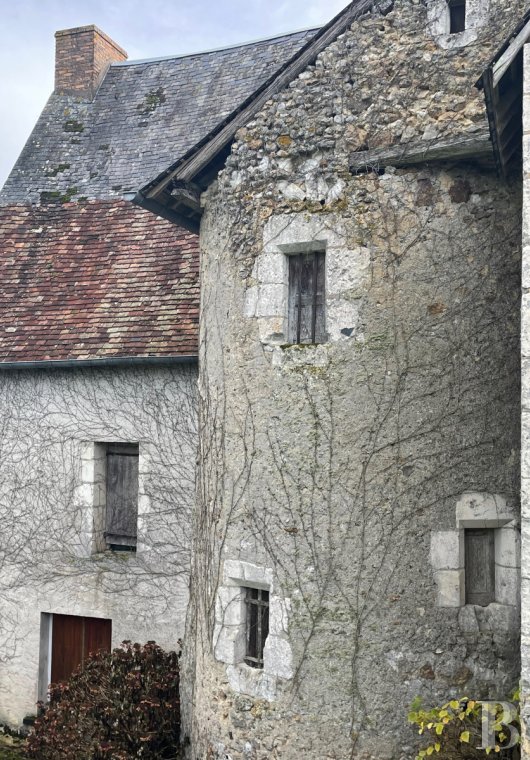
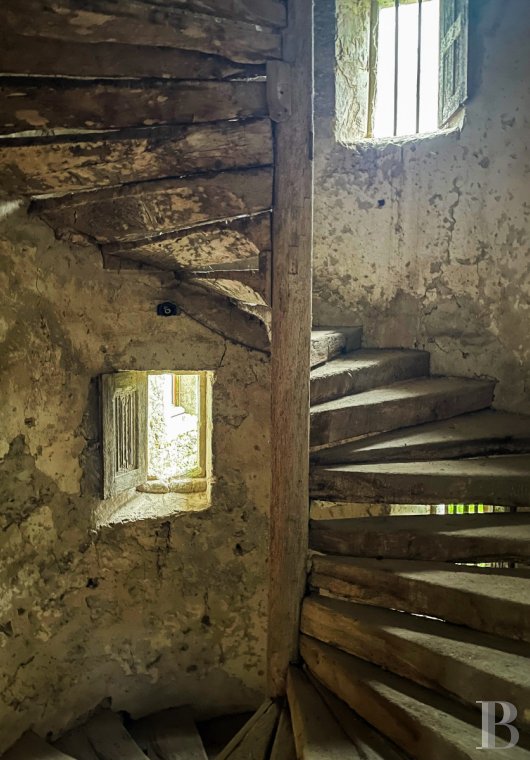
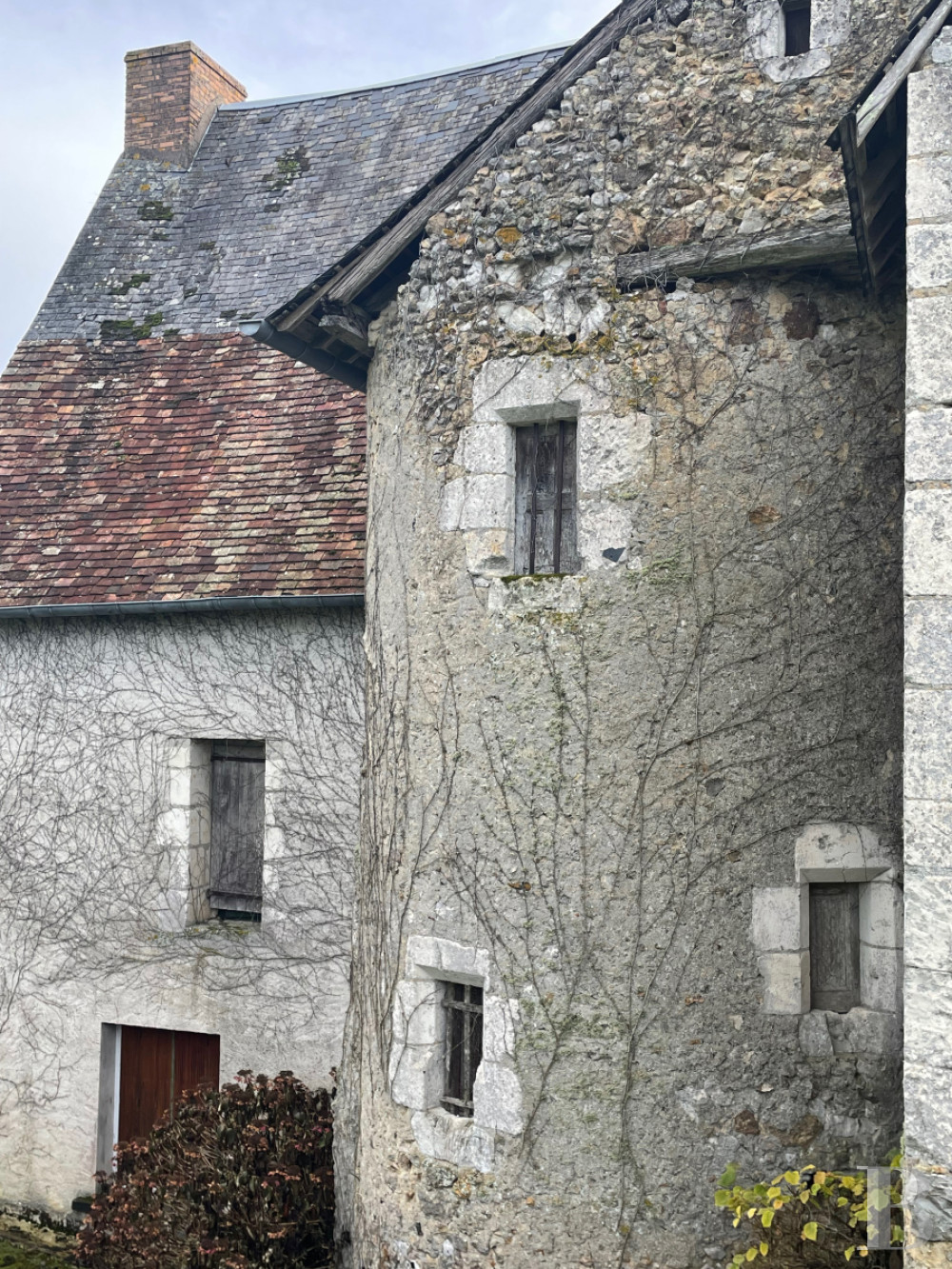
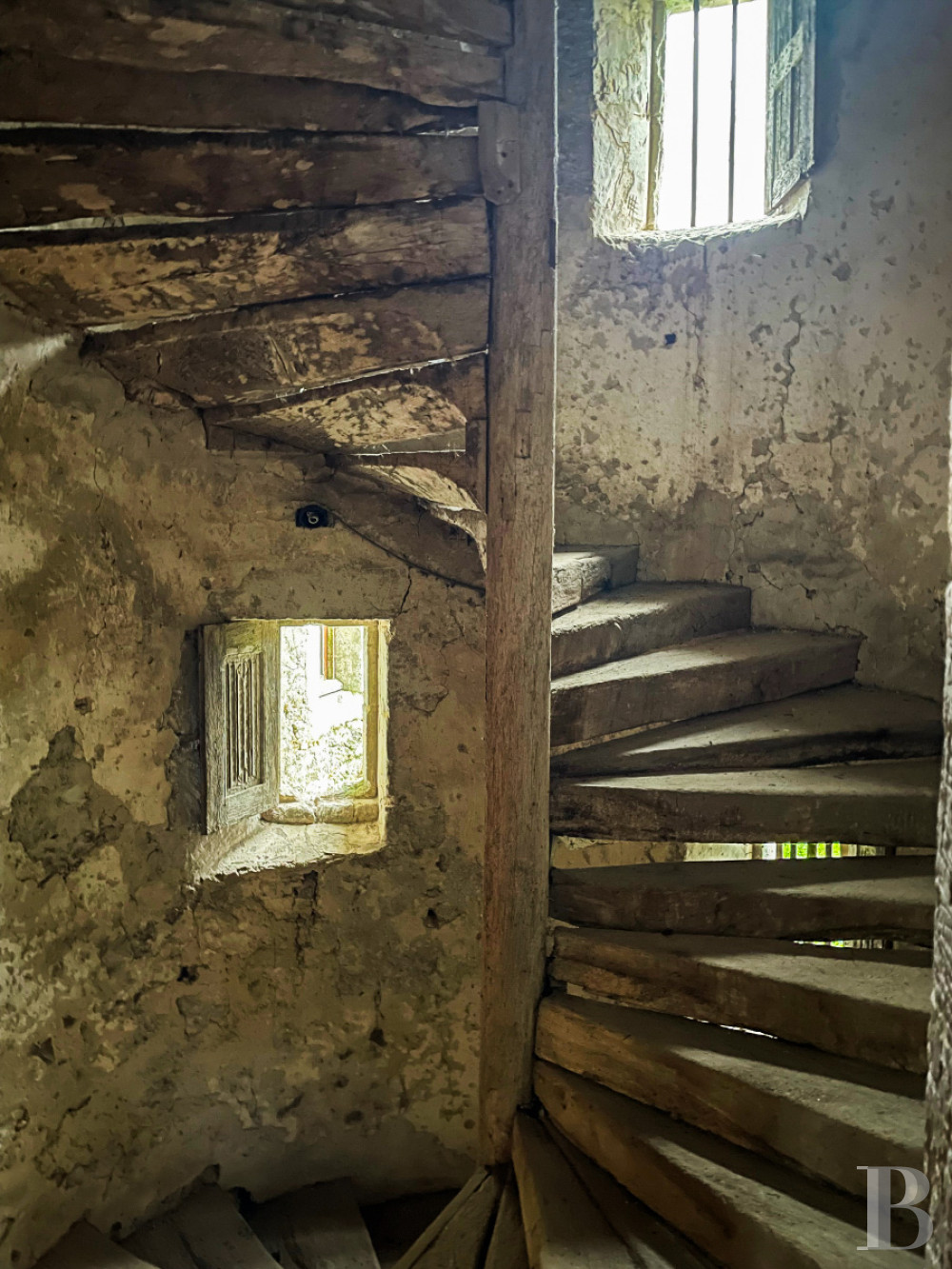
With a total surface of 95 m², it was partitioned in the 1980s and is laid out around a central corridor, which leads, on one side, to a living room with a kitchen area, as well as a bathroom. Originally, it was a sole and single room. It is followed by a boiler room located in a small adjacent building. On the other side, there are three bedrooms and a lavatory, which also previously formed a single room. To the rear, the central corridor leads to a tower containing a wooden staircase. A passage leads to a building that opens onto a cart shed housing a press and an underground cellar.
The first floor
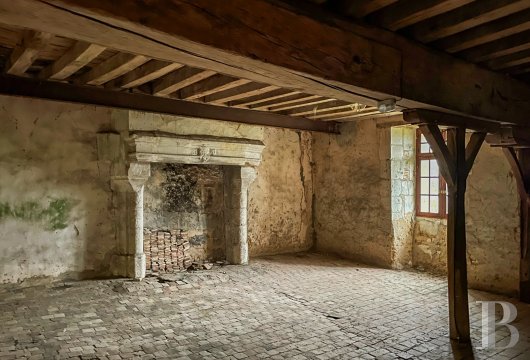
It can be reached by the wooden staircase in the tower, which is dotted with small windows fitted with interior shutters. The 120-m² surface is split into three large rooms, which all still boast their period decor: fireplaces, terracotta floor tiles, exposed beams, as well as half-timbered and cob walls.
The attic
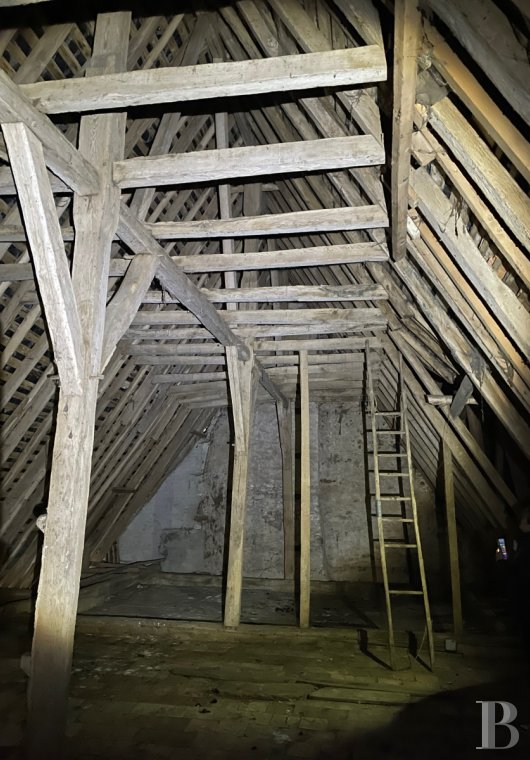
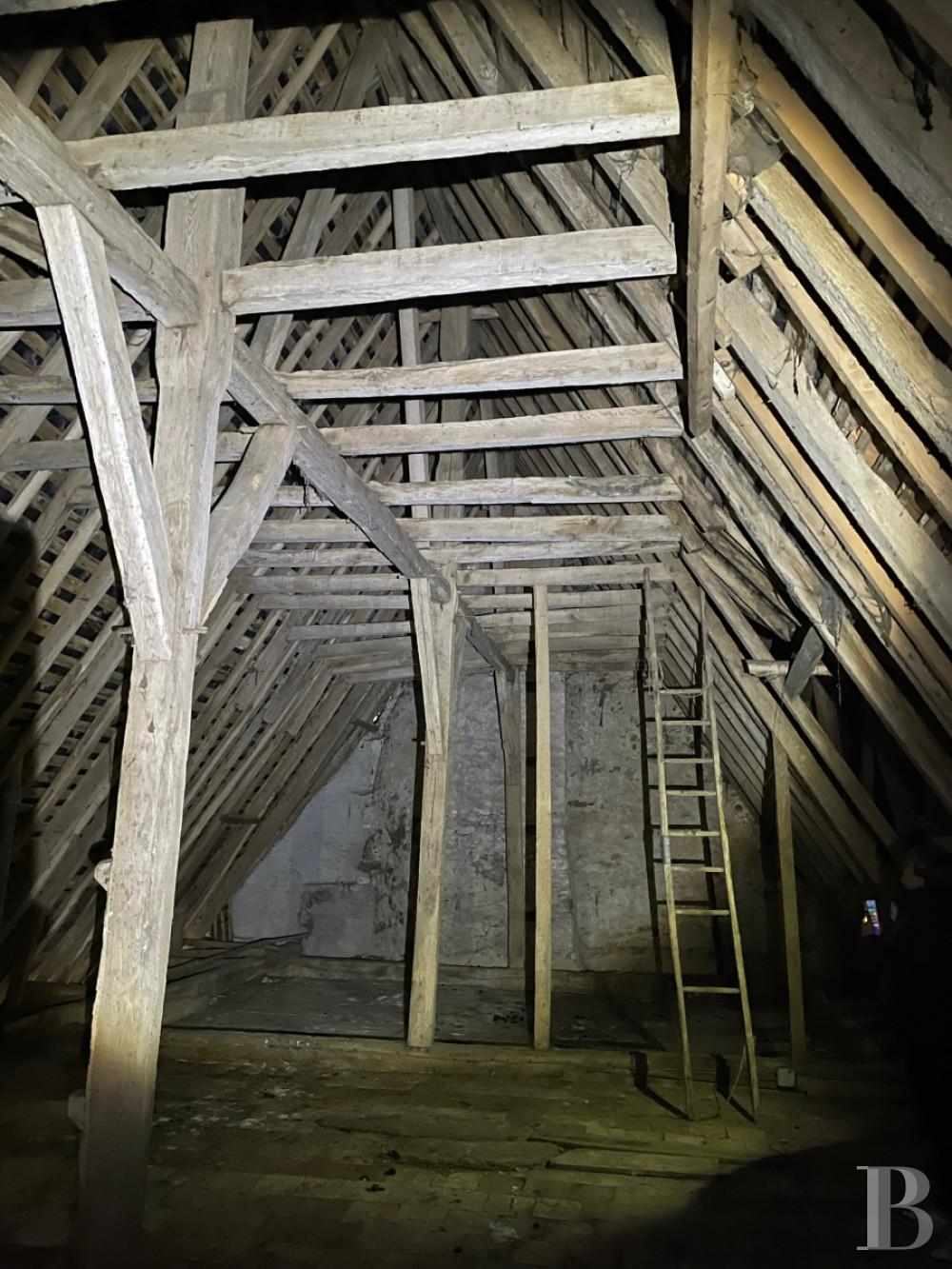
It can be reached by the staircase and is made up of an approximately 115-m² surface, still in an L-shape, awaiting conversion. Beneath the period roof frame, there are original terracotta floor tiles.
The outbuildings
They are made up of a former barn and an outhouse, both made of stone. Adjacent to the southeast gable, there are three agricultural storage buildings with exposed roof frames.
The land
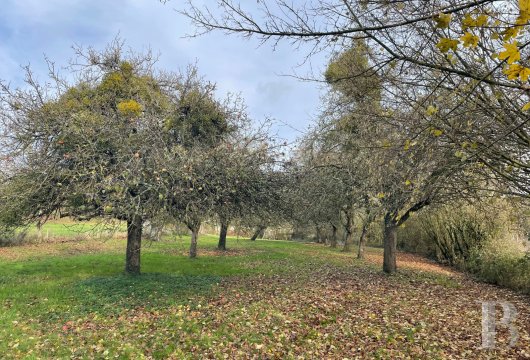
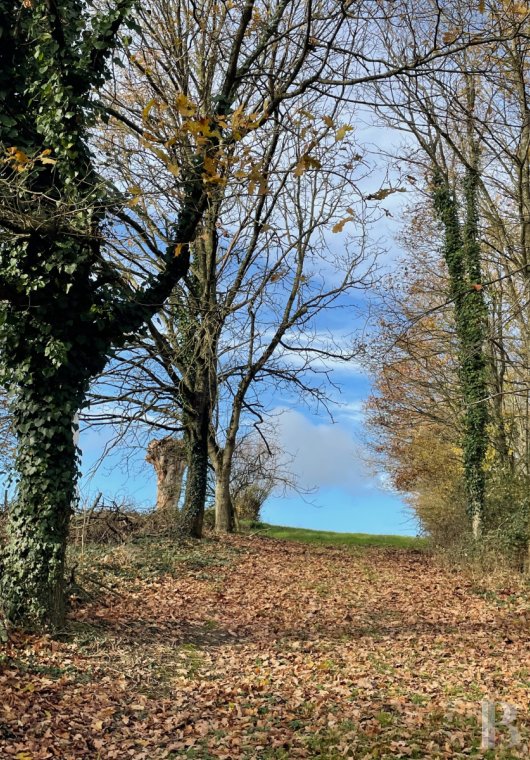
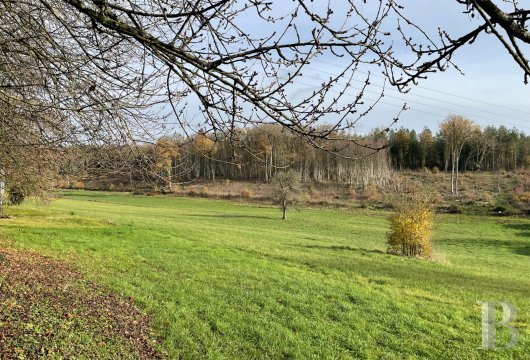
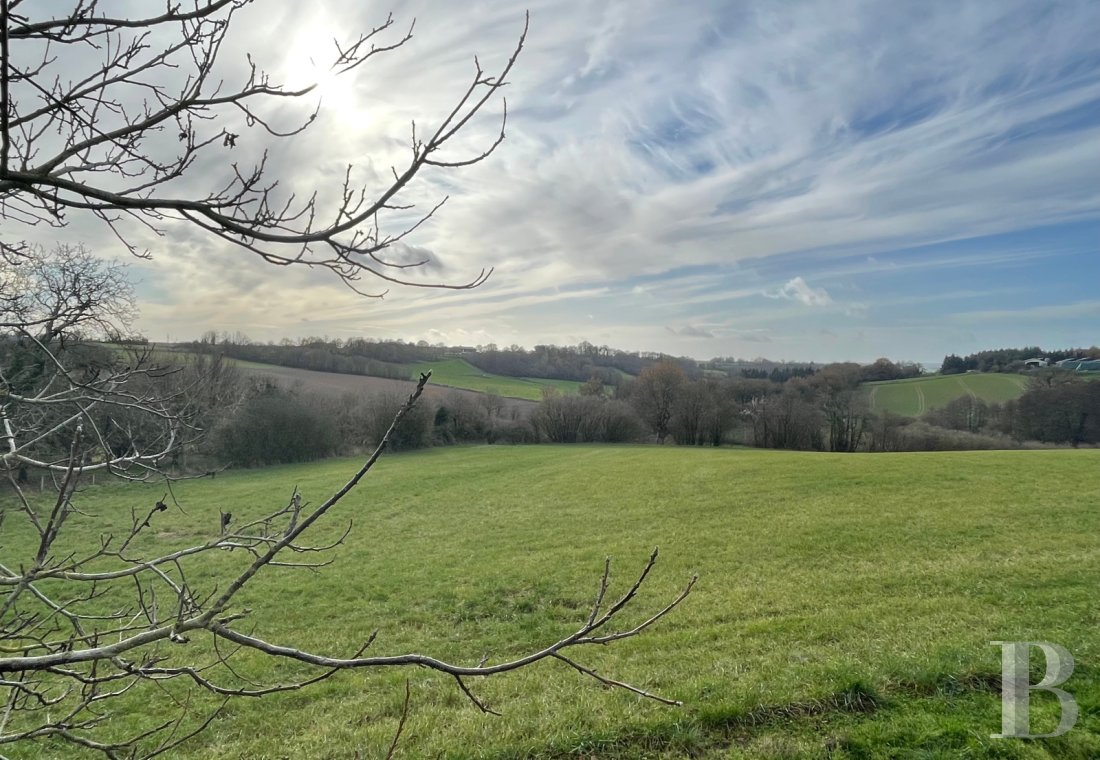
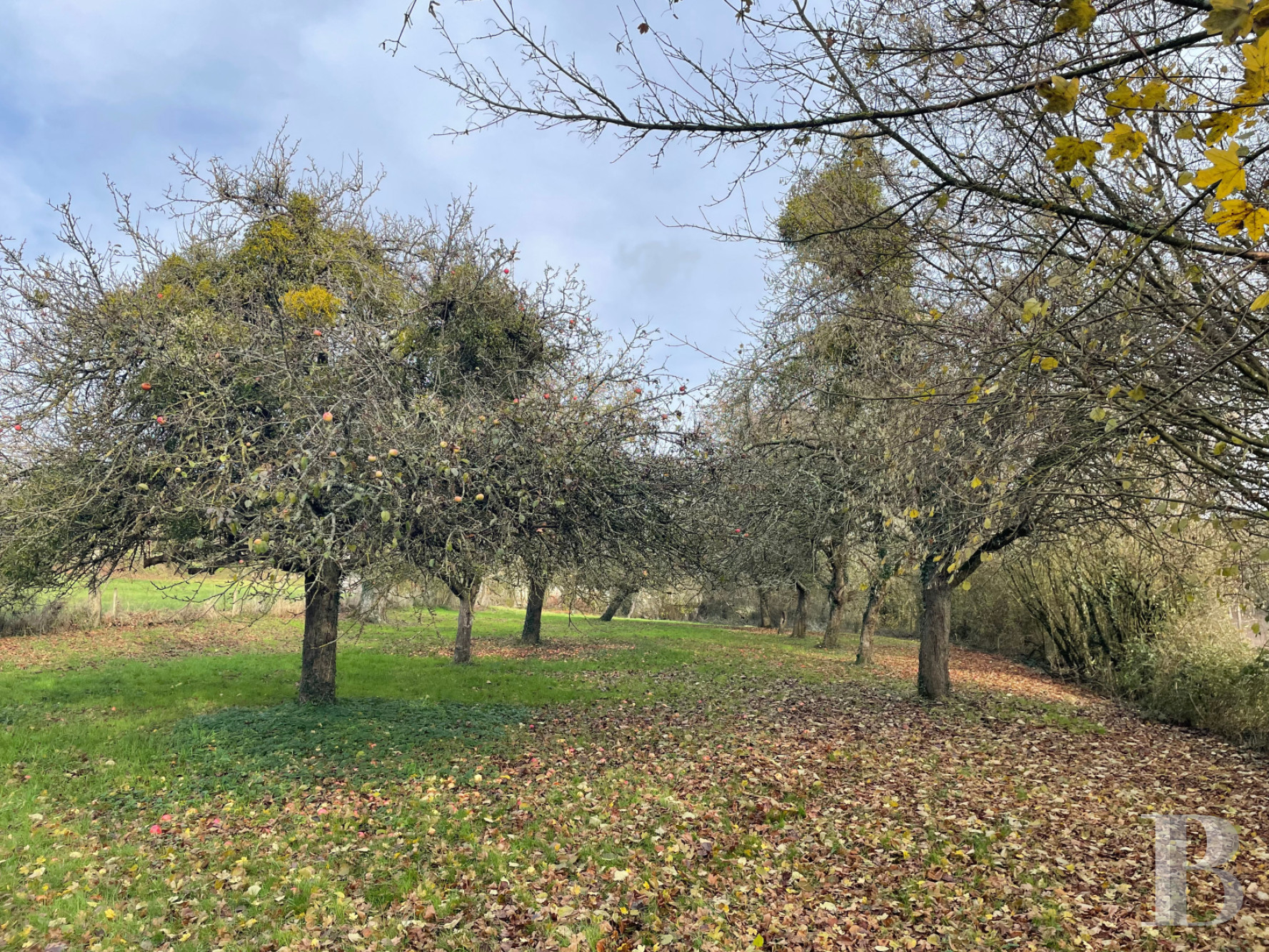
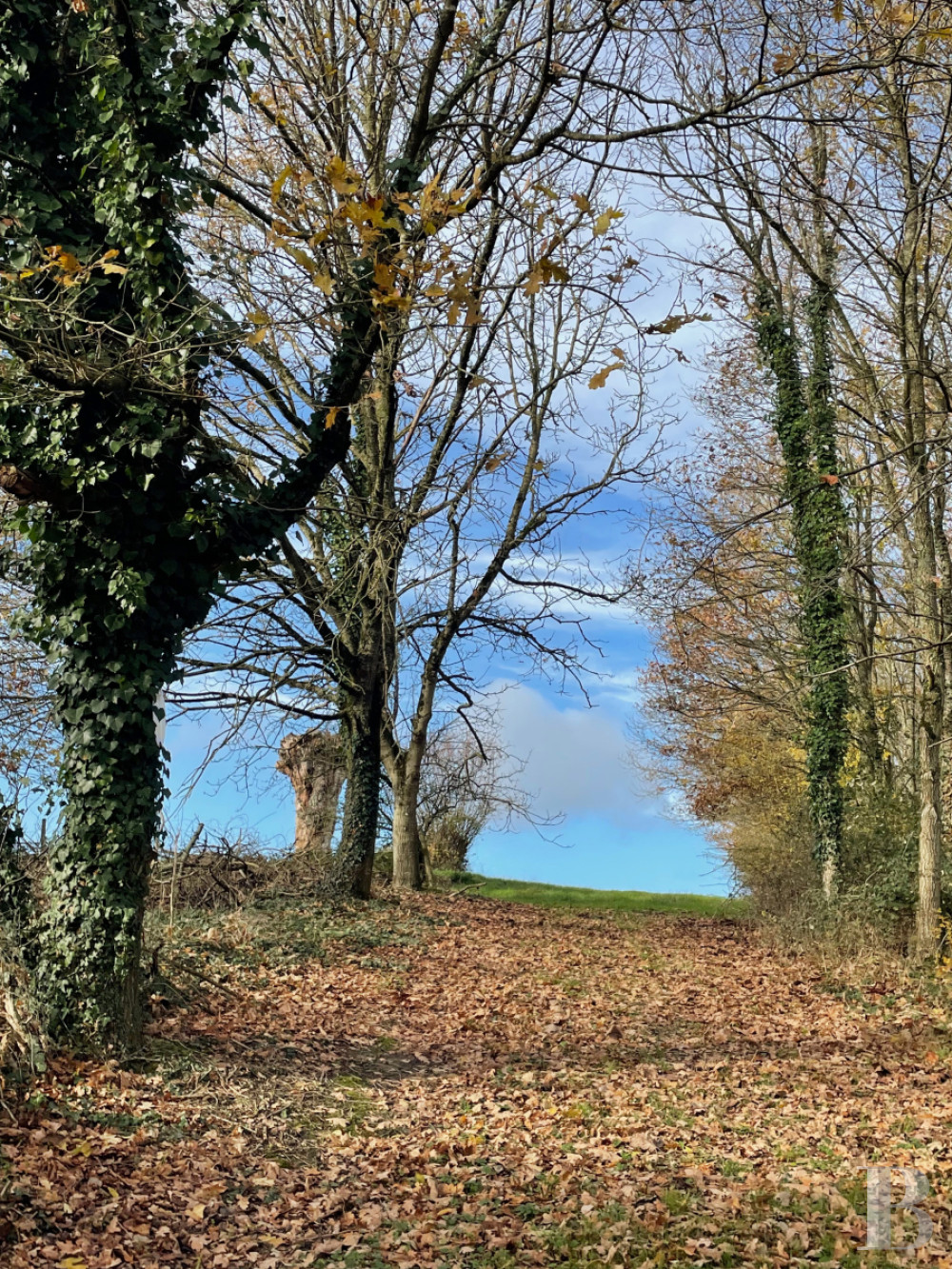
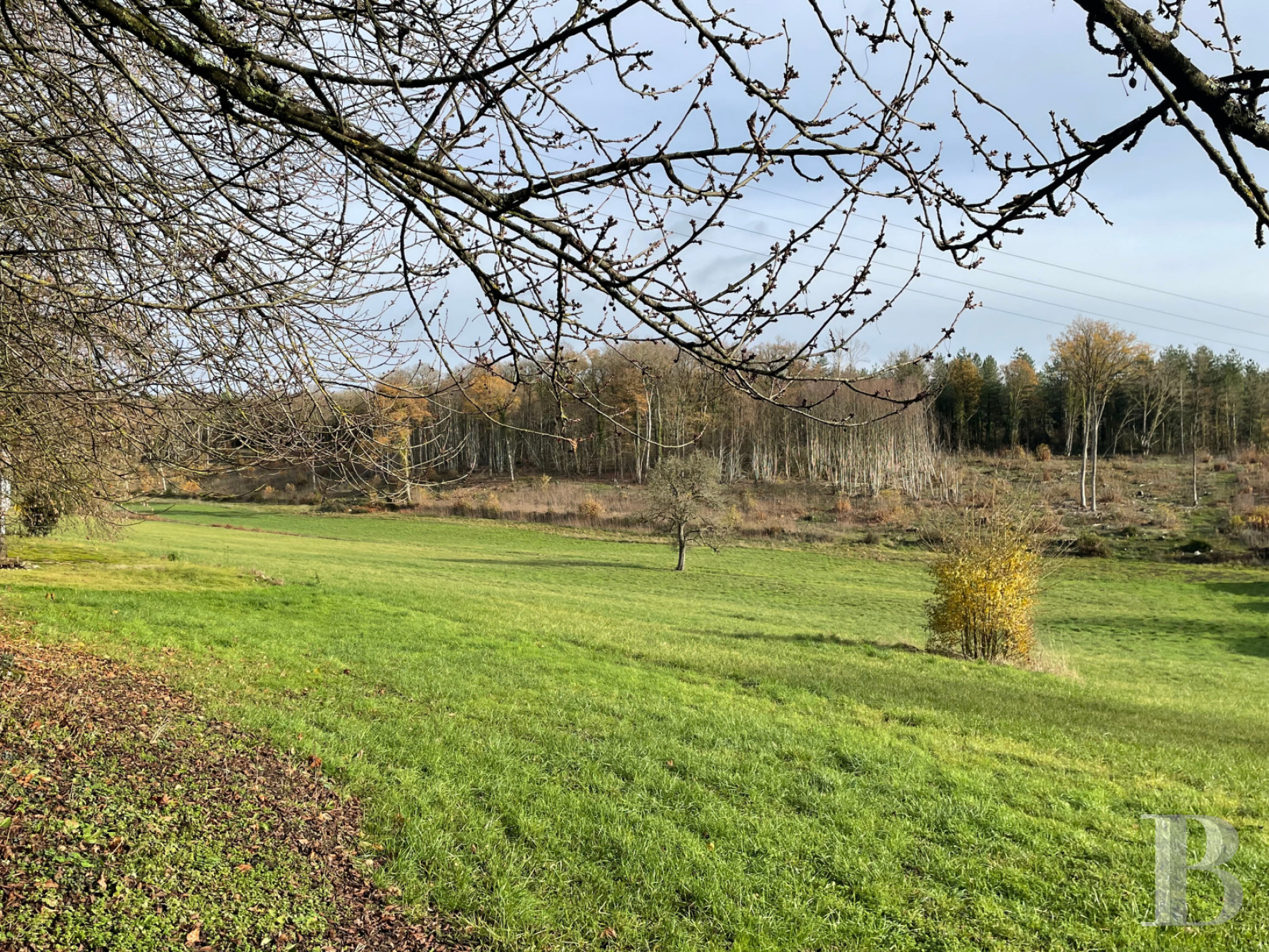
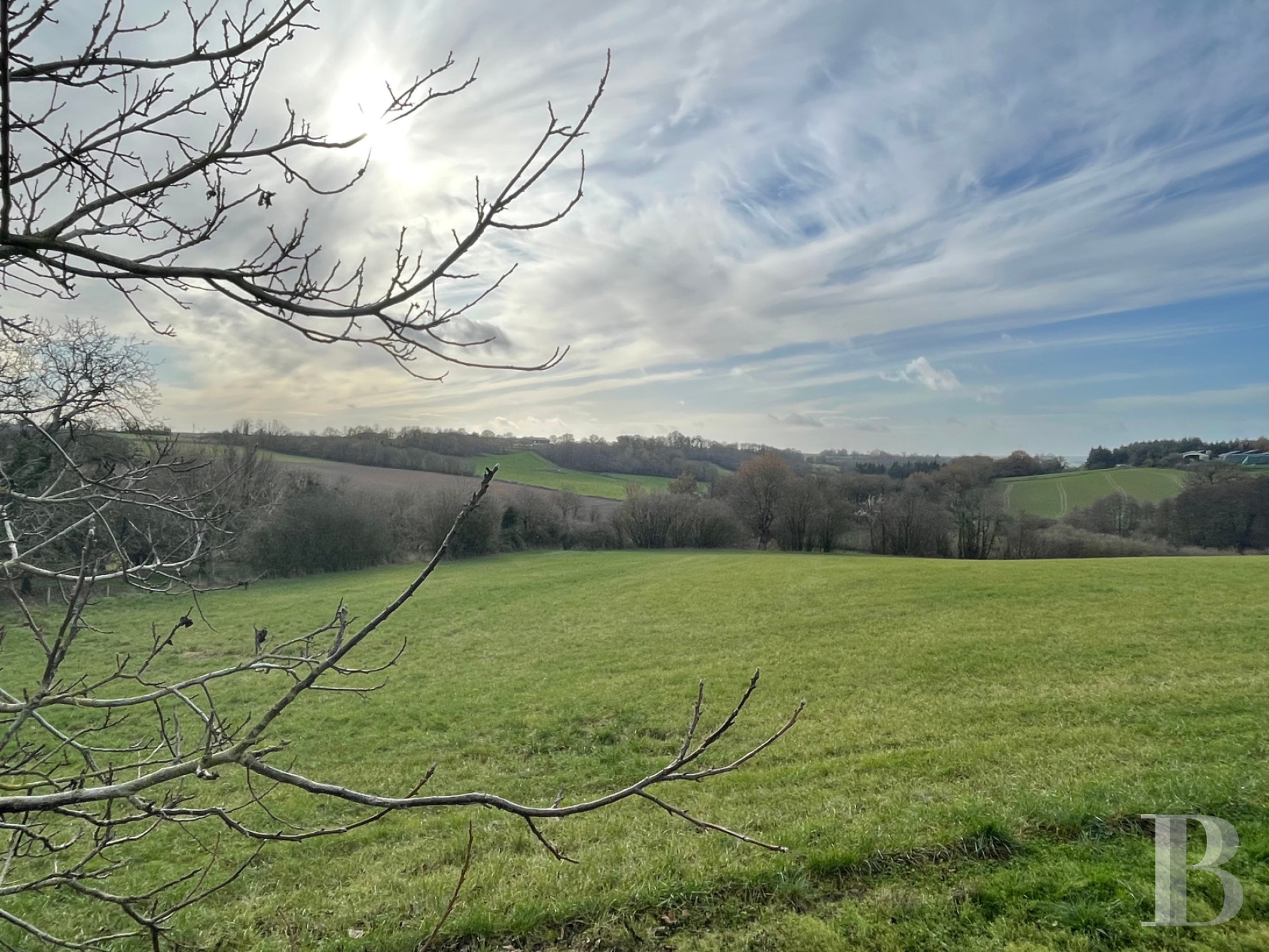
More than 24 hectares of meadows surround the property and will no longer be occupied by October 2026; indeed, 15 hectares are already available. A small wet zone can be found towards the bottom of the grounds. To the west, there is an apple orchard well protected by hedges and standing virtually on the hillside, while a wood borders the rear of the estate to the north. To the east, a 1-hectare coppice of chestnut trees has just been clear felled, while there some oaks remain.
Our opinion
In a secluded corner of the Sarthe countryside, where the limestone plateau gently slopes down and on which streams to flow towards the tall trees of the Bercé forest, stands a venerable 15th-century stronghold requiring restoration. In addition to its emblematic chateau, the estate forms a veritable landscape within itself, made up of a mosaic of thriving hedges, long-standing orchards and arable land. The property will not fail to delight an enthusiast of old stones, nature and history. This address, which is not listed as a historical monument, is situated between Le Mans and Tours, away from any hustle and bustle but near to main transport routes and can be seen from a passing country road. For restoration of the exterior, it could benefit from grants from the French heritage foundation.
395 000 €
Fees at the Vendor’s expense
Reference 573123
| Land registry surface area | 24 ha 94 a 26 ca |
| Main building floor area | 320 m² |
| Number of bedrooms | 4 |
| Outbuildings floor area | 500 m² |
| including refurbished area | 237 m² |
French Energy Performance Diagnosis
Information on the risks to which this property is exposed is available on the website: www.georisques.gouv.fr
Share


NB: The above information is not only the result of our visit to the property; it is also based on information provided by the current owner. It is by no means comprehensive or strictly accurate especially where surface areas and construction dates are concerned. We cannot, therefore, be held liable for any misrepresentation.