



Between Tours and Angers, in a 320 hectare estate with park, woods and farmland,
a 19th-century château and its outbuildings
a 19th-century château and its outbuildings
Baugé-en-Anjou,
MAINE-ET-LOIRE
pays-de-loire
49150
FR

Location
In the Pays de la Loire region and the Maine-et-Loire department, the property extends over 320 hectares, surrounded by the rolling, wooded countryside of the historic pays of Baugeois. King René of Anjou hunted these grounds in the 15th century. His château stands barely 10 minutes away, in the town that today holds the main shops and services, along with a substantial weekly market. Equidistant from another locality, the estate lies midway between Tours and Angers — 1 hour and 45 minutes away by road respectively — with train services to Paris from both cities. Saumur and the banks of the River Loire are 45 minutes away, and access to the A11 and A28 motorways some 30 minutes.
Description
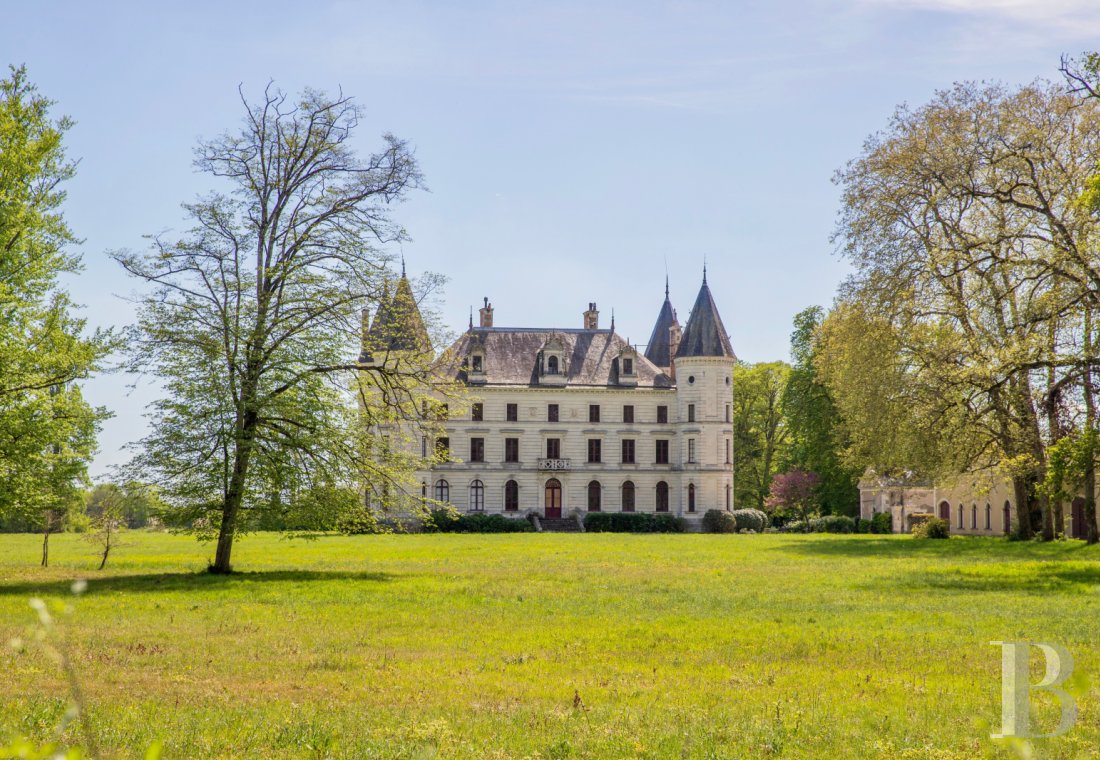
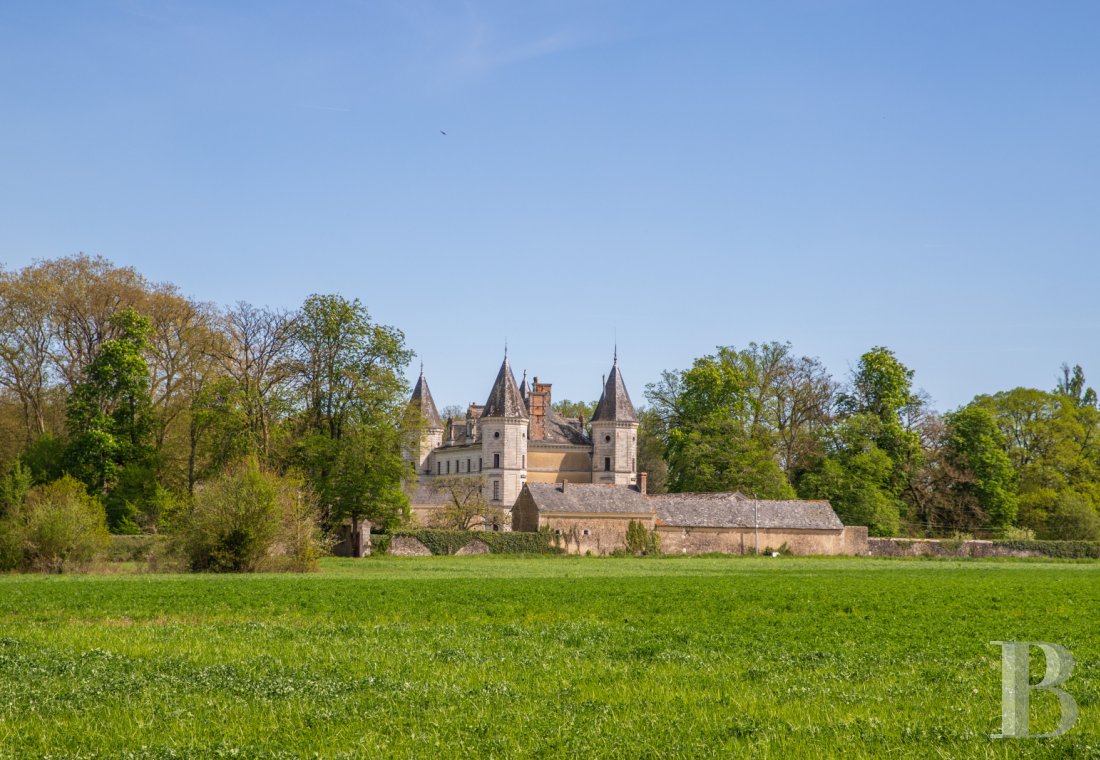
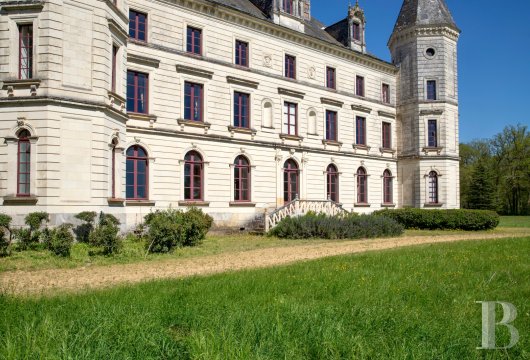
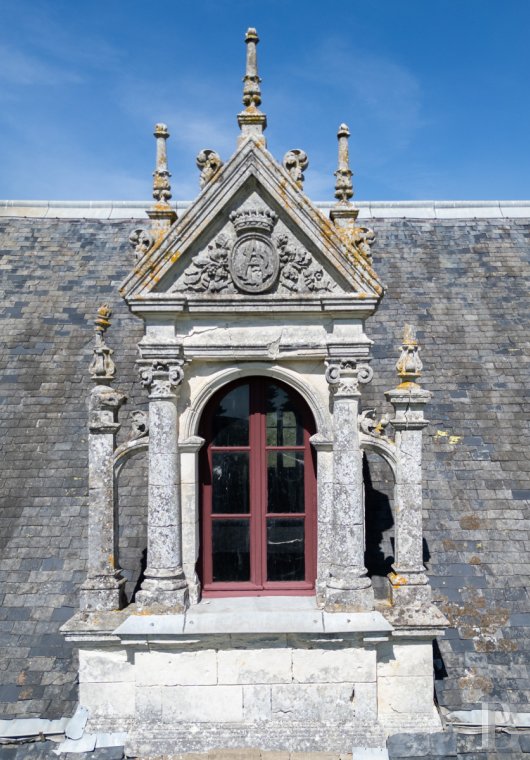
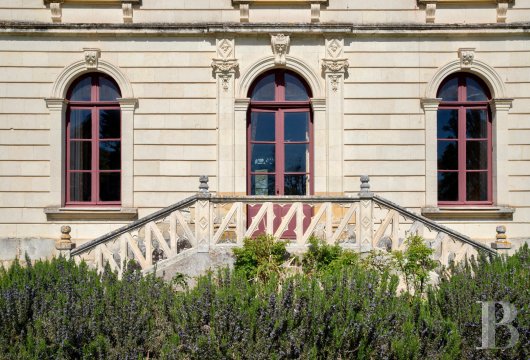
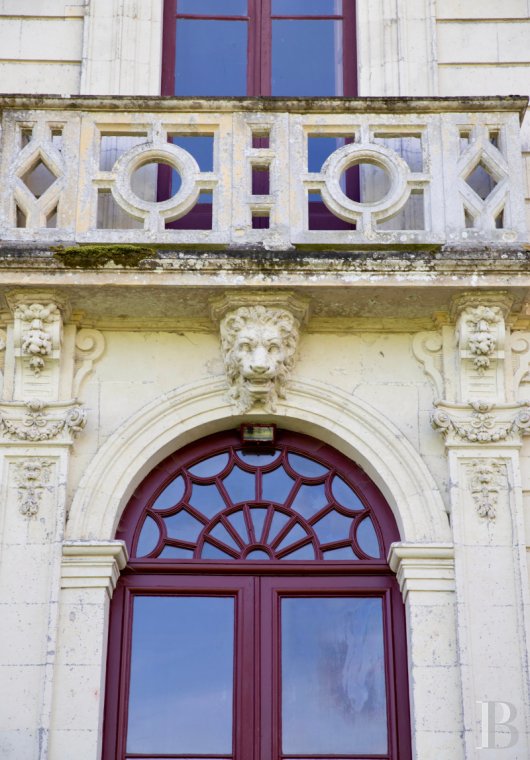
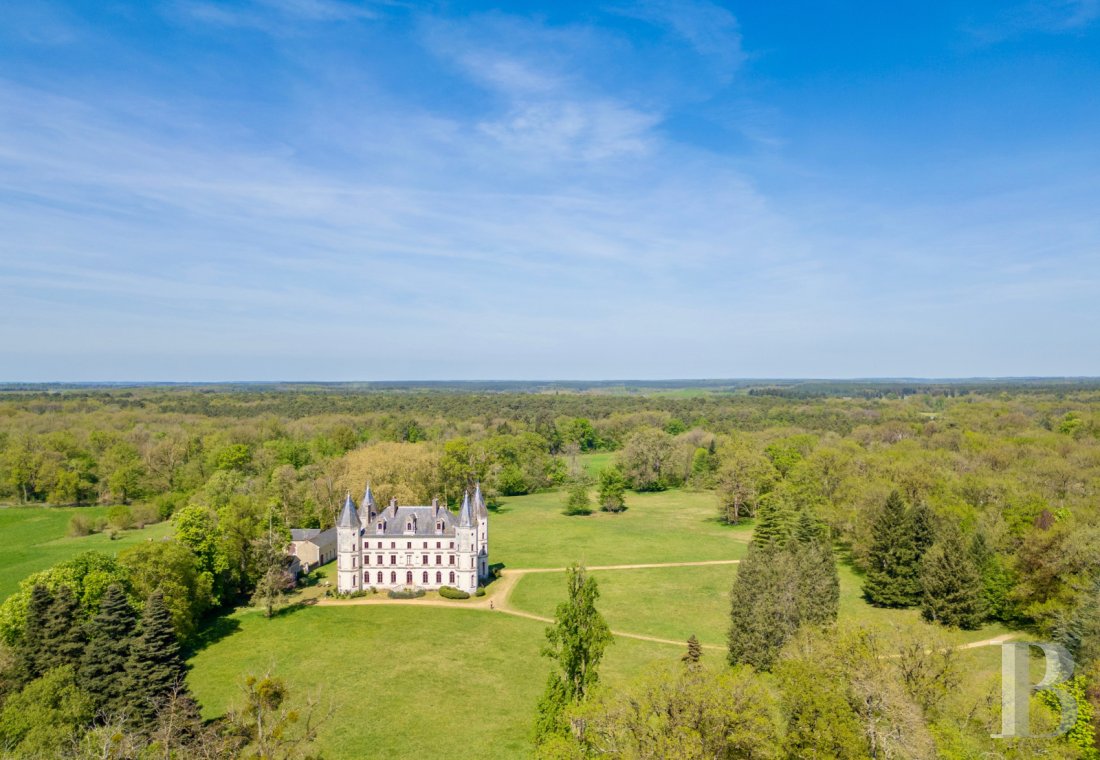
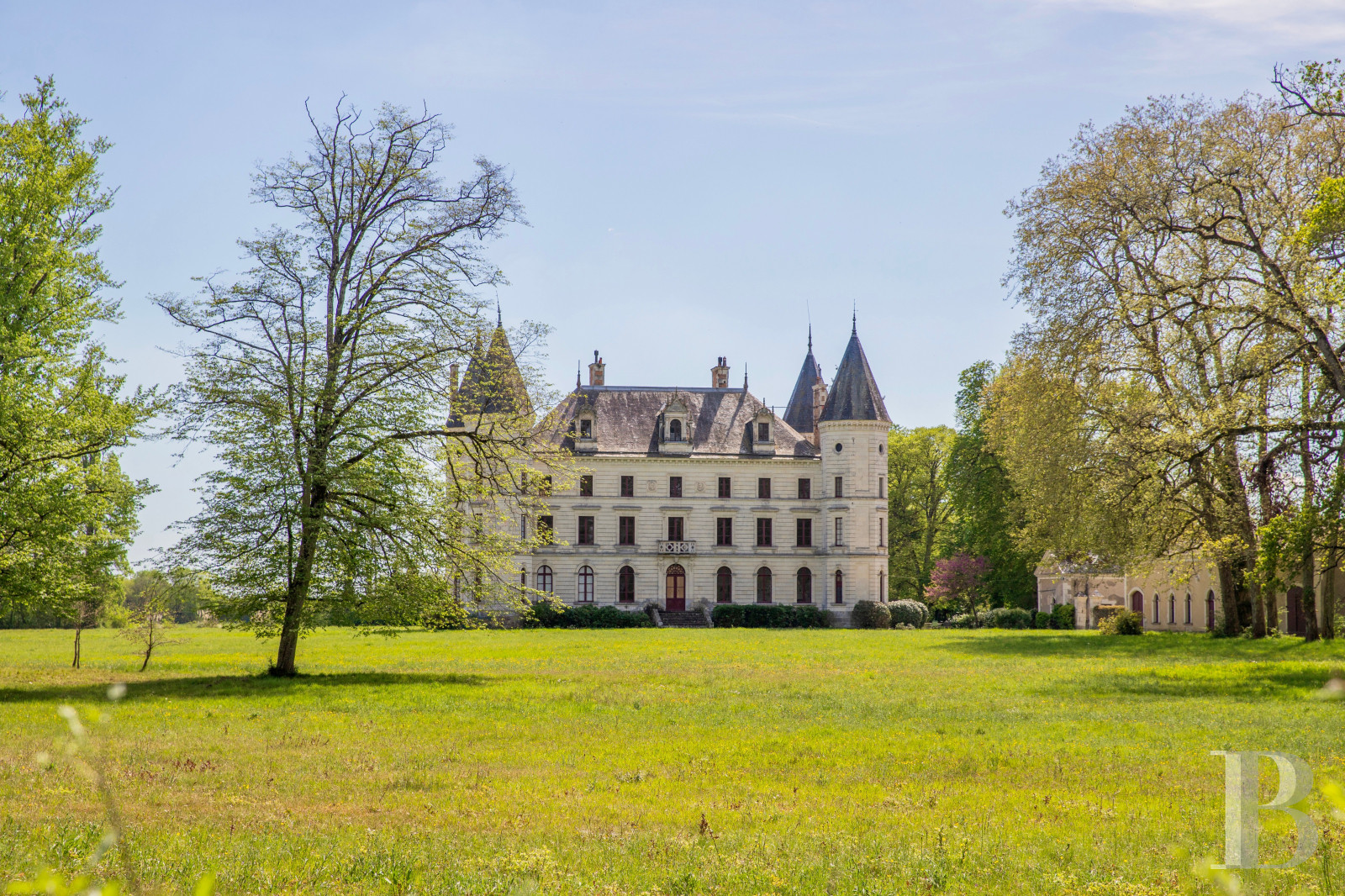
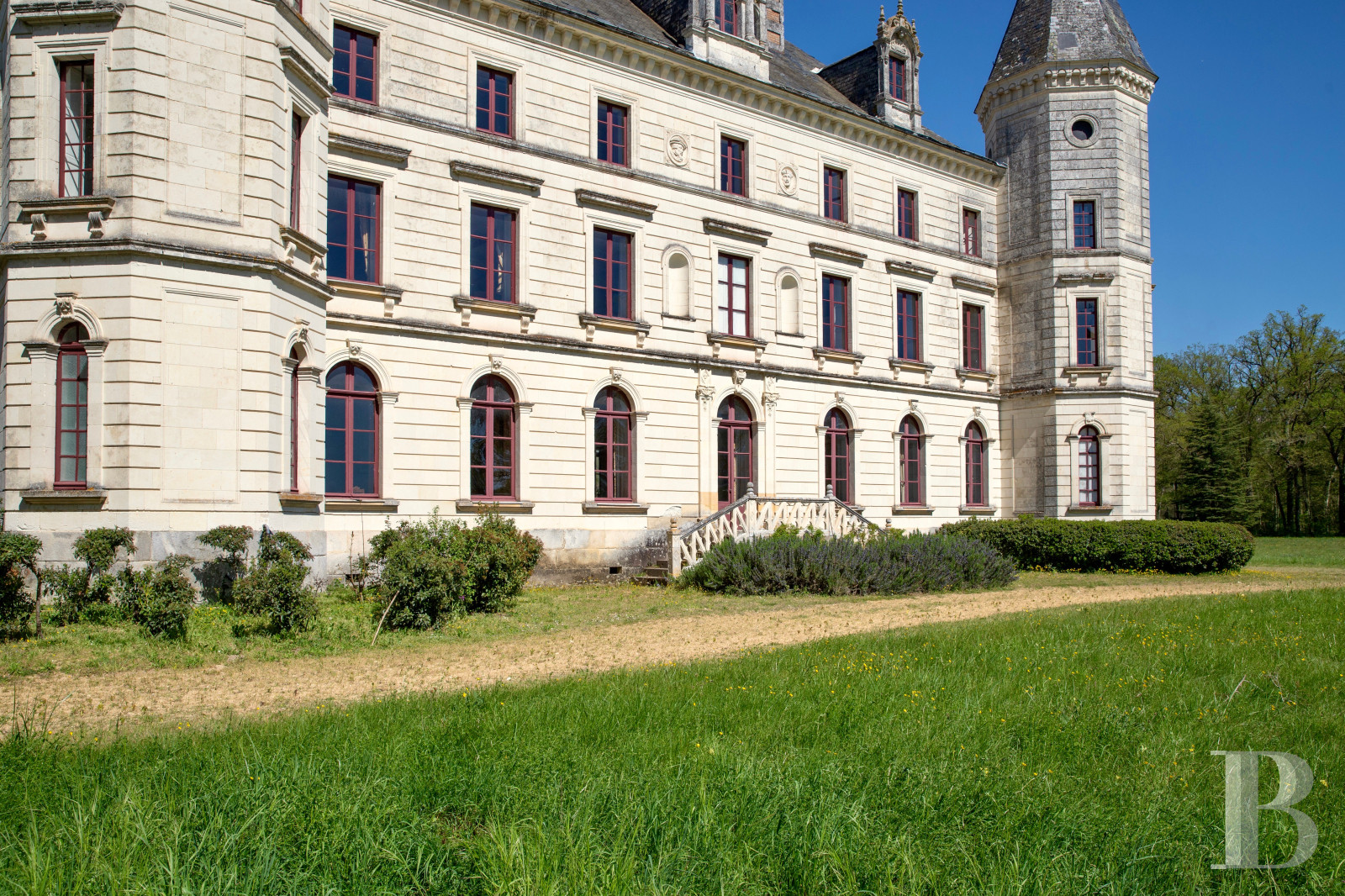
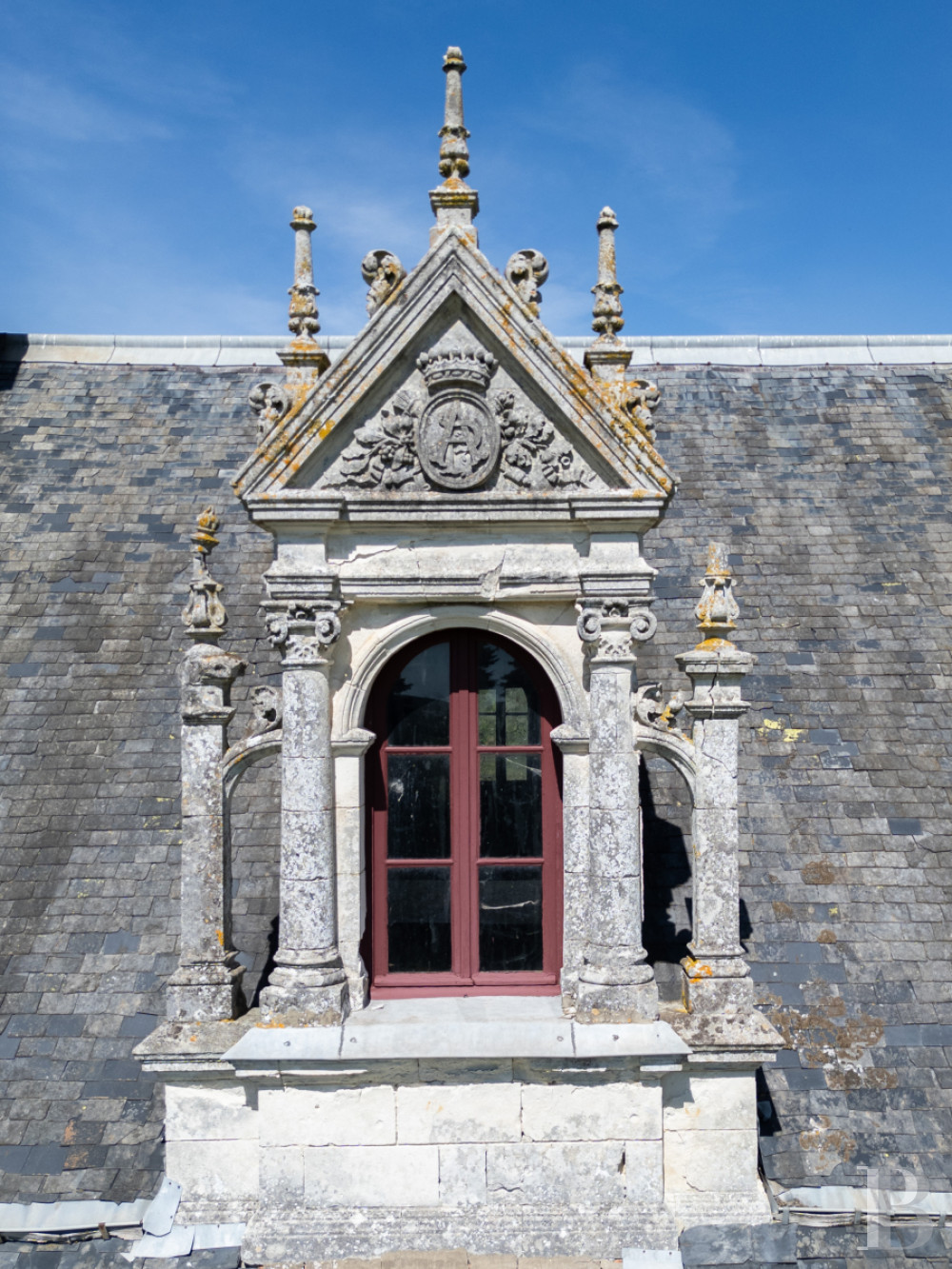
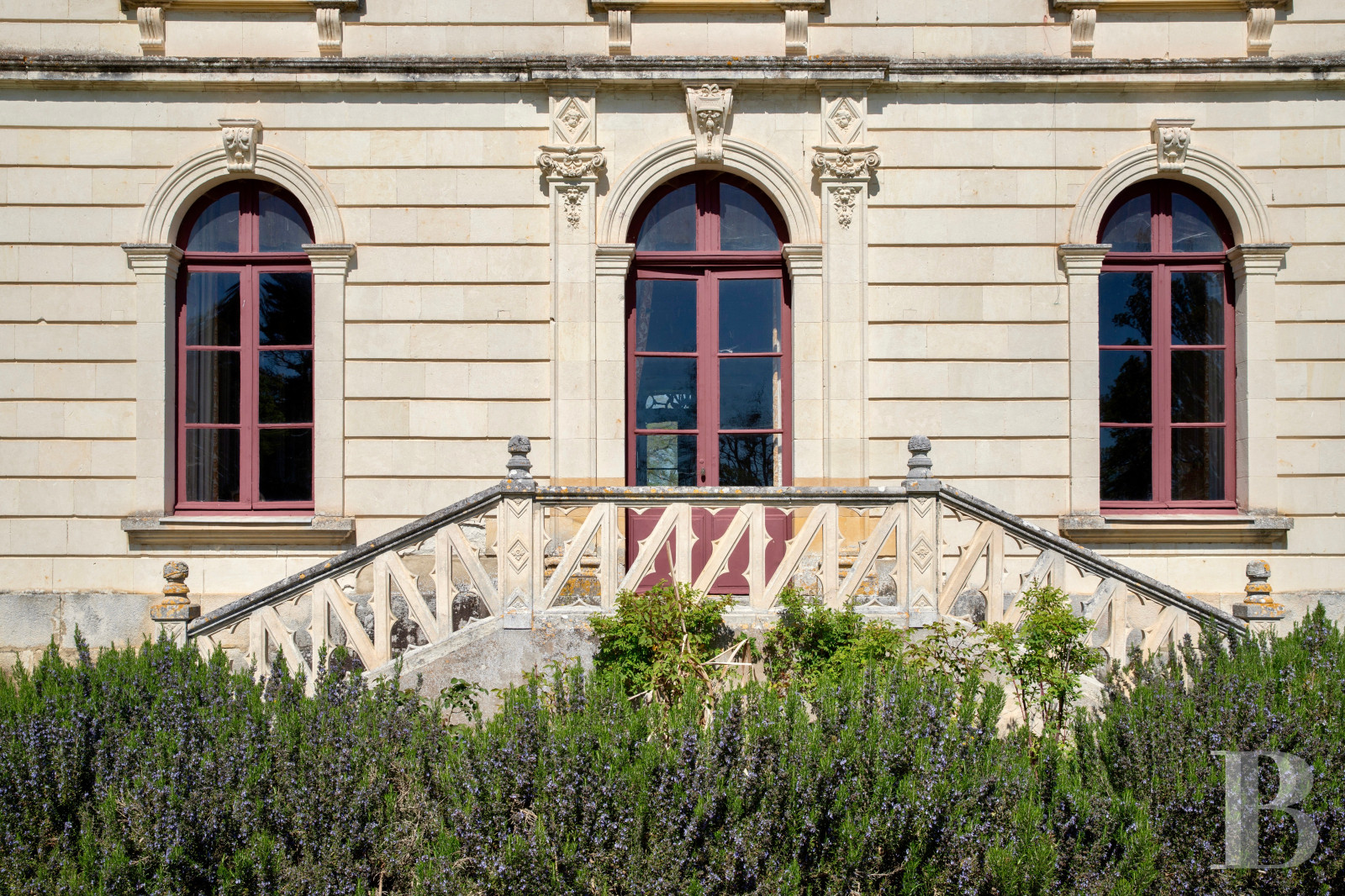
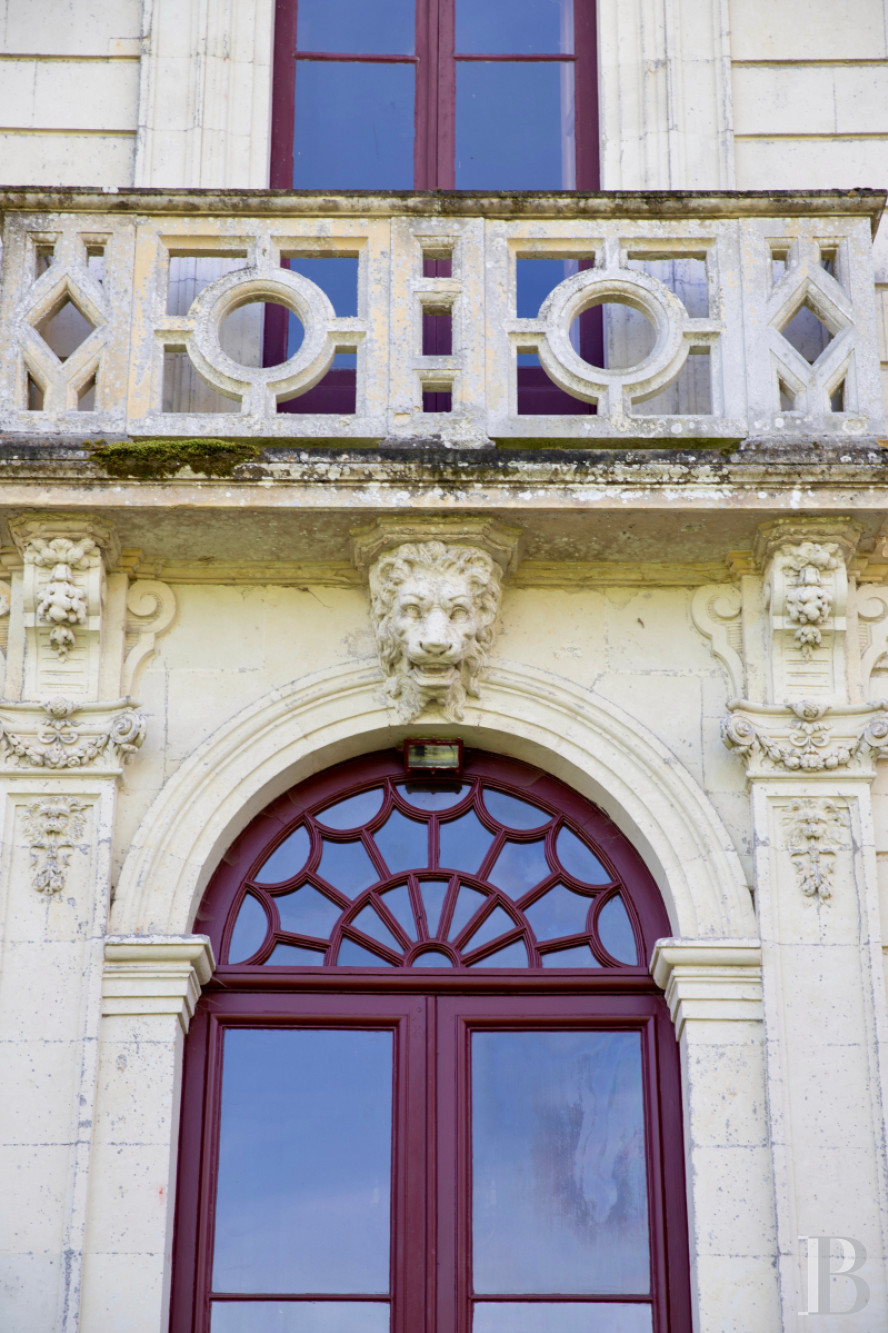
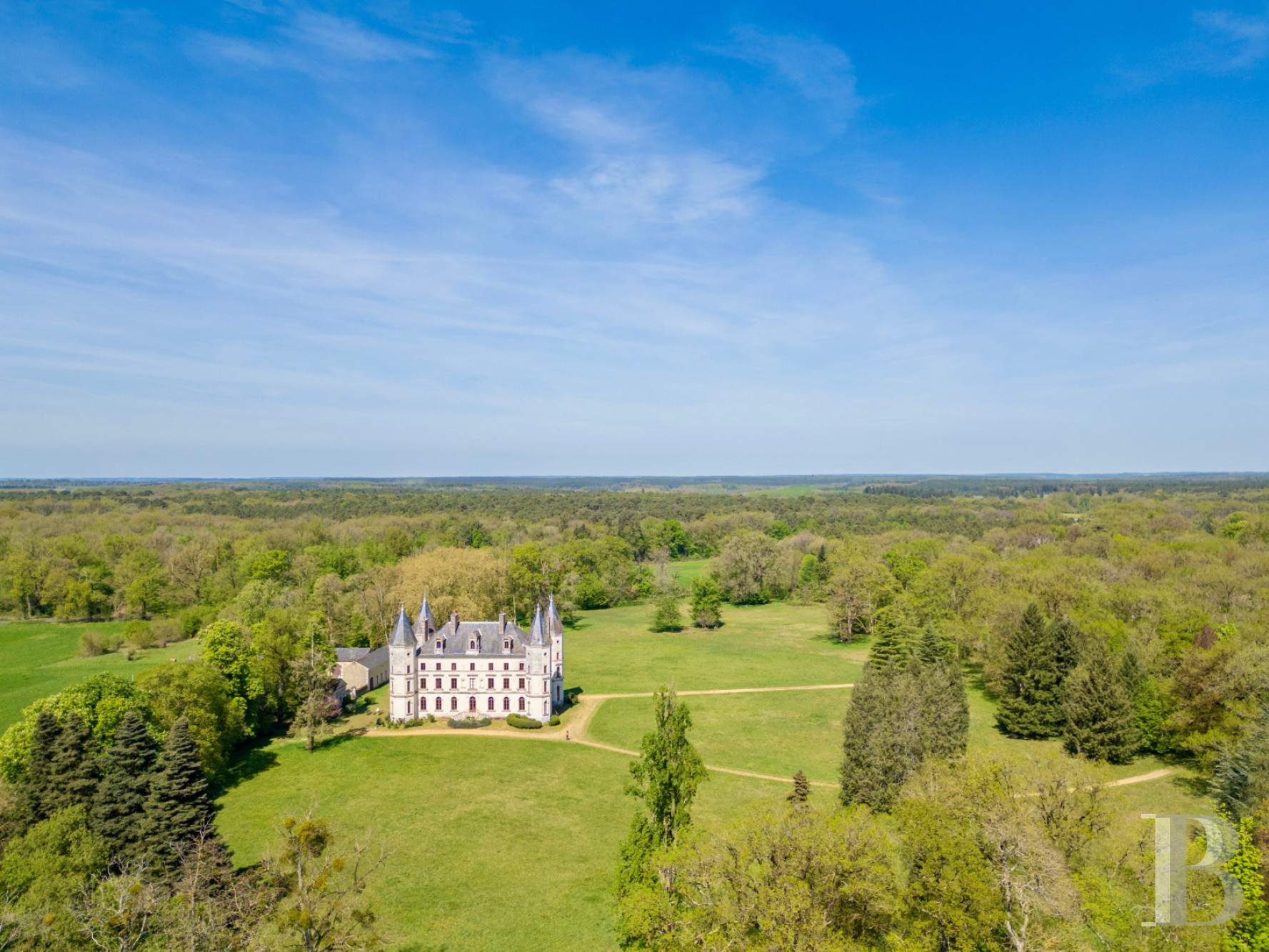
A country road leads to an entrance gate, which opens onto a drive crossing the park to the château. An unpaved road carries on to the outbuildings, arranged around a courtyard. The property dates from the first half of the 19th century. Built of tuffeau on a hard-stone base, the main house stands four storeys tall, each of roughly 250 m² and the uppermost set under the eaves. Rectangular in plan, it is flanked at each corner by an octagonal pepper-pot tower. Renaissance-style dormers pierce the four-sided slate roof front and rear. Rustication dresses the principal elevations and the towers; modillions carry the cornices. Two central doors, framed by pilasters and topped on either side with portrait medallions, open at the front onto a straight flight of steps and at the rear onto a double-revolution staircase edged with a tuffeau railing. A balcony, borne by a carved lion's head, extends the front elevation. Reception rooms retaining their original decor take up the ground floor; eleven bedrooms and a study-library fill the two upper floors. Running north to south, the château stands at the centre of its park, close to the outbuilding courtyard set near the western gable. The estate comprises a landscape park of nearly 20 hectares, some 90 hectares of farmland and a forest block of around 215 hectares. The buildings as a whole require refurbishment.
Le château
The ground floor
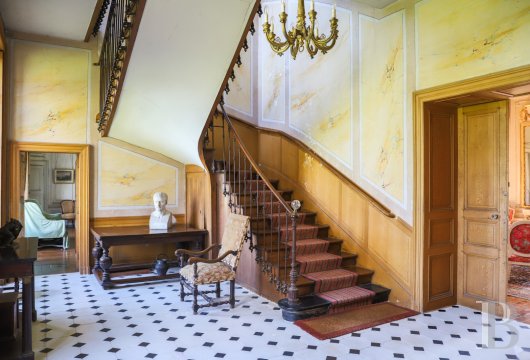
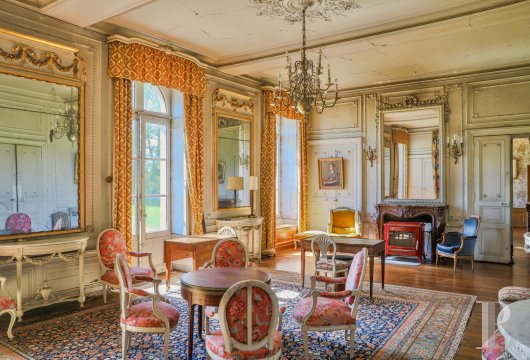
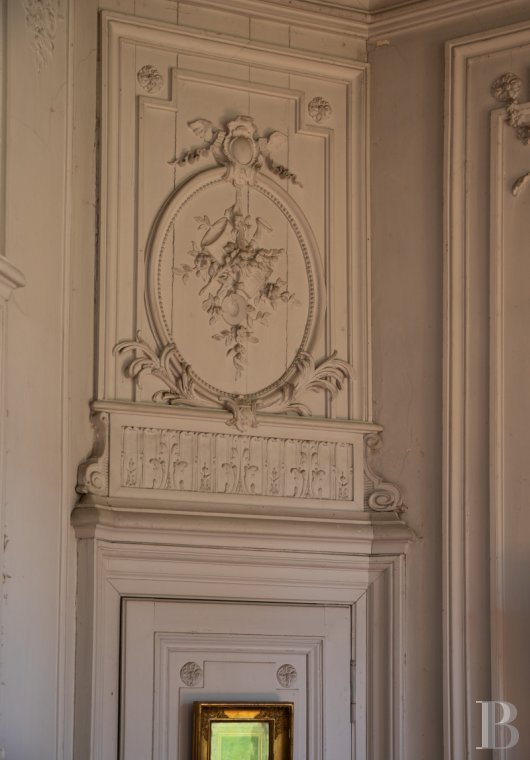
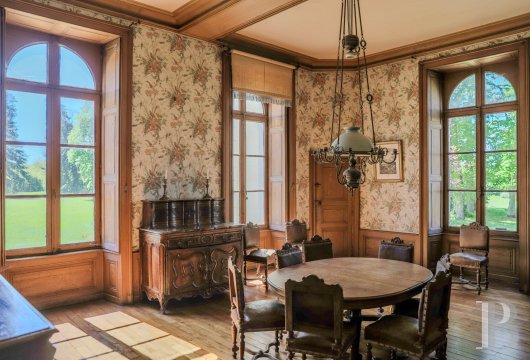
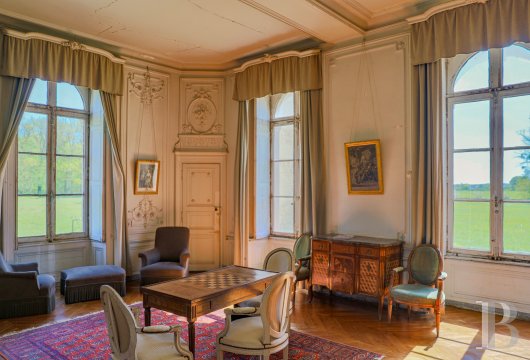
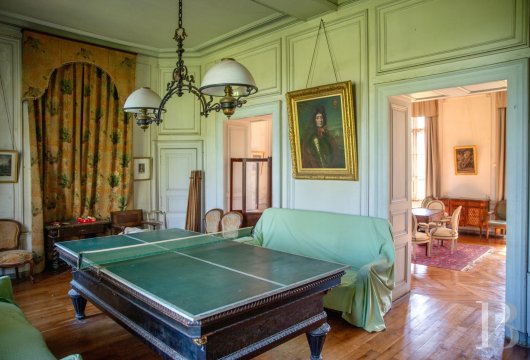
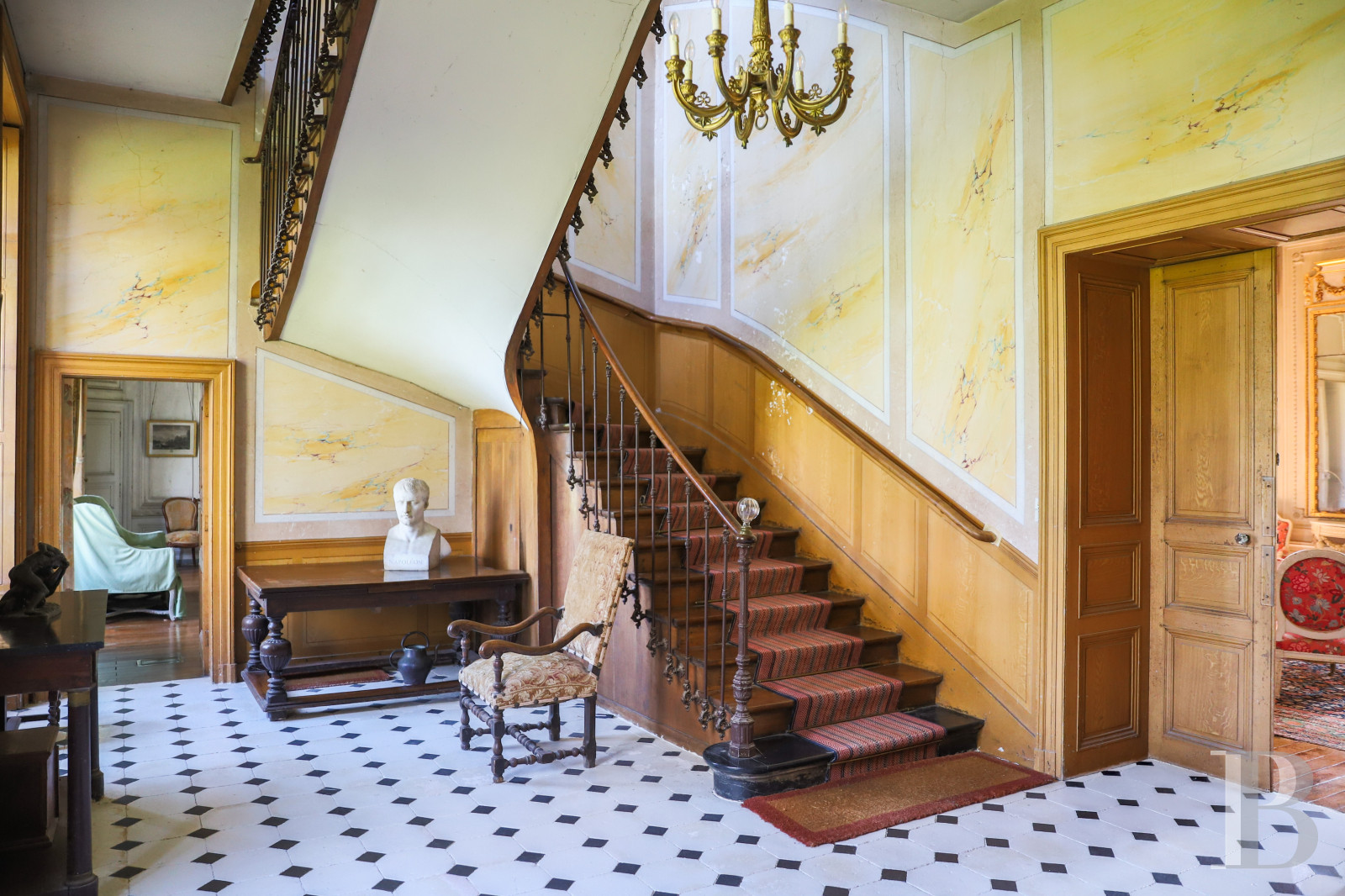
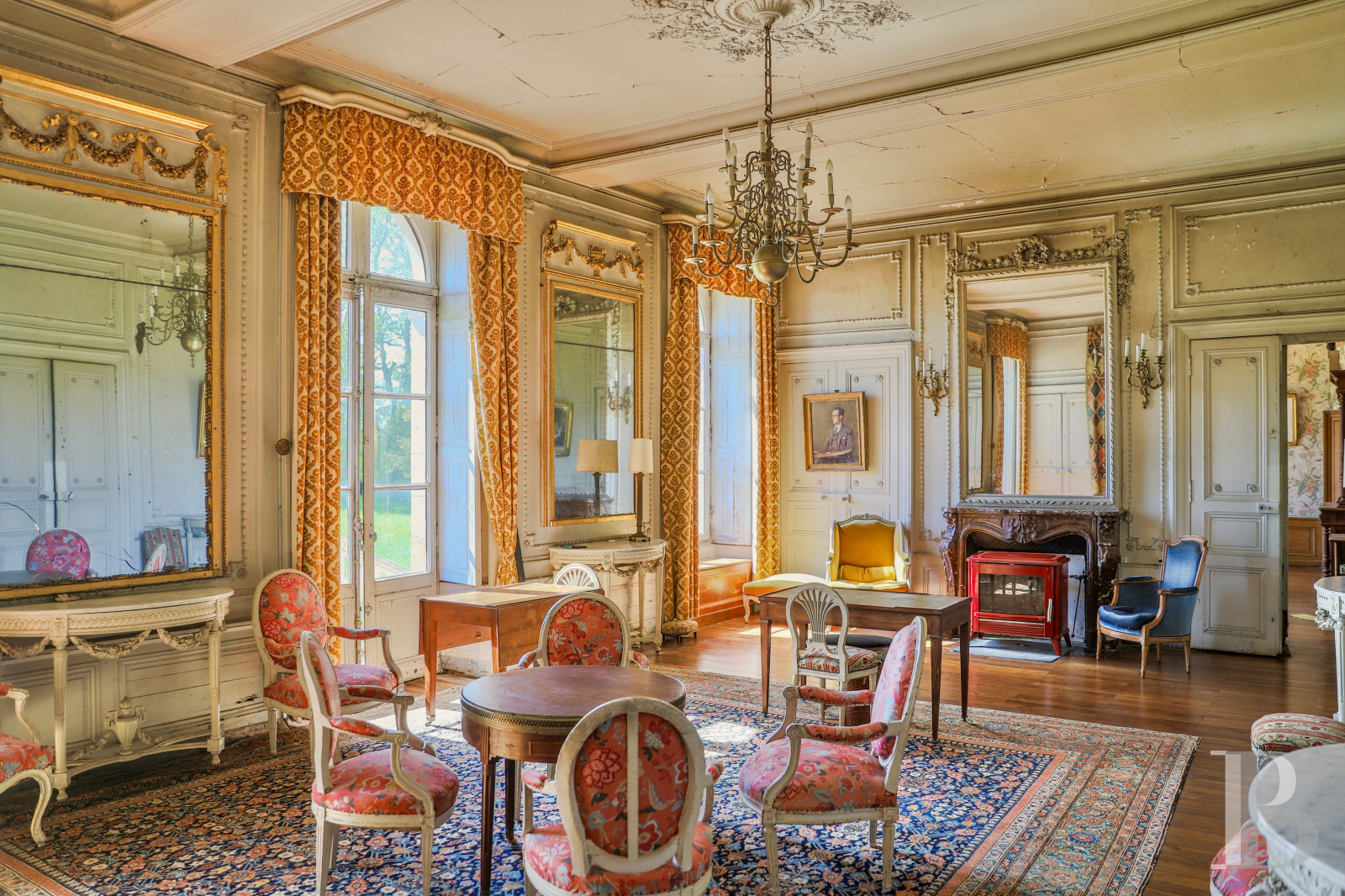
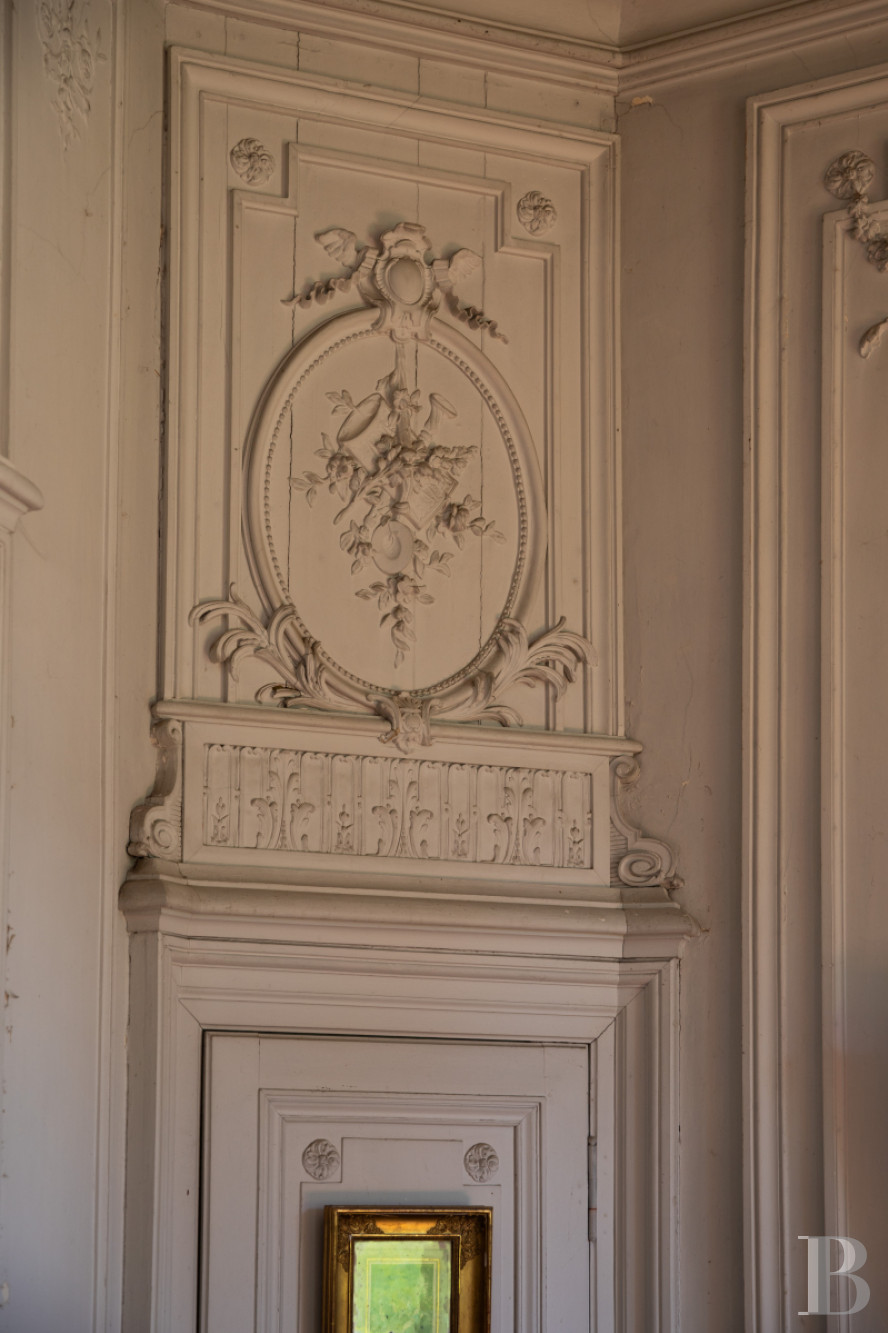
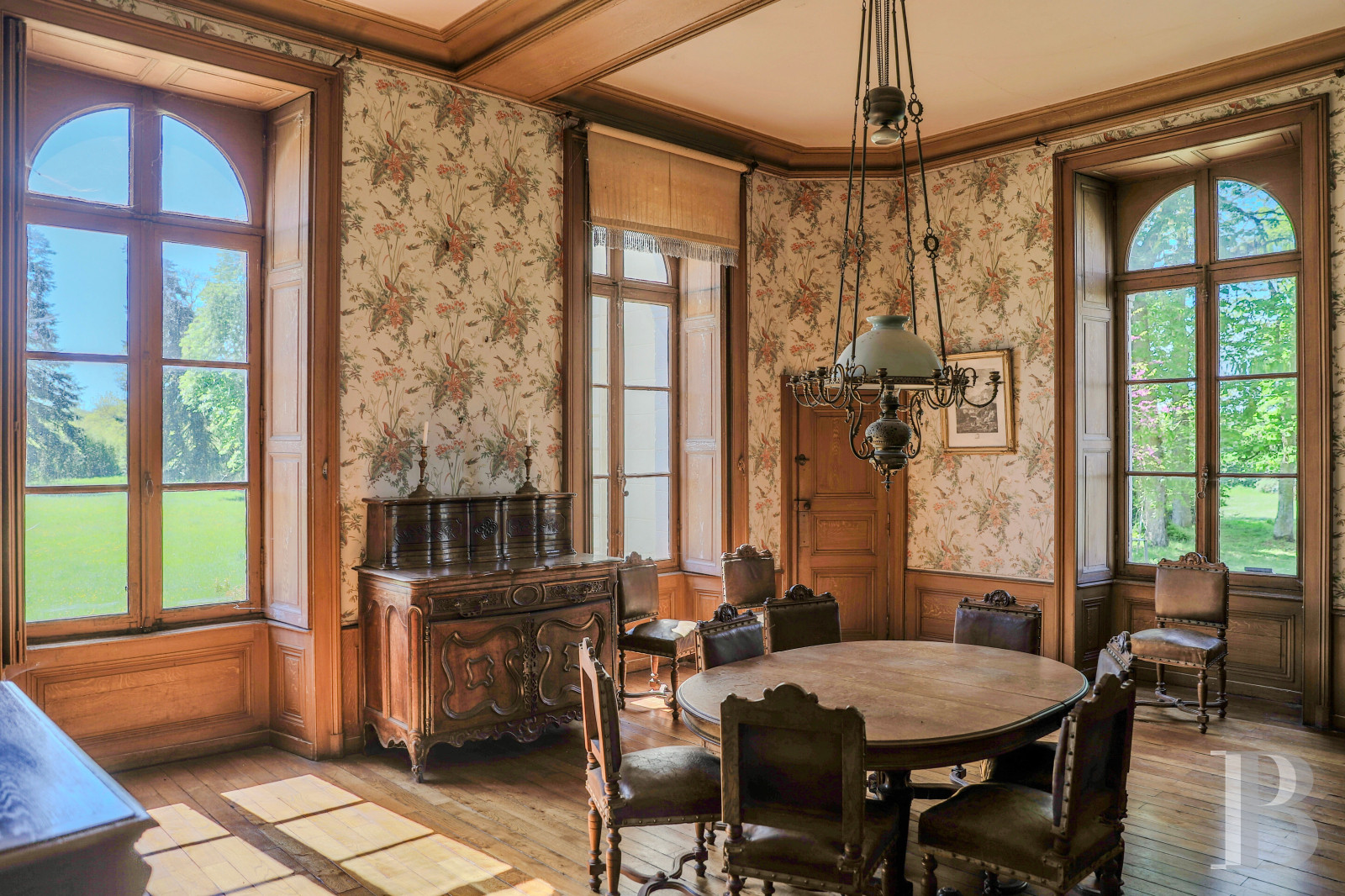
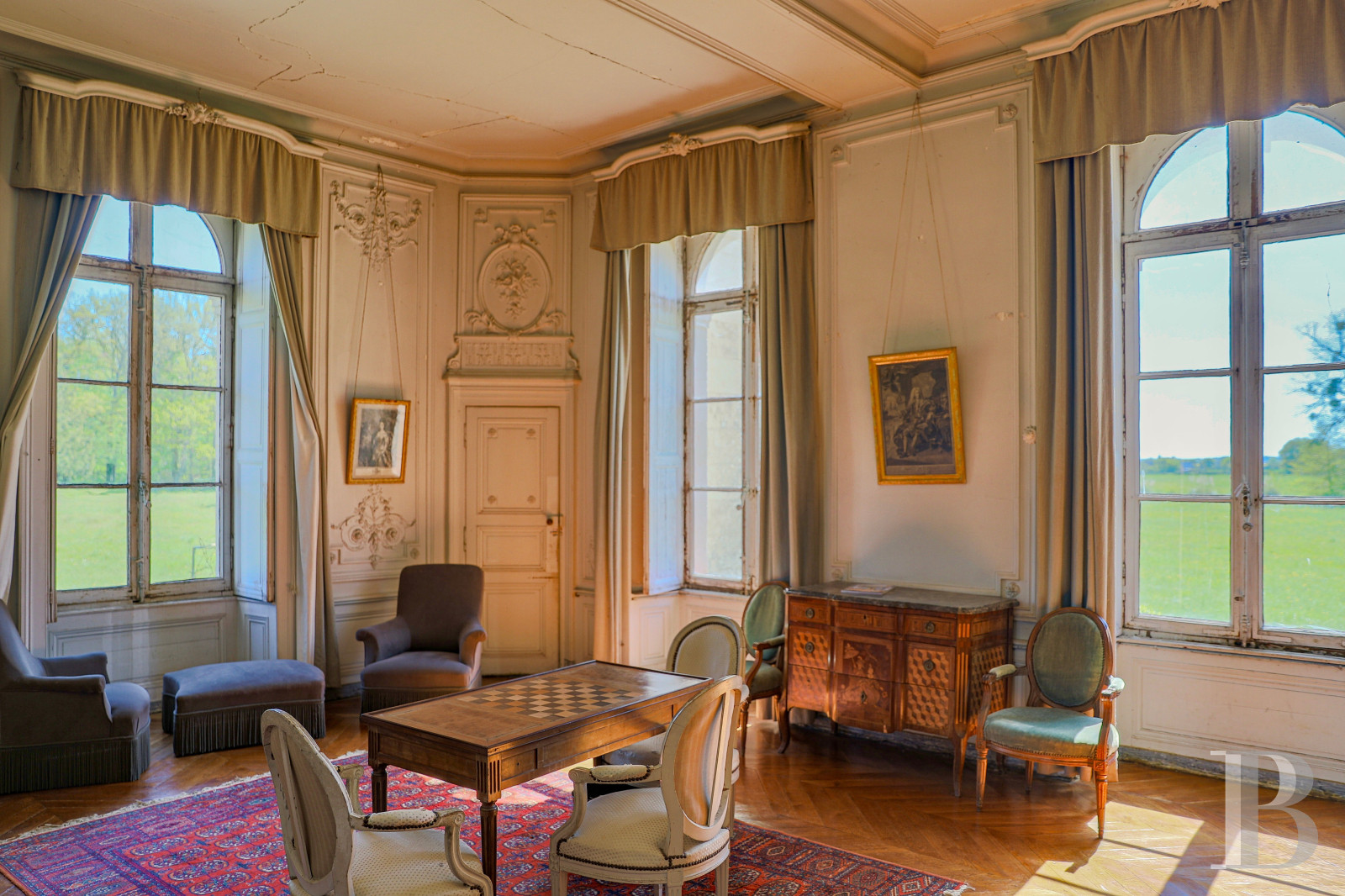
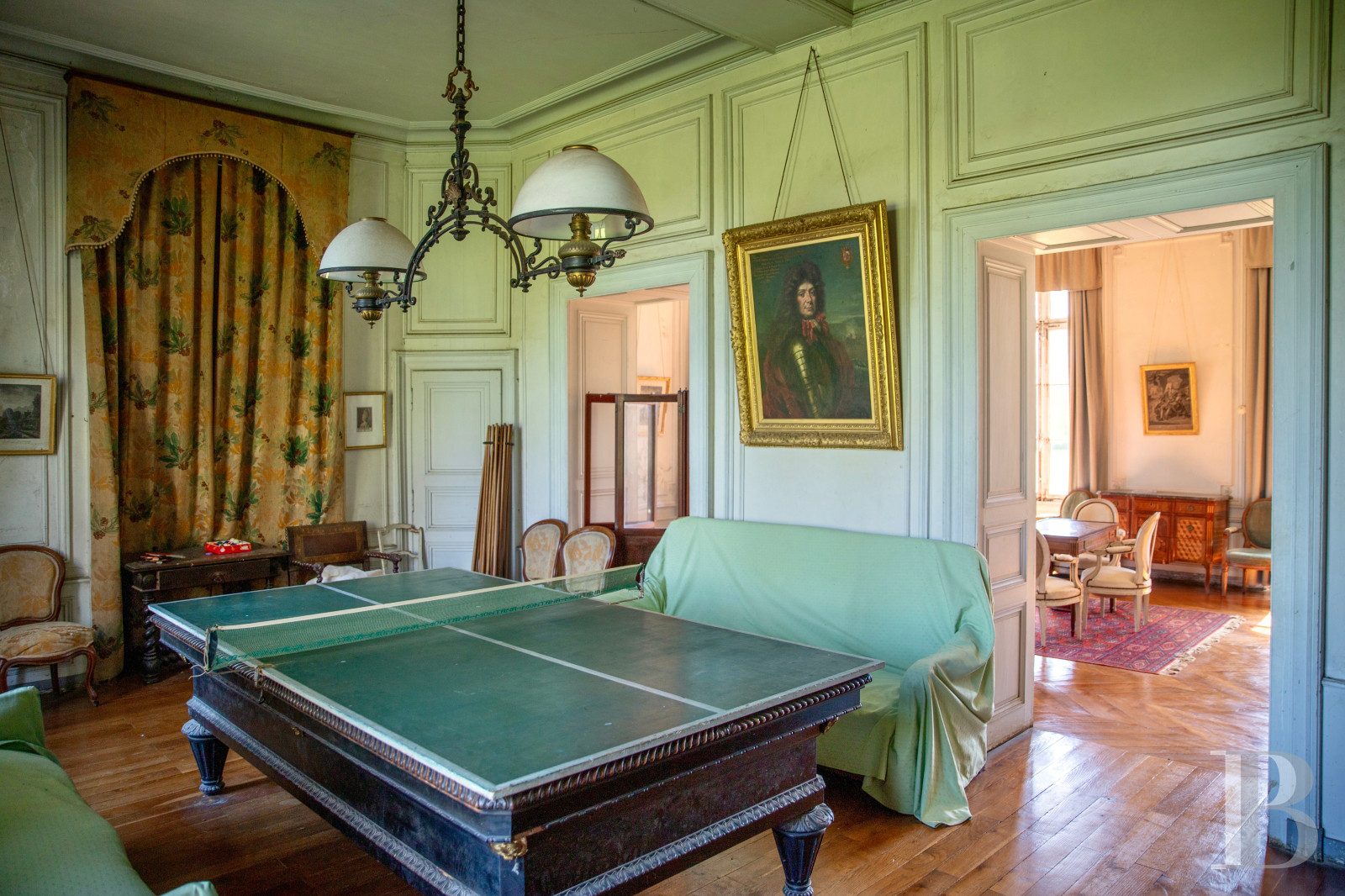
The entrance hall, its walls painted in imitation marble, serves a billiard room, a pantry, a kitchen and a grand drawing room. The billiard room leads through to a small drawing room, the pantry onto a dining room. The grand drawing room opens in turn onto both the small drawing room and the dining room. Cabochon flagstones pave the vestibule; solid oak parquet runs through the rest, laid in chevron or plain English pattern. Classical and neo-classical panelling lines the walls of the reception rooms, and each drawing room holds a marble fireplace. The billiard room, the small drawing room, the dining room and the kitchen all open directly into the corner-tower rooms; the grand drawing room also gives onto the rear perron. The main staircase, of wood with winding flights, rises from the entrance hall. A secondary wooden staircase and a lavatory occupy the tower beside the dining room. A small cellar sits in the basement.
The first floor
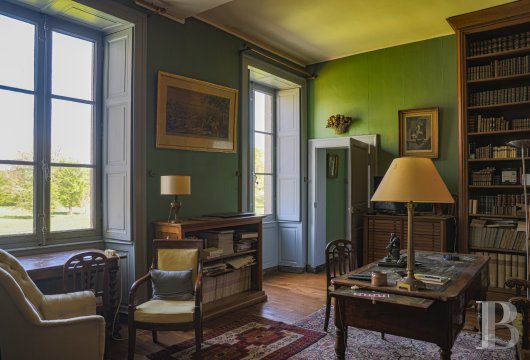
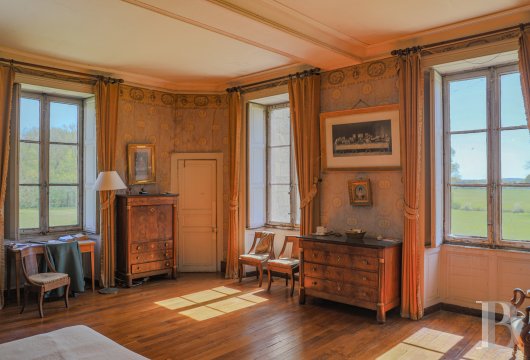
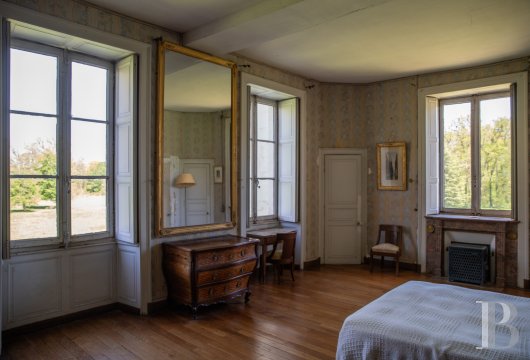
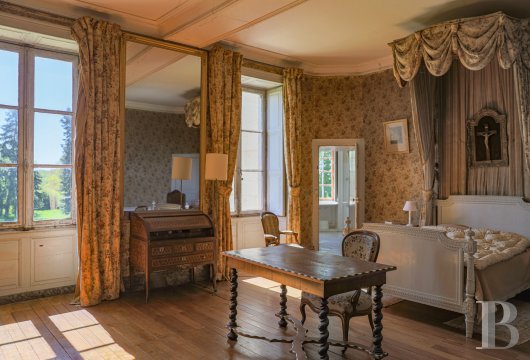
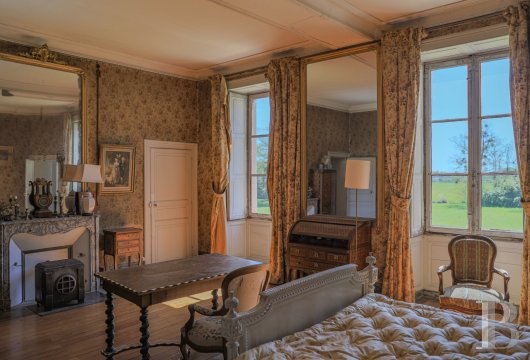
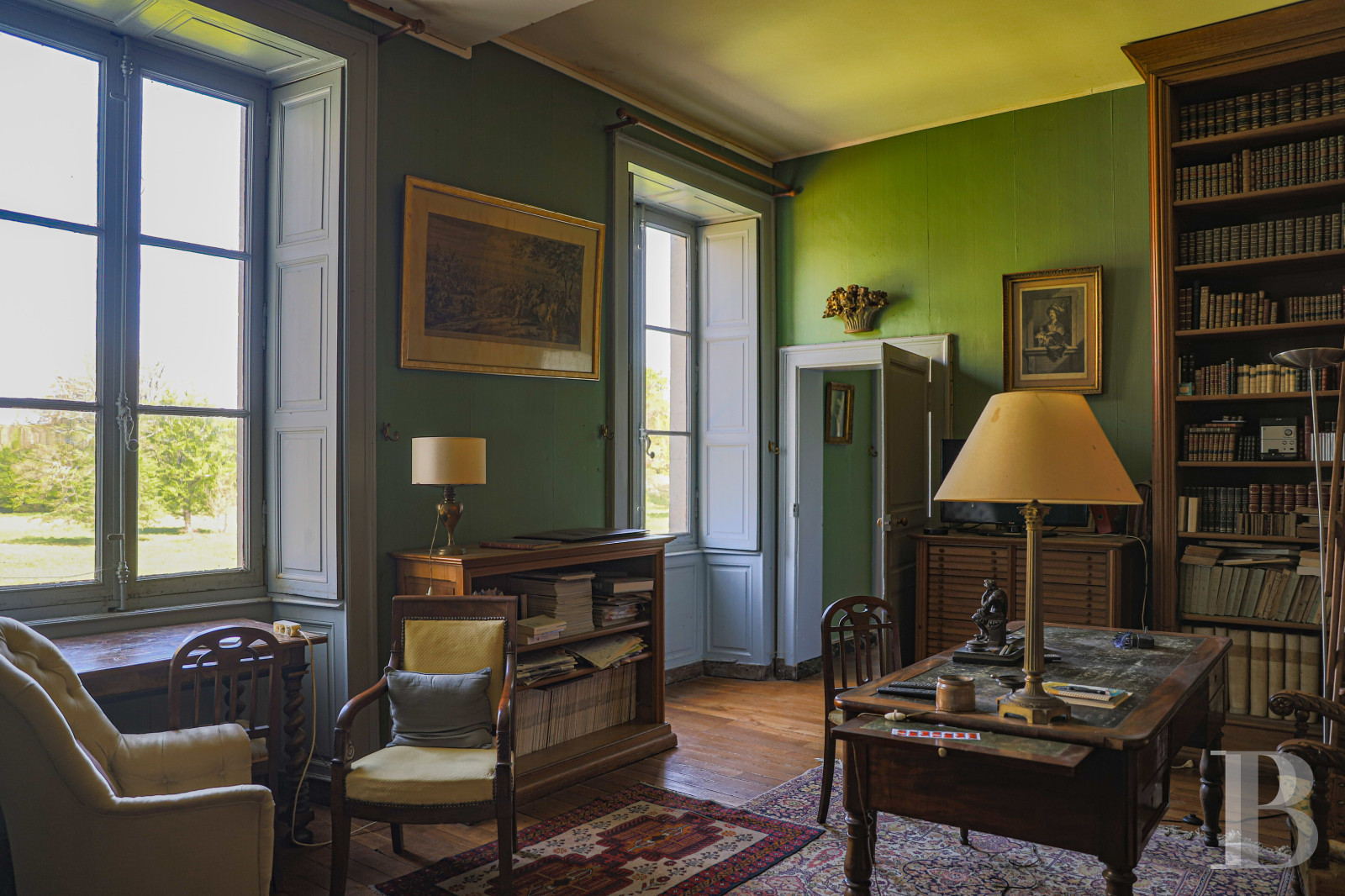
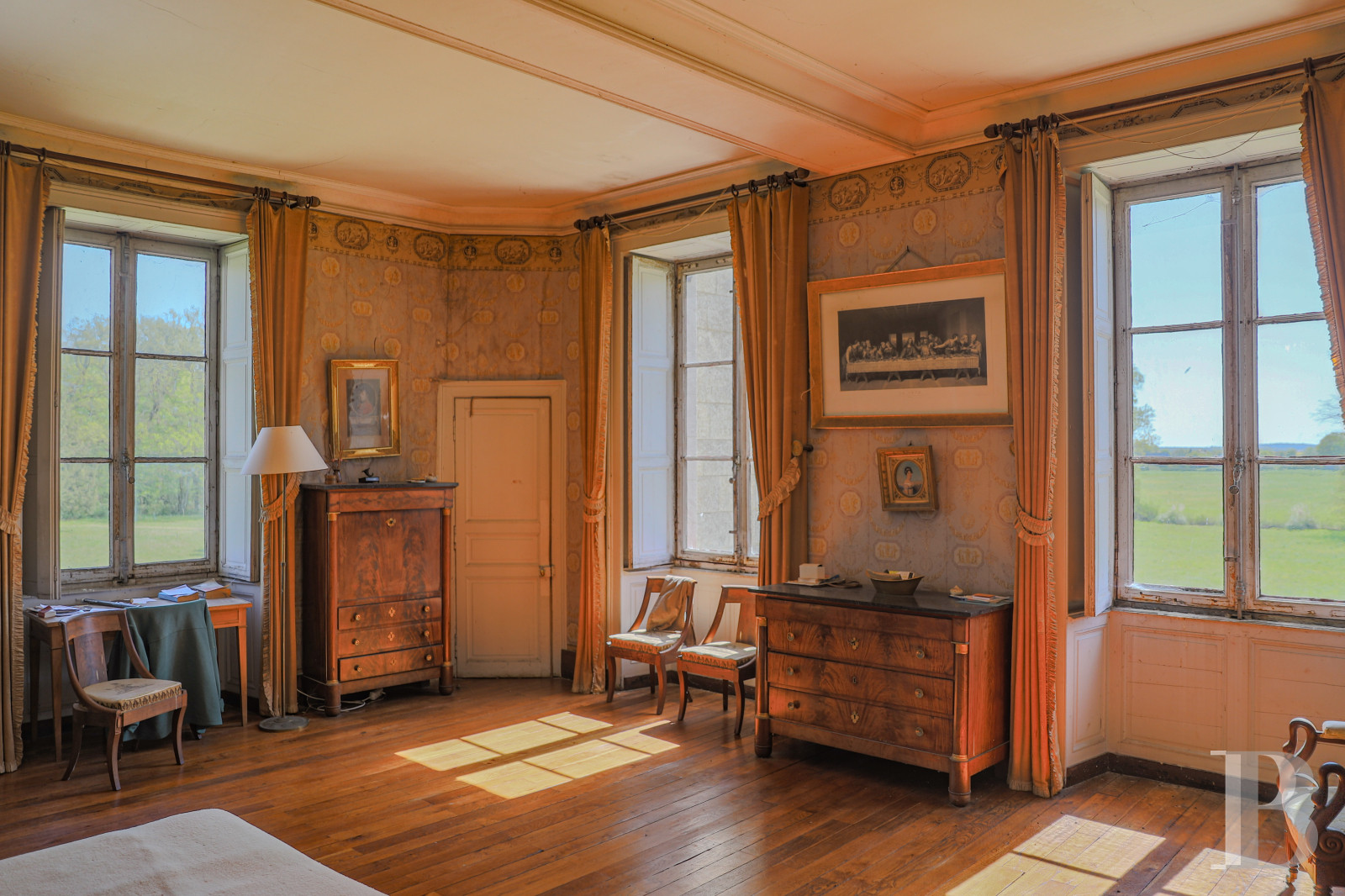
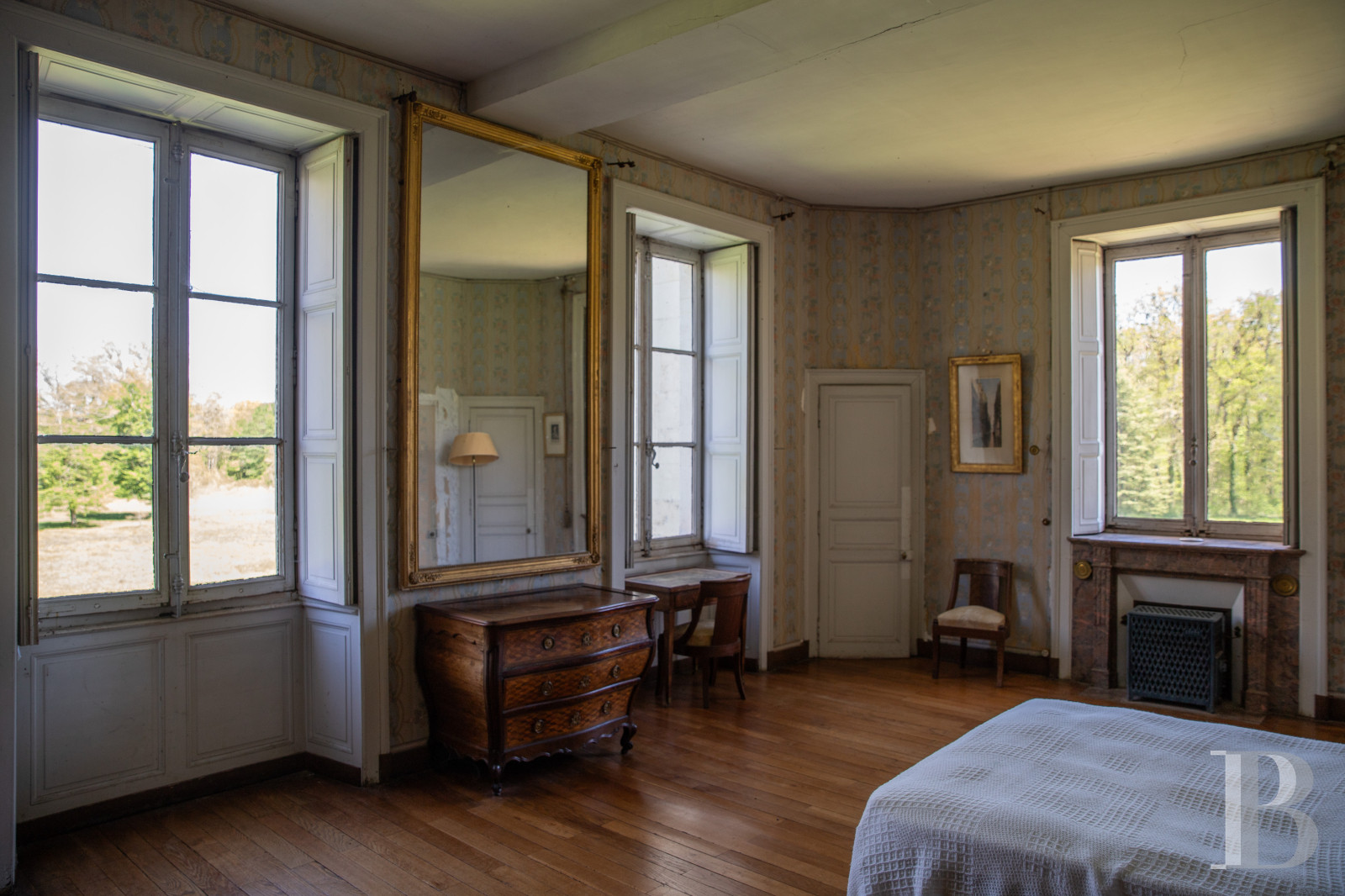
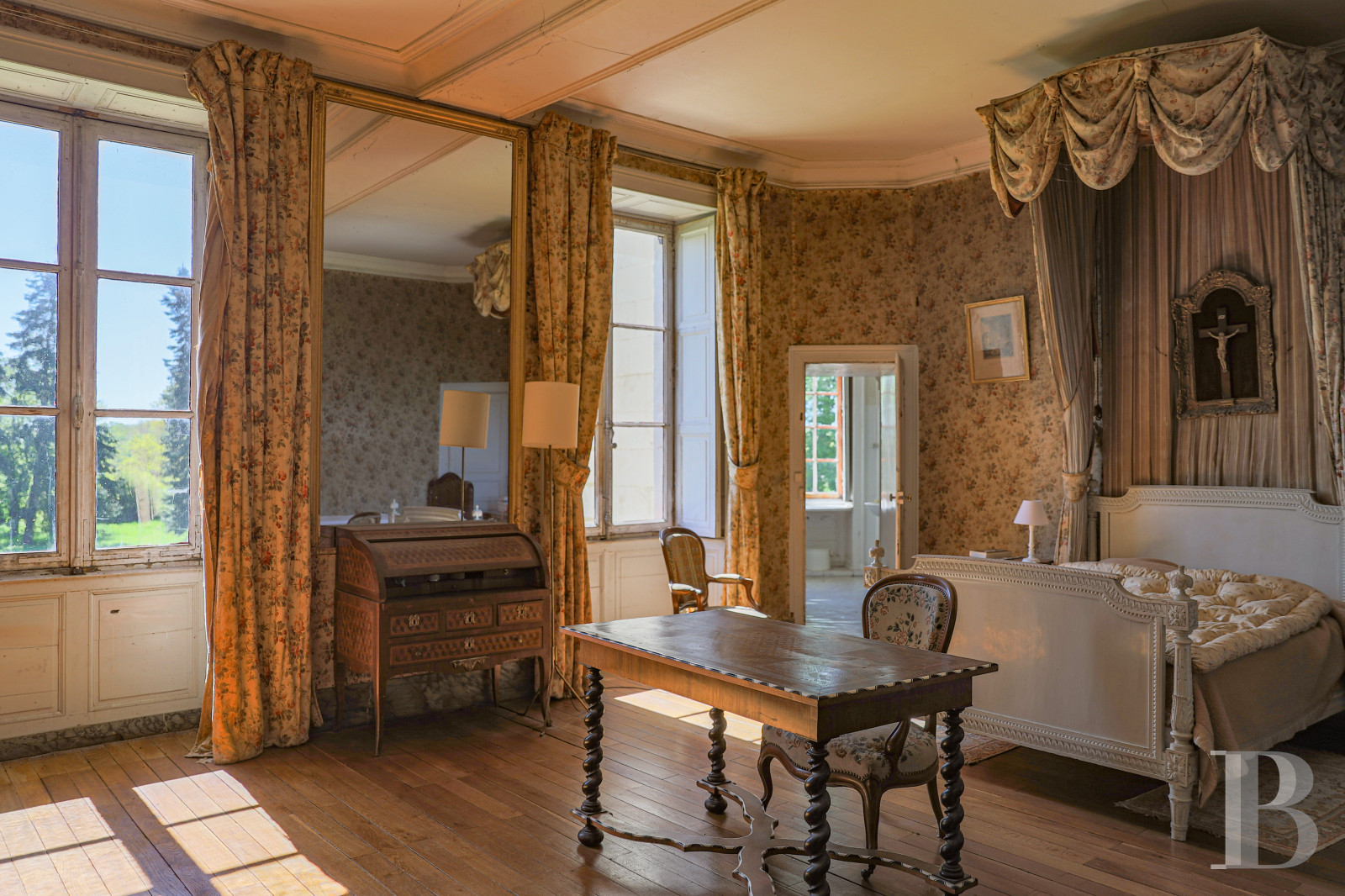
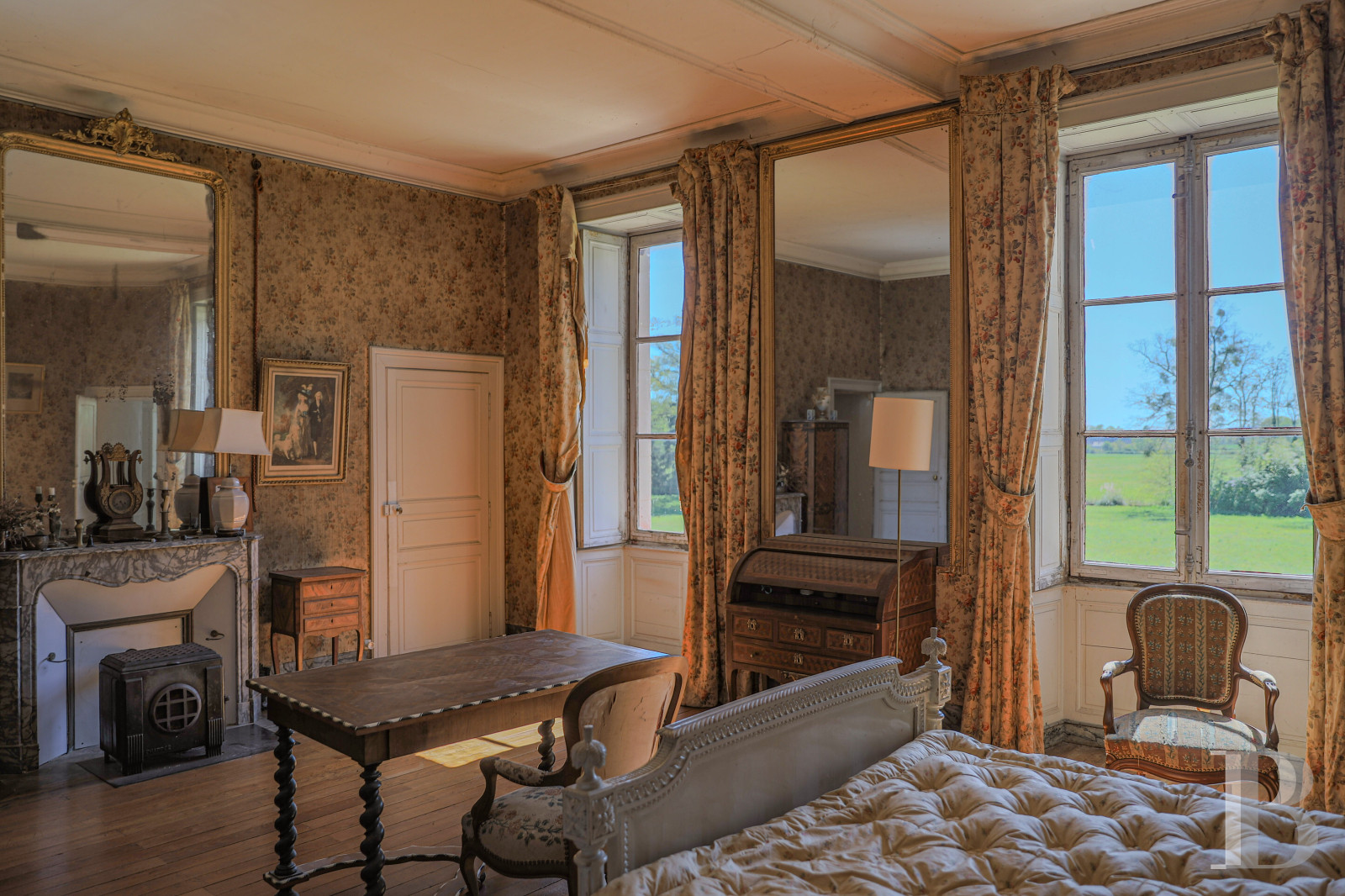
A landing, its walls in imitation marble, opens onto a bedroom, a study-library and a corridor serving four further bedrooms. Solid oak parquet in English pattern runs through every room, and a marble fireplace in each bedroom. Plumbing installations are fitted within the towers. The landing gives onto the balcony above the front door.
The second floor
The layout, function and dimensions of the rooms match those of the floor below. One bedroom now serves as a linen room; a further bedroom occupies the space above the study. Terracotta tiles or parquet cover the floors, and the landing walls carry the same imitation-marble finish as on the first floor.
The attic
Part serves as an attic; the remainder holds the vestiges of four former maids' rooms.
The park
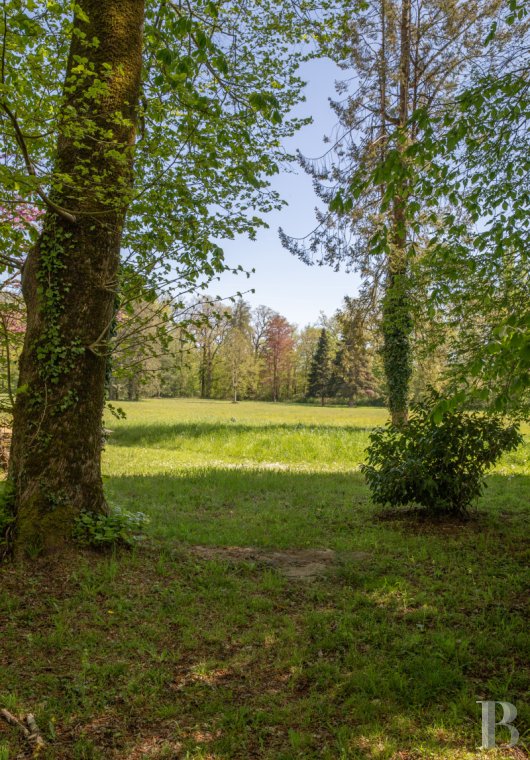
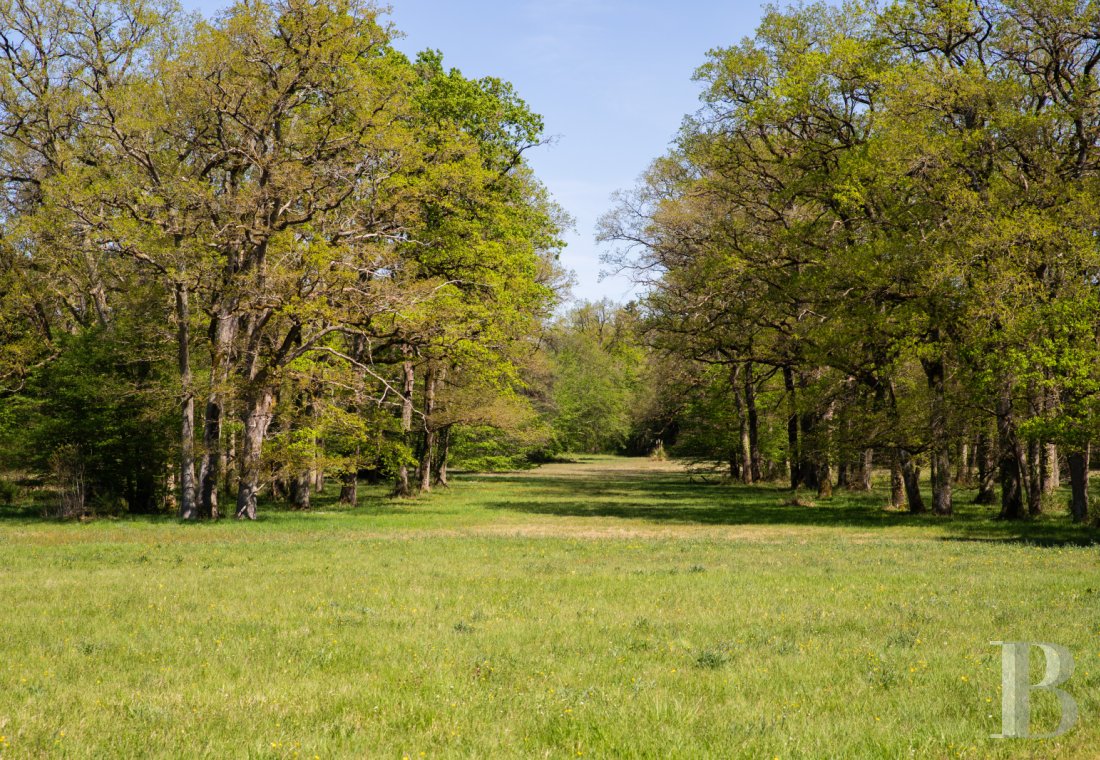
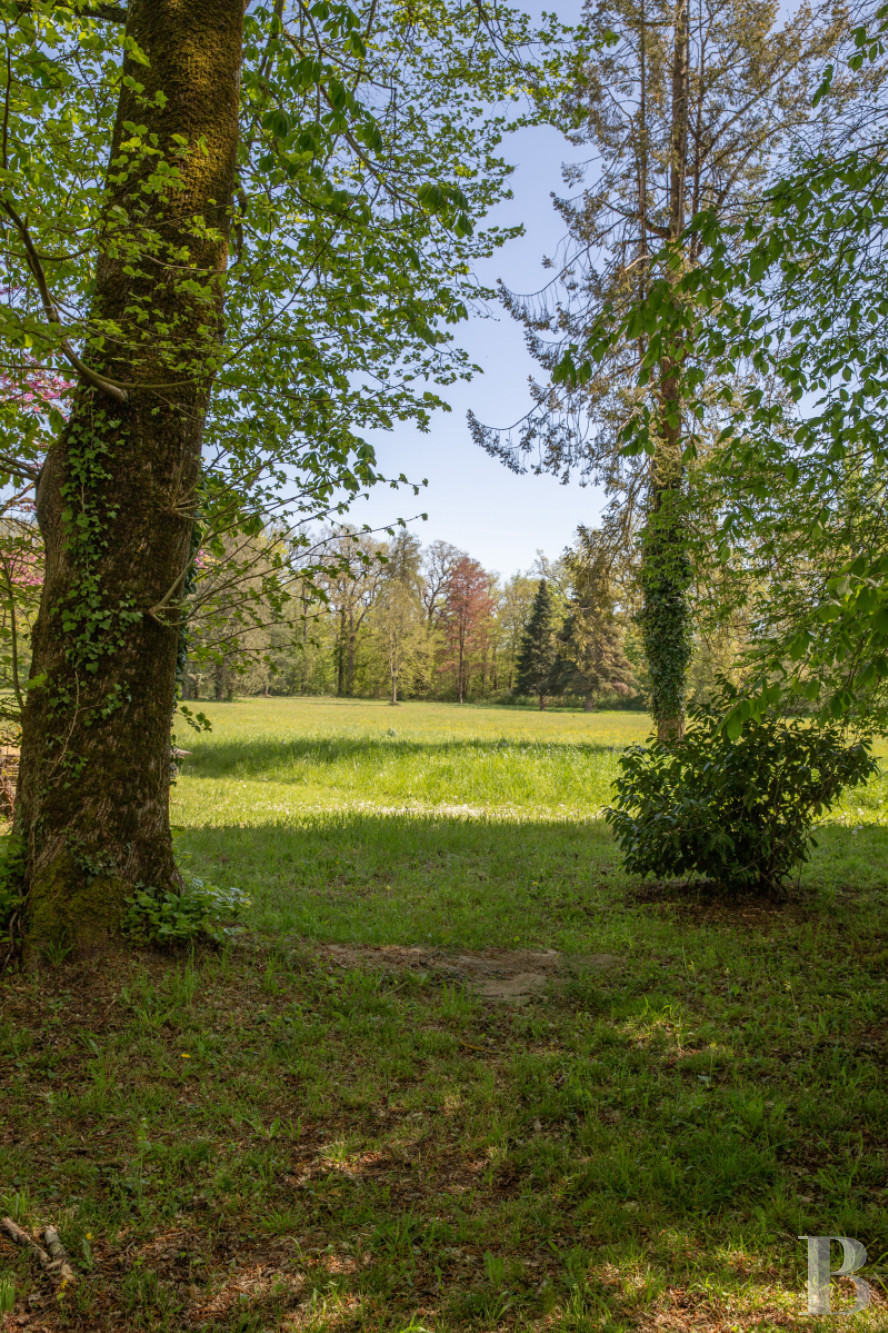
Laid out in the English style, the park wraps around the château and stretches eastward into a 13-hectare wood included in the estate's forest management plan. The grounds are partly walled. Oral tradition ascribes its creation to the Bühler brothers, the celebrated Swiss landscape architects behind the Parc de la Tête d'Or in Lyon and the Thabor in Rennes, who were also active across the Centre-Val de Loire throughout the second half of the 19th century.
The château outbuildings
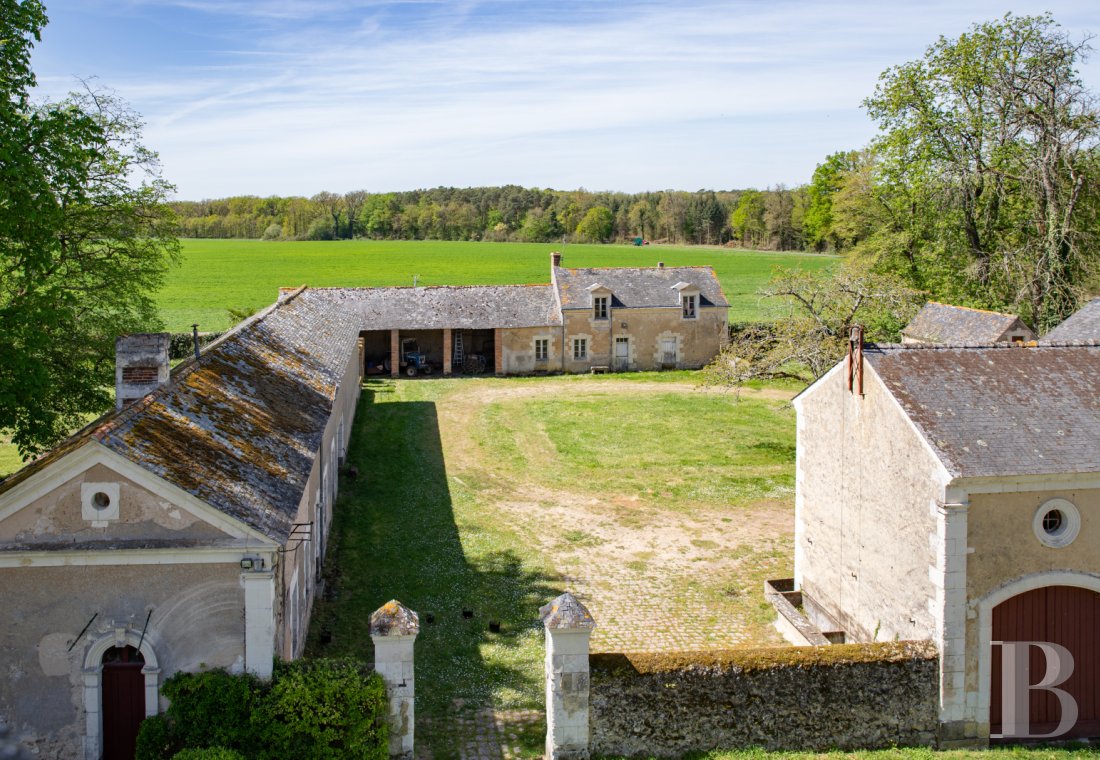
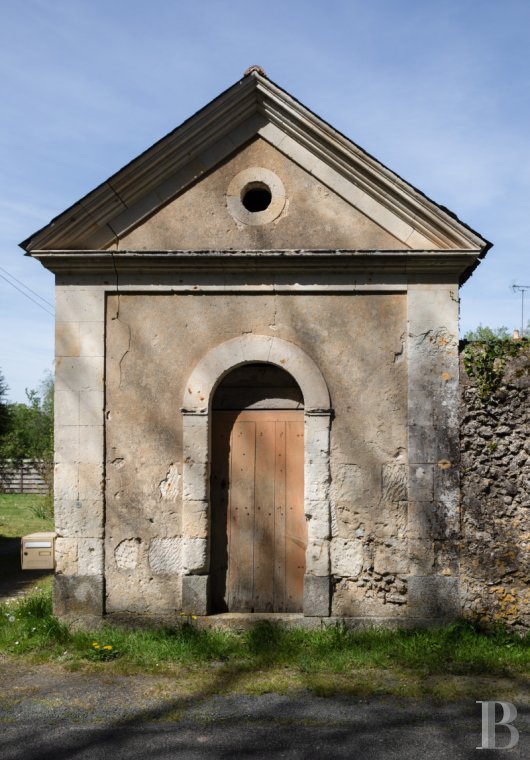
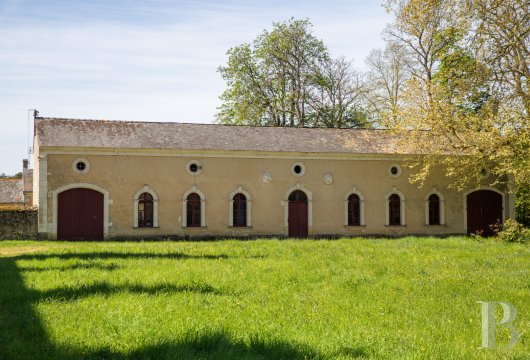
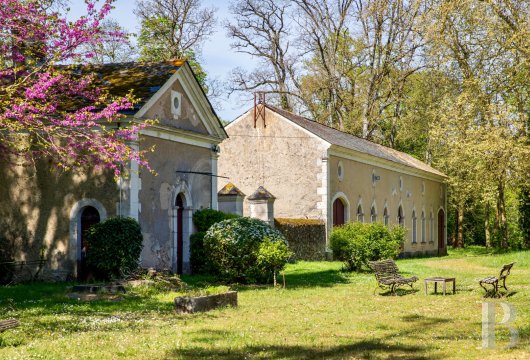
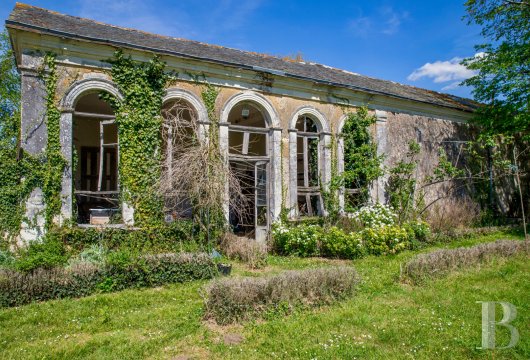
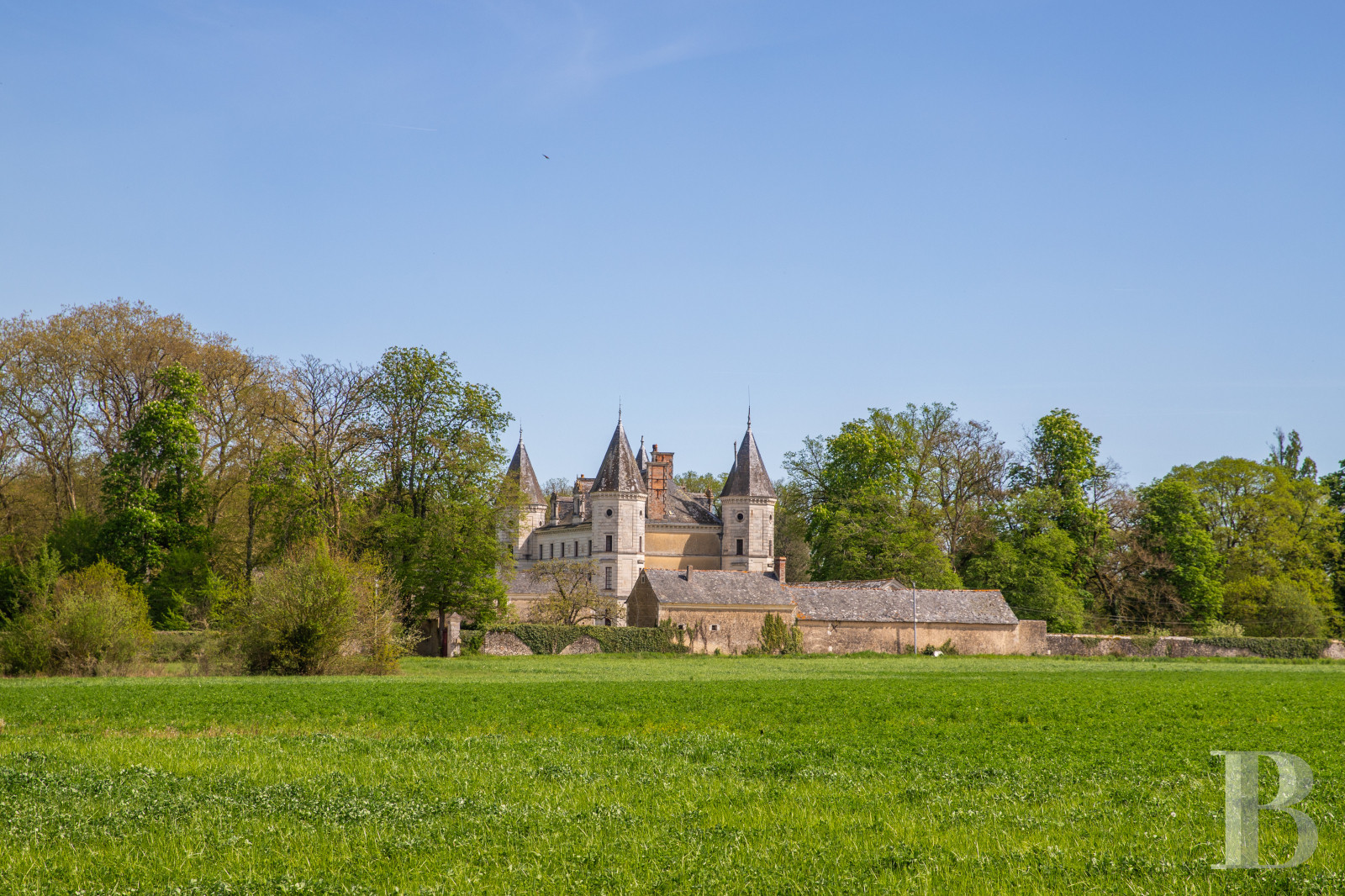
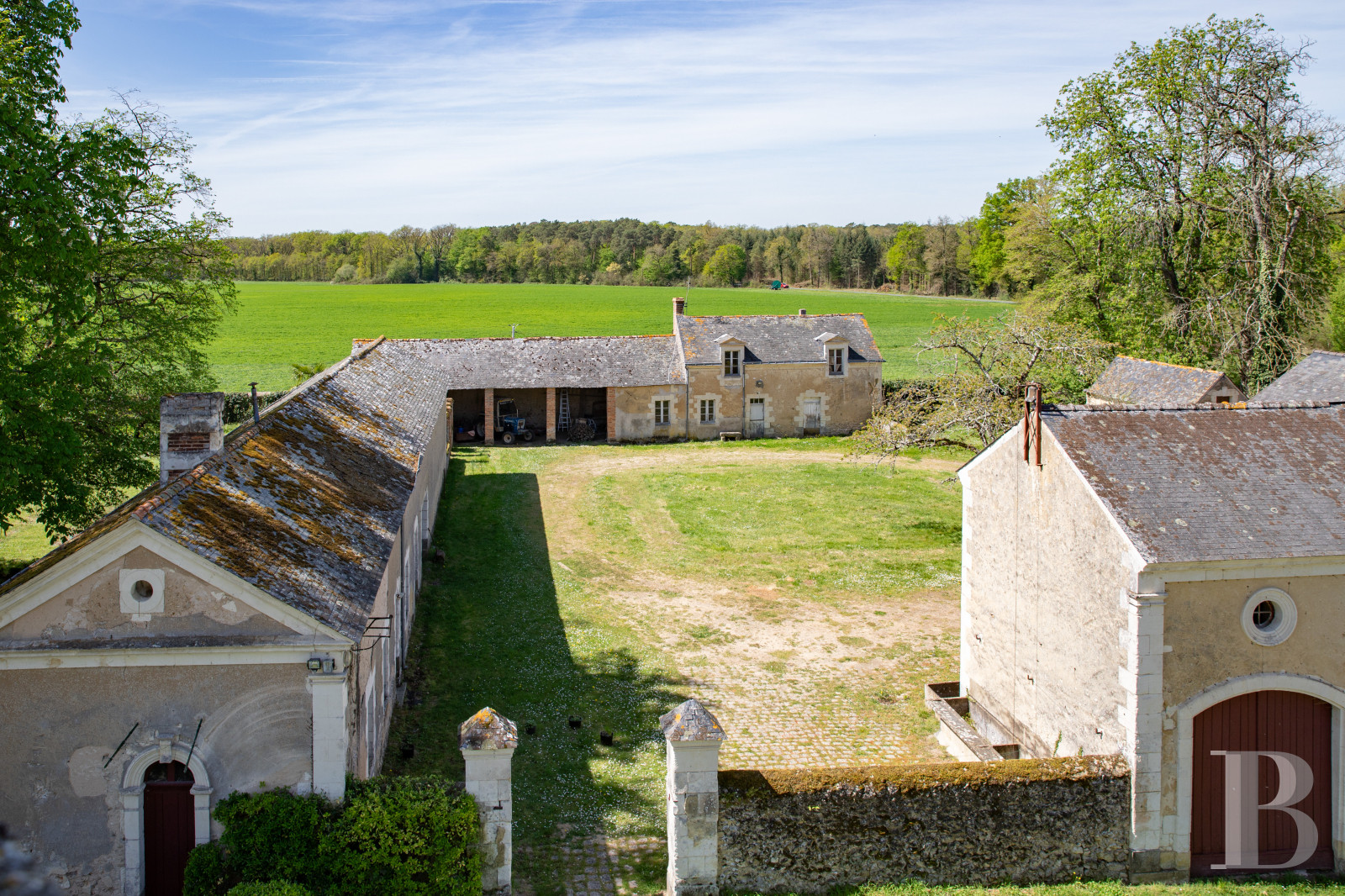
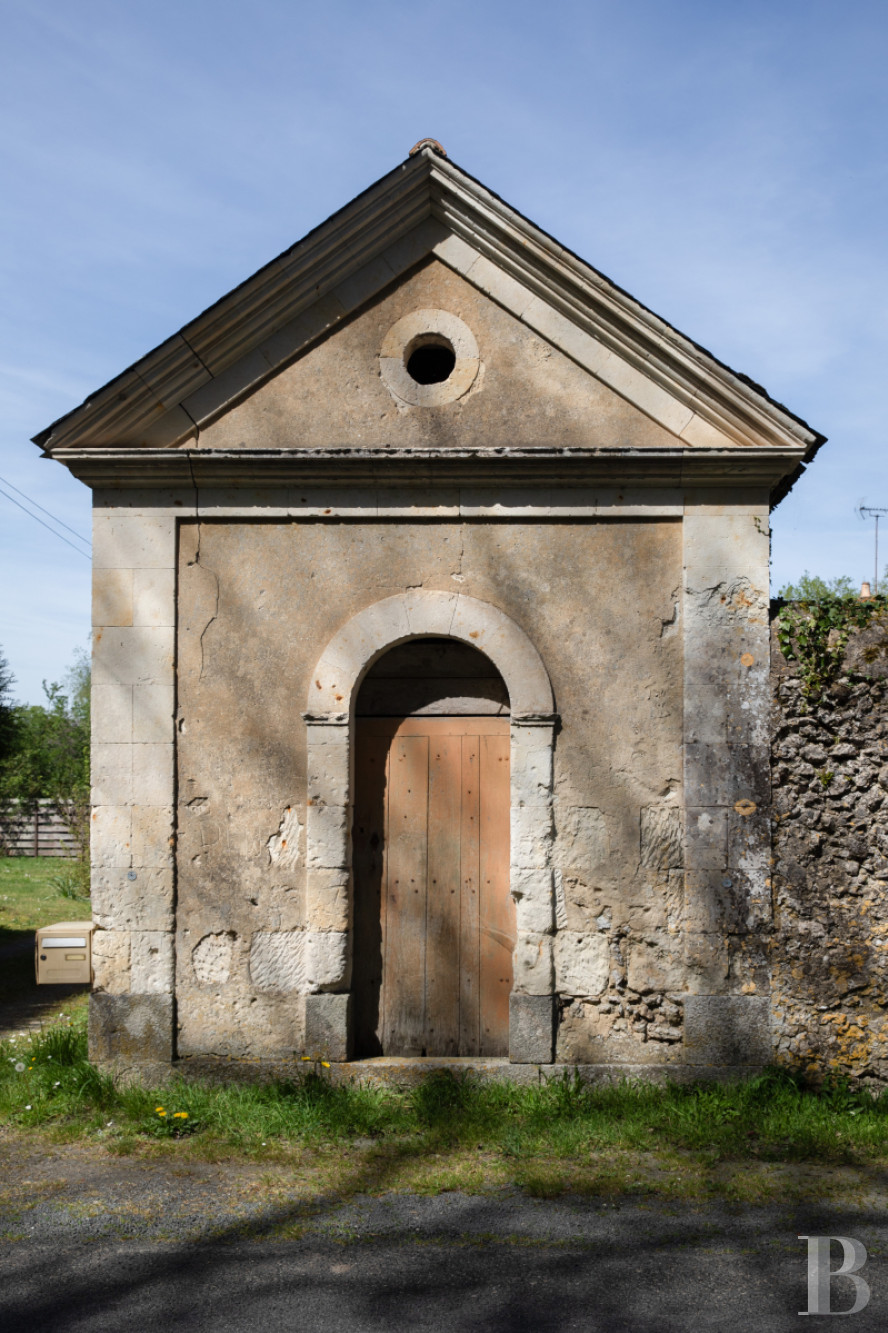
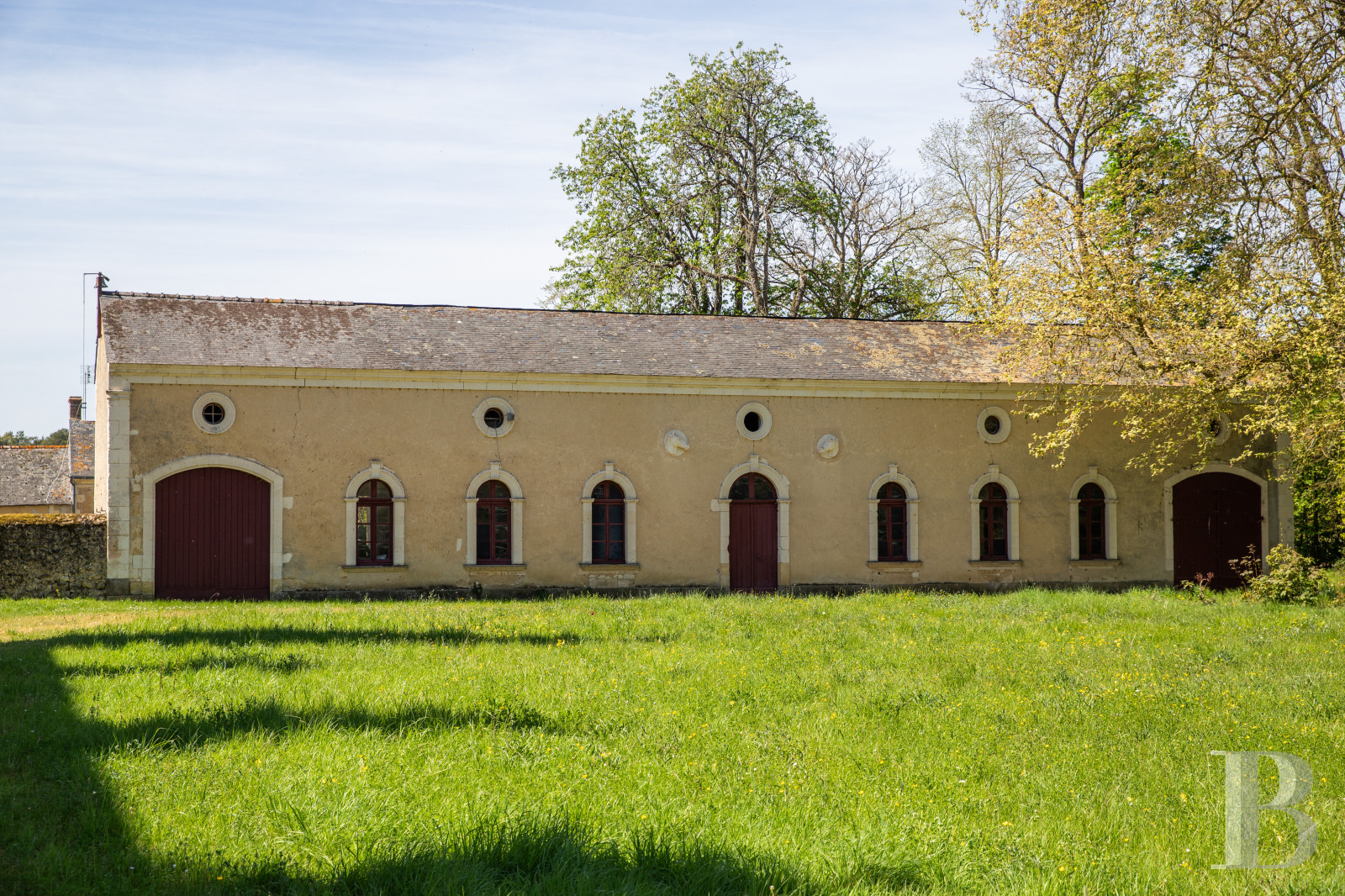
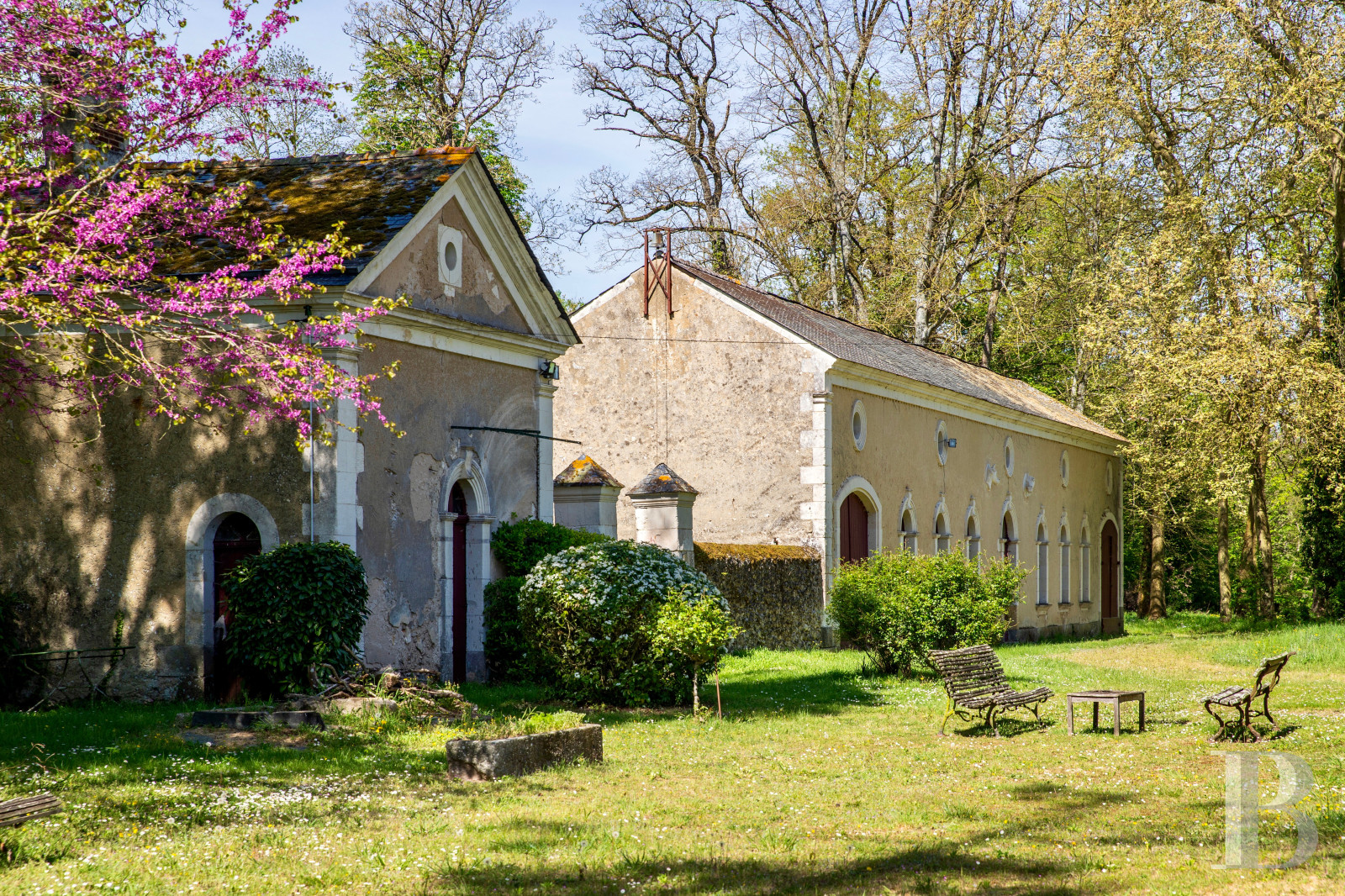
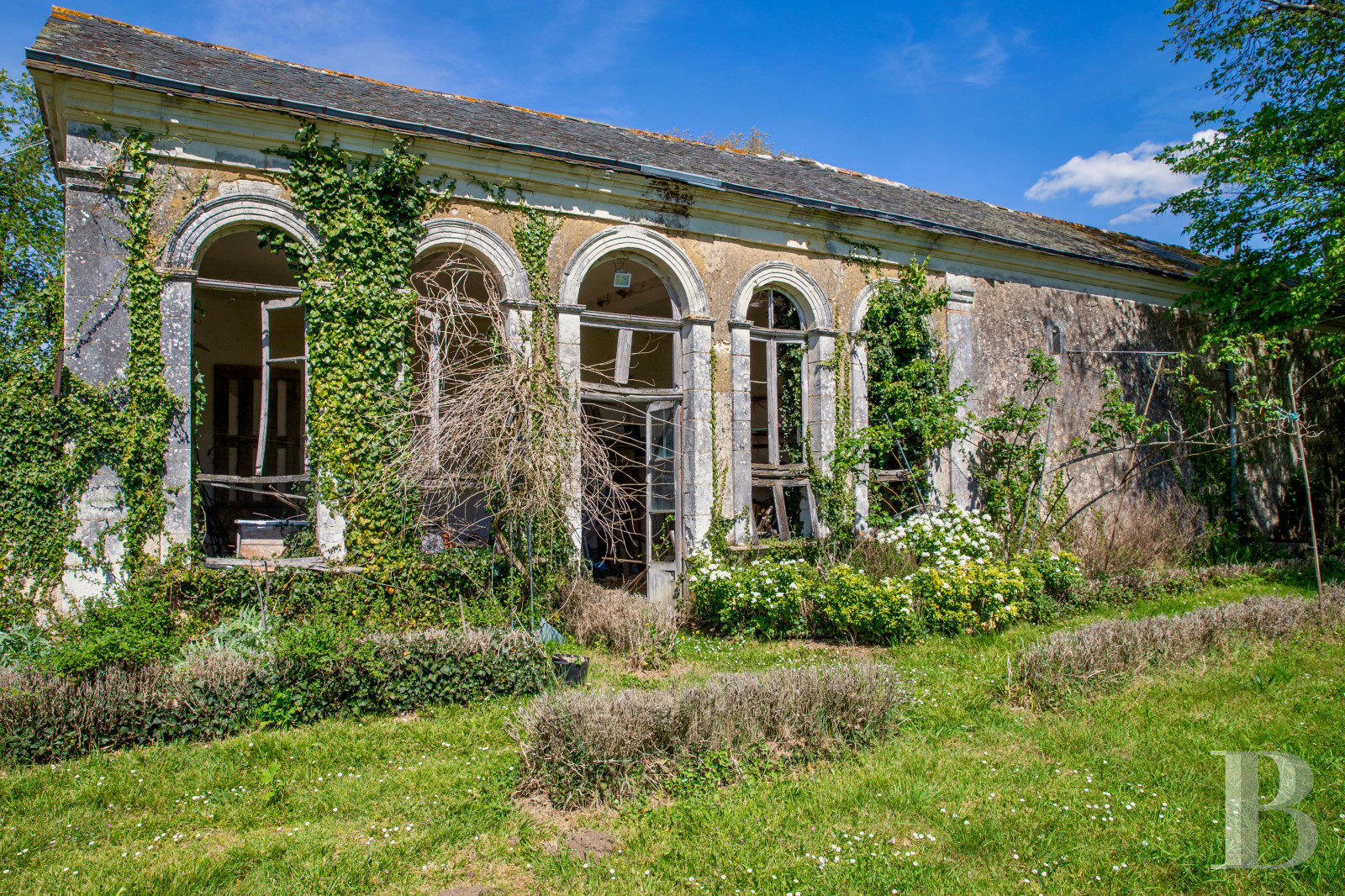
The outbuildings cover some 700 m² and stand around a courtyard closed by two gateways with tuffeau piers. Built of lime-rendered rubble stone, they are roofed in slate. Tuffeau dresses the cornices, the surrounds to openings, the quoins and the dormers. A first building houses a laundry, a former cider works, stables and a fruit store. Then come garages, a caretaker's cottage, an Angevin barn and a kennel. A further building holds an orangery, a woodstore and former living quarters. A partly walled kitchen garden lies to one side.
The other dwellings
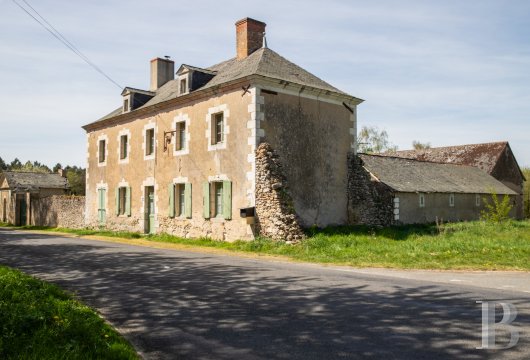
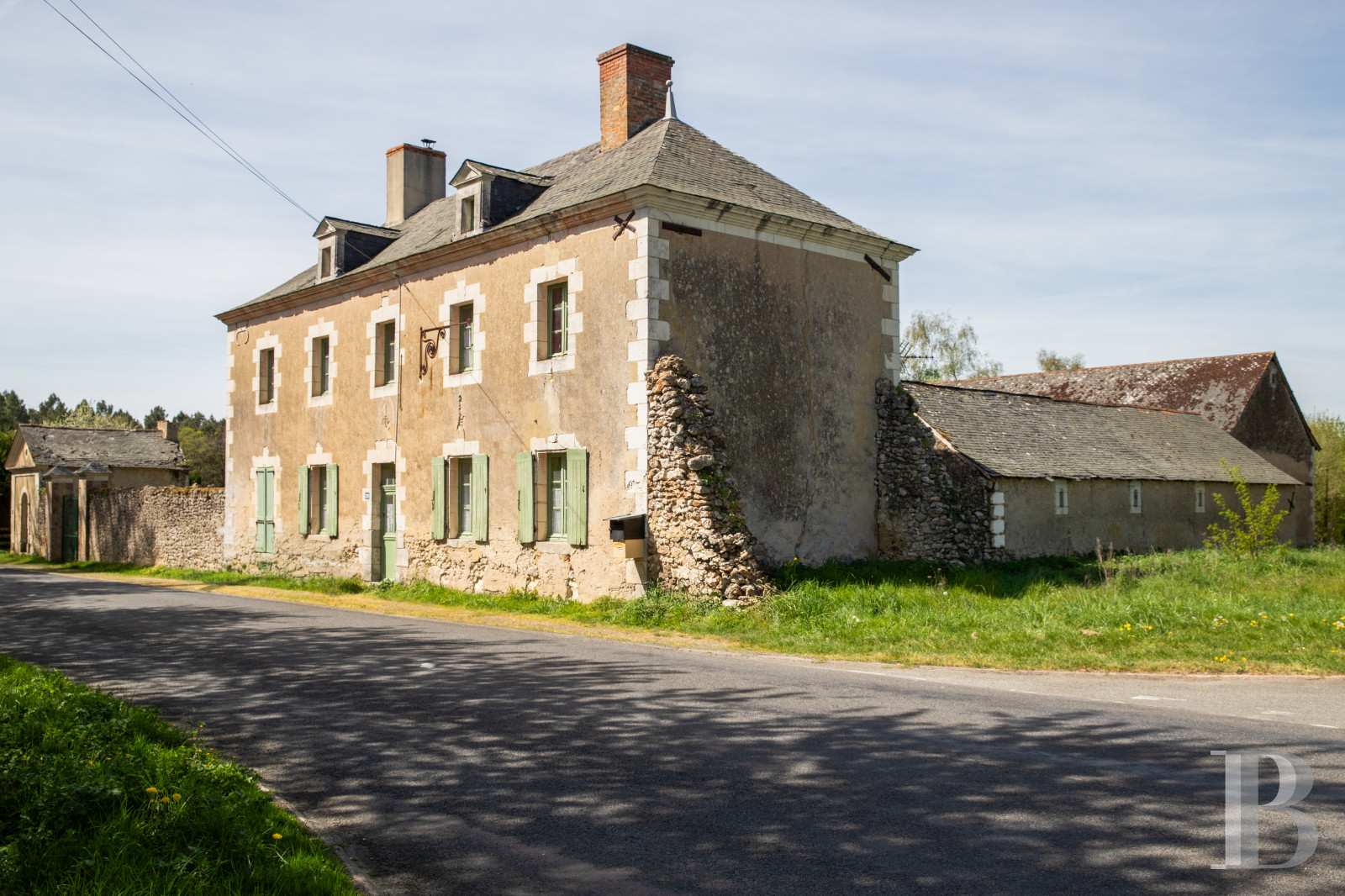
Two further houses belonging to the estate are currently let. Former coaching inns, they stand outside the park and adjoin the forest.
The forest
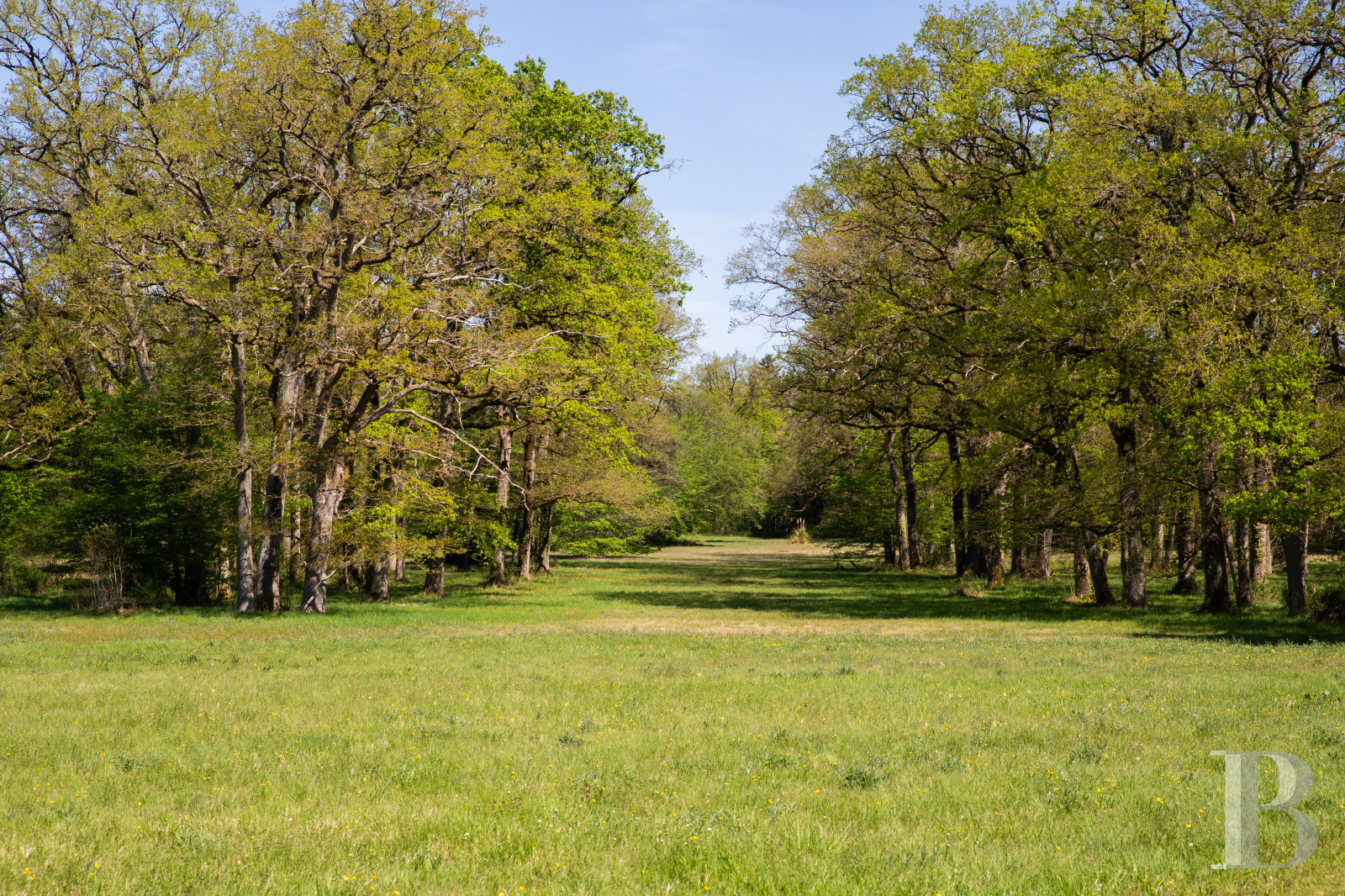
A simple management plan covering 225 hectares has just been renewed. Forming a single, unbroken holding, it comprises broadleaf high forest over some 61 hectares, coniferous high forest over about 55 hectares, mixed high forest over nearly 3 hectares, broadleaf high forest with coppice over approximately 54 hectares, coniferous high forest with coppice over some 20 hectares, mixed high forest with coppice over about 11 hectares, and poplar plantations over the remaining area. A shooting lease, including use of a hunting lodge, currently runs but can be terminated without difficulty.
The farms
Totalling nearly 90 hectares of agricultural land, three farms are let to two tenants. Only one of them with a dwelling and operational buildings.
Our opinion
Among the great Angevin estates of the 19th century, this one stands all but unaltered. Its château draws freely on the Renaissance; the diversity of its interiors and the English park speak alike of the period's tastes and ambitions. For all that freedom of reference, the precise rhythm of the bays answers to a careful design, one fitting for a demeure de maître. The same exactness governs the layout within, repeated from floor to floor across the three lived levels. With refurbishment and a measure of modernisation, the house can recover its former lustre.
Reference 440933
| Main building floor area | 750 m² |
| Outbuildings floor area | 700 m² |
| Land registry surface area | 323 ha 73 a |
| Including parkland | 18 ha 68 a |
Information on the risks to which this property is exposed is available on the website: www.georisques.gouv.fr
Share


NB: The above information is not only the result of our visit to the property; it is also based on information provided by the current owner. It is by no means comprehensive or strictly accurate especially where surface areas and construction dates are concerned. We cannot, therefore, be held liable for any misrepresentation.