



A recently restored 17th-century manor, with outbuildings and landscaped grounds,
in the Corrèze area, 30 minutes from Brive-la-Gaillarde
in the Corrèze area, 30 minutes from Brive-la-Gaillarde
Arnac-Pompadour,
CORREZE
limousin
19230
FR

Location
This manor stands in the middle of a picturesque village, away from any hustle and bustle but near to all essential amenities, 20 minutes from the city of Brive-la-Gaillarde and 10 minutes from the Haras de Pompadour stud farm. The countryside of the Corrèze area stands between the wooded landscape of the former Limousin region and the valleys of the Périgord sector, at the crossroads of five regional natural parks. Its wooded hills indented by gorges and rivers are much appreciated, especially by hikers thanks to a moderate climate, who find it just as appealing as enthusiasts keen to explore the local heritage, which is all the more rewarding to discover here as it remains largely unknown. Limoges can be reached in less than one hour by motorway, while Bordeaux and Toulouse are 2 hours 30 minutes away. Paris can be reached from the Brive-Vallée de la Dordogne international airport 30 minutes away, as well as from trains passing through the rail hub in Brive-la-Gaillarde.
Description
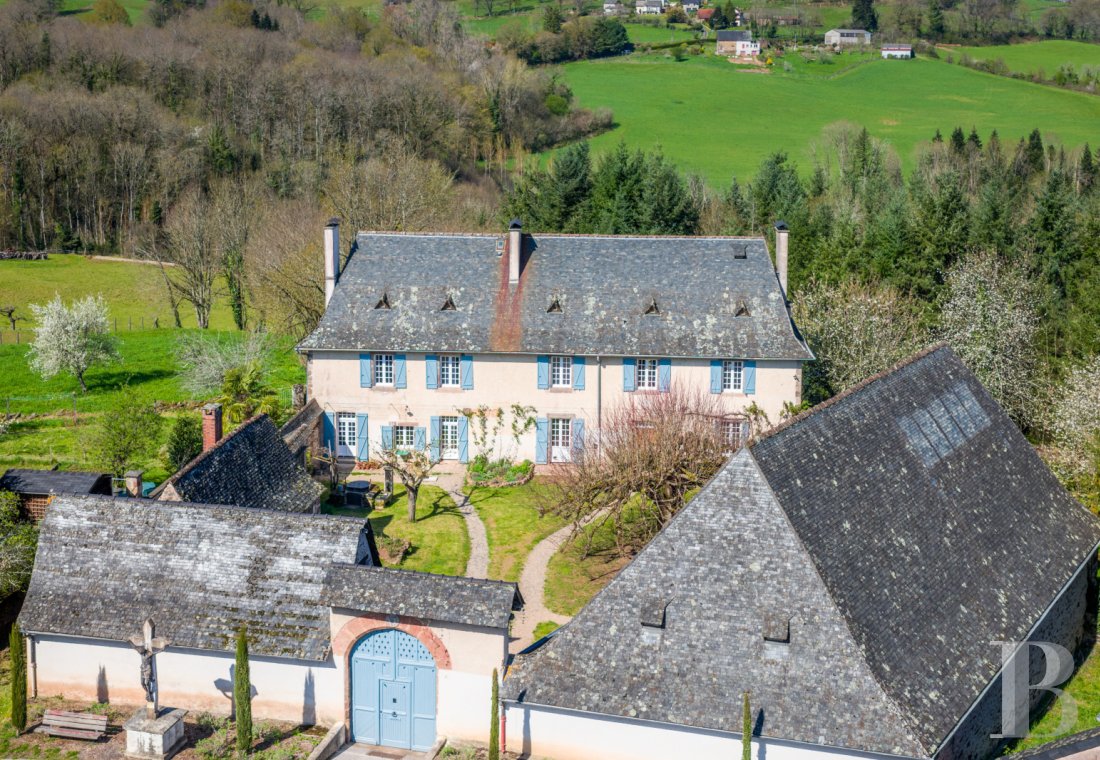
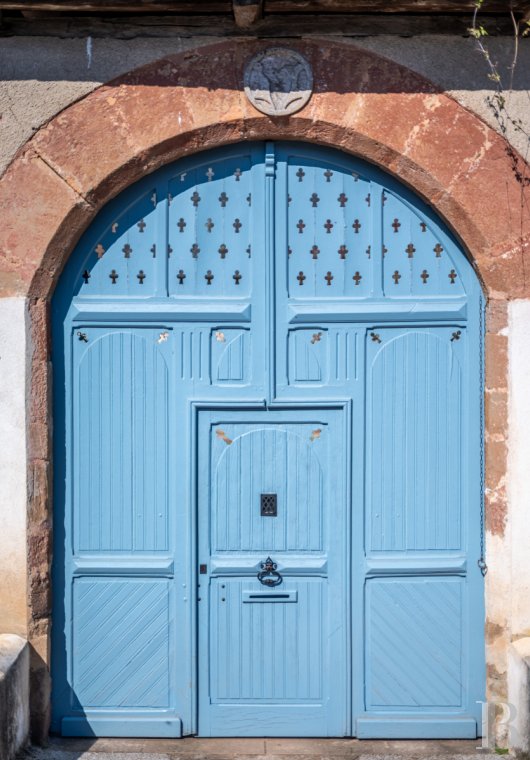
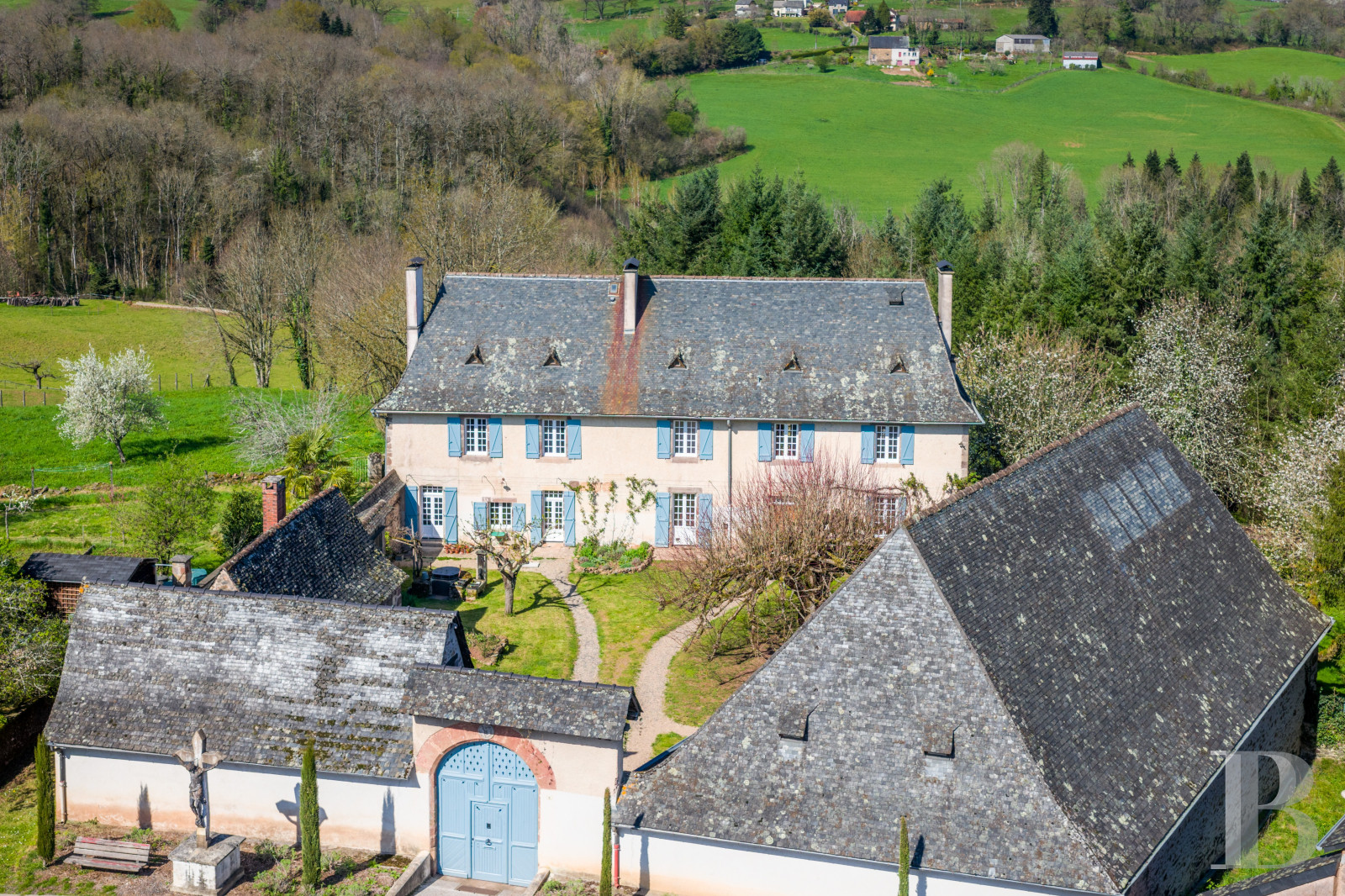
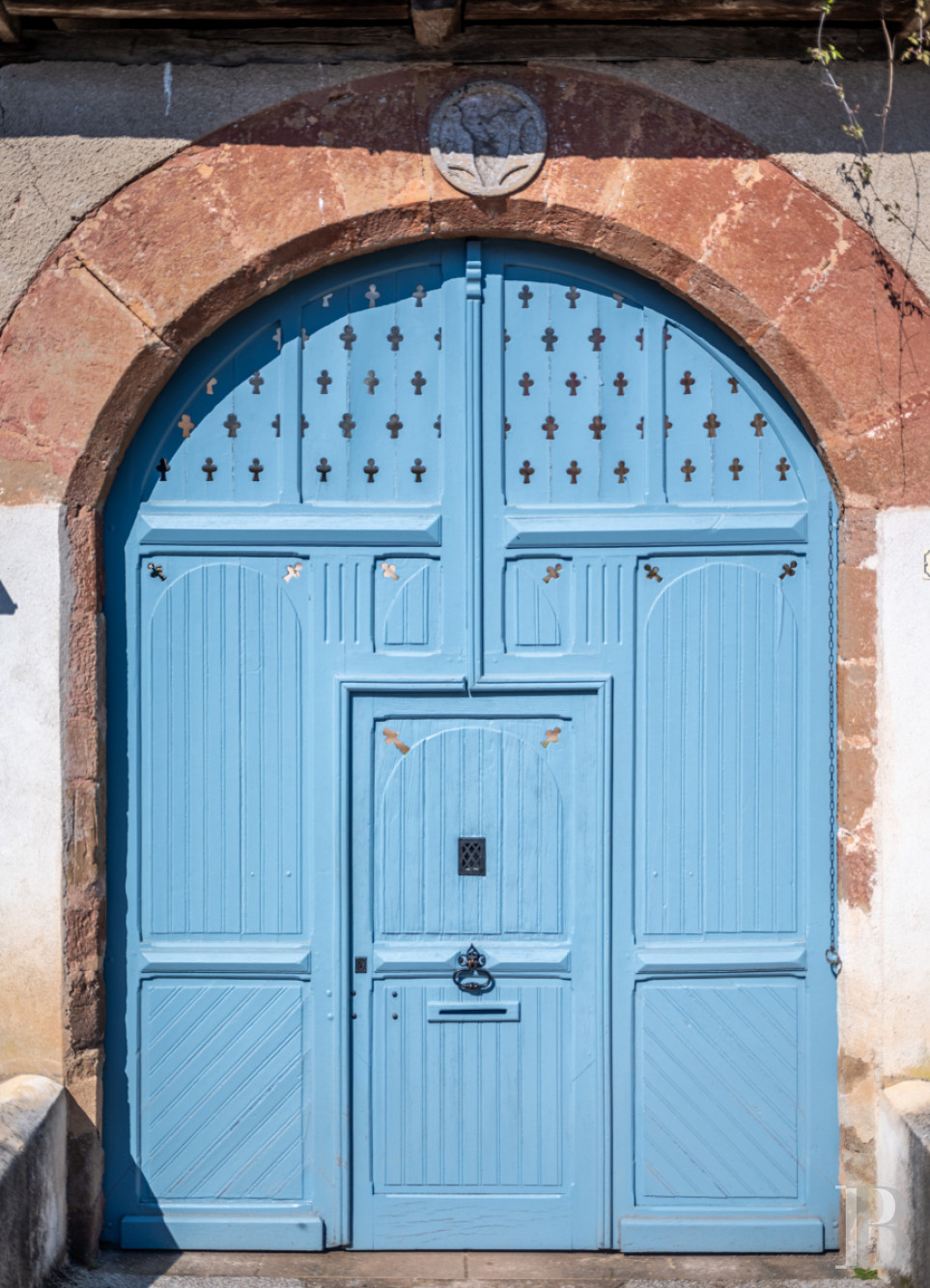
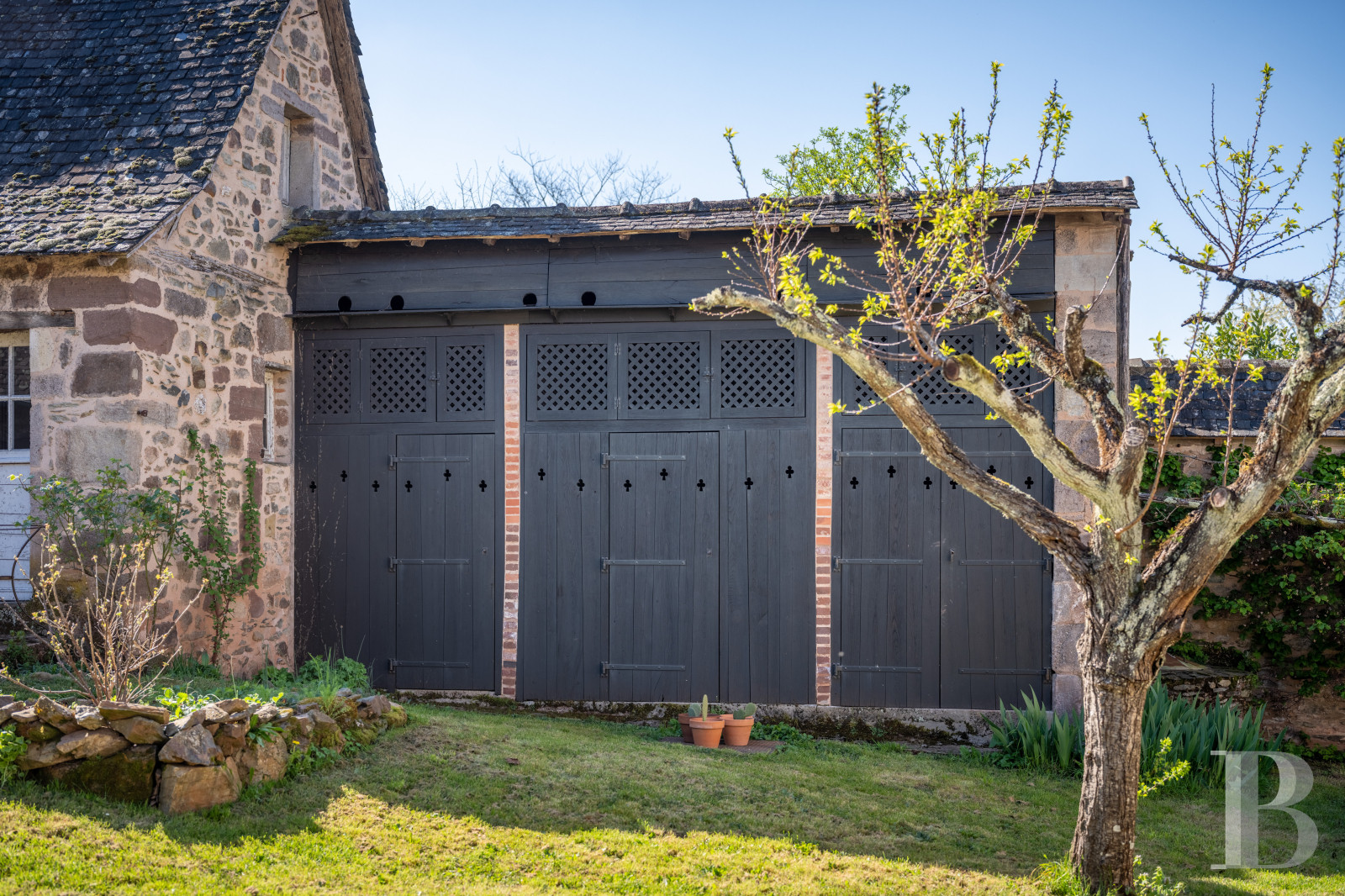
From the square on which the parish church stands and next to a processionary cross, the southern entrance of the property, framed by outbuildings with steep sloped roofs made of Allassac slate, is marked by a tall wooden gate perforated with clover shapes and incorporating a pedestrian door. The gate is topped by a brasier stone arch with a sculpted medallion. This gives the entrance porch the appearance of a defensive wall, but one that is harmoniously incorporated into the architectural environment overlooked by the 16th-century church and its archetypal bell gable. The entirely walled inner courtyard houses the small estate’s domestic to-ings and fro-ings along the paths up to the manor, whose horizontal facade closes the square of edifices and next to which there is access to the garden set out over two terraces. A communal lane runs alongside the western side of the property and enables access on foot to the courtyard. There is also an entrance suitable for motor vehicles at the bottom of the garden.
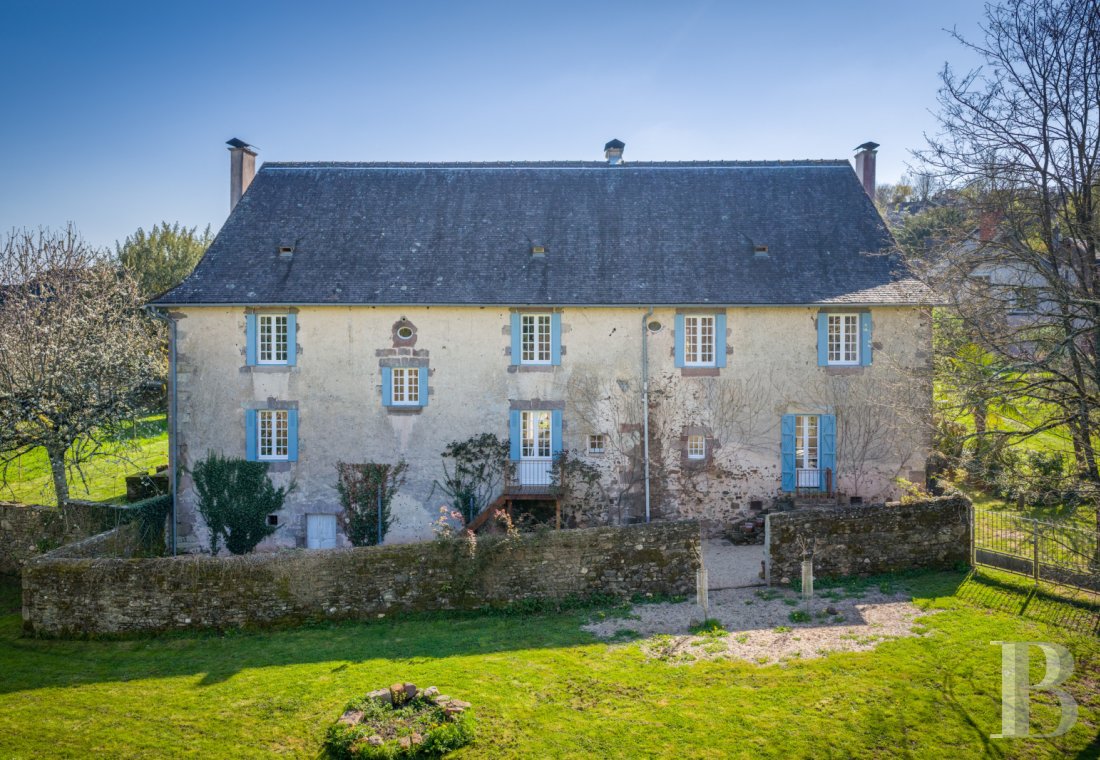
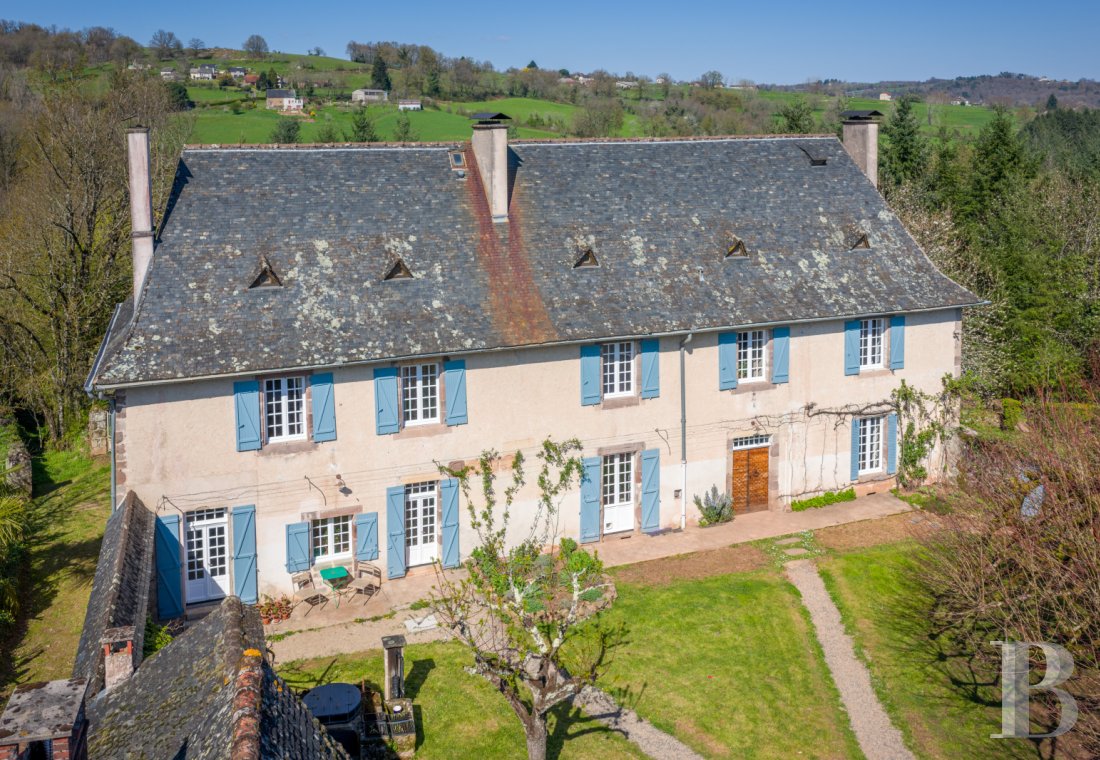
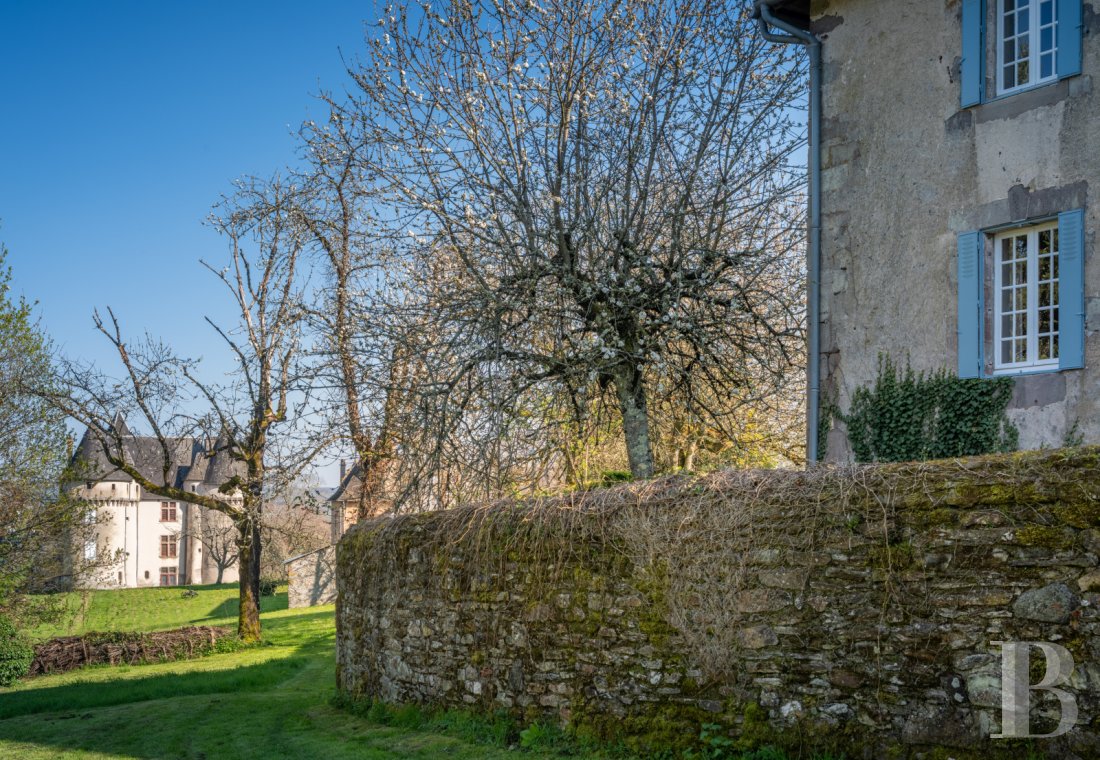
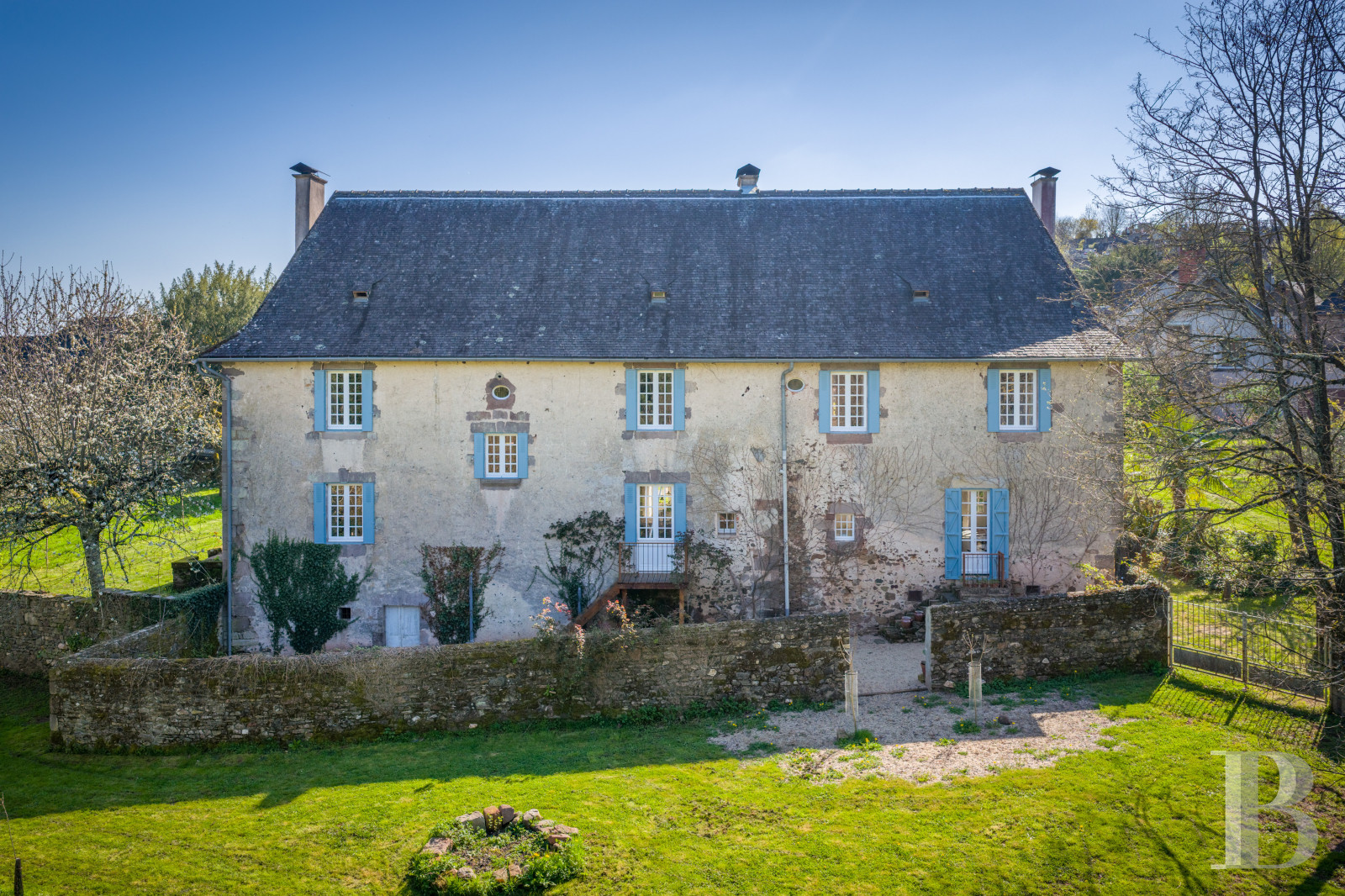
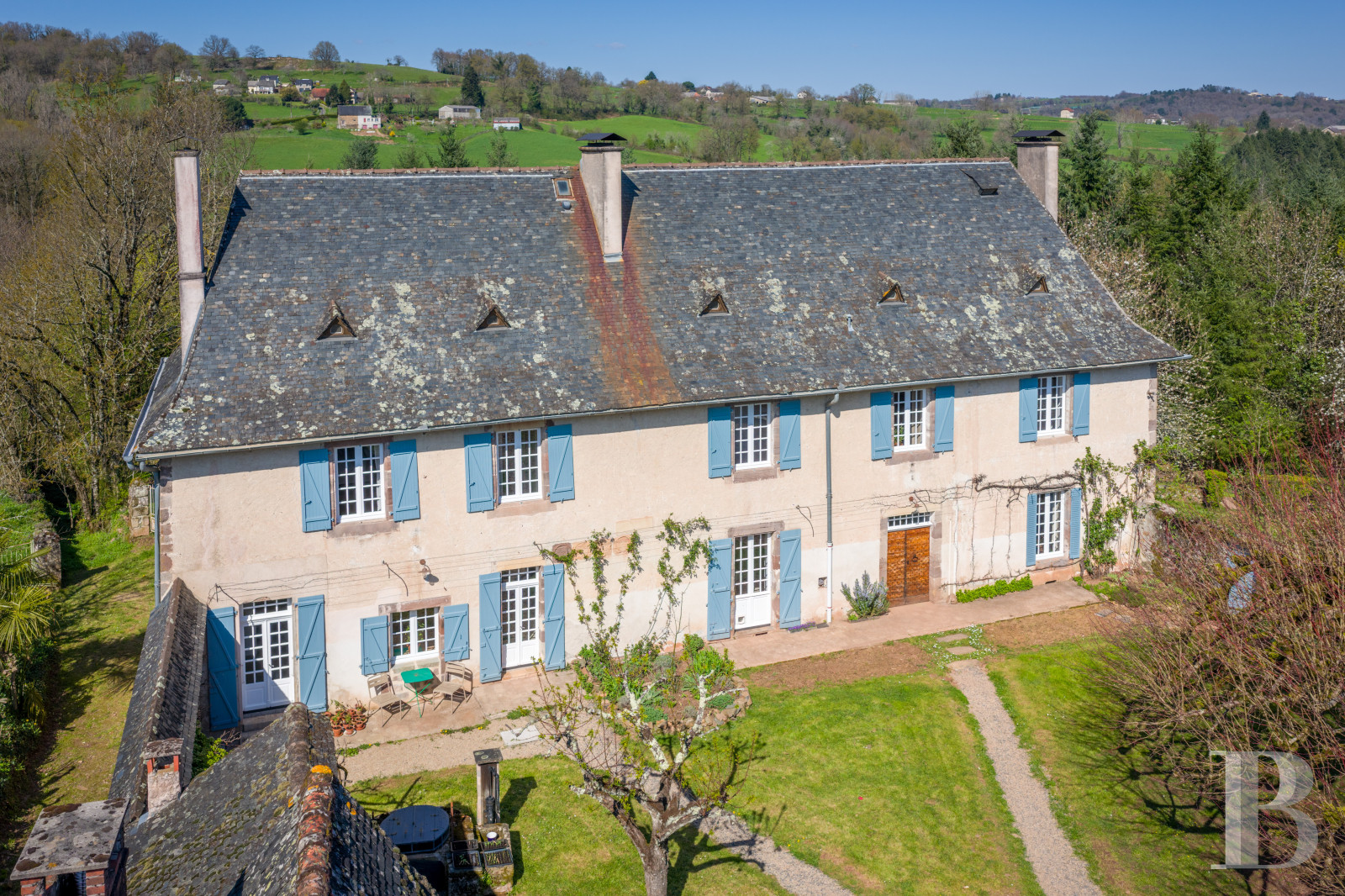
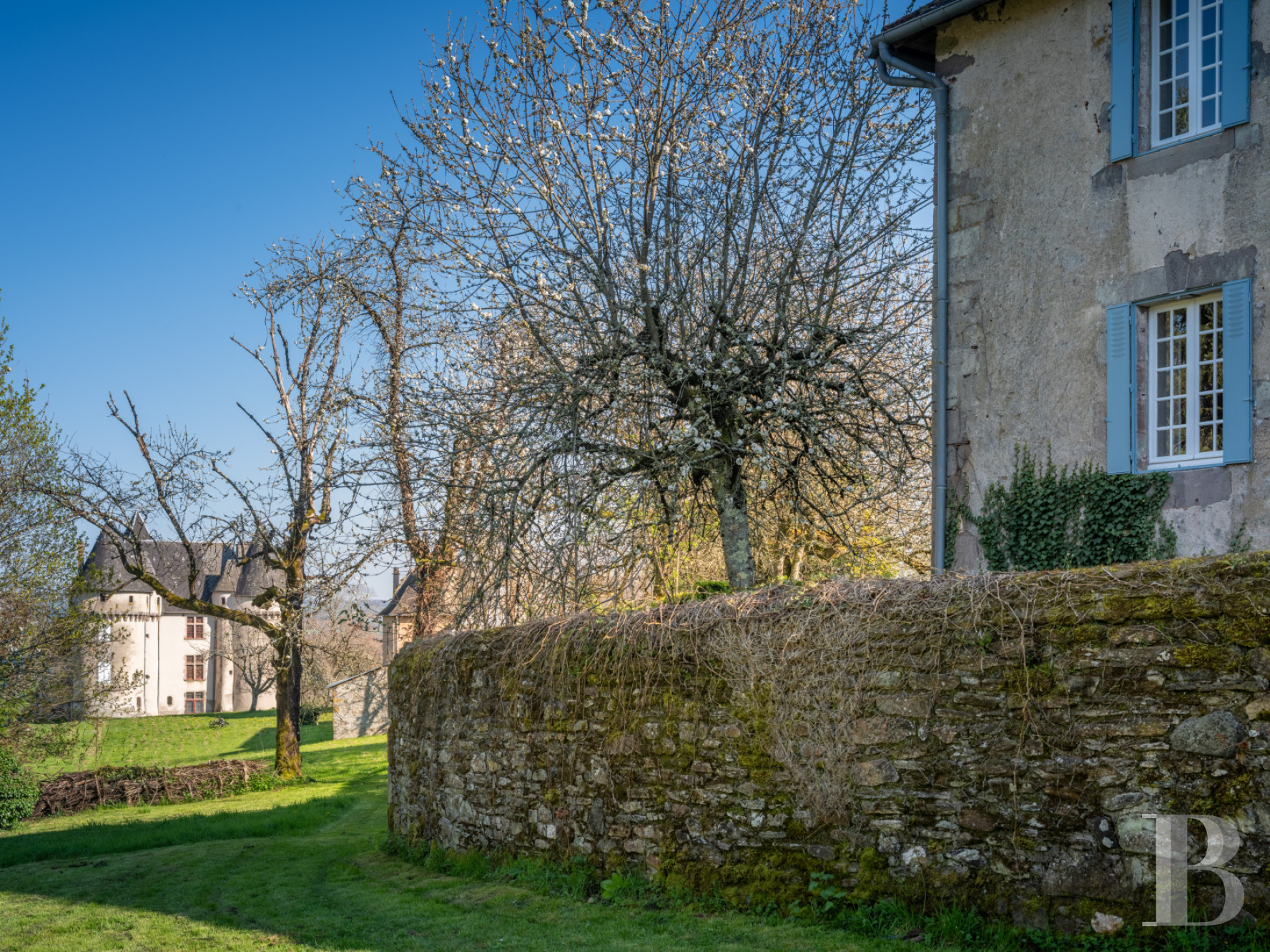
This long, rectangular-shaped, two-storey manor with a gabled roof punctuated by 5 triangular dormers and topped by three chimney stacks, boasts many small-paned windows. The sculpted stone coats of arms pay witness to the time when the manor was affiliated to the domain of the Count of Chabrignac, whose chateau, which is famous for having hosted the last empress of Annam, is adjacent to the property’s boundaries.
This long, rectangular-shaped, two-storey manor with a gabled roof punctuated by 5 triangular dormers and topped by three chimney stacks, boasts many small-paned windows. The sculpted stone coats of arms pay witness to the time when the manor was affiliated to the domain of the Count of Chabrignac, whose chateau, which is famous for having hosted the last empress of Annam, is adjacent to the property’s boundaries.
The courtyard
Small, gravelled paths cross the lawn leading to the main buildings. Their walls are adorned with climbing roses, wisteria, hydrangeas and Virginia creeper, while a trained trellis runs all along the house’s facade. The many flowerbeds made up of ornamental flowers, fruit bushes and herbs grace the criss-crossing of paths with their scents and nuances. A remarkable lime tree provides shade in response to the bright sunshine enjoyed due to the property’s south-facing aspect. A well, which never runs dry throughout the year, is adjacent to a stone trough into which the water flows when actioned by a hand pump and stands between the outbuildings and manor.
The residence
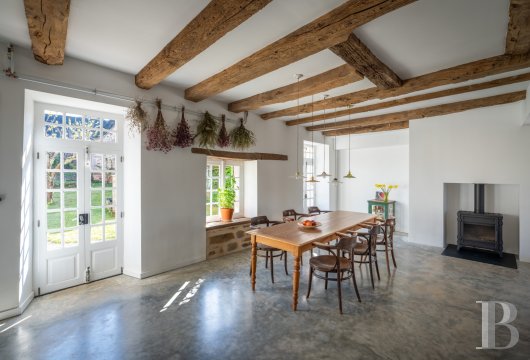
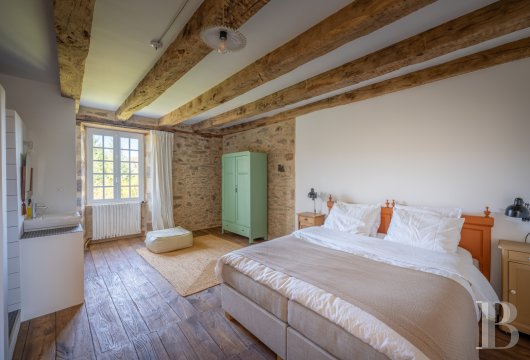
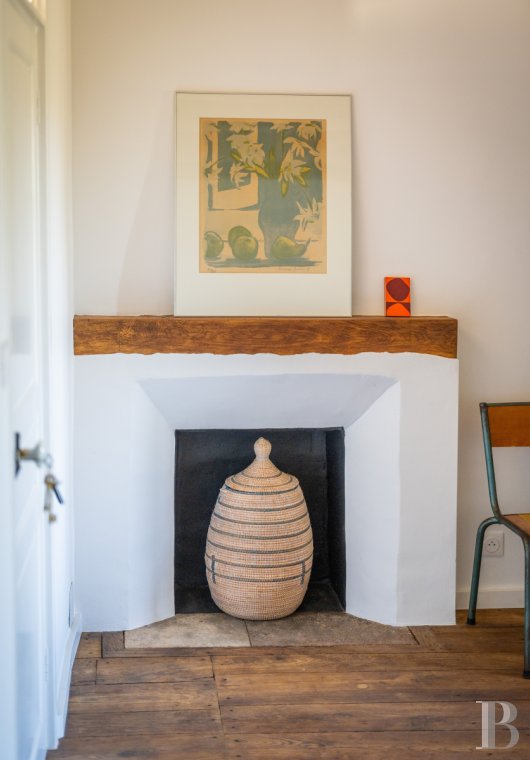
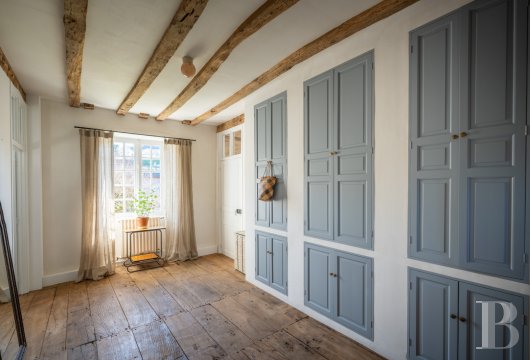
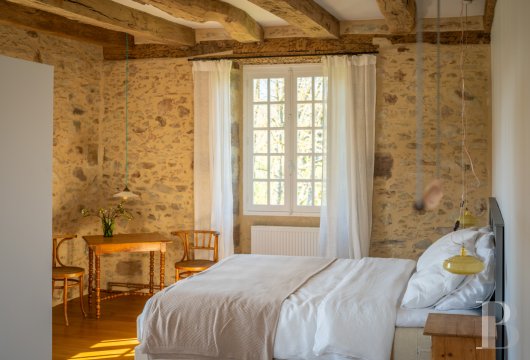
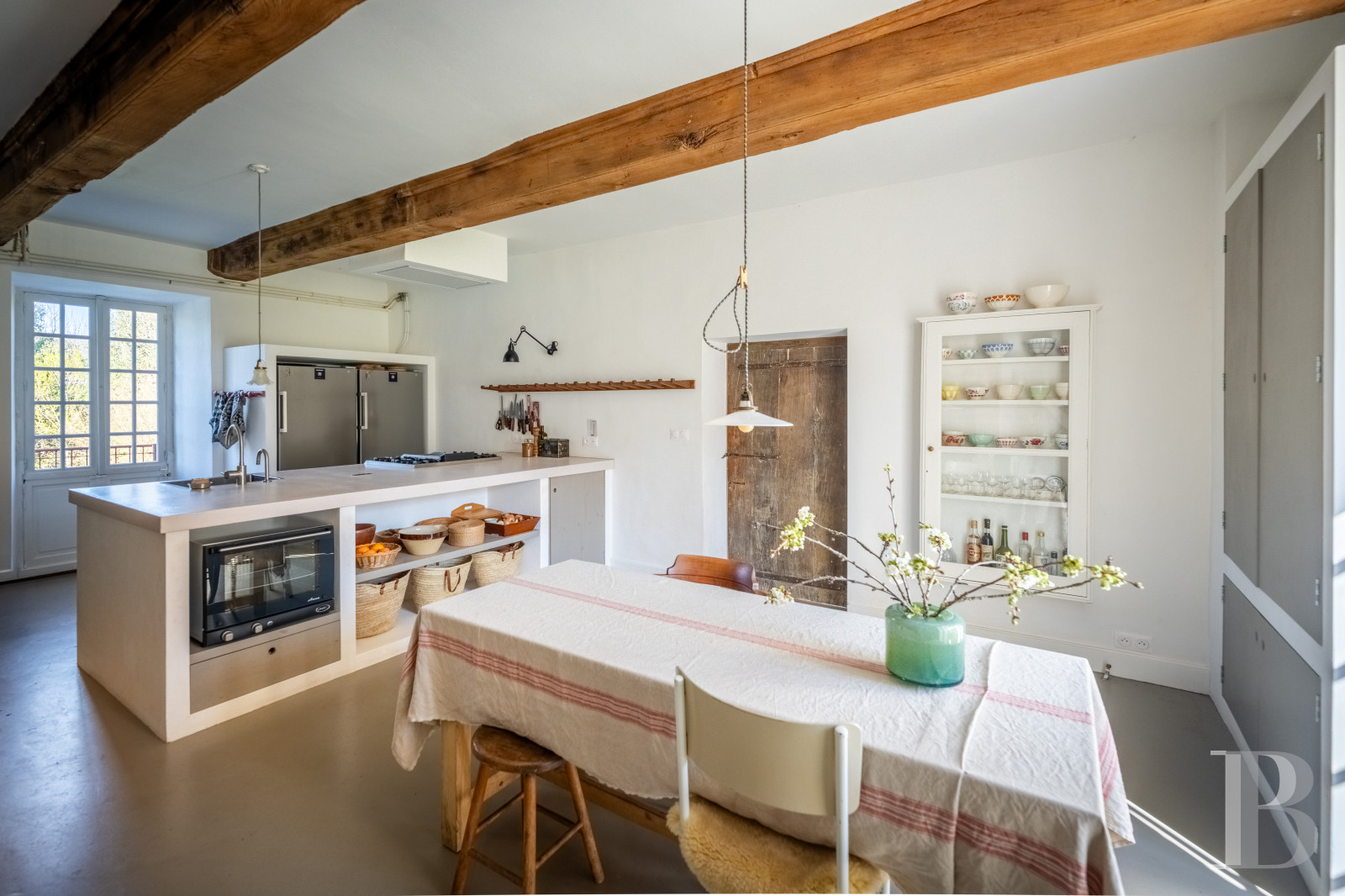
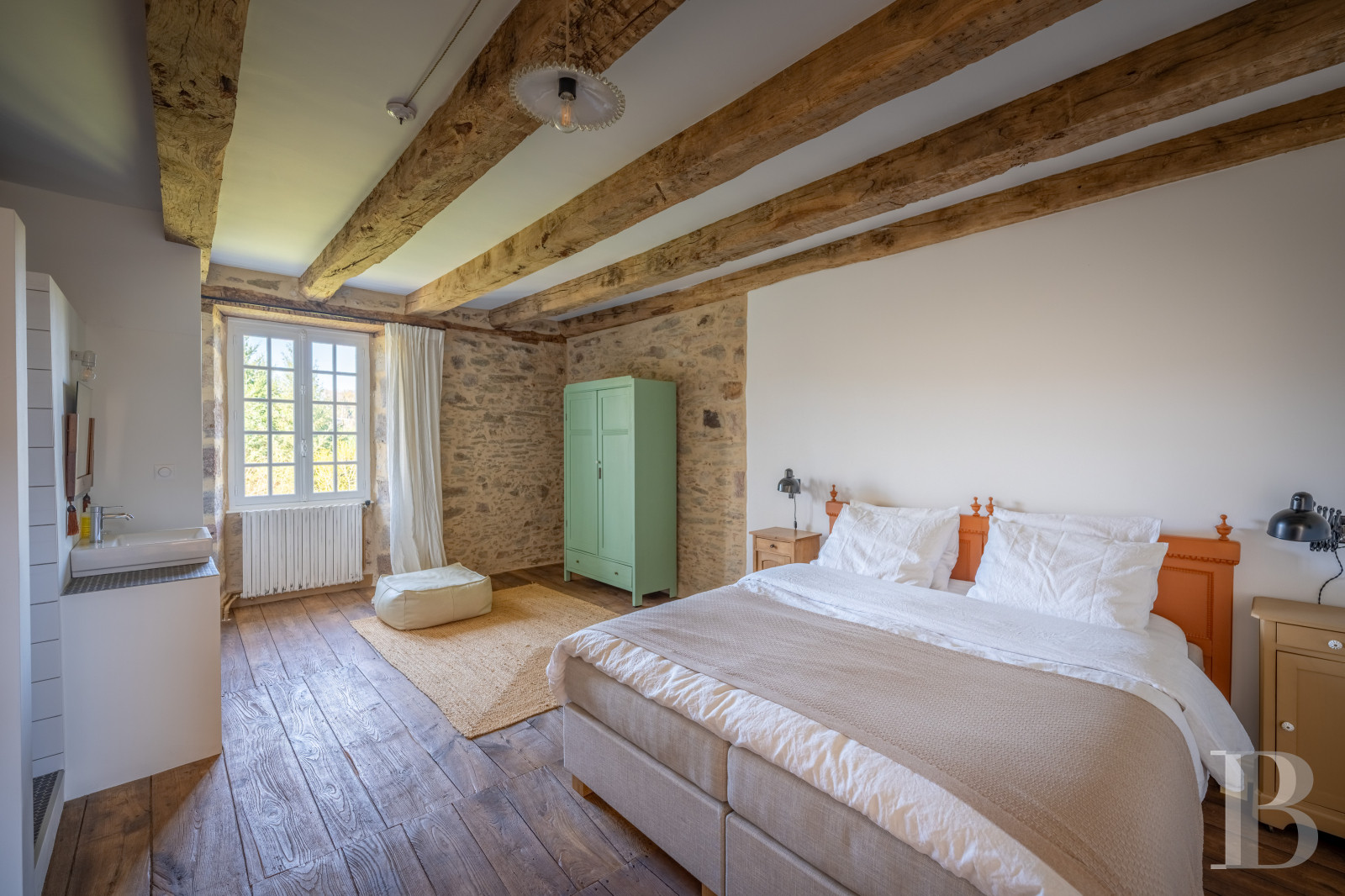
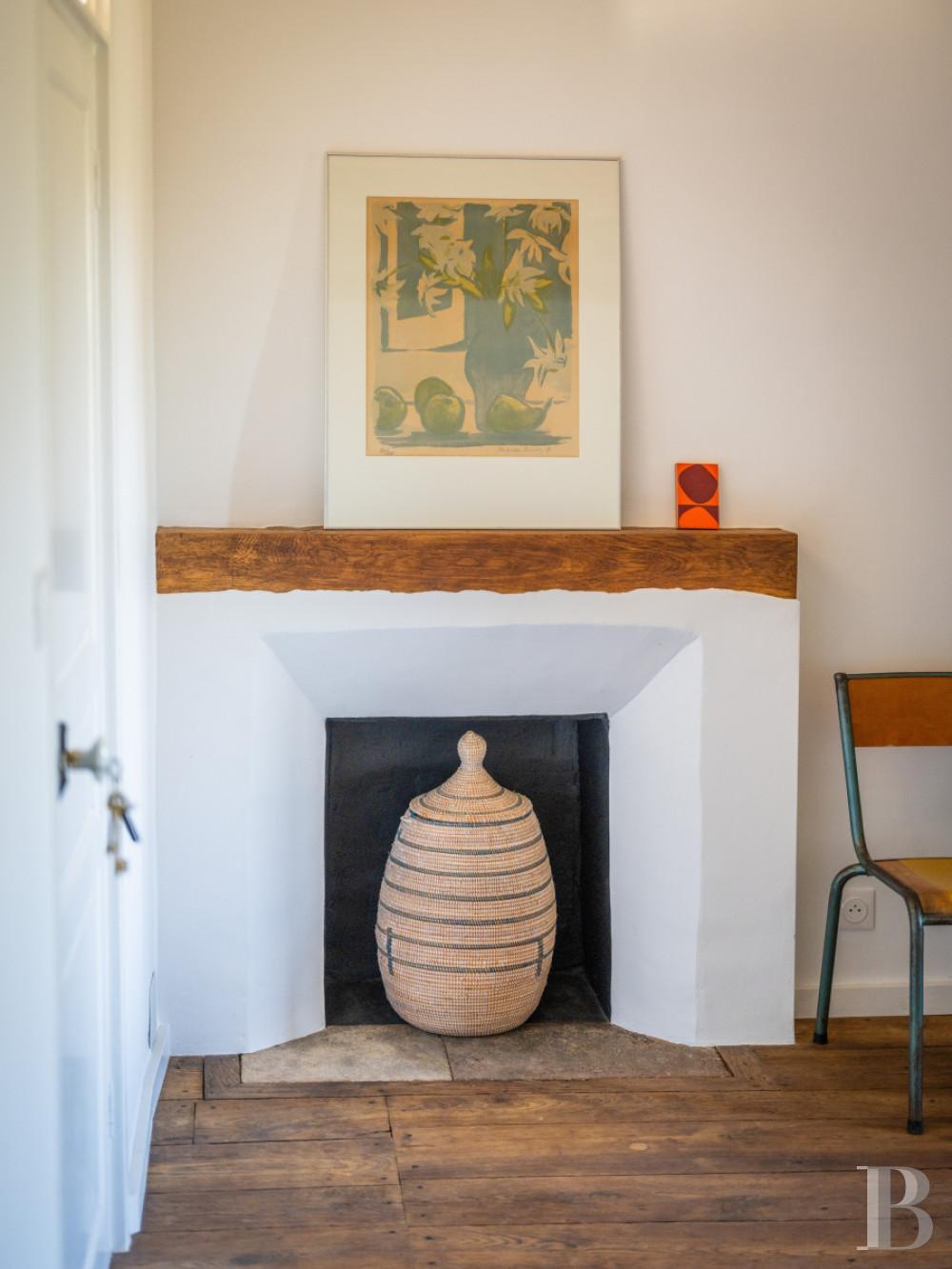
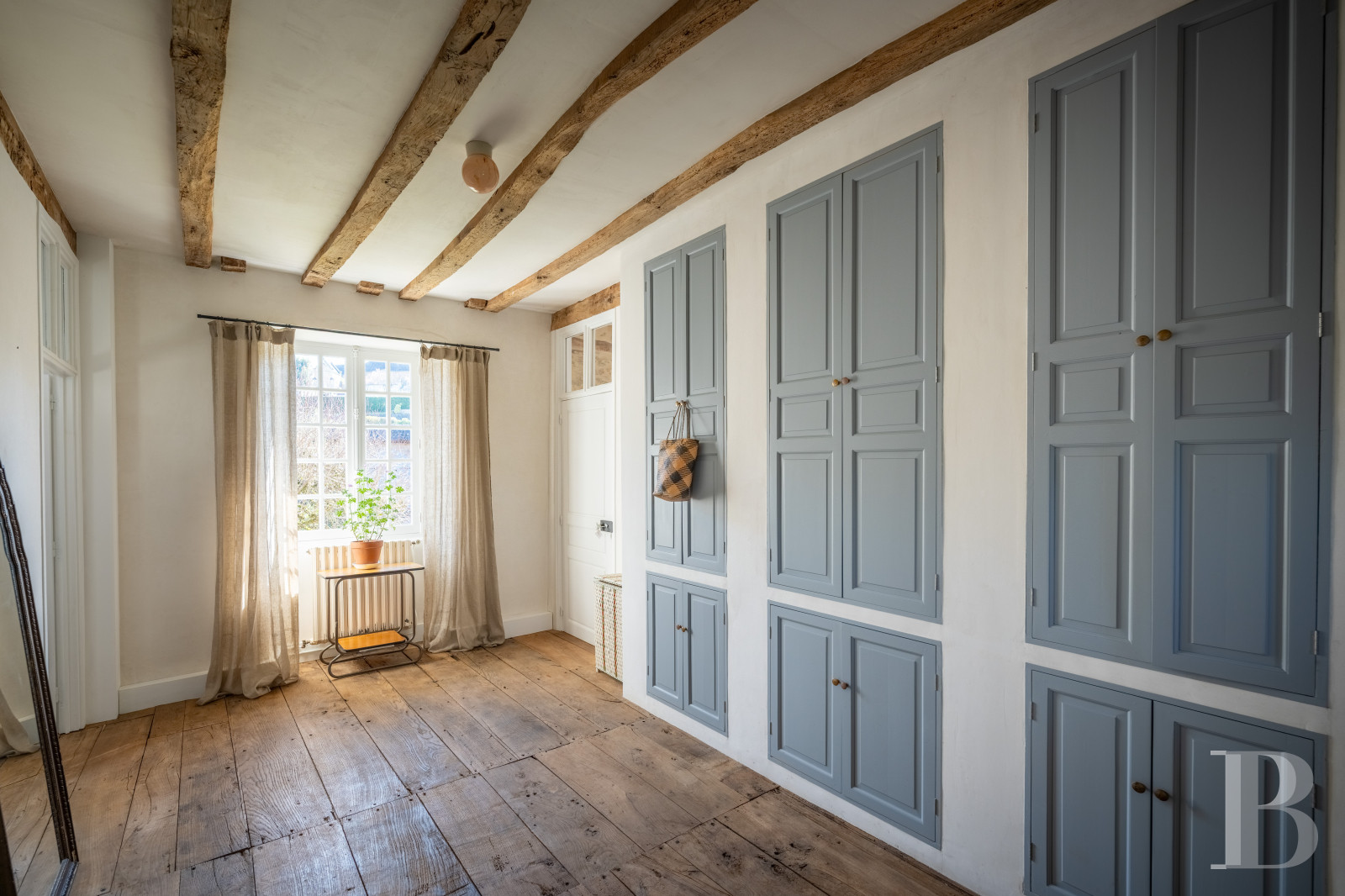
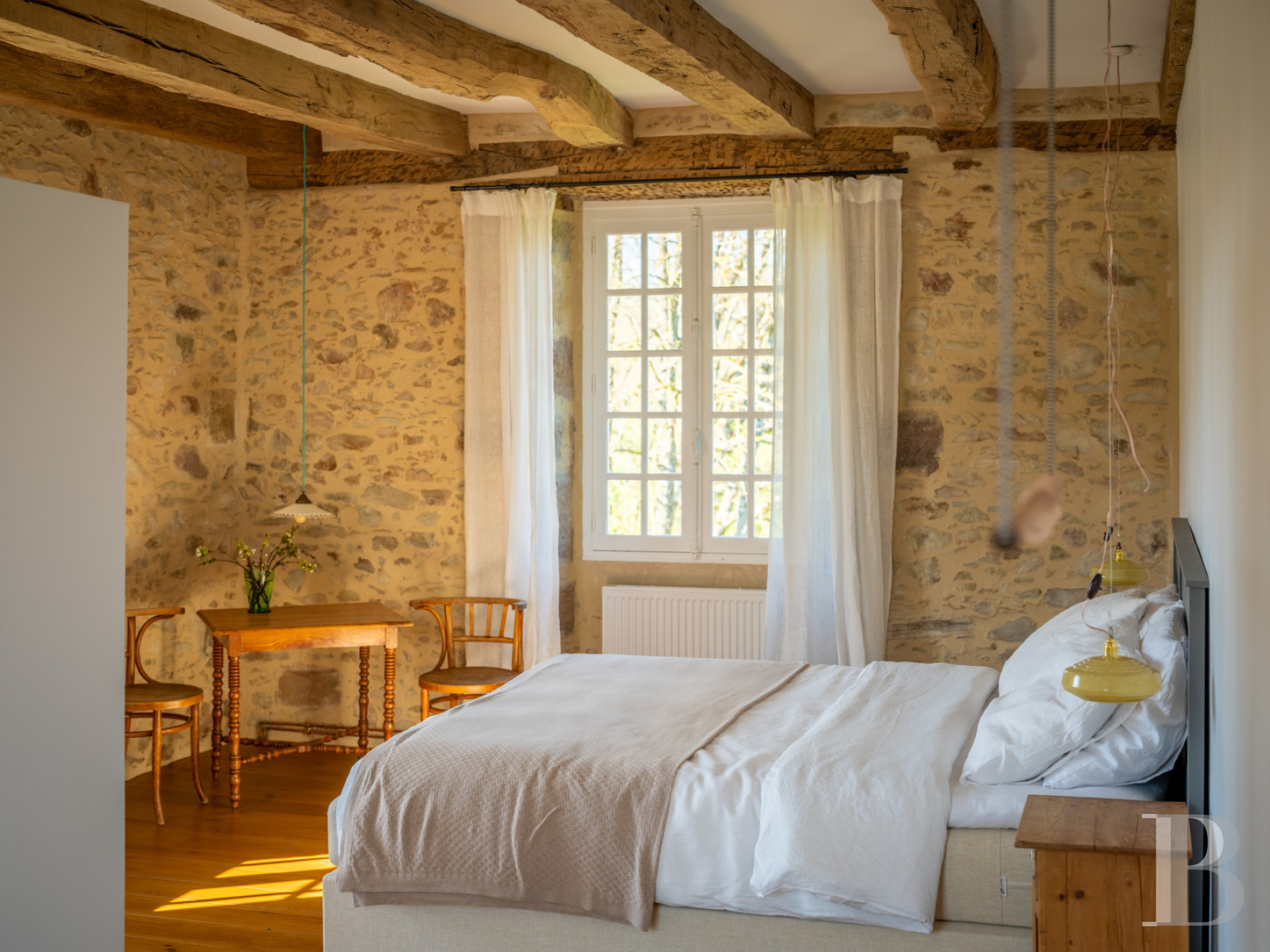
The decorators who were tasked with restoring the house were resolutely contemporary in their approach yet focused on preserving all the period features: oakwood flooring, beams, whitewashed stonework and cupboards, among others.
The ground floor
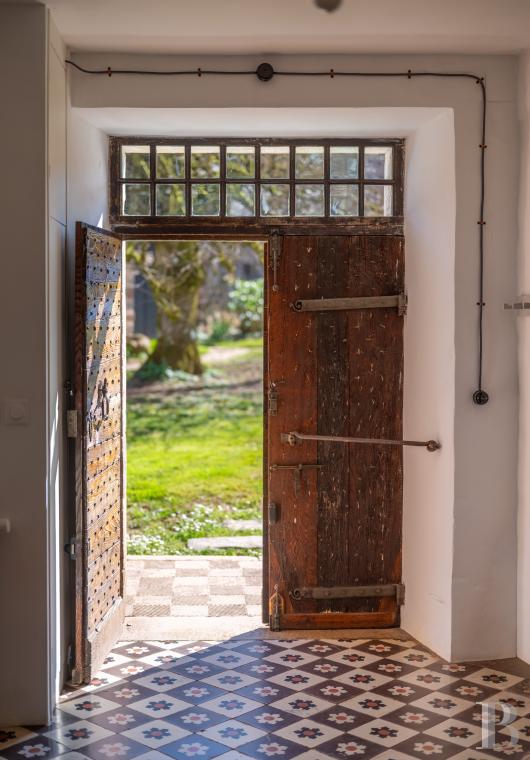
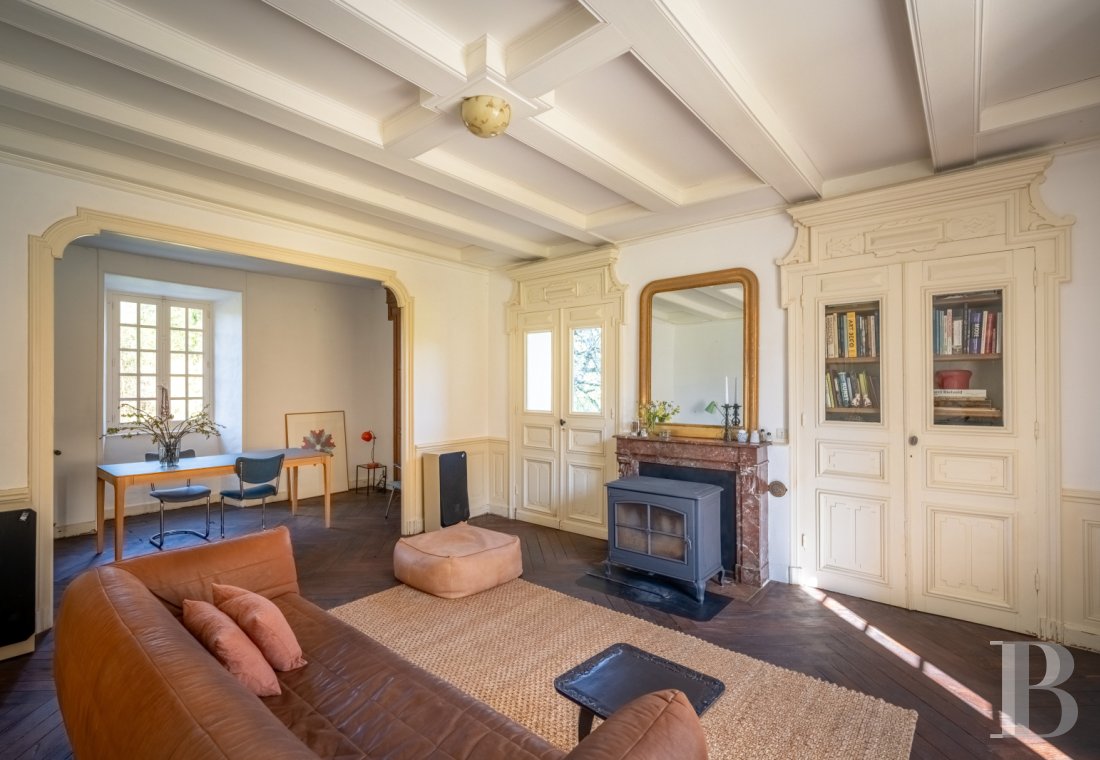
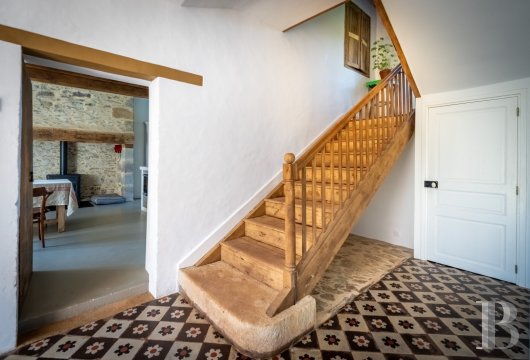
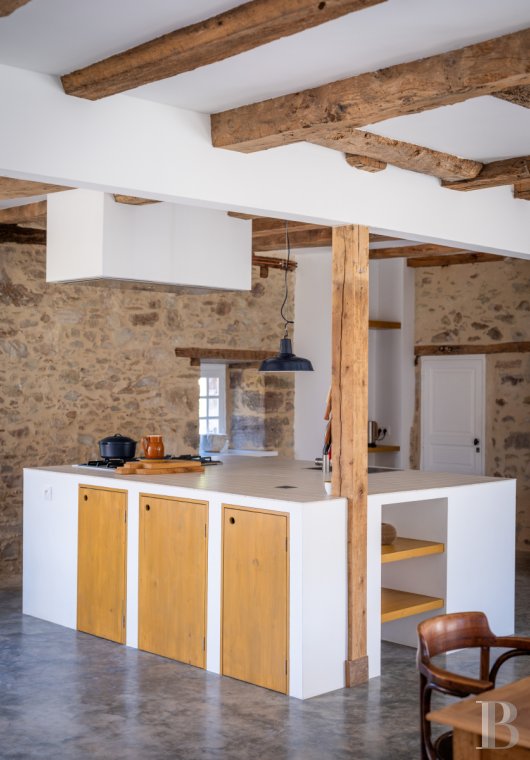
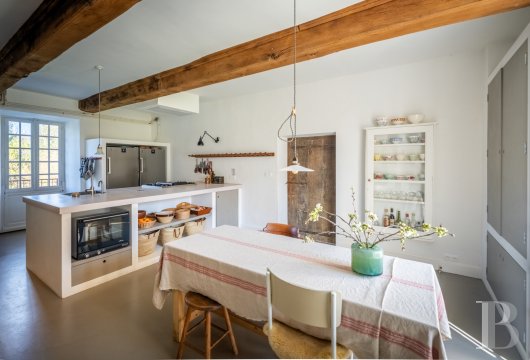
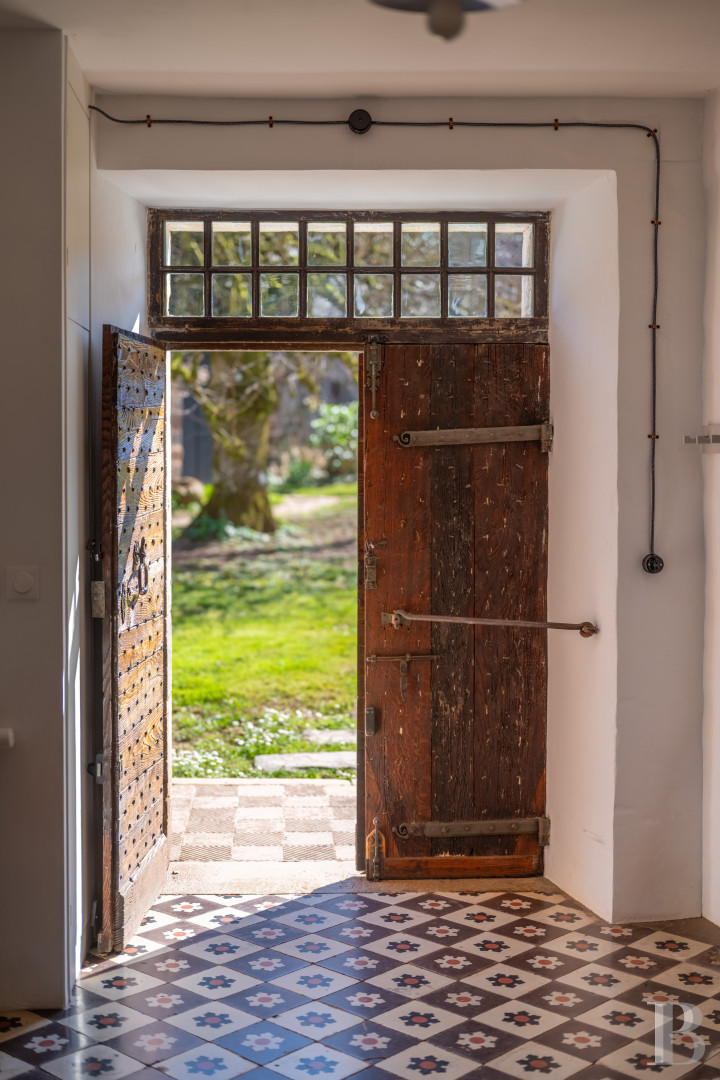
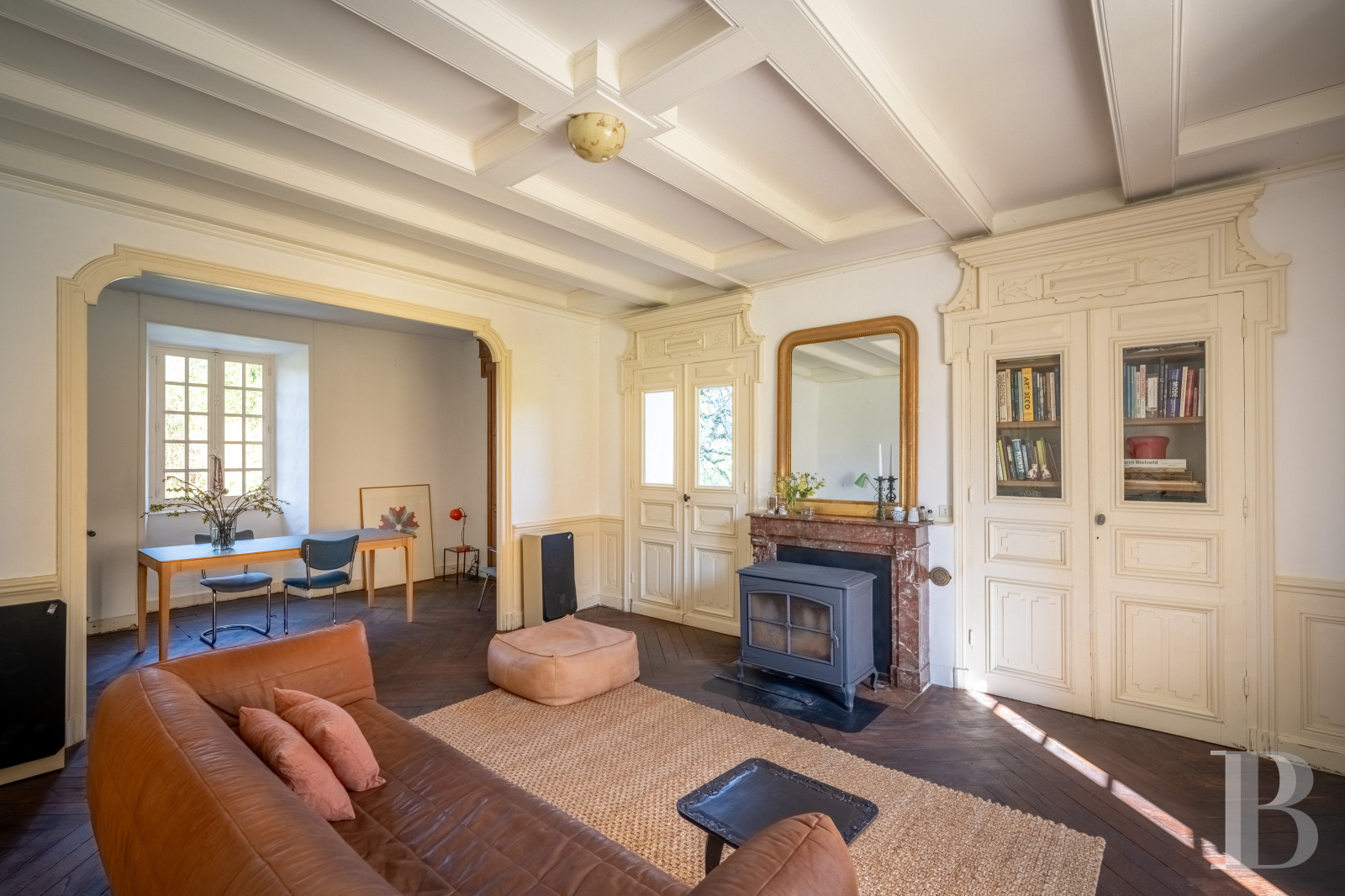
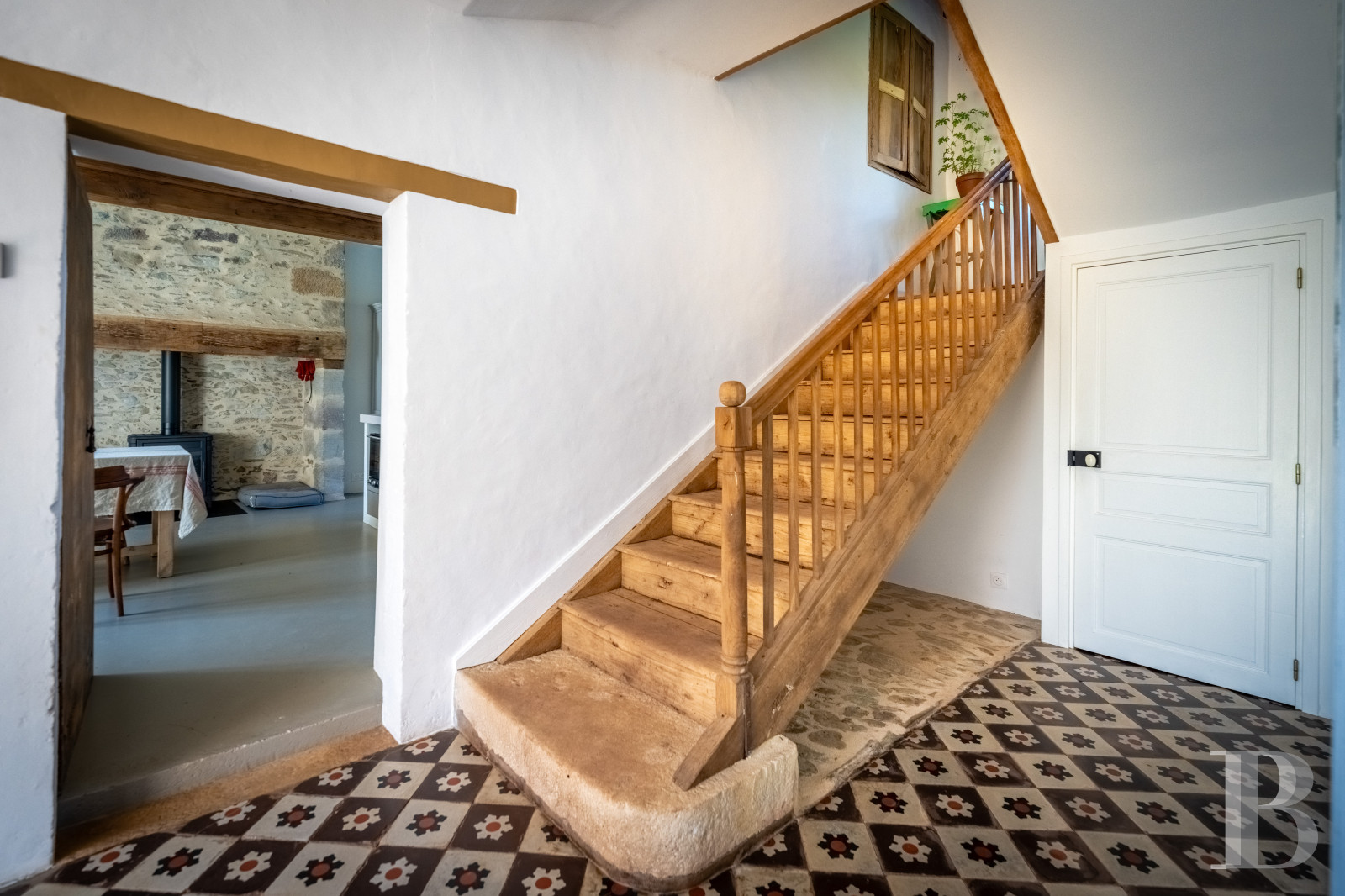
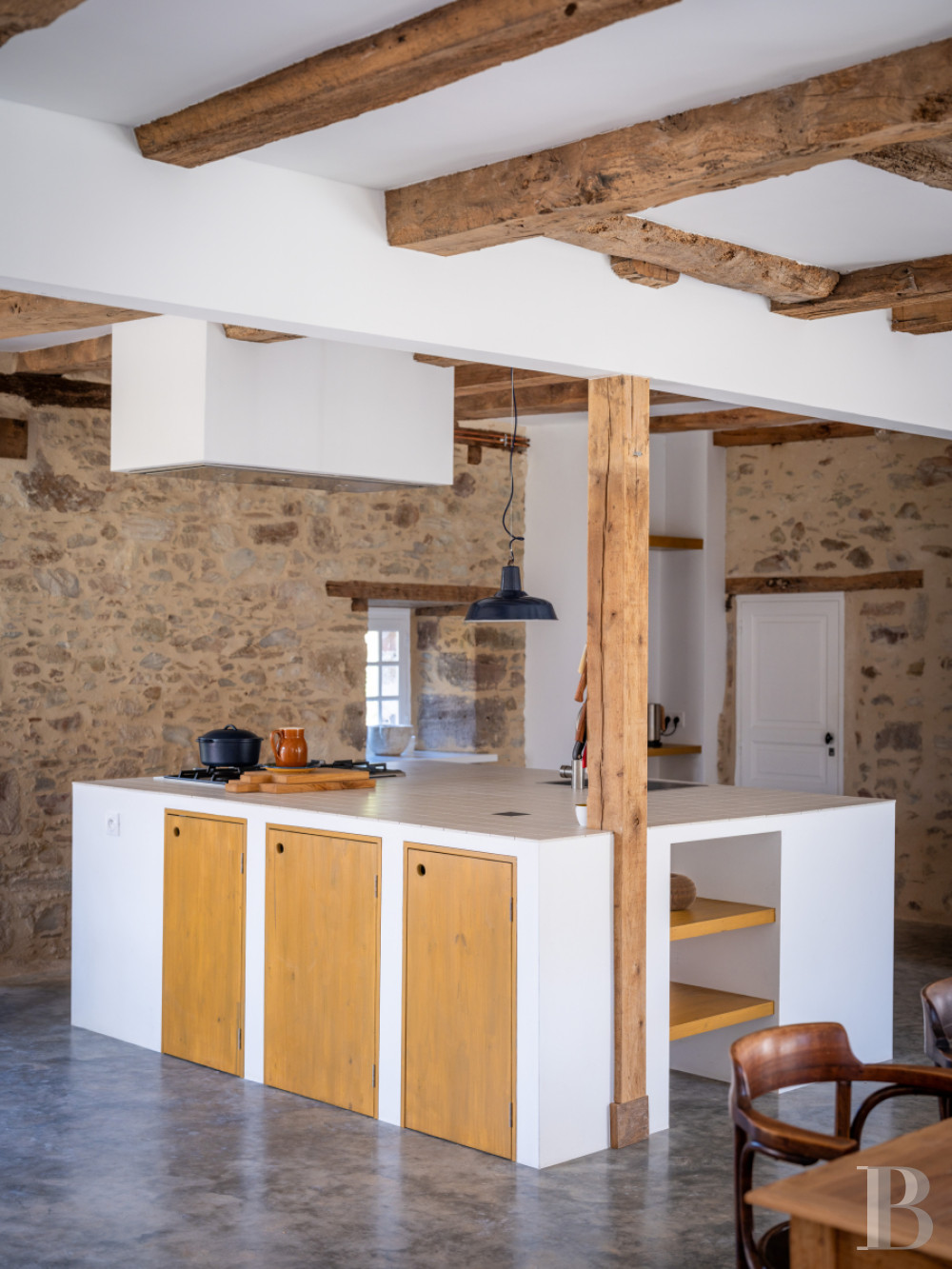
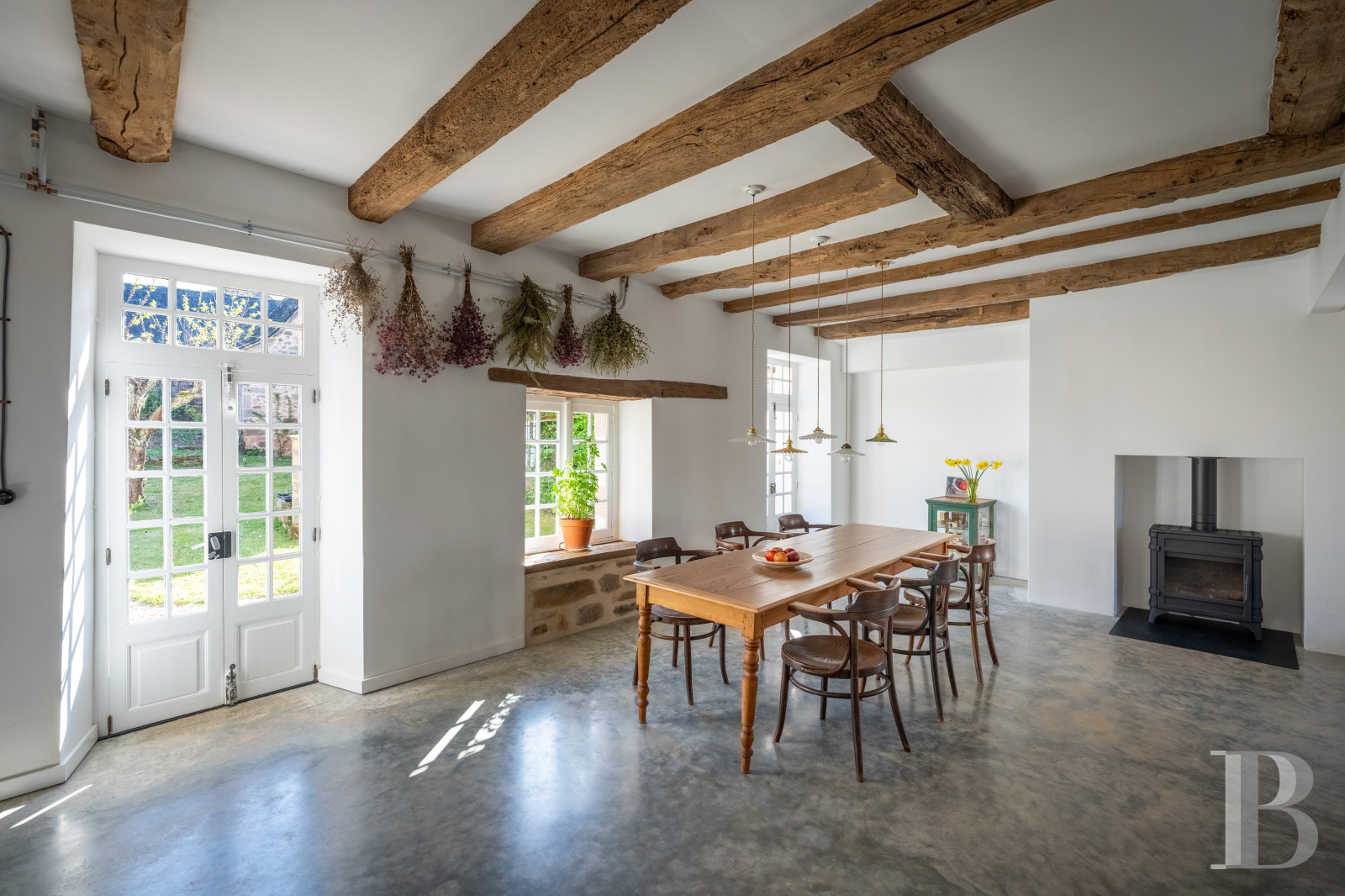
The old, studded wooden entrance door opens into a hall paved with cement tiles, in which there is a polished wooden staircase with a curved landing. To the right, the lounge includes 19th-century wood panelling, chevron patterned wood flooring and a fireplace. Next to it is a cosier alcove, from where a stoop leads directly to the orchard. On the other side a dining room and a fitted kitchen area also lead outside to the orchard via an external flight of steps. A second living room with an island unit could be used as an extra kitchen. It includes a more spacious lounge and dining room area, which open out into the courtyard and vegetable garden by another external flight of steps. The modern concrete floors are bathed in light by the many windows on either side of the house.
The upstairs
The main staircase leads to the landing of a suite with a large bedroom, en suite shower room and adjacent lavatory, all of which could form an independent apartment. The rest of the floor is made up of a corridor overlooking the courtyard and leading to three bedrooms, each of which has an en suite shower room with walk-in shower and separate lavatory. A staircase leads directly from the corridor to the large living room.
The attic
The period staircase overlooked by a bullseye window leads to a 100-m² attic level that is currently used for storage and as a utility room.
The basement
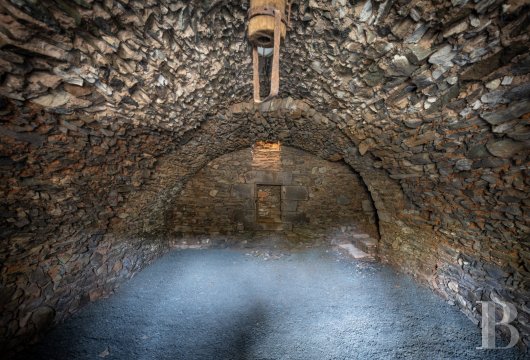
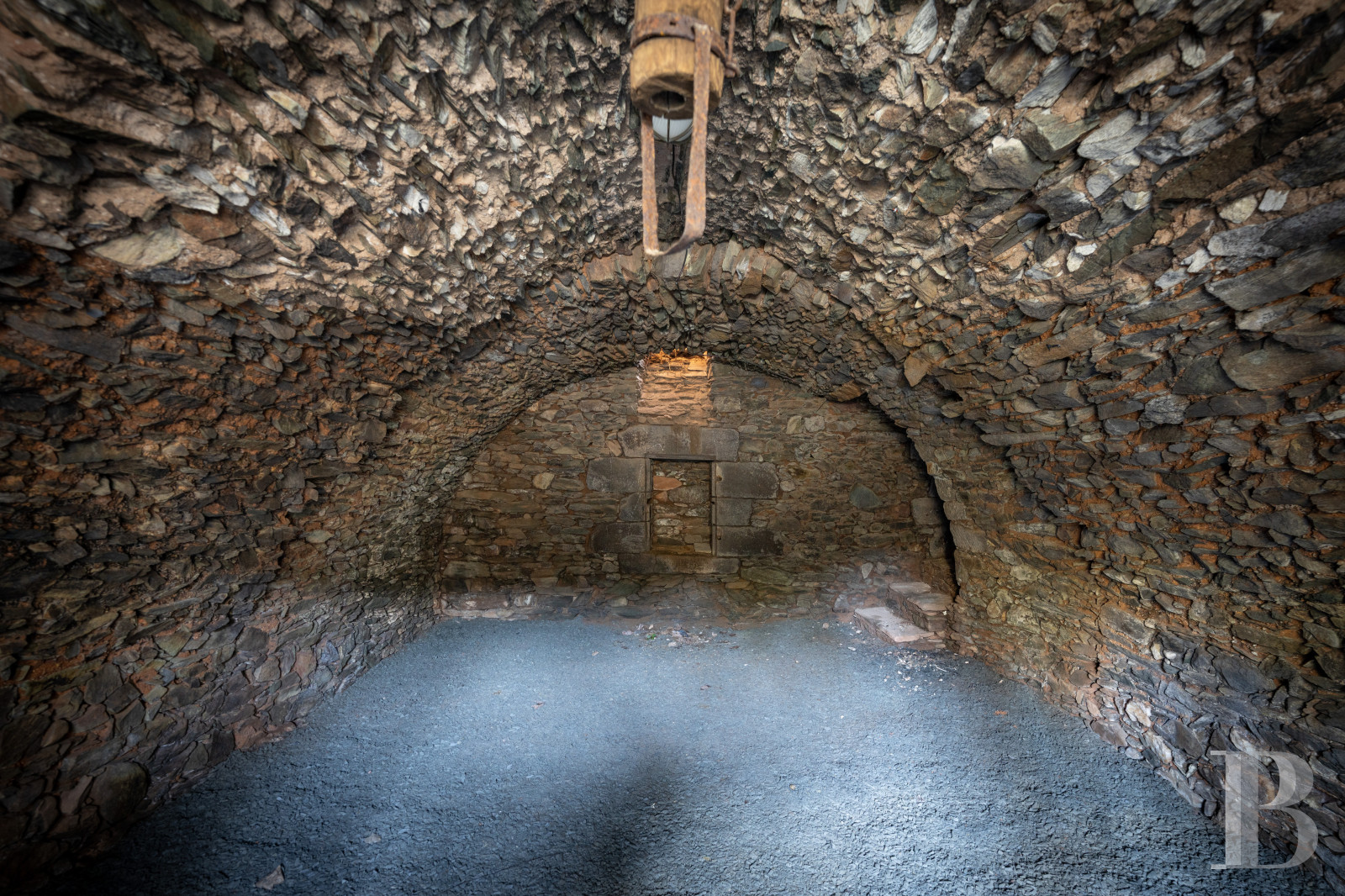
From the vegetable garden, there is a separate entrance leading to two vaulted rooms, one of which is ideal for storing produce or for use as a wine cellar.
The caretaker’s house
Although its fireplace and roof structure are still in place, its original wood flooring has since been removed. The technical facilities are in place for restoration of the building as a two-storey house. Just next to it, there is a dovecote overhanging wooden-framed, brick-lined structures designed for collecting guano and drying tobacco.
The barn
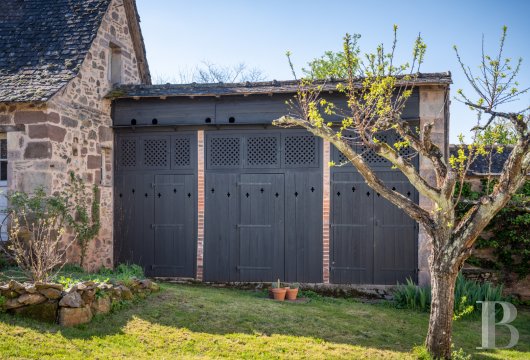
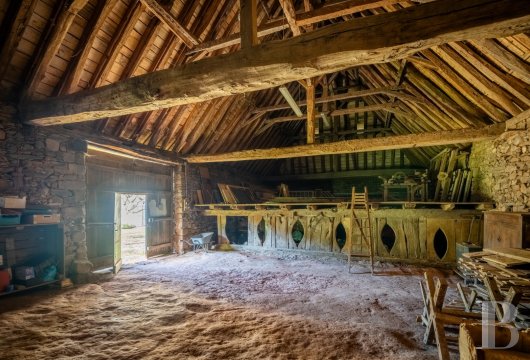
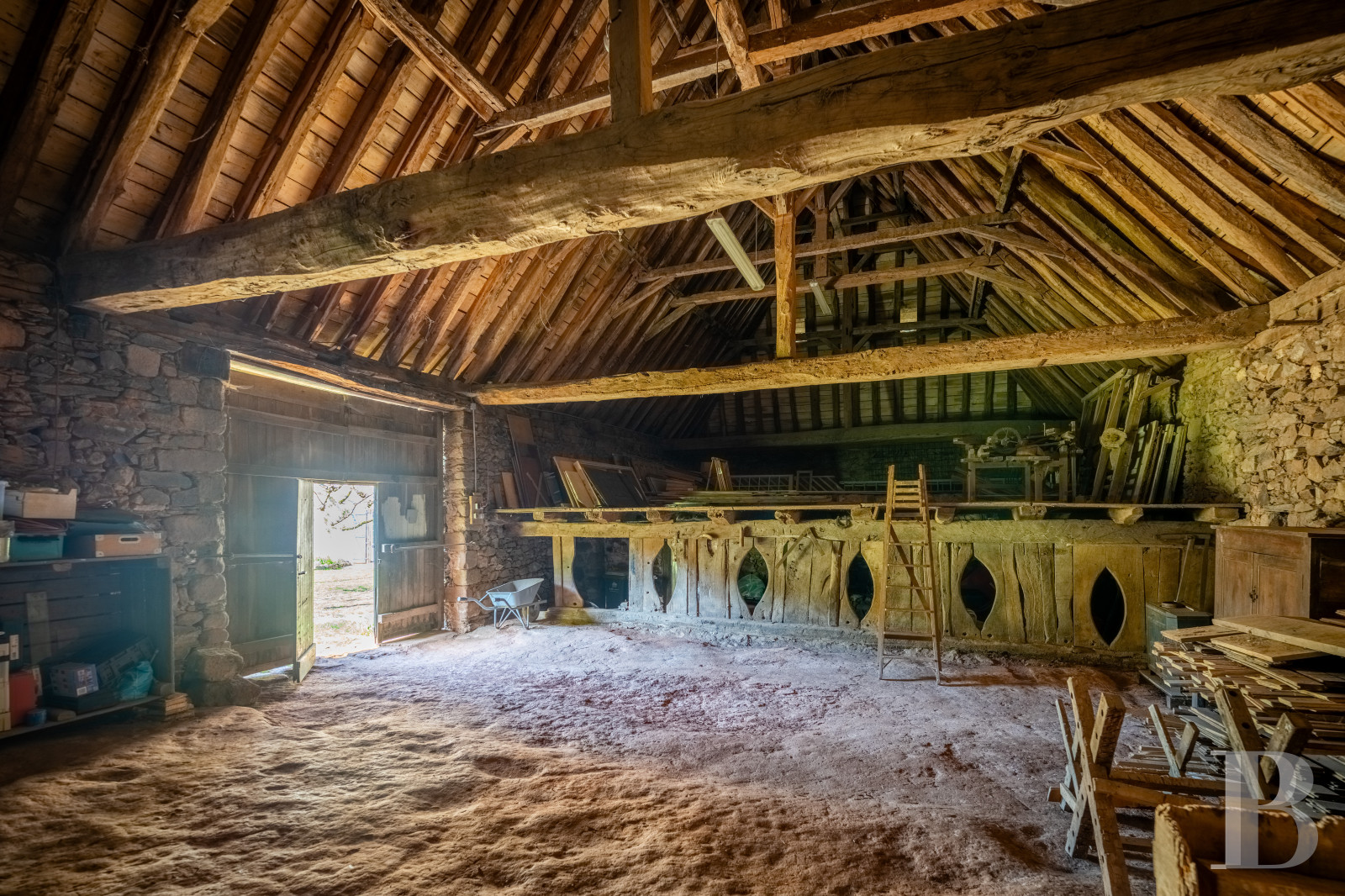
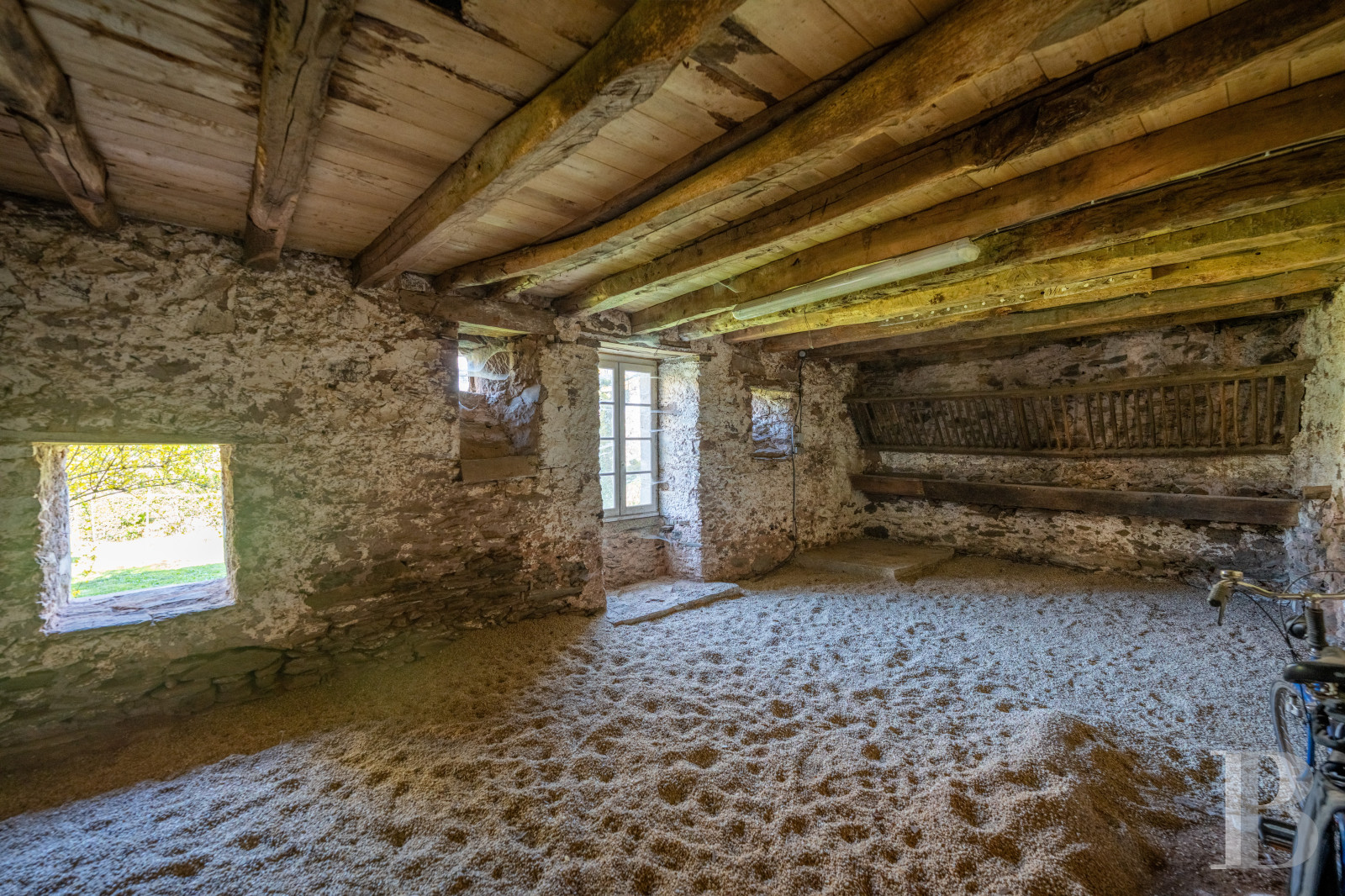
It can be reached through a large, double-leaf carriage gate with a pedestrian door and is made up of a vast storage space with a rammed earth floor, beneath a period roof frame with double trusses. The height to the roof ridge is more than 8 metres. Next to the barn, through a second door, there is a cowshed, topped by a hay loft, that in turn leads to a stable which has two windows overlooking the orchard.
The former sheep barn
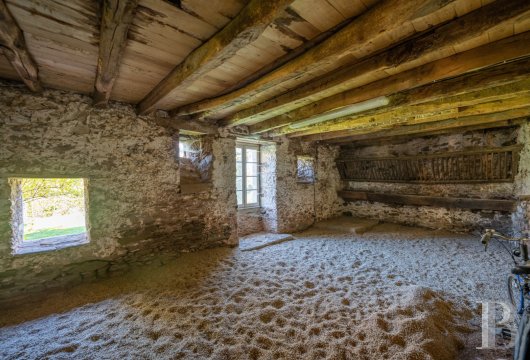
This building’s agricultural purpose, as shown by the three sheep-pens still in place, does not prevent it from being used as storage space.
The garden
The half-moon shaped orchard planted with large fruit trees such as cherry and apple, can be reached via the stoop onto which the lounge opens or through the door into the hall running through the house. This first terrace leads via a flight of stone steps to a lawned area, which in turn is bordered by the forest, meaning the manor is not overlooked on this side. A former, entirely walled vegetable garden at the foot of the house’s northern facade can be reached from the garden.
Our opinion
This veritable country house was probably the former residence of the Chateau de Chabrignac’s estate manager. It has been successfully renovated in a manner respectful of the interiors, combining the excellent condition of this pocket estate with more modern facilities required for family life or for a tried-and-tested commercial venture. It is situated in an environment conducive to rest and relaxation or to discovering the region’s many curiosities, close to the Lot and Dordogne areas.
Reference 957972
| Main building floor area | 290 m² |
| Outbuildings floor area | 250 m² |
| Land registry surface area | 2753 m² |
French Energy Performance Diagnosis
Information on the risks to which this property is exposed is available on the website: www.georisques.gouv.fr
Share


NB: The above information is not only the result of our visit to the property; it is also based on information provided by the current owner. It is by no means comprehensive or strictly accurate especially where surface areas and construction dates are concerned. We cannot, therefore, be held liable for any misrepresentation.