



A restored 18th-century mill, outbuildings and grounds covering more than 5 hectares,
near Flavigny, in the Ozerain Valley, in the Côte-d'Or
near Flavigny, in the Ozerain Valley, in the Côte-d'Or
Dijon,
COTE-D'OR
burgundy
21000
FR

Location
At the foot of the medieval town of Flavigny-sur-Ozerain, whose ramparts can be seen silhouetted against the neighbouring hilltop, the mill is situated on the outskirts of the village. The surrounding area is home to a wealth of heritage: Alésia and its museum, Fontenay Abbey, the Buffon forge, and Bussy-Rabutin Chateau. Less than an hour away, the Forêts National Park boasts vast expanses of deciduous woodland, ideal for both hiking and hunting with hounds. The town of Semur-en-Auxois, which is about 15 km away, has schools, a hospital, shops and restaurants. Dijon, the capital of the Dukes of Burgundy, is 55 km away, and Beaune is 80 km away. The Montbard TGV station is 25 minutes away, and Paris is less than an hour away by train. By road, Paris is 2 hours 20 minutes away, Lyon 3 hours, and Geneva 2 hours 30 minutes.
Description
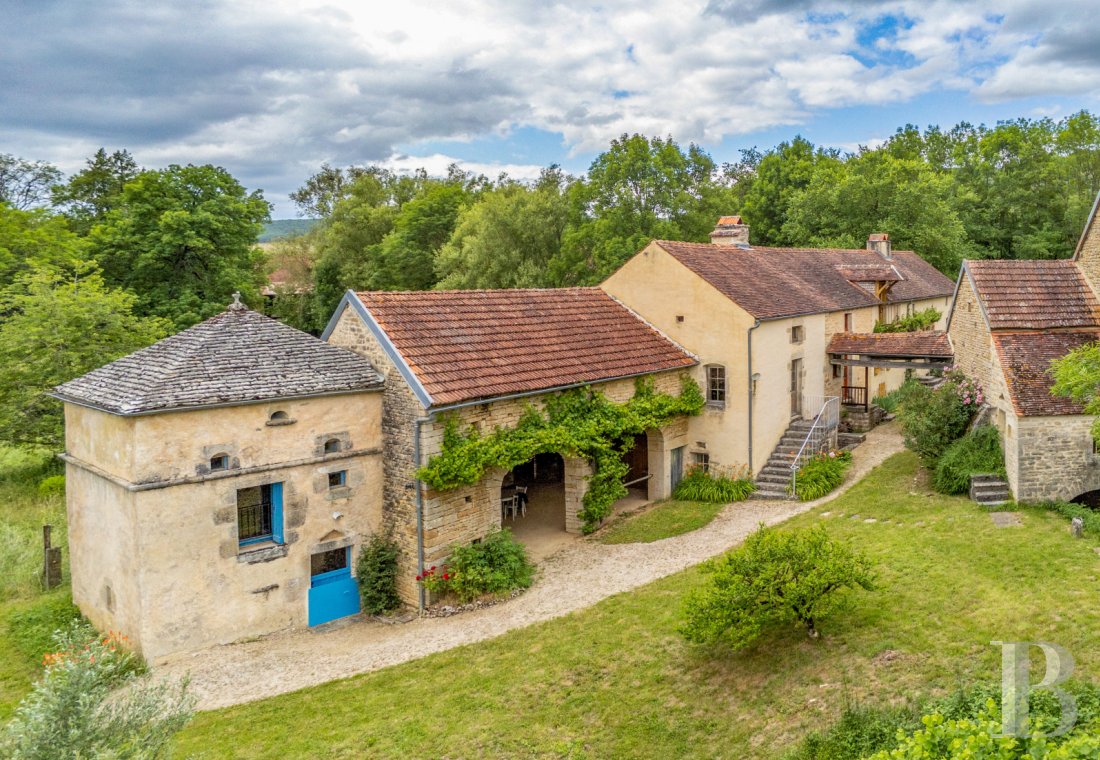
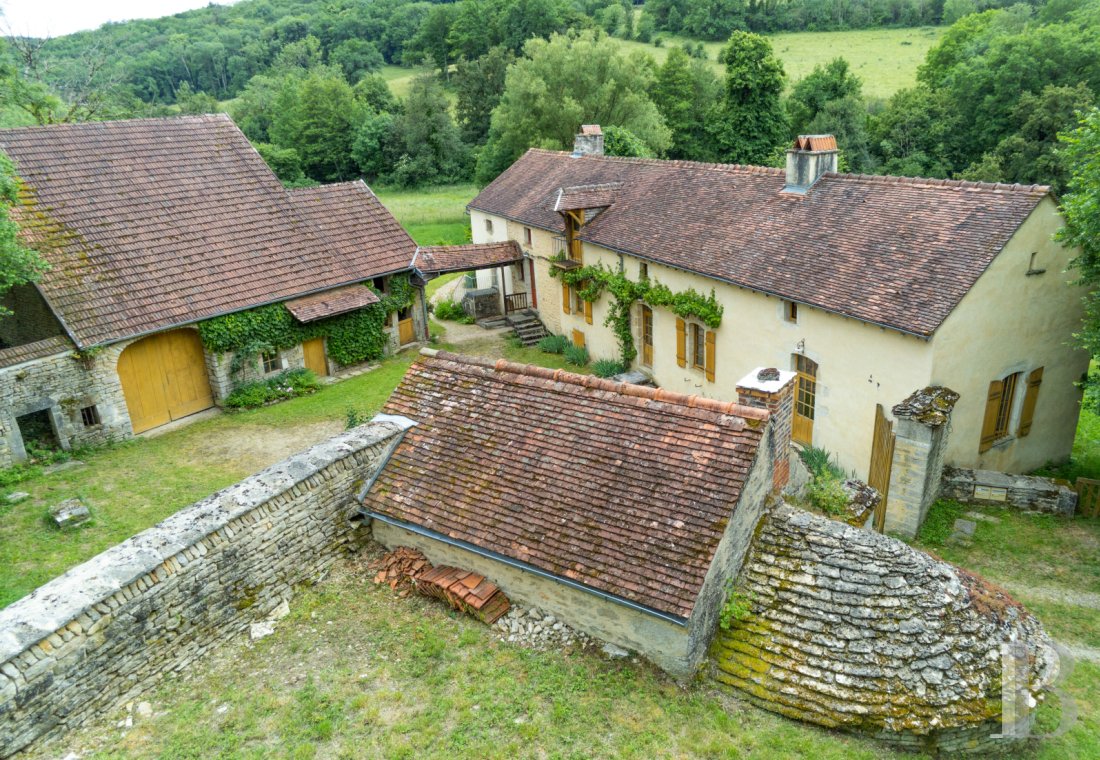
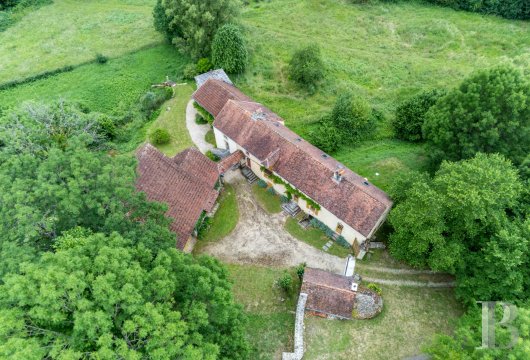
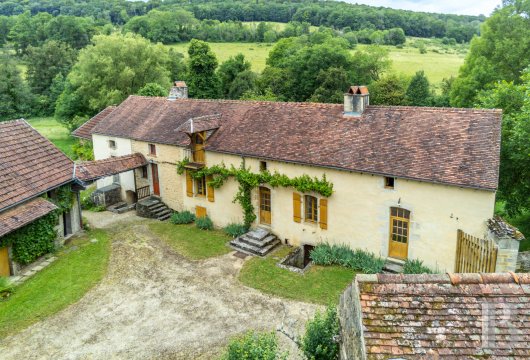
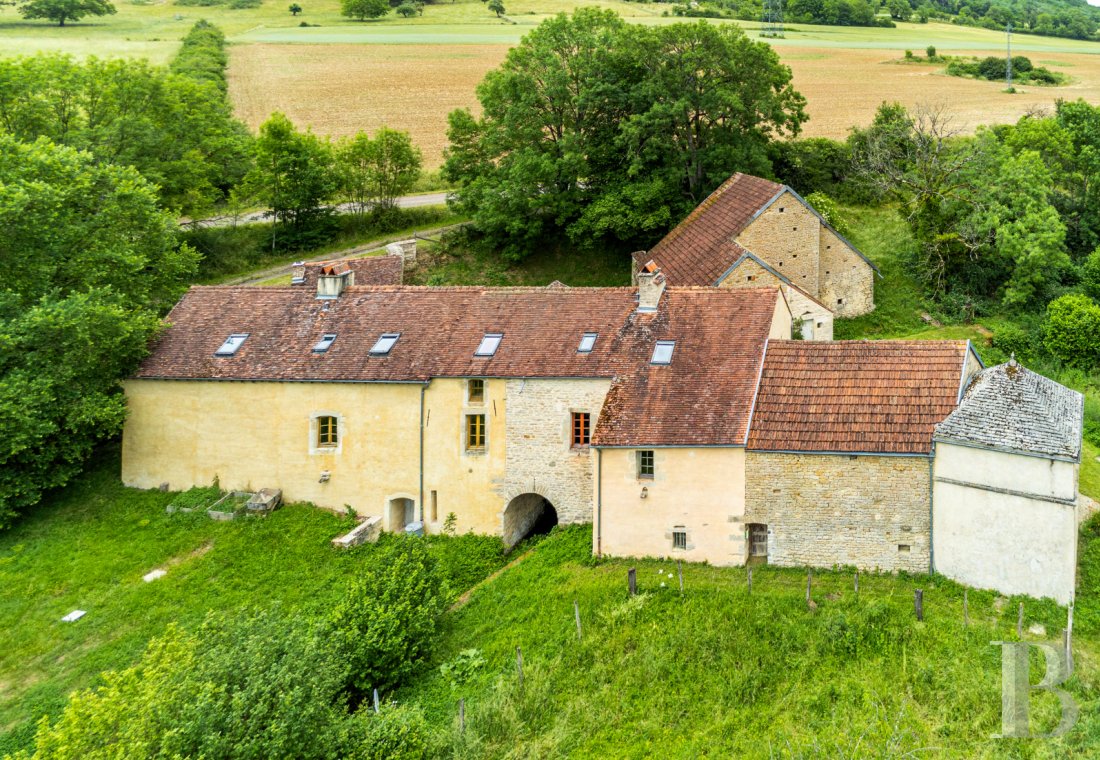
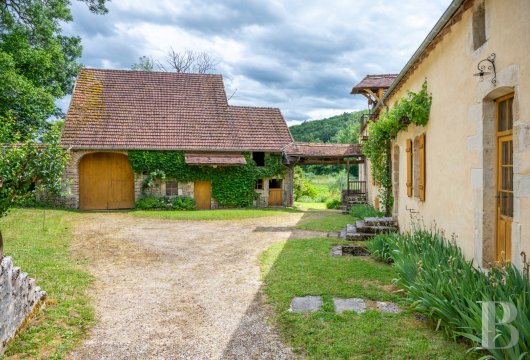
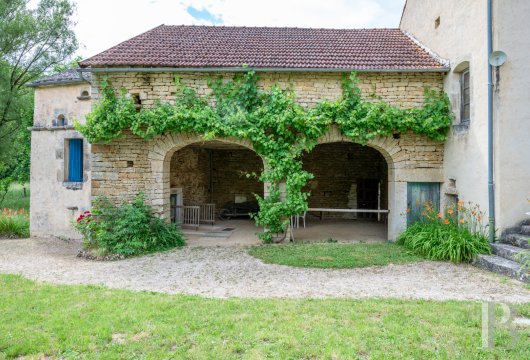
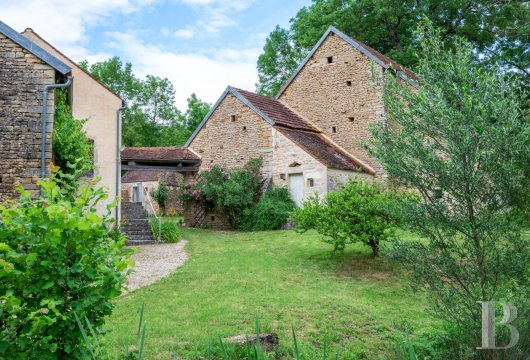
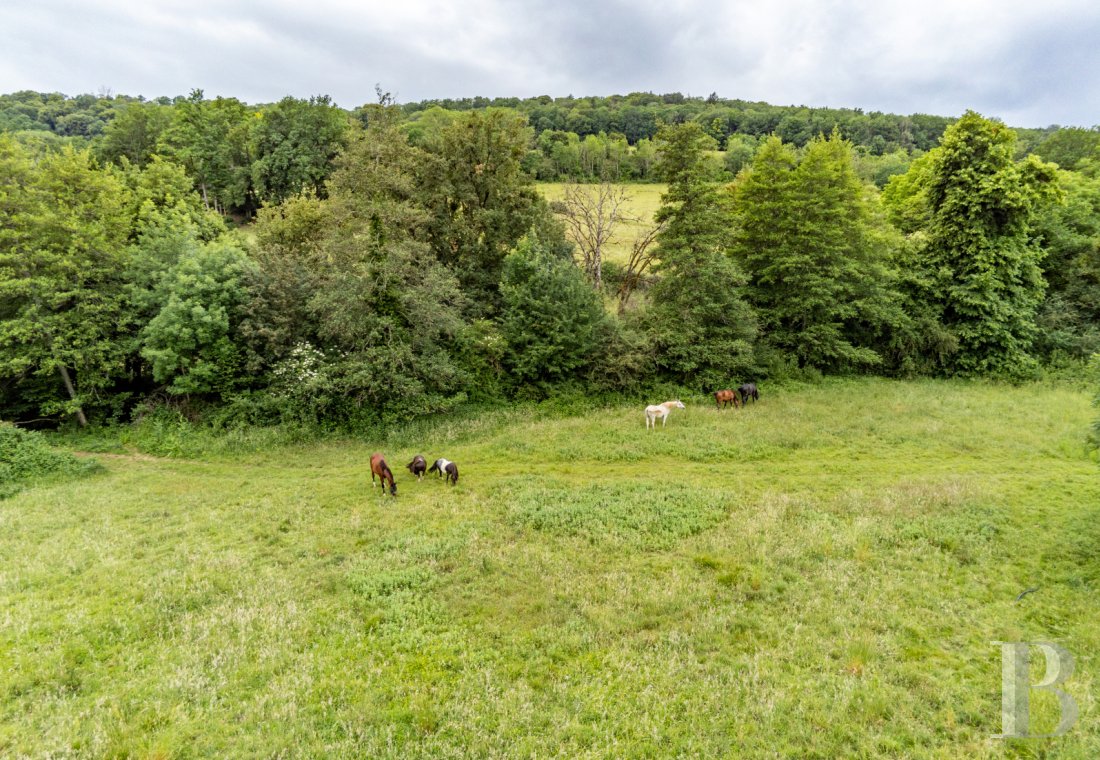
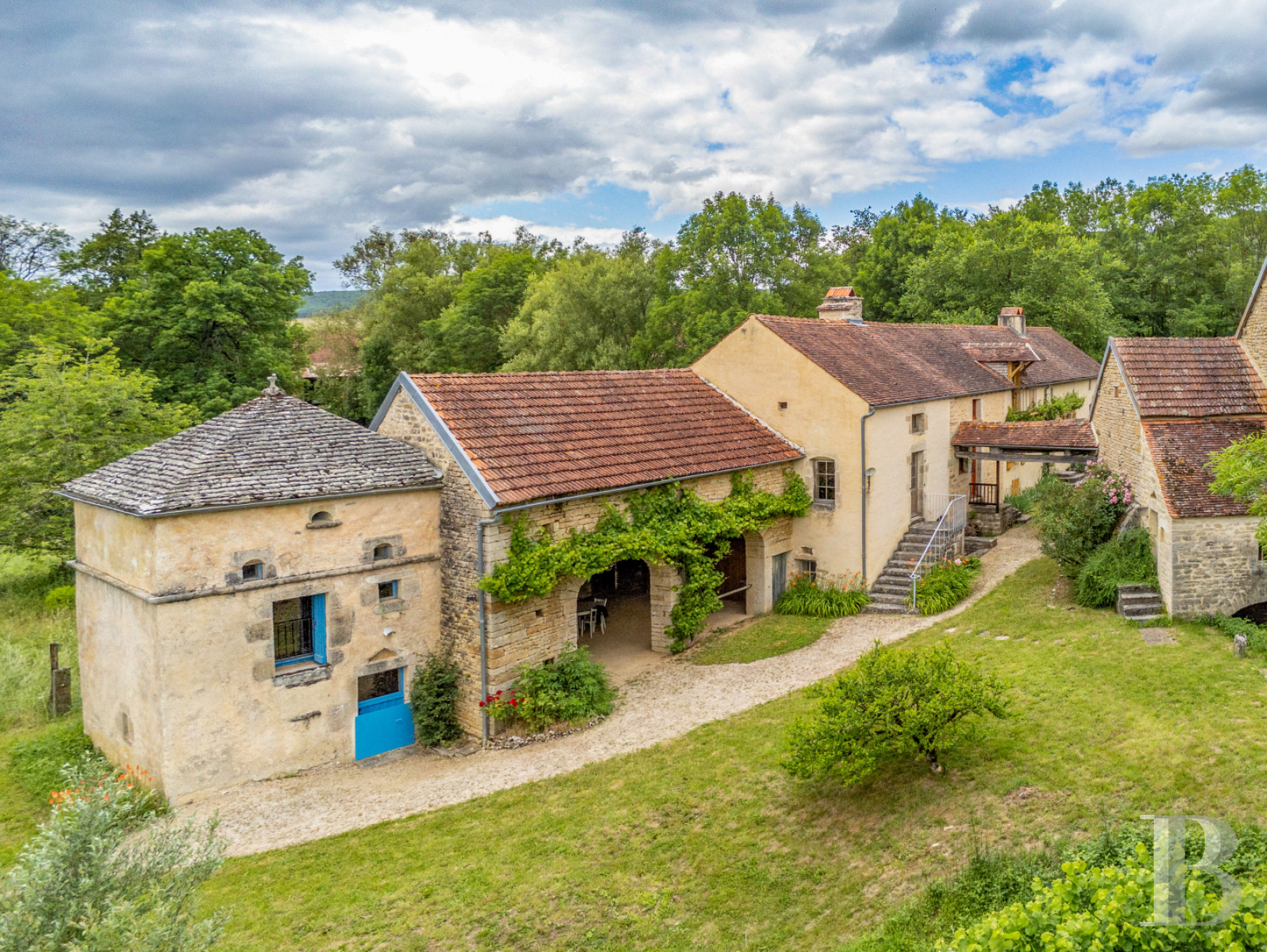
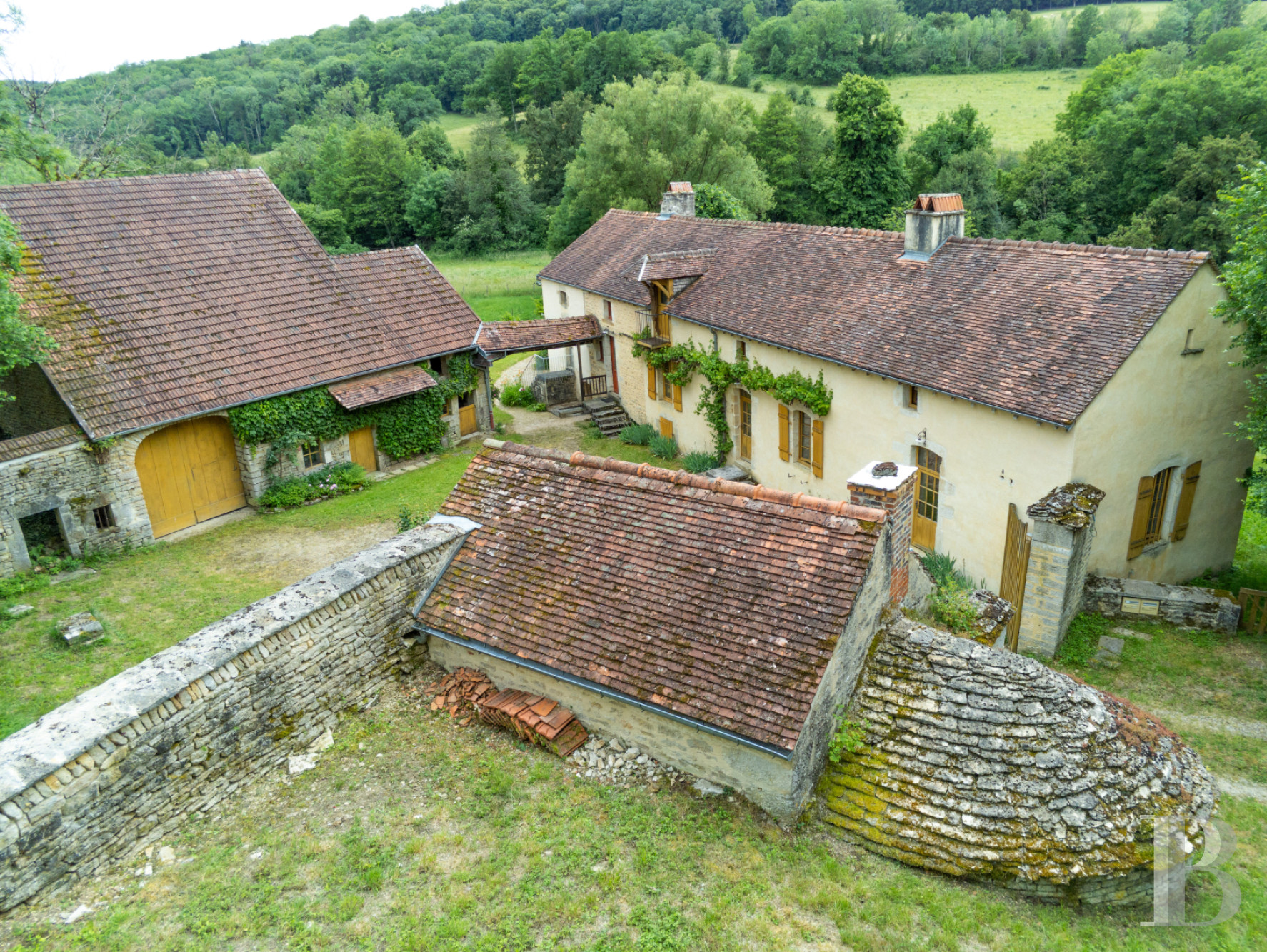
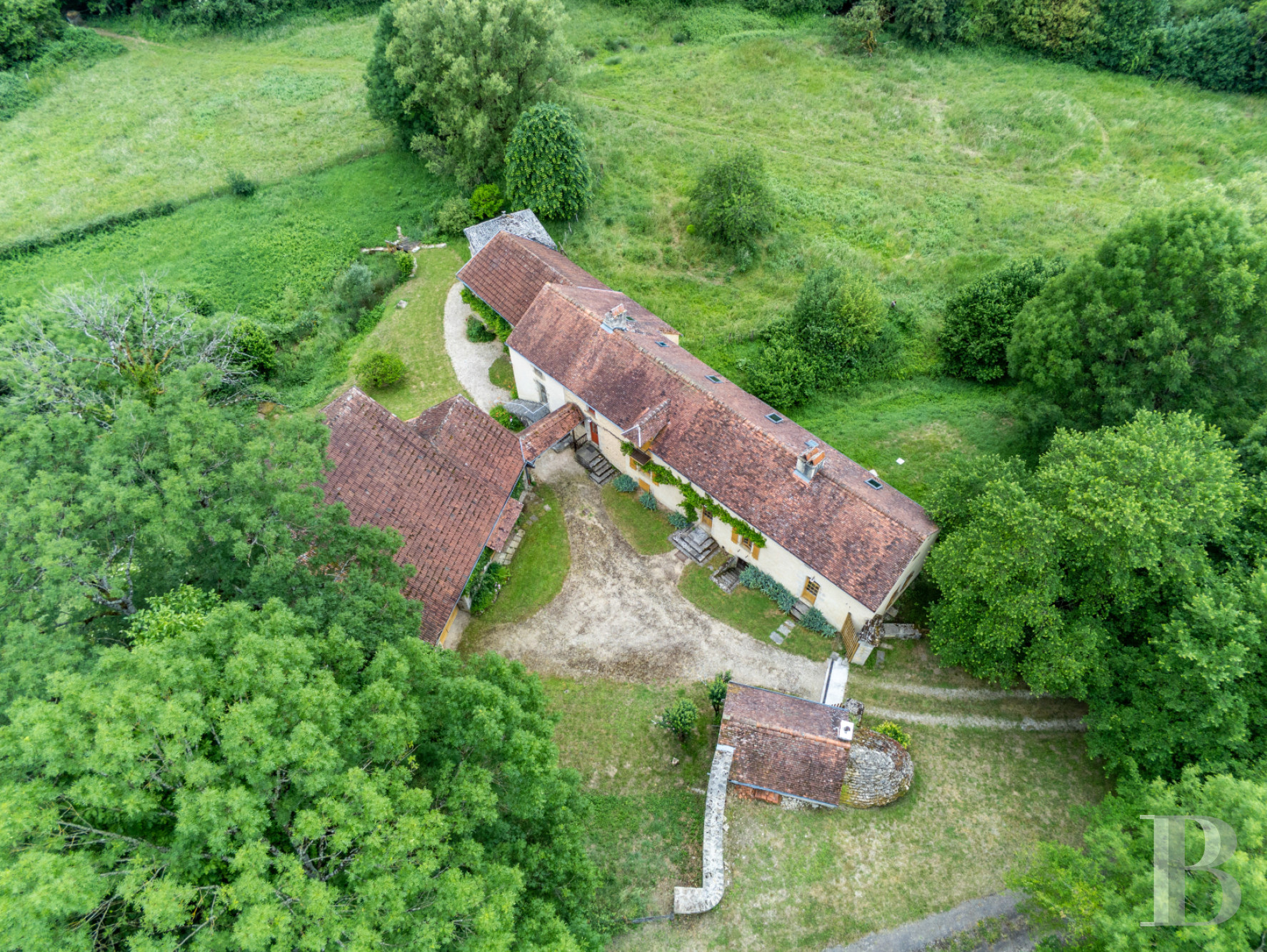
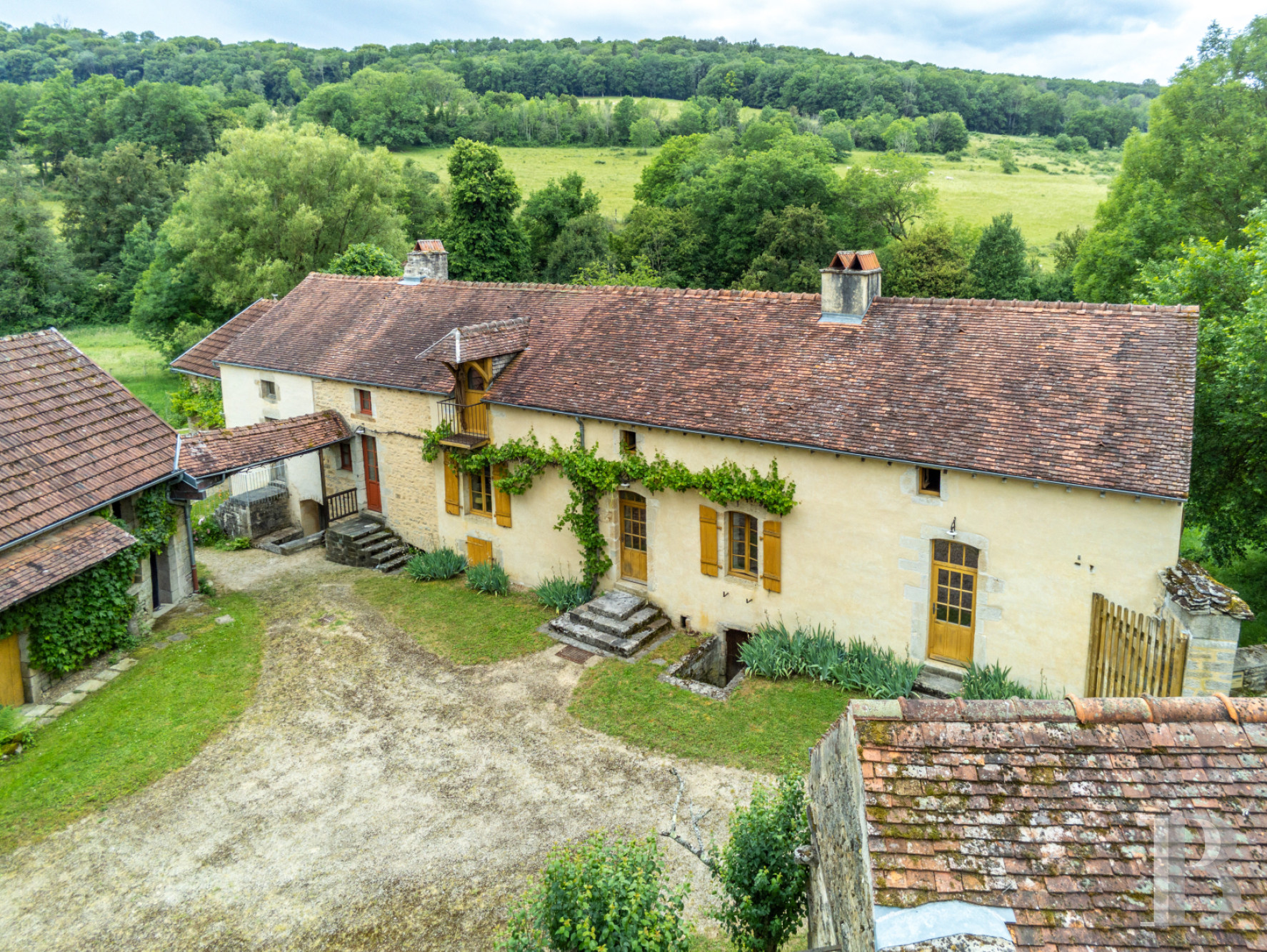
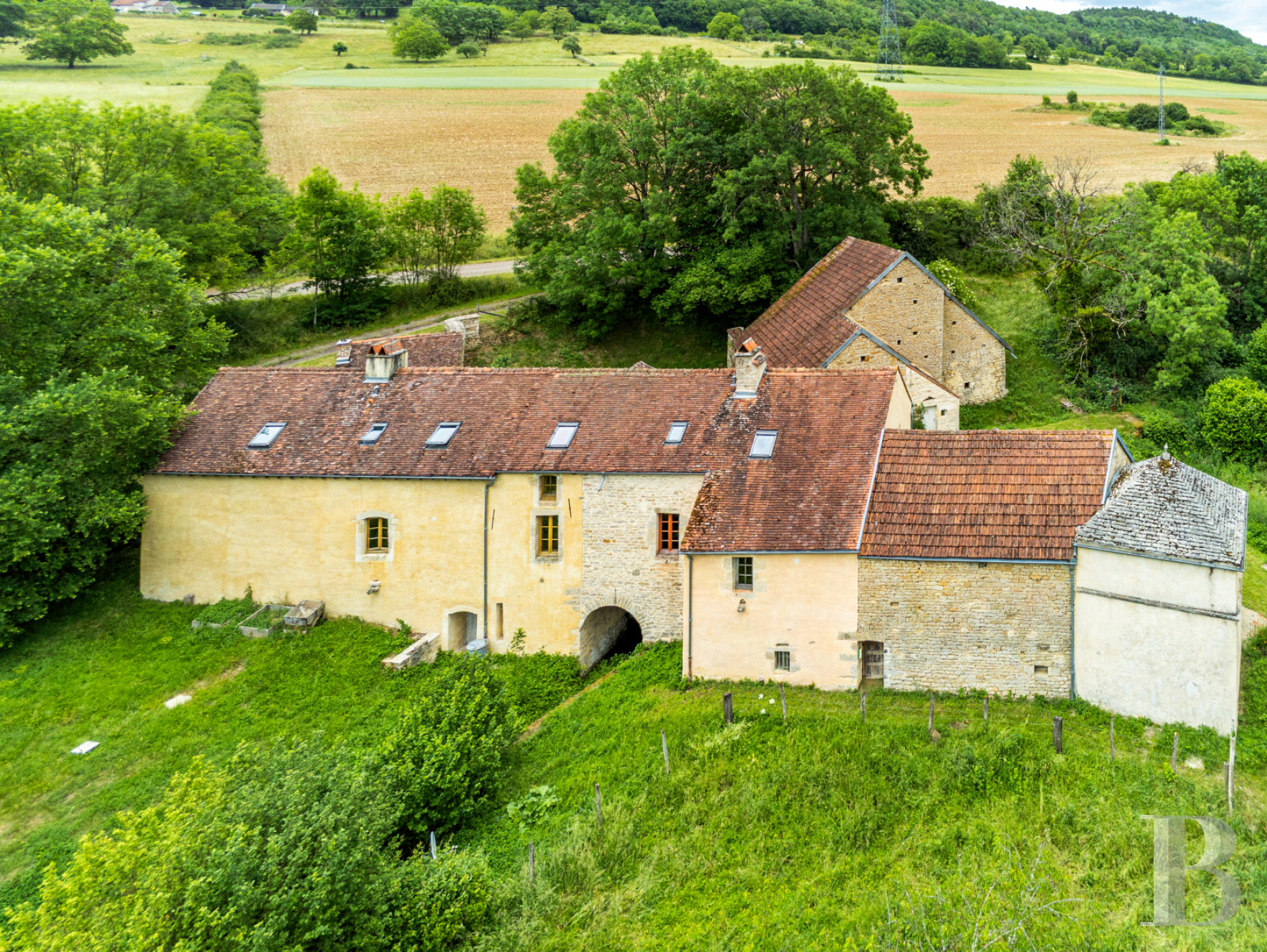
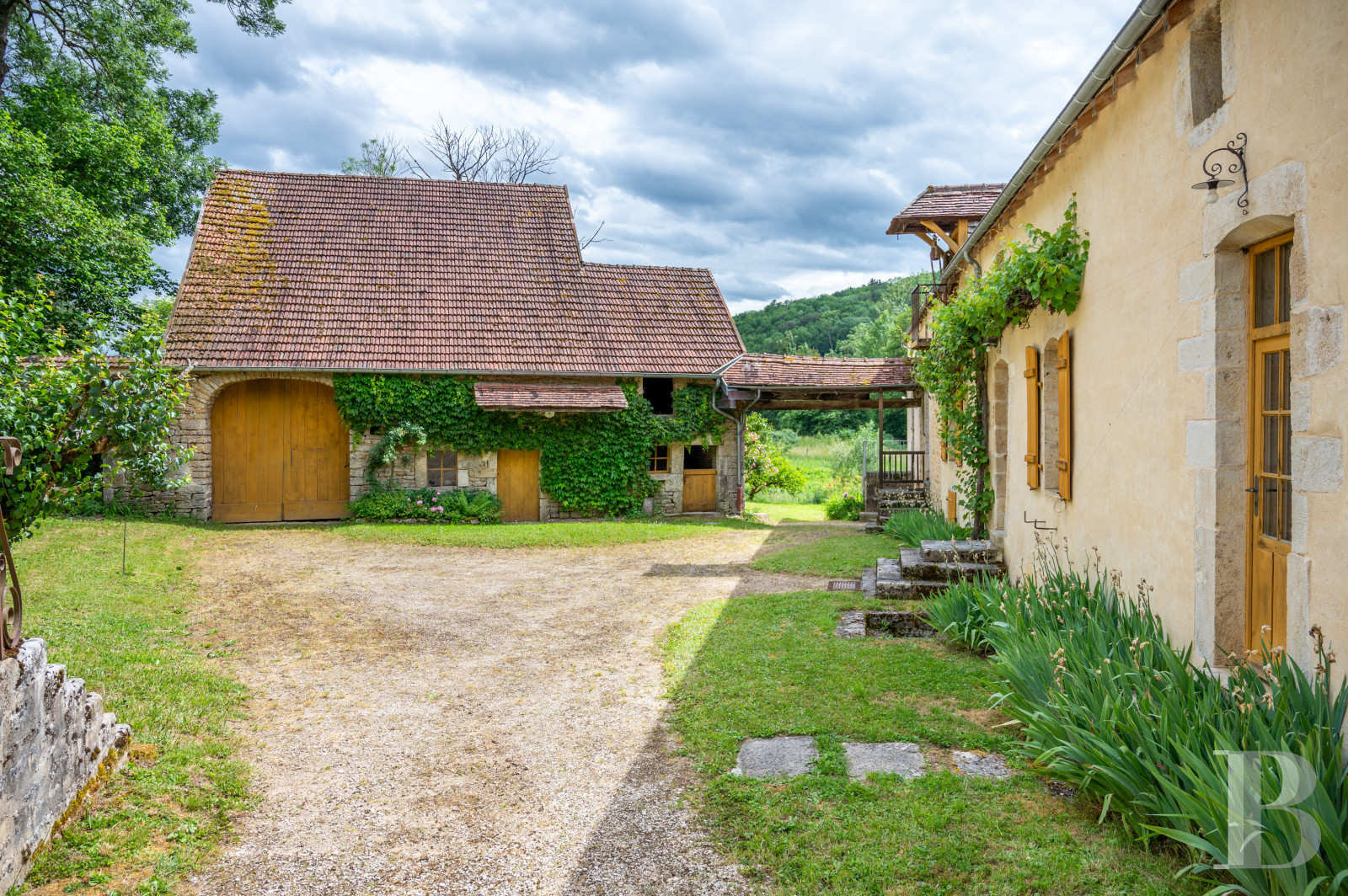
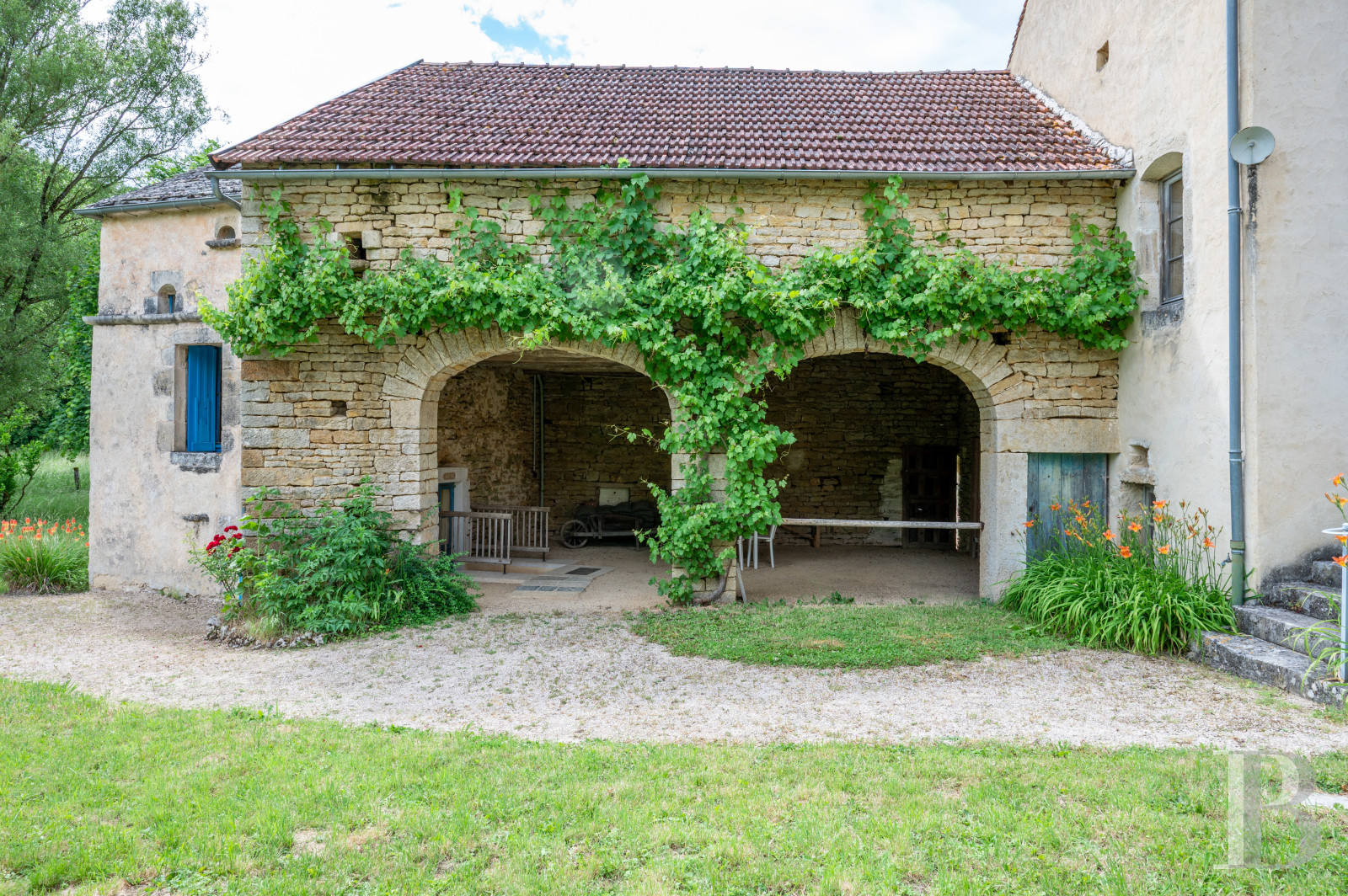
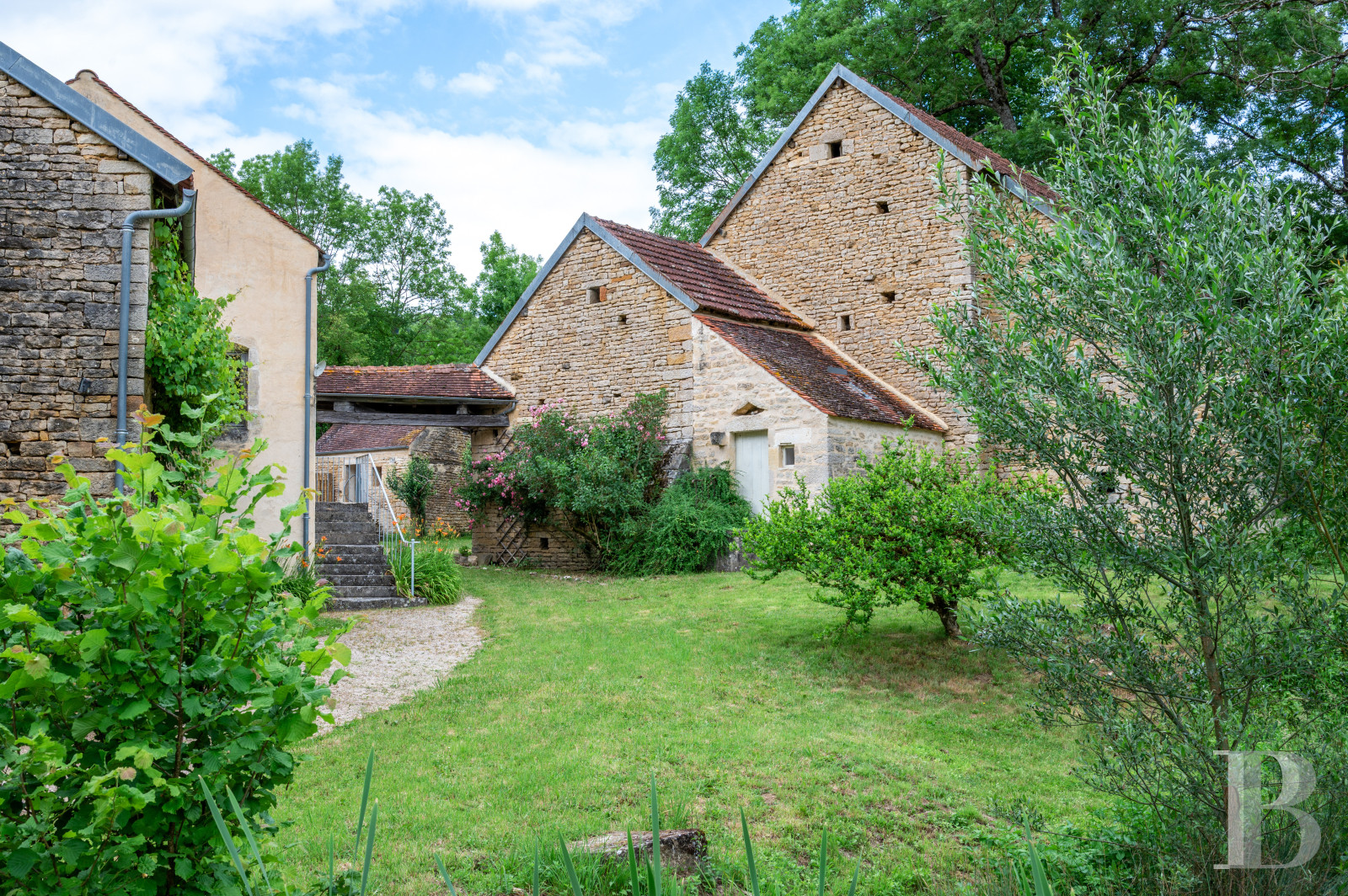
Accessible from the village or the county road via two country lanes, the property slopes down towards the Ozerain, whose course dictated the mill’s orientation. The main channel and the lower channel, which are now dry and fed solely by rainwater runoff, display the site’s hydraulic layout. The complex is arranged around a courtyard, flanked on either side by the bread oven and the north-western end of the house, with a wooden gate in the middle. The barn, set at right angles to the stables and the sheepfold, encloses the courtyard below. Extending from the main dwelling, the open, double-vaulted barn connects the house to the dovecote. Beyond the courtyard, the land slopes down towards a strip of meadows and heathland, which stretches along the Ozerain for over 5 hectares. The main building has a total floor area of approximately 260 m², divided into two separate flats. A thorough restoration was carried out using traditional materials and techniques, whilst preserving the authenticity of the building’s layout and original features: reconstructed roof structures and masonry, natural hemp insulation, underfloor heating and double-glazed windows.
The house
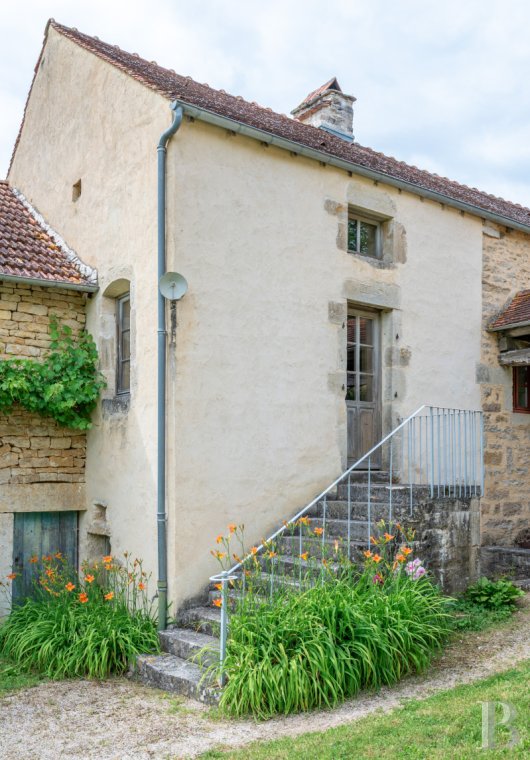
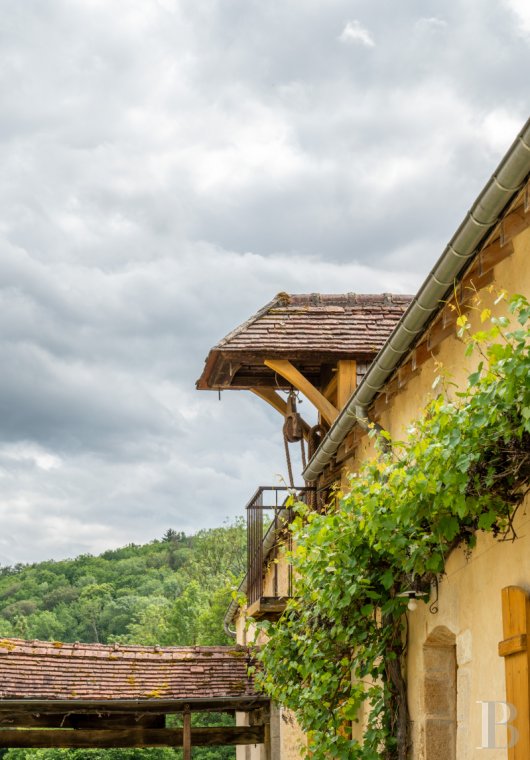
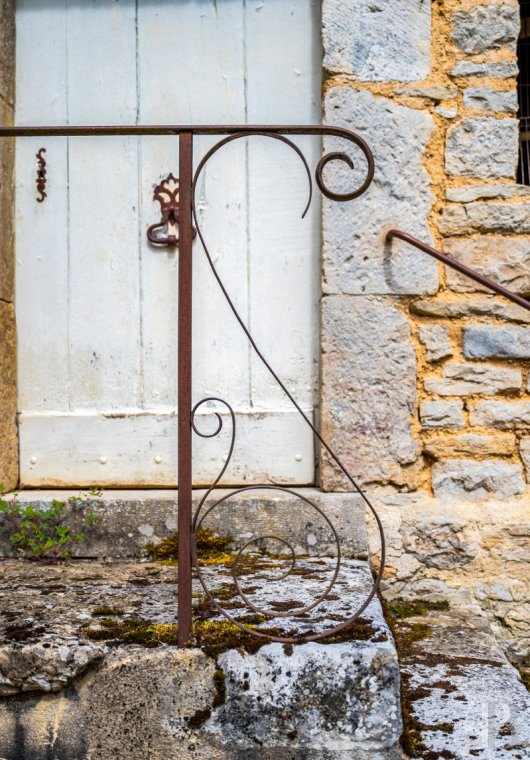
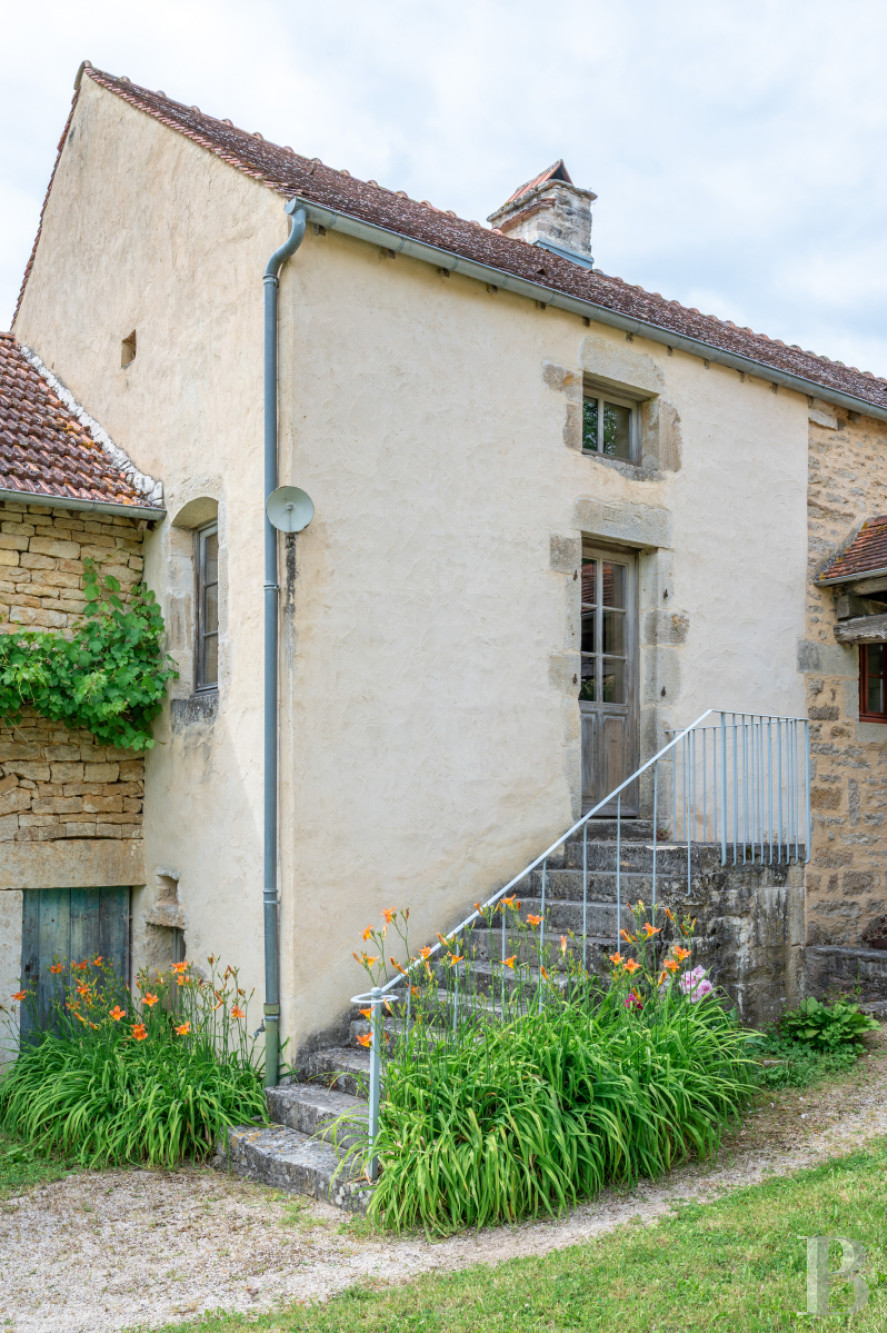
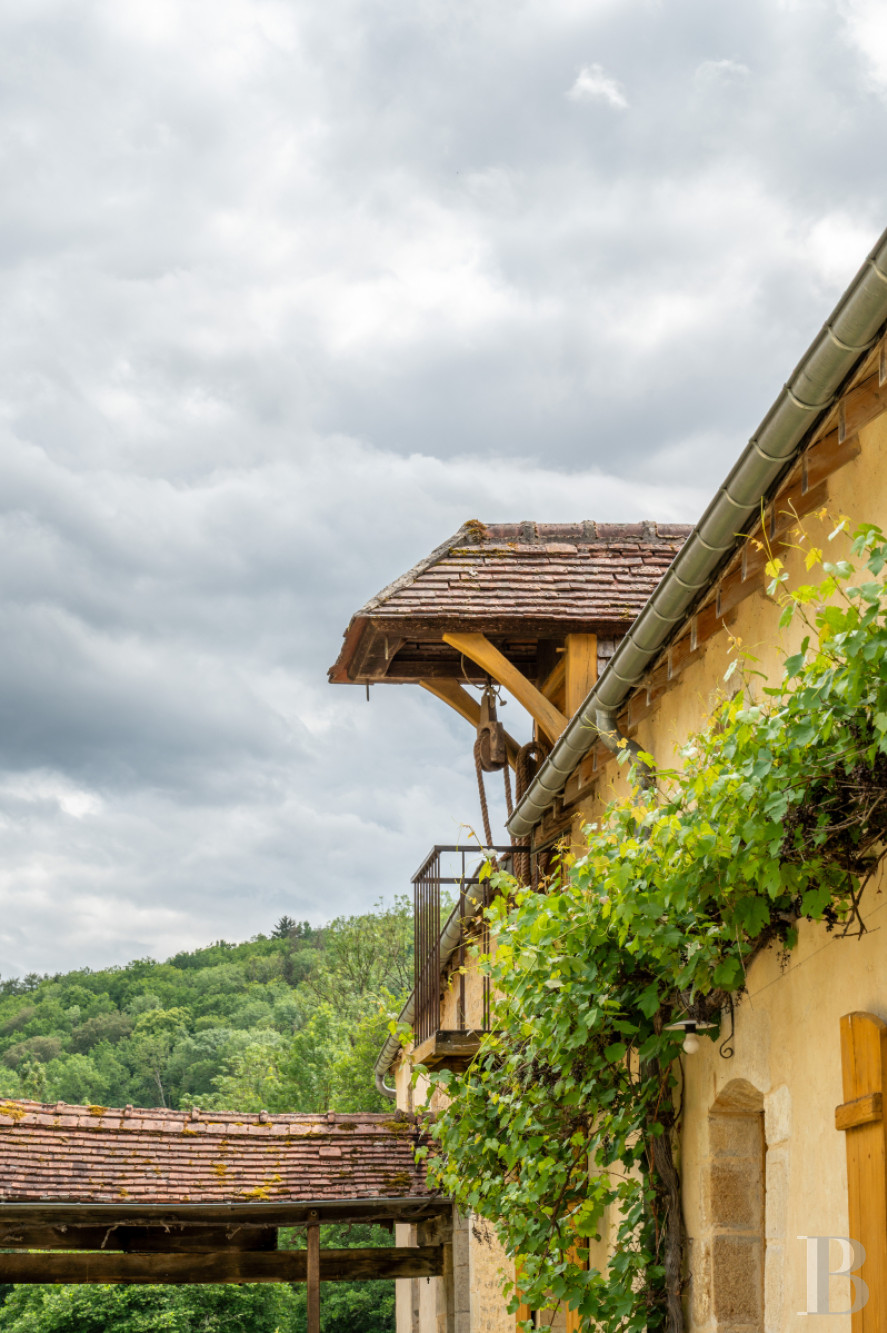
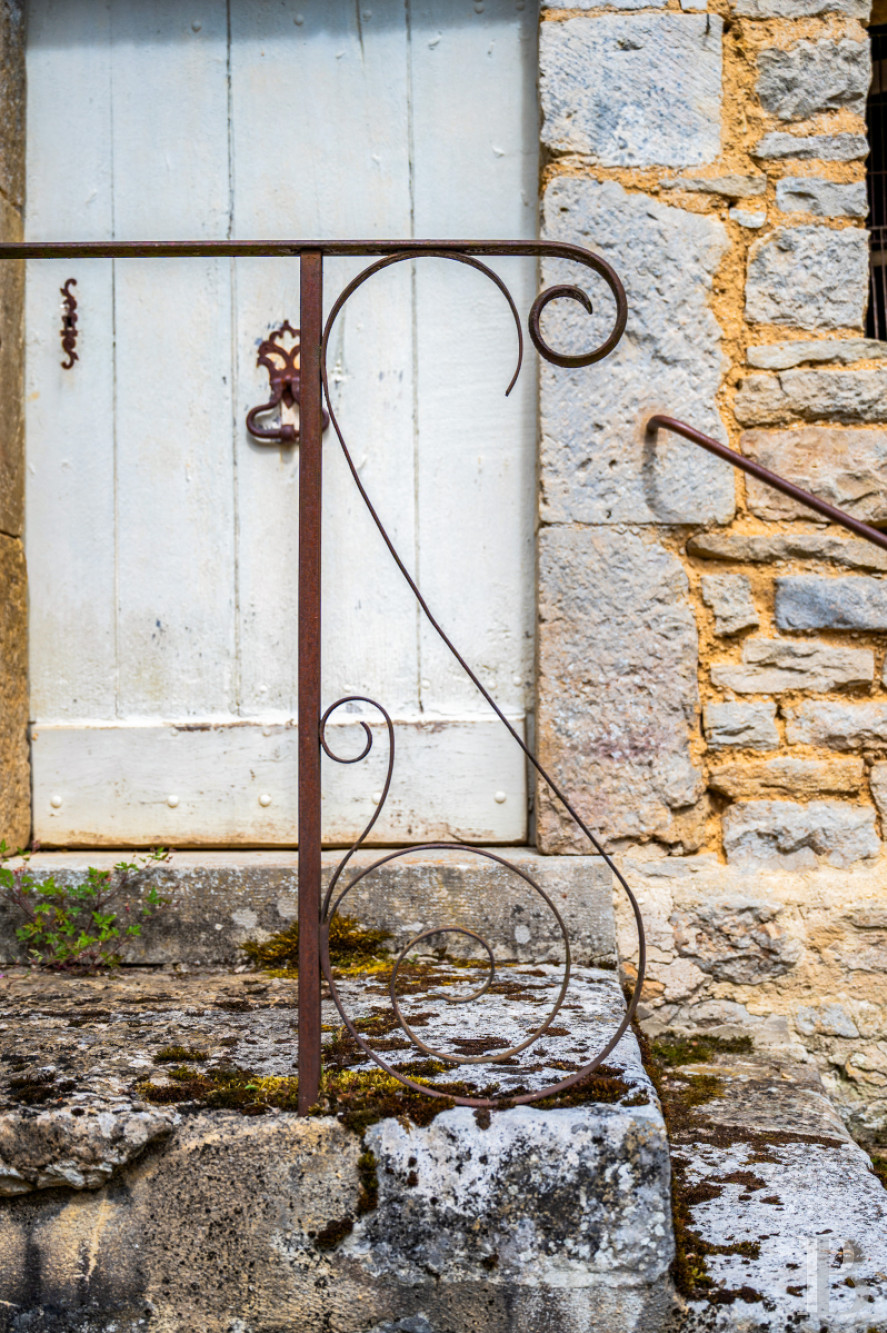
The house is a two-storey building, built on vaulted cellars and with a gabled roof covered in flat tiles. The three successive sections, built in 1750, 1820 and 1834 respectively, can be distinguished by their respective render. The one from 1750 is the largest. On the ground floor, its main facade has two doors and two windows with arched stone lintels, featuring wooden frames and shutters; on the first floor, there are two square windows and a dormer window. The presence of a protruding pulley serves as a reminder that grain used to be hoisted here in days gone by. The extensions follow the same design: a doorway with a stone step, a window on the ground floor, and a square window on the first floor. The building is divided into two flats, each with its own entrance, electricity meter and heating system.
The main dwelling
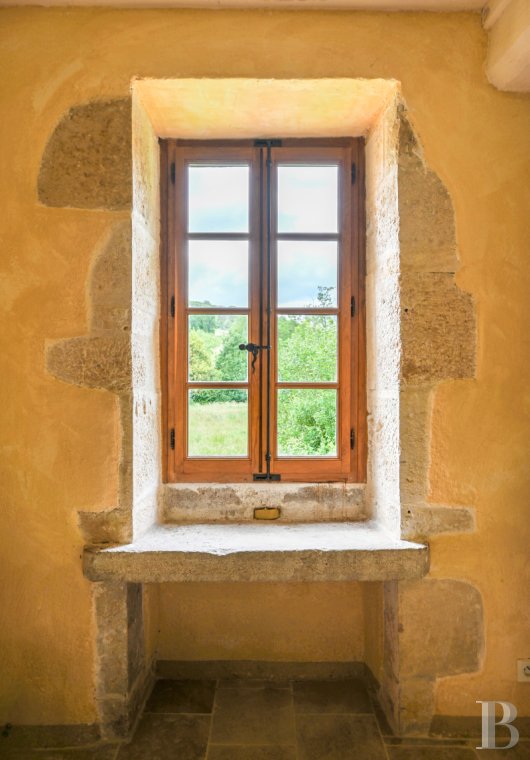
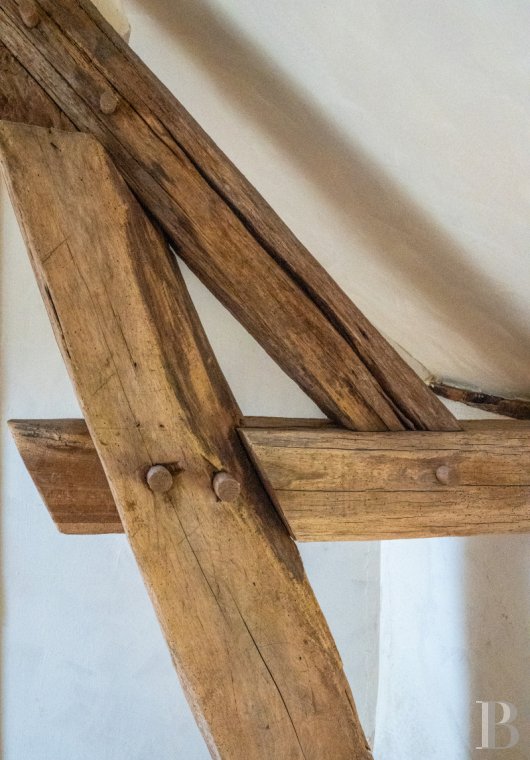
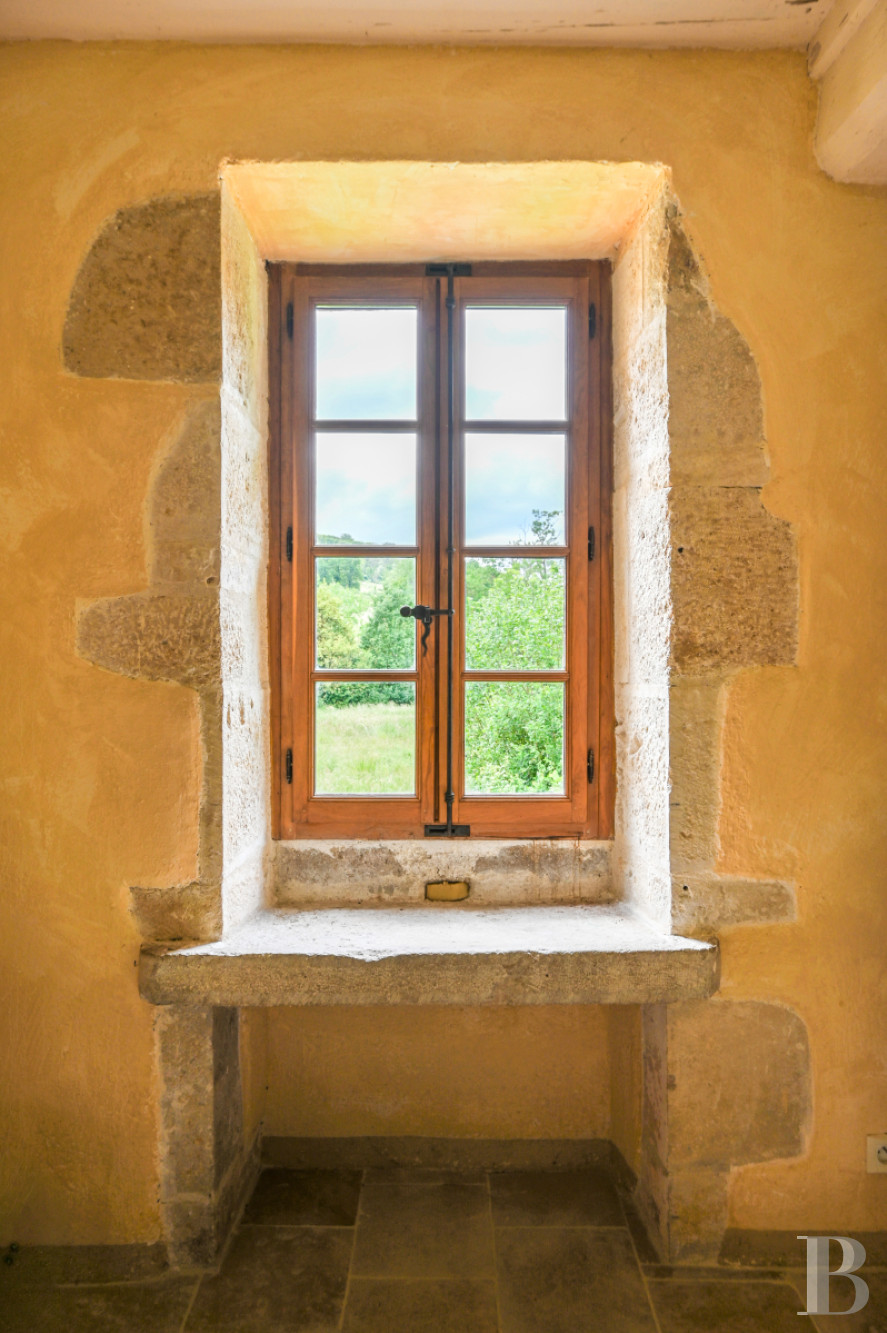
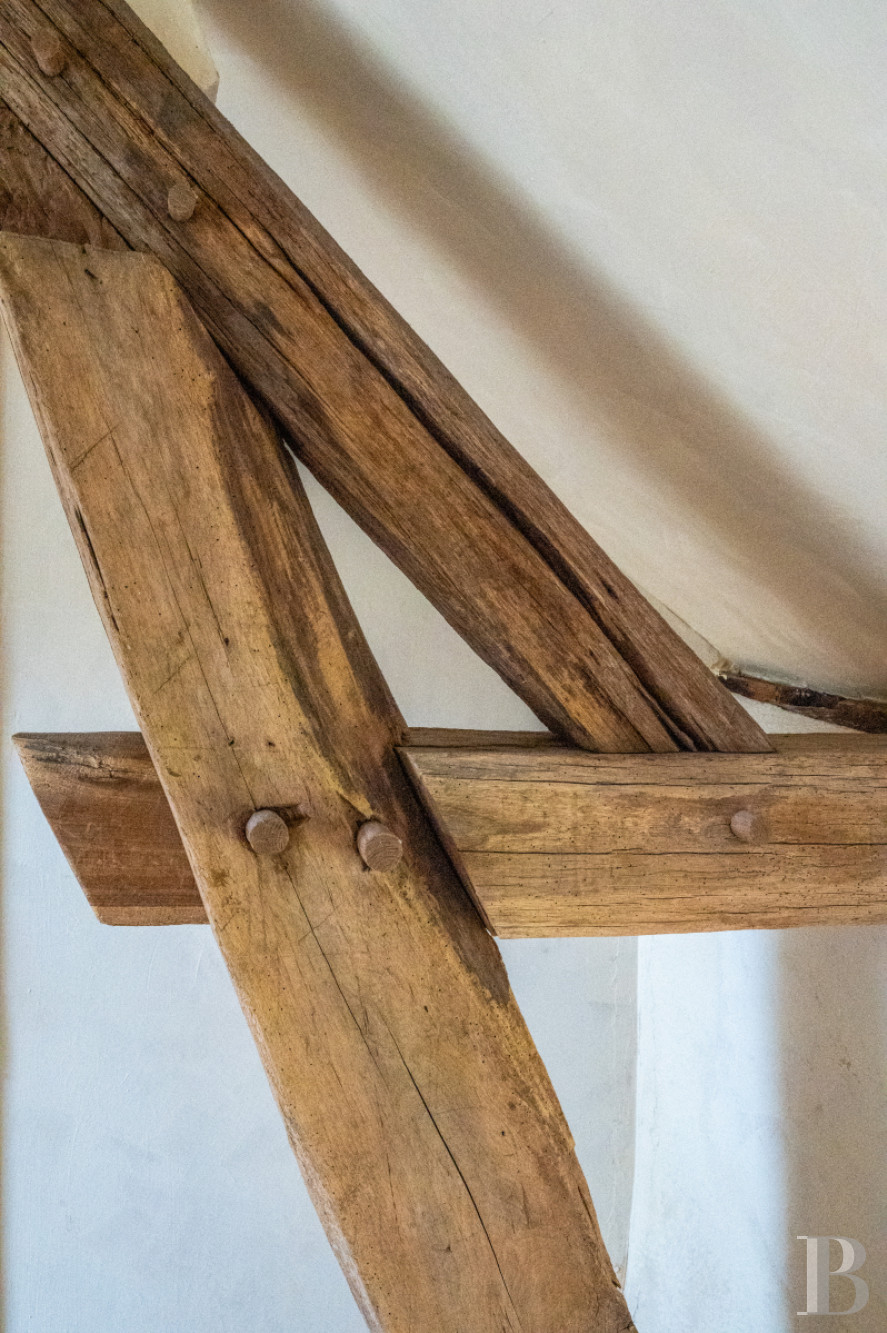
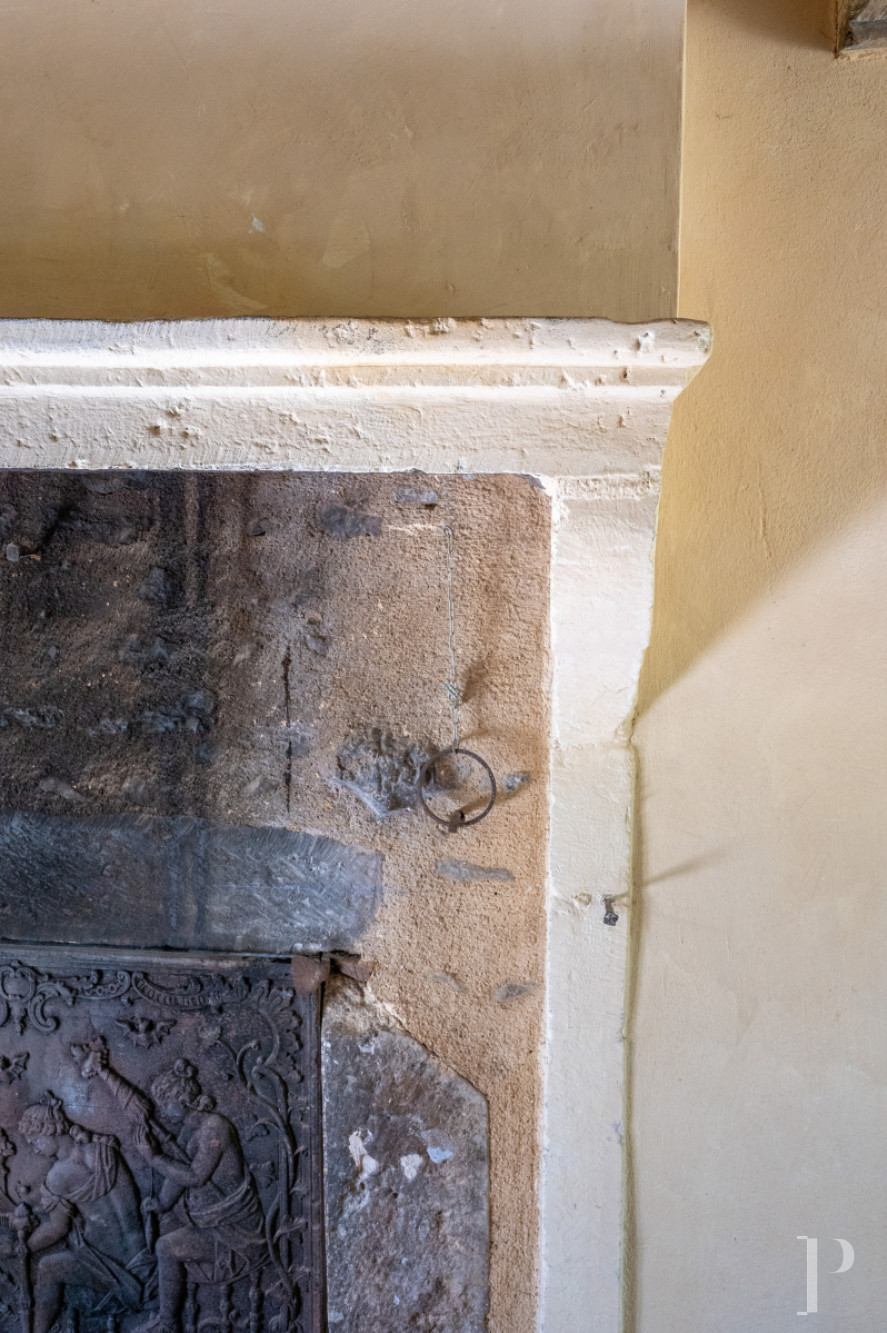
The ground floor comprises an open-plan living room, which is flooded with natural light from four windows. The French-style ceiling is lightened by a lime wash, whilst the floor combines oak parquet with stone tiles. It features a stone sink, a brazier and a fireplace with a stone lintel, into which a double-sided insert is fitted. The fitted kitchen has retained its French-style ceiling, original stone flooring and stone sink. It has a dining area. A toilet completes the floor. The upper floor comprises a bedroom with sloping ceilings, fitted with wooden flooring and lit by two windows, one of which is a roof window. A corridor leads to a toilet, a shower room, and then a bedroom with a sloping ceiling, wooden flooring and exposed beams, connected to the living room via a hidden staircase.
The apartment
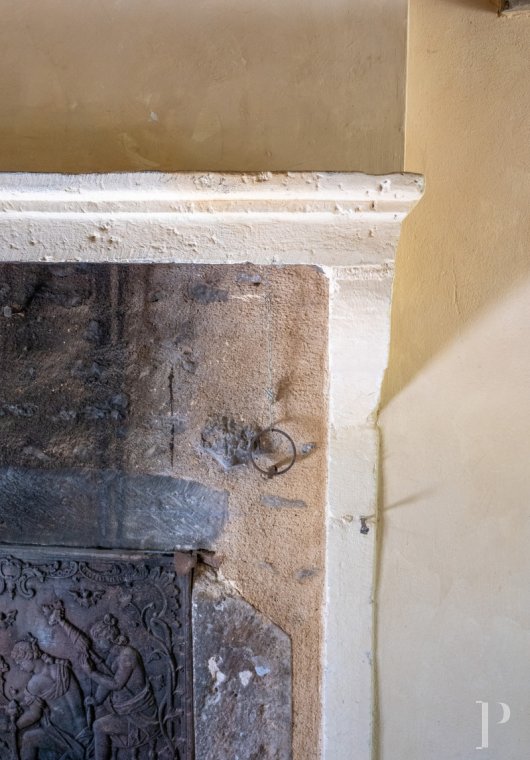
This is accessible from the outside via a separate entrance and is connected to the living room of the main residence by a pair of double doors with enhanced sound insulation. The ground floor comprises a fitted through-kitchen, with a dining area centred around a Burgundian fireplace, a two-tiered stone sink and a brazier. The living room features a cast-iron stove, clad in 19th-century polychrome earthenware tiles. There is also a toilet on this floor. Upstairs, a landing with storage space leads to two attic bedrooms, featuring exposed beams and oak floorboards. One is extended by a small balcony, from which there is a view of the courtyard. Further on, there are toilets and a shower room.
The basement
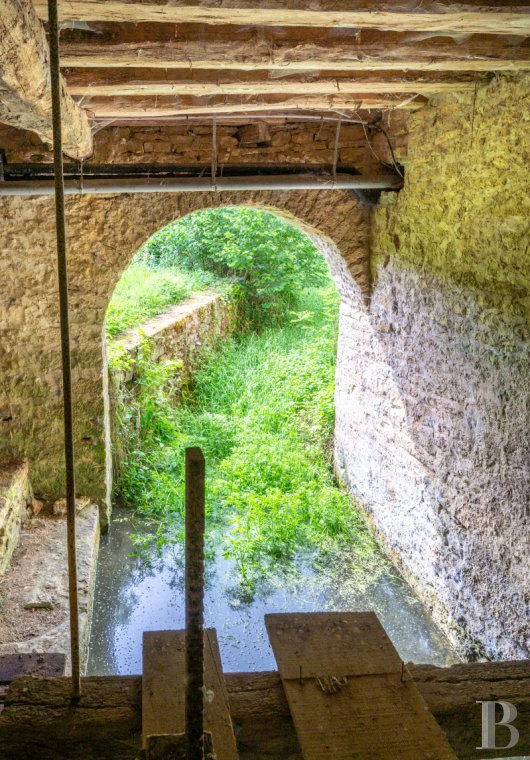
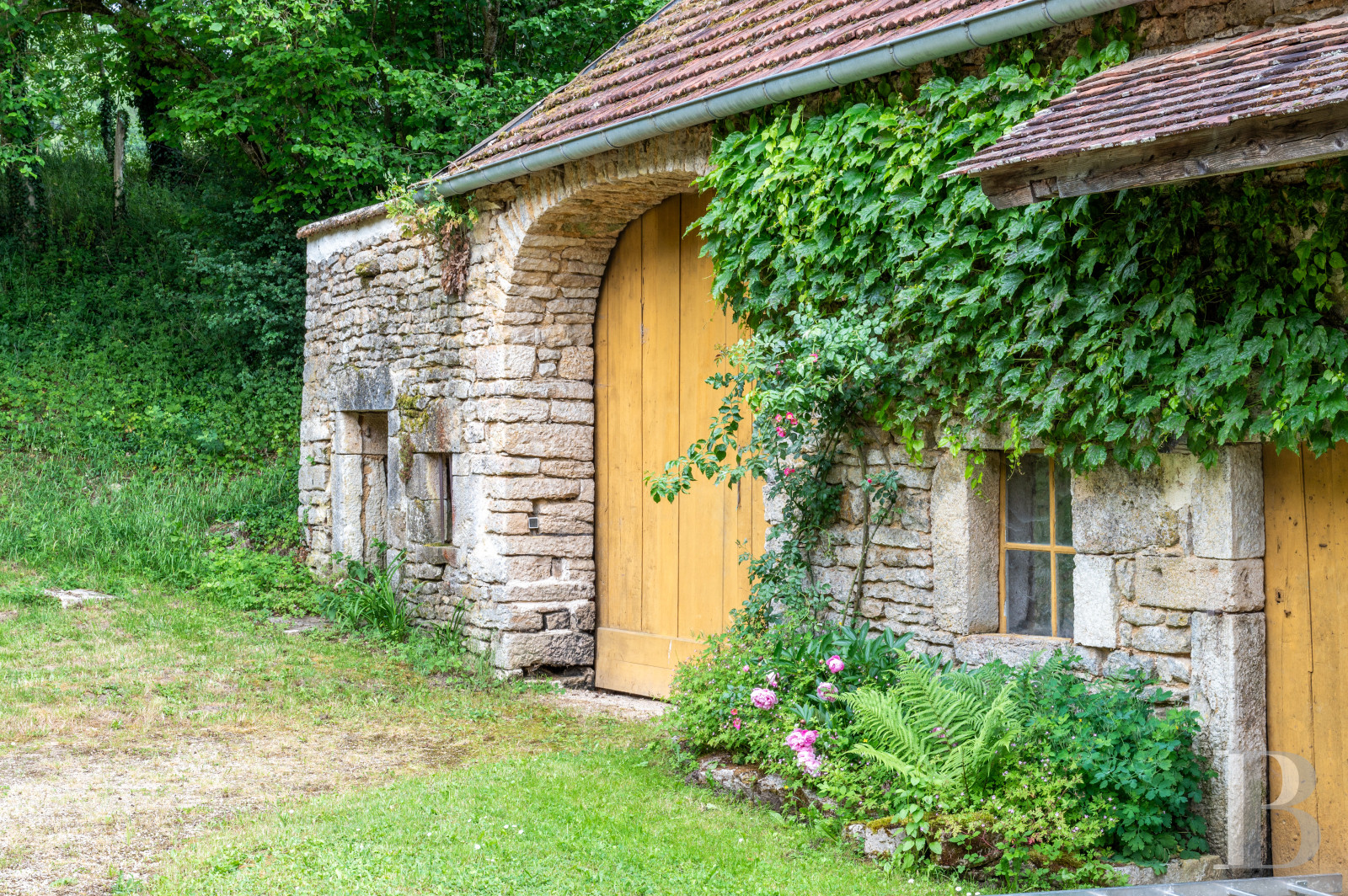
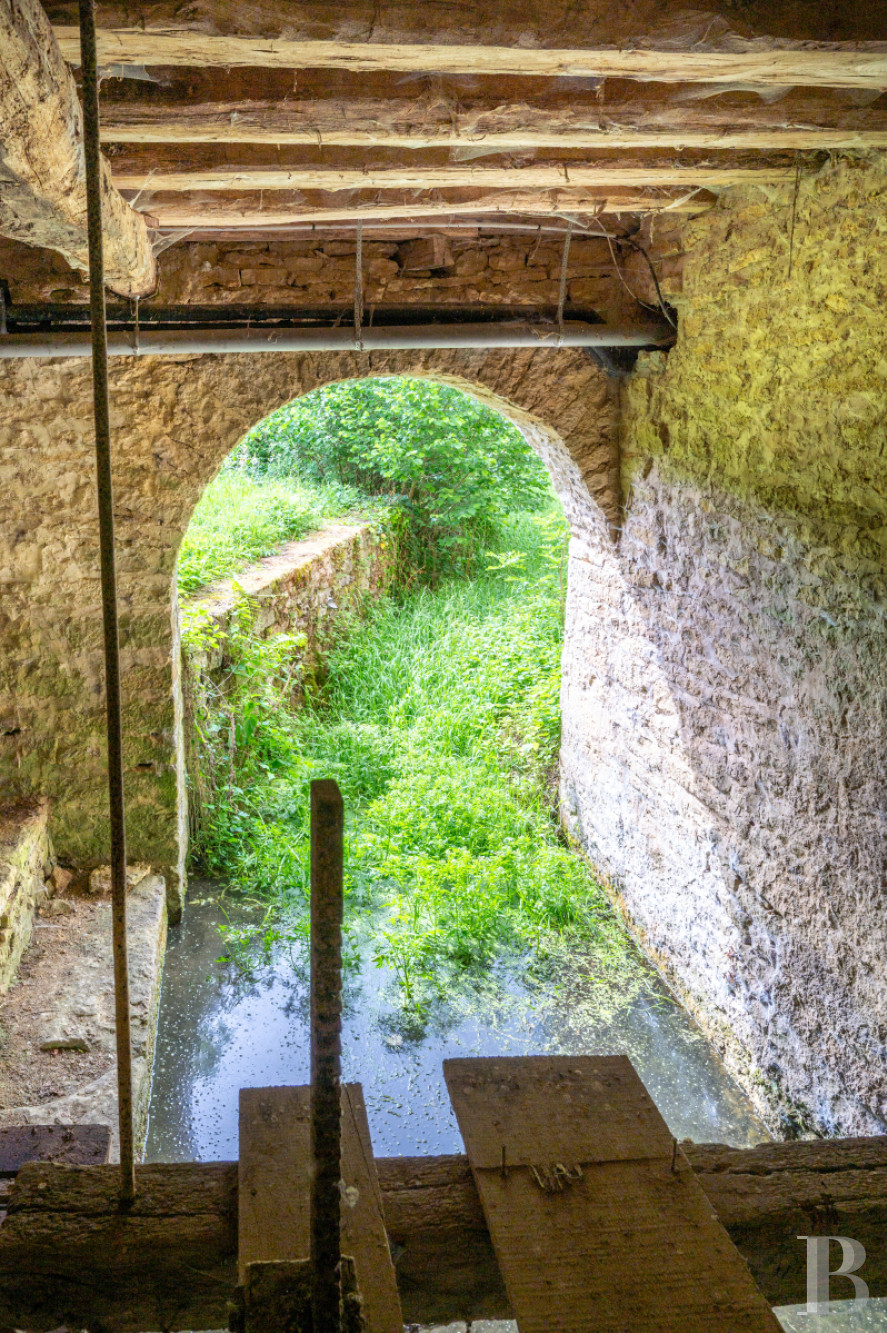
They are accessible from the courtyard via two separate entrances. The first leads to the former smokehouse, which has been converted into a laundry room and toilets – two vaulted stone rooms with a combined floor area of approximately 35 m² – and the former wheel house, which is directly connected to the millstream and opens out onto the park through a vaulted arch. The second provides access to two cellars, each measuring around 30 m², which have been converted into a plant room and house two heat pumps with horizontal collectors, which supply heating to the two dwellings.
The dovecote and the small barn
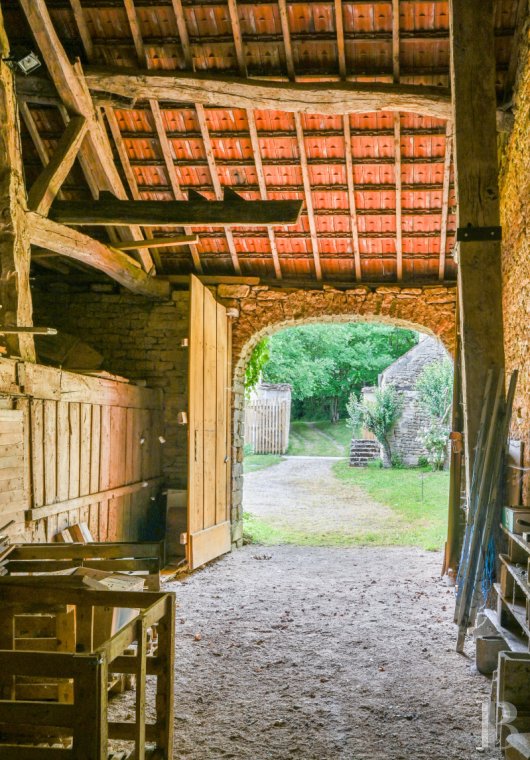
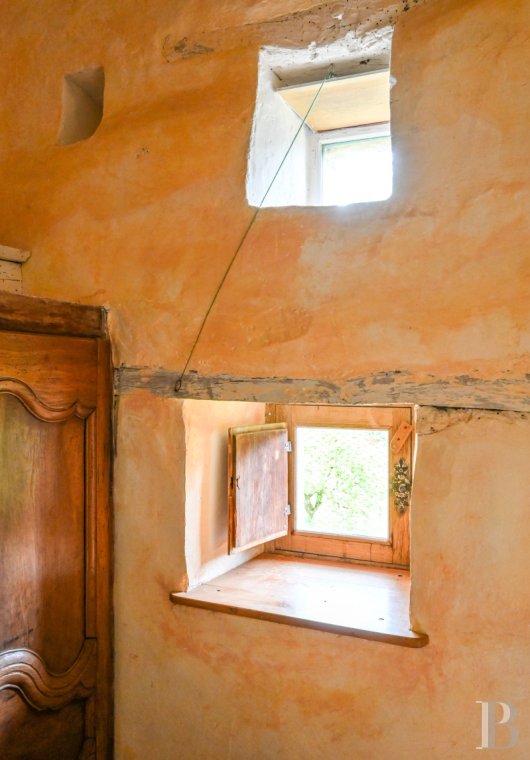
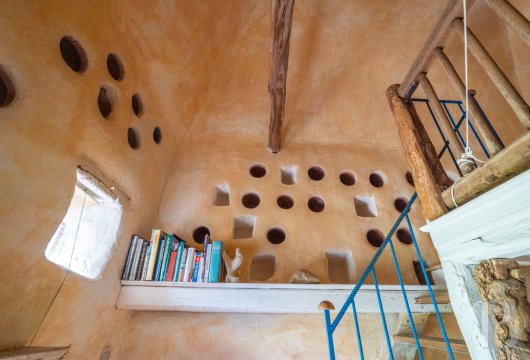
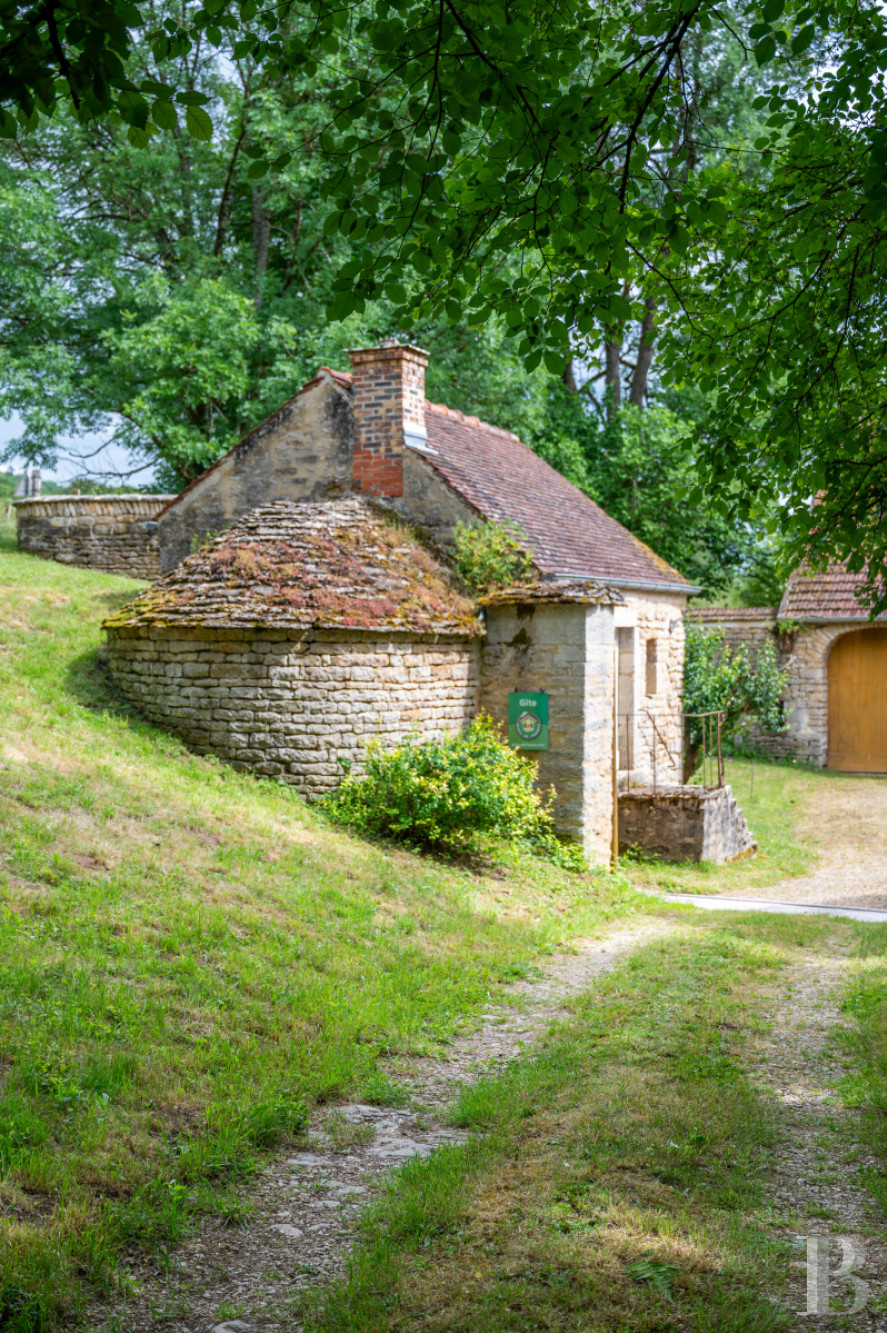
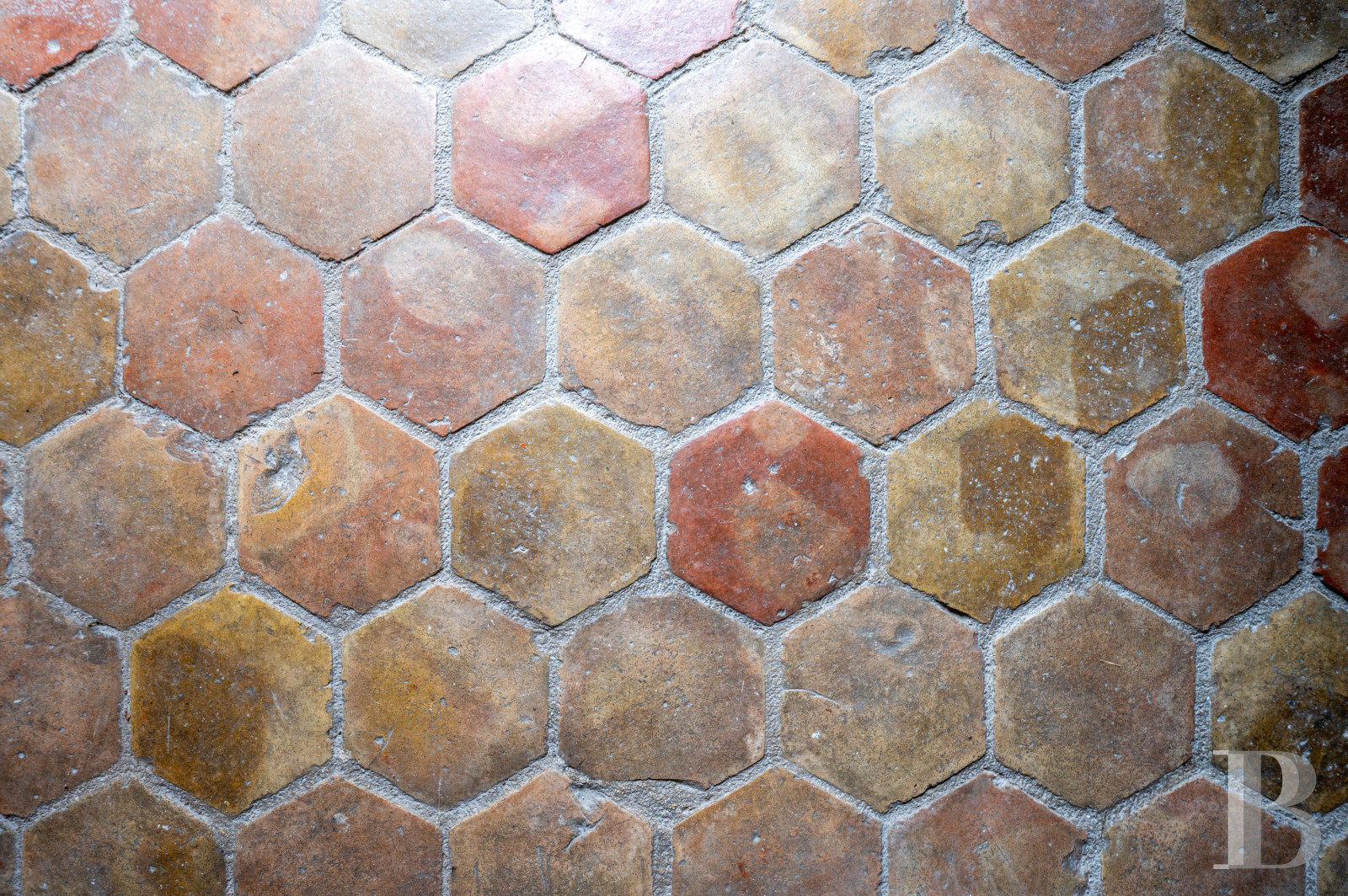
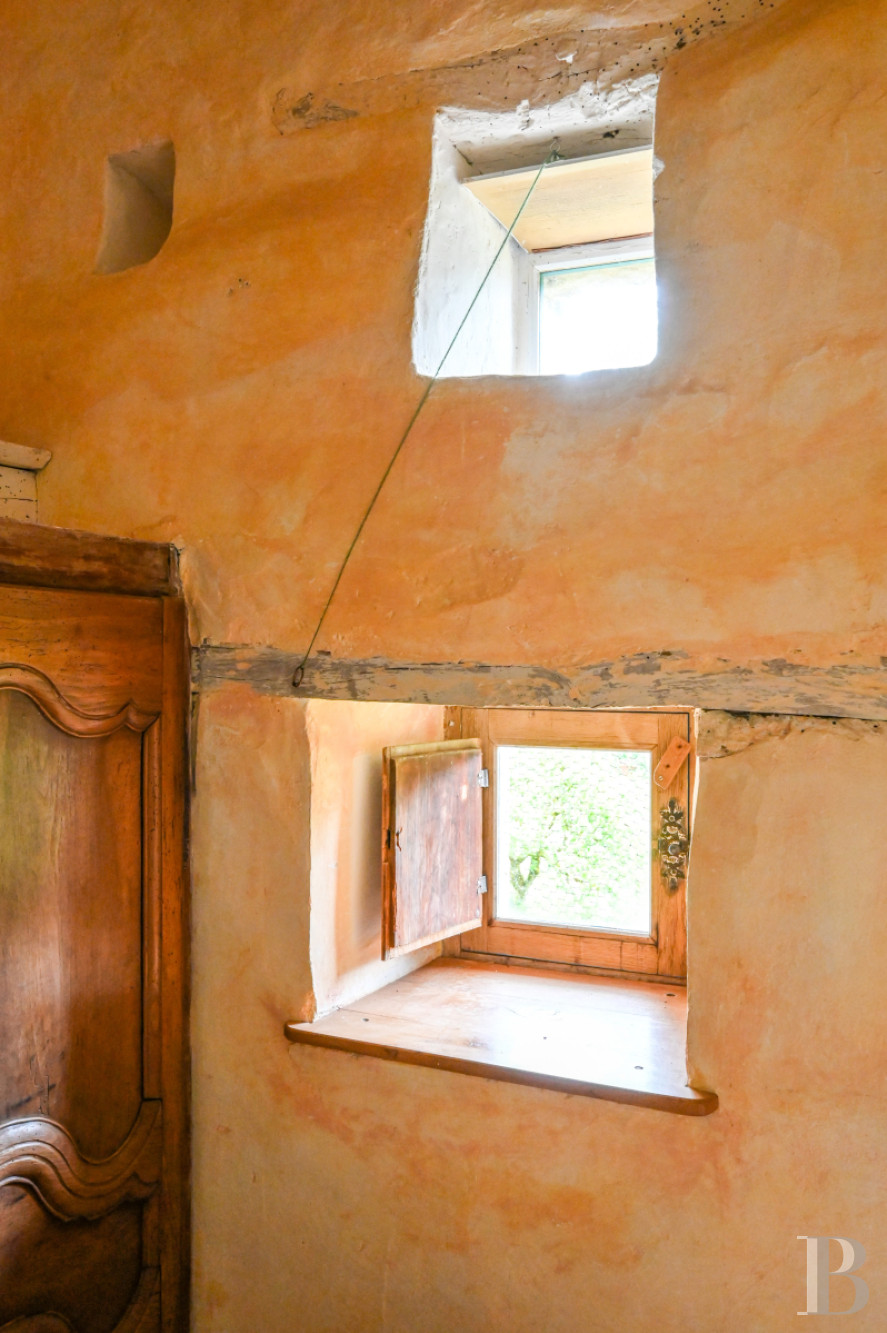
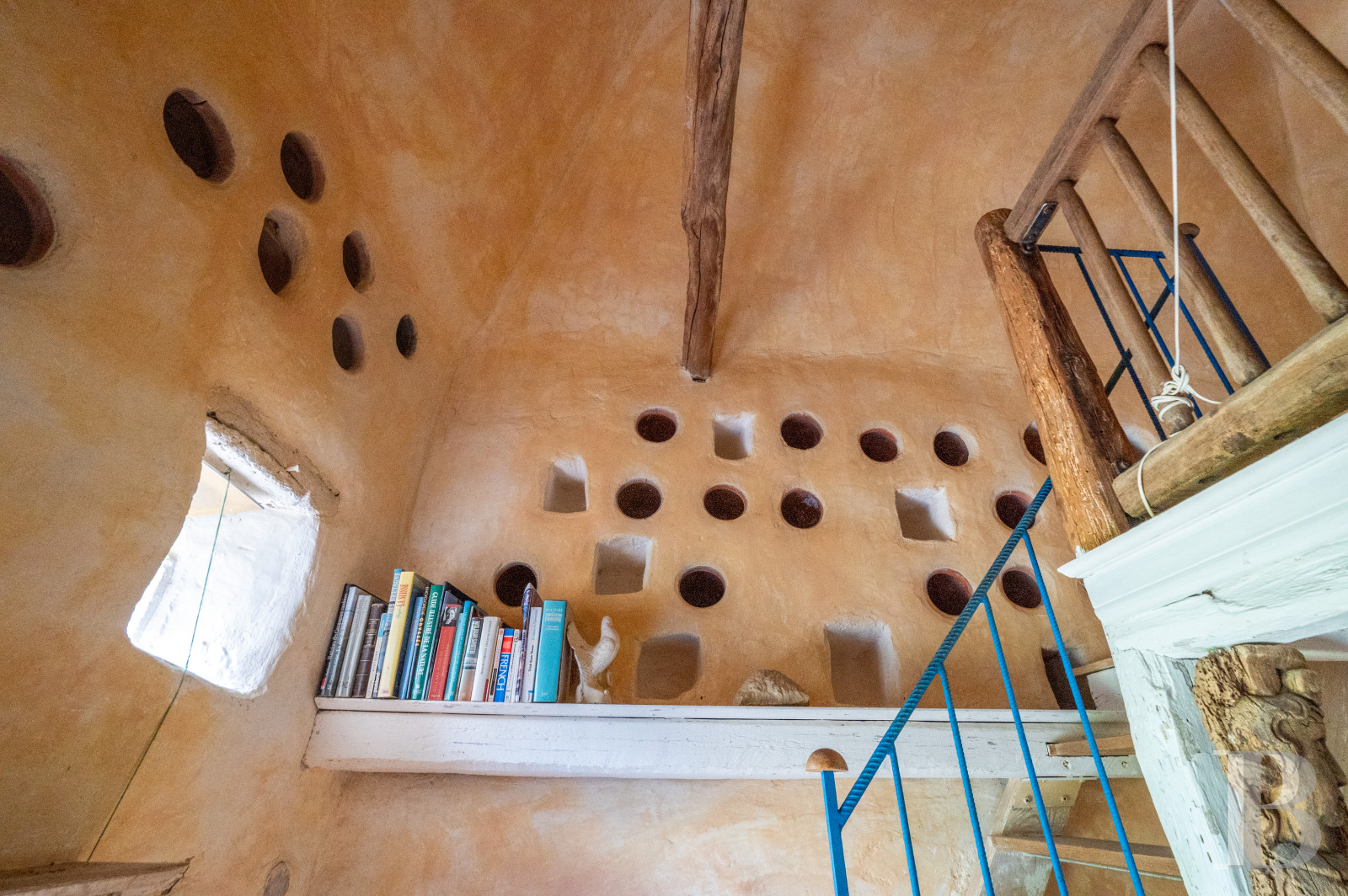
Built in the 18th century, restored and converted into a holiday cottage, it is a self-contained property of approximately 80 m², comprising three storeys and topped with a hipped roof. The adjoining barn opens onto the grounds through two stone arches; its beamed and planked ceiling forms a covered area of approximately 44 m², which extends the dining area of the holiday cottage. A glass door with small panes leads to the dovecote, which is a few steps below. The lower level, measuring approximately 14 m² and featuring terracotta floor tiles, comprises a fitted kitchen beneath exposed joists, a dining area opening onto the grounds, and a shower room with a toilet. Accessible via a wooden staircase, the living room – with a wooden floor and walls whitewashed in ochre – also opens onto the grounds through a French window leading to a small balcony. A bedroom occupies the mezzanine on the upper level, beneath a lime-plastered tufa cross-vault. Perches line the walls, and a load-bearing beam, complete with its original pulley, runs across the space. The floor is parquet, and the banister is made of untreated wood.
The outbuildings
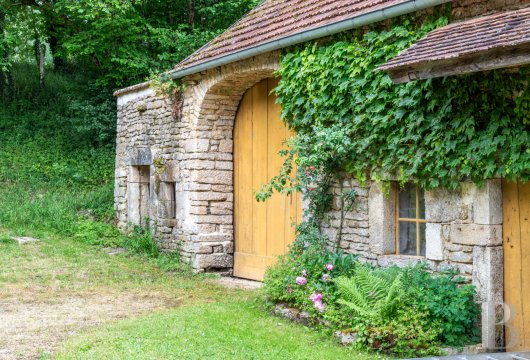
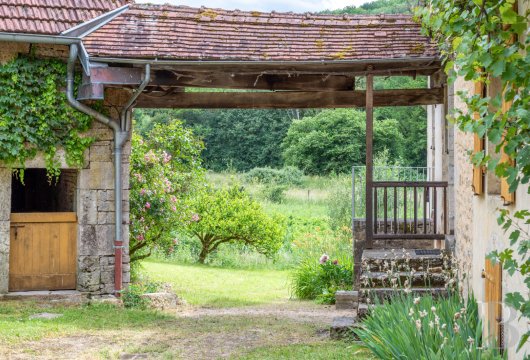
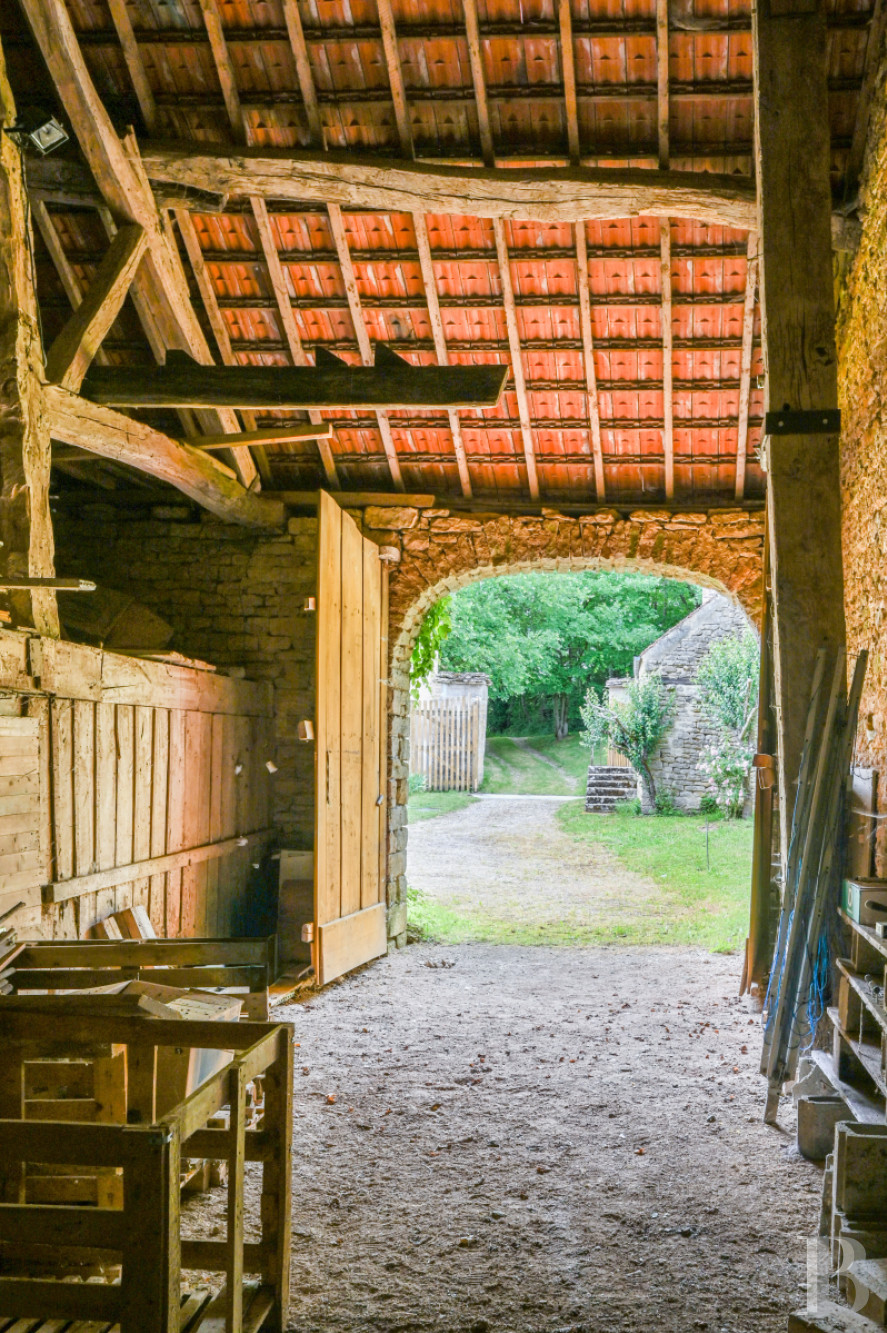
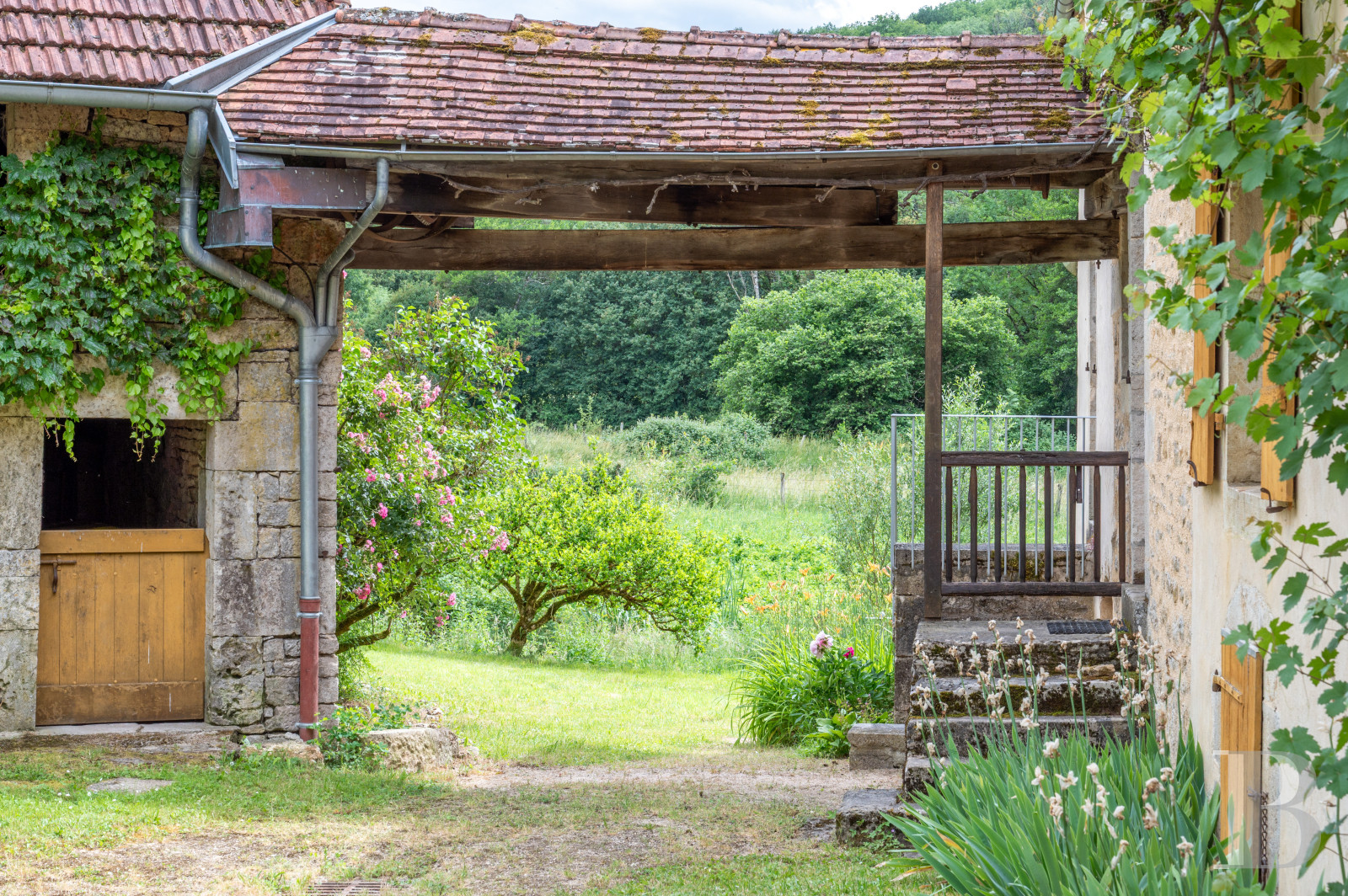
Set at right angles to the courtyard, the barn, the stable and the sheepfold form a stone complex with exposed timber framing and earthen floors. The barn opens onto the courtyard through a large arched carriage gate. A hayloft occupies the upper part; its floor is made of hard-packed earth. The adjoining stable has retained its wooden stalls, its stone trough and its double-leaf door. A tiled canopy, supported by a wooden roof frame, runs along the facade, which is covered in Virginia creeper. These buildings, with their high ceilings and solid masonry, offer potential for conversion; they are extended by the sheepfold dating from 1844 and its hayloft.
The 18th-century bakehouse
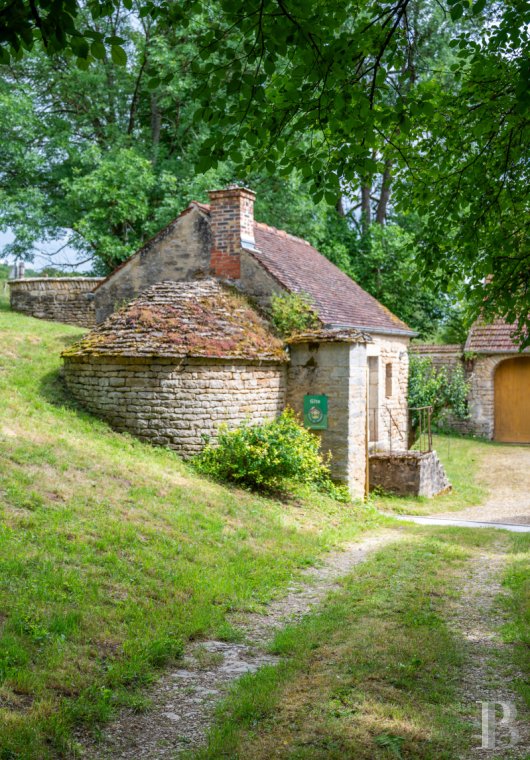
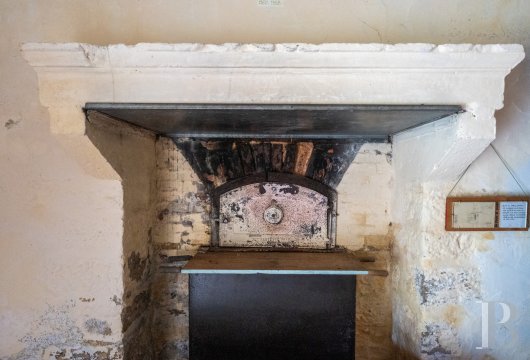
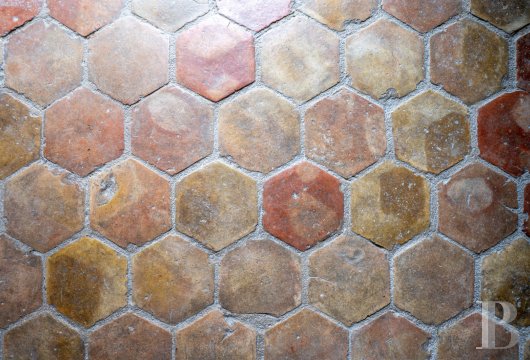
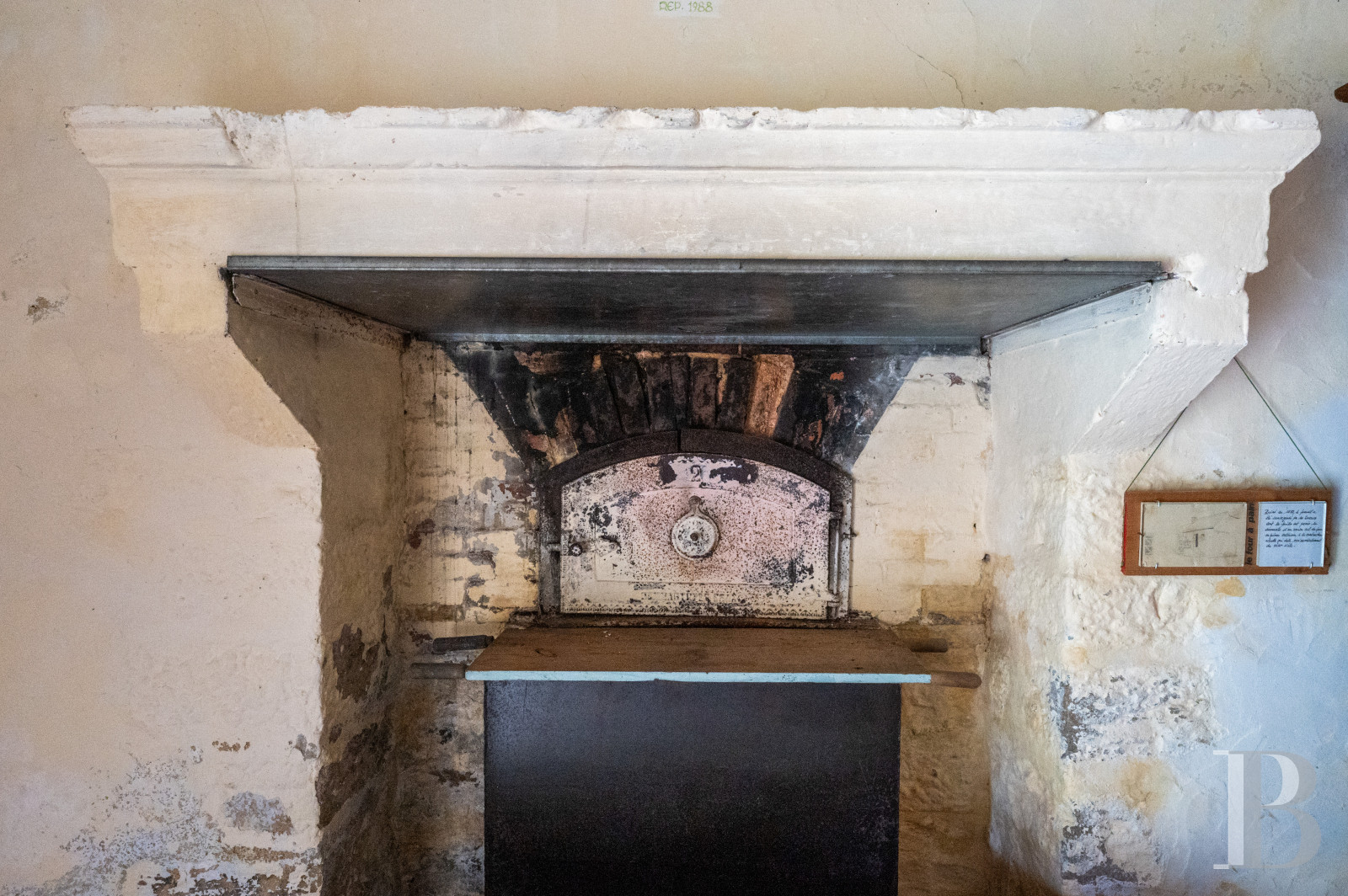
A detached stone building, found partially buried, it has since been excavated and restored. The cylindrical body of the oven protrudes from the gable, which is covered with lava stones. The brick chimney stack crowns the tiled gable roof. Measuring approximately 14 m², it has a floor of hexagonal terracotta tiles and a ceiling supported by a rafter framework. The bread oven has retained its white stone lintel and lining, as well as its brick vault and cast-iron door. A washbasin completes the reception area, complementing the holiday cottage.
The grounds
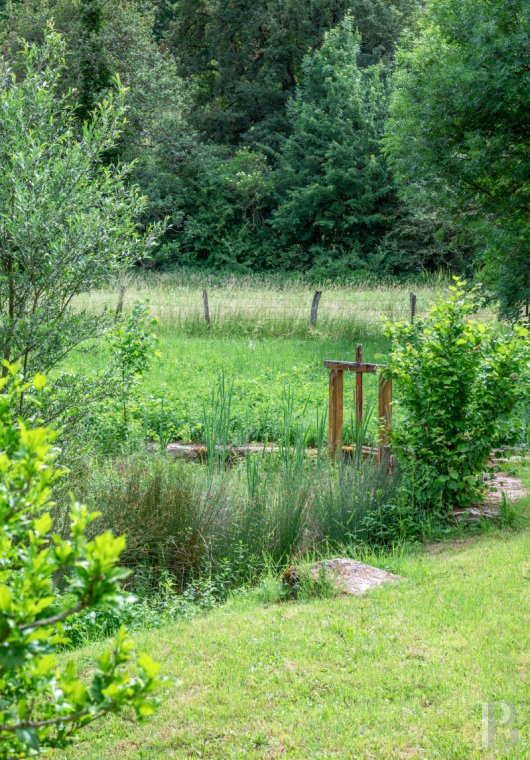
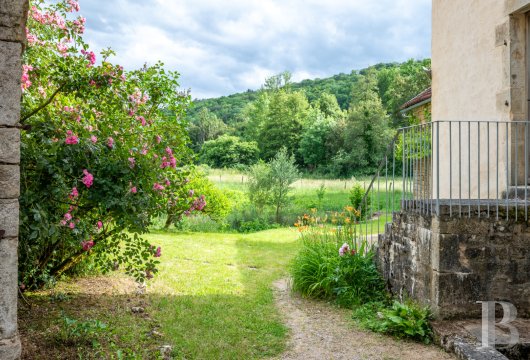
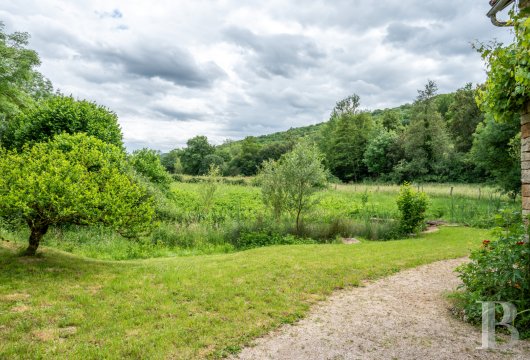
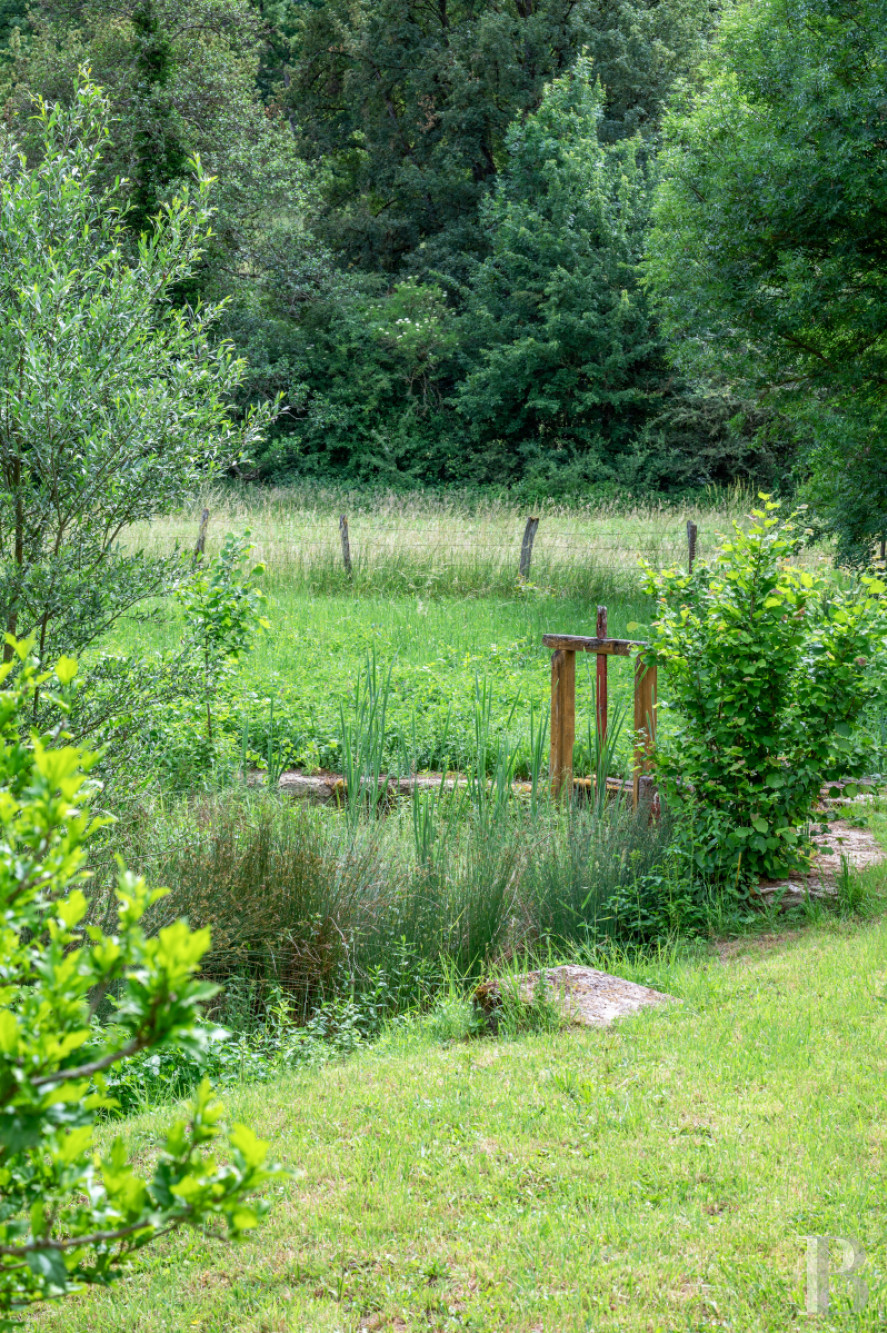
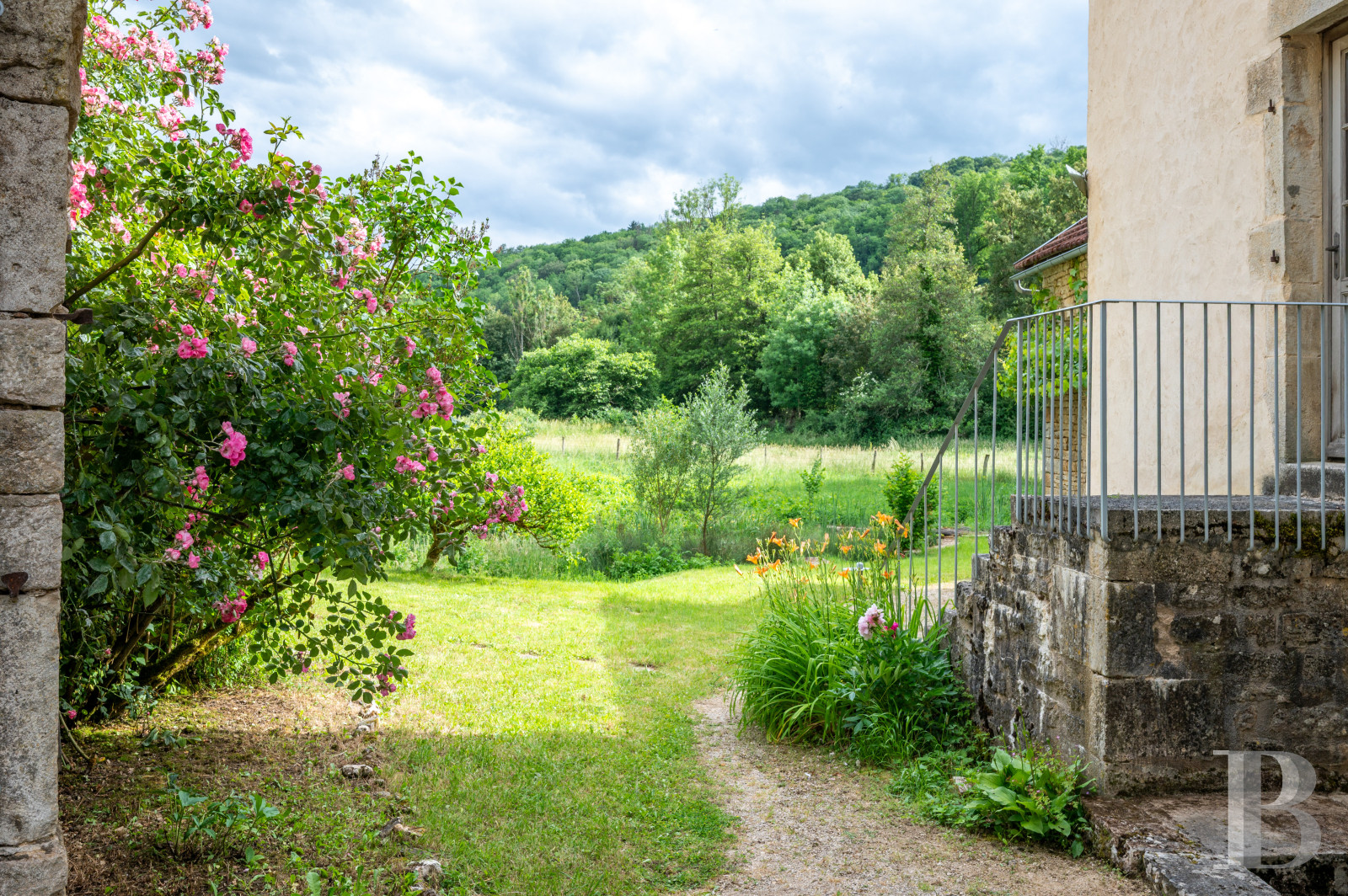
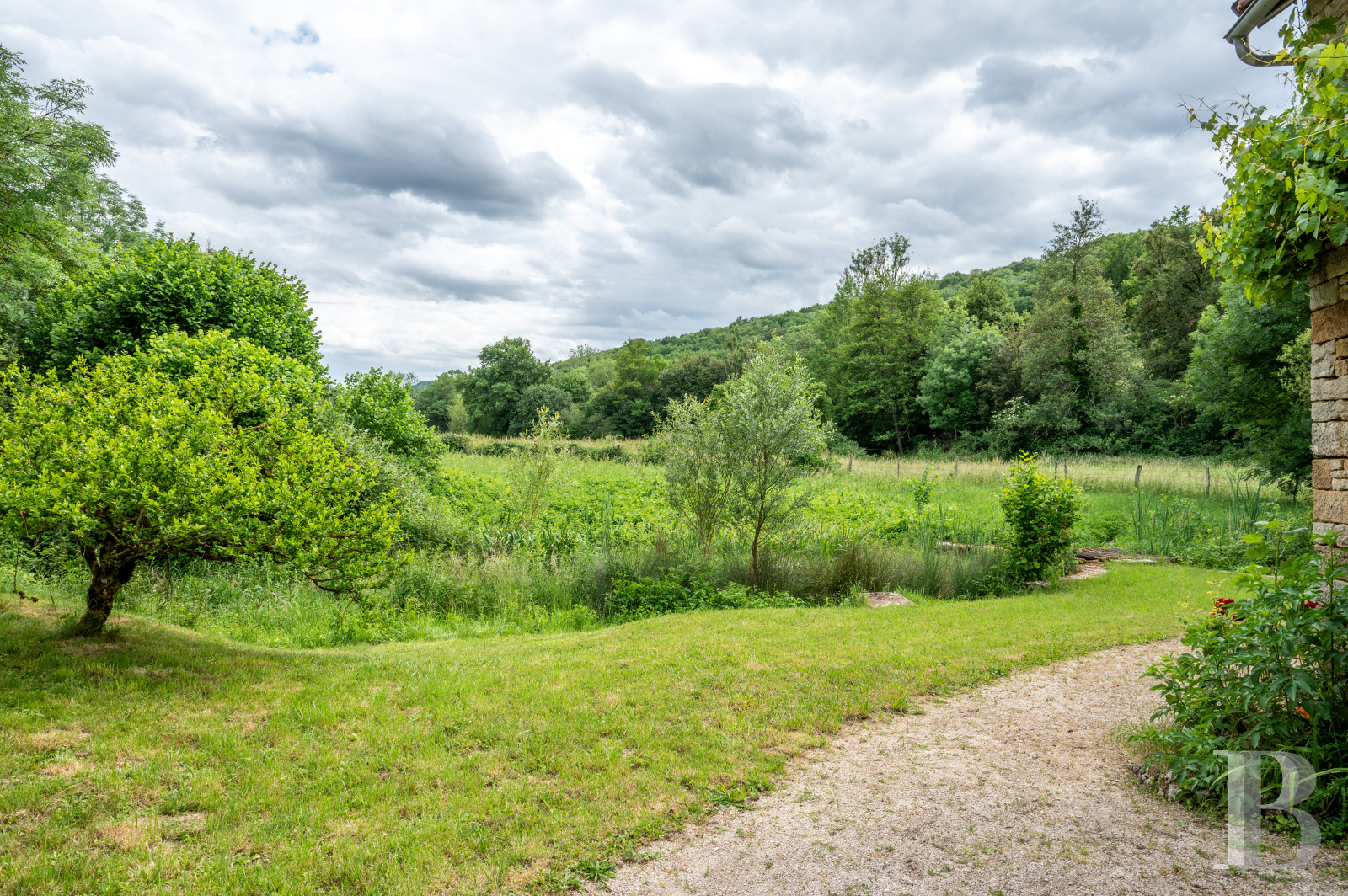
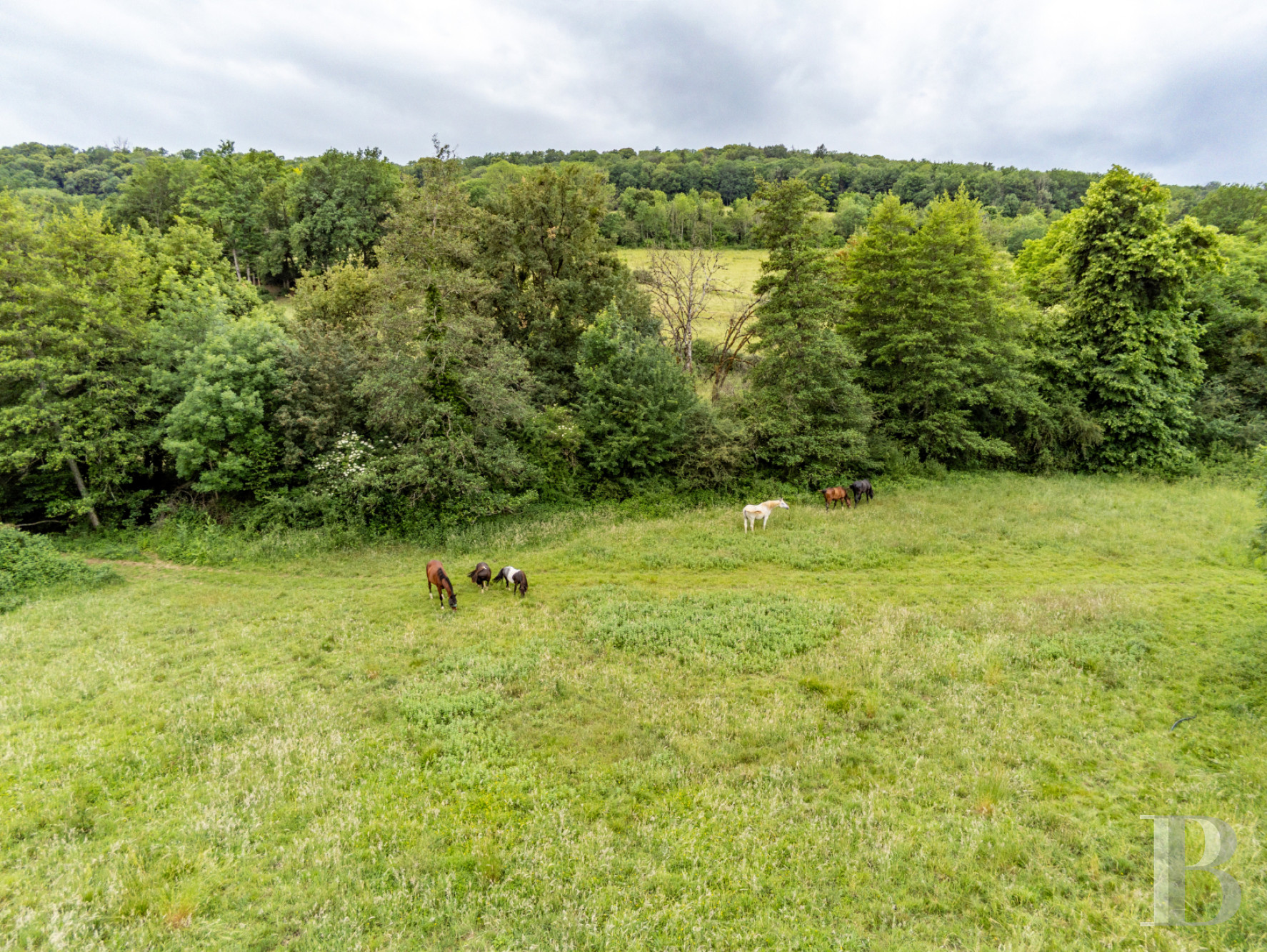
The courtyard and garden are meticulously maintained and landscaped. Irises, roses, day lilies, peonies and lilacs mark the passing of the seasons, whilst lime trees, apple trees and an ash tree form a mature, well-established setting. Beyond that, around 5.6 hectares of grassland stretch down in a corridor along the Ozerain. The meadows, which are suitable for grazing, are leased under an agricultural tenancy to the neighbouring farmer. The wooded hillsides form the horizon. The Ozerain splits into the main channel and a side channel as it flows through the property. These channels, whose sluices have long been closed, are now fed solely by rainwater run-off. The pond, which has always been on the property, is in the same condition. Re-filling the reservoir is technically feasible, but will require an investment.
Our opinion
The Auxois region is a land shaped by the grandeur of the Dukes of Burgundy: Semur-en-Auxois, Flavigny-sur-Ozerain and Alésia together form a heritage area of a density rarely found in France. The mill, first mentioned in 1026, is one of the oldest and most unassuming examples of this. The size of the outbuildings, the understated interiors, the lush green setting of the valley and the presence of the Ozerain mountain make this property a unique place, ideal for a family home, a holiday home or a tourist accommodation project. Here, time stands still and history speaks once more. The softness of the lime render, the quiet solidity of the stone, the technical precision of the restoration combined with complete respect for the original features: all these elements come together to make the mill a place where contemporary comfort and the authenticity of the building are not at odds with one another.
Reference 286522
| Main building floor area | 260 m² |
| Outbuildings floor area | 320 m² |
| including refurbished area | 75 m² |
| Land registry surface area | 5 ha 61 a 30 ca |
| Total floor area | 395 m² |
French Energy Performance Diagnosis
Information on the risks to which this property is exposed is available on the website: www.georisques.gouv.fr
Share


NB: The above information is not only the result of our visit to the property; it is also based on information provided by the current owner. It is by no means comprehensive or strictly accurate especially where surface areas and construction dates are concerned. We cannot, therefore, be held liable for any misrepresentation.