



A former hunting lodge from the 18th century with a garden, terraces and
outhouses on a splendid 1,937m² plot in the city of Nantes in western France
outhouses on a splendid 1,937m² plot in the city of Nantes in western France
Nantes,
LOIRE-ATLANTIQUE
pays-de-loire
44000
FR

Location
Nantes is France’s sixth-biggest city and the leading urban centre of the country's western seaboard. It lies in France’s beautiful Pays de la Loire region. The city’s Hauts-Pavés-Saint-Félix district is located towards the north of Nantes. It has kept a certain village atmosphere. Here, Talensac market hall, one of the busiest markets in Nantes, and the antique dealers on Place Viarme square help make this residential area particularly vibrant. Not far away, there is the Île de Versailles islet on the River Erdre with its Japanese-style garden. Riverside quays invite you to stroll leisurely by the water. The property lies on a calm road, near shops, schools and handy public transport links. From the high-speed train station in Nantes you can get to Paris in only two hours by rail. And Nantes international airport offers flights to Europe’s major cities too.
Description
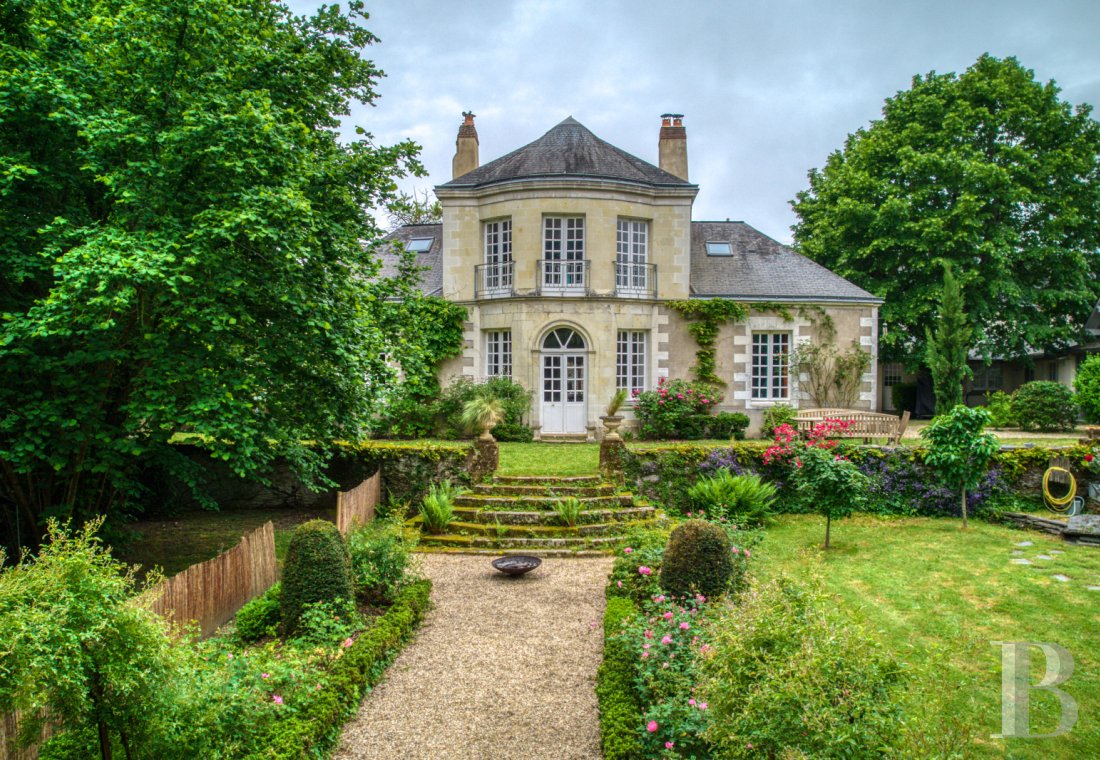
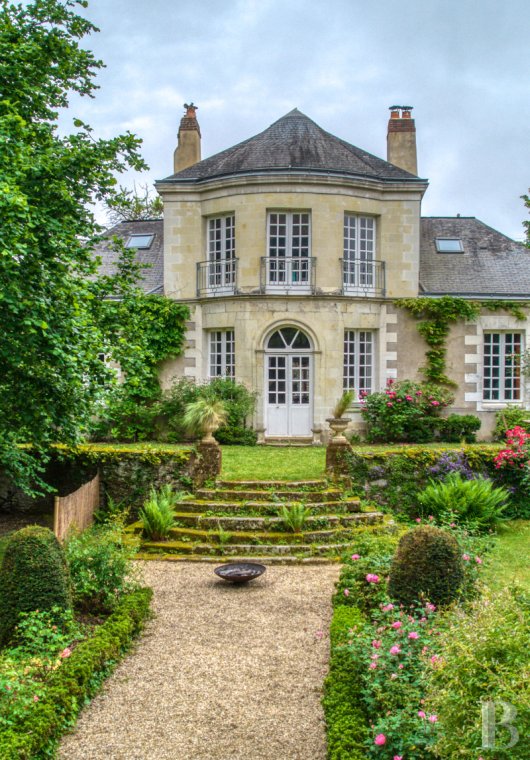
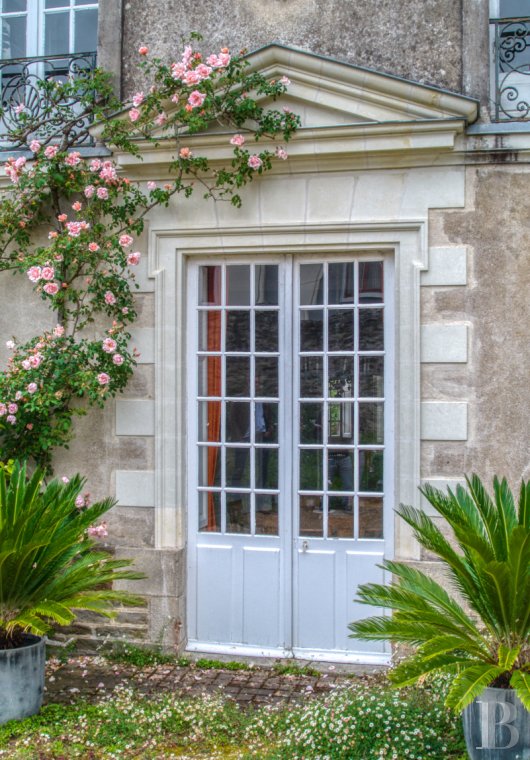
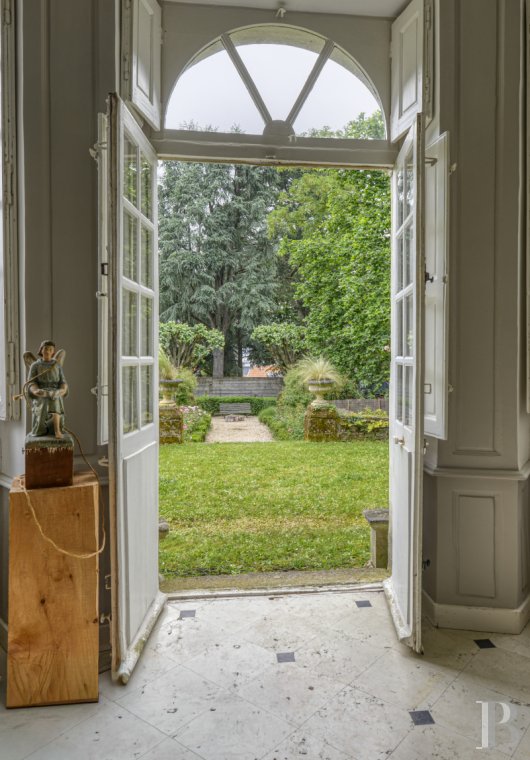
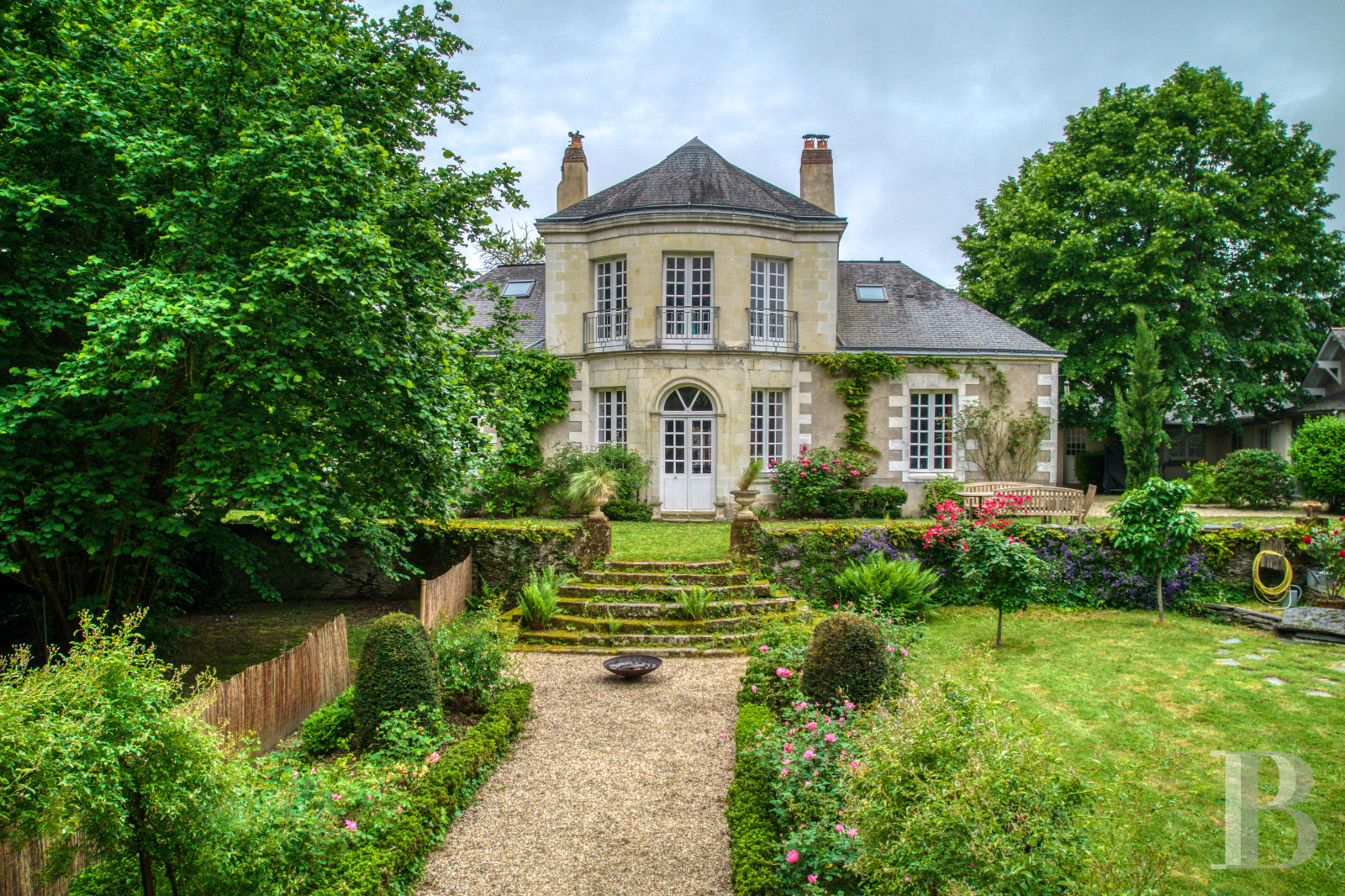
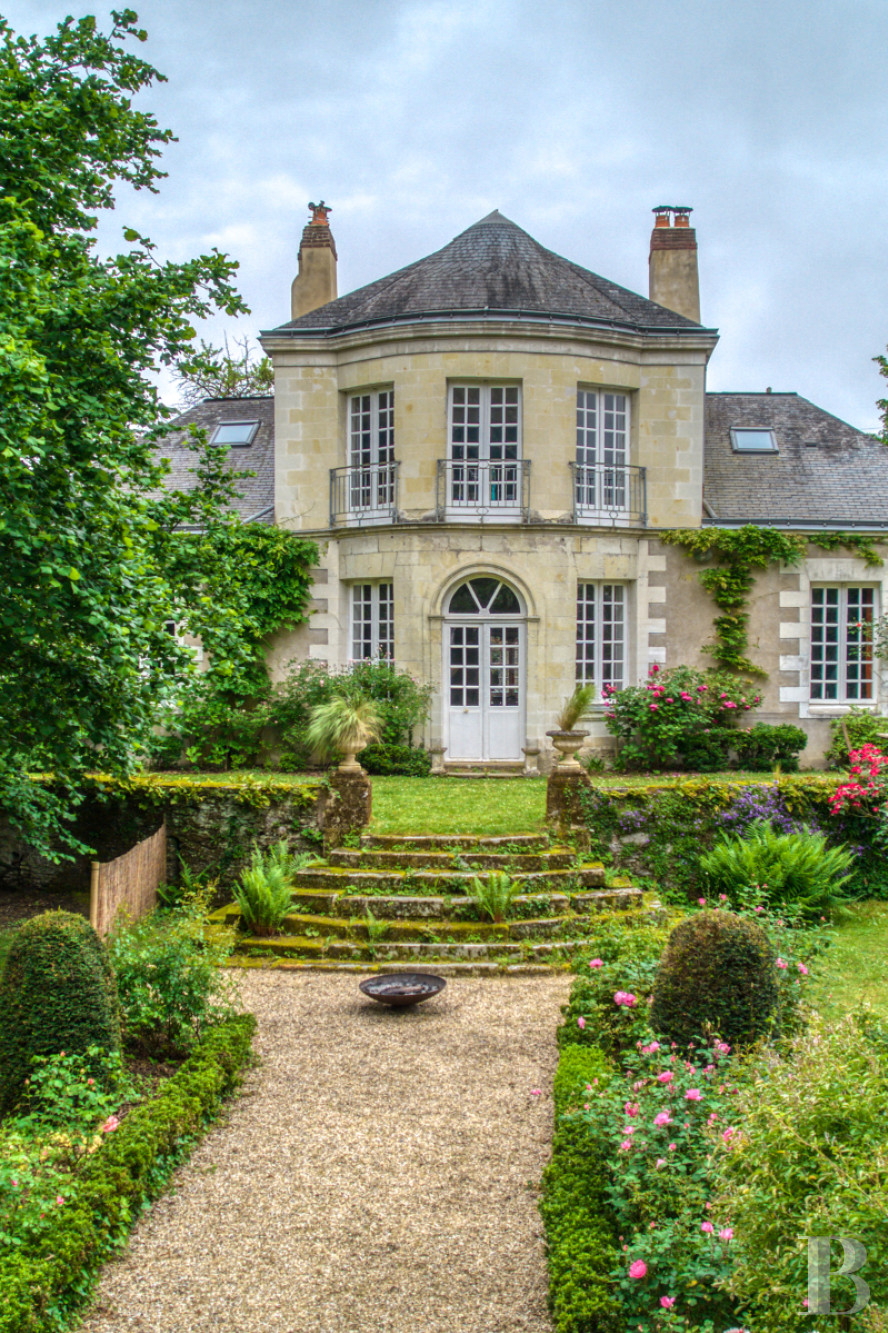
The edifice was built in 1752. It used to be part of the estate of the Château de la Haute-Forêt – a property that no longer exists. Its garden-facing elevation has a central section with a gently rounded end beneath an apsidal slate roof. An arched doorway fitted with a fanlight and a glazed double door with small panes leads out into the garden from the ground floor. It stands between two rectangular windows. Upstairs, the apsidal end is punctuated with three large windows, each fitted with a wrought-iron guardrail. The symmetrical arrangement of the glazing and the perfectly even proportions reflect 18th-century taste and classical balance. This design also brings an abundance of natural light inside. The house has a ground floor, a first floor and a second floor in the roof space. It includes five bedrooms and three shower rooms. It offers a 190m² floor area. The 1,937m² plot includes a beautiful landscaped garden. This land was once part of a more extensive estate, made up of vineyards and woods and extending down to the banks of the River Erdre. The outbuildings have been redesigned over time and the old stable converted into a dwelling beside a workshop. On the west side, along the road, there is a series of shelters and storerooms, as well as a self-contained apartment.
The house
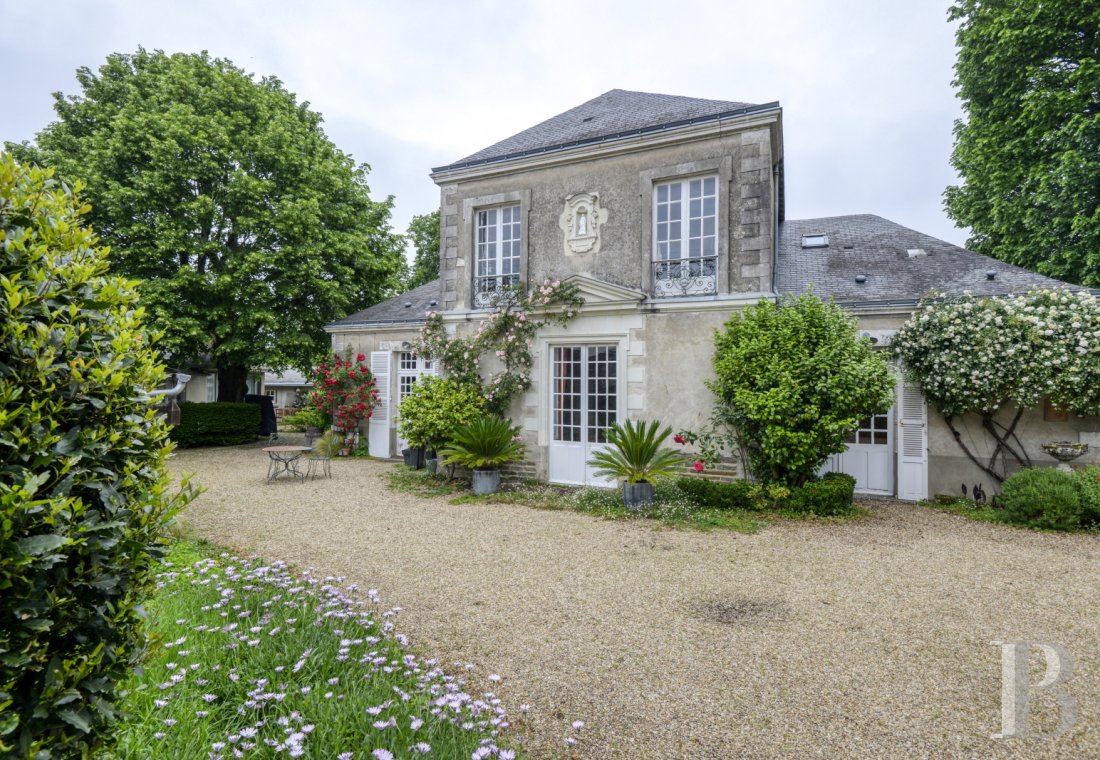
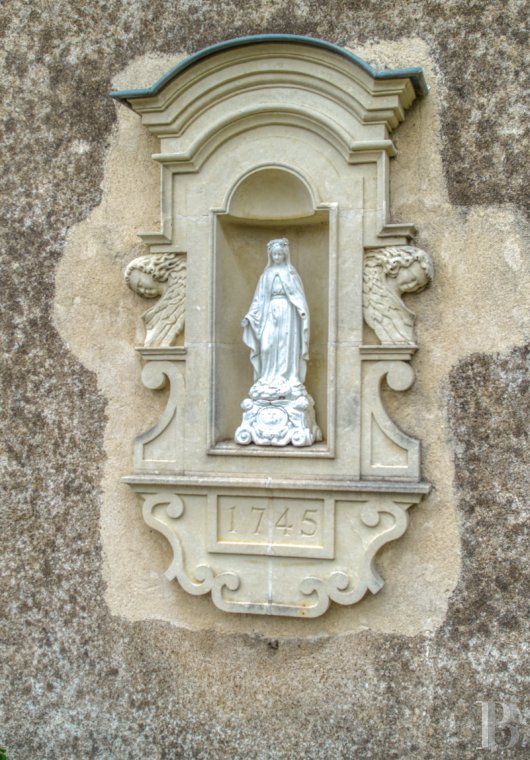
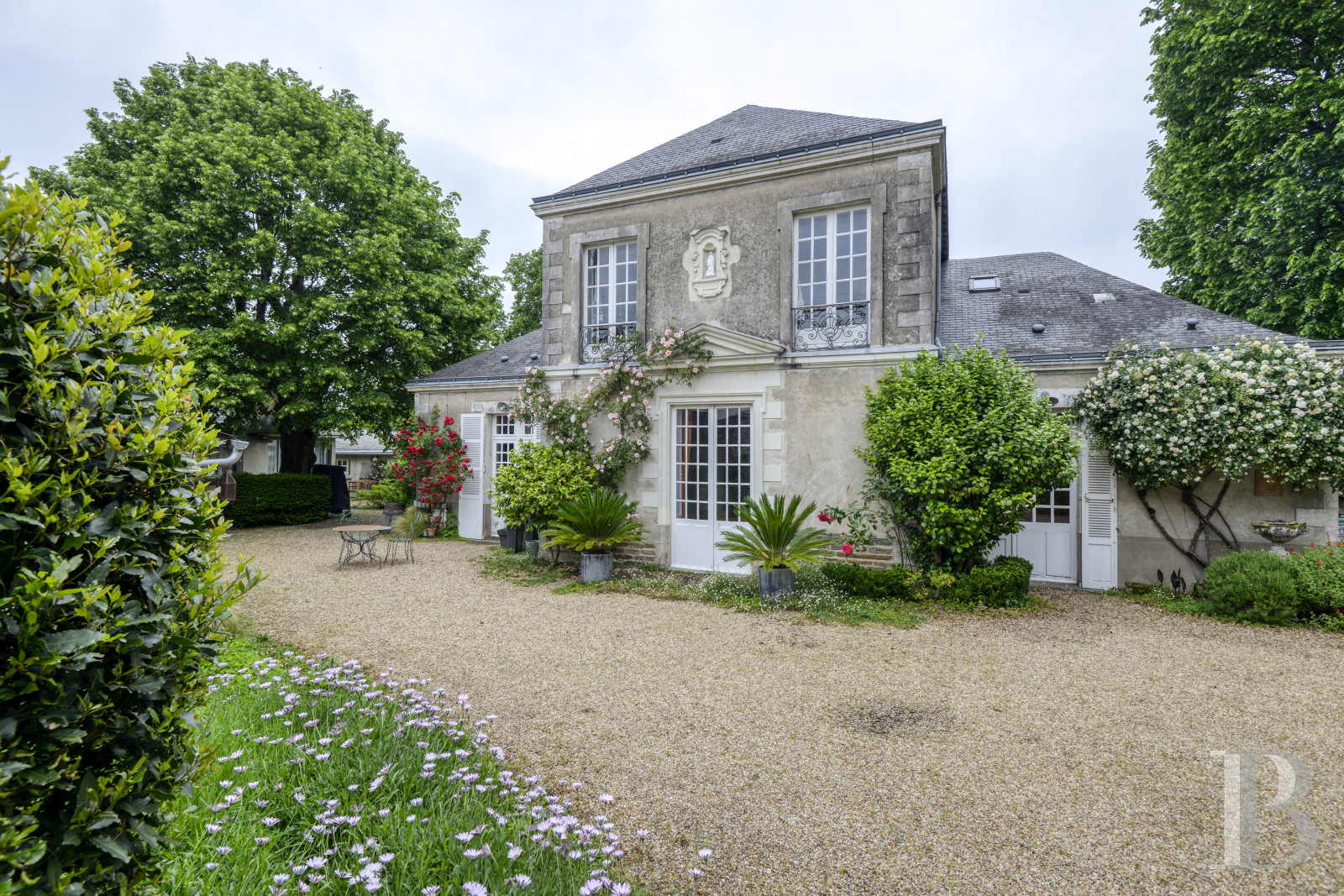
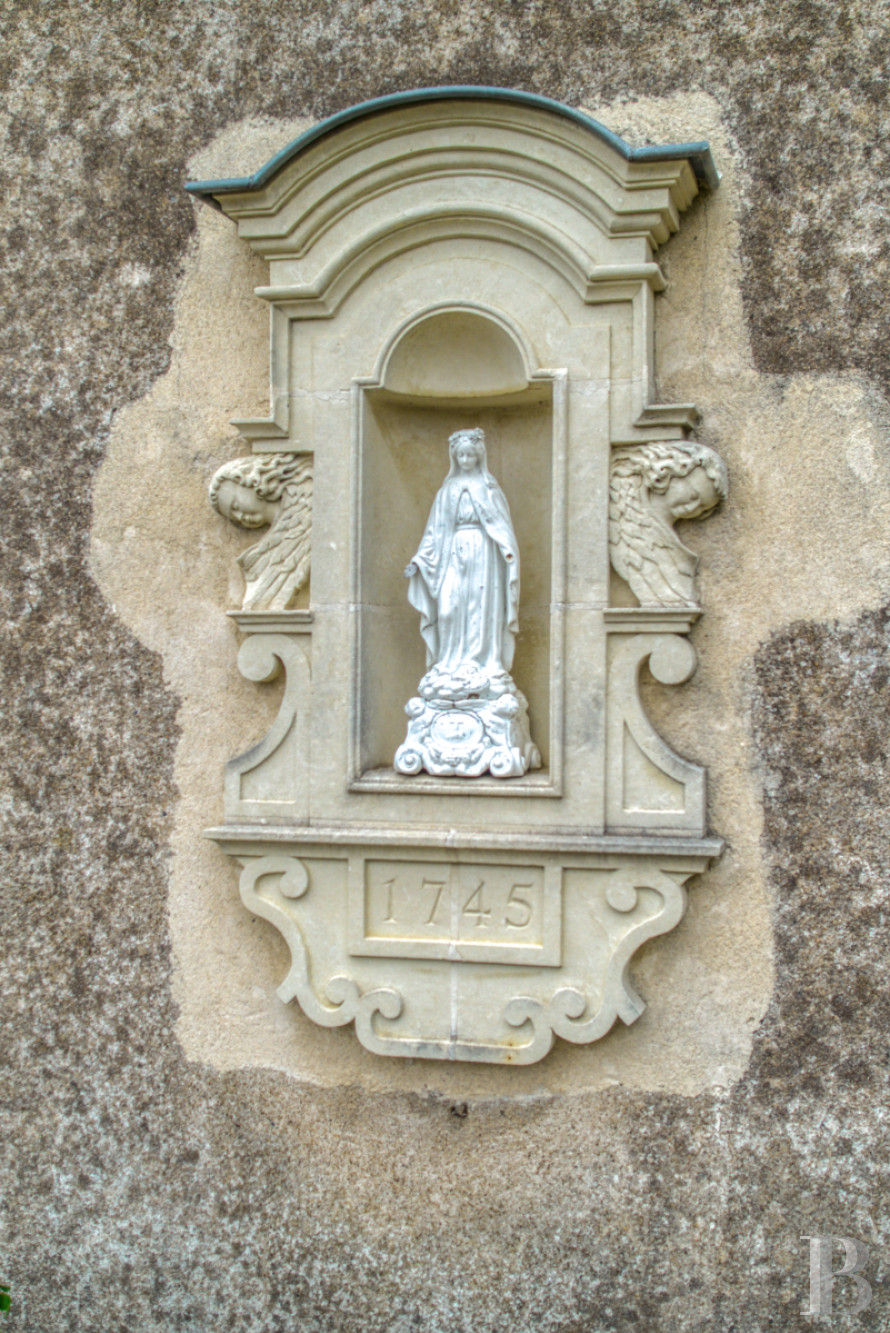
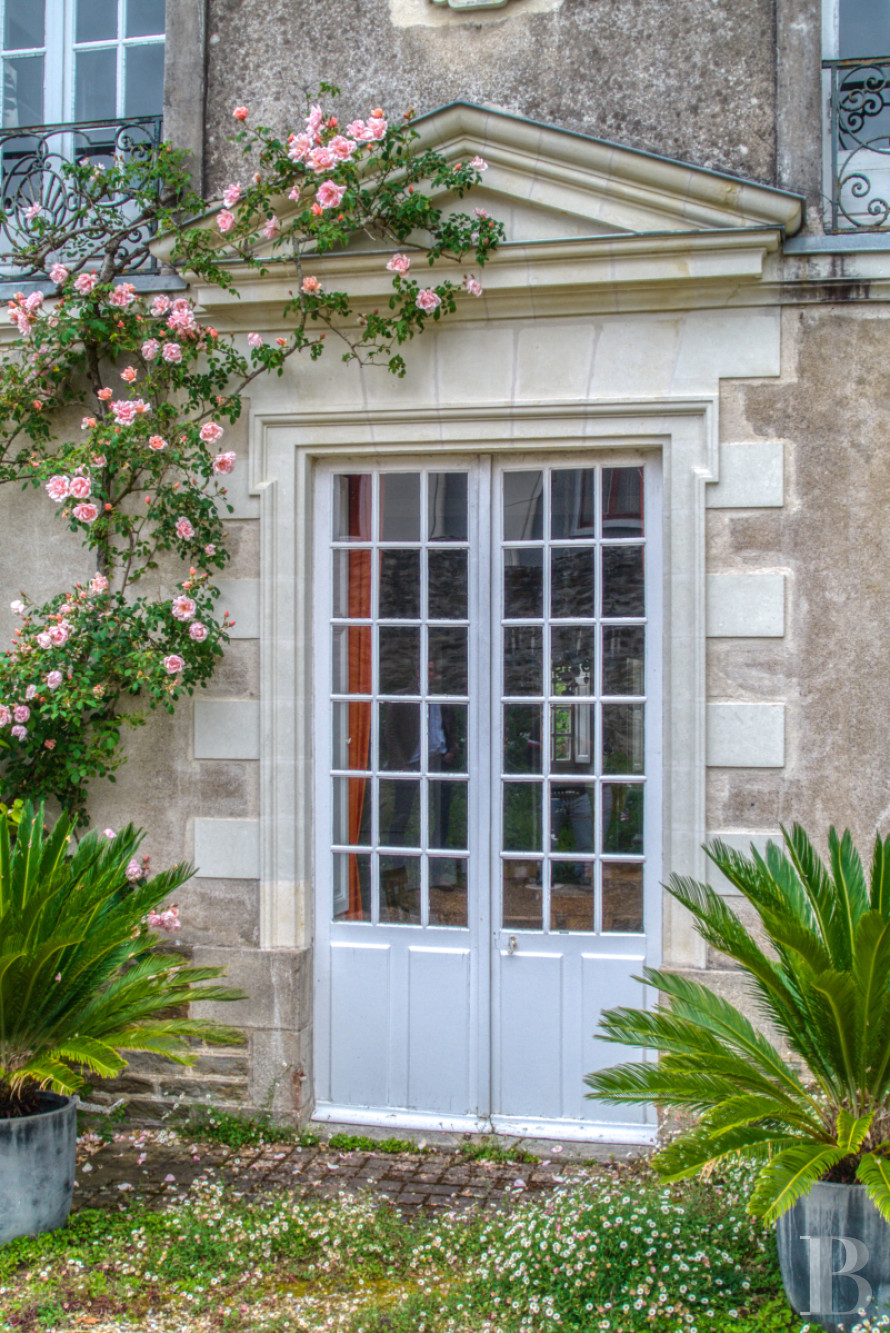
A gate leads into the grounds. Beyond a courtyard, the fine edifice comes into view. Its facade has a two-level central section, framed between two lower wings. The window surrounds of exposed tuffeau stone give relief to this facade. A triangular pediment above the central entrance door discreetly marks the axis through the edifice. Higher up, there is a stone niche housing a statuette of the Virgin Mary.
The ground floor
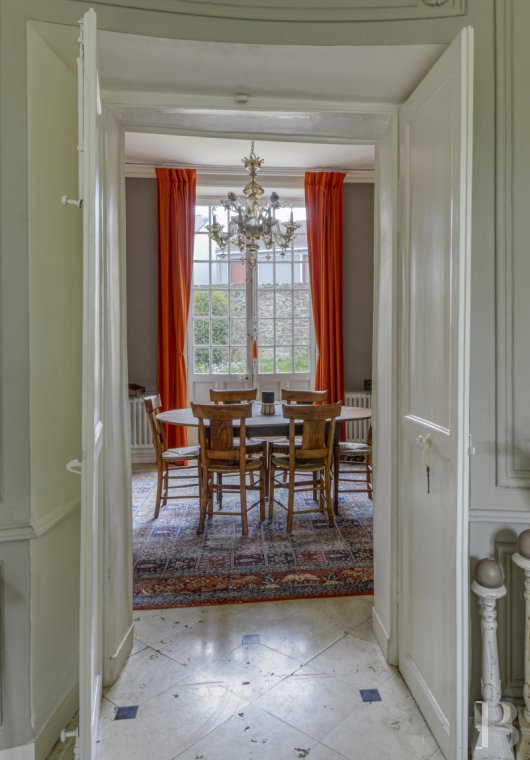
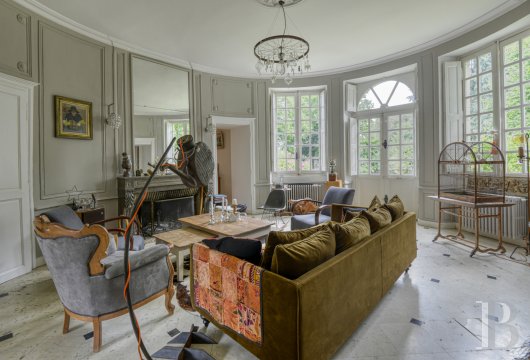
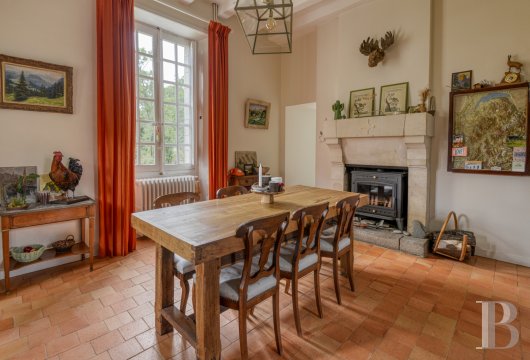
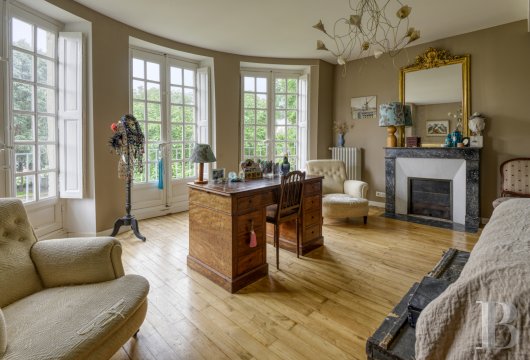
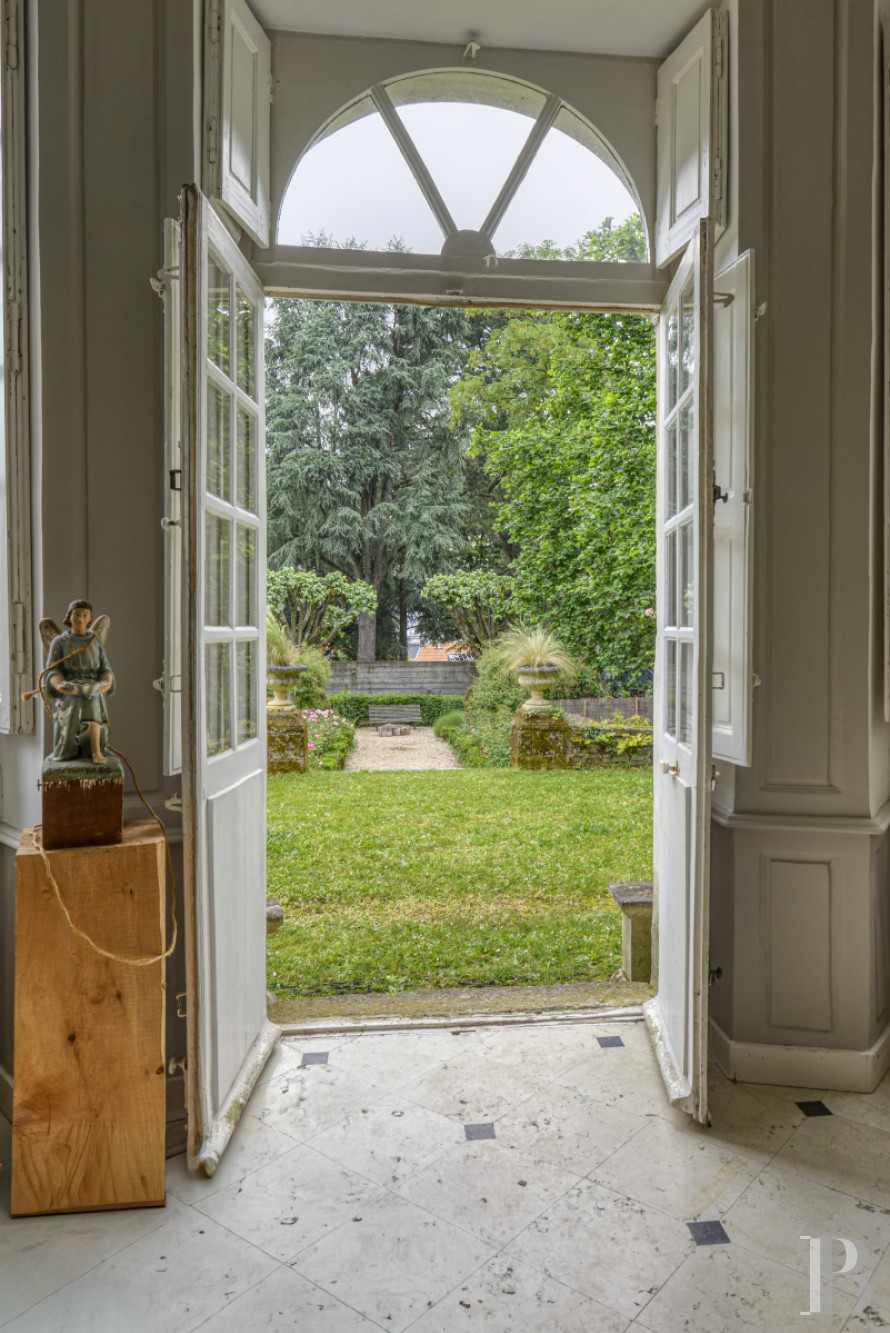
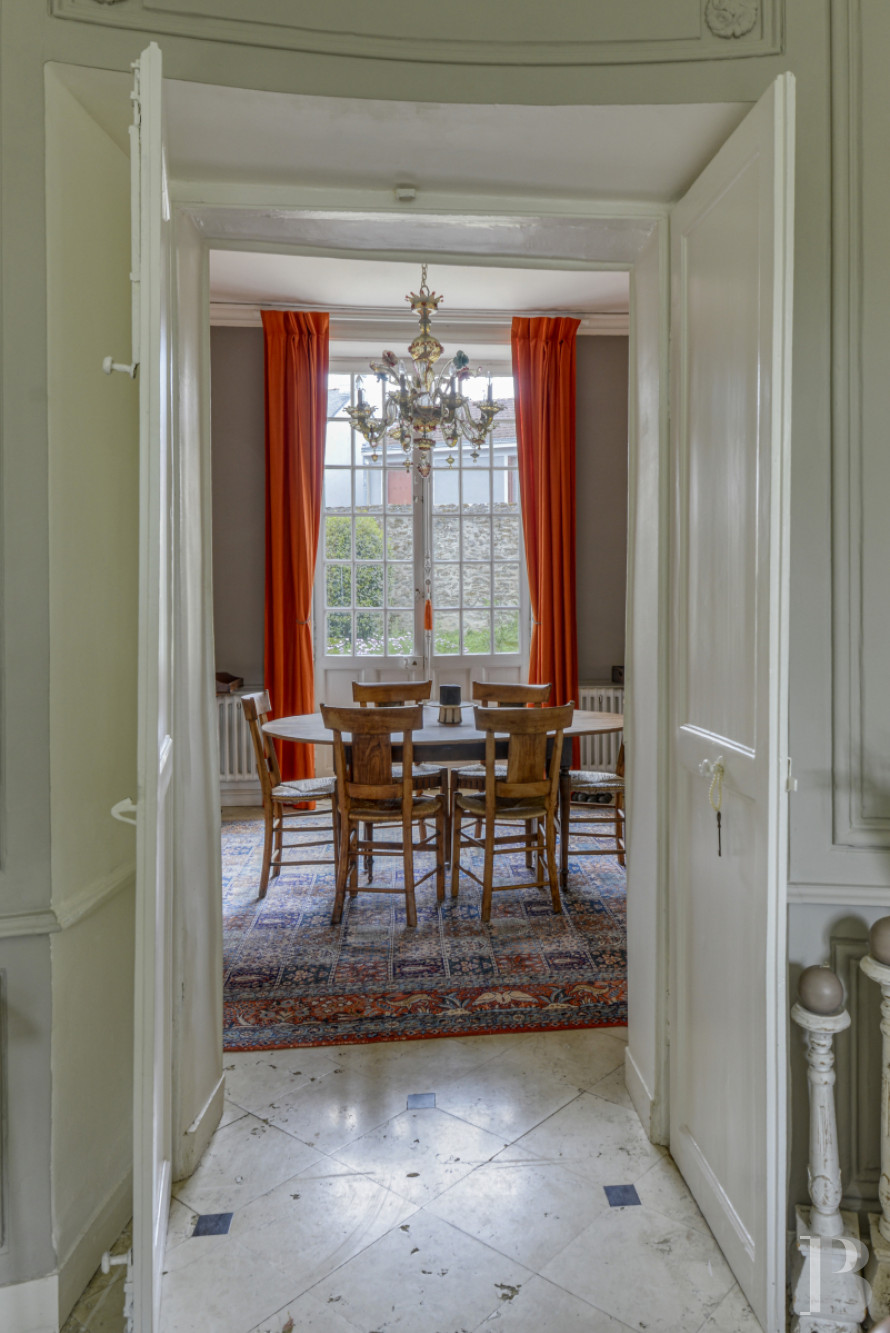
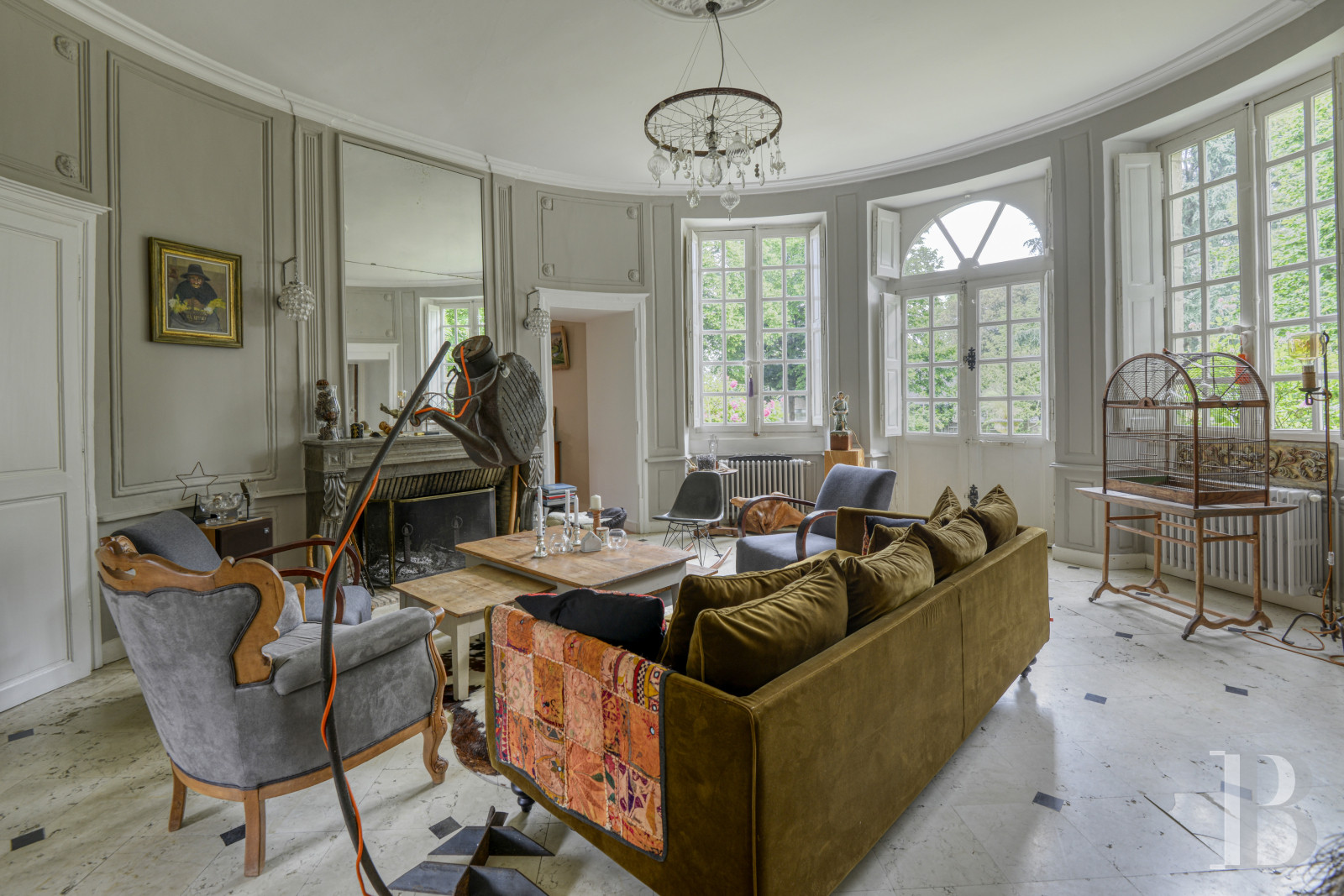
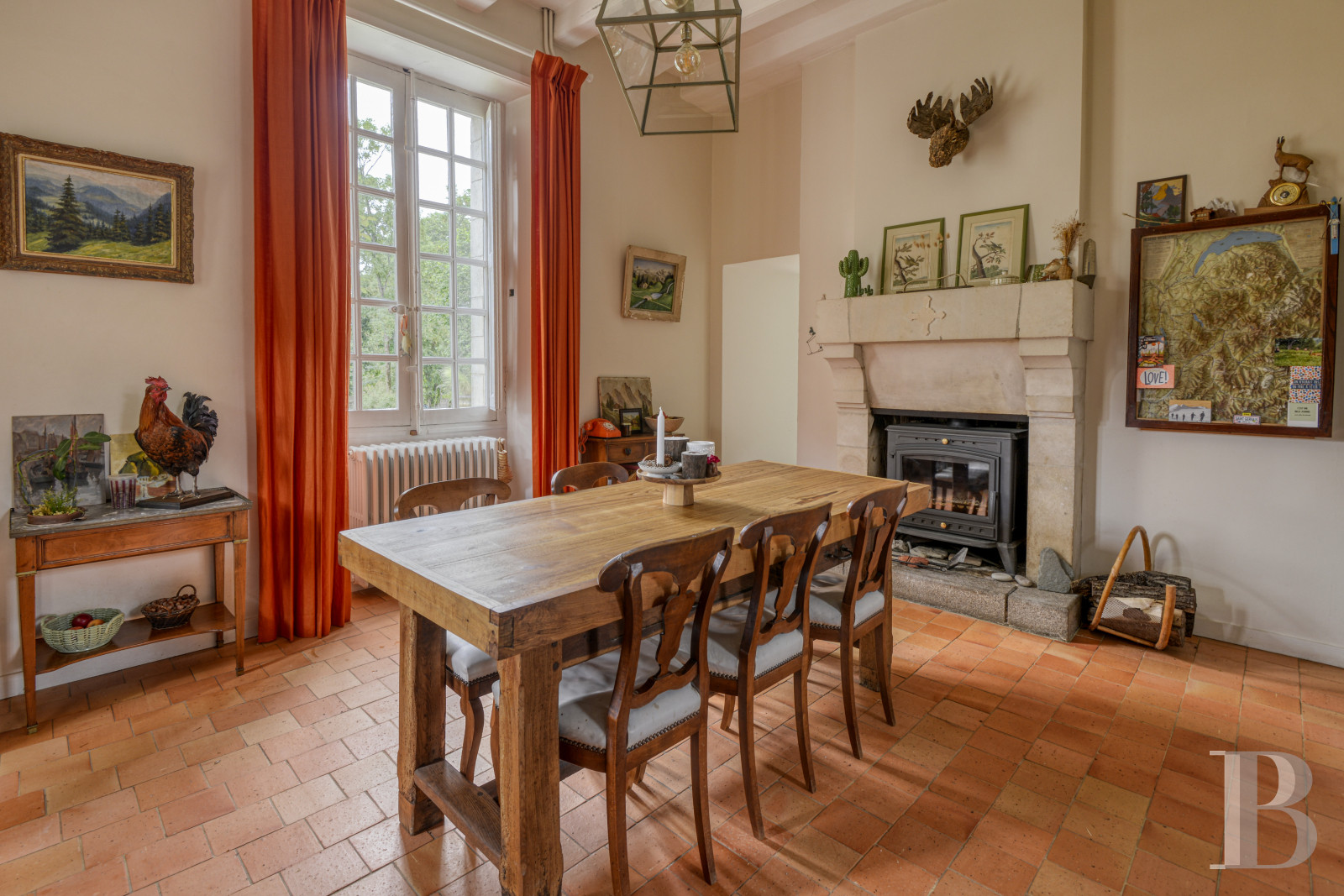
A side door leads into an entrance hall. On one side, this hallway connects to an office. On the other side, it connects to the former hunting room. The latter is still organised around a large table upon which waterfowl would be placed, beside two indoor fountains and spots where gun cabinets would have been and which you can still see today. A double door leads into a round lounge that looks widely out at the garden through two small-paned large windows and a glazed double door that takes you outside. Behind the lounge, there is a hallway that leads to a staircase and a kitchen, which is organised into two sections: there is one part that you can reach straight from the courtyard and there is another part with an eating area and a stove inside a fireplace of granite and tuffeau stone.
The first floor
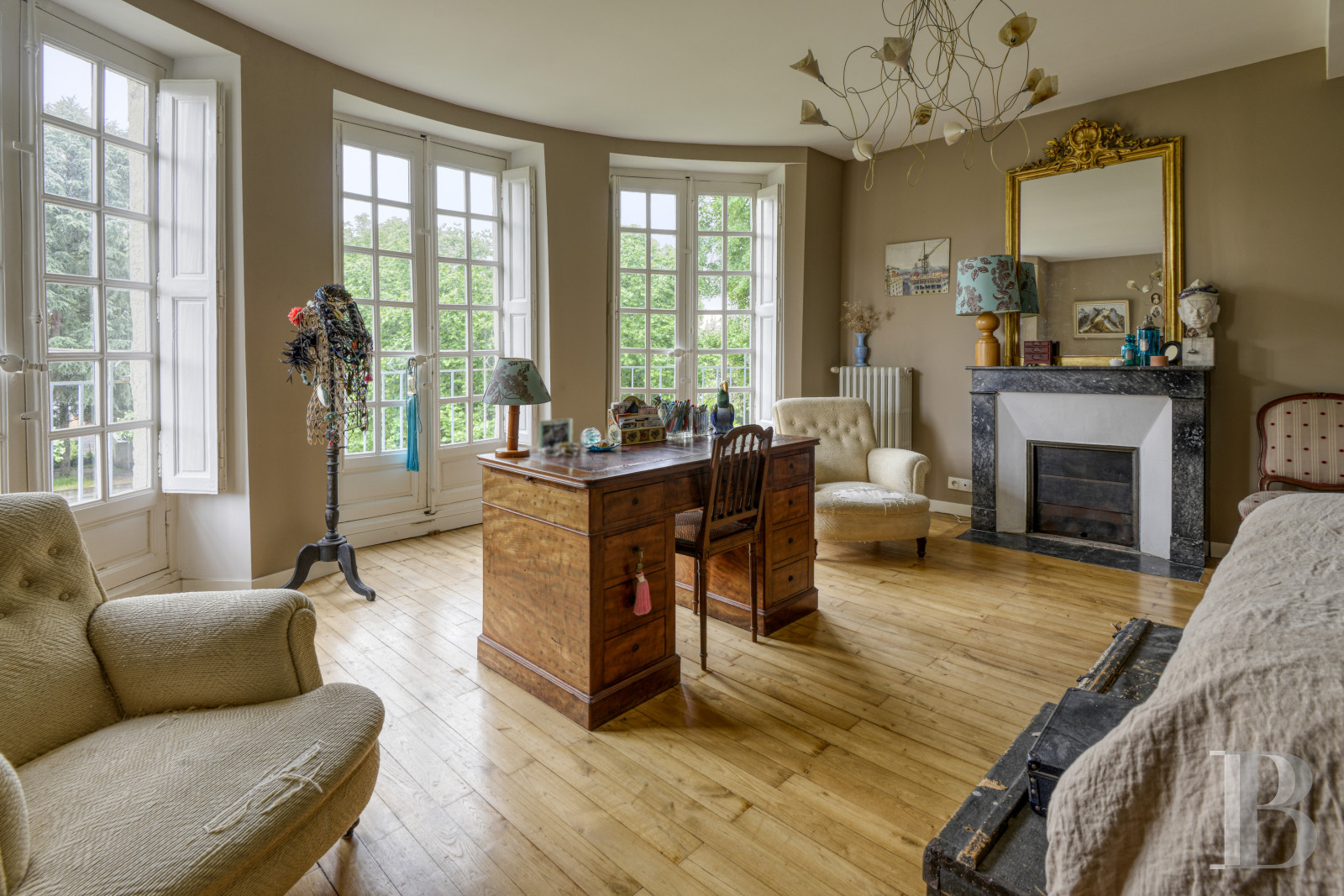
At the top of the wooden staircase, there is a landing that connects to a corridor with a floor of cement tiles laid in a black and white checked pattern. This corridor runs from one side of the house to the other. On the east side, there is the master bedroom. It looks down at the garden through three large windows in its apsidal end that fill the room with natural light. This master bedroom has an adjoining shower room. The bedroom has wood strip flooring, a black marble fireplace and an alcove. On the other side of the first floor, there are two more bedrooms. And at the end of the corridor, there is a bathroom with a double-washbasin unit. At both ends, there are loft spaces that serve as storerooms. A staircase leads up to the top floor of the main section.
The second floor
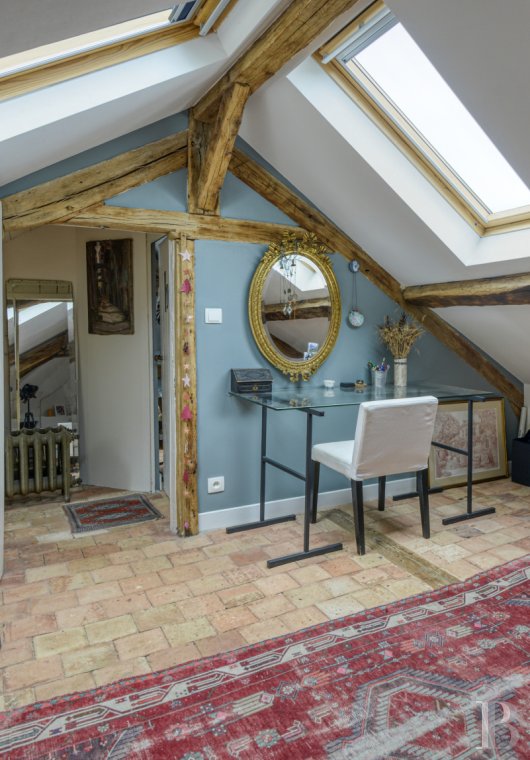
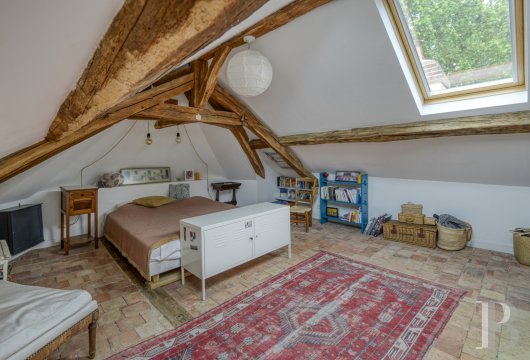
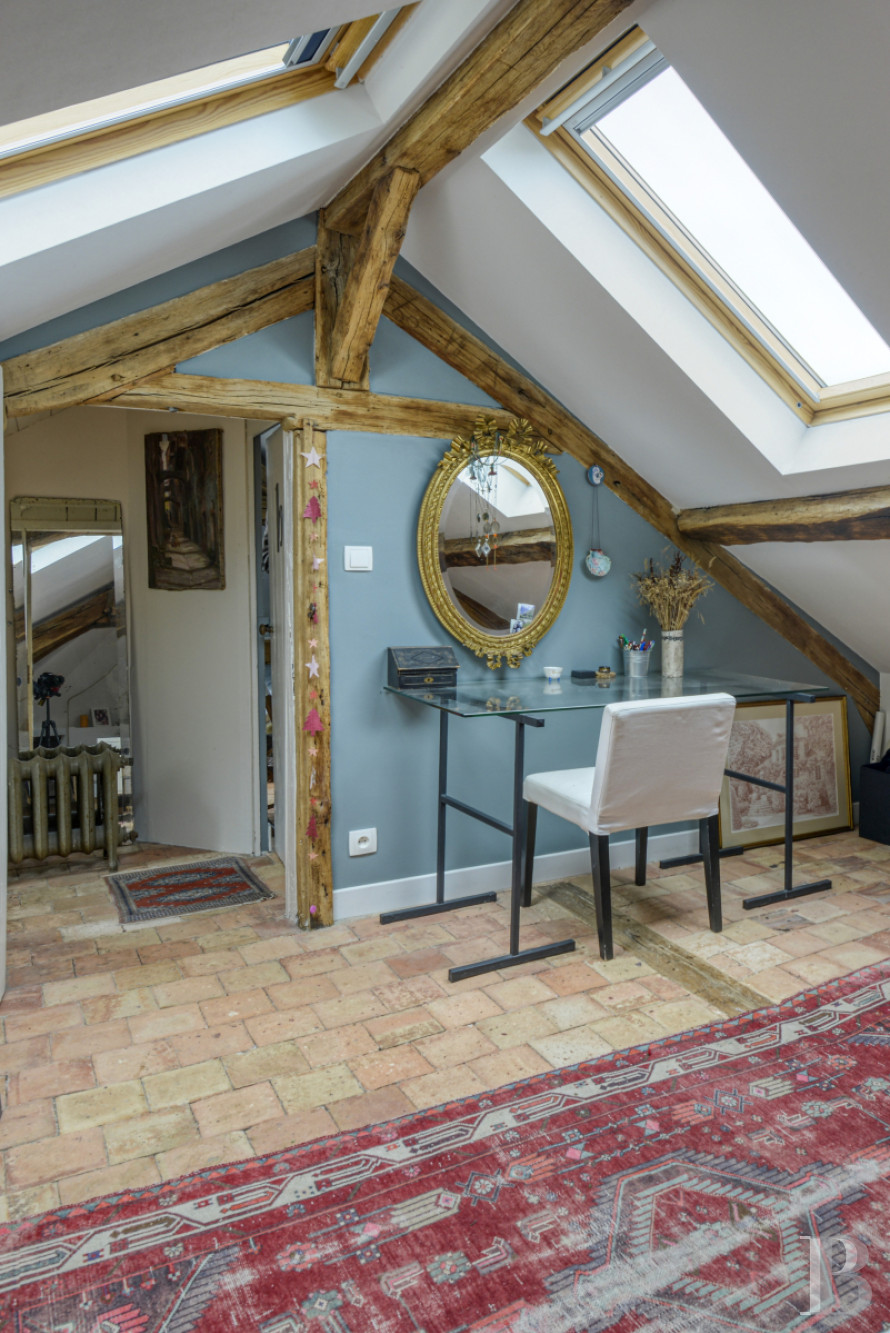
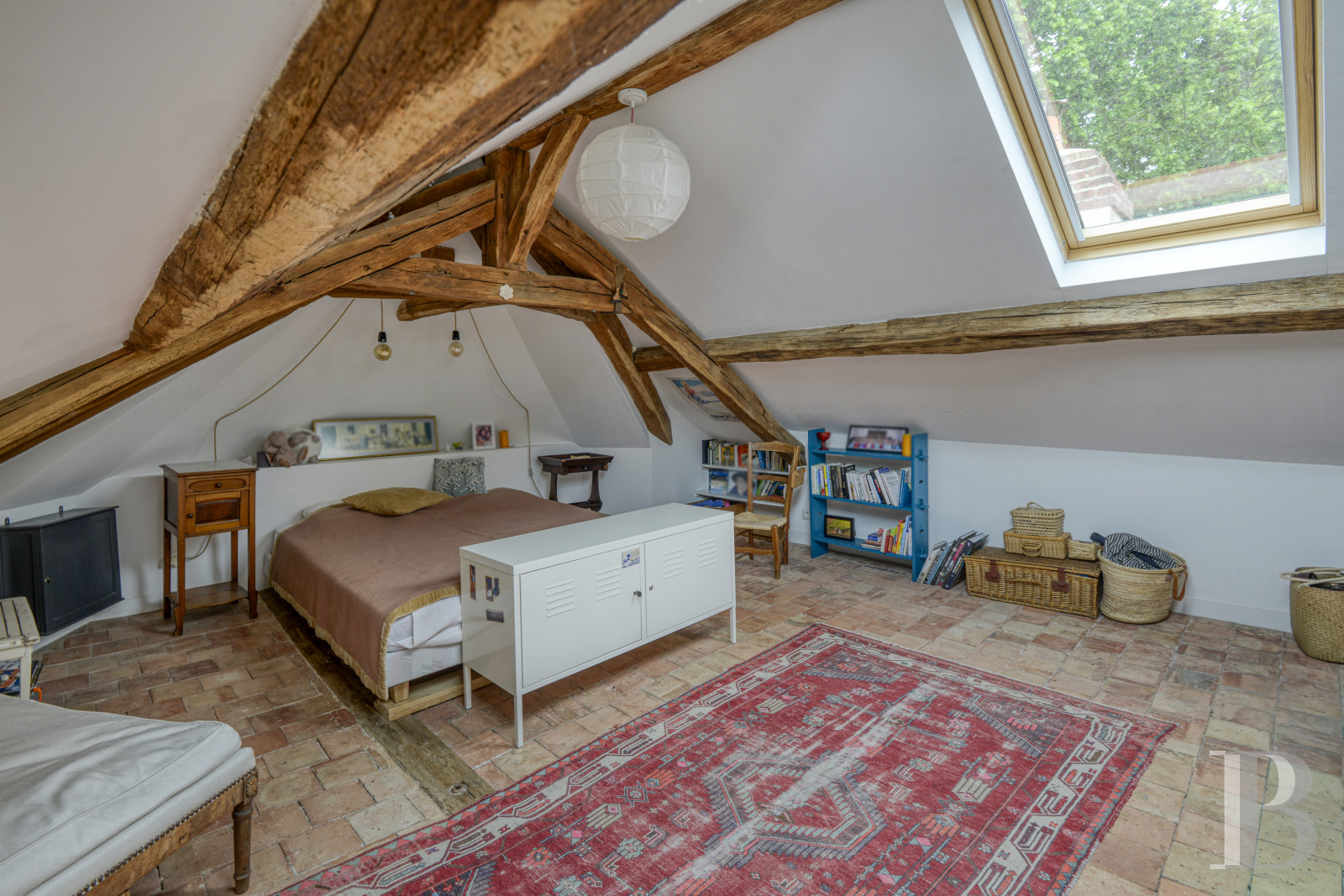
In the roof space, there are two bedrooms with sloping attic ceilings, exposed roof beams and floors of old terracotta tiles.
The outbuildings
Alongside the road and at a right angle to the main edifice there is a series of buildings in a row. On the west side, there are two storage spaces. One is open-sided, the other closed. They lie beside a technical installations room that houses a wood-fired boiler. Next, there is a corner apartment. It offers a bedroom, a lounge, a kitchen and a bathroom with a lavatory. The neighbouring former stable has been converted into a studio apartment with a mezzanine bedroom, a fitted kitchen and a shower room with a lavatory. A workshop adjoins it.
The landscaped garden
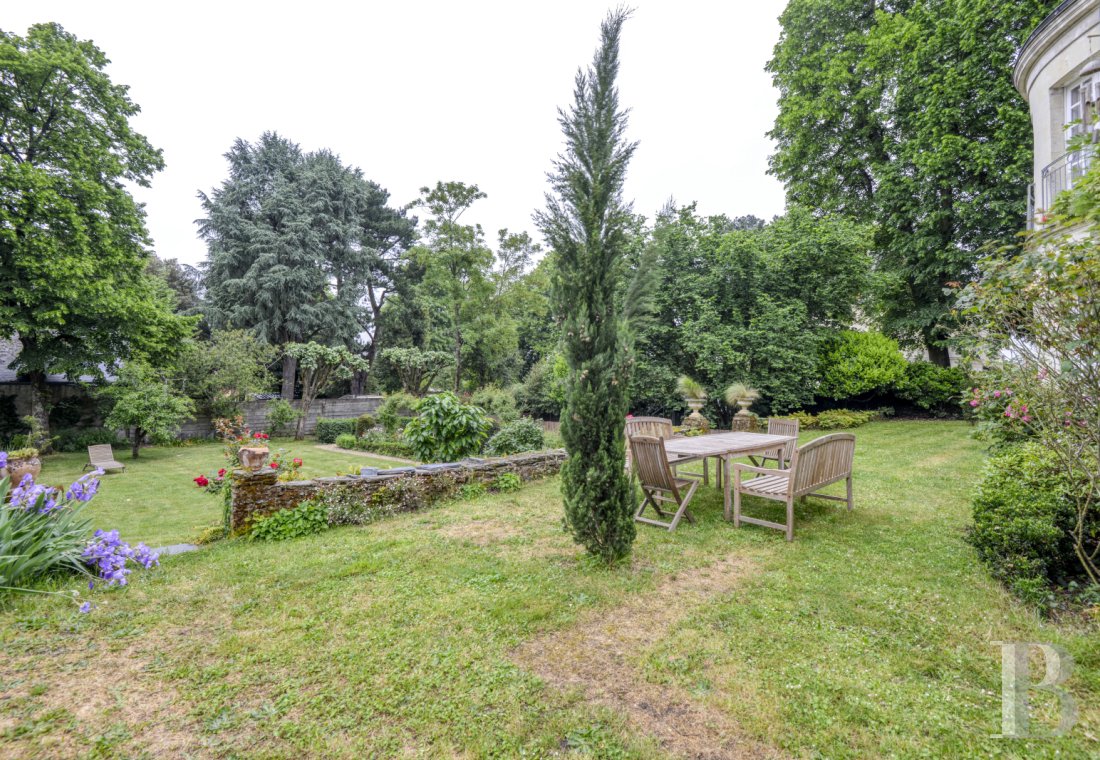
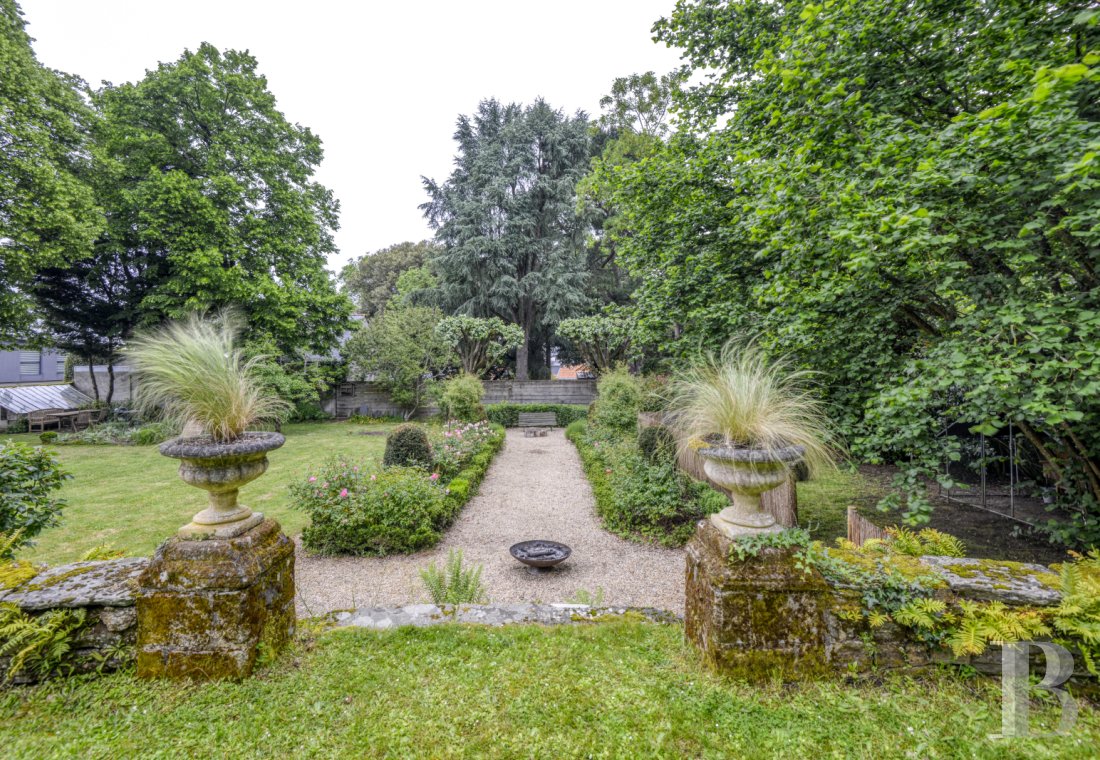
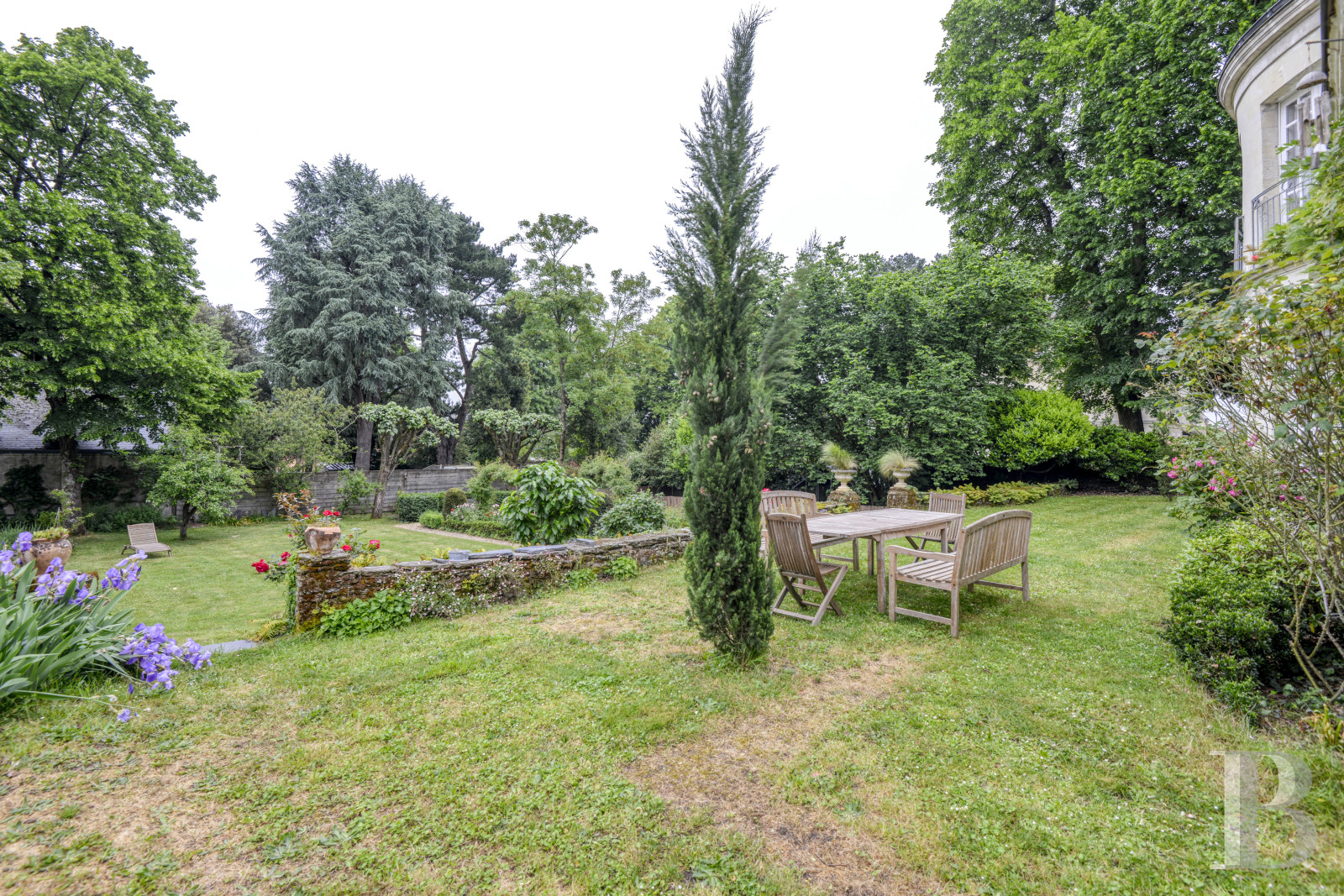
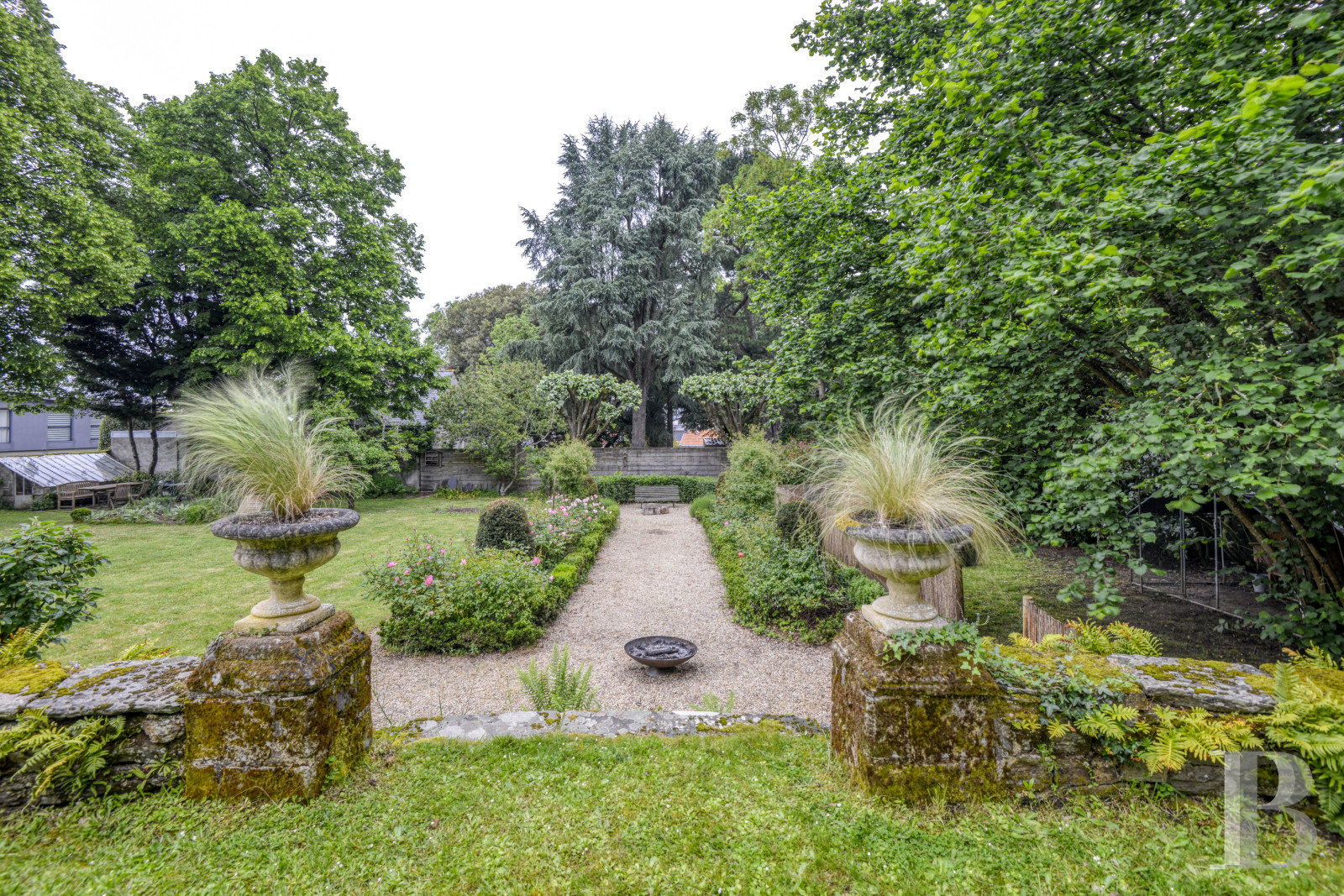
The walled garden is dotted with trees and organised into two sections. Around the buildings there are flowerbeds beside climbing roses that grow up the elevations of the edifice. Lower down, there is a more structured space: a central path runs through a rose garden in line with the house. Tall linden trees hide the home from neighbouring properties. Other trees, including fruit trees and an Osage orange tree, dot the space. On the north side, there is a greenhouse and a well at the edge of the plot.
Our opinion
This splendid edifice was originally a hunting lodge. Yet over time it has naturally taken on its new role as a charming family home. Despite this evolution, the building has kept its true soul and roots. Indeed, with its tuffeau stone, old terracotta tiles, exposed beams and marble fireplaces, the dwelling has stayed faithful to its past. Here, successive transformations have supported changes in purpose more than they have altered the place’s character. The layout, the materials and certain unique spaces, like the old hunting room or the round lounge leading out into the garden, still bear witness to this heritage. This remarkable property would be a delight for anyone seeking the authenticity of historical architecture or who would be interested in tastefully developing the house further, with respect for its fine balance.
Reference 274237
| Main building floor area | 193 m² |
| Outbuildings floor area | 104 m² |
| including refurbished area | 69 m² |
| Land registry surface area | 1937 m² |
French Energy Performance Diagnosis
Information on the risks to which this property is exposed is available on the website: www.georisques.gouv.fr
Share


NB: The above information is not only the result of our visit to the property; it is also based on information provided by the current owner. It is by no means comprehensive or strictly accurate especially where surface areas and construction dates are concerned. We cannot, therefore, be held liable for any misrepresentation.