



A 7-ha former farm with a 17th-century Provencal farmhouse, a manor, outbuildings
and a 19th-century wine storehouse, in between Montpellier and Nîmes
and a 19th-century wine storehouse, in between Montpellier and Nîmes
Quissac,
GARD
languedoc-roussillon
30260
FR

Location
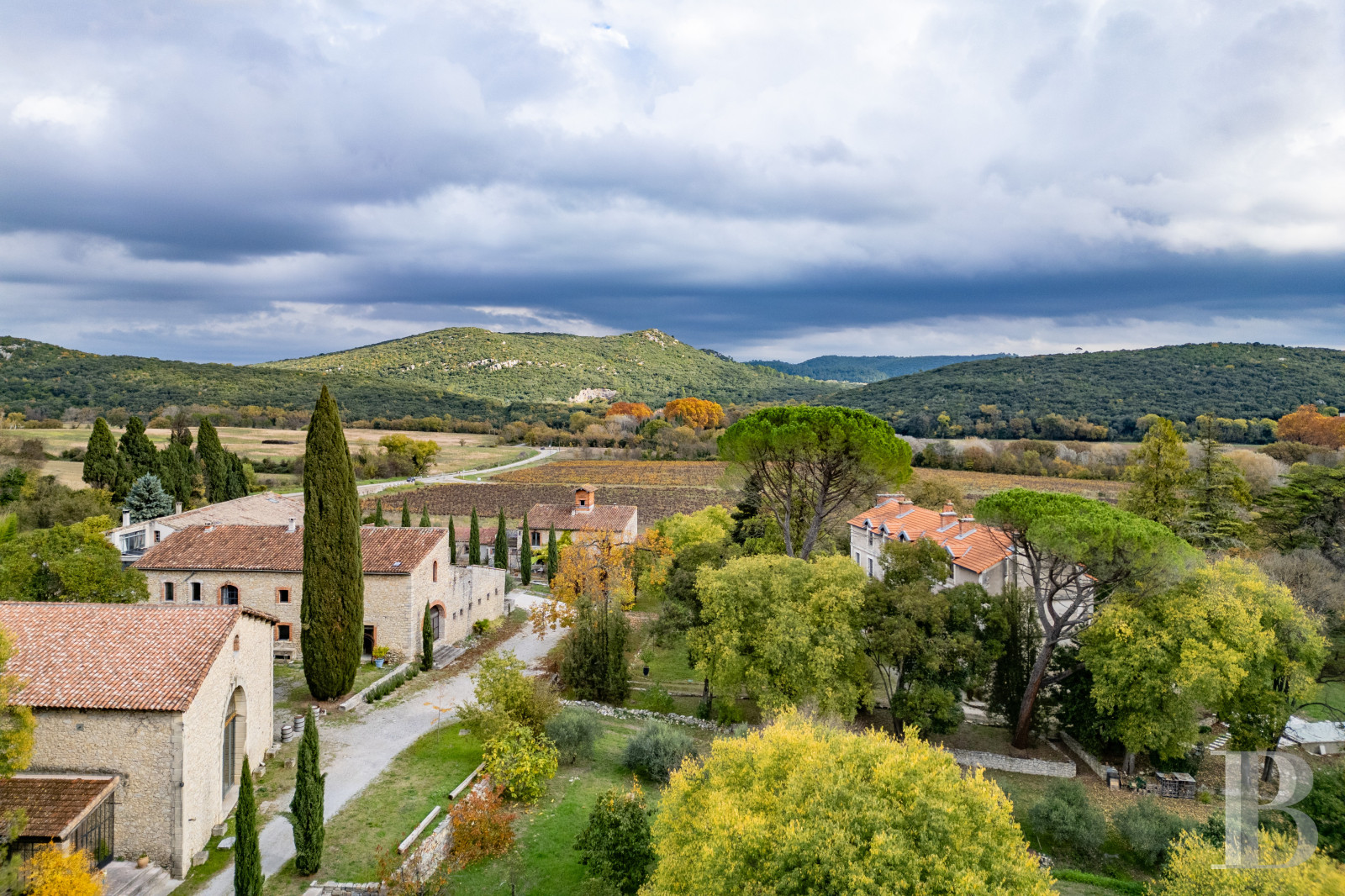
Extending along the base of the Cévennes mountains, the property is located in the Gard department, while, nearby, the small town of Quissac, located at the crossroads between Nîmes (30 kilometres), Alès (25 kilometres) and Montpellier (40 kilometres), as well as less than one hour from the Mediterranean, provides access to these larger cities and their train stations thanks to regular buses. In addition, Quissac also boasts a clinic, health centres, primary schools, a lower secondary school, an aquatic centre, a multimedia library, cultural and athletic organisations, as well as all local shops.
Although its piedmont slopes were once the epicentre of Cévennes silkworm farming during the 18th century, this region was also the site of significant wine production on its more favourably oriented hillsides.
Today, this area has happily taken on a new role as an eco-tourism hub, thanks to its breath-taking natural heritage, made up of four protected areas: the Banassou River's marlstone hillsides, the Rouvière dam, the plains of Pompignan and the Vidourle River, as well as the Vidourle River valley, which stretches from the town of Sauve all the way to the Petite Camargue’s wetlands.
Description
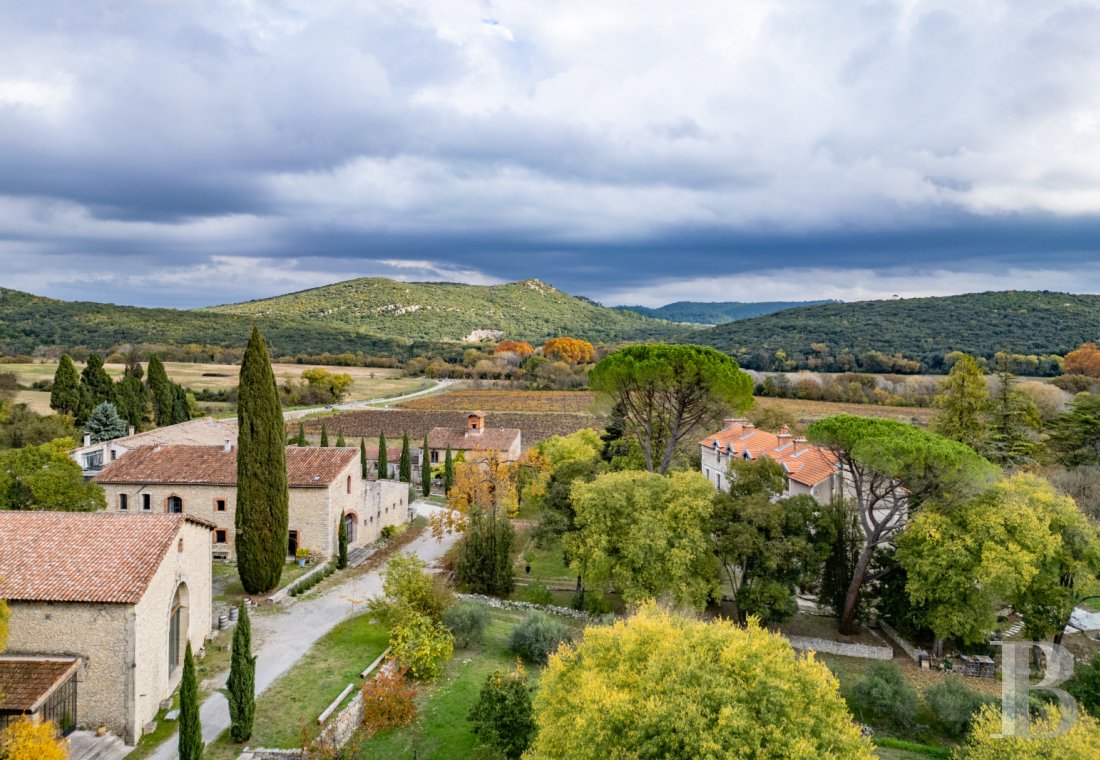
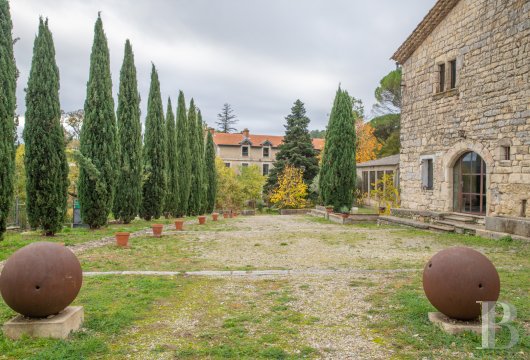
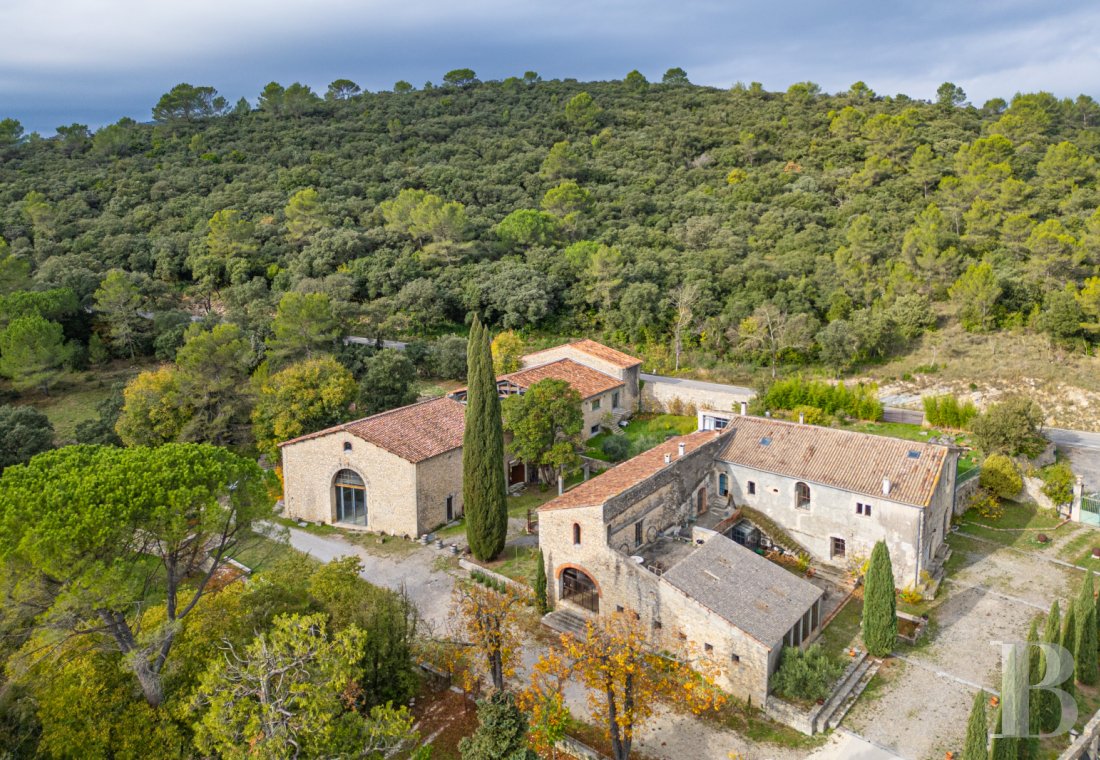
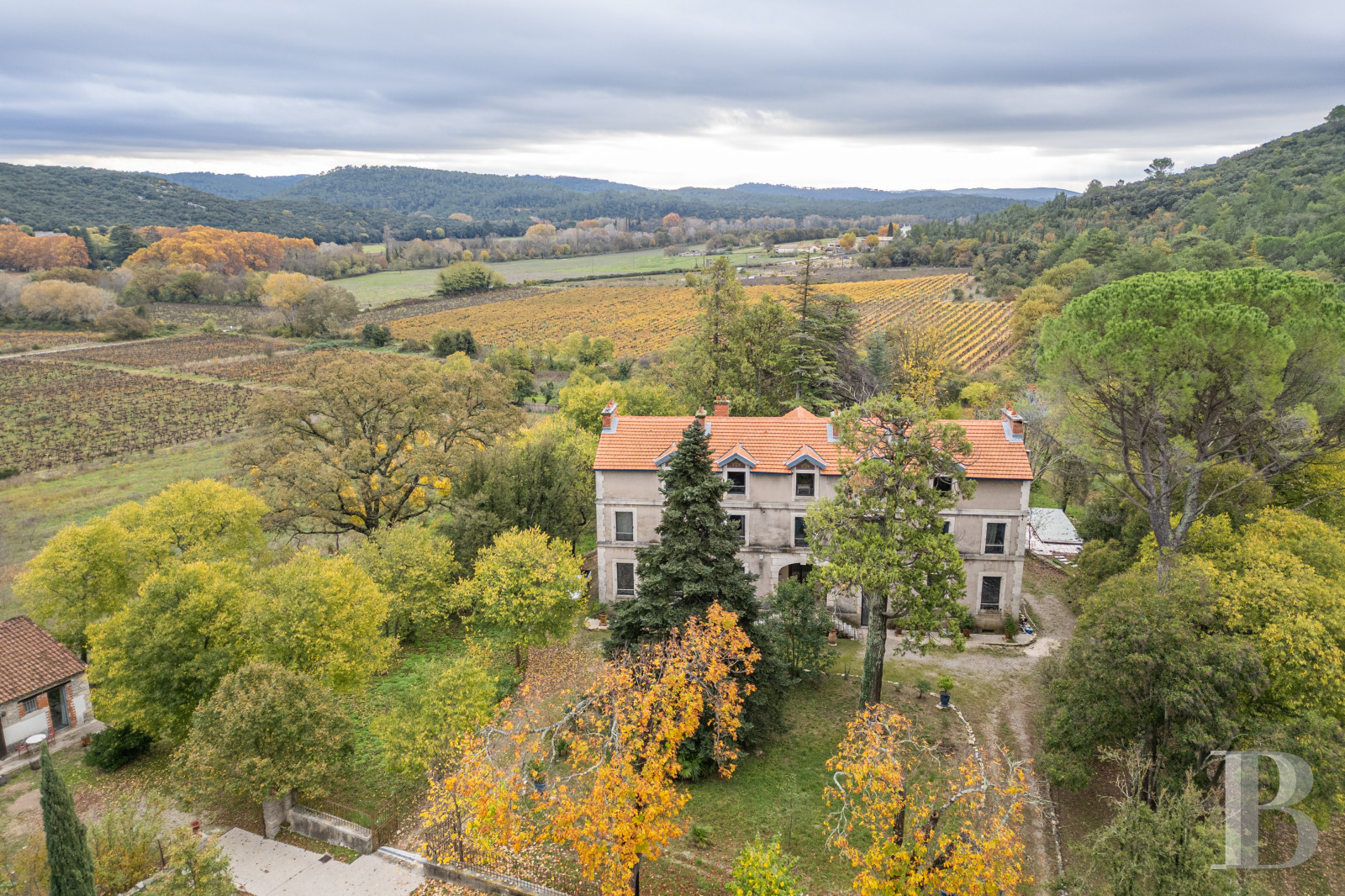
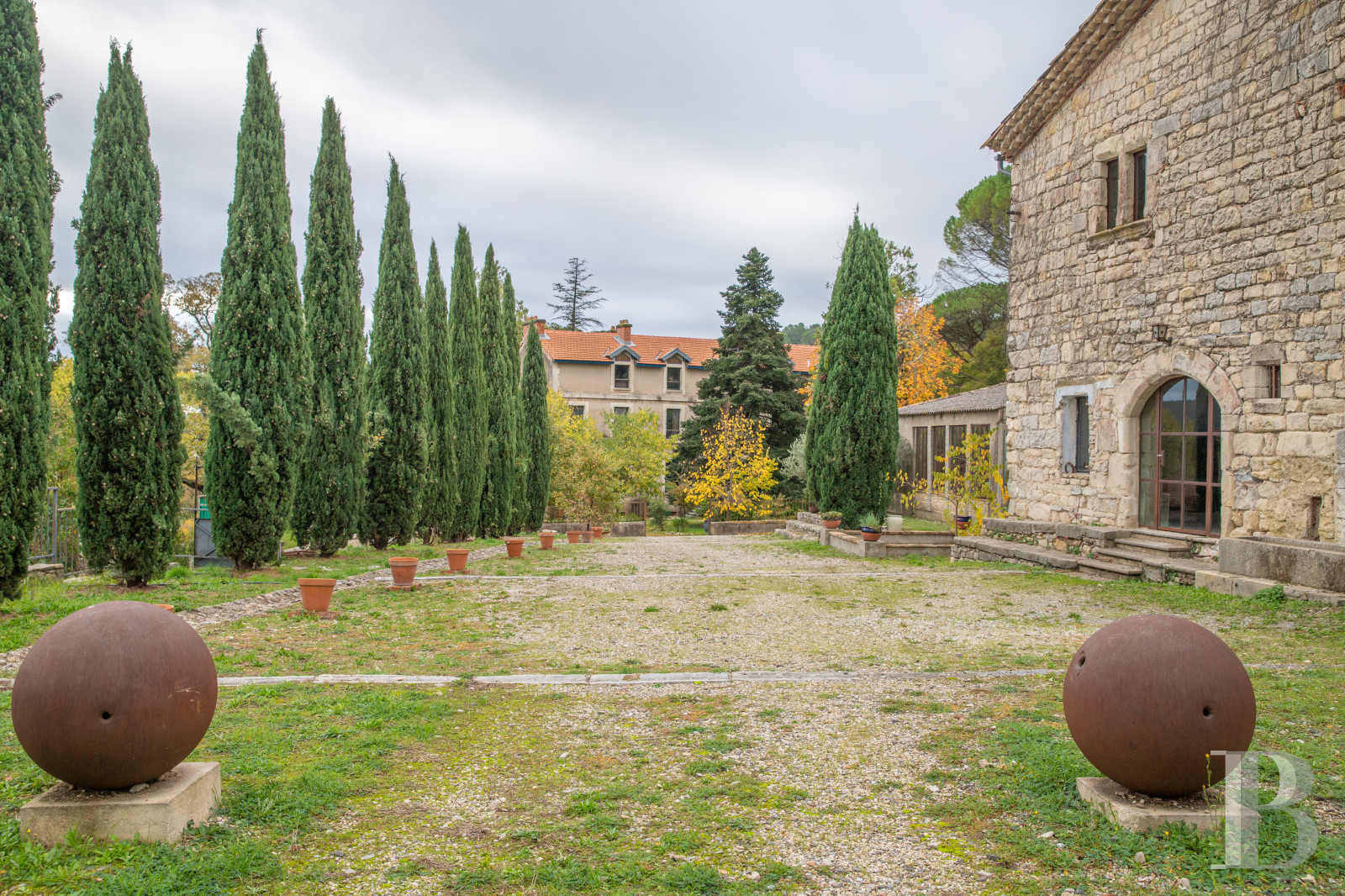
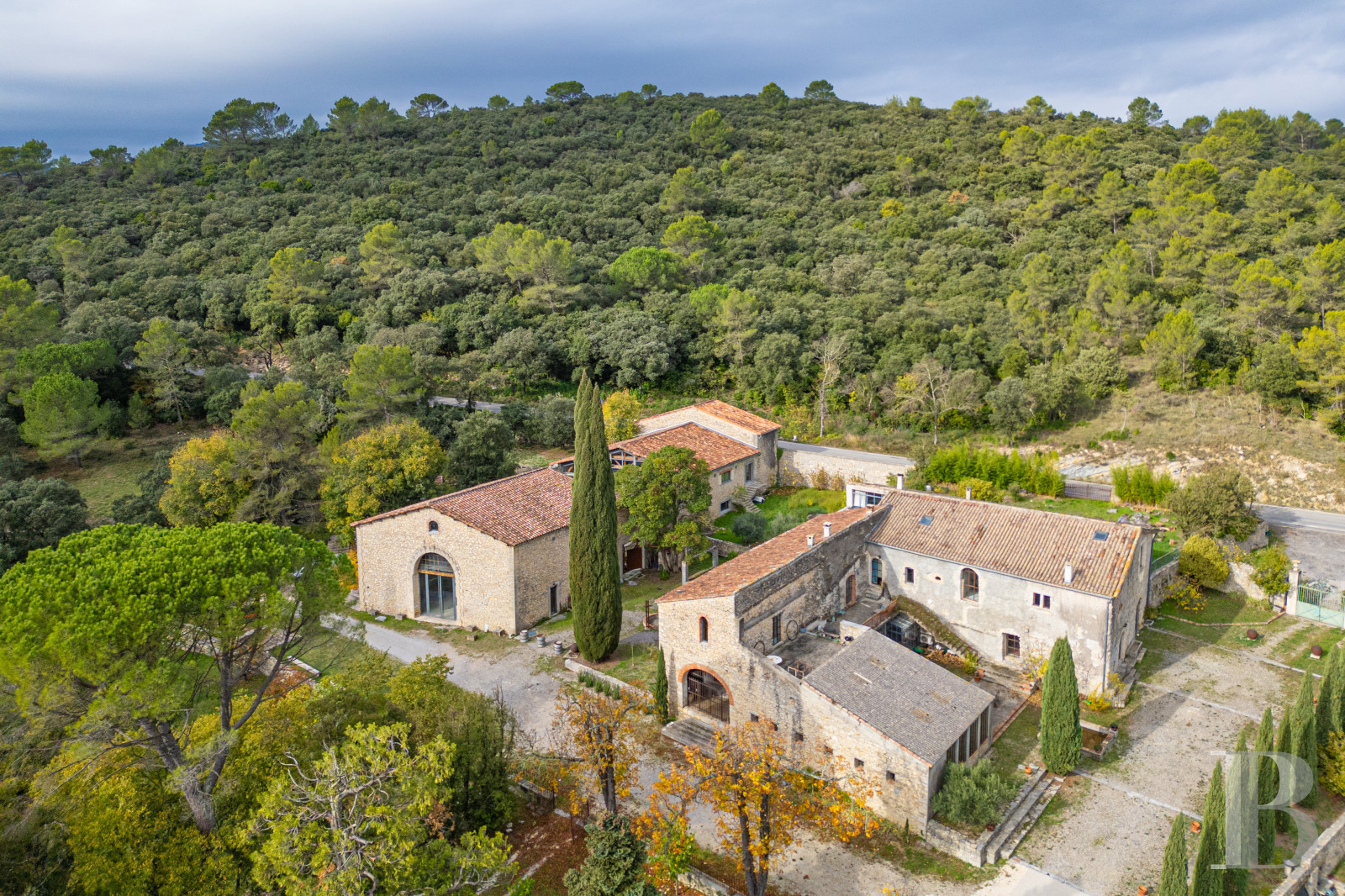
Less than one kilometre from Quissac, the 7-hectare estate extends to the east and the west, on either side of four buildings grouped together into a private hamlet: a wine storehouse, an immense farm, known as “the large Provencal farmhouse”, a dovecote and the wine-grower’s dwelling.
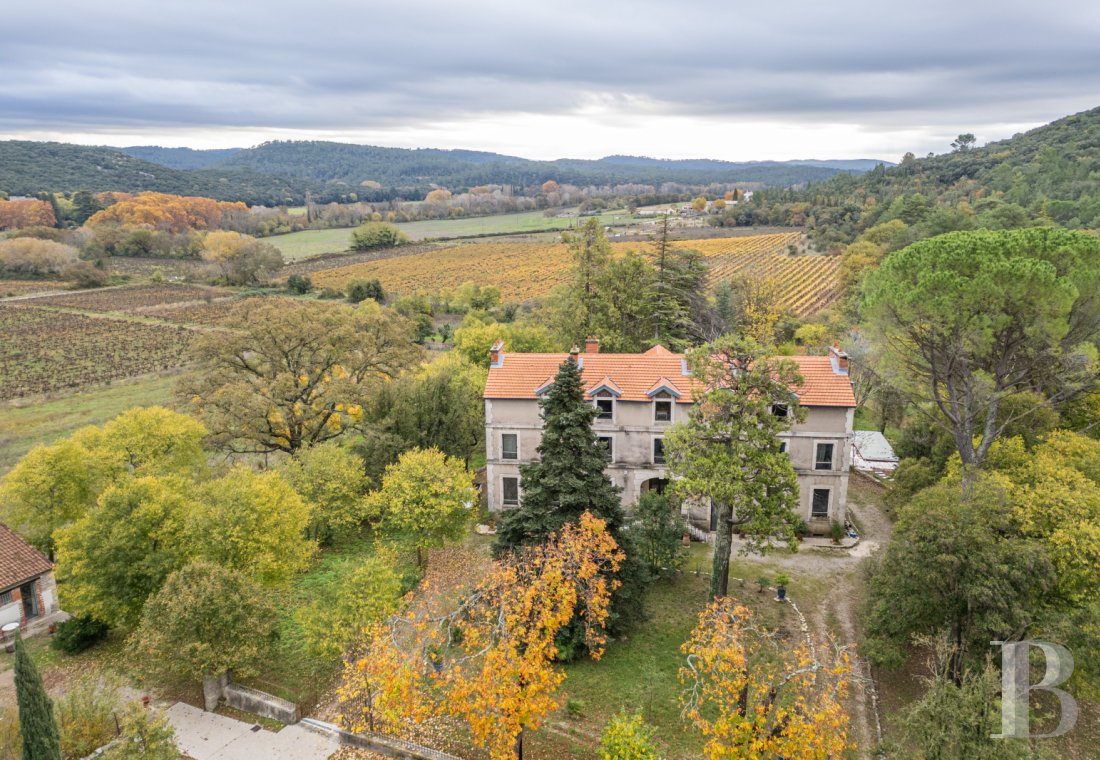
As for the property, it is accessible via the road to the former farmyard, while the manor house, nestled within a bucolic landscape and facing the surrounding vineyards and woods, is located on the other side of the B road.
Thanks to the layout of its different edifices, the property, which has evidently played several different roles over the years, bears evidence to its wine-growing past, while an artisanal silkworm farming activity may have preceded its wine-growing function before land divisions put a stop to it. Afterwards, other uses followed suit and thus its wine storehouse has, today, been transformed into a number of different workshops as well as a reception venue.
Nestled within the Cévennes foothills, the buildings, quite simple in appearance, were constructed according to the laws that labour and rural life have dictated over time, while the eras of the various constructions differ from one to the next and primarily alternate between the early and late 19th century, before additional architectural interventions took place in order to unify the property’s different buildings in the 20th and 21st centuries.
In addition, the manor house, built in the late 19th century, has, rather curiously, adopted the model of local silkworm farms, understated in its appearance and primarily facing south, whereas the wine storehouse, from the same era, was reconverted after a portion of its central roof collapsed.
As for the “large Provencal farmhouse”, in all likelihood once a rural dwelling with its low vaulted rooms, it provides an obvious example of a building constructed over earlier vestiges, most likely from the late 17th or early 18th centuries, while the dovecote, built out of red briquettes and perched atop the roof of one of the outbuildings, dates to the early 20th century. The latter, now converted into living quarters, is surrounded by a series of small adjacent buildings, which are currently used as rental accommodations.
Lastly, the property, whose appeal is all the greater thanks to its natural environment, has been saved from various forms of damage and provides captivating evidence of daily life as a wine-grower in the Cévennes foothills, whereas its contemporary renovation, which still needs to be completed in certain sections, has provided it with an undeniable cohesive and homogeneous feel.
As for the property, it is accessible via the road to the former farmyard, while the manor house, nestled within a bucolic landscape and facing the surrounding vineyards and woods, is located on the other side of the B road.
Thanks to the layout of its different edifices, the property, which has evidently played several different roles over the years, bears evidence to its wine-growing past, while an artisanal silkworm farming activity may have preceded its wine-growing function before land divisions put a stop to it. Afterwards, other uses followed suit and thus its wine storehouse has, today, been transformed into a number of different workshops as well as a reception venue.
Nestled within the Cévennes foothills, the buildings, quite simple in appearance, were constructed according to the laws that labour and rural life have dictated over time, while the eras of the various constructions differ from one to the next and primarily alternate between the early and late 19th century, before additional architectural interventions took place in order to unify the property’s different buildings in the 20th and 21st centuries.
In addition, the manor house, built in the late 19th century, has, rather curiously, adopted the model of local silkworm farms, understated in its appearance and primarily facing south, whereas the wine storehouse, from the same era, was reconverted after a portion of its central roof collapsed.
As for the “large Provencal farmhouse”, in all likelihood once a rural dwelling with its low vaulted rooms, it provides an obvious example of a building constructed over earlier vestiges, most likely from the late 17th or early 18th centuries, while the dovecote, built out of red briquettes and perched atop the roof of one of the outbuildings, dates to the early 20th century. The latter, now converted into living quarters, is surrounded by a series of small adjacent buildings, which are currently used as rental accommodations.
Lastly, the property, whose appeal is all the greater thanks to its natural environment, has been saved from various forms of damage and provides captivating evidence of daily life as a wine-grower in the Cévennes foothills, whereas its contemporary renovation, which still needs to be completed in certain sections, has provided it with an undeniable cohesive and homogeneous feel.
The Manor House
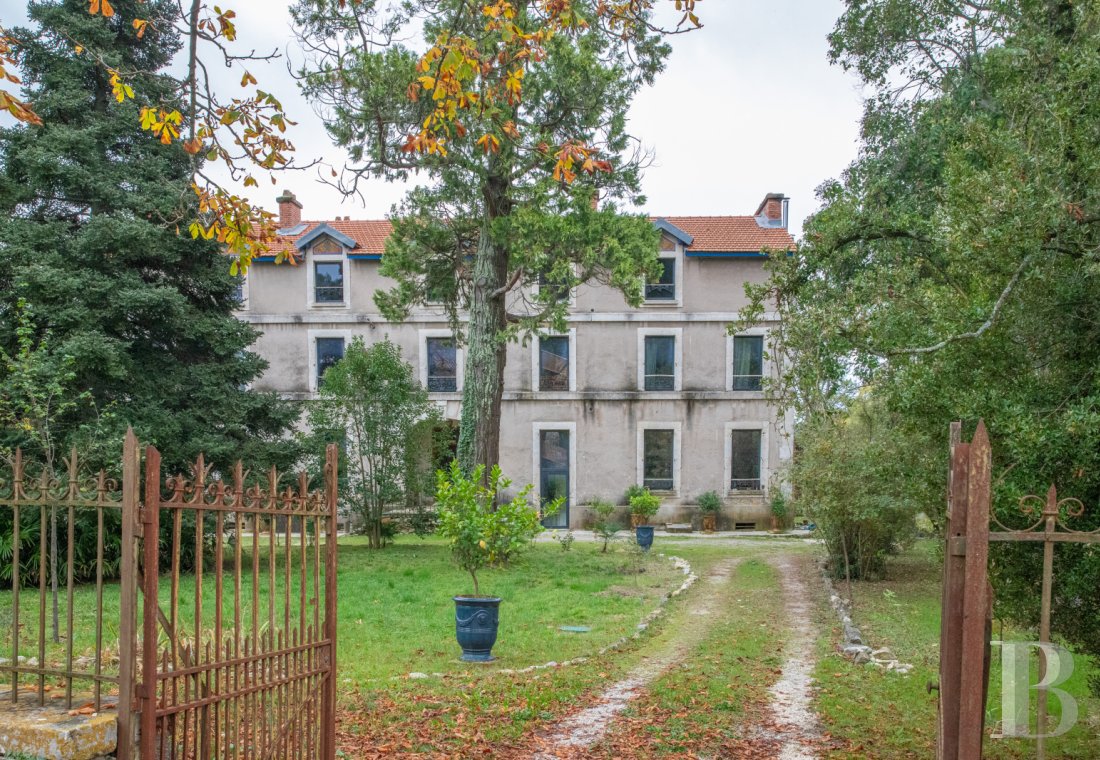
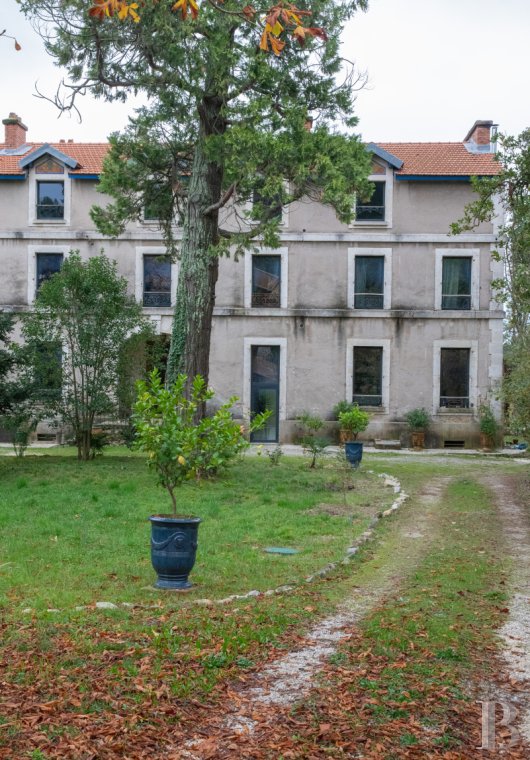
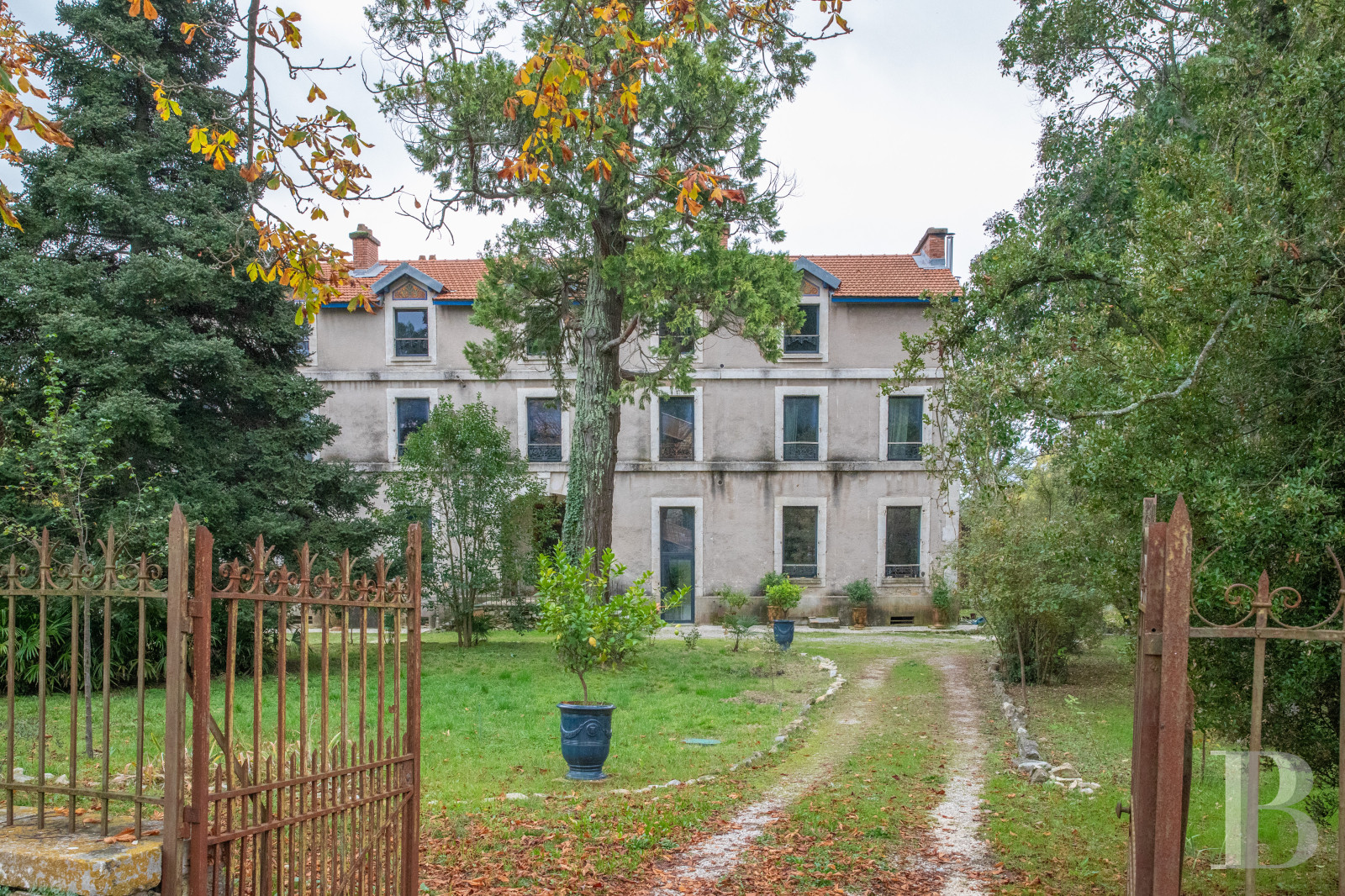
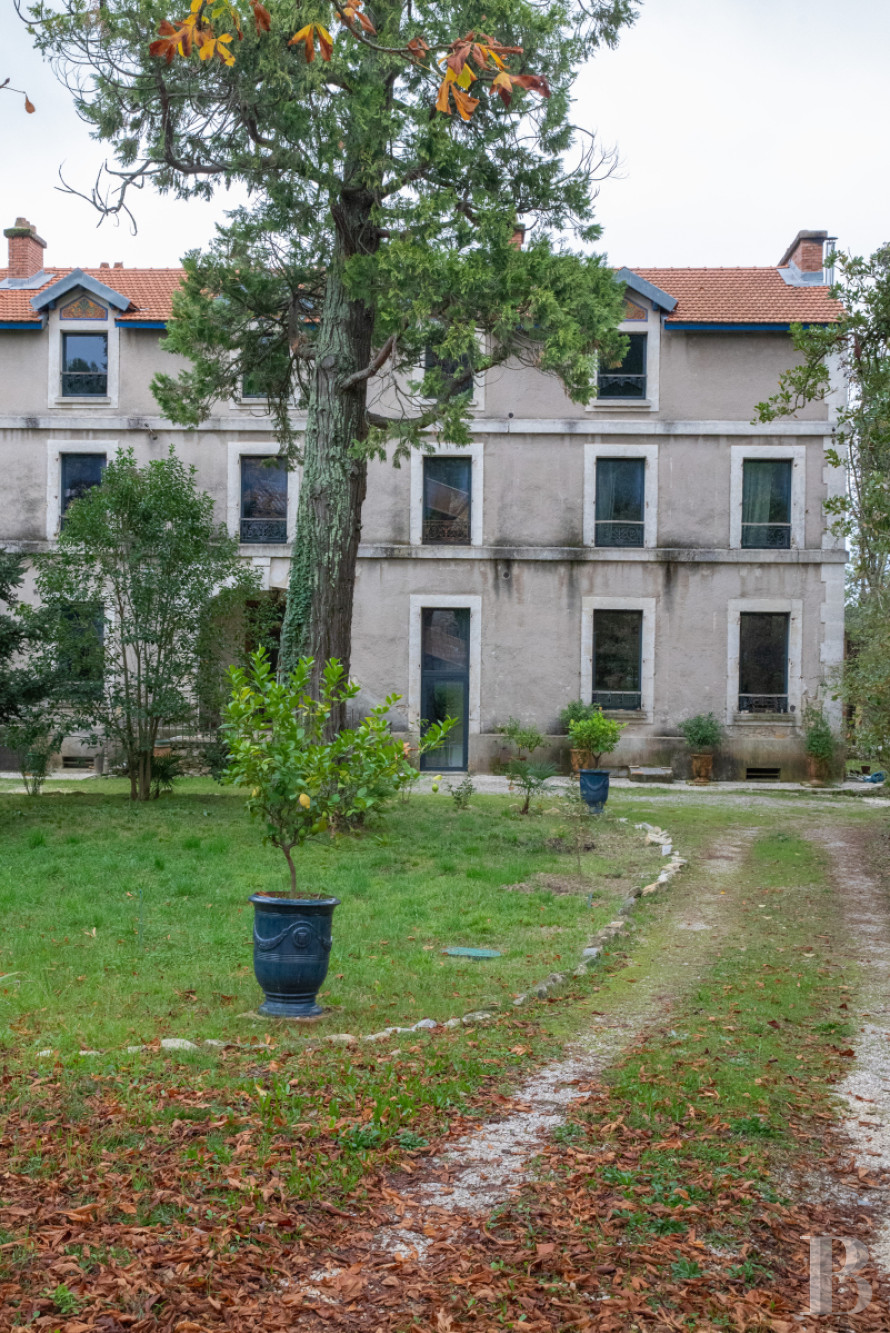
Facing south on one side and north on the other, the dwelling, whose extensive main façade is longer than its rear exterior, was built in the late 19th century. With three storeys to the north and two to the south, given the property’s gently sloping terrain, the manor house boasts a floor area of nearly 740 m², while, contrary to the property’s other buildings, its outer walls are coated in white plaster, emphasising its status as a manor house, the latter of which eschews pointed stone exteriors.
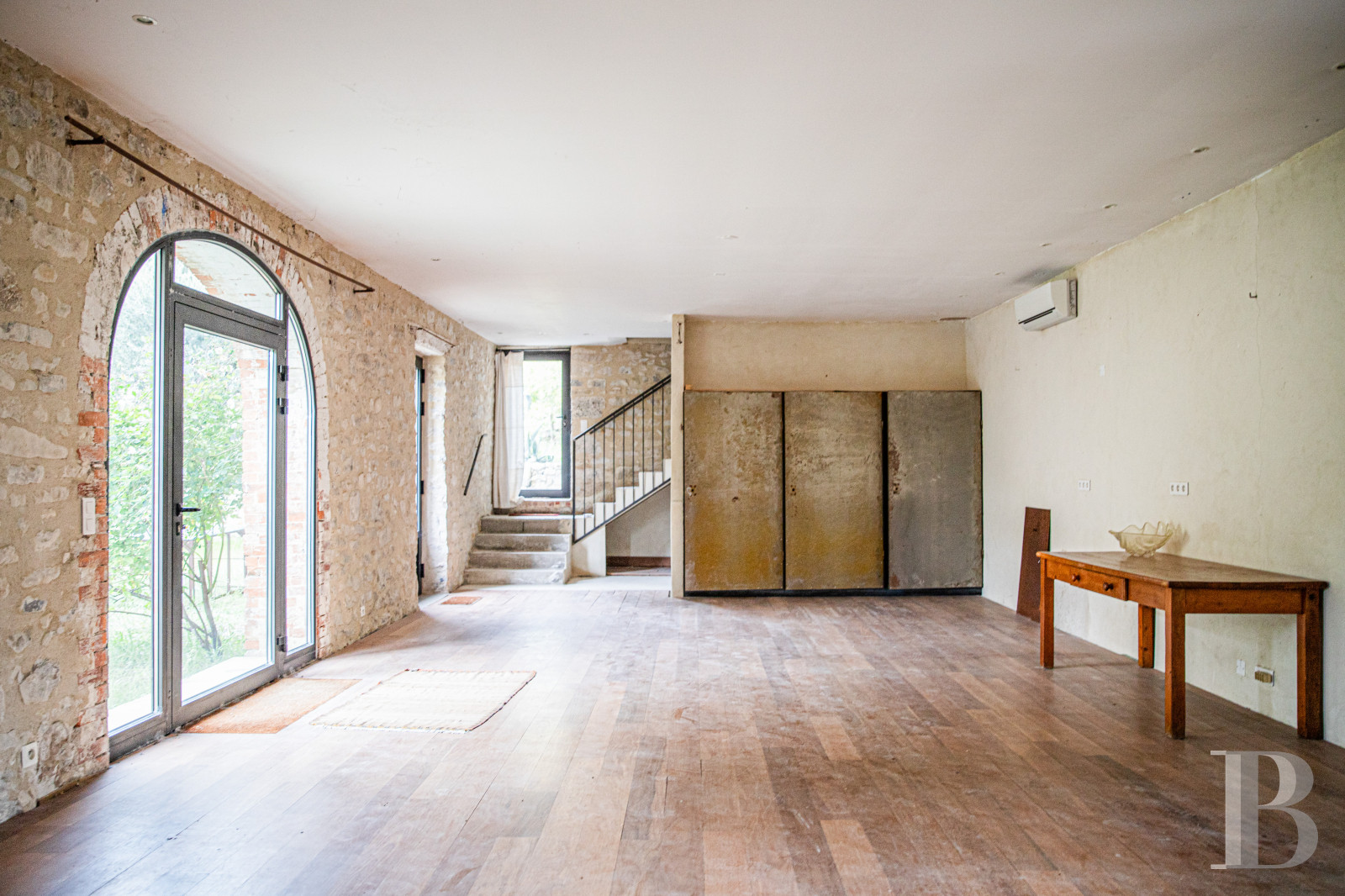
As for the attic level, it faces north via a series of windows resembling shed dormers, whereas to the south, a single gabled dormer provides views of the property’s outdoor 8 x 4-metre swimming pool, located to the southwest. Protected by the roof’s wide eave, to the south, an immense raised patio, supported by an arched structure, which is currently used as a woodshed, overlooks the vineyard, while its flat brick-colour interlocking tile roof lends the dwelling an intentional industrial look sought out by the architect who handled its renovation, as do its large metal-framed picture windows that replaced the dwelling’s former versions.
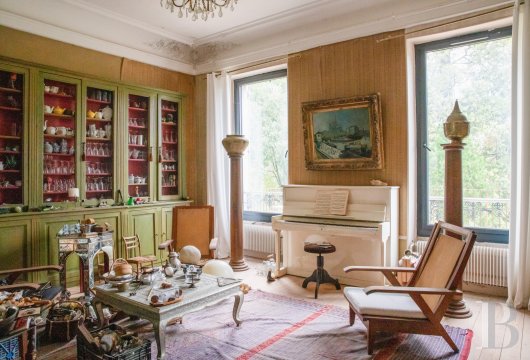
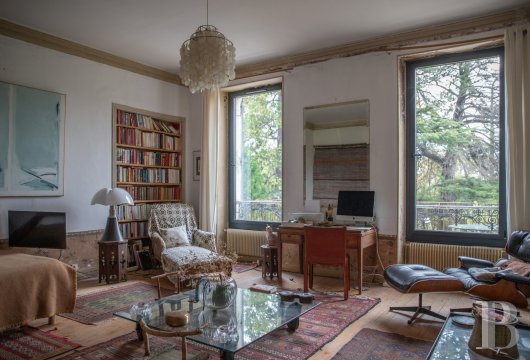
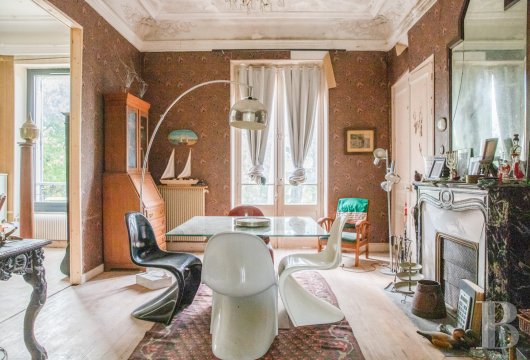
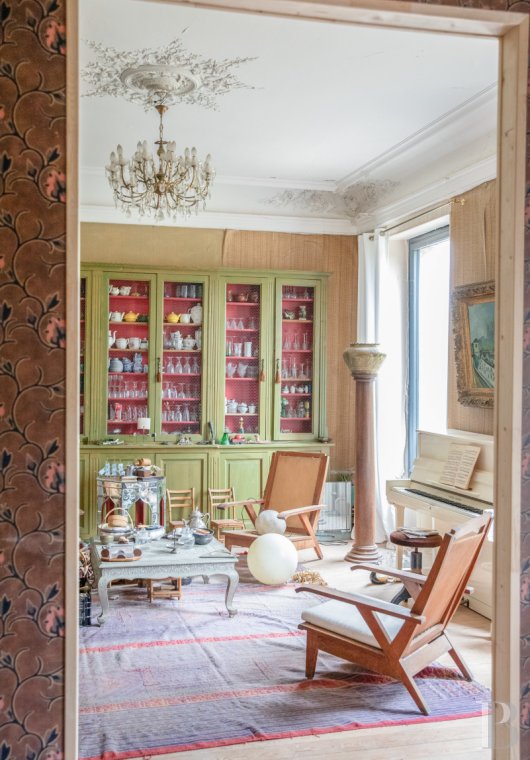
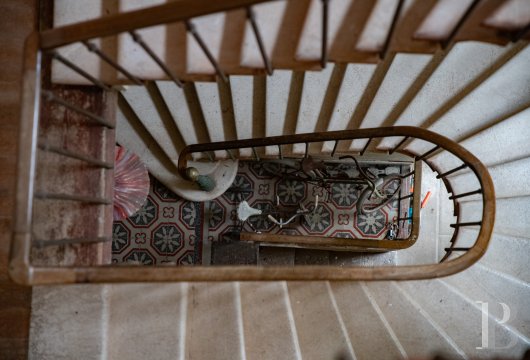
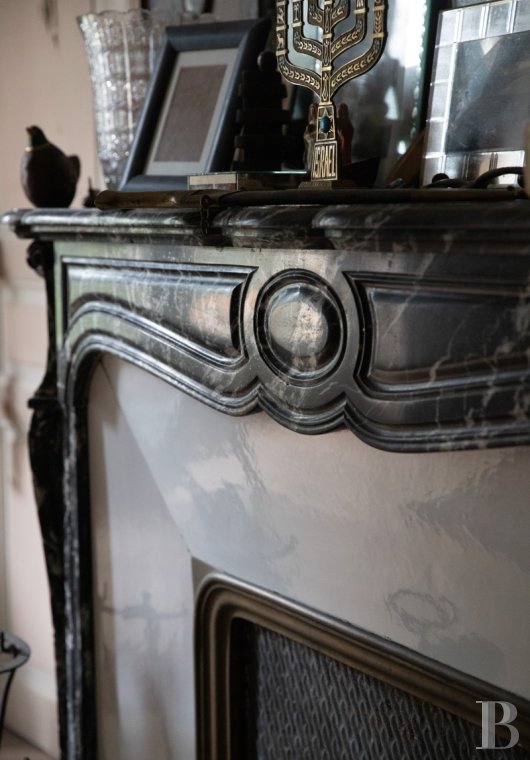
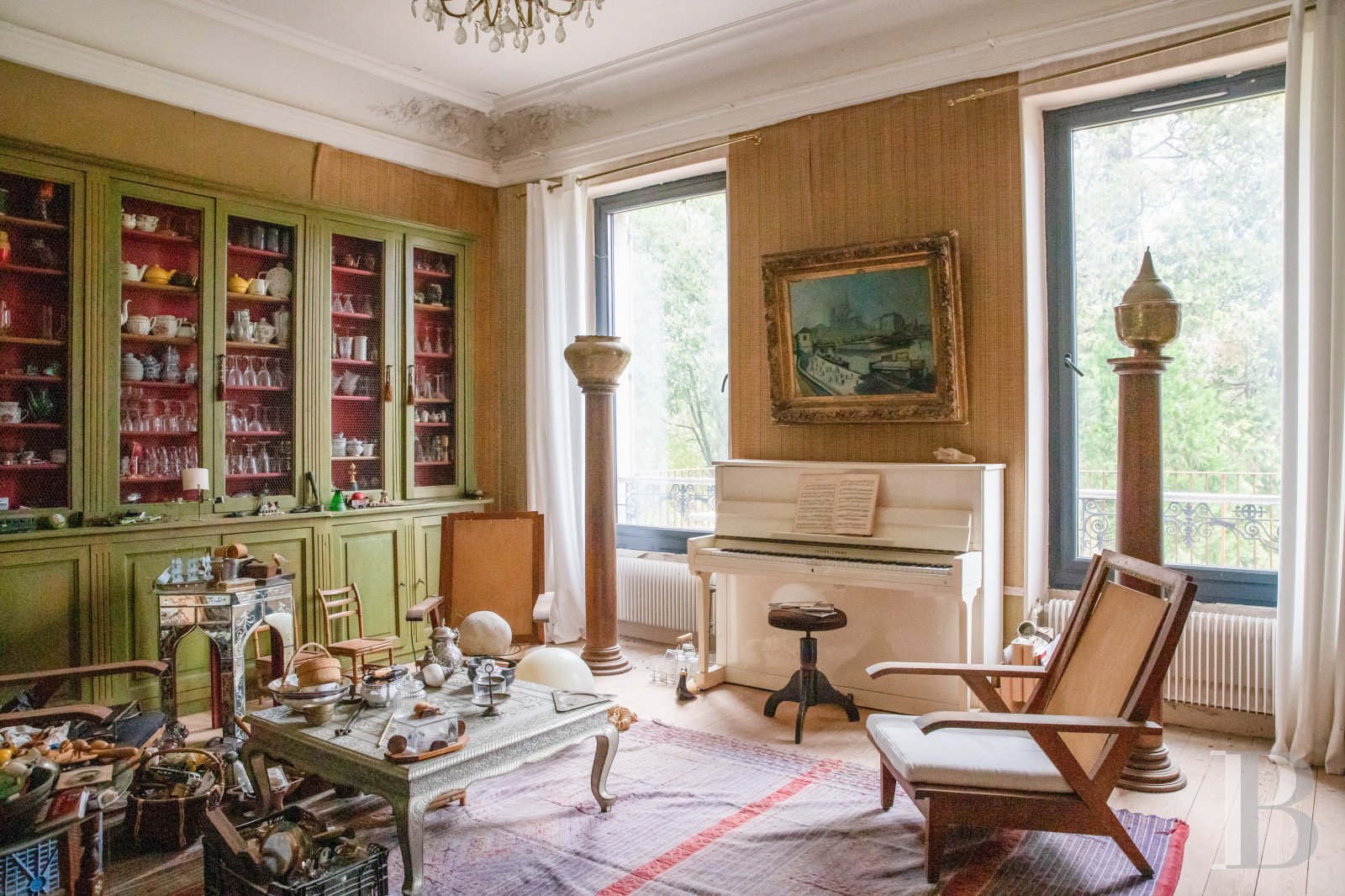
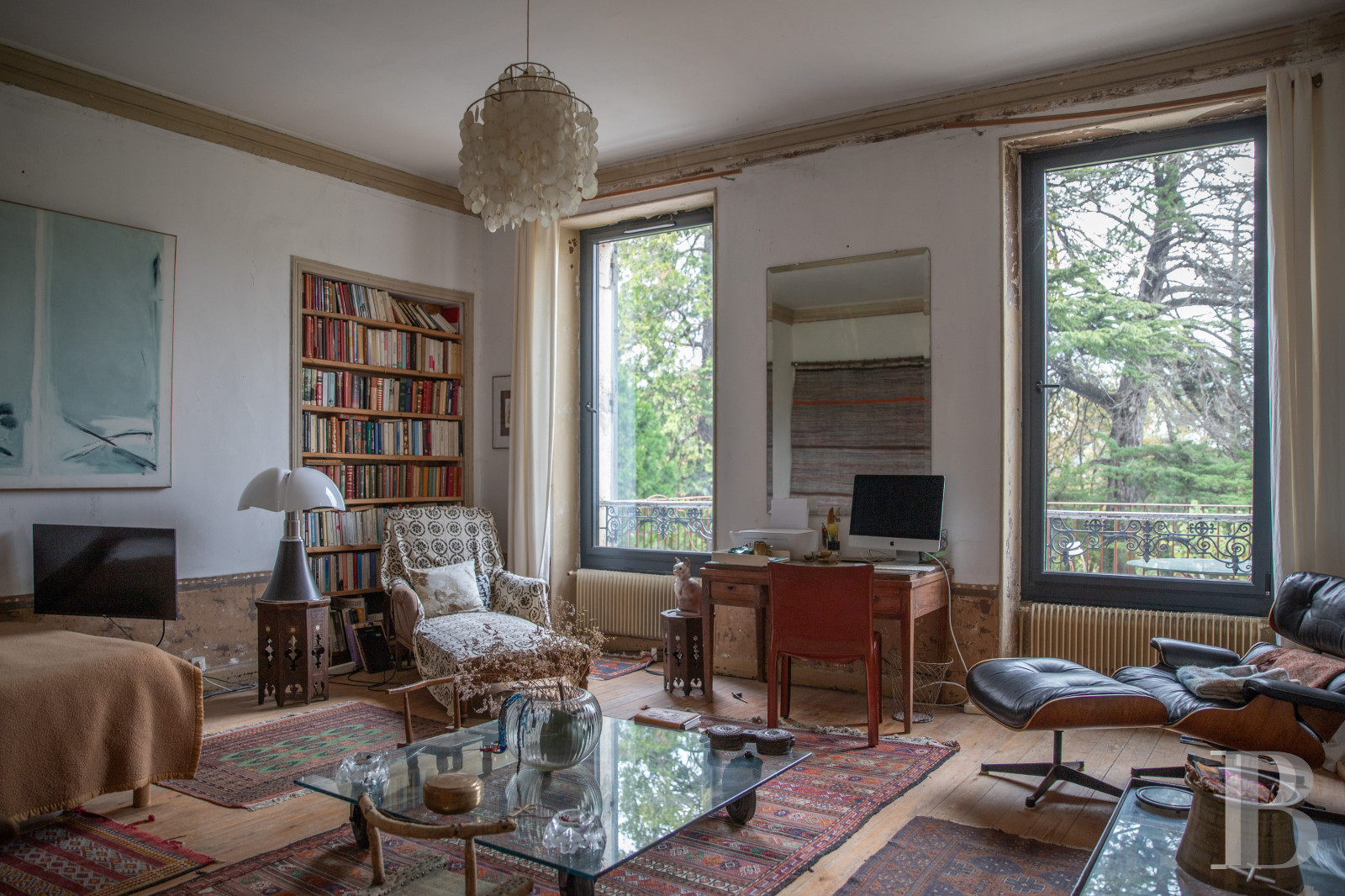
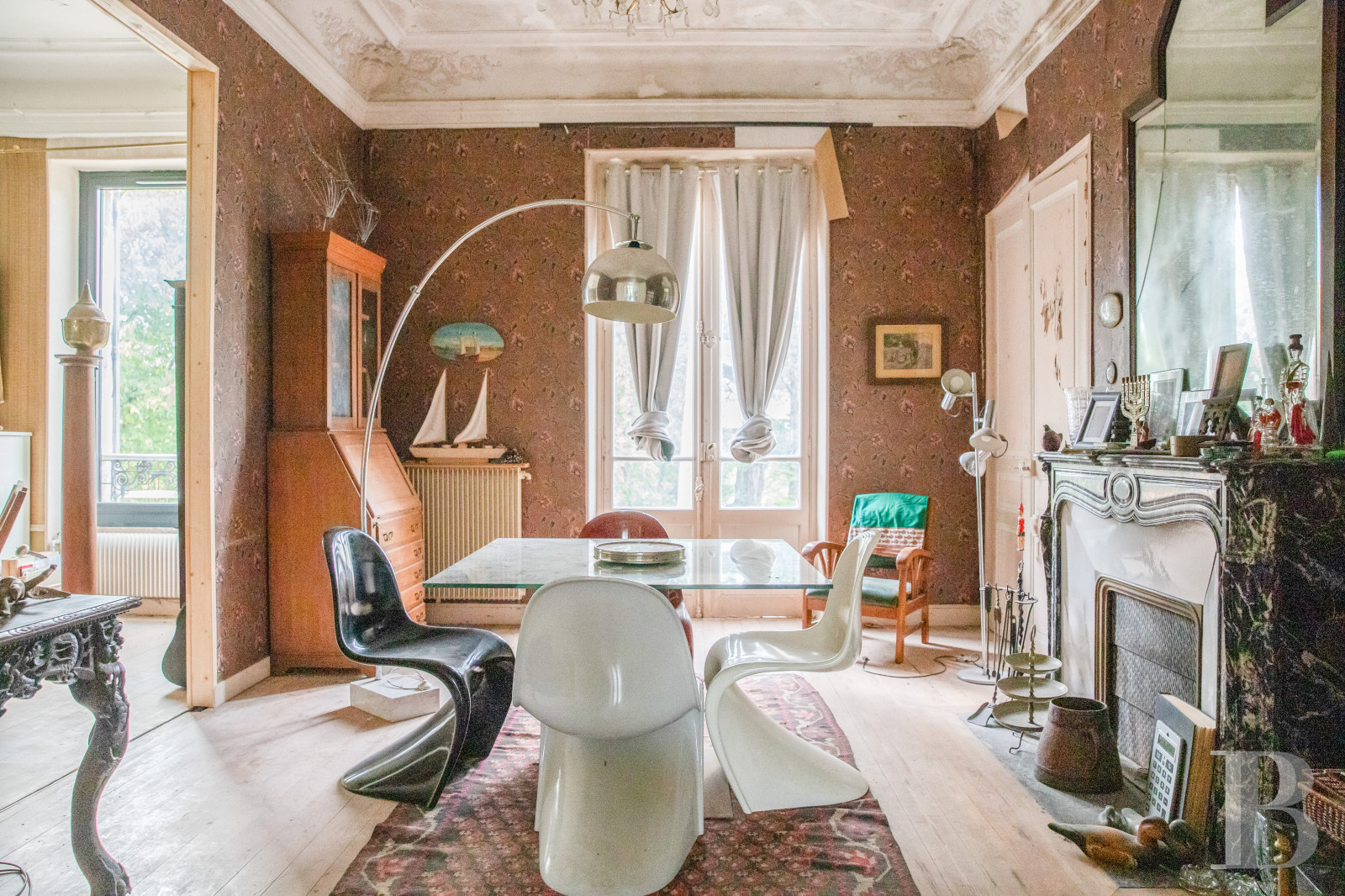
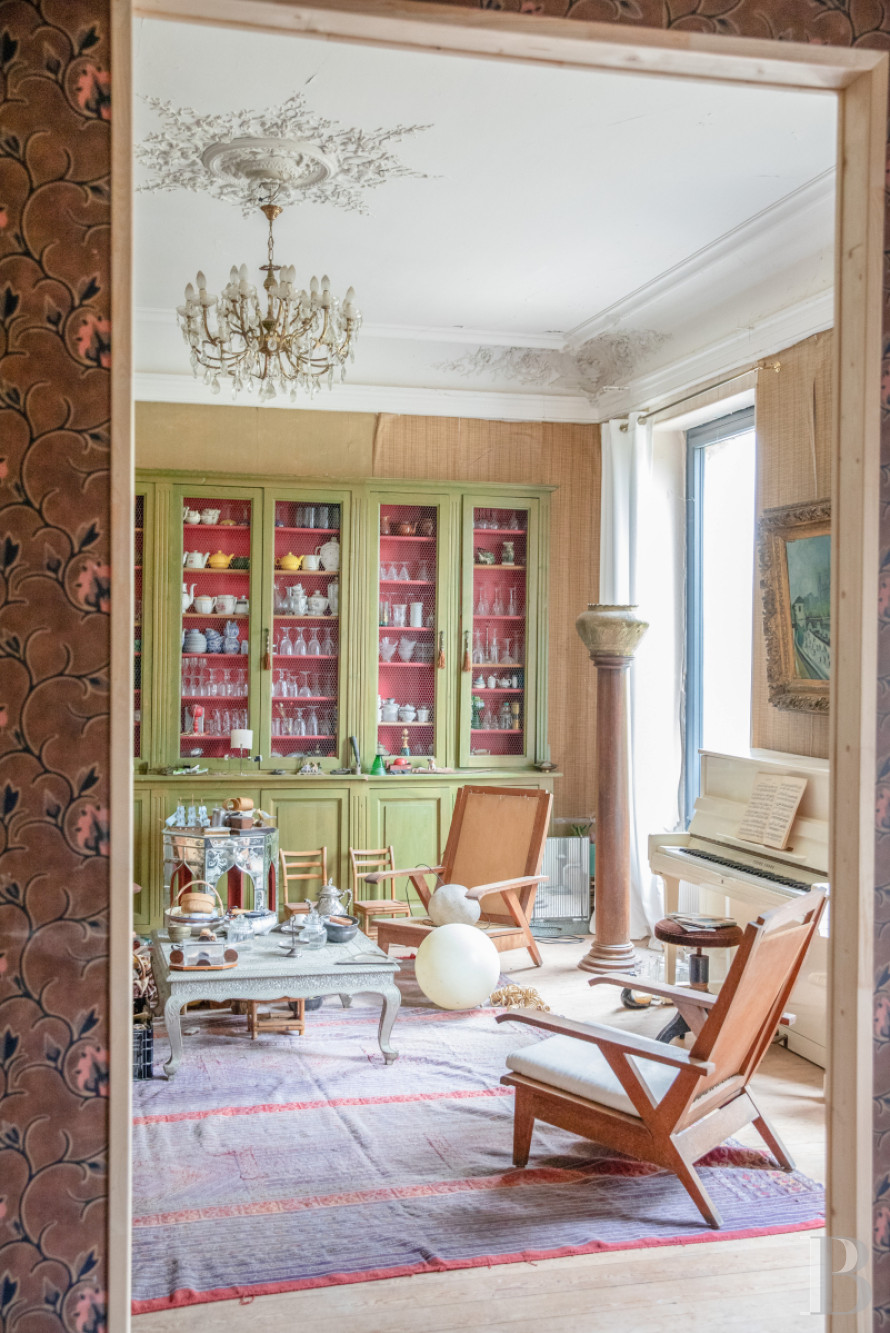
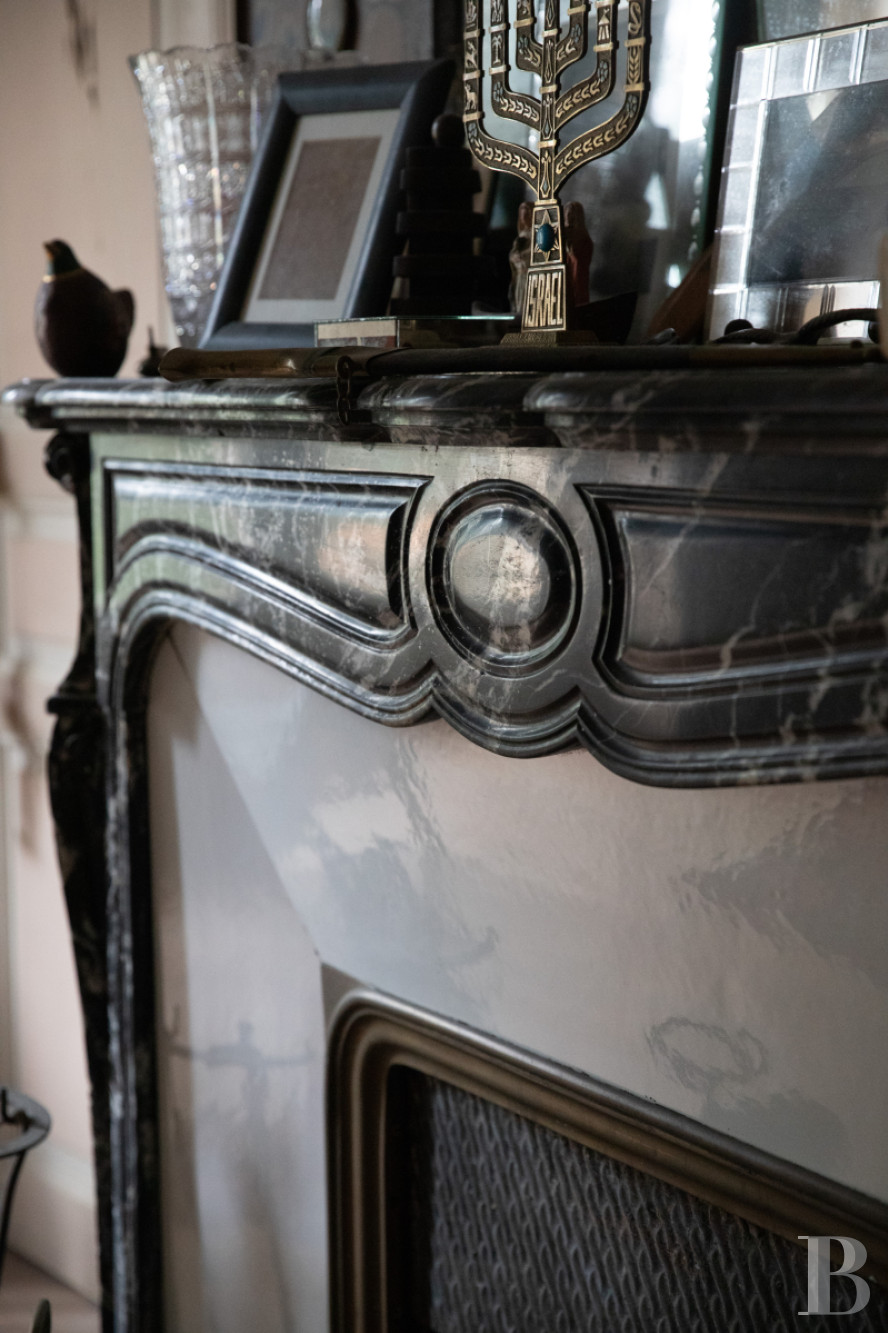
In addition, the edifice’s exterior provides a remarkable contrast with its interior, which has preserved the old-fashioned character of multi-century family dwellings with marble fireplaces and moulded stuccowork in the living rooms, as well as limed walls in pastel hues, vintage wallpaper, cement tiles, oak hardwood floors and terrazzo flooring in the bedrooms – the latter of which is more commonly found in Provence than the Cévennes.
The garden-level floor
An outdoor double staircase on its northern façade, providing the dwelling with a noble entrance worthy of its standing, ascends to a covered porch surrounded by stone cladding carved with a stylised motif. Following on from the porch is a foyer, providing access to a hallway, on the right, which communicates, to the north, with two bedrooms and a kitchen, while, facing south, there are three adjacent living rooms, used as a drawing room and a library, as well as two bathrooms and two lavatories.
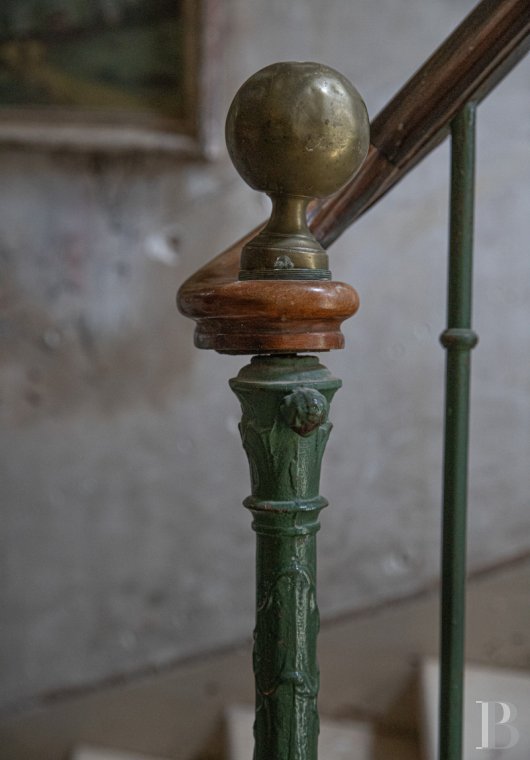
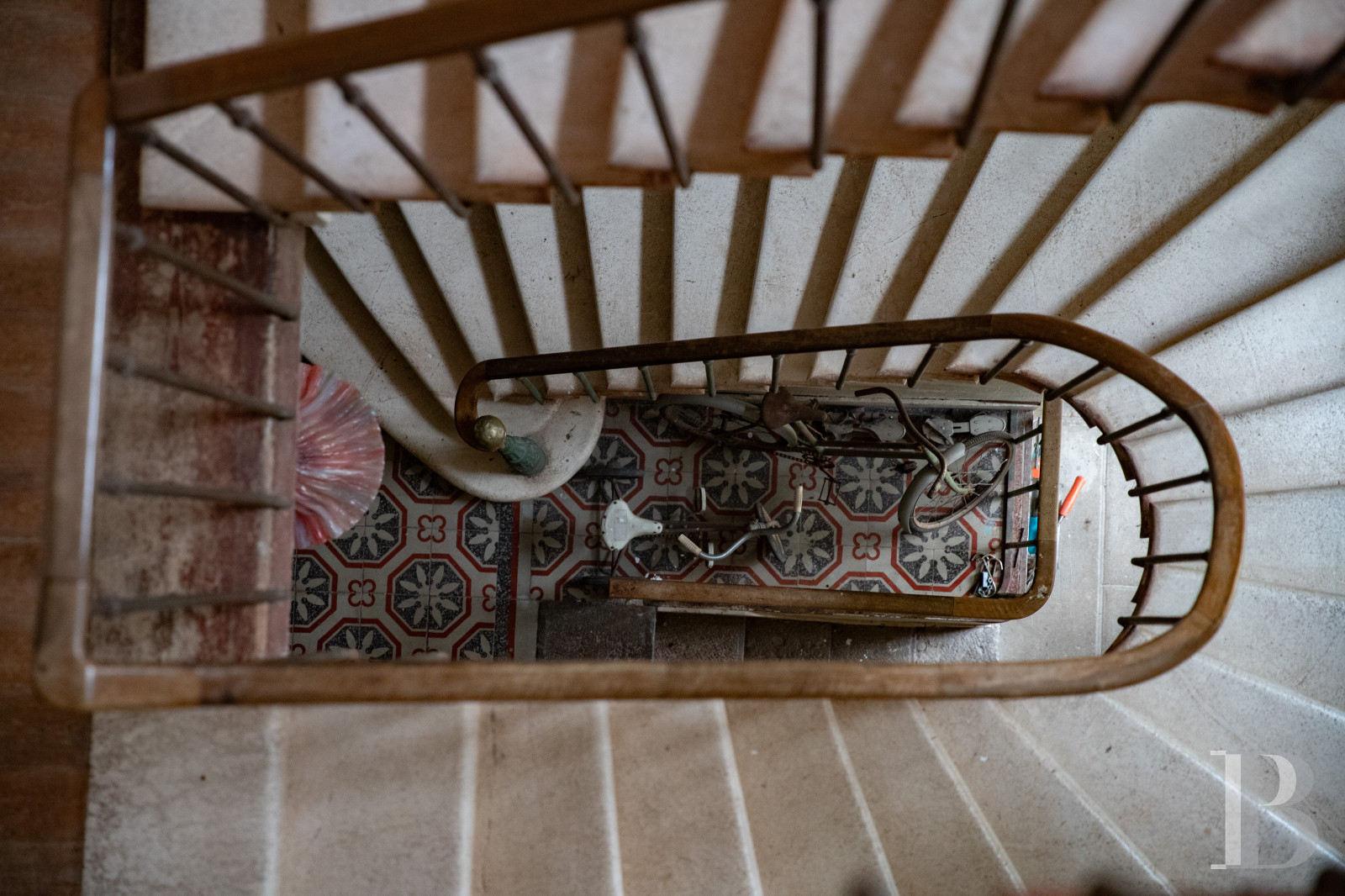
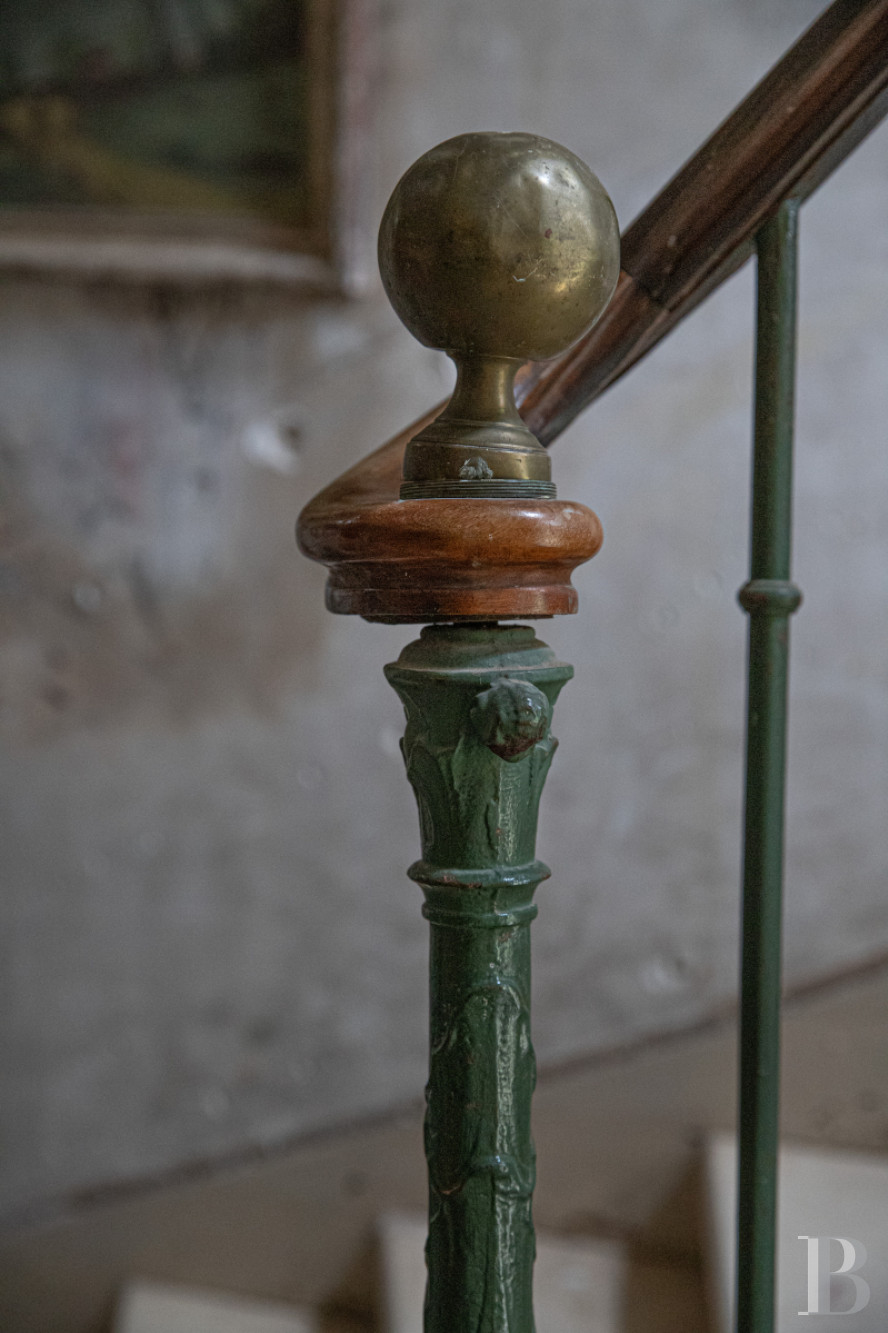
As for the staircase, whose painted and polished steps provide access to the upper floors, it is accessible via this central hallway, whereas all the windows on this floor are safeguarded by wooden shutters.
The first floor
With seven symmetrically placed windows to the north and nine to the south, the stairwell, separated from each level by a glass door, provides access to the first floor via a hallway identical to the one on the lower level, which communicates, on either side, with five bedrooms and a boudoir, as well as a bathroom and lavatory on either end and a second kitchen in the same location as the one on the garden level.
The second floor
Accessible via the same staircase as the lower floor, it is currently features rooms under the eaves with narrow-plank hardwood floors, which are used for storage, but could be converted into other uses if so desired.
The Farm Known as "The Large Provencal Farmhouse"
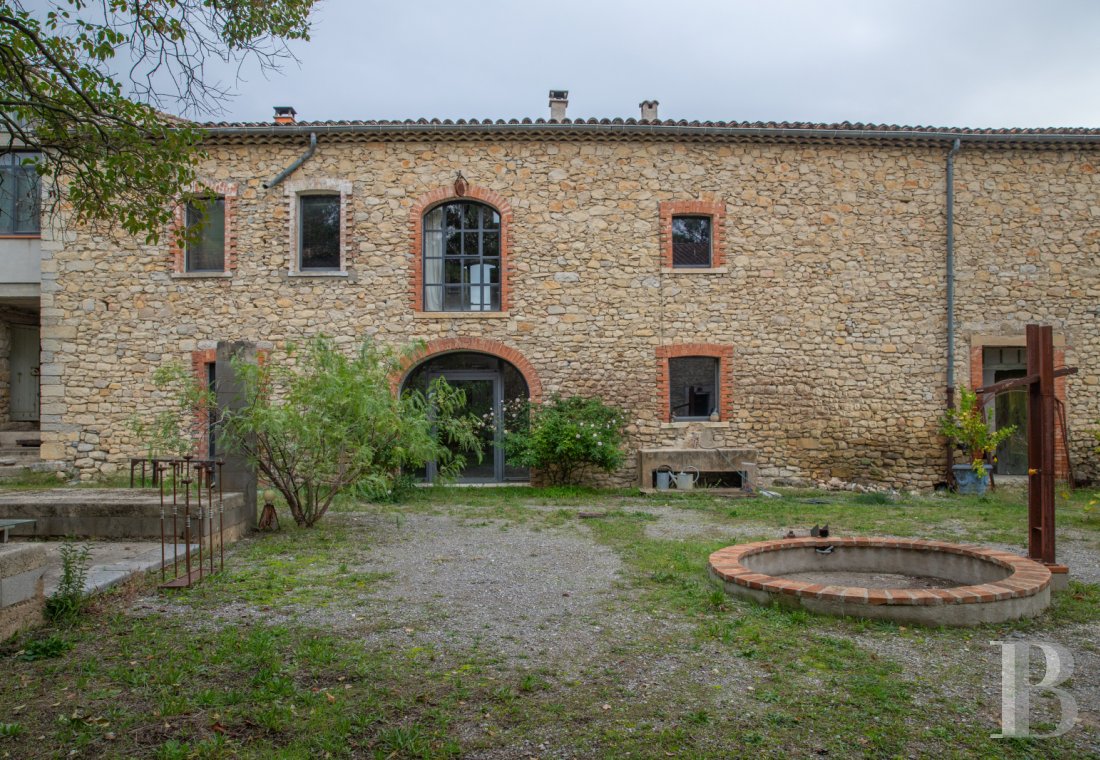
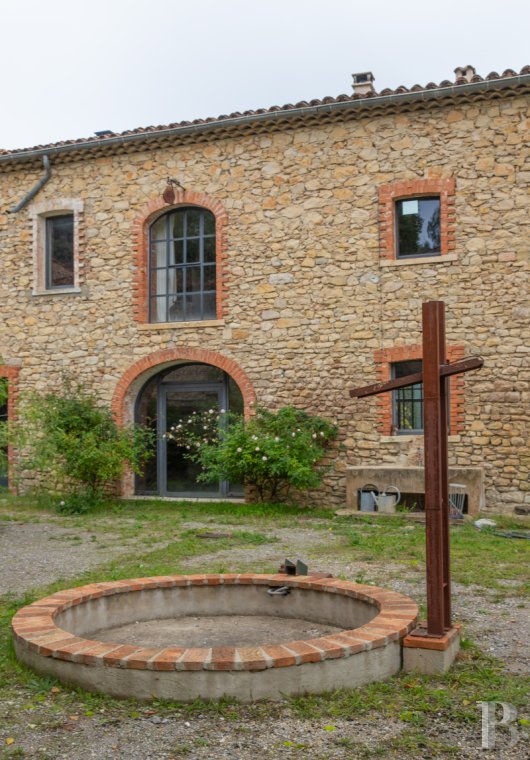
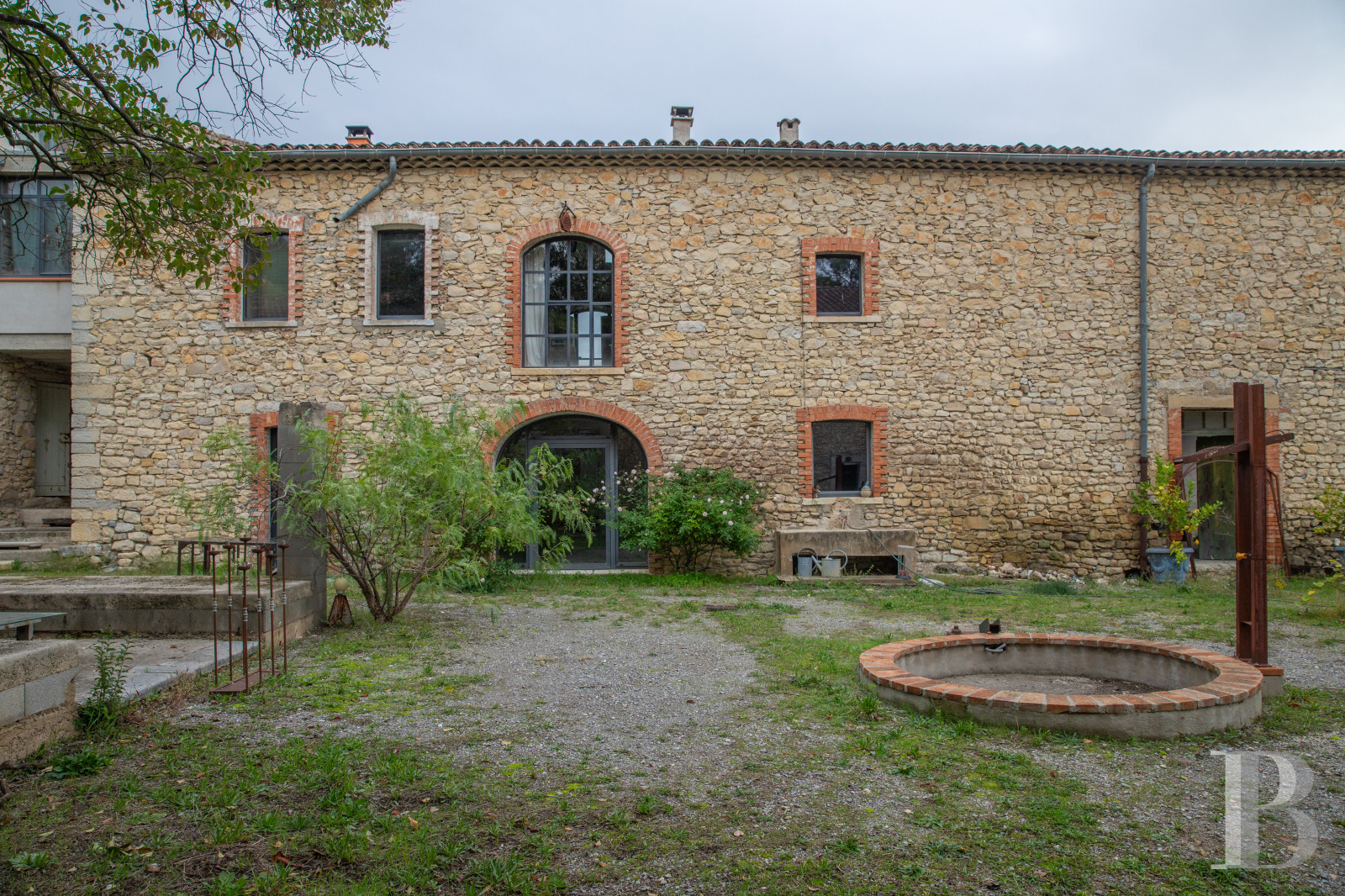
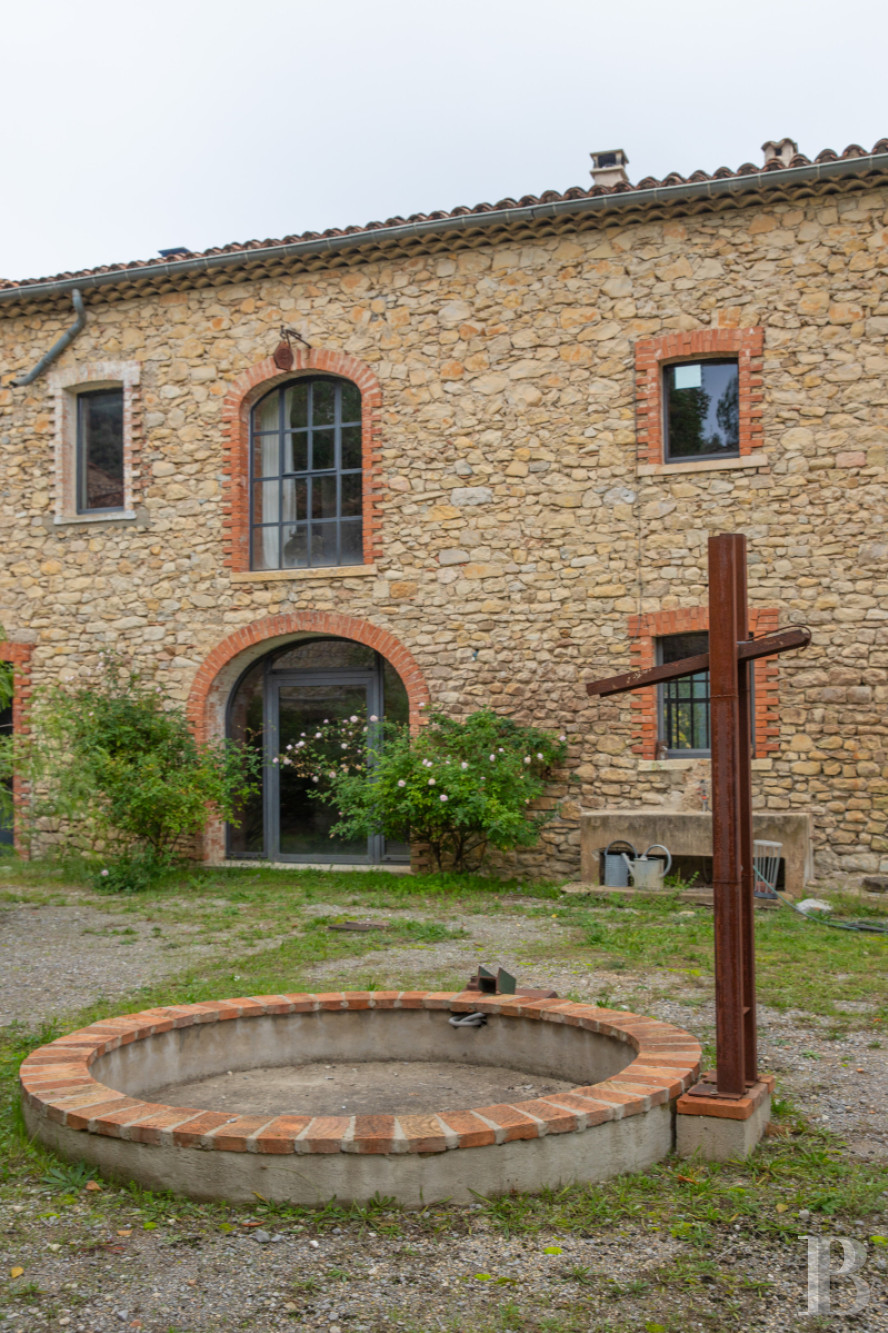
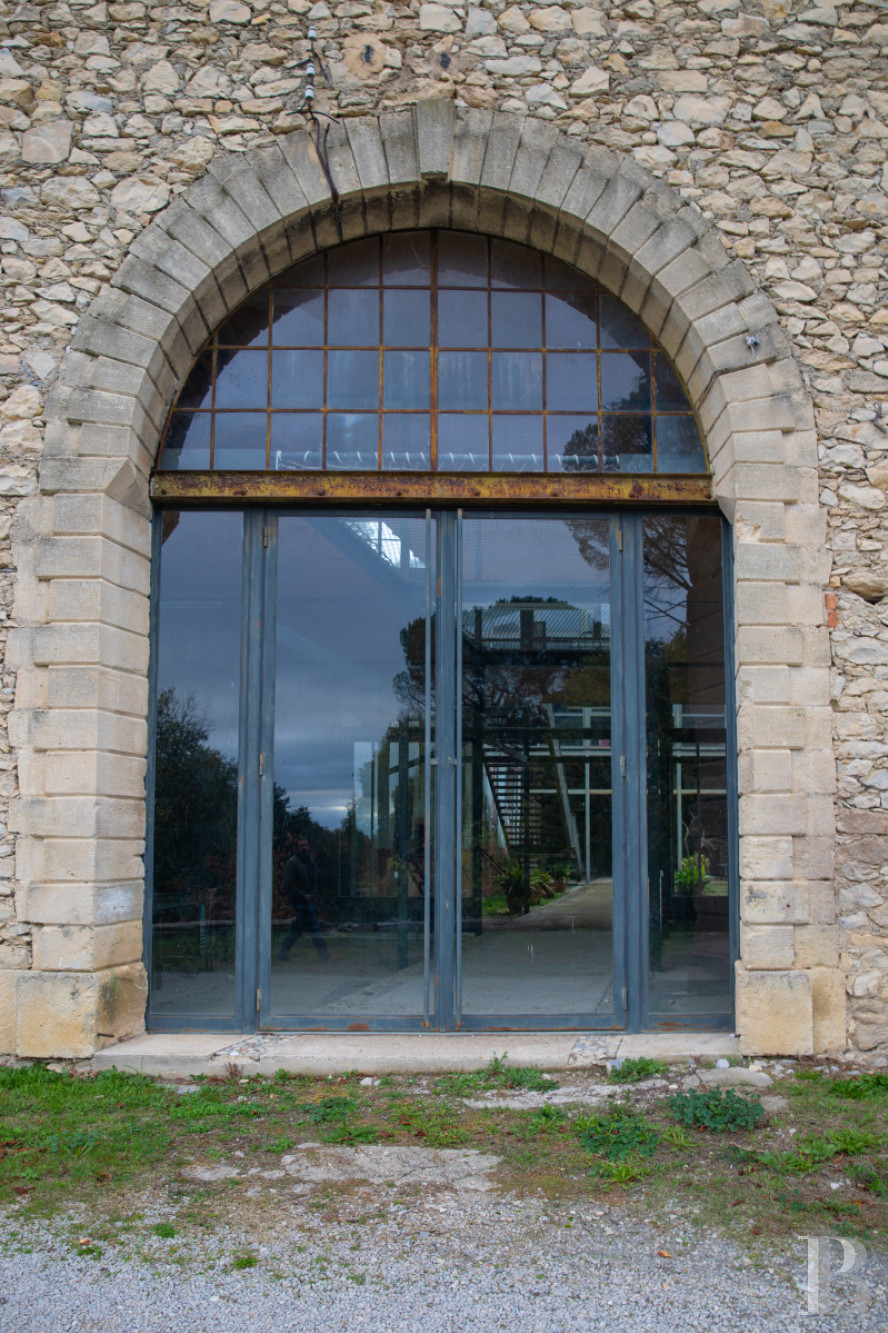
With two storeys, this building is of great architectural interest as it is undoubtedly the property’s oldest edifice. Outside, it features the same dressed and pointed stone exteriors as the wine storehouse, while a small perpendicular wing, added at a later date, creates a small courtyard.
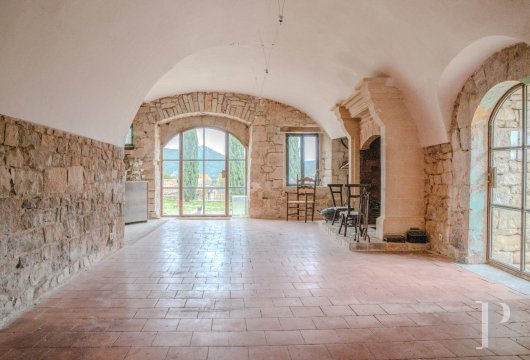
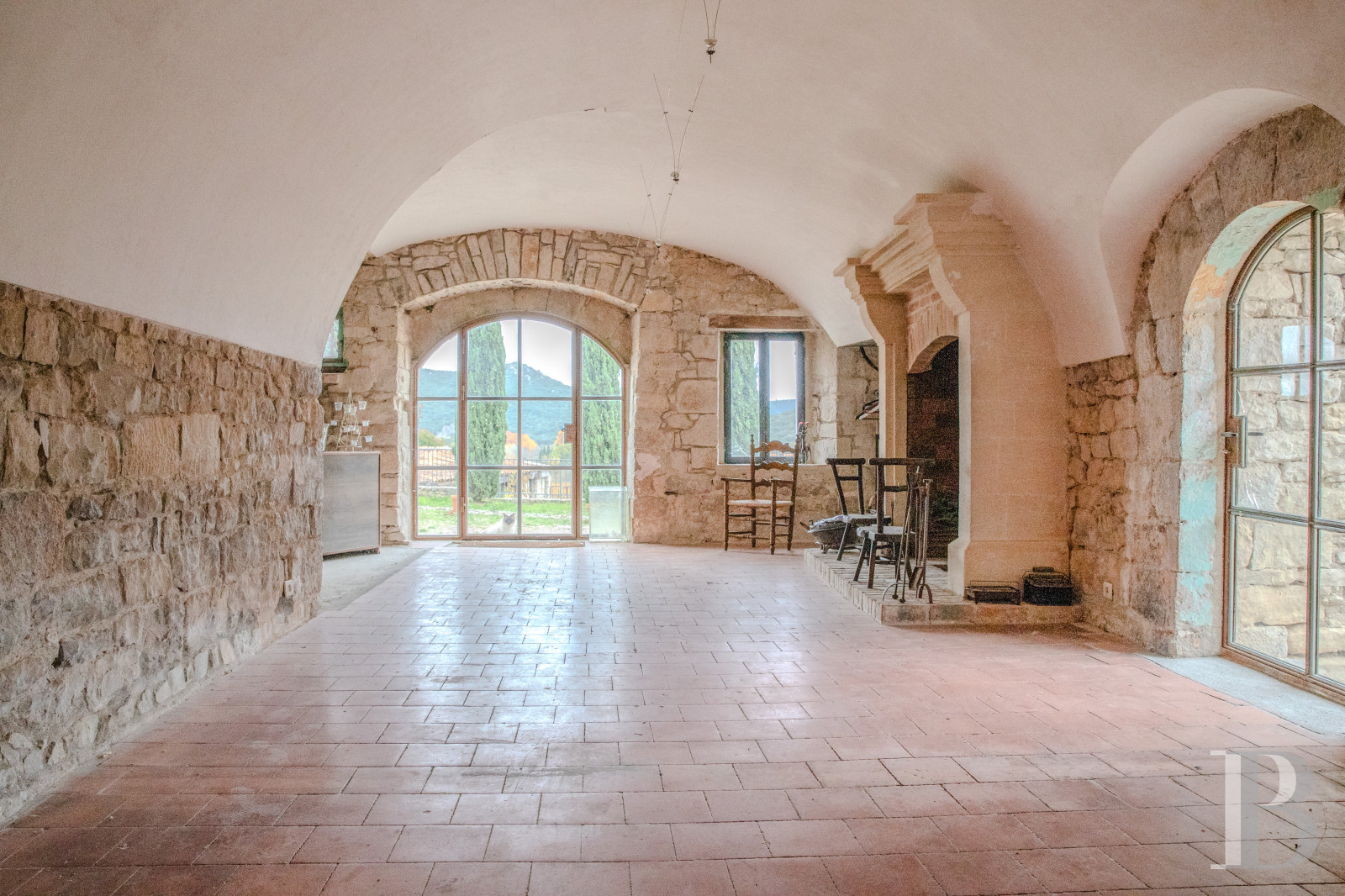
Inside, its décor reveals its different eras of construction, with some elements dating from the Renaissance and others from the 17th century, whereas the garden level’s low ceilings alternate, quite remarkably, between barrel and “bishop’s cap” vaults, sometimes coated in plaster and other times left in simple pointed Cevenol stone.
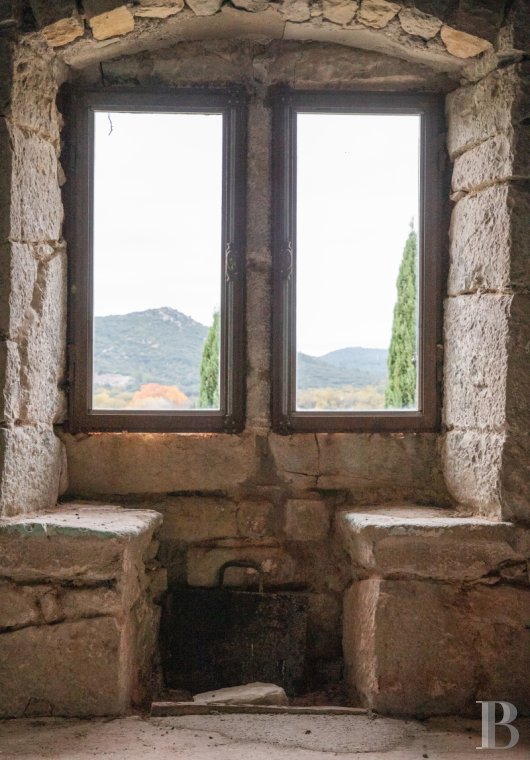
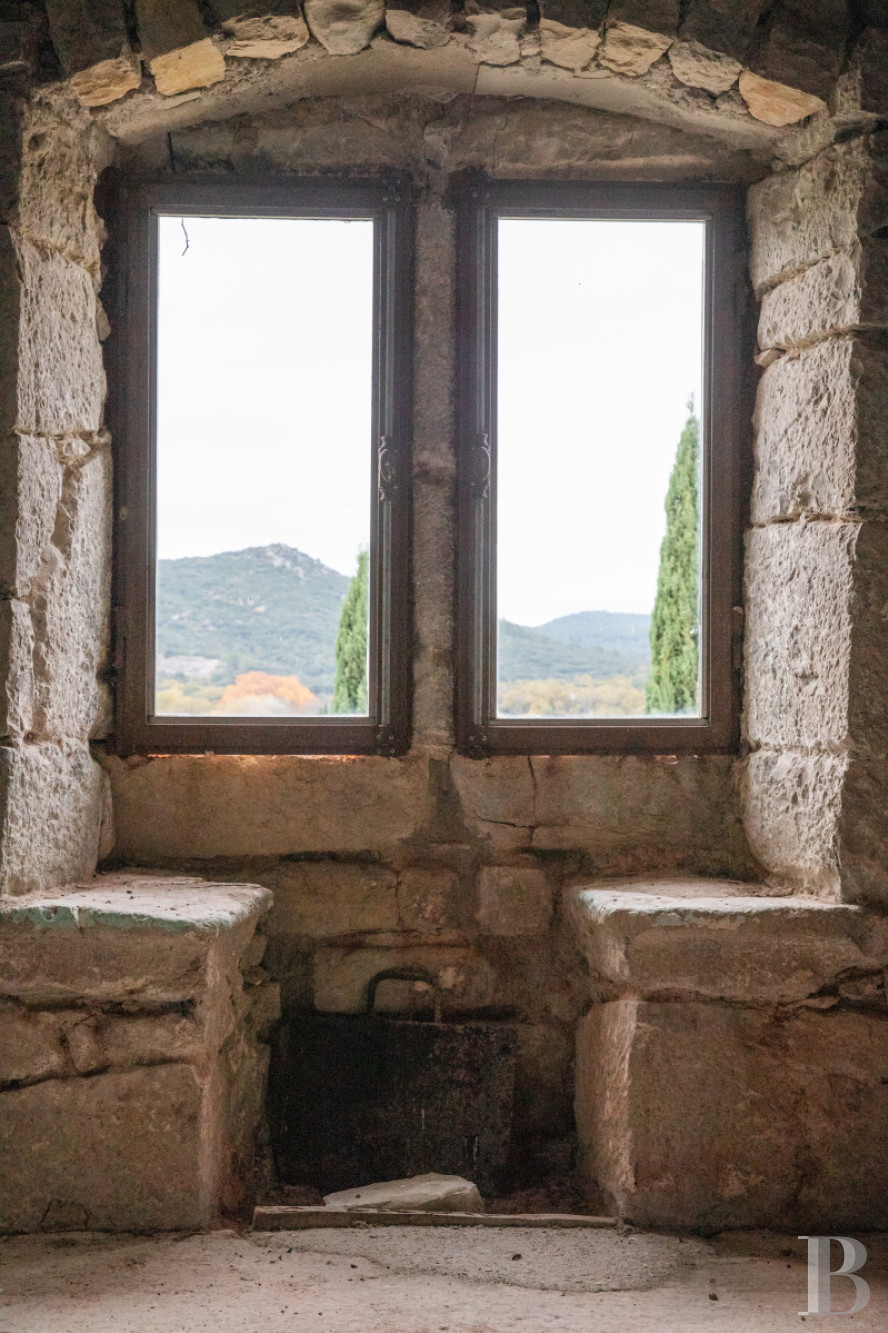
In addition, a medieval window seat was created in an offset window’s thick embrasure, while the floors, in black polished concrete or cement, alternating with its original terracotta tile floors, accentuate the rooms’ bucolic atmosphere with a contemporary touch.
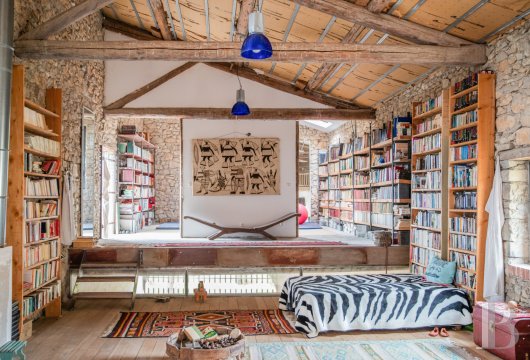
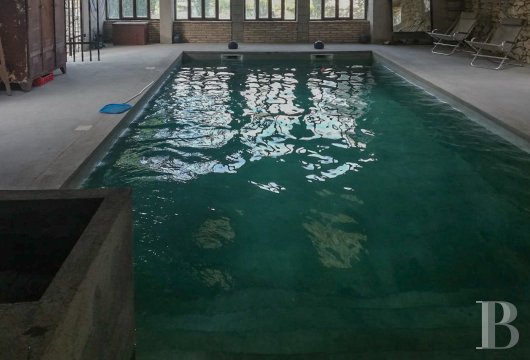
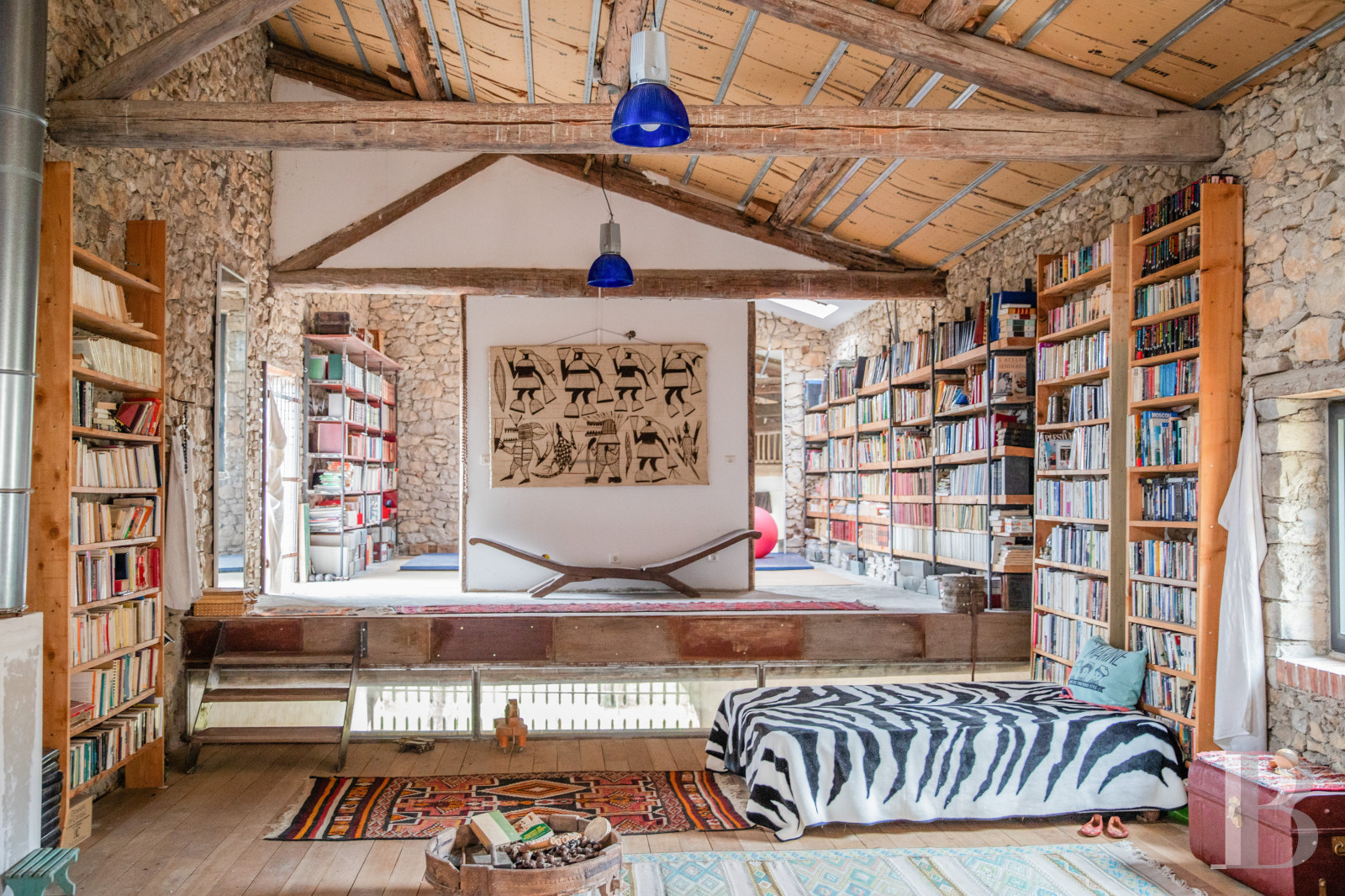
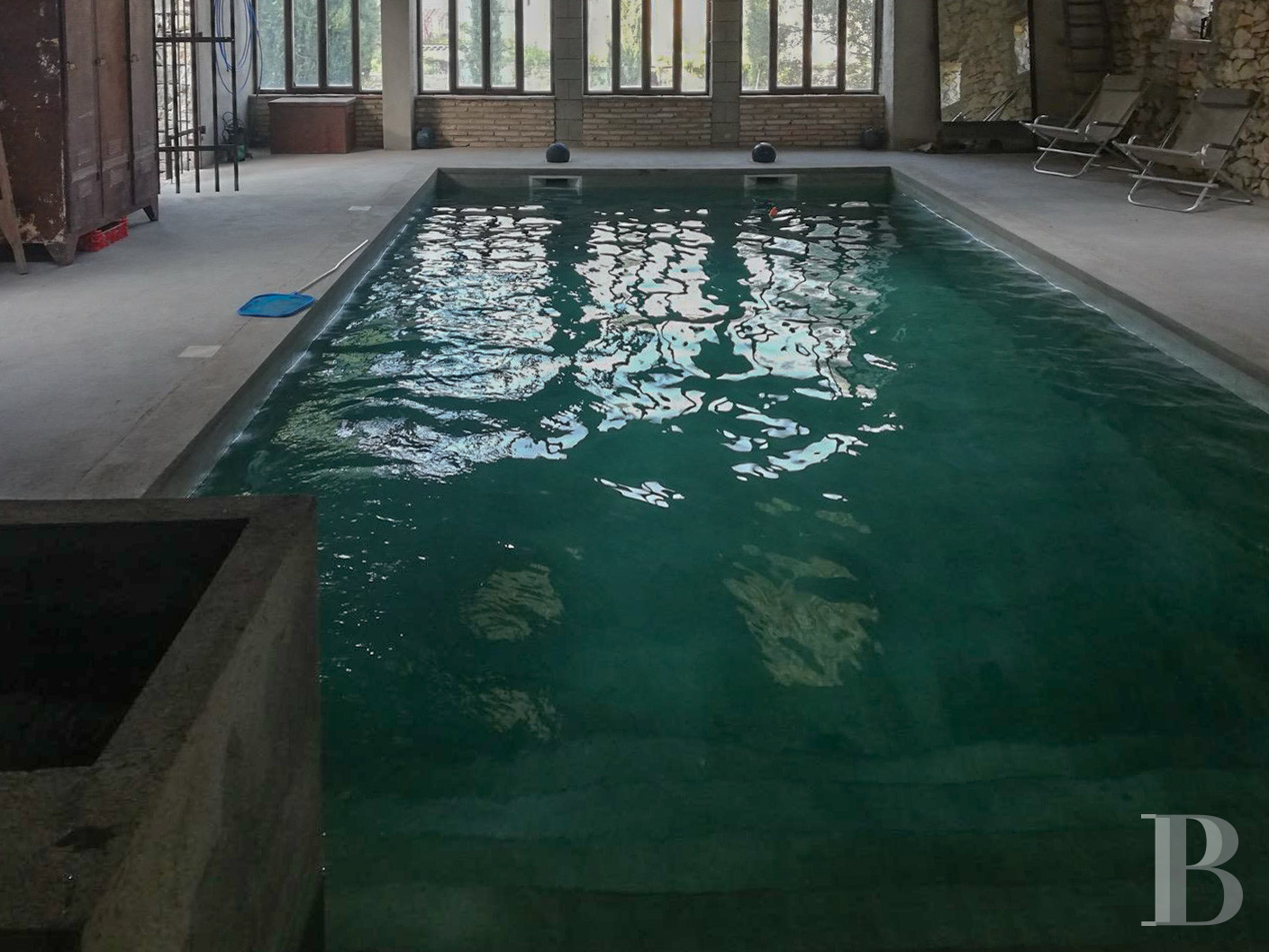
Lastly, an immense reception room, a 7 x 4-metre indoor swimming pool, a library, two vaulted rooms, one of which has a fireplace, and an adjacent kitchen round out the rooms in this eye-catching stone edifice.
The Wine Storehouse
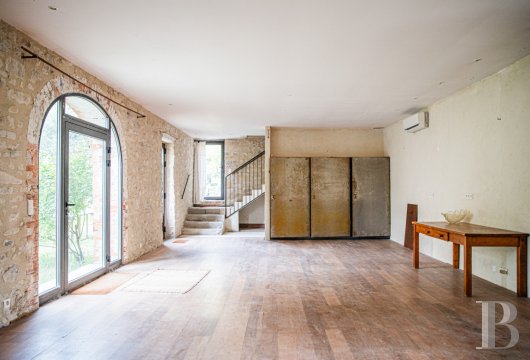
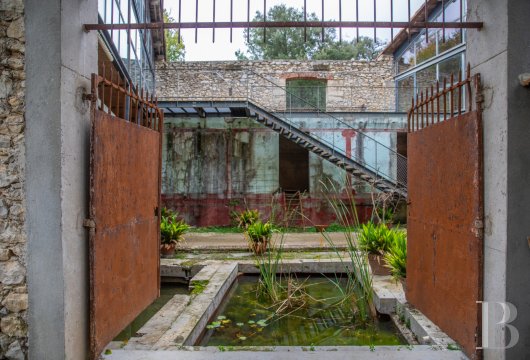
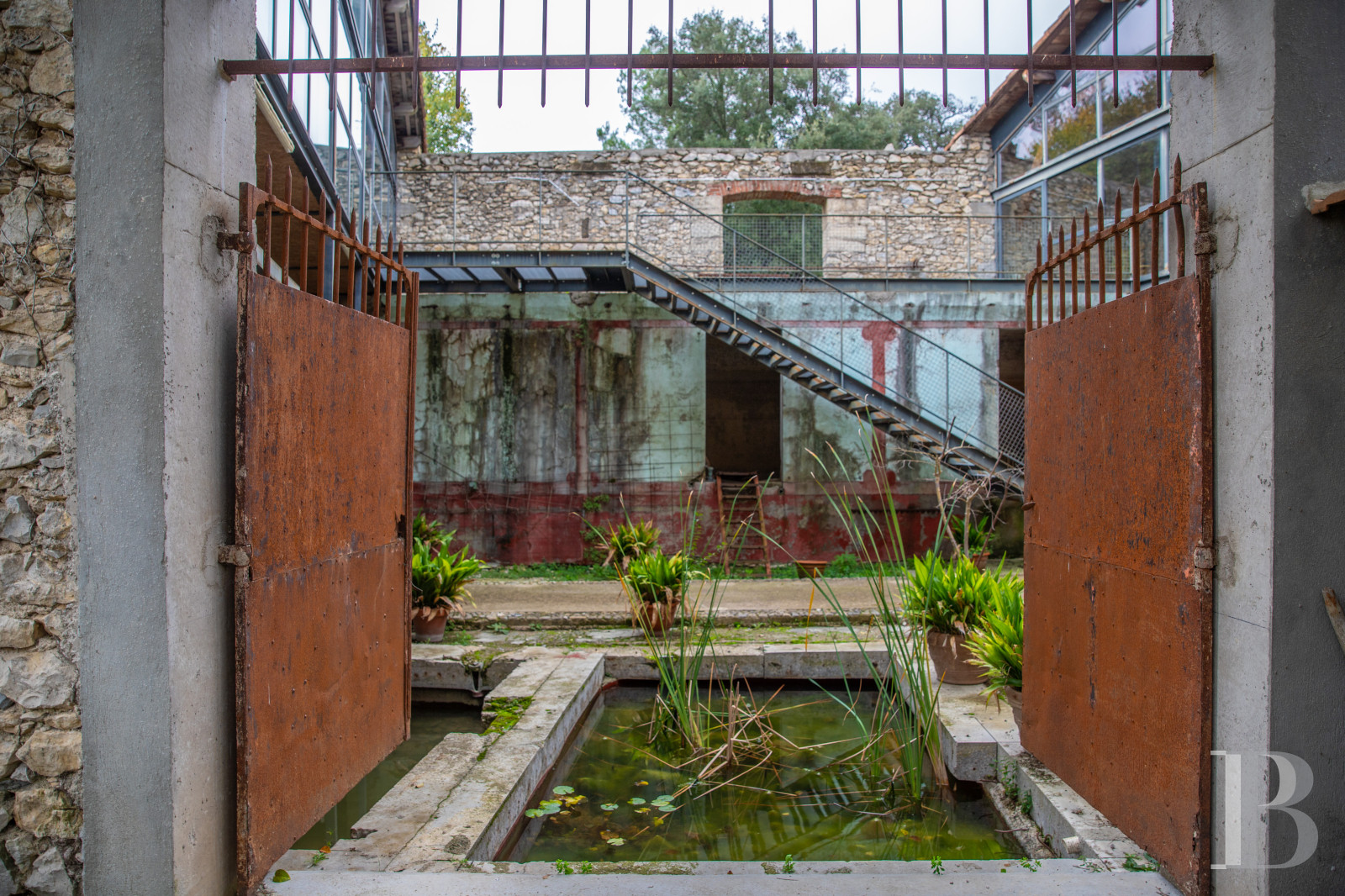
With approximately 970 m² of floor area, characteristic of large wine storehouses from the 19th century, it underwent an ultra-contemporary renovation, which, although not yet completed, was initiated – after the central section of its roof collapsed – in order to eventually transform this space into several workshops located on either side of a central garden and a small semi-covered pond.
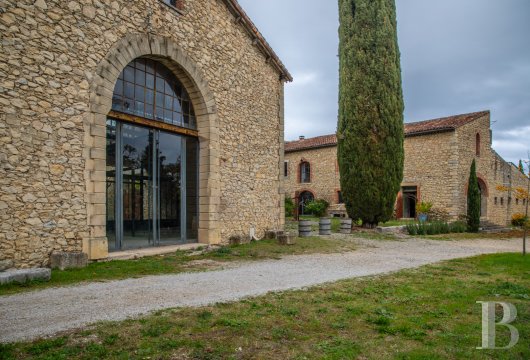
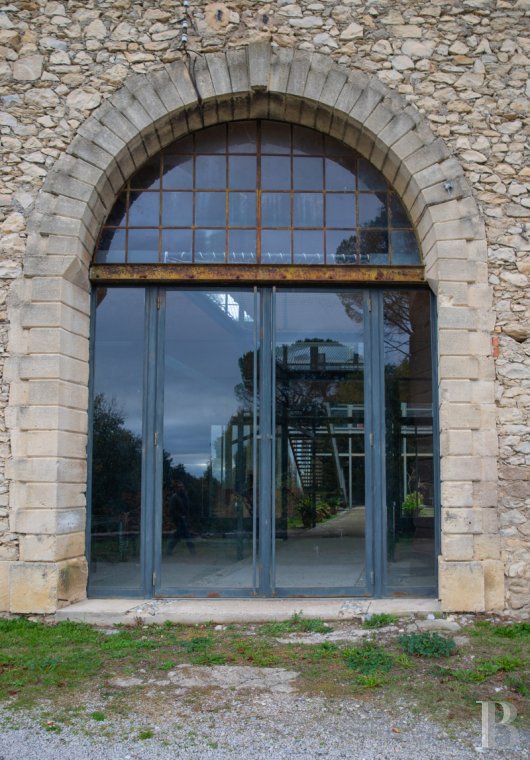
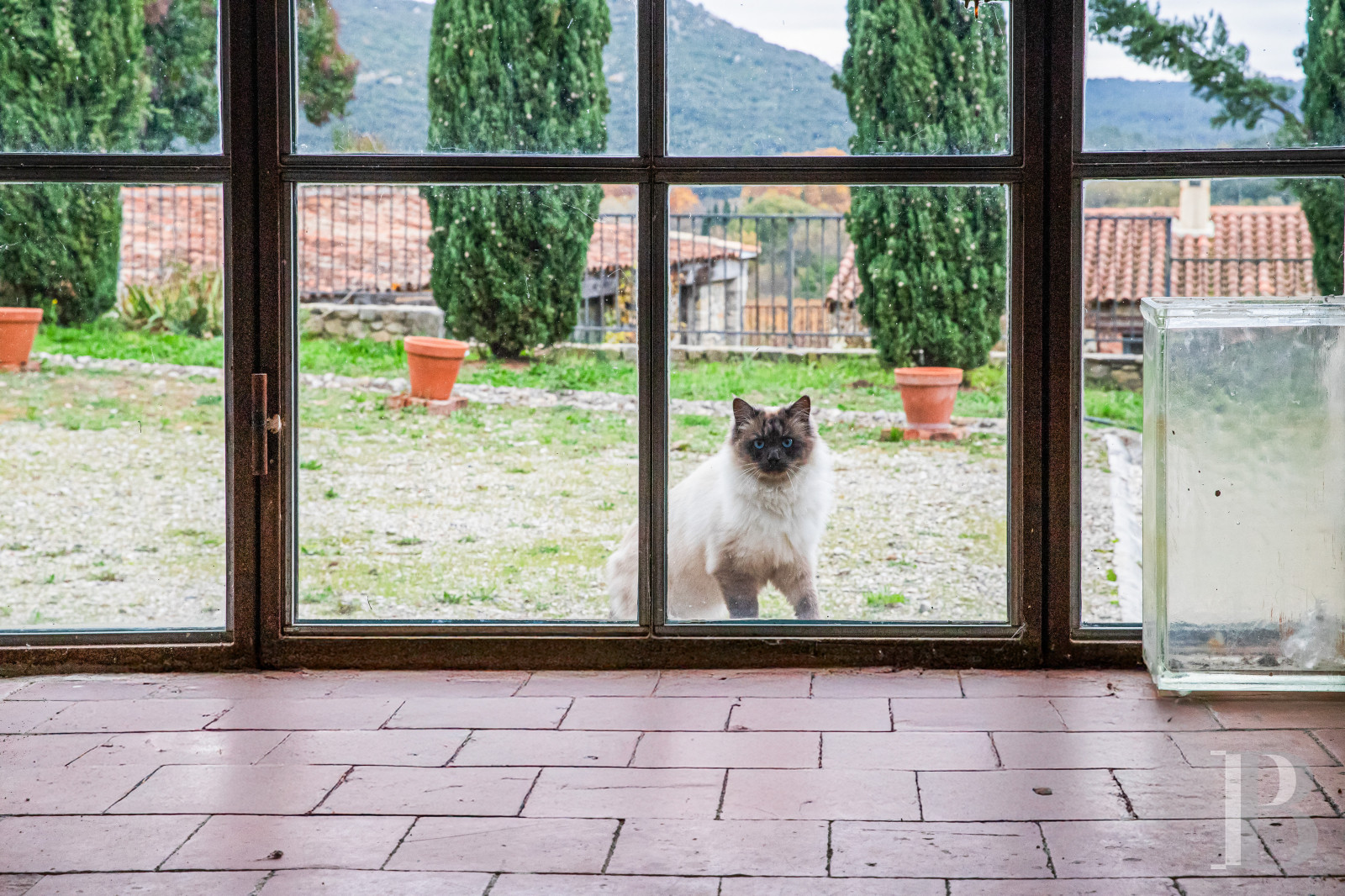
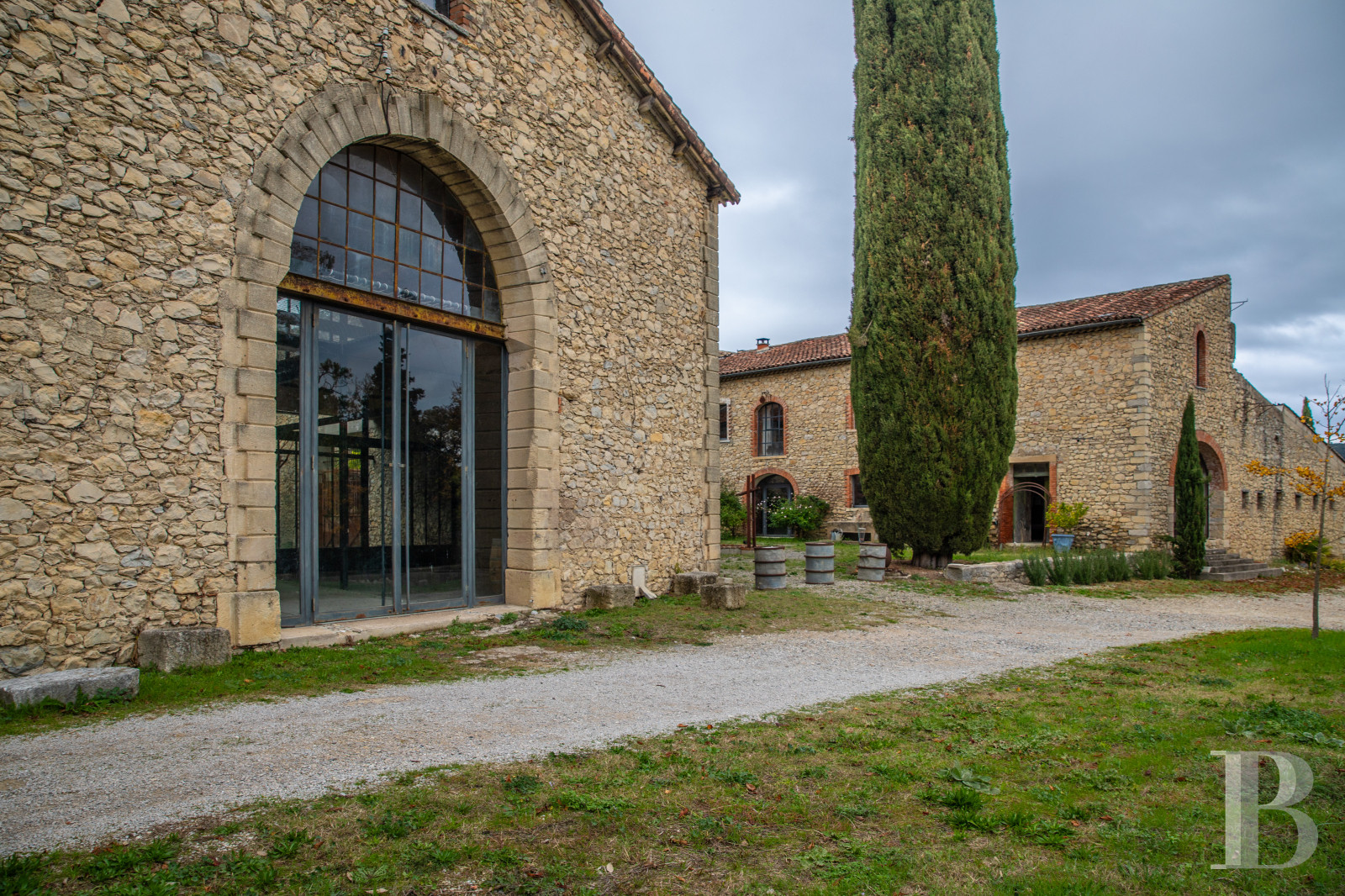
In addition, glass and metal help highlight what was, originally, a very rustic construction with dressed and pointed local stone exteriors topped with an interlocking tile roof, while large metal-framed picture windows punctuate each of its lateral sides, which were once used for storage. As for its “calade” stone floor, which alternates with large expanses of polished concrete, it provides a glimpse of how this space could be given a contemporary use that still highlights its era of construction, whereas a matte “Corten” steel door opens directly on to the wine storehouse’s private garden.
The Outbuildings and Dovecote
The former “sleeping quarters”, meant to house the property’s domestic staff or its seasonal workers, were built in the late 19th century in the same architectural style as the other outbuildings, while, in the 20th century another floor was added, topped with a barrel tile, single-pitched roof as well as a brick structure, creating a small square tower used as a dovecote.
Framing the central building, a few small adjoining extensions may have once been used as stables as well as rabbit hutches, now in disuse, but today have been upgraded with all modern comforts in order to convert them into rental accommodations, which are currently inhabited.
The Grounds
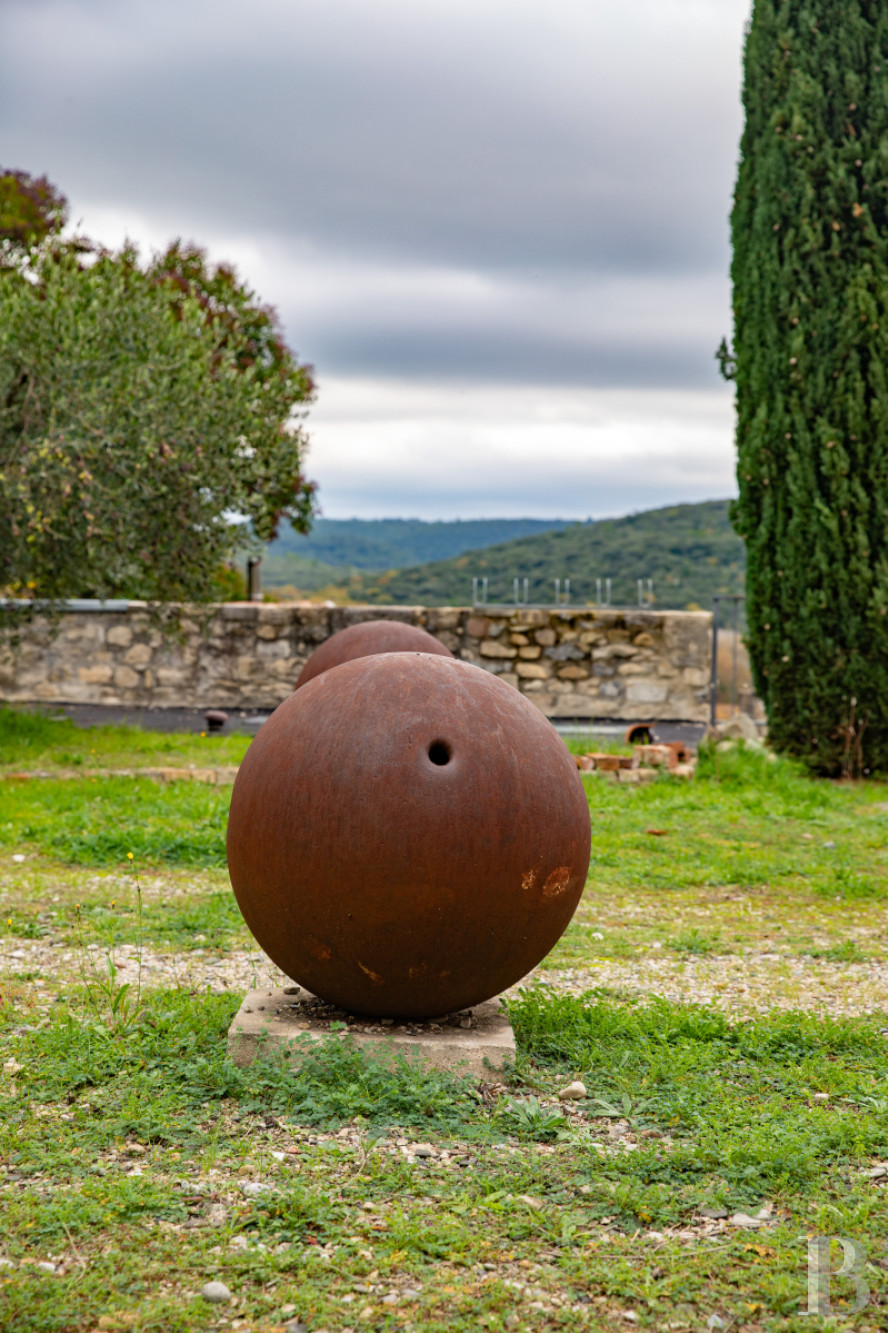
Extending over seven hectares, the grounds are currently divided up into two hectares of forests, 1.5 hectares of orchards and one hectare of vineyards, a drastic decrease compared to their former size. In addition, the vestiges of a small cross-shaped vegetable garden are still visible below the dovecote, while the property, slightly hilly, provides enchanting vistas of the surrounding countryside, with its colourful rolling topography, as well as breath-taking views of this little known section of the Cévennes Mountains.
Our opinion
Given its location in a protected area, which draws many tourists each year, a wide-scale renovation of all of the property’s buildings has taken place over the past several years in order to adapt it to a new type of activity that corresponds to the current popularity of the Cévennes region, firmly focused on eco-tourism.
As for the property, it now requires a precise project and a new contractor as demanding as the previous one in order to complete the work initiated, while the challenge ahead for its future occupants will be making the most of these buildings’ stunning local architecture as well as preserving the pivotal role of this timeless ensemble’s regional roots.
Reference 722503
| Main building floor area | 738 m² |
| Outbuildings floor area | 2214 m² |
| Land registry surface area | 6 ha 99 a 37 ca |
| Total floor area | 2952 m² |
French Energy Performance Diagnosis
Information on the risks to which this property is exposed is available on the website: www.georisques.gouv.fr
Share


NB: The above information is not only the result of our visit to the property; it is also based on information provided by the current owner. It is by no means comprehensive or strictly accurate especially where surface areas and construction dates are concerned. We cannot, therefore, be held liable for any misrepresentation.