



2 h 30 from Paris, an elegant 18th-century maison de maître,
its outbuildings and park overlooking the Canal du Nivernais
its outbuildings and park overlooking the Canal du Nivernais
Cercy-la-Tour,
NIEVRE
burgundy
58340
FR

Location
The property stands on the heights of a former medieval market town within a conservation area. The village has over 1,800 inhabitants, a full range of shops and services, and several restaurants. An railway station connects to Paris and Lyon in 2 h 30. Basel is 4 hours away, Geneva 3.
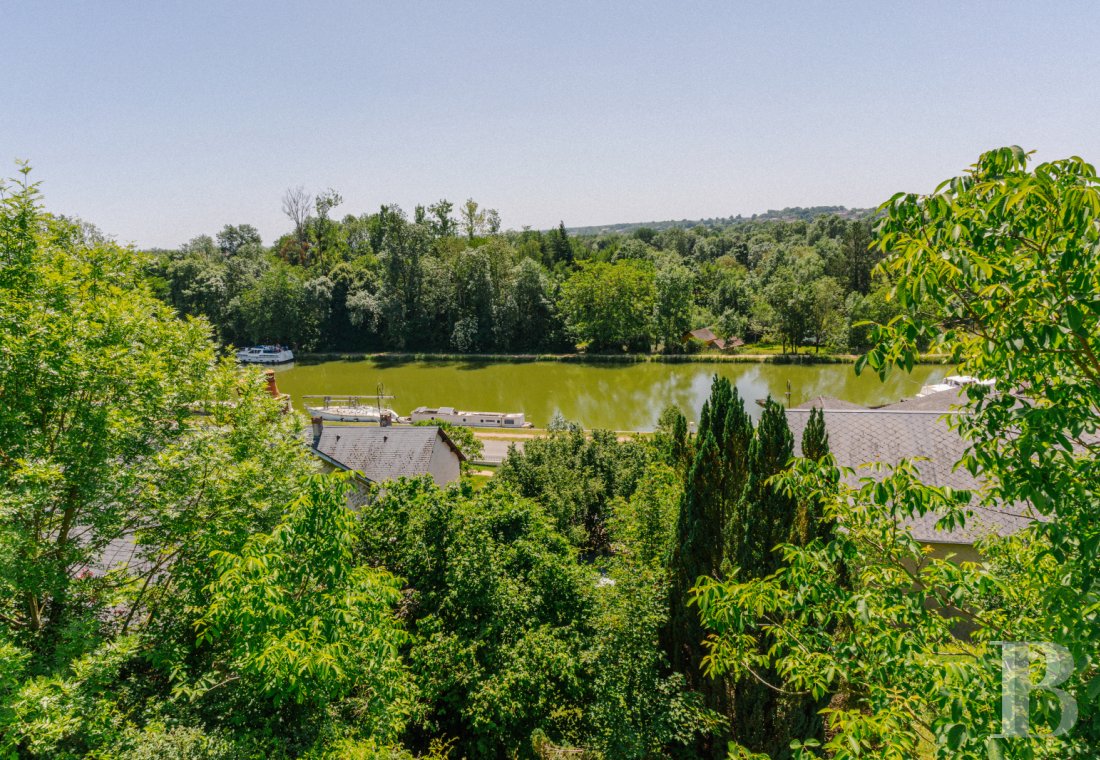
The historic city holds the "station verte" label and sits at the junction of the Canal du Nivernais and three rivers, with a marina. It occupies a rocky spur from which views reach to the horizon across the canal, the surrounding bocage and the hills of the Morvan. The former ramparts have been restored; from the base of the old keep, all that survives of it, a monumental statue of the Virgin watches over the city.
Description
The landscape is shaped by the confluence of several rivers and the flat towpaths that follow them, a bocage countryside of hedgerows and wooded banks. The property lies near the foothills of the Parc Naturel Régional du Morvan, where woodland gives way to elevated positions with far-reaching views.
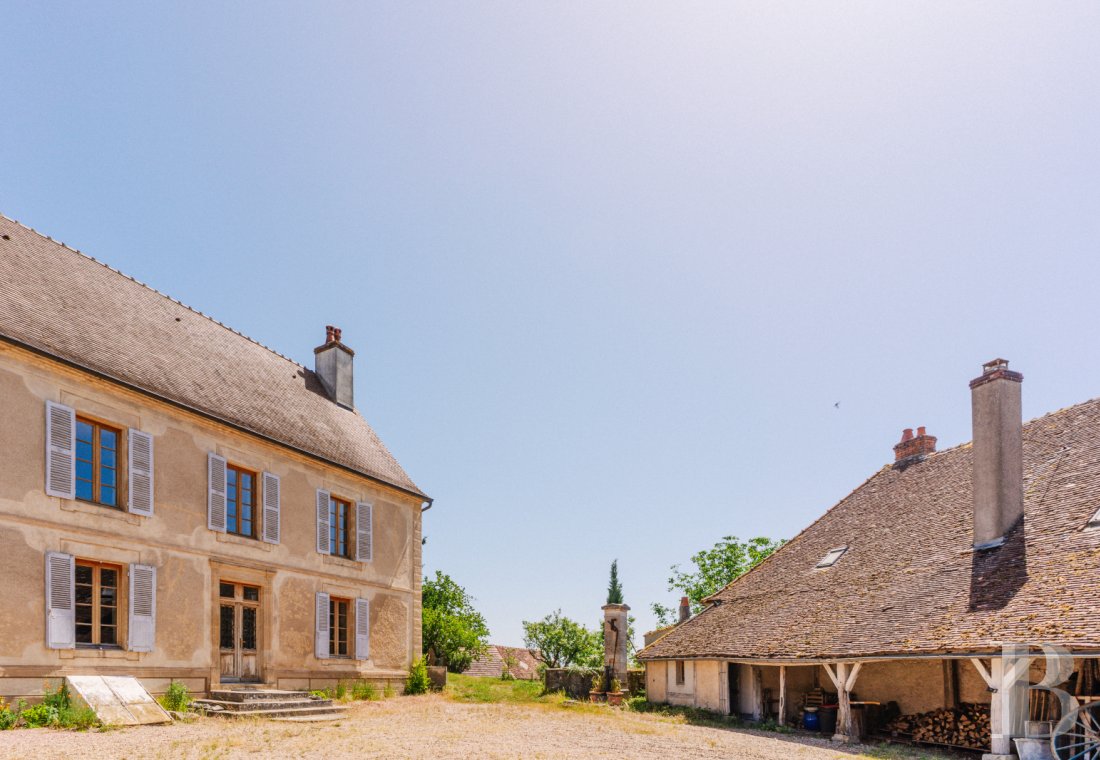
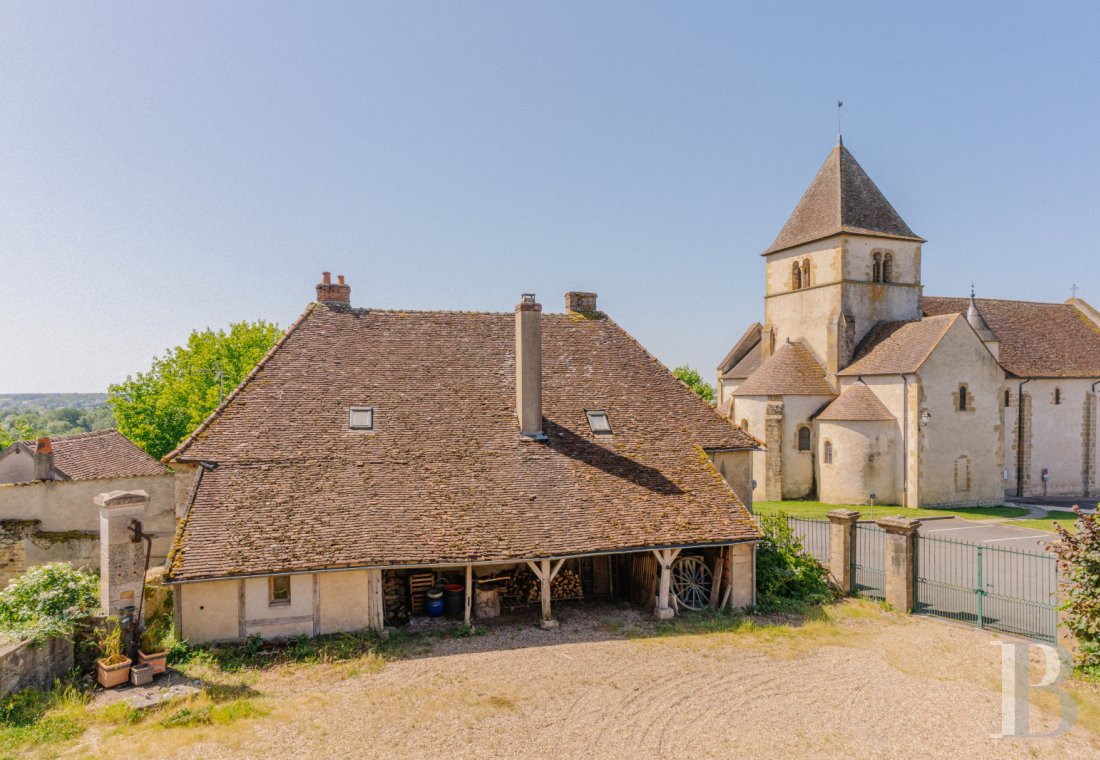
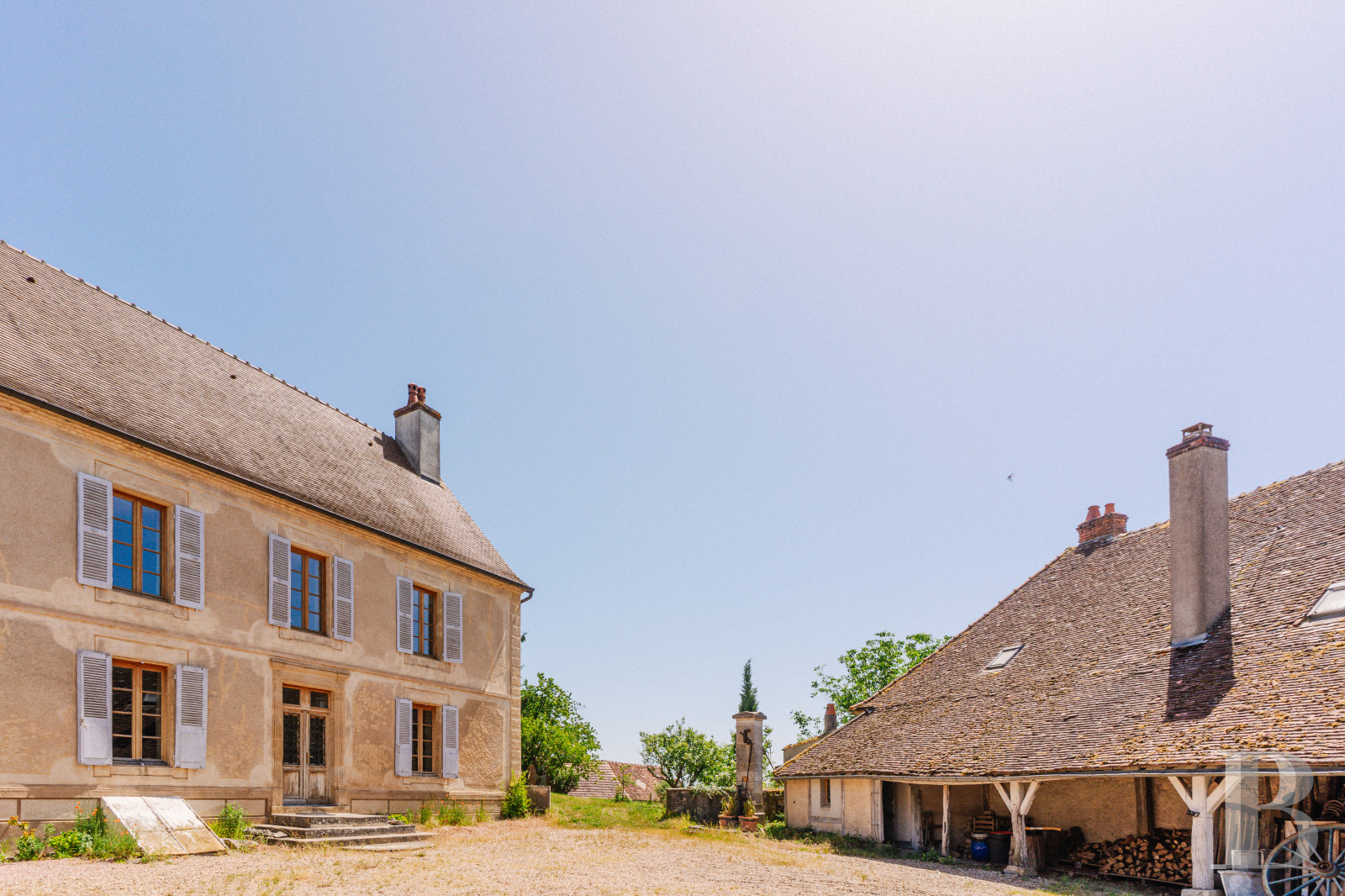
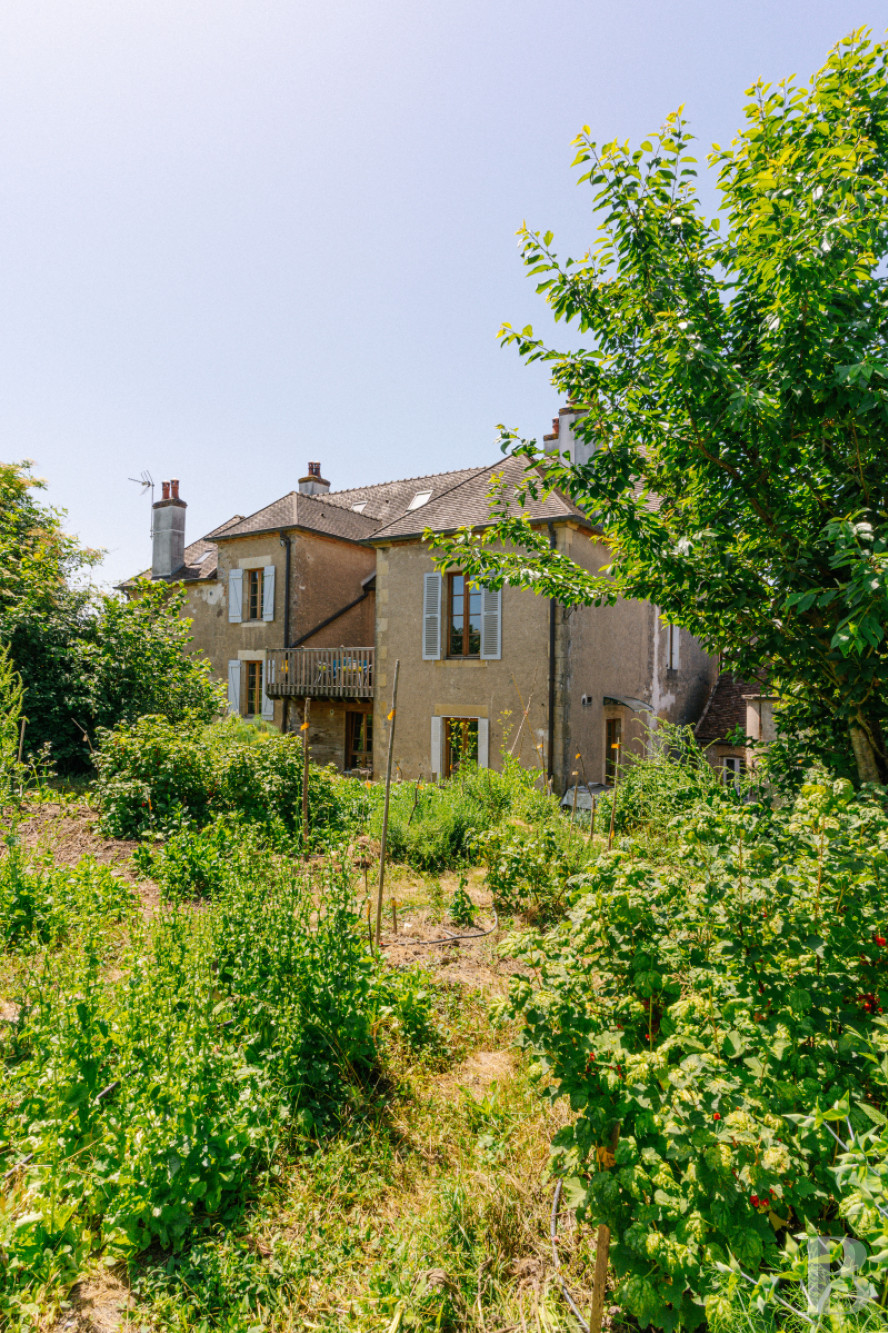
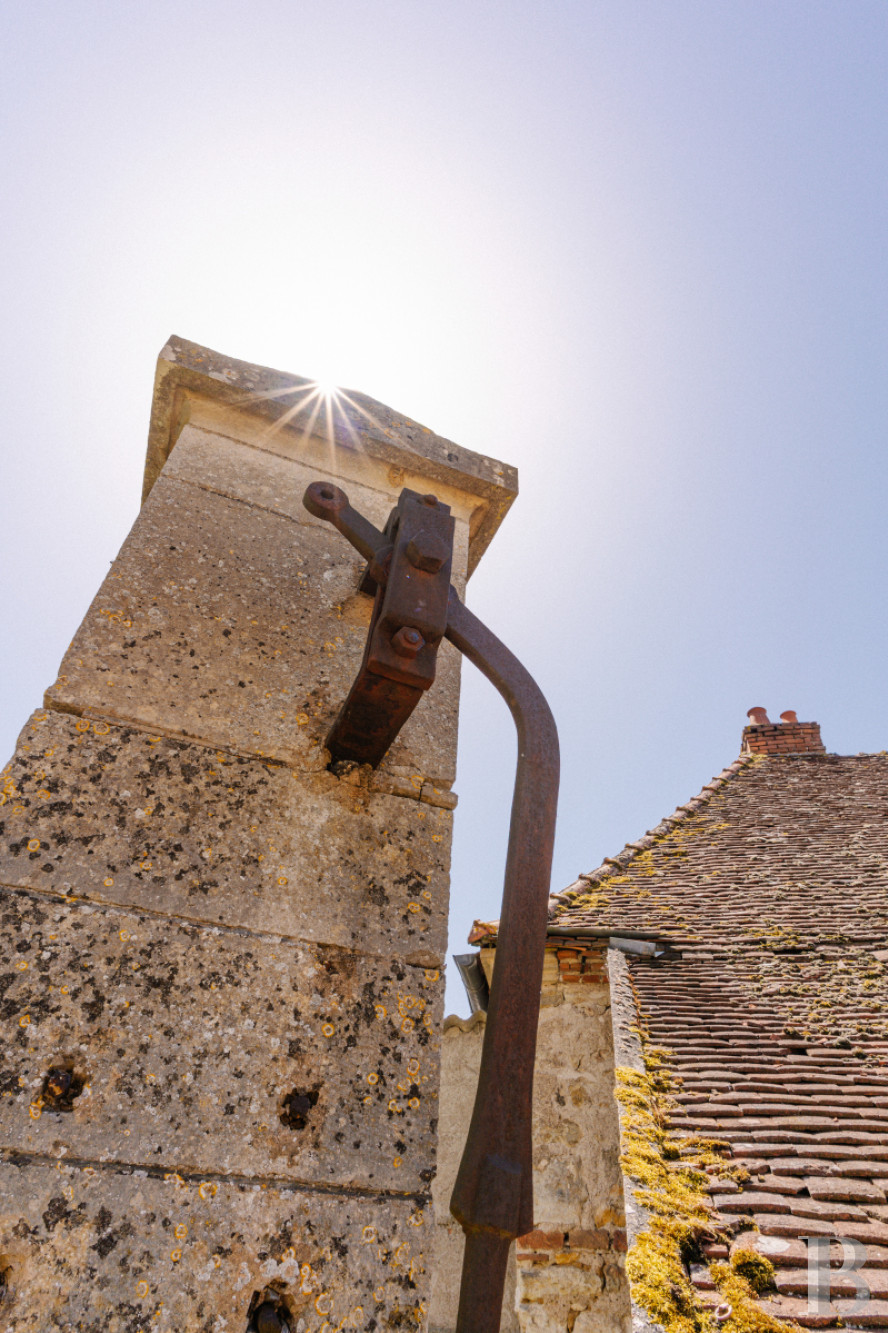
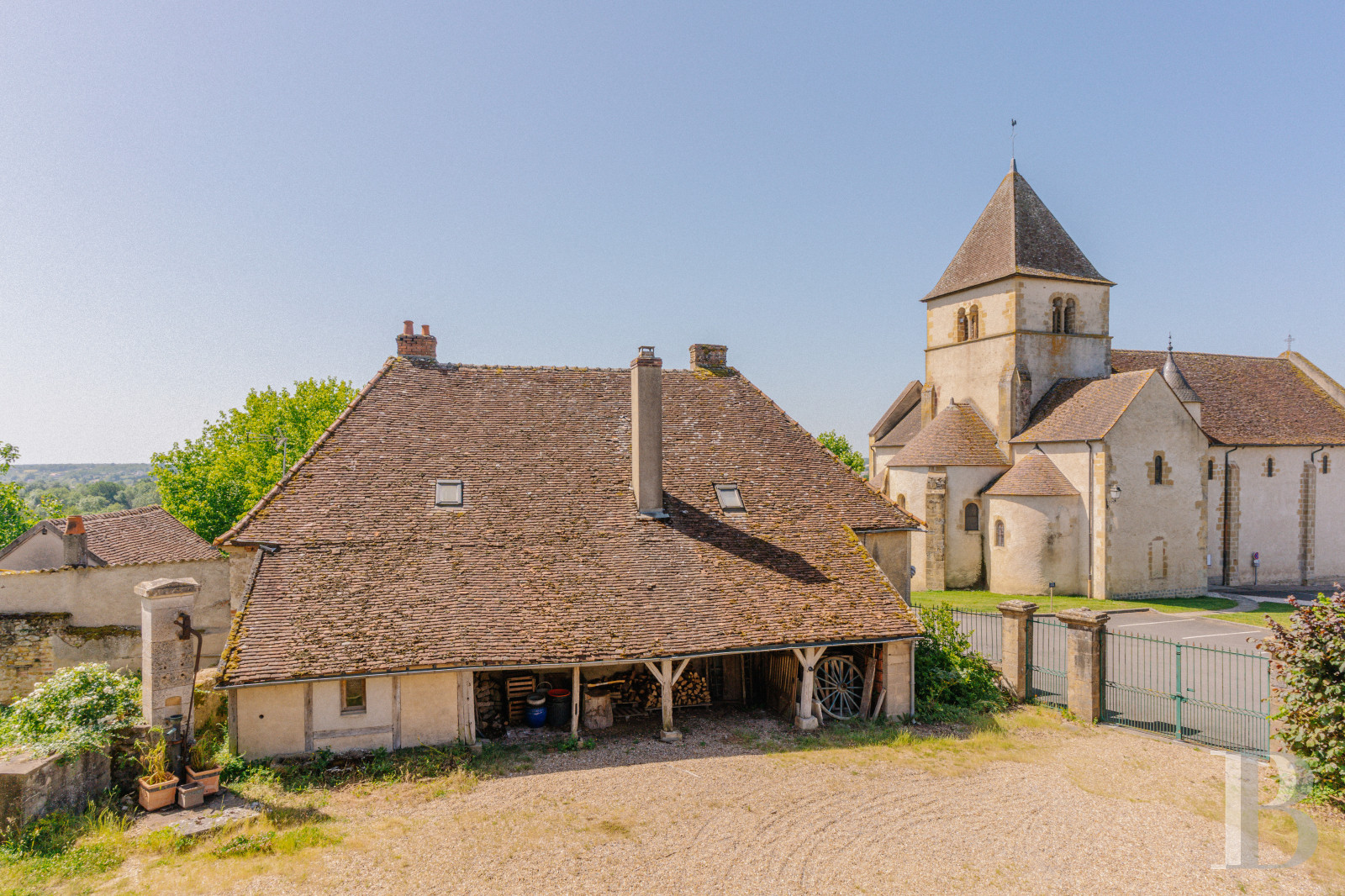
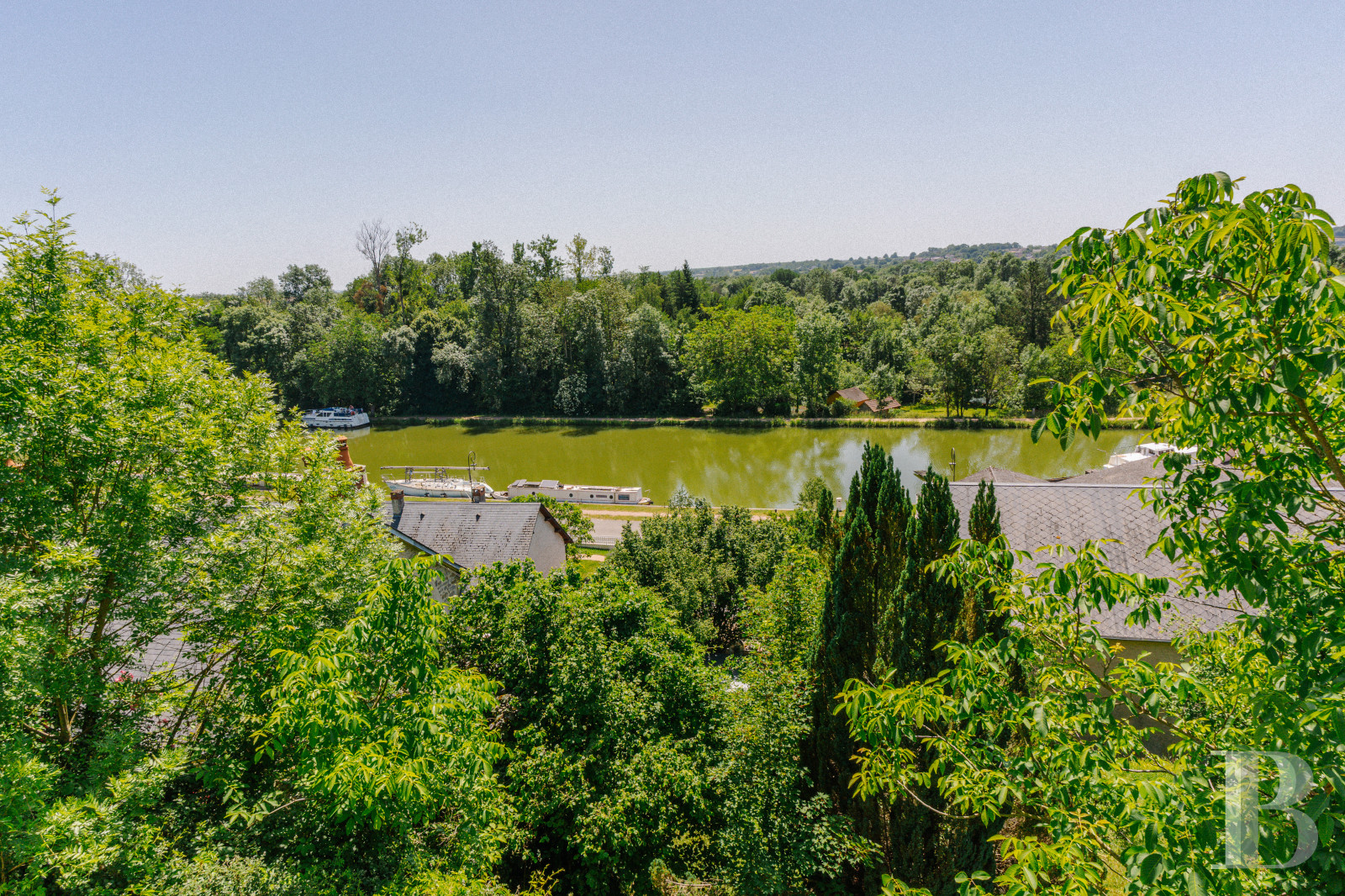
The village climbs steeply, its narrow stone-lined streets rising to a broad square at the summit, where an 11th-century church, listed in the catalogue of historic monuments, stands opposite the house. Built around 1750 and set behind an ornate gateway, the maison de maître faces west. A enclosed courtyard, flanked on one side by a woodstore and on the other by two outbuildings housing a workshop, a boiler room and a garage, provides vehicle parking. To the south, a walled and planted park overlooks the Canal du Nivernais, including a heritage orchard and a habitable longère. To the north, facing further outbuildings — a small house, shelters and former rabbit hutches — a well-tended kitchen garden extends alongside. A path leads directly to the inner courtyard. A stone well over 25 m deep, fed by a natural spring, supplies water year-round.
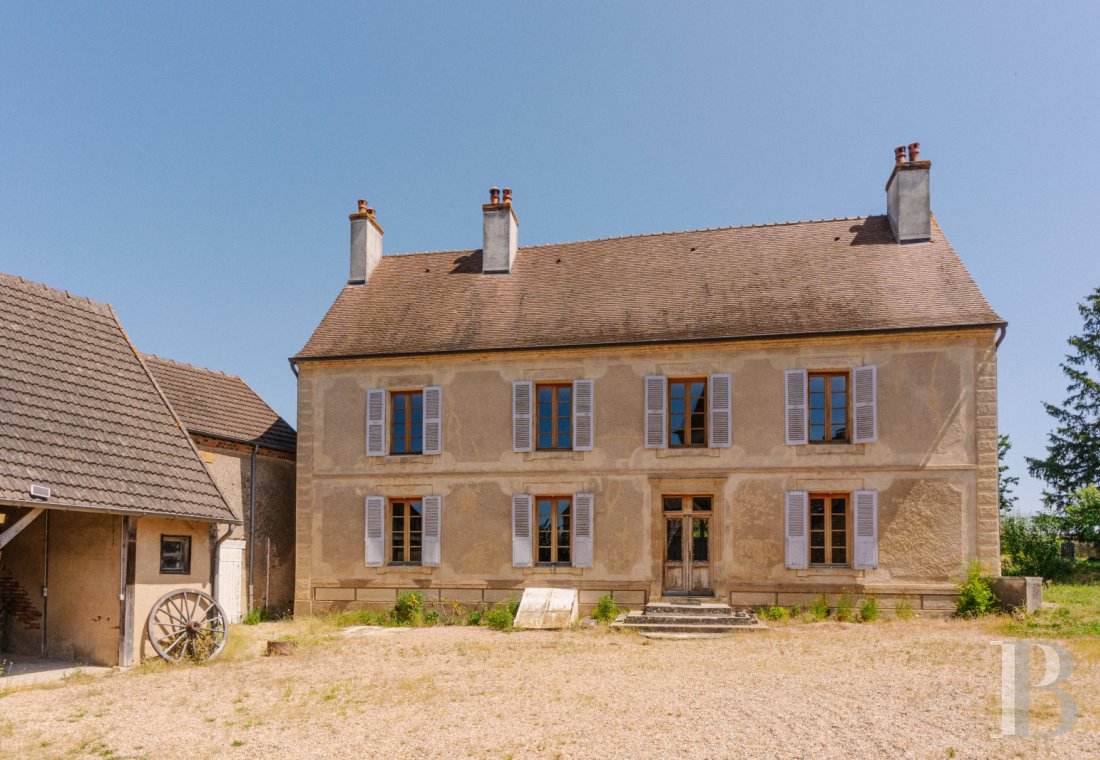
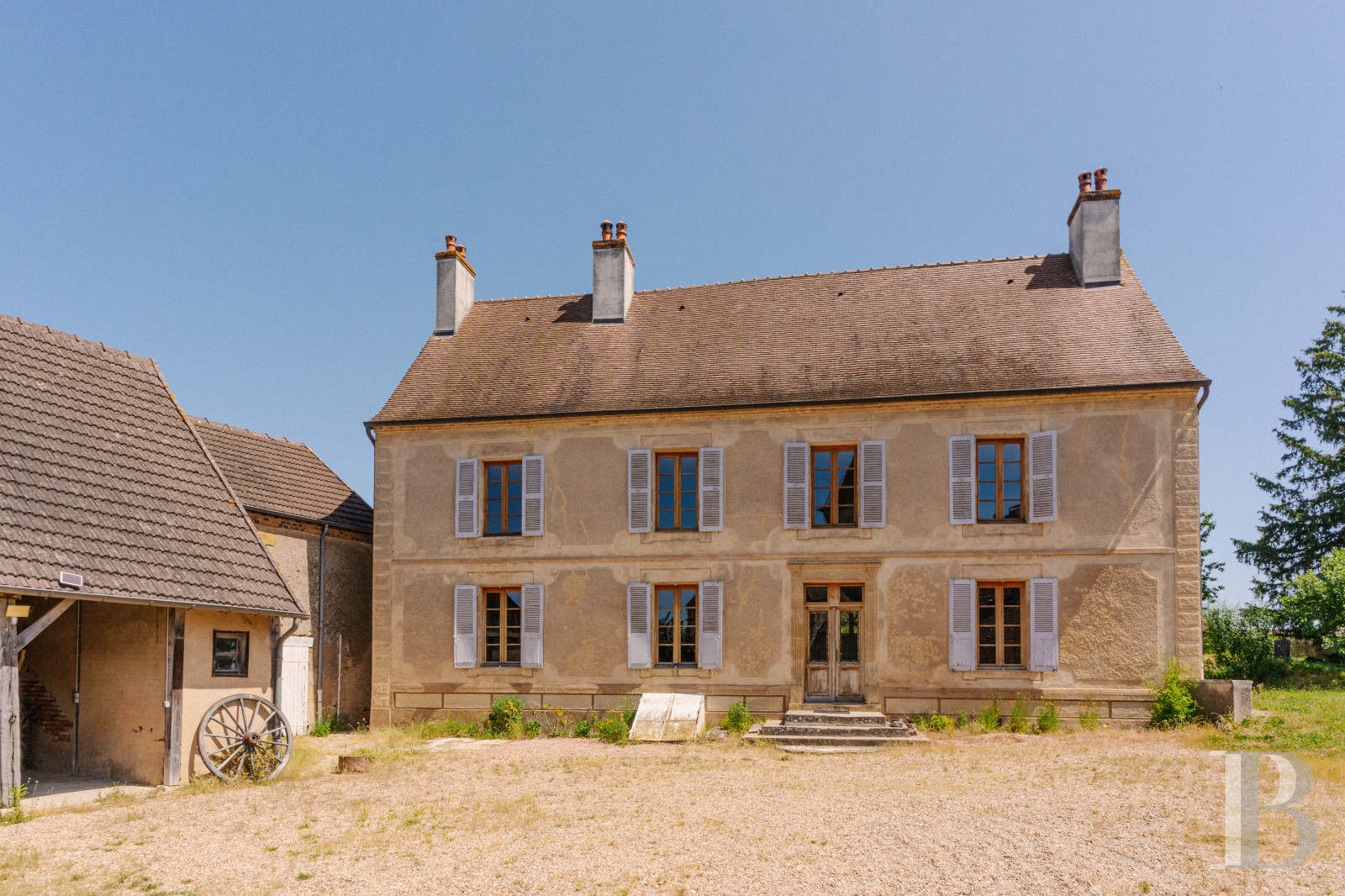
The maison de maître rises over three levels, its facade enlivened by numerous windows framed by semi-louvred timber shutters. The main entrance is marked by a glazed timber door with a glass fanlight, approached by a small stone perron. The roof, laid in traditional Burgundy flat tiles and restored in 2016, carries several chimney stacks. The ground floor holds the main reception rooms and a first bedroom; the upper levels concentrate the sleeping accommodation: five bedrooms on the first, with three bathrooms or shower rooms, and one very large bedroom with bathroom and dressing room on the second, within the converted upper level.
The outbuildings, in stone or brick under traditional or interlocking flat-tile roofs, form a coherent and substantial architectural group.
The village climbs steeply, its narrow stone-lined streets rising to a broad square at the summit, where an 11th-century church, listed in the catalogue of historic monuments, stands opposite the house. Built around 1750 and set behind an ornate gateway, the maison de maître faces west. A enclosed courtyard, flanked on one side by a woodstore and on the other by two outbuildings housing a workshop, a boiler room and a garage, provides vehicle parking. To the south, a walled and planted park overlooks the Canal du Nivernais, including a heritage orchard and a habitable longère. To the north, facing further outbuildings — a small house, shelters and former rabbit hutches — a well-tended kitchen garden extends alongside. A path leads directly to the inner courtyard. A stone well over 25 m deep, fed by a natural spring, supplies water year-round.
The maison de maître rises over three levels, its facade enlivened by numerous windows framed by semi-louvred timber shutters. The main entrance is marked by a glazed timber door with a glass fanlight, approached by a small stone perron. The roof, laid in traditional Burgundy flat tiles and restored in 2016, carries several chimney stacks. The ground floor holds the main reception rooms and a first bedroom; the upper levels concentrate the sleeping accommodation: five bedrooms on the first, with three bathrooms or shower rooms, and one very large bedroom with bathroom and dressing room on the second, within the converted upper level.
The outbuildings, in stone or brick under traditional or interlocking flat-tile roofs, form a coherent and substantial architectural group.
The main house
The ground floor
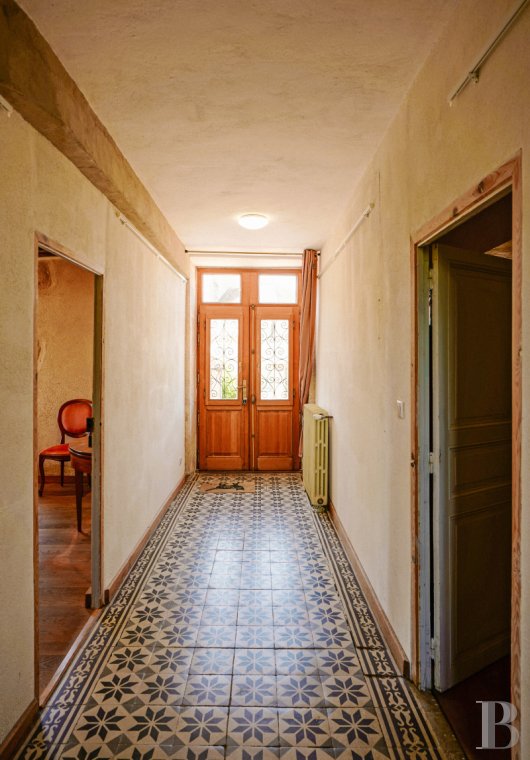
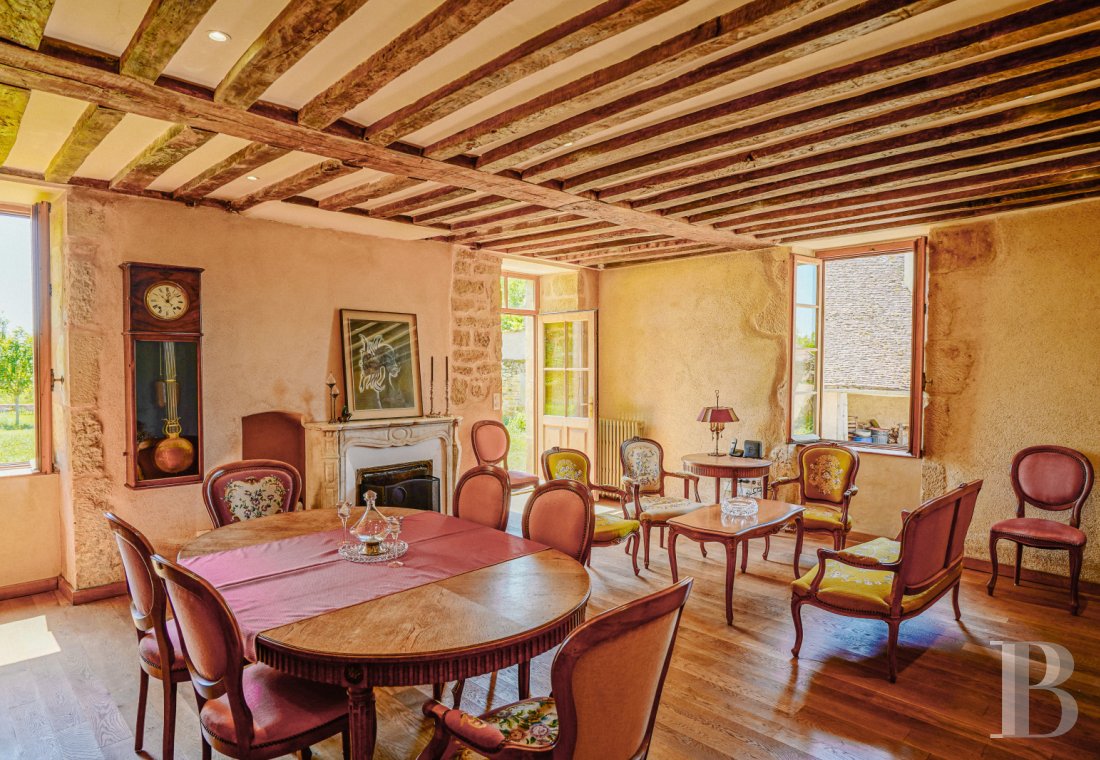
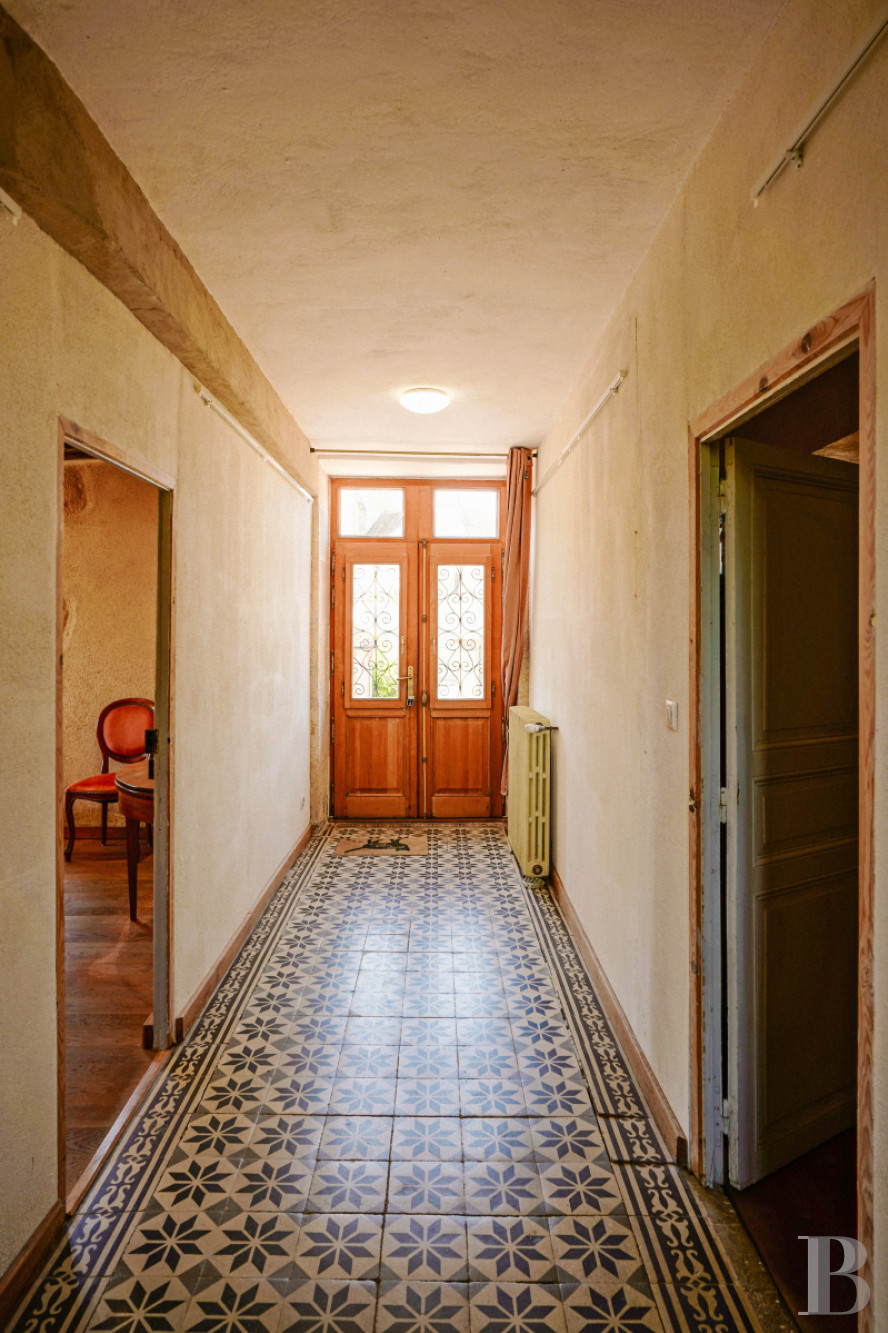
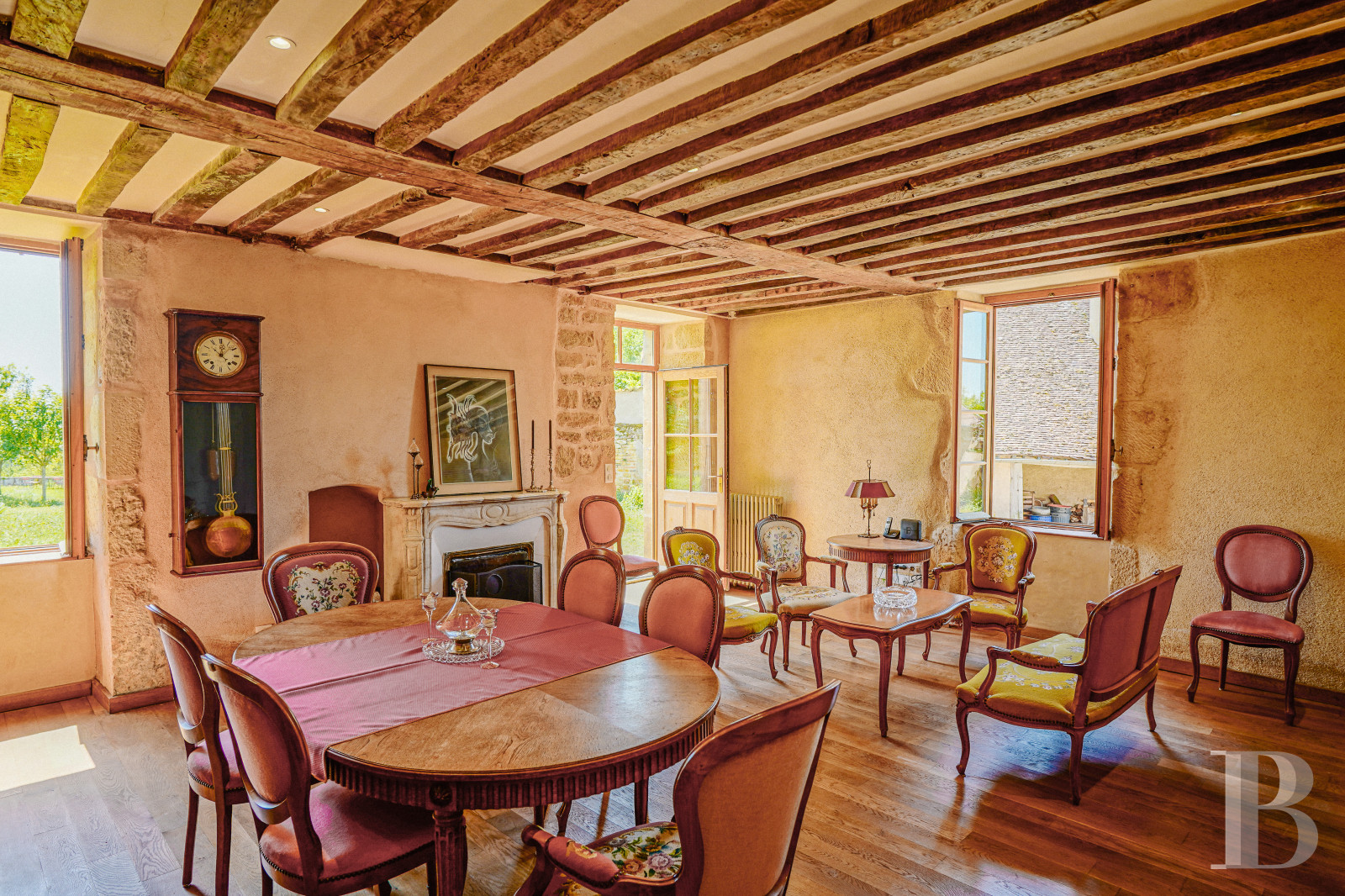
The entrance door, glazed and fitted with scrolled ironwork, admits light through its fanlight into the hall, floored in original geometric encaustic tiles. A vestibule leads to the dining room, which has a marble fireplace, oak floorboards, lime-washed walls and exposed beams.
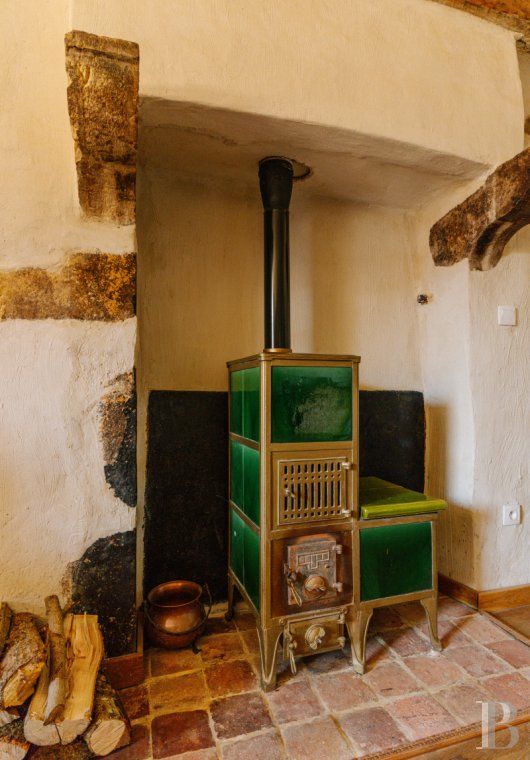
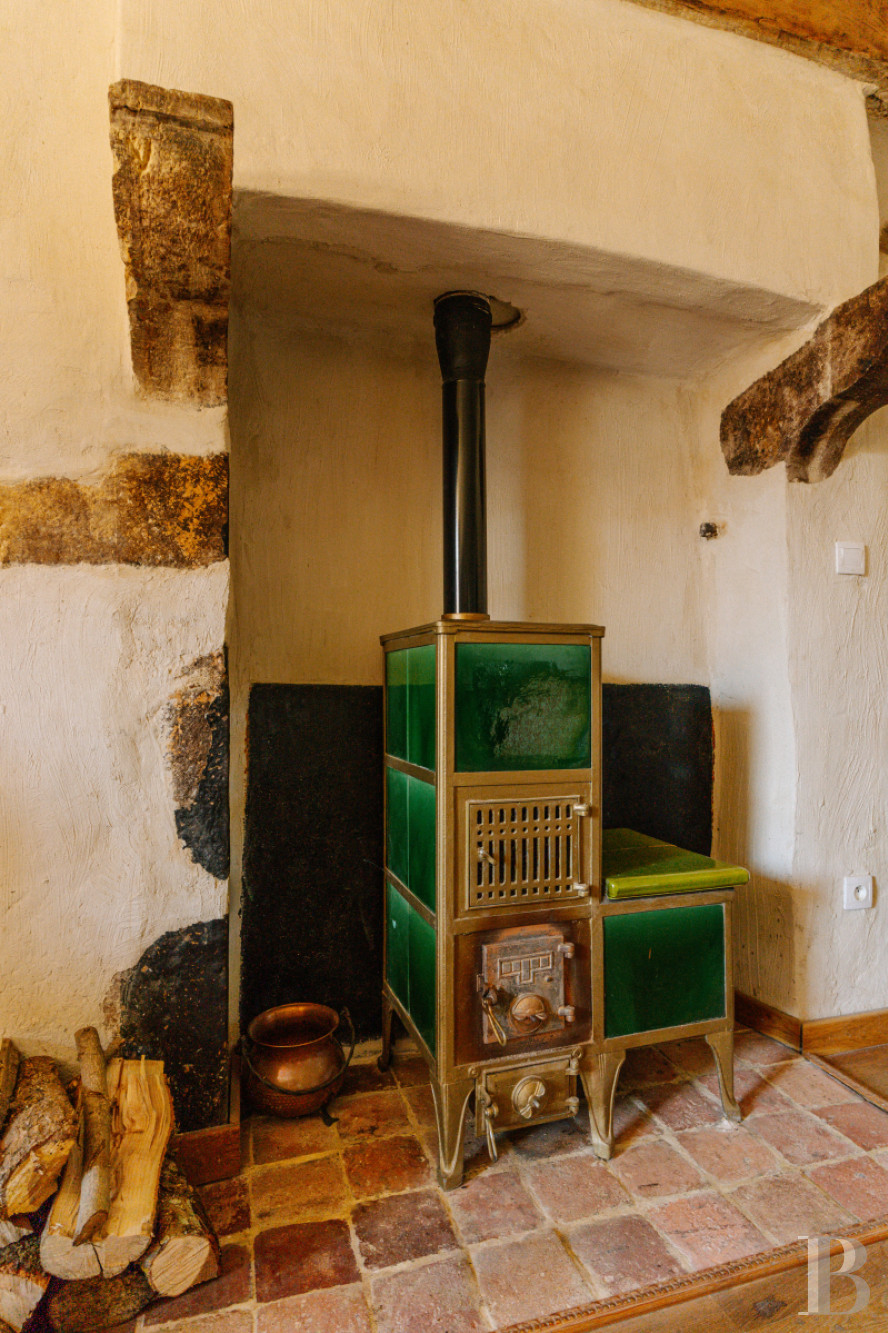
From the main entrance, the first sitting room gives onto exposed stonework set against lime-washed walls, carried through to the surrounds of the original fireplace. A Swiss cast-iron stove now occupies the hearth, resting on original terracotta tiles; above it, a massive beam is supported by two corbels. The floor is laid in wide-board oak.
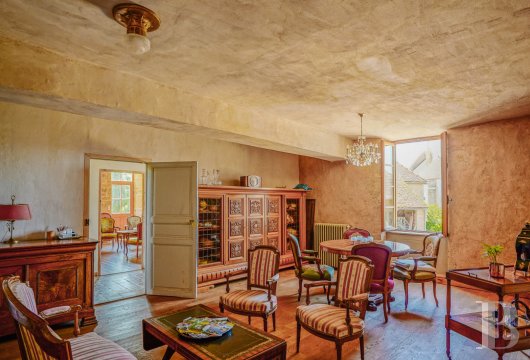
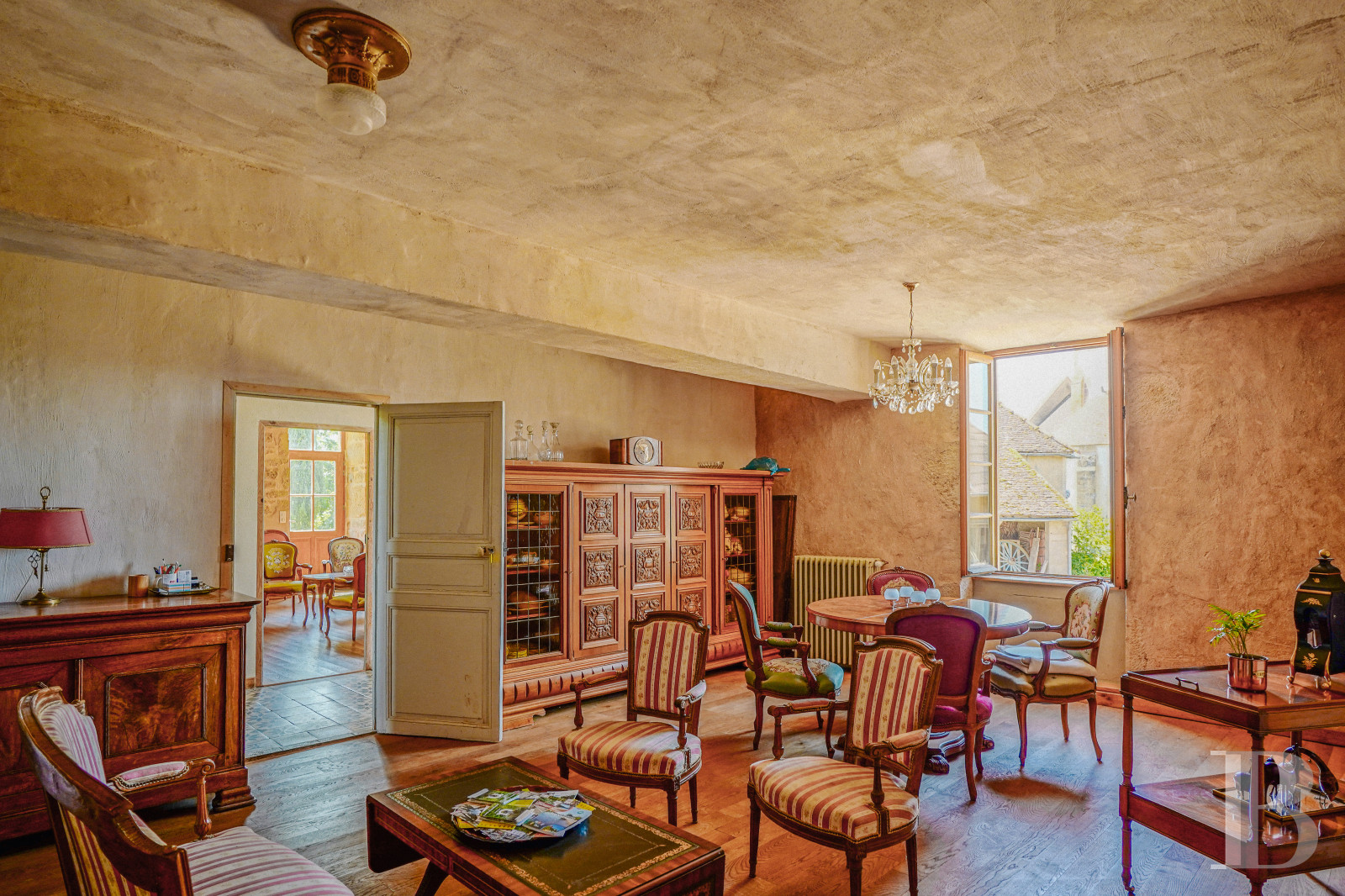
The second sitting room follows, its walls finished in clay render. The recess of a former fireplace with coloured surrounds now serves as storage, and an original range remains in working order.
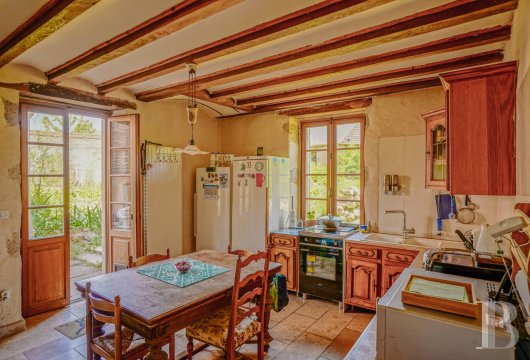
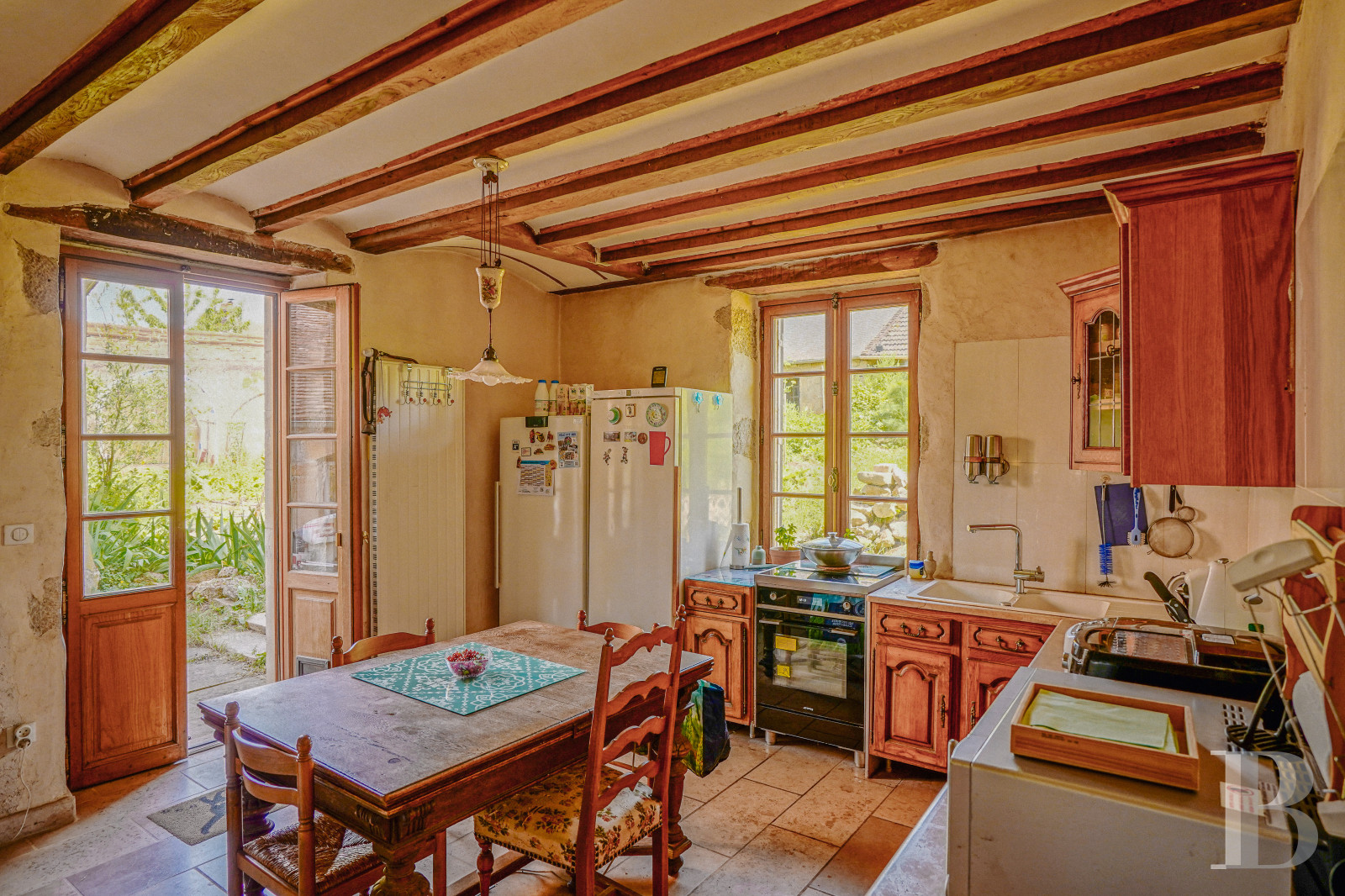
Adjacent, the kitchen is flagged in travertine, fitted with cupboards and equipped with a period range. A door opens directly to the kitchen garden.
Returning to the entrance hall, a central oak staircase with a wrought-iron handrail and a decorative newel post rises to the upper levels. Close by, a parqueted bedroom overlooks the park; a pantry nearby is currently being restored.
The first floor
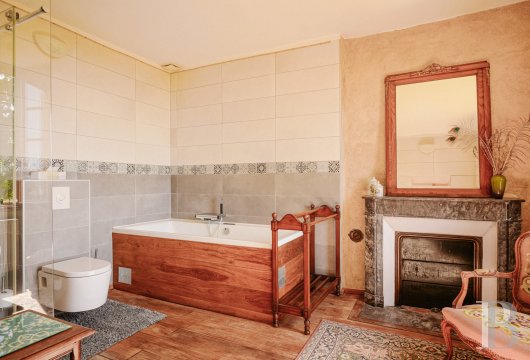
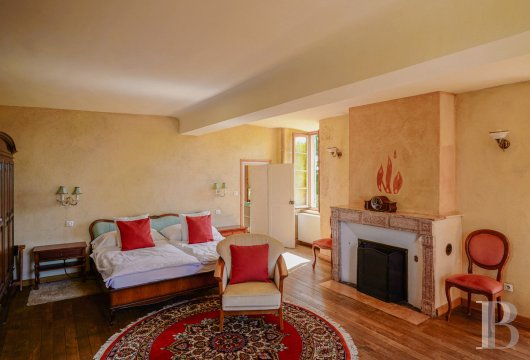
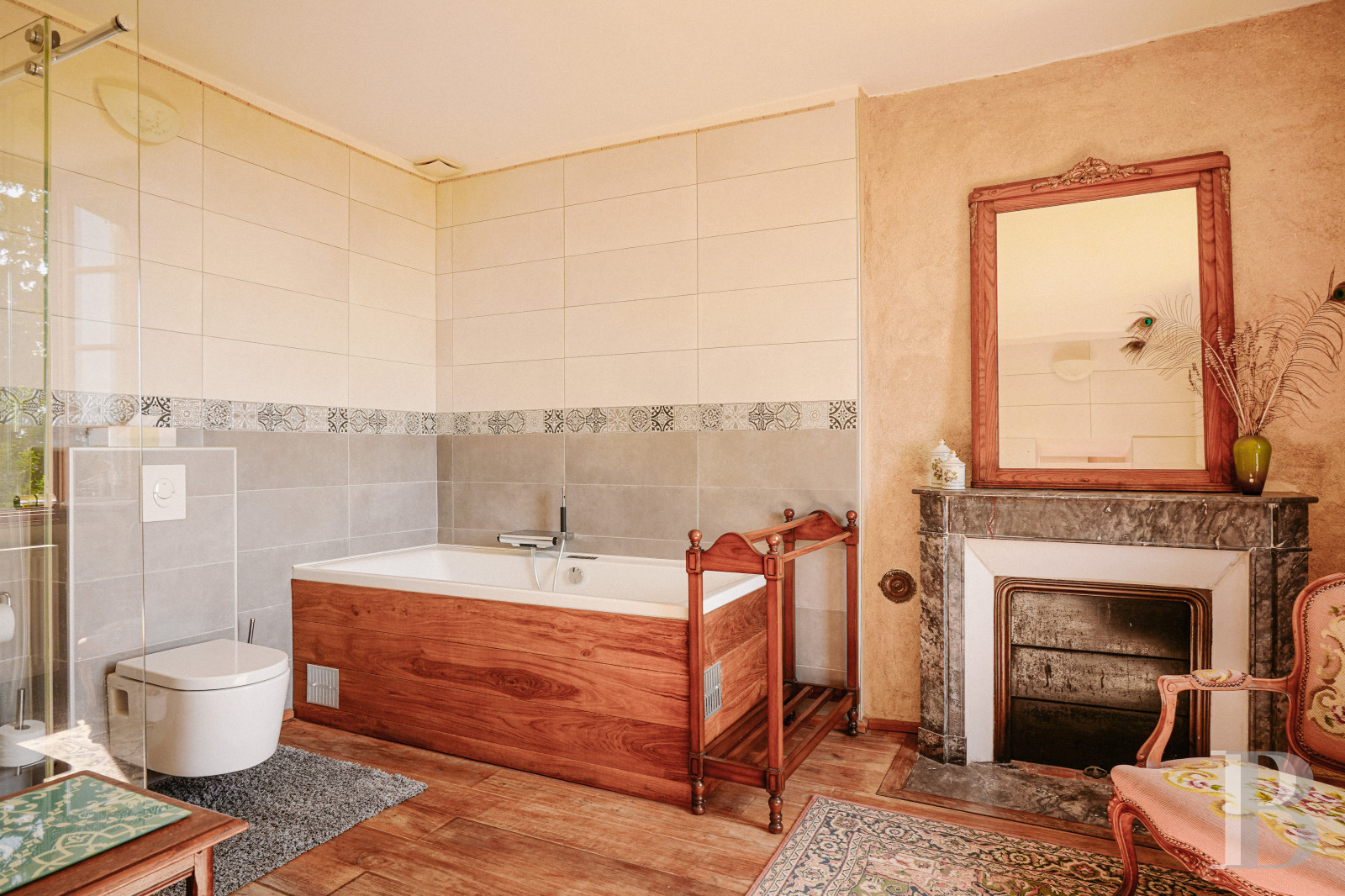
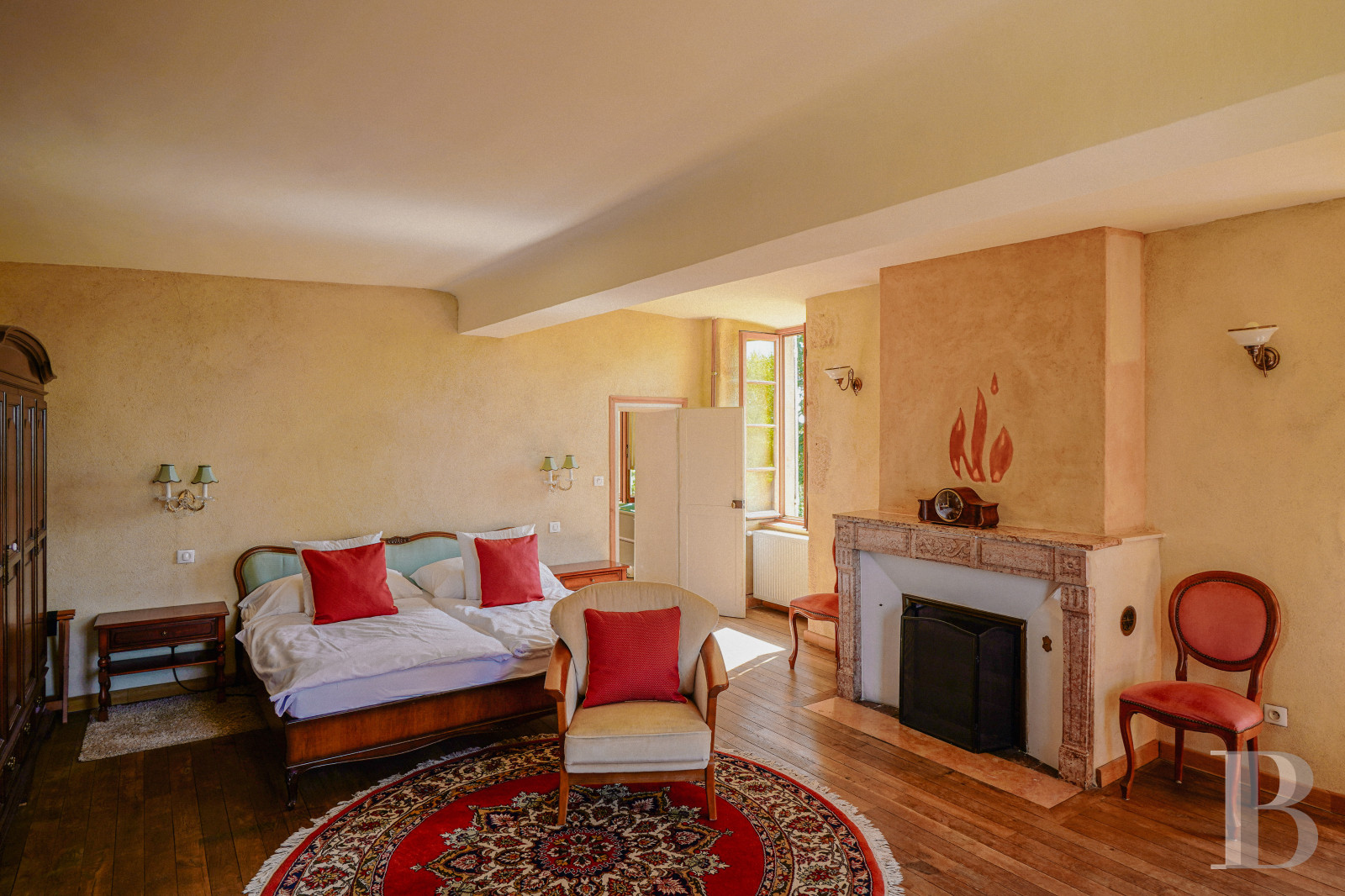
A glazed double door opens from the landing onto a large parqueted hallway, with a stone basin from Vandenesse set into one corner. From here, the principal bedroom, with three windows and a marble fireplace, has ochre walls and a white ceiling. The timber windows have been restored to a high standard and are double-glazed. An en suite bathroom has a spa bath, walk-in shower, wall-hung lavatory, painted walls and red oak floorboards.
Back in the hallway, a child's bedroom overlooks the village church. A third bedroom faces west, with a marble fireplace and partly exposed stone walls; a sliding door leads to a tiled shower room with lavatory.
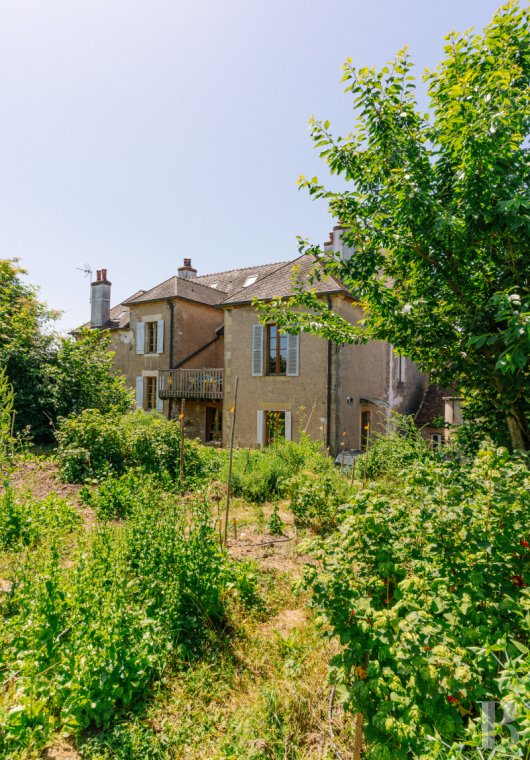
A corridor gives onto an external terrace in Douglas fir, edged with a timber balustrade, and continues to two further parqueted bedrooms, one facing west, one north. One has fitted wardrobes; the other has its own shower room with lavatory. An intercom serves this level as it does the others.
The attic
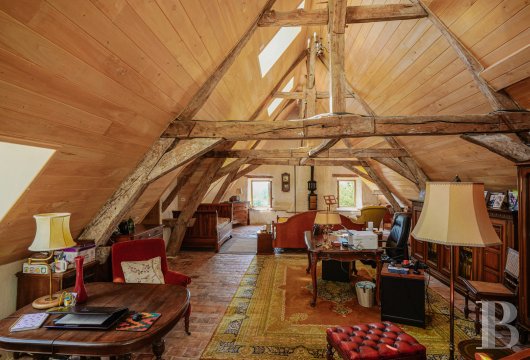
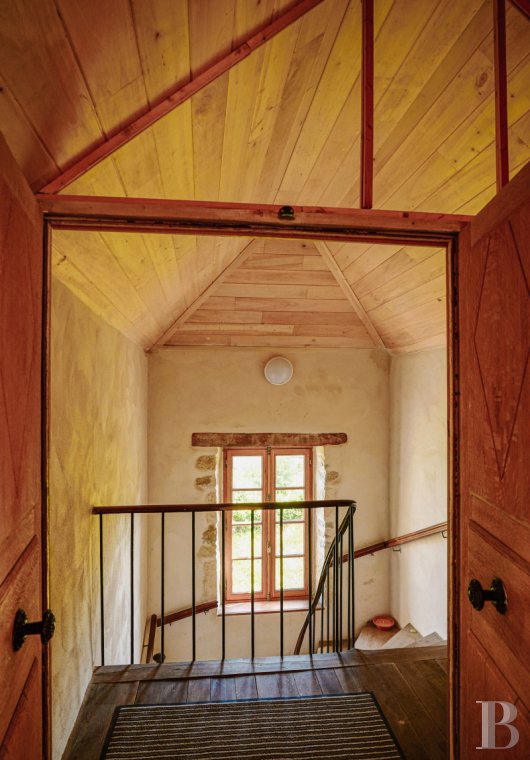
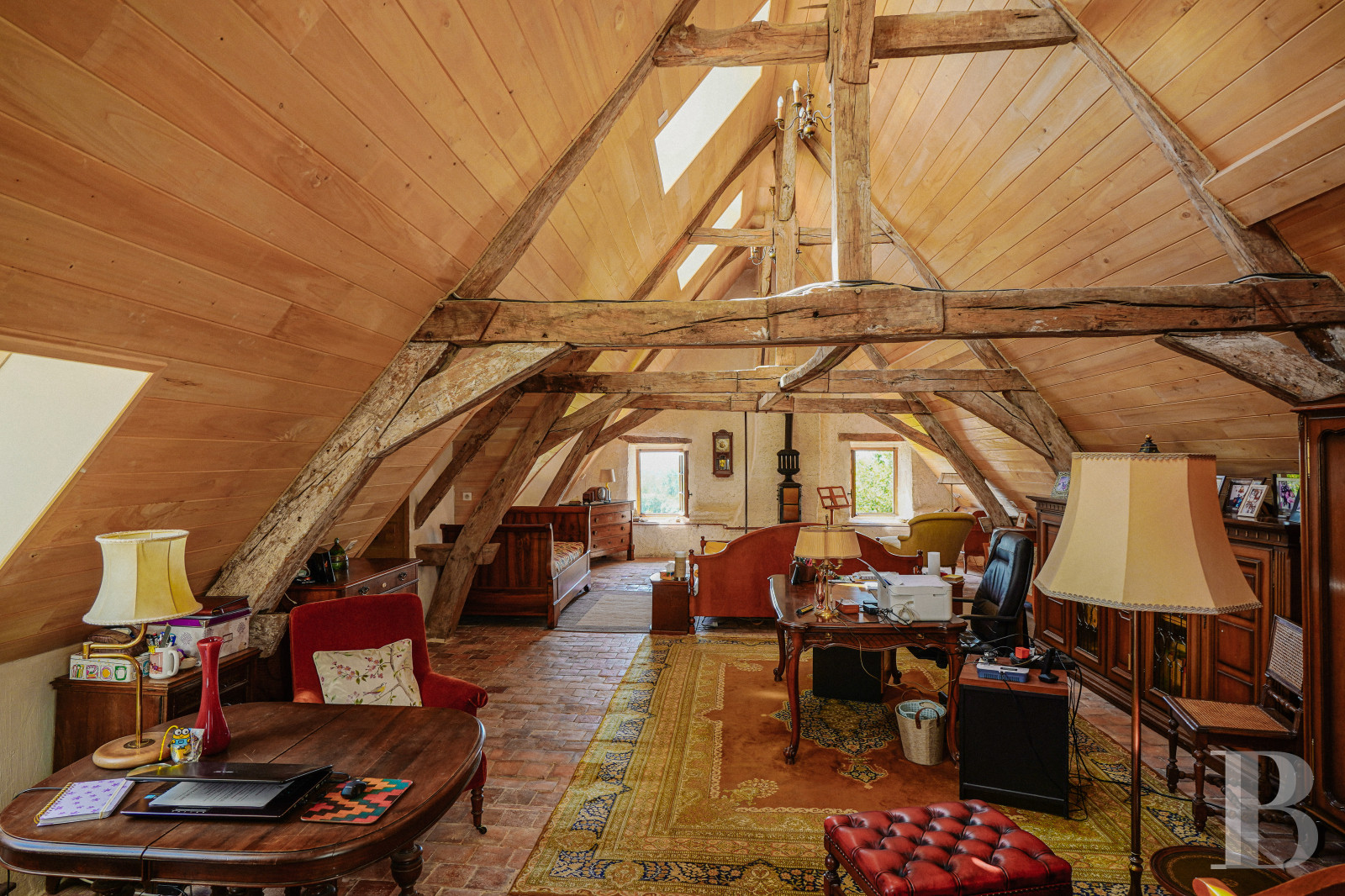
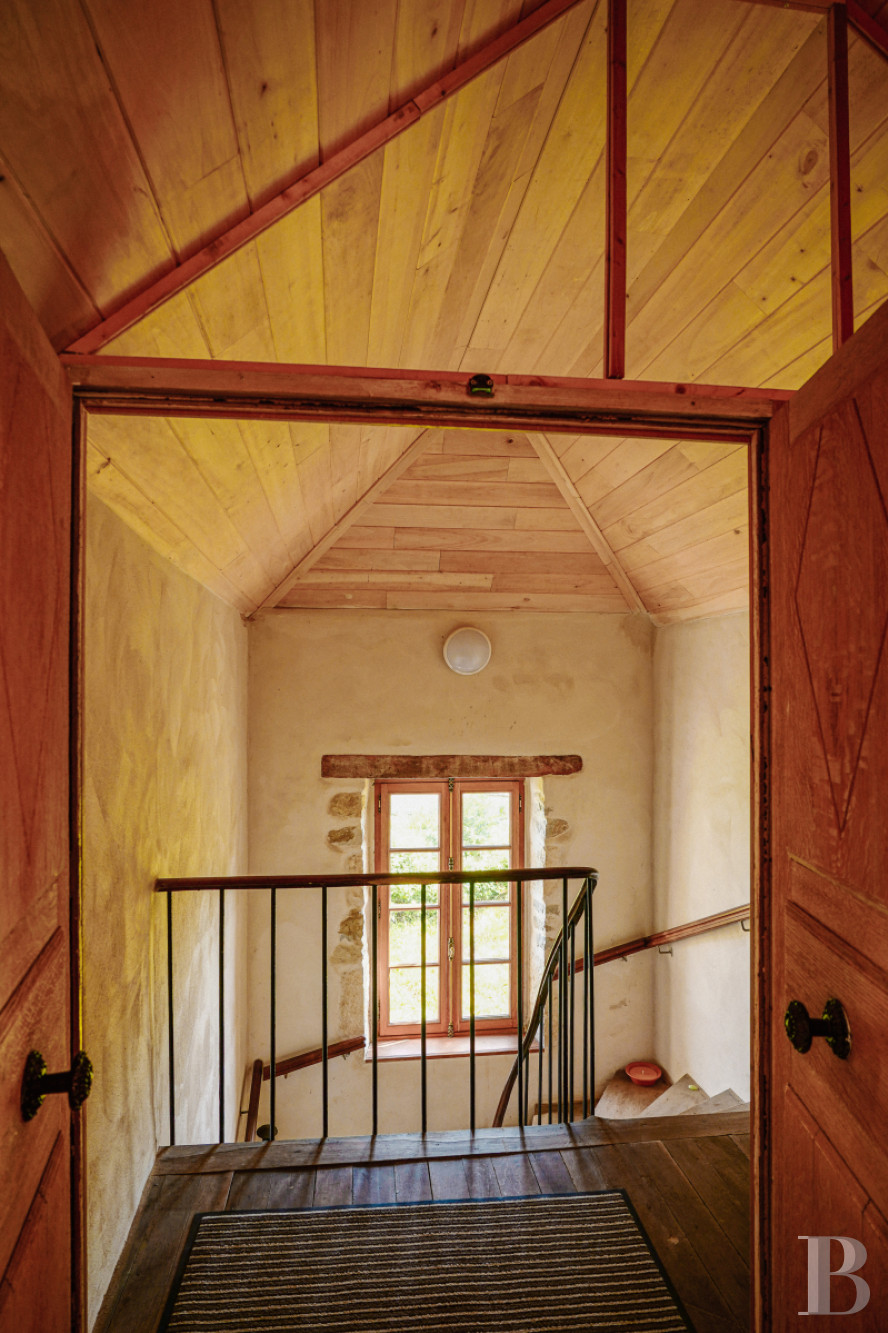
The staircase, with a bull's-eye window above the landing, rises to a ceiling clad in pale timber. A moulded double door with black handles opens onto a large room tiled in original terracotta beneath the exposed roof structure; numerous roof windows punctuate the slope above. The roof has been insulated with wood-wool batt faced with poplar boarding. Ceiling height reaches 4.30 m.
The level holds a bedroom, a dressing room with wide-board timber flooring, a storage area and a bathroom paved in terracotta, with a cast-iron claw-foot bath, walk-in shower and lavatory. A Swiss stove heats the room.
The courtyard outbuildings
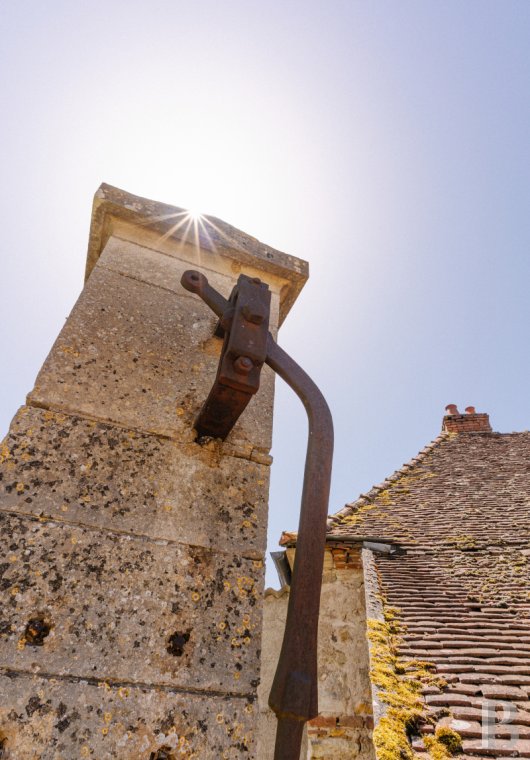
The woodstore, set within the inner courtyard, is distinguished by its three pillars, each with a triple capital, supporting a Burgundy flat-tile roof.
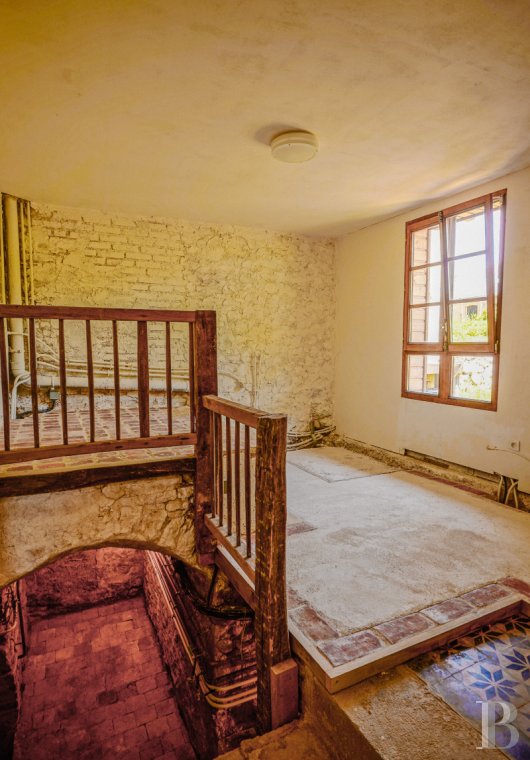
Opposite stand the former stables, entered through a double carriage door. The ground floor holds a workshop of nearly 30 m² and a boiler room of around 15 m²; a ladder gives access to the upper level, which matches the ground floor in area.
The third outbuilding serves as a garage and houses the former doctor's cart belonging to a previous occupant of the house, who used it to visit his patients. A moulded door with wrought-iron fittings opens onto a fitted room of some 17 m², with three windows, parquet flooring and a Swiss cast-iron stove.
The park outbuildings
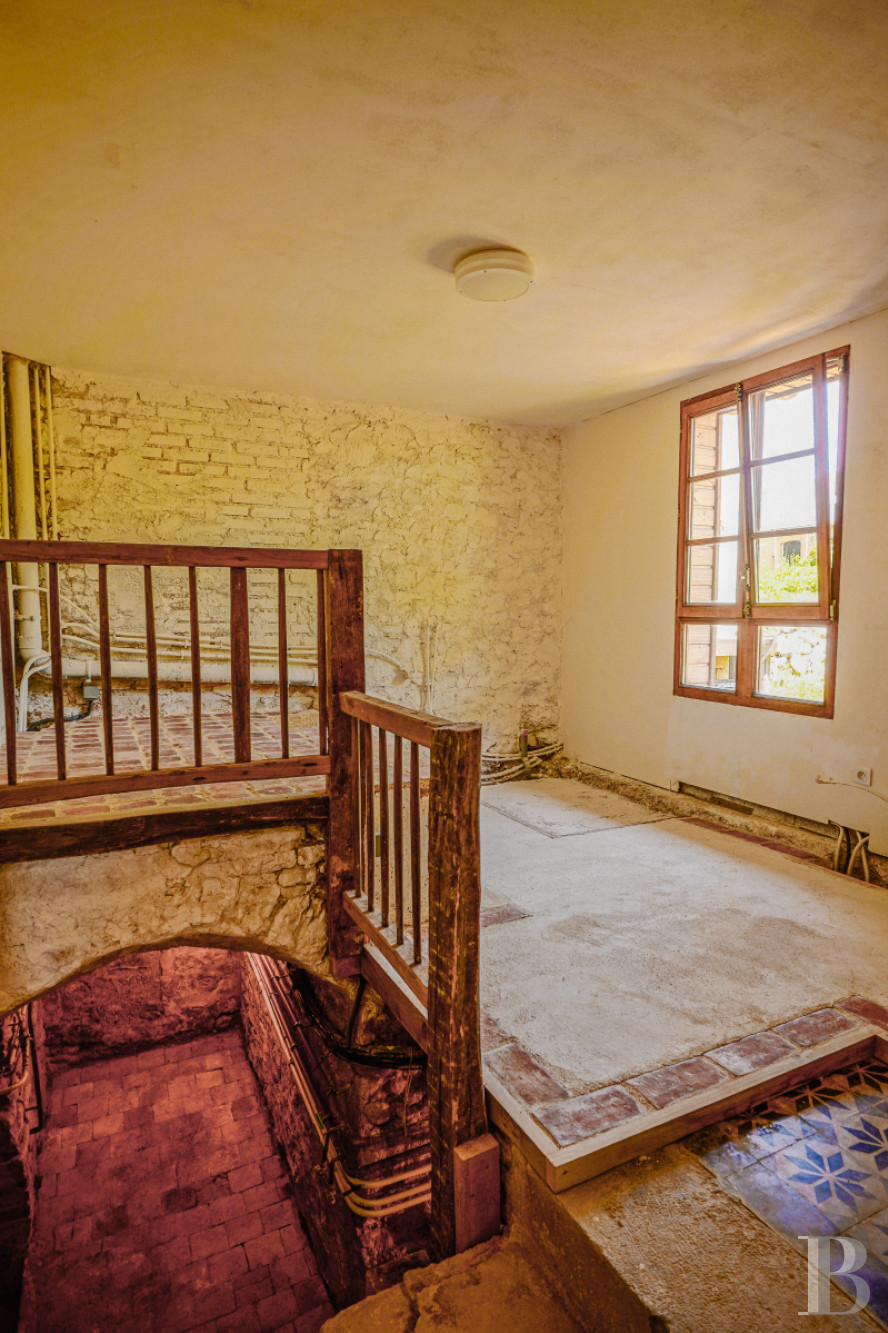
A longère with a steeply pitched roof in handmade tiles laid in a diamond pattern runs the full length of one side of the park. Stone steps lead to a door with a glazed frame, opening into a room of nearly 25 m² with exposed beams, from which a trapdoor gives access to a lower room of some 35 m² at basement level, equipped with a period wood-burning range and a fireplace. Terracotta paving runs through both spaces. A separate entrance connects directly to one of the village streets.
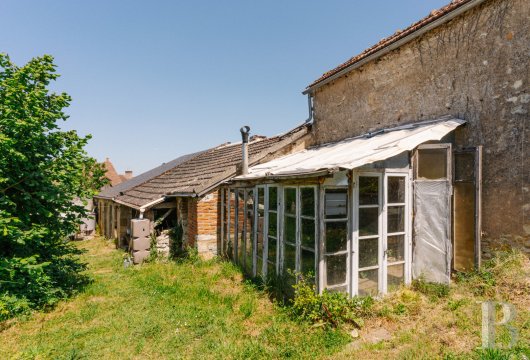
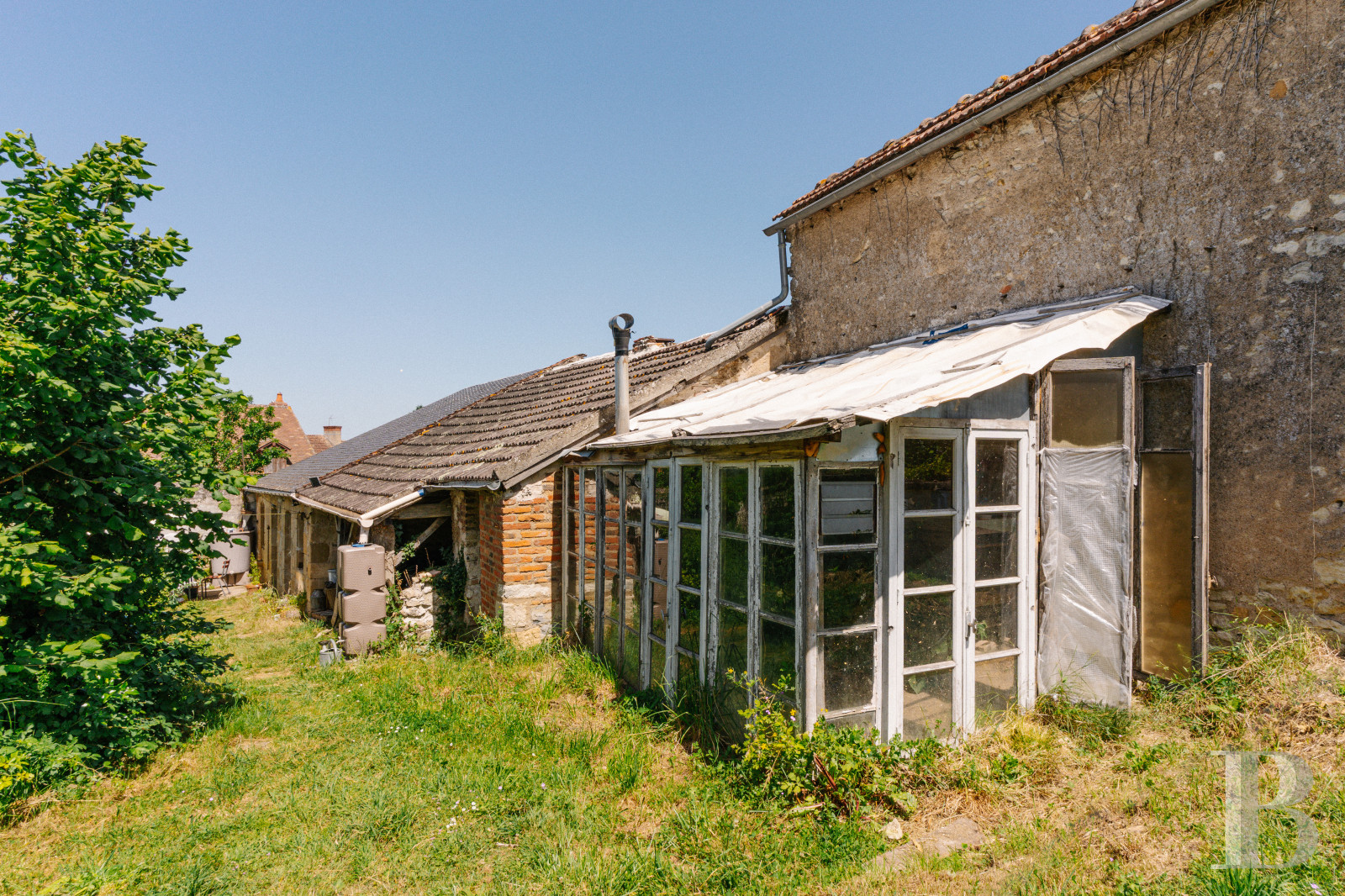
To the north, facing the kitchen garden, a brick building contains a room of nearly 15 m², a small greenhouse in need of restoration of around 12 m² and a period lavatory. A woodstore and former rabbit hutches follow. A small ochre stone house with an old roof contains two rooms: one of over 10 m², floored in original terracotta tiles, the other of nearly 15 m².
The park
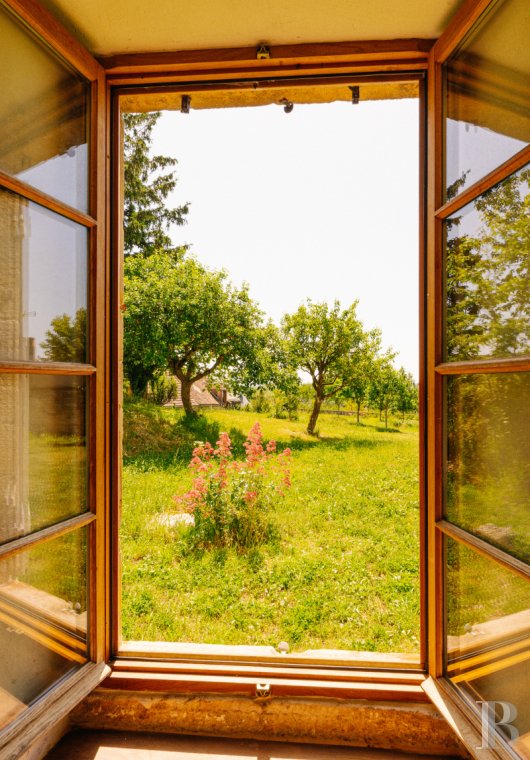
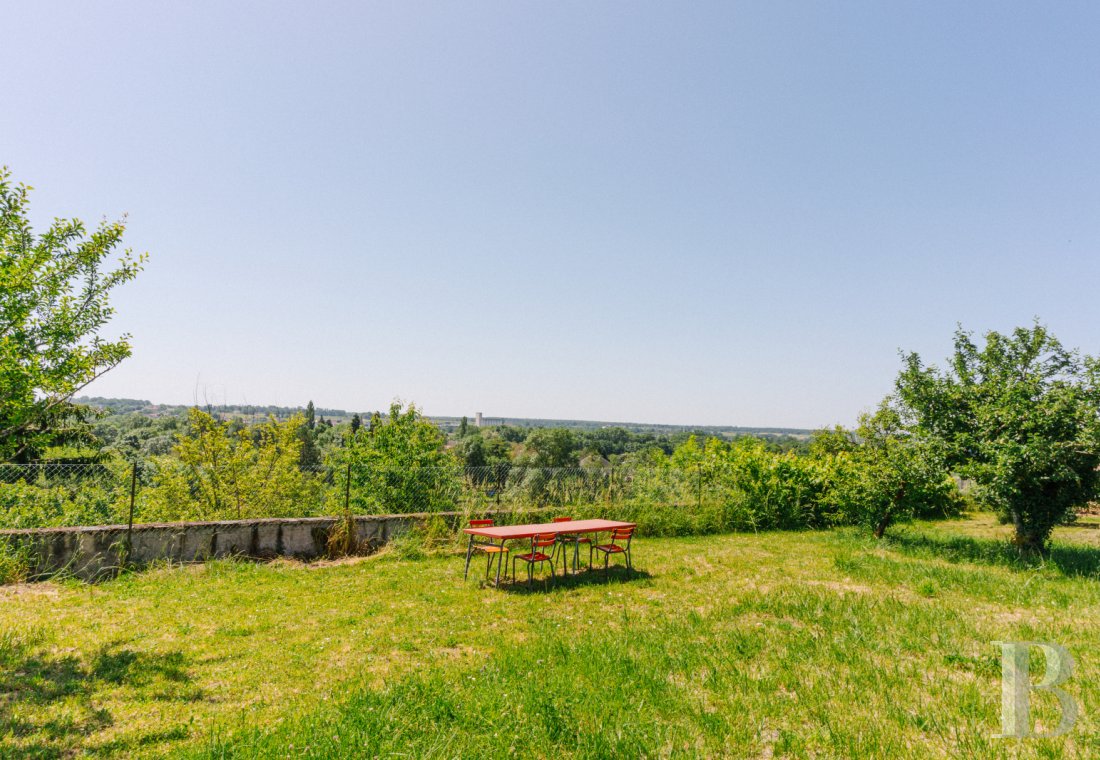
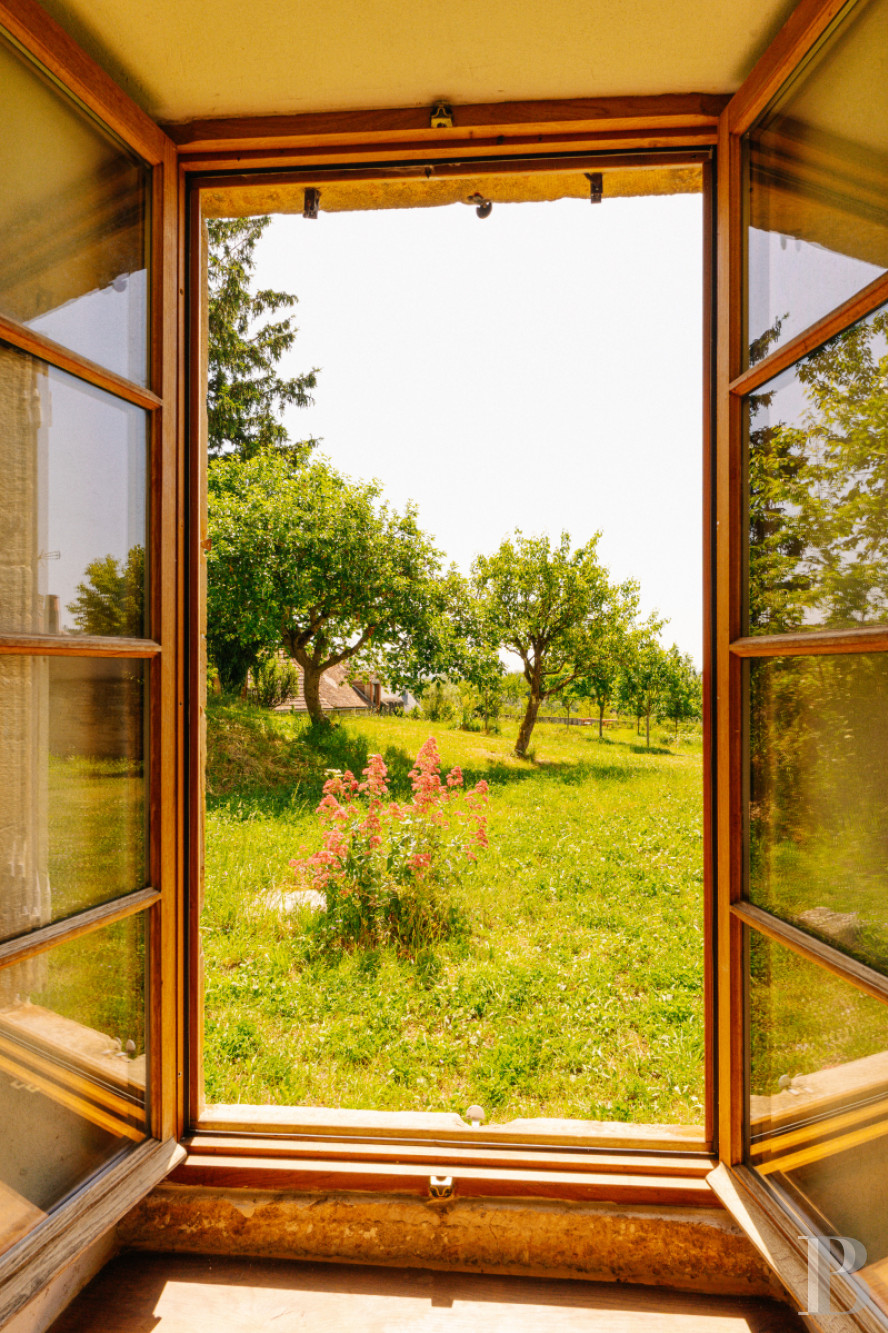
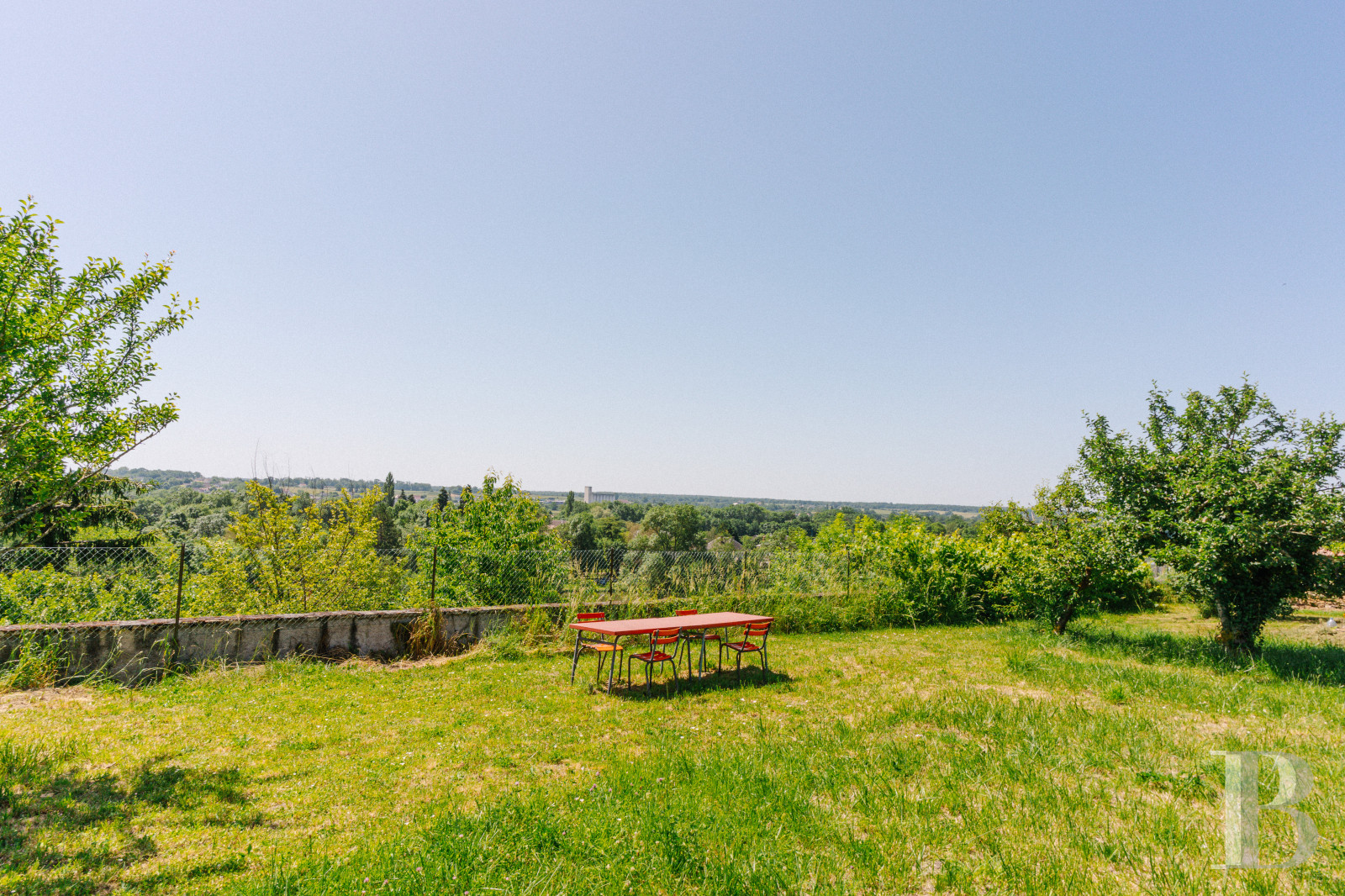
The walled park, of around 2,200 m², overlooks the Canal du Nivernais. To the south, the heritage orchard, sheltered from view, is planted with a wide range of fruit trees, from the well-known to the rare: apple trees including Double Belle-Fleur and Belle Fille de Bourgogne, pear trees including Saint-Rémi and Curé, plum trees including Sainte-Catherine and Reine-Claude d'Oullins, Crystal fig trees and red Versaillaise gooseberries. These fruit trees, distributed throughout the park, are interspersed with ornamental species: purple hazel, a Japanese cherry, a magnolia and two forsythias. A tall fir is home to a remarkable variety of birds. Rhododendrons are also among the flowering species.
Our opinion
A property of quiet distinction, whose sober, elegant architecture is not unlike that of certain houses in the Vaud. Inside, generous proportions, abundant natural light and authentic period detail combine to produce interiors of real quality. Much of the warmth of these interiors derives from the Swiss stoves — handsome objects in their own right — distributed through the house. The current owners, passionate about historic buildings and members of the Maisons Paysannes de France, have brought traditional methods to bear on the restoration of this fine house, engaging Compagnons du Devoir for a number of the works.
Reference 772152
| Land registry surface area | 2848 m² |
| Main building floor area | 354 m² |
| Number of bedrooms | 5 |
| Outbuildings floor area | 300 m² |
French Energy Performance Diagnosis
Information on the risks to which this property is exposed is available on the website: www.georisques.gouv.fr
Share


NB: The above information is not only the result of our visit to the property; it is also based on information provided by the current owner. It is by no means comprehensive or strictly accurate especially where surface areas and construction dates are concerned. We cannot, therefore, be held liable for any misrepresentation.