



A manor with 15th-century origins, with outbuildings and almost 13 hectares of meadows,
on the Fringes of Rennes, in the middle of wooded countryside
on the Fringes of Rennes, in the middle of wooded countryside
Rennes,
ILLE-ET-VILAINE
brittany
35000
FR

Location
The village in which the property is located, to the west of Rennes, in undulating landscape combining farming land, woods and small hamlets, enjoys a sought-after setting, away from the urban hustle and bustle but still near to the city. Rennes city-centre and its high-speed TGV train station can be reached in around twenty minutes, while Rennes Bretagne airport is just 15 minutes away. The main essential everyday shops and services can be found in the municipality, as can an appreciable natural environment, especially around the Brocéliande Forest and the Vilaine Valley.
Description
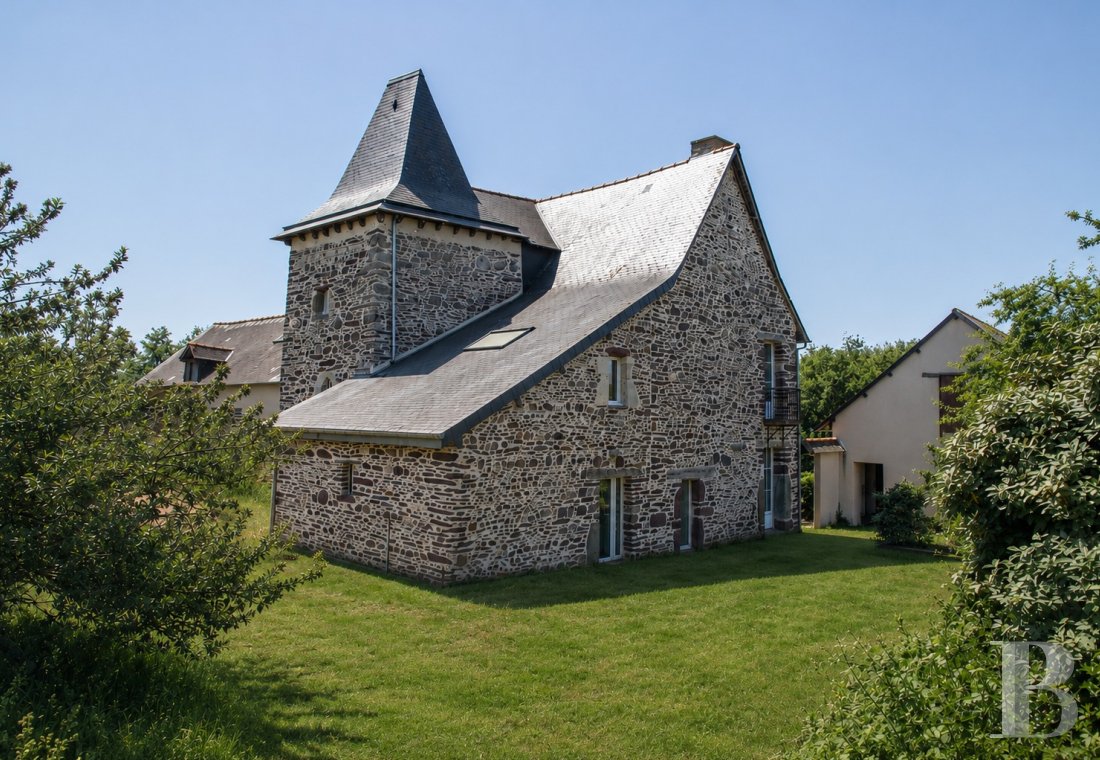
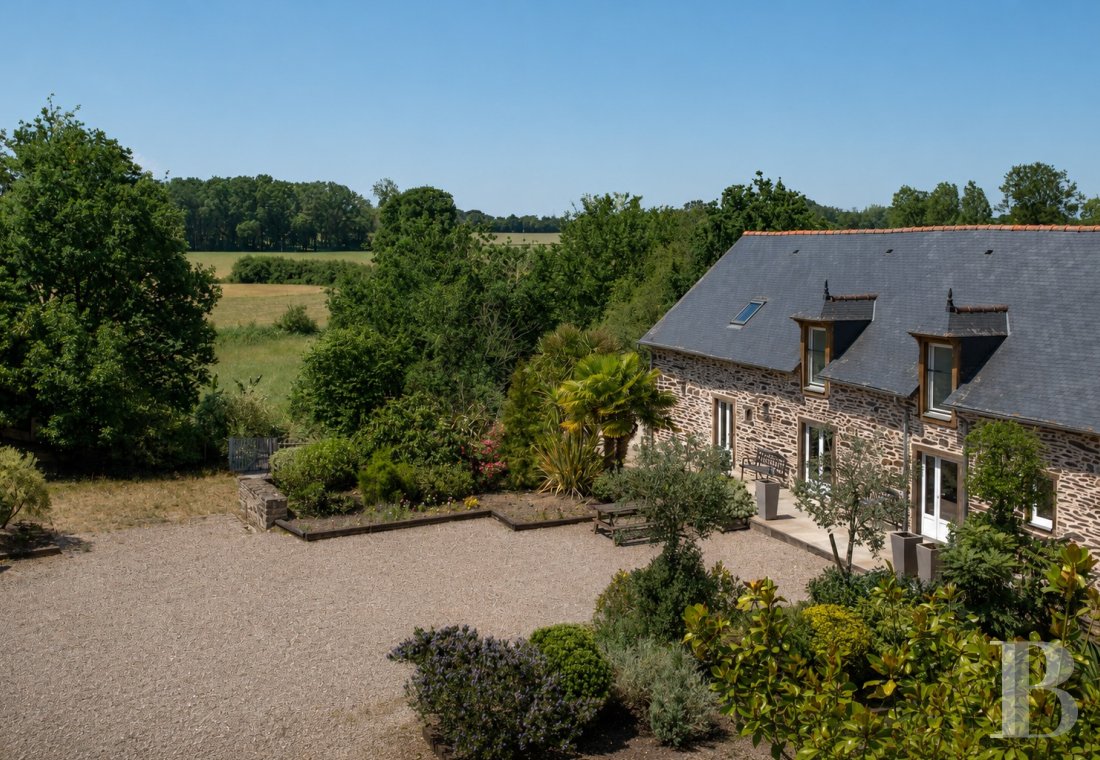
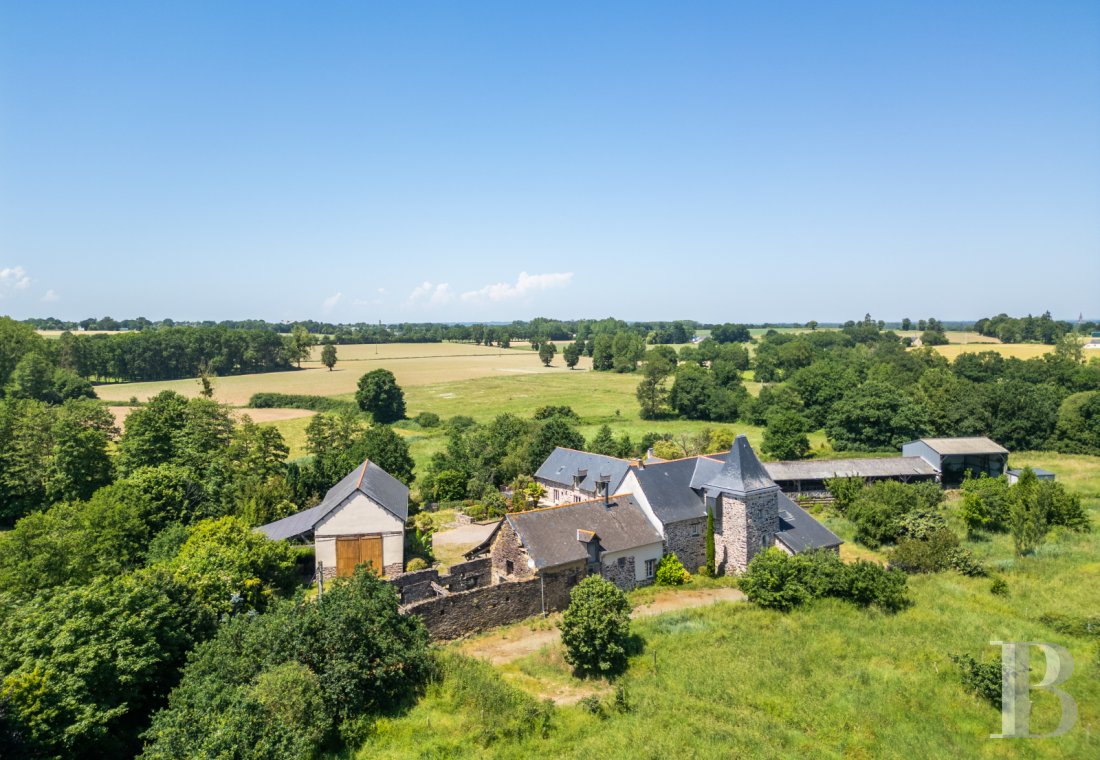
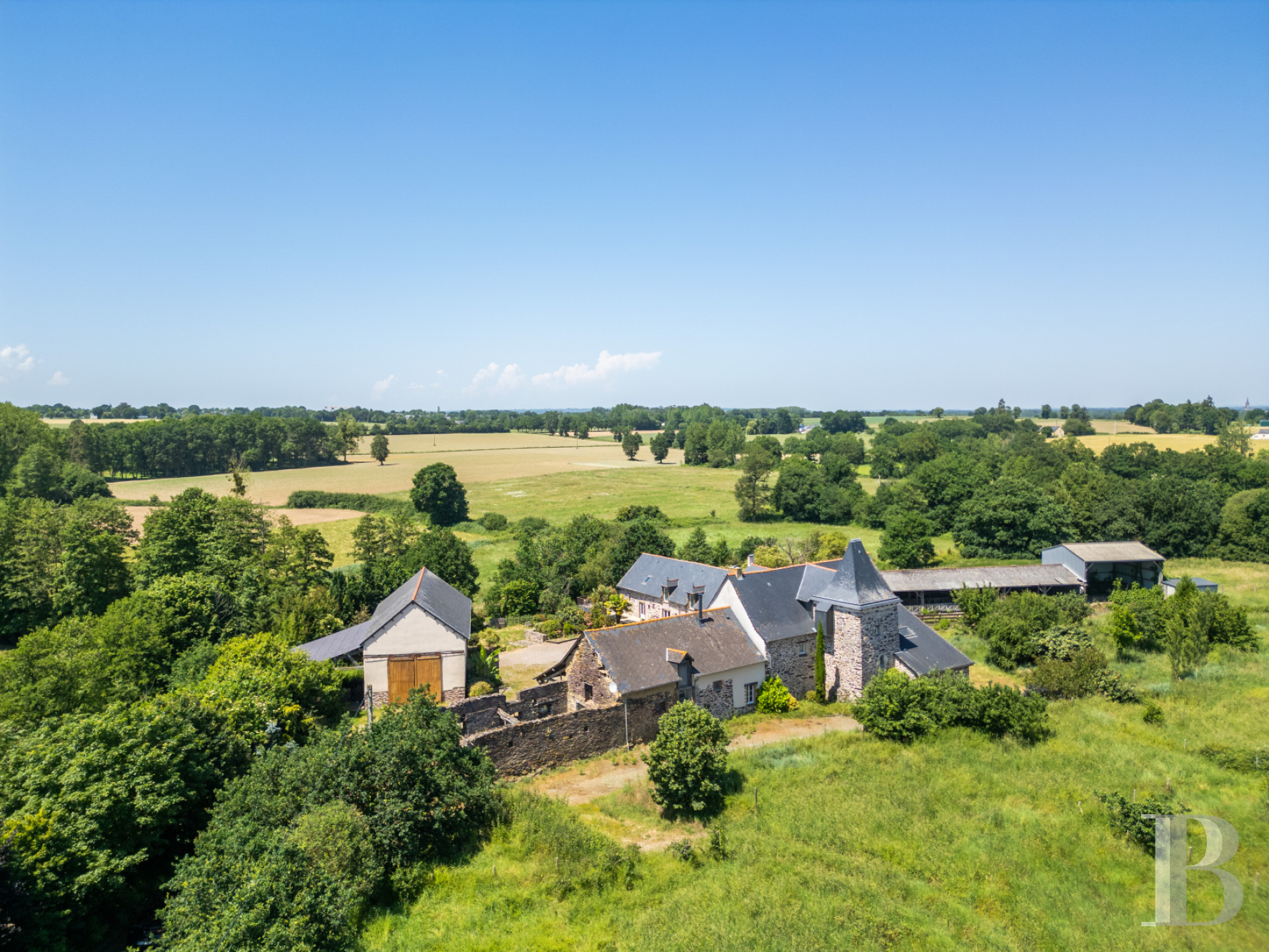
The property can be reached from a small country road, along a no-through lane. The manor is a former rural and manorial complex whose origins date back to the 15th century. It is listed as part of France’s general cultural heritage and is set around a courtyard opening out onto a landscape of meadows and hedgerows. The property includes a main residence altered in the 18th century, a longhouse with a large reception room, as well as several outbuildings.
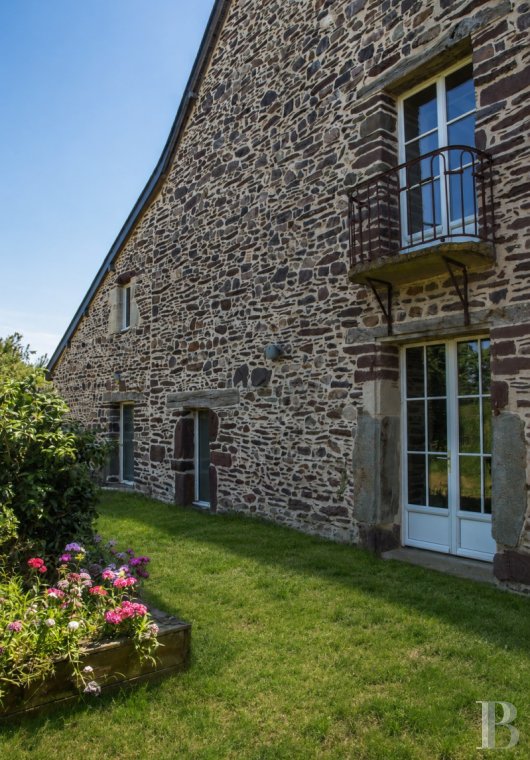
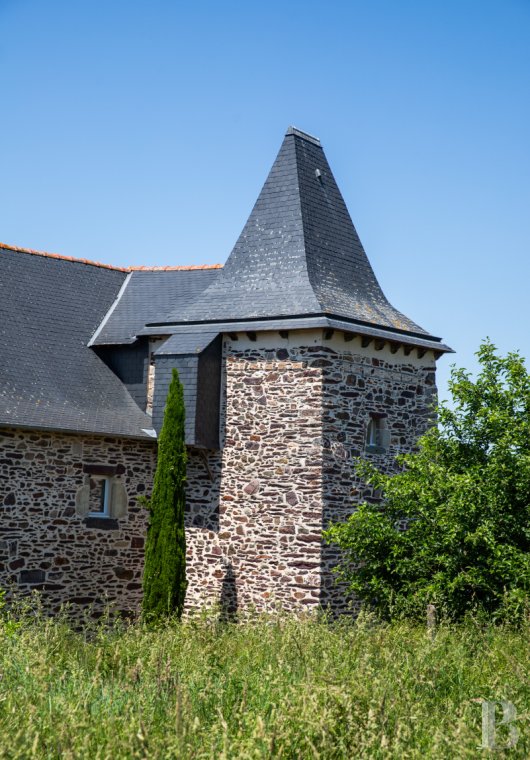
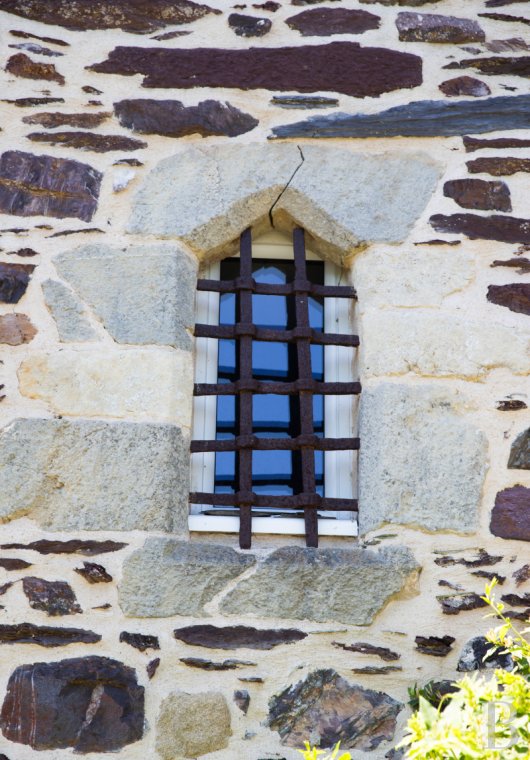
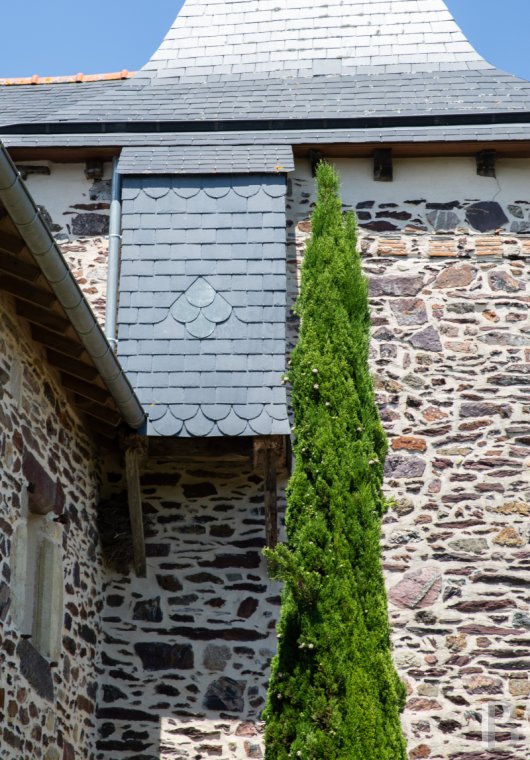
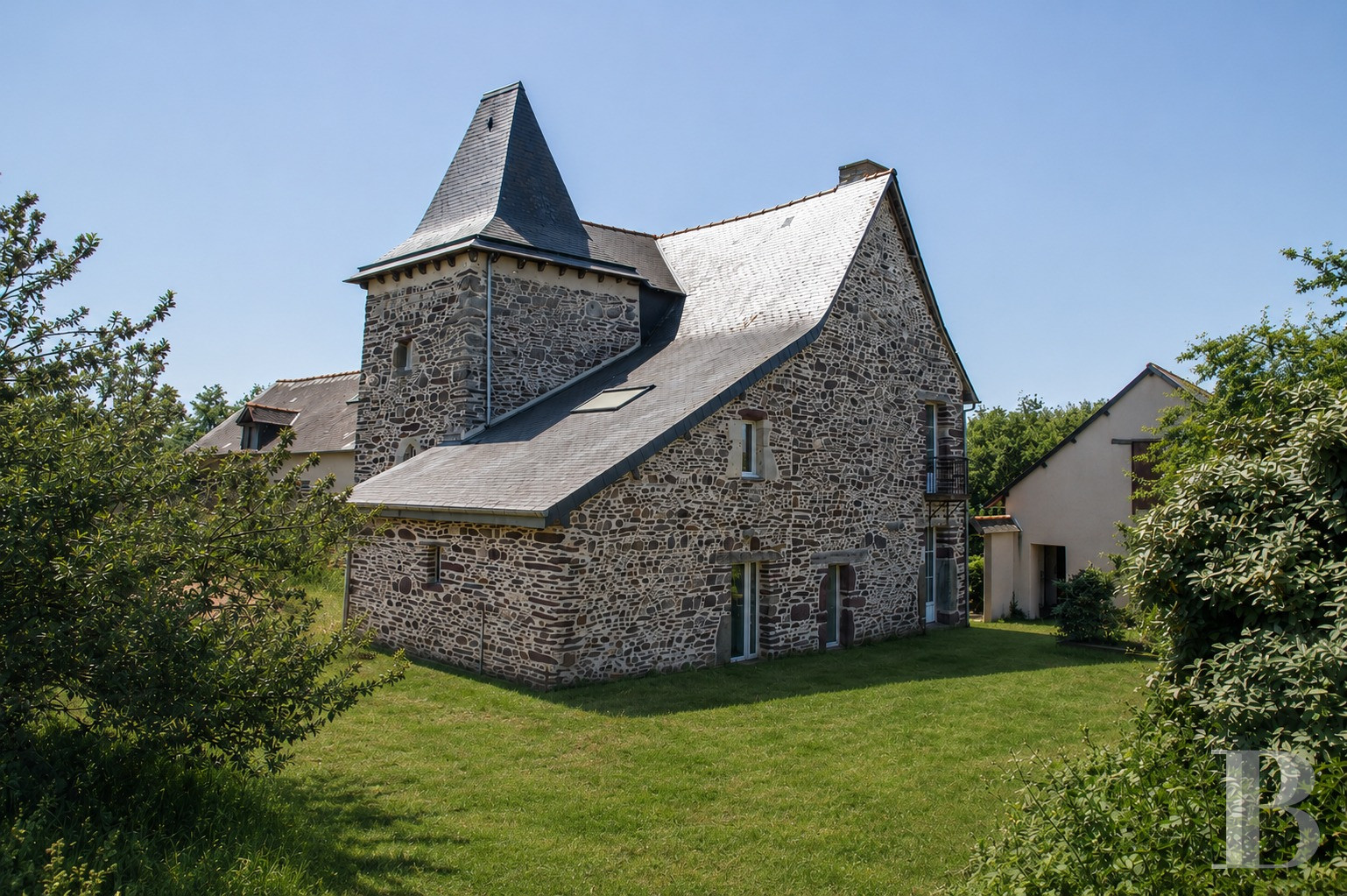
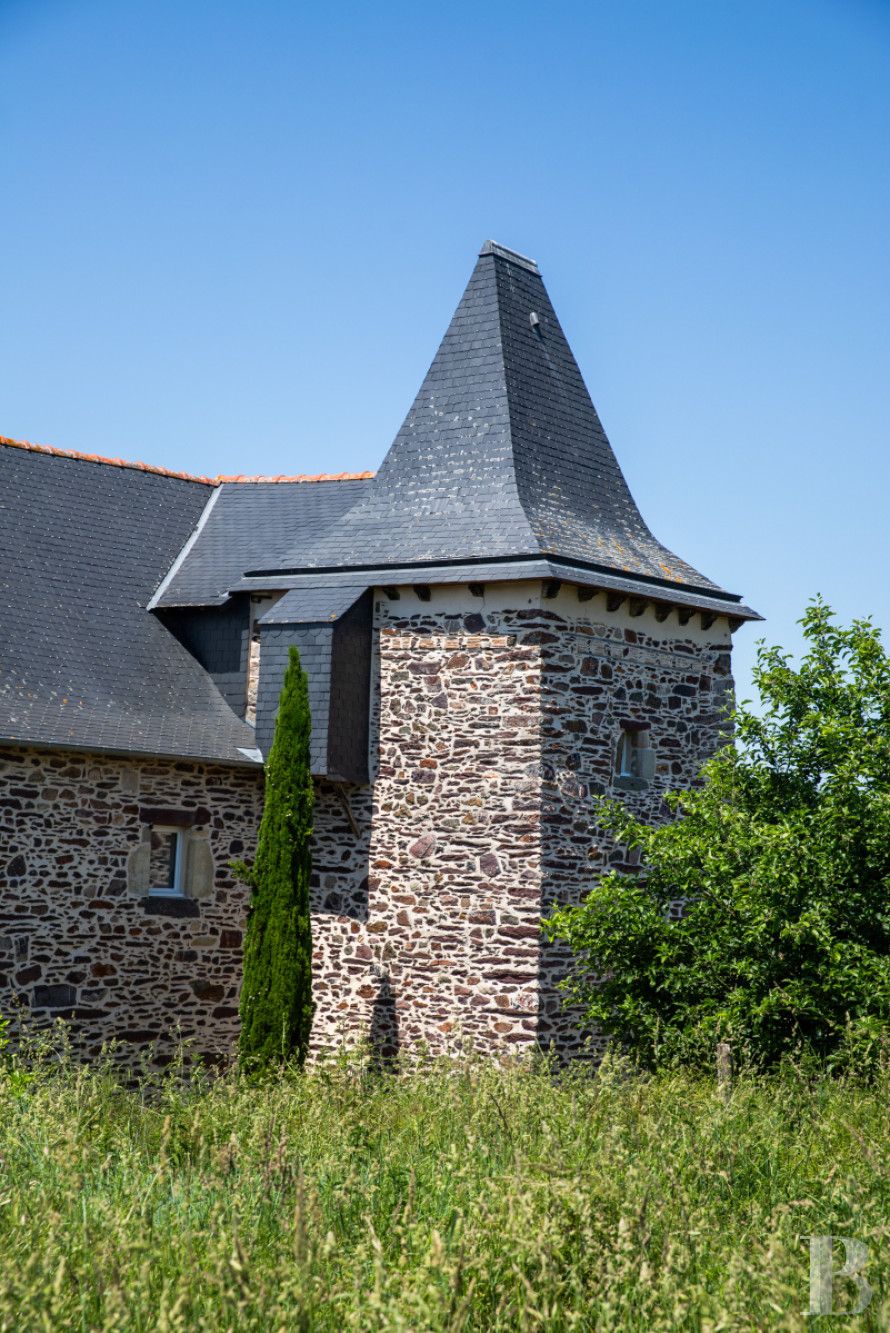
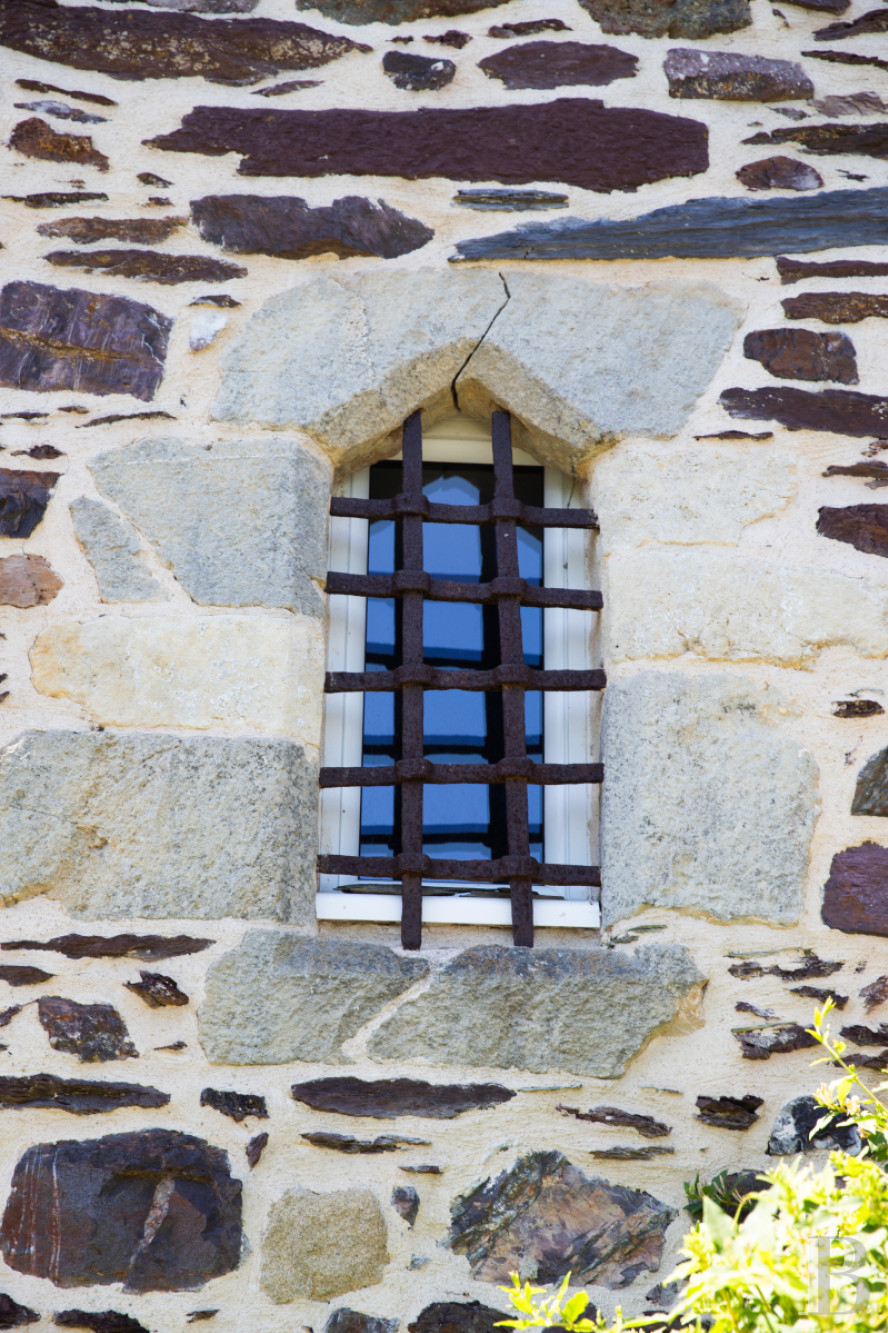
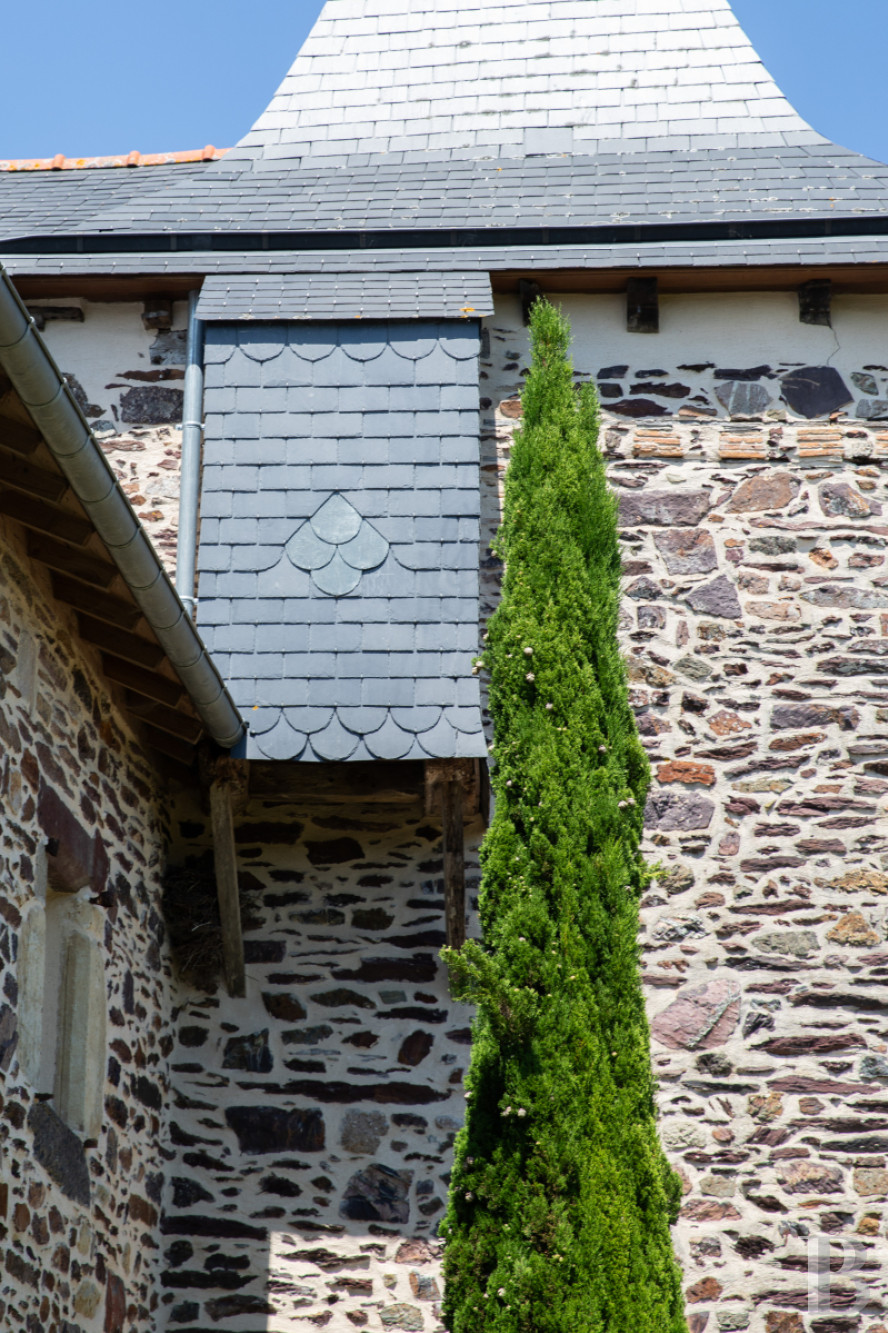
The stone buildings, which are made of shale rubble stone and mainly topped with slate roofs, boast several features typical of Brittany’s architecture, such as a square staircase tower topped by a pavilion roof, ashlar surrounds on the openings and still visible rural volumes. Next to the manor, there are two wells, one of which is fitted with a submersible pump.
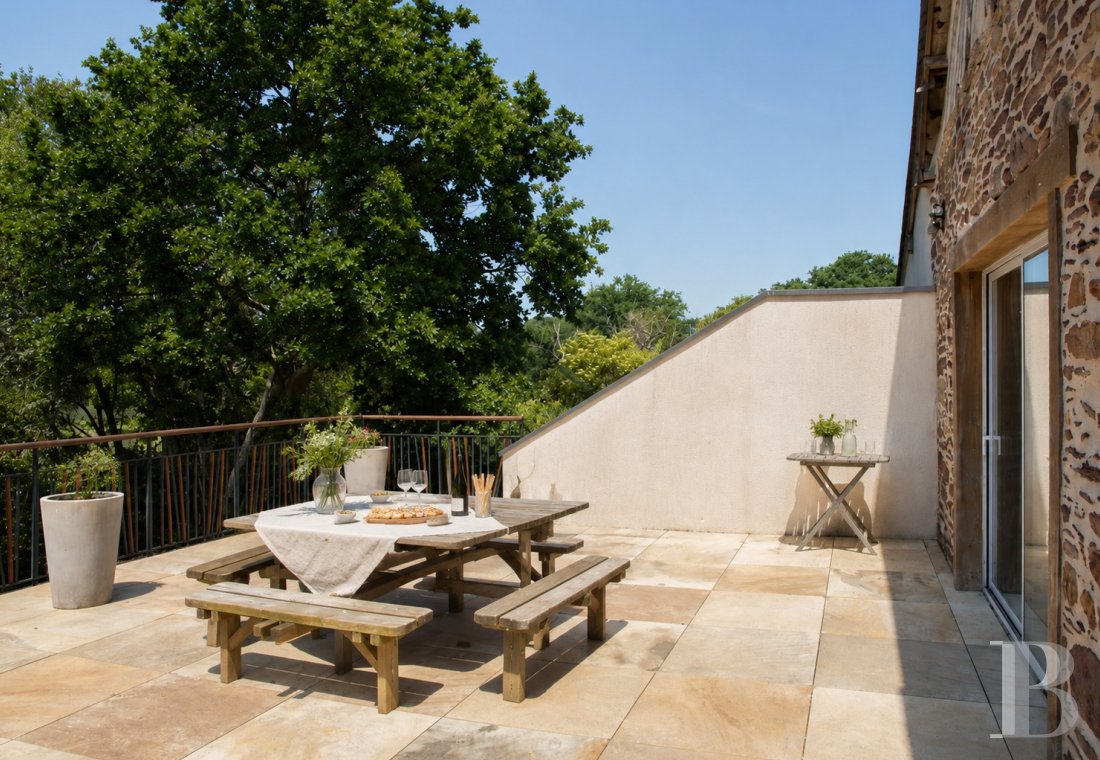
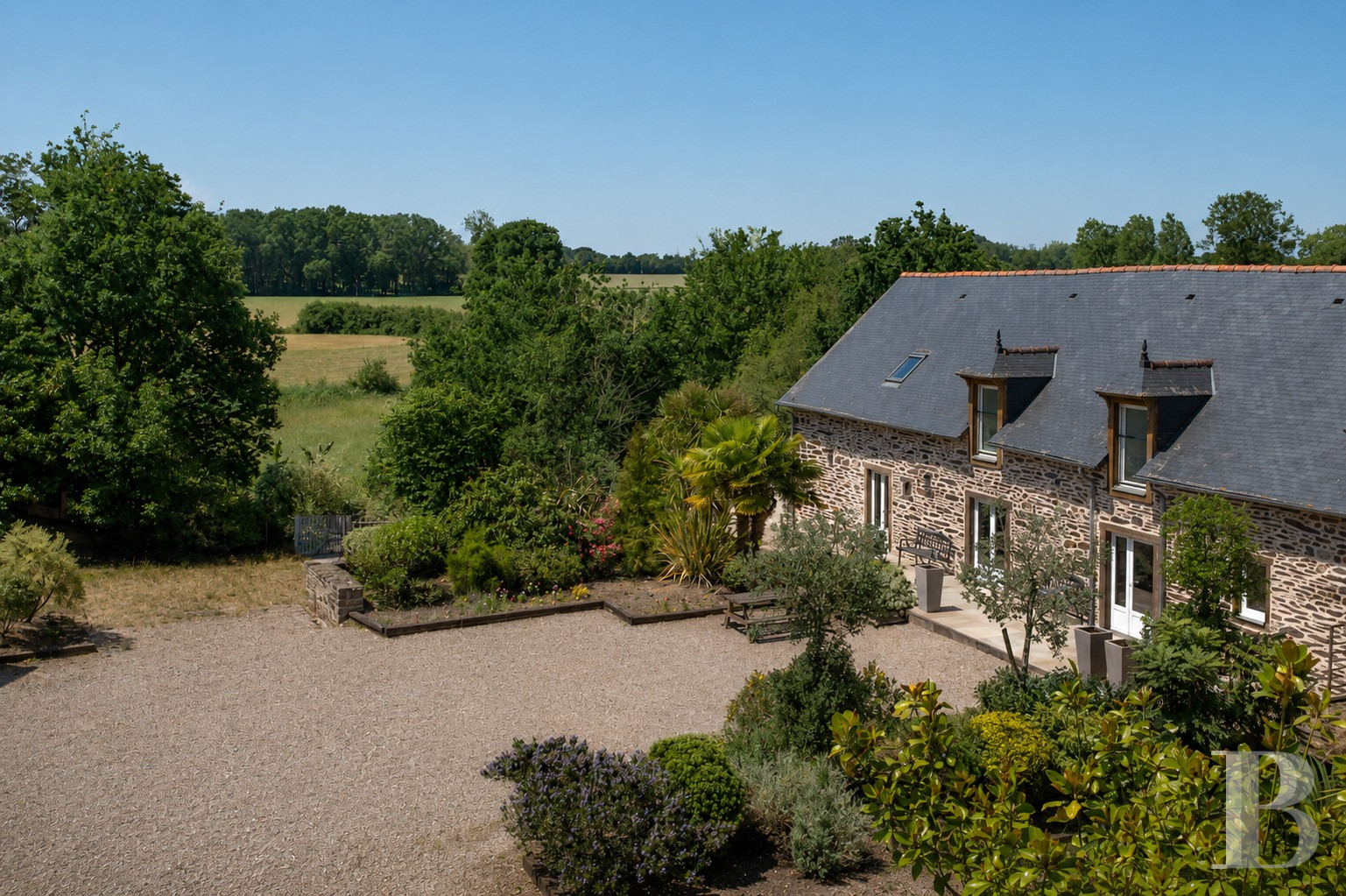
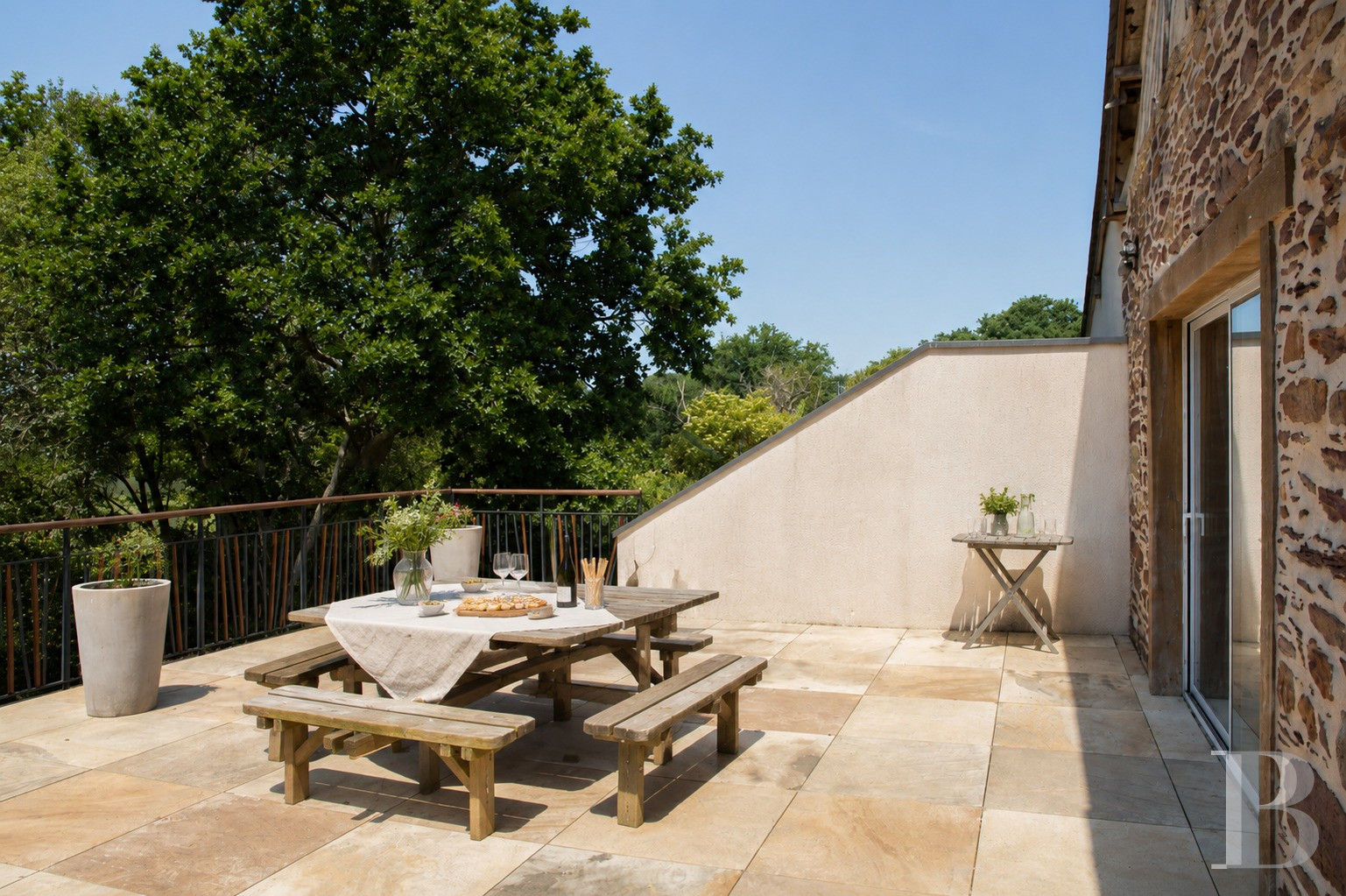
The land is mainly made up of meadows, some of which are bordered by pastureland fences. A stream crosses through the centre of the property and runs below the patio of the longhouse, which dominates the surrounding countryside.
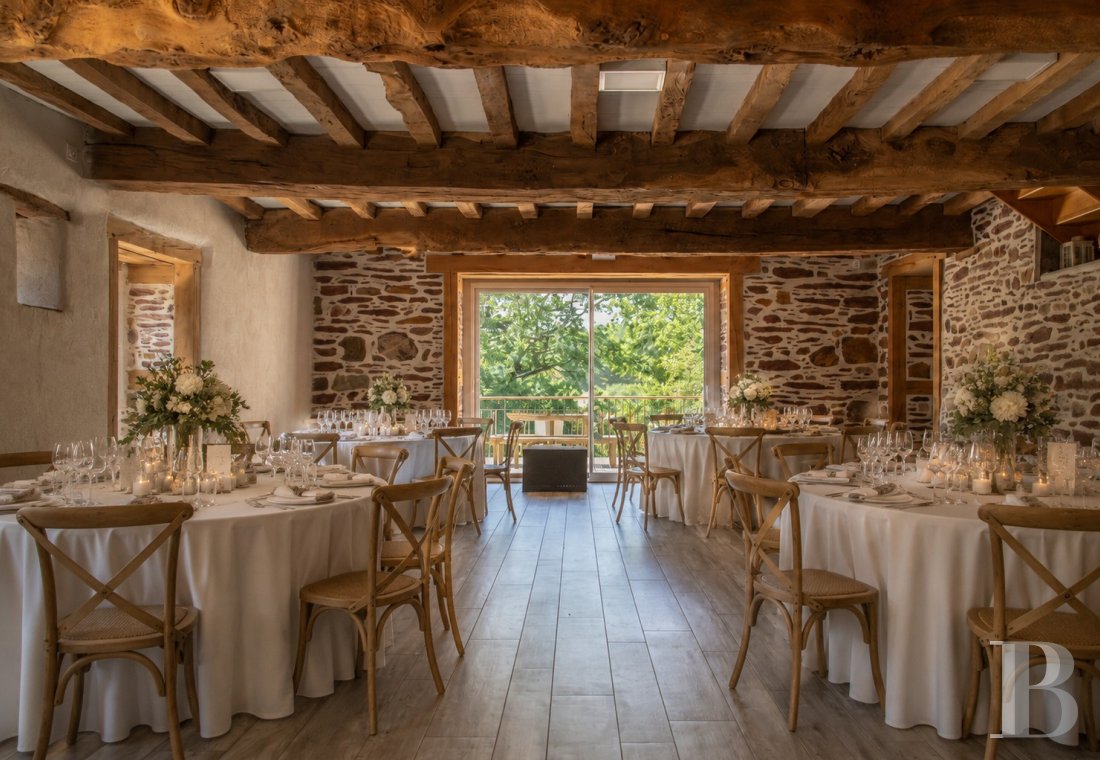
An 8,200-m² area situated in the immediate vicinity of the main buildings is listed as a tourist attraction related natural zone, which allows the creation of tourist accommodation as well as the development of leisure activities and event hosting. The longhouse is declared as a holiday cottage and has reception capacity for 80 people and accommodation capacity for 15 people. The property is authorised to welcome members of the public and has a good rating for its accessibility for people with reduced mobility.
The stone buildings, which are made of shale rubble stone and mainly topped with slate roofs, boast several features typical of Brittany’s architecture, such as a square staircase tower topped by a pavilion roof, ashlar surrounds on the openings and still visible rural volumes. Next to the manor, there are two wells, one of which is fitted with a submersible pump.
The land is mainly made up of meadows, some of which are bordered by pastureland fences. A stream crosses through the centre of the property and runs below the patio of the longhouse, which dominates the surrounding countryside.
An 8,200-m² area situated in the immediate vicinity of the main buildings is listed as a tourist attraction related natural zone, which allows the creation of tourist accommodation as well as the development of leisure activities and event hosting. The longhouse is declared as a holiday cottage and has reception capacity for 80 people and accommodation capacity for 15 people. The property is authorised to welcome members of the public and has a good rating for its accessibility for people with reduced mobility.
The manor
The edifice has three storeys, one of which is an attic level, and adjoins a second stone building. Next to it, there still remain the four walls of a ruin, which could potentially be restored, subject to planning authorisation related to tourist attraction related natural zones.
The ground floor
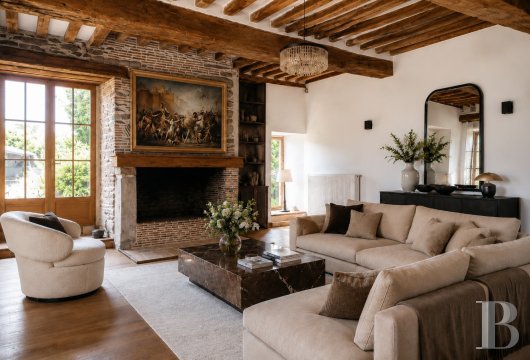
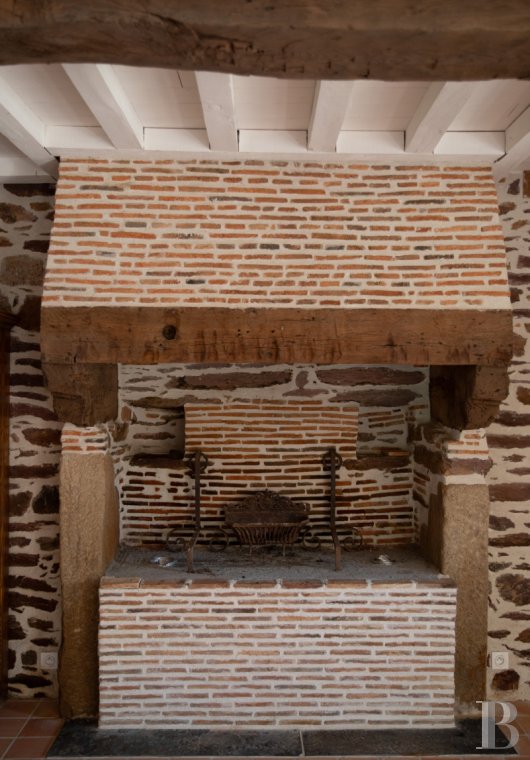
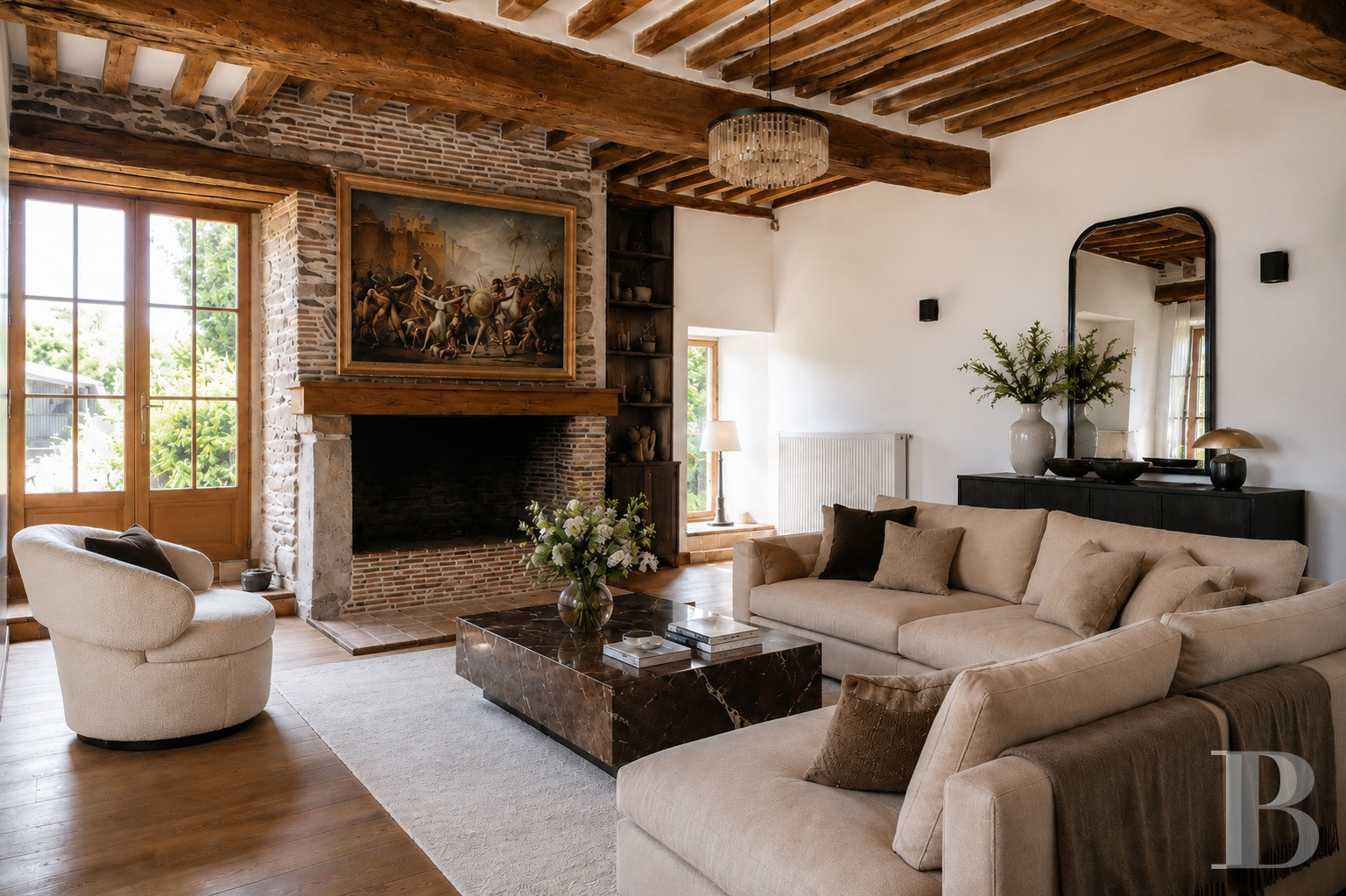
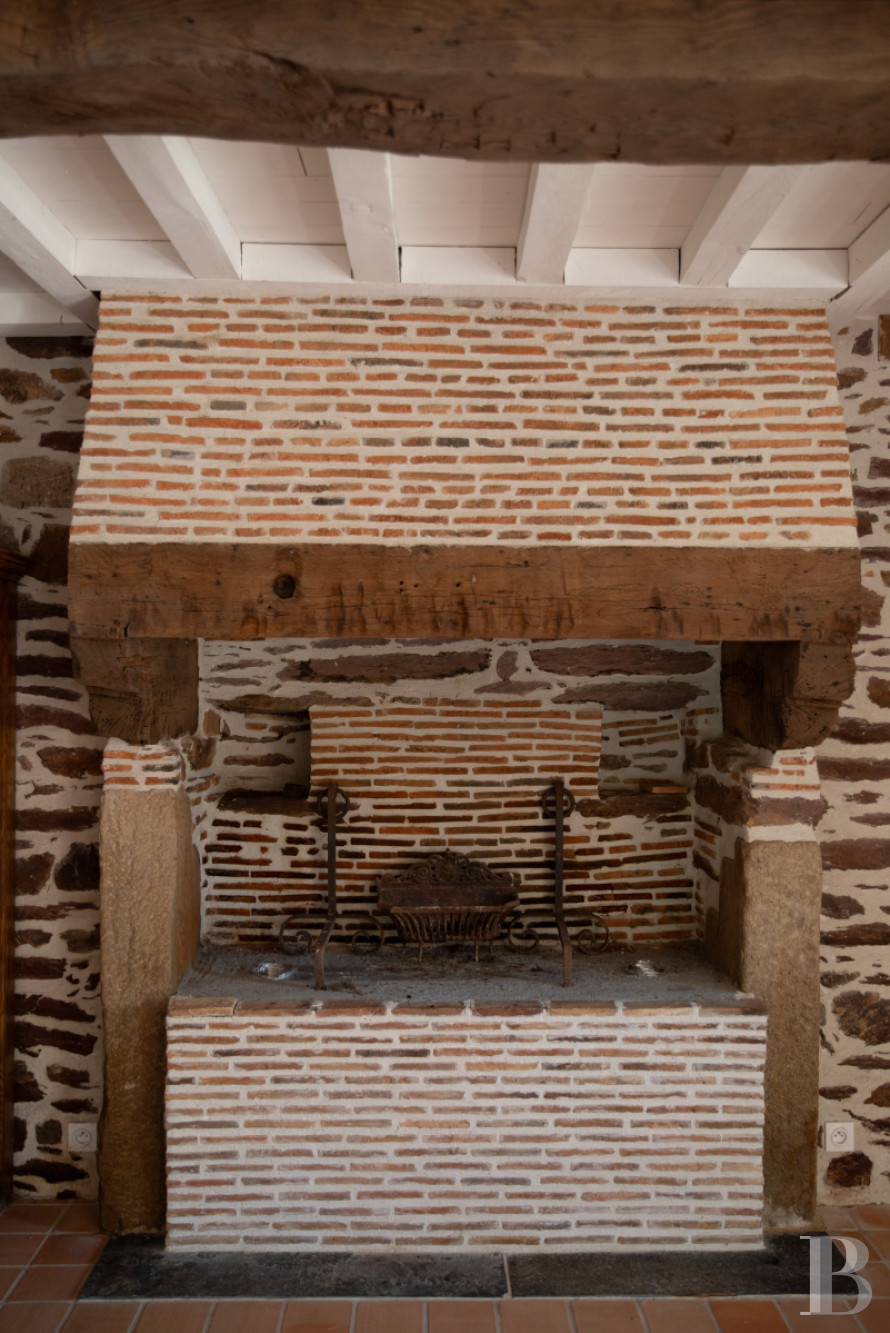
The entrance door is framed by a sober, light-coloured, dressed granite décor, whose thick lines contrast with the dark shale stone and pointing of the facade. The white-painted door is made up of two asymmetrical leaves, each of which is punctuated by a narrow, glazed section protected by ironwork in lozenge shapes. It opens into a living room with a French-style beamed ceiling as well as a stone and brick fireplace standing against the rear wall. The flooring is a combination of wood strip flooring and beige as well as light ochre Burgundy stone slabs. The living room is bathed in light through French windows opening directly outside.
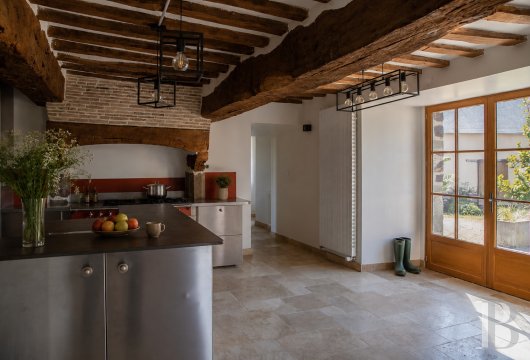
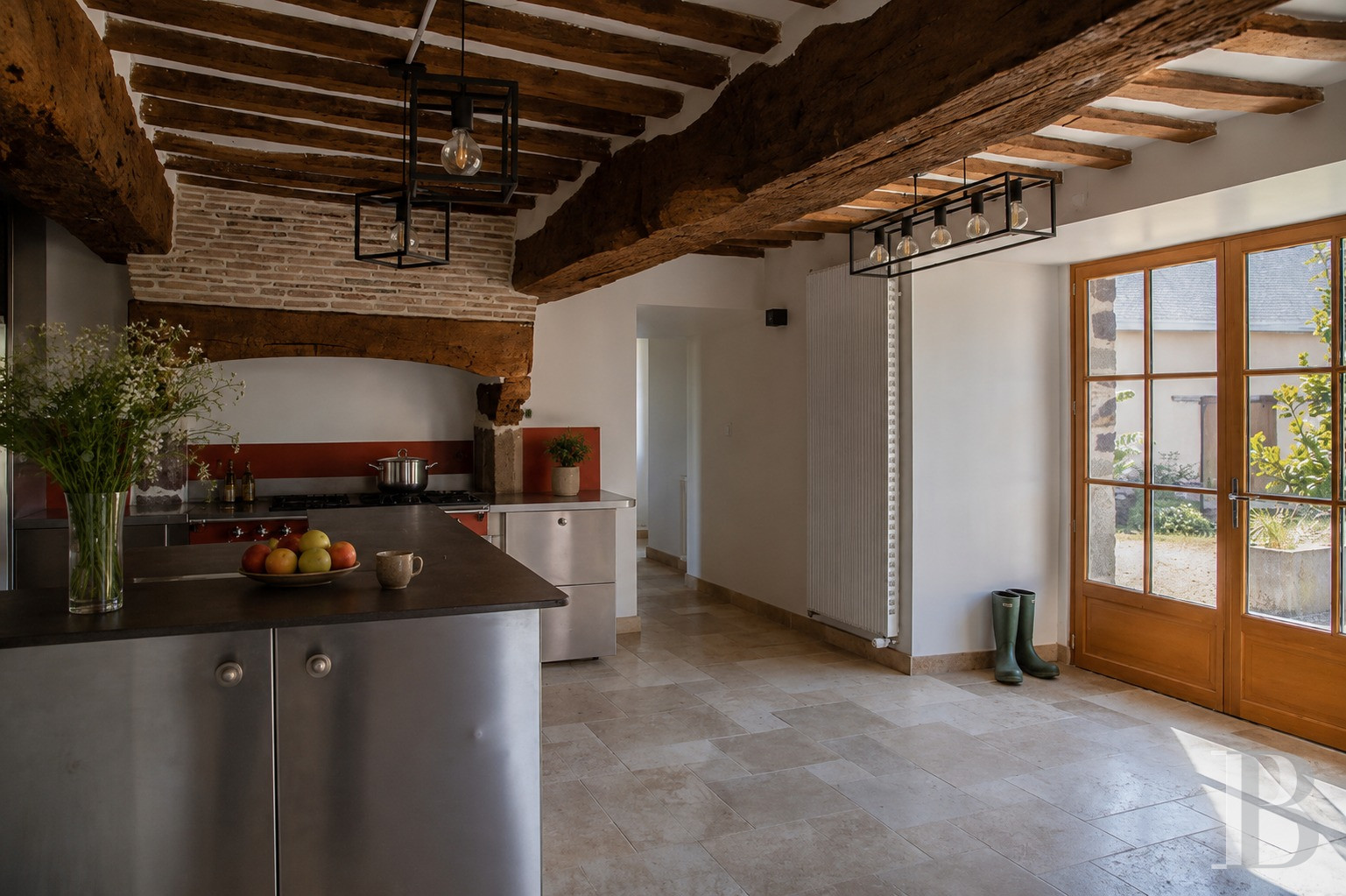
The kitchen also boasts exposed beams, a wooden mantelpiece above the fireplace and visible period masonry. It includes a central island unit, integrated cupboards and a cooking range installed beneath the hood of the former fireplace. The flooring is made up of tiling comprising large, rectangular slabs, in shades of light beige and sand, with a matt finish and a slightly cloudy appearance, similar to natural stone. A corridor fitted with built-in cupboards leads to a shower room boasting brown and beige tiling, next to which there is a lavatory.
This level also includes a scullery, a wine cellar and a boiler room, from which a door opens into a large workshop with a concrete floor and lime rendered stone walls punctuated by two windows. It leads outside to a space beneath an awning.
The upstairs
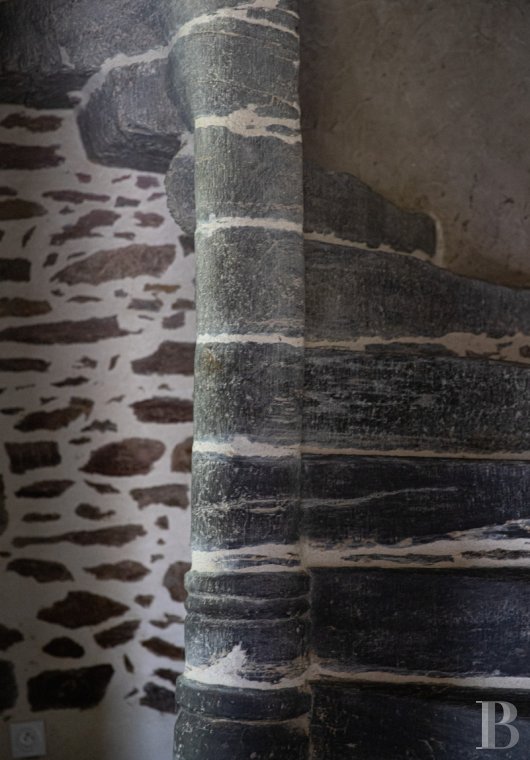
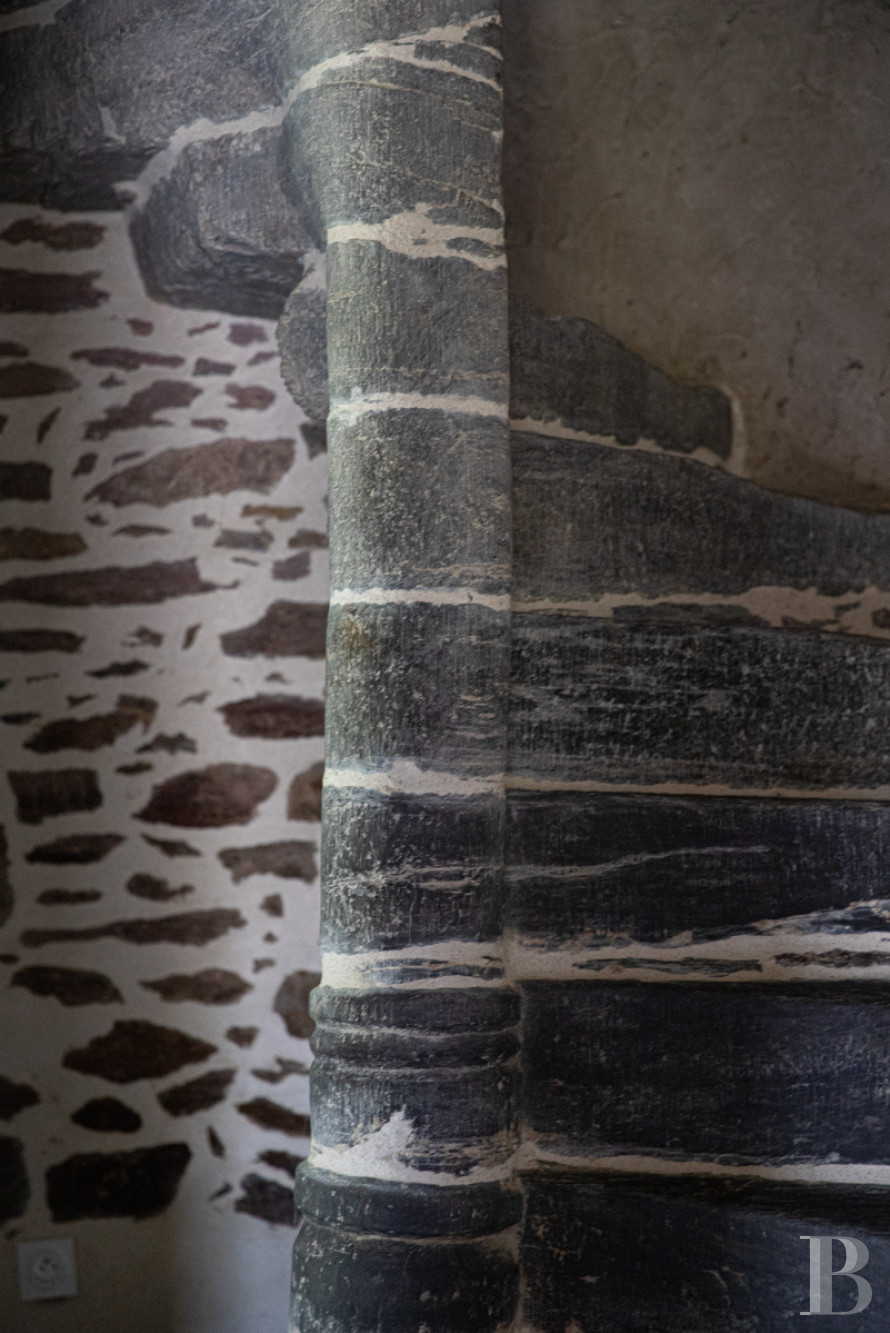
This level can be reached via a stone spiral staircase with a metal handrail. It is located in a square tower with pointed rubble stone walls, whose base is underlined by built in lighting. The walls are rendered with lime and parts of the masonry are still visible.
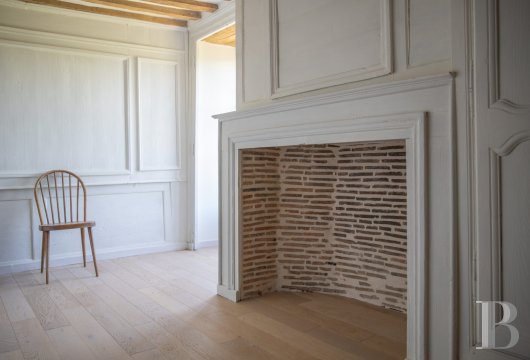
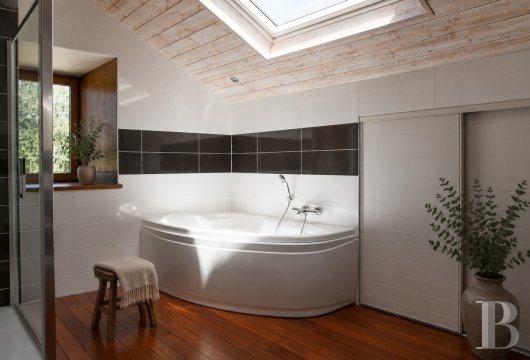
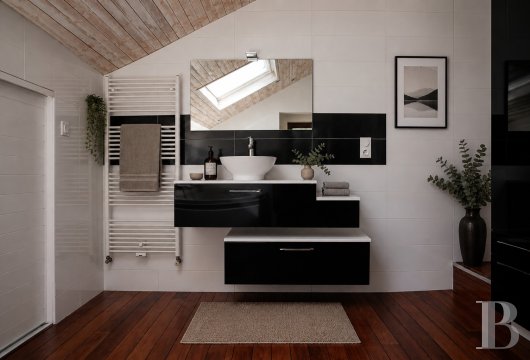
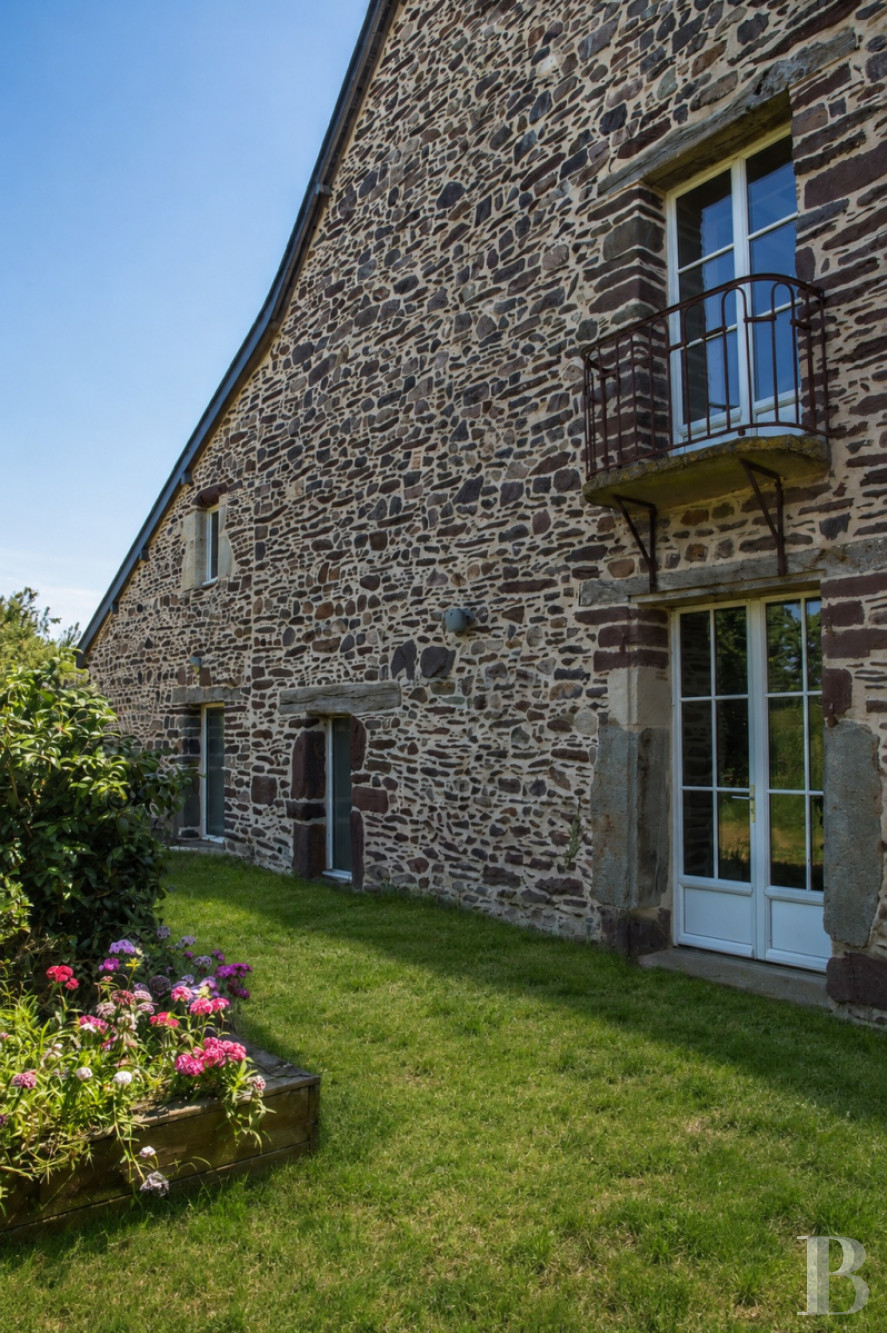
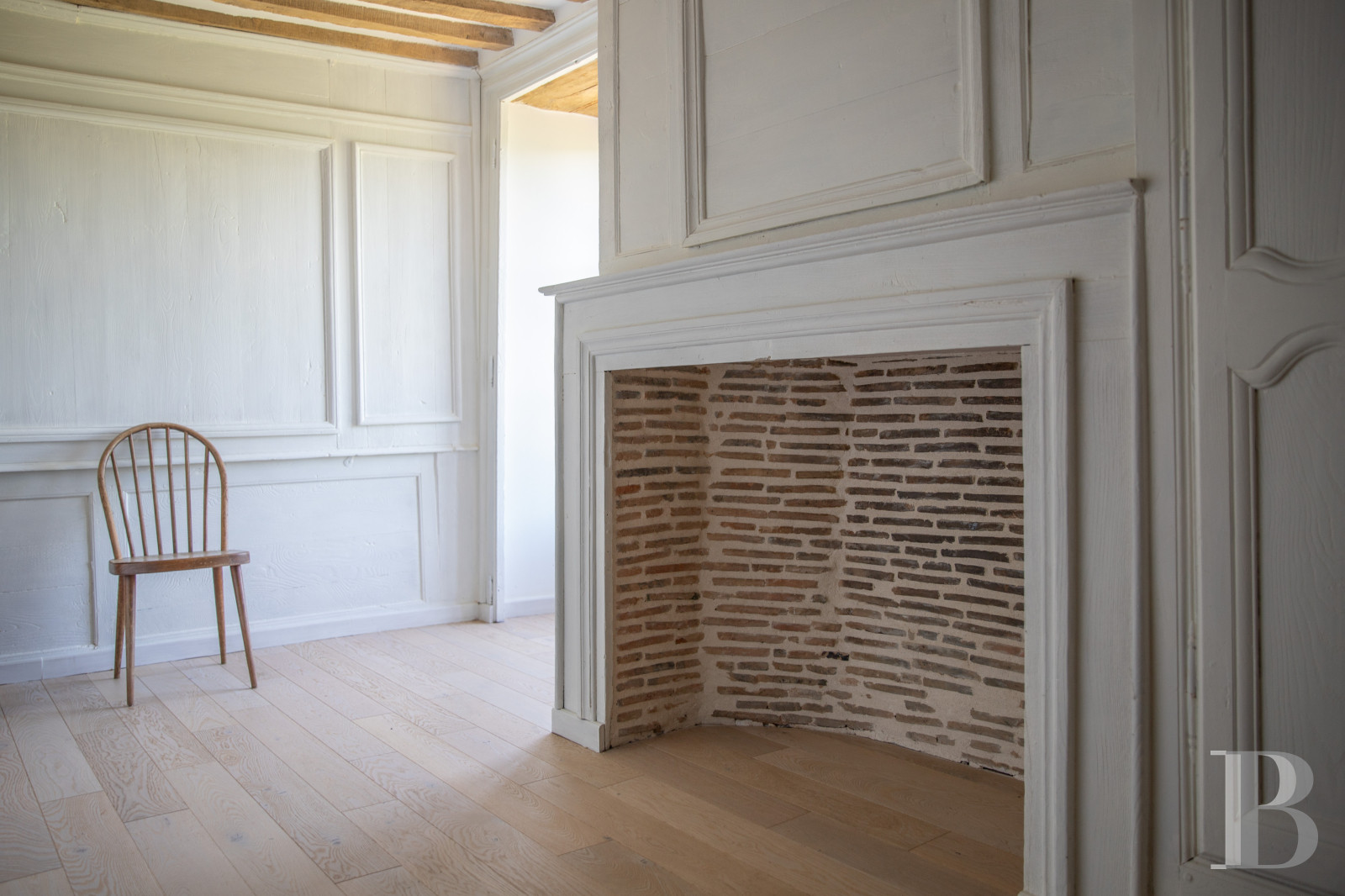
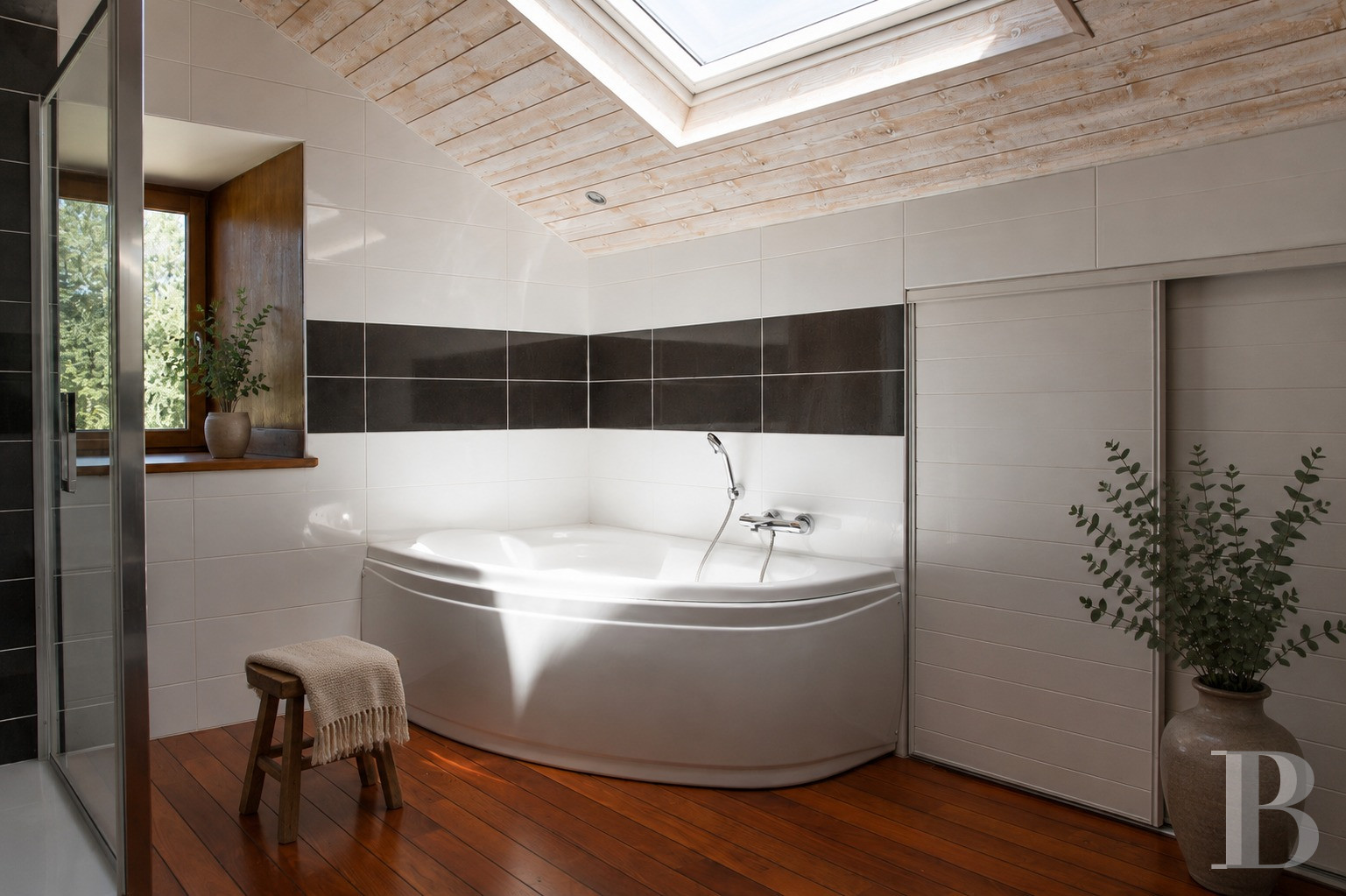
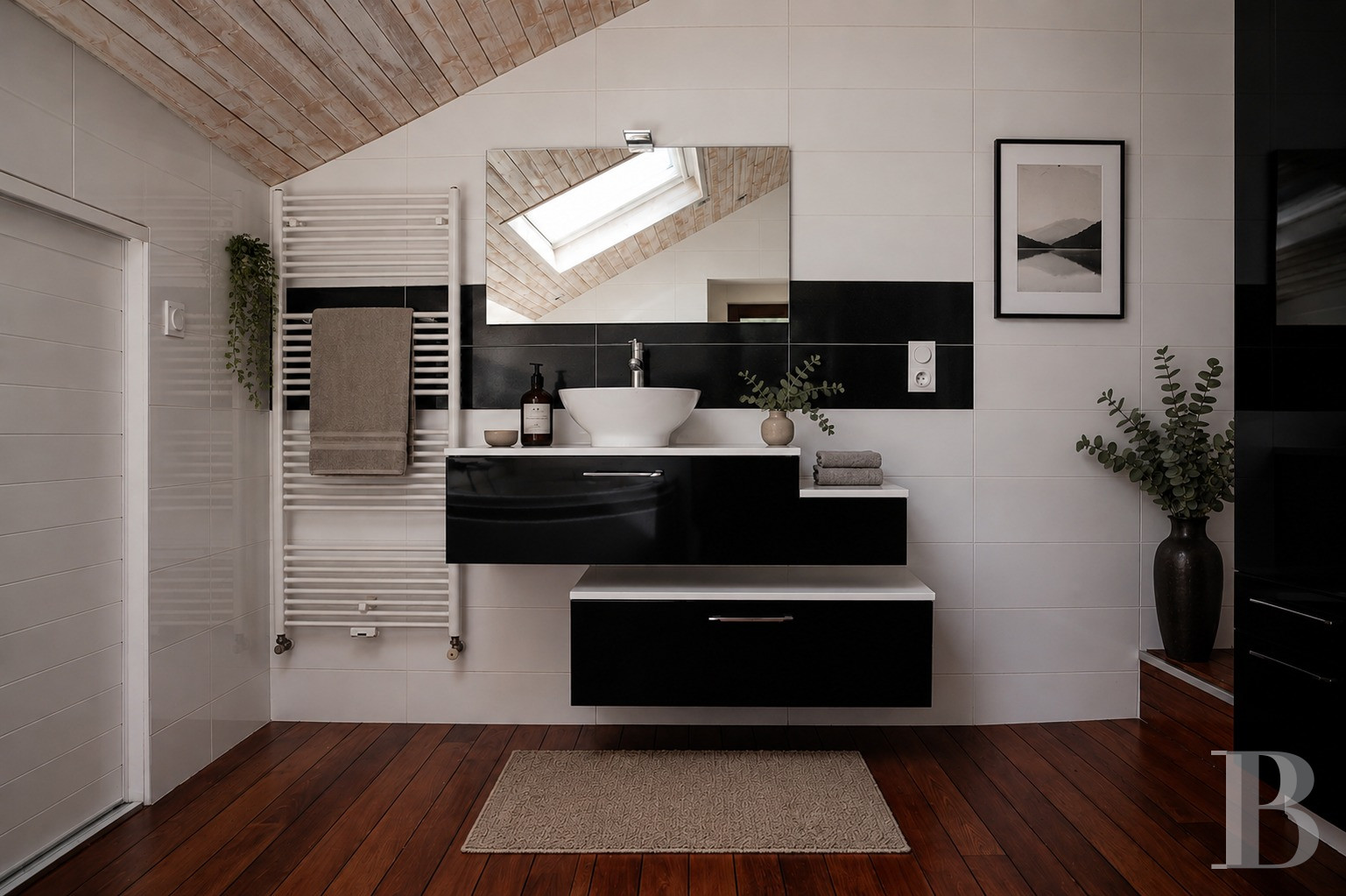
A hallway followed by a corridor leads to three bedrooms, including one with an en suite shower room and separate lavatory, an office, a bathroom with a shower and another separate lavatory. The white-painted walls contrast with the wooden window frames, there are exposed beams on the ceiling and there is wood stripped flooring throughout. The bedrooms are bathed in light through large-paned windows and face west, with views over the courtyard followed by the countryside in the background. The office boasts light-coloured moulded wood panelling partially covering the walls. Against the gable wall, there is a fireplace with a straight mantelpiece. A window with a balcony and wrought-iron guard-rail overlooks the meadows. From a hallway, a door leads to the loft in the building next to the manor, which is used for technical facilities.
The attic
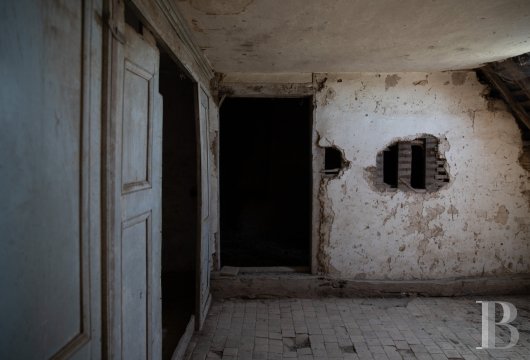
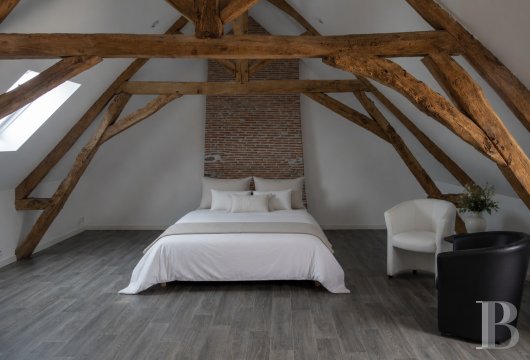
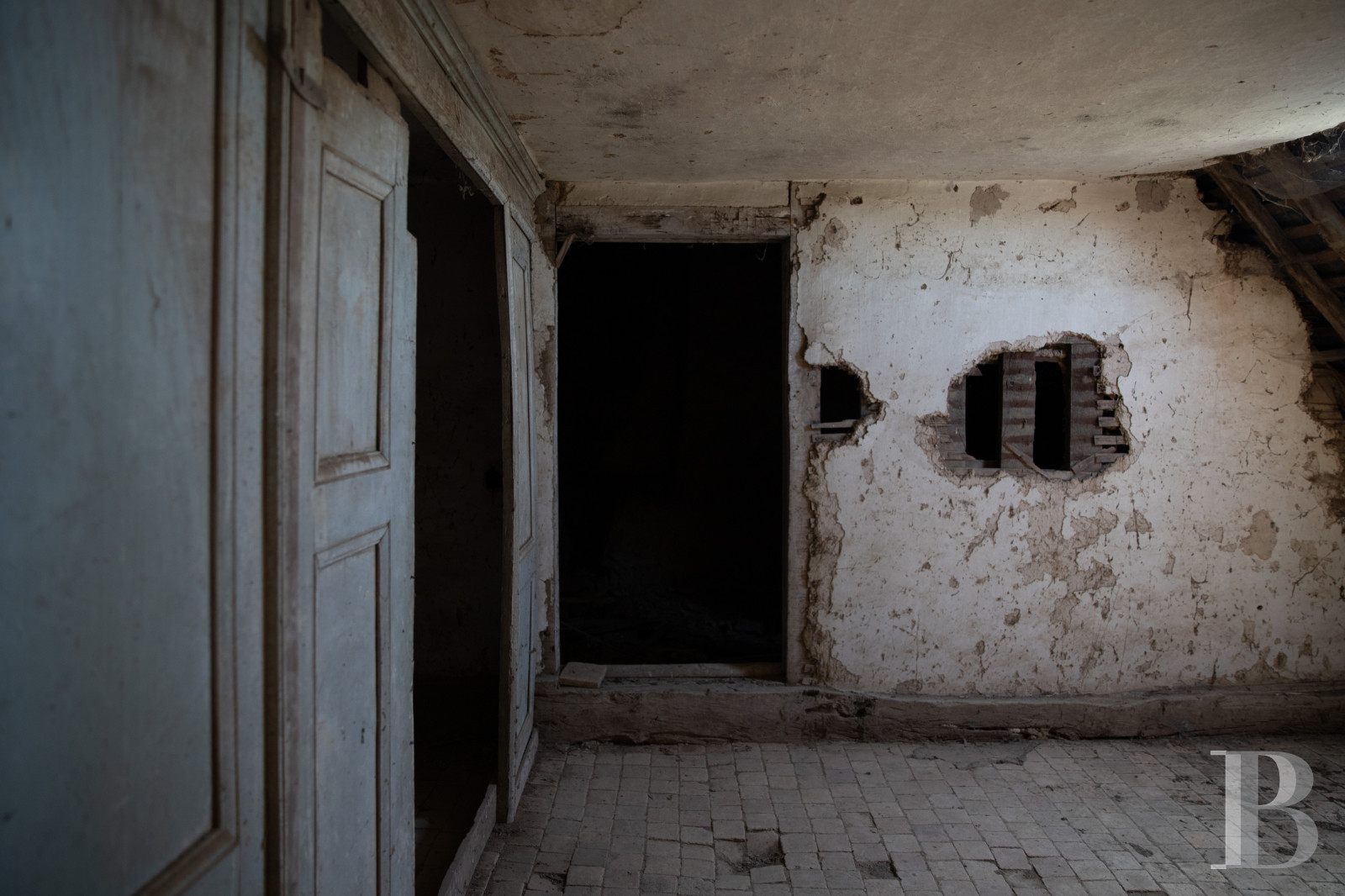
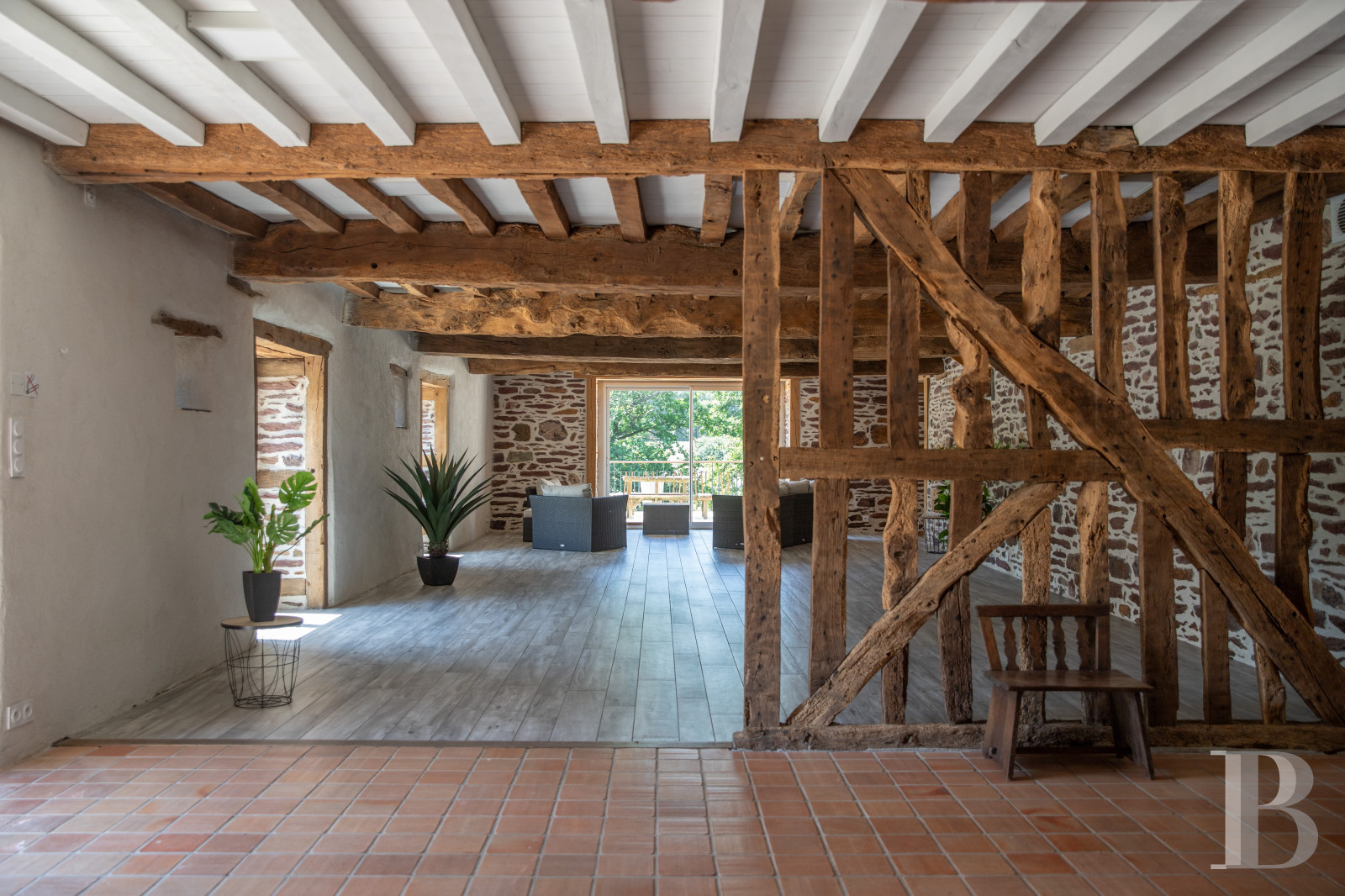
From the level below, the attic can be reached through a door and leads to the top of the staircase tower. The space is divided into several uninsulated compartments and could potentially be transformed into living space. Light filters in through skylights, the floor is paved with terracotta tiles and the walls are made of half-timbering as well as cob.
The longhouse
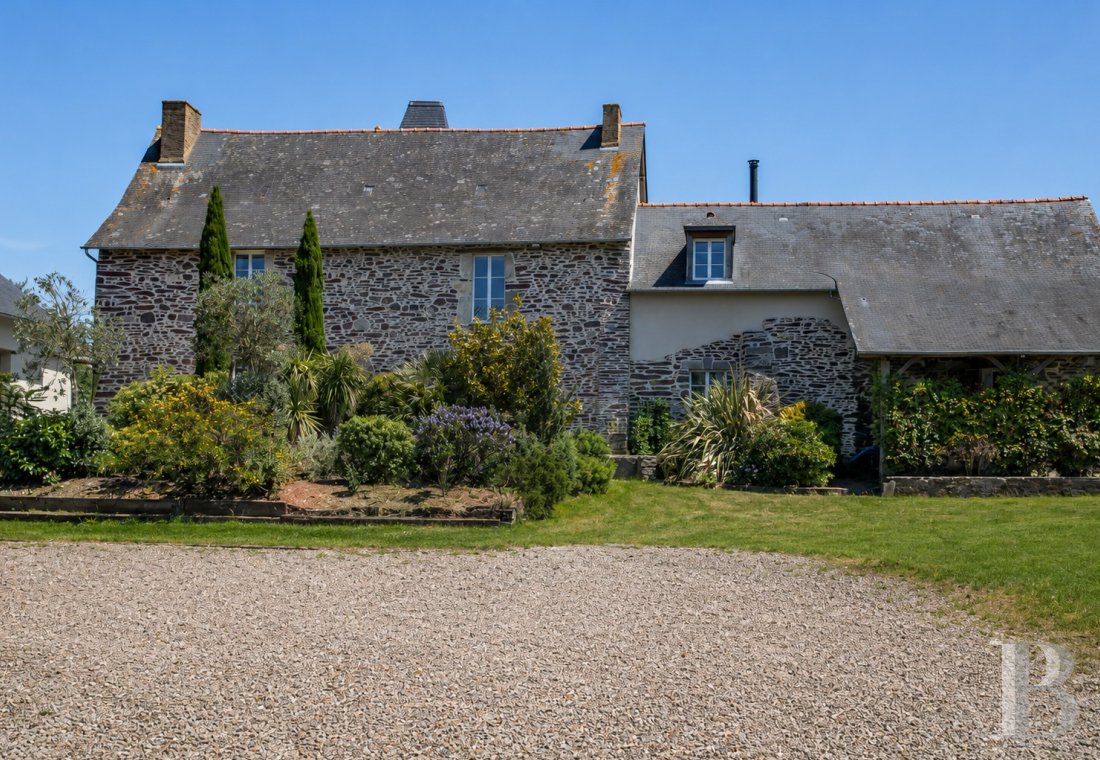
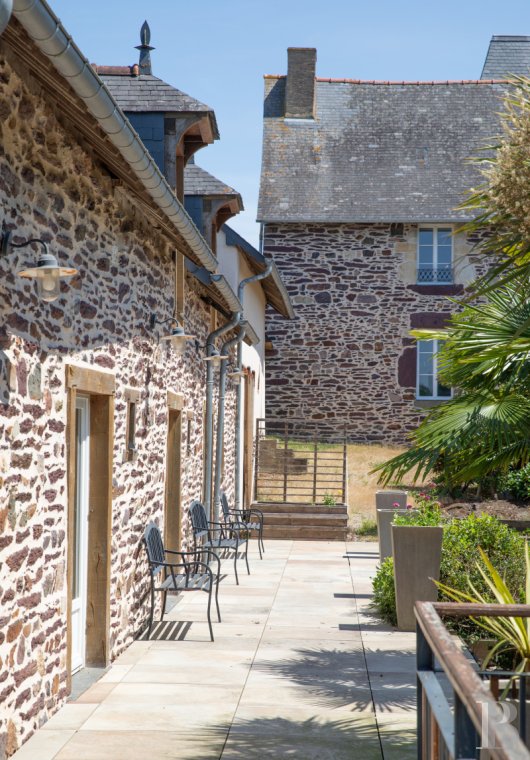
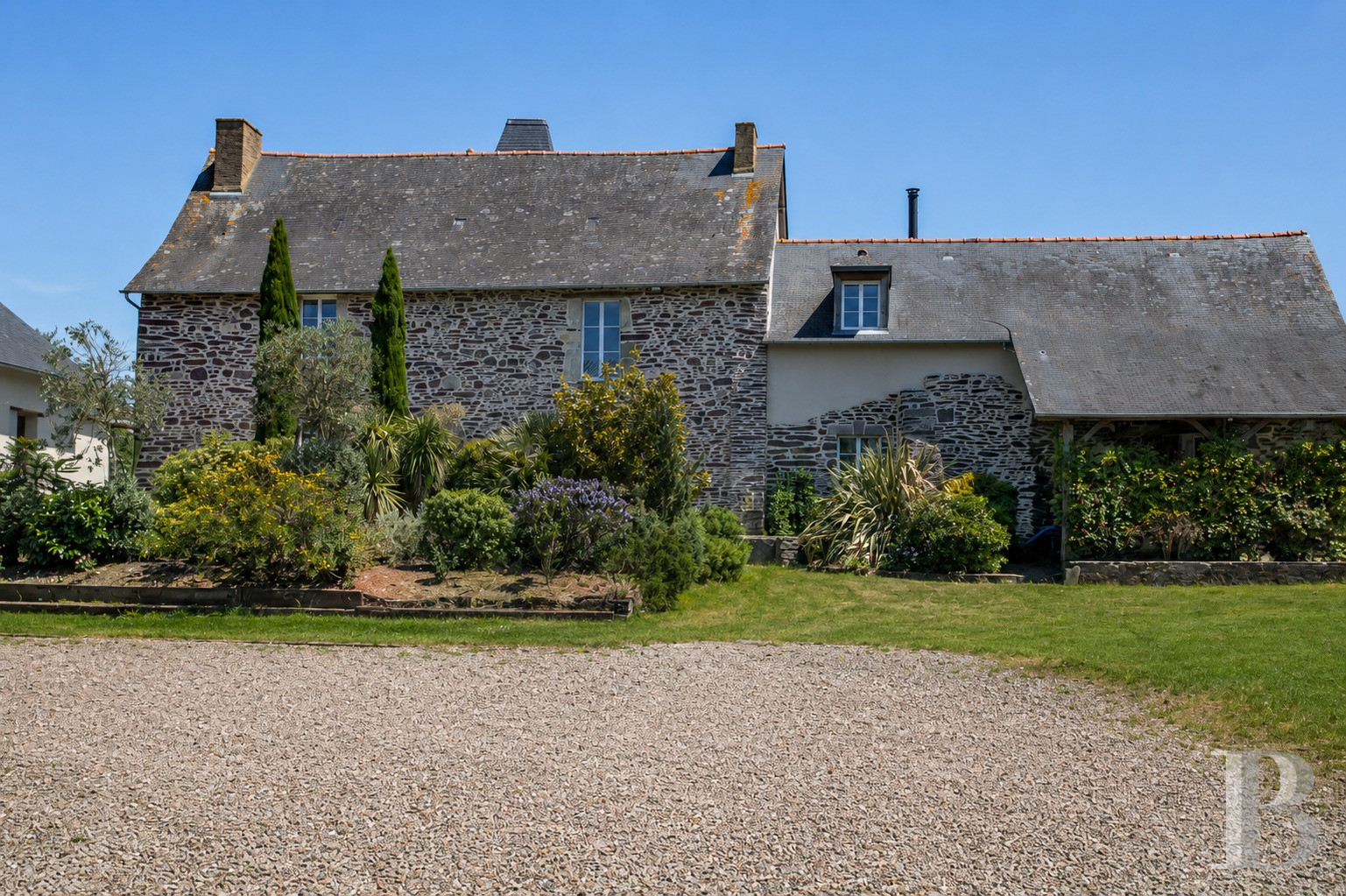
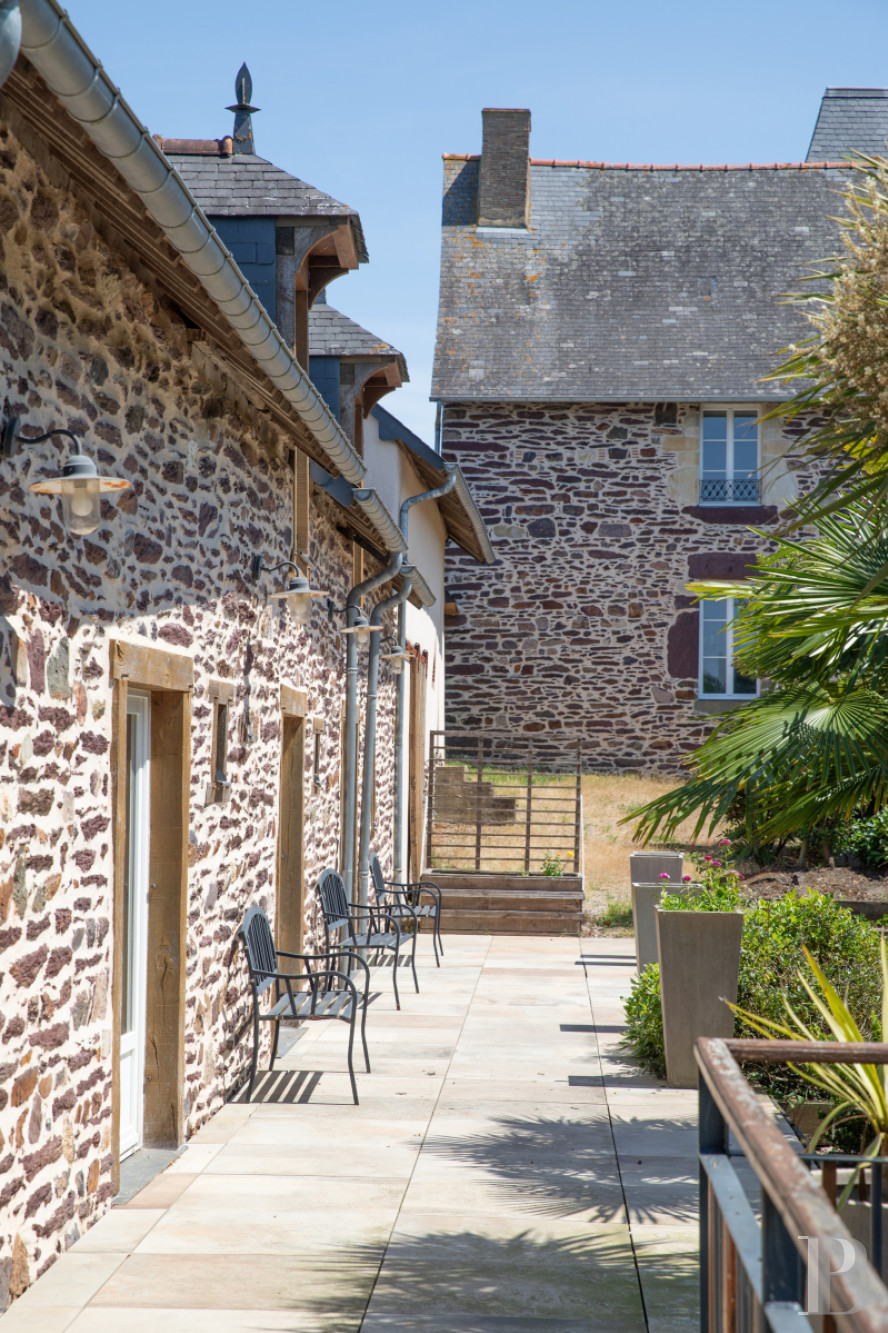
This two-storey edifice extends lengthwise, with simple volumes. The walls are made of exposed, pointed rubble stone, with a facade punctuated by windows and their surrounds. The slate gabled roof is punctuated by two wall dormer windows. At each end of the roof, there are chimney stacks. The main facade is punctuated by regularly shaped openings, with French windows and other windows of various dimensions, boasting light-coloured frames. The longhouse can be reached from the stone patio running in front of the building and around the gable end. A gravelled courtyard spreads out in front of the entire length of the facade, though certain parts in front of the house have been landscaped with shrubs and flowerbeds.
The ground floor
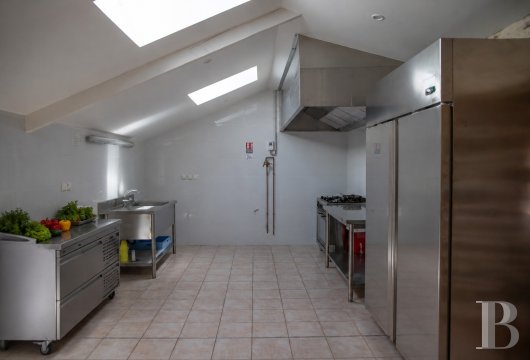
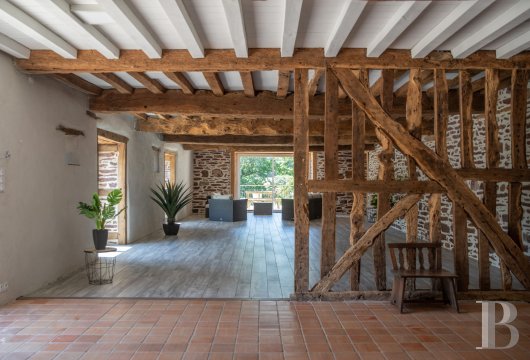
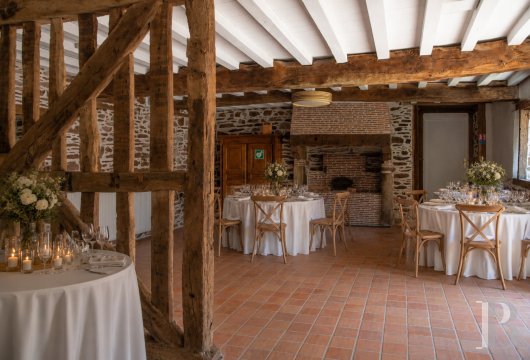
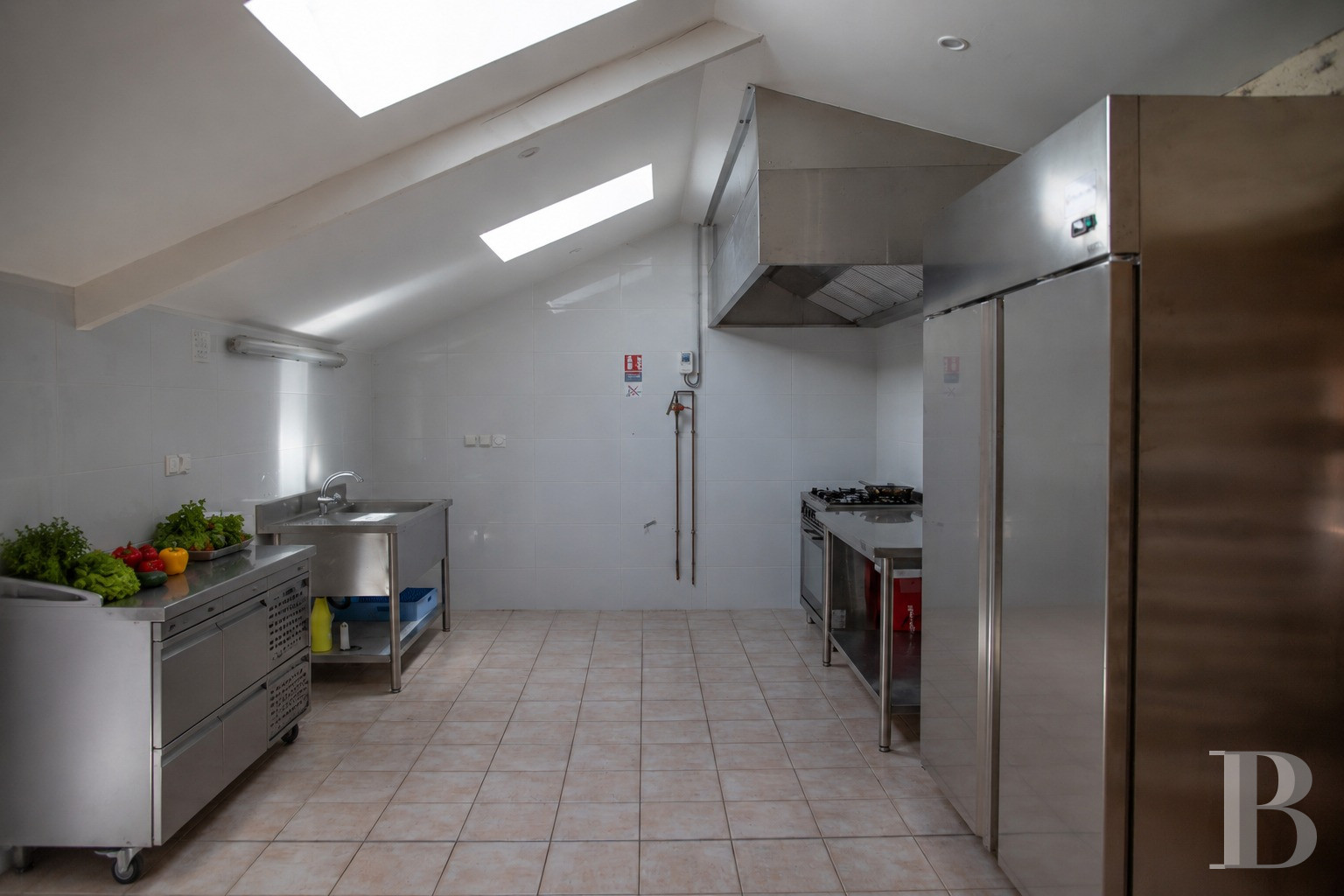
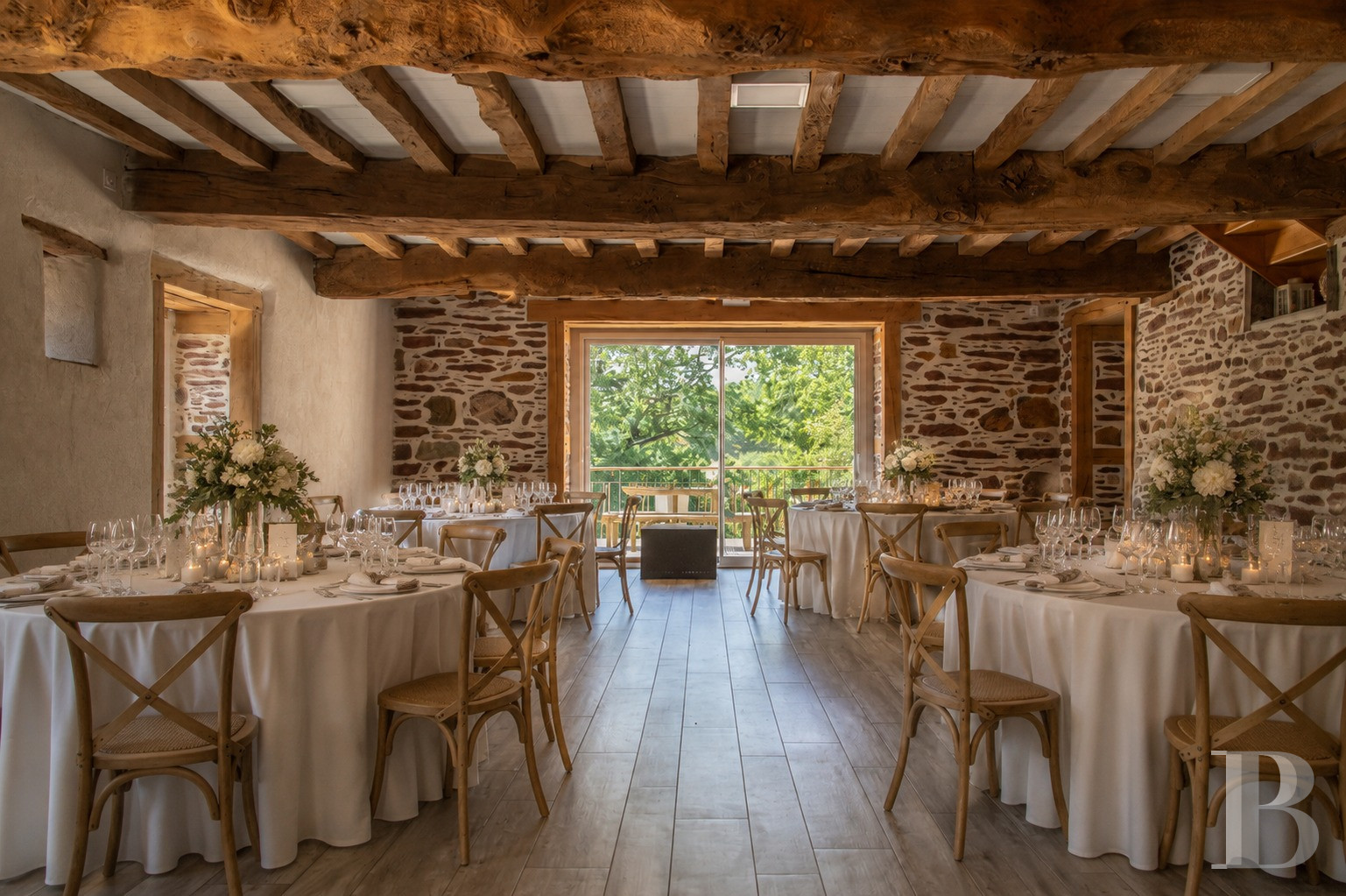
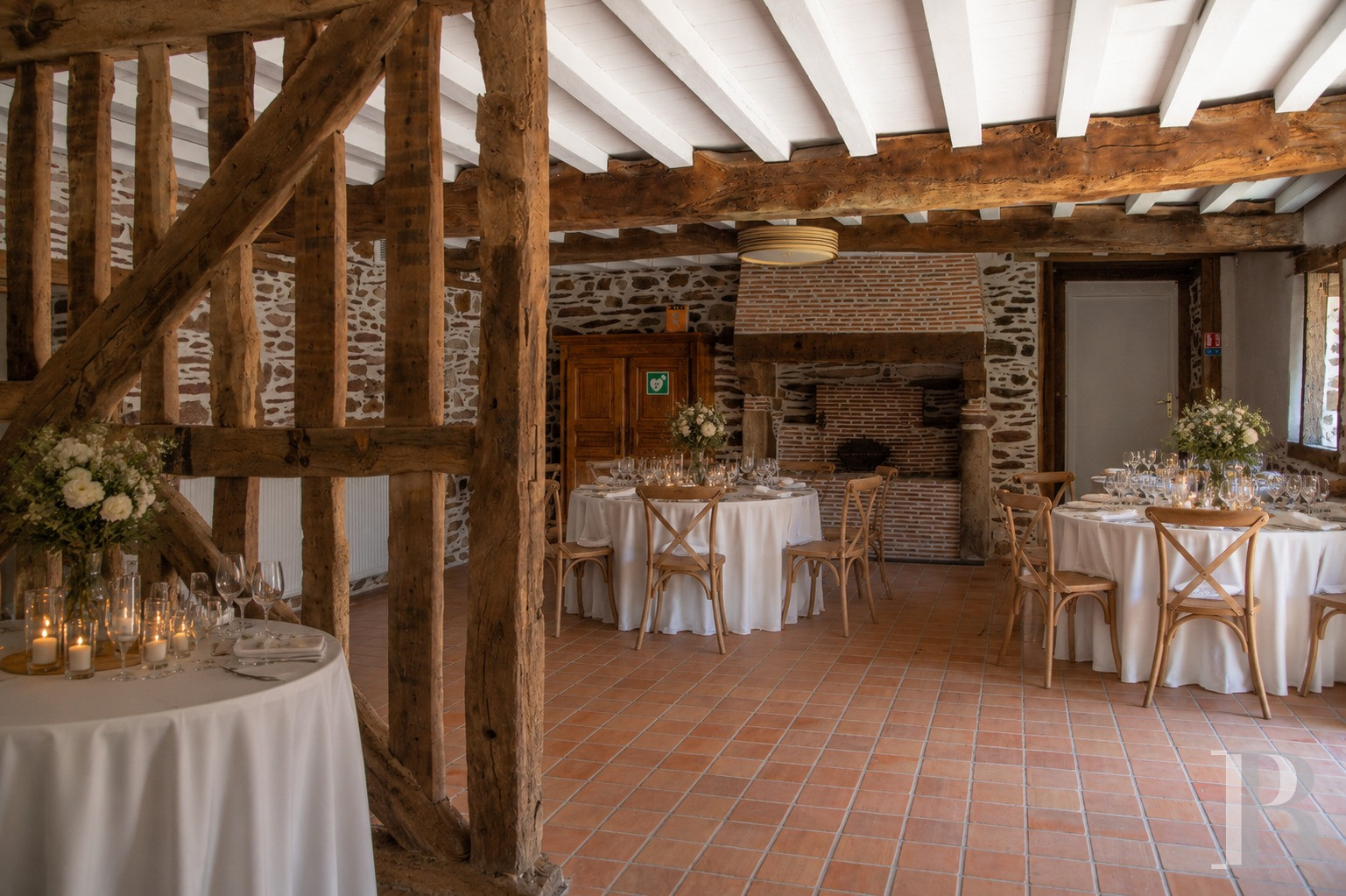
The main volume is occupied by a vast reception room with exposed stonework on the walls and a French-style beamed ceiling. A fireplace stands on one of the gable walls, while a large patio door with views of the surrounding countryside opens directly onto the patio. To the rear there is a professional-grade kitchen as well as three shower rooms, one of which is accessible to people with reduced mobility, that are also equipped with lavatories. The walls are painted white, all of the floors are tiled and the corridors are wide.
The upstairs
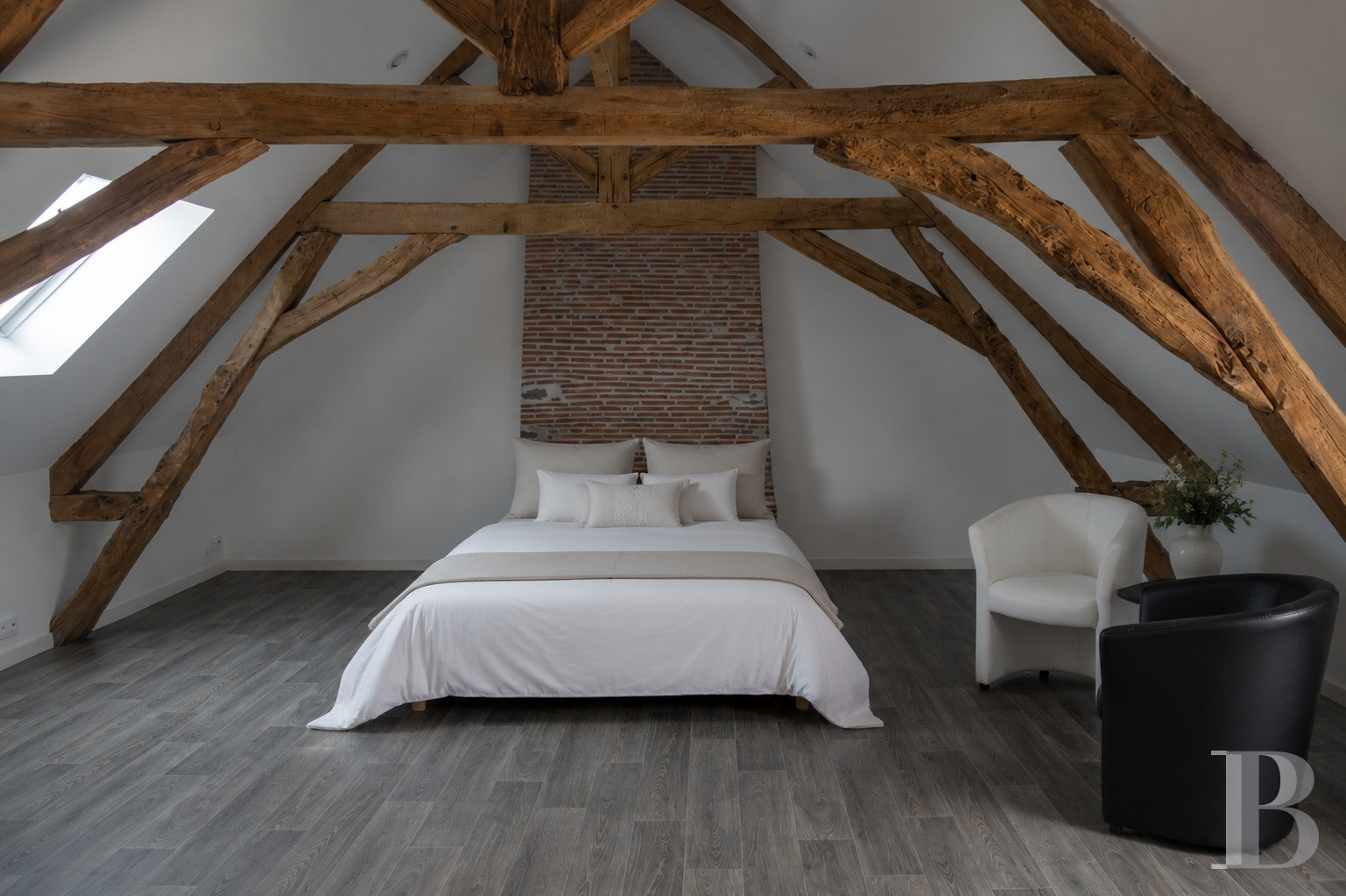
It is made up of three dormitories, one of which has a lavatory. The decoration is identical to the level below, with white walls. There is also an exposed period roof frame. All the floors are tiled.
The barn
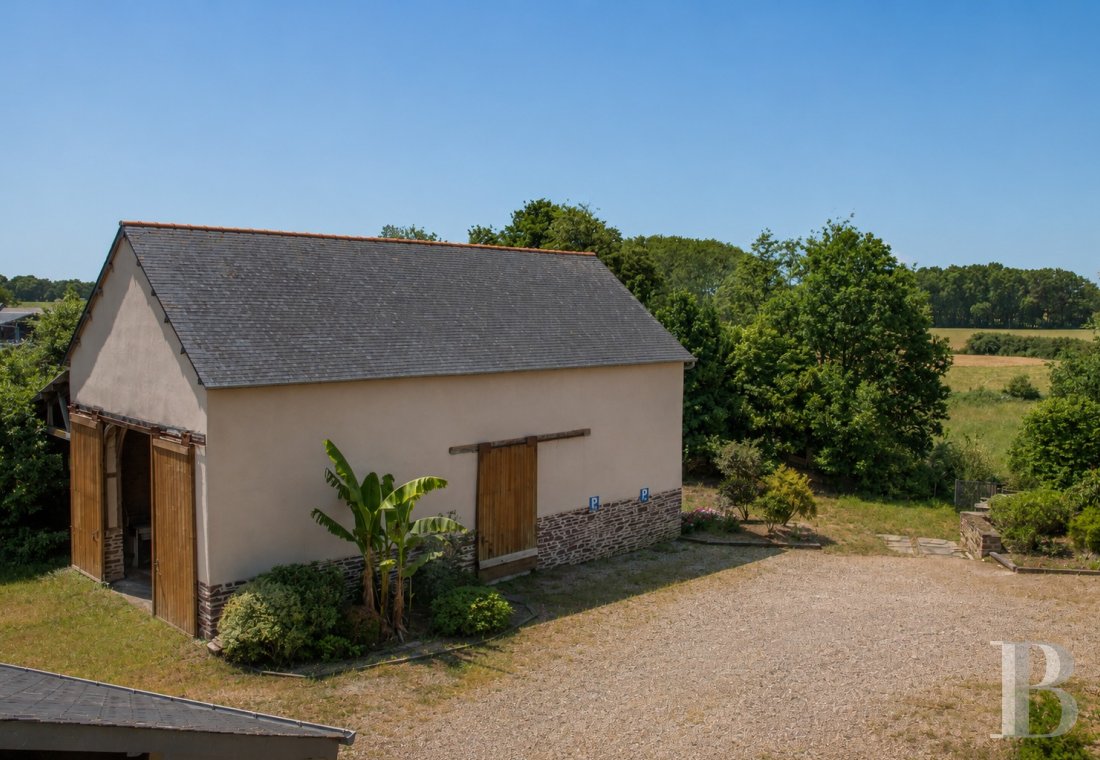
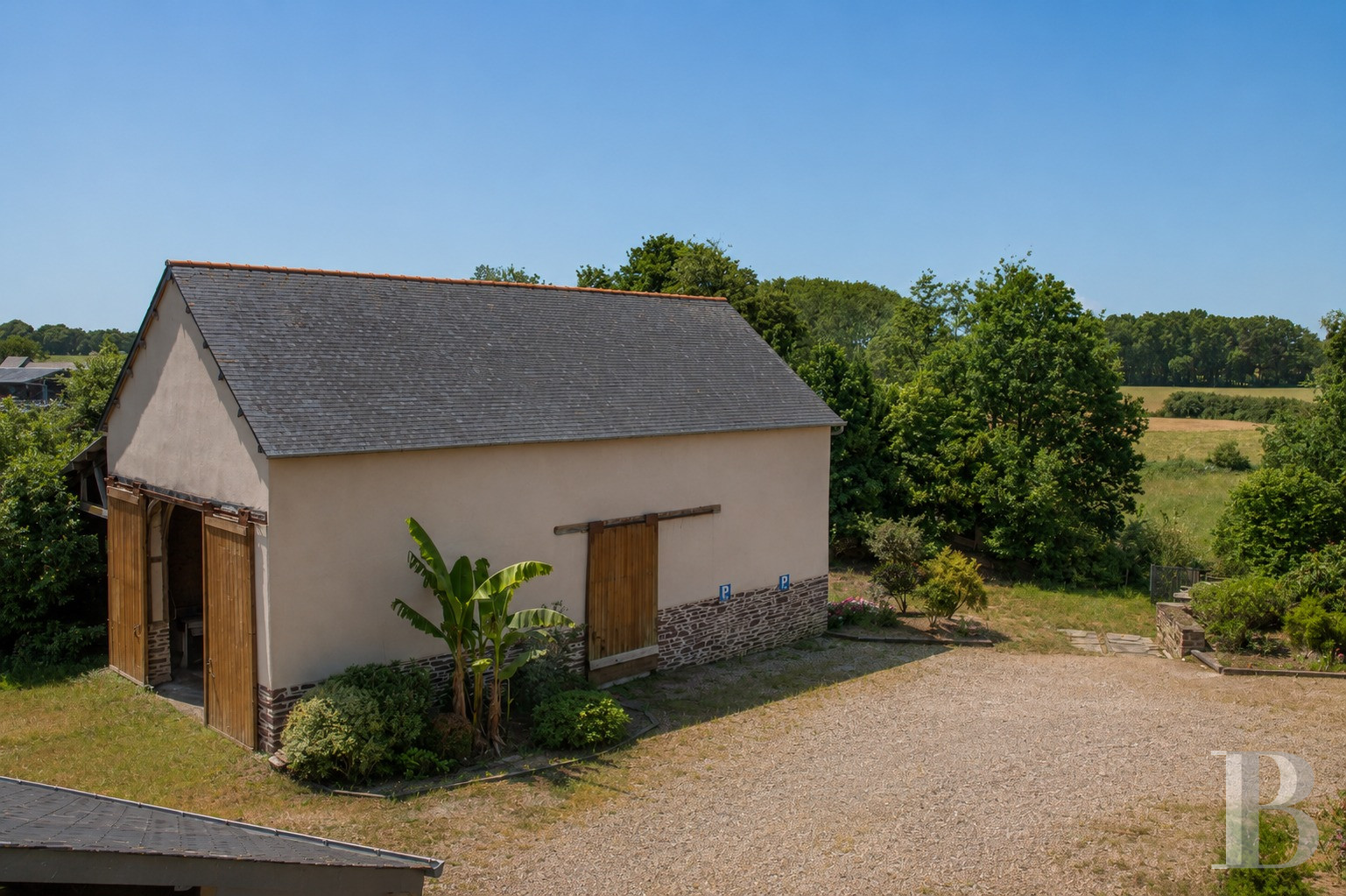
This single-storey, rectangular building boasts an exposed roof frame. The exterior of the cob walls, standing on a rubble stone plinth course, are rendered, beneath the slate roof.
There is almost 107 m² of space inside, free of partitions and with a rammed earth floor. Additionally, the structure is reinforced by metal tie beams. On the facade, there is a large, wooden sliding double door mounted on a metal rail allowing for sizeable equipment to be taken in and out, while on the side there is a second opening. An adjoining lean-to with a sheet metal roof is used for storage.
The former milking parlour
This rectangular edifice adjoins the longhouse and boasts a simple rural silhouette. Its masonry is a mix of exposed rubble stone and rendering, there is an old carriage gate and the main section of the slate roof has recently been restored. To the rear, the mainly rendered facade is punctuated by a door and a small window. The slate roof requires partial renovation above the adjoining lean-to. It includes a garage and a vast amount of storage space on its upper floor.
The farm outbuildings
The impressive volumes of the open stables with a wooden framework and corrugated roof, set slightly away from the manor and perpendicularly to the longhouse, are divided into several bays and parking spaces. The edifice is in a satisfactory structural condition. Adjoining it, there is a small agricultural storage building with a wooden roof frame and metal facing. It could be used for storage or parking space. Lastly, a hen coop with two entrances, one of which opens onto the meadows, encloses all the old farm buildings, which are especially conducive to keeping horses or a small flock of sheep or goats.
The meadows
Apart from two small plots in the same municipality but in different localities and a little distance away, the expanse of the property’s land is uninterrupted.
Our opinion
This is a rare property, thanks to the manor’s traditional layout, the architectural harmony of its buildings and the extent of its grounds, where a home, accommodation activity and a events or reception business can all co-exist without interfering with each other. The main residence proudly presents the traces of its manorial origins, while the longhouse, which is an already adapted reception venue, can be put into use immediately. The presence of a tourist attraction related natural zone around the buildings is an uncommon advantage, making it possible to develop accommodation, leisure, reception or event activities. Depending on a new occupant’s plans, several adaptations could be envisaged, but the existing volumes, technical facilities and permits already obtained provide a sound and already structured basis.
Reference 836714
| Main building floor area | 417 m² |
| Outbuildings floor area | 493 m² |
| Land registry surface area | 12 ha 78 a 87 ca |
French Energy Performance Diagnosis
Information on the risks to which this property is exposed is available on the website: www.georisques.gouv.fr
Share


NB: The above information is not only the result of our visit to the property; it is also based on information provided by the current owner. It is by no means comprehensive or strictly accurate especially where surface areas and construction dates are concerned. We cannot, therefore, be held liable for any misrepresentation.