



A chateau’s outbuildings, including a chapel and a dovecote,
on grounds with a pond, perched on the banks of the Seine
on grounds with a pond, perched on the banks of the Seine
Provins,
SEINE-ET-MARNE
ile-de-france
77160
FR

Location
The property is located in the southeast of the Ile-de-France region and the Seine-et-Marne department, 100 kilometres from the capital, 18 kilometres from the Longueville train station – which provides rail service to the Paris-Est train station in one hour – and 24 kilometres from Marolles, where the A5 motorway also makes it possible to reach Paris in one hour.
As for the nearby village, it contains no shops, except for a hair salon, but Provins, a historical medieval city and recognised as a Unesco World Heritage Site, is only 19 kilometres away and includes, in addition to a variety of cultural and tourism-based activities, small downtown shops, a hospital and a train station.
Situated between a B road and the Seine, the neighbouring chateau and farm, which were once part of the same property, now belongs to a Buddhist congregation, providing a certain sense of peace and discretion that are very much appreciated by the property’s current owners.
Description
Under the reign of Louis XVI, this estate belonged to Louis-Clément-Bonaventure Jodrillat, a steward at the French royal court, and included a chateau, farm and outbuildings, while, in the following century and, more precisely, in 1850, Madame de la Motte, a descendant of the family and childless, was forced to sell the estate at a candle auction, which was then purchased by the Marquessa de Chérisey. However, it was not until the late 20th century that the estate was divided up into three different parcels.
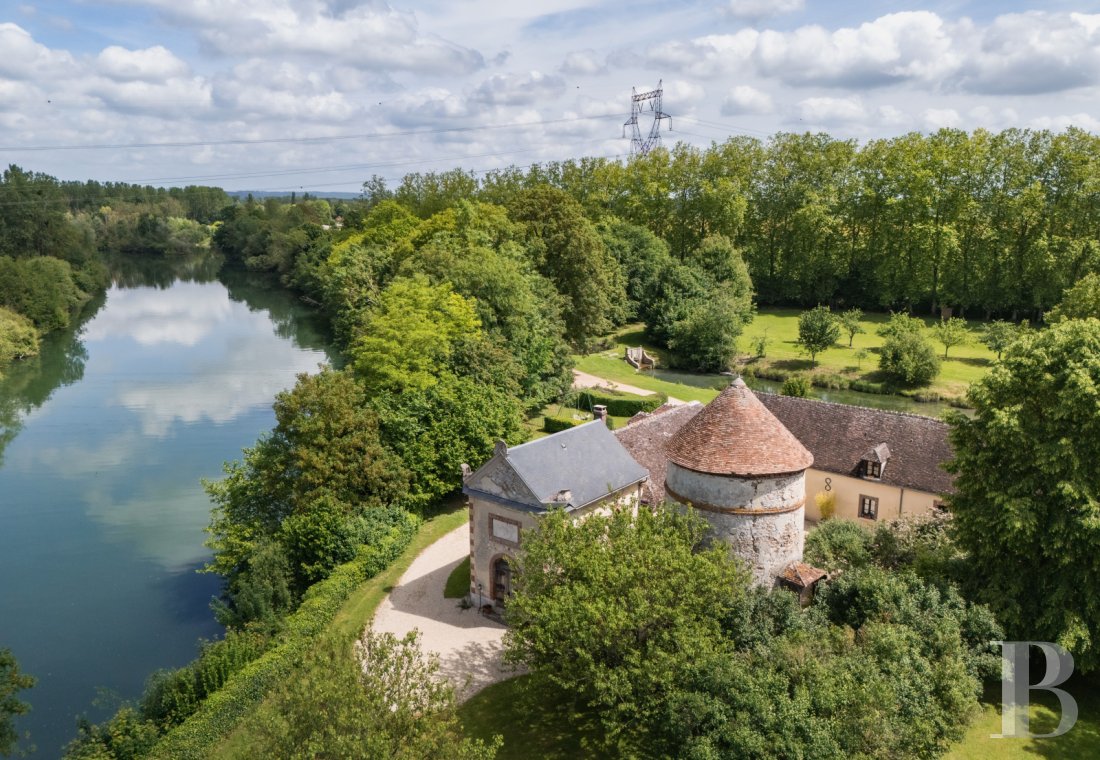
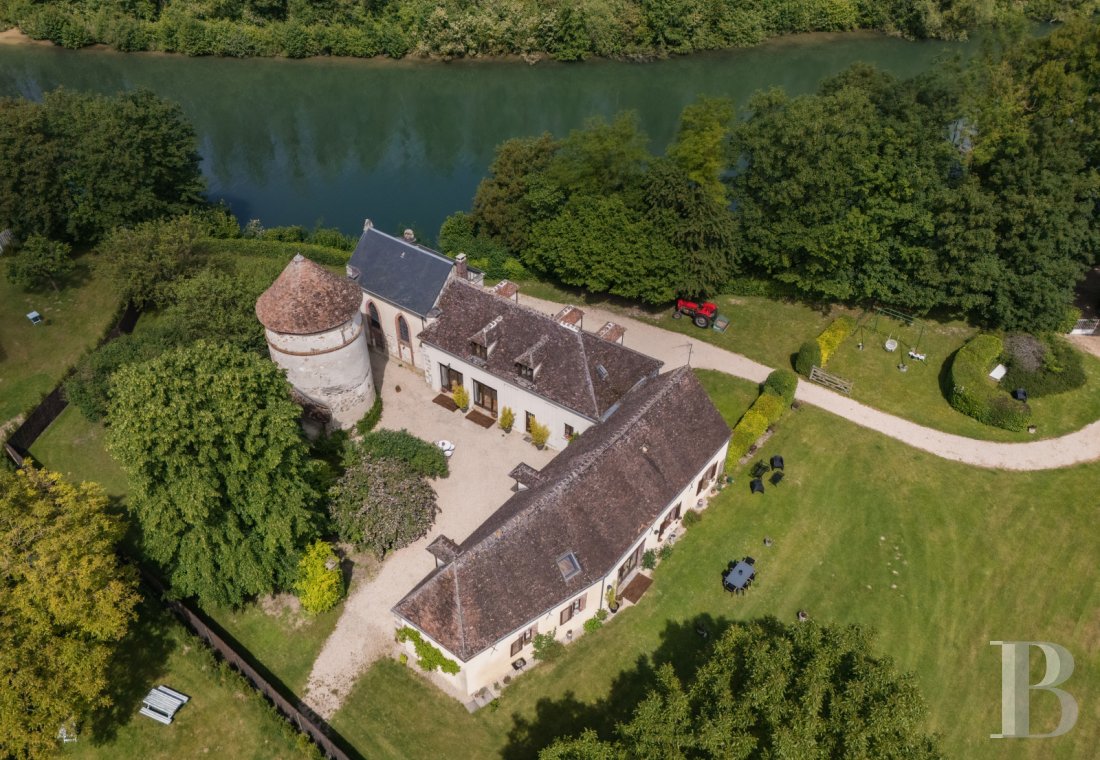
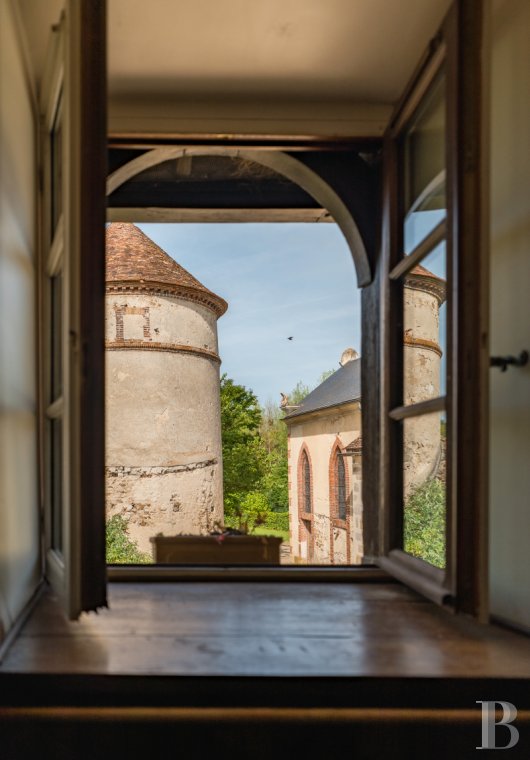
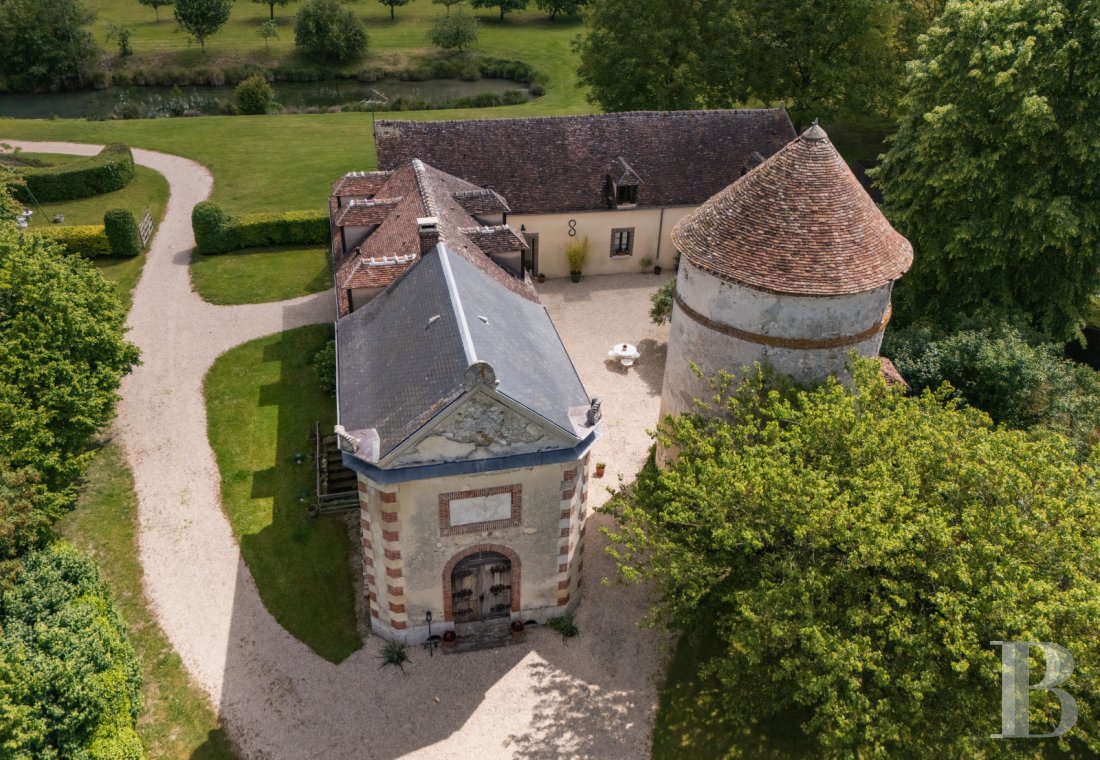
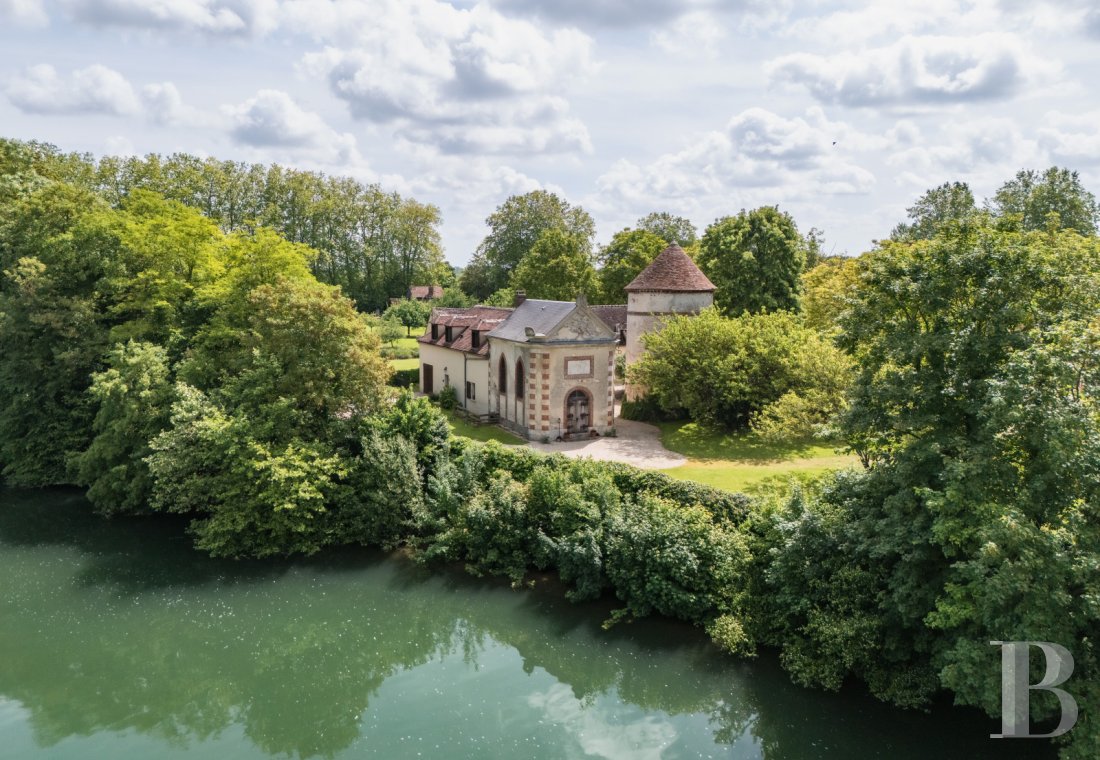
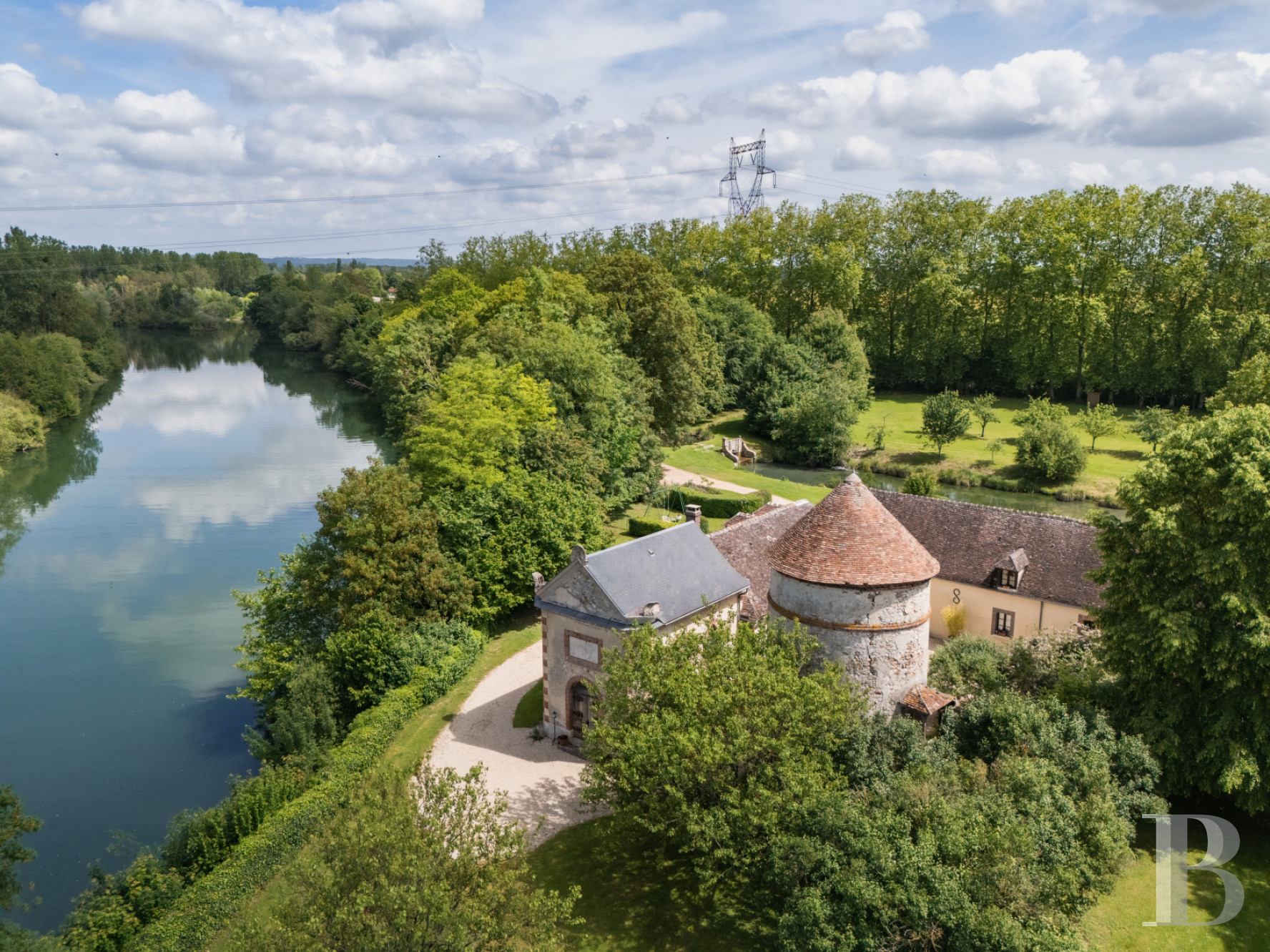
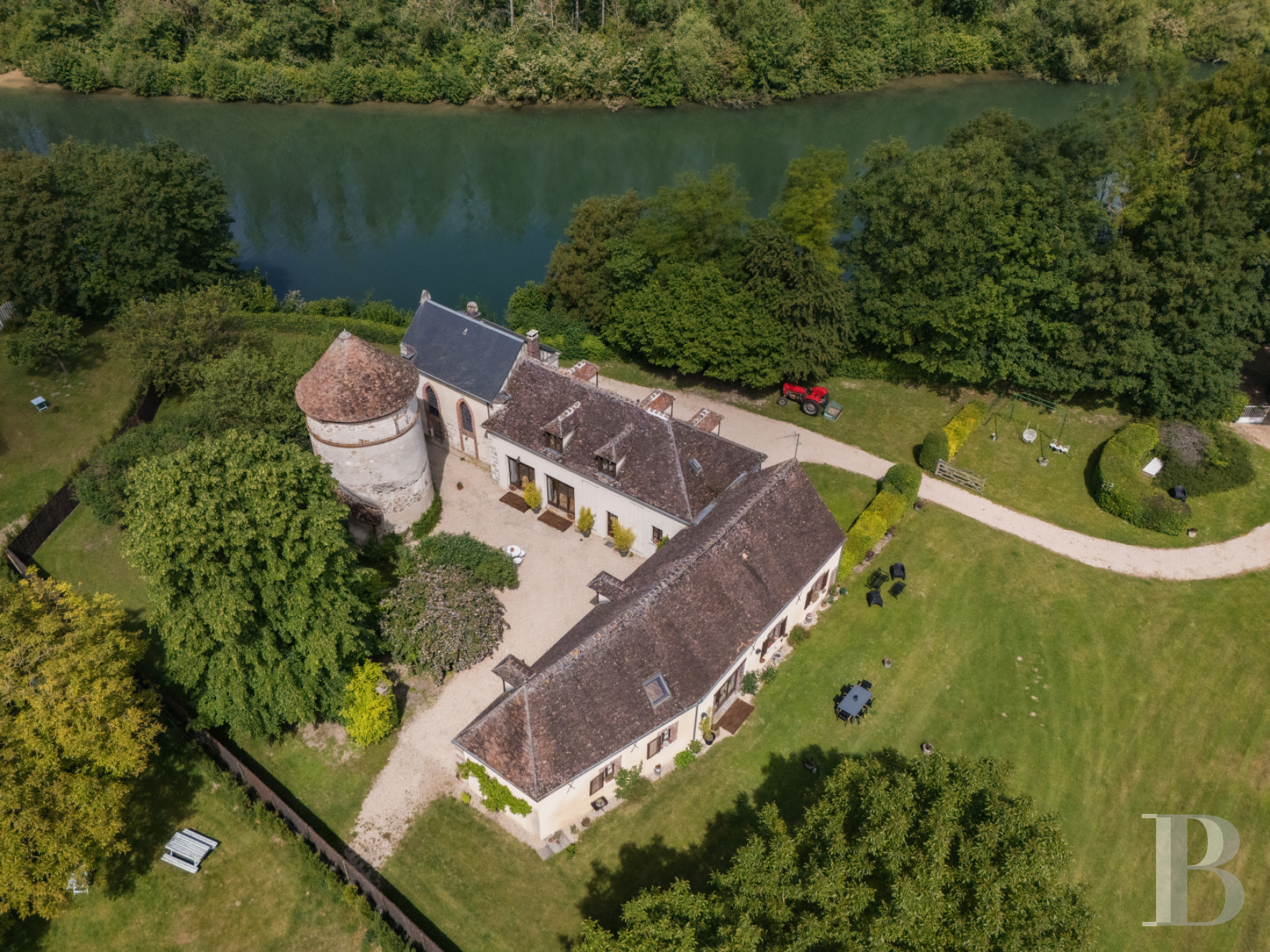
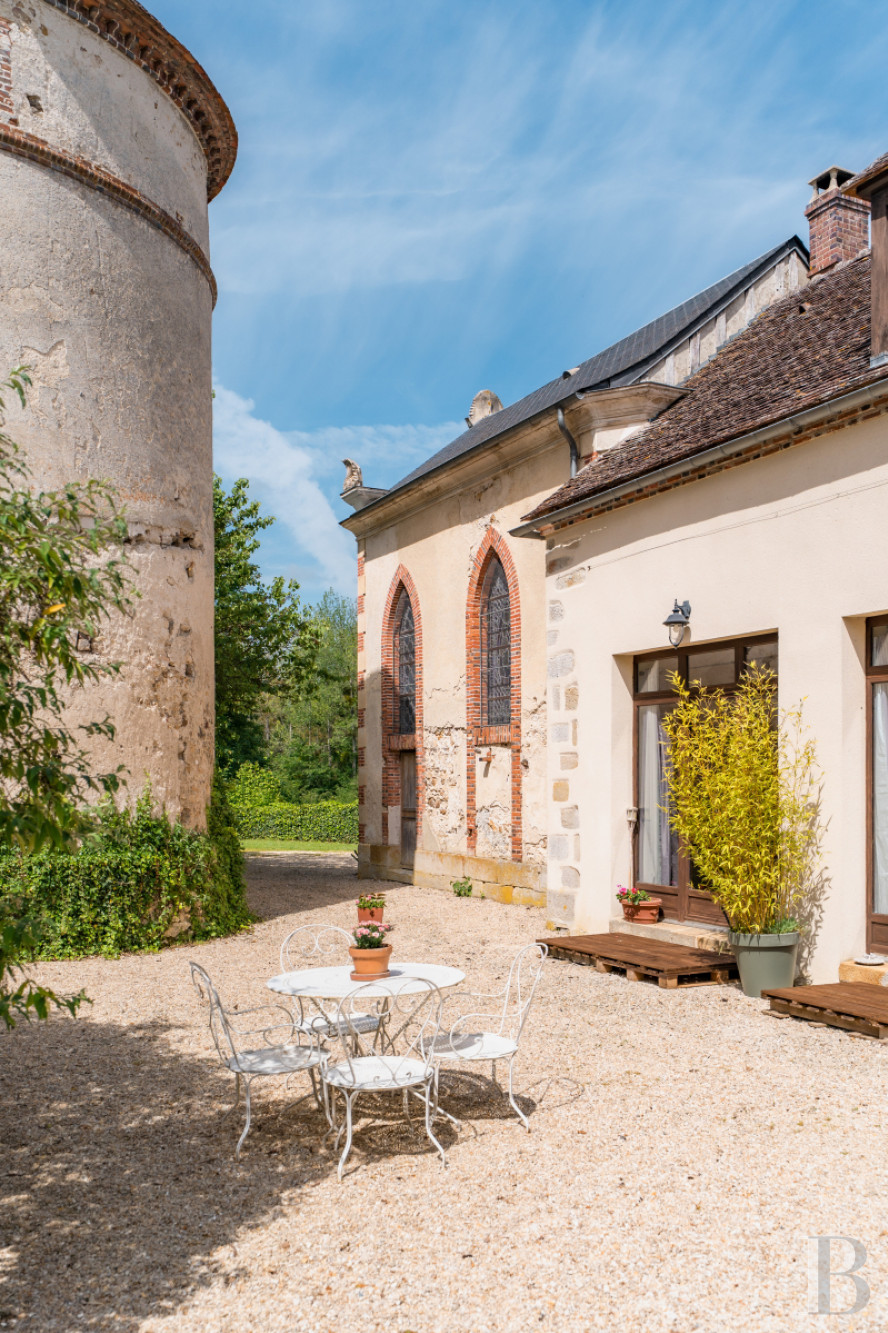
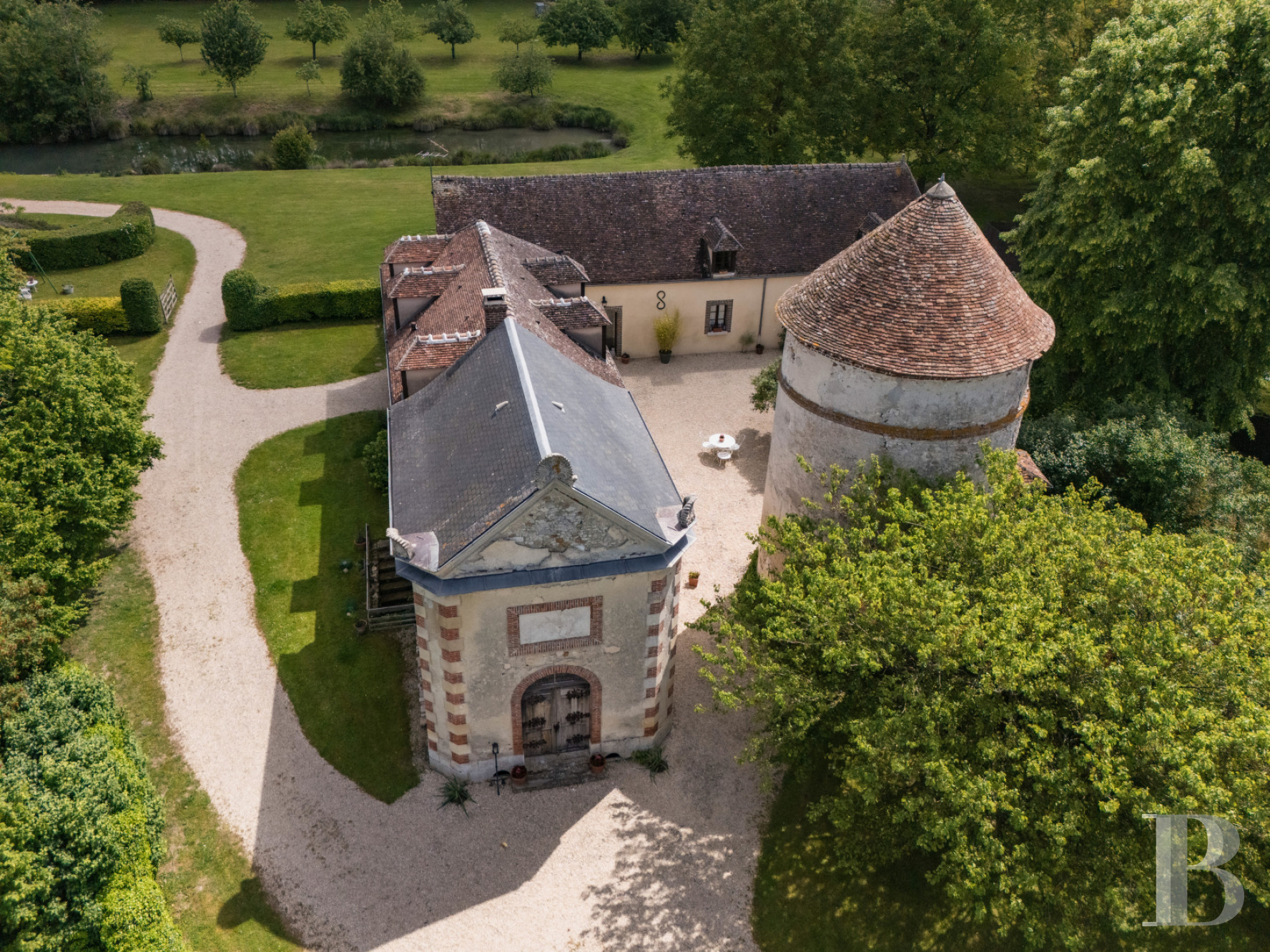
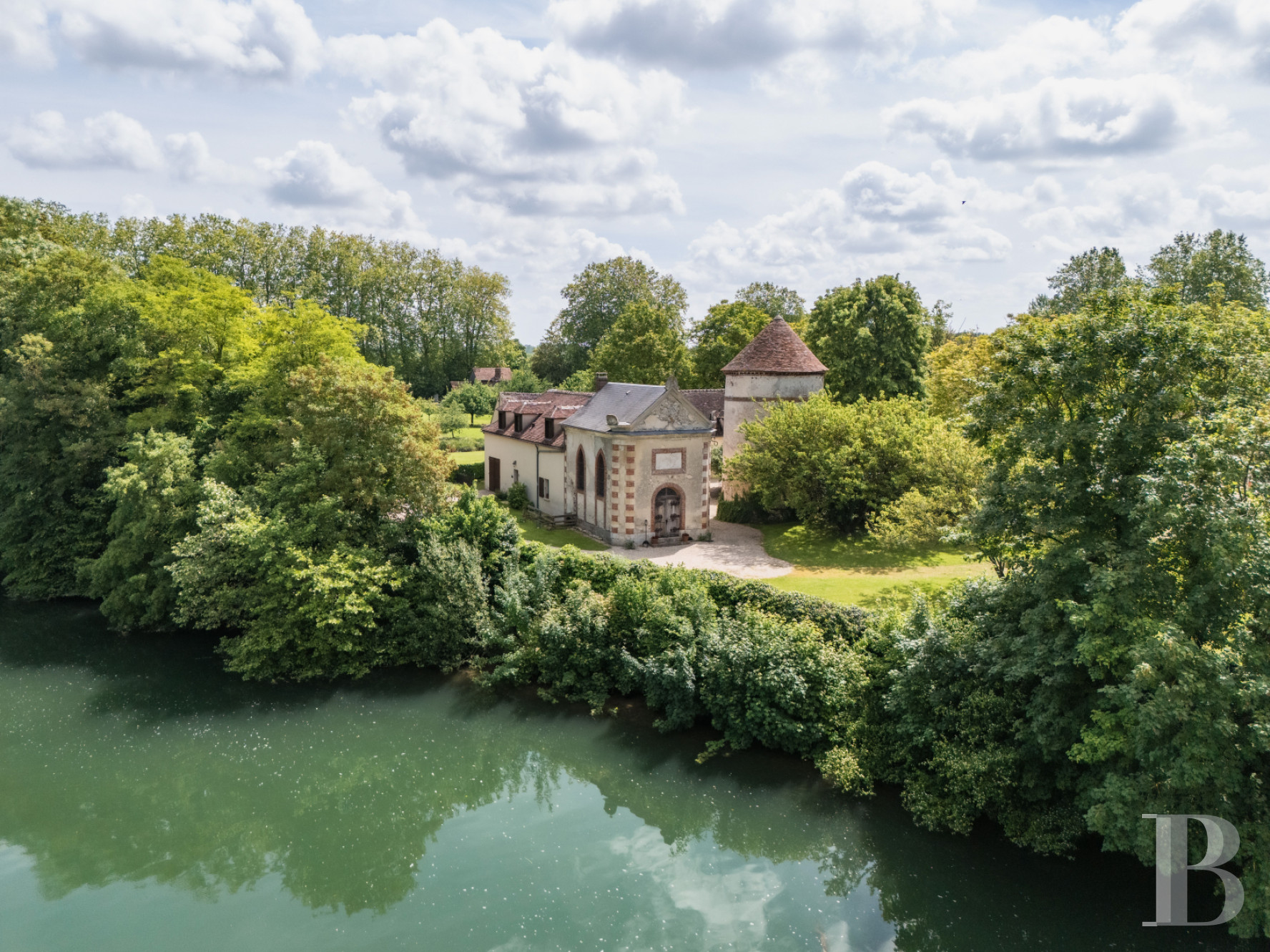
Today, the sale includes the chateau’s former outbuildings, featuring two perpendicular dwellings, the main one of which is extended by a chapel, located between the back of the grounds, bordered by the Seine on one side and the chateau on the other, and a gravel courtyard planted with trees, in the middle of which stands a former dovecote.
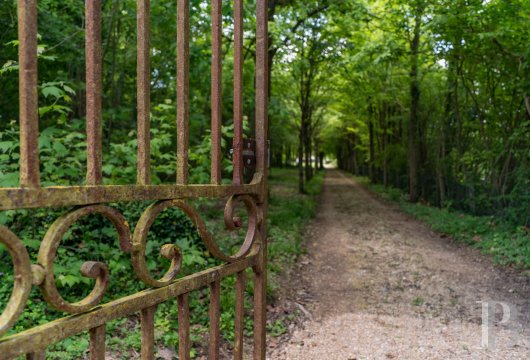
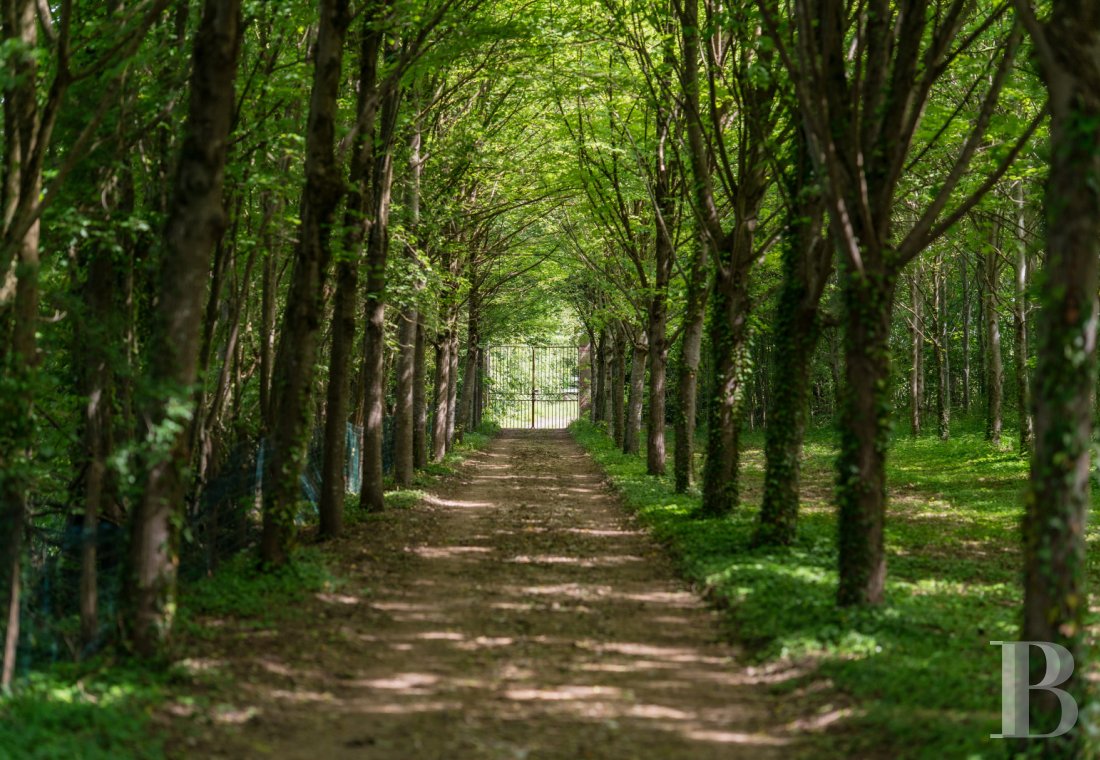
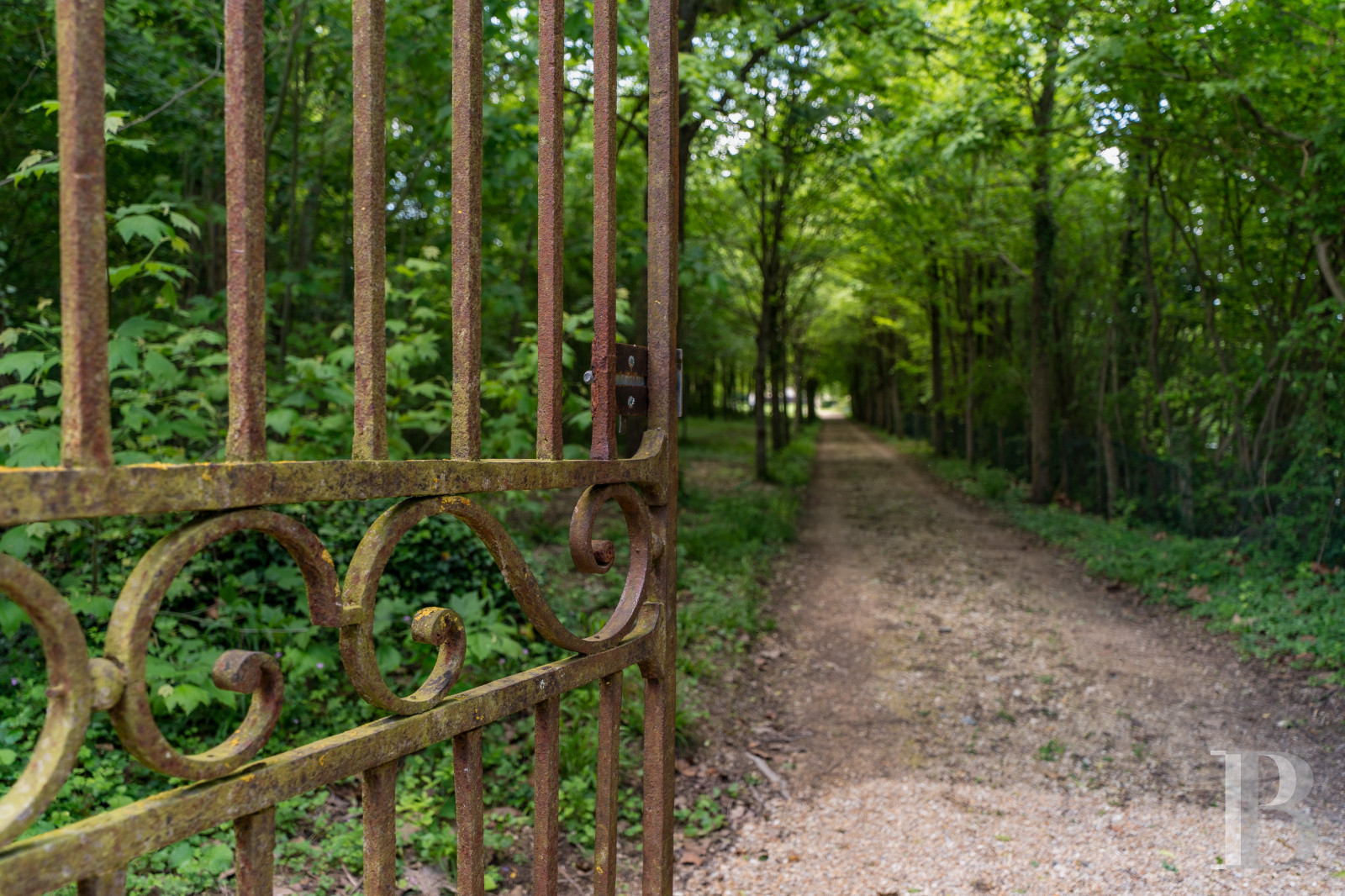
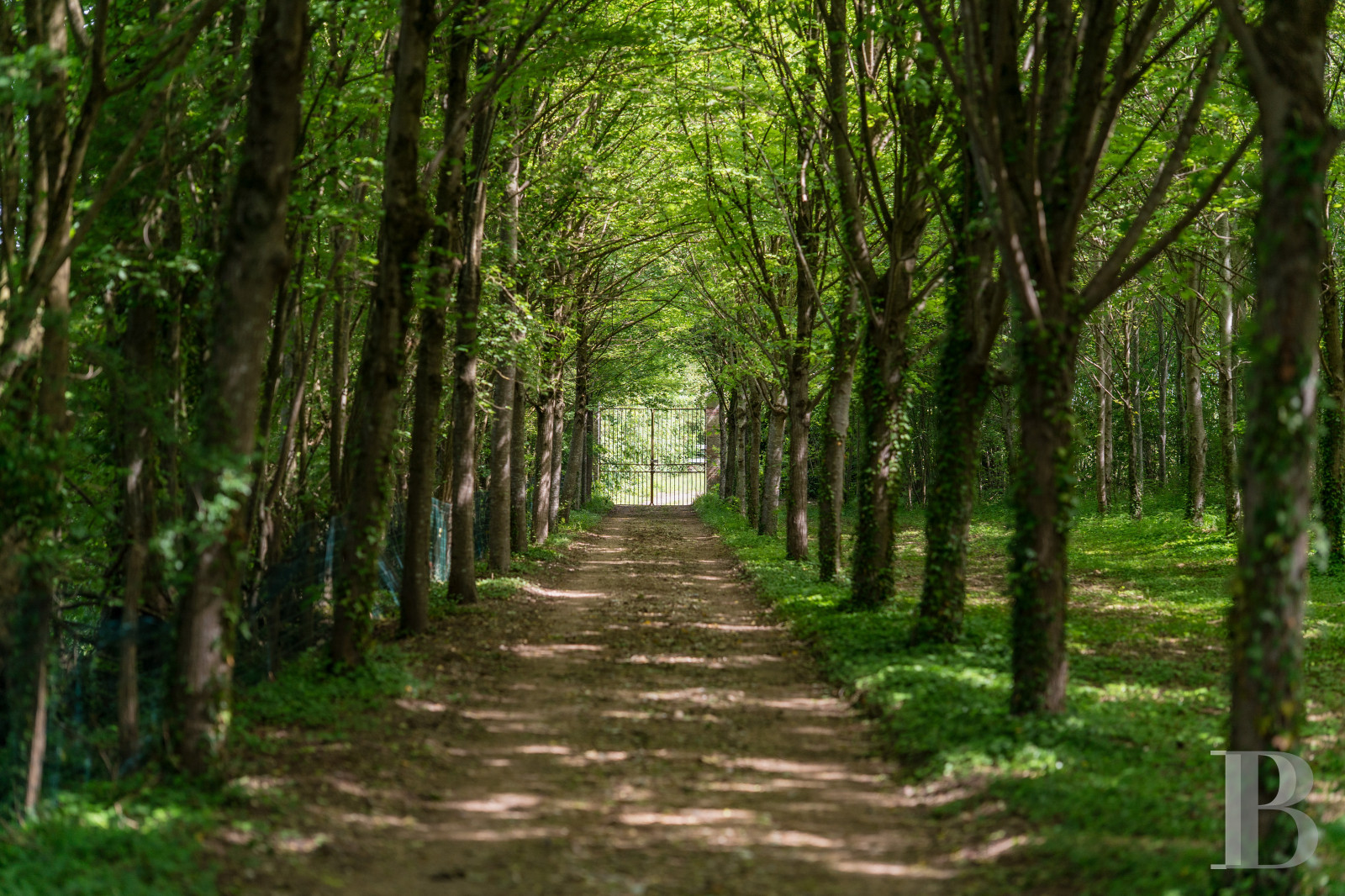
Towards the front of the property, along the banks of the Seine, two majestic drives are accessible from the road via double wrought-iron gates, while the main one, which once led to the chateau, is lined with apple trees and features a caretaker’s cottage to the right of its entrance, which has been converted into holiday accommodations.
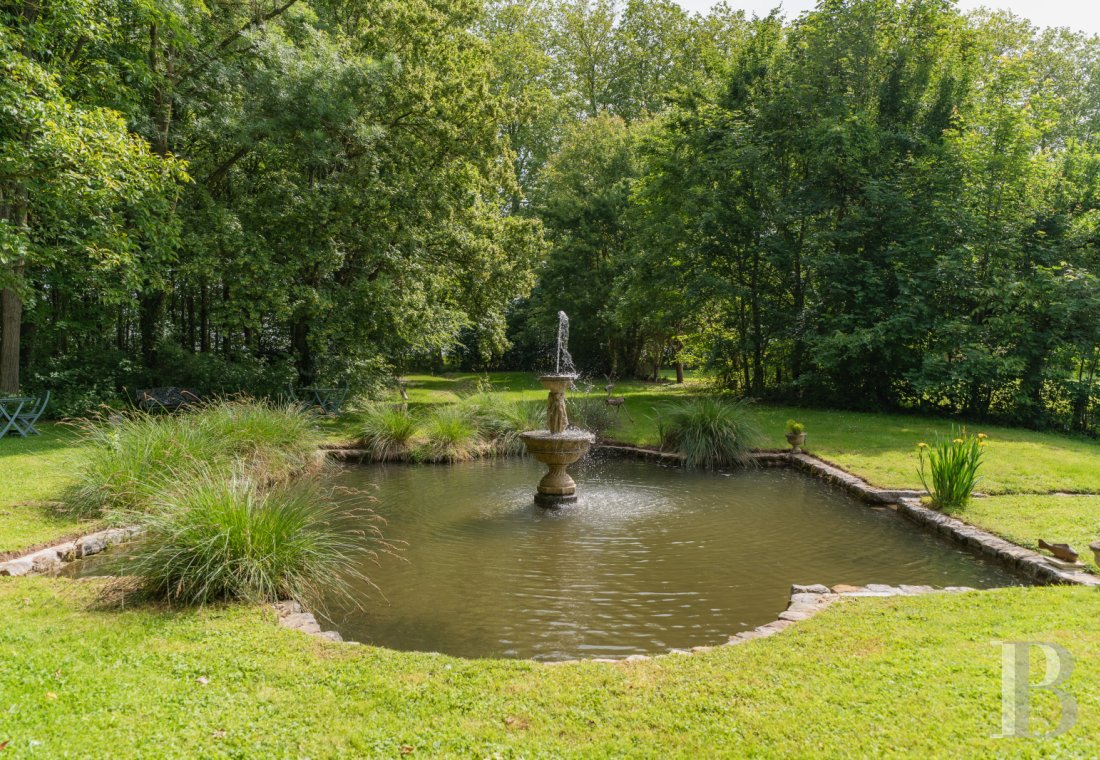
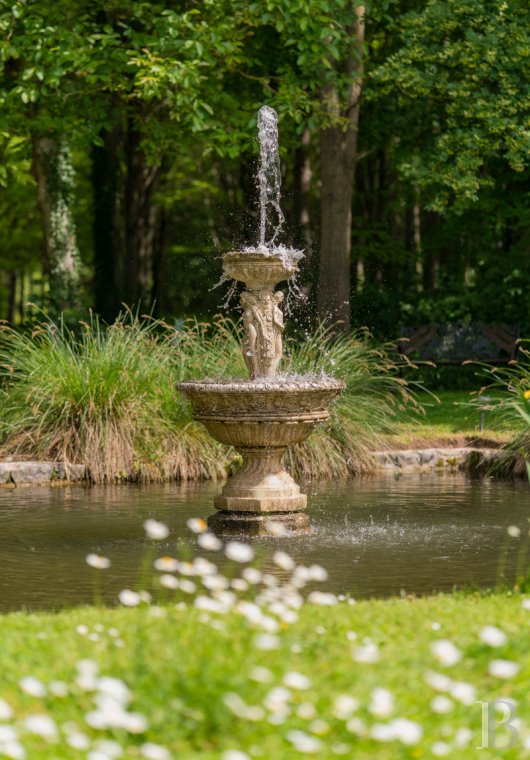
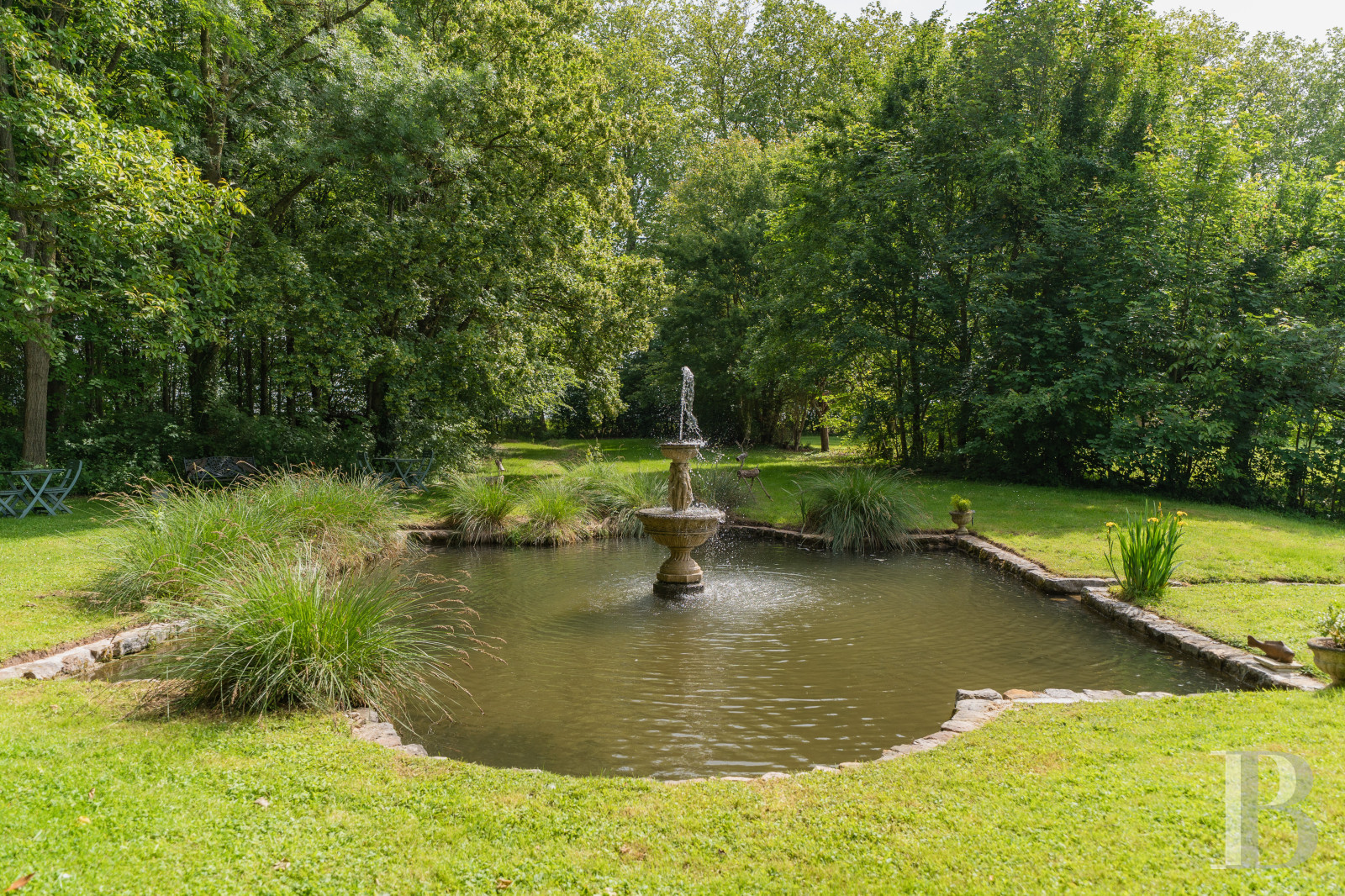
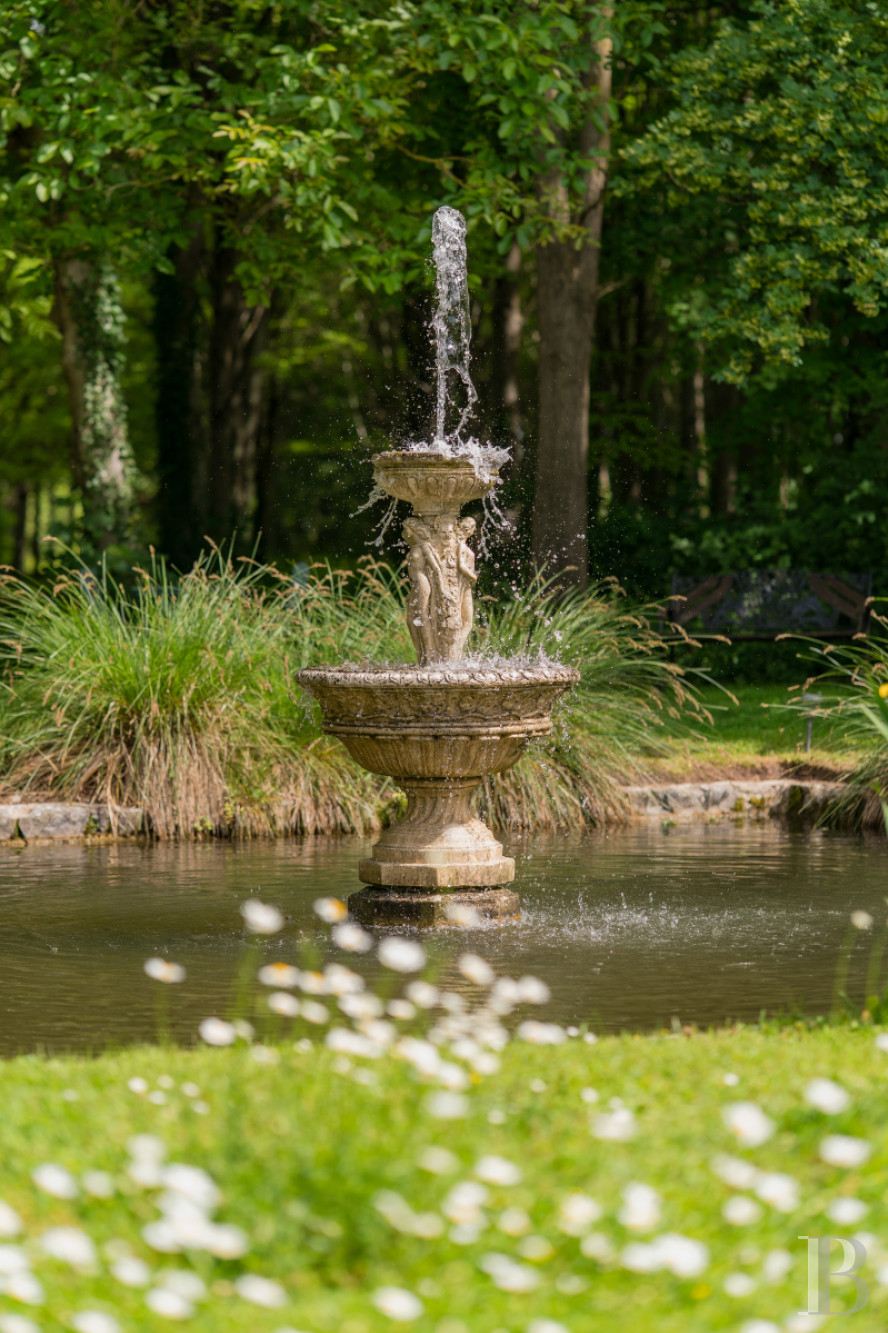
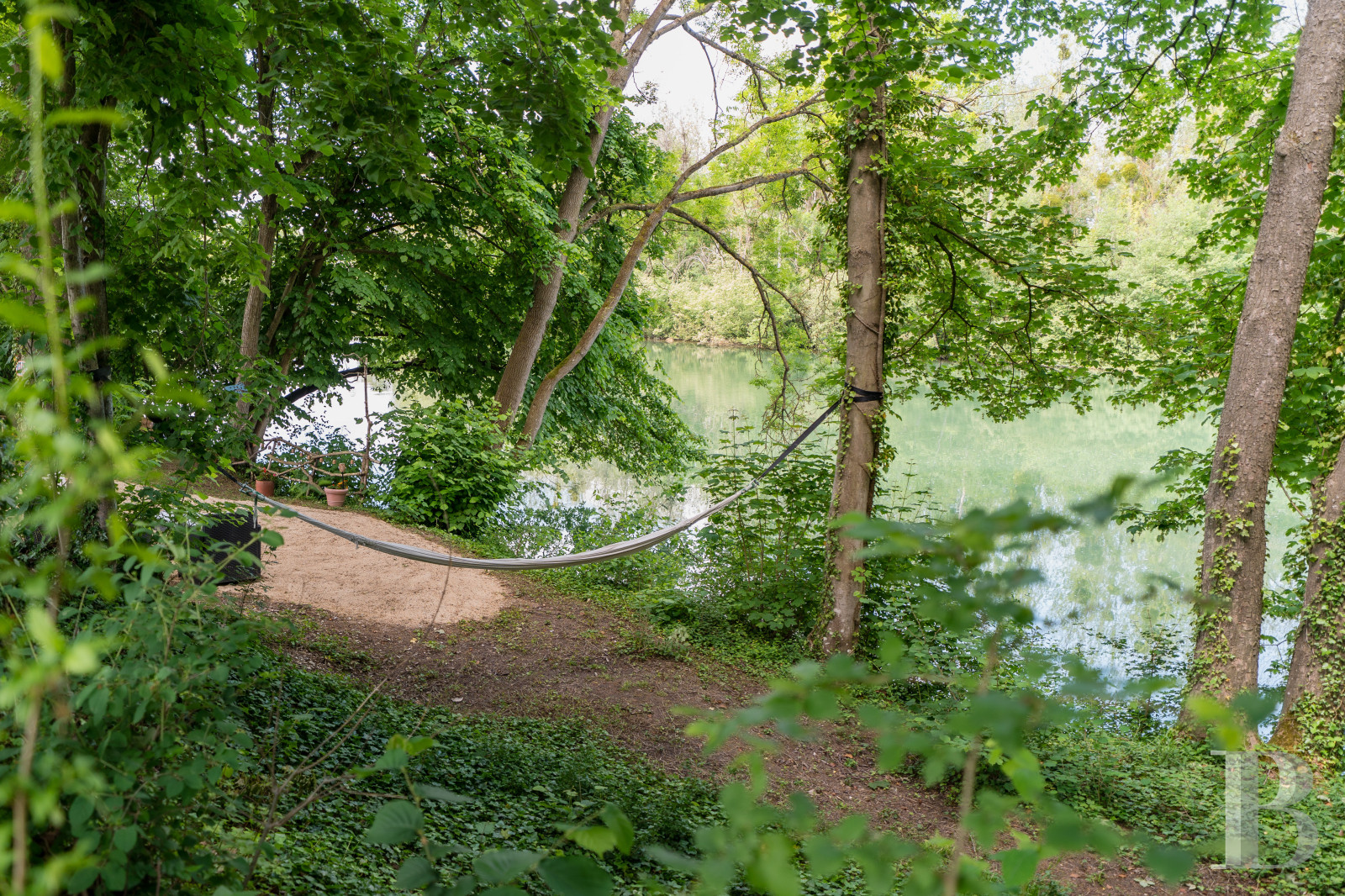
As for the other drive, more romantic in appearance, it is extended by a lane, lined with lime trees, and features, to the left, a wooded area next to an ornamental pond, whose cascading fountain accentuates the property’s overall elegance and beauty, whereas, on the other side, the lane runs parallel to the Seine and its small beach, safeguarded with a pedestrian door.
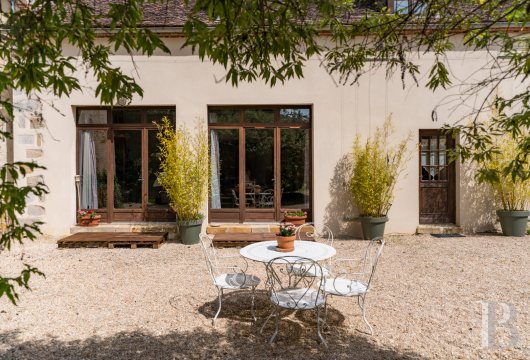
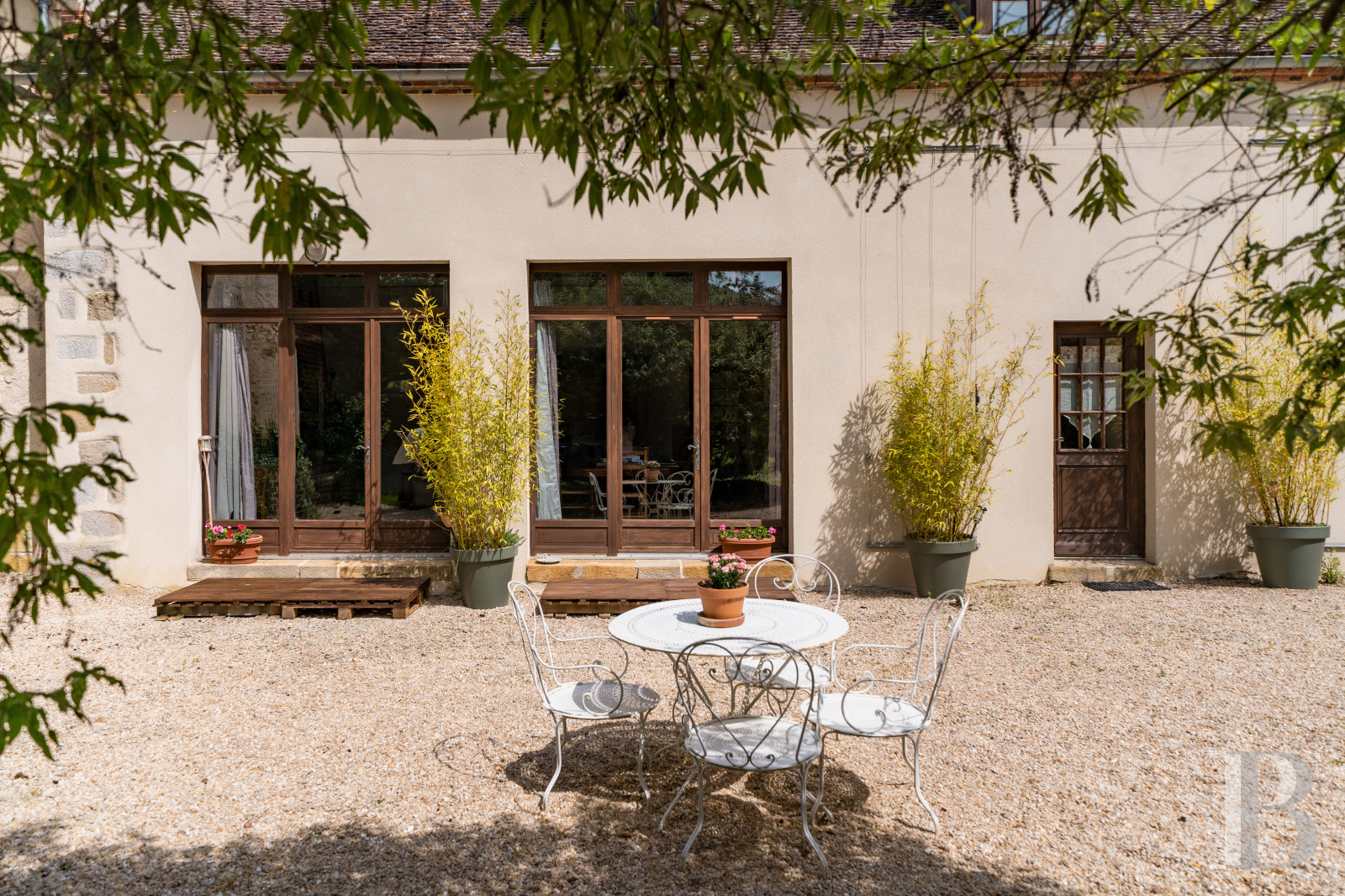
Separated from the chateau by fencing and bushy shrubs, the outbuildings include the chateau’s former 19th-century orangery, which has been turned into a two-storey main dwelling with roughcast-rendered stone exteriors and a flat tile three-sided roof punctuated by hipped dormer windows. Converted into holiday accommodations with two bedrooms, it boasts a functional and, yet charming, interior layout and faces south towards a courtyard/patio.
Lastly, the current two-storey guest cottage, built at a right angle to the orangery, is older than the latter since, in all likelihood, it was built in the 17th century, whereas its exteriors and roof are similar to that of the main dwelling and its windows, safeguarded by wooden shutters, are highlighted by brick window surrounds and arched lintels.
Rather long and asymmetrical, it seems narrower than the other building and has been designed with a trapezoidal shape on one end, while, given that this edifice was divided in half, it is accessible via two separate entrances and features a total of five bedrooms as well as the same number of bath/shower rooms.
Today, the sale includes the chateau’s former outbuildings, featuring two perpendicular dwellings, the main one of which is extended by a chapel, located between the back of the grounds, bordered by the Seine on one side and the chateau on the other, and a gravel courtyard planted with trees, in the middle of which stands a former dovecote.
Towards the front of the property, along the banks of the Seine, two majestic drives are accessible from the road via double wrought-iron gates, while the main one, which once led to the chateau, is lined with apple trees and features a caretaker’s cottage to the right of its entrance, which has been converted into holiday accommodations.
As for the other drive, more romantic in appearance, it is extended by a lane, lined with lime trees, and features, to the left, a wooded area next to an ornamental pond, whose cascading fountain accentuates the property’s overall elegance and beauty, whereas, on the other side, the lane runs parallel to the Seine and its small beach, safeguarded with a pedestrian door.
Separated from the chateau by fencing and bushy shrubs, the outbuildings include the chateau’s former 19th-century orangery, which has been turned into a two-storey main dwelling with roughcast-rendered stone exteriors and a flat tile three-sided roof punctuated by hipped dormer windows. Converted into holiday accommodations with two bedrooms, it boasts a functional and, yet charming, interior layout and faces south towards a courtyard/patio.
Lastly, the current two-storey guest cottage, built at a right angle to the orangery, is older than the latter since, in all likelihood, it was built in the 17th century, whereas its exteriors and roof are similar to that of the main dwelling and its windows, safeguarded by wooden shutters, are highlighted by brick window surrounds and arched lintels.
Rather long and asymmetrical, it seems narrower than the other building and has been designed with a trapezoidal shape on one end, while, given that this edifice was divided in half, it is accessible via two separate entrances and features a total of five bedrooms as well as the same number of bath/shower rooms.
The Dwelling
The ground floor
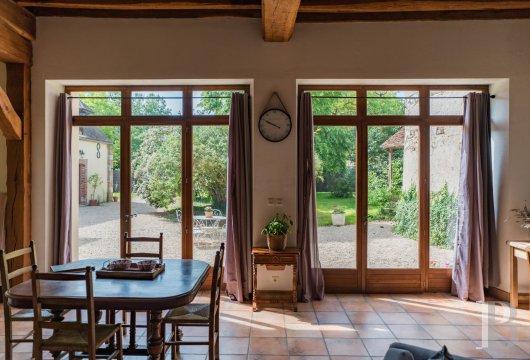
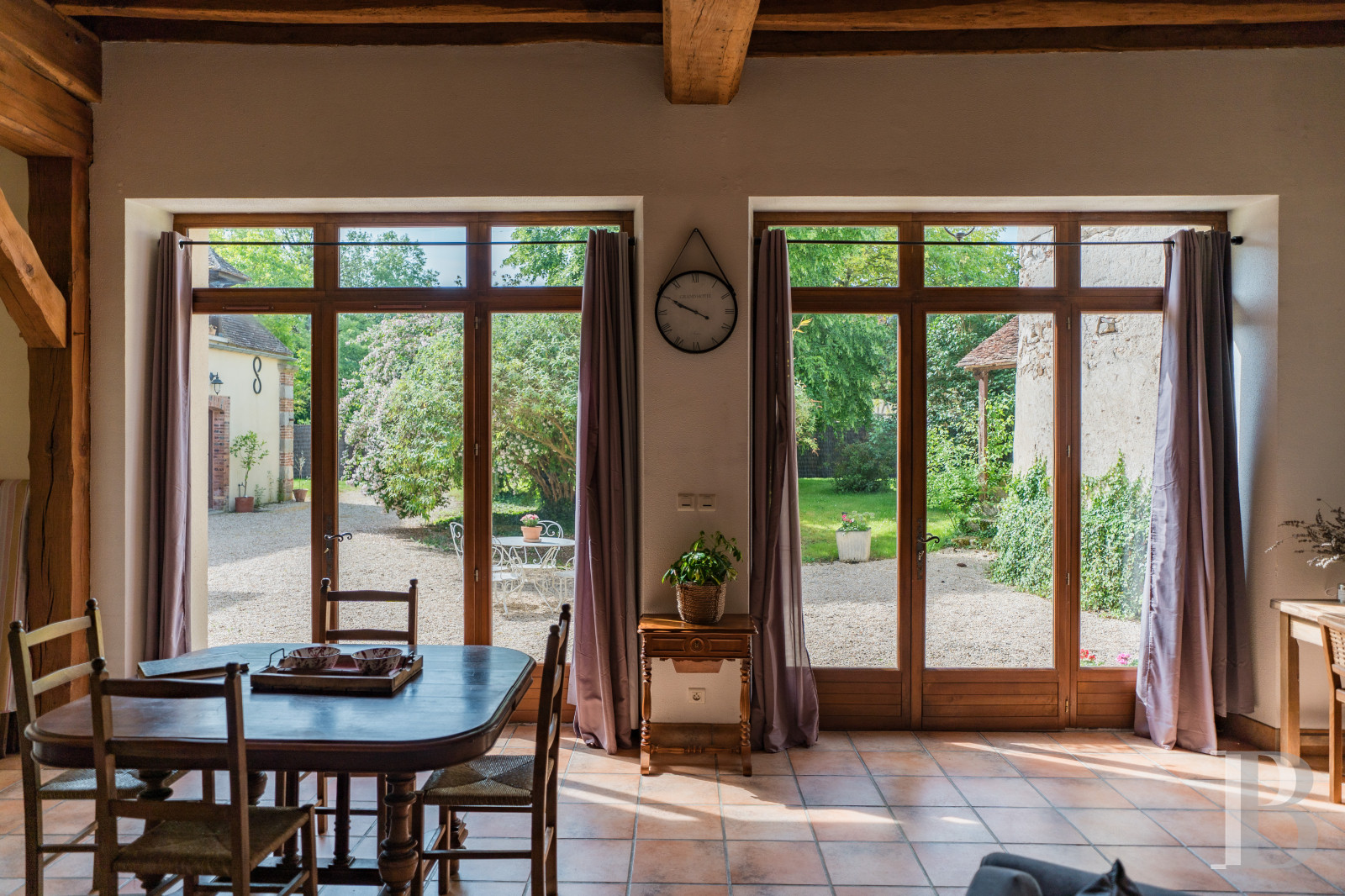
The main entrance, facing the Seine, opens on to a dual-aspect foyer with terracotta floor tiles, which provides access to a lavatory with a washbasin, a machine room, a garage-workshop with a garage door and window, as well as a living room with an open kitchen. With terracotta floor tiles, visible natural wood ceiling beams and joists, an immense brick fireplace with a wood-burning stove provides significant heat for this room come winter, while two large picture windows, facing fully south, guarantee abundant natural light in any season.
The upstairs
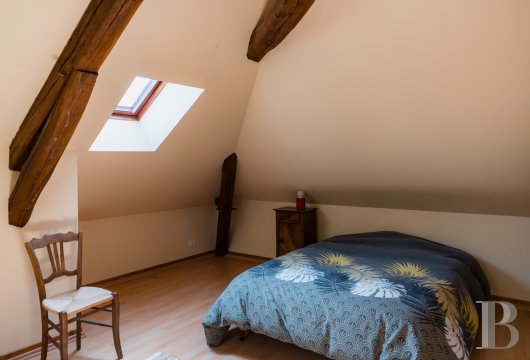
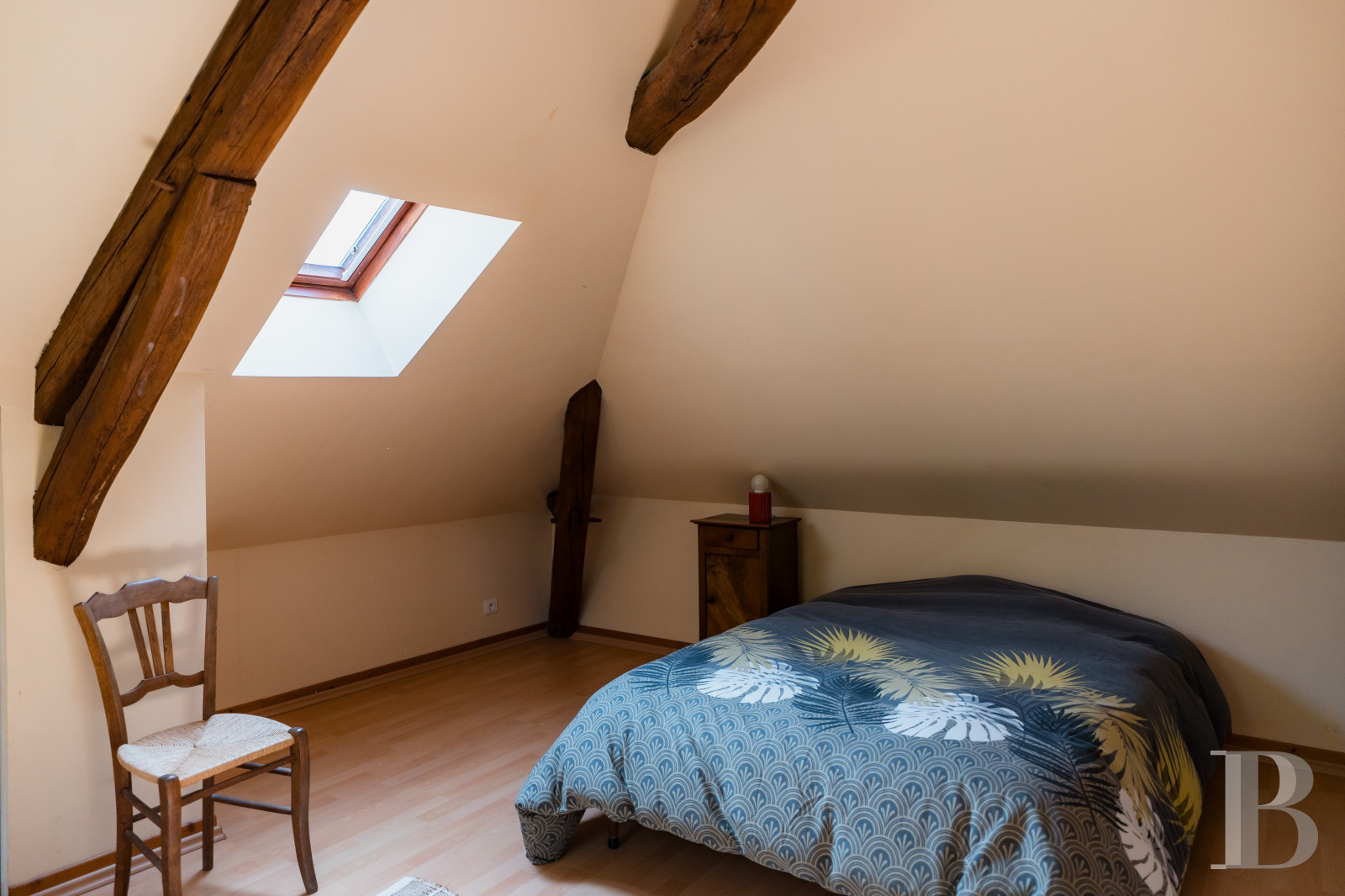
Located under the eaves, the landing provides access, on the right, to an immense bedroom, bathed in light by a skylight as well as a window, while the room also comes with a cupboard as well as visible ceiling beams. Facing the landing, there is a shower room, with views of the Seine, as well as a lavatory, whereas, to the left, a small corridor provides access, on one side, to a lavatory followed by a bathroom and, on the other, to a room used as a guest bedroom or a study. Lastly, at the end of the hallway there is a second bedroom with a window and a cupboard.
The Guest Cottage
The ground floor
A tiled foyer provides access to a lavatory with a washbasin as well as a living room with a kitchen area, while windows and glass double doors create a harmonious dialogue between the dwelling’s interior and exterior.
Accessible via a separate entrance followed by a charming staircase with terracotta tile steps, highlighted with oak wooden nosing and safeguarded by an elegant bannister constructed out of the same material, a bedroom features an immense cupboard as well as its own shower room and lavatory. As for the other bedroom, located in the former stables, it has preserved the charm of its original vocation, as demonstrated by a stunning pointed stone wall, whereas a shower room as well as a lavatory provide additional utility for this level.
The upstairs
Located above the breakfast room, this level includes two bedrooms arranged in a perfectly symmetrical configuration, while each one comes with its own private bathroom and lavatory that have been designed with a particularly logical and functional layout. As for the upper floor in the second half of the dwelling, it features a fifth bedroom with its own bathroom and lavatory.
The Chapel
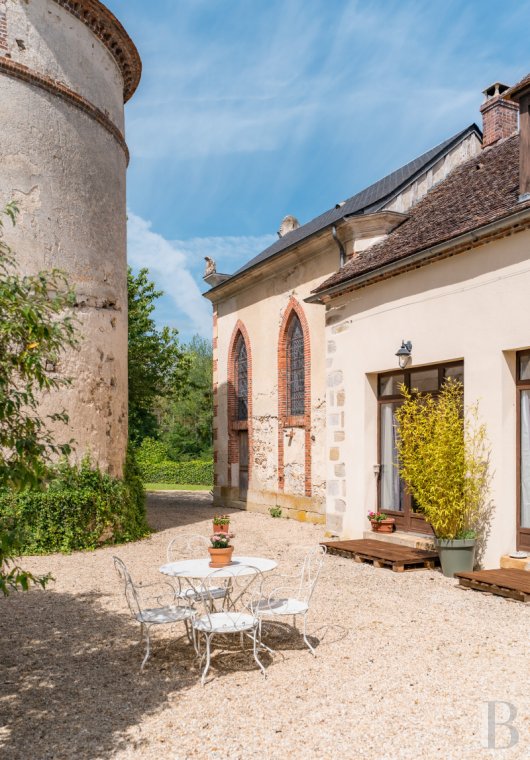
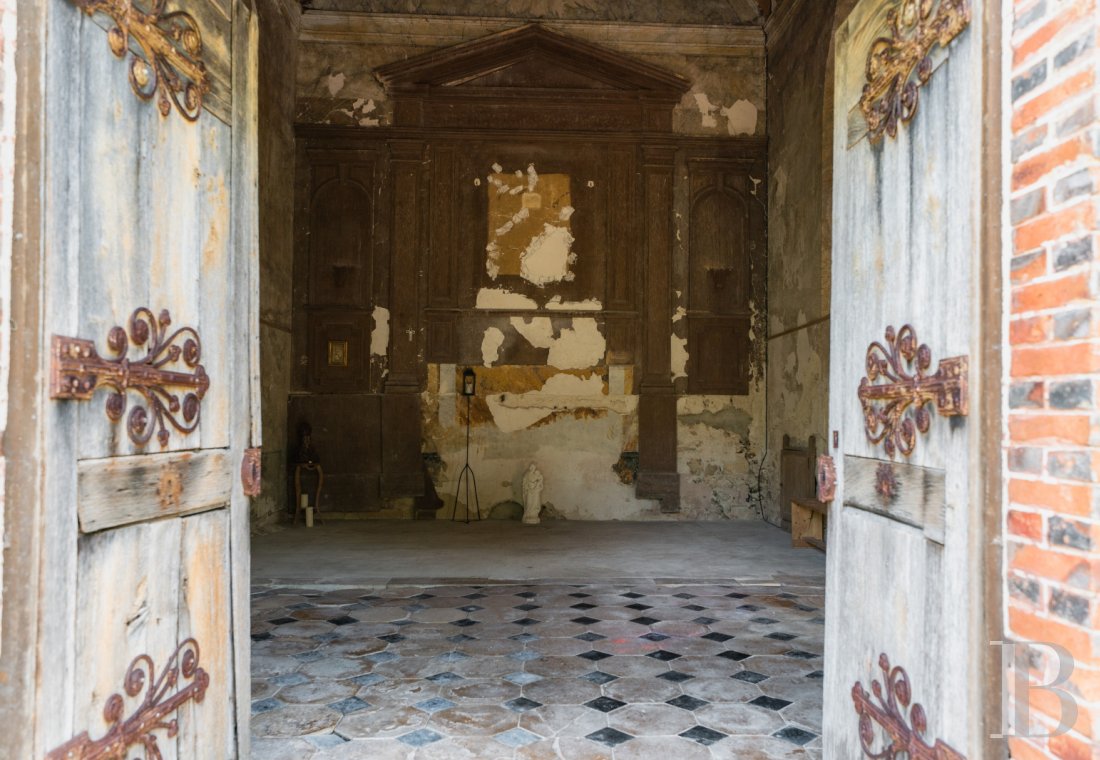
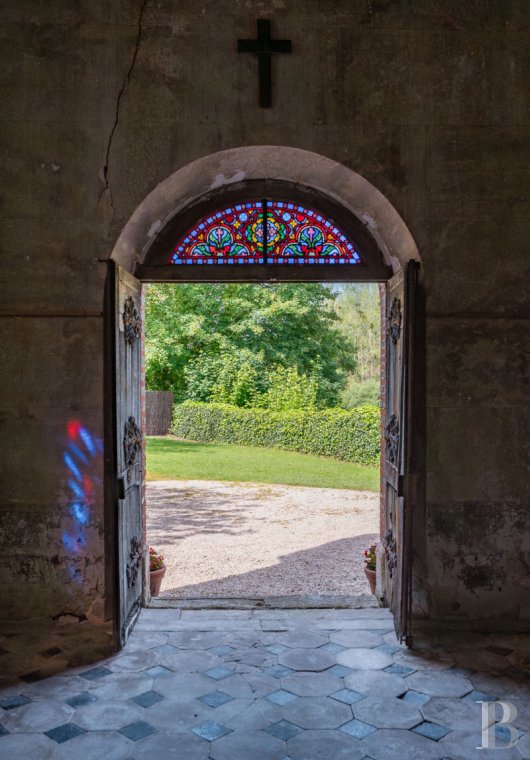
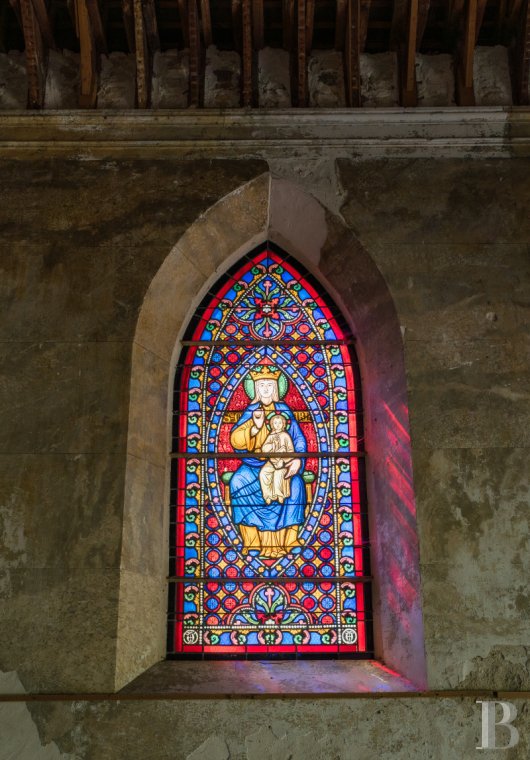
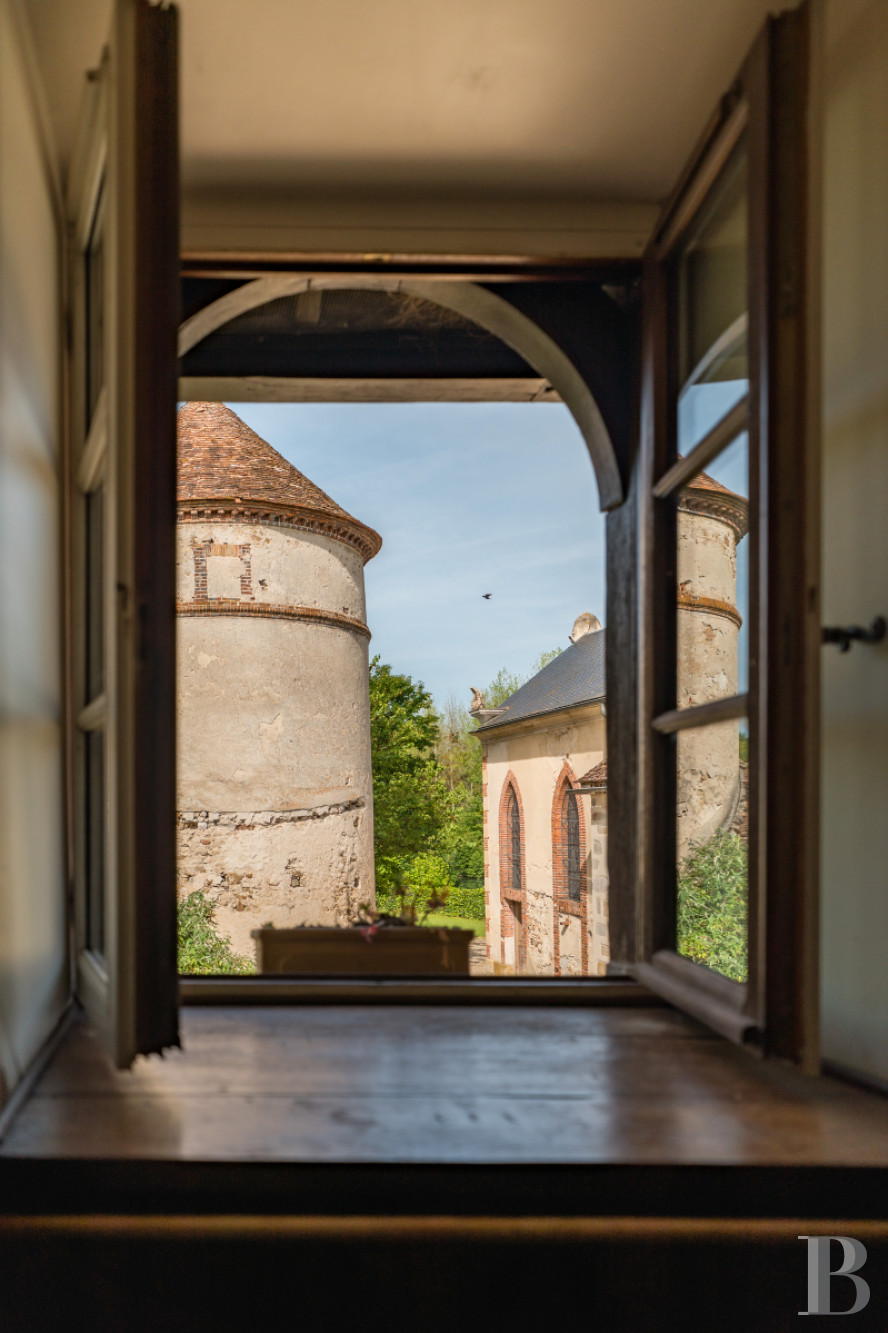
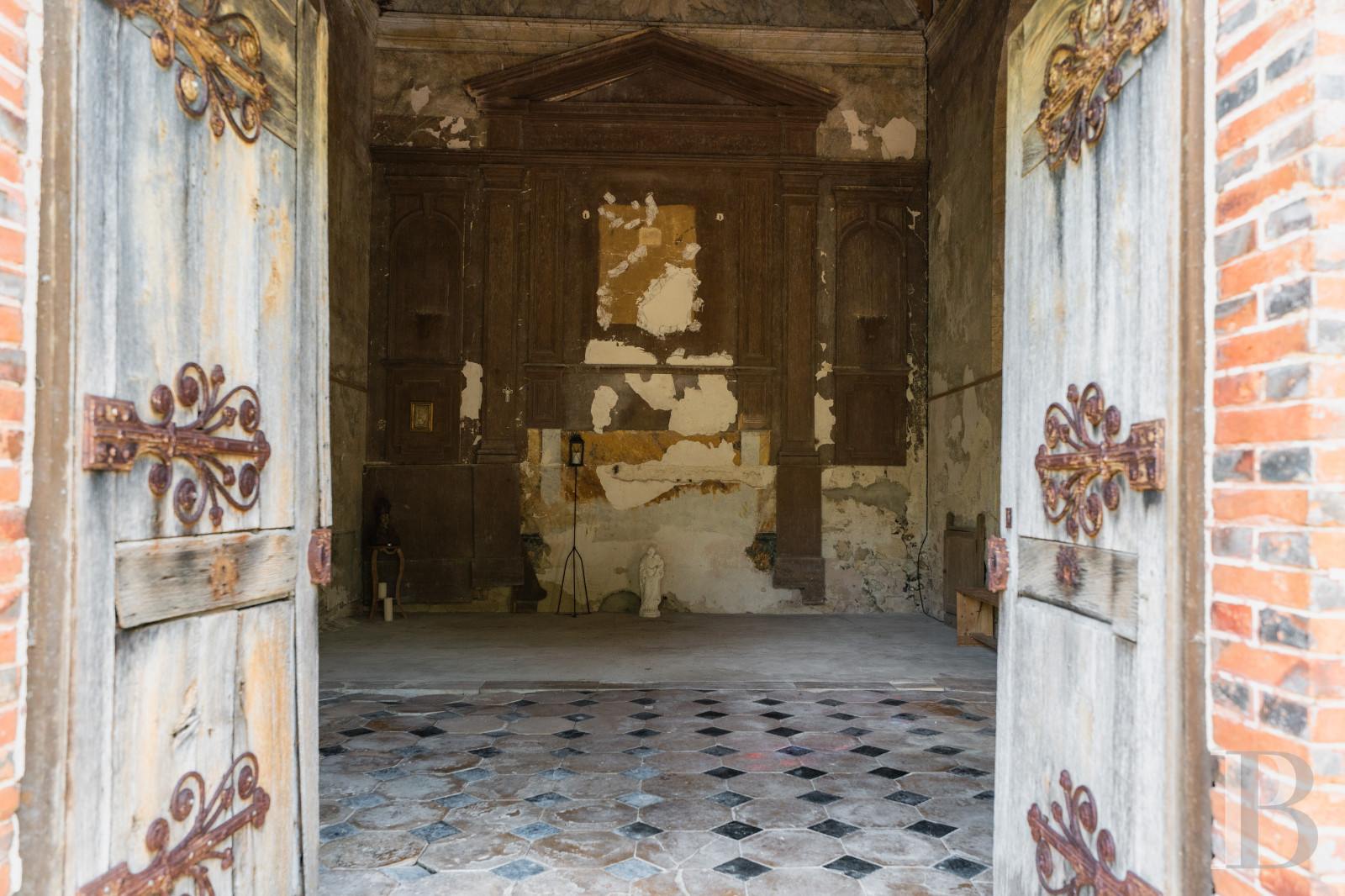
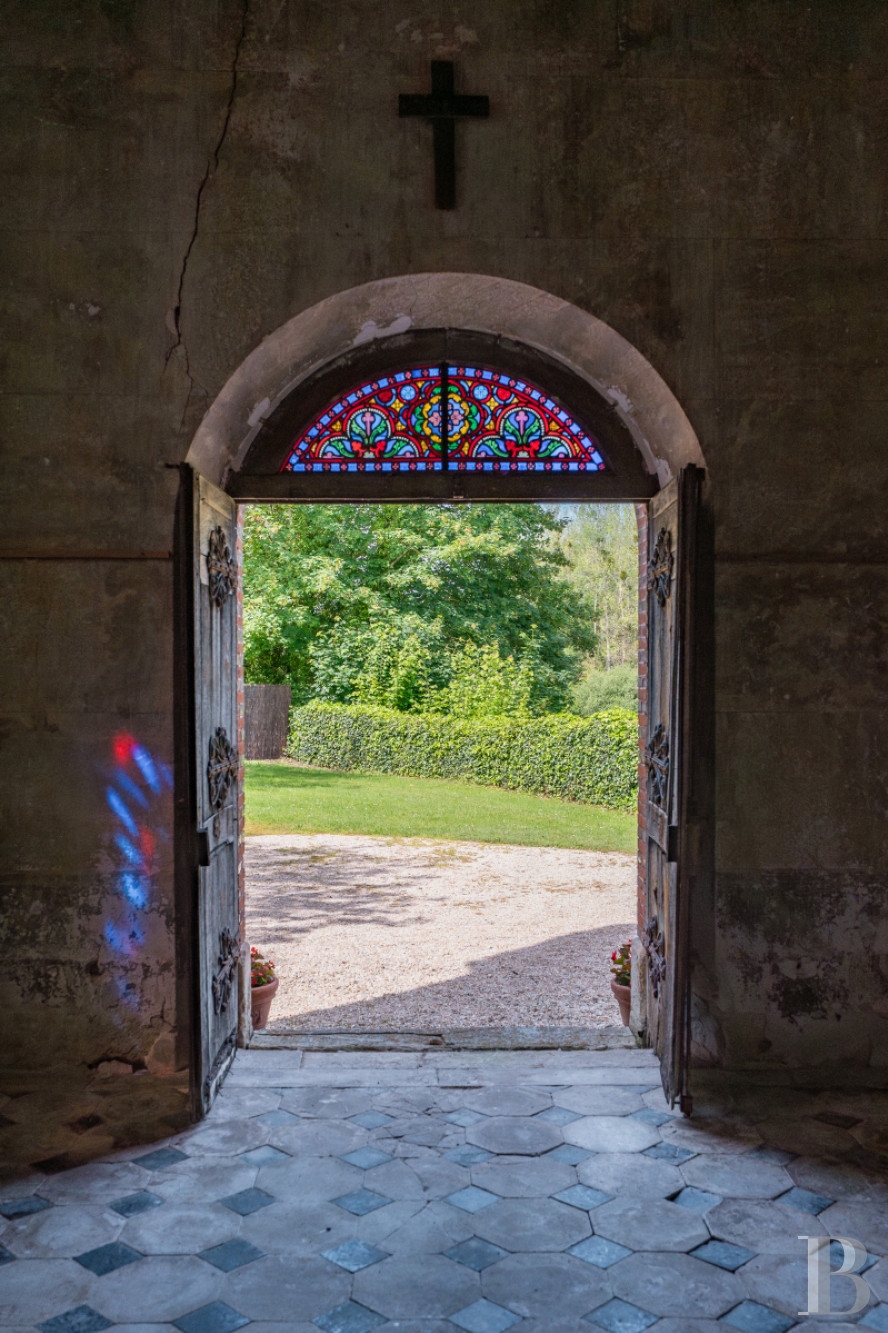
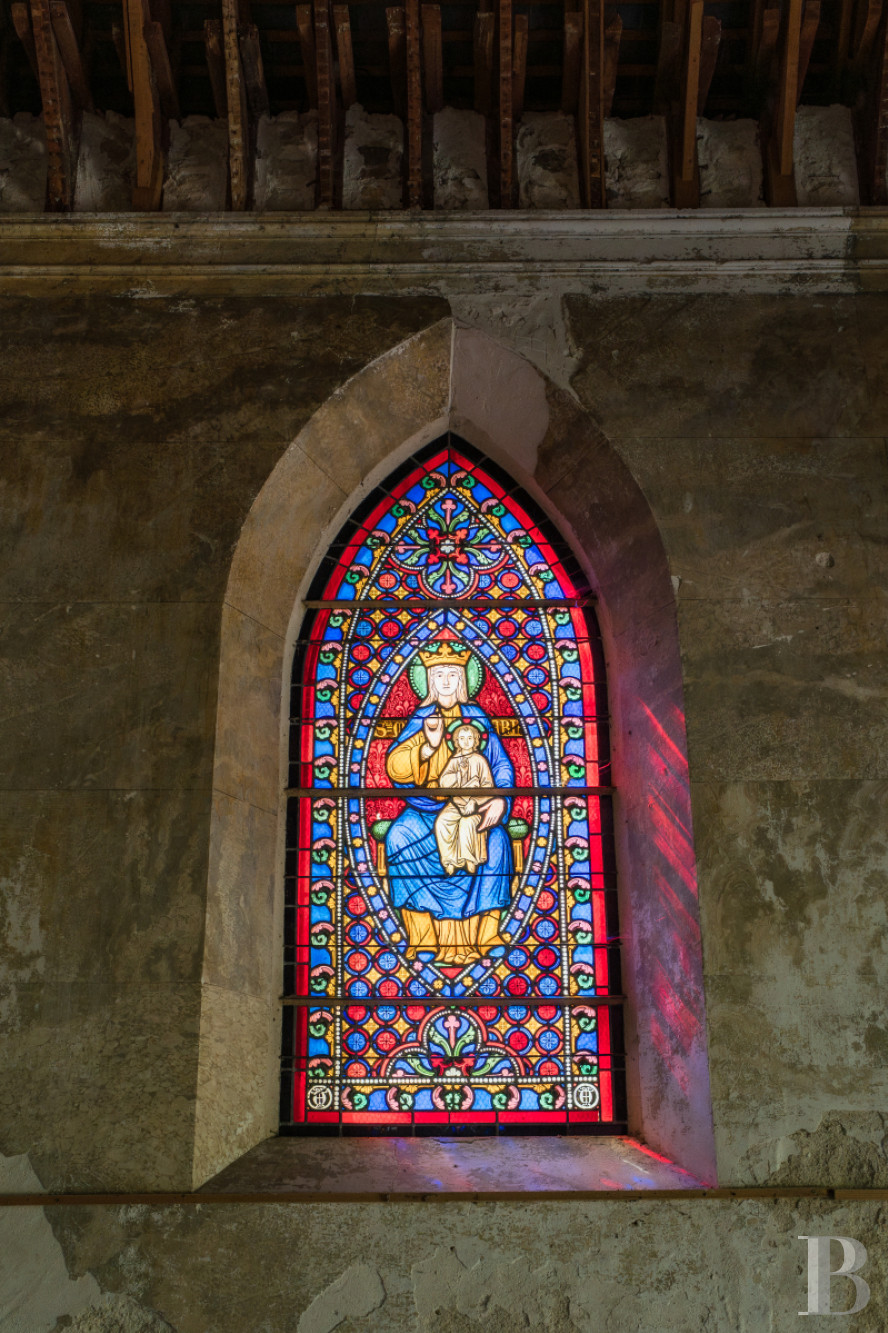
Built in the 17th century, it features stone façades, highlighted by quoins alternating between brick and stone, while its slate roof was recently redone. Accessible via oak double doors decorated with wrought iron details and topped with an arched fanlight with leaded stained glass, the chapel is bathed in light thanks to four restored stained glass windows from the 19th century, depicting, in particular, the Virgin with Child and Christ, while the interior, whose floor area reaches nearly 40 m², is crowned with ribbed vaults. With cabochon tile floors, the chapel will require a full restoration and, specifically, its painted wooden nave, whereas, lastly, a stone vaulted cellar is located under the chapel.
The Dovecote
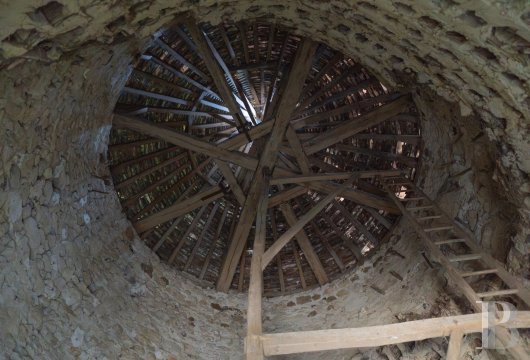
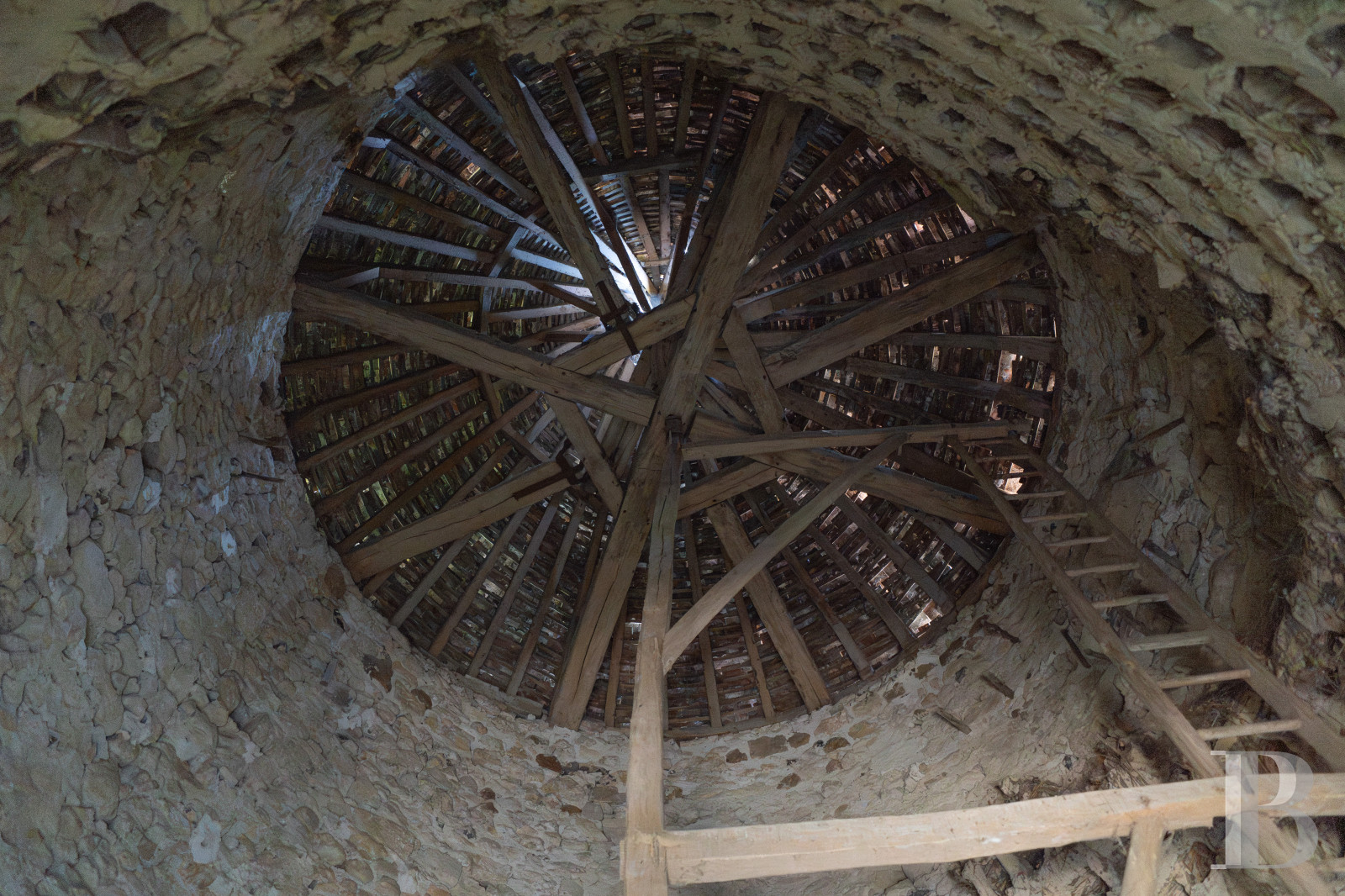
Circular in shape, entirely coated in plaster and topped with a flat tile pepperpot roof, it dates back to the 16th and 17th centuries. Encircled by a ring of bricks on its upper section resembling its denticulated cornice, which, located slightly above, highlights the roofline, the dovecote’s interior boasts a diameter of more than four metres, a floor-to-ceiling height of almost seven metres and a total floor area of approximately 13 m², while its rafters have been left visible as has its rubble stone walls.
The Caretaker's Cottage
To the right of the property’s entrance, a caretaker’s cottage, more recently constructed, features stone exteriors partially covered in wood cladding and a tile roof, while the dwelling is accessible via a conservatory, of approximately 18 m², with terracotta floor tiles. The latter opens on to a dual-aspect living area, of more than 20 m², with a sitting room, a dining room and an open kitchen, which features visible ceiling beams and joists as well as hexagonal terracotta floor tiles, whereas a pellet and wood-burning stove not only provides heat for this room, but is also used for cooking meals.
With storage cupboards under the staircase, the latter provides access to the upstairs level, which includes a bedroom, of approximately 17 m², as well as a shower room with a lavatory and an attic space, while, currently operated as a holiday cottage, this dwelling represents additional self-contained accommodations for the property.
The Grounds
With approximately three hectares, enclosed by walls, wire fencing and trellises, they feature woods, a meadow as well as a number of bodies of water, including a pond fed by the river, the latter of which also fills the moats that encircle a portion of the current estate and the totality of the former, larger property. A variety of fish, such as carps and rutilus roaches, can be seen enjoying these waters, whereas Canadian geese and wild ducks also frequent these bodies of water throughout the year.
As for the grounds, parts of which are covered in gravel, lawn or trees, they are planted with limes, hornbeams and maples as well as individual specimens (sycamore, ash, walnut, acacia, oak, beech, hazelnut, alder and black locust), while a row of apple trees lines the formal drive that once led to the chateau.
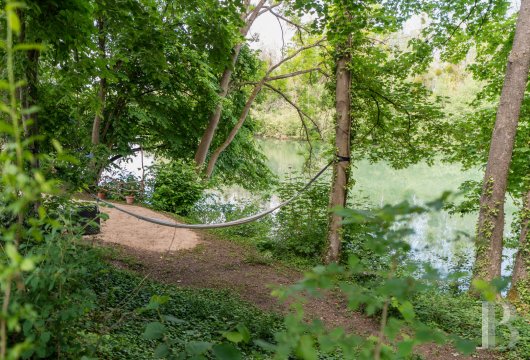
Lastly, the other secondary lane also provides a stunning entrance to the property given its location next to the Seine, whereas a small beach, where the current occupants created an open-air café, is the perfect place to admire these lovely waters.
Our opinion
Ideal as a rental property or as multipurpose tourist accommodations for a weekend or a longer getaway, as it is currently operated, this versatile and distinguished estate is easily accessible for visitors thanks to the road, bordering the grounds on one side, but set far enough away from the dwellings so as not to disturb them with its variable traffic.
Witnesses to past splendours, the property’s pond, moats and grand avenues are an invitation for bucolic strolls, whereas on the Seine side of the property, with its small beach, one is immersed in complete peace and quiet, under the watchful gaze of the chapel and cadenced by the gentle sounds of lapping water, which is only disrupted by the occasional passing barge.
As for the chateau and farm, which still exist today, they are well separated from the estate and belong to a religious congregation whose peaceful pacifism is emblematic of the site itself, while here everything seems slower and more relaxing, like a sort of sanctuary from the frenetic pace of everyday life.
Reference 463749
| Land registry surface area | 3 ha 19 a 55 ca |
| Main building floor area | 89 m² |
| Number of bedrooms | 3 |
| Outbuildings floor area | 270 m² |
| including refurbished area | 220 m² |
French Energy Performance Diagnosis
Information on the risks to which this property is exposed is available on the website: www.georisques.gouv.fr
Share


NB: The above information is not only the result of our visit to the property; it is also based on information provided by the current owner. It is by no means comprehensive or strictly accurate especially where surface areas and construction dates are concerned. We cannot, therefore, be held liable for any misrepresentation.