



A chateau with a cone-roofed tower and old winemaking outhouses,
nestled in France’s Beaujolais winegrowing area near the city of Lyon
nestled in France’s Beaujolais winegrowing area near the city of Lyon
Belleville-en-Beaujolais,
RHONE
rhones-alps
69220
FR

Location
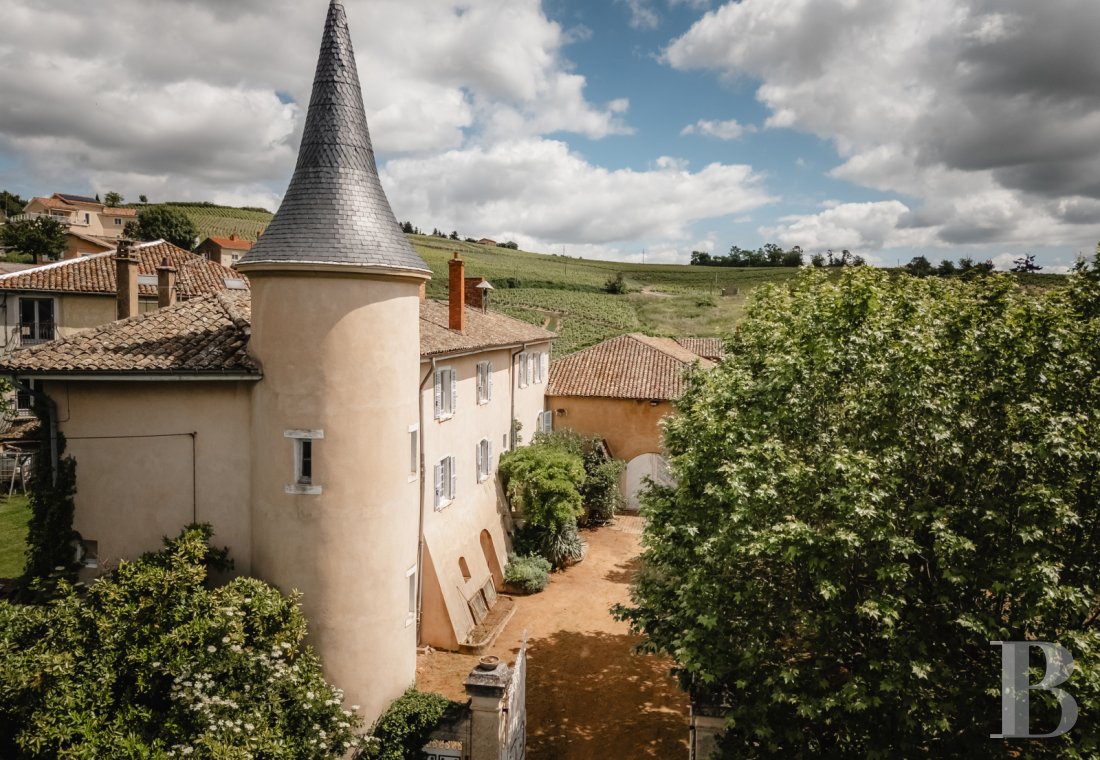
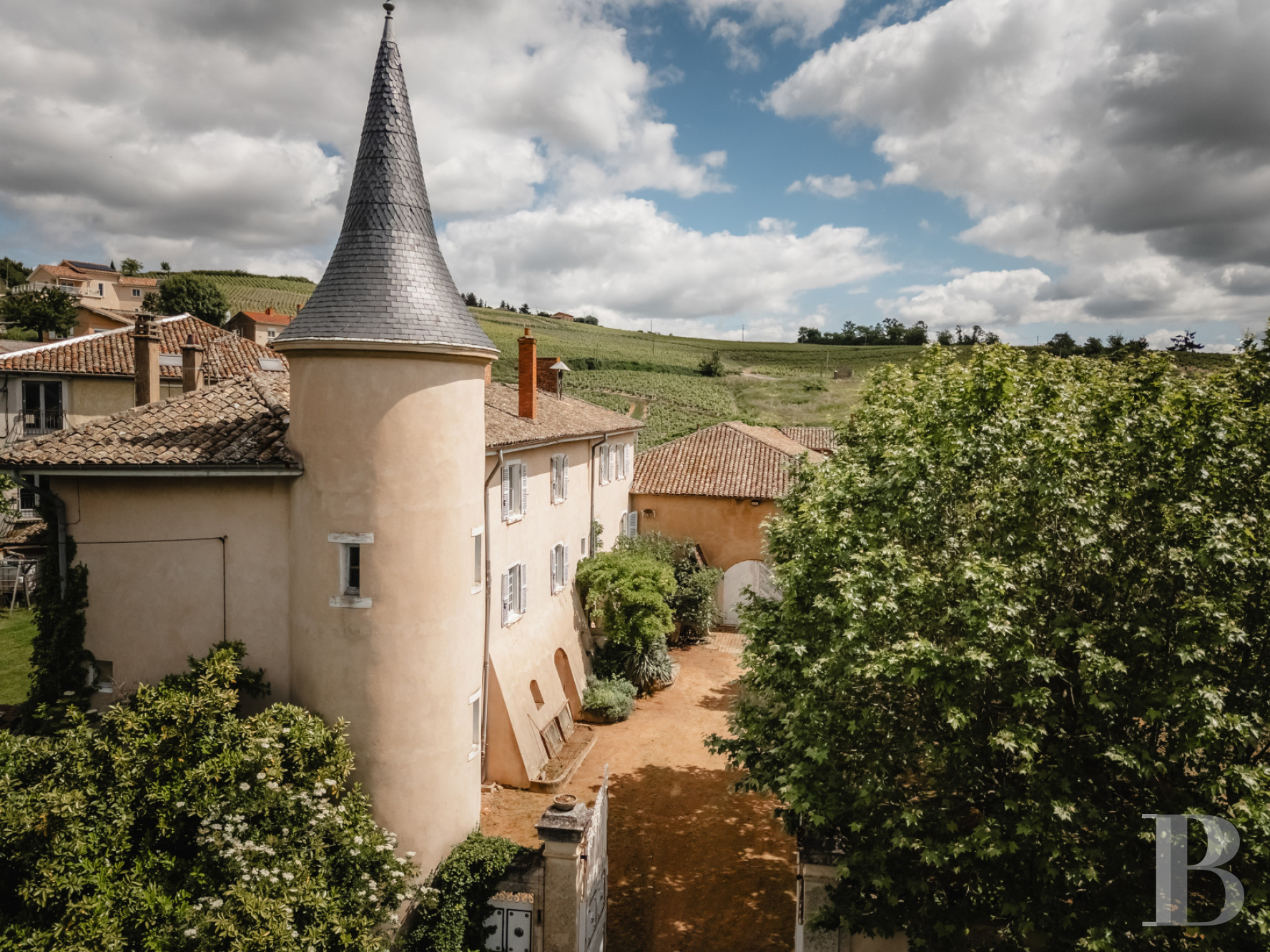
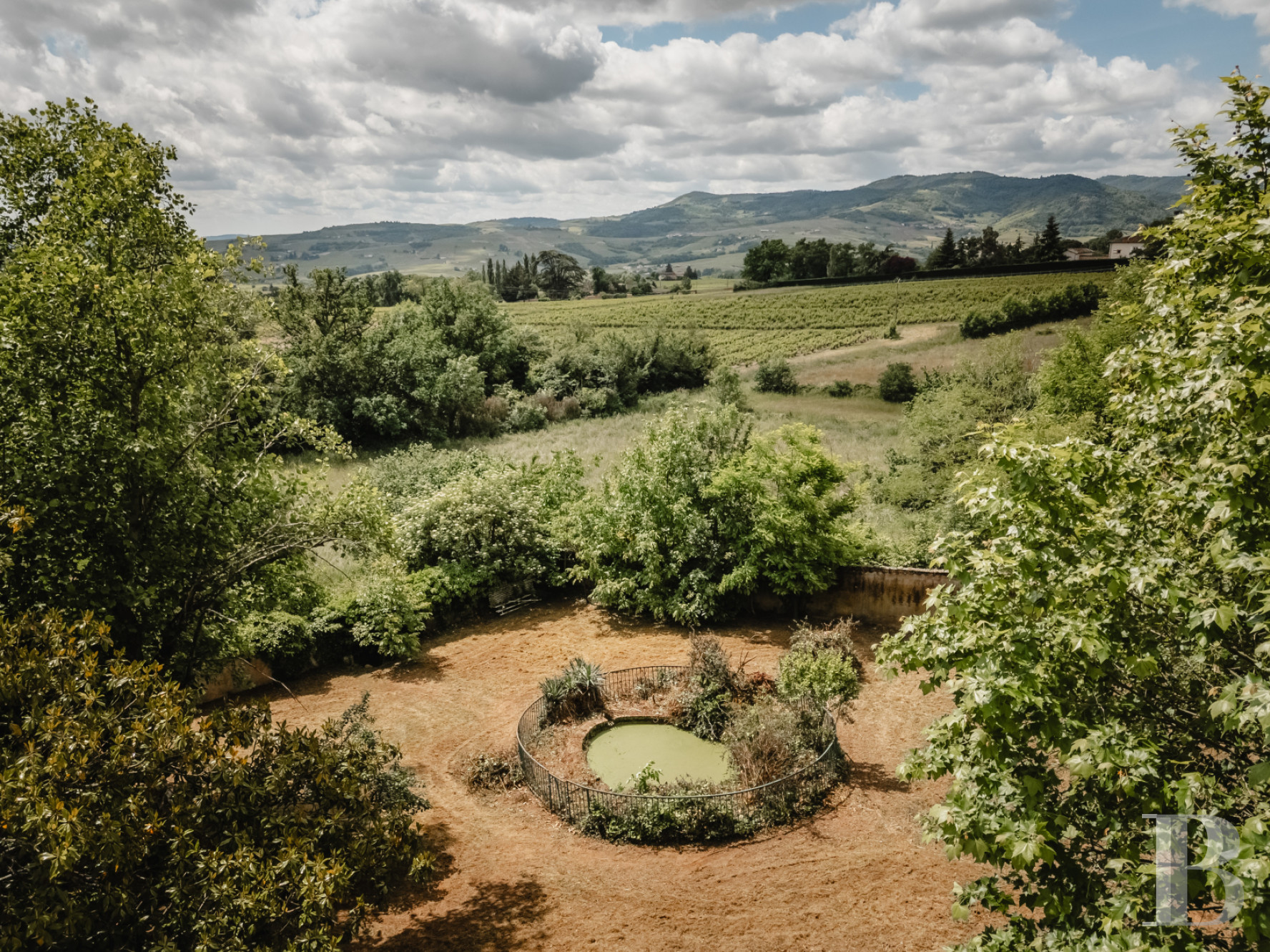
The property lies near the town of Villefranche-sur-Saône, a regional business and transport hub. It is nestled between Mont Brouilly hill and the winegrowing slopes of Le Perréon, set back from a country lane in a protected valley dotted with hamlets, vineyards, groves and farmland. The city of Lyon and its international airport are less than an hour away by car. From a high-speed train station 30 minutes away, you can regularly get to Paris by rail. Shops and amenities for everyday needs lie just a few minutes away by road, as does a regional train station.
Description
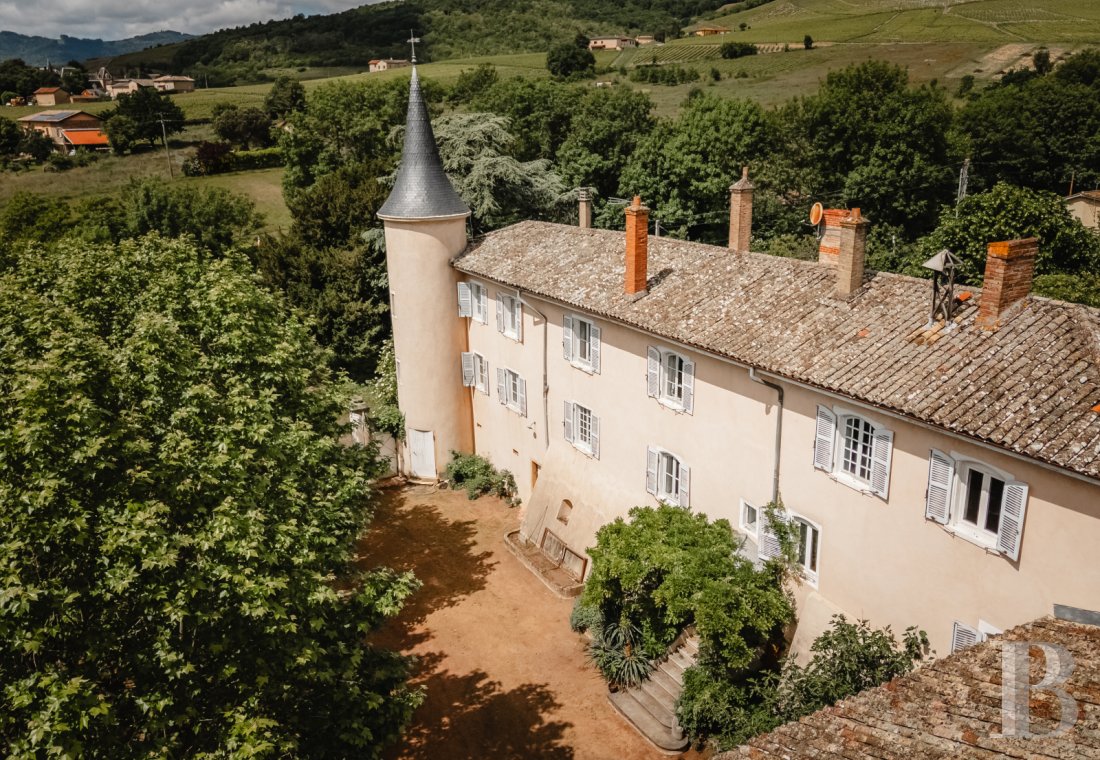
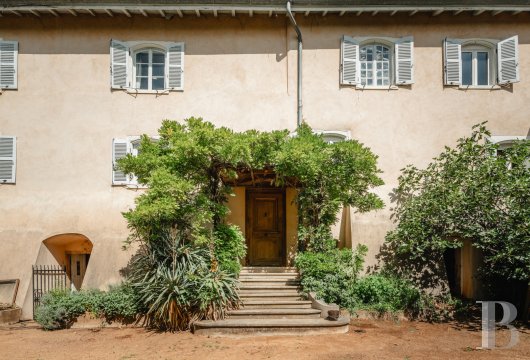
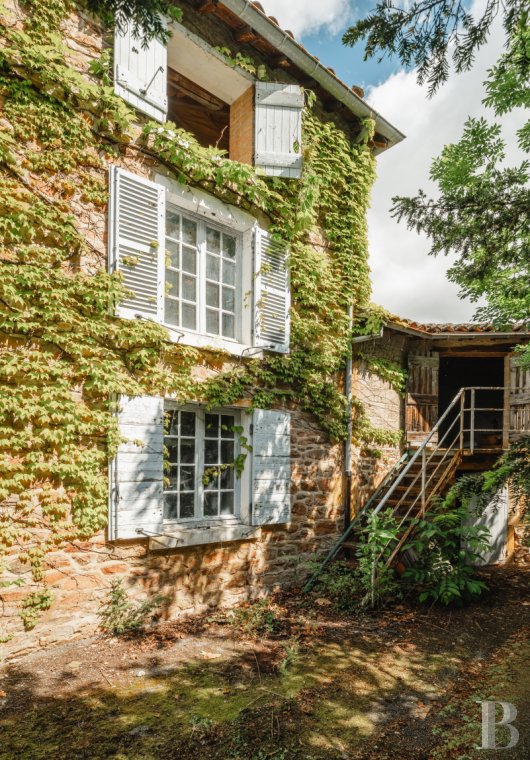
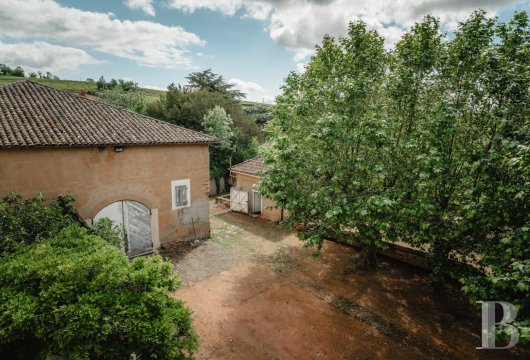
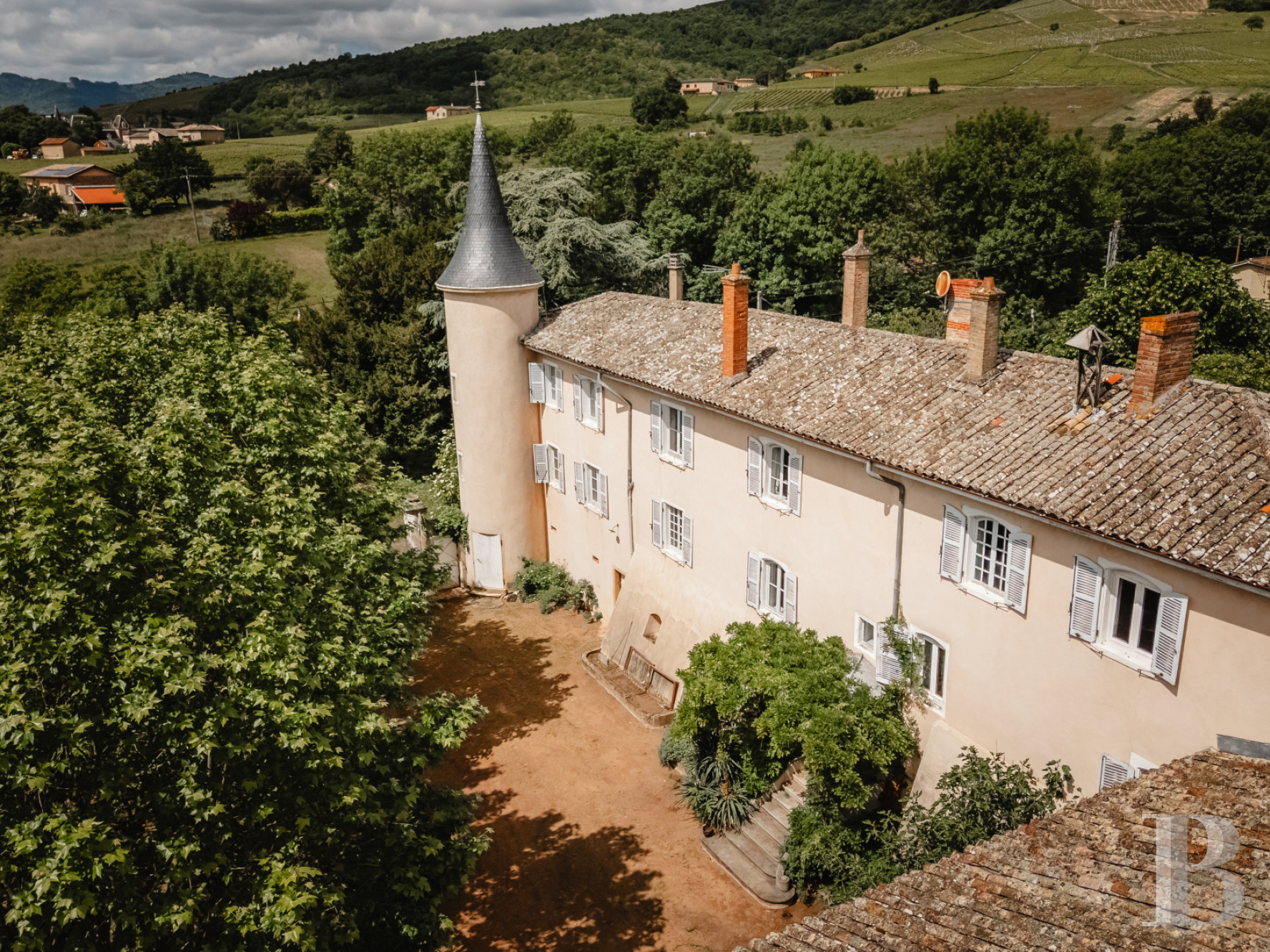
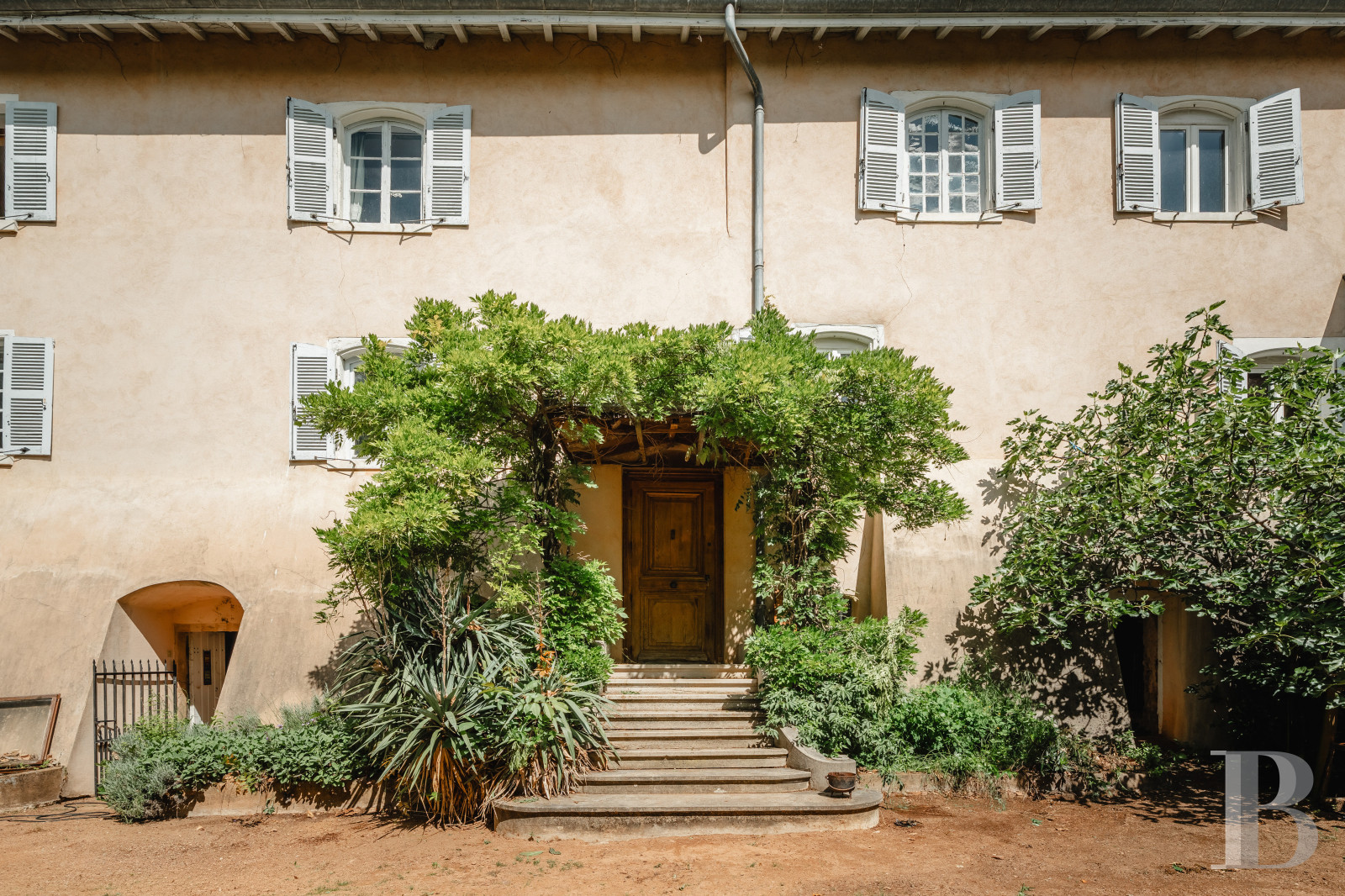
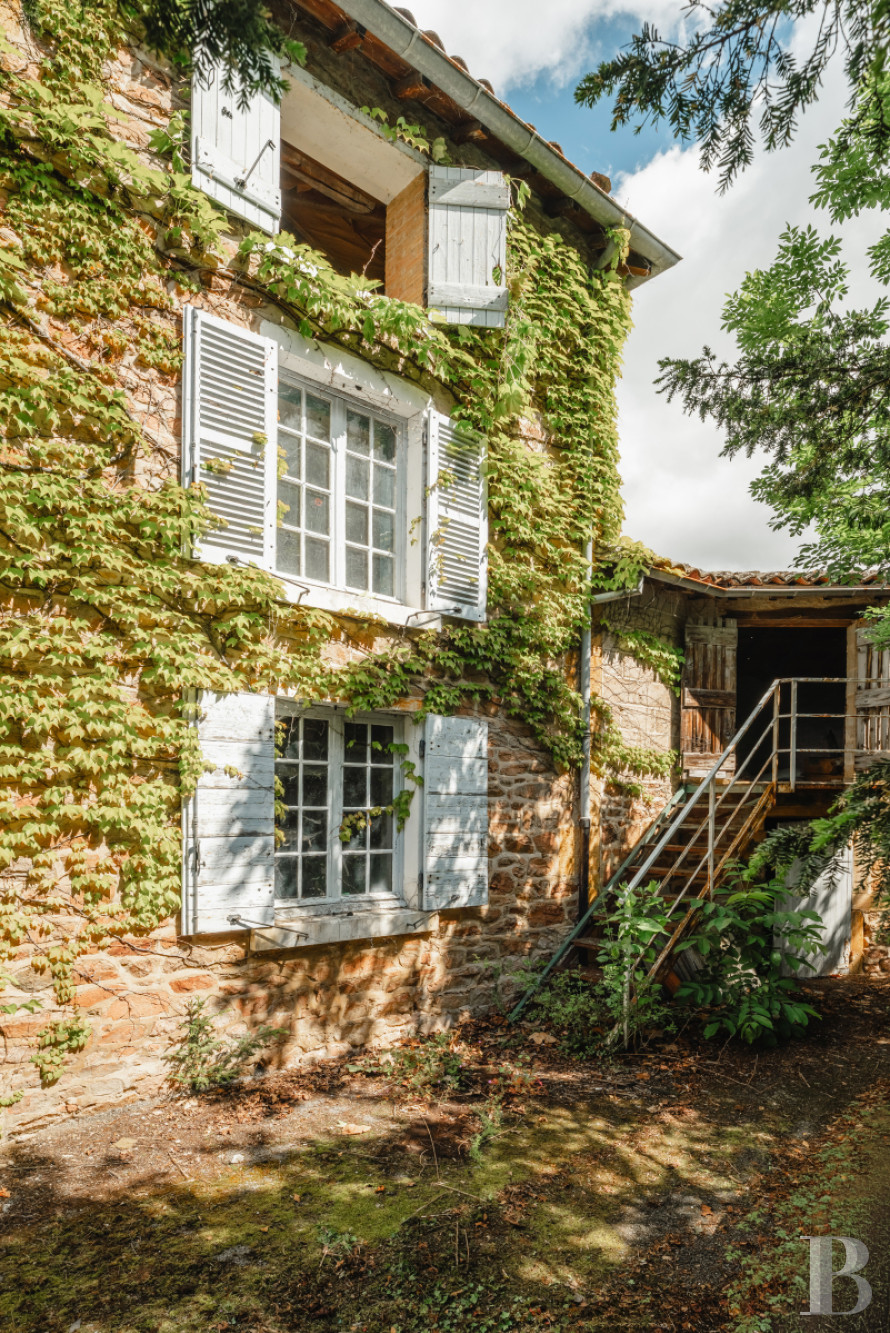
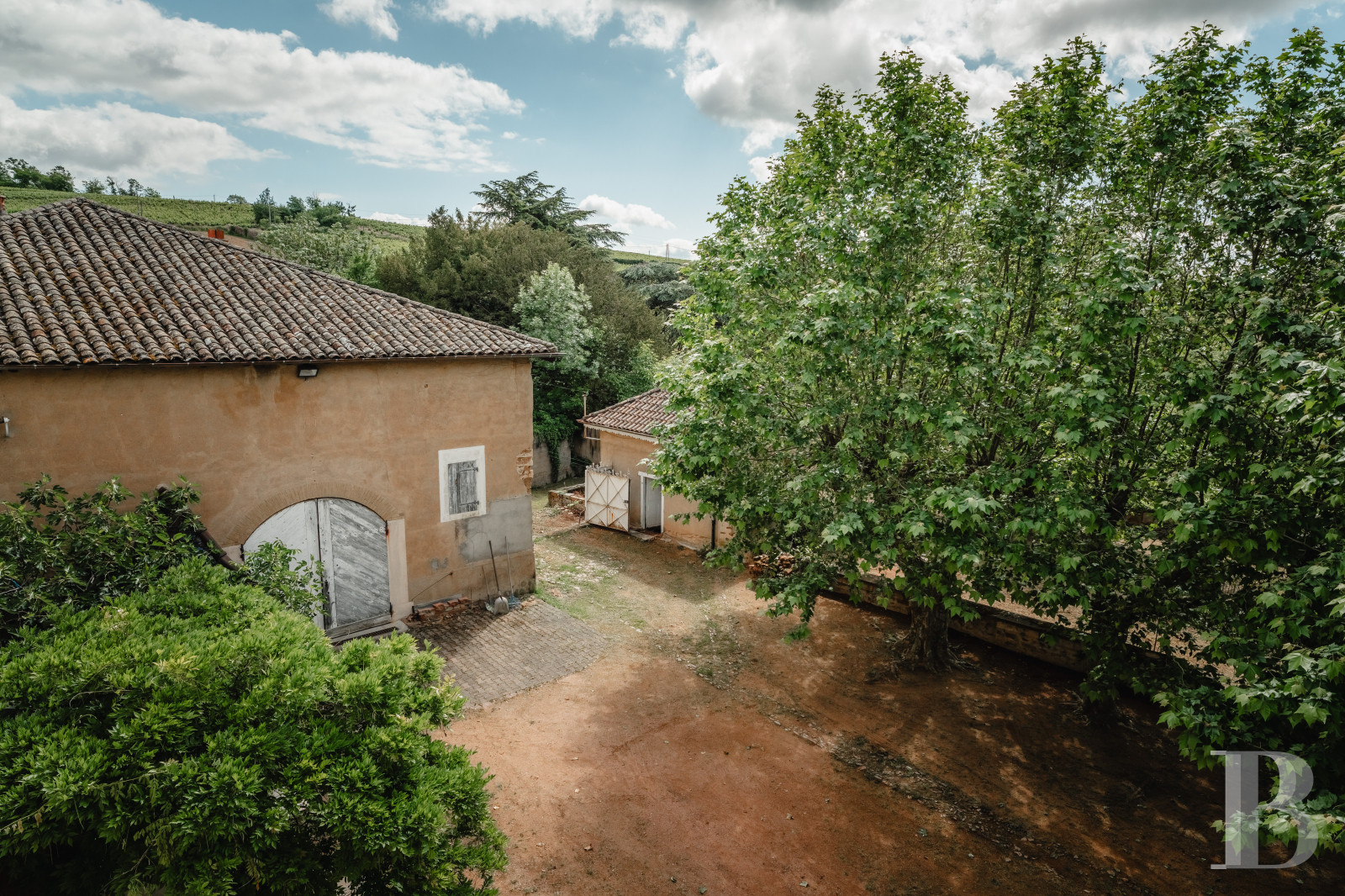
The shape of the chateau evokes the family winegrowing estates that were established in the local region between the 17th century and the 19th century. The rectangular main edifice with its round corner tower stands in walled grounds, which are dotted with trees. A roof of tiles with a patina of time crowns the building. A cone roof caps the adjoining tower. The elevations are coated with pale rendering and punctuated with tall windows fitted with white shutters, brought out by the warm tones of the soil and the surrounding rooftops. Several outbuildings stand around the shady inner court. Some have spacious interiors. Their elevations are marked by the passing of the years. They recall the property’s original agricultural purpose.
The chateau
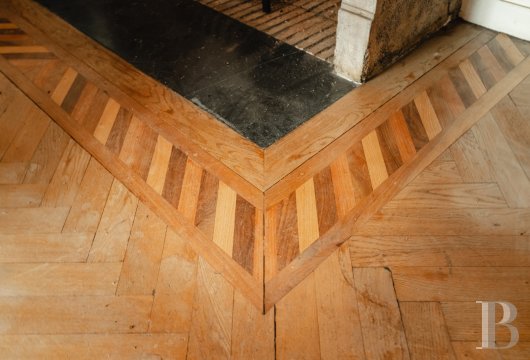
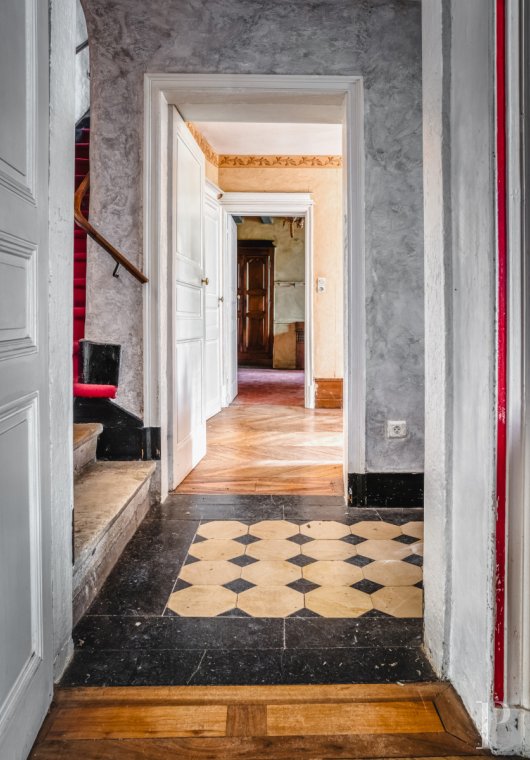
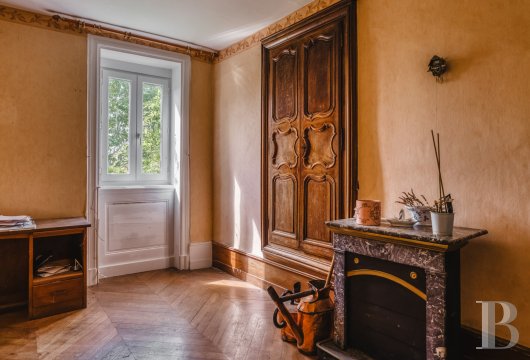
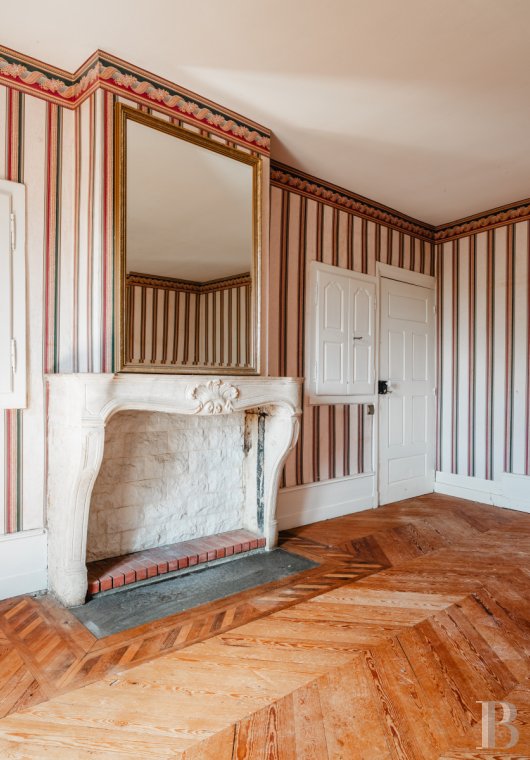
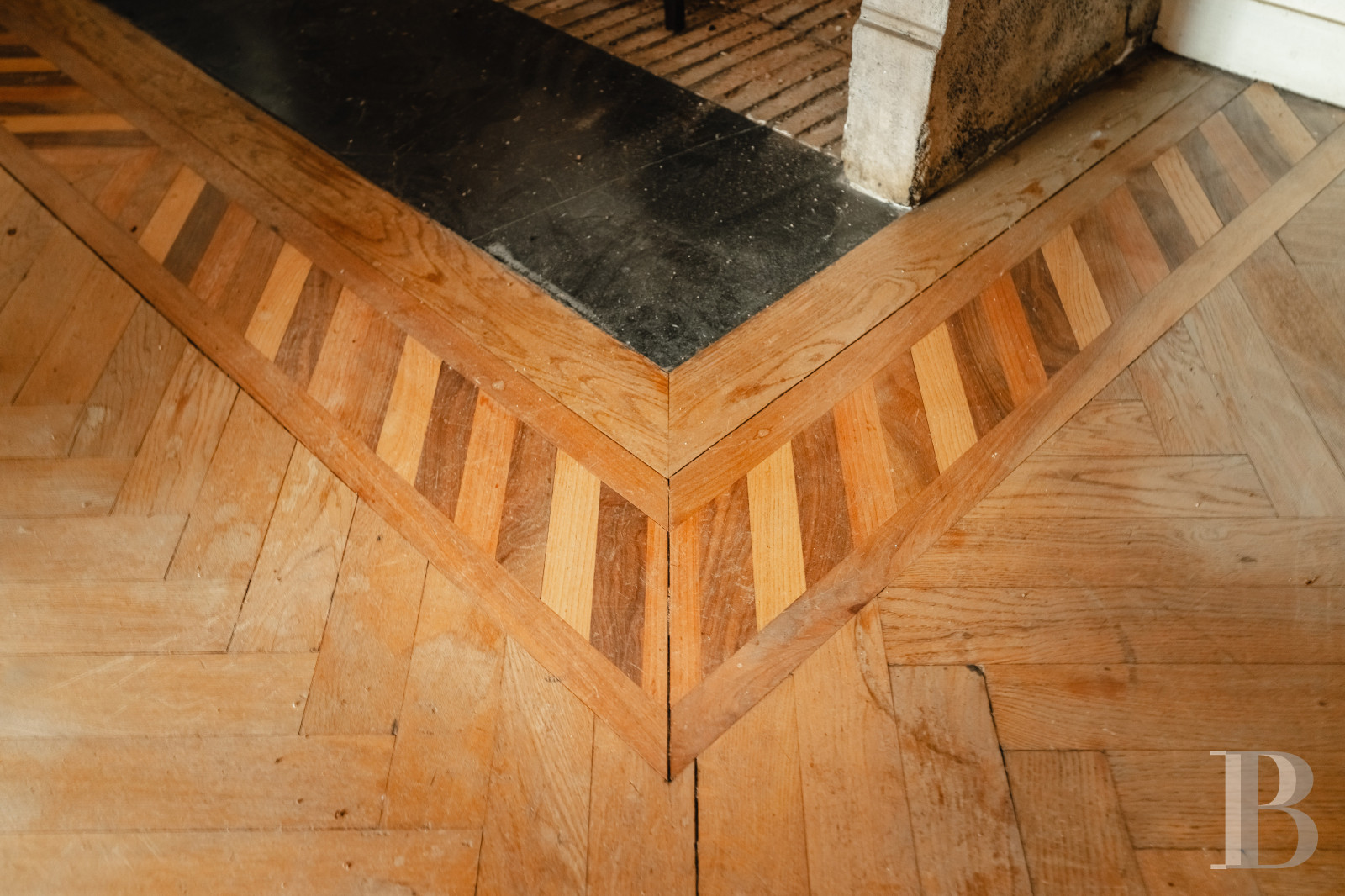
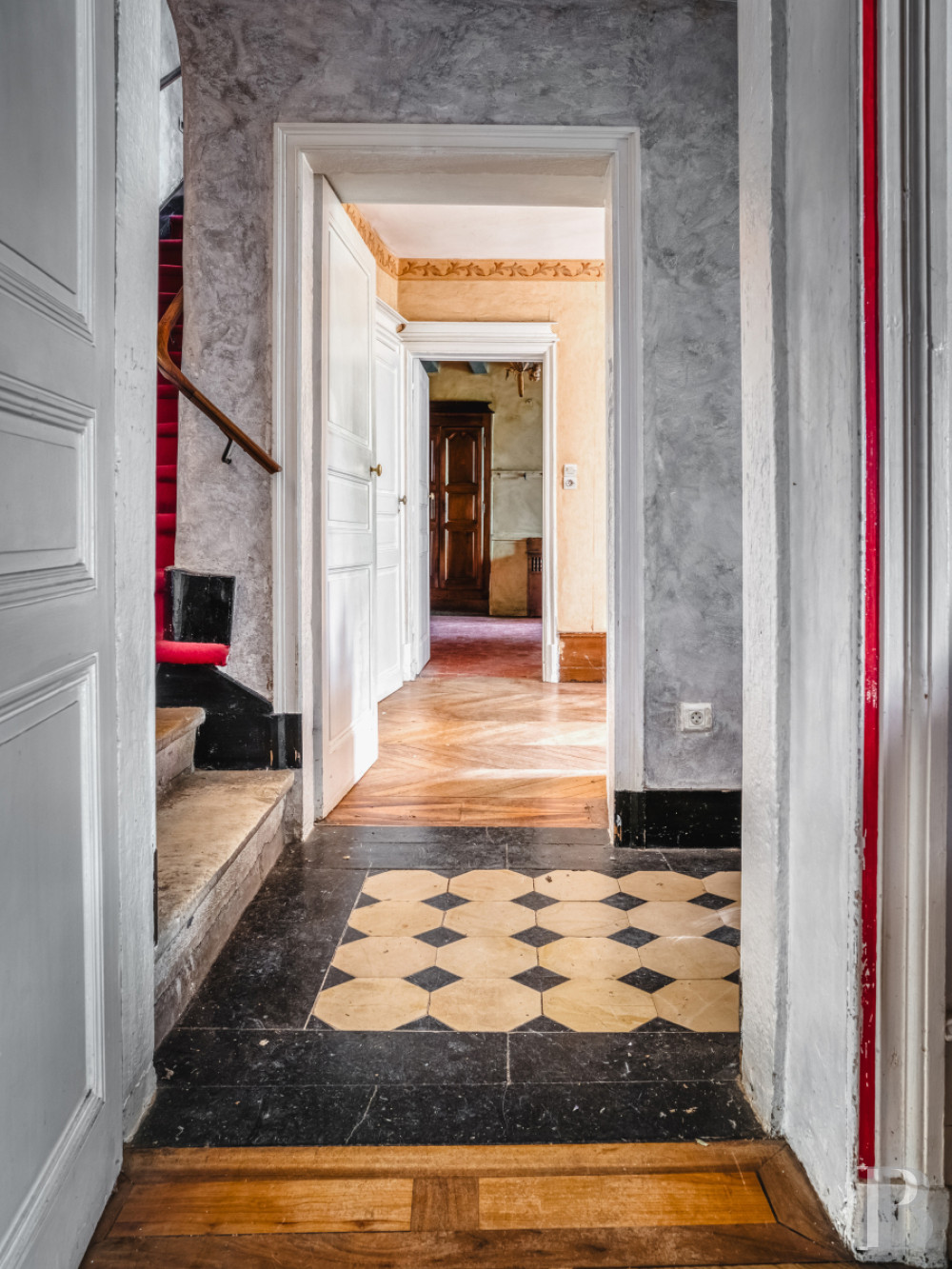
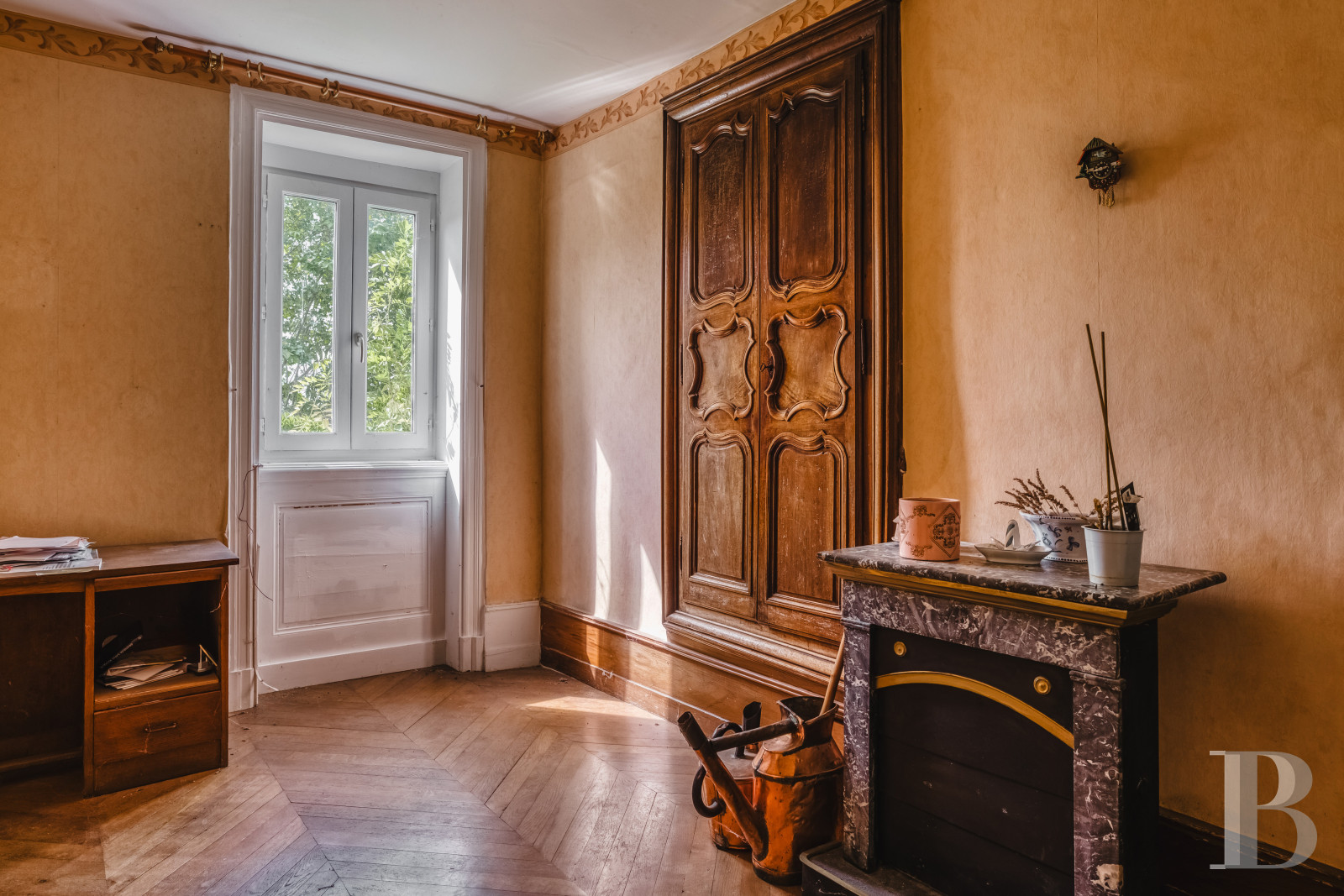
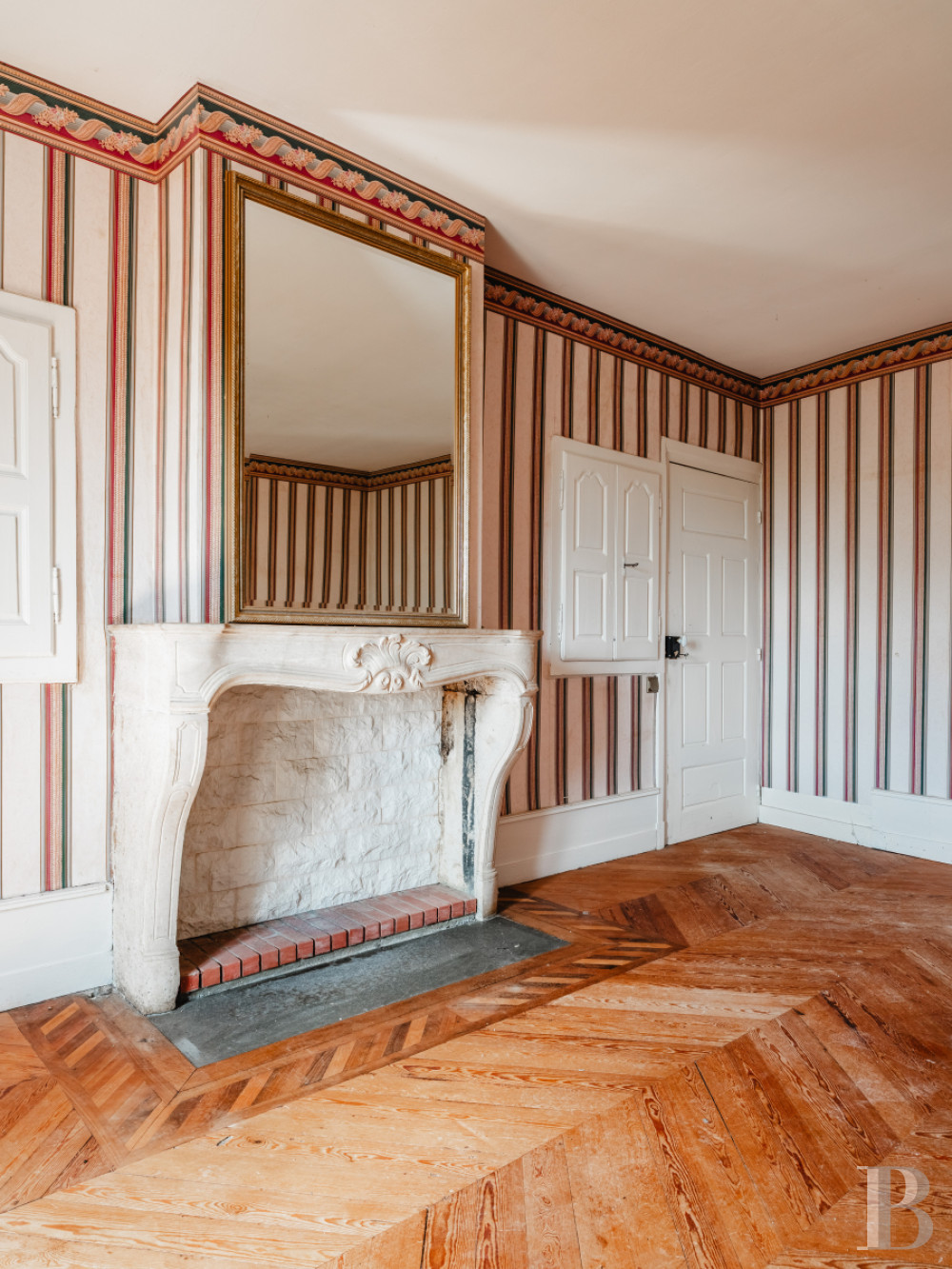
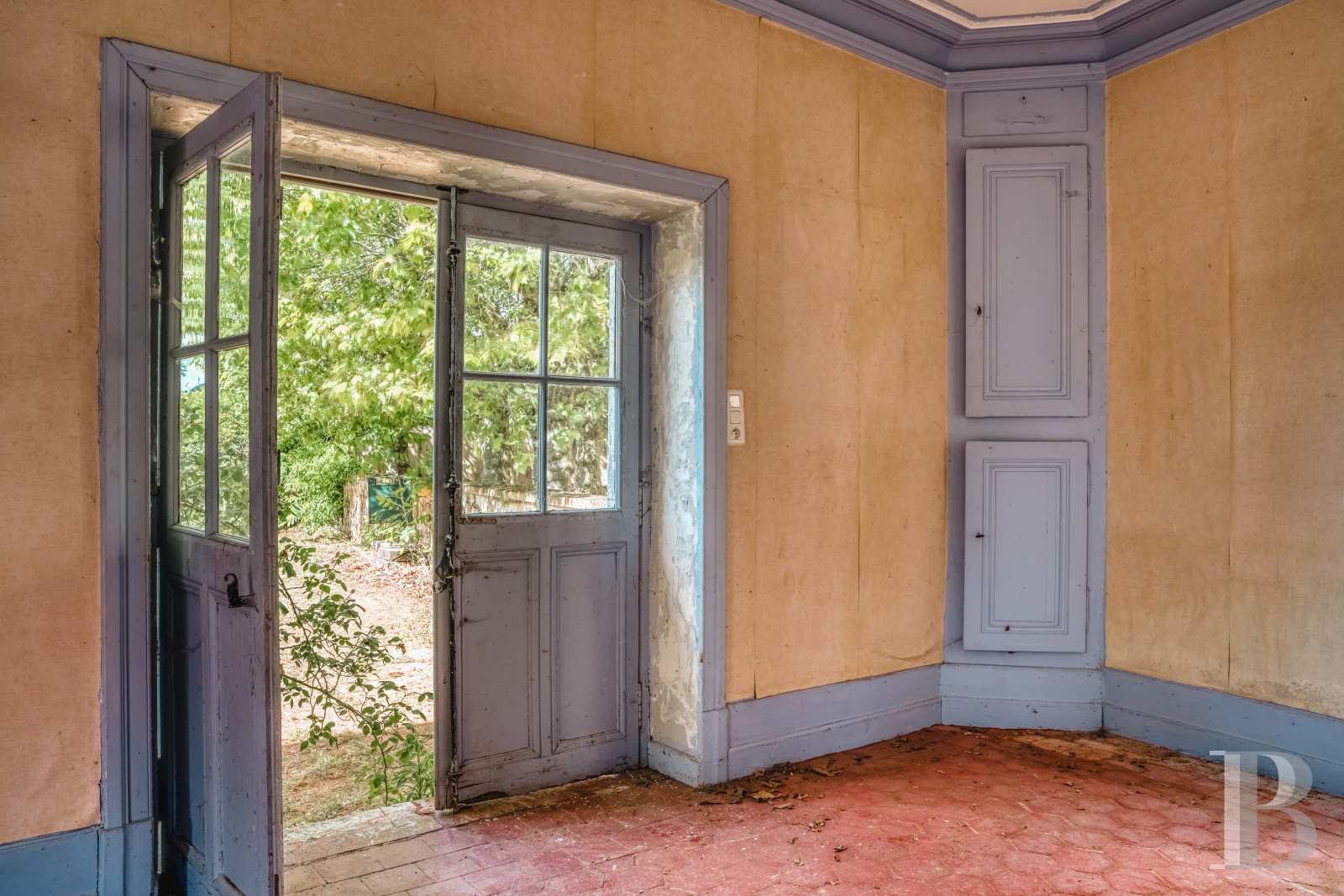
The chateau has a ground floor, a first floor and a second floor. Its layout is classical in design. Most of the house’s original materials have been kept. These include old tiles in the entrance hall, terracotta floor tiles in the kitchen, chevron parquet in the reception rooms and bedrooms, stone fireplaces, and French-style beamed ceilings.
The garden-level floor
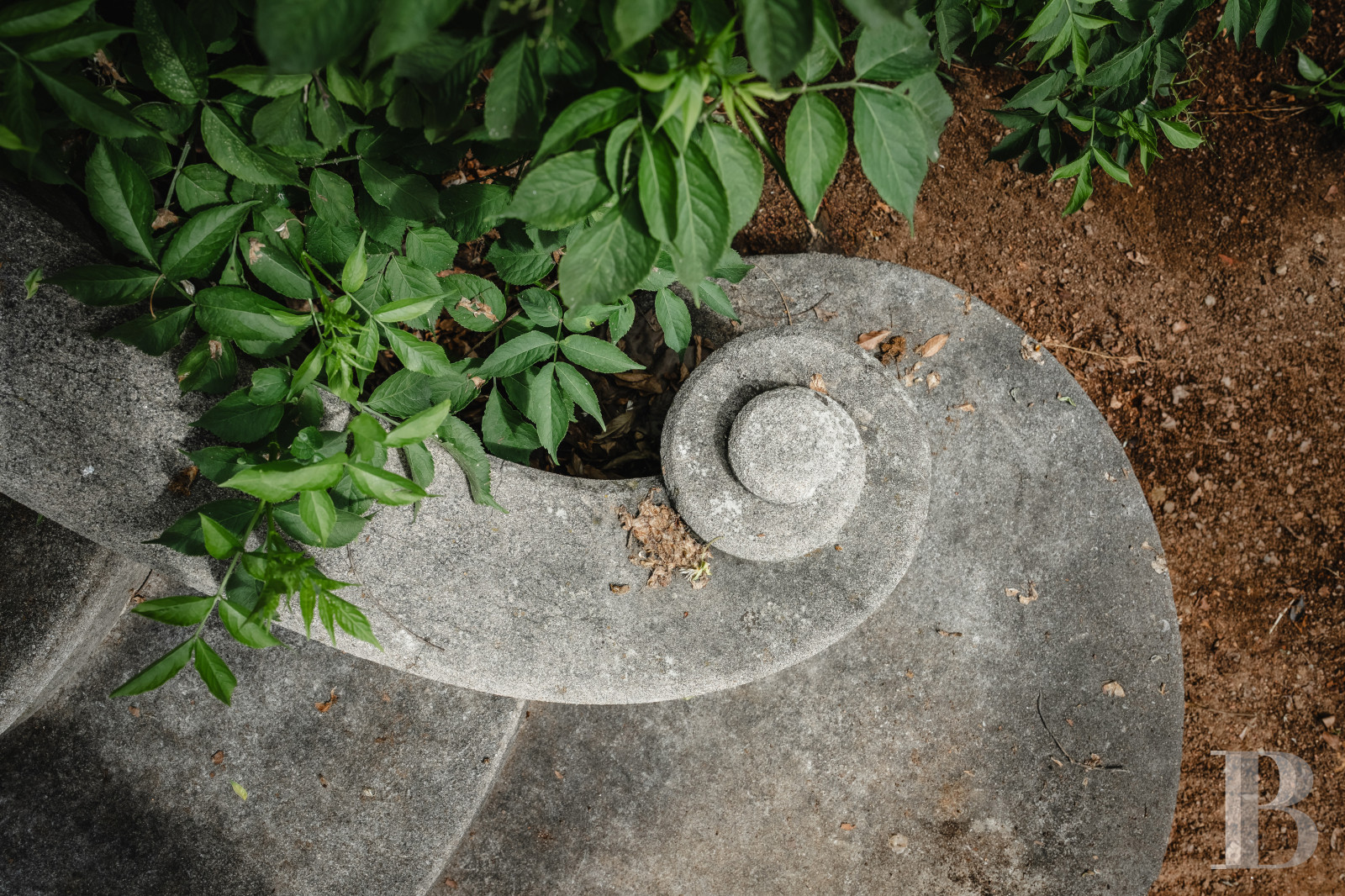
The ground floor has several rooms that face the court. There is an earthen-floor cellar, a wine-tasting cellar with a concrete floor, the estate manager's office, and a lavatory. On the other side of the front flight of steps, there is a vaulted cellar beneath the kitchen on the floor above it.
The first level
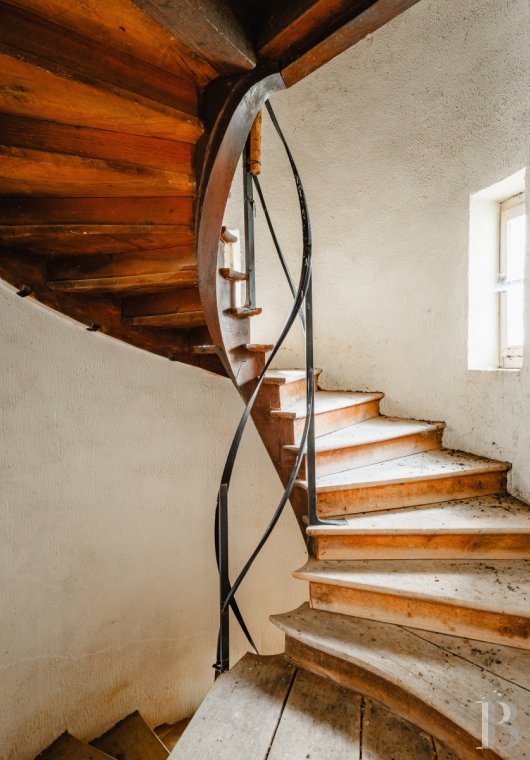
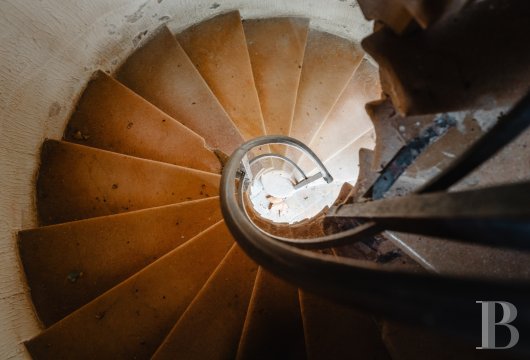
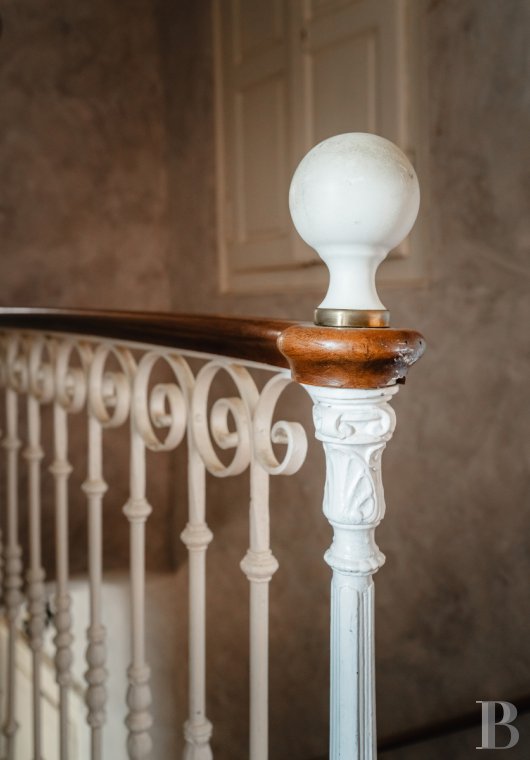
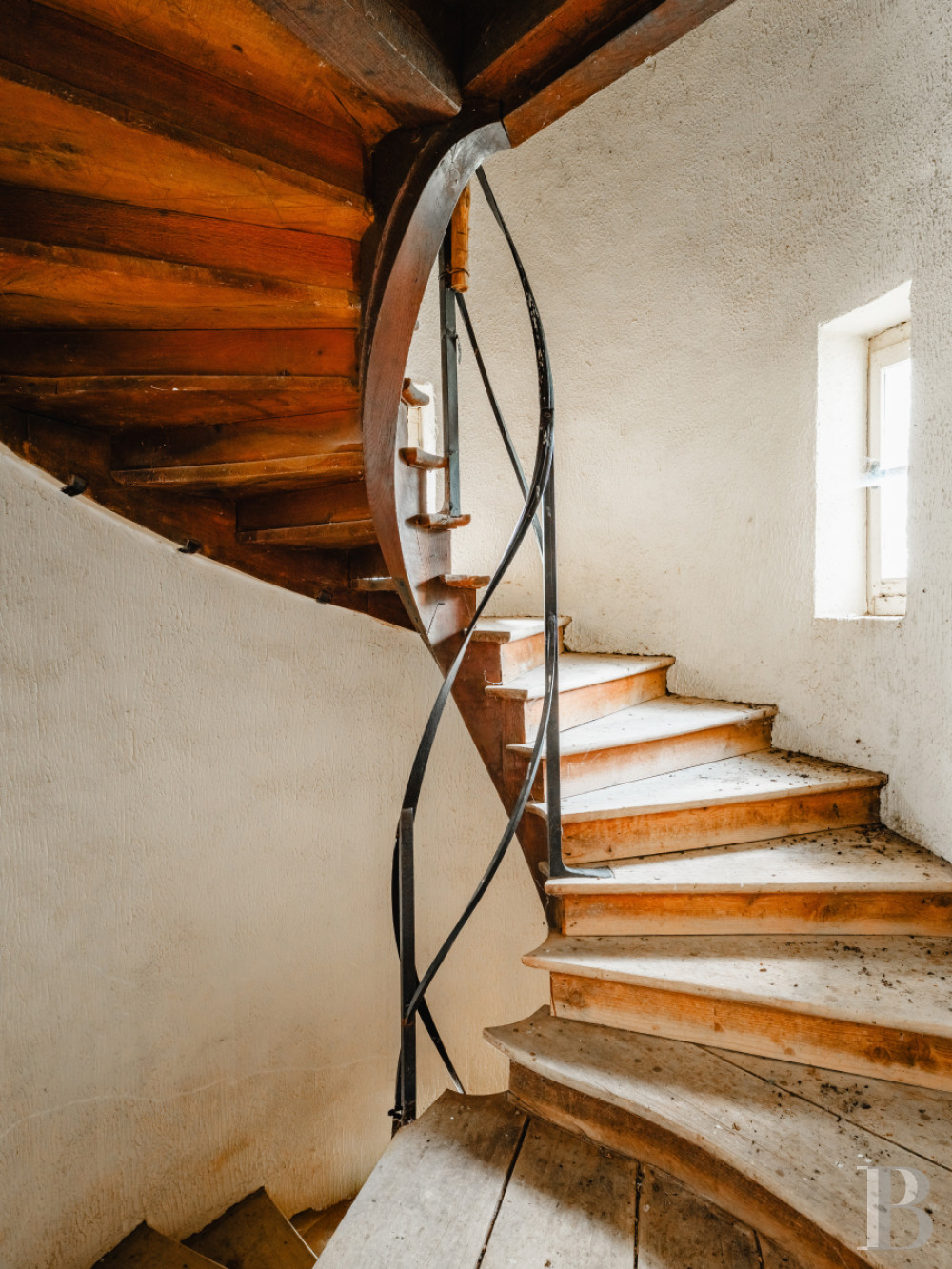
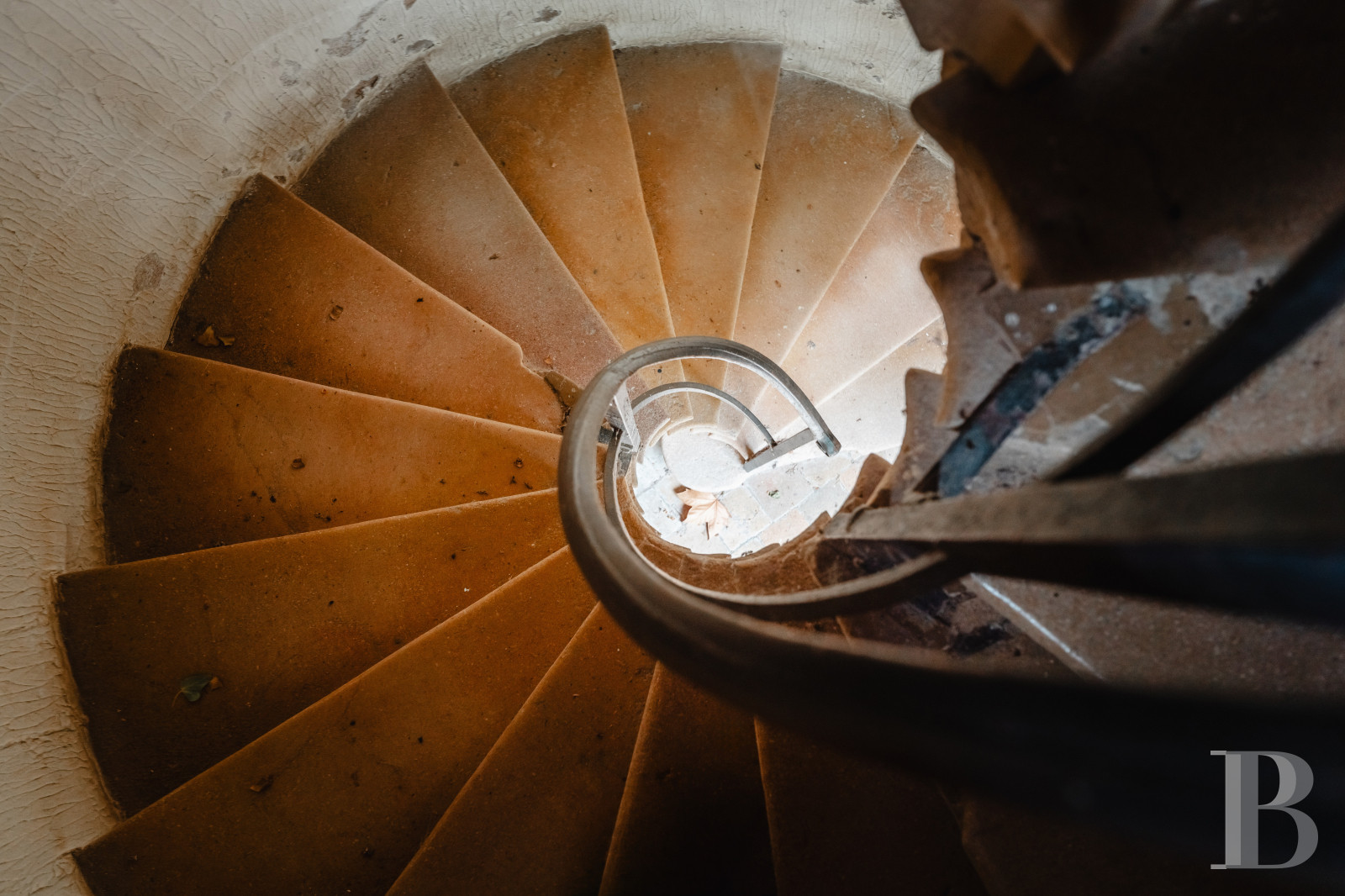
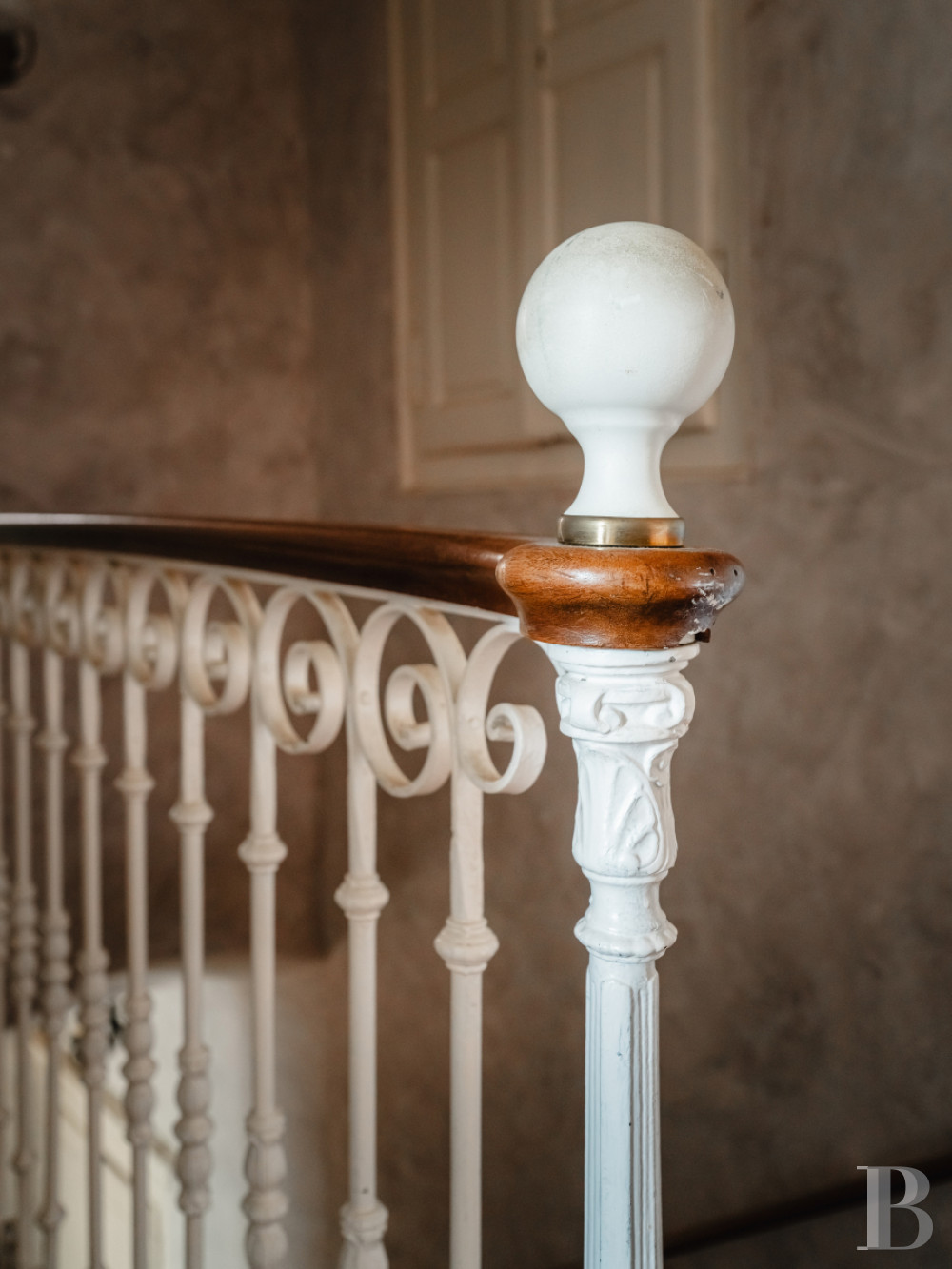
You can reach the first floor either via the spiral staircase in the tower or via the central stairs. There are two distinct sections on this floor, as two families lived here before: the chateau owners in the central dwelling and the tenant farmers in the tower dwelling. This original layout has been kept, but it could be unified if need be. The central dwelling includes a lounge, an office, a dining room and a kitchen with a scullery. The tower dwelling has a lounge, a kitchen and a lavatory. A back door leads from the scullery to the wine fermentation building.
The second level
The second floor has four south-facing bedrooms and a bathroom. The two bedrooms and the bathroom at the end of the corridor could be linked to the floor below via the tower staircase to form a self-contained apartment in the tower. One of the bedrooms, which has wood strip flooring and a fireplace, has two adjoining rooms, including one that could be used for storage.
The lodge
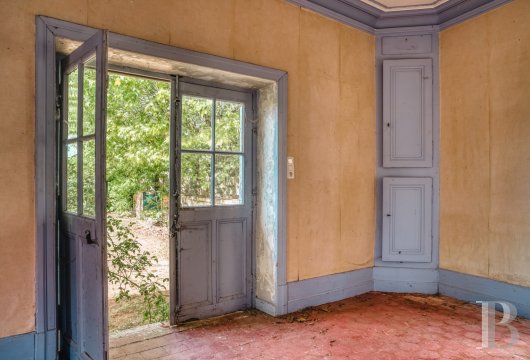
This single-storey square building is crowned with a hipped roof. On one side, it leads out into the court. On the other side, it leads out into the grounds and to a pond. It is used as an ornamental space. It has kept its original features, including its terracotta-tiled floor and its windows. With its central location, there are many possible new purposes you could give it. It could be a pool house, an orangery or a summer kitchen.
The wine fermentation building
This building has a high ceiling, as such buildings traditionally have. You enter the building via a broad double door, designed for agricultural machinery and vehicles to be brought inside. The building houses two concrete wine vats – traces of the former winegrowing estate. A wine analysis laboratory also remains in it. The rest of the interior now serves as storage for different equipment and for parking vehicles too.
The outbuildings
Beside the wine fermentation building, there are different agricultural buildings. There is a garage beneath an open space with an exposed roof frame, a second garage also beneath a high-ceilinged room with a wooden floor and exposed roof frame, and a spot that was probably occupied in a simple way before. Next, there is a workshop with an old bread oven, then a series of small hen-house-like buildings. The outbuildings are partly made of stonework. The buildings need to be renovated, including their barrel-tiled roofing and their rendering that protects their upper sections of rammed earth.
The vaulted cellar
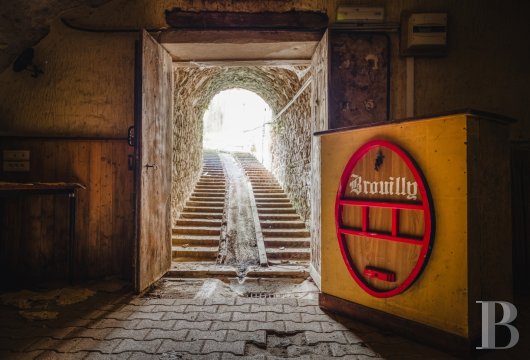
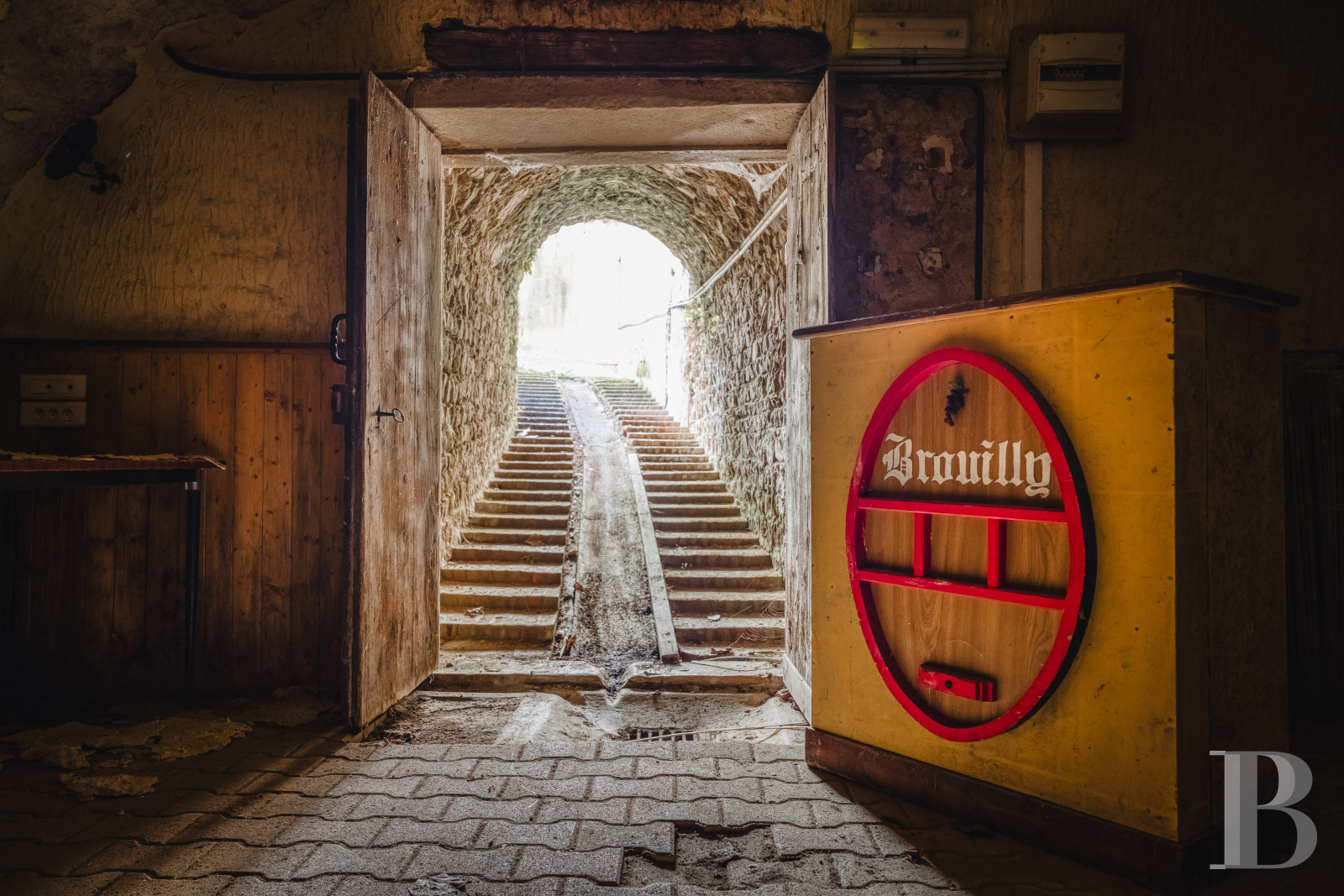
The vaulted cellar lies partly beneath the court and partly beneath the wine fermentation building. You reach it from outside via a staircase with a handrail. This cellar is vaulted with a single vault that runs all the way along it. Interlocking paving stones cover the floor, ensuring flatness throughout the cellar. Roughcast coats the original vault. The cellar has been designed for social gatherings.
The grounds
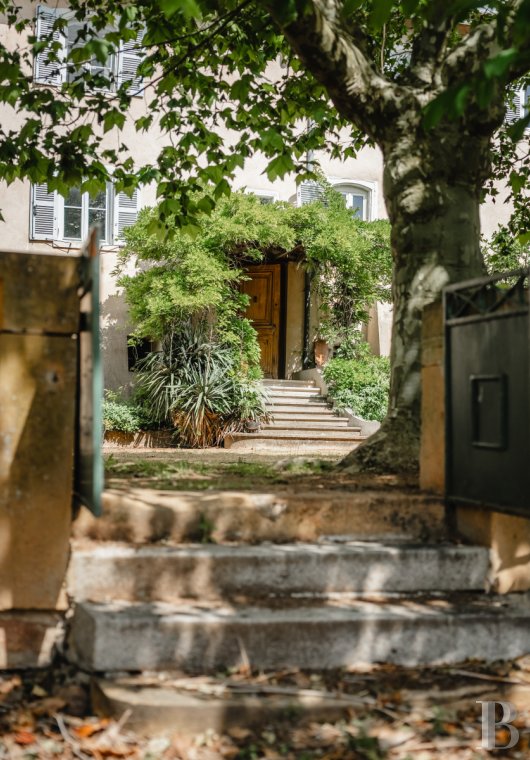
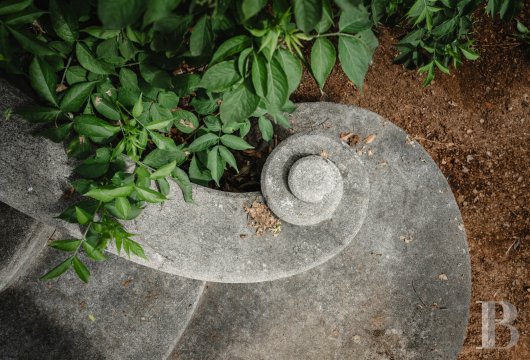
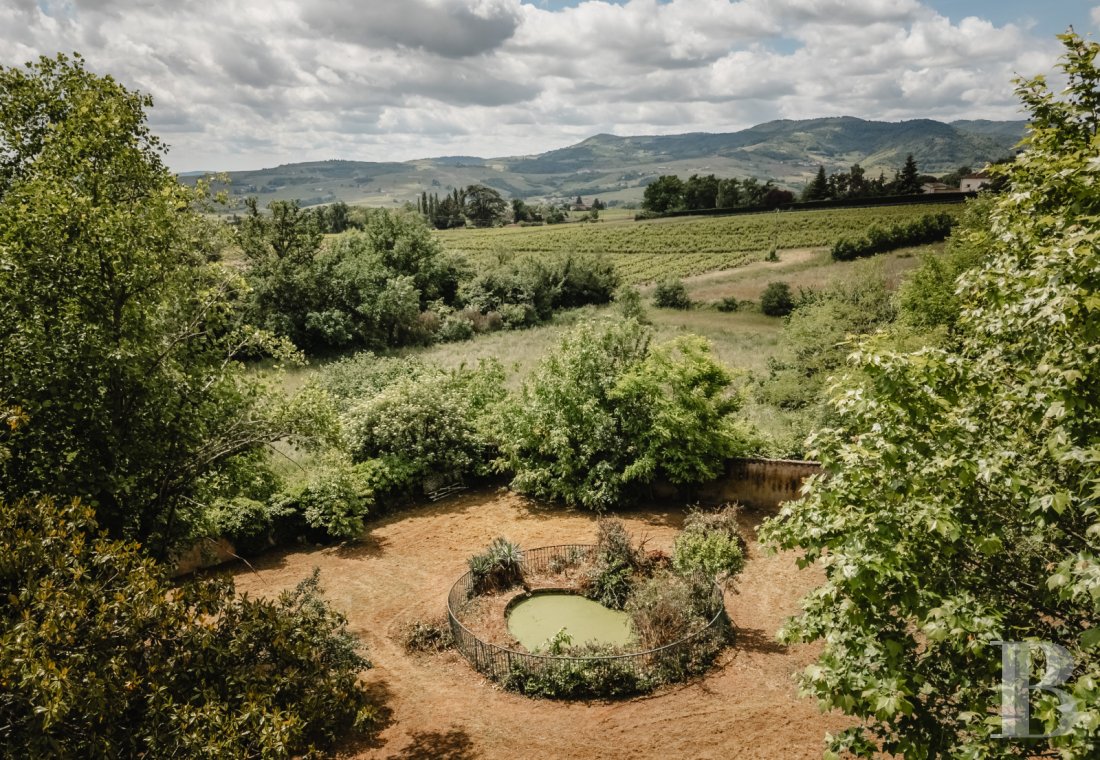
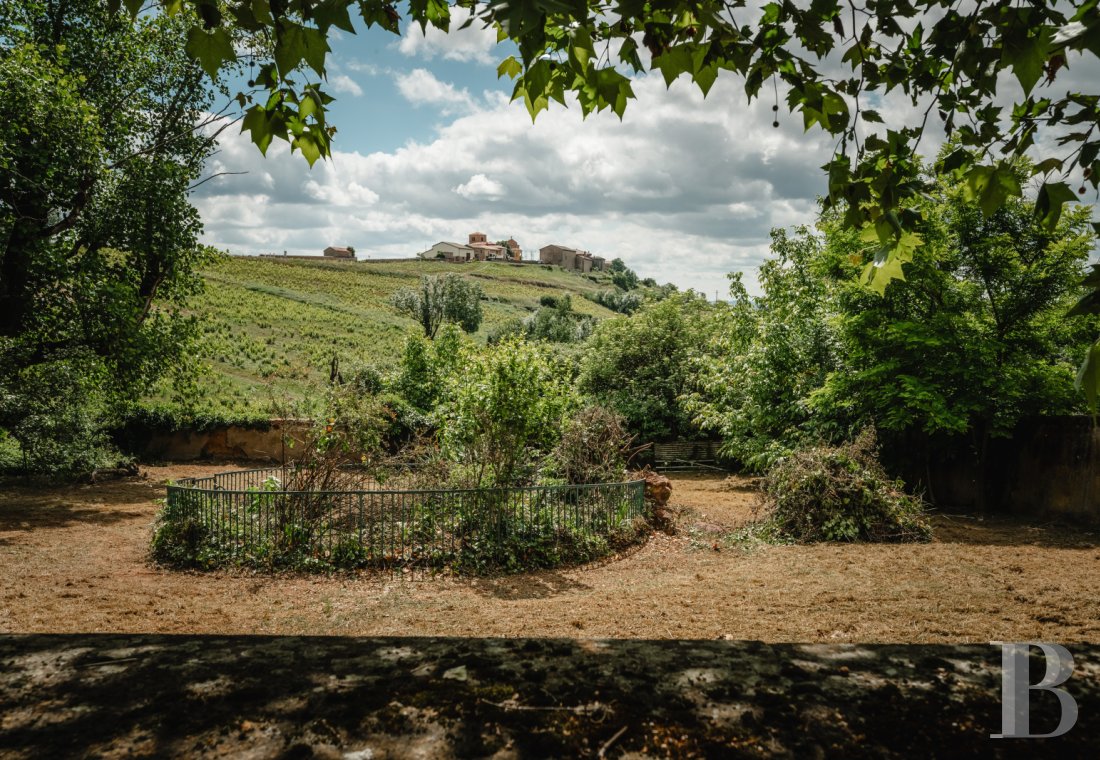
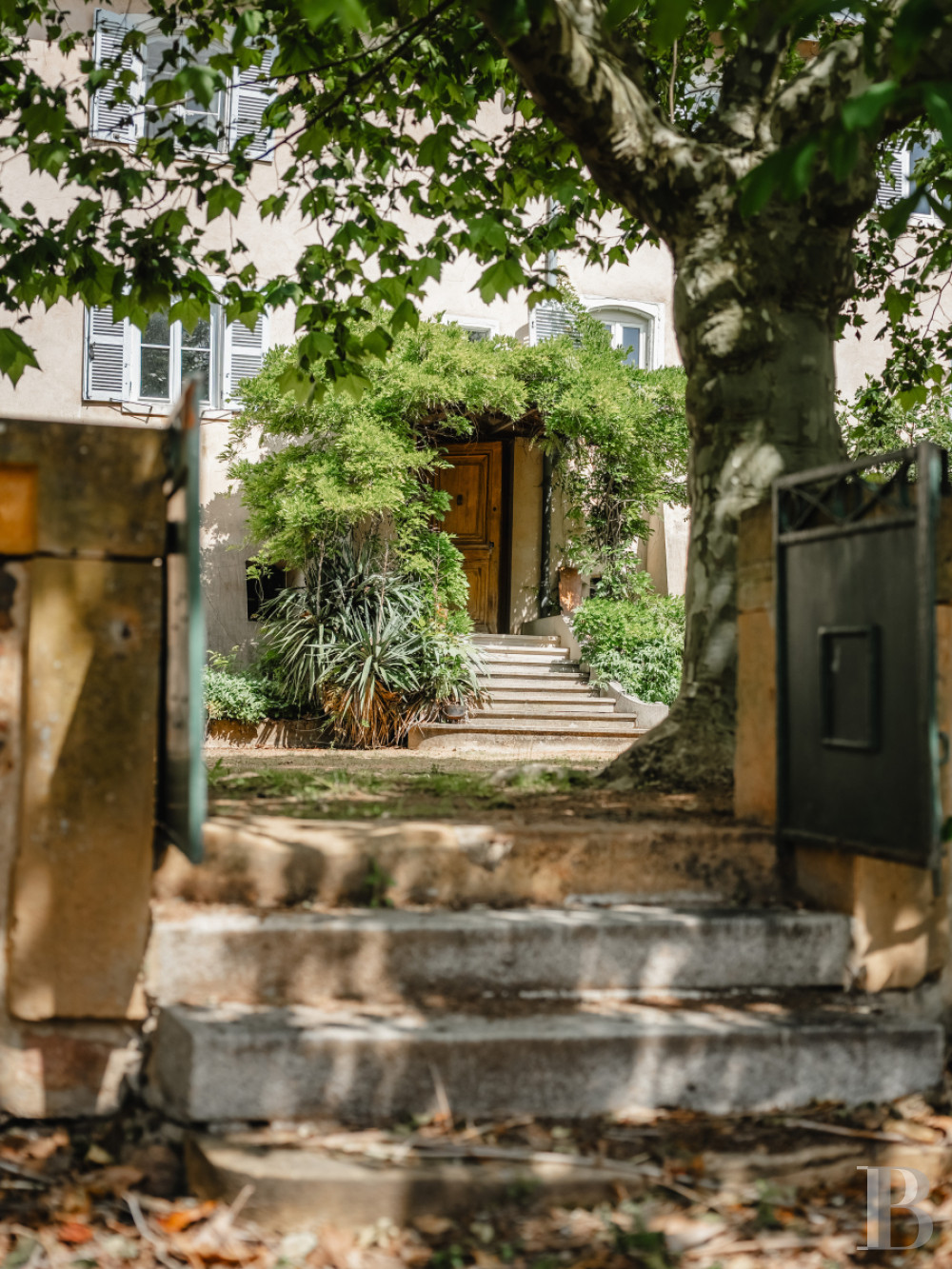
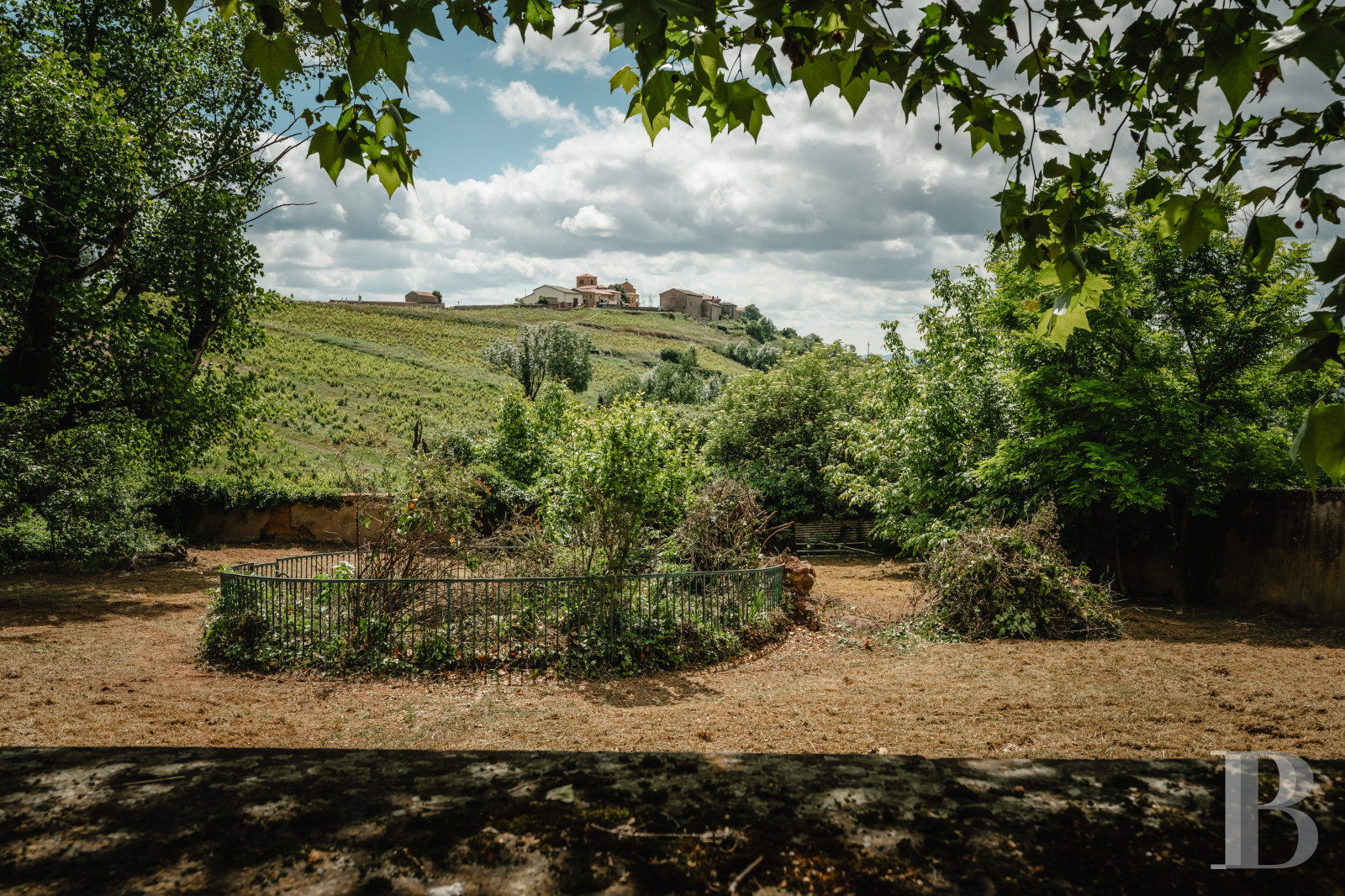
The grounds are entirely walled. They are mostly taken up with lawns, dotted with tall trees, including a tulip tree. It also includes a round stone pond, filled up with water from a spring. This round pond was probably once the central point of a French formal garden. In the enclosing wall, there is a pedestrian gate: a secondary entrance that leads to the court and the agricultural outbuildings. A natural space can be used to park visitor vehicles.
Our opinion
This former winemaking estate is discreetly nestled in a bucolic backdrop that it gazes out at. The small estate is original, with an omnipresent rustic spirit. Here, you can enjoy a truly gentle lifestyle all year round. The many trees around the edifice and the enchanting surroundings ensure calm. The chateau is a splendid gem of built heritage. It needs some renovation work to improve its comfort somewhat. Then, a large family could settle into it comfortably. Or it could host tourists, who would certainly appreciate its closeness to vineyards and quaint villages.
Reference 821895
| Land registry surface area | 3827 m² |
| Main building floor area | 260 m² |
| Number of bedrooms | 5 |
| Outbuildings floor area | 400 m² |
| including refurbished area | 260 m² |
French Energy Performance Diagnosis
Information on the risks to which this property is exposed is available on the website: www.georisques.gouv.fr
Share


NB: The above information is not only the result of our visit to the property; it is also based on information provided by the current owner. It is by no means comprehensive or strictly accurate especially where surface areas and construction dates are concerned. We cannot, therefore, be held liable for any misrepresentation.